The global generic drug market is not growing uniformly. It is concentrating. Between 2025 and 2030, branded drugs accounting for over $200 billion in annual global sales will lose patent protection, creating the largest single wave of generic opportunity in pharmaceutical history. The drugs leading that cliff — rivaroxaban (Xarelto, Bayer/J&J), sacubitril/valsartan (Entresto, Novartis), ustekinumab (Stelara, J&J), and a dozen others across oncology, immunology, and cardiovascular — are already on the radar of every generic development team from Hyderabad to Hangzhou.
What most manufacturers underestimate is where that value flows. The United States and the EU5 remain the highest-revenue generics markets on a per-unit basis, but their growth rates have plateaued. From 2017 to 2022, the combined pharmaceutical markets of the top five EU nations grew at an average of 6.6% annually. The US grew at 7.1%. During the same period, Brazil grew at 13.0% and India at 11.0%. The arithmetic here is not subtle.
The combined BRIC generics market (Brazil, Russia, India, China) was valued at $168.5 billion in 2023. China alone accounts for $121 billion of that figure. By 2028, China’s generic market is projected to reach $177.2 billion, India’s $31.5 billion, and Brazil’s $14.4 billion. South Africa adds a smaller but strategically significant piece as a gateway into sub-Saharan commercial infrastructure. The aggregate BRICS opportunity is not a market to watch, it is a market to enter now, with a plan built on the specific regulatory, IP, and commercial mechanics of each jurisdiction.
This article is that plan.
The Five Regulatory Systems You Must Actually Understand
Why a ‘One BRICS Strategy’ Fails in Practice
The temptation to treat BRICS as a single market segment is understandable and wrong. Each nation’s regulatory agency operates under a distinct legal mandate, with different philosophies about what constitutes adequate proof of generic equivalence, different rules for what IP protections are granted during review, and different timelines that interact with patent expiry dates in ways that can determine whether a launch is commercially viable at all.
The five regulatory authorities are: ANVISA (Brazil), the Ministry of Health / Minzdrav operating under the Eurasian Economic Union framework (Russia), CDSCO (India), NMPA (China), and SAHPRA (South Africa). Each agency has distinct powers, distinct statutory mandates, and distinct relationships with their countries’ patent systems. Conflating them in a single regulatory strategy is the most common error made by companies new to these markets.
How the CTD Format Diverges Across BRICS Despite Apparent Standardization
All five BRICS nations have adopted the Common Technical Document (CTD) format developed by the International Council for Harmonisation (ICH). This creates a surface-level impression of harmonization. The reality is more complex.
Modules 3 through 5 — covering chemistry, manufacturing and controls (CMC), nonclinical data, and clinical study reports — are largely standardized across jurisdictions. Module 1, the administrative and prescribing information module, is where each country imposes its own requirements and where most application failures originate. Module 1 is not just a cover sheet. It contains local-language labeling, country-specific application forms (Form 44 in India, country-specific EAEU forms for Russia), apostilled legal documentation, authorized agent designations, patent declarations in South Africa, and jurisdiction-specific prescribing information templates.
A regulatory affairs team that builds its BRICS dossier strategy around shared Modules 3-5 with unique Module 1 adaptations will save significant time and cost compared to one treating each market as a completely de novo submission. But the Module 1 effort is not trivial. Underestimating the translation requirements alone — particularly for Russia, where Module 1 must be fully in Russian — has delayed dozens of submissions that were otherwise scientifically complete.
China has made eCTD format mandatory for all Abbreviated New Drug Application (ANDA) submissions. SAHPRA and India both accept eCTD through the SUGAM portal. Brazil operates an eCTD system with local variations. Russia, through the EAEU framework, accepts the ICH-compliant CTD structure with the Module 1 in Russian and key CMC summaries potentially requiring translation as well.
Brazil: ANVISA, At-Risk Launches, and the Strategic Value of No Patent Linkage
How ANVISA’s Generic Approval Process Actually Works
ANVISA — the Agência Nacional de Vigilância Sanitária — is the most powerful independent drug regulator in Latin America. It operates under the Ministry of Health but with substantial statutory autonomy. Any foreign manufacturer seeking to register a drug in Brazil must do so through a locally established office or a legally appointed agent. Marketing authorizations are valid for 10 years and are renewable.
The typical review timeline for a generic drug registration at ANVISA runs 12 to 24 months, depending on product complexity and dossier quality. The process includes an initial 60-day evaluation phase followed by a deficiency period in which the applicant has up to 120 days to respond to queries. A submission that enters with clean, complete data moves substantially faster than one that generates repeated rounds of deficiency letters, making upfront dossier quality the single highest-leverage variable in Brazil’s timeline.
Why Brazil’s Bioequivalence Requirements Add Cost That Most Models Underestimate
Brazil imposes a critical constraint on bioequivalence (BE) studies: they must be conducted using the specific innovator product registered and marketed in Brazil as the comparator, and they must be performed at clinical research centers that ANVISA has inspected and certified. A BE study conducted in Europe or the United States against a US or EU reference product will not satisfy Brazilian requirements.
This matters commercially for several reasons. First, it means Brazil-specific BE studies must be budgeted separately and cannot be cross-leveraged from a global development program without additional in-country work. Second, the certified BE center infrastructure in Brazil is smaller than in the US or EU, creating scheduling bottlenecks that can add months to a development timeline. Third, for some formulations — particularly oral inhalation and nasal drug products — the bioequivalence methodology requirements under Brazilian guidelines diverge meaningfully from those of the FDA or EMA, requiring additional scientific justification.
The biowaiver pathway in Brazil is governed by RDC 749/2022, which updated criteria for exempting in-vivo BE studies through comparative in-vitro dissolution data. Biowaivers apply primarily to additional strengths of products with established bioequivalence at another strength, and to certain BCS Class I and III drugs. RDC 47/2009 governs the harmonization of medication leaflets between generic and reference products. Post-approval change requirements fall under RDC 73/2016, which is notably more complex than equivalent FDA or EMA post-approval change guidance.
Why Brazil Has No Patent Linkage and What That Means for Generic Entry Timing
Brazil’s IP framework for pharmaceuticals reflects a deliberate public health policy priority. There is no formal patent linkage system connecting ANVISA’s drug approval process to the patent register managed by the Instituto Nacional da Propriedade Industrial (INPI). ANVISA evaluates quality, safety, and efficacy. It does not evaluate patent status and has no legal authority to reject a generic application on the basis of an existing patent.
Brazil also grants no data exclusivity for medicines intended for human use. ANVISA may rely on the innovator’s clinical data to approve a generic without requiring the generic applicant to generate independent clinical evidence. The generic applicant needs only to demonstrate pharmaceutical equivalence and bioequivalence to the Brazilian reference product.
These two policies combine to create an “at-risk” launch environment. A generic manufacturer can obtain full ANVISA marketing authorization while the innovator’s patent remains in force. The authorization is legally valid. What follows is not a regulatory problem but a commercial and legal one: the innovator will file a patent infringement lawsuit, and the generic company must have decided in advance that its non-infringement or invalidity arguments are strong enough to withstand that litigation.
This shifts the entire strategic decision framework. The question is not whether the regulatory agency will block the generic. ANVISA will not. The question is whether the generic’s legal position on the patent is defensible. Brazil is therefore a high-value jurisdiction for challenging secondary patents — formulation patents, method-of-use patents, salt-form patents — where the core compound patent has already expired or is nearly expired, and where invalidity or non-infringement arguments are legally supportable. Companies with sophisticated IP litigation capability and risk tolerance find Brazil’s no-linkage environment uniquely attractive for accelerating commercial timelines on contested molecules.
Key Patent Expiry Dates and Revenue at Risk: Brazil-Facing Products
The following molecules have patent protection expiring between 2025 and 2029 with significant Brazil-facing revenue exposure:
Drug (INN)
Brand
Company
Est. LOE Date
Brazil Revenue at Risk
Rivaroxaban
Xarelto
Bayer/J&J
2024-2026 (varies by patent)
~$400M+ (LatAm)
Apixaban
Eliquis
BMS/Pfizer
2026-2028
Significant
Ustekinumab
Stelara
J&J
2023-2025
High-value biosimilar window
Sacubitril/Valsartan
Entresto
Novartis
2025-2027
Cardiac care market
Lenalidomide
Revlimid
BMS
2022 (US); varies LATAM
Oncology volume
Patent expiry dates in Brazil may diverge from US and EU dates due to filing timeline differences, patent term extensions not available in Brazil, and the outcome of any INPI invalidation proceedings.
Russia and the EAEU: Harmonization Mechanics and the FAS Enforcement Trap
How the Eurasian Economic Union Registration Framework Actually Works
Since January 2021, all new drug registrations in Russia operate under the unified rules of the Eurasian Economic Union (EAEU), a bloc that includes Russia, Belarus, Kazakhstan, Armenia, and Kyrgyzstan. Any drug registered under pre-EAEU national procedures must transition to EAEU compliance by end of 2025.
The EAEU provides two registration pathways. The Mutual Recognition Procedure (MRP) involves obtaining registration in a single reference state first, then seeking recognition in the other member states. The Decentralized Procedure (DCP) allows parallel submission across multiple member states simultaneously, with a designated reference state leading the evaluation. The EAEU target timeline for initial registration in a reference state is 210 calendar days, excluding clock-stops for applicant responses.
Within Russia, the Ministry of Health (Minzdrav) issues marketing authorizations. Roszdravnadzor handles GMP inspections and post-market surveillance. Application fees in Russia are relatively modest, typically ranging from $5,000 to $10,000 USD, though total costs including dossier preparation, translation, and local representation are substantially higher.
The EAEU framework accepts foreign bioequivalence data — studies conducted in Europe or the United States are generally accepted, removing the Brazil-style requirement for in-country BE studies. Key summaries within Module 3 may require translation into Russian, and all of Module 1 must be in Russian without exception.
Why Russia Has No Pre-Approval Patent Linkage but Is Not a Safe At-Risk Market
Russia’s pharmaceutical registration law and its patent law operate as separate statutory systems. The Ministry of Health’s mandate covers quality, safety, and efficacy. Patent validity is governed by the Civil Code. When a generic drug application is filed with Minzdrav, no patent check occurs. Marketing authorization can and regularly does issue for drugs still under patent protection.
The EAEU framework provides six years of data exclusivity from the date of initial registration of the reference drug in the reference state. A generic applicant cannot register by reference to the innovator’s protected clinical data during this window. But data exclusivity is not patent linkage — it only restricts the use of clinical trial data, not the regulatory approval process as a whole.
The absence of pre-approval patent linkage led many companies to assume Russia was broadly permissive for early generic entry. The osimertinib case corrected that assumption. AstraZeneca’s osimertinib (Tagrisso), an EGFR-mutant non-small cell lung cancer treatment, was still under patent when a Russian company, Axelpharm, obtained marketing authorization and began participating in state procurement tenders. AstraZeneca did not pursue traditional patent infringement litigation. Instead, it filed a complaint with the Federal Antimonopoly Service (FAS), arguing that Axelpharm’s commercial activities constituted “unfair competition” by selling a product protected by a valid patent. The FAS launched an investigation, levied a substantial fine, and ordered Axelpharm to cease sales.
This case established Russia as a hybrid-risk jurisdiction. Pre-approval, there is no patent linkage at Minzdrav. Post-approval, the FAS can effectively enforce patent rights through an unfair competition framework. The strategic implication is that a successful Russian market entry requires two parallel preparation tracks: the regulatory track for Minzdrav approval and a complete legal defense strategy for an anticipated FAS complaint, including non-infringement analyses and invalidity arguments prepared before commercial launch.
What Russia’s Localization Requirements Mean for Foreign Manufacturers
Russia’s “Pharma 2030” industrial strategy places a premium on domestic pharmaceutical production. State procurement programs have explicit preferences for locally manufactured products, and contract manufacturing arrangements with Russian facilities can be a prerequisite for competitive positioning in government tenders. This is not a regulatory requirement at ANVISA’s level of formality, but it is a practical commercial barrier with significant revenue implications.
Companies entering the Russian market through the EAEU framework should model their market access strategy around tender participation economics, not just regulatory approval timelines. A marketing authorization from Minzdrav that cannot be converted into a winning government tender position has limited commercial value.
India: Why the ‘Pharmacy of the World’ Is Both the Easiest and Hardest BRICS Market
How CDSCO’s Generic Approval Process Compares to the US ANDA System
India’s Central Drugs Standard Control Organisation (CDSCO) operates the approval process for generic drugs analogous to the FDA’s ANDA system. Applications are submitted digitally through the SUGAM portal. The primary application instrument is Form 44, which accompanies the full CTD dossier and covers drug composition, patent status disclosure, and the clinical and preclinical data package supporting approval.
The CDSCO’s stated target for generic drug approval is approximately nine months. In practice, timelines vary substantially, driven by the CDSCO’s chronic resource constraints: understaffing, inadequate drug testing infrastructure, and the fragmented division of authority between central CDSCO and state-level drug regulatory bodies.
That federal fragmentation creates real problems. CDSCO handles “new drug” approvals including generics entering the Indian market for the first time. State drug regulatory authorities handle manufacturing licenses and routine quality compliance. A manufacturer can receive central marketing authorization from CDSCO but still face state-level licensing delays before being able to begin commercial production and distribution. This creates a two-stage approval reality that many market entry timelines fail to account for.
India’s Quality Problem and the Opportunity It Creates for Premium Generic Manufacturers
India’s quality compliance record in pharmaceutical manufacturing is, bluntly, inconsistent. Micro, Small & Medium Enterprises (MSMEs) dominate a significant portion of India’s domestic generic supply and have been specifically cited by CDSCO officials as disproportionately responsible for substandard production. The absence of a mandatory, legally enforceable drug recall mechanism at the national level compounds the enforcement gap.
Academic research has associated generic drugs manufactured in India with a higher rate of severe adverse events reported to the US FDA compared to equivalent drugs manufactured in the United States. This is not an indictment of the entire Indian manufacturing base — companies like Sun Pharmaceutical, Dr. Reddy’s Laboratories, Cipla, and Aurobindo Pharma operate FDA-approved and EMA-approved facilities and export to over 100 countries. But the domestic market experiences a level of quality heterogeneity that creates differentiation opportunity.
A manufacturer with established FDA or EMA approvals entering the Indian domestic market can credibly position quality compliance as a differentiating asset. In a market where healthcare professionals and hospital procurement teams are increasingly aware of quality variability, this “flight to quality” strategy can support premium pricing relative to domestic MSME competition. The play is fast market entry using India’s favorable IP framework, combined with brand-building on a quality-assurance platform that most domestic competitors cannot credibly claim.
Why India’s No-Linkage, No-Exclusivity IP Framework Is the Most Pro-Generic in BRICS
India maintains the most pro-generic intellectual property framework among the five BRICS nations, and it has defended that framework aggressively against international trade pressure.
There is no patent linkage in India. The Drugs and Cosmetics Act and the Patents Act operate entirely independently, and Indian courts have repeatedly rejected innovator attempts to establish formal linkage between DCGI approvals and patent status. The DCGI’s mandate is to evaluate therapeutic safety and efficacy for the Indian population. It is not a patent enforcement agent and has no statutory authority to act as one.
India grants no data exclusivity. In multiple rounds of free trade agreement negotiations — including discussions with the UK, the EU, and the European Free Trade Association (EFTA) — India has consistently refused to adopt data exclusivity provisions, characterizing them as TRIPS-plus measures incompatible with domestic public health objectives. The EFTA-India FTA signed in 2024 notably excluded data exclusivity provisions, a direct result of Indian government resistance.
India’s Patents Act Section 3(d) creates an additional barrier to secondary patenting that is unique among BRICS nations. Section 3(d) prohibits patents on new forms of known substances — including new salts, polymorphs, esters, and formulations — unless the applicant demonstrates enhanced therapeutic efficacy. This has been used successfully to challenge or block secondary patents on drugs including imatinib (Gleevec/Glivec, Novartis), which the Supreme Court of India ruled unpatentable in 2013. For generic manufacturers, Section 3(d) substantially narrows the secondary patent thicket that innovators can construct around a molecule, reducing the IP barrier to entry.
China: The GQCE Filter, VBP Economics, and How the New Patent Linkage System Changes Everything
Why China’s Generic Market Is No Longer an Emerging Market Story
China’s pharmaceutical regulatory overhaul began in earnest in 2015 and has progressed with a speed and thoroughness that most foreign analysts underestimated. The country has moved from a regulatory environment characterized by long review times, inconsistent quality standards, and limited IP enforcement to a sophisticated, institutionally mature system with three interlocking policy frameworks that collectively function as an industrial strategy.
Those three frameworks are the Generic Quality Consistency Evaluation (GQCE), Volume-Based Procurement (VBP), and the patent linkage system implemented in July 2021. Understanding each individually understates their impact; they are designed to operate together.
How China’s GQCE Raises the Bar — and Eliminates the Competition
The GQCE is a mandatory re-evaluation program that requires all generic drugs to demonstrate equivalence to the original innovator product in both quality and clinical efficacy. This standard did not previously exist in China. Before GQCE, many domestic generics were approved against domestic reference products that themselves had never been rigorously tested against the originator. GQCE forced the entire industry to re-benchmark.
The technical requirements are extensive: formulation consistency, dissolution profile comparison, physicochemical characterization, API quality matching, excipient compatibility, primary packaging material analysis, and stability performance. The process has functioned as a market exit mechanism for hundreds of substandard products and dozens of manufacturers who could not meet the new standards.
For foreign generic manufacturers with strong CMC capabilities and existing FDA or EMA approval packages, GQCE compliance is demanding but achievable, and the data package required overlaps substantially with what these companies already maintain. For domestic Chinese manufacturers without international regulatory track records, GQCE has been a significant investment burden, one that has accelerated consolidation in the Chinese generic manufacturing sector.
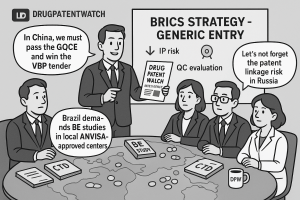
Passing GQCE is not merely a regulatory milestone. It is the prerequisite for participating in VBP tenders, which dominate hospital channel sales for most therapeutic classes.
What VBP Does to Generic Drug Economics — and Who Survives
Volume-Based Procurement operates as a national centralized tender system. Pharmaceutical companies bid for contracts to supply public hospitals across entire provinces or the whole country. The reward for winning is guaranteed volume at scale. The cost is severe: winning bids routinely reflect discounts of 50% to 90% from previous prices.
The economic logic of VBP is stark. A company that wins a VBP tender for a high-volume product like metformin, amlodipine, or atorvastatin may be receiving a fraction of its previous margin per unit. If it loses, it may lose the hospital channel entirely for that molecule. VBP has created a winner-take-all dynamic in which manufacturing scale and cost efficiency are more important than brand equity, sales force coverage, or legacy market relationships.
For foreign generic manufacturers evaluating China market entry, VBP requires a fundamental reassessment of target product selection. High-complexity generics — modified-release formulations, transdermal delivery systems, sterile injectables, specialty APIs with limited synthetic routes — are less likely to face VBP price destruction because fewer manufacturers can produce them to GQCE standards. Simple oral solids in competitive therapeutic classes with multiple GQCE-passing domestic manufacturers will be subject to brutal VBP pricing within one or two tender cycles. Product selection strategy for China must model VBP exposure as a central variable, not a footnote.
How China’s Patent Linkage System Works — and Why the 9-Month Stay Matters
China’s patent linkage system, effective July 2021, introduced US-style pharmaceutical patent enforcement at the regulatory level. The NMPA established the China Patent Information Registration Platform for Marketed Drugs (CPIRPMD) — the functional equivalent of the FDA’s Orange Book — where innovator companies list patents covering their approved drugs.
When a generic manufacturer submits an ANDA to the NMPA, it must file a declaration for each listed patent. Four declaration types exist. A Type IV declaration — asserting that the listed patent is invalid or will not be infringed by the generic — triggers the linkage mechanism. The generic applicant must notify the patent holder. The patent holder then has 45 days to file a lawsuit or an administrative complaint with the China National Intellectual Property Administration (CNIPA). If litigation is filed, the NMPA imposes an automatic nine-month stay on the generic’s approval.
The nine-month stay is not analogous to the 30-month stay under the US Hatch-Waxman framework. It is shorter and has a fixed endpoint. After nine months, the NMPA can proceed with approval regardless of whether the litigation has concluded. This creates a different pacing dynamic than in the United States, where 30-month stay periods often expire before courts reach final judgment.
China also offers 12 months of market exclusivity to the first generic manufacturer that successfully challenges an innovator’s patent and obtains marketing approval. This first-to-file incentive is designed to encourage patent challenges rather than passive waiting for patent expiry. Combined with the GQCE requirement as a prerequisite, it creates a race dynamic in which the first company to both pass GQCE and win a patent challenge collects a meaningful exclusivity window.
Data exclusivity of up to six years applies to innovative new drugs registered with the NMPA, preventing other applicants from relying on the innovator’s clinical trial data during that protection period.
What Investors Are Watching in China’s Generic Drug Market
Portfolio managers and institutional investors tracking China’s generic pharma exposure focus on a specific set of variables: GQCE pass rates for target molecules, VBP tender round timelines for relevant therapeutic classes, the pipeline of Type IV declarations being filed at the NMPA, and the consolidation trajectory among domestic generic manufacturers. Companies like CSPC Pharmaceutical, Sino Biopharmaceutical, and Humanwell Healthcare have built substantial market positions through GQCE compliance and VBP strategy. Foreign players including Mylan (now Viatris), Sandoz, and Teva have varying levels of China market exposure and face different risk profiles depending on the degree to which their China portfolios are concentrated in VBP-exposed therapeutic classes.
South Africa: SAHPRA’s EMA Alignment and the Gateway to Sub-Saharan Africa
How SAHPRA’s Risk-Based Assessment Process Has Changed Approval Timelines
The South African Health Products Regulatory Authority replaced the Medicines Control Council (MCC) in 2018. The MCC’s most significant legacy problem was an enormous backlog of unreviewed applications, with median approval times for generic medicines under the old system reaching 2,092 calendar days — nearly six years. SAHPRA’s mandate included clearing that backlog and implementing a faster, more systematic review process.
The new risk-based assessment (RBA) pathway has reduced median approval times for generic medicines to approximately 511 days, as measured in a 2023 study assessing SAHPRA’s performance between 2011 and 2022. 511 days is still substantially longer than FDA, EMA, or even CDSCO target timelines. But the directional improvement is significant, and SAHPRA’s reliance pathway — which allows abridged review for drugs already approved by recognized regulatory authorities — has the potential to reduce timelines further for well-prepared applicants.
Generic medicine applications in South Africa are categorized as “multisource” product applications. They are submitted in CTD or eCTD format, with SAHPRA having moved actively toward eCTD to align with international norms.
Why SAHPRA’s EMA Harmonization Creates Regulatory Strategy Efficiency
SAHPRA’s Quality and Bioequivalence guideline (SAHPGL-PEM-02) explicitly states that SAHPRA has aligned its policies and procedures with those of the EMA, endorsing the principles contained in EMA bioequivalence guidelines. This harmonization is not aspirational — it is operationalized in SAHPRA’s review process.
In practical terms, this means a company with an EMA-approved generic can submit to SAHPRA using substantially the same scientific data package. The reference product used in BE studies can often be an innovator product sourced from EU or US markets, with appropriate justification. This positions South Africa as an efficient “fast-follower” market for companies already developing products for European approval: the incremental investment to add a SAHPRA filing to an EMA-directed development program is substantially lower than building a standalone South Africa submission from scratch.
SAHPRA’s reliance pathway formalizes this logic. An abridged review relying on an EMA approval can move significantly faster than a de novo review, reducing both the timeline and the regulatory affairs resource commitment.
South Africa’s IP Framework: Depository Patents and the Emerging Patent Declaration
South Africa has historically operated a depository (non-examining) patent system. Patents were granted based on administrative compliance, without substantive examination of novelty, inventive step, or utility. This created a permissive patenting environment where secondary patents on known molecules — salt forms, polymorphs, new formulations, new indications — were routinely granted without the rigorous scrutiny they would face at the USPTO, EPO, or CNIPA.
The consequence is that many patents in South Africa’s pharmaceutical registry are “weak” in the sense that they would likely not survive a challenge. For generic manufacturers with strong invalidity arguments, this creates a relatively low-cost patent challenge environment compared to the United States or China.
South Africa does not have patent linkage or data exclusivity. SAHPRA’s approval process is legally independent of the patent system. Parallel importation is permitted under South African law, and the government has actively used price comparison mechanisms to maintain affordable drug access. Generic substitution is encouraged.
The SAHPRA eCTD specification includes a formal “Patent Declaration” section (m1-2-4-patent-declaration) in its Module 1 structure. The legal weight and enforcement implications of this declaration remain to be fully tested in South African pharmaceutical practice. Its inclusion in the dossier requirements signals a potential directional shift toward greater patent-regulatory integration, short of formal linkage. Manufacturers should treat this as an evolving area requiring active legal monitoring.
Comparative Analysis: BRICS Patent Linkage, Exclusivity, and Launch Risk
Which BRICS Markets Allow At-Risk Generic Launches
How Loss of Exclusivity Plays Out Differently in Each Market
Loss of exclusivity (LOE) events in the United States or EU do not automatically translate into generic entry opportunity across BRICS. Each jurisdiction has its own patent clock, its own data exclusivity timeline (if applicable), and its own FTO landscape.
Rivaroxaban’s compound patent expired in the United States and certain EU markets between 2020 and 2024. In Brazil, patent expiry timelines may differ depending on when the Brazilian INPI patent was filed and whether any secondary patents covering Bayer’s specific formulation remain in force. In China, the NMPA’s patent registry would need to be checked for listed patents and their expiry dates, as would any data protection period covering the specific NMPA registration.
This market-by-market LOE analysis is not a one-time exercise. Patent status changes through litigation, term extensions in some jurisdictions, and new secondary patent filings. Continuous patent surveillance is a prerequisite for accurate BRICS market timing.
Bioequivalence Strategy Across BRICS: Where You Can Cross-Leverage Data and Where You Cannot
Which BRICS Markets Accept Foreign Bioequivalence Data
A globally efficient BE study strategy requires understanding which markets will accept data generated outside their borders and which require in-country studies.
Russia through the EAEU framework is the most permissive. Foreign BE data is generally accepted, making it the most accessible market for companies with existing EU or US BE packages. South Africa, through EMA harmonization, also accepts BE data conducted against EU or US reference products with appropriate justification and an EMA-recognized comparator rationale.
India requires comparison against the Indian Reference Listed Drug (RLD), which is the specific comparator designated by CDSCO for each molecule. If the Indian RLD is identical in formulation and bioavailability profile to the US or EU comparator, the data may be cross-referenced, but the CDSCO’s specific RLD designation governs. In practice, the Indian regulatory environment is pragmatic on this point, particularly for molecules where domestic formulation versions closely match international standards.
China requires comparison against the innovator reference drug designated in the GQCE program. This may necessitate new studies using the specific Chinese-market innovator product as the comparator.
Brazil is the most restrictive. Studies must be conducted at ANVISA-certified in-country centers against the Brazilian reference product. There is no mechanism to substitute foreign BE data for Brazilian regulatory purposes, regardless of how well-controlled the foreign study was.
How to Sequence BRICS Market Entries for Maximum Commercial Return
The Three-Tier Entry Strategy
A rational BRICS sequencing strategy groups markets by the combination of regulatory timeline, IP risk, and commercial return potential.
Tier 1 — Fast regulatory pathways, no patent linkage, at-risk launch possible: India, Brazil. These markets allow regulatory approval to proceed in parallel with any ongoing patent disputes. Companies with strong non-infringement or invalidity positions can begin generating revenue before patent expiry, applying commercial pressure that often accelerates settlement or licensing discussions. India’s CDSCO approval target of nine months and Brazil’s 12-to-24-month ANVISA timeline support relatively near-term market entry for products entering development now.
Tier 2 — Moderate complexity, favorable harmonization: Russia (EAEU), South Africa. Russia’s EAEU target of 210 days offers a competitive timeline but requires the dual-track FAS defense preparation. South Africa’s RBA pathway, increasingly efficient for EMA-aligned submissions, makes it a logical add-on for companies building European dossiers. Both markets benefit from foreign BE data acceptance, reducing development investment.
Tier 3 — High complexity, significant IP gatekeeping, but highest-volume opportunity: China. The GQCE requirement, VBP competitive dynamics, and patent linkage system make China the most technically and legally demanding BRICS entry. It also offers the largest single-market opportunity. Companies that have passed GQCE, modeled VBP economics carefully, and built the legal capability to navigate the NMPA’s patent linkage system have access to a market growing toward $177 billion by 2028. The investment required is proportionate to that prize.
Revenue at Risk from the 2025-2030 Patent Cliff: Which Molecules Warrant BRICS Priority
Products losing exclusivity through 2030 with significant BRICS commercial opportunity include oncology agents (lenalidomide, ibrutinib, palbociclib, osimertinib where jurisdictional exclusivity timelines allow), immunology drugs (ustekinumab, secukinumab), cardiovascular agents (sacubitril/valsartan, rivaroxaban, apixaban), and metabolic drugs (semaglutide, after exclusivity expiry; GLP-1 receptor agonists represent a complex secondary patent landscape warranting detailed FTO analysis).
GLP-1 receptor agonists deserve specific attention. Semaglutide’s commercial dominance — Ozempic and Wegovy collectively generated over $13 billion in Novo Nordisk revenue in 2023 — has made it the highest-priority target for global generic development. Novo Nordisk holds extensive secondary patents covering specific formulations, delivery devices, and methods of use. The compound patent status varies by jurisdiction. In Brazil and India, the secondary patent thicket is potentially more vulnerable to challenge than in the United States. BRICS-targeted generic semaglutide strategies are already in development at multiple companies in India and China.
Regulatory Intelligence as Competitive Advantage: Freedom-to-Operate in Five Markets
Why FTO Analysis Must Be Jurisdiction-Specific for BRICS Submissions
A freedom-to-operate (FTO) analysis conducted only against the US patent registry is insufficient for BRICS market entry decisions. Patent portfolios are filed separately in each jurisdiction, and innovators do not always pursue identical secondary patent strategies across markets. A formulation patent granted and maintained in the United States may have been abandoned in Brazil. A method-of-use patent that would survive scrutiny at the USPTO may fail Section 3(d) analysis in India.
This means BRICS FTO analysis requires country-specific patent landscape searches in each registry: INPI (Brazil), ROSPATENT (Russia), the Indian Patent Office, CNIPA (China), and the South African Patents Office (CIPC). For each relevant molecule, the FTO team must identify which patents are in force, assess their validity under local law, and model the litigation risk profile for each market independently.
The cost of this five-market FTO exercise is real. The cost of skipping it — launching against an unexpectedly strong secondary patent in China’s linked system or triggering an FAS investigation in Russia without a prepared defense — is larger.
How Paragraph IV Litigation Intelligence in the US Informs BRICS Strategy
Patent challenges filed under the Paragraph IV ANDA pathway in the United States generate public court decisions that contain detailed technical and legal analysis of innovator patent claims. A US district court decision finding that a formulation patent covers only a narrow range of excipient concentrations may directly support an invalidity argument against the same patent family in Brazil. A successful invalidity finding in US litigation on a crystalline form patent may have persuasive — though not binding — value in Indian or South African proceedings.
Tracking active Paragraph IV litigation in the United States is therefore a source of competitive intelligence for BRICS market entry decisions. A molecule where multiple generic filers have contested the innovator’s secondary patents, and where early court decisions suggest the patents are weak, is a more attractive at-risk launch target in Brazil or India than a molecule where US courts have consistently upheld the innovator’s IP position.
Common Investor Questions About BRICS Generic Drug Market Entry
What Is the Total Addressable Market for Generic Drugs in BRICS Through 2030?
The combined BRIC market (Brazil, Russia, India, China) was $168.5 billion in 2023. China projects to $177.2 billion by 2028. Brazil to $14.4 billion, India to $31.5 billion. South Africa adds approximately $3-5 billion in generic pharmaceutical revenue with higher growth in institutional procurement as universal healthcare coverage expands. The total BRICS generic addressable market through 2030 approaches $250 billion annually, making it the single largest growth region for the global generics industry.
Which BRICS Market Offers the Best Risk-Adjusted Return for a New Generic Entrant?
There is no single answer across all product types. For small molecule oral solids in high-volume therapeutic classes, India offers the most favorable combination of fast regulatory timelines, no patent linkage, well-developed manufacturing infrastructure, and minimal data exclusivity barriers. For specialty products — sterile injectables, complex formulations, branded generics — China’s GQCE + VBP system may reward the manufacturing investment with substantial contracted volume.
For companies primarily building European regulatory packages and seeking incremental international coverage, South Africa’s EMA harmonization makes it the most efficient add-on market by dossier cost.
For companies willing to accept structured litigation risk in exchange for early commercial entry on high-value molecules, Brazil’s no-linkage, no-exclusivity framework is the most legally advantageous launch jurisdiction in the Americas.
How Does China’s Volume-Based Procurement Affect Generic Drug Valuation
VBP fundamentally alters the discounted cash flow model for China-facing generic drug assets. Pre-VBP revenue assumptions for Chinese hospital channel sales cannot be carried forward into post-VBP forecasts. Winning a VBP tender for a high-volume molecule generates guaranteed revenue at dramatically reduced margins; losing it may eliminate the hospital channel entirely.
Investors and acquirers evaluating generic companies with China exposure need to model VBP tender timing, competitive bid intensity by therapeutic class, and the proportion of revenue generated from VBP-eligible versus specialty-protected products. Companies with portfolios concentrated in complex generics, injectables, or niche oral formulations face less VBP price destruction than those competing in high-volume commodity oral solid classes.
Is BRICS Expansion Worth the Regulatory and IP Investment for a Mid-Size Generic Company?
The answer depends on development cost amortization. A mid-size generic company that has already spent $3-5 million developing a BE package and CMC dossier for the United States or EU is in a fundamentally different position than one contemplating BRICS entry from zero. For the former, the incremental cost to file in India or South Africa — markets that accept much of the same scientific data — is a fraction of the original development investment.
The calculation is more complex for Russia (EAEU) and China, which require more market-specific preparation. But for a company with a five-to-ten product portfolio and established manufacturing quality systems, a phased BRICS entry program represents a rational allocation of commercial development capital.
Key Takeaways
Five points define the strategic landscape for generic manufacturers approaching BRICS markets.
First, these are not a single market. Brazil, Russia, India, China, and South Africa have different regulatory agencies, different IP frameworks, different BE study requirements, and different procurement mechanisms. A strategy built around any one of them will not work across all five.
Second, quality is now the primary competitive differentiator in China and an increasingly important one in India. China’s GQCE has eliminated substandard manufacturers and made high-quality CMC capability a prerequisite for market access. India’s quality heterogeneity creates differentiation opportunity for companies with established FDA or EMA approval track records.
Third, patent linkage creates fundamentally different strategic environments. China’s linked system makes it a litigation-driven market where patent challenge strategy determines approval timing. Brazil, India, and South Africa’s no-linkage systems make at-risk launch a viable commercial tool for companies with strong IP positions. Russia’s post-approval FAS enforcement mechanism creates a hybrid risk that is often underestimated.
Fourth, dossier efficiency — sharing scientific data across markets while adapting Module 1 locally — is the primary lever for controlling BRICS market entry cost. Russia’s foreign BE data acceptance and SAHPRA’s EMA harmonization are the two largest sources of cross-market leverage.
Fifth, the patent cliff running from 2025 to 2030 creates a defined window of maximum opportunity. The molecules with the highest commercial value — GLP-1 receptor agonists, oncology immunotherapy agents, newer cardiovascular drugs — are also the most IP-complex. Companies that invest now in jurisdiction-specific patent surveillance, FTO analysis, and litigation-readiness assessments will be positioned to move when exclusivity windows open.
Frequently Asked Questions
Which BRICS country has the shortest generic drug approval timeline?
Russia’s EAEU target of 210 days (approximately seven months) is the most aggressive official target. India’s CDSCO stated goal is approximately nine months. Both figures exclude clock-stops for applicant responses and should be treated as best-case targets rather than guarantees. For products with patent complications, China’s nine-month linkage stay creates a predictable minimum review period for contested molecules, separate from any GQCE timeline.
Can bioequivalence data from a US FDA study be used in all BRICS submissions?
No. Brazil requires in-country BE studies at ANVISA-certified centers against the Brazilian reference product. China’s GQCE requires comparison against the designated innovator reference in the Chinese market. India requires comparison against the Indian RLD. Russia and South Africa accept foreign BE data with appropriate justification, making them the most cross-leverageable markets for companies with US or EU BE packages.
How does Section 3(d) of India’s Patents Act affect generic entry strategy?
Section 3(d) bars patents on new forms of known substances unless enhanced therapeutic efficacy is demonstrated. This directly limits the secondary patent thicket that innovators can establish around a known active pharmaceutical ingredient in India. Salt forms, polymorphs, new formulations, and new delivery systems that would receive patent protection in the United States may be unpatentable in India. This makes India particularly accessible for early generic entry on drugs where the compound patent has expired but where innovators rely heavily on secondary formulation or polymorph patents to extend market exclusivity.
What is the commercial risk of an at-risk launch in Brazil?
An at-risk launch in Brazil means commencing commercial sales while the innovator’s patent remains in force. ANVISA’s marketing authorization is fully valid; there is no regulatory barrier. The commercial risk is a patent infringement lawsuit filed by the innovator in Brazilian federal courts, potentially seeking damages and an injunction. The magnitude of that risk depends on: the strength and scope of the patent in question, the quality of the generic company’s non-infringement or invalidity arguments, Brazil’s general judicial treatment of pharmaceutical patents, and the commercial value of the product. For products where the innovator holds only secondary patents of questionable validity, the at-risk calculus has historically favored aggressive generic entry.
How should generic companies approach the GLP-1 receptor agonist patent landscape in BRICS markets?
Semaglutide and tirzepatide are the highest-commercial-value GLP-1 targets but carry complex secondary patent estates. In BRICS markets, the key questions are: which secondary patents (formulation, device, method-of-use, salt, polymorph) have been filed and granted in each jurisdiction, what is their expiry profile, and how vulnerable are they to challenge under local law. India’s Section 3(d) creates specific invalidity arguments against delivery system and formulation patents. Brazil’s no-linkage framework allows regulatory approval to proceed while patent disputes are litigated. China’s patent linkage system means a Type IV declaration on any listed GLP-1 secondary patent will trigger a nine-month stay and possible litigation. Each market requires a standalone GLP-1 FTO and litigation strategy.
This analysis draws on public regulatory guidance from ANVISA, CDSCO, NMPA, SAHPRA, and EAEU documentation; published pharmaceutical market data from Precedence Research and IQVIA; academic literature on SAHPRA and CDSCO regulatory performance; and publicly reported legal proceedings including the AstraZeneca/Axelpharm osimertinib FAS case. Revenue projections and market size figures are derived from industry sources and should be modeled with appropriate sensitivity analysis.