For pharma IP teams, portfolio managers, R&D leads, and institutional investors operating in or entering the Russian market.
1. Why Russian Patent Term Extensions Matter More Than Most IP Teams Realize
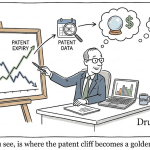
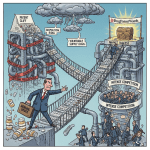
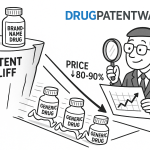
Russia is the world’s sixth-largest pharmaceutical market by volume and among the top ten by revenue, with the domestic market exceeding RUB 2.5 trillion annually by recent estimates. For an innovator company, a patent cliff in Russia is not a minor accounting event. It is a discrete revenue shock, particularly for drugs where Russian-manufactured generics can reach price parity within six to eighteen months of patent expiry.
Patent-term extensions (PTEs) are the primary legal mechanism to defer that shock. Under Russian law, a PTE extends the protection period granted to a pharmaceutical patent beyond the standard 20-year term, compensating the patentee for the time spent navigating mandatory clinical trials and the Ministry of Health’s marketing authorization process. That regulatory period routinely consumes eight to twelve years of nominal patent life.
The math is straightforward. A patent filed in year one and approved for marketing authorization twelve years later has, at best, eight years of protected commercial life remaining. A PTE of up to five years can restore that to thirteen years, which at any meaningful revenue rate represents substantial value.
What makes Russia distinct from Western markets is not the principle behind the PTE mechanism (it parallels the EU’s Supplementary Protection Certificate system in intent) but the execution. Since 2015, Rospatent has moved to a strict-scope supplementary patent model that demands narrow claim alignment with the approved product. Companies that drafted their original patents for EU or US prosecution without accounting for Russian PTE mechanics routinely find themselves holding ineligible or sharply diluted positions in Moscow.
This guide covers the full architecture of Russian PTEs: the legal text, Rospatent’s examination practice, claim strategy, IP Court precedents, valuation implications, and the emerging challenge from generic manufacturers who now have cleaner legal tools to attack granted extensions.
2. The Legal Architecture: Article 1362 and the Supplementary Patent Regime
2.1 Article 1362 of the Civil Code: Text and Intent
The statutory basis for pharmaceutical PTEs in Russia is Article 1362(2) of Part IV of the Civil Code of the Russian Federation. The provision covers patents for medicinal products, pesticides, and agrochemicals, all of which require a government permit (marketing authorization) before commercial exploitation. The extension compensates for the time between patent filing and first marketing authorization in Russia, net of five years. The maximum extension is five years.
The Civil Code text was amended in October 2014, with the amendment entering into force on 1 January 2019. That amendment formalized what administrative practice had already been doing since 2015: replacing a simple extension of the original patent’s claims with the issuance of a separate supplementary patent whose claims are restricted to the approved product.
Before that amendment, the extension procedure was simpler. The original patent was extended in its full granted scope, provided the marketed product or its active agent was covered by at least one claim. No specific disclosure of that exact compound in the specification was required; coverage was enough.
After January 2019, that is no longer the case. A supplementary patent issues in place of an extended original patent, and its claims must track the approved product precisely.
2.2 The Supplementary Patent: Structure and Scope
The supplementary patent is a distinct IP instrument. It has its own registration number, its own claim set, and its own validity period equal to the approved extension term. It is also independently challengeable, a point with significant competitive implications addressed in Section 10.
The supplementary patent’s claims must be derived from the features already present in the granted claims of the original patent. A patentee cannot introduce entirely new features from the specification; the amendment must work within existing claim language. Rospatent examines whether each feature of the proposed supplementary patent claim maps to: (a) a feature expressly recited in the original granted claims, and (b) the characteristics of the approved drug product as recorded in the marketing authorization, the pharmacopoeia monograph, or the registration dossier.
For a small-molecule compound claim, this typically means narrowing a Markush formula to the specific active ingredient, specifying the relevant salt form as ‘pharmaceutically acceptable salt,’ and potentially identifying the specific stereochemical configuration if the approved drug is a single enantiomer or diastereomer.
For a biological product such as a monoclonal antibody, the supplementary patent claim must identify the antibody by name, by its mechanism of action in the approved indication, and by amino acid sequence. Broad functional claims that encompass multiple antibodies with the same target mechanism will not survive the narrowing process.
2.3 Filing Deadline: The Six-Month Rule
The application for a PTE must reach Rospatent within six months from whichever date occurs later: the date of the first Russian marketing authorization for the drug, or the date of patent grant. If the marketing authorization arrives before the patent grants, the clock starts on patent grant. If the patent was already in force when the marketing authorization issued, the clock started on the marketing authorization date.
Missing this window is fatal. There is no provision for late filing, no equitable tolling mechanism, and no administrative petition process to restore the right. The IP Court has consistently refused to reinstate lapsed PTE rights regardless of the circumstances behind the delay.
One practical hazard: the official marketing authorization certificate and its registration in Rosminzdrav’s public database do not always appear simultaneously. Companies that rely on the database publication date rather than the actual issuance date have lost days of their six-month window. The correct approach is to monitor the Ministry of Health’s issuance process directly, not to wait for database confirmation.
3. Russia vs. EU SPC: A Technical Comparison
Both the Russian PTE and the EU Supplementary Protection Certificate address the same underlying problem: the regulatory approval process consumes years of the nominal 20-year patent term, leaving insufficient protected commercial life to recoup R&D investment. The compensation formula is also nearly identical. Both cap the extension at five years, both calculate the extension as the interval from patent filing to first marketing authorization minus five years, and both base eligibility on the first authorization in the relevant territory.
The structural differences matter considerably for international IP strategy.
Feature
Russia (PTE / Supplementary Patent)
EU (Supplementary Protection Certificate)
Governing law
Article 1362(2), Civil Code RF
Regulation (EC) No 469/2009
Instrument type
Separate supplementary patent with restricted claims
Product claim, active ingredient claim, or combination claim
Markush claim treatment
Must narrow to specific compound in approved drug
Active ingredient must fall within claim scope
Pediatric extension
Not available
Up to 6 additional months
Maximum extension
5 years
5 years (6.5 years with pediatric)
Challenge mechanism
IP Court adversarial action (Geropharm precedent)
National court or patent office opposition procedures
Multiple PTEs on same marketing authorization
Permitted
Not permitted (one SPC per product per patent)
Multiple PTEs on same patent (different MAs)
Permitted
One SPC per patent
Two differences stand out for IP strategy. First, Russia has no pediatric extension. Companies that structure their global IP roadmap around a 6-month pediatric bonus in Europe must account for a five-year maximum in Russia with no top-up. Second, Russia permits multiple supplementary patents on the same patent for different marketing authorizations, and also permits the same marketing authorization to support PTEs on multiple patents. This opens evergreening pathways discussed in Section 12, though those pathways are narrowing under recent Rospatent practice.
4. Eligibility in Detail: Which Patent Types Qualify and Why
4.1 Product Claims: The Core of PTE Eligibility
Russian PTEs are primarily available for patents claiming the pharmaceutical product itself: a specific chemical compound (whether defined by a structural formula or a Markush group), a pharmaceutical composition or formulation, or a biological entity such as a monoclonal antibody, a recombinant protein, or a nucleic acid therapeutic.
The requirement is that the patent must actually disclose the active agent of the approved drug, not merely cover it by the logical scope of a broad claim. That distinction, which seems subtle, has driven most of the IP Court litigation in this space. A Markush claim covering 10,000 theoretical compounds all covers eribulin mesylate in the mathematical sense. But post-2015, Rospatent requires that the specification of the original patent actually characterize the specific compound in the approved drug, not just describe a class within which it falls.
4.2 Why Use Claims and Method Claims Generally Do Not Qualify
Claims directed to methods of treatment (‘a method of treating cancer comprising administering compound X’), preparation processes, or new uses of known products are generally outside PTE eligibility in Russia. The rationale in the Civil Code and in Rospatent’s administrative guidance is that the extension compensates for the delay in commercializing the product, not the delay in exploiting a particular method or use.
This was not always absolute. Russian patent No. 2260013 (Bridion/Sugammadex) received a PTE that was based in part on use claims, under the pre-2015 regulatory framework. Under current practice, Rospatent would likely reject that approach. IP teams should treat use and method claims as supplementary protection at best, not as PTE vehicles.
4.3 Biologics: A More Complex Eligibility Analysis
Biological products require individualized analysis. A patent on a monoclonal antibody defined solely by its target (e.g., ‘an antibody that binds to PD-1’) will not support a supplementary patent without further narrowing to the specific antibody in the approved drug, identified by at least its CDR sequences or full amino acid sequence.
The Rospatent examination practice for antibody patents requires the supplementary patent claim to specify: the antibody’s INN or trade name, its therapeutic mechanism in the approved indication, and its amino acid sequence. Claims defined purely by binding affinity or functional parameters, without sequence-level identification, are routinely rejected or forced to such narrow scope that protection becomes commercially marginal.
For gene therapies, cell therapies, and mRNA products, the landscape is still developing. Russia’s patent system has limited precedent on these product types in the PTE context. Companies preparing to file PTEs for these products should consult current Rospatent guidance and, where possible, coordinate with Russian local counsel before the marketing authorization process concludes.
Key Takeaways: Section 4
Anchor PTE strategy in product claims, drafted from filing with the specific active ingredient in mind. Method and use claims are prosecution tools, not PTE anchors. Biologic patents need sequence-level specificity in both the base patent and the supplementary patent claim set. File with Russia’s PTE mechanics in mind from day one, because the claim architecture that works for EPO prosecution often does not map cleanly to what Rospatent needs to grant a supplementary patent.
5. The Pre- and Post-2015 Divide: How the Rules Changed Everything
5.1 The Old Framework (Pre-2015)
Under the regulations in force from 2003 to late 2015, the PTE process was straightforward and patentee-favorable. When a PTE was granted, the original patent continued in force for the extended term with its full granted claim scope. The only requirement was that the marketed product (or its active agent) fell within the scope of at least one claim. No disclosure of that specific compound in the specification was required. No narrowed supplementary patent was issued.
This framework allowed innovators to maintain broad protection during the extension period. A Markush patent covering thousands of compounds could remain in force with full scope for five additional years, blocking not just the exact marketed drug but all compounds within the claim.
5.2 The 2015 Regulatory Revision and Its Operational Effect
New patent-term extension regulations entered into force on 8 January 2016. The structural change was the introduction of the supplementary patent, whose claims are narrowed to the approved product. The October 2014 Civil Code amendment formalized this structure in statute, effective January 2019, but Rospatent applied the supplementary patent model administratively from January 2016 onward.
The practical impact: the breadth of protection during the extension period collapsed to match the approved product only. A company that had extended a broad Markush patent under the old rules retained that broad protection for the full extension period. A company filing after January 2016 received protection only for the single compound, the specific salt form, and the particular formulation approved by the Ministry of Health.
5.3 Transitional Positions and the Halaven Ruling
The Halaven case (see Section 14) addressed what happens to extensions filed before the 2015 rule change. The IP Court held that PTEs filed under the pre-2015 regime were governed by the rules in force at the time of filing. The original broad scope was valid and could not be retroactively narrowed by the new regulations.
This means two parallel regimes coexist in the Russian market right now. Patents extended before 2016 may still carry broad claim scope during their extension periods. Patents extended after January 2016 carry narrowed supplementary patent claims. IP teams auditing a competitor’s position need to identify which regime applies to each extended patent before concluding what is and is not blocked.
6. Claim Drafting for PTE Success: A Technical Roadmap
6.1 The Foundational Principle: Draft for the Approved Product from Filing
The single most consequential decision a pharmaceutical IP team makes for Russian PTE viability is how the original patent application is drafted. A patent prosecuted exclusively for US or EPO audiences, with Markush claims optimized for broad genus protection and use claims layered on top, will frequently encounter difficulties when a Russian supplementary patent application is filed years later.
Rospatent requires that the features of the supplementary patent claim be derivable from the granted claims of the original patent. The specification can inform the interpretation of those features, but it cannot introduce new features that were absent from the original claims. If the specific stereochemical configuration of the active agent was not recited anywhere in the original claims, and the approved drug is a specific stereoisomer, Rospatent may require explicit stereochemical specification in the supplementary patent that the original patent simply cannot support.
The Gilead/Sovaldi case turned on exactly this point (see Section 14). The original patent claimed ‘a stereoisomer’ without specifying which one. The approved drug sofosbuvir is the (S)-stereoisomer. Rospatent rejected the PTE application on the grounds that the specific stereoisomer was not adequately characterized in the original patent. The IP Court ultimately overturned that rejection, finding that sufficient disclosure could be inferred from the specification, but the case illustrates the litigation risk created by imprecise claim drafting at the application stage.
6.2 Markush Claim Strategies
For patents covering families of compounds, the most defensible PTE approach involves drafting the original patent with a dependent claim that specifically claims the intended active agent, either by name or by an unambiguous structural recitation. This creates a clean, documented basis for the supplementary patent claim without requiring Rospatent to accept a narrowing argument about the Markush scope.
Where the original patent lacks this dependent claim, the supplementary patent application must argue that the specific compound is disclosed, even if only implicitly, within the Markush group’s specification. That argument is defensible but creates prosecution risk and Rospatent often pushes back with requests for further narrowing that may go beyond what the specification supports.
For salts, Rospatent’s current practice allows the supplementary patent to retain the feature ‘pharmaceutically acceptable salt’ as a general descriptor when the approved drug is a specific salt form. That general descriptor covers the specific salt, so the supplementary patent claim does not need to name the precise salt explicitly. This is one of the few areas where Rospatent’s practice remains somewhat flexible.
6.3 Dependent Claims as PTE Insurance
Building a comprehensive dependent claim structure in the original patent filing is one of the most cost-effective risk management techniques in Russian pharmaceutical IP practice. If Rospatent finds the independent claim too broad for the supplementary patent, it can reject the entire application or demand narrowing to the point where a dependent claim becomes the effective anchor.
A patent that has a dependent claim directly reciting the compound ‘eribulin’ within a Markush framework gives the supplementary patent applicant a clean fall-back position. A patent with only independent Markush claims requires a more complex, argument-based prosecution.
6.4 Divisional Applications as Flexibility Tools
Maintaining a pending divisional application allows a patentee to tailor claims specifically for PTE purposes after the marketing authorization profile is clearer. If the approved indication differs from the one initially contemplated during original prosecution, a divisional application can be prosecuted with claims directly aligned with the approved product and indication, providing a cleaner base for the supplementary patent.
This is particularly relevant for biologics, where a monoclonal antibody may receive regulatory approval in one indication first (e.g., oncology) with subsequent approvals in autoimmune disease. The original patent may not optimally characterize the antibody in its second indication. A pending divisional can capture the indication-specific claim set that best supports a second supplementary patent application based on the second marketing authorization.
Key Takeaways: Section 6
Draft Russian-facing pharmaceutical patents with at least one dependent claim that specifically recites the intended active agent. Use Markush structures for breadth but anchor PTE positions in specific dependent claims. Maintain divisional applications for products likely to receive multiple sequential marketing authorizations. ‘Pharmaceutically acceptable salt’ remains an acceptable general descriptor in supplementary patent claims.
7. The Application Process with Rospatent: Documentation, Timelines, and Pitfalls
7.1 Required Documentation
A Rospatent PTE application requires the following components, and incomplete submissions are routinely rejected without substantive examination:
A proposed claim set for the supplementary patent, consisting of both independent and dependent claims, narrowed to the approved product. Each claim feature must be explained, with explicit reference to its presence in the original granted claims and its correspondence to the approved product’s characteristics as documented in the marketing authorization. An amended claim set that maps precisely to the Ministry of Health registration dossier.
A notarized copy of the first Russian marketing authorization. Not a certified copy, not a database printout: a notarized copy of the original certificate as issued by Roszdravnadzor or the Ministry of Health. Applicants who submit uncertified document copies frequently receive preliminary refusals requiring re-submission, burning weeks of examination time.
Documents establishing identity between the patented product and the approved drug product. These typically include the INN-to-patent correspondence, extracts from the registration dossier confirming the active ingredient’s chemical name and CAS number, the package insert specifying composition, and if available, a relevant pharmacopoeia monograph. For small molecules, a reference to the Merck Index entry for the compound serves as strong supporting evidence. For biologics, sequence concordance data between the patent claims and the approved product’s characterization in the dossier is required.
A copy of the drug label as currently approved. Label language matters: if the label refers to the compound by a name or formula that differs from the patent’s claim language, Rospatent examiners may question the identity link.
7.2 The Examination Process
Rospatent’s examination of a PTE application focuses on four questions: Is the original patent still in force? Was the application filed within the six-month window? Does the patent disclose the active agent of the approved drug? Are the proposed supplementary patent claims appropriately narrow?
The last question consumes most examination time. Rospatent frequently issues preliminary refusals requesting further narrowing, additional evidence of identity, or claim amendments that go beyond the disclosure in the specification. These preliminary refusals are not final decisions; they are examination actions to which the applicant can respond. But each round of response adds time, and the original patent’s clock does not stop.
Where Rospatent’s examiner requests amendments that cannot be supported by the original patent’s specification, the applicant faces a choice: accept a narrower supplementary patent than desired, or contest Rospatent’s position administratively and then, if necessary, at the IP Court.
7.3 Eurasian vs. Russian National Patents: A Procedural Distinction
Companies holding Eurasian patents (issued by the Eurasian Patent Office under the Eurasian Patent Convention, which designates Russia as a member state) have a different procedural pathway. When a Eurasian patent covering Russia is extended by the EAPO, the result is a supplement to the original Eurasian patent indicating the extended claims and the approved product. A separate supplementary patent document is not issued. The protection instrument remains the original Eurasian patent, amended to reflect the restriction.
For Russian national patents, the outcome is a standalone supplementary patent document with its own registration number. Both pathways lead to the same substantive restriction: claims limited to the approved product. But the procedural differences in how the extended protection is documented, enforced, and challenged matter for IP portfolio management and due diligence.
8. IP Valuation: How a Russian PTE Affects Asset Value on the Balance Sheet
8.1 PTE Status as a Core Asset Driver
For any pharmaceutical product generating material revenue in Russia, the existence and scope of a valid PTE is a core driver of IP asset valuation. The additional years of exclusivity directly extend the discounted cash flow projection period before generic erosion begins. For a product generating, say, $100 million per year in Russian sales, a five-year PTE extension at a conservative 20% discount rate represents a net present value contribution of roughly $250 to $300 million to the patent’s asset value, depending on the erosion curve assumed for the post-patent generic entry period.
This is not a theoretical consideration. When pharma assets change hands in M&A transactions, PTE status in key markets is one of the first items examined in IP due diligence. A Russian PTE that extends exclusivity by five years on a blockbuster product adds measurable enterprise value. A PTE application that is pending or that has been rejected by Rospatent creates a contingent liability that must be flagged and risk-adjusted.
8.2 The Diluted-Scope Problem and Its Valuation Implications
The post-2015 supplementary patent model creates a subtler valuation issue: scope dilution. Even where a PTE is granted, the narrow supplementary patent may not protect the full commercial product ecosystem. If the innovator markets multiple dosage forms, formulations, or combination products, and the supplementary patent covers only the specific single-compound formulation in the original marketing authorization, the scope of protection during the extension period may be meaningfully narrower than during the original patent term.
Analysts and IP due diligence teams should distinguish between: (a) whether a PTE/supplementary patent exists, (b) what its claim scope covers, and (c) whether that scope is sufficient to block the specific generic entry threat. A supplementary patent that covers only a 250 mg tablet formulation does not block a generic manufacturer who enters with a 500 mg extended-release version that falls outside the supplementary patent’s claims.
8.3 PTE Challenges as Contingent Liabilities
Since the Geropharm vs. Novo Nordisk decision in October 2021 (see Section 10), granted PTEs and supplementary patents are more legally vulnerable than they were under the prior administrative procedure. The removal of the three-month challenge window and the reallocation of the burden of proof to an adversarial proceeding between patent holder and challenger means that a generic company can now build a sustained, well-documented invalidity case against a supplementary patent and bring it at any time.
For M&A purposes, a Russian PTE should now be analyzed not just for its existence and scope but for its litigation resilience. Does the supplementary patent claim set have any obvious vulnerability to the grounds of invalidity most commonly asserted? Is the identity link between the original patent’s disclosure and the approved product well-documented? Has the patent holder maintained an evidentiary record sufficient to defend the PTE in adversarial proceedings?
Investment Strategy Note: Section 8
For institutional investors with pharma exposure, PTE status in Russia is a material variable for any product deriving more than 5% of global revenue from the Russian market. A portfolio company that holds a strong, scope-appropriate Russian PTE on a key product has a longer-duration revenue profile than its nominal patent expiry date suggests. A portfolio company with a pending or rejected PTE application on its largest Russian product has a nearer-term generic entry risk than the patent expiry date alone indicates. Neither factor is typically captured in standard consensus revenue models.
9. Common Rejection Grounds and How to Overcome Them
9.1 Overly Broad Independent Claims
This is the most frequent ground for preliminary refusal. Rospatent’s position is that the supplementary patent claim must cover only the approved product, not the class of compounds within which it falls. When the original patent’s independent claim uses a Markush formula or a functional descriptor, the examiner will issue a refusal noting that the proposed supplementary patent claim does not sufficiently narrow to the specific active ingredient.
The response strategy is to work from dependent claims when available, or to argue that the Markush formula, read in light of the specification, unambiguously identifies the specific compound in the approved drug. This argument requires evidence: a copy of the registration dossier, the INN, the CAS number, structural identity documentation, and if possible a statement from the applicant’s chemists establishing that the compound is uniquely identified within the formula.
9.2 Insufficient Disclosure of the Active Ingredient
Where the original patent specification describes the active agent only at a high level of generality, without specific structural characterization, synthesis examples, or physicochemical data, Rospatent may find insufficient disclosure even if the compound is technically within the claim scope.
Post-2015 practice makes this particularly acute for biologics. An antibody described by its target and its IgG class, without sequence data, may not satisfy Rospatent’s disclosure requirements for the supplementary patent claim. The application response must provide the missing characterization data if it exists in the dossier, or alternatively argue that the specification contains sufficient enabling disclosure for the specific antibody in question.
9.3 Discrepancies Between Patent Claims and the Approved Product
Even minor apparent differences between the patent claim language and the approved product’s characteristics as described in the marketing authorization can trigger a rejection. If the patent claims ‘free base’ but the approved drug is the mesylate salt, the applicant must provide technical documentation establishing that the mesylate is a ‘pharmaceutically acceptable salt’ within the meaning of the claim.
If the patent claim describes a composition with components defined by weight percentage ranges, and the approved product uses concentrations that fall within those ranges but are not explicitly recited, Rospatent may request amendment to specify the exact concentrations from the marketing authorization, even if the broader ranges were valid in the original patent. This is one of the few places where Rospatent explicitly permits a narrowing that goes to specific point values rather than ranges, as long as those point values fall within the original claim scope.
10. The IP Court as a Strategic Tool: Appeals, Precedents, and Geropharm’s Ripple Effect
10.1 The Appeal Right and How to Use It
A Rospatent final refusal on a PTE application can be appealed to the Intellectual Property Court within three months of the refusal date. The appeal takes the form of a direct lawsuit against Rospatent, with the patent holder as plaintiff and Rospatent as defendant. The IP Court reviews the factual record, hears argument, and can either affirm the refusal or order Rospatent to grant the PTE.
The appeal is not a rubber stamp. The IP Court has demonstrated willingness to overturn Rospatent on grounds of legal error, as in the Gilead/Sovaldi case, where the Court found that Rospatent’s interpretation of ‘stereoisomer’ was legally incorrect. But the Court also requires a clear legal basis for reversal; dissatisfaction with the scope of Rospatent’s narrowing is not itself sufficient grounds. The appeal must identify a specific error of law or a material misapplication of the evidentiary standard.
10.2 Geropharm vs. Novo Nordisk: The Challenger’s New Weapon
The IP Court Presidium’s ruling in case SIP-461/2020 (October 18, 2021) restructured the litigation landscape for granted PTEs. Before that decision, a generic company challenging a PTE had to: file within three months of learning of the PTE, prove that its commercial interests were directly impaired, and bring its challenge through an administrative procedure against Rospatent with the patent holder as only a third party.
That procedural structure was hostile to challengers. Three months is insufficient time to build a detailed invalidity case. Having Rospatent as the defendant, rather than the patent holder, reduced the adversarial quality of the proceedings. And the burden of proof effectively lay with the generic challenger.
The Geropharm decision changed all three conditions. The three-month filing deadline was removed entirely. The proceeding is now adversarial between the generic company and the patent holder. Rospatent retains jurisdiction over administration of the PTE, but the patent holder must defend the validity of the supplementary patent’s claims in court, on the merits, with equal burden allocation.
For innovators, this means every supplementary patent is now a litigation target with a potentially indefinite exposure window. For generics, it means the IP Court is now a viable path to clearing supplementary patent claims that were granted on questionable bases, particularly pre-2019 applications where Rospatent’s examination standards were in flux.
The Geropharm case itself was dismissed, meaning the specific Novo Nordisk supplementary patent survived. But the procedural ruling stands, and it has already prompted generic companies to begin building challenge dossiers against supplementary patents on high-revenue products whose extended periods have not yet expired.
11. Biologics and Biosimilar Interchangeability: The Emerging PTE Frontier
11.1 The Regulatory Framework for Biologics in Russia
Russia’s regulatory framework for biologics and biosimilars is governed by Federal Law No. 61-FZ ‘On the Circulation of Medicines’ and the rules of the Eurasian Economic Union’s registration procedures. Unlike the US or EU, Russia does not have a formal pathway for biosimilar interchangeability designation, a status that would allow pharmacists to substitute a biosimilar for the reference biologic without prescriber approval. This regulatory gap has IP implications.
Because biosimilar interchangeability is not formally recognized, market access for biosimilars in Russia depends more heavily on physician adoption and tender pricing than on automatic pharmacy-level substitution. This means the practical barrier to biosimilar penetration is somewhat higher than in markets with interchangeability frameworks, which in turn changes the commercial calculus for PTE value on biologic reference products.
11.2 PTE Scope for Biologic Products and Why Sequence Claims Matter
For a biologic reference product protected by a supplementary patent, the scope of that patent is critical in determining what biosimilars it actually blocks. A supplementary patent claiming the antibody by amino acid sequence blocks biosimilars that use an identical sequence. It does not automatically block biosimilars with minor sequence variants that retain the same biological activity.
Under Russia’s patent system, biosimilar developers have used the ‘biologically equivalent’ argument to contest that a sequence-variant biosimilar falls outside the supplementary patent’s sequence-specific claims. This argument has had mixed success at Rospatent and in the IP Court, but it is a live issue. Innovators who want to use their supplementary patents to block sequence-variant biosimilars need to ensure their original patent claims encompass functional equivalents, not just the exact sequence, and that the supplementary patent is drafted to preserve as much of that functional scope as Rospatent will allow.
11.3 Technology Roadmap: Protecting a Biologic Product Through Its Commercial Lifecycle
A biologic product faces a sequence of IP vulnerabilities through its commercial life. The primary patent on the antibody sequence or the recombinant protein’s structure is the core asset. Supplementary patents extend that core protection. Layered on top are formulation patents (covering the specific buffer system, excipient composition, and storage conditions), manufacturing process patents (covering cell line, fermentation conditions, purification methods), and device patents (covering the delivery device or auto-injector). Each layer has different PTE eligibility characteristics.
For Russian purposes: the sequence/structure patent is the PTE-eligible anchor. Formulation patents can support independent PTEs if the approved product’s formulation is specifically claimed. Process patents generally are not PTE-eligible. Device patents covering the delivery system are typically not pharmaceutical product patents within the meaning of Article 1362 and do not qualify.
The roadmap for a biologic entering Russia should sequence the PTE applications to maximize the cumulative protected period. File the primary sequence patent PTE first. If a distinct formulation patent was granted separately and the formulation is specifically approved in the marketing authorization, file a separate PTE on that patent. Maintain divisional applications covering indication-specific claims for products likely to receive sequential approvals in new therapeutic areas.
12. Evergreening Tactics and Their Limits Under Russian Law
12.1 What Evergreening Means in the Russian Context
Evergreening refers to the strategy of filing additional patents on incremental improvements to an existing drug product, timing those filings to create overlapping protection periods that extend effective market exclusivity well beyond the term of the primary patent. Common evergreening instruments include patents on new crystalline forms (polymorphs), new salt forms, new formulations, new dosage forms, new delivery methods, and new therapeutic indications.
In the US and EU, evergreening has been extensively litigated and regulated. The FTC in the US and the European Commission have both taken enforcement positions against evergreening strategies that delay generic entry without providing meaningful patient benefit. Russia is now moving in a similar direction, though through different mechanisms.
12.2 Rospatent’s Increasing Scrutiny of Incremental Patent Applications
Rospatent has progressively tightened its patentability standards for pharmaceutical applications that are arguably incremental to a known active ingredient. The October 2018 amendments to the rules governing composition claims eliminated the ability to claim a pharmaceutical composition where the only distinctive feature is its intended use. If a composition with the same components was known, a new intended use does not render it novel under current Russian practice.
Polymorph patents face similar scrutiny. A new crystalline form of a known compound must demonstrate a genuine unexpected technical effect compared to the known form. Rospatent now requires in vivo experimental data demonstrating that the technical result (improved bioavailability, enhanced stability, altered solubility) is actually achieved. A paper prediction or in vitro dissolution data is insufficient.
Combination product patents, where a known active ingredient is combined with one or more known components, require synergy data covering the full range of ratios claimed in the combination claim. If the claim covers a 1:1 to 10:1 ratio of two components, Rospatent expects experimental synergy data across that range, not just at the specific formulation used in the approved product.
12.3 The FAS and Competition Law Constraints on Evergreening
Russia’s Federal Antimonopoly Service (FAS) has authority under Federal Law No. 135-FZ to challenge patent strategies that have the effect of restricting pharmaceutical market competition. FAS has been increasingly active in pharmaceutical IP disputes, particularly in the biologics space where reference product manufacturers have been accused of using patent clusters to delay biosimilar market entry.
While FAS action against evergreening patents has not yet produced the same volume of enforcement decisions as EU competition authorities, the agency’s stated policy orientation is hostile to patent strategies that it characterizes as delaying access to affordable medicines. Companies planning extensive patent lifecycle strategies for the Russian market should factor FAS scrutiny into their IP planning, particularly for products on the essential medicines list where pricing and access are under direct government oversight.
13. Investment Strategy: What PTE Status Signals to Portfolio Managers
Portfolio managers covering pharma and biotech need a framework for interpreting Russian PTE information when it appears in patent databases, clinical trial registrations, or company filings. The following signals are material:
A granted, scope-appropriate supplementary patent on a drug generating more than $50 million annually in Russian sales represents a concrete extension of the revenue-generating patent period. The practical LOE (loss of exclusivity) date for that drug is the supplementary patent expiry date, not the base patent expiry date. Models that use the base patent expiry date will systematically underestimate the duration of the company’s pricing power in Russia.
A pending PTE application that has not yet been decided represents a contingent asset. The probability of grant varies by claim type and prosecution history. Product claims with specific dependent claims covering the active ingredient have historically high approval rates. Broad Markush claims without specific dependent claims have a materially lower probability of producing a supplementary patent with commercially meaningful scope.
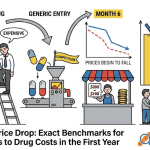
A PTE application that was rejected by Rospatent and not appealed, or appealed and rejected by the IP Court, is a negative signal. The drug faces generic entry at the base patent expiry date, and revenue erosion assumptions should reflect Russian generic market dynamics, which typically show 30 to 50 percent price erosion within the first year of generic availability on tender contracts.
A supplementary patent that is currently subject to an IP Court challenge under the Geropharm mechanism is a contingent liability. The outcome depends on the specific invalidity arguments and the strength of the supplementary patent’s claim-to-product documentation. Until the challenge resolves, the LOE date is uncertain and should be modeled with a probability-weighted scenario split.
14. Case Studies: Halaven, Sovaldi, and the Lessons Each Carries
14.1 Eisai / Halaven (Russian Patent No. 2245335)
Eribulin mesylate (Halaven), Eisai’s synthetic halichondrin analog approved for metastatic breast cancer, became the subject of a prominent Russian PTE challenge. A local pharmaceutical company disputed the validity of the extended patent, arguing that the PTE had been applied to a scope broader than the specific drug registered in Russia, effectively extending protection to compounds not present in the approved product.
The case was decided under the pre-2015 regulatory framework. The IP Court dismissed the challenge, ruling that for PTE applications filed before 2015, the regulations then in force did not require a supplementary patent with narrowed claims. The original patent’s full scope remained valid for the extension period, provided the approved product was covered by those claims. The court also examined whether the specification sufficiently disclosed the anticancer activity of eribulin. It found adequate disclosure.
For IP teams, the Halaven ruling clarifies two things. Pre-2015 PTEs are protected from retroactive narrowing by the 2016 rule change. And sufficiency of disclosure arguments, which Rospatent increasingly deploys in examination, can be and have been successfully rebutted in litigation when the specification provides a genuine technical basis for the claimed activity.
14.2 Gilead / Sovaldi (Sofosbuvir)
The Sovaldi PTE case is the most technically instructive decision in recent Russian PTE jurisprudence. Gilead’s patent on sofosbuvir used the claim language ‘a stereoisomer’ without specifying which one. The approved drug is the (S)-configuration. Rospatent rejected the PTE application on the grounds that the specific stereoisomer was not adequately characterized in the original patent; the claim covered both enantiomers without distinguishing the active one.
Gilead appealed. The IP Court reversed Rospatent, finding that the patent specification provided sufficient context to identify the (S)-stereoisomer as the relevant compound, and that a claim to ‘stereoisomer’ that unambiguously identifies a single stereoisomer in context satisfies the disclosure requirement. The Court also noted that the presence of alternative features in a claim (i.e., both stereoisomers) does not disqualify a patent from PTE eligibility, as long as the specific compound in the approved drug is adequately disclosed.
This ruling is the primary authority for the proposition that Rospatent cannot reject a PTE application solely because the original patent claim covers more than one compound or form, provided the specific approved compound is adequately disclosed. It is also a caution: the disclosure must actually support the identification. A patent specification that discusses a racemate without characterizing either enantiomer individually would likely fail even the IP Court’s standard.
14.3 Geropharm vs. Novo Nordisk
The specific facts of this case involved a challenge to a supplementary patent on an insulin product. Geropharm, a Russian domestic insulin manufacturer, challenged the validity of Novo Nordisk’s supplementary patent. The IP Court Presidium ultimately dismissed the challenge on the merits but used the case to introduce the procedural reforms described in Section 10.
The practical lesson for innovators: even when a supplementary patent survives challenge, the reputational and litigation cost of defending it is real. Supplementary patents backed by thorough prosecution records, clear identity documentation between the original patent and the approved product, and specific rather than arguable claim scopes are materially more resistant to challenge. The Novo Nordisk outcome was favorable, but the new procedural rules mean the next challenge against a different supplementary patent may receive a different merits outcome.
15. Pre-Filing Checklist and Best Practices
Before Filing the Original Patent Application
Identify the intended active agent for the Russian market and ensure at least one dependent claim specifically recites it. If the product is a biologic, ensure the application includes sequence data. Define the technical result clearly in the specification; under current Russian practice, technical results not defined in the original application cannot be introduced later in prosecution. Include in vivo experimental data supporting the claimed therapeutic use, as in vitro data alone will not satisfy current Rospatent requirements. File a divisional application if the product may receive marketing authorization in multiple indications sequentially.
During the Marketing Authorization Process
Track the Ministry of Health issuance process in real time. Do not rely on database publication as the trigger for the six-month PTE window. Upon receipt of the official marketing authorization certificate, immediately assess PTE eligibility and begin document assembly. Confirm that the compound identified in the marketing authorization maps to the compound disclosed in the original patent, including salt form, stereochemistry, and formulation.
When Preparing the PTE Application
Prepare the proposed supplementary patent claim set with each feature referenced to a specific location in the granted claims and a specific element of the marketing authorization. Assemble notarized documentation. Prepare a feature-by-feature identity analysis comparing the patent claim language to the approved product’s characteristics. Budget for at least one round of preliminary refusal from Rospatent and the response time it requires. Engage Russian local counsel with current Rospatent examination practice experience, not just general patent law expertise.
After Filing
Monitor Rospatent’s examination calendar and respond to any preliminary refusals within the prescribed deadline. If Rospatent issues a final refusal, evaluate the IP Court appeal option immediately. Three months from the final refusal date is the appeal window. Maintain the evidentiary record supporting the supplementary patent’s claim-to-product identity for future litigation defense under the Geropharm adversarial mechanism.
16. Key Takeaways by Segment
For IP and Legal Teams
Russia’s PTE system is a supplementary patent system, not a certificate system. The scope of protection during the extension period is limited to the approved product. Claims must be derived from the original patent’s granted claims and narrowed to match the marketing authorization. Post-2015 applications operate under materially different rules than pre-2015 applications. Original patent drafting decisions made years before the marketing authorization application directly determine what supplementary patent scope is achievable.
For R&D and Regulatory Teams
The marketing authorization is the trigger for the PTE clock. The six-month window from the issuance date, not the database publication date, starts counting when the certificate issues. Regulatory teams must communicate issuance dates to IP teams in real time. The specific characteristics of the approved product (compound form, formulation, concentration) define what the supplementary patent can cover. Any divergence between the approved product and the patent claim language requires technical documentation to bridge.
For Portfolio Managers and Business Development
Valuation of Russian pharma assets must incorporate PTE status. A product with a valid, scope-appropriate supplementary patent has a later effective LOE date than the base patent expiry. A product with no PTE or a diluted-scope supplementary patent faces earlier-than-expected generic erosion. The Geropharm decision elevated the litigation risk profile of all granted supplementary patents. M&A due diligence must now include an assessment of each supplementary patent’s resilience to adversarial IP Court challenge.
For Institutional Investors
Russian PTE status is a material variable for any pharma investment with meaningful Russian revenue exposure. Standard consensus models typically use base patent expiry as the LOE date. Where a valid PTE exists, models that do not adjust for the extension period will underestimate the revenue duration. Where a PTE challenge is pending, models that treat the supplementary patent as fully protective overestimate revenue security. Request explicit PTE disclosure and challenge status in management commentary for any portfolio company with Russian revenue above 5% of global sales.
17. FAQ
What is the maximum PTE term available in Russia?
Five years. There is no pediatric extension mechanism in Russian law, unlike the EU’s six-month SPC extension for products that undergo pediatric clinical studies.
Can a company file PTEs on multiple patents covering the same approved drug?
Yes. Russian law permits multiple supplementary patents based on the same marketing authorization, provided each underlying patent satisfies the eligibility criteria independently.
Can a single patent support PTEs based on multiple marketing authorizations?
Yes. A patent may serve as the basis for more than one supplementary patent, each based on a different marketing authorization, provided the eligibility requirements are met for each.
What happens if the original patent expires before the supplementary patent review is complete?
The original patent must be in force at the time the PTE application is filed. If the patent expires during examination, the supplementary patent can still issue; what matters is that the original patent was valid at the time of application, and that the application was filed within the six-month window.
Is it possible to challenge a supplementary patent without bringing a lawsuit against Rospatent?
After the Geropharm decision, yes. The IP Court now handles adversarial challenges directly between the patent holder and the challenger, without Rospatent as the primary defendant. The patent holder must defend the validity of the supplementary patent on the merits.
Do Eurasian patents and Russian national patents follow the same PTE process?
The eligibility criteria and calculation formula are the same. The procedural outcome differs: a Eurasian patent extension results in a supplement to the original Eurasian patent document, not a standalone supplementary patent. Russian national patent extensions produce a standalone supplementary patent with its own registration number.
What role does the Federal Antimonopoly Service play in PTE matters?
FAS does not directly adjudicate PTE validity, but it has authority to investigate patent strategies that restrict pharmaceutical market competition. FAS scrutiny is most relevant for evergreening strategies on essential medicines list products, where any tactic that delays generic entry is subject to heightened regulatory attention.
Sources: Article 1362(2) of the Civil Code of the Russian Federation; Gorodissky & Partners, IAM Life Sciences 2019 (Elena Nazina); Kluwer Patent Blog, ‘Russia: New Legal Remedy against PTE and SPC’ (Boris Malakhov, Lidings, November 2021); Papula-Nevinpat pharmaceutical patent guidance; IP Court case SIP-461/2020 (Geropharm vs. Novo Nordisk, October 2021); Gowling WLG Russian PTE analysis (2019); GIP Matrix, Halaven PTE analysis (Biriulin and Nazina); National Law Review Russian PTE overview.