Africa’s pharmaceutical market reached $27.65 billion in 2023 and is tracking toward $35 billion by 2032. South Africa alone is projected to grow from $7.88 billion in 2024 to over $10.7 billion by 2030. Nigeria, the continent’s most populous market, is entering what analysts are calling its most favorable business environment in a decade. Yet most multinational IP teams still treat the continent as a compliance footnote rather than a strategic arena.
That miscalculation is expensive. Africa is 54 distinct legal jurisdictions — 54 different patent regimes, enforcement environments, judicial temperaments, and public health doctrines. A patent strategy designed for one of them will fail in most of the others. The companies winning on the continent are not filing the most patents. They are filing the right patents in the right places, pricing strategically enough to avoid compulsory licensing, and building portfolios resilient enough to survive the inevitable public health challenge.
This guide is the operational blueprint. It covers the filing architecture across national and regional routes, jurisdiction-specific deep dives into South Africa, Nigeria, Egypt, and Kenya, the enforcement realities no one talks about, the TRIPS flexibility landscape and where data exclusivity does and does not exist, and the approaching structural transformation driven by the AfCFTA and the African Medicines Agency. Every section is written for pharma IP teams, portfolio managers, and institutional investors who need decision-grade intelligence, not a survey.
Section 1: The Filing Architecture — Building a Multi-Layered Patent Fortress
The Foundational Choice: National vs. Regional Routes
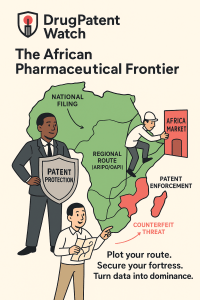
The first decision in any African patent strategy is route selection: file nationally with individual country offices, deploy one of the two regional systems (ARIPO or OAPI), or combine them. This choice determines the geographic scope, cost structure, enforcement mechanism, and risk profile of the entire portfolio. It is not an administrative decision. It is a strategic one.
Getting it wrong is expensive in multiple directions. A company that files exclusively through national routes in secondary markets will exhaust its budget before reaching the commercial hubs that matter. One that relies entirely on OAPI for Francophone Africa with a secondary patent on a marginally improved formulation runs the risk of losing exclusivity across all 17 member states in a single invalidity action. The optimal approach, in practice, is a structured hybrid: deep national filings in the three or four highest-revenue markets, with regional routes providing the defensive perimeter.
The National Route: Depth Over Breadth
Filing directly with a country’s national IP office is indispensable for Africa’s major commercial markets. South Africa, Nigeria, Egypt, and Ethiopia fall outside the regional blocs or are commercially significant enough to warrant standalone treatment. The national route offers legal certainty: the patent is prosecuted, granted, and enforceable under a single country’s established law, and any litigation takes place within that same predictable framework.
The trade-off is administrative cost and coordination burden. Each application requires separate fees, local agent appointments, potential translation, and its own prosecution timeline. For a company targeting six to eight markets, these costs compound quickly. Enforcement is strictly territorial; a patent in Kenya does nothing to stop an infringer running product across the border from Tanzania.
The solution is the hub-and-spoke model. Identify the two or three markets representing the core of your commercial case — the hubs. Commit full national filings there. Use ARIPO and OAPI to build broad secondary coverage across the spokes. This structure concentrates legal firepower where revenue is highest while maintaining wide geographic presence at acceptable cost.
The Regional Route I: ARIPO and Its Federated Architecture
The African Regional Intellectual Property Organization (ARIPO) operates under the Harare Protocol and covers 19 member states, predominantly Anglophone and Lusophone. Current Protocol members include Botswana, Cape Verde, Eswatini, Gambia, Ghana, Kenya, Lesotho, Liberia, Malawi, Mozambique, Namibia, Rwanda, Sao Tome and Principe, Sierra Leone, Sudan, Tanzania, Uganda, Zambia, and Zimbabwe. A single application is filed with the ARIPO office in Harare (or through a member state national office), designating the specific countries where protection is sought. ARIPO conducts substantive examination; if the patent is granted, each designated state has a notification window to object. Absent an objection, the patent becomes effective as a national patent in that country.
The procedural timeline from filing to grant runs approximately two to three years. Fee structure as of early 2025: electronic filing costs around $232, with a $100 per-state designation fee, a $1,000 examination fee, and a grant and publication fee of approximately $1,150. Surcharges apply for claims beyond 10 ($100 to $200 per additional claim) and specification pages beyond 30. For a complex pharmaceutical patent — multiple independent claims, lengthy pharmacokinetic data sections — these surcharges can materially increase total cost.
The most important strategic feature of the ARIPO system is its federated risk structure. An ARIPO patent is not a single regional right. It is a bundle of national rights obtained through a centralized procedure. This has two critical consequences. First, enforcement requires litigation in the national court of the specific country where infringement occurs; there is no regional ARIPO court. To stop infringement across five designated states, five separate actions are necessary. Second, an invalidity ruling in Zambia does not cascade to Kenya or Ghana. Each country is an independent legal battleground. Defensively, this fragmentation is a strength — a loss is contained. Offensively, it means stopping a multi-country infringement campaign requires sustained, expensive parallel litigation.
IP Valuation Note: ARIPO Designations as Portfolio Assets
For M&A due diligence and portfolio valuation purposes, an ARIPO bundle should not be treated as a single asset. Each validated national right must be assessed individually against the enforcement capacity and commercial relevance of its jurisdiction. A patent validated in Ghana (GDP per capita ~$2,400, organized pharmaceutical market, functioning IP courts) carries meaningfully different valuation weight than the same ARIPO patent validated in Liberia. Buyers who apply a uniform discount to ARIPO-bundle patents are systematically undervaluing the highest-quality designations.
The Regional Route II: OAPI’s Unitary Bloc
OAPI, governed by the Bangui Agreement, is a fundamentally different system. Its 17 member states — Benin, Burkina Faso, Cameroon, Central African Republic, Chad, Comoros, Congo, Cote d’Ivoire, Equatorial Guinea, Gabon, Guinea, Guinea-Bissau, Mali, Mauritania, Niger, Senegal, and Togo — have ceded national patent sovereignty entirely. A single OAPI application, upon grant, produces a single patent automatically valid across all 17 states. There is no national validation phase. As of January 2025, OAPI applications are subject to substantive examination.
The cost structure reflects this unitary breadth. Initial filing and publication runs approximately $3,600, with surcharges that become brutal for complex pharmaceutical applications: around $90 per claim beyond 10, and significant per-page surcharges for specifications beyond 10 pages. Annual renewal fees of approximately $800 per year for the first five years cover the entire 17-country bloc regardless of whether your commercial interests extend to more than two or three of them.
The unitary nature is OAPI’s dominant strategic feature in both directions. Enforcement efficiency is real: a single injunction can have bloc-wide effect. But the single point of failure is equally real. A successful invalidity action in any member state nullifies the patent across all 17 countries simultaneously. For a foundational compound patent on a genuine new chemical entity with strong inventive step, OAPI is powerful and efficient. For a secondary patent on an improved formulation or extended-release delivery system that could be exposed to an inventive step challenge, losing Francophone Africa in a single courtroom is a risk that must be explicitly weighed against the cost savings of the unitary system.
IP Valuation Note: OAPI Patents and the Unitary Discount
OAPI patents require a specific valuation approach. The aggregate market size of the 17-country bloc is not the correct denominator. The practical commercial value concentrates in a handful of markets — Cote d’Ivoire, Cameroon, and Senegal account for the majority of modern pharmaceutical distribution capacity within the bloc. The unitary risk must be modeled as a correlated loss event: if the patent falls, it falls everywhere simultaneously. DCF models that treat OAPI coverage as a simple product of individual country probabilities will overvalue the asset, because the country-level risks are correlated, not independent.
The PCT Gateway: Buying Strategic Time
For any pharmaceutical company with multi-country African ambitions, the Patent Cooperation Treaty (PCT) is the correct starting point. The PCT does not grant patents. It is a unified filing mechanism that secures a priority date across all PCT contracting states — including ARIPO and OAPI as blocs, plus Algeria, Egypt, Morocco, Nigeria, and South Africa as individual designations — through a single international application.
The strategic value is the 30- to 31-month window before national phase entry deadlines trigger. For pharmaceutical companies, this window is operationally critical. It provides time to assess commercial viability in specific markets as Phase III clinical data matures, refine the prosecution strategy based on the International Search Report (ISR) and Written Opinion from the International Searching Authority (ISA), identify licensing or co-commercialization partners using the ‘patent pending’ status, and make informed go/no-go decisions on national phase entry before committing to the substantial fees and translation costs each jurisdiction requires.
National phase entry requirements vary in ways that matter operationally. Nigeria’s deadline is 30 months, non-extendable, requiring an English-language application and a signed Power of Attorney. The Nigerian Industrial Property Office (NIPO) conducts only formal examination of PCT national phase entries — no substantive review of novelty or inventive step. Kenya’s 30-month deadline requires a separate request for substantive examination within three years of the international filing date; missing that deadline means the application is treated as abandoned. Egypt requires an Arabic translation within six months of national phase entry, plus a Power of Attorney and Deed of Assignment legalized through the Egyptian Consulate — a process that must be initiated well before the substantive deadline.
Key Takeaways: Filing Architecture
The most effective African patent strategy is a structured hybrid, not a choice between routes. Anchor with national filings in the highest-revenue markets. Deploy ARIPO for Anglophone secondary coverage where fragmented risk is preferable to unitary exposure. Use OAPI for Francophone Africa when the patent is strong enough to survive a single invalidity challenge. Enter through PCT to preserve optionality and avoid premature capital commitment. The PCT window is not a delay tactic; it is a strategic tool.
Comparative Filing Route Analysis
Feature
National Filing
ARIPO
OAPI
Geographic Coverage
Single country per application
19 designated member states
All 17 member states automatically
Linguistic Focus
Any
Primarily Anglophone/Lusophone
Exclusively Francophone
Examination Standard
Varies by country
Substantive (ARIPO office)
Substantive (OAPI office)
Nature of Right
Single national right
Bundle of national rights
Single unitary regional right
Invalidity Risk
Contained to one country
Contained per designated state
Single action nullifies all 17 states
Enforcement Venue
National courts
National courts per country
National courts; single validity ruling has bloc effect
Annual Renewal Cost
Per country
Per designated state
Fixed fee covering all 17 states
Best Use Case
Hub markets (SA, Nigeria, Egypt)
Broad Anglophone coverage
Foundational patents in Francophone Africa
Section 2: National Jurisdiction Deep Dives
South Africa: The Non-Examining Powerhouse Moving Toward Reform
South Africa is the continent’s most commercially developed pharmaceutical market and the most legally sophisticated jurisdiction for IP enforcement. It is also the only major market where you can obtain a patent in under 12 months without any substantive examination of whether your invention actually meets patentability criteria — a feature that is both an opportunity and a liability.
System Architecture: The Depository Model
The Companies and Intellectual Property Commission (CIPC) examines applications for formal compliance only. Meeting the formal requirements means getting a patent. The South African Patents Act of 1978 requires novelty, inventive step, and industrial applicability, but the CIPC does not assess any of these criteria before grant. The result is that South Africa grants a high volume of patents, including secondary patents on new formulations, new crystalline polymorphs, dosage modifications, and new therapeutic uses of known compounds — patents that might not survive examination in the US, EU, or Canada.
For an innovator company, this system is a gift at the filing stage and a liability at the enforcement stage. The first time any South African patent’s validity is substantively tested is in a revocation or infringement proceeding in the Court of the Commissioner of Patents. A patent that was trivial to obtain may prove impossible to defend. For a generic company or a civil society organization seeking to challenge a patent, the non-examining system provides a rich hunting ground for weak secondary patents that lack genuine inventive step.
The Reform Trajectory and Its Strategic Implications
South Africa’s patent reform debate is not new, but it has intensified and is now moving toward implementation. The Treatment Action Campaign (TAC) and Medecins Sans Frontieres (MSF) have been central to the reform movement since the HIV/AIDS crisis of the early 2000s, when the non-examining system was identified as a mechanism for multinational companies to accumulate secondary patents that delayed generic antiretroviral access.
The government’s Draft National Policy on Intellectual Property commits to introducing substantive search and examination (SSE) and to implementing stricter patentability standards designed to limit evergreening. The policy explicitly adopts the language of TRIPS Article 27 limitations and draws on the Indian model, which under Section 3(d) of the Patents Act restricts patents on new forms of known substances unless they demonstrate a genuine improvement in therapeutic efficacy. South Africa has not yet enacted equivalent legislation, but the direction is clear.
Once SSE is operational, the cost and time of obtaining a South African patent will increase substantially. The portfolio economics shift: fewer patents, higher quality, more defensible. Secondary patents that currently pass through the CIPC without scrutiny will face examination that mirrors the rigors of the US Patent and Trademark Office or the European Patent Office. Companies whose South African portfolios are built primarily on formulation and polymorph patents need to assess their exposure now, not after the reform takes effect.
Investment Strategy: South African Patent Portfolio Positioning
For investors evaluating companies with South African pharmaceutical exposure: portfolios built on a large number of secondary patents issued under the depository system carry transition risk. When SSE is implemented, those patents become potentially revocable for lack of inventive step. The defensible core of any South African portfolio is the primary compound patents and any genuinely novel formulation patents that would also survive examination in a strict jurisdiction. Secondary patent counts in South Africa are an unreliable proxy for IP strength.
The Litigation Environment: Sophisticated but Socially Charged
South Africa has functional specialized patent courts, experienced IP practitioners, and a judiciary capable of adjudicating complex pharmaceutical patent disputes. The legal infrastructure is the strongest on the continent. The environment is also irreversibly shaped by the TAC litigation of the late 1990s and early 2000s, when 39 multinational pharmaceutical companies sued the Mandela government over a law permitting parallel importation and compulsory licensing to secure affordable antiretrovirals.
The lawsuit collapsed under the weight of global pressure and the companies withdrew it in 2001. The practical legacy is permanent: South African courts operate under the explicit awareness that the constitutional right to health is a competing framework against which patent claims can be measured. Any pharmaceutical patent enforcement action involving essential medicines, HIV treatment, cancer therapy, or any product with significant public health relevance will be litigated in a court and a public sphere where the TAC precedent is alive and actively invoked.
Nigeria: Registration at the Patentee’s Risk, High Growth at Any Cost
Nigeria’s pharmaceutical market is the largest by population on the continent. With a population of over 220 million and a stabilizing macroeconomic environment after years of currency volatility, the market opportunity is real and growing. The IP system protecting that opportunity is structurally weak, administratively unpredictable, and subject to active reform pressure.
System Architecture: Pure Registration
The Nigerian Industrial Property Office (NIPO) examines patent applications for formal compliance only, operating under the Patents and Designs Act. NIPO does not assess novelty, inventive step, or industrial applicability. Patents are explicitly granted ‘at the risk of the patentee,’ with no guarantee of validity. In practice, recent reports from Nigerian IP practitioners indicate that NIPO has informally begun refusing some applications on substantive grounds and directing applicants toward utility model filings — a practice that lacks statutory authority and creates procedural uncertainty. This makes qualified local counsel not just helpful but essential.
The national phase entry deadline for PCT applications is 30 months, non-extendable. The application must be in English. There is no substantive examination at national phase entry either. A granted Nigerian patent carries no more validity presumption than a self-declaration — its true defensibility is unknown until a court tests it.
The Distribution Challenge and Brand Integrity Risks
A significant portion of medicine distribution in Nigeria runs through Patent and Proprietary Medicine Vendors (PPMVs) — a network of retailers operating with limited clinical knowledge across urban and rural markets. PPMVs provide genuine access to medicines in communities without formal pharmacy infrastructure, but they also represent a supply chain integrity risk. PPMV networks have been associated with the distribution of substandard, falsified, and unauthorized medicines. A product entering Nigeria through legitimate channels can be diluted into a distribution ecosystem where quality control is absent.
For an innovator company, this means brand equity can be destroyed not by a competitor’s product but by a counterfeit of your own product that is indistinguishable to consumers until it fails. Anti-counterfeiting investment in Nigeria must extend beyond legal enforcement to supply chain surveillance, PPMV education programs, and patient-level product verification technology.
IP Valuation Note: The Nigerian Patent Premium
A granted Nigerian patent has value primarily as a deterrent, not as an enforcement asset. Its validity is untested. Enforcement through the Federal High Court is possible but slow, and the proceeding will likely be the first time the patent’s substantive merits are examined. For valuation purposes, a Nigerian patent on a secondary formulation should be discounted heavily relative to an equivalent patent in an examining jurisdiction. A Nigerian patent on a primary compound can be assigned moderate value as a market deterrent, with enforcement value contingent on the strength of underlying chemistry and the quality of the original application.
Litigation Precedents: Two Cases, Two Divergent Lessons
The Pfizer v. Tyonex Nigeria case established that the Federal High Court will uphold a valid pharmaceutical patent, issue injunctions against domestic infringers, and award damages. Pfizer successfully defended its patent for amlodipine besylate (the active ingredient in Norvasc, its cardiovascular blockbuster) against a generic challenger. The court’s willingness to engage substantively with patent validity and infringement claims demonstrates that enforcement is achievable when the patent is strong and the litigation is well-prepared.
The 1996 Trovan meningitis trial in Kano is a permanent counterweight. Pfizer’s experimental antibiotic trovafloxacin was administered to 200 children during a meningitis epidemic. Eleven children died; others suffered serious adverse events. Allegations of absent informed consent and inadequate ethical oversight generated decades of litigation, diplomatic incidents, and a $75 million settlement in 2009. The case shaped a deep and durable public and governmental skepticism toward multinational pharmaceutical companies in Nigeria that extends well beyond the specifics of that trial. Any Nigerian pharmaceutical litigation that can be framed — accurately or otherwise — as prioritizing corporate interest over patient welfare will be fought in a courtroom and a public sphere where the Trovan legacy provides ready ammunition.
Egypt: TRIPS-Compliant Examination with a Political Override
Egypt is the strategic pharmaceutical gateway for the Middle East and North Africa. Its patent system is the most rigorous on the continent, providing a full substantive examination against novelty, inventive step, and industrial applicability. The Egyptian Patent Office (EPTO) applies TRIPS-compliant standards consistently. The result is that patents obtained in Egypt carry genuine presumptions of validity and are meaningfully more defensible in enforcement proceedings than patents granted under non-examining systems.
System Architecture: Examination with Teeth
The EPTO evaluates applications for novelty, inventive step, and industrial applicability. Egyptian patent law explicitly recognizes pharmaceutical inventions, biopharmaceutical products, and biotechnological processes as patentable subject matter. It excludes discoveries, scientific theories, and methods of treatment, consistent with TRIPS Article 27. Recent decrees have increased examination fees and shortened payment deadlines, reflecting administrative modernization rather than policy retreat on patentability.
Enforcement runs through the specialized Economic Courts, which have jurisdiction over IP disputes. Both civil remedies (injunctions, damages) and criminal penalties for infringement are available. The legal framework provides a genuine enforcement toolkit, and the Economic Courts have demonstrated capacity to resolve complex patent disputes.
National phase entry from PCT requires an Arabic translation within six months of entry, plus a legalized Power of Attorney and Deed of Assignment through the Egyptian Consulate. These administrative requirements must be initiated well ahead of the formal deadline.
The Gilead-Sovaldi Precedent: When Administration Overrides Law
The most instructive Egyptian IP case is not a litigation outcome. It is an administrative decision. Gilead Sciences filed for patent protection on sofosbuvir (Sovaldi) in Egypt — a drug that in 2014 was priced at $84,000 per 12-week course in the United States, representing an effective treatment but entirely inaccessible at that price in a country where Hepatitis C infection rates affected millions. Egypt faced one of the highest Hepatitis C burdens globally.
The EPTO refused the patent application, citing lack of novelty and insufficient innovation. The decision was taken in the face of reported diplomatic pressure from Washington and resulted in the reported removal of the head of the patent office. Egypt then negotiated a drastically reduced price — eventually reaching approximately $900 per course — that enabled a mass national elimination campaign. By 2022, Egypt had treated over four million people, achieving Hepatitis C elimination rates that WHO cited as a global model.
The lesson is not that Egyptian patents are unreliable. It is that in a public health emergency of sufficient scale, administrative bodies in examining jurisdictions are capable of using their discretionary authority in ways that are politically motivated, legally defensible on narrow grounds, and nearly impossible to challenge through normal channels. For companies with blockbuster drugs addressing diseases with high Egyptian prevalence — viral hepatitis, diabetes, cardiovascular disease — the Sovaldi precedent should be a standard part of market entry risk assessment.
Kenya: The Constitutional Right-to-Health Jurisdiction
Kenya is East Africa’s commercial hub and an increasingly important pharmaceutical market. Its IP system is transitioning from predominantly formal examination toward substantive review. The Kenya Industrial Property Institute (KIPI) now assesses applications against novelty, inventive step, and industrial applicability, bringing Kenya in line with examining jurisdictions. The PCT national phase deadline is 30 months, with a separate request for substantive examination required within three years of the international filing date.
The Patricia Asero Ochieng Ruling and Its Permanent Effect
The defining Kenyan pharmaceutical IP case was not a patent infringement dispute. It was a constitutional challenge. A group of HIV-positive patients petitioned the High Court of Kenya arguing that the Anti-Counterfeit Act of 2008 — with its broad definition of ‘counterfeiting’ — could encompass legitimately produced generic medicines, creating criminal liability for distributing the drugs they depended on for survival.
The court agreed. It ruled that the Act’s provisions posed a genuine threat to the petitioners’ constitutional rights to life, dignity, and health, and that these rights took precedence over the IP enforcement objectives of the legislation. The judgment is not an isolated holding. It establishes that Kenyan courts treat the constitutional right to health as an active constraint on IP law, capable of limiting the application of patent and anti-counterfeiting statutes when they conflict with patient access. Any enforcement action in Kenya involving essential medicines faces this constitutional framework from the outset.
Legislative Developments and Unresolved Tensions
Kenya’s draft Intellectual Property Bill of 2020 incorporated several TRIPS flexibilities aimed at improving medicine access. It has drawn criticism from public health advocates for failing to adopt the most robust versions of those flexibilities — specifically on evergreening prevention and the standard for parallel importation. Industry groups have pushed back against aspects of the bill from the opposite direction, arguing it introduces too much regulatory uncertainty. The bill remains in flux, and its ultimate form will materially affect the enforceability of secondary patents in Kenya. Companies with active Kenyan patent portfolios should be tracking this legislation through local counsel and industry associations.
Key Takeaways: National Jurisdiction Strategy
South Africa, Nigeria, Egypt, and Kenya account for the majority of commercially relevant African pharmaceutical revenue and IP enforcement activity. Each requires a jurisdiction-specific approach. South Africa is fast to obtain, uncertain to enforce, and heading toward substantive examination — build validity documentation now. Nigeria is a deterrence market, not an enforcement market; invest in anti-counterfeiting equally with patent protection. Egypt has the strongest examination standard and a functioning enforcement system, but administrative-level public health interventions are a documented risk for products addressing high-burden diseases. Kenya applies constitutional right-to-health principles actively in IP disputes; any enforcement strategy that can be characterized as restricting access faces structural headwinds.
Section 3: Post-Grant Reality — Enforcement, Counterfeits, and Landmark Cases
Why Enforcement Fails: Structural Deficits Across the Continent
Obtaining a granted patent certificate — whether from the CIPC in Pretoria, the NIPO in Lagos, or the ARIPO office in Harare — does not create a self-enforcing monopoly. Realizing the commercial value of that certificate requires active monitoring, institutional support, and in many cases, expensive litigation. Across much of Africa, the institutional infrastructure necessary for reliable enforcement is underdeveloped.
National IP offices in many smaller markets lack trained examiners to assess applications rigorously, digital systems to maintain accurate public patent registers, and the operational capacity to generate legally reliable patent status information. Customs agencies are frequently understaffed, undertrained in pharmaceutical IP, and prioritizing revenue collection over IP enforcement. Law enforcement agencies without specialized IP units are poorly equipped to distinguish genuine products from falsified ones at the supply chain level.
The coming implementation of AfCFTA removes internal tariff barriers across member states. The commercial case for this is strong. The IP enforcement implication is not. A container of falsified pharmaceuticals that clears customs in a weak-enforcement port state can subsequently move across internal AfCFTA borders to reach high-value markets with minimal additional friction. A regional free trade area accelerates legitimate commerce and counterfeit commerce simultaneously. Without accompanying harmonization of customs IP recordal systems and minimum enforcement standards, AfCFTA risks creating the infrastructure that counterfeit networks need to scale.
The Counterfeit Drug Crisis: Scale, Mechanism, and Commercial Impact
The WHO estimates that the economic cost of caring for patients harmed by falsified or substandard malaria treatments in sub-Saharan Africa alone runs between $12 million and $44.7 million annually. The human cost is far higher. The UNODC attributes approximately 267,000 deaths annually to falsified antimalarial drugs in sub-Saharan Africa, with a further estimated 169,271 deaths linked to substandard antibiotics used to treat pediatric pneumonia. A systematic review found overall prevalence of substandard or falsified medicines across African markets at approximately 22.6%, with 34.6% of medicines in some markets being unregistered entirely.
For a pharmaceutical company, the falsified medicine problem creates commercial damage through four distinct channels. Direct revenue displacement is the most obvious. But secondary brand damage occurs when patients experience therapeutic failure with a product carrying your brand name — damage that accrues to the legitimate brand regardless of whether the product was genuine. Third, falsified medicines with sub-therapeutic concentrations of active pharmaceutical ingredients are a major driver of antimicrobial resistance, threatening the long-term clinical efficacy of products across the anti-infective portfolio. Fourth, in certain African jurisdictions, documented counterfeit problems can undermine regulatory confidence in a product category and generate political pressure for compulsory licensing or price controls on the genuine product.
Anti-counterfeiting must be treated as a core commercial function, not a legal afterthought. This requires investment in serialization and track-and-trace systems adapted to African distribution infrastructure, partnerships with customs authorities and regulatory agencies, rapid response protocols for removing falsified product from distribution, and patient and provider communication programs that enable verification of genuine products.
Landmark Cases: The Jurisprudence That Shapes the Game
The four most consequential pharmaceutical IP cases on the continent — the TAC litigation in South Africa, Pfizer v. Tyonex in Nigeria, Patricia Asero Ochieng in Kenya, and the Sovaldi administrative refusal in Egypt — are covered in detail in Section 2. The collective takeaway from reading them together is this: patent rights in Africa are not merely legal questions. They are political questions, constitutional questions, and public health questions simultaneously. A litigation strategy that is legally correct but politically deaf will lose in the court of public opinion, and in some jurisdictions, it will lose in actual courts as well.
Key Takeaways: Enforcement
Post-grant enforcement is the hardest part of African pharmaceutical IP strategy. Institutional weakness, porous borders, and a counterfeit drug market operating at catastrophic scale create a permanent drag on the commercial value of patent rights. The AfCFTA will intensify rather than solve the border enforcement problem absent deliberate policy intervention. Effective enforcement requires legal action, anti-counterfeiting technology, supply chain investment, and political awareness simultaneously. Cases in each of the four major markets have established that the right to health is an active judicial constraint, not a background principle.
Section 4: The TRIPS Flexibility Battlefield and Data Exclusivity
Compulsory Licensing: The Tool and the Threat
A compulsory license (CL) is a government authorization for a third party to manufacture, import, or sell a patented product without the patent holder’s consent. TRIPS Article 31 permits CLs under several conditions, including national emergencies and public non-commercial use, subject to a requirement for ‘adequate remuneration’ — typically a royalty set by the issuing government rather than negotiated with the patent holder.
Several African nations have issued CLs for pharmaceutical products, primarily antiretrovirals. Mozambique, Ghana, and Eritrea each issued CLs in the early 2000s to import generic ARVs during the HIV/AIDS crisis. In South Africa, the Competition Commission’s complaint against GlaxoSmithKline and Boehringer Ingelheim for excessive pricing of antiretroviral licenses was settled with the companies agreeing to grant voluntary licenses — a resolution achieved in the shadow of a threatened CL rather than through the issuance of one.
That shadow dynamic is the strategic core of compulsory licensing risk. For governments, the threat of issuing a CL is often more powerful than the CL itself, because it moves the negotiation to a context where the innovator faces a binary choice: negotiate voluntary access terms or lose market exclusivity unilaterally. For patent holders, the strategic response to this risk is not litigation but pre-emption through tiered pricing and proactive voluntary licensing.
The Medicines Patent Pool and Voluntary Licensing Architecture
The Medicines Patent Pool (MPP), established in 2010, provides the primary mechanism for voluntary pharmaceutical licensing in low- and middle-income countries. MPP negotiates licenses with innovator companies and sublicenses to generic manufacturers, enabling production of affordable versions of patented medicines for defined geographic markets. Current MPP license holders include Gilead, ViiV Healthcare (a joint venture of GlaxoSmithKline, Pfizer, and Shionogi), Merck, and Bristol-Myers Squibb, covering ARVs, hepatitis treatments, and more recently COVID-19 therapeutics.
For companies with products addressing diseases with high African burden, voluntary MPP participation is increasingly a market-entry prerequisite rather than a philanthropic option. Countries that see no MPP pathway for affordable access will use compulsory licensing provisions or administrative refusals as the next available tool.
The Data Exclusivity Vacuum and Its Consequences for Life-Cycle Management
Data exclusivity is a regulatory protection, distinct from patent protection, that prevents a generic manufacturer from relying on an innovator’s clinical trial data to obtain marketing approval for a set period — typically five to ten years in jurisdictions that implement it. Patent linkage is the related mechanism that ties drug regulatory approval to patent status, preventing marketing approval for a generic while relevant patents remain valid.
Neither data exclusivity nor patent linkage is required under TRIPS. Both are TRIPS-Plus provisions that appear in some free trade agreements, particularly those negotiated by the United States and the European Union with developing countries. The African landscape is largely free of both:
Egypt’s patent law, while TRIPS-compliant and substantive in examination, does not include specific provisions creating regulatory data exclusivity for pharmaceutical clinical trial data. Once primary patents expire, the generic entry pathway is open.
Nigeria’s Nigeria Data Protection Act of 2023 is a modern privacy statute governing personal data, modeled on GDPR principles. It does not create a data exclusivity regime for clinical trial submissions. The distinction between personal data protection and regulatory data exclusivity is frequently conflated in market assessments; they are unrelated legal instruments.
South Africa’s ongoing patent reform debate includes explicit contestation over whether to introduce data exclusivity and patent linkage, with innovator industry groups advocating for their inclusion and public health advocates arguing against on access grounds. The current policy position is that neither mechanism has been enacted.
Kenya’s IP framework similarly lacks data exclusivity provisions. Civil society groups have raised concerns that future bilateral trade agreements, particularly with the United States, could include TRIPS-Plus data exclusivity mandates as a condition of market access.
The Strategic Consequence: Secondary Patents Are the Last Line
The absence of data exclusivity across the major African markets is not a peripheral detail. It is the defining structural feature of African pharmaceutical life-cycle management. In the United States, even a company whose secondary patents on a reformulation are challenged and invalidated retains market protection for the data exclusivity period. That safety net does not exist in South Africa, Nigeria, Egypt, or Kenya. When the primary compound patent expires, the only remaining barrier to generic entry is a valid and enforceable secondary patent.
This elevates the importance of secondary patent quality in Africa well above its equivalent role in regulated markets. A well-drafted, substantively valid secondary patent on a clinically meaningful formulation improvement — improved bioavailability in high-humidity conditions, pediatric dosage forms adapted to sub-Saharan treatment protocols, fixed-dose combinations addressing prevalent African comorbidities — can extend commercial exclusivity by five to ten years with no data exclusivity backstop. A weak secondary patent on a polymorph or a trivially modified salt form will be revoked under challenge, leaving the innovator exposed to immediate generic competition.
The practical implication for R&D and IP teams: African filing strategy for life-cycle management products should prioritize technically sound, clinically significant secondary patents over quantity. A single defensible patent on a pediatric fixed-dose combination with genuine bioavailability advantages is worth more in an African portfolio than a dozen marginal polymorph patents that will collapse under the first revocation petition.
Evergreening Considerations: The Political Calculus
The term ‘evergreening’ is used by critics to describe secondary patent strategies that extend market exclusivity without delivering proportionate clinical benefit. The accusation is politically potent in Africa, where the history of the HIV/AIDS patent wars created an institutional reflex in civil society and governments to scrutinize secondary patents aggressively. Companies that file secondary patents on formulation improvements in non-examining jurisdictions like South Africa — where grant is automatic — should expect those patents to face organized revocation challenges from organizations like the South African Civil Society IP Initiative or MSF’s Access Campaign.
The strategic response is to build secondary patents on innovations that deliver documentable clinical benefit. Extended-release formulations that improve adherence in patients without regular healthcare access, heat-stable formulations critical for markets lacking reliable cold-chain infrastructure, and pediatric dosage forms appropriate for weight-based African treatment protocols — these are secondary patents that can survive both legal and political scrutiny because they deliver demonstrable value to patients.
Key Takeaways: TRIPS Flexibilities and Data Exclusivity
The absence of data exclusivity across Africa’s major markets means secondary patents carry load-bearing responsibility for life-cycle management that they do not carry in the US or EU. Compulsory licensing risk is real and persistent; the most effective mitigation is proactive tiered pricing and MPP participation, not defensive legal posturing. Secondary patents must be built on clinically meaningful innovations — not marginal modifications — to survive both legal revocation and the political challenge that is a routine feature of African pharmaceutical IP disputes.
Investment Strategy: Evaluating African Pharma IP Assets
For portfolio managers assessing companies with African pharmaceutical exposure, the following metrics warrant specific attention:
Primary compound patent expiry dates in South Africa, Nigeria, Egypt, and Kenya should be cross-referenced against the absence of data exclusivity in those markets. Revenue projections that assume a meaningful exclusivity period post-patent expiry based on data exclusivity protections are incorrect for African markets and should be adjusted.
Secondary patent portfolio quality in non-examining jurisdictions (South Africa, Nigeria) should be assessed by reverse-engineering whether those patents would survive substantive examination. The filing volume metric is unreliable. Only patents on clinically differentiated innovations should be assigned significant life-cycle value.
Voluntary licensing status with the Medicines Patent Pool is a risk mitigation factor. Companies with MPP licenses for their key African products have materially reduced compulsory licensing risk compared to those without.
Section 5: AfCFTA and the African Medicines Agency — Structural Transformation on the Horizon
AfCFTA: The Integration Opportunity and the Enforcement Risk
The African Continental Free Trade Area covers 54 countries and 1.7 billion people. By eliminating tariffs on 90% of goods and dismantling non-tariff barriers, AfCFTA aims to grow intra-African trade from roughly 3% of demand to a figure that reflects the economic logic of a continental single market. For pharmaceutical manufacturing, this is genuinely transformative. Africa currently imports 70% to 90% of its consumed medicines, primarily from India and China, with a small but growing contribution from local manufacturers in South Africa, Egypt, and Morocco. The inability of local manufacturers to achieve economies of scale — because each national market is too small to justify large-scale API production — is the structural constraint AfCFTA is designed to remove.
A Kenyan manufacturer serving the East African Community today faces regulatory registration requirements, import duties, and distribution hurdles in Tanzania, Uganda, Rwanda, and Burundi that collectively exceed the cost of simply importing from India. AfCFTA’s single-market logic eliminates much of this friction, enabling a single facility to serve a regional market of 400 million people on a scale that justifies investment in quality manufacturing infrastructure and local API sourcing.
For multinational companies, AfCFTA creates the case for regional manufacturing hubs. A South African site with WHO GMP certification can become the production center for a continental distribution network rather than serving only the domestic market. This reshapes supply chain economics, reduces dependence on Asian API suppliers, and, if structured correctly, creates manufacturing partnerships with local companies that both reduce cost and provide political insulation against compulsory licensing pressure.
The enforcement risk runs parallel to these opportunities. The same frictionless movement of goods that enables legitimate pharmaceutical trade across AfCFTA enables falsified pharmaceutical trade. A counterfeit entering through a member state with weak customs enforcement and limited IP recordal systems can travel the same AfCFTA channels as genuine product. The enforcement asymmetry — legitimate companies comply with regulatory standards; counterfeiters do not — means AfCFTA benefits accrue to both sides of the market simultaneously.
Pharmaceutical companies must engage at the AfCFTA secretariat and AU level to advocate for minimum harmonized IP enforcement standards as part of the single-market implementation architecture. This is not lobbying for protectionism; it is arguing that a functional pharmaceutical single market requires customs systems capable of distinguishing genuine from falsified product, and that this infrastructure serves public health objectives as much as commercial ones.
The African Medicines Agency: Building the Regulatory Pillar
The African Medicines Agency, formally constituted in 2021 and headquartered in Kigali, Rwanda, is the continent’s most consequential public health institutional development since the creation of national health ministries. The WHO has assessed that 90% of African countries have minimal to no functional medical regulatory capacity. The AMA was created to address this deficit through harmonization, capacity building, and eventually centralized or mutually recognized regulatory review.
The AMA’s design draws on the European Medicines Agency model: a centralized technical body that coordinates and eventually replaces the fragmented patchwork of national regulatory requirements with a unified standard. Its near-term mandate includes coordinating the African Medicines Regulatory Harmonization (AMRH) program, establishing common technical guidelines for clinical trial conduct, product registration dossier requirements, and Good Manufacturing Practice standards, and developing a pan-African pharmacovigilance system.
For pharmaceutical IP strategy, a functional AMA has three direct implications. First, it reduces the cost and time of multi-country market entry. Today, registering a product in 10 African countries requires 10 separate dossiers, 10 separate fees, and regulatory review timelines that can stretch from two to seven years per market. A functioning AMA mutual recognition or centralized pathway compresses this to a single technical submission with bloc-wide effect. Secondary markets that are currently too expensive to register products in become commercially viable.
Second, the AMA’s mandate to ensure product quality across member states makes it a natural ally in anti-counterfeiting enforcement. A continental product registry with real-time serialization data creates infrastructure that makes it meaningfully harder for falsified products to infiltrate the legitimate supply chain. This is a public goods argument: the AMA’s quality enforcement mandate serves the commercial interests of legitimate manufacturers and the public health interests of patients simultaneously.
Third, a capable AMA could eventually coordinate continental-level TRIPS flexibility decisions. Rather than each country individually assessing whether to issue a compulsory license during a health emergency, the AMA could provide technical advice and facilitate continent-wide access negotiations — a role that would both speed up access and provide a more predictable, rule-based framework for resolving patent-access conflicts than the current country-by-country improvisation.
The Long-Term Scenario: A Pan-African Patent System
The European integration trajectory provides one model for where this could go. The European Medicines Agency’s success in centralizing pharmaceutical regulation was a prerequisite for the political trust that eventually enabled the Unified Patent Court and the Unitary Patent system, which as of 2023 provides a single patent enforceable across most EU member states. Africa’s institutional development is at an earlier stage, and the political complexity of 54 sovereign states makes pan-African patent unification a genuinely distant prospect.
The AMA is, however, a critical institutional foundation. By demonstrating that African countries can delegate regulatory authority to a continental body and achieve better outcomes than national approaches, the AMA builds the institutional trust that a future pan-African patent conversation would require. Companies that engage constructively with the AMA in its formative years — providing technical assistance, participating in regulatory harmonization consultations, offering expertise on GMP standards — are positioning for the scenario in which the AMA eventually becomes a gateway to continent-wide commercial access. That is a decade-long investment horizon, but it is the correct strategic frame.
Key Takeaways: AfCFTA and AMA
AfCFTA creates the economic case for continental-scale pharmaceutical manufacturing and distribution, but it simultaneously creates the enforcement infrastructure problem of a free-trade zone without harmonized IP customs controls. The AMA is the most important institutional development in African pharmaceutical regulation in a generation; engagement with its harmonization agenda is a long-term strategic investment, not a compliance exercise. Companies that help build the AMA’s technical standards today are positioning for influence in the regulatory architecture that will govern the continental market of tomorrow.
Section 6: The IP Strategist’s Operational Toolkit
Freedom-to-Operate Analysis: The Non-Negotiable Pre-Launch Step
Freedom-to-Operate (FTO) analysis answers one question: can this product be launched in this market without infringing a valid, enforceable third-party patent? FTO is not optional. Launching without it exposes the company to injunctive relief, damages, and forced market withdrawal — outcomes that destroy not just the product economics but the broader commercial relationship with distributors, healthcare providers, and regulators who have committed resources based on launch promises.
The FTO methodology must be adapted to the specific legal environment. In an examining jurisdiction like Egypt, a granted patent carries substantial validity presumption. The FTO analysis must take that seriously: identified blocking patents should be treated as real barriers requiring licensing, design-around strategies, or invalidity challenge based on rigorous prior art analysis. In a non-examining jurisdiction like South Africa, the analysis has two stages. First, identify patents whose claims literally read on the product. Second, conduct a validity assessment of those patents — applying the examination criteria the CIPC did not apply — to determine whether they would survive a revocation challenge. A South African patent that appears to block market entry may, on validity assessment, be a paper tiger that would collapse under any competent revocation petition. Treating it as a real barrier would be as strategically incorrect as ignoring it entirely.
For ARIPO designations, the FTO analysis must be conducted country by country for each designated state. An ARIPO patent validated in Kenya may present blocking risk; the same patent validated in a market with limited local pharmaceutical distribution may present minimal commercial risk even if it is technically valid.
The FTO output should produce a tiered risk map: jurisdiction by jurisdiction, product by product, patent by patent. High-risk blocking patents in high-value markets require immediate legal strategy. Low-risk patents in secondary markets can be monitored without immediate action. The map is a living document; it should be refreshed at product lifecycle milestones and whenever competitive intelligence indicates a relevant change in the patent landscape.
WIPO PATENTSCOPE provides free, comprehensive access to PCT applications and the patent collections of both ARIPO and individual African countries including Egypt and South Africa. The system supports advanced search by applicant, inventor, IPC classification, and date. Creating a PATENTSCOPE account enables saved searches and automatic email alerts for new filings by specific applicants — a real-time early warning system for competitor R&D filings in African jurisdictions.
Commercial pharmaceutical patent intelligence platforms, particularly DrugPatentWatch, layer additional analytical value on top of public patent data. The most commercially relevant capability is the integration of patent data with regulatory exclusivity information and litigation history to generate estimated generic entry dates for specific products in specific markets. This is the operational data layer that patent data alone cannot produce: not just when a patent expires, but when a generic competitor is realistically likely to enter the market given the full portfolio of exclusivities and the litigation environment.
For South Africa specifically, DrugPatentWatch tracks the 15 drugs facing patent expiration and generic entry from 2025 to 2026, providing the timeline intelligence that both innovator companies defending those franchises and generic companies timing their Paragraph IV-equivalent challenges need to plan their commercial strategies.
Ongoing competitive intelligence using these tools should be a standard function of any African market team, not a one-off pre-launch exercise. The patent landscape in fast-growing markets changes continuously: new competitor filings, litigation settlements, regulatory exclusivity decisions, and legislative changes all affect the competitive map. A company with current intelligence acts; a company without it reacts.
Engaging the Reform Agenda: Where Legal Strategy Meets Policy
The legislative and regulatory reform processes underway in South Africa (patent reform toward SSE), Kenya (Intellectual Property Bill), and at the continental level (AMA harmonization, AfCFTA IP provisions) are not background events. They are the processes that will determine the rules of the market for the next two decades. Companies that engage with them — through submissions to government consultation processes, participation in industry associations like the International Federation of Pharmaceutical Manufacturers and Associations (IFPMA) and local equivalents, and direct technical assistance to regulatory bodies — shape outcomes rather than inheriting them.
The specific policy positions worth prioritizing: advocacy for proportionate substantive examination standards in South Africa that distinguish genuine secondary innovations from marginal modifications; support for AMA regulatory harmonization timelines; and engagement with AfCFTA secretariat processes on customs IP enforcement infrastructure. These are not purely altruistic positions. Regulatory clarity benefits innovators by creating predictable exclusivity periods. Enforcement capacity benefits legitimate manufacturers by reducing counterfeit penetration. Every company with a major African commercial interest has a direct financial stake in the quality of the institutional infrastructure.
Key Takeaways: Operational Toolkit
FTO analysis is non-negotiable before launch, and its methodology must account for the examination status of the jurisdiction — validity assessment in non-examining markets is as important as infringement analysis in examining ones. Patent intelligence platforms should function as continuous surveillance tools, not one-time research exercises. Policy engagement on patent reform, AfCFTA IP provisions, and AMA harmonization is a strategic investment in the rules that will govern the market, not a peripheral corporate responsibility activity.
Conclusion: Six Principles for a Defensible African Patent Portfolio
Africa’s pharmaceutical IP landscape rewards strategic intelligence and punishes generic templates imported from other markets. The six principles that consistently separate effective African patent strategies from expensive failures:
Build the hybrid architecture deliberately. National filings in South Africa, Nigeria, and Egypt as the commercial anchors. ARIPO designations for Anglophone secondary markets where fragmented risk is preferable to unitary exposure. OAPI for Francophone Africa with foundational patents that can survive a single invalidity challenge. PCT as the entry mechanism for all international filings, preserving 30 months of strategic optionality.
Measure quality, not quantity. In non-examining jurisdictions, patent count is a vanity metric. The number that matters is the count of patents that would survive substantive examination if subjected to it — those are the patents that will survive a revocation challenge when a generic company decides to clear its path to market.
Build secondary patents on clinically meaningful innovations. The absence of data exclusivity across all major African markets makes secondary patents the primary life-cycle management tool, not a supplementary one. Invest that responsibility in patents on innovations that deliver documentable clinical benefit: formulations adapted to African climate and infrastructure conditions, pediatric dosage forms, fixed-dose combinations addressing prevalent comorbidities.
Integrate public health strategy with patent strategy. Tiered pricing, MPP participation, and access programs are not discretionary acts of corporate responsibility. They are the primary mitigation against compulsory licensing, administrative refusal, and the judicial framework that in Kenya, South Africa, and increasingly elsewhere treats the constitutional right to health as an active constraint on patent enforcement.
Treat anti-counterfeiting as a commercial function equal to IP filing. The falsified medicine problem destroys brand equity, patient trust, and clinical outcomes regardless of whether your patents are valid and enforceable. Track-and-trace technology, supply chain surveillance, and PPMV network engagement are as important to commercial success as the patent portfolio protecting the same products.
Engage AfCFTA and AMA processes proactively. The rules governing the continental pharmaceutical market of 2035 are being written now. Companies that participate in AMA harmonization consultations, AfCFTA IP enforcement working groups, and national patent reform processes are positioning for outcomes. Companies that observe from the outside will inherit whatever outcomes others negotiate.
Africa is not a single market. It is 54 distinct legal environments converging, slowly and unevenly, toward greater integration. The companies that will dominate the continent’s pharmaceutical market over the next decade are the ones building precise, adaptive, intelligence-driven IP strategies for this specific landscape — not applying templates designed for markets that look nothing like it.
Data sourced from ARIPO, WIPO PATENTSCOPE, OAPI Bangui Agreement documentation, Egyptian Patent Office official guidance, NIPO procedural guidelines, Kenya Industrial Property Institute published standards, WHO falsified medicines statistics, UNODC sub-Saharan Africa report (2023), AfCFTA Secretariat trade projections, African Medicines Agency founding treaty documentation, and DrugPatentWatch patent expiration tracking for South Africa 2025-2026.