Why the GCC Derails Pharma IP Teams That Know the U.S. System Cold
There is a particular category of expensive mistake that pharmaceutical IP teams make when they expand into the Gulf Cooperation Council. It does not involve missing filing deadlines or misfiling claim language. It involves the confident assumption that a system built on 20-year patent terms, familiar TRIPS obligations, and a handful of recognizable agency names operates the way the U.S. and European systems do.
It does not.
The GCC markets – Saudi Arabia, the United Arab Emirates, Qatar, Kuwait, Bahrain, and Oman – collectively represent one of the fastest-growing pharmaceutical markets on earth. A 2023 report from IQVIA placed GCC pharmaceutical market revenues at approximately $18.5 billion annually, with a compound annual growth rate above 6 percent through 2028, driven by high chronic disease prevalence, rapidly aging populations, and government investment in domestic healthcare infrastructure [1]. These are markets large enough to matter and growing fast enough that the IP strategy decisions made today will determine revenue durability for the next decade.
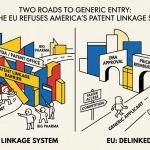
The fundamental problem is that the GCC’s pharmaceutical IP landscape combines a deceptively familiar legal framework – member states are all TRIPS signatories, all nominally provide 20-year patent terms, all have national patent offices – with a set of structural gaps that have no equivalent in U.S. or European practice. Patent linkage, the mechanism that prevents drug regulatory agencies from approving generic products while relevant patents are in force, essentially does not exist in most GCC states. Patent term extension, the credit that compensates innovators for time lost to regulatory review, does not exist anywhere in the GCC as of this writing. Data exclusivity, the protection for undisclosed clinical trial data, varies dramatically by country, and the legal status of data exclusivity obligations is contested in several member states.
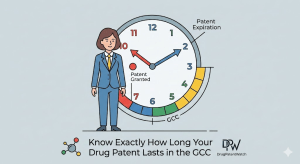
A pharmaceutical company that enters the GCC market relying on a compound patent’s 20-year nominal term is almost certainly operating with a shorter effective protection period than the statutory term suggests. The difference between the statutory 20-year term and the actual effective exclusivity a company enjoys in GCC markets typically runs three to seven years shorter than comparable products in the United States, primarily because of the regulatory review time that patent term extension compensates for elsewhere and does not compensate for here.
This guide covers everything pharmaceutical IP counsel, portfolio managers, and business development executives need to know about drug patent duration in the GCC: the legal architecture, the country-by-country realities, the protection mechanisms beyond patents, the specific gaps that create generic entry risk, and the filing strategy decisions that determine how much of the statutory term companies actually capture as usable exclusivity. Tools like DrugPatentWatch, which aggregates pharmaceutical patent and regulatory data across multiple markets, appear throughout because the practical work of mapping patent status requires structured, current data.
The Six Markets and Why They Are Not Interchangeable
The GCC operates as a political and economic bloc with a customs union, a common external tariff, and a Regional Patent Office – but pharmaceutical regulation and IP enforcement remain primarily national functions. A drug patent granted through the GCC Patent Office still requires national validation, country-by-country drug registration, and enforcement through national courts. The six member states share a common legal framework for patents but implement it with material differences.
Saudi Arabia is the anchor market by virtually every metric. Its pharmaceutical market accounts for approximately 40 percent of total GCC pharmaceutical revenues [2], its regulatory authority (the Saudi Food and Drug Authority, SFDA) has the most developed pharmaceutical approval infrastructure in the region, and its patent system through the Saudi Authority for Intellectual Property (SAIP) is the most thoroughly tested in pharmaceutical disputes.
The United Arab Emirates functions as the region’s commercial and logistical hub. The Ministry of Economy administers patents nationally, while the Abu Dhabi and Dubai free zones create additional complexity for IP strategy. The UAE’s pharmaceutical market is the second largest in the GCC, and its position as a transhipment hub means IP enforcement strategy here has ramifications beyond the UAE’s own territory.
Qatar has the highest per capita pharmaceutical spending in the GCC, driven by elevated living standards and a comprehensive public health system. IP Qatar administers patent filings. The pharmaceutical market is smaller in absolute terms but commands premium pricing, making it commercially significant per-revenue-dollar of patent coverage.
Kuwait, Bahrain, and Oman complete the bloc. Kuwait has a relatively straightforward national patent system under the Intellectual Property Department within the Ministry of Commerce. Bahrain’s IP framework is administered by the Intellectual Property Office under the Ministry of Industry, Commerce and Tourism, and Bahrain’s status as a U.S. Free Trade Agreement partner creates specific data exclusivity obligations discussed later. Oman similarly holds FTA status with the United States, which has specific consequences for pharmaceutical data exclusivity that other GCC member states do not share.
The practical consequence of this fragmentation is that a pharmaceutical IP strategy for “the GCC” does not exist in any meaningful sense. What exists is a portfolio of six distinct national strategies that must be coordinated and tracked separately, against different regulatory timelines, different patent office procedures, and different enforcement environments.
The Legal Foundation: TRIPS, the GCC Patent Regulations, and What They Actually Require
TRIPS Membership and the Minimum Standard
All six GCC member states joined the World Trade Organization and became bound by the Agreement on Trade-Related Aspects of Intellectual Property Rights (TRIPS) at various points between 1995 and 2008 [3]. TRIPS Article 33 requires that patent terms last “not less than” 20 years from the filing date. This is a floor, not a ceiling. Member states can provide longer terms, additional protections, or supplementary exclusivity mechanisms.
The critical word in Article 33 is “not less than.” The 20-year term is the minimum TRIPS requires. Patent term extension in the United States, Supplementary Protection Certificates in the European Union, and similar mechanisms in Japan are all TRIPS-compliant additions above the minimum floor. GCC states that provide exactly 20 years and nothing more are TRIPS-compliant. They are also providing substantially less effective protection for pharmaceutical products than the jurisdictions where the same drugs are generating the most revenue.
TRIPS Article 39.3 addresses data exclusivity, requiring that members protect undisclosed test data submitted for drug approval against “unfair commercial use.” This is the most contested provision in pharmaceutical IP practice globally, because the text requires protection against “unfair” use without specifying what that means in operational terms. The divergence between how the United States (which provides five years of NCE data exclusivity) and how GCC states implement this provision has created significant commercial risk for pharmaceutical companies with marketed products in the region.
The GCC Patent Regulations
The GCC established a Regional Patent Regulation in 1992, subsequently revised, that allows applicants to file a single regional application covering all six member states simultaneously. The GCC Patent Office (GCCPO), based in Riyadh, examines applications and grants regional patents [4]. On paper, the regional filing system provides an attractive efficiency: one application, one examination, coverage in six markets.
In practice, the system has significant limitations that affect drug patent duration and commercial value. A GCCPO-granted patent still requires national validation in each member state to become enforceable there. National validation requires submission of a certified copy of the grant, local agent appointment, and payment of national fees within specified timeframes that vary by country. Missing a national validation deadline in one country results in loss of rights in that country, even if the regional patent was properly obtained.
The GCCPO examination procedures also take substantially longer than their nominal timelines suggest. Delays of several years between filing and grant are common for pharmaceutical patents, and because the 20-year clock starts from the filing date regardless of when grant occurs, prosecution delays eat directly into effective patent term without any compensatory mechanism.
National Patent Laws Country by Country
Each member state also maintains its own national patent law, through which applicants can file directly without using the regional route. The key national laws are:
Saudi Arabia’s patent framework has been substantially updated, with the most recent implementing regulations under the Saudi Patents, Layouts of Integrated Circuits, Plant Varieties and Industrial Designs Law governing pharmaceutical patents [5].
The UAE’s Federal Law No. 11 of 2021 on Intellectual Property Rights in the Industrial Domain replaced earlier IP legislation and modernized patent procedures, including changes relevant to pharmaceutical patent examination [6].
Qatar enacted Law No. 30 of 2006 on Patents and Industrial Designs, which governs pharmaceutical patent applications through IP Qatar [7].
Kuwait, Bahrain, and Oman each have national patent laws that are broadly aligned with the TRIPS minimum but differ in procedural detail. Bahrain’s Law No. 6 of 2004 on Patents and Utility Certificates is particularly relevant given its U.S. FTA implications, as is Oman’s Industrial Property Law.
The 20-Year Clock: How It Starts, What Stops It, and When It Runs Out
The Filing Date as the Universal Starting Point
Across all six GCC member states and the GCCPO, the 20-year patent term runs from the earliest effective filing date. For patents claiming priority from a foreign application (typically a U.S. or PCT application), the priority date establishes the start of the 20-year clock provided the GCC or national application is filed within 12 months of the priority date under the Paris Convention [8].
This means that for a pharmaceutical compound patent first filed in the United States in Year 0, GCC national or regional filing occurs in Year 1, and GCC grant might occur in Year 5 or Year 6 after several years of examination. The resulting patent expires in Year 20 from the original U.S. filing date, not Year 20 from GCC grant. The company has approximately 14 to 15 years of enforceable patent term remaining at the time of GCC grant.
Compare this to a U.S. scenario where the same compound patent would be granted with the benefit of Patent Term Adjustment for prosecution delays and would be eligible for up to five years of Patent Term Extension for FDA regulatory review time. The U.S. effective patent term for that compound might run to Year 23 or Year 24 from filing. The GCC equivalent expires at Year 20. The structural deficit is four to seven years of protection – a period worth hundreds of millions of dollars in premium-priced pharmaceutical sales.
Annual Maintenance Fees: The Silent Term Killer
Every GCC member state requires payment of annual maintenance fees to keep a patent in force. These fees typically escalate in later years of the patent’s life. The consequence for pharmaceutical companies is straightforward: any patent that is allowed to lapse for non-payment of maintenance fees expires before its 20-year statutory term, regardless of its commercial importance.
The specific fee schedules vary by country, but the practical risk is greatest during two periods. First, in the years between GCCPO or national filing and grant, when the commercial importance of the underlying drug may not yet be clear, IP departments sometimes rationalize abandoning secondary or formulation patent applications to reduce maintenance costs – a decision that can prove expensive once the primary compound patent approaches expiration. Second, during business transitions (M&A activity, restructurings, changes in IP management systems), renewal tracking can fail and patents can inadvertently lapse.
Restoration procedures for lapsed patents exist in most GCC jurisdictions but are procedurally uncertain and can only be relied upon as a backstop, not a routine process. For commercially material pharmaceutical patents, maintenance fee calendaring and automated renewal tracking are non-negotiable requirements.
Patent Term Adjustment: Absent in GCC Law
The United States Patent and Trademark Office grants Patent Term Adjustment to compensate patent holders for delays caused by the USPTO during examination. There is no equivalent mechanism in any GCC member state or in the GCCPO rules. When the GCCPO or a national patent office takes four years to examine a pharmaceutical patent application, those four years are consumed from the 20-year statutory term without compensation.
Given that GCCPO examination timelines regularly exceed three to five years for pharmaceutical patents, and national office examination timelines in some member states can extend longer, the absence of PTA is a material drag on effective patent term. A pharmaceutical company planning a GCC IP strategy should assume that somewhere between three and six years of the nominal 20-year term will be consumed by prosecution before the patent issues, leaving an enforceable period of 14 to 17 years at grant.
Saudi Arabia: The Dominant Market and Its IP Framework
Saudi Arabia’s pharmaceutical market is the GCC’s largest and most commercially important, which makes the details of Saudi patent law the single most important variable in GCC pharmaceutical IP strategy. The Saudi Authority for Intellectual Property (SAIP) replaced the earlier Saudi Patents Department in 2018 and has made measurable progress in modernizing examination procedures, though pharmaceutical prosecution timelines remain extended compared to U.S. or European benchmarks.
Patent Term: 20 Years With No Extension
Saudi Arabia provides a 20-year patent term from the filing date. Saudi patent law contains no provision for patent term extension based on regulatory review delays [9]. A compound patent covering a drug that required four years of SFDA regulatory review – a typical timeline for innovative pharmaceutical products in Saudi Arabia – provides 20 years of nominal protection but only 16 years of commercially usable exclusivity. No statutory mechanism compensates for the lost four years.
The SFDA’s drug registration and approval process for new chemical entities has become more rigorous as the kingdom has invested in regulatory capacity, which means that the actual time from patent filing to drug approval has extended in recent years. A product that can be registered in Saudi Arabia in two to three years might represent a relatively favorable scenario; complex biologics and specialized drugs with novel mechanisms of action routinely take five or more years.
Given that pharmaceutical companies typically file patent applications during or before clinical development (to maximize protection against competitors), the timeline often looks like this: patent filed in Year 0, Phase III clinical trials completed in Year 6, Saudi regulatory submission in Year 7, Saudi approval in Year 10 or Year 11. By the time the drug reaches Saudi patients, fewer than 10 years of the original 20-year patent term remain. For a blockbuster drug generating $200 to $500 million annually in Saudi sales, each year of effective exclusivity lost to regulatory review represents enormous economic value that patent term extension would compensate for but Saudi law does not.
Data Exclusivity in Saudi Arabia: The Critical Secondary Protection
Saudi Arabia provides data exclusivity protection for undisclosed regulatory data submitted in support of a new drug application. The SFDA’s implementing regulations provide five years of data exclusivity for new chemical entities, running from the date of first marketing approval in Saudi Arabia [10].
Data exclusivity under Saudi law prevents the SFDA from relying on or referencing the originator’s clinical data when reviewing a competing generic drug application during the exclusivity period. It does not prevent a generic manufacturer from conducting its own bioequivalence studies and obtaining approval on that independent basis, but for most generic entry strategies, independent clinical data generation is prohibitively expensive and the data exclusivity period functions as a practical market exclusivity.
The interaction between patent term and data exclusivity is the key planning variable for Saudi market strategy. Where a compound patent expires before the five-year data exclusivity period ends, data exclusivity provides residual protection. Where data exclusivity expires before the patent, the patent provides the governing protection. Where both expire simultaneously or nearly simultaneously, Saudi Arabia provides no remaining protection and generic entry is possible.
Saudi Arabia does not currently provide a separate extended data exclusivity period for biologics analogous to the 12-year biologic data exclusivity in the United States or the 8-year data exclusivity plus 2-year market exclusivity structure in the European Union. Biologic reference products in Saudi Arabia receive the standard five-year data exclusivity period, which is dramatically shorter than U.S. or European equivalents and creates earlier biosimilar entry risk.
Patent Linkage in Saudi Arabia: Structural Absence
Patent linkage is the legal mechanism that ties a drug regulatory agency’s approval decisions to the patent status of listed drugs. In the United States, the FDA’s Orange Book system and the associated 30-month stay provision under Hatch-Waxman prevent ANDA approvals from becoming effective while relevant patents are in force (or until resolved through Paragraph IV litigation). In Europe, no formal linkage system exists, but the European regulatory framework has separate mechanisms.
Saudi Arabia has no formal patent linkage system [11]. The SFDA does not maintain a Saudi equivalent of the Orange Book. When a generic manufacturer applies for registration of a drug whose compound patent remains in force, the SFDA will process that application based on pharmaceutical quality, safety, and efficacy criteria – not on the patent status of the reference product. An SFDA approval can theoretically issue for a generic product that would infringe a valid Saudi patent.
The absence of patent linkage means that brand pharmaceutical companies in Saudi Arabia must rely on post-approval patent enforcement through the courts rather than on regulatory gatekeeping. When an SFDA-approved generic product appears on the market infringing a valid Saudi patent, the patent holder’s remedy is to file a patent infringement action – a procedure that is slower, more expensive, and less certain than preventing approval in the first place.
SAIP has developed procedures for recording pharmaceutical patents, and the SFDA does conduct some informal coordination with patent holders, but these procedures fall well short of a formal linkage system. Saudi Arabia’s pharmaceutical industry associations have repeatedly advocated for formal patent linkage implementation, and the issue appears in bilateral trade discussions, but a regulatory framework has not been adopted as of this writing. <blockquote> “The Gulf Cooperation Council pharmaceutical market is projected to reach $23.6 billion by 2028, growing at a CAGR of 6.2 percent, driven by rising rates of non-communicable diseases, demographic shifts, and significant public healthcare investment across member states.” [12] </blockquote>
Compulsory Licensing Under Saudi Law
Saudi patent law authorizes compulsory licensing under specific circumstances consistent with TRIPS Article 31, including national emergency, public health necessity, and failure to work the patent domestically within a specified period [13]. Saudi Arabia has not issued a pharmaceutical compulsory license to date, but the legal authority exists and the post-COVID-19 political environment has increased global discussion of compulsory licensing as a public health tool.
The practical risk of Saudi compulsory licensing is considered moderate rather than high for most innovative pharmaceutical products, particularly those covering diseases where treatment access is a genuine public health concern. Companies with strong Saudi commercial operations, active technology transfer or local manufacturing engagement, and transparent pricing practices represent lower compulsory licensing risk profiles than those perceived as limiting access through pricing.
The United Arab Emirates: Hub Market, Complex IP Environment
The UAE pharmaceutical market combines the highest per capita GDP in the GCC with a commercial infrastructure oriented toward regional distribution. The Ministry of Economy administers the national patent system, and the federal drug regulatory body (the Ministry of Health and Prevention for most drugs, with separate authority for the Abu Dhabi Health Services Company in Abu Dhabi) manages drug registration.
Patent Term and Examination Timelines
The UAE provides a 20-year patent term from the filing date under Federal Law No. 11 of 2021 [6]. No patent term extension or adjustment mechanism exists. UAE patent examination timelines for pharmaceutical patents have historically been lengthy, with grants taking three to seven years from filing depending on complexity and examiner workload.
The UAE patent office examination quality has improved meaningfully over the past decade, and the UAE has actively pursued bilateral IP cooperation agreements that have influenced examination procedures. For pharmaceutical patents, the UAE now accepts results of examination conducted by recognized international authorities (including the USPTO and EPO), which can accelerate prosecution. Companies that file UAE national applications with certified copies of U.S. or European examination results can potentially reduce UAE examination time to two to three years for cases where the foreign office conducted substantive examination.
This accelerated examination path is practically significant because each year of prosecution delay consumes one year of effective patent term with no compensatory mechanism.
Data Exclusivity in the UAE
The UAE provides data exclusivity protection under its drug registration regulations. The current framework provides five years of data exclusivity for new chemical entities from the date of UAE marketing approval [14].
The practical implementation of UAE data exclusivity has been somewhat inconsistent, with the regulatory authority’s application of exclusivity protections varying between product categories and registration pathways. Companies relying on UAE data exclusivity as a primary protection mechanism should verify current implementation status through direct regulatory inquiry or experienced local counsel rather than relying solely on the statutory text.
The UAE’s active engagement with the World Intellectual Property Organization and bilateral IP partnership agreements suggests that the regulatory framework will continue to evolve, but the direction of evolution – toward stronger or more consistently enforced data exclusivity – is not certain.
Free Zone Complexity
The UAE’s extensive free zone system – including Jebel Ali Free Zone, Dubai Healthcare City, and Abu Dhabi Global Market – creates additional complexity for pharmaceutical IP strategy. Companies operating within free zones may be subject to different regulatory frameworks for some commercial activities.
For pharmaceutical patents, the key risk involves the distribution and re-exportation of pharmaceutical products through UAE free zones. A generic product manufactured in a jurisdiction where the compound patent has expired or was never filed can transit through a UAE free zone and be distributed to other GCC markets. Whether this transit constitutes patent infringement under UAE law, and whether the UAE authorities will enforce patent rights against free zone-based distributors, is a factual and legal question that has not been definitively resolved in all relevant scenarios.
Companies with premium-priced pharmaceutical products in the GCC should include free zone distribution channels in their IP enforcement monitoring strategy.
Qatar: Premium Market, Developing IP Infrastructure
Qatar’s pharmaceutical IP framework is administered by IP Qatar, established under Law No. 30 of 2006 on Patents and Industrial Designs [7]. The patent term is 20 years from the filing date, consistent with GCC norms, with no patent term extension and no patent linkage system.
Data Exclusivity in Qatar
Qatar provides data exclusivity under its drug registration regulations, but the implementation framework has historically been less robust than Saudi Arabia’s or the UAE’s. The Hamad Medical Corporation and the Ministry of Public Health administer drug registration, and data exclusivity claims require proper registration and documentation with the regulatory authority at the time of drug approval.
The practical duration and scope of Qatar’s data exclusivity protection has been a source of uncertainty for pharmaceutical companies. Qatar’s rapid development of its regulatory infrastructure means that practices are evolving, and what was true of Qatar’s data exclusivity implementation two years ago may not reflect current practice. Companies seeking to rely on Qatar data exclusivity should verify current procedures directly with the Ministry of Public Health or through experienced Qatari IP counsel.
Qatar has been active in international IP policy discussions and has expressed interest in developing a more comprehensive pharmaceutical IP framework, partly in connection with its National Vision 2030 agenda and its ambitions to develop a domestic pharmaceutical manufacturing sector.
Patent Enforcement in Qatar
Patent enforcement through Qatari courts is possible but has been relatively infrequently tested for pharmaceutical patents compared to Saudi Arabia or the UAE. The Qatari judicial system has developed IP expertise, but the body of pharmaceutical patent case law is thin. For companies facing potential infringement by a generic product in Qatar, coordinating enforcement across multiple GCC markets – rather than relying on any single country’s litigation record – is typically the more effective strategy.
Kuwait: Straightforward Framework, Limited Enforcement History
Kuwait’s national patent system is administered by the Intellectual Property Department within the Ministry of Commerce and Industry. The framework provides a 20-year term from the filing date, consistent with other GCC member states.
Kuwait has not formally implemented a pharmaceutical-specific data exclusivity framework as clearly as Saudi Arabia or the UAE, and the application of TRIPS Article 39.3 protections to drug registration data has been less systematically developed. Drug registration is conducted by the Drug Department of the Ministry of Health, and the interaction between registration data and IP protections is less formally articulated.
Kuwait has no patent linkage system. Patent enforcement is available through Kuwaiti courts, but the pharmaceutical patent enforcement infrastructure is less developed than in Saudi Arabia.
For most pharmaceutical companies, Kuwait receives relatively less IP strategy attention than Saudi Arabia or the UAE despite its high per capita healthcare spending, partly because the market is smaller in absolute terms and partly because the IP enforcement infrastructure offers fewer procedural tools for active patent management.
Bahrain: The U.S. FTA Effect
Bahrain’s IP framework holds particular significance because of the U.S.-Bahrain Free Trade Agreement, which entered into force in 2006 [15]. The FTA contains specific pharmaceutical IP provisions that go beyond TRIPS minimums.
Data Exclusivity Under the U.S.-Bahrain FTA
Article 14.8 of the U.S.-Bahrain FTA obligates Bahrain to provide data exclusivity for pharmaceutical products containing new chemical entities, protecting undisclosed regulatory data against unfair commercial use for a period consistent with U.S. standards [16]. While the FTA text does not specify a number of years, its context and negotiating history have been interpreted as requiring five years of data exclusivity aligned with U.S. practice.
This FTA obligation has created a stronger, more formal data exclusivity commitment in Bahrain than the general TRIPS Article 39.3 requirement applicable to other GCC member states. Brand pharmaceutical companies should register their data exclusivity claims with the Bahrain Ministry of Health at the time of marketing approval to ensure the protection is formally recognized and documented.
Bahrain’s pharmaceutical market is the smallest in the GCC by absolute value, but its FTA-based data exclusivity framework means that companies with established commercial operations in Bahrain have stronger supplementary protection after patent expiration than in most other member states.
Patent Term in Bahrain
The patent term is 20 years from filing under Bahrain’s Law No. 6 of 2004, with no patent term extension. The Intellectual Property Office administers patent examination. Prosecution timelines in Bahrain are somewhat more efficient than in larger GCC markets, partly because of the lower volume of applications and partly because of Bahrain’s active engagement with international examination procedures.
Oman: The Second FTA Market
Like Bahrain, Oman has a U.S. Free Trade Agreement – the U.S.-Oman FTA, which entered into force in 2009 [17]. The pharmaceutical IP provisions of the U.S.-Oman FTA parallel those of the Bahrain FTA, creating enhanced data exclusivity obligations above the TRIPS minimum.
Data Exclusivity Under the U.S.-Oman FTA
The U.S.-Oman FTA contains provisions requiring Oman to protect undisclosed test data submitted for new pharmaceutical product approvals against unfair commercial use for at least five years, and to provide marketing approval exclusivity in addition to unfair-use protection [18]. This dual obligation – protection against unfair use and marketing exclusivity – places Oman’s formal data exclusivity framework on stronger legal ground than most other GCC member states.
Implementation of FTA pharmaceutical IP obligations has been uneven across both FTA markets. Oman’s relatively small pharmaceutical market and regulatory capacity constraints have meant that enforcing data exclusivity rights in practice requires active engagement with the Ministry of Health. The legal framework under the FTA is stronger than in non-FTA GCC members; the practical implementation requires monitoring.
Oman’s patent system is administered under the Industrial Property Law, Royal Decree No. 67 of 2008. The patent term is 20 years from filing.
The GCC Patent Office: What Regional Filing Actually Gets You
Filing Through the GCCPO vs. National Filings
The GCC Patent Office in Riyadh allows applicants to file a single regional application that, if granted, produces a regional patent covering all six member states. The practical choice between GCCPO filing and separate national filings in each member state is less straightforward than it appears.
Arguments for GCCPO filing include: a single examination with potentially lower initial costs compared to six separate national examinations, a single prosecution track, and potential strategic value from having a single granted patent to assert across the region.
Arguments for national filing include: the ability to tailor prosecution strategy and claim scope to each national market’s legal requirements, independence of national patents (a successful invalidity challenge in one country does not automatically affect others), and the ability to use accelerated examination procedures in individual countries that may not be available through the GCCPO route.
For most pharmaceutical companies with serious commercial interest in the GCC, a combined strategy – GCCPO filing for core compound patents plus national filings for commercially critical secondary patents in key markets – provides reasonable coverage without requiring full parallel prosecution in all six jurisdictions simultaneously.
National Validation: The Step That Determines Whether the Regional Patent Is Worth Anything
A GCCPO grant produces a regional patent that does not, by itself, confer enforceable rights in any member state. National validation in each country – filing certified translations where required, appointing local agents, paying national validation fees, and meeting country-specific filing requirements within the validation deadline – is required for the regional patent to become enforceable nationally.
Missing a national validation deadline results in irreversible loss of rights in that country. The validation deadlines run from the GCCPO grant date and differ by member state, typically falling in a range of three to six months from grant. Given that GCCPO grants can occur several years after filing, and IP management systems need to track filing-to-grant timelines accurately to calendar validation deadlines, this is a procedural risk that requires robust docketing infrastructure.
DrugPatentWatch tracks pharmaceutical patent status including international patent family data that can help analysts identify where GCC or national patents exist for specific drug products, where they have been validated, and when they expire. This cross-market visibility is operationally relevant when coordinating enforcement actions or assessing the competitive patent landscape in a specific GCC country.
Patent Linkage Across the GCC: The Region’s Most Consequential Gap
Patent linkage is the mechanism by which a drug regulatory agency checks patent status before approving a generic competitor. The U.S. system under Hatch-Waxman, with its Orange Book listing requirements and 30-month automatic stay, represents the most structured version. European systems handle competitive entry differently. The GCC has, in effect, neither.
Why Linkage Absence Increases Generic Entry Risk
In a system with patent linkage, a generic manufacturer who wants to enter the market before patent expiration must: file a certification challenging the patent, notify the patent holder, and then either litigate to resolution or wait out the stay period. The process is adversarial, public, and gives the patent holder procedural tools to maintain exclusivity while mounting a defense.
Without linkage, the process works differently. A generic manufacturer files a drug registration application with the national health ministry or drug authority. That authority reviews pharmaceutical quality and bioequivalence data. If those criteria are met, the authority can and typically will grant marketing approval regardless of whether a valid patent covers the reference product. The patent holder learns of the generic approval only when the product appears in the market or when a well-informed IP monitoring team intercepts the application through their surveillance channels.
At that point, the patent holder’s only option is to file an infringement action after the fact. Interim injunctions pending litigation are available in GCC courts but are neither automatic nor certain. The generic product may be selling in the market for months while the patent holder pursues injunctive relief. In smaller GCC markets where the commercial volume is limited and litigation costs are material, some patent holders calculate that enforcement is not economically justified – a calculation that generic manufacturers understand and exploit.
Country-by-Country Linkage Status
Saudi Arabia: No formal linkage system. The SFDA processes generic registration applications without reference to patent status. Some informal coordination with patent holders exists but lacks legal force.
UAE: No formal linkage system. The Ministry of Health processes applications independently of patent status. The UAE has the most active pharmaceutical IP enforcement environment in the GCC, but enforcement is post-registration rather than pre-approval.
Qatar: No formal linkage system.
Kuwait: No formal linkage system.
Bahrain: Despite its U.S. FTA obligations, Bahrain has not implemented a formal patent linkage system equivalent to the Orange Book and Hatch-Waxman framework.
Oman: The U.S.-Oman FTA contains provisions that could be interpreted as requiring patent linkage, but Oman has not implemented a formal linkage system in practice.
The absence of patent linkage across the GCC is the single most important structural gap for pharmaceutical patent holders. It affects the practical competitive dynamics more than any other feature of GCC IP law. Companies that understand this gap design their GCC market entry and defense strategies around it rather than assuming linkage-style protection exists.
Data Exclusivity: The Most Underused Protection Layer in GCC Markets
For pharmaceutical companies approaching patent expiration in GCC markets, data exclusivity is the primary supplementary protection mechanism available – and it is systematically underutilized because legal teams focused on patent management frequently fail to register data exclusivity claims properly at the time of drug approval.
What Data Exclusivity Actually Protects
Data exclusivity prevents a drug regulatory authority from approving a competing generic or biosimilar application by relying on or referencing the clinical trial data submitted by the originator company. It is distinct from the patent, and its clock runs from the date of marketing approval in each country rather than from any patent filing date.
For a drug whose compound patent expires five years after Saudi marketing approval (meaning the company had already consumed 15 years of patent term in development and regulatory review before reaching the Saudi market), a five-year data exclusivity period provides no residual protection because it runs concurrently with the remaining patent term. For a drug whose compound patent was never granted in a particular GCC country, or was invalidated, data exclusivity provides the only remaining protection.
The commercially critical scenario is a drug with a strong compound patent in the United States and Europe that has either a thin or invalidated patent position in the GCC. In that scenario, data exclusivity may be the company’s only meaningful exclusivity tool in GCC markets, making its proper registration essential.
Country-by-Country Data Exclusivity Summary
Saudi Arabia: Five years for new chemical entities from SFDA approval. Formally regulated under SFDA guidelines. Companies should explicitly register data exclusivity claims at time of approval.
UAE: Five years for new chemical entities from Ministry of Health/Prevention approval. Implementation consistency has varied.
Qatar: Data exclusivity provided in principle under drug registration law; operational implementation has been less systematically developed.
Kuwait: Data exclusivity provided under TRIPS obligations but the specific operational framework is less clearly articulated than in Saudi Arabia.
Bahrain: Five years for new chemical entities, reinforced by U.S. FTA obligations. Best documented and most formally established of the non-Saudi markets.
Oman: At least five years plus marketing exclusivity under the U.S.-Oman FTA. Among the stronger formal data exclusivity frameworks in the GCC.
No GCC member state provides the extended data exclusivity periods applicable to biologic reference products in the United States (12 years) or the European Union (10 years). Biosimilar entry in GCC markets faces shorter data exclusivity barriers than in Western markets.
Registering Data Exclusivity: The Procedural Step That Companies Miss
Data exclusivity in most GCC markets does not arise automatically from drug approval. The originator company typically must register its data exclusivity claim with the relevant drug regulatory authority at the time of or shortly after marketing approval. Failure to register results in no effective data exclusivity protection, even if the statutory framework would otherwise support it.
The registration process varies by country. In Saudi Arabia, the SFDA’s drug registration application includes fields for intellectual property information, and companies should specifically assert data exclusivity at that stage. In the UAE, equivalent fields and procedures apply through the Ministry of Health registration system. In Qatar and Kuwait, the procedures are less formalized but still require active assertion of the data exclusivity claim.
DrugPatentWatch maintains pharmaceutical exclusivity data across multiple markets, including GCC regulatory filings where available, and can provide the cross-market view of where data exclusivity is registered and when it expires. For portfolio management purposes, mapping each GCC country’s data exclusivity status for each marketed product alongside its patent status provides the integrated protection timeline that determines effective exclusivity in each market.
Patent Term Extension: Why Its Absence Matters More Than Most Teams Realize
The gap between the nominal 20-year patent term and the effective exclusivity period actually available to a pharmaceutical company in GCC markets is largely attributable to two factors: the regulatory review time that patent term extension compensates for in the United States and Europe, and prosecution delays that PTA addresses in the United States. Neither compensatory mechanism exists in any GCC member state.
Calculating the Effective Exclusivity Gap
A worked example illustrates the structural problem clearly.
Consider a company that files a compound patent application in the United States in 2008. The GCC regional application is filed in 2009 claiming Paris Convention priority. GCCPO examination takes four years; the regional patent issues in 2013. National validation in Saudi Arabia completes in 2013. Saudi SFDA marketing approval is granted in 2018 after a five-year regulatory review.
The compound patent nominally expires in 2028 (20 years from the 2008 U.S. priority date). From Saudi marketing approval in 2018, the company has 10 years of patent-protected commercial exclusivity in Saudi Arabia.
In the United States, the same patent would be eligible for up to five years of Patent Term Extension based on the time spent in FDA review. If the FDA reviewed the product from 2010 to 2014 (a four-year review), the U.S. patent term could be extended to 2032, giving the company 18 years of commercial exclusivity in the United States from its own FDA approval year.
The effective exclusivity gap between the U.S. and Saudi positions: 10 years in Saudi Arabia versus 18 years in the United States. For a drug generating $400 million annually in Saudi sales, each additional year of exclusivity represents $400 million in protected revenue. The absence of PTE represents a present value difference of several billion dollars for a major pharmaceutical product.
Why GCC Countries Have Resisted PTE
Several factors explain the persistent absence of patent term extension in GCC jurisdictions.
GCC pharmaceutical markets are import-dependent, and extending the exclusivity period for patented drugs increases the cost of healthcare funding to governments and insurers. GCC governments that subsidize or provide pharmaceutical benefits to citizens have a direct fiscal interest in earlier generic entry.
The GCC’s ambitions to develop domestic generic pharmaceutical manufacturing sectors create a policy tension between supporting generic manufacturers (which benefits from earlier entry) and protecting innovative product investment (which benefits from PTE). Most GCC governments, when forced to choose between these objectives, have favored earlier generic entry – a policy preference consistent with both pharmaceutical cost control and industrial policy goals for domestic generics manufacturing.
The United States and European Union have both raised PTE implementation in bilateral trade discussions with GCC member states, with limited effect. TRIPS does not require PTE, and GCC states are not legally obligated to implement it.
Pharmaceutical companies must therefore account for PTE absence as a structural feature of GCC markets, not a gap that will be closed in the near term.
Biologics and Biosimilars: Shorter Runway in the GCC
The global biosimilars market has grown rapidly as major biologic reference products have lost patent protection. The GCC is not an exception – biosimilar versions of adalimumab, trastuzumab, infliximab, and other major biologics have entered GCC markets, and their entry timelines reflect the structural IP gaps described above.
Reference Biologic Patent Duration
Biologic products receive the same 20-year patent term from filing as small-molecule drugs. The key difference is that the manufacturing patents, formulation patents, and process patents surrounding a biologic reference product are typically more complex and more numerous than those surrounding a small molecule. This complexity does not translate into longer effective exclusivity in GCC markets in the way it might in U.S. markets, because there is no GCC equivalent of the U.S. biologic data exclusivity (12 years) or the EU’s 10-year period.
A biologic reference product approved in Saudi Arabia receives five years of data exclusivity. A biosimilar manufacturer who waits five years, generates its own comparative clinical and analytical data, and files a biosimilar marketing application can receive regulatory approval without being barred by reference product data exclusivity. The absence of extended biologic data exclusivity eliminates a significant protection layer that U.S. and European regulatory frameworks provide.
Biosimilar Regulatory Pathways in GCC Countries
Saudi Arabia’s SFDA has developed a biosimilar regulatory framework that requires comparative quality, safety, and efficacy data in addition to standard bioequivalence assessments. The regulatory bar for biosimilar approval in Saudi Arabia is therefore higher than for small-molecule generics, which provides some practical delay relative to pure data exclusivity expiration.
The UAE, Qatar, and other GCC members are at various stages of developing biosimilar-specific regulatory guidelines. The heterogeneity of GCC biosimilar regulation means that biosimilar entry timelines differ by country even for the same biologic product. Companies managing biologic patent portfolios in the GCC need country-specific assessments rather than a region-wide estimate.
The absence of patent linkage for biologics is the same structural gap that affects small-molecule drugs. A biosimilar manufacturer can receive SFDA approval for a biosimilar product that a reference biologic patent may cover, without the SFDA being required to check patent status. The patent holder must monitor the regulatory pipeline and be prepared for post-approval enforcement action.
Building a GCC Patent Filing Strategy That Captures Maximum Term
Given the structural features described throughout this article – no PTE, no PTA, no linkage, short biologic data exclusivity – the strategic response for pharmaceutical companies is to compensate through disciplined filing and prosecution strategy rather than waiting for regulatory reform.
Prioritize Early Filing
Every month of delay between the U.S. or PCT priority date and GCC filing translates directly into a month of shorter effective term. Companies that file GCC national or regional applications promptly at the earliest possible date within the 12-month Paris Convention window capture the maximum available term. Companies that routinely file GCC applications at the tail end of the 12-month window, because GCC markets receive lower internal priority during patent filing processes, are voluntarily surrendering approximately one year of effective term without any compensatory benefit.
For major pharmaceutical products, the revenue value of that one year in Saudi Arabia alone – for a drug generating $200 million or more in annual Saudi sales – exceeds the cost of expedited GCC filing by orders of magnitude.
Use Foreign Examination Results to Accelerate GCC Prosecution
The GCCPO and several national patent offices accept examination results from recognized foreign authorities, primarily the USPTO and EPO. Where a U.S. patent has been granted following substantive examination, providing certified copies of that examination record to the GCCPO or relevant national office can meaningfully accelerate examination. Shorter prosecution periods preserve more effective patent term.
Companies that manage a large GCC pharmaceutical portfolio should build systematic procedures for transmitting foreign examination results to GCC prosecutors as a standard step in portfolio management.
File Divisional Applications Where Procedurally Available
Saudi Arabia’s patent law does not provide for continuation applications in the exact U.S. sense, but divisional applications are available where the original application contains multiple inventions. For pharmaceutical patents covering a compound, its formulations, and methods of treatment – which a USPTO examiner would likely restrict into separate applications – GCC applicants should consider divisional applications that maintain pending claims during the commercial life of the product.
Pending divisional applications covering the commercial formulation, the dosing regimen, or the method of treatment can provide meaningful protection even after a compound patent expires, and their prosecution in GCC jurisdictions can be managed to maintain coverage during the period of greatest commercial vulnerability.
Maintain a Comprehensive Pharmaceutical Patent Watch
The absence of patent linkage means that GCC markets lack the automatic notification that Paragraph IV certifications provide in the United States. Companies must build active intelligence gathering systems to detect generic applications and approvals in GCC markets.
DrugPatentWatch provides structured pharmaceutical patent and regulatory data that supports this kind of cross-market monitoring. By tracking product approvals, patent expiration timelines, and relevant patent family information across GCC and other markets, IP teams can identify when specific patents are approaching expiration and when generic manufacturers are likely to begin building regulatory dossiers. The platform’s aggregation of Orange Book data, international patent family information, and regulatory approval records provides the multi-market context that manual country-by-country monitoring cannot replicate efficiently.
TRIPS Flexibilities and How GCC Governments Use Them
TRIPS provides member states with a range of flexibilities that can limit or override patent rights, particularly for pharmaceutical products related to public health. The post-Doha Declaration environment, following the 2001 Doha Declaration on TRIPS and Public Health that clarified member states’ rights to use these flexibilities, has maintained a permanent political backdrop in which pharmaceutical patent rights in developing and middle-income countries can be publicly contested.
Parallel Import Authorization
GCC member states can in principle authorize parallel imports – importation of patented pharmaceutical products sold in other countries without the patent holder’s consent in the importing country. The legal frameworks for parallel imports differ by member state, and the practical use of parallel importation in GCC pharmaceutical markets has been limited.
For pharmaceutical companies, the more important parallel import risk in the GCC is the flow of pharmaceuticals through the UAE’s free zone distribution network. Products priced at different levels in different GCC markets can in principle be purchased in a lower-priced GCC market and redistributed to higher-priced ones, affecting the commercial value of the patent’s exclusion function.
Differential pricing strategies that are too aggressive across GCC markets create arbitrage incentives that the region’s distribution infrastructure can exploit. The patent protects against new generic entry, not against arbitrage of authorized pharmaceutical products.
Compulsory Licensing: The Policy Risk That Has Not Materialized but Remains Available
As noted in the Saudi Arabia section, every GCC member state has the legal authority to issue compulsory licenses for pharmaceutical products under TRIPS Article 31. None has done so for a pharmaceutical product as of this writing – a meaningful absence that reflects both the political economy of GCC pharmaceutical markets (significant government purchasing at negotiated prices that reduces the pressure toward compulsory licensing) and the limited manufacturing infrastructure that would be required to benefit from a compulsory license in the absence of a licensed domestic generics industry.
The post-COVID-19 period has intensified global debate about compulsory licensing for vaccines and therapeutics, and several GCC health ministries have participated in that debate. The WHO-backed medicines patent pool has engaged GCC health ministries on access frameworks. The legal risk of compulsory licensing in the GCC is real but remains lower than in many other middle-income markets, partly because GCC governments can and do negotiate pharmaceutical pricing directly with brand manufacturers as a substitute for the compulsory licensing route.
Enforcement: What GCC Courts Can and Cannot Do
Having a valid patent in a GCC country is a necessary but not sufficient condition for maintaining pharmaceutical market exclusivity. Enforcement through the courts – or through customs authorities where products are imported – requires procedural engagement with systems that are developing but not yet at the maturity level of U.S. or European pharmaceutical patent enforcement.
Saudi Arabia: The Most Developed GCC Enforcement Environment
Saudi courts, including the commercial courts that handle civil IP matters and the criminal courts with jurisdiction over willful infringement, have developed pharmaceutical patent enforcement experience. Saudi Arabia has a specialized commercial judiciary that has shown increasing sophistication in IP matters, and SAIP has developed administrative enforcement mechanisms.
Patent infringement in Saudi Arabia can be pursued through: civil actions for injunction and damages before the commercial courts; administrative complaints to SAIP; and, for willful infringement, criminal referral. For rapid relief, preliminary injunctions are available in commercial courts, though obtaining them for pharmaceutical patent infringement requires demonstrating the patent’s validity, the infringement, and the risk of irreversible harm from continued sale.
The standard of proof for preliminary injunctions in Saudi commercial courts requires a prima facie case of infringement and validity, which means companies must have solid claim analysis prepared before seeking relief. Coming to a Saudi court with a patent registration number and no claim mapping is insufficient.
UAE: Strong Enforcement Infrastructure, Active Courts
The UAE has arguably the most active IP enforcement infrastructure in the GCC. Dubai’s specialized IP enforcement bodies, the UAE Ministry of Economy’s IP protection office, and federal court systems with IP jurisdiction all provide multiple enforcement channels. Customs authorities have intellectual property recording procedures that allow right holders to request customs detention of suspected infringing products at points of entry.
Dubai’s Court of First Instance and the Dubai International Financial Centre courts (for entities with relevant DIFC connections) have both handled pharmaceutical IP disputes. DIFC courts apply common law principles and have attracted increasing numbers of complex commercial disputes, including IP matters, from international parties who prefer the procedural familiarity of common law litigation.
For pharmaceutical companies with GCC enforcement needs, UAE courts – particularly Dubai courts – often represent the most efficient initial enforcement venue because of the developed judicial infrastructure, the availability of English-language proceedings in some forums, and the UAE’s role as the region’s commercial hub.
Cross-Border Enforcement Coordination
Because GCC countries are separate patent jurisdictions, a patent infringement action in Saudi Arabia does not automatically produce results in the UAE, Qatar, or other member states. Companies facing a multi-country generic entry scenario need to coordinate enforcement actions – or at minimum enforcement monitoring – across all relevant markets simultaneously.
The GCC Customs Union provides some basis for coordinated customs enforcement, and the GCC’s legal harmonization agenda in commercial law creates ongoing potential for more coordinated IP enforcement procedures. In the current environment, however, pharmaceutical patent enforcement is essentially a country-by-country exercise that requires local counsel in each jurisdiction, local court filings, and local relationships with customs and regulatory authorities.
Generic Entry Economics in the GCC: What Makes a Patent Worth Defending
Not every patent infringement is worth pursuing in GCC courts. The economics of pharmaceutical patent enforcement require a clear-eyed assessment of the value at stake, the probability of success, and the timeline of relief.
Market Size and Revenue Concentration
For most innovative pharmaceutical products, Saudi Arabia represents 35-45 percent of total GCC pharmaceutical revenues, with the UAE contributing an additional 20-25 percent. Qatar, Kuwait, Bahrain, and Oman collectively represent the remaining 30-35 percent but with significant per-unit pricing premiums in some categories.
The enforcement economics for a drug generating $300 million annually in Saudi Arabia (where generic entry might cost $150 million or more per year in revenue) versus the same drug generating $15 million annually in Bahrain (where enforcement costs might rival or exceed the annual revenue at stake) are fundamentally different. The practice of staging enforcement efforts – mounting full-court-press defense in Saudi Arabia and UAE while monitoring but not immediately litigating in smaller markets – reflects economic reality.
Pricing Dynamics After Generic Entry
Generic pharmaceutical pricing dynamics in GCC markets have historically followed patterns similar to those in other regulated markets: first generic entrant typically prices at 20-30 percent below the brand, second and subsequent entrants drive prices lower, and within two to three years of first generic entry, generic prices settle at 40-70 percent below the original brand price [19].
GCC government purchasing – which accounts for a majority of pharmaceutical procurement in most member states through national formulary systems and ministry tenders – accelerates this dynamic because tender processes explicitly favor the lowest-priced equivalent products once generic options exist. A brand product that loses patent exclusivity and faces generic competition in Saudi government tenders can see revenue decline far more rapidly than the 80-90 percent volume erosion curve typically observed in U.S. markets, because the government tender mechanism switches volume entirely rather than allowing parallel brand and generic market segments to coexist.
This concentrated generic entry risk makes the period immediately following patent expiration in Saudi Arabia and the UAE particularly commercially sensitive.
How Pharmaceutical Companies Use DrugPatentWatch for GCC IP Intelligence
Managing a pharmaceutical patent portfolio across six GCC jurisdictions with different patent terms, data exclusivity regimes, enforcement environments, and regulatory frameworks requires structured data infrastructure. Manual tracking through six separate patent office databases, six drug regulatory agency records, and six court systems is neither efficient nor reliable.
DrugPatentWatch aggregates pharmaceutical patent and regulatory data from the FDA’s Orange Book, international patent family records, ANDA filing databases, and litigation records in a pharmaceutical-specific structure. For GCC-focused analysis, the platform’s value comes from several capabilities.
International Patent Family Tracking
DrugPatentWatch’s patent family tracking allows users to identify the international family of patents covering a specific pharmaceutical product. For a drug with a U.S. compound patent, the international family will typically include corresponding European, Japanese, and GCC or national Middle Eastern applications. The ability to see the full family in one view – including which applications have issued in which countries, which remain pending, and when each member expires – provides the baseline map for GCC patent status analysis.
Competitive Generic Pipeline Intelligence
The platform’s tracking of ANDA filings and Paragraph IV certifications in the United States provides a useful leading indicator for GCC generic entry timing, because generic manufacturers who have filed U.S. ANDAs against a brand product are also likely to be developing GCC registration dossiers. The time lag between U.S. ANDA filing and GCC generic registration application is typically one to three years, which gives IP teams with access to this leading indicator a planning horizon within which to assess GCC patent strength and prepare enforcement responses.
Patent Expiration Alerts
For portfolio management teams tracking dozens of GCC-relevant patents, automated expiration alerts tied to patent term data – including adjustments for any available term modifications and data exclusivity overlay – provide the operational foundation for a proactive defense strategy rather than a reactive one.
The Ten Most Expensive Mistakes in GCC Pharmaceutical Patent Strategy
1. Assuming patent linkage exists. The most consequential assumption error. Treating GCC drug regulatory agencies like the FDA – as patent-aware gatekeepers who will block generic approval while patents are in force – produces a passive enforcement strategy that leaves companies unprepared for post-approval infringement.
2. Failing to register data exclusivity claims. Data exclusivity requires active registration in GCC countries. A company that relies on statutory data exclusivity without filing the required documentation with the national drug regulatory authority may find it has no enforceable protection even where the statutory right exists.
3. Ignoring GCCPO national validation deadlines. A GCCPO regional patent grant that is not validated nationally in each member state within the required deadline produces no enforceable rights in the missed countries. Missing a validation deadline is irreversible.
4. Underestimating prosecution delay costs. Every additional year of prosecution delay consumes one year of effective patent term with no compensatory mechanism. Companies that do not actively manage GCC prosecution timelines surrender effective term without economic return.
5. Treating all six GCC markets as one IP jurisdiction. Each country has its own patent laws, drug regulatory authority, data exclusivity framework, and court system. A strategy built for Saudi Arabia does not automatically work in Kuwait.
6. Missing the biologic data exclusivity gap. GCC markets provide no extended biologic data exclusivity comparable to U.S. or EU frameworks. Companies that have planned their biologic product commercial life around 12 years of U.S. data exclusivity and assumed equivalent GCC protection are operating with inaccurate models.
7. Failing to monitor generic registration applications. Without patent linkage, the only way to detect a generic competitor preparing for market entry is active monitoring of the regulatory pipeline – through relationships with regulatory agencies, local market intelligence, and tools like DrugPatentWatch that track generic product activity in related markets as a leading indicator.
8. Allowing secondary patent coverage to lapse. When a compound patent expires, secondary patents covering specific formulations, dosing regimens, and delivery systems can provide meaningful residual protection in markets where they are in force. Companies that have allowed GCC secondary patent applications to lapse have surrendered protection they may need.
9. Assuming FTA obligations are automatically implemented. Bahrain and Oman have U.S. FTA obligations that require enhanced data exclusivity. These obligations are not self-executing under domestic law in either country. Verifying that the national regulatory authority has implemented FTA-consistent procedures, and registering data exclusivity claims under those procedures, is required for the FTA-based protection to be operational.
10. Creating pricing strategies that generate parallel import arbitrage. Aggressive differential pricing across GCC markets creates economic incentives for free zone-based redistribution of authorized products from lower-priced to higher-priced markets. This does not constitute patent infringement but does undermine the commercial exclusivity that the patent is supposed to protect.
Oncology Products: A Case Study in GCC Patent Term Management
Oncology products illustrate the GCC pharmaceutical patent challenge in sharp relief, because they combine high revenue per patient (making every month of exclusivity extremely valuable), long regulatory review timelines (meaning substantial patent term is consumed before first patient), and active generic and biosimilar competition (meaning post-patent entry is rapid and commercially severe).
Consider a hypothetical monoclonal antibody for non-small cell lung cancer, with a compound (sequence) patent filed in 2005, a GCCPO application filed in 2006, GCCPO grant in 2010, Saudi SFDA approval in 2014, and UAE approval in 2015. The compound patent expires in 2025 in all markets (20 years from the 2005 priority date).
From Saudi marketing approval in 2014 to compound patent expiration in 2025: eleven years of patent-protected commercial life in Saudi Arabia. From UAE approval in 2015 to expiration in 2025: ten years in the UAE.
Data exclusivity in Saudi Arabia from 2014: expires in 2019, well before patent expiration, providing no residual protection.
In the United States, the comparable biologic product would likely have received 12 years of biologic data exclusivity from U.S. BLA approval, plus Patent Term Extension on one designated patent based on FDA regulatory review time, potentially extending effective exclusivity to 2027 or beyond.
The GCC effective exclusivity: 11 years. The U.S. effective exclusivity: approximately 18-20 years. That structural difference, replicated across a major pharmaceutical company’s portfolio, represents a present-value IP gap worth tens of billions of dollars for GCC markets alone.
The strategic response for companies managing oncology portfolios in the GCC is not to close this gap – the regulatory frameworks will not change on a commercially relevant timeline – but to maximize the available term through early filing, accelerated prosecution, aggressive secondary patent coverage in commercially material GCC markets, and proactive data exclusivity registration.
The Outlook: What May Change in GCC Pharmaceutical IP
Saudi Vision 2030 and Domestic Pharmaceutical Manufacturing
Saudi Vision 2030 identifies pharmaceutical manufacturing as a strategic sector for domestic development. The kingdom has set targets for increasing domestic pharmaceutical manufacturing’s share of the Saudi market and has offered incentives for foreign pharmaceutical manufacturers to establish Saudi operations [20].
This industrial policy agenda creates an interesting IP dynamic. Developing a domestic branded pharmaceutical manufacturing sector – as opposed to only a generics sector – creates incentives for stronger patent protection to attract the technology transfer and clinical development investment that accompanies branded manufacturing. Saudi Arabia’s evolving IP engagement may gradually shift toward stronger protections if the domestic industry that benefits from those protections develops. The trajectory of this shift is uncertain and will depend on the mix of domestic investment between innovative and generic manufacturing.
GCC Pharmaceutical Harmonization Agenda
The GCC Secretariat has maintained a pharmaceutical harmonization agenda that seeks to align drug registration procedures, GMP requirements, and regulatory standards across member states. Progress has been made in some technical areas. A related IP harmonization initiative – creating more consistent data exclusivity frameworks or even a GCC-wide patent linkage system – would be a logical extension but has not reached formal adoption.
The GCC’s joint regulatory framework discussions have periodically included IP provisions, and bilateral trade pressure from the United States and EU continues to include pharmaceutical IP as a standard agenda item. The direction of travel points toward incrementally stronger protections over time, but the pace of reform is slow relative to commercial timelines.
WIPO Treaty Obligations and International Engagement
Several GCC member states have acceded to additional WIPO treaties in recent years, including the Patent Law Treaty. Continued engagement with the international IP framework may support gradual strengthening of national pharmaceutical IP protections, particularly in areas like prosecution procedures that affect patent quality and term utilization.
Key Takeaways
The nominal 20-year patent term in all six GCC countries is a ceiling, not what pharmaceutical companies will typically achieve as effective commercial exclusivity. Prosecution delays, regulatory review time, and the absence of compensatory mechanisms typically reduce effective exclusivity to 10-16 years depending on product type and country.
No GCC member state provides patent term extension. This is the single most commercially significant structural gap compared to U.S. and EU frameworks, and it is not expected to change in the near term.
Patent linkage does not exist in any GCC member state in a formal sense. Drug regulatory authorities process generic applications without checking patent status, meaning brand manufacturers must conduct active monitoring and pursue post-approval enforcement rather than relying on regulatory gatekeeping.
Data exclusivity is the primary supplementary protection mechanism, but it must be actively registered with the national drug regulatory authority in each GCC country to be enforceable. It is not automatic.
Saudi Arabia and the UAE are the commercially dominant GCC markets and warrant the most intensive IP management attention. Together they represent 60-65 percent of GCC pharmaceutical revenue.
Bahrain and Oman have enhanced data exclusivity obligations under their U.S. FTAs, making them formal outliers in the GCC for this specific protection mechanism. FTA obligations are not self-executing and require monitoring for compliance.
Biologic reference products receive the standard five-year data exclusivity across the GCC – no extended biologic data exclusivity exists. Biosimilar entry in GCC markets faces meaningfully lower data protection barriers than in U.S. or EU markets.
The GCCPO regional filing route provides efficiency in initial prosecution but requires active national validation in each member state following grant. Missing national validation deadlines produces irreversible loss of rights in the affected country.
Active management of GCC pharmaceutical IP requires structured, multi-market data tools. DrugPatentWatch’s aggregation of patent family data, regulatory information, and generic activity provides the baseline intelligence infrastructure for GCC portfolio monitoring that manual country-by-country tracking cannot replicate efficiently.
Companies that plan GCC market strategy assuming the IP framework resembles U.S. or European practice will consistently overestimate their effective exclusivity period and arrive at the generic cliff unprepared.
FAQ
Q1: Can a pharmaceutical company file a PCT application and have it serve as the GCC regional patent application?
A PCT application allows the applicant to enter national or regional phase in PCT member countries, and the GCC Patent Office is a designated receiving office in the PCT system. An applicant who has filed a PCT application can enter GCC regional phase by filing the appropriate national phase documents at the GCCPO within the PCT deadline (30 or 31 months from the priority date, depending on applicable rules). This produces a GCCPO regional application subject to examination under GCC procedures. However, the PCT application itself is not the GCCPO application – the regional phase entry step is required. Most GCC pharmaceutical patent prosecution is initiated either through PCT national phase entry at the GCCPO or through direct Paris Convention priority filings at the GCCPO or national patent offices.
Q2: Does Saudi Arabia recognize U.S. Orange Book patent certifications in any way when processing generic drug applications?
No. The SFDA does not maintain an equivalent of the Orange Book and does not reference U.S. patent certifications when processing generic registration applications in Saudi Arabia. A Paragraph IV certification filed with the U.S. FDA has no legal effect in Saudi Arabia. However, companies that monitor U.S. ANDA filing activity – through sources like DrugPatentWatch – can use that activity as a leading indicator of which generic manufacturers are likely to pursue Saudi registration for the same product, typically one to three years after their U.S. ANDA filing. This intelligence allows Saudi market IP planning to be coordinated with U.S. litigation strategy even without a formal Saudi linkage system.
Q3: What happens if a GCC patent is granted but the drug receives marketing approval only after the patent has expired?
The patent provides no exclusivity protection for the commercial product in that scenario, since the product was not on the market during the patent’s term. The relevant protection would be data exclusivity from the date of marketing approval, assuming it was properly registered. This scenario – where regulatory review time consumes the entire remaining patent term – is not theoretical in GCC markets. It is most likely to occur with products that were first approved in Western markets many years before the patent holder sought GCC regulatory approval. The practical lesson is that companies should not delay seeking GCC regulatory approval for products where the patent clock is running. Data exclusivity from the GCC marketing approval date becomes the company’s only IP-based protection tool in this scenario.
Q4: How do pharmaceutical companies handle patent enforcement in GCC countries when there is no formal mechanism to challenge generic marketing approval before it is granted?
The most effective approach combines four parallel activities. First, establishing active monitoring of GCC generic registration pipelines through direct relationships with in-country regulatory affairs teams, local market intelligence services, and multi-market pharmaceutical data tools like DrugPatentWatch that can identify generic manufacturer activity in related markets as a leading indicator. Second, ensuring GCC patents are recorded with customs authorities in each member state, which allows customs officials to detain potentially infringing imports pending further verification. Third, building established relationships with the IP enforcement units of national patent offices – particularly SAIP in Saudi Arabia and the Ministry of Economy in the UAE – so that when infringement is detected, administrative enforcement channels can be activated quickly. Fourth, maintaining current claim analysis maps for key patents so that when infringement is detected, the company can rapidly file for preliminary injunctions in commercial courts rather than spending weeks on analysis that should have been done in advance.
Q5: Does the GCC’s intra-regional free trade arrangement affect pharmaceutical patent enforcement between member states?
The GCC Customs Union eliminated tariffs on goods moving between member states but did not create a unified IP enforcement jurisdiction. A patent valid in Saudi Arabia cannot be enforced based on Saudi registration in the UAE, Qatar, or elsewhere – each country requires its own patent grant for rights to be enforceable there. The Customs Union’s practical effect on pharmaceutical IP is primarily through the cross-border product flow it facilitates: a generic pharmaceutical product approved and manufactured in a GCC country where the patent has expired can be imported and distributed in other GCC countries where the same patent remains in force, potentially constituting infringement in the receiving country. Whether the GCC’s free movement framework provides any defense to such cross-border infringement is a contested legal question that has not been definitively resolved across all relevant country-pairs. Companies managing late-stage patent expirations in GCC markets should specifically assess cross-border distribution risks from member states where equivalent patent protection has already expired.
Sources
[1] IQVIA Institute for Human Data Science. (2023). Middle East and Africa pharmaceutical market outlook 2023-2028. IQVIA Holdings.
[2] Evaluate Pharma. (2023). Gulf Cooperation Council pharmaceutical market analysis: Country contributions and growth drivers. Evaluate Ltd.
[3] World Trade Organization. (2024). Members and accession: WTO membership status for GCC countries. WTO Secretariat. https://www.wto.org/english/thewto_e/countries_e/
[4] GCC Patent Office. (2023). GCC Patent Regulations and procedures guide. Gulf Cooperation Council Secretariat General.
[5] Saudi Authority for Intellectual Property. (2022). Patents, layouts of integrated circuits, plant varieties and industrial designs law and implementing regulations. SAIP. https://www.saip.gov.sa
[6] United Arab Emirates. (2021). Federal Law No. 11 of 2021 on intellectual property rights in the industrial domain. Ministry of Economy UAE.
[7] State of Qatar. (2006). Law No. 30 of 2006 on patents and industrial designs. IP Qatar.
[8] Paris Convention for the Protection of Industrial Property, March 20, 1883, as revised and amended, 21 U.S.T. 1583.
[9] Saudi Authority for Intellectual Property. (2023). Patent term and maintenance fee schedule: Pharmaceutical applications. SAIP.
[10] Saudi Food and Drug Authority. (2021). Data exclusivity guidelines for pharmaceutical products. SFDA Regulatory Affairs. https://www.sfda.gov.sa
[11] World Health Organization. (2022). Pharmaceutical patent linkage: Global survey of national frameworks. WHO Department of Health Products Policy and Standards.
[12] IQVIA Institute for Human Data Science. (2023). GCC pharmaceutical market forecast 2023-2028. IQVIA Holdings.
[13] Agreement on Trade-Related Aspects of Intellectual Property Rights (TRIPS), Annex 1C, Marrakesh Agreement, April 15, 1994, Art. 31.
[14] United Arab Emirates Ministry of Health and Prevention. (2022). Registration guidelines for pharmaceutical products: Intellectual property and data exclusivity requirements. MOHAP.
[15] United States-Bahrain Free Trade Agreement, September 14, 2004, entered into force August 1, 2006.
[16] United States-Bahrain Free Trade Agreement, Art. 14.8: Protection of undisclosed test data (2004).
[17] United States-Oman Free Trade Agreement, January 19, 2006, entered into force January 1, 2009.
[18] United States-Oman Free Trade Agreement, Art. 15.8: Protection of undisclosed test or other data (2006).
[19] Grabowski, H., Long, G., & Mortimer, R. (2014). Recent trends in brand-name and generic drug competition. Journal of Medical Economics, 17(3), 207-214. https://doi.org/10.3111/13696998.2014.877464
[20] Saudi Vision 2030. (2023). National industrial development and logistics program: Pharmaceutical sector targets. Council of Economic and Development Affairs, Kingdom of Saudi Arabia. https://www.vision2030.gov.sa