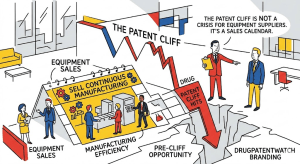
Every major drug patent expiration triggers a predictable downstream event: the originator company races to defend margin, and a dozen generic manufacturers race to compete on price. Both groups share one fundamental problem after loss of exclusivity (LOE). Their batch manufacturing infrastructure – expensive to run, wasteful by design, and slow to scale – becomes a direct liability the moment price compression sets in. That is the moment a well-prepared continuous manufacturing supplier walks in the door.
This article is written for business development professionals at biopharma equipment and manufacturing technology companies who want to build a systematic, data-driven strategy around patent expirations. It covers the economic case for continuous manufacturing post-LOE, the regulatory tailwinds now accelerating adoption, the customer segmentation strategy that actually converts, and the intelligence tools – including DrugPatentWatch – that let you forecast opportunities years ahead.
The Real Cost of Batch After LOE
Why Batch Economics Break at Commodity Prices
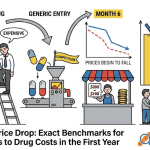
Most pharmaceutical manufacturers built their production infrastructure during a period when price protection made operational inefficiency acceptable. When a brand-name drug commands $400 per unit wholesale, a 12% yield loss in a batch reactor is a rounding error. When generic competition drives that unit price to $40 within 18 months of LOE, that same yield loss becomes existential.
Batch manufacturing has four structural cost problems that compound after LOE. First, it is capital-intensive per unit of output because facilities are sized for peak demand, not average demand, and they sit idle during cleaning, qualification, and changeover. Second, it requires large in-process inventory buffers at each stage, which ties up working capital and introduces quality risk at every transfer point. Third, it is labor-heavy relative to throughput because each unit operation requires dedicated oversight, sampling, and release testing. Fourth, it generates disproportionate waste during startup and shutdown cycles, which matters very little when drug prices are high and matters enormously when they are not.
A 2021 analysis published in the Journal of Pharmaceutical Sciences estimated that continuous manufacturing can reduce cost of goods (COGS) by 20% to 50% for solid oral dosage forms compared to equivalent batch processes, depending on drug complexity and production volume [1]. That range is wide, but even the low end of 20% represents a decisive competitive advantage in a commoditized generics market where margin differences between manufacturers are measured in single-digit percentages.
What “Continuous” Actually Means in a Manufacturing Context
Continuous manufacturing (CM) in pharma does not simply mean running equipment without stopping. It means integrating unit operations – feeding, granulation, blending, compression, coating – into a single connected process train where material flows through without intermediate holds. The key technical distinction is that process analytical technology (PAT) monitors the stream in real time, and control systems adjust parameters automatically rather than waiting for off-line lab results.
For solid oral dosage forms, the canonical CM system connects a loss-in-weight feeder, a twin-screw granulator or continuous blender, and a tablet press into a single monitored line. For small-molecule APIs, continuous flow chemistry replaces batch reactor sequences with tubular reactors and microreactors. For biologics, the integration challenge is greater, but perfusion bioreactors combined with continuous downstream chromatography are now commercially validated.
The equipment is not science fiction. Janssen Pharmaceutica received the first FDA approval for a tablet manufactured via continuous processing in 2016 for Prezista (darunavir) [2]. Vertex Pharmaceuticals built its Trikafta manufacturing process around CM from the outset and has been public about the cost and quality benefits. The regulatory pathway is established. The question for equipment suppliers is whether their prospective customers know it.
Reading the Patent Cliff as a Business Development Map
LOE Timelines Create Predictable Buying Windows
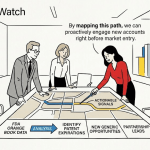
Patent expirations are public information. The Orange Book published by the FDA lists all approved drug products with their associated patent and exclusivity expiration dates. DrugPatentWatch aggregates, monitors, and interprets this data in a format built specifically for commercial intelligence, covering both U.S. and international patent landscapes for thousands of branded drugs.
For a business development team at a continuous manufacturing equipment company, this data is a prospecting list. A drug with $1 billion or more in U.S. annual sales facing LOE in 24 to 36 months represents a high-probability opportunity. The originator will be evaluating cost reduction strategies. Multiple generic manufacturers will be filing ANDAs and building capacity. Contract development and manufacturing organizations (CDMOs) will be pitching expanded capabilities to both groups.
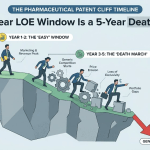
The buying window for capital equipment typically opens 18 to 36 months before commercial launch. Regulatory review of a continuous manufacturing supplement or a new NDA/ANDA takes time, equipment must be qualified, and process validation studies require a meaningful runway. That means an equipment supplier targeting a specific LOE event needs to be in front of the right people at least two to three years before the patent expires – which requires knowing which patents are expiring now.
Between 2025 and 2030, several high-revenue drug franchises face primary patent expiration. Drugs like Keytruda (pembrolizumab) with estimated 2028 U.S. primary patent expiry, Eliquis (apixaban) facing ongoing multi-front generic litigation, and the aging blockbuster portfolios of several top-20 manufacturers represent billions in revenue that will shift to competitive markets within this planning horizon [3]. Equipment suppliers who are tracking these expirations through tools like DrugPatentWatch and building account plans around them today will be positioned before the RFP hits.
Segmenting the Customer Universe Post-LOE
Not every manufacturer facing a patent cliff is the same buyer. Business development strategy has to distinguish between four customer profiles, each with a different value proposition.
The first group is originator companies protecting margin. When a blockbuster faces LOE, the originator has two options: concede the market to generics, or compete on price through an authorized generic or operational cost reduction. Those that choose to compete need manufacturing infrastructure that can produce at generic-competitive cost while maintaining the quality infrastructure of a branded manufacturer. Continuous manufacturing is compelling here because it reduces COGS without requiring the originator to sacrifice its regulatory standing.
The second group is large generic manufacturers scaling up for a newly generic market. Companies like Teva, Mylan (now Viatris), Sandoz, and Sun Pharma are allocating production capacity to high-revenue LOE events years in advance. Their capital allocation decisions are driven by projected market share and COGS modeling. An equipment supplier with credible COGS reduction data for a specific dosage form – say, a high-dose oral solid with a challenging active – can enter that conversation with a precise financial argument.
The third group is CDMOs building capabilities to attract LOE manufacturing contracts. The CDMO model depends entirely on being the lowest-cost, fastest-to-qualify option for a manufacturer who does not want to build their own capacity. A CDMO that has already validated a continuous manufacturing platform for a relevant dosage form can offer both the cost advantage and the speed-to-market advantage simultaneously. This group tends to make capital decisions ahead of the market, because their value proposition requires demonstrated capability before the contract is signed.
The fourth group is emerging market generic manufacturers, particularly those in India and China, that are building export-oriented production for regulated markets. As the FDA and EMA have increasingly inspected and approved facilities outside the U.S. and Europe, manufacturers in these regions are adopting continuous manufacturing as a quality signal as much as a cost tool. The FDA’s explicit support for CM as part of its pharmaceutical quality modernization agenda gives these manufacturers an additional incentive.
The Financial Case Equipment Suppliers Should Be Making
Building a COGS Reduction Model That Converts
A business development conversation that opens with “our system improves product quality and reduces cycle time” will not close a capital equipment deal with a CFO-level stakeholder at a generic manufacturer. The conversation that closes the deal starts with a COGS model specific to the customer’s product.
Here is what a credible model covers. For a 200 mg oral solid dosage form with annual volume of 500 million units, a batch process running three separate operations (high-shear granulation, tray drying, compression) requires approximately 14,000 square feet of manufacturing space, four to six FTEs per shift, 8 to 12 hours of processing time per batch, and generates 3% to 5% yield loss across the batch sequence. A continuous manufacturing line for the same product fits in roughly 3,000 square feet, requires two FTEs per shift, produces output in near-real-time, and reduces yield loss to under 1% through PAT-enabled process control [4].
Translate those parameters into dollars. Labor savings at $85,000 fully loaded cost per FTE, over two shifts with a four-person headcount reduction, is $680,000 per year. Footprint savings at $350 per square foot of GMP space on a facility lease is approximately $3.85 million per year in real estate and overhead. Yield improvement of 3% on 500 million units at $0.08 raw material cost per unit is $1.2 million per year. The three items together total roughly $5.7 million annually before accounting for reduced working capital from faster inventory turns and lower batch failure risk.
Present that model to a generic manufacturer preparing to launch against a high-volume LOE drug, and the capital payback period on a $4 to $6 million continuous manufacturing line becomes 12 to 18 months. That is a conversation that moves. <blockquote> “Continuous manufacturing can reduce production costs by up to 50% for solid dosage forms, with additional gains in quality consistency driven by real-time process monitoring – factors that become decisive once generic price competition eliminates brand-driven margin buffers.” – International Society for Pharmaceutical Engineering (ISPE), Continuous Manufacturing of Pharmaceuticals, 2017 [5] </blockquote>
Working Capital and Speed-to-Market Arguments
Beyond direct COGS, there are two financial arguments that resonate with the operations and supply chain stakeholders who increasingly influence capital equipment decisions.
The first is working capital. A batch manufacturing process for a solid oral dosage form typically holds 15 to 30 days of in-process inventory across the production stages. A continuous process reduces in-process hold to hours. For a manufacturer running $200 million in annual COGS on a major generic product, even a 10-day reduction in average inventory days outstanding frees $5.5 million in working capital. That is not a manufacturing metric – it is a balance sheet metric, and finance teams notice it.
The second is speed-to-market. The first generic manufacturer to achieve commercial scale for a newly LOE drug captures disproportionate market share because retail and hospital formulary committees lock in supplier relationships early. A CM line validated for a specific product can reach commercial scale in weeks rather than months because there are no scale-up steps between the development system and the production system – the process is the same, just running longer. This is a core technical advantage that batch manufacturing cannot replicate, and it translates directly into revenue timing.
The Regulatory Landscape Now Works in Your Favor
FDA’s Continuous Manufacturing Policy Is a Tailwind
The FDA’s commitment to continuous manufacturing is now years old and accelerating. The agency published its Guidance for Industry on Continuous Manufacturing of Small Molecule Solid Oral Drug Substances and Drug Products in 2019, establishing a clear regulatory framework for CM submissions [6]. ICH Q13 – the international harmonized guideline on continuous manufacturing for drug substances and drug products – finalized in 2023 and has been adopted by the FDA, EMA, PMDA (Japan), and Health Canada [7]. This means a manufacturer who validates a CM process can submit the same technical data package to multiple regulatory agencies without re-doing the work.
For equipment suppliers, this represents a direct selling point that did not exist a decade ago. In 2012, a manufacturer asking about CM for a regulated product faced a regulatory gray zone. In 2024, they have a published FDA guidance, a finalized ICH guideline, and multiple precedent approvals to reference. The risk that regulators will object to a properly documented CM system is now lower than the risk that a batch process will generate an FDA 483 for the kinds of sampling and in-process control deficiencies that PAT-based systems automatically prevent.
How ICH Q13 Changes the Commercial Conversation
ICH Q13 does more than acknowledge continuous manufacturing – it defines the technical vocabulary that regulators and manufacturers now share. It establishes concepts like the “continuous process verification” approach as an alternative to traditional process validation stages, and it formalizes the role of PAT in establishing a “design space” that provides regulatory flexibility during commercial manufacturing.
For equipment suppliers, ICH Q13 creates a compliance roadmap that customers can follow. If your system comes pre-configured with the PAT sensors, data systems, and process control architecture that ICH Q13 expects to see documented, you are not just selling hardware – you are selling regulatory confidence. That repositioning matters when the buyer is a quality director or regulatory affairs lead who has approval authority over capital equipment selections and who is personally accountable to the FDA for what gets installed.
Several equipment suppliers have moved aggressively on this. GEA Group’s continuous manufacturing systems include integrated PAT packages developed in collaboration with instrument suppliers. Thermo Fisher Scientific’s Patheon CDMO division has built CM capabilities with explicit regulatory submission support as part of its commercial offering. Siemens and Rockwell Automation have developed pharmaceutical-specific manufacturing execution systems (MES) and process control platforms that generate the electronic batch records and process data required for CM regulatory submissions [8]. The market is moving. The question is who moves first in front of specific LOE-driven opportunities.
Case Studies: What Competitive Advantage Actually Looks Like
Janssen’s Prezista Switch: The Proof of Concept
Janssen Pharmaceutica’s conversion of Prezista (darunavir) manufacturing to a continuous process at its Gurabo, Puerto Rico facility stands as the most-cited example of large-scale pharmaceutical CM implementation in the industry. The approval from the FDA in 2016 validated the technical approach, but the commercial rationale is what matters for equipment suppliers pitching similar projects today.
Janssen reported that the CM process reduced the manufacturing footprint by 40%, cut the manufacturing time from 30 days to less than a day for the same output, and reduced the number of process steps from 22 to fewer than 10 [9]. Darunavir was not facing imminent LOE when the conversion was done – Janssen invested in CM for quality and efficiency reasons before competitive pressure demanded it. The lesson for equipment suppliers is that the conversation is not exclusively about post-LOE defensive strategy. An originator company that builds CM infrastructure while protected by patents enters the LOE period with a cost structure that either enables competitive generic pricing or supports portfolio rationalization.
Vertex Pharmaceuticals: Building CM Into the Development Blueprint
Vertex’s cystic fibrosis franchise – Trikafta (elexacaftor/tezacaftor/ivacaftor) – was developed with continuous manufacturing integrated from early clinical stages. Vertex has stated publicly that its CM investment was a deliberate choice to build a supply chain capable of meeting global demand for a disease where the patient population is measured in tens of thousands, not millions [10].
The Vertex example matters for a different reason than Janssen. For small patient populations with complex dosage requirements, batch manufacturing creates a quality and supply reliability problem that CM solves. The regulatory investment to qualify a CM system pays off faster when product recalls, batch failures, or shortage events carry disproportionate clinical consequences. This is a relevant case study for equipment suppliers targeting specialty pharma manufacturers facing LOE on orphan drugs or complex formulations – a growing segment as the number of rare disease approvals has increased substantially over the past decade.
Business Development Execution: What Actually Works
Targeting the Right People Inside the Right Organizations
Capital equipment sales in pharmaceutical manufacturing fail most often not because the product is wrong but because the selling effort focuses on the wrong decision-makers. A continuous manufacturing system valued at $3 to $8 million will require sign-off from operations, quality, regulatory affairs, and finance. The entry point into a pharmaceutical manufacturer preparing for LOE is not the procurement manager. It is the VP of Manufacturing Operations or the Chief Supply Chain Officer who is already running scenarios on post-LOE cost structure.
At the CDMO level, the entry point is business development leadership – the people who are actively tracking which drugs face LOE and building capability pitches around them. A CDMO’s BD team is your sales force’s closest analog inside the customer organization, and they respond to competitive intelligence and market timing arguments more than technical specifications.
At the generic manufacturer level, the technical operations and regulatory affairs leads are the most effective entry points because they are the ones being asked internally to evaluate CM feasibility for specific products. A supplier who can show up with a PAT-validated CM configuration specific to the customer’s target dosage form – with a regulatory submission strategy outlined – has already done the customer’s homework for them.
Using Patent Expiration Data as Account-Based Targeting
The practical execution of an LOE-driven business development program starts with a market map. Using DrugPatentWatch, a BD team can identify all drugs facing primary patent expiration in a 36-month forward window with annual U.S. sales above $500 million. That list, filtered by dosage form (solid oral being the highest-yield target for most CM equipment suppliers), produces a manageable set of 15 to 25 priority targets per year.
For each target drug, the account map is straightforward: identify the originator company, identify the top five ANDA filers using FDA ANDA databases, identify the CDMOs most likely to receive contract manufacturing business (using public M&A, capacity announcements, and therapeutic area specialization), and then map the capital equipment decision-makers at each organization.
This is account-based marketing executed with pharmaceutical market intelligence. It is not speculative. The events are on the public record; the timing is known. A supplier who runs this program consistently will build a pipeline of qualified opportunities 24 to 36 months deep – which matches exactly the capital planning horizon of the customers they are targeting.
Partnership Models That Accelerate Adoption
Pure equipment sales are increasingly insufficient as a go-to-market model for continuous manufacturing. The customers who are most motivated by LOE economics – generic manufacturers and CDMOs – typically lack the internal continuous manufacturing expertise to design, qualify, and operate a CM system without support. That expertise gap is a business development opportunity, not a barrier.
Equipment suppliers who bundle technology transfer, process development support, and regulatory submission assistance with their hardware are closing deals that pure equipment vendors are losing. The model that works is a phased engagement: development system placement at laboratory or pilot scale with a process development agreement, followed by commercial system specification based on validated process parameters, followed by commercial system installation with PAT configuration and regulatory submission support.
This approach creates switching costs that protect the supplier relationship through multiple product campaigns. A manufacturer who has validated a continuous process on your platform, with your PAT configuration, generating data in your MES format, is not going to restart that process on a competitor’s system for the next LOE product unless there is a compelling reason. Lock-in in pharmaceutical manufacturing is not contractual – it is validation-based. Equipment suppliers who understand this design their commercial model around it.
Barriers to Adoption and How to Defuse Them
The Capital Commitment Objection
The most common objection to continuous manufacturing investment from generic manufacturers is capital. A CM line for solid oral dosage forms requires $3 to $8 million in upfront equipment investment compared to $1 to $2 million for the batch equipment it replaces. For a company used to optimizing ANDA economics on thin margins, the payback period argument has to be precise.
The response to this objection requires segmentation. For a manufacturer targeting a $1 billion-plus LOE drug where they expect to capture 15% to 20% market share, the annual revenue on a single product justifies the capital investment on a straightforward payback analysis. For smaller LOE products, the argument shifts: a CM platform is not a single-product investment, it is a campaign infrastructure investment that produces returns across multiple product launches. A single validated continuous solid oral dosage form platform can be redeployed with process-specific parameter adjustments across multiple products without re-doing the full regulatory qualification.
The Regulatory Uncertainty Myth
Some manufacturers still operate under the belief that submitting a CM-based ANDA or NDA supplement creates additional regulatory risk compared to a batch submission. This belief is five years out of date. The FDA has approved CM-based drug products, published detailed guidance, established a dedicated working group within CDER, and participated in the development of ICH Q13 specifically to give manufacturers a clear regulatory framework.
The more credible regulatory risk today is not CM approval – it is process control deficiency citations in conventional batch operations. FDA 483 observations related to inadequate in-process controls, insufficient process understanding, and sampling failures are disproportionately associated with batch processes that lack real-time monitoring. A CM system with a well-documented PAT strategy and a process control system that generates electronic batch records as a matter of course is structurally less vulnerable to this category of regulatory finding.
Workforce and Change Management Resistance
Manufacturing organizations resist continuous manufacturing partly because it requires different operator skills and a different quality oversight model than batch. QA teams accustomed to end-of-batch release testing have to adapt to continuous process verification models. Production supervisors accustomed to batch records have to manage real-time process streams.
This is a genuine implementation challenge, and equipment suppliers who dismiss it lose credibility. The effective response is a training and change management commitment built into the commercial offer. Suppliers who provide operator certification programs, quality team training on PAT interpretation, and ongoing process support during the first product campaign address the human side of the transition in a way that reduces perceived risk for the customer and creates durable commercial relationships.
The Intelligence Layer: Using DrugPatentWatch Effectively
A business development program built around LOE events is only as good as its intelligence. The Orange Book is public, but raw patent data is not a business development tool – it requires interpretation, cross-referencing with market sales data, ANDA filing activity, litigation history, and product complexity to generate actionable opportunities.
DrugPatentWatch provides a structured view of the patent landscape that is specifically designed for commercial strategy. Users can identify not just when a primary composition patent expires, but whether there are secondary patents on formulations, methods of use, or manufacturing processes that could extend market exclusivity beyond the primary patent date. They can track ANDA filings and Paragraph IV certifications that signal when generic manufacturers have already committed to competing for a market. They can monitor patent litigation outcomes that affect the practical exclusivity timeline regardless of the listed expiration date.
For a continuous manufacturing equipment supplier, the most operationally valuable feature is the ability to filter by therapeutic area and dosage form alongside patent expiration dates. A supplier specializing in oral solid dosage form continuous manufacturing should be monitoring all primary patent expirations for tablets and capsules with U.S. annual sales above a threshold – DrugPatentWatch makes that filtering straightforward. The result is a living prospect list that updates as new patents are listed, litigation outcomes change, and ANDA filings are submitted.
The competitive advantage is timing. A supplier who identifies a $2 billion oral solid dosage form drug facing LOE in 30 months through DrugPatentWatch, then cross-references the ANDA filers and builds account plans for the top three generic manufacturers on that list, is 18 months ahead of the supplier who reads about the LOE event in a trade publication after it happens.
Building the Program: A 90-Day Action Plan
What to Do First
Start with the intelligence infrastructure. Subscribe to DrugPatentWatch and build a filtered watchlist of oral solid dosage form drugs facing LOE in 24 to 48 months with U.S. annual sales above $500 million. That list should generate 15 to 30 targets in most years. Cross-reference each target against the FDA’s ANDA database to identify which generic manufacturers have already filed and are preparing commercial capacity. Those filers are your highest-priority accounts.
For each account, map the decision-making unit. LinkedIn, company annual reports, conference speaker lists, and industry directories provide the information needed to identify VP-level manufacturing, regulatory, and operations leaders. Build individual contact plans for each, with a content strategy focused on the specific LOE event – not generic CM capabilities.
Content That Converts
A continuous manufacturing equipment supplier’s content strategy for LOE-driven business development needs to pass one test: would a VP of Manufacturing Operations at a company preparing to launch a generic drug find this useful and specific?
White papers that model COGS reduction for specific dosage forms are more valuable than general CM capability brochures. ROI calculators pre-built for solid oral dosage form volumes in the 200 to 500 million unit annual range are more useful than abstract efficiency claims. Regulatory roadmaps showing the path from CM process development to ANDA submission for a specific therapeutic category are more persuasive than generic FDA guidance summaries.
Distribute that content at the conferences where your target customers are making capital planning decisions: ISPE Annual Meeting, CPhI Worldwide, INTERPHEX, and the FDA/ISPE Quality Manufacturing Conference. Pair conference presence with account-specific outreach timed to the LOE calendar.
Key Takeaways
Drug patent expirations are a predictable, forward-visible event that equipment and technology suppliers can build entire business development programs around – the data is public, the timeline is known, and the capital spending follows the same cycle every time.
The financial case for continuous manufacturing after LOE is specific and calculable: labor reduction, footprint savings, yield improvement, and working capital release combine to produce 12-to-18-month payback periods for properly scoped implementations targeting high-volume generic products.
The regulatory risk of continuous manufacturing adoption is now lower than the regulatory risk of staying in batch, given the FDA’s published CM guidance, ICH Q13, and the mounting inspection record for PAT-deficient batch operations.
Business development strategy must segment the four post-LOE customer types – originator defenders, large generic scalers, CDMOs, and emerging market exporters – because each requires a different financial and technical argument.
DrugPatentWatch and FDA ANDA databases, used together, produce a prospect list with defined timing, commercial scale, and competitive context that is more reliable than any sales intuition about market timing.
Equipment suppliers who bundle process development, PAT configuration, and regulatory submission support with their hardware close deals that pure equipment sellers lose, and they build validation-based lock-in that extends through multiple product campaigns.
FAQ
Q1: How do equipment suppliers decide which LOE events to prioritize when there are dozens of patent expirations per year?
The selection criteria should combine revenue scale, dosage form fit, and competitive landscape. Target drugs with U.S. annual sales above $500 million face the most aggressive generic entry, which drives the highest urgency for cost-reduction investment. Filter those for dosage forms where your technology offers validated advantages – solid oral for most continuous granulation and compression platforms, API synthesis for flow chemistry specialists. Then check Paragraph IV certifications on DrugPatentWatch: a drug with five or more active ANDA filers is already generating capital planning activity across the generics industry, and that activity is your opportunity window.
Q2: How should suppliers approach originators who are considering competing via authorized generic rather than abandoning the market post-LOE?
Authorized generic strategy and continuous manufacturing investment are complementary, not competing options. An originator who plans to launch an authorized generic through a CDMO partner needs that CDMO to have CM capability to compete on price against first-to-file generics. An originator who plans to manufacture in-house for an authorized generic needs their own CM infrastructure. Either path leads to a capital equipment or technology transfer conversation. The entry message is not “convert your facility before LOE” – it is “what does your post-LOE supply model look like, and how does your COGS structure support it?”
Q3: What is the minimum product volume that makes continuous manufacturing economically justified for a post-LOE generic?
The economic threshold depends heavily on the product and process, but as a general reference point for solid oral dosage forms, the break-even versus batch typically occurs around 100 million units per year when accounting for full COGS including labor, space, utilities, and in-process yield. Below that volume, the capital amortization works against CM economics unless the platform is multi-product. For suppliers targeting smaller-volume LOE drugs, the multi-product platform argument is the correct commercial framing: position the CM system as a campaign platform capable of handling four to six products per year, and model the economics across the portfolio rather than against a single product.
Q4: How has the FDA’s inspection posture toward continuous manufacturing facilities changed in practice, not just in policy?
FDA inspection teams have developed measurable experience with CM facilities over the past eight years, and the observation pattern is instructive. CM facilities that have encountered 483s have done so primarily around PAT sensor validation, control strategy documentation, and the real-time release testing (RTRT) data packages rather than for process-specific deficiencies. This is actually an easier category of issue to remediate than the product quality failures that generate batch recall-level events in conventional manufacturing. Suppliers who train customer QA teams on the specific documentation requirements for PAT validation and RTRT strategy are delivering genuine regulatory risk reduction, not just compliance theater.
Q5: Are there specific continuous manufacturing equipment configurations that are better suited to post-LOE generic economics versus innovator quality systems?
Yes, and this distinction matters for how suppliers structure their product tiers. Innovator companies building CM infrastructure during patent protection prioritize flexibility, multi-product configurability, and documentation-intensive PAT packages because they are building for a pipeline of different clinical-stage compounds. Generic manufacturers and CDMOs targeting post-LOE production prioritize throughput reliability, simplified changeover, and COGS-optimized configurations because they are building for high-volume single-product campaigns. A supplier offering only one CM configuration is leaving money on the table. The product architecture that wins in both markets has a validated core process train with modular PAT and control configurations that can be tuned for the innovator or generic commercial requirement without re-doing the process validation.
References
[1] Schaber, S. D., Gerogiorgis, D. I., Ramachandran, R., Evans, J. M. B., Barton, P. I., & Trout, B. L. (2011). Economic analysis of integrated continuous and batch pharmaceutical manufacturing: A case study. Industrial & Engineering Chemistry Research, 50(17), 10083–10092. https://doi.org/10.1021/ie2006752
[2] U.S. Food and Drug Administration. (2016). FDA approves first application for a drug manufactured using continuous manufacturing technology [Press release]. https://www.fda.gov/news-events/press-announcements/fda-approves-first-application-drug-manufactured-using-continuous-manufacturing-technology
[4] Markarian, J. (2020). Comparing continuous and batch manufacturing economics for oral solid dosage forms. Pharmaceutical Technology, 44(4), 24–29.
[5] International Society for Pharmaceutical Engineering. (2017). Continuous manufacturing of pharmaceuticals: Baseline guide. ISPE.
[6] U.S. Food and Drug Administration. (2019). Guidance for industry: Quality considerations for continuous manufacturing. CDER/CBER. https://www.fda.gov/media/121314/download
[7] International Council for Harmonisation. (2023). ICH Q13: Continuous manufacturing for drug substances and drug products. ICH Harmonised Guideline. https://www.ich.org/page/quality-guidelines
[8] Siemens AG. (2023). Pharmaceutical manufacturing execution systems for continuous processing. Siemens Digital Industries. https://www.siemens.com/global/en/products/automation/industry-software/manufacturing-execution-systems.html
[9] Allison, G., Cain, Y. T., Cooney, C., Garcia, T., Bizjak, T. G., Holte, O., Jagota, N., Komas, B., Korakianiti, E., Kourti, D., Madurawe, R., Morefield, E., Montgomery, F., Nasr, M., Randolph, W., Robert, J. L., Rudd, D., & Zezza, D. (2015). Regulatory and quality considerations for continuous manufacturing. Journal of Pharmaceutical Sciences, 104(3), 803–812. https://doi.org/10.1002/jps.24324