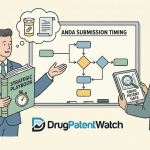
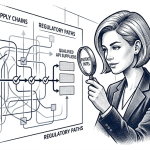
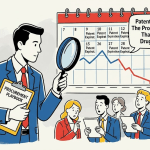
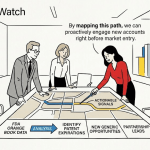
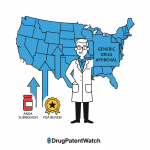
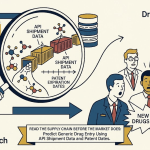
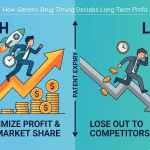
How to turn a single FDA regulatory date into a structured, repeatable, competitively timed sales funnel for active pharmaceutical ingredient manufacturers, CDMOs, and specialty chemical suppliers.
Quick Read: What You Need to Know
The NCE-1 date is the first day generic drug manufacturers can file an Abbreviated New Drug Application (ANDA) against a brand drug protected by New Chemical Entity (NCE) exclusivity.
That single date triggers a 24-to-36-month API procurement cycle that generates commercial contracts worth millions of dollars.
Most API suppliers approach this window reactively. The ones who build pipeline-based outreach programs around NCE-1 dates win the contracts before competitors know there is a race.
Tools like DrugPatentWatch publish rolling NCE-1 calendars that translate FDA exclusivity data into actionable prospecting lists.
What Is the NCE-1 Date? A Precise Definition for Commercial Teams
The term circulates through regulatory affairs departments and IP attorneys, but it rarely makes it into business development conversations. That gap is worth billions of dollars annually to whoever closes it first.
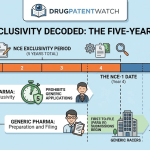
New Chemical Entity (NCE) exclusivity is a five-year data exclusivity period granted by the FDA under Section 505(c)(3)(D)(ii) of the Federal Food, Drug, and Cosmetic Act. When the FDA approves a drug containing an active ingredient never previously approved, the agency gives the innovator a five-year window during which no generic manufacturer can even submit an ANDA referencing the innovator’s safety and efficacy data. Not file and wait. Not file and face a patent lawsuit. Submit. The door is shut for four years, with a partial opening on year four for Paragraph IV filers.
The NCE-1 date is the calendar date exactly one year before that five-year exclusivity period ends. On the NCE-1 date, for the first time, generic manufacturers may submit an ANDA accompanied by a Paragraph IV certification challenging any Orange Book-listed patents on the drug. This is the first practical trigger for generic development activity, because a successful Paragraph IV challenge can yield 180-day first-filer exclusivity worth, in the case of major molecules, hundreds of millions of dollars.
Short answer: What does ‘NCE-1’ mean? NCE-1 is the date one year before the end of a brand drug’s five-year New Chemical Entity data exclusivity. It is the earliest date on which a generic drug company may file an ANDA with a Paragraph IV patent challenge. For API suppliers, it is the earliest reliable signal that a generic program has entered active procurement mode.
From an API supplier’s perspective, the NCE-1 date is not a regulatory milestone. It is a commercial event. When generic companies begin preparing their ANDA packages in the months leading up to NCE-1, they need an API source. The supplier who has already qualified their drug substance, filed a Type II Drug Master File (DMF), and negotiated a supply agreement wins the contract. The supplier who reaches out after the ANDA is already in preparation is competing for backup supplier status at best.
NCE-1 vs. Patent Expiry: Why API Suppliers Tracking the Wrong Date Lose Every Time
How Far in Advance Does the Real API Procurement Decision Get Made?
Patent expiry dates get the press. They appear on investor earnings calls and in generics trade media. Every API manufacturer follows the Orange Book for composition-of-matter patent expirations. The problem is that by the time a patent expiry date becomes widely known, the procurement decision for the first-to-file ANDA has already been made, often 24 to 36 months earlier.
The NCE-1 date operates differently. It precedes patent expiry by months or years depending on how aggressively the innovator has stacked additional patents on top of the NCE exclusivity. On some molecules, NCE exclusivity expires years before the last Orange Book patent, and a generic manufacturer who files a Paragraph IV on NCE-1 must still survive the 30-month litigation stay that follows if the brand sues within 45 days. The API for that program has to be ready before that litigation period even begins.
Consider the timeline on a hypothetical but typical molecule. The NDA approves on January 1, 2021. NCE exclusivity runs five years to January 1, 2026. The NCE-1 date is January 1, 2025. A generic company that wants to file on NCE-1 and compete for first-filer exclusivity needs a substantially complete ANDA, which requires a referenced Type II API DMF. FDA guidance under GDUFA recommends DMF submission at least six months before ANDA filing. [1] Add in six months for in-house development, route scouting, and bioequivalence batch manufacturing, and the generic company’s API procurement decision occurred in mid-2023, fifteen months before the NCE-1 date itself.
For the API supplier, the commercial window opens not on NCE-1, but on the day the generic company’s project team starts writing its development plan, which is typically 18 to 30 months before the NCE-1 date. Tracking the NCE-1 date backwards by 24 months gives a supplier a prospecting calendar that pre-empts the market by two full years.
How Generic Drug Economics Make NCE-1 Dates the Most Valuable IP Calendar in Pharma
The stakes attached to the first generic filing on a major molecule are not abstract. They are quantifiable, and they explain why every generic company that can compete for first-filer status does compete.
‘Industry estimates suggest that 60 to 80 percent of a generic product’s total profit is often made during the 180-day exclusivity period alone.’ [2]DrugPatentWatch, ‘The Strategic Core: A Definitive Guide to API Sourcing for Generic Drug Manufacturers’ (December 2025)
The mechanism is straightforward. Under the Hatch-Waxman Act, the first generic applicant to file a substantially complete ANDA with a Paragraph IV certification against an Orange Book patent earns 180 days of marketing exclusivity from the date of launch. [3] During those six months, no other generic can receive final FDA approval. The first filer and the brand drug share the market in a temporary duopoly. Generic prices during exclusivity periods typically settle 20 to 30 percent below the brand’s wholesale acquisition cost, a dramatic improvement over the commodity pricing that follows when six or more generics arrive and drive erosion to 85 to 95 percent below brand WAC. [4]
For a drug with $1 billion in annual U.S. sales, six months of exclusivity-period revenue can exceed $150 million in net margin. That is the financial context in which generic companies select their API suppliers. They are not price-shopping a commodity. They are choosing a supply chain partner whose regulatory standing, delivery reliability, and process documentation will determine whether a multimillion-dollar filing is accepted or rejected by the FDA.
The $236 Billion Patent Cliff: Where NCE-1 Dates Sit in the Largest Opportunity Set in Generic History
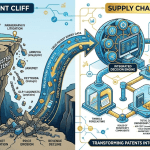
Between 2025 and 2030, the global pharmaceutical industry faces approximately $236 billion in annual brand-name drug revenue at risk from patent expiration, with roughly 70 high-revenue products losing exclusivity. [5] Several of these molecules received NCE exclusivity between 2020 and 2025, meaning their NCE-1 dates fall between 2024 and 2029, directly inside the window where API supplier pipelines are being built right now.
The 2026 to 2028 cluster is particularly concentrated. Apixaban (Bristol Myers Squibb and Pfizer’s Eliquis), one of the best-selling anticoagulants in history, faces generic entry timelines that have already triggered ANDA preparation activity across dozens of generic manufacturers. [6] Molecules in GLP-1, oncology, and central nervous system categories approved in 2020 and 2021 are generating NCE-1 dates through 2025 and 2026. Each of those NCE-1 dates is a trigger event for API procurement programs that are, in many cases, already underway.
API suppliers who have not mapped their product development portfolios against the NCE-1 calendar for 2025 to 2030 are not just missing leads. They are absent from the conversations where their competitors are being shortlisted.
Why 180-Day Exclusivity Is Structurally Impossible Without a Pre-Qualified API Source
The first-filer exclusivity is not just a commercial prize. It functions as a structural constraint that determines API supplier selection timing. A generic company cannot file a substantially complete ANDA without referencing an API source with a Type II DMF on file with the FDA. FDA’s completeness assessment standards under GDUFA require that the referenced DMF have received ‘available for reference’ status before the ANDA review date, and FDA recommends the DMF be submitted at least six months before ANDA submission. [1]
If an API supplier’s DMF is still under initial completeness assessment when the ANDA reviewer gets to the file, the ANDA can receive a refuse-to-receive action or a complete response letter, wiping out months of development work and potentially forfeiting first-filer exclusivity to a competitor who was better prepared. [7]
This structural dependency gives early-moving API suppliers a compounding advantage. The generic company that wants to file on NCE-1 day must have a DMF-referenced API source locked in well before that date. The API supplier who reaches the generic company’s project team 18 months before NCE-1 with a clean DMF and process documentation is, in practice, the only supplier that can serve the NCE-1 filing window. Late arrivals get qualified as alternate sources, which means lower volumes, lower prices, and no participation in the exclusivity period revenue.
How the NCE-1 Filing Window Works Mechanically: A Step-by-Step Timeline
The regulatory mechanics of the NCE-1 filing window are worth understanding precisely, because each step creates a specific demand signal that API suppliers can track.
Year 0: FDA approves NDA. NCE exclusivity clock starts. Brand drug launches. API supplier opportunity window for generic supply is closed; no ANDA can be submitted for 4 years.
Year 1-3 (API Supplier Action Period): Generic companies conduct feasibility analysis on the molecule. Route scouting begins. API suppliers who have mapped the NCE-1 date backwards 24 months begin prospecting outreach. The first commercial conversations happen here, not at exclusivity expiration.
Year 4 (NCE-1 Date Minus 6-12 Months): Generic companies in active ANDA preparation. BE batch API needed. DMF must be submitted or already filed. This is the last window for supplier qualification without jeopardizing ANDA timing.
NCE-1 Date (Year 4 of exclusivity): ANDAs with Paragraph IV certifications can be submitted. Multiple generic companies typically file on the same day. FDA confirms first-applicant status. 45-day litigation window begins; brand may sue.
NCE-1 Plus 30 Months (Potential): If brand sues within 45 days of Paragraph IV notice, 30-month statutory stay applies. API supply chain must be production-ready for potential at-risk launch when stay expires or litigation resolves.
NCE Exclusivity Expiry (Year 5): FDA can grant final approval. Non-first-filers can also receive approval. Market opens to multi-source generic competition.
What Happens on NCE-1 Day: The ANDA Filing Stampede
On the NCE-1 date for a commercially significant drug, the FDA’s ANDA intake center receives simultaneous submissions from multiple generic manufacturers, sometimes dozens. On one NCE-1 date documented in litigation records, 22 ANDAs were filed on the same day, meaning all 22 companies became co-first filers for the purposes of 180-day exclusivity. [8] The commercial value of that exclusivity was divided among 22 participants instead of one, but even a 1/22 share of a major molecule’s exclusivity window can justify the development investment.
For API suppliers, this filing stampede is the most important competitive signal in pharma commercial strategy. Twenty-two ANDA filers means at minimum four to eight qualifying API supply agreements. That is four to eight opportunities for a supplier who was present in the pre-NCE-1 development window. It is zero opportunities for a supplier who showed up after the filings were submitted.
Paragraph IV Certifications: Why They Accelerate the API Procurement Timeline Further
A Paragraph IV certification is a legal assertion filed with an ANDA stating that a listed Orange Book patent is either invalid or will not be infringed by the generic product. When a generic company files a Paragraph IV, it knows it may face immediate patent litigation from the brand. The 30-month stay that follows if the brand sues creates a development-to-launch gap that requires the generic company to be fully API-ready before the stay even begins.
Generic companies planning a Paragraph IV strategy typically begin their API sourcing two to three years before the target ANDA submission date. [9] That means for a drug with an NCE-1 date in January 2027, the development planning conversations are happening in 2024 and 2025. An API supplier reading the NCE-1 calendar in 2024 can place outreach calls to generic project teams before those teams have made sourcing decisions. A supplier reading the same calendar in late 2026 is calling to introduce itself to people who already have a signed supply agreement.
Building the NCE-1 Sales Funnel: Practical Architecture for API Commercial Teams
Translating an intellectual understanding of NCE-1 mechanics into a working sales funnel requires a specific workflow. The components are data acquisition, prospect identification, contact mapping, outreach timing, and qualification sequencing.
Step 1: Where to Find NCE-1 Dates and How to Read the Data
Orange Book vs. DrugPatentWatch: Which Source Is Most Actionable for API Commercial Teams?
The primary source for NCE-1 dates is the FDA’s Orange Book, which lists all active exclusivities for approved drug products. The Orange Book records the NCE exclusivity expiration date (the full five-year endpoint), and NCE-1 can be calculated as exactly four years from the NDA approval date. However, the raw Orange Book data requires significant interpretation: exclusivities can be stacked (NCE plus pediatric exclusivity plus orphan drug exclusivity), patent listings change after initial approval, and some NDA approval dates reflect supplements rather than original approvals.
Services like DrugPatentWatch aggregate and clean this data, publishing rolling NCE-1 date calendars that list upcoming filing windows alongside patent counts, existing DMF filers, litigation history, and revenue estimates. [10] For a commercial team at an API manufacturer, this is the primary prospecting database. The NCE-1 calendar on DrugPatentWatch lists drugs by upcoming filing date, with cross-references to the generic manufacturers most likely to pursue first-filer strategies and the number of existing DMF holders for the API.
A drug on the NCE-1 calendar with zero or one existing DMF holder is a high-priority target: the field is open, and any API supplier who files a DMF and qualifies with a generic company before the NCE-1 date has a realistic chance of winning the first-filer supply contract. A drug with eight DMF holders already means the supplier is entering a competitive field where price and audit readiness matter more than being first.
Step 2: Scoring NCE-1 Targets by Commercial Attractiveness
Which Scoring Variables Most Strongly Predict API Supply Contract Value?
Not every NCE-1 date represents equal commercial opportunity. A scoring model for API suppliers should weight the following factors.
Factor
What to Measure
Why It Matters for API Sales
Brand revenue at risk
Annual U.S. net sales of the brand drug
Higher brand revenue means larger generic market and more willing generic filers, each needing API
Existing DMF count
Number of Type II DMFs already filed for the API
Low DMF count means less API competition; high count means commodity dynamics from day one
ANDA filer count
Known ANDA applications in preparation or filed
Each ANDA filer is a potential API customer; more filers mean more supply relationships to pursue
Synthesis complexity
Number of steps, controlled intermediates, specialized chemistry
Complex synthesis favors experienced CDMOs and reduces commodity supplier competition
NCE-1 timing vs. supplier readiness
Months until NCE-1 vs. estimated route development timeline
If NCE-1 is 30 months out, supplier has time to develop; under 18 months requires licensed or ready API
Patent litigation risk
Number of Orange Book patents, prior Paragraph IV outcomes on similar molecules
Heavy litigation extends the timeline but does not eliminate it; creates longer planning horizon
Highly regulated categories restrict the eligible API supplier pool, improving competitive position for qualified suppliers
Step 3: Identifying the Right Contacts at Generic Companies Before the NCE-1 Date
Why Outreach to Procurement Fails and Where API Suppliers Should Actually Call
Most API supplier outreach targets the procurement function at generic drug companies. That is the wrong department for NCE-1 strategies. Procurement gets involved in supplier selection after the project team has already made a preliminary sourcing decision. The operative decision-maker for first-filer ANDA programs is the VP of Generic Development, the project director for the specific molecule program, or the head of Regulatory Affairs overseeing the ANDA filing.
By the time a new API supplier is talking to procurement, the qualified supplier list has already been drafted by the scientific team. The API supplier who embedded itself in the project team’s early feasibility discussions is the one on that list. Getting to the right person 24 months before NCE-1 requires mapping the generic company’s existing ANDA portfolio against the NCE-1 calendar and identifying which molecules are likely to enter their active pipeline based on therapeutic area focus, stated pipeline strategy, and prior first-filer history.
Public sources for this intelligence include FDA’s ANDA approval database, which shows each generic company’s historical approvals by therapeutic category; Paragraph IV certification notice databases, which reveal active patent challenges; and the generic company’s own investor presentations, which often list pipeline priorities by launch timing. Combining these sources with the NCE-1 calendar produces a targeted outreach list that reaches the right person at the right company at the right point in their development cycle.
Step 4: What to Bring to the First NCE-1 Conversation
The Four-Item Checklist That Separates Credible API Partners From Commodity Solicitors
An API supplier calling a generic company’s development director 24 months before NCE-1 needs more than a capability brochure. The conversation has to be specific to the molecule, the timeline, and the regulatory requirements. A productive first meeting covers four items:
A preliminary synthetic route or process capability statement showing the supplier has assessed the molecule and can manufacture at the required scale and purity profile
A Type II DMF status update, either existing and active, or with a committed filing timeline of three to six months
Facility compliance status under GDUFA, including current FDA inspection history, no-outstanding-483-observations status, and GDUFA fee payment confirmation
A draft commercial terms framework showing volume tiers, lead times, and stability data package availability
These four items answer the questions every generic development project manager asks before adding a supplier to the ANDA. They also separate the supplier who has done molecule-specific homework from the one cold-calling from a capabilities sheet. Generic project directors receive many unsolicited supplier calls. The ones that turn into supply agreements are the ones where the supplier already knows the molecule, the timeline, and the regulatory stakes.
The DMF Filing Imperative: Why API Suppliers Who Miss the Pre-NCE-1 Window Pay a 6-12 Month Penalty
The mechanics of the Type II Drug Master File create a hard deadline that sits upstream of the NCE-1 date by at least six months, and in practice, often twelve to eighteen months.
Type II DMF Requirements for NCE-1 ANDA Support
What Must a Type II DMF Contain to Pass FDA’s Initial Completeness Assessment?
A Type II API DMF is the confidential submission to the FDA that documents the manufacturing process, controls, facilities, and analytical methods for an API. Generic companies reference the DMF in their ANDA submissions, authorizing FDA to review the drug substance information in parallel with the finished dosage form review. [11]
The FDA’s completeness assessment standards under GDUFA require that the DMF receive ‘available for reference’ status before the ANDA can advance through review. An ANDA that references a DMF still under completeness assessment is at risk of a refuse-to-receive decision if the DMF review reveals deficiencies that delay the assessment. [7] The practical consequence: an API supplier whose DMF is filed less than six months before the ANDA submission date creates regulatory risk for the generic company’s filing timeline.
Under the GDUFA III program enhancements negotiated for fiscal years 2023 to 2027, FDA added an early assessment pathway for Type II DMFs expected to be referenced in ANDAs filing within twelve months, with specific provisions for molecules where all patents and exclusivities will expire within twelve months of the planned ANDA submission. [12] This is FDA acknowledging the problem: DMF review bottlenecks have historically delayed NCE-1 filings. The early assessment pathway is a partial fix, but it requires DMF holders to request the assessment proactively and meet specific criteria. Suppliers who file their DMF before any ANDA is submitted, and request early assessment, can clear the review backlog before it affects a client’s filing date.
Prior Approval Supplements and the Supplier Lock-In Problem
How Long Does a Prior Approval Supplement Take, and What Does It Cost a Generic Company?
The most underappreciated commercial dynamic in API supplier strategy is what happens after ANDA approval. An API supplier change after an ANDA has received FDA approval requires a Prior Approval Supplement (PAS). A PAS typically takes six to twelve months for FDA to review, and the approved product cannot use the new supplier’s API until the PAS is approved. [13]
This creates a structural lock-in that massively rewards the supplier who was present at ANDA filing. Once a generic drug is approved referencing a specific API DMF, the generic company is effectively bound to that supplier for at least twelve months if it needs to switch. Switching costs are not just regulatory; they include stability testing expenses, analytical method bridging studies, and manufacturing validation runs, each adding time and expense that the generic company’s finance team will resist authorizing post-approval.
For an API supplier, this means the commercial relationship established during the pre-NCE-1 development phase is not just for the development program. It is the foundation of a long-term commercial supply agreement that survives into the multi-year post-launch commercial phase. The development program contract is the entry point; the commercial supply agreement is the actual revenue stream. Suppliers who arrive after ANDA approval and try to compete for commercial supply face a PAS process that adds 12 months before they can ship a single kilogram.
When the NCE-1 Filing Window Gets Crowded: Managing the Multi-Filer Dynamic
For high-profile molecules with predictable NCE-1 dates and large addressable markets, the first-filer landscape is crowded. On major NCE-1 dates, it is now routine for twenty or more generic companies to file simultaneously, all receiving co-first-filer status and sharing 180-day exclusivity. [8] When this happens, the 180-day exclusivity window is divided, reducing but not eliminating its commercial value for each participant.
For API suppliers, a crowded first-filer situation multiplies supply opportunities rather than eliminating them. Twenty co-first filers each need a qualified API source. The suppliers who built relationships across multiple generic companies’ development programs in the 18 to 24 months before NCE-1 are positioned to supply several of those co-filers simultaneously. A supplier holding a clean DMF, audit-ready facilities, and pre-qualified supply agreements with five of the twenty co-first filers captures five contracts. A supplier who was not in the pre-NCE-1 development window captures none, because all five of those contracts were signed before the filings were submitted.
NCE-1 vs. LOE: Why Loss-of-Exclusivity Dates Are a Lagging Indicator for API Commercial Strategy
The pharmaceutical industry’s most commonly tracked commercial date is the Loss of Exclusivity (LOE) date, the point at which a brand drug loses its last effective market protection and generic entry becomes legally clear. LOE dates appear in analyst reports, investor presentations, and pharma business development strategies across the industry. They are also the wrong date for API supplier prospecting.
Why LOE Tracking Arrives Too Late for API First-Mover Advantage
What Commercial Stage Is a Generic Drug Program in When the LOE Date Becomes Public Knowledge?
LOE dates represent the end of a process that begins at NCE exclusivity grant. By the time an LOE date is widely publicized, the generic development programs targeting that molecule have been underway for two to four years. The API supply agreements for first-filer ANDA programs have been signed. The DMFs have been filed. The FDA has completed completeness assessments. The ANDA applications are either submitted or in final preparation.
An API supplier who tracks LOE dates and uses them as primary prospecting triggers is entering conversations where every competitor who tracked NCE-1 dates has already closed the deal. The LOE-focused supplier wins backup supplier slots, commodity volume in the post-exclusivity price erosion phase, and occasional last-minute qualification requests from generic companies whose primary API source failed an FDA inspection. These are real revenue streams, but they are the low-margin residual of a market that was already divided before the LOE date arrived.
The mathematics are unambiguous. A generic program that launches during 180-day first-filer exclusivity generates peak economics in its first six months. The API supplier for that program benefits from exclusivity-period pricing, which is higher than post-exclusivity commodity pricing, larger purchase orders driven by market share capture, and the commercial relationship that extends into the high-volume post-exclusivity phase. The supplier who arrives at LOE competes on price alone, in a market where price erosion has already begun.
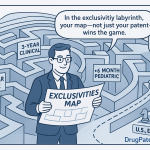
The Full Exclusivity Stack: Beyond NCE to Pediatric, Orphan, and Patent Term Extension
NCE exclusivity is one layer in a stack that innovator companies construct to maximize total protection. API suppliers who track only the NCE-1 date without understanding the full exclusivity stack can calculate incorrect market entry timelines and pitch generic companies too early or too late.
The full stack for a typical NCE-protected drug may include:
Five-year NCE data exclusivity from NDA approval date
Six-month pediatric exclusivity added to both NCE exclusivity and any unexpired patents if the innovator conducts FDA-requested pediatric studies
Seven-year orphan drug exclusivity if the drug received orphan designation, which blocks approval of the same drug for the same indication regardless of patent status
Patent Term Extension (PTE) under 35 U.S.C. 156 for the primary patent, potentially adding up to five years to offset regulatory review time
Patent Term Adjustment (PTA) for secondary patents if USPTO processing delays occurred during patent prosecution
The ‘nominal’ NCE-1 date calculated as four years from NDA approval may be functionally meaningless if a pediatric exclusivity grant pushes the effective ANDA acceptance date back by six months, or if orphan drug exclusivity on the primary indication forecloses that indication entirely while leaving biosimilar or related indications open. [14]
An API supplier who shows up at a generic company’s project meeting with an NCE-1 date that ignores the pediatric exclusivity attachment will have their timeline corrected in the first ten minutes. Showing up with the full exclusivity stack already mapped demonstrates the molecule-specific preparation that earns credibility as a strategic partner rather than a transaction-focused commodity supplier.
Intelligence Tools for NCE-1 Pipeline Tracking: What Commercial Teams Are Actually Using
The raw data for NCE-1 tracking is publicly available through the FDA’s Orange Book and the Purple Book for biologics. Converting that raw data into actionable commercial intelligence requires either a significant internal data infrastructure investment or access to purpose-built platforms that aggregate and interpret the regulatory data stream.
DrugPatentWatch: The NCE-1 Calendar as a Commercial Intelligence Tool
DrugPatentWatch, operated by thinkBiotech LLC, publishes a rolling NCE-1 calendar that lists upcoming patent challenge acceptance dates alongside revenue data, existing ANDA filer counts, Orange Book patent listings, and DMF holder counts for each molecule. [10] For an API supplier’s commercial team, this is a prospecting tool that converts regulatory dates into prioritized outreach lists without requiring the internal infrastructure to process Orange Book data directly.
The platform’s NCE-1 section shows drugs with imminent Paragraph IV filing windows in real time, updated as FDA processes new exclusivity grants and new ANDA data flows in. For example, molecules like mavacamten (Bristol Myers Squibb’s CAMZYOS), daridorexant hydrochloride (Idorsia’s QUVIVIQ), and oteseconazole (Mycovia’s VIVJOA) have NCE-1 dates landing in the 2026 window. [15] Each represents an active or imminent API procurement program at the generic companies targeting them.
The DMF count data on these listings is particularly useful for API suppliers. A molecule with zero existing DMF holders and an NCE-1 date eighteen months out is a clear opportunity for a supplier with synthesis capability to file a DMF, get to ‘available for reference’ status, and be the only qualified DMF holder when generic companies start their ANDA preparation. A molecule with twelve existing DMF holders already entered a crowded market years ago.
Orange Book Direct: Reading the Raw FDA Data
The FDA’s Orange Book Electronic Orange Book (eOB) lists every approved drug product with its associated patents, patent expiry dates, and exclusivity codes and expiry dates. Exclusivity code ‘NCE’ (New Chemical Entity) appears with a specific expiry date for each qualifying NDA. The NCE-1 date is calculated as exactly one year before that expiry date.
Commercial teams who build direct Orange Book parsing capability can automate NCE-1 date extraction and cross-reference it with sales revenue data from IQVIA or IMSHEALTH datasets to build internally scored opportunity lists. The challenge is that the Orange Book requires regular manual verification: patents are added and removed as litigation resolves, exclusivities are corrected following reconsideration, and pediatric exclusivity attachments are posted as they occur. Relying on a stale Orange Book extract for NCE-1 date calculation produces incorrect timelines that can misalign a commercial outreach program by months.
ANDA Paragraph IV Notification Tracking: The Competitive Intelligence Layer
Once generic companies begin filing ANDAs with Paragraph IV certifications, they are required to notify both the NDA holder and the brand patent owner of the certification. These notifications become public through FDA’s First Applicant Status List and through patent litigation filings when the brand sues. Tracking this notification stream tells an API supplier which generic companies have already filed on a specific molecule, which determines the competitive landscape for remaining supply relationships.
If five companies have already filed Paragraph IV ANDAs on a molecule, and you have supply agreements with three of them, you need to close the other two before any remaining generic filers lose NCE-1 first-applicant timing. If you have zero supply relationships on that molecule after five filers have already been confirmed, you are pursuing alternate supplier qualification, not primary supply contracts.
Case Analysis: Molecules With High NCE-1 Commercial Significance for API Suppliers in 2026 to 2028
Mavacamten (CAMZYOS): Specialized Chemistry, Narrow DMF Field, High Value
What Makes Mavacamten a Tier-One NCE-1 Target for Cardiovascular API Suppliers?
Mavacamten, approved by the FDA for obstructive hypertrophic cardiomyopathy under the brand name CAMZYOS (Bristol Myers Squibb), represents the type of molecule where early NCE-1 positioning delivers outsize commercial returns. The drug is a first-in-class cardiac myosin inhibitor with annual U.S. revenues growing rapidly post-launch. Its NCE-1 date falls in 2026. The synthesis involves specialized chemistry that limits the field of technically qualified API suppliers compared to a generalized organic chemistry target. [15]
API suppliers with cardiovascular chemistry capabilities or pre-existing cardiovascular CDMO relationships are in the primary competitive set for this molecule. A supplier who identified the mavacamten NCE-1 date in 2024 and began route scouting and relationship development with cardiovascular-focused generic companies in that year is the supplier most likely to hold a supply agreement when ANDA filings begin. A supplier reading this analysis in 2026 with the NCE-1 date already arrived is competing for alternate source qualification in programs that have already named their primary supplier.
Daridorexant (QUVIVIQ): CNS Specialty Chemistry With Early Competitive Activity
How Schedule IV DEA Registration Narrows the Eligible API Supplier Pool for Daridorexant
Daridorexant, Idorsia’s dual orexin receptor antagonist for insomnia, received FDA approval in January 2022 and NCE exclusivity through January 2027, making the NCE-1 date January 2026. [15] This is a CNS-category compound in a class that has attracted generic development activity, with suvorexant (Merck’s Belsomra) having already established a generic market that validates the orexin receptor antagonist generic pathway.
For API suppliers in the CNS and sedative-hypnotic category, daridorexant is a logical NCE-1 prospect. The compound is a schedule IV controlled substance, which restricts the eligible API supplier pool to manufacturers with DEA registration for schedule IV substances. That regulatory restriction is a competitive barrier that improves commercial positioning for registered suppliers relative to unregistered generic chemistry manufacturers. An API supplier with a clean DEA schedule IV registration, synthetic capability for the pyrrolidine-urea core structure, and existing relationships with CNS-focused generic companies had a pre-NCE-1 outreach window that closed in the second half of 2025.
The Oncology Pipeline: High-Value NCE-1 Targets With Complex Manufacturing Requirements
Oncology drugs approved between 2019 and 2022 are generating NCE-1 dates across 2023 to 2026. Many of these molecules are kinase inhibitors, CDK inhibitors, PARP inhibitors, and checkpoint modulators with synthesis complexity that concentrates the qualified API supplier field. The commercial stakes are high: oncology drugs routinely carry brand prices exceeding $100,000 per patient per year, making even a 40 percent generic price discount highly profitable during the exclusivity window.
Lutetium lu-177 vipivotide tetraxetan, the radioligand therapy component of Novartis’s PLUVICTO, had an NCE-1 date in March 2026. [15] This is a radiopharmaceutical API requiring specialized manufacturing infrastructure, radiation safety compliance, and short-lived isotope handling capability that most generic API manufacturers do not possess. For suppliers with radiopharmaceutical manufacturing capability, this represents an opportunity where the competitive field is extremely narrow, commercial values are very high, and generic entry strategy has attracted attention from a small number of specialized operators.
What Happens When the Wrong API Supplier Wins the NCE-1 Race
The risk for generic companies, and the competitive opportunity for API suppliers, is illustrated by cases where a supply agreement fails after ANDA filing. If a generic company’s primary API supplier receives an FDA warning letter or import alert after the ANDA has been submitted but before approval, the generic company faces a choice: wait for the supplier to remediate the compliance failure, qualify an alternate supplier and file a PAS, or abandon the program. Each option carries significant cost and timeline risk.
FDA warning letters and import alerts against API manufacturers have historically created sudden commercial opportunities for qualified alternate suppliers. A supplier who built a pre-NCE-1 relationship with a generic company but lost the primary contract to a competitor can become the emergency alternate source if the primary supplier’s facility fails inspection. These are not planned revenue streams, but they are real commercial events that reward the supplier who maintained a relationship even without winning the primary supply agreement.
Regulatory Strategy: How NCE-1 Timing Intersects With Paragraph IV Litigation and 30-Month Stay Risk
The API supplier’s commercial timeline is not just a function of NCE-1 dates. It is a function of NCE-1 dates layered with patent litigation risk, because the 30-month statutory stay that follows a brand’s patent infringement lawsuit directly affects when a generic product can actually launch.
How the 30-Month Stay Affects API Supplier Commercial Planning
When a brand company receives a Paragraph IV certification notice and files a patent infringement lawsuit within 45 days, FDA is automatically barred from granting final approval to the ANDA for up to 30 months. [16] This 30-month period does not stop the API supplier’s contract, but it stretches the horizon between ANDA submission and commercial launch. For the API supplier, it means:
Development quantities remain development quantities for up to 30 months after ANDA filing
Commercial launch quantities may not be ordered until the stay expires or litigation resolves
At-risk launch decisions, where the generic company launches before litigation resolves, can accelerate commercial API orders but expose both the generic company and its API supplier to injunction risk
The 30-month stay creates a commercial forecasting problem for API suppliers who are used to planning production capacity around launch dates. For NCE-1 programs with active litigation, the launch date is uncertain by up to 30 months. Suppliers who build this uncertainty into their capacity planning with the generic company as a contracted partner rather than a spot market customer are better positioned to capture the commercial volume when launch does occur, whether that is at 30-month stay expiry or after early litigation resolution.
Patent Settlements and Their Impact on API Supply Timelines
Many Paragraph IV patent challenges resolve through settlement rather than court judgment. A settlement typically grants the generic company a specific authorized launch date, often years before the patent’s nominal expiry, in exchange for dropping the patent challenge. For the API supplier, a settlement announcement is a commercial trigger: it converts a probabilistic launch timeline into a defined date, at which point the generic company’s procurement team begins ordering at commercial volumes.
Settlements that grant authorized entry dates two to four years before patent expiry create intermediate launch windows that reward API suppliers who built their DMF and supply agreement pre-NCE-1 but have been waiting through the litigation period. The supplier who established the relationship in year one of the program collects the commercial volume even if that volume does not arrive until year five. The supplier who waited for public settlement news before initiating contact has no supply agreement and no ability to ship for the authorized launch date.
PTAB IPR Proceedings as an Accelerated NCE-1 Opportunity Signal
Since the America Invents Act of 2011, generic companies and third parties have had the ability to challenge Orange Book patents at the Patent Trial and Appeal Board (PTAB) through Inter Partes Review (IPR) proceedings. A successful IPR can invalidate key patents years before their nominal expiry date, accelerating the effective LOE timeline and creating unexpected commercial opportunities.
For API suppliers, PTAB IPR filings are a signal worth tracking in parallel with NCE-1 dates. When a generic company files an IPR petition against a key Orange Book patent on a drug that also has NCE exclusivity, it indicates active generic development activity on that molecule. The generic company is paying legal fees to challenge patents, which only makes commercial sense if it is also investing in development. An API supplier who sees an IPR petition against a molecule with an upcoming NCE-1 date knows that at least one generic company is running an active program on that molecule right now.
What Happens After NCE-1: Managing the Commercial Transition From Development to Multi-Source Supply
The commercial value of pre-NCE-1 positioning compounds over time. A supply relationship established during development continues through the exclusivity period, through the post-exclusivity multi-source phase, and potentially through the commodity phase that follows. Each phase has different economics and different supplier dynamics.
The Exclusivity Period: 180 Days of Protected Revenue for the API Supplier
During the 180-day first-filer exclusivity period, the generic company is operating in a temporary duopoly with the brand drug. Price erosion has not yet begun. Gross margins for the generic company are highest in this window. Consequently, the API supply agreement signed for this period reflects pre-competition pricing, typically higher than the commodity-era prices that follow multi-source entry.
An API supplier who is the single qualified source for a first-filer ANDA during the exclusivity period has pricing leverage it will not have again on that molecule. The generic company has no alternate source approved. Switching requires a PAS and a 6-to-12-month review period, during which the product cannot use the new supplier. The first-filer generic company will not jeopardize its 180-day window by switching API suppliers. This is not an invitation for the API supplier to extract unfair prices, but it is a structural reality that produces supply agreements with higher margin than the post-exclusivity phase.
Post-Exclusivity Price Erosion: When the NCE-1 Investment Pays the Dividend
Once the 180-day exclusivity period ends and multiple ANDAs receive approval, the generic market enters rapid price erosion. With three to five generic competitors, prices fall to 50 to 70 percent below brand WAC. With six or more competitors, erosion reaches 85 to 95 percent below brand WAC. [4] In this environment, API suppliers who built scale manufacturing capabilities and cost-optimized process chemistry during the development phase retain margin. Suppliers who entered the market late, without the process knowledge developed during early program stages, pay higher manufacturing costs and compete with thinner margins.
The commercial dividend of early NCE-1 positioning is that by the time commodity pricing arrives, the pre-NCE-1 supplier has recovered its development investment through exclusivity-period margins and is operating at fully optimized manufacturing cost. A competitor who entered at LOE is starting process optimization at the same moment the market is driving prices toward their floor.
Stability Wall: The 36-Month Pre-Expiry API Outreach Window Defined
One of the most instructive commercial frameworks for API suppliers comes from stability testing requirements. Every ANDA must include stability data demonstrating that the drug product meets its labeled shelf life for the duration of the product’s commercial life. Generating 24-month stability data for a standard two-year shelf life product takes, by definition, 24 months. Add 12 months for ANDA review and approval, and the practical consequence is that a generic company needs its API source locked in and producing development batches at least 36 months before the intended commercial launch date.
This ’36-month stability wall’ defines the outside boundary of productive NCE-1 prospecting. For any drug whose NCE exclusivity expires in 2028, a generic company aiming to launch at exclusivity expiry needs API supply initiated by 2025. The API supplier who reads the 2028 NCE-1 date in 2026 is already inside the wall but still has time. The one who reads it in 2027 is two years late. [17]
Geopolitical and Supply Chain Dimensions: How Tariff Risk and API Geographic Concentration Intersect With NCE-1 Strategy
The strategic case for NCE-1-driven API pipeline development does not exist in isolation from the structural shifts reshaping global pharmaceutical supply chains. The two dynamics reinforce each other in ways that create specific commercial opportunities for API suppliers in certain geographies.
China and India API Concentration: A Supply Chain Vulnerability That Generic Companies Are Addressing Now
Global API supply remains heavily concentrated in China and India. Roughly two-thirds of the world’s API production volume originates from these two countries, with Chinese facilities producing the bulk of key starting materials and Indian manufacturers dominating finished API for both the generic and innovator markets. [18] Recent U.S. tariff measures and export control discussions, combined with biosecurity legislation targeting Chinese pharmaceutical manufacturing, are pushing U.S. and European generic companies to actively qualify alternate API sources in lower-risk geographies.
For API suppliers based in Europe, North America, or in friendshored manufacturing hubs outside China and India, the current environment is the best prospecting climate in a decade. Generic companies building supply chain resilience programs are specifically looking for pre-qualified alternate sources for their highest-priority molecules. The NCE-1 calendar provides the list of which molecules matter most; the geopolitical supply chain context provides the motivation for generic companies to qualify new suppliers even on molecules where they already have an established Chinese or Indian API source.
GDUFA Facility Fees and the Compliance Cost of NCE-1 Readiness
GDUFA imposes annual facility fees on every manufacturing site whose APIs are referenced in ANDA submissions. A facility that fails to pay its GDUFA fee becomes ineligible to support ANDA reviews and can trigger refuse-to-receive actions on any ANDA that references it. [7] For API suppliers pursuing NCE-1 opportunities, maintaining current GDUFA facility fee status is a prerequisite, not an optional compliance item.
The GDUFA fee structure also means that API suppliers who pursue NCE-1 opportunities need to budget for regulatory compliance costs that scale with the number of active ANDA programs they support. A supplier supporting ten ANDA programs simultaneously carries higher GDUFA-related compliance infrastructure costs than one supporting three programs. The economics of NCE-1 pipeline development require a clear margin model that accounts for facility fees, DMF maintenance, inspection readiness, and annual compliance testing across the full portfolio.
Comparison: NCE-1 Prospecting vs. LOE Tracking vs. ANDA-Based Lead Generation
API supplier commercial teams use several different trigger events to identify generic drug development opportunities. Understanding how NCE-1 prospecting compares to alternative approaches clarifies why it produces the highest-quality commercial leads.
Approach
Trigger Event
Typical Lead Time to Commercial Contract
Competitive Intensity at Entry
Margin Potential
NCE-1 date tracking (24 months out)
FDA NCE exclusivity expiry calculation
18-30 months
Low: few competitors tracking this proactively
High: development + exclusivity-period pricing
NCE-1 date tracking (on NCE-1 day)
ANDA filing window opens
6-18 months
Moderate: active generic programs underway
Moderate: exclusivity-period pricing but competing for secondary slots
Patent expiry / LOE tracking
Last Orange Book patent expires
0-12 months
High: all API suppliers are tracking this
Low: commodity-era pricing from entry
ANDA approval notification
FDA approval letter issued to generic
0-3 months
Very High: generic already launching
Very Low: spot market or emergency supply only
Paragraph IV notification tracking
Brand receives P-IV notice and sues
6-30 months (stay period)
Moderate: development programs confirmed but primary supply likely already contracted
Moderate: can still win alternate source qualification
The NCE-1 date tracked 18 to 24 months before the filing window produces both the lowest competitive intensity and the highest margin potential of any API supplier prospecting approach. The investment required is the intelligence infrastructure to identify NCE-1 dates and the commercial discipline to act on them two years before the market knows they matter.
Building Internal NCE-1 Pipeline Intelligence: A Practical Operations Guide for API Suppliers
The Monthly NCE-1 Review Meeting: What It Should Produce and Who Should Attend
Converting NCE-1 date tracking from a background data exercise into a commercial revenue driver requires organizational structure. The most effective format is a monthly pipeline review meeting that brings together commercial development, regulatory affairs, process development, and manufacturing planning.
The commercial development team brings an updated NCE-1 prospect list from DrugPatentWatch or internally maintained Orange Book data, scored by the criteria framework described earlier. Regulatory affairs reports on current DMF status for active targets, any completeness assessment responses outstanding, and GDUFA fee compliance across the portfolio. Process development reports on synthesis readiness for the top ten NCE-1 targets, identifying which molecules have undergone preliminary route scouting and which need initiation. Manufacturing planning identifies capacity constraints against the projected development batch schedule for active programs.
The output of this meeting is an action list with three categories: active outreach (supplier is engaged with a generic company on this molecule, specific next steps documented), pipeline development (molecule is scored high, synthesis work beginning, no external engagement yet), and watch list (NCE-1 date more than 30 months out, monitor for new ANDA activity signals). Every item on the active outreach list should have a named contact at the generic company, a documented conversation history, and a projected decision timeline.
Scoring Model Output: Translating NCE-1 Data Into a Quarterly Prospecting Priority List
A quarterly priority list built from NCE-1 data gives the commercial team a structured prospecting schedule rather than a reactive response to inbound requests. The list should contain no more than 15 to 20 molecules at any given time, prioritized so the team’s effort concentrates on the highest-value opportunities within the most actionable timing window.
Molecules scoring in the top quartile on commercial value, low DMF field competition, and timing appropriateness (18 to 30 months to NCE-1) get weekly attention. Middle-tier molecules get monthly check-ins on ANDA filing activity. Lower-tier molecules stay on the watch list until their scores change, either because their NCE-1 date moves closer, because DMF competition decreases (a rare but real event when a competitor withdraws), or because their commercial value increases due to label expansions or new therapeutic indications.
Integrating NCE-1 Intelligence With Process Chemistry Investment Decisions
The NCE-1 prospecting list also functions as a capital allocation tool for process development investment. Developing a viable synthetic route to a new API requires laboratory time, raw material sourcing, and analytical method development, typically representing 500 to 2,000 hours of chemistry and analytical work before a DMF-quality documentation package is ready. That investment needs a commercial justification.
An NCE-1 opportunity with a projected market value exceeding $200 million and a DMF field of zero to two competitors justifies a full route development investment. An NCE-1 opportunity with a $50 million market and eight existing DMF holders justifies only a feasibility assessment and an offer to license or co-develop with an existing DMF holder. Applying this decision framework to the scored NCE-1 list allocates process chemistry resources to the targets with the highest expected return rather than spreading investment across every molecule on the prospect list.
The IRA Variable: How the Inflation Reduction Act’s Drug Price Negotiation Provisions Affect NCE-1 Commercial Models
The Inflation Reduction Act’s Medicare drug price negotiation provisions, effective from 2026 onward, alter the economics of generic target selection in ways that API suppliers need to factor into their NCE-1 prospecting models.
Maximum Fair Price and Its Effect on Generic Revenue Ceilings
When Medicare negotiates a Maximum Fair Price (MFP) for a high-expenditure small-molecule drug after its nine-year post-approval window, the MFP is expected to fall 25 to 60 percent below current WAC. For drugs where 40 to 50 percent of patients are Medicare-covered, this reduces the total addressable revenue of the generic opportunity by 20 to 30 percent, because the brand price anchor against which the generic is discounted is itself lower. [19]
For API suppliers using brand revenue as the primary scoring criterion for NCE-1 prospecting, the IRA creates a systematic downward revision of commercial opportunity size for Medicare-heavy categories including cardiovascular, diabetes, and certain oncology indications. A molecule with current U.S. brand sales of $3 billion may effectively represent a $2.1 billion generic opportunity if 35 percent of that revenue base is Medicare-covered and the MFP negotiation has already been announced.
This does not make those molecules commercially unattractive. It means the scoring model needs an IRA adjustment factor for molecules in the first negotiation cohorts, particularly those approved between 2013 and 2018 that are now entering or approaching the MFP negotiation window.
The ‘Pill Penalty’ and Small-Molecule API Market Structure Through 2032
The IRA applies its price negotiation provisions to small molecules after nine years post-approval and to biologics after thirteen years. This ‘pill penalty,’ as it has been characterized by industry, creates a structural incentive for innovators to shift R&D investment toward biologics and away from small molecules. [19] If that trend persists, the small-molecule NCE pipeline for 2030 to 2035 may be thinner than historical norms, reducing the number of high-value NCE-1 dates available for API supplier prospecting.
In the near term, however, the 2025 to 2030 small-molecule NCE-1 calendar is fully populated by drugs approved before the IRA’s incentive effects had time to reshape R&D spending. For API suppliers, the actionable window for small-molecule NCE-1 prospecting is open and commercially rich through at least 2029. The post-2030 landscape is where biosimilar API development capability becomes a necessary supplement to small-molecule generics strategy.
Biosimilar NCE-1 Analogs: How the 12-Year Exclusivity Pathway Creates a Parallel Pipeline Intelligence Opportunity
Biologic drugs do not receive NCE exclusivity. They receive a 12-year reference product exclusivity period under the Biologics Price Competition and Innovation Act (BPCIA), plus potential pediatric extensions. The BPCIA’s ’12-year window’ creates an analog to NCE-1 prospecting for biosimilar API (drug substance) manufacturers: the 12-year exclusivity expiry date, minus one year, is effectively the biosimilar NCE-1 equivalent.
Why Biosimilar Drug Substance Timeline Intelligence Mirrors Small-Molecule NCE-1 Logic
Biosimilar development programs take longer than small-molecule generic programs, typically four to eight years from target selection to BLA submission. The ‘biosimilar NCE-1’ date, calculated as eleven years from the reference product’s approval date, is therefore the outside limit of productive outreach for biosimilar drug substance manufacturers. Programs targeting biosimilar approval need their drug substance process development initiated eight or more years before the reference product exclusivity expires.
The commercial logic for biosimilar drug substance manufacturers is identical to small-molecule API suppliers: tracking the 12-year exclusivity calendar identifies the molecules where biosimilar programs are either beginning or underway. The drug substance manufacturing relationship for a biosimilar program generates commercial contracts at three stages, early development, clinical supply, and commercial supply, each representing a distinct revenue event. Drug substance manufacturers who identify the 12-year exclusivity expiry calendar four to six years before it matters are building the pipeline relationships that produce commercial supply contracts when the exclusivity expires.
Risk Management: What Can Go Wrong in NCE-1 API Programs and How to Avoid It
The NCE-1 prospecting framework is a commercial opportunity, not a guarantee. Several specific risk factors can convert a well-positioned API program into a lost investment.
API Supplier Risks in NCE-1 Programs: The Four Failure Modes
The first failure mode is DMF deficiency. A Type II DMF that receives an incomplete status on initial completeness assessment delays the ANDA that references it. If the delay pushes the ANDA review past the point where first-filer status is jeopardized, the generic company has legal grounds to claim damages against the API supplier and will certainly not renew the supply agreement. DMF quality is non-negotiable for NCE-1 programs; the completeness assessment standard under GDUFA requires specific manufacturing process documentation, analytical method validation data, and impurity qualification data that cannot be papered over with boilerplate. [1]
The second failure mode is facility inspection failure. An FDA inspection finding that results in a warning letter or import alert on an API manufacturer’s facility makes that DMF ineligible to support ANDA approvals until the facility is reinspected and cleared. A warning letter issued between ANDA submission and approval can cost the generic company its approval date, and the API supplier the supply contract. Annual audit readiness is not a regulatory formality; it is a commercial requirement for any API supplier participating in NCE-1 first-filer programs.
The third failure mode is process scale-up failure. A synthetic route that works in the laboratory at 100-gram scale may not scale directly to the 50-kilogram commercial production scale needed for exclusivity-period launch quantities. Process development work that stops at the kilogram scale without validating the commercial process creates a risk that the first commercial order triggers a manufacturing crisis. Generic companies often receive very short notice of launch authorization after 30-month stay expiry or litigation settlement. An API supplier who cannot deliver at commercial scale within 60 days of launch notification has not fulfilled the supply agreement regardless of what the contract says.
The fourth failure mode is intellectual property infringement. Some API synthetic routes are protected by process patents independent of the compound patent. An API manufacturer who unknowingly uses a patented process can expose both itself and the generic company it supplies to patent infringement claims. Freedom-to-operate analysis for the API synthesis is a required element of any NCE-1 development program, not an optional legal add-on. [8]
Generic Company Risk: Why API Supplier Selection Is the Highest-Risk ANDA Decision
From the generic company’s perspective, API supplier selection for a first-filer NCE-1 program is the single highest-risk procurement decision in the development program. The API is the therapeutic substance of the drug. A supplier change after ANDA approval requires a PAS and six to twelve months of regulatory review during which the approved product cannot switch. [13] A supplier failure during the exclusivity window, when the generic company has no approved alternate source, can halt the entire commercial launch.
Generic companies conducting due diligence on API suppliers for NCE-1 first-filer programs evaluate four elements beyond basic capability: current FDA inspection status and history, GDUFA fee payment current status, existing DMF active-for-reference status or committed filing timeline, and process patent freedom-to-operate documentation. An API supplier who proactively provides all four elements in the first commercial conversation removes the generic company’s primary qualification barriers and accelerates the supplier selection decision in favor of that supplier.
What This Means for Small and Mid-Size API Manufacturers
The NCE-1 prospecting framework is not reserved for large CDMOs with global sales forces and multi-product DMF portfolios. Small and mid-size API manufacturers are often better positioned to execute the pre-NCE-1 development strategy than their larger competitors, for a specific structural reason.
Large CDMO groups prioritize their capacity for large-volume, high-certainty commercial programs. Early-stage NCE-1 development programs, which represent promising but unproven future revenue, compete internally for R&D resources against ongoing commercial supply commitments. Small API manufacturers, with no existing commercial supply obligations eating their capacity, can commit fully to an NCE-1 development program without internal resource competition.
The commercial conversation a small API manufacturer has at 24 months before NCE-1 is: ‘We have identified your molecule as a high-priority development target. We have completed preliminary route scouting. We can commit our full process chemistry capability to this program and have a DMF-ready process package in twelve months. We do not have twelve other programs competing for that capacity.’ For generic companies who have been burned by large CDMO capacity allocation failures, this focused commitment from a smaller supplier is genuinely competitive.
The API Supplier’s Commercial Timing Paradox: Why Acting Early Feels Wrong But Is Correct
One of the structural barriers to effective NCE-1 prospecting is organizational: the sales team at most API manufacturers is measured on closed revenue, not on pipeline development. A commercial development director who spends six months building a relationship with a generic company project team on a molecule whose NCE-1 date is 20 months away has nothing to show in the quarterly pipeline report that traditional sales metrics capture. The pipeline scorecard registers no signed agreement, no purchase order, no revenue. The actual value of that activity, a pre-qualified supply relationship that will generate a $4 million development agreement and a $20 million commercial supply contract over three years, sits entirely in the future.
This measurement gap is why most API supplier commercial teams default to reactive engagement. They respond to RFPs, attend trade shows, and follow up on inbound inquiries from generic companies who are already deep in development programs. These activities produce revenue, but they produce it competitively, in markets where four or five other API suppliers have already been talking to the same generic companies for 12 months. The reactive team wins some contracts. The proactive NCE-1 team wins the same contracts plus the ones competitors never knew were available.
Correcting this requires management to measure pre-NCE-1 pipeline activity with its own set of KPIs. Contacts made with generic project teams before NCE-1 date minus 18 months. Development proposals delivered before NCE-1 date minus 12 months. DMF filings completed before NCE-1 date minus nine months. These are leading indicators of commercial performance that traditional sales metrics do not capture but that strongly predict revenue outcomes 18 to 36 months forward.
How to Prioritize When Multiple NCE-1 Dates Land in the Same Quarter
A commercially active API supplier with a medium-to-broad product portfolio will regularly face a situation where several molecules on their NCE-1 watch list reach the 18-to-24-month prospecting trigger simultaneously. Process development resources are finite. DMF authoring capacity is finite. Commercial development time is finite. Prioritization within the NCE-1 calendar is not optional; it is a core strategic decision.
The triage framework has three tiers. Tier one molecules are those where the supplier already has a relevant synthetic capability, the commercial value is in the top quartile of the prospecting list, and the DMF field has fewer than three existing filers. These get dedicated process chemistry resources and a named commercial lead assigned immediately. Tier two molecules are those with strong commercial value but where either synthesis development is needed or the DMF field has three to six existing filers. These get feasibility chemistry work initiated while a commercial assessment is completed on whether primary supply or alternate source positioning is the target. Tier three molecules are those where the NCE-1 date is more than 30 months out and the scoring is moderate. These stay on the watch list with monthly review and no active resource allocation until their score changes or their timeline advances.
The discipline to stay in tier three and not begin outreach too early is as important as the discipline to begin outreach before competitors. A generic company that hears from an API supplier 36 months before NCE-1 on a molecule they have not yet put into active development will note the contact and move on. The same supplier calling 24 months before NCE-1, when the generic company has just started feasibility work, will get a substantive meeting. Timing matters in both directions.
Lessons From the Atorvastatin Generic Race: What the Most-Studied LOE in History Teaches API Suppliers
The generic entry of atorvastatin (Pfizer’s Lipitor) in November 2011 remains the most studied generic launch in pharmaceutical history, generating more than $1 billion in first-filer exclusivity revenue for Ranbaxy (later acquired by Sun Pharma). The atorvastatin case contains four lessons for API suppliers building NCE-1 prospecting programs, even though Lipitor predates the modern NCE-1 filing framework in its specific circumstances.
The first lesson is that early API qualification decisions were made years before launch. Ranbaxy began its atorvastatin API development and synthesis process work well before any ANDA was filed, with the API supply chain integrated into the Paragraph IV strategy from early in the program. The API was not an afterthought to the filing strategy; it was a prerequisite.
The second lesson is that API supply chain failures can forfeit first-filer exclusivity. Ranbaxy’s subsequent FDA import alert on multiple manufacturing facilities, while unrelated to the initial atorvastatin launch mechanics, illustrated the regulatory vulnerability that exists when an API supply chain has compliance weaknesses. The generic company and its API supplier are linked in the FDA’s compliance view: a supplier’s warning letter can become a generic company’s approval delay.
The third lesson is that within 24 months of generic atorvastatin entry, generic versions held more than 90 percent of the market by prescription volume. The brand drug did not recover. API suppliers who had a commercial supply agreement for atorvastatin API at launch participated in the largest single-molecule generic revenue event in history. API suppliers who arrived at or after LOE competed in a market that went to commodity pricing within 18 months.
The fourth lesson is that multiple co-first filers diluted the exclusivity value but did not eliminate it. By the time the atorvastatin market fully opened, several generic companies had ANDA approvals and were competing in the post-exclusivity phase. Each of those companies needed an API supply chain. The total API commercial opportunity at atorvastatin’s LOE was far larger than any single supply agreement, and suppliers who had built relationships across multiple generic companies’ programs captured proportionally more of it.
Specialty Categories Where NCE-1 Intelligence Creates the Largest API Supplier Advantage
Not all therapeutic categories are equally accessible to the NCE-1 prospecting model. In some categories, the structural characteristics of the drug, the development pathway, or the generic competitive landscape amplify the commercial advantage that early NCE-1 positioning delivers.
High-Potency Active Pharmaceutical Ingredients are defined by occupational exposure limits typically below one microgram per cubic meter of air over an eight-hour workday. Oncology drugs, cytotoxic compounds, and certain hormonal agents fall into this category. Manufacturing HPAPIs requires containment infrastructure, specialized personal protective equipment programs, air handling systems, and analytical monitoring capabilities that most generic chemistry manufacturers do not have.
When a brand drug in the HPAPI category reaches its NCE-1 date, the field of technically qualified API suppliers is much smaller than for standard oral solid dosage molecule APIs. A generic company developing an HPAPI program knows from the start that it cannot use its standard API supplier network. It needs a supplier with verified containment capability, and it will begin that search early in the development program because qualified HPAPI suppliers are scarce. An API supplier or CDMO with certified HPAPI manufacturing capability who tracks the NCE-1 calendar for cytotoxic and hormonal molecules has a natural competitive advantage: fewer competitors, more motivated generic customers, and supply agreements that command premium pricing relative to standard molecule API.
Complex Synthesis NCE-1 Targets: Where Chemistry Capability Defines the Commercial Outcome
Molecules with synthesis routes requiring asymmetric catalysis, transition metal-catalyzed cross-coupling, stereocontrolled multi-step sequences, or complex heterocyclic core construction are natural screening criteria for identifying NCE-1 targets where chemistry capability, not commodity production volume, defines the supplier landscape. Modern kinase inhibitors, many of which received NCE exclusivity between 2015 and 2022, are generating NCE-1 dates through 2026 to 2027. These molecules often have 8 to 14-step syntheses with chiral centers and multiple ring systems that require deep synthetic chemistry experience to manufacture consistently at high purity.
For an API supplier with a strong medicinal and process chemistry team, these complex synthesis NCE-1 targets represent a pipeline where the competitive field is naturally thin. Large Indian and Chinese API manufacturers who compete primarily on cost in commodity molecule markets are less competitive on complex synthesis targets where cost per kilogram is a secondary consideration to process reliability and regulatory documentation quality. A European or North American CDMO with a strong synthetic chemistry team is often the most credible choice for a generic company targeting a complex-synthesis NCE-1 molecule, particularly given the current geopolitical context driving supply chain diversification.
Highly Regulated Niche Categories: Sterile Injectables and Ophthalmic APIs
Sterile injectable APIs and ophthalmic drug substance APIs require manufacturing under conditions that satisfy both standard API good manufacturing practices and additional sterility assurance requirements. The pool of API manufacturers with sterile-capable synthesis and handling facilities is much smaller than for standard oral solid dose molecule suppliers. Generic programs targeting injectable or ophthalmic brand drugs with upcoming NCE-1 dates work from a shorter supplier list by necessity.
For API suppliers with sterile manufacturing capability, the NCE-1 calendar for injectable drugs is a premium prospecting list with structurally reduced competition. Examples include injectable oncology products, sterile peptide APIs, and small-volume ophthalmic drug substances where the manufacturing environment requirement limits the eligible supplier field regardless of process chemistry complexity.
International NCE-1 Equivalents: Expanding the Prospecting Perimeter Beyond the U.S. FDA
The NCE-1 date as a commercial trigger is primarily a U.S. regulatory concept, but every major pharmaceutical market has an analog that creates similar API procurement demand signals. API suppliers who limit their NCE-1 prospecting to U.S. FDA-governed programs leave significant commercial opportunity in European, Japanese, and Canadian markets where data exclusivity frameworks create similar generic entry windows.
The EU 8+2+1 System and Its API Sourcing Implications
The European Medicines Agency’s data exclusivity framework provides eight years of data protection from the date of the EU marketing authorization, followed by two years of market protection during which a generic company cannot launch even if it has received a marketing authorization, plus a potential additional year of market protection for new therapeutic indications discovered during the reference product’s lifecycle. The effective ‘EU NCE-1 equivalent’ is seven years from the marketing authorization date, one year before the eight-year data protection period expires.
For generic manufacturers targeting both the U.S. and EU markets simultaneously, the EU exclusivity expiry and the U.S. NCE exclusivity expiry often occur within six to eighteen months of each other, since many drugs receive approval in both markets within a short time window. An API supplier who identifies a molecule’s U.S. NCE-1 date and calculates the EU analog can present a generic company with an API supply proposal that covers both regulatory packages from a single development program, which is a materially more compelling commercial offer than a U.S.-only proposal.
Japan, Canada, and Emerging Market Generic Entry Windows
Japan’s data exclusivity framework provides eight years of re-examination period protection for new drugs, plus a potential two-year extension for orphan drugs, creating a Japanese generic entry window that typically lags the U.S. window by one to three years depending on the drug’s registration chronology. Canadian data protection under the Patented Medicines (Notice of Compliance) Regulations creates a six-year data protection period with market exclusivity provisions. Both create generic development demand signals that API suppliers serving globally oriented generic companies should track alongside the U.S. NCE-1 calendar.
For API suppliers, the practical implication is that a supply relationship established for a U.S. first-filer ANDA program often naturally extends into international regulatory packages. A generic company that sources API for its U.S. ANDA will, if the same API supplier can support the EU marketing authorization application and Health Canada submission, prefer to maintain a single API source across geographies rather than qualify separate suppliers for each market. This supply relationship extension multiplies the commercial value of the initial pre-NCE-1 engagement without requiring additional sales investment.
Integrating NCE-1 Date Intelligence With CRM and Business Development Workflow
How to Structure an NCE-1 Prospect in Your CRM
NCE-1 prospecting data, when captured in a structured way in a CRM, generates a pipeline view that commercial management can use to forecast revenue, allocate sales resources, and track conversion rates from initial outreach to signed development agreement. An NCE-1 prospect record should capture:
Drug name, active ingredient, NDA number, and NDA approval date
NCE-1 date and NCE exclusivity expiry date
Brand revenue (annual U.S. net sales from IQVIA or public filings)
Existing Type II DMF count (from DrugPatentWatch or FDA DMF database)
Known ANDA filers (from FDA ANDA database and Paragraph IV notification tracking)
Target generic companies for outreach, ranked by fit (therapeutic focus, ANDA history, pipeline statements)
Stage of outreach: identified, first contact, engaged, development agreement drafted, signed
Projected contract value at exclusivity-period pricing vs. commercial-phase pricing
Running a CRM pipeline organized by NCE-1 date rather than by generic company name gives the commercial team a time-ordered prospecting calendar rather than an account list. When the NCE-1 date for a top-scored molecule is 12 months out, every generic company in the target list should already be in active conversation, not first contact.
Conversion Metrics: What Good NCE-1 Prospecting Performance Looks Like
The commercial performance of an NCE-1 prospecting program can be measured with specific metrics that capture both prospecting quality and commercial conversion. A well-run program should achieve: initial contact with at least two to three potential generic company partners per NCE-1 target by 18 months before NCE-1 date; at least one signed development agreement per high-priority NCE-1 target by 12 months before NCE-1 date; DMF filed and initial completeness assessment request submitted by 9 months before NCE-1 date; DMF at ‘available for reference’ status by 6 months before NCE-1 date.
Suppliers who hit these milestones consistently are participating in first-filer exclusivity windows as primary API sources. Suppliers who hit the DMF milestone but miss the commercial engagement milestone are being qualified as alternate sources by generic companies who already have their primary supplier locked in. The commercial engagement step, reaching the right person at the generic company with a molecule-specific development proposal, is the bottleneck that most API supplier commercial programs fail to execute before the window closes.
Measuring Commercial Velocity: How Fast Should an API Supplier Move on NCE-1 Targets?
Commercial velocity in an NCE-1 prospecting program is not about speed for its own sake. It is about aligning the pace of supplier development with the pace of the generic company’s ANDA preparation. Moving too fast wastes resources on generic programs that are not ready for supplier selection. Moving too slow cedes the primary supply agreement to a competitor who was one month earlier in the same conversation.
The Generic Company’s Internal Development Timeline: What Is Happening on Their Side
Understanding the generic company’s development timeline from the inside out is the most direct way to calibrate prospecting velocity. A generic company’s decision to pursue a first-filer NCE-1 program on a specific molecule typically follows a defined internal process. First comes the portfolio committee approval, in which the program’s commercial attractiveness, technical feasibility, and competitive landscape are reviewed and the program receives resource allocation. This typically happens 18 to 24 months before the target ANDA filing date, which for an NCE-1 program means 18 to 24 months before the NCE-1 date itself.
Once a program receives portfolio approval, a project team is formed, typically including a regulatory lead, a formulation development scientist, a bioequivalence planning lead, and a sourcing or procurement contact. This is the moment when API supplier outreach has the highest conversion potential. The project team is actively looking for an API source. They have not yet shortlisted candidates. A supplier who has done preliminary feasibility work on the molecule and can present a DMF filing timeline and initial process documentation is immediately differentiated from the suppliers who send a generic capabilities brochure.
From portfolio approval to ANDA submission, the generic development process for a first-filer program typically runs 18 to 24 months for standard molecules and up to 36 months for complex synthesis or specialized dosage form targets. The API supplier’s commercial engagement needs to occur within the first six months of that program’s existence. Late entry into the project team’s vendor evaluation process means competing against suppliers who already know the molecule, have already built the relationship, and have already drafted supply agreement terms.
At-Risk Launch Scenarios and Their Implications for API Commercial Readiness
When a 30-month stay expires without court resolution of a Paragraph IV patent dispute, or when the generic company’s litigation team reaches a favorable court decision before the stay expires, the generic company may choose to launch at risk before the patent expires. An at-risk launch means commercial API must be on hand before the litigation is fully resolved. The generic company is betting that it will win the remaining litigation and that the commercial upside of early market entry outweighs the downside risk of a post-launch injunction.
For the API supplier, at-risk launch scenarios compress the commercial delivery timeline dramatically. An at-risk launch announcement gives the API supplier potentially 60 to 90 days to deliver commercial quantities. If the API supplier has not maintained launch-ready inventory or advanced intermediate stockpiles, it may not be able to supply the launch quantities in time. Generic companies planning at-risk launches discuss readiness requirements with their API suppliers well in advance of the actual launch decision. An API supplier who has built a genuine partnership with the generic company’s project team receives advance notice of at-risk launch planning and can pre-position inventory accordingly.
Building Long-Term Commercial Value: From First NCE-1 Win to Multi-Program Partnership
The NCE-1 prospecting model is not a one-time transaction approach. Its highest-value expression is as the foundation for a multi-program, multi-year commercial partnership between an API supplier and a generic drug manufacturer. The first NCE-1 supply win is the entry point. The commercial value compounds as the relationship deepens.
How First NCE-1 Programs Convert Into Long-Term Preferred Supplier Status
What Does Preferred Supplier Status Actually Mean in a Generic Company’s Sourcing Process?
Generic companies work with a relatively small number of API suppliers across their active development portfolio. The total ANDA portfolio of a mid-size U.S. generic company might include 30 to 80 active programs at any given time. Managing API sourcing relationships across that portfolio requires standardization: preferred suppliers who have cleared the initial qualification audit, have active DMFs on multiple molecules, and have demonstrated manufacturing reliability across at least two commercial product cycles get preferential consideration for new programs.
An API supplier who executes the pre-NCE-1 engagement process correctly on one molecule, delivers a clean DMF on time, supports a successful ANDA filing, and then delivers commercial quantities reliably during the exclusivity window, has earned preferred supplier consideration for subsequent NCE-1 programs. The generic company’s project director who worked with that supplier on the first program will advocate for the same supplier on the next program without a full RFP process, because the relationship and compliance history already exist.
The commercial compounding effect of preferred supplier status is significant. A generic company that sources API from the same supplier across five or six active programs is a multi-million-dollar annual revenue relationship. The business development investment required to win the first program, including the pre-NCE-1 relationship development, the DMF investment, and the at-risk development batch commitment, generates recurring commercial value across subsequent programs without equivalent prospecting cost.
Patent Intelligence as a Shared Value Proposition: What API Suppliers Can Offer Beyond Chemistry
An API supplier who tracks NCE-1 dates, monitors Orange Book changes, follows PTAB IPR filings, and maintains current awareness of Paragraph IV notification activity is building the same intelligence infrastructure that a well-resourced generic company operates internally. For smaller generic companies with limited business development infrastructure, an API supplier who brings molecule-level patent and exclusivity intelligence to the commercial relationship is providing a service that has value beyond the API itself.
Some API suppliers formalize this by offering patent intelligence briefings to existing and prospective generic company partners, presenting quarterly updates on upcoming NCE-1 dates in their chemistry capability areas, new Orange Book patent listings on molecules in the generic company’s portfolio, and PTAB activity that might accelerate LOE timelines. This positions the API supplier as a business intelligence partner, not just a chemical manufacturer. In a generic development community where pure-play API commodity suppliers compete solely on price and lead time, that positioning is a concrete differentiator.
The patent intelligence provision also generates prospecting reciprocity. When a generic company project team knows that a specific API supplier follows the IP landscape closely, they are more likely to reach out to that supplier early in a new program’s development, before issuing an RFP, to discuss molecule feasibility. That pre-RFP conversation is exactly where NCE-1 supply relationships are built. In an informal technical conversation, a generic project director will often reveal which molecules their team is evaluating and which NCE-1 dates are on their internal development calendar, giving the API supplier commercial intelligence that no trade publication or conference presentation would provide.
Competitive Intelligence: How API Suppliers Can Use DMF Filing Activity to Track Competitors
When Should a New Competitor DMF Filing Trigger an Escalation in Your Commercial Outreach?
The FDA’s Type II DMF database, while not disclosing the contents of competitor DMFs, does reveal when new DMF applications are filed and which company holds them. For an API supplier tracking an NCE-1 target, watching the DMF database for new competitor filings on the same molecule provides real-time competitive intelligence on who else is entering the market. A molecule with one existing DMF holder that suddenly gains two new DMF filings in the same month signals that competitors have identified the same NCE-1 opportunity and are mobilizing to address it.
This competitive DMF tracking is particularly useful for calibrating urgency in the commercial development process. An API supplier who sees a new competitor DMF filed on a high-priority target molecule with an NCE-1 date 14 months away knows it needs to accelerate its generic company outreach from a comfortable pace to an urgent one. The commercial window has narrowed not because of the NCE-1 date, but because a competitor’s DMF filing has reduced the supplier’s differentiation relative to when it was the only qualified filer. Resources that might have been allocated to another molecule in the next quarter need to shift to closing a supply agreement on the threatened target immediately.
Key Takeaways
The NCE-1 date is one year before a brand drug’s five-year NCE exclusivity expires. It is the first day generic companies can file ANDAs with Paragraph IV certifications. For API suppliers, the commercial opportunity opens 18 to 30 months before this date.
Tracking patent expiry dates and LOE dates produces commodity-phase leads. Tracking NCE-1 dates produces development-phase leads where margins are higher, competition is lower, and the supply relationship is more durable.
The structural lock-in created by the PAS requirement for post-approval supplier changes means the pre-NCE-1 API supply agreement typically extends into a multi-year commercial supply relationship.
DMF completeness assessment takes time. FDA recommends Type II DMF submission at least six months before ANDA submission. For first-filer programs, the practical DMF filing window is nine to twelve months before the NCE-1 date.
The 60 to 80 percent of generic product profit that occurs during the 180-day exclusivity window is concentrated in the hands of first-filer generic companies and their API suppliers. Arriving after the first filing means competing for commodity-era volume at commodity prices.
Tools like DrugPatentWatch provide searchable NCE-1 date calendars with revenue data, DMF counts, and ANDA filer intelligence that convert raw FDA exclusivity data into a scored prospecting list.
The 2025 to 2030 patent cliff, estimated at $236 billion in brand revenue at risk, is generating the highest-value NCE-1 prospecting window in the history of generic pharmaceuticals.
IRA Maximum Fair Price negotiations downward-revise the commercial opportunity on Medicare-heavy molecules by 20 to 30 percent for generic programs launching into a negotiated brand price.
Geopolitical supply chain pressures are driving generic companies to qualify non-Chinese, non-Indian API sources, creating a structural tailwind for API suppliers in Europe, North America, and friendshored manufacturing locations who are already engaged in NCE-1 development programs.
The NCE-1 prospecting model works for small and mid-size API manufacturers. The competitive advantage is not size; it is earliness, specificity, and the ability to commit full process development resources to a single molecule program without internal capacity competition.
Frequently Asked Questions
1. What is the difference between the NCE-1 date and the NCE exclusivity expiry date?
The NCE exclusivity expiry date is the five-year anniversary of the brand drug’s NDA approval, after which the FDA can accept and approve ANDAs. The NCE-1 date is one year earlier, the date on which generic manufacturers may for the first time file an ANDA with a Paragraph IV patent challenge. The practical distinction is that the NCE-1 date is the ANDA submission trigger, while the exclusivity expiry date is the ANDA approval trigger (absent Paragraph IV first-filer exclusivity). API suppliers should treat the NCE-1 date as the commercial trigger and back-calculate their prospecting and DMF filing timelines from there.
2. How many generic companies typically file on the same NCE-1 date for a major molecule?
For blockbuster molecules with predictable NCE-1 dates and large U.S. markets, simultaneous first-day filings of 10 to 30 ANDAs are well-documented. All co-first-day filers share the 180-day exclusivity. FDA guidance addresses the multi-filer scenario specifically, confirming that companies who submit on the same first day all receive first-applicant status and share exclusivity eligibility. For API suppliers, a high filer count multiplies the number of potential supply relationships, but also means that most of those supply agreements were signed before the NCE-1 date arrived.
3. Can an API supplier win a supply agreement after the generic company’s ANDA has already been filed?
Yes, but under significantly less favorable commercial terms. A post-ANDA filing supply agreement typically means the supplier is qualifying as an alternate source, which requires a Prior Approval Supplement with a 6-to-12-month FDA review period. The supplier cannot ship commercial API until the PAS is approved. The commercial value of alternate source qualification is real, but it is materially lower than primary supply during the exclusivity window. The primary supply contract economics are reserved for the supplier who was present before the ANDA was submitted.
4. Does NCE exclusivity protect all indications of a drug, or just the originally approved indication?
NCE exclusivity protects the FDA’s approval of any NDA containing the new chemical entity as an active ingredient. It does not, by itself, block generic approval for different routes of administration, dosage forms, or strengths, since those products may not trigger the same NCE exclusivity if they were approved under separate NDAs or sNDAs without independent NCE status. The practical impact is molecule-specific; API suppliers should verify whether a given drug’s NCE exclusivity covers the specific approved product their generic customer is targeting, or whether only certain NDA references carry the NCE designation.
5. How does pediatric exclusivity attached to NCE exclusivity affect the API supplier prospecting timeline?
Pediatric exclusivity adds six months to any existing patent or exclusivity period when the innovator conducts FDA-requested pediatric studies. If pediatric exclusivity attaches to NCE exclusivity, the effective NCE-1 date shifts six months later, and the ANDA acceptance window does not open until the combined period expires. For API supplier commercial planning, checking whether a target molecule has received pediatric exclusivity is a mandatory step in NCE-1 date calculation. Relying on the raw four-year calculation from NDA approval without checking pediatric exclusivity status can produce a prospecting timeline that is six months premature.
6. What commercial intelligence does the DMF filer count on a molecule reveal to API suppliers?
The DMF filer count for a specific API on DrugPatentWatch or the FDA’s DMF database reveals how many API suppliers have already qualified or are qualifying that molecule for generic supply. Zero to two DMF filers means the field is largely open; a new entrant with a clean DMF and early commercial engagement has a realistic chance of winning primary supply agreements. Three to five filers means competitive but not commoditized. Six or more filers means the API market for that molecule is already approaching commodity dynamics, with price and audit reliability as the primary differentiators rather than technical availability.
7. How should API suppliers handle NCE-1 targets where the synthesis requires controlled substance DEA registration?
Controlled substance API synthesis requires DEA registration at the appropriate schedule level, plus DEA approval for specific import and export transactions. For an API supplier without current DEA registration, a target molecule that is a scheduled controlled substance represents a 12-to-18-month compliance investment before commercial supply is possible. Suppliers should evaluate whether that investment is justified by the target molecule’s commercial opportunity and the timing of the NCE-1 date relative to the DEA registration timeline. Suppliers who already hold DEA registration in the relevant schedule have a structural competitive advantage on those molecules that effectively excludes unregistered competitors from the first-filer supply window.
8. What is the practical difference between tracking NCE-1 dates from the Orange Book directly versus using a third-party platform like DrugPatentWatch?
The Orange Book provides the primary data, but it requires significant data cleaning and interpretation to be commercially actionable. Orange Book exclusivity codes cover multiple exclusivity types, stacking rules for pediatric and orphan exclusivities require manual calculation, and the raw data does not cross-reference ANDA filer counts, DMF counts, or revenue data. Third-party platforms like DrugPatentWatch aggregate the Orange Book exclusivity data, validate it against patent filings and ANDA tracking data, and present it in a commercially scored format. For most API supplier commercial teams, the productivity gain from a purpose-built platform versus raw Orange Book parsing justifies the subscription cost within the first qualifying commercial contract the platform helps the team identify.
9. How does the 30-month statutory stay affect the revenue recognition timeline for an API supplier under a first-filer supply agreement?
The 30-month stay, if triggered by brand litigation within 45 days of Paragraph IV notice, delays final FDA approval of the ANDA by up to 30 months. For the API supplier, this means development and validation batches may be the only orders shipped during the stay period, with commercial launch quantities not ordered until the stay expires or litigation resolves. Supply agreements for first-filer NCE-1 programs should clearly define milestone payments for development phase deliverables (BE batch API, stability batches, additional pilot batches) that compensate the supplier for work delivered during the stay period independent of commercial launch timing. Without these provisions, an API supplier who has done significant pre-launch work may receive no commercial revenue for 30 months while the litigation resolves.
10. Are there NCE-1 equivalent filing windows in Europe and other major markets that API suppliers should track in parallel?
The European data exclusivity system grants eight years of data protection plus two years of market protection (the ‘8+2′ system) for new medicinal product approvals, with a potential additional one-year extension for new therapeutic indications, under the so-called ’10-year period.’ The European generic ANDA equivalent, the generic marketing authorization application, cannot be submitted until the eight-year data exclusivity period has passed. This creates a European NCE-1 analog at seven years post-approval, one year before the full eight-year data exclusivity expires. For API suppliers with EU market ambitions, tracking the European data exclusivity calendar in parallel with the U.S. NCE-1 calendar identifies programs where a single development investment can support both FDA and EMA regulatory packages, maximizing the commercial return on the API development work.
Citations
U.S. Food and Drug Administration. (2013). Completeness Assessments for Type II API DMFs Under GDUFA: Guidance for Industry. FDA. https://www.fda.gov/files/drugs/published/Completeness-Assessments-for-Type-II-API-DMFs-Under-GDUFA-Guidance-for-Industry.pdf
DrugPatentWatch. (2025, December 8). The Strategic Core: A Definitive Guide to API Sourcing for Generic Drug Manufacturers. thinkBiotech LLC. https://www.drugpatentwatch.com/blog/the-strategic-core-a-definitive-guide-to-api-sourcing-for-generic-drug-manufacturers/
U.S. Food and Drug Administration. (n.d.). 180-Day Exclusivity When Multiple ANDAs Are Submitted on the Same Day: Guidance for Industry. FDA. https://www.fda.gov/files/drugs/published/180-Day-Exclusivity-When-Multiple-ANDAs-Are-Submitted-on-the-Same-Day.pdf
DrugPatentWatch. (2026, March 30). Generic Drug Development Timelines: The Definitive Playbook for Faster ANDA Approval. thinkBiotech LLC. https://www.drugpatentwatch.com/blog/how-to-manage-generic-drug-development-timelines-strategies-for-successv/
DrugPatentWatch. (2026, February 16). The Drug Patent Cliff Portfolio: A Strategic Guide to Identifying and Investing in Companies Facing Major Expiries. thinkBiotech LLC. https://www.drugpatentwatch.com/blog/the-drug-patent-cliff-portfolio-a-strategic-guide-to-identifying-and-investing-in-companies-facing-major-expiries/
Labiotech. (2026, March 23). The next pharma patent cliff: how 2026-2032 will reshape revenue. https://www.labiotech.eu/best-biotech/pharma-patent-cliff/
ChemWerth. (2023, February 8). Quality of API Supplier Can Lead to Refuse-to-Receive Decision. https://chemwerth.com/quality-of-api-supplier-can-lead-to-refuse-to-receive-decision/
IP & FDA Law Blog. (2022, December 20). Five (5) & Ten (10) Year Data Exclusivity for New Drugs: When To File Generic Drug Applications. https://ipfdalaw.com/five-5-ten-10-year-data-exclusivity-for-new-drugs-when-to-file-generic-drug-applications/
DrugPatentWatch. (2026, January 8). A Strategic Playbook for Timing ANDA Submissions Using Drug Patent Data. thinkBiotech LLC. https://www.drugpatentwatch.com/blog/a-strategic-playbook-for-timing-anda-submissions-using-drug-patent-data/
U.S. Food and Drug Administration. (2015). Guideline for Drug Master Files (DMF). FDA. https://www.fda.gov/drugs/drug-master-files-dmfs/guideline-drug-master-files-dmf
U.S. Food and Drug Administration. (2024). Review of Drug Master Files in Advance of Certain ANDA Submissions Under GDUFA: Guidance for Industry. FDA. https://www.fda.gov/regulatory-information/search-fda-guidance-documents/review-drug-master-files-advance-certain-anda-submissions-under-gdufa
DrugPatentWatch. (2026, March 24). Win the Generic Drug Market: Patents, ANDAs, IP Valuation, and the Tactics That Separate First-Movers from Also-Rans. thinkBiotech LLC. https://www.drugpatentwatch.com/blog/how-to-succeed-in-generic-drug-market-entry/
GreyB. (2024, April 3). Why is drug exclusivity knowledge crucial for generic drug launches? https://www.greyb.com/blog/drug-exclusivity/
DrugPatentWatch. (2026, January 8). A Strategic Playbook for Timing ANDA Submissions Using Drug Patent Data. thinkBiotech LLC. https://www.drugpatentwatch.com/blog/a-strategic-playbook-for-timing-anda-submissions-using-drug-patent-data/
DrugPatentWatch. (2026, March 14). Buying Smart: The No-Nonsense Guide to Pharma Procurement. thinkBiotech LLC. https://www.drugpatentwatch.com/blog/buying-smart-the-no-nonsense-guide-to-pharma-procurement/
Pharmaceutical Technology. (2025, December 2). What matters in the API market as 2026 approaches. https://www.pharmaceutical-technology.com/sponsored/what-matters-in-the-api-market-as-2026-approaches/
DrugPatentWatch. (2026, April 18). Patent Cliff Playbook: How Generic Firms Win $200B in Off-Patent Drug Markets. thinkBiotech LLC. https://www.drugpatentwatch.com/blog/the-generic-gold-rush-a-strategic-playbook-for-turning-patent-cliffs-into-market-dominance/