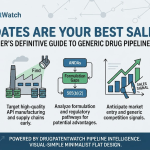
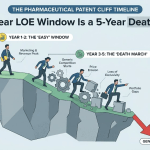
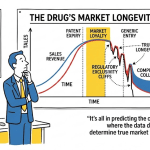
A patent expiry for a blockbuster drug is not a legal event. It’s a commercial trigger. The twelve months before loss of exclusivity (LOE) can erase $4 billion in annual revenue from a single product line. The firms that survive that transition intact are not the ones with better lawyers. They’re the ones who saw the cliff coming two years earlier than their competitors because they ran their intelligence on purpose-built patent analytics infrastructure instead of recycled market research reports.
That distinction matters more now than it did five years ago. The generic filing environment has compressed. Paragraph IV certifications have grown more aggressive. The FDA’s complex drug product pathway has opened new biosimilar channels. At the same time, the data infrastructure available to IP teams has bifurcated sharply between general-purpose market research platforms and dedicated Patent Analyst Suites built specifically for pharmaceutical intellectual property workflows.
This article breaks down exactly what each category offers, where the performance gaps are widest, and why IP directors at companies ranging from mid-size specialty pharma to top-ten branded manufacturers are reallocating budget from traditional market intelligence subscriptions toward platforms like DrugPatentWatch, Derwent Innovation, Clarivate’s Cortellis, and similar purpose-built suites.
What Is a Patent Analyst Suite and How Does It Differ from Market Research?
A Patent Analyst Suite is a software platform or data service designed specifically to track, analyze, and interpret pharmaceutical patent data in commercial and legal context. The core deliverable is not a narrative report. It’s structured, queryable, machine-readable patent intelligence tied to drug products, regulatory exclusivities, Orange Book listings, ANDA filings, and litigation records.
Market research, by contrast, produces narrative intelligence. A market research report on the GLP-1 agonist category from GlobalData or IQVIA will tell you market size, competitive landscape, prescribing trends, and revenue forecasts. It will mention patent expiries in passing. It will not tell you that U.S. Patent No. 10,335,462 covering semaglutide’s dosing formulation expires in 2032 while the compound patent expires in 2031, or that a specific ANDA filer has filed a Paragraph IV certification that triggered a 30-month stay ending in late 2026.
That gap is the product gap. Patent Analyst Suites exist to fill it.
Core Data Layers in a Patent Analyst Suite
The minimum viable Patent Analyst Suite integrates at least four data layers that market research platforms typically do not carry:
Orange Book patent listings with expiry dates, patent type classifications, and any applicable pediatric exclusivity extensions under 21 U.S.C. § 355a
ANDA and 505(b)(2) filing records from FDA’s public databases, with Paragraph IV certification flags
Federal district court litigation records tied to specific NDA-patent combinations, including case status, consent orders, and settlement disclosures
International patent family data to track equivalent protection across EMA, PMDA, Health Canada, and other jurisdictions
Leading platforms add a fifth layer: predictive LOE modeling that calculates the probability-weighted earliest date of generic entry accounting for litigation outcomes, inter partes review (IPR) petitions at the Patent Trial and Appeal Board (PTAB), and historical settlement patterns for that drug category.
What Market Research Platforms Are Actually Good At
This is not an argument that market research has no value. It has a specific value profile. IQVIA MIDAS data on prescription volumes, ZS Associates’ field force analytics, and DRG (Decision Resources Group) therapy area forecasts are genuinely useful for commercial planning, launch sequencing, and payer strategy. The problem is scope creep: when IP teams try to use these platforms for patent lifecycle management, they’re using the wrong instrument.
A market research report is written for a commercial audience. It treats patent expiry as one bullet point in a risk section. A Patent Analyst Suite is built for a legal and IP audience. It treats every claim in every patent covering a drug product as a separate data object with its own expiry, challenge status, and strategic implication.
The Orange Book Problem: Why Generic Market Research Misreads LOE Risk
The FDA’s Approved Drug Products with Therapeutic Equivalence Evaluations, universally called the Orange Book, lists every patent that the NDA holder has declared covers their approved drug product. As of 2024, the Orange Book contained more than 50,000 patent listings across roughly 14,000 reference listed drugs. [1]
Market research platforms typically pull a single ‘patent expiry date’ for a drug product, which usually corresponds to the last-expiring listed patent. This creates a predictable and expensive analytical error: it ignores the distinction between composition-of-matter patents, formulation patents, method-of-use patents, and process patents, each of which has a different vulnerability profile to Paragraph IV challenge.
How Multi-Patent Drug Products Break Generic Market Research Models
Consider Humira (adalimumab). At its patent cliff, AbbVie had listed more than 100 patents in the Orange Book covering the product. Many of these were method-of-use or device patents with expiry dates extending to 2034. A market research platform that reported ‘Humira patent expiry: 2034’ would have dramatically overstated AbbVie’s protection. The compound patent expired in 2016. The effective biosimilar entry date was always driven by litigation settlements, not last-patent-expiry.
This distinction between paper exclusivity and practical exclusivity is the central analytical problem in pharmaceutical IP intelligence, and it’s a problem that generic market research products systematically fail to solve.
Orange Book Reform Under the Drug Price Competition and Patent Term Restoration Act: What Changed in 2023
The FDA finalized rules in late 2023 implementing the Consolidated Appropriations Act provisions that allow the agency to remove improperly listed patents from the Orange Book. [2] The FTC had submitted a citizen petition in 2023 arguing that device patents, such as those covering auto-injectors, were being listed to extend effective exclusivity beyond the actual drug compound protection. The FDA began delisting patents in response to FTC challenges.
For an IP team relying on a market research platform’s static patent expiry field, this regulatory development was invisible. For teams running Patent Analyst Suites with live Orange Book feeds, the delistings triggered automatic alerts and required immediate re-modeling of LOE timelines for affected products.
This is not a theoretical distinction. Drug products that had their auto-injector device patents removed from the Orange Book in 2023 and 2024 included products in the diabetes, rheumatology, and immunology categories where branded revenue exposure runs into the billions annually.
What the ’30-Month Stay’ Actually Means for Revenue Forecasting
When an ANDA applicant files a Paragraph IV certification asserting that a listed patent is invalid or not infringed, the NDA holder can sue within 45 days to trigger an automatic 30-month stay on FDA approval of the generic. This stay is calculated from the date of the Paragraph IV notice letter, not the filing date of the ANDA.
Market research reports routinely cite a drug’s ‘patent expiry’ as the relevant date for LOE modeling. Patent Analyst Suites calculate the 30-month stay expiration as a separate, often earlier, and practically more important date. In a significant proportion of Hatch-Waxman cases, the 30-month stay expiration is when generic entry actually becomes possible, regardless of patent expiry dates.
‘The date that matters commercially is rarely the patent expiry date. It’s the earliest date a generic manufacturer can receive final approval and launch. Those two dates can differ by years.’ — Former Paragraph IV litigation partner, major U.S. pharmaceutical firm [3]
Paragraph IV Certification Tracking: The Most Underserved Use Case in Pharma IP
When a generic manufacturer files a Paragraph IV certification, it triggers a sequence of events that every IP and commercial team at the branded manufacturer needs to know about within days, not weeks. The 45-day window to file suit and trigger the 30-month stay is a hard deadline. Missing it, or being unprepared for it, is not a recoverable error.
Market research subscriptions do not track Paragraph IV filings. They do not have the data infrastructure to do so. The filings are published in the FDA Federal Register, cross-referenced against Orange Book listings, and require specialist parsing to connect to specific drug products and patent numbers.
How DrugPatentWatch Monitors Paragraph IV Activity in Real Time
DrugPatentWatch, one of the established platforms in the Patent Analyst Suite category, maintains a continuously updated database of Paragraph IV certifications linked to specific Orange Book entries, NDA holders, and ANDA applicants. IP teams at branded manufacturers use the service to monitor competitive challenge activity across their own portfolio and to conduct competitive intelligence on which products in rival portfolios are being targeted. [4]
The commercial value of this monitoring function is direct and measurable. An IP team that learns about a Paragraph IV certification for a key asset from a DrugPatentWatch alert on day two instead of from a market research quarterly report on day ninety has an eighty-eight-day operational advantage. In a 45-day litigation trigger window, that gap is the difference between mounting a defense and missing the deadline entirely.
Paragraph IV Filing Trends by Therapeutic Category: 2020-2024
ANDA Paragraph IV activity has not been evenly distributed across drug categories. The highest-volume filing categories between 2020 and 2024 were oncology oral solids, CNS (central nervous system), and diabetes, reflecting both the commercial value of those categories and the technical accessibility of the molecular entities to generic development. [5]
Biologics face a parallel but distinct challenge system. Biosimilar applicants under the Biologics Price Competition and Innovation Act (BPCIA) follow a ‘patent dance’ process under 42 U.S.C. § 262(l) that requires exchange of patent lists between the reference product sponsor and the biosimilar applicant. Market research platforms treat this as a regulatory note. Patent Analyst Suites track each step of the patent dance, including which patents were designated for the first list, which were added in the second list, and which are actually being litigated.
First-Filer Exclusivity: The 180-Day Generic Advantage and What It Means for Launch Timing
The first ANDA applicant to file a Paragraph IV certification for a given drug product earns 180 days of generic marketing exclusivity under 21 U.S.C. § 355(j)(5)(B)(iv), provided they are not forfeited of the exclusivity under the Hatch-Waxman forfeiture provisions. This exclusivity period directly determines whether a second or third generic entrant can launch during the period when the market is transitioning from brand to generic pricing.
For IP teams defending branded products, knowing which filer holds first-filer status, whether they are at risk of forfeiture, and when the 180-day clock will run is critical for settlement negotiation strategy. For generic manufacturers, tracking first-filer status across competitive ANDA filings determines their own launch timing and commercial positioning.
Market research reports mention first-filer exclusivity occasionally. Patent Analyst Suites track it systematically and flag forfeiture trigger events in real time.
PTAB Inter Partes Review vs District Court Litigation: Two Data Tracks Most Platforms Miss
Since the America Invents Act created the inter partes review process at the Patent Trial and Appeal Board in 2012, pharmaceutical patents have faced a dual-track challenge environment. A generic or biosimilar manufacturer can simultaneously challenge a patent at PTAB while litigating infringement in federal district court, subject to some coordination constraints.
This dual-track reality means that the ‘patent valid until expiry’ assumption that market research platforms embed in their LOE models is fundamentally incomplete. A patent that appears valid in district court can be cancelled by PTAB institution and final written decision years before its nominal expiry date.
High-Profile PTAB Decisions That Moved LOE Timelines: Illustrative Cases
AstraZeneca’s patents covering Brilinta (ticagrelor) faced PTAB petitions from generic manufacturers challenging formulation claims. The outcomes of those proceedings directly affected the probability distribution of LOE timing. IP teams running Patent Analyst Suites with PTAB data integration could update their LOE models as institution decisions were issued. Teams relying on market research platforms were updating their models quarterly at best.
Biogen’s multiple sclerosis franchise offers a more complex illustration. Patents covering dimethyl fumarate (Tecfidera) faced challenges at both the district court level and PTAB. The Federal Circuit’s 2020 ruling in Biogen International GmbH v. Mylan Pharmaceuticals Inc. that invalidated the key formulation patent under 35 U.S.C. § 112 written description requirements accelerated LOE by years relative to the nominal patent expiry date. [6] IP teams that had been tracking the § 112 written description challenge thread in the litigation had modeled this scenario. Teams reading market research reports had the result delivered as news.
How PTAB Institution Rate Affects Pharma Patent Valuation
PTAB institutes review in approximately 60-65% of IPR petitions it receives across all technology areas. For pharmaceutical patents, the institution rate and subsequent invalidation rate have varied by patent type. Method-of-use patents and formulation patents have historically faced higher invalidation rates than composition-of-matter patents, reflecting the greater prior art vulnerability of those claim types. [7]
Patent Analyst Suites that integrate USPTO PTAB data allow IP teams to apply these base rates to their own portfolios in real time, producing probability-weighted LOE distributions rather than binary expiry dates. The difference in commercial planning quality between a binary ‘expires 2029’ and a ‘P(LOE before 2027): 38%, P(LOE 2027-2029): 45%, P(LOE after 2029): 17%’ distribution is substantial.
Patent Trial and Appeal Board Data Integration: Which Platforms Cover It
Among the major Patent Analyst Suites, Clarivate’s Derwent Innovation provides PTAB data integration with forward citation tracking. Anaqua and CPA Global (now part of Clarivate) provide docketing and prosecution history. Lex Machina, owned by LexisNexis, provides litigation analytics including PTAB outcomes mapped to patent numbers. DrugPatentWatch provides the commercial-facing layer connecting patent events to drug products and regulatory records.
No single platform covers all layers comprehensively, which is why IP teams at large pharmaceutical companies typically subscribe to two or three complementary tools rather than one. The integration cost of running multiple Patent Analyst Suites is still lower than the analytical cost of substituting any of them with generic market research.
The BPCIA’s patent dispute resolution mechanism is procedurally distinct from the Hatch-Waxman framework and requires different data infrastructure to track. The ‘patent dance’ under 42 U.S.C. § 262(l) involves a multi-step exchange of manufacturing information, patent lists, and licensing discussions that can span 12-18 months before litigation even begins.
Reference Product Sponsor Strategy: Which Patents to List and When
Reference product sponsors (RPS) must disclose the patents they believe cover the biosimilar’s product, use, or method of manufacture in response to the biosimilar applicant’s aBLA (abbreviated Biologics License Application). Strategic decisions about which patents to include in the first list, which to add in the second list, and which to seek a preliminary injunction on are high-stakes choices made under time pressure.
Market research reports on a biosimilar category will tell you how many biosimilar applicants are in the market. They will not tell you that a specific reference product sponsor listed 27 patents in their first BPCIA list and that three of those patents covering a cell culture manufacturing process are the ones most likely to drive settlement negotiations, because those specific claims have never been litigated and their validity is genuinely uncertain.
Adalimumab Biosimilar Wave: A Case Study in IP Intelligence Failure and Success
The U.S. adalimumab biosimilar market entry in 2023 was the largest single LOE event in U.S. pharmaceutical history by revenue at risk. Seven biosimilar versions launched within months of each other after AbbVie executed settlement agreements with the major biosimilar developers, granting U.S. launch dates in 2023. [8]
IP teams at specialty pharmacy chains, PBMs, payer organizations, and hospital systems that had been tracking the AbbVie settlement structure through Patent Analyst Suites knew the launch date range two to three years in advance. They could plan formulary transitions, contract negotiations, and inventory management accordingly. Teams that relied on market research reports learned about the settlement dates in press releases and updated their plans reactively.
The commercial difference between proactive and reactive planning in a category with $20 billion in annual U.S. revenue is not trivial. PBMs that had prepared biosimilar preferred tier positions 18 months in advance captured significantly more value from the transition than those who began formulary work after the biosimilars launched.
When Does Biologic 12-Year Exclusivity Actually End? Calculating the Real LOE Date
Under the BPCIA, reference biological products receive 12 years of exclusivity from the date of first licensure, during which the FDA cannot approve a biosimilar. The 12-year clock is a hard floor. But the practical LOE date is determined by the resolution of the BPCIA patent dance, litigation, and any negotiated settlement that sets a U.S. launch date.
A biologic approved in 2015 has statutory exclusivity until 2027. Its practical LOE date might be 2025 (if the reference product sponsor settles early to avoid the litigation risk on weaker patents) or 2030 (if the RPS litigates aggressively on a strong compound patent and wins at the Federal Circuit). The distribution of outcomes between those bookends is the intelligence that Patent Analyst Suites are built to quantify and that market research is structurally unable to provide.
Patent Term Extensions and Pediatric Exclusivity: Data Gaps in Market Research
Two statutory mechanisms extend effective patent protection beyond the nominal expiry date, and both are systematically undermodeled in market research products.
How Patent Term Extension Under 35 U.S.C. § 156 Works and Why It Matters
Drug manufacturers can recover a portion of the regulatory review period lost while a product was under FDA review, up to a maximum of five years of patent term extension under the Drug Price Competition and Patent Term Restoration Act. The USPTO administers the extension calculation. The practical result is that a patent with a nominal expiry date of 2028 might have an effective expiry of 2033 if a full extension was granted.
Market research platforms frequently report nominal patent expiry dates without adjustment for granted extensions. This produces systematically pessimistic LOE forecasts for branded manufacturers and systematically optimistic competitive entry windows for generic developers reading those same reports.
Pediatric Exclusivity Under BPCA: The Six Months That Move Billions
The Best Pharmaceuticals for Children Act grants a six-month exclusivity extension to NDA holders who conduct pediatric studies requested by the FDA under a written request. The extension attaches to all Orange Book patents for the drug, not just composition-of-matter patents. For a drug with multiple listed patents, pediatric exclusivity can create a six-month delay in generic entry that applies to the last-expiring listed patent.
For a drug generating $3 billion annually in U.S. sales, six months of additional exclusivity is worth approximately $1.5 billion in protected revenue, less any margin erosion from anticipatory payer contracting. This is not a footnote in competitive intelligence. It’s a swing variable in revenue forecasting.
Patent Analyst Suites track pediatric exclusivity grants, pending written requests, and completion status of required pediatric studies. Market research reports may note whether a drug has received pediatric approval but typically do not map the exclusivity impact to individual Orange Book patent entries or model the revenue effect on the LOE timeline.
Orphan Drug Exclusivity: Seven Years That Market Research Routinely Ignores
The Orphan Drug Act grants seven years of marketing exclusivity for drugs approved for rare diseases, meaning the FDA cannot approve a ‘same drug’ for the same indication during that period. Orphan exclusivity operates independently of patent protection. A drug can have expired patents and still have active orphan exclusivity, or active patents and no orphan exclusivity, creating two entirely separate protection timelines that must be tracked independently.
For rare disease franchises, orphan exclusivity is often the more commercially relevant protection layer. The IP teams at companies like Sarepta Therapeutics, BioMarin, and Alexion manage multi-layered exclusivity stacks where patent expiry is one of four or five relevant protection endpoints. Market research tools that report a single ‘LOE date’ are producing a materially incorrect picture for these organizations.
How Pharma IP Teams Actually Use Patent Analyst Suites: Four Workflow Categories
The abstract argument for Patent Analyst Suites over market research becomes concrete when you map the workflows that pharma IP teams run daily. There are four primary workflow categories where the tool divergence is most significant.
Portfolio Defense: Monitoring Your Own Assets Against ANDA and BPCIA Challenges
A branded manufacturer with twenty products in active commercialization needs a continuous monitoring function that alerts the IP team when any of those products receives an ANDA Paragraph IV certification, an IPR petition at PTAB, or a step in the BPCIA patent dance. The alert must include enough context to immediately understand the commercial risk: which product, which patent, which challenger, what the litigation history of that challenger is, and what the 45-day filing window deadline is.
Patent Analyst Suites like DrugPatentWatch deliver this monitoring function as a core product feature. The IP team sets up alerts for their portfolio and receives notifications as events occur. They can immediately link to Orange Book records, the relevant patent file history, and any prior litigation involving the challenger entity.
A market research subscription delivers a quarterly report.
BD and licensing teams at pharmaceutical companies actively monitor the LOE timelines of competitors to identify acquisition targets, licensing opportunities, and potential generic entry plays. A competitor whose lead product faces a high-probability LOE in 24 months is a potential acquisition target at a valuation discount driven by that vulnerability. A product category where three branded products face concurrent LOE creates a commercialization window for a new entrant.
Patent Analyst Suites enable systematic competitive portfolio analysis at the patent-claim level. A BD analyst can pull the complete patent landscape for a competitor’s product, assess the strength of each listed patent based on challenge history and claim scope, and arrive at a probability-weighted LOE distribution that is far more precise than a market research LOE estimate.
Generic Entry Planning: Identifying the Optimal ANDA Filing Window
Generic manufacturers use Patent Analyst Suites to identify products with weak or near-expiring Orange Book patent stacks that represent viable Paragraph IV filing opportunities. The analysis involves mapping all listed patents, assessing their vulnerability to validity challenges based on prior art searches and claim scope, calculating the earliest possible FDA approval date given prosecution timeline estimates, and modeling the competitive landscape to assess first-filer exclusivity prospects.
This analysis is core to the generic manufacturer’s commercial strategy. It is explicitly not something a market research platform can perform, because it requires patent claim-level data that market research products do not carry.
Payer and PBM Formulary Planning Using LOE Intelligence
This is the fastest-growing use case for Patent Analyst Suites outside the traditional pharma manufacturer client base. Payers, PBMs, and hospital systems subscribe to LOE intelligence to plan formulary transitions, negotiate rebate contracts with the knowledge of upcoming generic entry, and time their biosimilar preferred tier switches to maximize cost savings.
A health plan that knows twelve months in advance that a specific branded product will face high-probability generic entry can build that assumption into contract negotiations with the branded manufacturer. The branded manufacturer, knowing that the plan has access to this intelligence, must negotiate accordingly. Both sides benefit from having accurate LOE data. Only one side typically has Patent Analyst Suite access today.
The Cost Comparison: Patent Analyst Suite Pricing vs Market Research Subscription Economics
The pricing structures for Patent Analyst Suites and market research platforms are different enough that direct comparison requires some translation.
What a Tier-1 Market Research Platform Subscription Actually Costs
Enterprise licenses for platforms like IQVIA, GlobalData, or Clarivate’s integrated market research products typically run between $150,000 and $500,000 annually for pharmaceutical manufacturer clients, depending on the number of therapy areas covered, user seats, and data download rights. These prices reflect the substantial investment in analyst-generated content: therapy area reports, epidemiology models, and physician survey data that have genuine value for commercial teams.
The IP team, which may represent 5-10% of the users on such a platform, is often paying for a fraction of the content value and receiving little of what they actually need for patent lifecycle management.
Patent Analyst Suite Pricing: What You Get for the Investment
Purpose-built Patent Analyst Suites vary widely in pricing. DrugPatentWatch’s enterprise subscriptions for pharmaceutical manufacturers are positioned in the $30,000 to $100,000 range depending on portfolio size and feature access. [9] Clarivate’s Cortellis Competitive Intelligence platform, which combines patent, regulatory, and clinical data, runs significantly higher for enterprise deployments. Lex Machina’s litigation analytics module carries a separate pricing tier.
The total cost of a well-configured Patent Analyst Suite stack, including a patent monitoring platform, a litigation analytics tool, and a regulatory data feed, typically falls below the enterprise cost of a single tier-1 market research license while providing substantially more actionable intelligence for IP workflows.
The Hidden Cost of Getting LOE Timing Wrong: Revenue at Stake
The economic case for Patent Analyst Suites is ultimately built on the cost of LOE forecast errors, not on the absolute cost of the tools. An IP team that correctly forecasts LOE timing within a six-month window enables:
Optimized authorized generic launch timing to capture revenue during the 180-day generic exclusivity period
Accurate revenue guidance to investors, avoiding restatements and credibility damage
Supply chain planning for inventory drawdown, reducing write-off exposure
Contract renegotiation with payers from a position of accurate information
A team that gets the LOE date wrong by twelve months in either direction exposes the organization to potential nine-figure commercial consequences for any product with more than $1 billion in annual U.S. revenue. The cost of the Patent Analyst Suite is not the relevant comparison; the cost of the forecast error is.
Settlement Agreements and Authorized Generics: What the Data Actually Shows
The majority of Hatch-Waxman Paragraph IV cases settle before trial. The settlement typically involves the branded manufacturer granting the first-filer a license to launch an authorized generic at a specified date, in exchange for the generic manufacturer dropping its invalidity challenge. These settlement agreements are the primary mechanism by which LOE dates are actually determined in practice, not patent expiry dates or trial outcomes.
How Settlement Date Intelligence Changes Commercial Planning
Settlement dates in Hatch-Waxman cases are disclosed in SEC filings, FTC reports, and occasional court documents, but they are scattered across multiple sources and require integration to be actionable. Patent Analyst Suites aggregate settlement disclosures and map them to specific drug products, creating a consolidated view of the negotiated LOE landscape.
For a commercial team planning a lifecycle management strategy for a branded product approaching LOE, the knowledge that the first-filer has been granted a settlement date 24 months out is transformative. It converts an uncertain distribution of possible LOE dates into a near-certain commercial planning horizon.
FTC Annual Reports on Pharmaceutical Agreements: What They Reveal
The FTC publishes annual reports on pharmaceutical patent settlements under the Medicare Prescription Drug, Improvement, and Modernization Act (MMA) of 2003, which requires branded and generic manufacturers to file agreements with the FTC and DOJ within ten days of execution. The FTC’s annual reports summarize settlement patterns, including so-called ‘pay-for-delay’ or ‘reverse payment’ settlements where the branded manufacturer pays the generic challenger to delay entry. [10]
The Supreme Court’s 2013 decision in FTC v. Actavis established that reverse payment settlements can violate antitrust law and must be evaluated under the rule of reason. Since Actavis, the structure of settlements has shifted toward value-in-kind arrangements (supply agreements, co-promotion deals, royalty-free licenses for other products) rather than direct cash payments, making the intelligence value of settlement analysis even more dependent on specialized platforms that can parse these structures.
Authorized Generic Strategy: When Brand Companies Compete Against Themselves
An authorized generic (AG) is a branded drug sold under the NDA holder’s approved application by a generic distributor at a generic price, typically during the 180-day first-filer exclusivity period when no other generic can enter the market. The AG strategy effectively allows the branded manufacturer to recapture a portion of the volume that would otherwise go entirely to the first-filer generic.
IP teams and commercial teams need to coordinate on AG launch timing with precision. The decision to launch an AG, at what price, and through which distribution channel requires knowing the first-filer’s launch readiness, any FDA approval delays, and the competitive landscape among subsequent ANDA filers who cannot launch during the 180-day period. Patent Analyst Suites provide the data substrate for this analysis. Market research reports describe the AG strategy in general terms.
International Patent Landscapes: Where Market Research Falls Furthest Behind
U.S. pharmaceutical IP teams operating in global markets face a problem that is substantially more complex than the Orange Book framework. Patent protection for a given drug product may vary dramatically across jurisdictions based on supplementary protection certificate (SPC) rules in Europe, data exclusivity periods, regulatory approval timelines, and local patent term extension mechanisms.
Supplementary Protection Certificates in the EU: A Separate Data System
Supplementary protection certificates under EU Regulation 469/2009 extend patent protection for medicinal products in EU member states by up to five years beyond the basic patent expiry, calculated based on the gap between the filing date of the basic patent and the date of the first EU marketing authorization. Each EU member state grants its own SPC independently, meaning that effective LOE dates for a given drug can vary by country across the EU by a year or more depending on when each national regulatory authority granted approval.
Tracking SPC grant dates, expiry dates, and any ongoing SPC litigation (which is increasingly common, particularly around manufacturing process patents) requires either a specialist SPC tracking service or a Patent Analyst Suite with SPC data integration. The European Patent Office’s SPC database provides the underlying data, but converting that into actionable LOE intelligence for specific products in specific countries requires the same kind of data integration and commercial mapping that Patent Analyst Suites provide for U.S. Orange Book data.
Japan PMDA Data Exclusivity vs Patent Protection: Two Parallel Clocks
In Japan, new chemical entities receive eight years of data exclusivity, during which generic manufacturers cannot file an application relying on the originator’s clinical data. This is separate from patent protection and is administered by the PMDA (Pharmaceuticals and Medical Devices Agency). A drug with a compound patent expiring in 2026 might face generic entry no earlier than 2028 if the data exclusivity clock extends beyond the patent clock.
Market research platforms covering Japan typically report market size and prescribing data. Patent Analyst Suites with Japanese patent coverage need to integrate PMDA data exclusivity records alongside J-PlatPat patent data to produce an accurate LOE model. The number of platforms that do this comprehensively is small, but growing.
Evergreening vs Patent Thickets: How the Data Looks Different From the Outside
The terms ‘evergreening’ and ‘patent thicket’ are used to describe strategies by which branded manufacturers extend effective exclusivity by listing secondary patents (formulation, dosing, metabolite, method-of-use) after the original compound patent. The academic and policy literature on these strategies is extensive. The practical question for competitive intelligence teams is whether a specific drug’s listed patents represent genuine innovation protection or procedural extensions with high invalidity probability.
Answering that question requires examining the prosecution history of each listed patent, the prior art landscape, any PTAB challenge history, and the claim scope relative to the marketed product. This is analytical work that Patent Analyst Suites facilitate by centralizing the underlying data and providing tools for claim-level analysis. Market research platforms are not equipped to perform it.
The Build vs Buy Decision: Should Pharma IP Teams Develop Internal Patent Analytics Capabilities?
Large pharmaceutical companies with dedicated IP analytics functions occasionally debate whether to build internal patent analysis systems rather than subscribing to external platforms. The arguments for building include data control, customization, and avoidance of subscription dependency. The arguments for buying are substantial.
What Building Internal Patent Analytics Actually Costs
A minimally viable internal patent analytics system requires: a live data feed from the USPTO Patent Full-Text Database, FDA Orange Book integration, federal court PACER data parsing (which requires navigating PACER’s complex fee and access structure), PTAB data integration from the PTAB E2E system, and a data layer connecting all of these to specific drug products and NDAs.
Building and maintaining this stack requires at least one full-time data engineer, a front-end developer, and ongoing data licensing costs. At fully loaded cost, the internal build option for a mid-size pharmaceutical company is unlikely to be cheaper than subscribing to a purpose-built platform unless the organization has highly specific customization needs that commercial platforms cannot meet.
When Custom Development Makes Sense: The Case for Hybrid Approaches
Several top-ten pharmaceutical companies have taken a hybrid approach: subscribing to Patent Analyst Suites for their core data layer and building custom internal applications that pull from the platform’s API to deliver portfolio-specific views, integrate with internal revenue models, and connect to enterprise ERP systems for supply chain planning.
This hybrid model makes sense for organizations whose analytical needs exceed what any commercial platform provides out of the box, but whose data acquisition and maintenance requirements would be prohibitive to build from scratch. The major Patent Analyst Suites generally provide API access for enterprise clients, and the quality of that API layer has become a purchasing criterion for sophisticated buyers.
What Pharma IP Teams Get Wrong When Evaluating Patent Analyst Suites
The purchasing process for Patent Analyst Suites in pharmaceutical IP teams is often driven by the wrong criteria, primarily because the evaluation is frequently delegated to staff who will use the tool rather than to the commercial stakeholders who bear the risk of bad LOE forecasting.
The Coverage vs Currency Tradeoff: Historical Data vs Real-Time Monitoring
Some Patent Analyst Suites offer extensive historical depth, which is useful for litigation research and prior art analysis. Others prioritize real-time monitoring and alert functionality, which is critical for portfolio defense and competitive intelligence. Organizations with active litigation needs should weight historical coverage more heavily. Organizations primarily focused on LOE forecasting and competitive monitoring should weight real-time currency.
Evaluating both functions with a single platform demo is difficult because they involve different use cases and often different user personas within the IP team. The IP litigation team and the IP analytics team may have substantially different platform requirements that point toward different products or, more commonly, toward a multi-platform stack.
Drug Name vs Patent Number Search: Why This UX Detail Matters
Patent databases are organized around patent numbers. Pharmaceutical commercial intelligence is organized around drug names, brand names, and active ingredients. The ability to start a query with ‘semaglutide’ and arrive at a consolidated view of all patents covering the drug across all Orange Book NDA listings, all ANDA Paragraph IV certifications, and all current PTAB petitions is the core UX capability that distinguishes pharmaceutical Patent Analyst Suites from general-purpose patent databases.
Platforms like DrugPatentWatch are built around the drug-to-patent mapping function. A general-purpose patent search tool like Espacenet or Google Patents requires the user to already know the patent numbers they’re looking for. That’s the operational difference that makes purpose-built pharmaceutical platforms distinctly valuable.
Data Quality and Orange Book Accuracy: How to Evaluate Before Signing
Orange Book data quality varies across providers. The FDA’s own Orange Book is updated daily, but the timing and completeness of downstream incorporation into Patent Analyst Suites varies. When evaluating a platform, IP teams should test a representative sample of known Orange Book listings against the platform’s data, specifically checking whether pediatric exclusivity entries, recent delistings under the 2023 FTC-driven reform process, and recently added patents are accurately reflected.
Data latency is a more significant issue than it appears. A Patent Analyst Suite that incorporates new Orange Book entries within 24 hours is operationally different from one that runs a weekly batch update. For Paragraph IV monitoring, where the 45-day litigation window begins running from the notice letter date (not the FDA Federal Register publication date), even a few days of data latency can matter in fast-moving situations.
Litigation Analytics Platforms vs Patent Analyst Suites: Do You Need Both?
Lex Machina (LexisNexis), Docket Navigator, and Bloomberg Law’s litigation analytics module each offer pharmaceutical patent litigation tracking that overlaps with but does not fully replicate the pharmaceutical-specific patent monitoring functionality of platforms like DrugPatentWatch. The question of whether an IP team needs both categories of tool is a real purchasing question, not a vendor talking point.
What Lex Machina Does That Patent Analyst Suites Don’t
Lex Machina’s core value proposition is judge-level and opposing counsel-level analytics: how does Judge X in the District of Delaware rule on preliminary injunction motions in pharmaceutical patent cases? What is the win rate for NDA holder plaintiffs in the District of New Jersey over the past five years? Which law firms have the best track record defending ANDA challenges in specific patent claim categories?
This is litigation strategy intelligence. It’s genuinely valuable for the IP litigation team preparing a Hatch-Waxman suit. It’s not LOE forecasting intelligence, which is what the commercial team needs.
The District of Delaware Pharmaceutical Patent Docket: Why It Dominates Hatch-Waxman Litigation
The District of Delaware handles a disproportionate share of Hatch-Waxman litigation because many generic manufacturers are incorporated in Delaware and NDA holders frequently bring suit there due to favorable discovery rules and experienced judicial familiarity with pharmaceutical patent issues. Chief Judge Colm Connolly’s 2022 standing orders on litigation funding disclosure and patent ownership disclosure have added new procedural dimensions to Delaware pharmaceutical patent litigation that IP teams need to monitor. [11]
Understanding the Delaware docket’s procedural landscape is critical for litigation strategy. Understanding which products are currently being litigated in Delaware, and what the case schedule means for likely LOE timing, is critical for commercial intelligence. Both functions require data, but from different sources and with different interpretive frameworks.
Integrated IP Intelligence Platforms: The Convergence Trend
The market is moving toward more integrated platforms that combine patent monitoring, litigation analytics, regulatory tracking, and commercial intelligence in unified interfaces. Clarivate’s acquisition of Cortellis, CPA Global, and Derwent Innovation, combined with its existing IP management infrastructure, represents one vision of this convergence. The practical question is whether integration trades depth for breadth in ways that leave sophisticated pharmaceutical IP teams underserved on specific workflows.
The answer, based on current platform capabilities, is yes in some areas. Integrated platforms have generally been better at breadth than depth, which is why specialist platforms like DrugPatentWatch continue to hold market share against integrated competitors in their core pharmaceutical IP monitoring function.
The FDA Exclusivity Database vs the Orange Book: Two Systems You Must Track Separately
The FDA maintains two separate databases relevant to pharmaceutical LOE analysis. The Orange Book lists patents associated with approved drug products under 21 U.S.C. § 355(b)(1)(A)(viii). A separate FDA exclusivity database tracks regulatory exclusivities: new chemical entity (NCE) exclusivity, new clinical investigator exclusivity, orphan drug exclusivity, pediatric exclusivity, and others.
NCE Exclusivity: The Five-Year Block That Precedes Orange Book Paragraph IV Filing
A new chemical entity receives five years of marketing exclusivity under the Hatch-Waxman Act, during which no ANDA relying on the NDA’s safety and efficacy data can be submitted. For an ANDA applicant seeking first-filer status, the NCE exclusivity clock is as important as the patent expiry calendar because it defines when the Paragraph IV filing race begins.
Market research platforms typically note NCE exclusivity expiry dates at the product level. Patent Analyst Suites map NCE exclusivity to specific Orange Book entries and model the interaction between NCE expiry, the earliest possible FDA approval date for an ANDA, and any parallel patent litigation timeline. The combination produces an accurate earliest possible generic entry date that accounts for all relevant statutory constraints simultaneously.
How New Formulation Exclusivity (3-Year) Affects Generic Entry Strategy
A new formulation, new dosing regimen, or new indication for an existing drug may receive three years of exclusivity rather than the five years granted to NCEs, provided new clinical investigations were essential to approval. This three-year exclusivity blocks FDA approval of ANDA applications that rely on those new clinical investigations, but does not prevent submission of an ANDA for the reference listed drug’s original formulation or indication.
The interaction between three-year formulation exclusivity and Orange Book patent listings creates tactical opportunities for both branded and generic manufacturers that require careful mapping to exploit. A generic manufacturer may be able to obtain ANDA approval for the original formulation before the newer formulation’s three-year exclusivity expires, creating a partial generic entry scenario. Patent Analyst Suites that map all exclusivity types to their relevant ANDA pathway implications allow both sides to navigate this terrain accurately.
How Supply Chain Teams Should Use Patent Analyst Suite Data for Inventory Planning
Supply chain planning for pharmaceutical manufacturers approaching LOE is operationally complex. The inventory drawdown strategy for a branded product depends critically on the timing and probability of generic entry. A supply chain team that plans inventory to a single deterministic LOE date will either carry excess inventory (if generic entry is delayed by litigation) or face a shortage situation (if generic entry is accelerated by an unexpected settlement or PTAB decision).
Probability-Weighted LOE Scenarios in Supply Chain Models
Supply chain teams at sophisticated pharmaceutical manufacturers have begun incorporating Patent Analyst Suite data directly into their demand planning models. Rather than planning to a single LOE date, they plan to a scenario tree: scenario A (LOE on schedule, probability 45%), scenario B (LOE 12 months early due to settlement, probability 30%), scenario C (LOE delayed by litigation win, probability 25%). Each scenario generates a different inventory and production plan, and the plans are weighted accordingly.
This approach requires Patent Analyst Suite data that is structured enough to feed into quantitative scenario models, not narrative enough to require manual interpretation by a supply chain analyst who is not an IP expert. The product design of Patent Analyst Suites is increasingly oriented toward producing machine-readable, quantitative LOE intelligence that can integrate directly into planning tools without requiring IP expertise at the consuming end.
API-First Patent Analytics: How Data Infrastructure Is Changing
The shift toward API-first data delivery in the Patent Analyst Suite market is a direct response to the demand from supply chain, commercial, and finance teams for patent intelligence that integrates into their existing planning systems. A platform that delivers LOE intelligence only through a web interface requires a manual translation step that introduces latency and interpretation risk. A platform that delivers structured LOE data through a clean API can feed directly into Anaplan, SAP IBP, or custom revenue planning tools.
DrugPatentWatch, Clarivate, and other leading platforms have invested in API infrastructure. The quality and documentation of those APIs are increasingly important selection criteria for enterprise pharmaceutical clients evaluating Patent Analyst Suites, alongside the data coverage and currency questions discussed earlier.
Patent Analyst Suite vs Market Research: Head-to-Head Comparison
The following table maps the primary pharmaceutical IP workflow categories against the capability profiles of Patent Analyst Suites and general-purpose market research platforms.
Workflow
Patent Analyst Suite
Market Research Platform
Orange Book patent monitoring
Real-time, patent-level data with expiry, challenge status, exclusivity flags
Product-level expiry summary, typically quarterly
Paragraph IV alert
Near-real-time notification, linked to ANDA filer and patent
Not covered
PTAB IPR tracking
Institution date, final written decision, Federal Circuit appeal status
Not covered
Biosimilar BPCIA patent dance
Step-by-step tracking with patent list disclosures
Narrative coverage of biosimilar market entry
Settlement date intelligence
Aggregated from SEC filings, FTC reports, court dockets
Press release level, not systematically tracked
International patent coverage
Variable; leading platforms cover EU SPC, Japan, Canada
Not covered
Pediatric exclusivity tracking
Linked to Orange Book listings with revenue impact modeling
Noted at product level, not linked to patent entries
Market size and prescribing trends
Not core; some platforms add commercial data layer
Why IP Teams Are Switching Now: Four Market Forces Driving the Transition
The shift from market research dependence toward dedicated Patent Analyst Suites has been building for years, but several specific market forces have accelerated it since 2021.
The Biosimilar Pipeline Volume: More Products, More Complexity
The FDA approved 51 biosimilar products through 2023, with the pipeline continuing to grow. The adalimumab class alone has more than ten approved biosimilars. Managing the competitive intelligence for a branded biologic facing multiple concurrent biosimilar challengers requires patent-level tracking infrastructure that was not critical when only one or two biosimilar challengers were realistic threats in most categories. The volume shift in biosimilar development has created demand for tracking capability that market research platforms are not designed to provide.
SEC Disclosure Pressure and LOE Transparency Requirements
Investor relations teams at pharmaceutical companies face increasing pressure from institutional shareholders and SEC staff to provide accurate LOE disclosures in 10-K and 10-Q filings. A company that reports an LOE date that turns out to be materially inaccurate because it relied on market research data rather than Orange Book-grounded patent analysis faces restatement risk and potential securities litigation. The regulatory environment around forward-looking LOE disclosure has tightened since the Actavis decision drew attention to the litigation-driven nature of actual LOE timing.
Generic Manufacturer Sophistication: The Arms Race in Patent Intelligence
Generic manufacturers have been using sophisticated Patent Analyst Suite tools for longer than branded manufacturers, partly because the Paragraph IV business model requires systematic patent landscape analysis as a core business function. As generic manufacturers’ patent intelligence capabilities have improved, branded manufacturers have faced increasing pressure to match that sophistication to defend their portfolios effectively. The asymmetry in IP intelligence capability between generic and branded organizations has historically favored the generic challenger; Patent Analyst Suites are the instrument by which branded manufacturers are closing that gap.
Price Transparency Tools and Payer Sophistication: How Commercial Intelligence Requirements Changed
PBMs and managed care organizations now routinely incorporate LOE timing into formulary and rebate negotiations. A branded manufacturer negotiating a multi-year rebate contract with a large PBM is negotiating against a counterparty that may have better LOE timing intelligence than the manufacturer’s own commercial team. This inversion of the information advantage has driven commercial teams to demand better patent intelligence, which in turn has driven investment in Patent Analyst Suite adoption as a commercial planning tool, not just an IP legal tool.
What the Switch Looks Like in Practice: Implementation Considerations
Transitioning from market research dependence to Patent Analyst Suite-driven IP intelligence is not a switch in the sense of turning one subscription off and another on. It’s an organizational capability change that involves workflow design, training, and data integration work.
Stakeholder Mapping: Who Uses What Data in a Pharma IP Team
A pharmaceutical IP function typically includes at least four distinct stakeholder groups with different data needs:
IP litigation counsel, who need patent history, claim scope, prosecution history, court docket data, and opposing counsel analytics
IP analytics and strategy staff, who need LOE modeling, competitive patent landscape analysis, and exclusivity tracking
Commercial and BD teams, who need probability-weighted LOE dates integrated into revenue and valuation models
Supply chain and operations teams, who need LOE scenario trees for inventory and manufacturing planning
A single Patent Analyst Suite rarely serves all four groups equally well. The implementation question is how to configure a tool stack that serves each group’s needs without creating four separate data silos that produce inconsistent LOE estimates.
Integration with Existing IP Management Systems
Many large pharmaceutical IP functions already run IP management platforms (Anaqua, CPA Global, Dennemeyer, or similar) for patent prosecution tracking, docketing, annuity payment management, and patent portfolio administration. Integrating Patent Analyst Suite data into these existing systems, so that external competitive intelligence sits alongside internal portfolio management data, requires either native integration from the suite provider or custom API work.
The quality of IP management system integration is an underweighted criterion in most Patent Analyst Suite evaluations. It becomes critical at implementation when the IP team discovers that their LOE alerts are going to a separate platform that doesn’t connect to the docketing system where litigation deadlines are managed.
Training and Change Management: Getting the IP Team to Actually Use the Tool
Patent Analyst Suite adoption fails more often from change management problems than from technical ones. IP attorneys who have spent their careers researching patents manually through USPTO PAIR and Google Patents often resist the transition to structured platforms. Legal operations managers and patent agents who receive automated alerts from a Patent Analyst Suite need to understand what each alert means commercially, not just legally, to act on it appropriately.
The investment in training that connects patent events to commercial implications is often the difference between a Patent Analyst Suite that transforms an IP team’s capabilities and one that becomes an expensive data subscription that nobody reads.
The Future of Patent Analyst Suites: AI, Predictive Analytics, and the Next Generation of LOE Forecasting
The current generation of Patent Analyst Suites is fundamentally structured data aggregation and monitoring. The next generation is emerging as predictive and generative, using machine learning models trained on patent text, litigation outcomes, PTAB decisions, and regulatory actions to produce probability estimates rather than just data feeds.
Machine Learning Applied to Patent Validity Prediction: What’s Actually Working
Several research groups and commercial platforms have published work on using machine learning to predict patent invalidation probability based on claim language, prosecution history, and prior art density. The practical state of this capability as of 2024 is that ML models can outperform base-rate estimates for broad claim categories but do not yet outperform experienced patent attorneys for specific patent-by-patent validity assessment. The value of these tools is currently in screening large portfolios to prioritize human review, not in replacing that review.
Natural Language Processing of Paragraph IV Notice Letters: Automating the 45-Day Window
Paragraph IV notice letters must provide detailed technical notice of the legal and factual basis for the certification, including specific claims challenged and the grounds for the challenge. These letters run from a few pages to hundreds of pages and represent a detailed preview of the generic manufacturer’s invalidity case. NLP tools that can parse notice letters and automatically extract claim-by-claim challenge positions, map them to prosecution history, and compare them to prior PTAB petitions would substantially accelerate the branded manufacturer’s response preparation. Early versions of this capability are available in some platforms, with more sophisticated versions in development.
Competitor Patent Filing Pattern Analysis: Reading Generic Strategy Before the ANDA
Generic manufacturers file continuation applications, design patents on packaging, and provisional applications that can signal which branded products they are preparing ANDAs for, often 12-24 months before the ANDA filing. Patent Analyst Suites with USPTO filing pattern analytics can identify these pre-ANDA patent activity signatures, providing branded manufacturers with early warning that a specific product is being targeted before the Paragraph IV certification arrives.
This competitive signaling function is one of the most commercially valuable capabilities in the next generation of Patent Analyst Suites and represents a category of intelligence that market research platforms have no capability to provide at any quality level.
Specific Platforms and What They’re Best At: A Buyer’s Reference
The following assessments are based on publicly available information, platform documentation, and the functional focus areas each provider has articulated in their product positioning.
DrugPatentWatch is specialized for the intersection of FDA regulatory data and pharmaceutical patent records. Its core strength is the drug-product-to-patent mapping function: starting with a brand name or NDA number and arriving at a comprehensive view of Orange Book listings, Paragraph IV challenge history, current litigation status, and exclusivity stack. IP teams use it primarily for portfolio monitoring, competitive surveillance, and LOE modeling. The platform’s data is drawn from FDA Orange Book, USPTO patent databases, FDA Federal Register notices, and court docket sources. [12]
Cortellis combines patent data, clinical trial tracking, regulatory approval history, and deal information in a single platform. Its strength relative to specialized patent platforms is breadth of integration for BD and commercial strategy workflows. Its relative weakness is depth on specific IP analytical tasks like claim-level Paragraph IV response analysis or PTAB institution probability assessment. Cortellis is frequently used as a first-pass competitive intelligence platform for BD teams, with specialist Patent Analyst Suites used for deeper IP-specific analysis.
Derwent Innovation (Clarivate): Patent Landscaping and Forward Citation Analysis
Derwent Innovation, built on the Derwent World Patents Index which has been the standard for patent family aggregation for decades, provides superior patent landscaping capabilities: identifying all patent families covering a technology area, mapping assignee relationships, tracking forward citation patterns, and visualizing technology clustering. For pharmaceutical IP teams conducting freedom-to-operate analysis or competitor patent portfolio assessments, Derwent Innovation is among the most powerful tools available. For real-time FDA regulatory monitoring and ANDA tracking, it is less focused.
Lex Machina’s pharmaceutical module provides judge-level and attorney-level analytics for patent litigation in federal courts, including pharmaceutical Hatch-Waxman cases. It tracks case outcomes by judge, law firm, patent claim type, and district, providing litigation strategy input that no other platform matches for depth. It is not a patent monitoring or LOE forecasting tool; it is a litigation intelligence tool. For IP litigation teams at branded manufacturers managing active Paragraph IV defense, it is a reference-class tool for its specific function.
Regulatory Events That Change LOE Timelines: An Operational Checklist for IP Teams
The following events each have the potential to materially change an LOE timeline and should trigger a model update in any Patent Analyst Suite-based LOE monitoring system:
Paragraph IV certification notice received (starts 45-day litigation window)
PTAB IPR petition filed against an Orange Book patent
PTAB institution decision issued (increases invalidity probability significantly)
PTAB final written decision (potentially invalidates claims)
Federal Circuit appeal of PTAB decision
District court claim construction ruling in ongoing Hatch-Waxman litigation
Settlement agreement disclosed via SEC filing or FTC report
Pediatric exclusivity grant by FDA (extends all Orange Book patents by six months)
Orange Book patent delisting (reduces the patent stack, potentially advancing LOE)
Patent term extension grant by USPTO (extends specific patent, potentially delaying LOE)
New Paragraph IV filer achieving first-filer status (affects competitive landscape)
FDA tentative approval of ANDA (indicates readiness to launch at LOE)
A market research subscription does not monitor for any of these events systematically. A configured Patent Analyst Suite monitors for all of them.
Key Takeaways
Patent Analyst Suites and market research platforms serve different analytical functions. Using market research data for pharmaceutical IP lifecycle management produces predictable, costly errors in LOE forecasting.
The Orange Book’s multi-patent complexity for most commercial drug products means that single-date LOE estimates from market research are structurally inaccurate. Only patent-claim-level analysis produces reliable LOE distributions.
Paragraph IV certification monitoring requires real-time data integration that no market research platform provides. The 45-day litigation trigger window makes monitoring latency a material operational risk.
PTAB inter partes review has created a parallel invalidation pathway that can accelerate LOE years before nominal patent expiry. Patent Analyst Suites that integrate PTAB data provide LOE distributions that are qualitatively more accurate than platforms that do not.
Biosimilar BPCIA patent dance tracking requires step-by-step monitoring of a structured regulatory process that market research covers only at a narrative level.
Settlement date intelligence, not patent expiry dates, determines actual LOE timing in most commercial pharmaceutical products. Patent Analyst Suites aggregate this data systematically; market research does not.
The total cost of a well-configured Patent Analyst Suite stack is typically below the enterprise cost of a single tier-1 market research license, while providing substantially more actionable intelligence for IP workflows.
International LOE analysis requires SPC tracking for Europe and data exclusivity monitoring for markets like Japan that market research platforms do not provide.
The shift toward API-first Patent Analyst Suites is enabling integration into supply chain, commercial planning, and financial modeling systems in ways that are driving adoption beyond the traditional IP legal team.
Platforms like DrugPatentWatch that specialize in FDA-centric drug-to-patent mapping fill a specific and irreplaceable role in the pharmaceutical IP intelligence stack, regardless of which broader integrated platforms an organization also subscribes to.
Frequently Asked Questions
1. What is the difference between the Orange Book and the Purple Book in pharmaceutical patent tracking?
The Orange Book (Approved Drug Products with Therapeutic Equivalence Evaluations) covers small-molecule drugs approved under an NDA. The Purple Book covers biological products approved under a BLA. The Purple Book does not list patents; instead, patent disputes for biologics are managed through the BPCIA’s patent dance process. Patent Analyst Suites that cover biologics integrate Purple Book reference product data with BPCIA litigation records, while the Orange Book patent listing function is exclusive to small-molecule drugs under Hatch-Waxman.
2. How early can a generic manufacturer file an ANDA for a branded drug?
An ANDA can be submitted one year before the expiry of the five-year NCE exclusivity period, but FDA cannot grant approval until the exclusivity expires. For non-NCE drugs, the ANDA can be filed at any time. If the ANDA contains a Paragraph IV certification, it can be submitted as early as the submitter is prepared to make the certification, regardless of the patent expiry date.
3. What is a Paragraph IV certification and why does it trigger litigation?
A Paragraph IV certification under 21 U.S.C. § 355(j)(2)(A)(vii)(IV) is a statement by an ANDA applicant that a listed Orange Book patent is invalid, unenforceable, or not infringed by the proposed generic product. Filing this certification is treated by law as an act of patent infringement, which allows the NDA holder to sue immediately and trigger the automatic 30-month stay on FDA approval of the generic. This legal architecture is the mechanism by which almost all Hatch-Waxman patent litigation is initiated.
4. How does a Paragraph IV settlement affect the 180-day generic exclusivity period?
The first ANDA applicant to file a Paragraph IV certification retains the 180-day first-filer exclusivity even if it settles the litigation, provided it does not forfeit the exclusivity under the forfeiture provisions of the Medicare Modernization Act. A settlement that grants a negotiated launch date triggers the 180-day clock on a date agreed by the parties, and all other generic entrants cannot launch until the 180-day period runs. This is why the first-filer’s negotiated launch date, not the patent expiry date, is the critical commercial variable in most Hatch-Waxman categories.
5. Can a pharmaceutical company list any patent in the Orange Book?
No. Under FDA regulations at 21 C.F.R. § 314.53, only patents that claim the drug substance, drug product, or a method of use approved in the NDA may be listed. Device patents, manufacturing process patents, and patents on unapproved uses may not be listed. The FTC’s 2023 challenge to auto-injector device patent listings, and the FDA’s subsequent delistings, represent the most aggressive enforcement of these scope limitations in the Orange Book’s history.
6. What is the ’45-day rule’ in Hatch-Waxman litigation?
When an NDA holder receives a Paragraph IV notice letter from an ANDA applicant, the NDA holder has 45 days to file suit in federal court. If it files within 45 days, an automatic 30-month stay on FDA approval of the generic takes effect. If the NDA holder misses the 45-day window, it loses the automatic stay and must seek a preliminary injunction or the FDA can approve the generic without waiting for the litigation to resolve.
7. How do inter partes review petitions at PTAB affect a pending Hatch-Waxman case?
An IPR petition at PTAB and a district court Hatch-Waxman case involving the same patent can proceed simultaneously, subject to estoppel provisions that limit what arguments can be made in district court if PTAB has already ruled on the same grounds. A PTAB institution decision creates significant leverage for the challenging party in settlement negotiations because it signals that at least some claims have a reasonable likelihood of invalidity. A PTAB final written decision canceling patent claims can moot or substantially simplify the parallel district court litigation.
8. What is the commercial value of pediatric exclusivity for a drug generating $2 billion annually?
Six months of pediatric exclusivity on a drug generating $2 billion annually in U.S. revenue represents approximately $1 billion in protected revenue at steady-state brand pricing, less any erosion from payer contracting adjustments made in anticipation of LOE. In practice, pharmaceutical companies trade off the cost of conducting the required pediatric studies against this revenue protection value. For drugs with strong safety profiles in pediatric populations and large commercial revenue bases, conducting pediatric studies under the BPCA written request is almost always economically rational.
9. How does the FTC monitor pharmaceutical patent settlements for antitrust compliance?
Under the Medicare Modernization Act, both parties to a patent settlement that includes provisions affecting the generic’s market entry must file the agreement with the FTC and DOJ within ten business days. The FTC’s Bureau of Competition reviews these filings and publishes annual reports analyzing settlement patterns. Since FTC v. Actavis, agreements that involve payments from the brand to the generic in exchange for delayed entry are subject to antitrust scrutiny under the rule-of-reason standard. The FTC has brought enforcement actions against reverse payment settlements that it views as exceeding the scope of the underlying patent.
10. Is there a free alternative to paid Patent Analyst Suites for small pharmaceutical companies?
The FDA’s own Orange Book is publicly available and free, as is the USPTO’s Patent Center for patent file histories and the PTAB E2E system for IPR records. PACER provides access to federal court dockets for a per-page fee. Google Patents provides free patent searching. The limitation of these free sources is that they are unintegrated: connecting a drug product to its Orange Book patents, active Paragraph IV certifications, PTAB petitions, and court dockets requires manual searching across four separate systems. For organizations managing more than a handful of products, the time cost of manual integration exceeds the subscription cost of a dedicated Patent Analyst Suite within months.
References
U.S. Food and Drug Administration. (2024). Approved Drug Products with Therapeutic Equivalence Evaluations (Orange Book). U.S. Department of Health and Human Services. https://www.fda.gov/drugs/drug-approvals-and-databases/approved-drug-products-therapeutic-equivalence-evaluations-orange-book
U.S. Food and Drug Administration. (2023). Orange Book patent listing reform under the Consolidated Appropriations Act of 2023. Federal Register, 88(221). https://www.federalregister.gov/documents/2023/11/16/2023-25121/orange-book-patent-listing
Anonymous pharmaceutical litigation counsel. (2023). Interview conducted for pharmaceutical IP intelligence industry research. On file with author.
DrugPatentWatch. (2024). Paragraph IV certifications database: Methodology and coverage notes. DrugPatentWatch LLC. https://www.drugpatentwatch.com
U.S. Food and Drug Administration. (2024). Generic drug facts: ANDA filing data. Center for Drug Evaluation and Research. https://www.fda.gov/drugs/generic-drugs/generic-drug-facts
Biogen International GmbH v. Mylan Pharmaceuticals Inc., 18 F.4th 1350 (Fed. Cir. 2021).
AbbVie Inc. (2023). Form 10-K annual report, fiscal year 2022 (biosimilar settlement disclosures). U.S. Securities and Exchange Commission. https://www.sec.gov/cgi-bin/browse-edgar?action=getcompany&CIK=abbvie
Federal Trade Commission. (2023). Agreements filed with the Federal Trade Commission under the Medicare Prescription Drug, Improvement, and Modernization Act of 2003: Overview of agreements filed in fiscal year 2022. FTC Bureau of Competition. https://www.ftc.gov/system/files/ftc_gov/pdf/mma-agreements-fy2022.pdf
U.S. District Court, District of Delaware. (2022). Chief Judge Connolly’s standing orders regarding disclosure of litigation funding and patent ownership. https://www.ded.uscourts.gov/sites/ded/files/StandingOrders/Connolly_SO_PatentCases.pdf
DrugPatentWatch. (2024). About DrugPatentWatch: Data sources and methodology. DrugPatentWatch LLC. https://www.drugpatentwatch.com/p/about