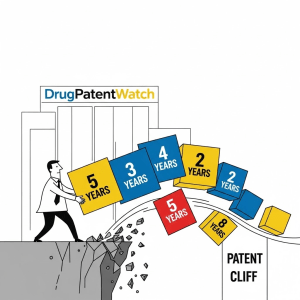
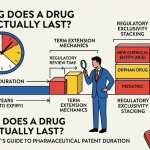
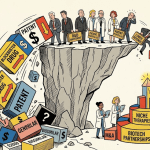
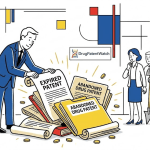
Big pharma used to treat loss of exclusivity as a weather event. You saw the date on the Gantt chart, shrugged, and trusted the pipeline. That reflex does not work anymore.
Between 2025 and 2030, loss of exclusivity hits products generating roughly 236 billion dollars a year, led by franchises like Keytruda, Eliquis, and Opdivo. Evaluate Pharma estimates that about 300 billion dollars of industry revenue is exposed by 2030. A new generation of biologics, specialty small molecules, and cell and gene therapies has concentrated risk into a handful of drugs that keep entire P&Ls afloat.pharmavoice+1
Life cycle extension is no longer a defensive trick from the legal department. It is an operating strategy that decides whether a company manages a controlled revenue slope or walks into a gap that invites activist pressure, credit downgrades, and emergency M&A.
This article lays out five concrete plays any serious pharma operator can run to defend a blockbuster. Each one combines patent tactics, regulatory levers, and commercial execution. Each one is grounded in what actually happened to Humira, Keytruda, Eliquis, and their peers, backed by hard patent data and litigation timelines that tools like DrugPatentWatch now track in near real time.drugpatentwatch+1
1. Map the Real Cliff: From Expiry Dates To Revenue Erosion
Companies still underestimate their cliffs because they focus on legal dates instead of commercial erosion. That mistake leaves money on the table and blindsides boards.
Understanding the gap between expiry and erosion
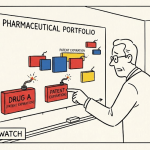
A typical slide in an internal patent review shows the core composition-of-matter patent expiry and maybe a rough date for possible generic entry. That is not a lifecycle plan. Three realities shape the true revenue curve:
Generics can arrive earlier than the core patent date if method, formulation, or crystalline form patents fall at the Patent Trial and Appeal Board (PTAB) or in European oppositions.drugpatentwatch+1
Biosimilars often arrive later and ramp slower than small-molecule generics because of higher development costs, interchangeability barriers, and payor contracting dynamics.[drugpatentwatch]
Successor products and line extensions can shift volume off the original brand before and after the nominal cliff.biospace+1
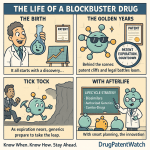
Humira is the clearest example. Its main U.S. patent expired in 2016, but AbbVie’s thick patent estate and settlements held off biosimilar entry until 2023. That six‑plus‑year gap generated roughly 75 billion dollars in extra U.S. sales. In Europe, where biosimilars entered in 2018, erosion started much sooner and hit harder, proving that the same molecule can have very different revenue arcs in different jurisdictions.biopharmadive+1
The 2028 “super‑cliff” and why timing matters
The industry’s upcoming crunch is unusually synchronized. DrugPatentWatch’s modeling of the 2028 “super‑cliff” shows the concurrent loss of exclusivity for Keytruda, Opdivo, and Eliquis. These three alone anchor a large share of Merck’s, Bristol Myers Squibb’s, and Pfizer/BMS’s top lines.[drugpatentwatch]
Keytruda’s core U.S. patents are expected to expire around late 2028, with additional patents, some with term adjustment, stretching to 2029. Eliquis benefits from a patent term extension (PTE) on its main patent to 2026 and follow‑on crystalline form patents that run to 2031, but its first real exposure point arrives with the NCE‑1 date in 2027, when Paragraph IV challenges can start.pharsight.greyb+3
DrugPatentWatch and similar platforms now model not only patent expiry but also:
NCE‑1 dates and earliest challenge windows
The impact of PTE, pediatric extensions, and SPCs by market
Active ANDA, PIV, BPCIA, and opposition actions aligned to specific patentsdrugpatentwatch+2
With that, an IP team can give finance a forecast of erosion curves under different litigation outcomes instead of a binary “protected / not protected” view.
Why boards now want a patent P&L
Once you translate that legal timeline into a revenue curve, life cycle extension becomes an investment case, not a compliance exercise.
Humira generated 20.7 billion dollars in sales in 2021 and more than 21 billion dollars at peak in 2022. Each delayed year of U.S. biosimilar entry was worth double‑digit billions. Even after a 32 percent sales drop in 2023 when biosimilars finally arrived, AbbVie softened the blow by seeding successor drugs Skyrizi and Rinvoq, which together brought in about 19 billion dollars in 2024 and are forecast to hit 27 billion dollars by 2027.drugpatentwatch+2
That replacement engine did not happen by accident. It was funded by the very cash flow that extended exclusivity and built during the long Humira tail. The lesson for current blockbusters is simple: if each extra year of protection is worth several billion in gross profit, billion‑dollar LCE programs are not extravagance. They are funded by the incremental margin they create.
2. Strategic Play One: Build A Layered, Defensible Patent And Exclusivity Wall
The first play is obvious, but it is where most value is either created or destroyed. Companies that treat “patent wall” as “file everything you can” discover that dense estates without quality to back them invite I‑MAK reports, policy outrage, and hostile courts. The goal is dense and defensible, not just dense.i-mak+2
What a modern blockbuster patent estate looks like
A typical high‑value franchise now rests on four patent pillars:
AbbVie’s Humira portfolio is the starkest example. AbbVie filed about 250 U.S. patent applications, with roughly 130 granted. About 90 percent arrived after FDA approval in 2002, mostly covering formulations, dosing, and manufacturing. These filings stretched U.S. protection by about six years beyond the 2016 primary expiry.haugpartners+2
For Keytruda, I‑MAK’s analysis found a patent life of about 34 to 35 years if all patents hold, with method‑of‑use and other follow‑on patents extending the monopoly by at least eight years beyond what the original filings alone would have delivered.grandviewresearch+1
Where DrugPatentWatch changes the patent game
Historically, portfolio design happened in internal silos with scattered external data. Patent teams knew their own families well but only had a partial view of competitor strategies. Tools like DrugPatentWatch now aggregate:
Patent and exclusivity dates across U.S. and key ex‑U.S. markets
Litigation dockets, including ANDA PIV suits and inter partes reviews
SPCs, PTEs, and pediatric extensions across Europe and other SPC‑style jurisdictions
Historical erosion and entry patterns for analog drugs in the same classdrugpatentwatch+3
That allows teams to benchmark their own estates against class norms. If your immunology blockbuster carries half the number of granted secondary patents that a peer biologic does, you know you are underexposed. If your SPC filings lag local authorization, you can quantify the missed years.
Regulatory exclusivities are part of the wall
Patents are only one half of Play One. Exclusivity rights can stack with patents or sometimes deliver protection when patents are weak.
In the U.S.:
New chemical entities receive five years of NCE exclusivity.
New clinical investigations that support a new indication or formulation can yield three years of data exclusivity.[fdli]
Orphan drugs add seven years of exclusivity, which can be combined with the above.
Pediatric studies can extend both patent and non‑patent exclusivity by six months.drug-dev+1
Under the 505(b)(2) pathway, a sponsor that reformulates a known drug, changes its route of administration, or develops a fixed‑dose combination can often use existing data and secure three to seven years of exclusivity while spending far less and moving much faster than a full 505(b)(1) NDA.propharmagroup+2
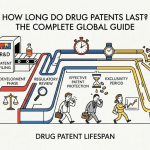
In Europe and the U.K., SPCs can extend patent protection by up to five years, with another six months possible for pediatric use. Recent updates, including the proposed European Biotech Act, would add a further 12‑month SPC extension for certain advanced therapy and biotech products if they meet specific innovation and manufacturing criteria.insideeulifesciences+3
Failing to coordinate patent strategy with these regulatory levers is one of the most common structural errors. DrugPatentWatch’s coverage of SPCs, pediatric extensions, and PTEs lets teams build a “tower view” for each market, showing which layers hit when.single-market-economy.europa+2
How to run Play One without provoking a backlash
Humira’s patent thicket has already triggered heavy scrutiny from courts, Congress, and advocacy groups. The Seventh Circuit recently held that a large portfolio alone is not an antitrust violation, but the political appetite for similar strategies is low.centerforbiosimilars+3
So the question is not “How many patents can we file?” but “Which inventions genuinely clear the non‑obviousness bar and support differentiated clinical or operational value?” Practical safeguards:
Tie each secondary patent project to a tangible clinical, adherence, manufacturing, or supply benefit, documented in internal business cases.
Prioritize filings that support line extensions that payers and regulators are likely to consider legitimate, such as reduced injection volume, meaningful dosing convenience, or safer storage profiles.smartbiggar+2
Use independent patentability opinions and mock IPR/opposition reviews at the drafting stage to avoid building on sand.
DrugPatentWatch can flag which patents in analogous products with similar claim types were struck down in PTAB or opposition proceedings, giving counsel a live database of “what did not survive” to steer drafting.drugpatentwatch+2
3. Strategic Play Two: Engineer Product Migrations Before The Cliff
The second play is to move patients to a better product that you control, while the original brand still holds real market power. Done correctly, this keeps a large slice of the franchise inside your portfolio even when generics arrive.
From evergreening caricature to legitimate product improvement
“Evergreening” has become a political insult, but the tactics behind it include many changes patients and prescribers actually want:
Lower‑volume, less painful injections
Fixed‑dose combinations that cut pill burden
Device upgrades that make self‑administration realistic
New indications that align with disease biology and payer prioritieswithin3+2
Regulators and courts have started to draw sharper lines. Recent Canadian Humira cases, for instance, invalidated dosing patents as obvious but upheld a formulation patent that improved protein stability. That signals that genuine technical advances that solve storage or tolerability problems can still stand, while thin dosing tweaks have more trouble.gowlingwlg+1
Humira’s own pivot to a citrate‑free formulation illustrates this. AbbVie’s upgraded 100 mg/mL citrate‑free version cut injection pain compared with the earlier 50 mg/mL product and sat on a different set of formulation patents. When biosimilars finally arrived, that formulation was entrenched.bigmoleculewatch+1
Case study: Merck’s Keytruda Qlex
Merck is executing this play in oncology. Keytruda, the world’s top‑selling cancer drug, produced around 29 to 29.5 billion dollars in sales in 2024 and is widely projected to peak above 30 billion dollars. Core patent expiry in the U.S. hits in 2028, with two active‑ingredient patents, some with term adjustment, stretching to 2029 and expected to be litigated hard.syneticx+5
Merck is rolling out a subcutaneous Keytruda Qlex formulation to shift a large share of patients off the IV product ahead of biosimilar entry. Analysts see Qlex as a multi‑billion‑dollar asset that could bring in around 7 billion dollars annually in the early 2030s, even with biosimilar competition in the background. The business logic is clear:stocktwits+2
IV biosimilars compete mostly in infusion centers and hospitals.
A subcutaneous version can anchor use in outpatient and home settings.
New device and formulation patents protect the upgraded format beyond the original compound date.
DrugPatentWatch tracks the staggered timelines of Keytruda’s core patents, method‑of‑use claims, and potential PTE/SPC overlays, giving Merck and competitors an integrated view of how these migrations lock in value.grandviewresearch+2
Case study: AbbVie’s Skyrizi and Rinvoq as franchise successors
AbbVie did not just defend Humira. It built a new immunology stack. Skyrizi (risankizumab) and Rinvoq (upadacitinib) together delivered about 19 billion dollars of sales in 2024 and are targeted to reach 27 billion dollars in 2027, roughly replacing Humira’s lost contribution.bsic+2
AbbVie’s timing mattered. Humira was still throwing off more than 18 billion dollars in 2022, accounting for roughly a third of company revenue. AbbVie used this cash flow to fund large‑scale clinical programs for Skyrizi and Rinvoq, gain approvals across multiple immune indications, and then actively convert patients before and during the 2023 biosimilar wave.biospace+2
DrugPatentWatch’s multi‑year impact modeling of Humira shows how that played out in revenue terms: an extended patent estate delayed erosion until 2023, line extensions shaped the slope of the decline, and the successor products picked up volume fast enough to turn a theoretical “cliff” into a manageable multi‑year slope.[drugpatentwatch]
How to design a migration on purpose
Four practical rules emerge from these case studies:
Start line‑extension and successor development at least eight to ten years before core expiry for biologics, and six to eight years for small molecules.
Align clinical endpoints and labels for the new product with emerging payer metrics, not just clinical novelty, so that contracting can justify preferring the upgrade.
Build device and user‑experience advantages that generics and biosimilars cannot easily replicate at launch.
Use DrugPatentWatch to model how much exclusivity the successor can realistically enjoy and how its launch will cannibalize the original, then present this as a net present value case to management.drug-dev+2
That converts migration into a board‑approved capital allocation plan, not just a scientific ambition.
4. Strategic Play Three: Control How, Not Just When, Generics And Biosimilars Enter
Legal teams tend to focus on “keep them out as long as possible.” In practice, originators that try to delay at all costs often end up with maximal uncertainty and costly, public defeats. The smarter objective is to control the sequence, channel mix, and margin profile of generic and biosimilar entry.
How Hatch‑Waxman and BPCIA actually shape timelines
Under Hatch‑Waxman, a generic challenger filing an Abbreviated New Drug Application (ANDA) with a Paragraph IV certification must notify the brand. If the brand sues within 45 days, it triggers an automatic 30‑month stay of FDA approval for that ANDA. To encourage challenges, the first successful Paragraph IV filer receives 180 days of generic exclusivity once it launches.drugpatentwatch+1
For biologics, the Biologics Price Competition and Innovation Act (BPCIA) lays out a different dance, but the core economic logic is similar: biosimilar developers trade expensive clinical and legal work for the chance to grab early market share.
DrugPatentWatch tracks when each ANDA, PIV certification, and biosimilar application appears, and it flags the specific patents asserted in each case, mapping them against the 30‑month stays and 180‑day windows. That data turns a messy landscape of dockets into a structured pipeline of likely threats.drugpatentwatch+2
Serial enforcement as a deliberate play, not reflex
DrugPatentWatch’s analysis of serial patent enforcement shows how some brands string together actions across Orange Book patents, manufacturing claims, and process IP to create a steady drag on generic entry rather than a single showdown. Each lawsuit can trigger its own stay or deterrent effect, extending effective exclusivity in practice even if none of the later patents would have justified the original monopoly on their own.[drugpatentwatch]
Used carelessly, this play invites political backlash and allegations of “sham litigation.” Used in a disciplined way, focused on patents with genuine technical content, it can:
Deter weaker challengers who lack patience or capital.
Create settlement leverage to negotiate agreed launch dates that align with the originator’s revenue, manufacturing, and portfolio plans.
DrugPatentWatch’s docket monitoring reveals when challengers are repeat players with a track record of settling early versus those that tend to litigate to judgment, which helps originators calibrate strategy.drugpatentwatch+1
Authorized generics and “controlled erosion”
For small molecules, an authorized generic strategy can soften the cliff. The originator, often through a subsidiary or licensee, launches a “generic” version of its own product at a discount. That move can:
Grab share in channels where substitution is automatic.
Keep some margin inside the originator’s ecosystem.
Influence the pricing corridor in which true generics must compete.pharmavoice+1
DrugPatentWatch’s generic entry timelines and historical price‑erosion data by molecule class let teams quantify whether an authorized generic launch makes sense and how it will impact the brand’s remaining sales.[drugpatentwatch]
Regionally staggered launches and SPC leverage
Because regulatory exclusivity and SPC regimes differ by country, generics and biosimilars often launch region by region. Keytruda, for instance, is expected to face U.S. biosimilar entry starting around 2028, while European SPCs could protect some indications into 2030 or 2031. Eliquis’s patent and exclusivity map varies across the U.S., Europe, and emerging markets, where oppositions and local rules can accelerate or delay entry.pharsight.greyb+2
Using SPCs and PTEs aggressively but legitimately can turn a global “cliff” into a rolling series of local declines that are easier to absorb. Legal teams that partner with commercial groups and use DrugPatentWatch’s jurisdiction‑specific data can plan:
Which markets should be defended hardest in litigation.
Where settlement or early entry makes sense because local pricing is weaker.
How to allocate field force, samples, and patient‑support programs accordingly.mewburn+3
That is the difference between a defensive posture and a portfolio‑level operating plan.
5. Strategic Play Four: Squeeze Full Economic Value From The Mature Brand
Once everyone in the building is talking about the cliff, leadership often overcorrects. They pull promotional budgets too early, declare the brand in “harvest mode,” and strip out the very activities that could justify premium pricing and slow erosion.
The companies that manage LOE well keep investing in the mature brand, but with a different objective: not growth at any cost, but maximum cash generation per marginal dollar spent.
Re‑thinking promotion and field force timing
EY’s recent work on LOE shows that sales teams account for around 15 percent of drug revenue and that their spend usually drops sharply near LOE as firms redeploy or furlough reps. That instinct can be right if the brand has no defensible differentiation left. It is damaging if:[ey]
Important indications or subpopulations remain underpenetrated.
New real‑world evidence supports outcomes‑based contracting.
Existing contracts still provide favorable access if volume holds.pharmavoice+1
DrugPatentWatch’s generic entry projections, combined with digital health and claims‑data feeds from other platforms, let commercial leaders calculate the short‑term ROI of keeping or cutting field resources in specific regions or specialties. Instead of a blanket “cut 30 percent,” they can:drugpatentwatch+1
Maintain investment in high‑margin niche indications where generics may struggle to gain labeling or payer trust.
Pull back in commodity indications where automatic substitution and step‑therapy rules will wipe out share regardless of effort.
Price, contracts, and PBM leverage
AbbVie’s handling of Humira’s final years illustrates how market access strategy can shape the revenue slope. DrugPatentWatch notes that AbbVie leaned on strong relationships with large pharmacy benefit managers, trading rebates for favorable formulary positions that slowed biosimilar uptake once they arrived. That bought time for Skyrizi and Rinvoq to grow.[drugpatentwatch]
This play carries risk. U.S. policymakers and payers are now scrutinizing rebate structures in immunology and oncology, and biosimilar makers are more aggressive with their own contracting. The lesson is not “buy access at any price” but “treat formulary strategy as part of your LCE toolbox.” The practical tasks:[drugpatentwatch]
Model net price and margin under different rebate scenarios, using historical erosion curves from similar molecules as a guide.drugpatentwatch+1
Decide where to defend share with net price concessions vs where to let volume go to generics and focus on successors.
DrugPatentWatch’s erosion analytics and competition timelines give pricing and access teams a base case, so they are not guessing how fast share might drop once multiple generics hit.drugpatentwatch+1
Brand equity and patient experience
Some brands carry deep emotional equity with patients and clinicians after years on the market. Mature brands in immunology, oncology, and rare disease often have:
Established support programs, such as copay assistance and nurse hotlines.
Familiar devices or dosing regimens that patients have internalized.
Those are assets. They can justify modest premiums even when cheaper alternatives exist, especially when switching comes with adherence or safety concerns.
The Federal Court of Canada’s decision to deny AbbVie a permanent injunction on a Humira formulation patent, in part because forcing patients to switch to alternatives with more injection pain would be against the public interest, shows that courts now weigh lived patient experience in their decisions. That cuts both ways: flimsy tweaks will fail, but real improvements are easier to defend.smartbiggar+1
DrugPatentWatch cannot measure human factors directly, but it can show how long similar brands retained share post‑LOE when they had strong patient programs and device advantages. Combined with qualitative research, that data can justify targeted investment in service‑heavy segments even as overall brand support shrinks.pharmavoice+1
6. Strategic Play Five: Use Data, 505(b)(2), And Deals To Offset The Cliff
Life cycle extension is not only about squeezing a single brand. It is also about portfolio‑level risk shaping. As cliffs for Keytruda, Opdivo, and Eliquis approach, leading companies are:
Buying or licensing late‑stage assets to fill revenue gaps.
Running 505(b)(2) programs to reposition existing molecules.
Re‑prioritizing R&D to focus on fast‑to‑market, high‑probability programs.caldwelllaw+2
505(b)(2) as a scalability tool
The 505(b)(2) pathway allows sponsors to rely partly on existing literature or previous findings of safety and efficacy, while adding new data to support a modified product. That can cut development timelines from 10‑15 years to as little as 2‑4 years and deliver three to seven years of new exclusivity.sciencedirect+2
Common 505(b)(2) life cycle plays include:
New formulations or dosage forms (liquid vs tablet, extended‑release vs immediate‑release).
New combinations of already‑approved actives.
Route‑of‑administration changes that alter care setting and adherence.propharmagroup+1
DrugPatentWatch’s coverage of approved 505(b)(2) products and their exclusivity outcomes lets companies benchmark idea quality. A team can ask: “How have similar tweaks on comparable drugs performed in terms of time‑to‑approval and exclusivity duration?”drugpatentwatch+1
Because 505(b)(2) often requires less capital than a full NCE program, it becomes a flexible way to build a tail of mid‑sized products around a blockbuster. Each one might add a few hundred million dollars annually, but together they can fill several billion dollars of the gap opened by a major LOE.
Analytics‑driven M&A and in‑licensing
Large companies are raising deal activity in oncology, immunology, and cardiometabolic disease precisely to backfill revenue exposed to the 2028‑2030 wave. Merck, for example, is using acquisitions and partnerships in areas like ADCs and ophthalmology to diversify away from single‑asset dependence on Keytruda.pharmavoice+4
DrugPatentWatch helps corporate development teams by:
Flagging late‑stage assets whose patent and exclusivity profiles align well with the acquirer’s cliff years.
Highlighting gaps where targets lack SPCs, pediatric extensions, or strong secondary patents, which could either reduce their value or present opportunities to improve them post‑deal.azamiglobal+3
An asset that peaks in 2032 with a solid patent wall may be more valuable to a company facing a 2028 cliff than a scientifically flashier candidate that peaks in 2038, because it directly overlaps the revenue gap.
Portfolio‑level patent cliff modeling
DrugPatentWatch has published frameworks for multi‑year patent cliff impact modeling that stack product‑level LOE events into a portfolio view. These models consider:drugpatentwatch+1
Different erosion curves for small molecules vs biologics.
Country‑by‑country SPC, PTE, and pediatric overlays.
Cannibalization and replacement effects from line extensions and successors.
AbbVie’s Humira model, for instance, needed to reflect not just the loss of exclusivity but also the uptake of Skyrizi and Rinvoq and their effect on Humira’s own trajectory. With the same method, a company like BMS can simulate how Eliquis and Opdivo declines interact with the ramp of oncology and cardiovascular assets in the pipeline.biospace+3
For boards and investors, a portfolio‑level view grounded in patent data is more credible than generic slideware about “pipeline strength.” It connects life cycle extension programs directly to expected cash flows and valuation.
7. Case Study Deep Dive: Humira’s “Gold Standard” Defense – And Its Limits
Humira has become the teaching case for modern LCE. It shows both what is possible and what is less likely to be repeatable.
Humira by the numbers
First approved in 2002 as the first fully human monoclonal antibody.biopharmadive+1
Peak global sales above 21 billion dollars in 2022.biospace+2
About 250 U.S. patent applications filed, with roughly 130 granted; 90 percent filed after first approval.[biopharmadive]
Primary U.S. composition patent expired in 2016, biosimilars entered in 2023, after around six additional years of effective exclusivity.haugpartners+2
Estimated extra U.S. revenue from delayed biosimilar entry around 75 billion dollars.[biopharmadive]
Patent analytics from I‑MAK and others painted this estate as “over‑patented,” but U.S. courts ultimately found that the mere number of patents was not itself anticompetitive. European regulators were less forgiving: biosimilars entered in 2018 and quickly eroded share.i-mak+3
Legal and policy pushback
Competitors and advocacy groups targeted Humira on several fronts:
Biosimilar makers like Alvotech argued that many asserted patents were invalid or not actually invented by AbbVie.[centerforbiosimilars]
Advocacy groups highlighted that Humira’s patenting strategy extended monopoly power far beyond the 20‑year standard and delayed cheaper biosimilars for years.i-mak+1
Courts in Canada invalidated dosing‑regimen patents as obvious while upholding some formulation claims.gowlingwlg+1
The overall result: AbbVie defended a huge amount of value, but the strategy triggered political and regulatory attention that now shapes how judges, agencies, and legislators look at similar patterns.
Commercial execution and successor products
AbbVie did not rely on patents alone. It invested heavily in clinical programs for Skyrizi and Rinvoq, positioned them as superior immunology options, and ramped them aggressively as Humira faced LOE. By 2024, Skyrizi and Rinvoq nearly matched Humira’s previous peak, with combined sales around 19 billion dollars.biospace+1
DrugPatentWatch’s modeling shows how this interlock of extended exclusivity, aggressive line extensions, and successor launches turned a theoretical vertical drop into a multi‑year slope that AbbVie could manage inside its broader P&L.[drugpatentwatch]
What future blockbusters can and cannot copy
From Humira, other originators can realistically copy:
Early and sustained investment in method, formulation, and manufacturing patents that reflect genuine technical work.
Proactive SPC and PTE filings in Europe and other jurisdictions.
Large, indication‑expansion clinical programs that build strong method‑of‑use claims.
Aggressive successor product development that starts a decade before LOE.
They will struggle to copy:
Extremely dense patent thickets made up of many thinly differentiated filings; regulators and courts are more skeptical now.i-mak+3
Multi‑year delays achieved primarily through serial settlements rather than clear patent wins, given new transparency and policy debates around such deals.
DrugPatentWatch’s evergreening and patent‑cliff reports explicitly frame Humira as a special case, not a template that courts or policymakers will tolerate routinely in the 2030s.drugpatentwatch+3
8. Case Study Deep Dive: Keytruda, Eliquis, And The 2028–2031 Super‑Cliff
The next generation of cliffs centers on Keytruda and Eliquis, with Opdivo not far behind. These franchises illustrate how modern playbooks differ from the Humira model.
Keytruda: defending a 30‑billion‑dollar oncology franchise
Keytruda generated about 29 to 29.5 billion dollars in 2024 and could peak around 32 billion dollars in 2026. It accounts for roughly 40 percent of Merck’s pharmaceutical revenue.syneticx+3
Patent and exclusivity profile:
Core compound patents in the U.S. lose exclusivity around late 2028.
Two additional active‑ingredient patents, benefitting from patent term adjustments, extend to 2029, but Merck itself expects litigation over their scope and validity.delveinsight+2
Biosimilar developers including Celltrion, Samsung Bioepis, and Amgen already have candidates in late‑stage development.biospace+1
European SPCs likely protect certain indications into 2030–2031.[grandviewresearch]
Merck’s response combines:
Subcutaneous Keytruda Qlex with its own life cycle and IP protection, targeting 30–40 percent patient conversion by 2028.stocktwits+2
Broad development of Keytruda combinations (for example with belzutifan and antibody‑drug conjugates) that can secure new patents and indications beyond the original franchise.delveinsight+1
Diversification into new therapy areas through acquisitions, so that Merck’s overall 2030 revenue profile is less concentrated.pharmavoice+2
DrugPatentWatch’s data on Keytruda’s patent families, clinical indication mix, and projected biosimilar entry helps Merck, payers, and competitors price in various timelines and scenarios.grandviewresearch+2
Eliquis: small molecule, huge exposure
Eliquis is a small‑molecule anticoagulant, but its revenue footprint looks like a biologic. It generated over 13 billion dollars in 2024 and sits at the center of Bristol Myers Squibb’s and Pfizer’s shared earnings.biospace+2
Its protection story:
The core apixaban composition patent received a PTE extending its life to 2026.[drugpatentwatch]
A later patent on a specific crystalline form (U.S. 9,326,945) extends protection to 2031, subject to ongoing challenges.pharsight.greyb+1
Multiple European patents have faced oppositions, with outcomes that can shift regional entry dates.[pharsight.greyb]
The NCE‑1 date in the U.S. arrives in October 2027, when generics can start filing PIV challenges even before patents expire.[pharsight.greyb]
Brand‑defense tactics include tight enforcement of the crystalline‑form patents, active management of European oppositions, and planning for potential settlements or authorized generics timing. DrugPatentWatch tracks every legal event tied to Eliquis patents, giving an up‑to‑date picture of how credible each protection layer remains.pharsight.greyb+1
The super‑cliff as a portfolio test
BMS faces one of the toughest cliff profiles, with Eliquis and Opdivo together making up more than half its earnings and an estimated 38‑billion‑dollar revenue gap by 2030 if no mitigating actions succeed. Merck faces a similarly concentrated exposure to Keytruda.syneticx+5 <blockquote> By 2028, patents for more than 70 blockbuster drugs, including Humira, Keytruda, and Eliquis, will expire, putting nearly half of the top 10 pharma companies’ revenue at risk.[38] </blockquote>
DrugPatentWatch’s multi‑product modeling makes that exposure concrete. It aggregates product‑level LOE forecasts with erosion curves and overlays them with the expected ramp of pipeline and in‑licensed assets. That gives boards a clear answer to the real question: “How many billions of revenue are exposed in each year from 2026 to 2035 under different litigation and launch scenarios?”drugpatentwatch+1
Once that is visible, life cycle extension no longer looks like a narrow legal function. It looks like one of the core levers for hitting or missing long‑term guidance.
9. Operationalizing LCE: How To Turn Strategy Into A Cross‑Functional System
These five plays only work if they are coordinated. That coordination has to be designed. The usual pattern of R&D, legal, regulatory, commercial, and finance each running their own roadmaps will not defend a blockbuster in this environment.
Build a shared “LOE room”
Companies that handle cliffs well now treat LOE the way banks treat liquidity risk: they put it in a cross‑functional command room. That group meets regularly and owns:
A single, shared LOE model for each key brand and the portfolio.
Decisions on where to spend marginal dollars on patents, trials, promotion, and access to change the shape of those curves.
DrugPatentWatch often supplies the backbone of these models with feeds covering patents, SPCs, exclusivity types, ANDA and biosimilar filings, and generic entry dates. Internal finance teams then overlay pricing, volume, and cost assumptions.drugpatentwatch+3
Make LOE a core part of launch planning
One of the strongest themes in Pharmavoice’s work on LOE is “start early.” The best LOE strategy is a full lifecycle plan that links clinical and regulatory milestones from launch through expiry. That means:[pharmavoice]
At launch, already knowing which line extensions and indications you plan to pursue and when.
Timing pivotal trials so that key data arrives in windows that support method‑of‑use patents and new labels that extend protection.
DrugPatentWatch’s datasets let teams look at how long it took class predecessors to build out their indication maps and method patents, then back‑cast optimal timelines for new launches.drugpatentwatch+1
Tie incentives to lifecycle, not only to launch
If teams are only rewarded for early sales growth, no one will want to spend money defending an aging brand or building a follow‑on product that might cannibalize near‑term revenue. Boards can change this by:
Giving brand leaders targets and incentives that stretch through LOE and measure revenue retained five years after expiry versus initial forecasts.
Rewarding successful execution of line‑extension and migration strategies, even if they pull some volume away from the original brand in the short term.
DrugPatentWatch provides an objective baseline: how did similar brands in the same class perform post‑LOE? Leaders who outperform that benchmark deserve credit; those who underperform signal strategy or execution problems.drugpatentwatch+1
10. What Investors And Boards Should Ask Management
For investors and directors, the technical detail can be overwhelming. The key is to ask simple operational questions that cut through narrative.
Four high‑value questions:
“Show us the LOE curve for each top‑five product and how you expect it to change after your LCE investments.” Management should present revenue projections that trace back to specific patent families, SPCs, pediatric extensions, line extensions, and settlement assumptions, ideally benchmarked with DrugPatentWatch data.drugpatentwatch+2
“For each blockbuster, what is your successor or migration asset, and how far along is it?” AbbVie can answer this clearly for Humira with Skyrizi and Rinvoq. Merck is building a similar story for Keytruda with Qlex and pipeline oncology assets. Boards should expect this clarity for every product that contributes double‑digit percentages of revenue.stocktwits+4
“How many years of effective exclusivity have you already captured beyond the original patent term, and how many more are realistically available?” Management should know, by market, where PTEs, SPCs, and pediatric extensions have already been secured and where opportunities remain.murgitroyd+3
“How are you using external analytics like DrugPatentWatch to benchmark your estate and anticipate threats?” A company that relies only on internal patent lists and sporadic law‑firm memos is behind. Regular use of structured tools suggests a more deliberate approach.
These questions do not replace detailed diligence, but they reveal quickly whether LCE is a real system inside the company or a slide‑deck slogan.
Key Takeaways
Life cycle extension is now a board‑level discipline, not a side project for IP counsel. Between 2025 and 2030, LOE will hit products generating over 200 billion dollars in annual revenue, and the timing is unusually clustered around 2028. Companies that build integrated LCE systems can turn cliffs into slopes; those that treat patents in isolation will struggle.pharmavoice+2
The strongest playbooks combine layered, defensible patents with early product migrations and successor launches. Humira showed how method, formulation, and manufacturing patents, stacked with SPCs and settlements, can delay competition, while Skyrizi and Rinvoq illustrated how successor products replace revenue. Merck’s Keytruda Qlex strategy and broad combination programs show how oncology leaders are adapting the model.syneticx+6
Originators must actively shape how generics and biosimilars enter, not only when. Smart use of Hatch‑Waxman’s 30‑month stays, BPCIA litigation, authorized generics, and regional SPC strategies allows companies to control erosion paths and margin profiles instead of being dragged into chaotic, reactive fights.single-market-economy.europa+3
Data‑driven tools like DrugPatentWatch are becoming core infrastructure for LCE. They turn a messy mix of patents, exclusivities, and dockets into an actionable forecast. That forecast supports 505(b)(2) plays, M&A, resource allocation, and investor communication with far more precision than traditional ad hoc spreadsheets.drugpatentwatch+3
FAQ
Q1. How early should a pharma company start serious life cycle extension planning for a potential blockbuster?
For biologics, companies should start structured LCE planning eight to ten years before the first core patent expires. For small molecules, six to eight years is usually the minimum workable window. That allows enough time to design and execute clinical programs for line extensions and new indications, file and prosecute secondary patents, secure SPCs and PTEs where relevant, and develop successor products or reformulations. Humira’s experience shows that patents filed long after initial approval can still add many years of effective exclusivity when they protect real technical advances. DrugPatentWatch’s LOE projections provide an anchor date so teams can count backward and set concrete milestones.haugpartners+5
Q2. How much incremental value can an extra year of exclusivity really add to a blockbuster?
The answer depends on peak sales, margin, and erosion speed, but order‑of‑magnitude estimates are straightforward. Humira generated about 20–21 billion dollars annually at peak. Extending U.S. exclusivity by roughly six years after the 2016 patent expiry helped AbbVie capture an estimated extra 75 billion dollars in sales there alone. For a drug with five billion dollars in high‑margin revenue, a single additional year of strong exclusivity might conservatively add several billion dollars in operating profit. That is why tools like DrugPatentWatch, which surface PTE and SPC options and highlight vulnerable patents, are so valuable: each year gained or lost has a clear, quantifiable impact.mewburn+5
Q3. Are line extensions and 505(b)(2) strategies still viable given political concern about “evergreening”?
Yes, when they create genuine clinical or operational value. Courts and regulators have become more selective. Canadian courts, for example, invalidated some Humira dosing patents but upheld a formulation patent that credibly improved protein stability. The 505(b)(2) pathway remains a powerful route for reformulations, new combinations, and route‑of‑administration changes that benefit patients, offering three to seven years of exclusivity with shorter development timelines. Sponsors should expect thin, obvious tweaks to draw fire, but carefully designed improvements with solid data can still support strong IP and regulatory protection. DrugPatentWatch helps teams distinguish between these categories by showing historical outcomes for similar strategies.fdli+7
Q4. How do SPCs and PTEs fit into a global life cycle extension plan?
Supplementary Protection Certificates in Europe and patent term extensions in the U.S. compensate for time lost in regulatory review. They can add up to five years of extra protection, with an additional six months available for pediatric studies in many cases. Recent EU proposals even contemplate a further 12‑month SPC extension for certain advanced therapy and biotech products that meet strict innovation and manufacturing criteria. In practice, that means originators can often defend a blockbuster much longer in Europe than in some emerging markets, and sometimes longer than in the U.S. DrugPatentWatch maps these SPC and PTE overlays by jurisdiction, allowing companies to plan staggered launch, pricing, and promotion strategies that reflect local exclusivity profiles instead of assuming a uniform global cliff.insideeulifesciences+5
Q5. What is the most common mistake companies make when approaching a patent cliff, and how can they avoid it?
The most common mistake is treating LOE as a fixed legal event instead of a multi‑year commercial curve that can be shaped. That mindset shows up as late, reactive planning; under‑investment in line extensions and successors; and blunt cost‑cutting on mature brands just when targeted investment could maximize their final cash generation. Companies avoid this by building a cross‑functional LOE team, anchoring decisions in data from tools like DrugPatentWatch, and tying management incentives to post‑LOE performance and successful execution of life cycle strategies. When IP, regulatory, commercial, and finance all work off the same patent‑driven LOE model, defending a blockbuster becomes a controlled process rather than an unpleasant surprise.within3+6