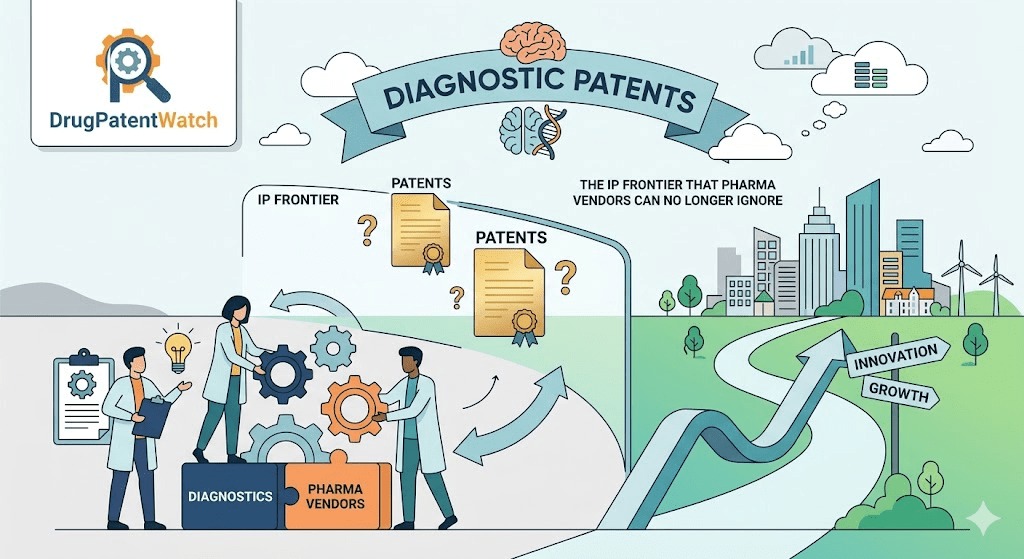
The pharmaceutical vendor ecosystem — CROs, CDMOs, biomarker platform providers, data analytics firms, and laboratory services companies — has spent decades treating diagnostic intellectual property as someone else’s problem. That calculation is changing fast, and the companies that recognize it earliest will build durable competitive advantages. Those that miss it will find themselves in the same position contract manufacturers found themselves in the early 2010s: technically capable, strategically undifferentiated, and perpetually competing on price.
Companion diagnostics are now required co-approvals for a growing share of oncology drugs. Liquid biopsy patents cover foundational cfDNA methodologies that touch nearly every precision oncology workflow. AI-derived biomarker claims are accumulating in patent offices faster than courts can interpret them. And the legislative environment is shifting, with bipartisan Congressional pressure to restore eligibility for diagnostic method patents that Mayo v. Prometheus effectively killed in 2012.
The commercial logic is straightforward. The global oncology companion diagnostics market was valued at $5.09 billion in 2024 and is projected to reach $8.38 billion by 2030, growing at a 9% CAGR. That figure does not capture the full downstream value that diagnostic IP controls: drug approvals, patient selection, reimbursement authorization, and the entire commercial arc of a targeted therapy depend on the companion diagnostic that was co-developed and co-approved with it. A vendor that holds — or licenses — the right diagnostic patent at the right moment has leverage that no manufacturing contract can replicate.
This article maps the diagnostic patent terrain for pharma vendors: the legal framework that shapes what is patentable, the commercial positions being built by leading players, the litigation cases that define enforcement risk, and the forward-looking strategies that sophisticated service providers are now deploying.
Why Diagnostic Patents Matter More to Pharma Vendors Than They Did Five Years Ago
The Patent Cliff Changes the Vendor Value Proposition
For pharma vendors — CROs, CDMOs, specialty labs, and data analytics providers — this cliff creates a structural shift in client behavior. Branded drug sponsors facing revenue erosion are simultaneously pushing two conflicting priorities onto their vendor partners: cut development costs on existing assets while accelerating new differentiated programs. The assets most insulated from generic and biosimilar competition are the ones with the most layered IP protection. And in 2025, that means precision medicine programs with locked companion diagnostics, proprietary biomarker assays, and method-of-treatment claims tied to patient selection algorithms.
Vendors positioned to contribute to that IP architecture — not just execute on it — command different pricing, different contract structures, and different strategic relationships. A CDMO that develops a novel formulation process and patents it has leverage. A CRO that develops a proprietary biomarker detection methodology as part of a Phase II trial, captures that in a patent application, and licenses it back to the sponsor has built something qualitatively different from a service business. Diagnostic IP is the mechanism by which pharma vendors cross the line from commodity provider to innovation partner.
“Deloitte’s analysis shows a promising rebound in pharma R&D ROI to 5.9% in 2024, and leveraging patent intelligence is a key strategy to sustain and improve this figure.” — DrugPatentWatch, The Patent Compass, 2024
How the Precision Medicine Shift Relocates IP Value Toward Diagnostics
What that means for IP architecture is that the diagnostic component is no longer a support function — it is a gate. A drug without an approved CDx cannot enter many targeted patient populations. A drug whose CDx is controlled by a competitor is commercially vulnerable. The IP value in a precision medicine franchise increasingly concentrates at the point of patient selection, and the companies that own the diagnostic patents at that point own a toll booth, not a service.
Pharma vendors operating in genomic profiling, next-generation sequencing (NGS), proteomics, digital pathology, and liquid biopsy are sitting directly on top of that toll booth, often without recognizing it. The question for vendor strategy teams is how to convert service delivery into protectable IP, and then how to deploy that IP commercially.
What Diagnostic IP Actually Covers: Biomarkers, Kits, Methods, and Algorithms
Diagnostic intellectual property is not a single category. It encompasses at least four distinct claim types, each with different enforceability profiles, different prosecution strategies, and different commercial applications.
Biomarker patents cover the identification of a correlation between a measurable biological entity — a gene variant, a protein expression level, a metabolite concentration — and a clinical outcome. These are the most commercially valuable claims, and the most legally contested. Post-Mayo, pure correlation claims are functionally unpatentable in the United States under 35 U.S.C. § 101, but carefully drafted claims that focus on a specific, practical application of the correlation can survive. The key post-Mayo drafting strategy is to anchor the claim to a physical step or a transformed composition, not merely to the observation of a natural relationship.
Method patents cover the process of conducting the diagnostic procedure: sample preparation, amplification protocols, sequencing workflows, and signal processing steps. The enforceability of method claims has been substantially degraded by Mayo and its progeny, but method claims anchored to genuinely novel technical steps — not merely routine, conventional laboratory operations — still issue and still have commercial value, particularly outside the United States.
Algorithm and AI-derived patents cover the computational analysis that converts raw diagnostic data into a clinical decision. These claims sit at the intersection of § 101 eligibility doctrine and the emergent patent law of AI inventions. The USPTO’s 2024 guidance update on AI subject matter eligibility clarified that AI-assisted inventions are patentable provided a human made a significant contribution — but the eligibility analysis for AI-derived diagnostic algorithms remains unsettled and litigious.
The Legal Minefield: Mayo, Alice, and What Diagnostic Patent Claims Can and Cannot Cover
Mayo v. Prometheus (2012): The Supreme Court Decision That Reshaped Diagnostic IP
The single most consequential event in diagnostic patent history was the U.S. Supreme Court’s 2012 decision in Mayo Collaborative Services v. Prometheus Laboratories. Before Mayo, diagnostic method claims routinely issued and were enforced. The claims in Mayo covered the correlation between thiopurine metabolite levels in a patient’s blood and optimal drug dosing — a clinically useful, commercially valuable relationship. The Supreme Court invalidated those claims unanimously, holding that they were directed to a law of nature, and that the additional steps of administering the drug and determining metabolite levels were too conventional to constitute the “inventive concept” required to transform the natural law into patent-eligible subject matter.
The ruling was categorical. Any claim that could be characterized as “observe a natural phenomenon, then apply conventional techniques to detect it” fails § 101. Since the backbone of most diagnostic patents is precisely the recognition of a relationship between a biomarker and a clinical state, Mayo effectively rendered an enormous category of pre-existing and prospective diagnostic IP unenforceable in the United States.
CareDx v. Natera: How the Federal Circuit Applied Mayo to Liquid Biopsy Patents
The most closely watched post-Mayo diagnostic patent case is CareDx v. Natera, which produced a Federal Circuit ruling in 2022 and a Supreme Court certiorari denial in late 2023. The case involved CareDx’s patents on methods for detecting organ transplant rejection using cell-free DNA (cfDNA) from the transplant recipient’s blood — a commercially significant test used in post-transplant monitoring. The asserted claims required obtaining a blood sample, genotyping the donor and recipient, sequencing the cfDNA using multiplex or high-throughput methods, and determining the proportion of donor-derived cfDNA.
When CareDx petitioned the Supreme Court for certiorari in 2023, arguing that the case presented an ideal vehicle to revisit § 101 for diagnostic methods, the Court declined. The denial continued the Supreme Court’s consistent reluctance to revisit the Mayo framework despite industry pressure to do so. For pharma vendors in the liquid biopsy and cfDNA monitoring space, the implication was clear: method claims built on detecting known natural correlations using accepted laboratory techniques will not survive § 101 scrutiny in U.S. courts.
The case has had a secondary consequence: it directed IP professionals toward non-method claim strategies. Reagent composition claims, kit claims, system claims incorporating novel hardware configurations, and trade secret protection for laboratory-developed tests have all become more important as method patent availability has contracted.
What Post-Mayo Claim Drafting Looks Like for Diagnostics Vendors
The practical drafting response to Mayo involves two parallel strategies that are not mutually exclusive.
The first is the kit-and-composition approach. Rather than claiming a method of detecting a biomarker, the applicant claims the physical composition used to perform the detection — a novel antibody, a specific probe-reagent combination, a proprietary calibration material, or the specific physical architecture of a multi-analyte detection panel. A diagnostic kit claim covering specific reagents, calibrators, and detection components provides protection independent of the method-of-diagnosis problem. Vendors with proprietary assay development capabilities are well positioned to pursue this strategy, because the kit is their primary deliverable.
The second is the method-of-treatment integration. The Federal Circuit has signaled that claims framed as methods of treating a patient — where the diagnostic step is embedded in a treatment decision, not merely a detection — are more likely to survive § 101. A claim that recites “administering Drug X to a patient whose biomarker level is above threshold Y, wherein the biomarker level is determined by method Z” is structured as a treatment claim, not a pure detection claim, and has a better eligibility profile. For vendors co-developing CDx programs alongside drug sponsors, structuring claims this way requires coordination between the diagnostic and therapeutic IP teams — coordination that many service providers are not currently providing.
The Alice Problem: How Software and Algorithm Claims in Diagnostics Get Invalidated
Vendors developing AI-powered diagnostic platforms face a second layer of § 101 exposure. Even when a diagnostic claim successfully sidesteps the Mayo “law of nature” framework, if the claim’s core inventive element is a computational algorithm, it may fall under Alice Corp. v. CLS Bank (2014) as an “abstract idea.”
The Alice/Mayo two-step framework applies sequentially: first, is the claim directed to a law of nature, natural phenomenon, or abstract idea? If yes, second, does the claim include an “inventive concept” that adds significantly more, transforming the exception into a practical application? Diagnostic algorithm claims regularly fail both steps when the algorithm merely applies well-known mathematical or statistical operations to biological data.
Global Diagnostic Patent Strategy: EU and China vs. the U.S. Divergence
The United States is the outlier among major patent jurisdictions on diagnostic method eligibility. Europe, China, Japan, and most other significant pharmaceutical markets do not apply the Mayo framework. In Europe, diagnostic methods are excluded from patent protection under Article 53(c) EPC only when performed on the human body — laboratory test methods conducted on extracted samples are patentable. China’s patent system does not exclude diagnostic methods from eligibility in the same way.
Tools like DrugPatentWatch enable IP teams to monitor this international patent landscape systematically — tracking where competitors have filed, which claim types have issued, and where geographic gaps in competitor protection create freedom-to-operate opportunities or licensing leverage.
The Legislative Horizon: Patent Eligibility Restoration Act and What It Means for Diagnostic IP
What the Patent Eligibility Restoration Act Would Change for Diagnostic Method Patents
The Patent Eligibility Restoration Act (PERA), introduced by Senators Tillis and Coons in 2023 and reintroduced with House co-sponsors in May 2025, is the most significant proposed change to U.S. patent eligibility law since the America Invents Act. If enacted, it would eliminate the judicial exceptions to patent eligibility entirely, replacing them with a narrow set of statutory exclusions.
For diagnostic patent applicants, the practical effect would be transformative. Claims to methods of detecting a biomarker-disease correlation — the core of the Mayo framework’s invalidation — would become patentable again, as long as they met the novelty, obviousness, and written description requirements of §§ 102, 103, and 112. The natural law exception would no longer be a barrier to eligibility; the examination would proceed directly to the conventional patentability analysis.
The bill faces structural opposition from technology sector companies that benefit from the current eligibility framework’s suppression of software and business method patents — they resist broader eligibility even when the motivation is diagnostics. The bipartisan bicameral reintroduction in 2025 signals renewed momentum, but enactment remains uncertain. For pharma vendors with diagnostic IP ambitions, the prudent strategy is to prosecute claims aggressively in anticipation of legislative change, using continuation applications and extended prosecution to preserve claim scope until the legal environment shifts.
How Pharma Vendors Should Respond to Pending PERA Legislation: Prosecution Strategy
The tactical response to pending reform is to file continuation applications on any diagnostic method innovation that has been rejected under § 101 without abandoning the underlying IP. A continuation application pending in the USPTO preserves the right to obtain narrower or differently drafted claims while the legal framework evolves. If PERA passes, those pending applications can be amended to recapture the claim scope that the Mayo framework foreclosed.
For vendor IP teams, this means auditing the portfolio of diagnostic innovations generated in service delivery — assay development, biomarker discovery, algorithm development, protocol optimization — that were never filed or were abandoned after § 101 rejections. Many of those innovations are now candidates for refiling, or for international prosecution in EU and Asian jurisdictions where they were always patentable.
The Companion Diagnostics Market: Commercial Stakes for Pharma Vendors
CDx Market Size, Growth Trajectory, and Where Vendor Revenue Lives
The companion diagnostics market sits at the commercial intersection of drug development, patient stratification, regulatory science, and diagnostic technology. Market estimates vary by scope and methodology, but the directional consensus is consistent: the global CDx market generated approximately $7-9 billion in 2024 and is on trajectory toward $15-24 billion by 2030-2034, depending on the scope definition. One major analysis projects growth from $8.70 billion in 2025 to $15.62 billion by 2030.
The oncology segment dominates, accounting for more than 70% of companion diagnostics market revenue in 2024. Non-small cell lung cancer, breast cancer, prostate cancer, and colorectal cancer are the primary indication areas, with NSCLC alone supporting multiple co-approved CDx platforms from Foundation Medicine, Roche Diagnostics, Thermo Fisher, and Illumina.
For pharma vendors, the revenue isn’t only in building or running CDx platforms — it’s in the co-development services that precede approval. A CRO that co-develops a CDx assay for a Phase III oncology trial holds an embedded commercial position: the trial generates the clinical evidence that the FDA requires for CDx co-approval, and the organization that built and validated the assay has a structural advantage in the post-approval CDx supply chain. CDx co-development is a service that creates IP leverage, not just revenue.
FDA CDx Approval Pathway: What Pharma Vendors Need to Know About 21 CFR 809.3
The FDA defines a companion diagnostic under 21 CFR 809.3 as an in vitro diagnostic (IVD) device that provides information essential for the safe and effective use of a corresponding therapeutic product. The word “essential” is operative: the drug’s labeling specifies that the CDx must be used to make the treatment decision. A CDx that is required is categorically different from a supplementary diagnostic tool — it is a regulatory gate.
CDx approval follows the FDA’s IVD device pathway, primarily PMA (Premarket Approval) for high-complexity diagnostics or De Novo where the CDx establishes a new regulatory classification. The FDA expects simultaneous or near-simultaneous co-submission of the therapeutic and the CDx, though it has also developed a voluntary CDx approval pathway for retrospectively validating tests against existing therapies.
The co-development timeline implications for pharma vendors are significant. CDx development that begins at Phase II requires analytical validation, clinical validation, and manufacturing scale-up on a timeline aligned with the drug’s late-stage development. CROs and CDMOs that can integrate CDx development into clinical trial design — not bolt it on at the end — are materially more valuable partners. The IP generated during that co-development process, including any novel assay methodology, biomarker panel composition, or scoring algorithm, is the raw material of future diagnostic patents.
Roche, Foundation Medicine, and Illumina: Who Controls the CDx IP Landscape and Why
Three companies have built structural dominance in the companion diagnostics IP landscape: Roche Diagnostics, Foundation Medicine (Roche-owned), and Illumina. Their dominance is not accidental — it reflects deliberate IP accumulation, FDA co-approval positioning, and platform architecture that creates switching costs.
Foundation Medicine’s FoundationOne CDx platform is the most extensively approved CDx in the FDA’s history. As of 2024-2025, FoundationOne CDx and FoundationOne Liquid CDx hold co-approval status for a significant and growing roster of targeted therapies, including olaparib combined with abiraterone in BRCA-mutated prostate cancer, tovorafenib in pediatric BRAF-altered glioma, and capivasertib in PIK3CA/AKT1/PTEN-altered breast cancer. FoundationOne CDx is approved as a CDx across eight cancer types and 27 drugs. That approval breadth creates a network effect: each new co-approval makes the platform more attractive to future drug sponsors, which generates more clinical data, which supports more approvals.
For pharma vendors competing in this space, the lesson from Foundation Medicine, Illumina, and Roche is not that the market is closed — it is that platform breadth and FDA co-approval accumulation are the moat, and that the IP portfolio is the foundation of the platform. Vendors building diagnostic capabilities need to think like IP accumulator, not like service providers.
Thermo Fisher, Agilent, and QIAGEN: The Tier-2 CDx Patent Landscape
Below Roche and Illumina, a tier-2 group of diagnostic companies holds significant CDx patent positions and co-approval portfolios: Thermo Fisher Scientific, Agilent Technologies, and QIAGEN. Their strategies differ from the platform leaders but are no less instructive for pharma vendors seeking to build IP leverage.
Thermo Fisher Scientific received FDA approval in October 2024 for its Oncomine IVD test as a CDx in grade 2 IDH-mutant glioma, and its Oncomine Dx Express Test in February 2024 as a multi-biomarker NGS panel for NSCLC and other solid tumors, specifically optimized for same-day turnaround in local labs. The same-day turnaround architecture is a commercially differentiating IP position — the assay design and workflow that enables rapid local testing is patentable independent of the biomarker content it detects.
Agilent Technologies’ PD-L1 IHC 28-8 pharmDx secured EU IVDR (In Vitro Diagnostic Regulation) certification in December 2024, reinforcing the international dimension of CDx regulatory positioning. The EU IVDR, which took full effect in 2022, created a more demanding CDx approval pathway in Europe — companies that have navigated it have built regulatory capabilities that represent a competitive barrier in the European market.
QIAGEN holds strong positions in companion diagnostic assays for KRAS, EGFR, and BRAF mutations, particularly in NSCLC and colorectal cancer — the same mutation classes that underlie the most commercially significant targeted therapy franchises. QIAGEN’s IP in these areas provides licensing leverage against any new diagnostic entrant seeking freedom to operate in those biomarker categories.
Liquid Biopsy Patent Wars: What cfDNA IP Means for Vendors in the Oncology Monitoring Market
The cfDNA IP Landscape: Natera, Guardant, Foundation Medicine, and the Thicket
Liquid biopsy — the detection of circulating tumor DNA (ctDNA), cell-free DNA (cfDNA), or circulating tumor cells (CTCs) from a blood draw — is the fastest-growing area of cancer diagnostics and one of the most patent-dense fields in all of precision medicine. The market generated approximately $4.5 billion globally in 2024, and is projected to exceed $10 billion by 2028 as minimal residual disease (MRD) monitoring, recurrence detection, and treatment response assessment become standard of care across oncology.
The IP landscape in liquid biopsy is a thicket, and it is actively enforced. Natera, Guardant Health, Foundation Medicine, Grail (Illumina), and a handful of university-originating patent portfolios hold overlapping claims to cfDNA amplification methods, error correction algorithms, digital PCR protocols, SNP profiling approaches, and multi-cancer early detection (MCED) methodologies. Many of these claims are being asserted aggressively against competitors.
For pharma vendors operating cfDNA testing capabilities — CROs that have built ctDNA monitoring into their oncology trial service portfolios, CDMOs that have developed liquid biopsy sample handling protocols, or bioanalytical labs conducting MRD testing for clinical trial clients — the freedom-to-operate analysis in this space is non-trivial. The Natera cfDNA estate alone covers foundational methodologies that any competent liquid biopsy workflow may touch.
MRD Testing Patents: Minimal Residual Disease Monitoring as a Commercial IP Battleground
Minimal residual disease (MRD) monitoring — the use of ultrasensitive ctDNA or genomic profiling to detect residual cancer after treatment — is moving from clinical trial endpoint to standard clinical practice in hematologic malignancies and, increasingly, solid tumors. The commercial stakes are high: MRD-positive patients may need more aggressive treatment, MRD-negative patients may be candidates for de-escalation, and payers are beginning to tie coverage decisions to MRD status. That makes MRD tests both diagnostically essential and commercially significant — which makes their underlying IP strategically important.
Natera’s Signatera test, which uses a tumor-informed ctDNA approach for MRD and recurrence monitoring, is the most commercially deployed MRD platform in solid tumors and is protected by a portfolio of composition and method patents. Guardant Health’s Guardant360 CDx and Shield test cover different aspects of ctDNA detection and represent alternative IP positions in the liquid biopsy space. Foundation Medicine’s FoundationOne Liquid CDx has multiple FDA CDx approvals and covers a comprehensive genomic profiling approach.
Guardant Health vs. Foundation Medicine: How the Liquid Biopsy IP Competition Is Unfolding
Guardant Health and Foundation Medicine (Roche) represent the two primary commercial models competing for dominance in comprehensive ctDNA testing. Guardant’s model is built around blood-based liquid biopsy without requiring matched tumor tissue; Foundation Medicine’s model integrates tissue-based comprehensive genomic profiling with liquid biopsy as a complementary tool. Their patent portfolios reflect this architectural difference.
Guardant holds patents on specific error-suppression algorithms and digital sequencing workflows that enable high-sensitivity ctDNA detection from blood. Foundation Medicine’s patents focus more on multi-analyte genomic profiling and the clinical interpretation algorithms that convert sequencing data into therapeutic actionability scores. These different IP architectures mean that competitive threats come from different directions — Guardant’s primary risk is from competitors that develop comparable error-suppression technology; Foundation Medicine’s primary risk is from competitors that replicate the genomic interpretation algorithm without infringing the specific workflow patents.
For pharma vendors serving both companies as clients — running clinical trials, providing reference laboratory services, or supplying reagents — this competitive dynamic creates client conflict risks that are worth mapping explicitly. A vendor that provides sample processing services to both Guardant and Foundation Medicine for competing CDx validation studies occupies a potentially uncomfortable information position, irrespective of confidentiality agreements.
AI-Derived Diagnostic Patents: How Machine Learning Is Creating New IP in the Diagnostic Space
What AI-Powered Diagnostics Actually Patent: The Claim Architecture
Artificial intelligence is reshaping diagnostic patent strategy at every layer: biomarker discovery, image analysis, genomic interpretation, clinical decision support, and multi-modal data integration. The patent strategy for AI-derived diagnostics is structurally different from traditional diagnostic IP because the inventive element is the trained model, the training dataset, or the specific neural network architecture — not the biological correlation the model identifies.
Claimable subject matter in AI diagnostics includes: the specific architecture of a neural network trained to identify a clinically relevant pattern (where the architecture includes novel structural elements, not merely standard convolutional layers); the method of training the model when the training protocol itself is novel; the combination of data types used as inputs when that combination is not conventional; and the specific output representation, including how the model converts raw data into a clinical decision variable.
Roche Tissue Diagnostics’ February 2024 collaboration with PathAI to develop AI-powered digital pathology algorithms for CDx integration into the navify platform illustrates how established diagnostic companies are approaching AI diagnostic IP: they are embedding AI capabilities into existing approved CDx platforms, generating claims that combine the AI analysis with specific hardware configurations and clinical workflow integrations that survive Alice scrutiny.
Digital Pathology Patent Strategy: AI + IHC = New IP Categories for Diagnostic Vendors
Digital pathology — the conversion of histological tissue slides to digital images for computational analysis — is one of the fastest-growing areas of AI diagnostic patent activity. The core innovation in digital pathology diagnostics is the combination of traditional IHC or H&E staining with computational image analysis algorithms that identify morphological patterns associated with specific molecular subtypes or clinical outcomes.
Vendors in this space include pure-play digital pathology companies (Paige, PathAI, Proscia), major diagnostics companies extending into digital (Roche’s navify platform, Leica Biosystems’ Aperio), and academic medical center spinouts. The IP in digital pathology straddles the Mayo/Alice boundary: the correlation between an image pattern and a clinical outcome is a natural phenomenon, but the specific algorithm that extracts the pattern from the image and the specific computer hardware configuration required to run it in real time at diagnostic quality can be patented under the “practical application” prong of the § 101 analysis.
For CDMOs and CROs that have built in-house histopathology capabilities for preclinical and clinical trial services, the question is whether the analytical algorithms developed over years of study reading constitute protectable IP. In many cases, they do — particularly where the algorithm was developed for a specific indication, trained on proprietary clinical datasets, and produces an output measure that is not described in prior art. The challenge is that most service organizations never filed patents on those algorithms because they were developed as service delivery tools, not as commercializable products.
Paige AI, PathAI, and Proscia: How Pure-Play Digital Pathology Companies Are Building Patent Portfolios
The pure-play digital pathology companies have adopted patent strategies that reflect their different business models and capital structures. Paige.AI, which received FDA clearance for its prostate cancer detection algorithm in 2021, holds patents on its deep learning architecture and the specific training methodology used to teach the model to identify prostate adenocarcinoma in digitized whole slide images. The Paige patents are structured to claim the combination of specific convolutional network architecture elements with the clinical annotation framework that created the training data — an approach that makes the patent claim specific enough to survive Alice scrutiny while broad enough to cover the core algorithmic innovation.
PathAI’s partnership with Roche Tissue Diagnostics, announced in February 2024, creates a co-development vehicle through which PathAI’s algorithmic IP will be incorporated into Roche’s navify CDx workflow. The IP allocation in that partnership almost certainly follows the diagnostic developer-owns model, with PathAI retaining platform IP rights and Roche receiving field-of-use licenses for specific CDx indications. For pharma vendor competitors evaluating digital pathology CDx partnerships, the Roche-PathAI structure is a useful reference for negotiating analogous arrangements.
Proscia, focused on computational pathology for translational research and clinical trial support, has built its IP position around the data infrastructure layer rather than the detection algorithm layer. Proscia’s Concentriq platform holds patent claims related to the specific data architecture for managing, querying, and analyzing large-scale digital pathology image repositories. This platform-layer IP is less vulnerable to the specificity challenges that algorithm claims face under Alice — a novel database architecture for a specific data type is more clearly a practical application than an abstract mathematical correlation — and it is applicable across any algorithmic application that runs on the platform.
The Spatial Transcriptomics Patent Race: A New Diagnostic IP Frontier
Spatial transcriptomics — the measurement of gene expression patterns within tissue sections while preserving spatial context — is an emerging diagnostic technology that several leading academic institutions and commercial companies are racing to patent. The technology enables analysis of not just which genes are expressed in a tumor, but where different expression patterns are located relative to each other and to tissue morphological features. This spatial information has diagnostic value that bulk RNA sequencing cannot capture, and it is generating IP at an accelerating pace as clinical utility evidence accumulates.
10x Genomics holds a foundational patent position in spatial transcriptomics through its Visium platform, with claims covering the specific in situ barcoding chemistry that associates transcriptomic data with spatial coordinates on a tissue section. Resolve Biosciences, Vizgen, and NanoString Technologies (acquired by Bruker in 2023) hold competing patent positions based on different detection chemistries and imaging approaches. The competitive IP landscape in spatial transcriptomics already resembles the early-stage liquid biopsy thicket: dense, overlapping, and actively contested through licensing negotiations and inter partes disputes.
For pharma vendors developing spatial transcriptomics-based CDx programs — particularly in tumor microenvironment characterization for immuno-oncology drugs — the freedom-to-operate analysis against the 10x Genomics, Vizgen, NanoString, and Resolve patent estates needs to precede any clinical development commitment. The same pattern of foundational technology patents held by a small number of early innovators, with broadly enforced claim portfolios that touch any workflow using the core technology, applies directly. Vendors that fail to conduct this analysis before initiating a spatial transcriptomics CDx program risk building clinical evidence in a trial that cannot ultimately be supported by a commercially exploitable test.
NGS Panel Patents: How Next-Generation Sequencing Platform IP Affects Vendor Strategy
Next-generation sequencing panels — multi-gene assays that simultaneously assess a defined set of clinically relevant genomic alterations — generate IP at multiple levels. The gene panel composition itself (which specific genes are included, which variants are detected) can be patented as a composition of matter when the panel design is novel and non-obvious. The bioinformatics pipeline that converts raw sequencing reads into clinically interpretable results is protectable as a method or system claim when the pipeline incorporates novel technical steps.
The practical challenge for vendors developing NGS panels as service offerings is that the gene content of most panels is not novel — the oncogenes, tumor suppressors, and fusion targets that every panel includes are the subject of extensive prior art. The patentable innovations in NGS panels tend to be: the specific probe or primer design used to capture and amplify the target regions (composition claims); the variant calling algorithm that distinguishes true somatic variants from sequencing artifacts (method or system claims); and the clinical reporting framework that assigns therapeutic actionability scores to variant calls (method or software claims, subject to Alice).
Vendors co-developing NGS-based CDx assays with drug sponsors — a service increasingly offered by CROs with genomics capabilities, including ICON, Syneos Health, and WuXi AppTec — need to ensure that IP ownership of the assay design, probe chemistry, and bioinformatics pipeline is explicitly addressed in the co-development agreement. Absent explicit contractual allocation, IP created by a service provider for a client may be subject to competing ownership claims under employment law, work-for-hire doctrine, and contractor IP provisions.
Diagnostic Patent Licensing Models: How Vendors Can Monetize IP Without Becoming Product Companies
Non-Exclusive Licensing vs. Exclusive CDx Partnerships: Which Model Fits Which Vendor Type
Pharma vendors that develop protectable diagnostic IP face a fundamental strategic choice: license it non-exclusively to multiple drug sponsors, generating royalty income from a broad licensee pool, or structure exclusive CDx partnerships with single sponsors in exchange for development funding, milestone payments, and post-approval royalties on the therapeutic.
Non-exclusive licensing is appropriate when the diagnostic technology is platform-level — applicable across multiple drugs and indications — and when the vendor’s commercial interest is in building a wide licensee base rather than a deep relationship with one sponsor. A CRO that develops a novel cfDNA error-correction algorithm applicable to any liquid biopsy workflow has a non-exclusive licensing opportunity: any drug sponsor who wants to use that algorithm in a CDx program would need a license, and the CRO can price it accordingly without restricting its own business development.
Exclusive CDx partnerships are appropriate when the diagnostic technology is indication-specific — designed for a particular biomarker in a particular therapeutic context — and when the vendor is willing to tie commercial success to the drug sponsor’s development success. The exclusive CDx model generates higher headline economics (typically including upfront development funding, development milestones, and royalties on both the diagnostic and the drug) but concentrates risk on a single sponsor and a single therapeutic. Foundation Medicine’s business model is largely built on this approach, with exclusive or preferred CDx relationships with AstraZeneca, Bristol Myers Squibb, Roche, and others.
For CDMO and CRO service providers exploring diagnostic IP monetization, the structural question is whether they want to build a product revenue line (which the exclusive CDx model supports) or an IP licensing revenue line (which the non-exclusive model supports). Both are viable, but they require different organizational capabilities and different IP prosecution strategies.
Biomarker Licensing Royalty Rates: What Field-of-Use Restrictions and Milestone Structures Look Like
Biomarker patent licenses are typically structured with field-of-use restrictions that limit the licensee to specific therapeutic indications, cancer types, patient populations, or sample types. These restrictions protect the licensor’s ability to license the same biomarker to competing licensees in adjacent fields — a BRCA biomarker license for breast cancer does not preclude a separate BRCA license for ovarian cancer or prostate cancer, each with different field-of-use terms.
Royalty rates in biomarker licensing vary substantially by the specificity and commercial centrality of the licensed IP. Royalties on foundational platform biomarkers — where the patented claim covers a broadly applicable natural correlation — have been compressed by post-Mayo eligibility uncertainty; licensees know these claims are legally fragile and price their licenses accordingly. Royalties on composition or kit claims, which have stronger eligibility profiles, are typically higher and more aggressively enforced.
Academic institutions — particularly research universities with large biomarker patent portfolios arising from NIH-funded research — have historically been the major licensor class in diagnostic IP. The Mayo/Prometheus dispute itself arose from patents originally developed at the Mayo Clinic. For pharma vendors seeking to build a diagnostic IP position through in-licensing from academic sources, the key negotiation parameters are exclusivity scope, sublicensing rights, milestone and royalty stacking provisions, and the licensor’s track record of defending the patents in litigation.
How DrugPatentWatch Supports Diagnostic Patent Due Diligence for Vendors
Pharma vendors evaluating diagnostic IP licensing opportunities, planning co-development partnerships, or assessing competitive freedom-to-operate need systematic access to patent and regulatory data that spans both the diagnostic and therapeutic sides of the CDx market. DrugPatentWatch provides precisely this kind of integrated intelligence — tracking patent expiration dates, Orange Book listings, regulatory exclusivities, and patent litigation activity across both drug and diagnostic assets.
For a vendor evaluating whether to invest in a CDx co-development program for a specific oncology drug, the relevant intelligence includes: which patents currently protect the drug’s active ingredient and formulation; which diagnostic assays are currently co-approved or in co-development; what the patent expiration timeline looks like for the drug-diagnostic pair; and whether any competing diagnostic approaches have been filed or are in prosecution. DrugPatentWatch’s patent tracking capabilities cover the drug-side IP, and cross-referencing that with diagnostic patent databases provides the complete picture that a vendor’s IP team needs to evaluate commercial risk and opportunity.
Co-Development Agreement Structure: Who Owns Diagnostic IP Generated in Clinical Trials
IP Ownership Clauses in CDx Co-Development Contracts: The Key Provisions and Why They Matter
The single most consequential document in a CDx co-development relationship is the master collaboration agreement — specifically, the IP ownership provisions that allocate patent rights arising from the collaboration between the drug sponsor and the diagnostic developer.
Three ownership models are in common use. In the first, sponsor-owned model, all IP arising from the collaboration is assigned to the drug sponsor, with the diagnostic developer receiving a license back (typically non-exclusive, limited to its own diagnostic business). This model is most favorable to large drug sponsors who want control over the CDx IP landscape for their drug, and it is the model that gives the sponsor the most commercial flexibility — including the ability to switch CDx providers post-approval without creating IP complications. The diagnostic developer’s negotiating leverage here is to insist on royalty provisions that compensate for the IP assignment.
In the second, diagnostic developer-owned model, all IP arising from the CDx program is owned by the diagnostic developer, with the drug sponsor receiving a license for its specific therapeutic program. This model is most favorable to diagnostic companies with established platform IP positions — Foundation Medicine, Illumina, Roche — that are not willing to cede ownership of platform improvements generated in the course of a co-development program. Drug sponsors who accept this model are accepting that the diagnostic company’s platform gets stronger with each co-development engagement, regardless of who funded the work.
In the third, joint ownership model, IP is jointly owned by both parties with specific provisions governing licensing, sublicensing, and enforcement. Joint ownership is conceptually appealing but operationally complex: under U.S. patent law, joint owners can independently license jointly-owned patents without accounting to the other owner, which means neither party has reliable control over how the joint IP is used commercially. IP counsel almost universally advise against undifferentiated joint ownership; where joint development is unavoidable, the agreement should assign exclusive licensing rights for specific fields to each party and require consent for licensing outside those fields.
What Happens When a CDMO Generates a Novel Diagnostic Method and Doesn’t File: Real Risk, Real Loss
Contract manufacturing organizations routinely generate process innovations — novel formulation methods, analytical techniques, purification protocols — that they fail to patent because the innovation arose in the context of a client project and the IP ownership question was never resolved. The same dynamic applies in the diagnostic context for CROs and bioanalytical labs that develop novel assay methodologies, novel sample preparation protocols, or novel biomarker detection approaches in the course of servicing client clinical trials.
The commercial loss from failure to file is not hypothetical. A CRO that develops a novel ctDNA error-suppression method to support a client’s Phase II liquid biopsy CDx program, delivers it as part of the service contract, and does not file a patent application has effectively donated that innovation to the public domain (or worse, to the client, depending on the contract terms). The same innovation, patented, could have supported a non-exclusive licensing program generating royalties from multiple subsequent programs. The difference is simply whether the organization’s IP capture process is active or passive.
Best practice for pharma vendors with diagnostic service capabilities is to implement an IP invention disclosure process that is triggered at the protocol development stage, not at the point of commercial delivery. Every novel assay design decision, every novel bioinformatics workflow, and every novel sample handling protocol should be evaluated for patentability before it is incorporated into a client deliverable. The window for patent filing is closed once the innovation is disclosed to the client or published in a clinical trial protocol without adequate IP protection in place.
Diagnostic Patent Thickets: How Drug-Diagnostic IP Integration Creates Moats and Licensing Complexity
How Pharma Companies Are Building Drug-Diagnostic IP Integration to Extend Exclusivity
The pharmaceutical patent thicket strategy — accumulating overlapping patents on different aspects of a drug product to extend effective exclusivity beyond the primary compound patent expiration — has a direct analog in the companion diagnostic context. Drug sponsors are increasingly structuring their IP portfolios to include patent claims that tie the therapeutic indication to the companion diagnostic, creating an integrated drug-diagnostic patent thicket that is more resistant to generic and biosimilar entry than either component alone.
The practical implication for pharma vendors is that the diagnostic assets they help develop are being incorporated into multi-layered IP strategies that extend the commercial life of high-value drug franchises. A vendor that understands this dynamic and structures its CDx co-development relationships accordingly — capturing its share of the integrated IP value, not merely executing on a fee-for-service contract — is participating in a fundamentally different commercial relationship than one that treats CDx development as a discrete project.
The Keytruda CDx Dependency: Method-of-Use Patents as Diagnostic IP Proxies
Pembrolizumab (Keytruda, Merck) is the world’s best-selling drug, generating over $29 billion in 2024, and its commercial position depends on a diagnostic test: the PD-L1 IHC assay that identifies which patients are eligible for first-line monotherapy. The co-approved CDx for Keytruda’s original first-line NSCLC indication is the 22C3 pharmDx assay, originally developed by Dako (now Agilent). The assay’s PD-L1 expression scoring algorithm, the specific antibody clone used (22C3), and the cutoff threshold applied in clinical decision-making are all potentially patentable elements of the diagnostic-therapeutic pairing.
Merck’s method-of-use patents for pembrolizumab in PD-L1-high tumors explicitly reference the diagnostic cutoff — a tumor proportion score (TPS) ≥50% — as a claim element. That means a generic pembrolizumab manufacturer seeking to carve out a non-infringing use for pembrolizumab in PD-L1-high first-line NSCLC needs to navigate not only the compound patent but the method-of-use patents that incorporate the diagnostic selection criterion. The diagnostic claim element functions as an IP extension mechanism, even without a separate CDx patent.
For pharma vendors advising drug sponsors on patent strategy, the implication is that CDx co-development should always be analyzed in the context of the drug’s overall patent lifecycle management plan, not in isolation. A CDx that enables a novel method-of-use patent claim is contributing to drug exclusivity extension, not just enabling market access.
Diagnostic Patent Litigation Trends: PTAB, IPR Proceedings, and Federal Circuit Enforcement
Inter Partes Review as a Diagnostic Patent Invalidation Tool: What Petitioners Use and Why
Patent Trial and Appeal Board (PTAB) inter partes review (IPR) proceedings are a primary tool for challenging diagnostic patents without the cost and risk of full district court litigation. IPR petitions asserting anticipation or obviousness under §§ 102 and 103 are the most common challenge pathway for diagnostic patents that have survived § 101 scrutiny — they attack the novelty and non-obviousness of the claimed diagnostic innovation rather than its eligibility.
The prior art landscape in diagnostics is unusually dense: biomarker research is extensively published in peer-reviewed journals before any patent application is filed, clinical laboratory techniques are documented in textbooks and method papers that predate patent priority dates by decades, and the genomics field has generated an extraordinary volume of published sequence data that can be invoked as prior art against genomic biomarker claims. An IPR petition against a diagnostic patent typically argues that the claimed correlation or the claimed detection method was described in published literature before the patent’s priority date — a strong argument in a field where scientific publication routinely precedes commercial patent filing.
For pharma vendors holding diagnostic patents, the IPR threat is an argument for aggressive continuation practice: filing continuation applications that adapt claim scope to overcome the specific prior art that is most likely to be cited in an IPR petition. It is also an argument for thorough prior art searches before filing, to identify and distinguish the most dangerous prior art references in the claims and specification rather than leaving them for a petitioner to discover and weaponize.
Diagnostic Patent Litigation in the District of Delaware: Filing Patterns and Outcomes
The District of Delaware is the primary venue for pharmaceutical and biotechnology patent litigation in the United States, including diagnostic patent cases. The district’s experienced patent bench, well-developed case management procedures, and large volume of life sciences IP cases make it the default choice for sophisticated patent plaintiffs. Most of the significant diagnostic patent cases in recent years — including CareDx v. Natera — were either litigated or initiated in Delaware.
For pharma vendors that hold diagnostic patents and are considering enforcement, the Delaware venue selection calculus involves the same factors as any pharma patent case: the residence of the defendant, the location of relevant witnesses and documents, and the district’s predictability on key doctrinal issues. Delaware courts have a track record of sophisticated treatment of § 101 issues, though that sophistication has not favored diagnostic patent plaintiffs — Judge Connolly’s ruling in CareDx v. Natera is among the most thorough applications of the Mayo framework at the district court level.
Diagnostic Patent Strategy for CROs, CDMOs, and Lab Services Vendors: A Commercial Playbook
How CROs Can Build a Diagnostic IP Position from Clinical Trial Work
Contract research organizations generate enormous volumes of diagnostic data in the course of executing clinical trials. Phase II and Phase III oncology trials routinely collect tumor tissue, blood samples, and genomic data as part of the protocol, and the analytical methods used to process, analyze, and report on that data can be — but rarely are — the subject of patent applications.
The practical steps for a CRO building a diagnostic IP position from trial work are straightforward, though operationally demanding. First, the organization needs an active IP monitoring process at the protocol development stage that identifies novel analytical methods before they become embedded in a client deliverable. Second, the IP ownership language in client contracts needs to explicitly preserve the CRO’s right to patent innovations in data analysis, sample handling, and assay methodology that are developed using the CRO’s own tools and personnel — not innovations that are funded by or directed by the client, but innovations that arise from the CRO’s independent application of its technical capabilities. Third, the organization needs a patent counsel relationship that can move quickly enough to file provisional applications before protocol documents are disclosed to trial sites, investigators, or regulatory agencies.
CROs with substantial oncology genomics capabilities — ICON plc, Syneos Health, Labcorp Drug Development, Covance (Labcorp), PRA Health Sciences, WuXi Clinical — are all sitting on significant diagnostic data assets and methodological innovations generated over years of CDx program support. The question of which of these organizations is actively patenting its diagnostic innovations versus which is effectively donating them to the public domain is a strategic differentiator that institutional clients, potential acquirers, and competitors should be tracking.
CDMOs and Diagnostic Method Patents: Where Sample Handling Becomes IP
Contract development and manufacturing organizations develop proprietary processes as a core business function, and their diagnostic IP opportunity is focused on the upstream end of the diagnostic workflow: sample collection, processing, preservation, and preparation for analysis. Novel biospecimen handling protocols — including blood tube additives, RNA stabilization methods, cfDNA isolation approaches, and tissue fixation protocols — are patentable as compositions of matter or methods when they are genuinely novel and non-obvious.
The commercial relevance of upstream sample handling IP is that it sits at the beginning of every diagnostic workflow. A CDMO that holds a patent on a novel cfDNA isolation protocol that reduces pre-analytical variation in liquid biopsy samples has a claim that is relevant to every cfDNA-based test that might use that protocol — regardless of what biomarker is being detected or what drug is being developed. Sample handling patents have wider applicability and are less vulnerable to § 101 challenges than downstream method-of-diagnosis claims, making them an accessible entry point for CDMOs seeking to build a diagnostic IP position.
Specialty Laboratory Vendors and the LDT Trade Secret Alternative to Patent Filing
For specialty laboratory service providers — CAP-accredited clinical laboratories, academic medical center reference labs, and CLIA-certified specialty testing facilities — the trade secret alternative to patent filing is particularly relevant for laboratory-developed tests (LDTs).
The FDA’s ongoing LDT regulation process complicates this picture somewhat: as the FDA increases oversight of LDTs under the VALID Act framework and post-LDT guidance, laboratories may face requirements to disclose analytical validation data that could compromise trade secret protection. For specialty labs building diagnostic IP positions, the regulatory evolution of LDT oversight is a material risk factor in the trade secret vs. patent analysis.
Diagnostic Patent Valuation: How IP Transforms Vendor M&A Multiples and Investment Theses
How Diagnostic IP Affects CDMO and CRO Acquisition Pricing
The M&A valuation of pharmaceutical service providers has historically been driven by revenue, EBITDA margins, capacity utilization, client concentration, and platform capabilities. Diagnostic IP adds a variable that most buyers have not fully incorporated into their valuation models: a portfolio of defensible diagnostic patents changes the fundamental nature of the business from service provider to IP licensor-plus-service provider, and the revenue from IP licensing is qualitatively different from service revenue in its margin profile, its durability, and its scalability.
The same logic applies to CROs with diagnostic IP. A CRO that holds co-development agreements that include royalty participation in CDx approvals has a fundamentally different revenue quality than one that earns only time-and-materials service fees. The CDx royalty stream is long-duration, non-labor-intensive, and correlated with drug commercial success rather than trial completion rates — it looks more like a biotech revenue stream than a services revenue stream, and it should be valued accordingly.
Diagnostic Patent Portfolio Due Diligence: What Acquirers Should Look For
An acquirer evaluating a pharma vendor with diagnostic IP assets needs to assess five dimensions that go beyond standard patent due diligence.
First: claim scope and § 101 survivability. Not all issued diagnostic patents are created equal. Claims that are pure method-of-detection claims with only conventional steps are legally fragile regardless of issuance date. Claims directed to novel kit compositions, specific novel antibody or probe structures, or system claims incorporating novel hardware configurations are more durable. The due diligence needs to assess the realistic post-litigation value of the portfolio, not the face value of the issued claims.
Second: prosecution history and continuation rights. The value of a patent portfolio is not limited to the issued patents — it includes the continuation applications pending in the USPTO that can generate additional claims. A portfolio with robust continuation practice and multiple applications pending across international jurisdictions is more valuable than a portfolio with identical issued claims but no pending continuation strategy.
Third: licensing agreements and royalty streams. Existing licenses against the diagnostic patent portfolio are both an asset (demonstrating commercial value and enforceability) and a constraint (limiting future licensing flexibility). The due diligence needs to map all existing licenses, field-of-use restrictions, most-favored-nation provisions, and royalty stacking provisions that affect the acquirer’s ability to exploit the IP post-acquisition.
Fourth: litigation history and IP3 risk. A patent that has been challenged in IPR proceedings and survived is more valuable than one that has never been tested. A patent with a pending IPR challenge carries contingent liability. Prior art identified by IPR petitioners but not yet cited in a proceeding is a threat that the due diligence team needs to evaluate independently.
Fifth: PERA optionality. If the Patent Eligibility Restoration Act is enacted, diagnostic method patents that were rejected or abandoned under § 101 may become refundable through continuation practice. An acquirer that understands this regulatory optionality and prices it into the acquisition thesis is capturing value that an acquirer focused only on existing issued patents will miss.
International Diagnostic Patent Strategy: Europe, China, Japan, and the Global Filing Calculus
European Patent Office Diagnostic Method Eligibility: Article 53(c) EPC and What It Covers
The European Patent Convention excludes from patent protection “methods for treatment of the human or animal body by surgery or therapy and diagnostic methods practiced on the human or animal body.” The operative phrase is “practiced on the human or animal body” — laboratory methods conducted on extracted samples are not excluded and are patentable under European practice.
This creates a significant asymmetry between U.S. and European diagnostic patent coverage. A method of detecting a biomarker correlation in a blood sample extracted from a patient — invalid under § 101 in the United States under the Mayo framework — is patentable in Europe as long as the claim is directed to the in vitro analysis of the extracted sample, not to a method performed directly on the body. For pharma vendors with European operations, the European patent portfolio can provide the diagnostic method protection that U.S. prosecution cannot, and European patent litigation can enforce that protection against European market participants.
China’s patent system does not apply the EPC exclusion in the same form, and Chinese practice has historically been more permissive on diagnostic method claims than either U.S. or European practice. For vendors with Chinese operations or serving Chinese clients, building diagnostic patent protection in China adds a jurisdiction where method claims with genuine novelty can be secured and enforced.
PCT Filing Strategy for Diagnostic Patents: When to File Broadly and When to Focus
A Patent Cooperation Treaty (PCT) application preserves the right to file national phase applications in 150+ countries from a single international filing within a unified 30-month priority window. For diagnostic patents, PCT filing strategy should be driven by the geographic concentration of commercial value, not by a reflexive “file everywhere” approach that generates prosecution costs without commensurate commercial return.
The markets where CDx commercial value is highest are the United States, Germany, France, the United Kingdom, Japan, and China — which together account for the majority of global targeted therapy revenue. A PCT application with national phase entries in these markets, plus key secondary markets depending on the specific indication, captures the overwhelming majority of commercial CDx value. Adding extensive national phase filings in markets where targeted therapy adoption is limited by payer infrastructure or prescribing patterns generates prosecution costs that are unlikely to be recovered from licensing or enforcement.
Academic Biomarker IP Licensing: Universities as Diagnostic Patent Originators
Why Academic Institutions Control More Diagnostic IP Than Most Pharma Vendors Realize
The single most underappreciated dimension of the diagnostic patent landscape for pharma vendors is the extent to which foundational diagnostic IP originates from academic medical centers and research universities, not from commercial diagnostic companies. The genomic and proteomic biomarker discoveries that underpin CDx programs typically emerge from NIH-funded academic research, and the Bayh-Dole Act of 1980 permits academic institutions to patent and license those discoveries even when federally funded. The result is that many commercially deployed diagnostic tests are built on biomarker IP held by Stanford, MIT, Johns Hopkins, the University of Texas MD Anderson Cancer Center, Memorial Sloan Kettering, and a handful of other research institutions.
The Mayo Clinic itself is the origin institution for the thiopurine metabolite patents that became the subject of Mayo v. Prometheus — the Supreme Court case that reshaped the entire field. Stanford University holds patents underlying several of Natera’s cfDNA transplant monitoring technologies, which created complex IP origination and licensing structures that informed the CareDx-Natera dispute. The University of Michigan, University of California system, and Dana-Farber Cancer Institute have each originated significant biomarker patent portfolios that have been licensed to commercial diagnostic and pharmaceutical companies.
For pharma vendors evaluating CDx co-development opportunities, the academic IP layer is a critical due diligence component that is easy to overlook. A CDx program that seems commercially straightforward may have an upstream academic biomarker license that creates royalty stacking, field-of-use restrictions, or sublicensing constraints that materially affect commercial viability. Technology transfer offices at research universities have become increasingly sophisticated negotiators in the past decade, and the terms they impose on biomarker licenses reflect commercial awareness that was less common in earlier licensing rounds.
Bayh-Dole Act and Diagnostic IP: How Federal Funding Creates Licensing Obligations
The Bayh-Dole Act (35 U.S.C. §§ 200-212) governs the disposition of patents arising from federally funded research. Under Bayh-Dole, academic institutions that receive NIH grants can patent the resulting inventions and license them commercially, subject to the federal government retaining a non-exclusive license and, in theory, march-in rights if the patent holder fails to adequately commercialize the invention or if government action is needed to satisfy health or safety needs.
March-in rights — the government’s theoretical ability to require licensing of federally funded patents to additional parties — have never been exercised by any federal agency since Bayh-Dole’s passage in 1980. The NIH rejected several petitions to exercise march-in rights over drug pricing concerns in the 2000s and 2010s, and the Biden administration’s 2023-2024 effort to establish a framework for march-in rights based on pricing criteria was not finalized before the administration ended. For practical diagnostic IP planning purposes, march-in rights remain a theoretical risk rather than an operational one.
The more immediately relevant Bayh-Dole concern for pharma vendors is the “preference for U.S. manufacture” provision, which requires that products embodying federally funded inventions be substantially manufactured in the United States unless a waiver is obtained. For diagnostic vendors with global manufacturing operations, this provision can create complications in licensing negotiations with academic institutions that hold Bayh-Dole-subject biomarker patents.
How to Negotiate Academic Diagnostic IP Licenses: Key Terms and Red Flags
Academic technology transfer office negotiations for diagnostic biomarker licenses follow recognizable patterns, and pharma vendors who understand those patterns can negotiate materially better terms than those who approach the negotiation without preparation.
The most commercially consequential license term is exclusivity. An exclusive license to a biomarker for a specific diagnostic application in a specific therapeutic indication creates a monopoly position that commands premium pricing. A non-exclusive license creates freedom-to-operate but no competitive moat. Academic institutions typically prefer non-exclusive licensing because it maximizes the number of licensees generating royalty income, but they will grant exclusivity when the licensee can demonstrate that exclusivity is required to justify the commercial investment in CDx development and that a competitive diagnostic market would not adequately serve patient access.
Sublicensing rights are the second critical term. A pharma vendor that licenses a biomarker from an academic institution for CDx development and then enters a CDx co-development agreement with a drug sponsor needs to be able to sublicense the academic IP to the sponsor’s CDx program. If the academic license does not include sublicensing rights, the co-development structure may be unworkable. Many academic institutions will include sublicensing rights but require that sublicense terms mirror the academic license terms and that the academic institution receive a percentage of sublicensing income — typically 25-50% of sublicense revenues received by the licensee.
Milestone and diligence provisions require that the licensee achieve specified development milestones on a defined timeline or risk losing exclusivity. For diagnostic IP that is being developed through a CDx co-development program with a drug sponsor, the milestone timeline needs to be calibrated against the realistic CDx development and regulatory timeline — which for a novel CDx assay from first analytical validation to FDA co-approval is typically 4-7 years. Academic institutions that have not been through a CDx development process may propose milestone timelines that are unrealistically compressed, and negotiating realistic milestones upfront avoids the diligence dispute that will otherwise arise mid-development.
Proteomics, Multi-Omics, and the Next Generation of Diagnostic Patent Claims
How Proteomics Is Creating New Diagnostic Patent Opportunities Beyond Genomics
The diagnostic patent landscape has been dominated by genomic biomarkers — DNA sequence variants, gene expression levels, and chromosomal alterations — because genomics technology matured first and because the clinical utility of genomic biomarkers in oncology became established through large-scale trials earlier than other omics modalities. Proteomics — the systematic measurement of protein expression, modification state, and interaction — is now reaching clinical utility maturity in several diagnostic contexts, and it is generating IP at a different point in the Mayo/Alice eligibility analysis.
Proteomics biomarker patents have a different § 101 risk profile than genomic biomarker patents because protein biomarkers are not naturally occurring DNA sequences (the target of Myriad), and the correlations between protein levels and clinical outcomes are often more complex and multivariable than single-gene genomic correlations, creating more room for claim differentiation from the pure “natural law” framing that Mayo targeted. A claim to a method of measuring a novel combination of protein biomarkers using a specific multiplexed immunoassay architecture, where the combination was not previously described and the multiplexed measurement generates a composite score that predicts treatment response, has a more defensible § 101 posture than a single-biomarker detection method.
Companies including Olink Proteomics (acquired by Thermo Fisher Scientific in 2023), SomaLogic (now Somalogic/Standard BioTools), and Quanterix have built substantial patent portfolios around their respective proteomics measurement technologies: Olink’s proximity extension assay (PEA) technology, SomaLogic’s aptamer-based SomaScan platform, and Quanterix’s single-molecule array (Simoa) ultra-sensitive protein detection. Each of these platforms generates claims that are primarily directed to the physical measurement technology rather than the clinical correlation — a patent strategy that survives Mayo because the inventive element is the physical instrument and chemistry, not the natural relationship the instrument detects.
Multi-Cancer Early Detection (MCED) Patents: The Grail IP Estate and What It Means for Vendors
Multi-cancer early detection (MCED) — the use of a single blood test to screen for multiple cancer types simultaneously — is the highest-profile emerging application in liquid biopsy, and the patent landscape around it is one of the densest in precision diagnostics. Grail (acquired by Illumina in 2021, required to operate independently pending regulatory review, and ultimately divested in 2024) holds a foundational patent portfolio in MCED through its Galleri test, which uses cfDNA methylation pattern analysis to identify a cancer signal and predict the tissue of origin.
The Galleri patent estate covers: the specific methylation analysis methodology used to distinguish cancer-associated cfDNA from normal cfDNA; the machine learning model architecture trained on the Grail-held clinical dataset to predict tissue of origin; and the specific sample processing and library preparation workflows used to generate the methylation signal from a blood draw. The methylation analysis approach is defensible under § 101 because it focuses on the physical process of detecting methylation patterns in extracted DNA, not merely on observing a natural correlation — though the underlying correlation (cancer cells have distinctive methylation signatures) is itself a natural phenomenon.
For pharma vendors developing cancer screening programs, population health initiatives, or companion tests alongside cancer prevention therapeutics, the Grail-Illumina MCED patent landscape is a non-trivial freedom-to-operate concern. Any cfDNA methylation analysis approach for cancer detection operates in IP space that Grail’s patents cover at least partially, and the licensing terms that Grail (now operating as an independent Illumina subsidiary) imposes on third-party MCED programs reflect the commercial value of that foundational position.
Gene Therapy CDx: The New Diagnostic IP Frontier in Rare Disease
Gene therapy presents a novel CDx development challenge that is generating an emerging body of diagnostic patent activity: the companion diagnostic for a gene therapy is not an assay for a tumor biomarker, but rather a test for the presence or absence of neutralizing antibodies to the viral vector used to deliver the therapeutic gene. A patient with pre-existing immunity to the adeno-associated virus (AAV) serotype used in a specific gene therapy cannot receive that therapy — the antibody will neutralize the vector before it can transduce target cells. This creates a patient selection requirement that is structurally analogous to the CDx requirement in oncology.
Labcorp received FDA approval in April 2024 for its nAbCyte Anti-AAVRh74var HB-FE Assay as the first companion diagnostic to identify patients eligible for Pfizer’s gene therapy for hemophilia B (fidanacogene elaparvovec, brand name Beqvez). The nAbCyte assay patent claims cover the specific antibody detection methodology and the quantitative cutoff that defines eligibility — a claim architecture analogous to the PD-L1 IHC companion diagnostic for Keytruda, where the specific quantitative threshold embedded in the assay claim creates IP that extends beyond the biological correlation into the clinical decision framework.
For pharma vendors with rare disease and gene therapy clinical program capabilities, the gene therapy CDx space is an IP opportunity that is early-stage and relatively uncrowded. The number of approved gene therapies requiring CDx co-development is still small, the prior art landscape is thinner than in oncology diagnostics, and the clinical utility evidence requirements are specific enough that novel assay development can generate patentable claim elements. Vendors that build gene therapy CDx capabilities now — and patent the assay innovations that arise from that work — will be positioned in a CDx market segment that will grow substantially as gene therapy approvals accelerate through 2030.
Diagnostic Patent Risk for Pharma Vendors: The Five Failure Modes
Failure Mode 1: Assigning All CDx IP to the Drug Sponsor Without IP Carve-Outs
The most common diagnostic IP failure mode for pharma vendors is negotiating a CDx co-development agreement that assigns all IP arising from the collaboration to the drug sponsor without preserving the vendor’s rights to platform-level innovations. This assignment happens because the vendor’s business development team focuses on winning the engagement rather than on IP architecture, and because the drug sponsor’s standard form agreement defaults to full IP assignment as a matter of commercial convenience.
The financial consequence of this failure depends on the commercial scale of the CDx program. For a CDx tied to a blockbuster oncology drug with peak sales exceeding $1 billion annually, a 1% royalty on CDx revenues that the vendor would have been entitled to but for the assignment is worth tens of millions of dollars per year. The opportunity cost is not visible in any financial statement — it shows up only in the gap between what the vendor’s business was worth and what it could have been worth with a well-structured IP capture process.
Failure Mode 2: Filing Method Claims Without a Kit or Composition Backup Strategy
The second failure mode is filing diagnostic method claims in the United States without a parallel prosecution strategy for kit composition, system, or method-of-treatment claims that survive § 101. When the method claims fail — as they typically do under the current Mayo framework — the vendor has no fallback protection. The innovation becomes publicly disclosed through the patent specification (which is published regardless of whether the claims issue) without generating any enforceable IP protection.
The solution is a layered filing strategy in which every diagnostic patent application includes independent claims directed to: the kit composition (reagents, probes, calibrators); the system hardware configuration (where novel); the method of treatment (where the diagnostic is embedded in a treatment decision); and the diagnostic method itself (for prosecution in international jurisdictions where method claims remain eligible). The layered approach ensures that at least some claims issue in the United States regardless of how the § 101 analysis plays out on the method claims.
Failure Mode 3: Ignoring International Prosecution in EU and Asia
The third failure mode is treating U.S. patent prosecution as the primary or only channel for diagnostic IP protection, and failing to build parallel prosecution strategies in the European Patent Office and Asian jurisdictions where diagnostic method claims are patentable. The commercial value of European diagnostic patent coverage is material: the European pharmaceutical market generates approximately 25-30% of global branded drug revenues, and CDx approvals in Europe under the IVDR framework create a comparable patient access gatekeeping function to FDA CDx co-approvals in the United States.
Failure Mode 4: Underestimating the Prior Art Risk in Biomarker Patent Applications
Biomarker discoveries in academic medical research are typically published in peer-reviewed journals months or years before commercial patent applications are filed on the same correlations. A pharma vendor that identifies a clinically valuable biomarker correlation through its own analytical work on clinical trial samples may find that the same correlation was described in a published academic paper before the vendor’s patent application priority date, destroying novelty or creating an obviousness argument that defeats the application.
The preventive measure is an aggressive prior art search before filing, not after. Vendors with biomarker discovery capabilities need a patent counsel relationship that can conduct a targeted prior art analysis at the protocol development stage — before the innovation is incorporated into a trial deliverable and before the first journal publication in the relevant area. Tools like DrugPatentWatch provide drug-side patent landscape intelligence, while specialized biomarker patent databases and academic publication search platforms need to be integrated into the prior art assessment.
Failure Mode 5: Failing to Monitor Competitor Diagnostic Patent Activity
The fifth failure mode is passive IP intelligence — building diagnostic capabilities without systematically monitoring what competitors are filing and what IP positions are being established in adjacent technology spaces. A pharma vendor that deploys a cfDNA-based MRD monitoring service without monitoring the Natera and Guardant patent estates is operating with blind freedom-to-operate exposure. A vendor developing an AI-powered digital pathology CDx without monitoring the PathAI, Paige, and 10x Genomics patent activity is building on unstable ground.
Active patent monitoring — using databases like DrugPatentWatch for drug-side IP context and specialized patent analytics platforms for diagnostic and genomics patent landscapes — is a minimum standard for vendors operating in the diagnostic IP space. The monitoring needs to cover published applications (which become prior art from publication even before issuance) and issued patents, and it needs to track continuation application activity that can produce new claims covering the same core technology at any time during the patent term.
Timeline: How the Diagnostic Patent Landscape Has Evolved and What Comes Next
Diagnostic Patent Timeline: 2012 to 2026 and the Road Ahead
The trajectory from 2012 to the present represents a compressed, turbulent evolution of diagnostic IP from a straightforward prosecution domain to a complex multi-strategy field. Here is the key sequence:
2012: Mayo v. Prometheus creates the natural law exception framework for diagnostic method claims. The biotech and diagnostics industry begins a decade of adaptation.
2013: Association for Molecular Pathology v. Myriad Genetics holds that isolated genomic DNA is not patentable, while confirming cDNA patentability. Eliminates a major category of diagnostic claims based on isolated gene sequences.
2014: Alice Corp. v. CLS Bank International extends the abstract idea framework in ways that threaten diagnostic algorithm claims in addition to pure software patents.
2019: USPTO guidance under the revised 2019 Subject Matter Eligibility framework attempts to clarify the § 101 analysis, providing some relief for diagnostic claims that integrate the natural law into a practical application.
2022: Federal Circuit rules against CareDx in CareDx v. Natera, affirming invalidation of cfDNA transplant rejection detection patents under § 101.
2023: Supreme Court denies certiorari in CareDx v. Natera. Tillis and Coons introduce PERA. The legislative path to § 101 reform becomes the primary hope for diagnostic patent eligibility restoration.
2024: FDA approves Illumina’s TSO Comprehensive as first pan-cancer CDx. USPTO issues AI subject matter eligibility guidance. CDx market accelerates with multiple new co-approvals across oncology. PERA reintroduced in both Senate and House.
2025: USPTO issues updated August 2025 guidance raising the bar for § 101 rejections on AI patents. PERA reintroduced with bicameral support. CDx market projected at $8.7 billion. Natera-CareDx procedural appeal dismissed by Federal Circuit.
2026 and beyond: PERA passage remains uncertain but possible. The CDx market continues to expand. Liquid biopsy MRD monitoring moves toward standard of care in multiple tumor types. AI-derived diagnostic patents accumulate. Vendors that have built IP positions in diagnostic kit composition, sample handling, and AI-integrated analysis will have structural competitive advantages.
What This Means for Pharma Vendors: Strategic Recommendations
The Five Strategic Moves Pharma Vendors Should Make Now in Diagnostic IP
The diagnostic patent landscape in 2025-2026 creates a specific window of strategic opportunity for pharma vendors that have built diagnostic service capabilities without systematically capturing the IP those capabilities generate. The window will narrow as competitors recognize the opportunity and as the regulatory and legislative environment potentially shifts to restore diagnostic method patent eligibility.
The five moves that matter most are these.
First: audit existing diagnostic innovations for patent eligibility. Any vendor that has developed novel assay methods, sample handling protocols, biomarker detection algorithms, or scoring systems in the course of service delivery needs to inventory those innovations against the current § 101 framework and the anticipated post-PERA framework. Innovations that failed § 101 before PERA should be preserved through continuation applications. Innovations that were never filed should be evaluated for Kit and composition claims that survive the current framework.
Second: restructure CDx co-development agreements to preserve IP rights. The default position in most CRO and CDMO service agreements assigns all IP arising from the engagement to the client. This default needs to be negotiated explicitly, with carve-outs for the vendor’s own proprietary analytical methods, sample handling protocols, and data analysis workflows. The IP carve-out negotiation is more tractable than most vendors assume — clients care primarily about the drug-specific diagnostic innovations, not about the platform-level tools the vendor uses to generate them.
Third: build an international prosecution strategy anchored in the EPO. European patent protection for diagnostic methods is available now, without waiting for PERA or any change in U.S. law. Vendors with diagnostic innovations that have been rejected or are expected to be rejected under § 101 should be filing PCT applications and prosecuting European national phase applications to secure the European coverage that U.S. law currently denies.
Fourth: deploy trade secret protection for LDT methodologies where patent filing is not appropriate. For diagnostic test methods performed in-house at a single CLIA-certified laboratory, trade secret protection is durable, free from § 101 challenges, and perpetual. The trade secret framework is particularly appropriate for proprietary bioinformatics algorithms, variant calling methods, and clinical scoring systems that are central to the laboratory’s competitive position but that involve natural correlations that are difficult to patent post-Mayo.
Fifth: engage with the PERA legislative process and plan for post-PERA prosecution. If PERA passes, diagnostic method claims that are currently excluded from U.S. patent eligibility will become grantable. Vendors that have maintained continuation applications and international filings for innovations that failed § 101 will be first-movers in the post-PERA prosecution environment. Those that have not will be filing from scratch against prior art established by competitors who did prepare.
Key Takeaways
Diagnostic patents — covering biomarker assays, companion diagnostics, liquid biopsy methodologies, digital pathology algorithms, and AI-derived clinical scoring systems — represent the next durable IP frontier for pharma vendors because they control patient access to approved targeted therapies, not just the therapies themselves.
The U.S. patent eligibility framework post-Mayo v. Prometheus (2012) has systematically invalidated diagnostic method claims built on natural correlations. The viable alternatives are kit and composition claims, method-of-treatment integration claims, trade secret protection for LDTs, and European patent filing where method claims remain eligible.
The companion diagnostics market was valued at approximately $7-9 billion in 2024 and is on trajectory toward $15-24 billion by 2030-2034, with oncology representing over 70% of revenue. Over 60% of FDA-approved oncology drugs in 2024 came with a CDx co-approval.
CareDx v. Natera (Federal Circuit 2022, SCOTUS cert denied 2023) is the definitive post-Mayo application of § 101 to liquid biopsy diagnostics. Vendors in the cfDNA and transplant monitoring space need explicit freedom-to-operate analysis against the Natera, Guardant, and Foundation Medicine patent estates.
The Patent Eligibility Restoration Act (PERA), bipartisan and bicameral as of May 2025, would eliminate judicial exceptions to § 101 and restore diagnostic method patent eligibility in the United States. Vendors should be maintaining continuation applications on § 101-rejected innovations in anticipation of potential enactment.
AI-derived diagnostic patents are accumulating rapidly. The USPTO’s August 2025 guidance creates a more favorable examination environment for AI-assisted diagnostic inventions, provided the claims anchor the AI analysis to a specific practical hardware or workflow application rather than a mathematical operation on biological data.
CDx co-development agreement IP provisions are the critical document for vendor IP capture. The default assignment-to-client structure must be renegotiated to preserve the vendor’s rights to platform-level innovations generated in the course of co-development work.
DrugPatentWatch provides integrated drug and regulatory exclusivity intelligence that supports the patent lifecycle analysis a vendor needs to evaluate CDx co-development opportunities, competitive freedom-to-operate, and acquisition target IP quality.
A pharma vendor that holds defensible diagnostic IP — composition claims, kit claims, or trade-protected LDT methodologies — occupies a materially different commercial position than one that provides services without IP capture. The difference is reflected in contract pricing, client relationship depth, acquisition multiples, and long-term competitive durability.
Frequently Asked Questions
1. Can diagnostic patents be enforced in the United States after Mayo v. Prometheus?
Yes, but method-of-detection claims that cover a natural correlation using conventional steps cannot survive § 101 scrutiny under current Federal Circuit precedent. Enforceable U.S. diagnostic patents must use kit and composition claims, method-of-treatment claims that integrate the diagnostic step into a treatment decision, or system claims incorporating novel hardware configurations. The USPTO’s August 2025 guidance provides some relief for AI-integrated diagnostic claims that tie computational analysis to specific practical applications.
2. What is the difference between a companion diagnostic (CDx) and a laboratory-developed test (LDT) for IP purposes?
A companion diagnostic is an FDA-regulated IVD device co-approved with a specific therapeutic and subject to PMA or De Novo clearance. An LDT is a diagnostic test designed, validated, and performed within a single laboratory, historically subject to CLIA oversight rather than FDA device regulation. For IP purposes, the key difference is that LDTs can be protected as trade secrets indefinitely because the methodology is never publicly disclosed, while CDx products must undergo FDA review that may require analytical validation disclosure.
3. What does the Patent Eligibility Restoration Act (PERA) mean for existing diagnostic patents that have been invalidated?
PERA would not retroactively revive patents that have been invalidated by final court judgment. However, continuation applications pending in the USPTO on innovations that were rejected under § 101 could be amended and issued if PERA passes and removes the judicial exceptions that blocked them. Companies with § 101-rejected diagnostic innovations should maintain continuation applications in prosecution to preserve this option.
4. How does a pharma vendor establish freedom to operate in the liquid biopsy space?
Freedom-to-operate analysis in liquid biopsy requires a systematic landscape search across the Natera, Guardant Health, Foundation Medicine, Grail, and academic institution patent estates covering cfDNA amplification methods, error-correction algorithms, digital PCR protocols, SNP profiling approaches, and ctDNA detection methodologies. The analysis must cover both issued patents and published patent applications, and must assess claim scope under the doctrine of equivalents, not just literal infringement. Given the active enforcement posture in this space, this analysis should precede any clinical stage liquid biopsy development commitment.
5. Who owns the IP when a CRO develops a novel biomarker assay as part of a client clinical trial?
IP ownership in CRO engagements is entirely a function of the contract, not of default law. U.S. work-for-hire doctrine, employment law, and contractor IP provisions can all assign ownership in different directions depending on how the engagement is structured. The default in most standard CRO service agreements is assignment to the client of all innovations arising from the engagement. Vendors wishing to retain rights to platform-level innovations need explicit contractual carve-outs before the work begins.
6. What types of AI-derived diagnostic claims survive § 101 in the United States?
AI-derived diagnostic claims with the best § 101 survival profiles are those that: integrate the AI analysis into a specific hardware system (not a generic computer), use a training dataset that is itself novel and non-obvious, produce an output that changes a physical process or treatment decision in a specific and documented way, and are claimed at a level of specificity that limits the claim to the inventor’s actual technical contribution rather than the general concept of applying ML to biological data. Claims that merely recite standard neural network operations on standard biomarker inputs will not survive Alice scrutiny.
7. How does the EU IVDR (In Vitro Diagnostic Regulation) affect companion diagnostic IP strategy in Europe?
The EU IVDR, fully applicable since 2022 for new devices, created significantly more demanding performance evaluation, clinical evidence, and quality system requirements for CDx in Europe compared to the prior IVDD framework. Companies that have successfully obtained CDx certification under IVDR have built regulatory capabilities that constitute a competitive barrier in the European market — replicating those capabilities requires substantial investment in clinical validation and notified body engagement. For pharma vendors entering the European CDx market, IVDR compliance capability is a prerequisite that should be treated as an IP-adjacent strategic asset.
8. How should pharma vendors price diagnostic IP into CDx co-development commercial terms?
CDx co-development agreements should be structured to include: upfront platform access fees for the use of the vendor’s existing diagnostic IP; milestone payments triggered by CDx IND submission, PMA filing, and FDA approval; royalties on CDx commercial sales (typically 3-8% of net CDx revenues, depending on IP contribution); and royalties on the therapeutic’s net product revenues for indications where the CDx is required for patient selection (typically 0.5-2% of net therapeutic revenues, reflecting the CDx’s role in enabling drug market access). The royalty stacking analysis — how the CDx royalties interact with royalties on any licensed biomarker IP underlying the CDx — needs to be modeled before commercial terms are finalized.
9. What is the strategic significance of FoundationOne CDx’s pan-tumor CDx approvals for competing vendors?
FoundationOne CDx’s approval across eight cancer types and 27 drug associations creates a platform breadth that generates network effects: each new co-approval makes the platform more attractive to drug sponsors because it has an established regulatory track record and existing clinical infrastructure. For competing vendors, the strategic response is differentiation along dimensions where FoundationOne is not optimized — turnaround time (FoundationOne requires centralized reference lab processing; decentralized competitors like Illumina’s TSO Comprehensive or Thermo Fisher’s Oncomine Dx Express are optimized for local labs), cost, access in emerging markets, or specific therapeutic area depth where FoundationOne’s breadth comes at the cost of indication-specific optimization.
10. How do pharma vendors use DrugPatentWatch in diagnostic patent strategy?
DrugPatentWatch provides patent expiration tracking, Orange Book analysis, regulatory exclusivity monitoring, and patent litigation data that is essential for understanding the drug-side IP context in which any CDx program operates. A vendor evaluating a CDx co-development opportunity for a specific drug needs to know: when the drug’s primary compound patent expires, what lifecycle management patents extend exclusivity and how long, what the Orange Book patent listing status is, and whether any Paragraph IV challenges are pending or have settled. That drug IP context determines how much commercial life the CDx program can reasonably expect, which drives the commercial term negotiation.
Emergen Research. (2026). Companion diagnostics market share: Industry revenue by 2034. https://www.emergenresearch.com/industry-report/companion-diagnostics-market
DrugPatentWatch. (2024). The patent compass: Charting the future of pharma with data-driven technology roadmaps. https://www.drugpatentwatch.com/blog/the-patent-compass-charting-the-future-of-pharma-with-data-driven-technology-roadmaps/
DrugPatentWatch. (2026). Personalized medicine patent strategy: The complete IP playbook for pharma and biotech. https://www.drugpatentwatch.com/blog/patents-for-personalized-medicine-challenges-and-opportunities/
DrugPatentWatch. (2025). CDMO engagement models: The definitive analytical guide for pharma IP teams, R&D leads, and institutional investors. https://www.drugpatentwatch.com/blog/the-pros-and-cons-of-different-cdmo-models/
DLA Piper. (2023, December 19). CareDx v. Natera: Another blow to eligibility for diagnostic method patents. https://www.dlapiper.com/en-us/insights/publications/intellectual-property-news/2023/caredx-v-natera-another-blow-to-eligibility-for-diagnostic-method-patents
PatSnap Eureka. (2026). Natera v. CareDx: Federal Circuit dismisses genomic patent appeal. https://www.patsnap.com/resources/blog/litigation/natera-v-caredx-federal-circuit-dismisses-genomic-patent-appeal-patsnap-eureka/
IP Law Watch. (2023, January 30). Are medical diagnostic methods patent ineligible by convention?: CareDx, Inc. v. Natera, Inc. and Eurofins Viracor, Inc. https://www.iplawwatch.com/2023/01/30/are-medical-diagnostic-methods-patent-ineligible-by-convention-caredx-inc-v-natera-inc-and-eurofins-viracor-inc/
Pierson Ferdinand LLP. (2025, August 28). USPTO issues new guidance on patent subject matter eligibility under 35 U.S.C. § 101. https://pierferd.com/insights/uspto-issues-new-guidance-on-patent-subject-matter-eligibility
U.S. Patent and Trademark Office. (2024, July 17). 2024 guidance update on patent subject matter eligibility, including on artificial intelligence. Federal Register, 89 FR 58129. https://www.federalregister.gov/documents/2024/07/17/2024-15377/2024-guidance-update-on-patent-subject-matter-eligibility-including-on-artificial-intelligence
U.S. Patent and Trademark Office. (2025, August 4). Reminders on evaluating subject matter eligibility under 35 U.S.C. § 101. https://www.uspto.gov/sites/default/files/documents/memo-101-20250804.pdf
The Patent Playbook / Proskauer Rose LLP. (2025, April 8). The uncertain future of section 101: Patent eligibility in the wake of recent Supreme Court (in)action. https://www.proskauer.com/blog/the-uncertain-future-of-section-101-patent-eligibility-in-the-wake-of-recent-supreme-court-inaction
Senator Thom Tillis, Office of. (2023, June 22). Tillis, Coons introduce landmark legislation to restore American innovation. https://www.tillis.senate.gov/2023/6/tillis-coons-introduce-landmark-legislation-to-restore-american-innovation
Senator Chris Coons, Office of. (2023). Senators Coons, Tillis introduce Patent Eligibility Restoration Act to revitalize American innovation. https://www.coons.senate.gov/news/press-releases/senators-coons-tillis-introduce-patent-eligibility-restoration-act-to-revitalize-american-innovation
Senator Thom Tillis, Office of. (2025, May). Tillis, Coons, Kiley, and Peters reintroduce landmark legislation to restore American innovation. https://www.tillis.senate.gov/2025/5/tillis-coons-kiley-and-peters-reintroduce-landmark-legislation-to-restore-american-innovation
Crowell & Moring LLP. (2023, July 20). Patent Eligibility Restoration Act of 2023 — What in-house counsel need to know. https://www.crowell.com/en/insights/client-alerts/patent-eligibility-restoration-act-of-2023what-in-house-counsel-need-to-know
Foley & Lardner LLP. (2023, November 17). Would the Patent Eligibility Restoration Act strike the right balance? https://www.foley.com/insights/publications/2023/07/would-patent-eligibility-restoration-act-balance/
PMC / National Library of Medicine. (2013). Mayo v. Prometheus: A year later. https://pmc.ncbi.nlm.nih.gov/articles/PMC4027457/
Pharmaceutical Technology. (2025, July 4). Big pharma braces for revenue headwinds as patent expiries loom. https://www.pharmaceutical-technology.com/news/big-pharma-braces-for-revenue-headwinds-as-patent-expiries-loom/
DrugPatentWatch. (2025). Forging strategic partnerships to conquer the $400 billion patent cliff. https://www.drugpatentwatch.com/blog/forging-strategic-partnerships-to-conquer-the-400-billion-patent-cliff/
SkyQuest Technology. (2024). Companion diagnostics market share and industry analysis to 2032. https://www.skyquestt.com/report/companion-diagnostics-market
Lexology. (2026, February 13). Top 10 biopharma M&A deals of 2025 and pharma patent strategies backing them. https://www.lexology.com/library/detail.aspx?g=9570cabb-0dc5-4d8d-9f93-f2c2fd79c623
DrugPatentWatch. (2026). Navigating the patent maze: A CDMO’s guide to IP risk management and strategic growth. https://www.drugpatentwatch.com/blog/navigating-the-patent-maze-a-cdmos-guide-to-ip-risk-management-and-strategic-growth/
Frost & Sullivan TechVision. (2017, January 12). Strong intellectual property strategy in companion diagnostics creates growth opportunities. https://www.frost.com/news/press-releases/strong-intellectual-property-strategy-companion-diagnostics-creates-growth-opportunities/
PubMed / NCBI. (2024). Sorry you asked? Mayo, Myriad, and the battles over patent-eligibility. PMC11150977. https://www.ncbi.nlm.nih.gov/pmc/articles/PMC11150977/
Dykema. (2025, August 14). USPTO raises bar for § 101 rejections in AI patents. https://www.dykema.com/news-insights/uspto-raises-bar-for-101-rejections-in-ai-patents.html
DrugPatentWatch. (2026). The patent-powered pitch: The definitive institutional playbook for biotech IP valuation, portfolio architecture, and investment-grade strategy. https://www.drugpatentwatch.com/blog/the-patent-powered-pitch-a-founders-guide-to-securing-biotech-funding/