Part I: The Exclusivity Architecture: What Executives Get Wrong About the 20-Year Rule
The number ’20 years’ is the most misused figure in pharmaceutical strategy. Patent attorneys know it as a statutory ceiling. Commercial teams, investors, and even some C-suite executives treat it as an operational assumption. That assumption costs billions.
A pharmaceutical patent’s nominal term under TRIPS begins at the filing date of the initial application, not at FDA approval. By the time a new chemical entity (NCE) completes preclinical testing, Phase I through Phase III trials, and NDA review, the average time elapsed between first patent filing and first commercial sale has historically run 12 to 14 years for a drug with a standard regulatory pathway. That leaves a composition-of-matter patent with, at best, 6 to 8 years of commercially effective life before it expires. For drugs that encountered clinical holds, FDA Complete Response Letters, or required multiple-cycle reviews, effective exclusivity can compress below five years.
This ‘effective patent life gap’ is not a rounding error. It is the single biggest driver of pharmaceutical pricing decisions. The launch price of a novel oncology agent or rare-disease biologic is, at root, a calculation over a constrained exclusivity window. Every six months shaved off effective exclusivity by regulatory delay translates directly into pricing pressure at launch.
The Statutory Framework: Filing, Prosecution, and Grant
The patent application must disclose the invention with enough specificity that a ‘person having ordinary skill in the art’ (PHOSITA) can replicate it without undue experimentation. This ‘enablement’ requirement, codified in 35 U.S.C. Section 112, is the same provision that now sits at the center of biologic patent litigation. Examiners at the USPTO typically take two to four years to complete examination, during which time the patent is ‘patent pending’ — a strategically valuable status, as the eventual grant will carry claims that date back to the original filing, creating prior art barriers for competitors who developed similar molecules during that window.
The three core patentability criteria are novelty (the invention was not previously known or publicly used), non-obviousness (a PHOSITA would not have arrived at the same invention without inventive step), and utility (the invention has a specific, credible, and substantial use). For pharmaceutical R&D, the utility requirement is generally the easiest to satisfy. Non-obviousness is where most secondary (‘evergreening’) patents face challenge, particularly when the structural differences between the new compound and the prior art are incremental.
Patent Term Extension (PTE) in the United States: Mechanics and Limits
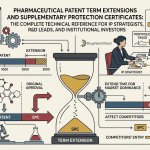
The Hatch-Waxman Act of 1984 created PTE to restore the patent term consumed during FDA review. Calculating PTE requires parsing two distinct regulatory phases:
The ‘testing phase’ covers the period during which an IND (Investigational New Drug) application is in effect and the drug is being tested in clinical trials. Only half of the testing phase counts toward the PTE calculation, and only time after the patent was issued is eligible. The ‘approval phase’ covers the period from NDA submission to NDA approval. The full approval phase counts.
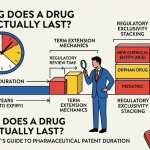
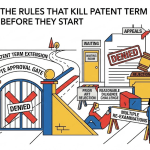
The total PTE is capped at five years, and the adjusted patent term post-PTE cannot exceed 14 years from the FDA approval date. Only one patent per approved product is eligible for PTE. When a company holds a portfolio of composition-of-matter, method-of-use, and formulation patents on the same drug — which is standard practice — it must select the single patent that maximizes the residual commercial protection. That selection is itself a strategic decision, and picking the wrong patent to extend is a mistake that cannot be undone.
The PTE application must be filed within 60 days of product approval. Missing that 60-day window permanently forfeits the extension. This is an administrative tripwire with multi-hundred-million-dollar consequences, yet it is not uncommon for it to fall through the cracks during the commercial launch frenzy that follows an FDA approval.
Supplementary Protection Certificates (SPCs) in the European Union
In the EU, the SPC mechanism is governed by Regulation (EC) No 469/2009 for medicinal products, with a parallel regulation for plant protection products. SPCs can extend effective patent protection by up to five years, with an additional six-month extension available if the product has been studied under a Paediatric Investigation Plan (PIP) — the EU’s equivalent of the US pediatric exclusivity incentive.
The SPC calculation is more complex than the US PTE formula. The duration equals the time between the filing date of the patent application and the date of the first marketing authorization in the EU, minus five years. If the result is negative (meaning the MA came less than five years after filing, which is atypical), no SPC is granted. SPCs are filed at the national patent office level in each EU member state, creating an administrative burden across up to 27 jurisdictions and creating coordination risk when national offices apply differing interpretations to the underlying EU regulation — which they frequently do.
Key Takeaways: The Exclusivity Architecture
The effective patent life for most NCEs runs 6 to 10 years from launch, not 20 years from filing. PTE (US) and SPCs (EU) restore some of this lost time but are constrained, optional procedures that require deliberate, time-sensitive action. Failing to file a PTE application within 60 days of US approval is an irreversible error. SPC coverage in the EU must be actively managed across each member state individually.
Part II: The ‘Exclusivity Stack’: FDA Protections as a Parallel IP System
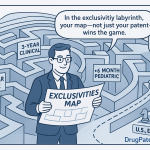
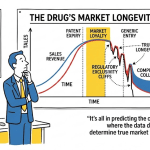
Patents are property rights granted by the USPTO. FDA-granted exclusivities are statutory marketing rights granted by the FDA under the Federal Food, Drug, and Cosmetic Act. The two systems run independently, and an FDA exclusivity can be more durable than a patent precisely because it is not subject to inter partes review, Paragraph IV challenge, or validity attack in federal court. A company’s true Loss of Exclusivity (LOE) date is the date on which the last-to-expire protection in its full exclusivity stack runs out, whether that is a patent, a PTE, an SPC, or an FDA exclusivity.
New Chemical Entity (NCE) Exclusivity
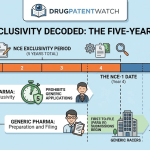
Five years of FDA-granted market exclusivity attach to any drug containing an active moiety that has not been previously approved by the FDA. During the first four years of NCE exclusivity, the FDA will not even accept an ANDA from a generic applicant. In the fifth year, an ANDA with a Paragraph IV certification can be submitted, which triggers the 30-month litigation stay mechanism. NCE exclusivity does not block biosimilar applications — it applies only to small-molecule drugs governed by the Hatch-Waxman framework.
Orphan Drug Exclusivity (ODE)
Seven years of market exclusivity attach to a drug approved for a rare disease, defined as a condition affecting fewer than 200,000 patients in the United States. ODE is the longest-duration FDA exclusivity available and, critically, it is indication-specific: exclusivity attaches to the orphan indication, not to the drug molecule itself. A company can hold ODE for one indication while a competitor markets the same active ingredient for a different indication. This creates complex strategic interactions, particularly for multi-indication biologics.
ODE has a narrow but important limitation: the FDA can approve a second product for the same orphan indication if the second sponsor demonstrates ‘clinical superiority,’ defined as greater efficacy, greater safety, or a major contribution to patient care relative to the first approved product. For biologics, where head-to-head superiority data is expensive to generate, this provision is rarely invoked. For small molecules, where synthesis and formulation changes can produce measurable clinical differences, it has led to competitive challenges.
New Clinical Investigation (NCI) Exclusivity
Three years of FDA exclusivity attach to the approval of a new application or supplement that required new clinical studies (other than bioavailability studies) to support the approval. NCI exclusivity is the workhorse of lifecycle management. New indications, new dosage forms, new routes of administration, new patient populations — each one that required a new clinical program can qualify for three years of protected market position in the new indication or dosage form.
NCI exclusivity does not block generic applications for the original formulation or indication. A generic can receive final approval for the original drug while the originator holds NCI exclusivity on a new extended-release formulation. The strategic value of NCI exclusivity depends on whether the new formulation can capture enough market share from the original to justify the clinical development investment.
Pediatric Exclusivity
Six months of additional exclusivity attach to all existing patents and exclusivities across all approved indications when a sponsor conducts pediatric studies in response to an FDA Written Request. The breadth of pediatric exclusivity is unusual: it is not indication-specific, and it attaches as a six-month extension to every existing market protection on the drug, including all listed Orange Book patents. For a drug with five Orange Book patents expiring at different dates, each one gets extended by six months. The total economic value of pediatric exclusivity for a major blockbuster with staggered patent expirations can run into the hundreds of millions of dollars.
Reference Product Exclusivity for Biologics: The BPCIA 12-Year Window
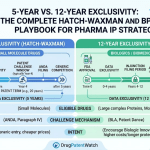
For biologics regulated under the Biologics Price Competition and Innovation Act (BPCIA), the reference product sponsor receives 12 years of data exclusivity from the date of first approval, during which the FDA will not license a biosimilar. Four of those 12 years constitute an initial exclusivity period during which a biosimilar 351(k) application cannot even be filed. This 12-year exclusivity is entirely independent of patent protection and runs concurrently with any relevant patents — but it cannot be shortened by a Paragraph IV-style challenge. It is a hard statutory floor on biosimilar competition, regardless of patent outcomes.
180-Day Generic Drug First-Filer Exclusivity
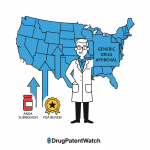
The Hatch-Waxman Act grants 180 days of marketing exclusivity to the first generic applicant to submit a substantially complete ANDA with a Paragraph IV certification. During this window, the FDA cannot approve any other generic ANDA for the same drug. The first-filer can price its generic at a 10-20% discount to the brand, rather than the 80-85% discount that typically prevails once multiple generics enter. First-filer exclusivity can be worth hundreds of millions of dollars for a high-revenue drug, which is why generic companies invest substantially in Paragraph IV litigation programs.
First-filer exclusivity can be forfeited or shared in certain circumstances: if the first-filer fails to market its product within 75 days of receiving final FDA approval (or 75 days from a court decision in its favor), exclusivity is forfeited. Forfeiture provisions have become an active litigation front, with brand companies and competing generics both having financial incentives to trigger or contest forfeiture.
Key Takeaways: The Exclusivity Stack
A blockbuster drug’s effective LOE date requires mapping across all layers: composition-of-matter patents, formulation and method-of-use patents, PTE/SPCs, NCE exclusivity, ODE (if applicable), NCI exclusivity (per indication), pediatric exclusivity extensions, and BPCIA data exclusivity for biologics. No two drugs have identical stacks. The strategic task is building the tallest possible stack during development and then accurately predicting when each layer will fall to determine the true commercial exposure.
Part III: The Financial Anatomy of a Patent Cliff: Quantifying the 2025-2030 Wave
Between 2025 and 2030, the pharmaceutical industry faces cumulative patent expirations putting an estimated $236 billion in annual revenue at risk. Some analyses place the ceiling at $400 billion, depending on assumptions about biosimilar uptake rates and the pace of generic penetration. By either figure, this is the largest coordinated revenue-at-risk event in the history of the pharmaceutical industry.
Aggregate figures obscure the distribution. The exposure is not spread uniformly across hundreds of mid-sized drugs. It is concentrated in a relatively short list of megablockbusters, several of which represent the single largest revenue source for their respective companies. When Merck’s Keytruda faces its US LOE in 2028, the event will put approximately $25-29 billion in annual revenue — roughly 40% of Merck’s total net revenues — at risk from a single product on a single date. No other industry sector has comparable single-asset concentration risk.
Revenue Erosion Mechanics: Small Molecules vs. Biologics
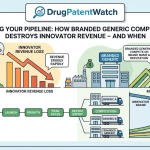
For small-molecule drugs, the historical pattern after LOE is well established. Generic entry can reduce brand revenue by 80 to 90% within 12 months. The driver is pure price competition: generic manufacturers, having invested only in bioequivalence studies rather than full clinical development, can price at 80-85% below the original WAC and still generate margin. Multiple generic entrants create a race to the bottom, and within 24 months, the market typically settles into a commoditized structure with the brand holding single-digit market share at a deeply discounted net price.
The Lipitor trajectory is the canonical illustration. Atorvastatin’s US LOE in November 2011 triggered a 59% revenue drop in the first full year after generic entry. By 2015, annual atorvastatin revenues for Pfizer had fallen below $2 billion from a $13 billion peak.
Biologics do not follow this script. The structural complexity of large molecules, the manufacturing requirements for biosimilar production, the clinical and regulatory requirements for biosimilar approval, and the payer-level formulary dynamics that govern market access create a fundamentally different erosion curve. The Humira case — detailed in Part XII — demonstrated that even after the FDA approved ten adalimumab biosimilars priced at 85% below Humira’s list price, the originator maintained 97% market share through the first quarter post-launch. The biologic LOE is a slope, not a cliff, and its gradient depends on factors well outside the patent docket.
The 2025-2030 LOE Calendar: Key Assets at Risk
Table 1: High-Revenue Products Facing US LOE, 2025-2030
Drug (Brand)
Molecule
Company
~Annual Revenue
US LOE Year
Asset Class
Keytruda
Pembrolizumab
Merck
~$29.5B (2023)
2028
Biologic (mAb)
Eliquis
Apixaban
BMS / Pfizer
>$13B (2024)
2026-2028
Small molecule
Opdivo
Nivolumab
Bristol Myers Squibb
>$9B (2023)
2028
Biologic (mAb)
Stelara
Ustekinumab
J&J
~$9.7B (2023)
2023 (biosimilars filing)
Biologic (mAb)
Entresto
Sacubitril/Valsartan
Novartis
$7.8B (2024)
2025
Small molecule
Farxiga
Dapagliflozin
AstraZeneca
$7.7B (2024)
2025
Small molecule
Ibrance
Palbociclib
Pfizer
>$4.7B (2022)
2027
Small molecule
Xtandi
Enzalutamide
Pfizer / Astellas
>$4.5B combined
2027
Small molecule
Januvia/Janumet
Sitagliptin
Merck
>$5B combined
2026
Small molecule
Yervoy
Ipilimumab
Bristol Myers Squibb
$2.5B (2024)
2025
Biologic (mAb)
The concentration of biologic LOEs in the 2027-2028 window is notable. PD-1/PD-L1 checkpoint inhibitors alone represent over $38 billion in combined annual revenue facing biosimilar exposure by the end of the decade. This will be the first large-scale test of biosimilar competition in the oncology segment, where physician-level switching behavior, patient advocacy group influence, and institutional formulary decisions will interact differently than in the autoimmune space.
Investor and Market Implications
Equity analysts at William Blair estimated in 2024 that the aggregate sales of drugs losing patent protection between 2023 and 2025 alone will erode from $162.8 billion in 2025 to $67 billion in 2029. That $95 billion reduction in revenue from existing products requires replacement through pipeline success, M&A, or both. Companies that cannot fill the gap will face either margin compression, credit rating pressure, or both.
The patent cliff interacts with capital markets in two specific ways that matter for portfolio managers. First, companies with well-understood, well-dated LOE risks tend to trade at a discount to intrinsic pipeline value as the expiration approaches, creating potential entry points for long-term investors who are confident in the pipeline coverage ratio. Second, the wave of LOE-driven M&A — which historically peaks in the two-to-three years preceding a major cliff — elevates target valuations and compresses multiples available to acquirers, reducing the return on capital from acquisitions made at peak desperation.
Part IV: IP Valuation Framework: How to Price Patent Assets on Your Balance Sheet
Pharmaceutical patent portfolios are among the most valuable and least transparently valued assets in corporate finance. A composition-of-matter patent on a $10 billion drug with seven years of effective exclusivity remaining is worth something close to the net present value of seven years of monopoly cash flows, discounted at the company’s cost of capital and risk-adjusted for patent litigation probability. That number belongs on an analyst’s model. Most models omit it or treat it as a binary switch.
The Income Approach: Discounted Cash Flow from Exclusivity
The income approach values a patent as the present value of the incremental cash flows attributable to the exclusivity it confers. For a pharmaceutical composition-of-matter patent, the protected cash flows are the revenue premium above what the product would earn in a competitive, post-LOE market, over the remaining patent term.
The key inputs are: current net revenue (WAC minus gross-to-net adjustments for rebates, chargebacks, co-pay assistance, and government pricing); the post-LOE competitive revenue floor (typically 5-15% of pre-LOE revenues for small molecules after 24 months; 40-70% for biologics depending on biosimilar uptake assumptions); the remaining effective patent term (including any PTE/SPC); the discount rate (typically WACC plus a litigation premium of 2-5 percentage points for challenged patents); and the probability of patent invalidation (derived from litigation history and claim scope analysis).
The most common error in this calculation is ignoring the gross-to-net wedge. For a large US biologic with PBM rebate structures, WAC can exceed net revenue by 50-70%. Valuing a patent at WAC-based revenue overstates the protected cash flows by the same margin.
The Market Approach: Comparable License Transactions
The market approach benchmarks patent value against arm’s-length royalty rates in comparable licensing transactions. The pharmaceutical industry database maintained by organizations including the Licensing Executives Society (LES) and royalty rate aggregators shows that royalty rates for commercialized pharmaceutical patents typically range from 4-8% of net revenues for small molecules and 6-12% for biologics, though oncology and rare disease assets command premiums above these ranges.
Applied to a drug generating $5 billion in net revenue with eight years of remaining exclusivity, a 7% royalty rate implies a licensing value of $350 million per year, or roughly $2.1 billion in present value at a 10% discount rate. This figure can be cross-checked against M&A transaction multiples for comparable assets.
Keytruda IP Valuation as a Core Asset
Merck’s pembrolizumab (Keytruda) is the most consequential IP valuation problem in the current pharmaceutical landscape. The drug generated approximately $25 billion in net revenues in 2023 and faces US LOE in 2028, when its primary composition-of-matter patent expires. Merck has a subcutaneous formulation of pembrolizumab in regulatory review, with a separate patent estate that, if granted and not successfully challenged, could extend protection into the early 2030s.
Using the income approach: with $25 billion in 2024 net revenues, a four-year remaining exclusivity window (2025-2028), a post-LOE floor of 30% of current revenues (reflecting the slower erosion expected for a biologic), and a WACC of 9% plus a 3% litigation premium, Keytruda’s composition-of-matter patent portfolio carries an estimated NPV of $50-65 billion. This figure represents Merck’s single largest balance sheet asset, not reported as such under US GAAP, which expenses R&D costs as incurred and records patents at nominal book value.
Institutional investors modeling Merck’s 2028 cliff should build this number explicitly. The delta between a bullish biosimilar uptake scenario (30% market share after 12 months) and a bearish one (60% share) is approximately $8-12 billion in present value — a difference that substantially affects a fair-value equity model.
Humira Patent Portfolio Valuation
AbbVie’s Humira (adalimumab) patent thicket — estimated at 105 US patents at peak coverage — extended effective US exclusivity for approximately seven years beyond the composition-of-matter patent’s 2016 expiration. The economic value of those secondary patents can be estimated by the revenue AbbVie generated in the US between 2016 and 2022 that would not have been generated under earlier biosimilar competition. US Humira net revenues over that six-year window totaled approximately $96 billion. Even discounted for the operating costs and litigation expenses associated with defending the thicket, the incremental value created by secondary patents ran into the tens of billions of dollars.
This is the case for patent thicket strategy in plain arithmetic. The same logic applies to any originator holding a major biologic franchise: the expected value of a $50 million secondary patent prosecution program, when that program delays biosimilar entry by two years on a $10 billion drug, is structurally positive under almost any reasonable scenario.
Key Takeaways: IP Valuation
The income approach using post-LOE competitive floor modeling is the most accurate method for pharmaceutical patent valuation. The gross-to-net wedge is the most common source of error. For assets facing near-term LOE, the delta between biosimilar uptake scenarios drives the majority of valuation uncertainty, not the discount rate.
Investment Strategy: IP Valuation for Portfolio Managers
Analysts should build explicit IP expiration models for any pharmaceutical holding where a single product represents more than 20% of revenues. The model should include: (1) effective LOE date across all jurisdictions where the product is commercialized; (2) an LOE waterfall showing which patent or exclusivity layer expires first and whether subsequent layers remain in force; (3) post-LOE revenue scenarios benchmarked against comparable small-molecule or biologic LOE events; and (4) pipeline coverage ratio, defined as projected revenues from new products in years 3-7 post-LOE divided by the projected revenue gap. A coverage ratio below 0.7 is a leading indicator of either major strategic restructuring or sustained earnings pressure.
Part V: The Originator Playbook
The originator’s strategic objective is not to prevent LOE — that is impossible. The objective is to maximize the value extracted during the exclusivity window, minimize the rate of revenue erosion after LOE, and replace the revenue gap with new assets before it becomes a corporate crisis. These three objectives require distinct tactical toolkits.
5a. Evergreening Tactics: A Full-Spectrum Technology Roadmap
Evergreening refers to the practice of obtaining new patents on incremental innovations related to an existing drug — new formulations, new delivery systems, new indications, new combinations, new manufacturing processes — each of which can carry its own exclusivity and, in aggregate, can extend the effective commercial life of a product well beyond the original composition-of-matter patent.
Critics use ‘evergreening’ as a pejorative. From a portfolio management perspective, it is rational IP strategy. The question is not whether to pursue it, but which evergreening pathway offers the best return on R&D and legal investment given the specific product profile, the patent landscape, and the competitive environment.
Formulation Patents
Extended-release (ER), modified-release (MR), and delayed-release formulations are the most common evergreening approach for oral small molecules. The strategic logic is straightforward: the innovator files patent applications for ER formulations years before the immediate-release composition-of-matter patent expires, conducts the clinical studies needed to obtain NDA approval for the new formulation (which also generates three years of NCI exclusivity), and launches the ER product with marketing support designed to shift prescribing before the original formulation goes generic.
Eli Lilly’s Prozac Weekly is the canonical case — a once-weekly fluoxetine formulation launched after the daily formulation’s patent expired. The clinical and commercial success of formulation switches varies considerably. Products where dosing frequency meaningfully affects adherence (antidepressants, antivirals, contraceptives) are better candidates than products where patients or physicians are indifferent to dosing schedule.
The formulation patent technology roadmap for a major small molecule should begin no later than seven years before the composition-of-matter LOE. The typical sequence is: identify three to five formulation concepts at year minus-seven; complete preformulation work and select two lead candidates at year minus-five; initiate clinical bioequivalence and, if seeking NCI exclusivity, efficacy studies at year minus-four; file NDA supplement at year minus-two; receive approval and initiate commercial launch at year minus-one, targeting 30-40% of prescriptions on the new formulation before generic entry on the original.
Delivery System Patents
Changing the route of administration — from oral to subcutaneous injection, from intravenous to inhaled, from daily subcutaneous to monthly depot injection — requires more clinical investment than formulation modification but offers more durable differentiation. A subcutaneous biologic or a long-acting injectable faces a higher development barrier for biosimilar or generic manufacturers, as the delivery system often involves proprietary device or formulation technology with its own separate patent estate.
Merck’s strategy with Keytruda exemplifies this approach. A subcutaneous pembrolizumab formulation, if approved by the FDA, would carry separate patents on the formulation and potentially the co-formulation with hyaluronidase, adding several years of protection to the post-LOE competitive position and offering oncologists and patients a more convenient administration option compared to the intravenous infusion currently required.
The delivery system technology roadmap for a biologic facing LOE should assess: (1) patient preference for alternative routes of administration through market research; (2) technical feasibility and stability of the molecule in a new delivery format; (3) regulatory requirements for approval of the new delivery system (typically requiring pharmacokinetic equivalence data and, for injectables, device usability studies); (4) patent landscape for the delivery technology to ensure freedom to operate and identify protectable innovations; (5) timing relative to LOE, with the goal of launching the new delivery system with at least two to three years of remaining exclusivity on the primary drug to build market share.
New Indication Patents
Method-of-use patents protect a specific therapeutic application of an already-known compound. They are valuable because, when listed in the Orange Book, they require any generic applicant who wishes to avoid infringing the patent to either: (a) file a Paragraph IV certification and litigate, or (b) file a ‘section viii carve-out,’ which means the generic’s label will not include the patented indication, limiting its marketing.
The carve-out strategy creates a known vulnerability: in practice, once a generic is on the market for its approved indications, off-label prescribing (which is legal for physicians) often bleeds into the patented indication, even without the generic label explicitly covering it. This ‘skinny label’ problem has been litigated extensively, and courts have reached conflicting conclusions about whether a generic manufacturer can be held liable for induced infringement when physicians use the generic off-label in ways that infringe a method-of-use patent.
Allergan’s Botox is the definitive example of indication expansion as a value creation strategy. Originally approved for blepharospasm (involuntary eye blinking), Botox was subsequently approved for cervical dystonia, hyperhidrosis, chronic migraine, overactive bladder, and cosmetic wrinkle reduction — each new indication backed by a clinical program and a separate method-of-use patent, each adding years of protected commercial life in a new patient population.
Patent Thickets
AbbVie’s Humira portfolio is the most extensively documented patent thicket in pharmaceutical history: at least 105 US patents covering the molecule, its formulations, its manufacturing processes, its uses, its dosing regimens, and its delivery devices. The thicket delayed US biosimilar entry until January 2023, approximately seven years after the primary composition-of-matter patent expired in 2016.
Building a thicket requires sustained investment across multiple patent prosecution tracks simultaneously. For a biologic franchise with $10 billion or more in annual revenue, the investment is straightforward to justify. The key is starting early: the secondary patent prosecution program should begin in Phase II clinical development, identifying every protectable innovation generated during clinical trials — novel dosing regimens that demonstrate superior efficacy, specific patient populations with differential response, formulation modifications that improve stability or reduce injection site reactions, manufacturing process improvements that enhance yield or purity.
Each of these innovations, if novel and non-obvious, can support a patent application. The applications are filed, the patents are listed in the Purple Book (for biologics) or Orange Book (for small molecules), and each listing requires a biosimilar or generic applicant to address the patent either through a Paragraph IV challenge or a carve-out. Even if a patent is ultimately invalidated in litigation, the litigation itself takes time — typically three to five years from complaint to final judgment at the district court level, with additional years if the case proceeds through the Federal Circuit on appeal.
Table 2: Evergreening Strategies — Mechanism, Development Requirements, and IP Durability
Strategy
Core Mechanism
Typical Development Cost
Regulatory Pathway
IP Durability
Best-Fit Asset Profile
Extended-release formulation
Modified dissolution rate
$20-50M (bioequivalence + PK studies)
NDA supplement (NCI exclusivity)
Moderate (3yr NCI + formulation patent)
High-compliance-sensitivity oral drugs
New delivery route
Route of administration change
$50-150M (full PK/PD, device studies)
New NDA or BLA supplement
High (device + formulation patents)
Biologics, long-acting injectables
New indication
Method-of-use patent
$100M-$500M+ (Phase II/III)
Supplement NDA/BLA (NCI exclusivity)
Moderate-high (method-of-use, NCI)
Broad-mechanism drugs (oncology, immunology)
Fixed-dose combination
New formulation combining two APIs
$30-80M (bioequivalence, DDI studies)
New NDA (NCI exclusivity)
Moderate (combo patent, NCI)
Co-administered drugs with compliance issues
Polymorph/salt form
Different crystalline structure
$5-15M (physicochemical characterization)
NDA supplement
Low-moderate (polymorph patent)
Small molecules with polymorphic diversity
Manufacturing process
Novel synthesis or purification
$10-40M (process development)
CMC supplement
Low (process patent, hard to enforce)
Any; commonly combined with other strategies
Patent thicket
Layered portfolio across all aspects
$50-200M+ (sustained prosecution)
Multiple filings across Orange/Purple Book
High (multiple patents, litigation deterrence)
Major biologics >$3B revenue
5b. Pre-LOE Commercial Strategy: Surge Pricing, PBM Rebates, and the Revenue Bridge
Commercial teams tasked with maximizing pre-LOE revenues operate in a finite window with predictable dynamics. In the 18-36 months before LOE, payers begin positioning for the competitive market. The Pharmacy Benefit Managers (PBMs) who manage formularies for the three largest US commercial payers — CVS Caremark, Express Scripts (Cigna), and OptumRx (UnitedHealth) — are watching the LOE calendar as closely as any investment analyst.
Surge Pricing: The WAC Escalation Window
In the final years before LOE, many originators implement systematic WAC increases. The strategic rationale: WAC-based pricing determines the rebate baseline, and higher WAC enables the brand to offer deeper rebates to PBMs while maintaining net price. The tactic functions within a range. Historical data shows that WAC increases above 9% generate net revenue headwinds, either through plan sponsor pushback, prior authorization restrictions, or step therapy requirements. Below that threshold, incremental WAC increases typically flow to net revenue with modest access impact.
Originators must also weigh WAC escalation against the political and reputational environment. The Inflation Reduction Act (IRA) of 2022 introduced Medicare Drug Price Negotiation provisions, which use the manufacturer’s average price over the prior year as part of the negotiation baseline. Aggressive WAC increases in the final pre-LOE window can paradoxically inflate the IRA negotiation reference price for drugs that fall within the IRA’s negotiation scope.
PBM Rebate Strategy: The Pivot From Defense to Offense
As LOE approaches, the originator’s rebate strategy on the expiring brand becomes a bridge to the next product. The mechanics: the expiring brand’s WAC will soon be irrelevant as generic competition collapses net pricing. The PBM’s financial incentive to maintain the brand on formulary disappears once generics are available. The originator cannot prevent this formulary transition.
What the originator can do is time the transition strategically. By terminating or reducing rebate commitments on the expiring brand and simultaneously offering the PBM an aggressive rebate structure on a next-generation branded product, the originator gives the PBM a financial reason to actively migrate patients to the new product — not to a generic. The PBM’s economics favor the high-WAC/high-rebate branded successor over a low-WAC generic that generates no rebate income.
This strategy is most effective when the successor product is already approved and commercially launched before the expiring brand’s LOE. The product handoff requires clinical messaging (the successor has a differentiated mechanism or superior efficacy data), formulary mechanics (the PBM places the successor on a preferred tier), and patient-level support (co-pay assistance programs reduce the out-of-pocket cost differential between the successor and any alternatives).
Authorized Generics: The First-Filer Counterstrike
An authorized generic (AG) is a product manufactured and sold by the originator company (or a licensee) that is marketed as a generic — it uses the same formulation as the brand but is sold under the generic name or under a subsidiary label without the brand pricing. The originator can launch an AG at any time, including during the 180-day first-filer exclusivity window, which is the period when the authorized generic creates the greatest competitive disruption.
During the 180-day window, the first-filer generic has the market to itself, absent an AG. An AG launch by the originator immediately halves the first-filer’s expected market share. The first-filer’s economic projections — which drove the Paragraph IV litigation investment — are based on capturing the full 180-day exclusive market. The AG threat, whether exercised or held in reserve as a negotiating chip, substantially weakens the first-filer’s position.
Historically, originators have used AG launches both as a direct revenue tactic (capturing a portion of generic market revenues at relatively low incremental cost) and as a settlement lever (offering to withhold an AG launch in exchange for the generic challenger agreeing to a later entry date in the settlement of Paragraph IV litigation).
5c. Post-LOE Defensive Architecture
Once multiple generics are on the market and brand market share begins its characteristic decline, the originator’s options narrow but do not disappear.
OTC Switch
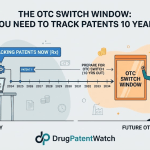
The transition of a prescription drug to over-the-counter status requires a separate FDA regulatory submission and, in the US, a successful OTC Monograph or NDA review. The OTC market operates at higher volume and lower per-unit margins than the prescription market. For drugs with broad patient populations and strong brand recognition — proton pump inhibitors, antihistamines, smoking cessation aids — the OTC switch can generate substantial revenue that outlasts the prescription brand by decades.
Pfizer explored an OTC switch for Lipitor (atorvastatin) but the FDA declined, citing concerns about consumer self-assessment of cardiovascular risk. The regulatory bar for OTC statins has since been revisited multiple times without approval, illustrating that OTC switch is a strategy dependent on FDA receptivity, not just commercial intent.
Patient-Support Programs and Brand Loyalty
For drugs where patient loyalty is clinically meaningful — particularly biologics for chronic conditions where patients are stable and physician-switching inertia is high — co-pay assistance programs can maintain a patient base on the originator brand even after generic or biosimilar alternatives are available. The economics are counterintuitive: the originator spends money on co-pay assistance, but the revenue from retaining the patient at brand pricing exceeds the cost of the assistance, as long as the patient’s insurance plan continues to cover the brand at a premium tier.
Novartis extended its Gilenya (fingolimod) co-pay program after the multiple sclerosis drug’s LOE specifically to retain a patient segment that had been on stable therapy and for whom physician switching reluctance was high.
Part VI: Pipeline Fortification and Strategic M&A
The patent expiration calendar is the most actionable input a pharmaceutical CFO or Chief Business Officer has for long-range capital allocation. A company’s LOE exposure over the next seven years is largely knowable today. The revenue gap that exposure creates can be sized precisely. The question — what assets must the pipeline contain to fill that gap, and can internal R&D deliver them in time — is the central strategic question in pharmaceutical portfolio management.
The Pipeline Coverage Ratio
The pipeline coverage ratio measures the adequacy of a company’s late-stage pipeline relative to its LOE exposure. A simple formulation: the ratio is projected NPV of pipeline assets in Phase II or later, discounted for clinical probability of success by phase and indication, divided by the present value of the revenue gap created by LOE events in the next seven years.
A ratio above 1.0 suggests the pipeline can theoretically replace the expiring revenue. Ratios below 0.7 typically precede either large-scale M&A, significant restructuring, or sustained margin compression as the company runs the LOE without adequate replacement.
As of early 2026, the coverage ratios for the most exposed companies in the current cycle are approximately as follows, based on public pipeline disclosures and analyst consensus: Merck (Keytruda LOE 2028) has a coverage ratio under active revision, as its pipeline depth outside pembrolizumab has historically been viewed as relatively thin relative to the cliff size. BMS (Eliquis and Opdivo LOE cluster) has taken a more aggressive M&A posture to fill the gap. AbbVie, post-Humira, has demonstrated the highest coverage ratio execution, with Skyrizi and Rinvoq fully offsetting adalimumab revenue decline by 2024.
M&A as Pipeline Replacement: The Cyclical Dynamic
The relationship between the LOE calendar and M&A activity is not coincidental. Companies facing large, near-term cliffs become cash-generative but pipeline-deficient in the final years of exclusivity — exactly when they need to deploy capital most urgently into acquisitions. This dynamic drives valuations of acquisition targets upward precisely when buyer urgency is highest, compressing the return on invested capital available to acquirers.
The acquirer discipline problem is real: pharmaceutical M&A at peak LOE pressure has a poor historical record of value creation. The Biogen/Reata, AstraZeneca/Alexion, and Pfizer/Seagen transactions illustrate both the logic and the risk. Each was driven partly by LOE calendar pressure; each was executed at substantial premiums to pre-announcement market value; each now requires the acquirer to achieve synergies and pipeline execution at above-average rates to justify the purchase price.
A more capital-efficient approach — when time allows — is early-stage co-development and option agreements with smaller biotechs, structured to give the large company rights to acquire a program or company at predetermined terms once clinical milestones are reached. This approach defers M&A spending until clinical de-risking, reducing the probability-adjusted cost of pipeline acquisition. It requires longer time horizons than many LOE-driven M&A programs allow.
The China Biotech Licensing Surge
Since 2021, there has been a sustained increase in licensing agreements between large Western pharmaceutical companies and Chinese biotechs. Deals from companies including LianBio, BioAtla, Zymeworks (Canada-based but with China exposure), and BeiGene have brought clinical-stage assets in oncology, immunology, and rare diseases into the pipelines of AbbVie, GSK, BMS, and others.
For the LOE crisis context, China biotech licensing offers compressed time-to-value: Chinese biotechs have increasingly been conducting Phase I/II trials simultaneously in China and the US, meaning a Western partner can acquire global rights to an asset with two-year-old Phase II data rather than waiting for de novo Western trials. This is not a uniform dynamic — regulatory translation of China-based trial data to FDA standards is still evolving — but it has demonstrably shortened the time available for LOE-gap-filling through external licensing.
Key Takeaways: Pipeline and M&A
The LOE calendar should drive capital allocation decisions five to seven years in advance. Late-stage pipeline depth is the most important variable in managing a patent cliff. M&A executed under cliff pressure tends to generate inferior returns relative to proactive, earlier-stage deal structures.
Investment Strategy: M&A Signals
For investors, a pharmaceutical company’s LOE calendar combined with its pipeline coverage ratio is a leading indicator of M&A intent and deal size. Companies with coverage ratios below 0.6 and LOE events within four years are high-probability acquirers. Their largest potential acquisitions — in terms of the assets most likely to fill the identified revenue gap — can often be identified by mapping their therapeutic area focus against available late-stage assets in the hands of smaller companies. Companies in that target universe, particularly those with Phase III-ready assets in indications aligned with the acquirer’s franchise, warrant premium surveillance for acquisition news.
Part VII: The Legal Battlefield: Paragraph IV, 30-Month Stays, and At-Risk Launches
The Hatch-Waxman Act built patent litigation into the regulatory approval process as an explicit design feature, not an accident. The Paragraph IV certification mechanism allows a generic applicant to trigger patent adjudication before the generic product is even ready for market, and the 30-month stay built into the system ensures that the brand company has time to litigate.
The Paragraph IV Mechanism
When a generic company files an ANDA, it must certify the status of each Orange Book-listed patent. A Paragraph IV certification is a statement that the listed patent is invalid, unenforceable, or will not be infringed by the generic product. Filing a Paragraph IV certification is not a passive act — it constitutes a technical act of patent infringement under 35 U.S.C. Section 271(e)(2), which allows the brand company to sue immediately, before any product has been sold.
If the brand company files suit within 45 days of receiving notice of the Paragraph IV certification, the FDA is automatically prohibited from granting final approval to the ANDA for 30 months or until a final court judgment in favor of the generic (whichever comes first). This 30-month stay is a crucial asset for brand companies: it forces the generic to win in court before entering the market, and it gives the originator time to pursue alternative lifecycle strategies, negotiate settlements, or initiate appeals.
Studies have shown that originators file suit in response to Paragraph IV certifications in roughly 75% of cases, reflecting the near-universal strategic value of triggering the 30-month stay.
The ‘At-Risk’ Launch Decision
A generic company that receives FDA approval while litigation is still pending faces a binary decision: wait for final legal resolution, or launch ‘at risk.’ At-risk launch means selling the generic product while the patent case remains live on appeal, accepting the exposure to treble damages for willful infringement if the appeals court reverses the district court’s finding of invalidity.
The decision is a pure expected value calculation. Empirical research published by the National Bureau of Economic Research found that first-filer generics that received FDA approval before a favorable district court decision launched at risk 100% of the time, indicating the expected profit of immediate market entry consistently outweighed the assessed litigation risk.
The strategic implication for originators is that district court loss is the operative LOE event for competitive purposes, not the final appellate resolution. Once a federal district court finds the key Orange Book patent invalid or not infringed, the brand company should treat generic entry as imminent, regardless of appeal status. Commercial preparation — authorized generic launch, next-product switching programs, formulary defense strategies — must be execution-ready at district court decision, not at final appeal.
Pay-for-Delay Settlements and FTC Scrutiny
Settlement of Paragraph IV litigation through ‘reverse payment’ agreements — in which the originator pays the generic challenger to delay market entry — was validated as potentially lawful but subject to antitrust rule-of-reason analysis by the Supreme Court in FTC v. Actavis (2013). The FTC has continued to aggressively investigate and challenge settlements that involve payments significantly exceeding the generic’s litigation costs, treating large reverse payments as circumstantial evidence that the brand company assessed its patent as litigation-weak and paid to avoid the consequences of losing.
The practical effect of Actavis is that originators must evaluate settlement terms not just for their commercial and legal logic but for their antitrust exposure. Settlements that include entry dates well beyond the expected patent expiration, combined with substantial value transfers to the generic, draw disproportionate regulatory attention and can be litigated by the FTC for years, generating substantial legal cost and uncertainty.
Citizen Petitions: Legitimate Tool or Delay Tactic
The FDA’s citizen petition process allows any person to petition the agency to take or refrain from taking any action. In the pharmaceutical patent context, originators file citizen petitions raising regulatory, safety, or technical issues about pending generic or biosimilar applications. Data shows that 92% of citizen petitions related to ANDA or biosimilar applications are filed by brand manufacturers, and the timing of filing correlates strongly with anticipated generic approval timelines.
Citizen petitions rarely succeed in preventing generic approval on the merits — the FDA has become increasingly skeptical of petitions filed close to anticipated approval dates and has regulatory authority to deny petitions filed for the primary purpose of delaying competition. Their value to originators is primarily the delay itself: even a petition that the FDA ultimately denies can take 90 to 180 days to process, creating additional weeks of effective exclusivity.
Part VIII: The Biosimilar Counterpunch: BPCIA, Interchangeability, and the ‘Patent Dance’
The regulatory and IP framework governing biologic LOE differs from the small-molecule Hatch-Waxman system in almost every mechanically important respect. Executives managing biologic portfolios who apply Hatch-Waxman intuitions to the BPCIA framework will misunderstand both the risks and the opportunities.
The BPCIA Framework and the 351(k) Pathway
The Biologics Price Competition and Innovation Act (BPCIA), enacted as part of the Affordable Care Act in 2010, created the 351(k) pathway for biosimilar approval. A biosimilar applicant must demonstrate that its product is ‘highly similar’ to the reference biologic (‘the originator’) notwithstanding minor differences in clinically inactive components, and that there are no clinically meaningful differences between the biosimilar and the reference product in terms of safety, purity, and potency.
Unlike the small-molecule ANDA pathway, the 351(k) pathway requires the biosimilar applicant to conduct analytical comparability studies, functional assays, pharmacokinetic studies, and typically at least one Phase III efficacy study (or the FDA may waive this requirement based on totality-of-evidence review). The development cost for a biosimilar through 351(k) approval typically runs $100-300 million, compared to $1-5 million for a small-molecule ANDA. This cost structure limits market entry to well-capitalized biosimilar developers, generally large generic manufacturers (Mylan/Viatris, Sandoz, Teva) or specialty biosimilar companies (Coherus, Samsung Bioepis, Celltrion).
The ‘Patent Dance’: Information Exchange and Litigation Sequencing
The BPCIA includes an elaborate pre-litigation information exchange procedure, colloquially called the ‘patent dance.’ Within 20 days of receiving a notice of acceptance from the FDA for its 351(k) application, the biosimilar applicant provides the reference product sponsor (the originator) with a copy of its application and manufacturing information. The originator then has 60 days to identify which of its patents it believes are infringed and which it intends to enforce (‘list one’). The biosimilar applicant can counter-designate additional patents for immediate litigation (‘list two’).
The parties then negotiate which patents to include in the initial litigation wave. If they cannot agree, the originator can sue on patents in list one; if the originator fails to do this within 30 days, the biosimilar can bring a declaratory judgment action. The result is a structured litigation pathway that sequences patent disputes before biosimilar launch, rather than through the informal Paragraph IV system used for small molecules.
Participation in the patent dance is technically optional (the Supreme Court held in Sandoz v. Amgen (2017) that it is not mandatory), but skipping the dance has commercial consequences: the originator can seek a preliminary injunction in the event of an at-risk biosimilar launch, and courts have generally found that the originator’s ‘irreparable harm’ arguments are stronger when the biosimilar applicant bypassed the statutory information exchange.
Biosimilar Interchangeability: The Pharmacy-Level Substitution Threshold
The FDA can designate a biosimilar as ‘interchangeable’ if the sponsor demonstrates, through a switching study or other clinical data, that alternating between the reference product and the biosimilar produces no greater risk of diminished safety or efficacy than using the reference product alone. An interchangeable biosimilar can be substituted for the reference product at the pharmacy level without physician intervention, subject to state pharmacy practice laws (which vary).
Interchangeability is the most consequential commercial designation available to a biosimilar manufacturer. Without it, substitution requires a physician prescribing decision. With it, substitution becomes a pharmacist and formulary decision, dramatically accelerating uptake. The first interchangeable biosimilar for adalimumab was Cyltezo (adalimumab-adbm, Boehringer Ingelheim), designated interchangeable by the FDA in 2021. In the current Humira biosimilar market, interchangeability status has become a baseline expectation for commercially competitive products.
For originator strategy, the regulatory bar for interchangeability provides a temporary safety margin. Biosimilars without interchangeability designation face higher switching inertia, buying the originator additional time to execute commercial transition strategies.
Part IX: Intelligence Infrastructure: Orange Book, Purple Book, and AI-Driven Patent Pending Analysis
A patent expiration calendar without intelligence infrastructure is a liability. The raw dates are publicly available. The strategic edge lies in deeper analysis: understanding which Orange Book listings are litigation-vulnerable, which Purple Book patents face BPCIA challenges, and what competitors’ pending patent applications reveal about their R&D direction three to five years forward.
The Orange Book as Competitive Intelligence Source
The FDA Orange Book lists all patents that the NDA holder has certified as covering the approved product. The ‘use codes’ attached to each patent listing specify what aspect of the product the patent covers — a specific method of use, a specific formulation, or the active ingredient itself. These use codes have strategic importance: a generic applicant can file a ‘section viii’ carve-out for method-of-use patents, keeping the method off its label and potentially avoiding the patent claim without litigation. Analyzing the use codes of a competitor’s Orange Book listings reveals whether their patent protection is susceptible to carve-out strategies and which patents are likely to be contested in Paragraph IV litigation.
Systematic Orange Book scanning is a core competitive intelligence task. For any therapeutic area where a company is developing a generic or biosimilar program, the Orange Book analysis should identify: (a) the total number of listed patents; (b) the expiration dates of each listed patent, including any PTE; (c) whether each listed patent is a composition-of-matter, formulation, or method-of-use patent; (d) whether the method-of-use patents are susceptible to carve-out; and (e) whether any listed patents have prior Paragraph IV history, which provides insight into their litigation vulnerability.
The Purple Book and Biologic Competitive Intelligence
The Purple Book serves the analogous function for biologics. Its key differentiating feature from an intelligence standpoint is interchangeability status — a competitive data point that the Orange Book does not have an equivalent for. For any reference product, the Purple Book reveals: (a) which biosimilars have been approved and whether any hold interchangeability designation; (b) the patent list associated with the reference product; (c) the 12-year exclusivity expiration date.
For originator companies, the Purple Book provides early warning of biosimilar approvals and interchangeability grants. For biosimilar developers, it reveals the competitive landscape — specifically, whether a first-mover biosimilar has obtained interchangeability before subsequent entrants, creating a durable first-mover advantage.
AI-Driven Patent Pending Analysis
The 18-month publication lag on patent applications means that exclusive reliance on granted patents and published applications leaves a company blind to competitor R&D activity for a year and a half. AI-powered patent analytics platforms have partially addressed this gap by applying machine learning to identify patterns in early-stage patent activity and correlate them with clinical pipeline signals.
The strategic applications of patent pending analysis in the pharmaceutical context include: (a) competitive R&D intelligence — identifying that a competitor has filed a cluster of applications around a specific molecular target, signaling therapeutic area investment; (b) ‘white space’ identification — mapping therapeutic areas where patent density is low relative to clinical unmet need, indicating potential licensing or development opportunities; (c) evergreening timing intelligence — detecting when a competitor holding a major franchise begins filing secondary patents, suggesting they are initiating lifecycle management programs for a specific product.
Commercial platforms including DrugPatentWatch, PatSnap, and Clarivate’s Derwent Innovation aggregate patent data with regulatory filings, clinical trial registrations, and literature mining to produce integrated competitive intelligence profiles. The most sophisticated applications use natural language processing to cluster patent claims by technical topic, allowing analysts to identify thematic shifts in a competitor’s R&D direction without reading individual application full texts.
The shift from reactive patent monitoring to predictive patent intelligence represents the highest-leverage upgrade available to a pharmaceutical competitive intelligence function. A team that can identify three years in advance that a competitor is building a CGRP antagonist portfolio is in a fundamentally different strategic position than one that discovers it at the IND filing stage.
Part X: Global Patent Systems Compared: US, EU, and Japan
Pharmaceutical IP strategy is inherently multi-jurisdictional. The US, EU, and Japan together represent the majority of global pharmaceutical revenues and present three structurally different patent and regulatory systems.
United States: Judicial, Transparent, and Litigious
The US system’s defining characteristics are: public Orange Book and Purple Book databases (providing full transparency on listed patents and exclusivities); formal Paragraph IV challenge and 30-month stay mechanism (creating a structured litigation pathway tied to the regulatory approval process); FTC antitrust scrutiny of settlement terms; IRA drug pricing provisions affecting negotiated prices for Medicare; and a highly developed Federal Circuit court system with substantial pharmaceutical patent jurisprudence.
PTE in the US is capped at five years and is single-patent-per-product. Pediatric exclusivity adds six months across all listed patents and exclusivities. BPCIA data exclusivity for biologics runs 12 years.
European Union: Fragmented, HTA-Influenced, and SPC-Driven
The EU lacks an Orange Book equivalent. There is no formal patent linkage system at the EU level — generic approval and patent disputes are handled through separate national proceedings, with no automatic stay triggered by patent assertion. The practical effect is that in many EU member states, a generic can receive marketing authorization and potentially launch before patent disputes are resolved, exposing the generic to injunction risk but not facing the automatic US-style 30-month delay.
SPCs provide up to five years of additional protection, with a paediatric six-month extension. SPC applications are filed at national patent offices in each member state, and national courts can reach different conclusions about the same SPC’s validity — a fragmentation risk that requires country-specific patent strategy.
Health Technology Assessment (HTA) bodies — including NICE in the UK, IQWiG in Germany, and the HAS in France — evaluate comparative effectiveness and cost-effectiveness as conditions of reimbursement. A drug with strong IP protection but a negative HTA evaluation will face restricted formulary access regardless of its patent status. European LOE strategy therefore requires both IP management and HTA engagement, the latter often beginning well before patent expiration.
Japan: Opaque, Administrative, and Relationship-Based
Japan’s patent system has a structural feature unique among major markets: there is no public patent linkage database equivalent to the Orange Book. The Ministry of Health, Labour and Welfare (MHLW) facilitates private discussions between originators and generic applicants about patent status prior to generic approval, but these communications are confidential and not subject to the public litigation docket that characterizes US patent disputes.
This opacity creates both risk and opportunity. An originator in Japan cannot easily monitor the status of generic patent discussions that competitors are having with MHLW. A generic developer cannot verify Orange Book-style patent expiration data through a public source. Both parties rely on MHLW guidance and bilateral negotiations, in which relationship capital and regulatory expertise carry more weight than they do in the US judicial system.
Japan’s PTE also extends up to five years, and the country applies a national price revision system every two years that typically reduces drug prices, creating revenue headwinds on expiring products that are independent of generic entry.
Table 3: US, EU, and Japan Patent System Comparison
Feature
United States
European Union
Japan
Patent Term Restoration
PTE up to 5 years; max 14 yrs post-approval
SPC up to 5 years (+6 months pediatric)
PTE up to 5 years
Patent Linkage
Formal; P.IV triggers 30-month stay and federal litigation
None at EU level; national proceedings
Informal; MHLW-mediated private discussions
Public Patent Listing
Orange Book (small molecules), Purple Book (biologics)
No central equivalent
No public system
Generic/Biosimilar Pathway
Hatch-Waxman ANDA; BPCIA 351(k)
Centralized, decentralized, mutual recognition
National approval pathways
Biologic Data Exclusivity
12 years (BPCIA)
8 years data + 2 years market (10+1 scheme)
8 years
Primary Competitive Dynamic
Judicial; FTC antitrust oversight
Fragmented; HTA-reimbursement interface
Administrative; relationship-based
Dominant Evergreening Risk
Paragraph IV; inter partes review at USPTO
National SPC challenges; HTA rejection
Opaque; MHLW price revision pressure
Part XI: Case Study I: Pfizer’s Lipitor (Atorvastatin) — The Small-Molecule Cliff
Lipitor was the best-selling drug in pharmaceutical history through the 2000s, generating peak annual revenues of approximately $13 billion. Atorvastatin’s US composition-of-matter patent expired November 30, 2011. The cliff was immediate and steep: worldwide revenues fell 59% in the first full year of generic competition, dropping from approximately $9.5 billion in 2011 to $3.9 billion in 2012. Within three years, annual revenues had fallen below $2 billion.
IP Valuation at Expiration
At the moment of LOE, the question for Pfizer investors was not what atorvastatin’s patent was worth — it was worth approximately zero from that point forward as monopoly protection — but what the post-LOE revenue tail and the cost structure of defending remaining market share justified in terms of commercial investment. The authorized generic strategy, which Pfizer deployed immediately, was the correct answer: capture a portion of the commodity generic market at minimal incremental cost, extract the tail value, and redirect commercial investment elsewhere.
The broader valuation implication was that Pfizer’s total enterprise value at Lipitor’s peak was substantially dependent on a single asset with a known expiration date. Any equity model that assigned full-revenue-run-rate value to Lipitor without a visible replacement pipeline was overvaluing the company by billions of dollars. This is the same analytical error that investors must avoid today when modeling Merck relative to Keytruda.
What Failed and Why
Pfizer’s lifecycle management program for Lipitor was extensive: OTC switch attempt (FDA declined), DTC marketing investment, authorized generic, and aggressive settlement negotiations with generic challengers to maximize the period of market exclusivity. None of it prevented the cliff. For a small-molecule drug with a simple structure and multiple competing manufacturers ready with generic versions, the economic force of 80-85% price discounts is overwhelming. Legal tactics delayed, but could not prevent, the cascade.
The primary lesson: for a small molecule without a viable formulation shift, new indication, or delivery system innovation capable of creating genuine patient benefit, pre-LOE lifecycle management is revenue smoothing, not revenue replacement.
Part XII: Case Study II: AbbVie’s Humira — The Patent Thicket, the Rebate Wall, and the Skyrizi Pivot
Humira is the highest-grossing drug in pharmaceutical history, with cumulative global revenues exceeding $200 billion. Its primary composition-of-matter patent covering adalimumab expired in 2016. US biosimilar entry did not begin until January 2023. In the intervening seven years, AbbVie generated approximately $96 billion in US Humira revenues that would not have been possible without the secondary patent portfolio.
IP Valuation: The Secondary Patent Portfolio
The 105-patent thicket extended effective US exclusivity by seven years on a drug generating $14-20 billion annually in the US. Even at conservative legal costs of $500 million for the full biosimilar defense litigation program, the return on the secondary patent prosecution and litigation investment was extraordinary. The thicket did not hold in Europe — European biosimilars entered in 2018, five years before US entry — illustrating the jurisdiction-specific nature of patent thicket strategy and the importance of tailoring IP prosecution to each target market’s legal system.
The Rebate Wall and PBM Economics
When US biosimilars launched in 2023, Humira retained 97% of the adalimumab market through Q1 2024. Ten biosimilars were available, some priced 85% below Humira’s list price. The retention rate was not driven by clinical preference — adalimumab is a well-characterized molecule with extensive biosimilar efficacy data. It was driven by PBM formulary economics.
AbbVie’s ‘rebate wall’ strategy worked as follows: Humira’s WAC was approximately $6,900 per 40mg prefilled syringe. After confidential rebates to PBMs, Humira’s net price was substantially lower. The biosimilars launched at lower WAC prices — Amjevita at $1,557 per syringe (list), a 78% WAC discount — but generated minimal or no rebates, as they had no legacy rebate programs and thin margin structures that limited their ability to pay. The PBM’s total cost under a Humira contract (high list minus large rebate) was comparable to or lower than its cost under a biosimilar contract (low list, no rebate). Formulary inertia did the rest.
The market only broke when CVS Caremark and Express Scripts removed Humira from their major national formularies in 2024. This drove biosimilar market share to approximately 22% by late 2024, and cumulative healthcare system savings from adalimumab competition reached an estimated $11 billion in the 18 months post-launch.
The Skyrizi and Rinvoq Pipeline Pivot
AbbVie’s management of the Humira cliff is the textbook example of pipeline-as-ultimate-defense. The company spent years building Skyrizi (risankizumab, IL-23 inhibitor) and Rinvoq (upadacitinib, JAK1 inhibitor) into major commercial products before the Humira cliff materialized.
The 2024 financial results tell the story precisely: global Humira net revenues fell 37.6% year-over-year. Skyrizi global revenues grew 50.9% to $11.7 billion. Rinvoq global revenues grew 50.4% to $6.0 billion. The immunology segment’s combined revenues grew 2.1% despite the Humira decline. AbbVie successfully replaced the revenue of one declining $16 billion drug with two growing drugs generating a combined $17.7 billion and still accelerating.
The timing, the investment in clinical development, the commercial buildout, and the PBM contracting for the successor products all required a decade of parallel execution. Companies facing equivalent cliffs who have not started this process a decade in advance cannot replicate the outcome.
Part XIII: Case Study III: Merck’s Keytruda — Managing the Largest LOE in History
Pembrolizumab (Keytruda) is the world’s best-selling drug, with 2023 global net revenues of approximately $25 billion. Its US LOE arrives in 2028, when the primary composition-of-matter patent expires. No single drug has ever faced a LOE event of this revenue magnitude. The strategic question Merck faces is not whether revenues will decline — they will — but whether the rate of decline, combined with pipeline contributions, allows the company to avoid a prolonged earnings crisis.
Keytruda IP Estate: Current Position
The Keytruda patent portfolio extends well beyond the 2028 composition-of-matter expiration. Merck holds multiple secondary patents on pembrolizumab covering specific tumor indications and dosing regimens. A subcutaneous formulation is in regulatory review (the co-formulation with hyaluronidase, developed in collaboration with Halozyme, carries separate patents extending into the 2030s). If the subcutaneous product is approved and achieves meaningful market penetration before the IV formulation faces biosimilar competition, it extends effective pricing power for Merck into the first half of the next decade.
The subcutaneous formulation strategy is a direct application of the delivery-system evergreening playbook: same molecule, more convenient administration, separate patent estate, and the ability to offer a clinically differentiated product to oncologists who value infusion-free treatment for patients on long-term maintenance therapy.
Biosimilar Development Pipeline for Pembrolizumab
Biosimilar development for pembrolizumab is underway at multiple manufacturers. The barriers to entry are substantial: manufacturing a PD-1 antibody with the quality attributes required for oncology patients requires validated biologic manufacturing capacity and a comprehensive analytical comparability package. The regulatory path requires at least one Phase III immunogenicity and pharmacokinetic equivalence study, likely in a major tumor indication. Development timelines from program initiation to US approval typically run 5-8 years for complex biologics.
This means that biosimilar programs initiated in 2023 or earlier are the ones most likely to be ready for the 2028 US LOE. Companies including Fresenius Kabi, Celltrion, and others have reportedly initiated programs. The competitive dynamics post-LOE will depend on how many biosimilars achieve approval, whether any achieve interchangeability, and whether oncology formulary committees — historically more conservative about brand substitution than autoimmune committees — move aggressively toward biosimilar pembrolizumab.
Investment Strategy: Keytruda LOE Modeling
For institutional investors, the Merck Keytruda LOE is the most consequential single event in the 2025-2030 pharmaceutical calendar. The modeling variables that drive divergent scenarios are: (a) timing and commercial performance of the subcutaneous pembrolizumab launch; (b) number of biosimilar entrants and pace of market share erosion (biologic oncology LOE benchmarks are sparse; the closest comparison is bevacizumab, which lost approximately 35% of market share to biosimilars in the first 18 months of US competition); (c) revenue contribution from Merck’s pipeline — Winrevair (sotatercept), MK-1026 (nemtabrutinib), and other late-stage programs.
A bull case where the subcutaneous formulation captures 25% of pembrolizumab volume before IV LOE and biosimilar penetration is limited to 20% within 24 months post-LOE implies a 2030 Keytruda revenue base of approximately $15-18 billion. A bear case where the subcutaneous program underperforms and biosimilars take 50% share within 24 months implies a revenue base closer to $8-10 billion. The range of outcomes spans $7-10 billion in annual revenue — the difference between a manageable transition and a structural earnings crisis at Merck.
Part XIV: Investment Strategy for Portfolio Managers and Institutional Analysts
The following is a structured framework for incorporating pharmaceutical patent expiration data into portfolio construction and valuation.
Step 1: Build an LOE Calendar for Every Holding
For each pharmaceutical holding representing more than 5% of a sector portfolio, build an explicit LOE timeline covering the next seven years. The timeline should show: effective LOE date in the US (the last-to-expire exclusivity, not just the composition-of-matter patent); EU LOE date (SPC expiration by major market); whether the drug is a small molecule or biologic; and whether any lifecycle management programs (new formulations, new indications, subcutaneous conversions) are in late-stage development.
Step 2: Calculate Post-LOE Revenue Scenarios
Using historical analogues appropriate to the asset class (small-molecule statins for oral cardiovascular drugs, adalimumab for autoimmune biologics, bevacizumab for oncology biologics), build three scenarios: base, bull, and bear. The key differentiating variable for small molecules is the number of generic entrants and their collective market share at 12 months. For biologics, it is the biosimilar interchangeability designation and PBM formulary positioning.
Step 3: Assess the Pipeline Coverage Ratio
Identify the late-stage pipeline assets most likely to contribute revenue in the four-to-seven year window post-LOE. Discount each asset by its probability of approval (using Phase III success rates by indication as the baseline: approximately 50-60% for oncology, 65-75% for CNS, 70-80% for metabolic disease). Sum the probability-weighted NPV of pipeline assets and compare to the post-LOE revenue gap.
Step 4: Monitor Leading Indicators
The most actionable leading indicators for patent cliff risk include: Paragraph IV filing notices (public filings in the FDA’s official publication); ANDA or 351(k) filing counts (tracked by commercial databases and FDA PDUFA reporting); patent application filings in the therapeutic area (available through patent office publication databases at 18 months post-filing); M&A news flow (an acquisition by a cliff-facing company is often the most direct signal of pipeline coverage inadequacy); and FDA advisory committee meetings on LOE-adjacent applications.
Part XV: Strategic Imperatives: C-Suite Checklist
The following represents the integrated action priorities for pharmaceutical executives across IP, R&D, commercial, and finance functions.
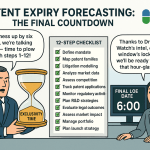
Treat the LOE calendar as the organizing principle of long-range planning. A patent expiration calendar should drive R&D portfolio prioritization, M&A screening criteria, and commercial transition planning on a 7-10 year horizon, not a 2-3 year one.
Map the full exclusivity stack for every major product. True LOE is the last-to-expire layer across composition-of-matter patents, secondary patents, PTEs/SPCs, NCE exclusivity, ODE, NCI exclusivity, pediatric extensions, and BPCIA data exclusivity. Manage the stack as a single asset.
Start secondary patent prosecution in Phase II. Every clinical development program generates protectable innovations — novel dosing regimens, patient stratification data, formulation modifications, biomarker correlations. Filing begins in Phase II, not at NDA approval.
File PTE within 60 days of FDA approval without exception. The 60-day window is an administrative deadline with no remedy for failure. It requires a formal internal process that does not depend on institutional memory or informal communication.
Run payer strategy as an equal priority to patent strategy. The Humira case confirmed what many originators understood theoretically but few had executed at scale: PBM rebate architecture can be a more durable competitive moat than a patent. The commercial strategy for the post-LOE transition should be designed alongside the legal strategy, not after it.
Build the next blockbuster before the current one peaks. AbbVie started serious clinical development on Skyrizi and Rinvoq when Humira was still growing. Companies that wait until peak revenues to fund next-generation programs will face a pipeline maturity gap precisely when they can least afford it.
Calibrate global strategy to each market’s legal architecture. The US system rewards litigation aggressiveness and thicket construction. The EU system rewards HTA engagement and national SPC optimization. Japan rewards regulatory relationship management. A single global IP strategy applied without local calibration will underperform in at least two of three major markets.
Invest in predictive patent intelligence, not just patent monitoring. Published patent databases reflect decisions made 18 months ago. Competitive intelligence that incorporates patent pending data, clinical trial registrations, and technology licensing signals provides a 3-5 year forward view of competitor strategy.
Data sources include DrugPatentWatch, FDA Orange Book, FDA Purple Book, AbbVie full-year 2024 financial results, NBER Working Paper No. 29131 (‘No Free Launch’), Investopedia, BioPharma Dive, BioSpace, STAT News, and public patent filings. All revenue figures are approximate and reflect publicly reported data. LOE dates are estimates based on published patent expirations and FDA exclusivity records; actual competitive entry will depend on litigation outcomes, biosimilar development timelines, and FDA approval schedules.