Why Effective Patent Life Is the Only Number That Matters
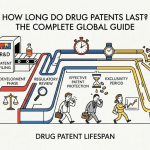
Every pharmaceutical deal, licensing negotiation, and portfolio valuation ultimately hinges on one figure: effective patent life (EPL). The nominal 20-year patent term under 35 U.S.C. § 154 is commercially irrelevant. The clock starts running from the patent filing date, not from FDA approval. A drug that enters Phase I in year three of the patent’s life and gains approval in year fourteen has at most six years of protected sales before generic entry. That six years must carry the full cost of an R&D program that, per Tufts Center for the Study of Drug Development estimates, can exceed $2.6 billion in capitalized costs for a single approved molecule.
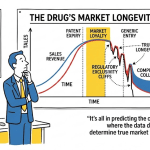
The 90% clinical attrition rate across all indications compounds this. For every molecule that makes it to approval, nine did not. The approved drug’s revenue window must, in effect, subsidize that entire discovery and development funnel. When generic competition arrives, the revenue destruction is near-total. Analysis of post-exclusivity loss-of-exclusivity (LOE) events consistently shows branded revenue falling 70-90% within twelve months of first generic entry, with the steepest declines in the first 90 days after an authorized generic launch.
Patent term extension mechanisms—the U.S. Patent Term Extension (PTE) under § 156 and the European Supplementary Protection Certificate (SPC) under EU Regulation 469/2009—exist precisely to address this structural problem. They are not loopholes. They are deliberately constructed policy instruments designed to compensate innovators for the time consumed by mandatory regulatory review. The question this article addresses is how sophisticated IP teams can legally maximize the layers of protection stacked on a single approved product, and where the boundaries of that strategy currently stand.
Key Takeaways: Effective Patent Life
The operative metric for any lifecycle management strategy is EPL, not nominal patent term. Generic entry after LOE destroys the majority of brand revenue within a year. PTE and SPC mechanisms are legislative compensation for regulatory delay, not discretionary rewards. The difference between a well-executed extension strategy and a poorly executed one can represent several billion dollars of protected revenue on a blockbuster asset.
The Grand Bargain: Hatch-Waxman and the SPC Regulation
The Drug Price Competition and Patent Term Restoration Act of 1984—the Hatch-Waxman Act—is the foundational text governing the U.S. pharmaceutical IP landscape. Its architects solved two market failures simultaneously. Innovators were watching patent life drain away during mandatory FDA review, eroding the return on investment the patent system was designed to secure. Generic manufacturers, meanwhile, faced a practical monopoly extension: they could not begin FDA-required development work on a competing product until after the innovator’s patent expired, adding years of de facto exclusivity beyond the nominal patent term.
The Act offered a structured exchange. Under 35 U.S.C. § 156, innovators gained the right to apply for a PTE to restore a portion of patent time lost during the FDA’s regulatory review period (RRP). Under 35 U.S.C. § 271(e)(1)—the Bolar exemption—generic manufacturers gained an explicit safe harbor allowing them to conduct development and testing work for Abbreviated New Drug Application (ANDA) purposes without infringing the innovator’s patent. The intent was to allow generics to be ready for market on the first day of patent expiry, eliminating the de facto extension that had previously benefited innovators.
The EU reached the same policy destination through different legislative means. Regulation (EC) No 469/2009 established SPCs for medicinal products, recognizing that the gap between patent filing and European marketing authorization (MA) was eroding the effective protection period below what the patent system contemplated. The SPC restores up to five years of that lost time, structured as a separate sui generis right rather than a direct extension of the underlying patent.
Understanding this policy architecture matters for strategic reasons. Every extension mechanism is a negotiated instrument, not an absolute right. It exists within a framework that courts and regulators interpret in light of the underlying legislative intent: compensating genuinely novel innovation for regulatory delay, not subsidizing incremental product modifications or procedural gaming. The legal battles that define the boundaries of PTE and SPC eligibility are consistently decided by reference to this intent.
PTA vs. PTE: A Distinction Worth Hundreds of Millions of Dollars
These two mechanisms are routinely conflated, and that confusion carries real cost.
Patent Term Adjustment (PTA), governed by 35 U.S.C. § 154(b), compensates for delays attributable to the USPTO itself during patent prosecution. Created by the American Inventors Protection Act of 1999, PTA adds days to a patent’s term on a day-for-day basis when the USPTO misses statutory processing benchmarks—failing to issue a first office action within 14 months, or failing to issue a patent within three years of filing, for example. PTA can accumulate to hundreds or even thousands of days on patents with complex prosecution histories. It applies to any utility or plant patent regardless of subject matter.
Patent Term Extension (PTE), under § 156, compensates for delays caused by the FDA during premarket regulatory review. It is available only for patents covering certain regulated products: human drugs, biologics, Class III medical devices, food additives, color additives, and veterinary products. A patent must affirmatively claim the approved product, a method of using it, or a method of manufacturing it.
The critical legal difference between these two mechanisms concerns their vulnerability to obviousness-type double patenting (ODP) challenges. When two patents in the same family claim inventions that are not patentably distinct, the USPTO can reject the later-issued patent on ODP grounds unless the applicant files a terminal disclaimer. A terminal disclaimer contractually agrees that the later patent will expire no later than the earlier patent—a significant concession.
The Federal Circuit’s decision in In re Cellect (2023) confirmed that PTA is vulnerable to terminal disclaimers. If a patent has accumulated PTA but has also filed a terminal disclaimer tied to an earlier-expiring patent in the family, the terminal disclaimer truncates the patent’s term after the PTA has been added, eliminating the adjustment. PTA accrued on paper can disappear entirely in litigation.
PTE is immune to this problem. The Federal Circuit held in Merck & Co. v. Hi-Tech Pharmacal and subsequently affirmed in Novartis AG v. Ezra Ventures LLC (2019) that a validly obtained PTE survives a terminal disclaimer challenge. The statutory grant under § 156 is a distinct right that the judge-made ODP doctrine cannot override.
This asymmetry creates a non-obvious strategic hierarchy within a patent portfolio. When a company holds multiple patents covering an approved drug and must select one for PTE, the patent with the most PTA is not automatically the best choice. A patent with 800 days of PTA looks attractive on paper, but that PTA is vulnerable to elimination through an ODP challenge if the patent carries a terminal disclaimer. A patent with zero PTA but an eligible claim to the approved product will receive a PTE that is fully durable and ODP-resistant. In most cases, banking the PTE on the more defensible patent is the correct long-term strategy.
Key Takeaways: PTA vs. PTE
PTA compensates for USPTO delays; PTE compensates for FDA delays. Both add time to a patent’s term, but through entirely different statutory mechanisms. PTA is vulnerable to terminal disclaimers under In re Cellect; PTE is not, per Novartis v. Ezra. Patent selection for a PTE application requires analyzing the full portfolio, including terminal disclaimer status, not simply identifying the patent with the longest remaining term.
The U.S. Framework: Dissecting 35 U.S.C. § 156
Eligibility: Five Gates Every Application Must Pass
The statute imposes five conditions, all of which must be met. Failure on any single criterion is fatal to the application.
The patent must not have expired before the PTE application is filed. The patent’s term must never have been previously extended under § 156—one PTE per patent, lifetime. The application must be submitted by the patent’s owner of record or its authorized agent, within 60 days of the FDA’s marketing approval, a deadline that is absolute and non-extendable. The approved product must have undergone a “regulatory review period” before commercial marketing. The approval must constitute the first permitted commercial marketing or use of that product.
The fifth condition is the most litigated. What constitutes the “first permitted commercial marketing or use” of a product has generated substantial case law and is the central question in the ongoing dispute over multiple PTEs for the same active ingredient.
Eligible patent types cover claims to the product itself (the active pharmaceutical ingredient), a method of using the product, or a method of manufacturing the product. This scope is intentionally broad enough to capture the most commercially valuable patents in a typical pharmaceutical portfolio.
The Definition of ‘Product’ and Why It Controls Everything
Under 35 U.S.C. § 156(f), a “product” is defined as the “active ingredient of a new drug, antibiotic drug, or human biological product (as those terms are used in the Federal Food, Drug, and Cosmetic Act and the Public Health Service Act) including any salt or ester of the active ingredient.”
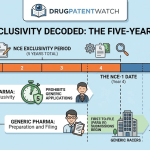
This definition diverges from the FDA’s own terminology in a strategically important way. For purposes of New Chemical Entity (NCE) exclusivity, the FDA focuses on the “active moiety”—the core pharmacologically active portion of a molecule, excluding appended salts or esters. The PTE statute takes a more literal chemical approach, looking at the entire active ingredient as it appears in the approved formulation, including its salt or ester form.
PhotoCure ASA v. Kappos (Fed. Cir. 2010) is the controlling case. PhotoCure’s drug Metvixia contained methyl aminolevulinate (MAL) HCl. A related compound, aminolevulinic acid (ALA) HCl, had been previously approved. The USPTO denied PTE on the grounds that both MAL and ALA shared the same active moiety, making Metvixia’s approval not the “first permitted use.” The Federal Circuit reversed, holding that the statute’s “active ingredient” definition is specific and chemical—MAL HCl is not ALA HCl. Because MAL HCl had never been approved in any form before, its approval constituted the first permitted commercial marketing of that distinct active ingredient.
PhotoCure cuts two ways. It forecloses simple salt-switching as an evergreening tactic: a new salt of an already-approved active ingredient is still the same “product” for § 156 purposes and cannot support a new PTE. But it also confirms that a genuinely new ester or salt—one that is chemically distinct from any previously approved compound—qualifies as a new product, even if it is pharmacologically related to an older drug. This creates a legitimate, if narrow, pathway for extension based on new chemical entity work.
For combination products, § 156 requires that at least one active ingredient in the combination be approved for the first time. Two previously approved drugs combined in a single dosage form do not constitute a new “product” for PTE purposes, regardless of how clinically novel the combination may be.
Calculating the Extension: Half + Full, With Two Hard Caps
The formula for calculating PTE duration has two components. The first is one-half of the “testing phase”—the period of clinical investigation beginning on the later of the patent’s issue date or the IND’s effective date, ending on the NDA/BLA submission date. Congress intentionally credits only half of this phase, acknowledging that commercially valuable R&D activity occurs during clinical development. The second component is the full “approval phase”—beginning on the NDA/BLA submission date (or the patent’s issue date, whichever is later) and ending on the approval date.
From this sum, the USPTO deducts any period during which the applicant failed to act with “due diligence” in pursuing regulatory approval. Two caps then apply. The maximum extension term is five years. The total remaining patent life after FDA approval cannot exceed fourteen years. The PTE awarded is whichever figure is smallest: the calculated period, five years, or the period needed to reach the 14-year cap.
The 14-year cap functions as the system’s check against outsized monopoly extension. It guarantees that regardless of regulatory delay duration, the innovator receives no more than 14 years of effective market exclusivity on that specific patent from the approval date forward. Drugs that enter the market late in their patent’s life—say, with 16 or 18 years of original term remaining—will generally receive no PTE at all, as the cap is already satisfied.
IP Valuation: What a PTE Is Actually Worth
A PTE is a balance-sheet asset. Quantifying it requires estimating daily net revenue at the time of patent expiry, then multiplying by the number of days the extension secures. For a drug generating $5 billion annually, each day of additional exclusivity protects roughly $13.7 million in revenue. A maximum five-year extension on that drug is worth approximately $25 billion in protected sales before discounting for generic competition risk and time value.
In practice, the figure is more complex. After LOE, brand revenue does not go to zero on day one—it degrades over months. But the first six months post-expiry typically see the sharpest decline, often 60-70% of the brand’s volume shifting to generic. The present value of a PTE must account for this decay curve, competitive dynamics (whether authorized generics are expected), and the probability the extension survives litigation.
For portfolio managers and deal teams pricing licensing transactions or acquisitions, the PTE status of each patent in the target’s portfolio is a primary valuation input. A pipeline asset with a clear PTE pathway is worth materially more than a structurally identical asset without one.
Pediatric Exclusivity: The Portfolio-Wide Six-Month Windfall
Pediatric exclusivity under the Best Pharmaceuticals for Children Act (BPCA) is, in terms of ROI per regulatory dollar spent, one of the highest-leverage tools in pharmaceutical lifecycle management. It is also structurally different from every other exclusivity mechanism in the U.S. system.
When the FDA issues a Written Request (WR) specifying pediatric studies it wants conducted, and the sponsor completes those studies and submits the resulting reports in a form the FDA accepts as meeting the WR’s terms, the reward is six additional months of exclusivity—attached to and extending every existing patent and regulatory exclusivity covering that active moiety. Not the specific product studied. Not the specific formulation. The active moiety.
That distinction has portfolio-wide implications. A company with ten patents expiring on different dates for a single active moiety, plus a period of Orphan Drug Exclusivity, will see all ten patent expiration dates and the orphan exclusivity period each shift by six months upon receiving pediatric exclusivity. The mechanism operates like a master extension applied to the entire IP estate.
Critically, the six-month reward does not depend on the drug proving safe or effective in children. It does not require a new pediatric labeling indication. The FDA must accept the study reports as responsive to the WR. The clinical outcome is irrelevant to the exclusivity determination. This de-risks the investment considerably: the company is being compensated for generating pediatric safety and efficacy data, not for achieving a particular clinical result.
The financial logic is straightforward. If a drug generates $75 million per month at the time of its primary patent expiration, six additional months of exclusivity is worth $450 million in protected revenue before accounting for launch costs, authorized generics, and payer dynamics. For drugs generating $100 million or more monthly—common among biologics and top-tier small molecules—the figure exceeds $600 million.
The strategic opportunity extends further when a company markets the same active moiety across multiple product forms—a tablet, an extended-release capsule, an injectable formulation, a topical product. Studying only the tablet under the WR can confer the six-month extension across all formulations simultaneously. This makes pediatric exclusivity a portfolio-level decision, not a product-level one, and requires active coordination between clinical development, regulatory affairs, and IP to identify which active moieties across the portfolio would generate the greatest aggregate return from a pediatric study program.
The EU’s pediatric reward works on a narrower basis. A six-month extension is available, but it adds to the SPC term for that specific product only, not across the broader portfolio. The maximum SPC term rises from five years to 5.5 years. Application for the pediatric extension must be filed at least two years before SPC expiration, requiring long-range planning. Given the narrower scope, the EU pediatric extension is an important but more modest strategic tool than its U.S. counterpart.
Key Takeaways: Pediatric Exclusivity
The U.S. pediatric exclusivity attaches to the active moiety and extends all associated patents and exclusivities simultaneously. Completion of the Written Request studies is the trigger, not a positive clinical outcome. For products with multiple formulations or indications sharing an active moiety, this is a portfolio-wide asset worth calculating in the aggregate. EU pediatric extensions are product-specific and SPC-specific, offering meaningfully narrower strategic value.
The ‘Rule of Ones’ and How It Was Broken
The Same-Day Approval Architecture
The statute at 35 U.S.C. § 156(c)(4) states plainly that “in no event shall more than one patent be extended under this section for the same regulatory review period for any product.” For decades, practitioners read this as a hard ceiling: one extension, one patent, one product, one RRP. Period.
The crack in that ceiling came through a careful textual reading. The statute prohibits multiple extensions for the same RRP. It says nothing about multiple extensions tied to multiple, distinct RRPs for the same active ingredient. The logical implication: if a company could engineer a situation where a single active ingredient generated two separate RRPs—each tied to a distinct NDA with its own clinical development timeline and FDA review—it might argue that two separate PTEs were permissible, each anchored to a different RRP and applied to a different patent.
Executing this required parallel clinical development. Two NDAs filed for different products containing the same novel active ingredient (for example, the monotherapy and a fixed-dose combination with a different agent) would each have their own IND, their own clinical data package, their own submission date, and their own FDA review. If both were approved on the same calendar day, neither approval was “first” relative to the other. Both represented the initial permission to market that active ingredient commercially. The company could then file two separate PTE applications, one per NDA, each citing a different patent.
The USPTO accepted this logic for years.
Case Studies: Omnicef, Lyrica, and Takeda’s Alogliptin Triple
Omnicef (cefdinir), an antibiotic, established early proof of concept. Two NDAs for different cefdinir dosage forms received simultaneous approval; two PTEs were granted on two separate patents.
Pfizer’s Lyrica (pregabalin) extended the model. Two NDAs for pregabalin—one for epilepsy, one for fibromyalgia—were approved on the same day. Pfizer received two PTEs, each tethered to a different NDA’s RRP and applied to a different patent.
Takeda’s alogliptin program, however, is the canonical example. On January 25, 2013, the FDA approved three separate NDAs in a single day: NDA 022271 for Nesina (alogliptin benzoate tablets, the standalone DPP-4 inhibitor), NDA 022426 for Kazano (alogliptin and metformin HCl, fixed-dose combination), and NDA 022424 for Oseni (alogliptin and pioglitazone, fixed-dose combination). Each NDA had its own distinct clinical development program, its own IND, and its own regulatory review timeline. Each therefore generated its own RRP.
In fall 2016, the USPTO granted three separate PTEs: U.S. Patent No. 8,173,663 received 262 days for Nesina; U.S. Patent No. 8,288,539 received 101 days for Kazano; and U.S. Patent No. 6,329,404 received the full five years for Oseni. Three patents, three products, three RRPs, three extensions—from a single molecular entity. The alogliptin franchise had generated approximately $800 million in peak annual global revenue. Those three extensions represented a meaningful fraction of that franchise’s remaining value.
The Nesina triple demonstrated that the same-day approval strategy was not merely a legal theory. It was executable at commercial scale, provided the clinical and regulatory infrastructure was built correctly years before any NDA submission.
The USPTO’s 2020 Policy Reversal and the New Risk Calculus
Starting in 2020, the USPTO began rejecting PTE applications that would have been granted under the same-day approval framework. The office articulated a new interpretive position: the statutory phrase “first permitted commercial marketing or use” is singular and absolute. For any given active ingredient, there is only one “first” approval event. Even if multiple NDAs are approved on the same calendar day, they all share that single “first” status. One first event, one PTE.
The USPTO acknowledged explicitly that this interpretation reversed its prior practice. It cited recent court decisions as support, though the relevance of those decisions to the multiple-PTE question has been contested by both the applicant companies and independent commentators. The office maintains that its earlier practice was incorrect as a matter of statutory construction.
The practical effect is significant. The same-day approval strategy has gone from a predictable, if operationally complex, pathway to a highly uncertain one. A company that invests hundreds of millions of dollars in parallel clinical development programs to generate multiple simultaneous NDA approvals—precisely because that investment was expected to yield multiple PTEs—now faces the real possibility of receiving only a single PTE regardless of how many NDAs were approved.
Gilead’s Zydelig and Pfizer’s Tafamidis: The Active Battleground
Gilead Sciences (idelalisib, branded Zydelig) is the most procedurally protracted case in the current multiple-PTE dispute. The FDA granted accelerated approval of two idelalisib NDAs on July 23, 2014—NDA 205858 and NDA 206545—for different oncology indications. Gilead filed four PTE applications in September 2014, seeking extensions on two patents (U.S. Patent No. RE 44,599 and U.S. Patent No. RE 44,638) across the two NDAs. Those applications sat pending for nearly a decade. In June 2023, the USPTO issued orders to show cause suggesting the patents were ineligible for PTE, in part citing the FDA’s 2022 partial withdrawal of two of Zydelig’s three indications (one indication remained approved). Gilead contested this characterization vigorously, noting that withdrawal of some indications does not equal withdrawal of the drug itself. As of publication, the Zydelig PTE applications remain unresolved after more than ten years of pendency.
Pfizer’s tafamidis situation (Vyndamax and Vyndaqel, both approved for ATTR-CM) is more recent and commercially acute. The FDA approved both NDAs simultaneously. Pfizer sought PTE on two patents—U.S. Patent Nos. ‘695 and ‘696—each tied to a different NDA. The USPTO has indicated that only one of the two patents is eligible for PTE under its current interpretive framework. The FDA has determined that the combined testing and approval period for both drugs exceeded roughly 4,900 days, meaning a full five-year PTE is likely if one patent is selected. With both patents currently carrying interim one-year extensions through December 2025 (as of early 2025 reporting), the final PTE determination will materially affect the generic entry timeline for one of cardiology’s most commercially significant recent launches.
Both cases illustrate the legal limbo created by the USPTO’s reversal. These are not academic disputes. They concern billions of dollars of protected revenue, and their resolution—whether through USPTO final determinations, Federal Circuit litigation, or statutory clarification—will reset the strategic calculus for every company currently designing parallel development programs around a single active ingredient.
Investment Strategy: Multiple PTEs
For investors evaluating a pharma or biotech company’s IP portfolio, the multiple-PTE question is now a material risk factor requiring specific diligence. Any portfolio with same-day approvals executed prior to 2020 under the old framework should be evaluated for the probability that the USPTO’s new position holds on appeal. Any pipeline program that has built its financial model around multiple future PTEs from parallel development must be stress-tested against a single-PTE scenario. The delta between those two scenarios can represent years of exclusivity worth billions of dollars at the revenue scale of a typical blockbuster.
The European Framework: Supplementary Protection Certificates
SPC as a Sui Generis Right: What That Means in Practice
A European SPC is not a patent extension. That distinction is not semantic. It has concrete consequences for enforcement, licensing, and litigation.
A PTE in the U.S. simply adds days to the existing patent’s term. The extended patent is still that patent—subject to the same claims, enforced through the same mechanisms, and challenged through the same invalidity procedures. A European SPC, by contrast, is a separate IP right that comes into existence the day after the basic patent expires. Its scope is defined not by the patent’s claims in their full breadth, but by the specific product authorized by the marketing authorization that supports the SPC. A broad composition-of-matter patent might cover hundreds of chemical variants; the SPC derived from it covers only the specific active ingredient in the approved product.
This narrowing of scope has practical consequences. An SPC cannot be enforced against products that would have infringed the basic patent but do not correspond to the approved product. A generic biosimilar that uses a different formulation of the same active ingredient might design around the SPC while still facing claims under the basic patent during the basic patent’s term. IP teams must track the SPC’s scope independently from the underlying patent.
Administratively, SPC protection requires separate national applications in each EU member state where protection is sought. The substantive requirements are harmonized under Regulation 469/2009, but national patent offices make individual grant decisions, and national courts hear validity challenges. This creates a fragmented enforcement landscape—an SPC can be invalidated in Germany while remaining valid in France. The European Commission has been developing a unitary SPC framework to address this, but as of 2025, national application remains the operative practice.
Duration Formula and the 15-Year Overall Cap
SPC duration is calculated as: [date of first MA in EEA] minus [date of basic patent filing] minus 5 years. The result represents the years of commercially lost time the SPC restores. The maximum SPC term is five years. The system is designed so that the combination of the basic patent and the SPC provides no more than 15 years of total exclusivity from the date of the first EEA marketing authorization.
If the gap between patent filing and first MA is less than five years, no SPC is available—the regulatory review was short enough that the patent’s remaining term is presumed adequate. If the gap exceeds ten years, the SPC term is capped at five years.
U.S. PTE vs. EU SPC: A Structured Comparison
Feature
U.S. PTE (35 U.S.C. § 156)
EU SPC (Reg. 469/2009)
Legal Nature
Extension of the underlying patent’s term
Separate sui generis IP right
Application Process
Single centralized application to USPTO
National applications per EU member state
Filing Deadline
60 days from FDA approval
6 months from first EEA MA (or patent grant)
Maximum Term
5 years
5 years
Overall Cap
14 years effective patent life post-approval
15 years total exclusivity from first MA
Pediatric Extension
6 months across all patents/exclusivities for the active moiety
6 months added to the SPC term only
New Formulations
May be eligible (first approval of the specific salt/ester)
Ineligible under Abraxis
New Indications
May be eligible (method-of-use patent)
Ineligible under Santen
Multiple Extensions
Historically permissible via same-day NDA approvals; now contested by USPTO
Multiple SPCs permissible per Georgetown II: one per distinct product per patent
Terminal Disclaimer Vulnerability
PTE is immune; PTA is not (Novartis v. Ezra)
Not applicable; separate right
Multiple SPCs in Europe: The Georgetown II Doctrine
One Patent, Multiple Products
In contrast to the U.S. framework’s historic “one extension per patent” structure, European law explicitly permits a single basic patent to support multiple SPCs—provided each SPC covers a distinct “product” as defined under Article 1(b) of Regulation 469/2009.
The CJEU’s Georgetown University II decision (Case C-484/12, 2013) established this principle clearly. A patent that legitimately covers two distinct active ingredients—or a single active ingredient and a combination product containing that ingredient—can serve as the basic patent for two separate SPCs. One SPC covers the monotherapy product; a second covers the combination. Both must satisfy all other eligibility requirements independently.
This structural difference from the U.S. framework creates a different set of lifecycle management opportunities in Europe. A foundational composition-of-matter patent on a new molecular entity can anchor SPCs for both the standalone drug and for any approved combination products containing that drug, provided the combination products receive their own marketing authorizations. The value of each SPC must be assessed individually, but the opportunity to build multiple layers of SPC protection from a single patent is real and established.
The CJEU’s ‘Invention Test’ for Combination Products
Obtaining an SPC for a combination product is procedurally possible but substantively difficult. The CJEU has imposed a requirement—commonly called the “invention test”—derived from Article 3(a) of the SPC Regulation, which requires that the product be “protected by a basic patent in force.”
In the joined Teva/Merck cases (C-121/17, 2018), the CJEU held that a product is not truly “protected” by a patent merely because the patent’s text mentions the combination somewhere. For a combination product to satisfy Article 3(a), the combination itself must be part of the core inventive concept disclosed by the patent as of its filing date. The court articulated a two-part test: the skilled person must be able to derive the specific combination from the patent’s claims “necessarily and specifically,” taking into account the description and drawings.
National courts applying this test have reached divergent results. A French tribunal found that a prediction of synergistic effect stated in the patent’s description, without supporting experimental data, was sufficient to satisfy the test. A Swedish court, reviewing a similar patent with only a bare assertion of potential synergy and no underlying data, concluded the test was not met. This inconsistency creates geographic risk for SPC strategies built on combination products, and the CJEU is likely to provide additional guidance through future references.
The practical implication for patent drafting is direct. Any patent application filed with a view toward a future combination SPC must, at the time of filing, contain technical substance demonstrating why the combination is inventive. Experimental data showing unexpected synergy is the strongest evidence. A detailed mechanistic rationale supported by in vitro or in vivo data may suffice. A bare claim to “compound A in combination with compound B” will not. Given that SPC applications are typically filed 15-20 years after the patent’s priority date, the drafting decisions made at filing are irreversible by the time the SPC question arises. No amount of post-hoc supplementation can cure a patent application that failed to establish the inventive basis for the combination.
Why New Formulations and New Indications Fail in Europe
The CJEU has drawn a consistent, hard line on two lifecycle management strategies that often succeed in other jurisdictions.
Article 3(d) of the SPC Regulation requires that the MA supporting the SPC be the “first authorization to place the product on the market as a medicinal product.” The court defines “product” as the active ingredient itself—not the dosage form, not the formulation, not the indication.
In Abraxis Bioscience v. Comptroller General of Patents (C-443/17, 2018), the CJEU ruled that a new formulation of a previously approved active ingredient—specifically, Abraxane (nab-paclitaxel), a nanoparticle albumin-bound formulation of paclitaxel—could not support an SPC, because the active ingredient paclitaxel had been approved years earlier in a different formulation. The MA for Abraxane was not the “first” authorization for paclitaxel, regardless of the formulation’s clinical novelty.
In Santen SAS v. Directeur général de l’INPI (C-673/18, 2020), the court applied the same logic to new therapeutic indications. Santen had developed ciclosporin 0.1% cationic ophthalmic emulsion (Ikervis) for treatment of severe keratitis. Ciclosporin had been approved as a systemic immunosuppressant for decades. The CJEU ruled that Ikervis’s MA was not the first authorization for ciclosporin, regardless of the novelty of the ophthalmic indication. No SPC was available.
These decisions reflect the CJEU’s consistent view that SPCs are reserved for genuinely new therapeutic molecules entering the market for the first time, not for follow-on applications of previously approved actives. The court has rejected arguments that pharmacological distinctiveness of a new indication or clinical novelty of a new formulation should qualify the approval as a “first” for SPC purposes.
Key Takeaways: EU SPC
Multiple SPCs from one patent are possible under Georgetown II, but each must cover a distinct product. Combination SPCs require that the combination be part of the patent’s core inventive concept at the time of filing. New formulations and new indications of previously approved actives are categorically ineligible under Abraxis and Santen. European lifecycle management strategy must focus on genuinely new molecular entities and on building the inventive case for combinations into the patent application years before SPC eligibility becomes relevant.
Building a Resilient Portfolio: Secondary Patents and Patent Thickets
PTE and SPC mechanisms address a single patent at a time—one extension per qualifying application. The broader architecture of product protection rests on a portfolio of secondary patents that create a thicket around every commercially relevant aspect of the drug.
Secondary patents do not typically receive their own PTEs or SPCs, but they serve an independent deterrent function. A generic company evaluating a Paragraph IV challenge must assess not just the composition-of-matter patent, but every additional patent covering the formulation, the manufacturing process, the polymorphic form, the enantiomeric composition, the delivery device, and any patented methods of use. Each patent represents a separate litigation risk. Even patents of questionable validity force the generic company to make a litigation decision with imperfect information. The expected cost and duration of that litigation is a real factor in the generic company’s launch timing calculation.
Specific categories of secondary patents that form the core of any pharmaceutical thicket include: formulation patents covering specific excipient compositions, particle size specifications, or coating systems; polymorph and crystal-form patents targeting the specific crystalline or amorphous form used in the commercial product; prodrug patents covering metabolically-activated derivatives of the active ingredient; enantiomer patents isolating the pharmacologically active stereoisomer from a previously approved racemate; method-of-treatment patents targeting specific patient populations, dosing regimens, or combination therapies; and manufacturing process patents covering proprietary synthetic routes or purification methods.
A well-constructed thicket for a major product may include 40-100 patents with staggered expiration dates extending years or decades beyond the composition-of-matter patent’s original term. The aggregate effect is to require any prospective generic entrant to either design around each patent, license each patent, or challenge each patent in litigation—a formidable barrier that many smaller generic companies lack the resources to overcome.
The FTC and academic critics characterize this practice as “evergreening”—the extension of effective monopoly through accumulated incremental patents rather than genuine innovation. Research by the Initiative for Medicines, Access & Knowledge (I-MAK) and UCLA Anderson’s Charu Gupta found that secondary patent accumulation adds an average of three years of monopoly protection per branded drug, with associated costs to U.S. payers estimated at approximately $148.3 million per drug. The legal and political risk of aggressive thicket-building is real, but within the current statutory framework, it remains a standard and legally permissible lifecycle management practice.
Orange Book Strategy, Paragraph IV Filings, and FTC Scrutiny
The FDA’s Orange Book—formally, “Approved Drug Products with Therapeutic Equivalence Evaluations”—is the operational register of pharmaceutical patent protection in the U.S. market. Innovators are legally required to submit for listing all patents that claim an approved drug or a method of using it. The FDA lists those patents without independent evaluation of their eligibility. Generic companies filing ANDAs must certify their relationship to each listed patent.
A Paragraph IV certification—asserting that a listed patent is invalid or will not be infringed by the generic product—is considered an act of patent infringement under 35 U.S.C. § 271(e)(2). Filing that certification gives the innovator the right to sue. If the innovator files suit within 45 days, an automatic 30-month stay of FDA approval for the generic product takes effect. That stay—roughly 2.5 years of additional exclusivity—operates regardless of the underlying merits of the patent claims at issue.
The 30-month stay creates a structural incentive for broad Orange Book listings. Every patent listed is a potential stay trigger. The FTC has responded with increasing aggression to what it characterizes as improper listings, particularly patents covering device components of drug-device combinations (inhaler mechanisms, autoinjector devices) that claim the delivery device rather than the active ingredient. In October 2023, the FTC challenged listings from several companies and obtained withdrawal of numerous device patents from Orange Book listings. That enforcement activity has continued under the current administration. Companies pursuing broad listing strategies must now weigh the defensive value of each listed patent against the risk of an FTC challenge, which can carry reputational and antitrust exposure beyond the specific listing dispute.
For generic companies and Paragraph IV challengers, the Orange Book is a primary research tool. Identifying the weakest patents in a competitor’s listed portfolio—those with the narrowest claims, the most relevant prior art, or the most questionable § 156 eligibility—is the first step in designing a commercially viable ANDA strategy.
Procedural Mastery: Filing Timelines, Common Errors, and Checklists
U.S. PTE Application: Key Requirements
The application is governed by 37 C.F.R. § 1.740. The 60-day filing deadline from the date of FDA marketing approval is absolute. There is no petition process for extension. A single day’s delay means the opportunity is permanently lost.
The application must identify the approved product and the federal statute under which it was reviewed, identify the specific patent and the claims covering the approved product, provide all dates required for the RRP calculation (IND effective date, NDA submission date, approval date), and include a calculation of the PTE being claimed.
Only one PTE application may be pending for a given product at any one time. If the patent owner has multiple patents covering the approved product, it may file applications for all of them simultaneously, but the USPTO will ultimately grant only one.
EU SPC Application: Key Requirements
Applications are filed with national patent offices in each member state where protection is sought. The six-month filing deadline runs from the first MA granted anywhere in the EEA, or from the patent’s grant date, whichever is later. In practice, the EEA-first-MA date is usually the operative trigger, because MA precedes patent grant in most cases.
The application requires a copy of the MA (or a reference to it), identification of the basic patent and its title, and an application form specific to each national office. The product covered by the SPC must correspond to the product covered by the MA, and the basic patent must protect that product under the Article 3(a) analysis.
Paediatric extension applications must be filed at least two years before SPC expiration. For a five-year SPC, that means the paediatric extension application must be filed no later than three years after the SPC takes effect.
Common and Costly Procedural Failures
Missing the 60-day U.S. deadline is the most common catastrophic error. Robust internal calendar systems, with redundant alerts and cross-functional communication between the regulatory team that receives the approval and the IP team that files the application, are table stakes.
Selecting the wrong patent for PTE—typically by choosing the patent with the most PTA without analyzing terminal disclaimer vulnerability—is a strategic failure that cannot be corrected after the fact. The selection must be made with a full portfolio analysis.
Filing a U.S. PTE application based on a product whose active ingredient (or its salt or ester) has been previously approved will fail the “first permitted use” test. Similarly, filing an EU SPC based on a new formulation or new indication of a previously approved active will be rejected under Abraxis and Santen. Both errors require thorough prior-art and regulatory-history searches before filing.
Failing to coordinate global filing timelines creates avoidable strategic losses. The first MA anywhere in the EEA triggers the six-month SPC clock in all member states simultaneously. A company that allows a peripheral market MA to issue weeks before its major market MA may find that the clock has started running while its primary IP team is unaware.
Integrated Lifecycle Management: A Global Architecture
The firms that extract maximum value from PTE and SPC mechanisms share a structural characteristic: they treat IP strategy as an input to R&D planning, not a downstream legal function. Patent term extension opportunities are not discovered when a drug nears approval. They are built into the program’s design years earlier.
For U.S. strategy, the key decisions that must be made before clinical development begins include: which patents will be candidates for PTE, and whether their claim language specifically covers the active ingredient, a method of use, or a manufacturing process in a form that will survive § 156 eligibility analysis; whether a parallel development program generating multiple same-day NDA approvals is commercially justified given the current uncertainty around the multiple-PTE doctrine; and which active moieties across the portfolio are candidates for a pediatric Written Request, and when those studies should be designed and initiated.
For European strategy, the key pre-filing decisions include: whether a combination product is contemplated, and if so, whether the basic patent application contains sufficient technical substance—experimental data, mechanistic rationale—to satisfy the CJEU’s invention test at the Article 3(a) level; whether any active ingredient in the combination has been previously approved anywhere in the EEA, which would trigger the Article 3(d) first-authorization bar; and whether the clinical development timeline is structured to allow the paediatric extension application to be filed at least two years before SPC expiration.
For both jurisdictions, the integration requirement runs in the other direction as well. IP decisions affect clinical trial design. The definition of which NDA carries which regulatory review period, and which patent that NDA will anchor, must be resolved before study initiation. Retroactive restructuring of RRP attribution is not available after the fact.
Investment Strategy for Analysts
Pharmaceutical IP portfolios are M&A and licensing assets, and their value is almost entirely a function of the duration and defensibility of market exclusivity. PTE and SPC analysis belongs in every deal model.
For an acquisition or in-licensing transaction, the due diligence checklist should include: identification of all patents listed in the Orange Book for the target product; confirmation of which patents carry validly obtained PTEs and what the current expiry dates are after extension; assessment of terminal disclaimer status for each extended patent and the ODP vulnerability of any PTA; review of pending SPC applications and their status in each material EU market; analysis of whether any same-day approval strategy was employed and what the current USPTO posture on multiple PTEs means for that portfolio’s value.
For pipeline assets, the forward-looking analysis requires: a probability-weighted estimate of PTE eligibility and duration based on the IND date, expected NDA submission date, and expected approval date; a scenario analysis for the EU showing SPC duration in each major market assuming the most likely first-MA date; a pediatric exclusivity scenario if the active moiety is a candidate for a Written Request; and sensitivity analysis showing EPL under best-case (full five-year PTE plus pediatric exclusivity) and worst-case (no PTE, no pediatric) scenarios.
For generic and biosimilar companies, the analysis runs in reverse: assessing the total exclusivity wall built around a target product, identifying the earliest date of LOE under all extension scenarios, and evaluating the Paragraph IV litigation risk and 30-month stay exposure for each listed patent. The Orange Book data, cross-referenced with USPTO PTE records, provides the raw material for this analysis.
Key Takeaways by Segment
For IP Teams
The PTE and SPC systems are precision instruments. Eligibility hinges on specific statutory definitions—the “active ingredient” definition in § 156(f), the “first permitted commercial marketing” requirement, the CJEU’s Article 3(a) and 3(d) conditions. Errors in patent selection, filing timing, or product definition are permanent. Build the analysis before the approval date, not after.
For R&D and Regulatory Affairs
Extension eligibility is a function of clinical development architecture. Parallel NDA programs, pediatric study design, and paediatric investigation plan (PIP) compliance are decisions made in the clinic that determine IP outcomes a decade later. The IP team needs a seat at the clinical planning table.
For Portfolio Managers and Deal Teams
Effective patent life, not nominal patent term, drives pharmaceutical asset value. A drug with a 15-year nominal patent life but only three years of EPL is worth a fraction of a drug with the same nominal term and eight years of EPL. PTE and SPC status are material valuation inputs, not legal footnotes.
For Institutional Investors
The USPTO’s reversal on multiple PTEs created a new and material risk category for any company whose valuation model assumed multiple simultaneous extensions from parallel development. The Gilead and Pfizer cases will produce legal precedent that reprices this risk across the sector. Monitor those dockets.
FAQ
If I have two patents on my approved drug—one with 700 days of PTA and one with zero—which should I extend?
The patent with 700 days of PTA carries higher apparent value but higher legal risk. If it was issued subject to a terminal disclaimer tied to an earlier-expiring patent, In re Cellect means that PTA can be eliminated in litigation. The PTE, by contrast, is ODP-immune under Novartis v. Ezra. In most cases, applying the PTE to the patent with zero PTA produces a more durable, defensible asset than banking on the PTA-heavy patent’s advertised term.
Can an EU SPC be obtained for a new formulation of a drug whose active ingredient was approved ten years ago?
No. The CJEU’s Abraxis decision forecloses this directly. The SPC Regulation requires the supporting MA to be the first authorization for the “product,” defined as the active ingredient. A new formulation of a previously approved active ingredient is not the first authorization for that active ingredient.
What is the single most important thing to do when drafting a patent that might support a future EU combination SPC?
Include experimental data, or at minimum a detailed and technically credible scientific rationale, demonstrating that the combination of your novel compound with the co-agent produces an effect that is not simply additive. The CJEU’s invention test requires the combination to be part of the patent’s core inventive concept, and that determination is made by reference to what the patent discloses at its filing date. Assertions of synergy without supporting evidence have failed in multiple national courts.
Is the same-day approval strategy for multiple U.S. PTEs still worth pursuing?
As of 2025, the strategy carries high uncertainty. The USPTO’s current position limits multiple PTEs to a single extension per active ingredient regardless of how many NDAs were approved simultaneously. The Gilead and Pfizer cases may resolve this question through litigation, but a definitive Federal Circuit ruling has not yet issued. A company designing a parallel development program specifically to capture multiple PTEs should model both the single-PTE and multiple-PTE scenarios explicitly, and should not assume the pre-2020 framework will be restored.
How does pediatric exclusivity interact with a PTE that has already been granted?
Pediatric exclusivity is additive to the PTE. If a patent has received a five-year PTE and the active moiety subsequently earns pediatric exclusivity, the pediatric six-month extension attaches to the post-PTE expiration date. The total effective extension for that patent is five years and six months from the original expiration date, subject to the overall 14-year cap calculation for the PTE component.
All patent term calculations referenced herein reflect publicly available USPTO records and applicable statutory formulae under 35 U.S.C. § 156 and EU Regulation 469/2009. This article is for informational and strategic analysis purposes only and does not constitute legal advice. Consult qualified patent counsel before making IP decisions.