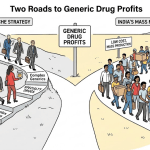
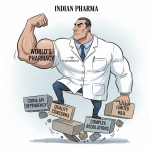
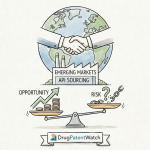
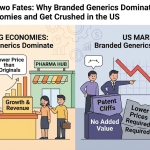
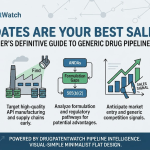
On March 20, 2026, a secondary patent covering Novo Nordisk’s semaglutide formulation expired in India. Within days, Torrent Pharmaceuticals and Dr. Reddy’s Laboratories had generic versions in front of Indian courts, and Novo Nordisk was suing both companies in the Delhi High Court over formulation infringement.[1] The same molecule, under the same corporate owner, carries US composition-of-matter protection to December 2031 and formulation patent protection to 2033.[2][3] That is not a rounding error. It is a seven-year gap between when a molecule stops being protected in India and when it stops being protected in the United States, and Indian manufacturers are using every month of it.
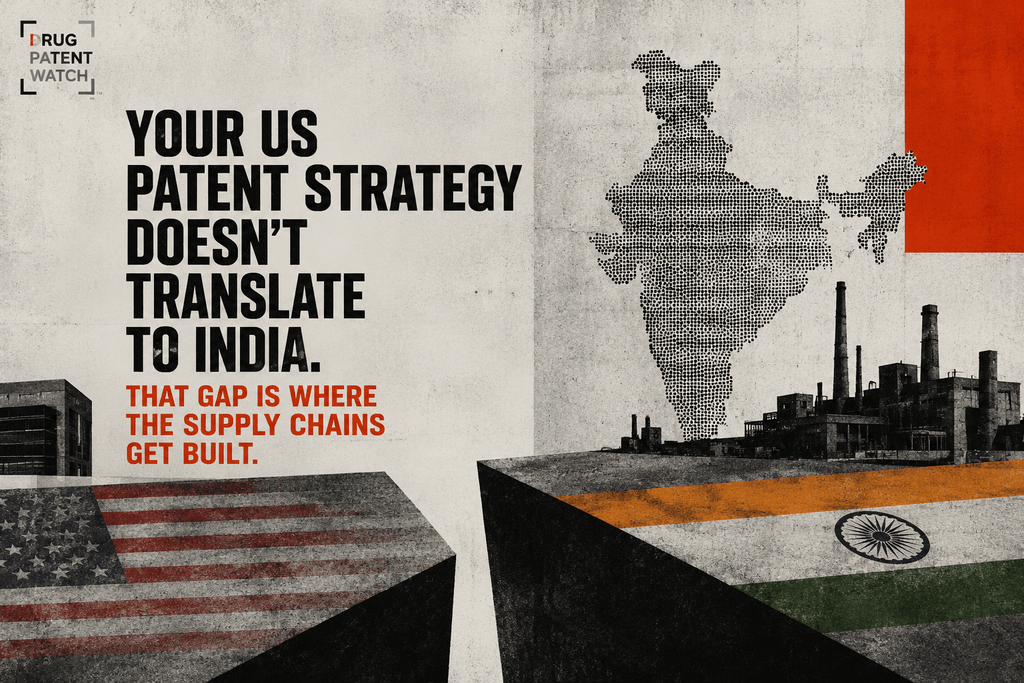
This is not a quirk of one drug. It is the structural default of Indian pharmaceutical patent law, and it is the reason India builds active pharmaceutical ingredient (API) and formulation capacity years before a molecule goes generic anywhere else. A patent strategy written for the Orange Book, for Paragraph IV timing, for reverse-payment settlements, does not describe what happens to the same molecule in India. Different tools decide the outcome: no patent linkage, a statutory efficacy bar that has no US analogue, a pre-grant opposition window open to anyone, and a working requirement that can convert an unworked patent into a compulsory license. Miss any one of these and a portfolio that looks airtight in Delaware looks porous in Delhi.
The Short Answer
India does not link drug marketing approval to patent status the way the US Hatch-Waxman Act does. A generic company can get regulatory approval from India’s Central Drugs Standard Control Organisation (CDSCO) while a patent is still in force, and the Delhi High Court settled this permanently in 2010.[4] India also applies Section 3(d) of its Patents Act, which blocks patents on new forms of known substances unless the applicant proves significantly enhanced therapeutic efficacy, a bar the US Patent and Trademark Office does not apply.[5] Add pre-grant opposition, which lets any person challenge a patent application before it is even granted, and a working requirement that can trigger compulsory licensing if a patent sits unused, and you have four mechanisms with no direct US counterpart. Together they compress the effective exclusivity window in India relative to the US, and Indian manufacturers plan their capacity investments around that compression.
Six Findings That Matter
India has never adopted patent linkage. The Delhi High Court confirmed this in Bayer Corporation v. Union of India (2010), and the Supreme Court declined to disturb that ruling later that year.[4][6]
Section 3(d) has been used to reject or invalidate secondary patents on at least three major oncology and metabolic drugs since 2013, starting with Novartis’s Glivec (imatinib mesylate) beta-crystalline form.[5]
India has granted exactly one compulsory license in pharmaceutical patent history: Natco Pharma’s 2012 license for Bayer’s Nexavar (sorafenib), upheld through three levels of appeal by December 2014.[7][8]
Novo Nordisk’s semaglutide compound patent expired in India in September 2024 and its secondary process/formulation patent expired March 20, 2026, versus a US composition patent running to December 2031 and a formulation patent running to August 2033.[1][2][3]
The 2024 Patent Rules amendment introduced the first-ever official fee for pre-grant opposition (INR 20,000 for large entities, INR 4,000 for others), a real but modest procedural cost compared to the years of delay opposition can add.[9]
India supplies roughly 40 to 47 percent of generic prescriptions filled in the United States and exported $9.7 billion in pharmaceuticals to the US in 2025, almost entirely generic.[10][11]
Why “Patent Strategy” Doesn’t Travel
A US patent team plans around a known sequence: Orange Book listing, Paragraph IV certification, a 45-day window to sue, a 30-month stay, and a predictable menu of settlement structures. None of that sequence exists in India. The Indian Patent Office and CDSCO are separate agencies with separate statutes, and neither checks the other’s records before acting.[12] A generic manufacturer can receive full marketing approval while a patent covering the same molecule is valid, in force, and completely unaddressed by CDSCO. The patent holder’s only recourse is a separate infringement suit, filed after the fact, in civil court.
This single design choice reshapes everything downstream: how early generic companies invest in capacity, how patent holders litigate, and how supply chains anticipate loss of exclusivity. A molecule that will not go generic in the US for another seven years can already be in production in Hyderabad or Vadodara for the Indian and non-US export markets, with the manufacturing lines, analytical methods, and regulatory dossiers ready the moment US exclusivity ends. DrugPatentWatch’s patent-family tracking exists precisely because a single “expiration date” no longer describes a molecule’s real competitive status once you account for jurisdictions like India that run on a different clock entirely.
The Single Biggest Structural Difference: India Has No Patent Linkage
What Patent Linkage Does in the US
The Hatch-Waxman Act ties an Abbreviated New Drug Application (ANDA) to the FDA’s Orange Book. A generic applicant must certify against every listed patent: that no patent exists, that it has expired, that it will not be marketed until expiration, or that the patent is invalid or not infringed (a Paragraph IV certification).[13] A Paragraph IV filing triggers a mandatory 45-day window for the patent holder to sue, and filing suit automatically stays FDA approval for up to 30 months. The system is imperfect and contested, but it means patent status and regulatory approval are legally connected from the moment a generic applies.
Bayer v. Union of India: The Case That Closed the Door
India tested this exact question and answered it in the opposite direction. Bayer held Indian Patent No. 215758 for sorafenib tosylate, sold as Nexavar, granted March 3, 2008.[7] When Cipla announced its own generic version, Soranib, Bayer asked India’s Drug Controller General (DCGI) to withhold marketing approval on the grounds that approving a patent-infringing product would make the DCGI complicit in infringement. A Delhi High Court single judge rejected the argument in August 2009, and a Division Bench upheld that rejection on February 9, 2010, in Bayer Corporation and Another v. Union of India and Others (LPA 443/2009, 2010 (43) PTC 12 (Del)).[4] The court held that the Patents Act and the Drugs and Cosmetics Act are separate statutory codes serving separate purposes, that the DCGI has neither the mandate nor the technical competence to adjudicate patent disputes, and that reading a linkage requirement into the statute would let patent holders block affordable generics through a back door Parliament never built. Bayer’s appeal to the Supreme Court was dismissed in December 2010.[6] India’s regulator, the Central Drugs Standard Control Organisation, still maintains no equivalent of the Orange Book: no register cross-references marketed drugs against patent status.[12]
What No-Linkage Means for Launch Sequencing
In the US, a generic company cannot launch until it clears the Orange Book, whether by waiting out patent expiry, winning litigation, or securing a settlement date. In India, a generic company can get marketing approval and even begin selling before a patent dispute resolves, subject only to the risk of a later infringement judgment and damages. The burden of stopping a launch falls entirely on the patent holder, who must go to civil court and win an injunction, drug by drug, defendant by defendant. That is a fundamentally more expensive and slower defensive posture than checking a box in a federal database, and it means a company’s US enforcement playbook, built around pre-launch certainty, does not transfer.
Section 3(d): The Anti-Evergreening Filter With No US Counterpart
What Section 3(d) Actually Requires
Section 3(d) of the Patents Act, added by the Patents (Amendment) Act, 2005 when India moved to a full product-patent regime, excludes from patentability the mere discovery of a new form of a known substance unless that new form demonstrates significantly enhanced efficacy over the known substance.[5][14] Salts, esters, polymorphs, metabolites, and particle-size variants of a known drug are explicitly listed as presumed to be the same substance unless efficacy is proven otherwise. The US system has no equivalent provision. A new crystalline form or salt of a known compound can be patented in the US on ordinary novelty and non-obviousness grounds, and frequently is, forming the backbone of what US commentators call patent evergreening.
Novartis v. Union of India: The Glivec Rejection
Novartis had patented imatinib with vaguely specified salts in multiple countries starting in 1993, before India recognized pharmaceutical product patents at all.[15] When India’s TRIPS transition period ended on January 1, 2005 and it began examining “mailbox” applications filed during the interim, Novartis sought a patent specifically on the beta-crystalline form of imatinib mesylate, the form sold as Glivec.[15][14] The Indian Patent Office rejected the application under Section 3(d), finding Novartis had not demonstrated the beta-crystalline form was significantly more efficacious than the previously known form of the compound. Novartis fought the rejection through the Intellectual Property Appellate Board and ultimately the Supreme Court of India, which upheld the rejection on April 1, 2013, in Novartis AG v. Union of India and Others.[15] The ruling let Indian generic manufacturers, including Cipla, Natco, and Sun Pharma, continue producing generic imatinib that had already reached the Indian market under earlier compulsory-license-adjacent arrangements and mailbox-era carve-outs.
Section 3(d) Is Still Live: Natco v. Novartis and Ribociclib (2024 to 2026)
Section 3(d) is not a historical curiosity confined to the Glivec case. Natco Pharma has spent the past two years fighting Novartis over a second, later-filed patent covering ribociclib, the CDK4/6 inhibitor sold as Kisqali for breast cancer. Natco’s pre-grant opposition to the later patent was initially successful; a single judge of the Delhi High Court set aside the grant on procedural natural-justice grounds, and a Division Bench addressed the scope of pre-grant opposition rights in a 141-page judgment delivered January 9, 2024, in Novartis AG v. Natco Pharma Limited (LPA 50/2023).[16] After further proceedings, the Deputy Controller of Patents granted the disputed patent to Novartis and Astex Therapeutics in July 2025. Natco filed a fresh challenge in the Delhi High Court, and the case was still being heard in September 2026, with Natco arguing the later patent impermissibly extends Novartis’s exclusive rights over ribociclib to 2029, beyond the 2027 expiry of the earlier, broader genus patent that already covered the same molecule.[17][18] Whatever the ultimate outcome, the case shows that India’s patent office and courts are actively policing exactly the kind of layered, later-filed patent claims that routinely survive US prosecution.
Compulsory Licensing: Section 84 and the Nexavar Precedent
Bayer v. Natco: How It Happened
Section 84(1) of the Patents Act allows any interested party to apply for a compulsory license three years after a patent’s grant, on any of three grounds: that the reasonable requirements of the public have not been satisfied, that the patented invention is not available to the public at a reasonably affordable price, or that the patented invention is not “worked” in the territory of India.[19] Natco Pharma applied for a compulsory license on Bayer’s Nexavar (sorafenib tosylate, Indian Patent No. 215758, granted March 3, 2008) in 2011. Bayer was selling a month’s treatment at roughly Rs 280,000 (about $5,280); Natco proposed to sell its version for about Rs 8,800 (about $130) a month.[20][21] On March 9, 2012, the Controller General of Patents granted India’s first compulsory license, finding all three Section 84 conditions satisfied, including that Bayer had not manufactured the drug in India at meaningful scale, relying instead on imports.[19][20] Bayer appealed to the Intellectual Property Appellate Board, which upheld the license on March 4, 2013, while raising Natco’s royalty obligation from 6 percent to 7 percent of net sales.[19][20] The Bombay High Court affirmed on July 15, 2014, and the Supreme Court dismissed Bayer’s final appeal on December 12, 2014, while explicitly leaving the underlying legal questions open for future cases.[19][22]
Why It Hasn’t Repeated, and Why That’s Not Reassuring
India has not granted a second pharmaceutical compulsory license in the more than a decade since Nexavar. That single data point gets cited on both sides of the policy debate: generic advocates note the mechanism is rarely used and therefore not the threat brand companies fear, while brand-side counsel note it took only one case to establish that price and working-requirement failures are litigable grounds with a Supreme Court-endorsed precedent behind them. Every subsequent India-market entry decision by an innovator, including how much local manufacturing capacity to build versus how much to import, and how pricing compares to what Indian courts have already called “reasonably affordable” in a reported judgment, happens in the shadow of a mechanism that exists, has been used successfully once, and has never been struck down.
Pre-Grant Opposition: A Challenge Window the US Doesn’t Have
Section 25(1) Mechanics
Section 25(1) of the Patents Act lets any person, not just an interested party with standing, file a representation opposing a patent application before it is granted.[9][23] There is no equivalent in US patent law, where third-party challenges to a live application are limited and post-grant review mechanisms like inter partes review only become available after a patent issues. In India, pre-grant opposition can delay a grant for years, force the applicant to respond to detailed prior-art and efficacy arguments, and in some cases result in outright refusal, as happened with the original Glivec application.
The 2024 Rules: A Fee, But Not a Fix
The Patents (Amendment) Rules, 2024, published in the Official Gazette on March 15, 2024, introduced the first official fee ever charged for filing a pre-grant opposition: INR 20,000 for large entities and INR 4,000 for startups, individuals, and small entities, where filing had previously been free.[9][24] The rules also shortened the applicant’s response window from three months to two, added a fee for requesting a hearing (INR 7,500 for large entities, INR 1,500 for others), and required the Controller to first rule on maintainability before proceeding to the merits.[9][24] Commentators tracking the reform have noted the underlying case for the change is thin: fewer than 200 post-grant oppositions are filed annually against more than 60,000 granted patents, and roughly 10 percent of those are found substantial, which raises the question of whether pre-grant opposition was ever the bottleneck it was reformed to fix.[25] For pharmaceutical filers, the practical result is a modest new cost of entry for opponents, not a closed door: Natco’s ribociclib challenge against Novartis proceeded and was still contested in 2026, well after the fee took effect.[17]
US IPR vs. Indian Pre-Grant Opposition
Inter partes review in the US requires a granted patent, a petition, institution by the Patent Trial and Appeal Board, and typically runs 12 to 18 months once instituted, with institution itself discretionary and increasingly difficult to obtain under recent USPTO policy shifts. Indian pre-grant opposition requires no standing, no institution decision separate from a maintainability check, and can be filed by anyone at any point before grant, sometimes repeatedly as an applicant amends claims. The two mechanisms serve different moments in a patent’s life and cannot be substituted for each other in a filing strategy: a portfolio hardened against IPR institution standards is not thereby hardened against an Indian pre-grant challenge, because the two systems ask different legal questions at different points in time.
The Working Requirement: Form 27 and Patents You Can’t Just Sit On
Section 146 of the Patents Act requires patentees and licensees to file a statement of the extent to which a patented invention has been commercially worked in India.[26] Historically this was an annual filing on Form 27; the 2024 Rules amendment relaxed the frequency to once every three financial years, a genuine easing of the compliance burden, but did not remove the underlying obligation or its consequences.[27] A pattern of non-working, or working only through imports rather than domestic manufacture, is direct evidence in a Section 84 compulsory-license application, exactly as it was in Bayer v. Natco, where Bayer’s reliance on imports rather than Indian manufacturing was one of the Controller’s three grounds for granting the license.[19][20] The US patent system has no analogous filing requirement and no compulsory-license trigger tied to a patent owner’s manufacturing footprint. A company that never asks “are we working this patent in India, and can we document it” has left a Form 27 filing sitting in a public register as a ready-made exhibit for anyone who later files a Section 84 petition.
Case Study: Watching the Gap in Real Time, Semaglutide 2024 to 2026
The US Clock: Patents Running to 2031-2033
Novo Nordisk’s foundational semaglutide composition-of-matter patent, US 8,129,343 (and the related 10,525,129), does not expire until December 5, 2031.[2] A key formulation patent covering the phosphate-buffered solution used in Ozempic and Wegovy, US 9,714,283, runs until August 2033, and a method-of-use patent covering dosing and titration protocols runs to roughly the same window.[3][28] Generic manufacturers including Mylan, Sun Pharmaceuticals, Dr. Reddy’s, and Apotex filed inter partes review petitions against the method-of-use patent, which were instituted, before Novo Nordisk reached confidential settlements believed to preserve most of that runway.[28] Practically, no generic semaglutide is expected in the US retail market before 2031 at the earliest, and possibly not until 2033 to 2035 once biosimilar-style approval timelines are factored in.[29]
The India Clock: Compound Patent Gone in 2024, Process Patent Gone in March 2026
The same molecule’s Indian composition patent expired in September 2024, seven years earlier than the equivalent US date.[1] Novo Nordisk retained a secondary Indian patent, No. 262697, covering formulation, device, and process elements, which expired March 20, 2026.[1][30] Between those two dates, Novo Nordisk’s own exclusivity in India rested entirely on a single secondary patent of the kind Section 3(d) exists specifically to scrutinize.
The Scramble: Natco, Dr. Reddy’s, Torrent, Sun Pharma
Natco Pharma filed a declaratory non-infringement suit in the Delhi High Court in August 2025, arguing its version of semaglutide avoided Novo Nordisk’s remaining device and process patents, and the court directed the parties to mediation.[31] On December 2, 2025, before the secondary patent even expired, the Delhi High Court declined to grant Novo Nordisk interim relief and permitted Dr. Reddy’s Laboratories to manufacture semaglutide for export to jurisdictions where Novo Nordisk holds no patent protection.[30] Sun Pharma secured similar export permission shortly after. In January 2026, with the secondary patent nearing its March expiry, Natco separately petitioned the Delhi High Court to revoke Patent No. 262697 outright under Section 64 of the Patents Act, arguing it unlawfully extended monopoly rights over an invention whose core protection had already lapsed.[1][30] At least seven Indian companies, including Cipla, Lupin, Biocon, Mankind, and Aurobindo, were reported preparing GLP-1 launches for the moment the last patent cleared, with analysts projecting an 80 percent price collapse and a market expansion from roughly Rs 700 crore to nearly Rs 8,000 crore by 2030.[31]
Novo Nordisk’s Post-Expiry Infringement Suits
The patent’s March 20, 2026 expiry did not end the dispute. Novo Nordisk’s own SEC filing discloses that it commenced fresh infringement suits in the Delhi High Court against Torrent Pharmaceuticals and Dr. Reddy’s, alleging their formulations infringe separate, still-live Novo Nordisk patents covering SNAC content and separate-granule formulation technology, distinct from the composition and process patents that had already expired.[1] The Delhi High Court held hearings on March 20 and March 23, 2026 and ruled that if the generic products are found to infringe, they cannot be manufactured, sold, or exported, pending laboratory testing of samples, with results due back to the court in the following months.[1] As of this writing that testing and the resulting ruling remain pending. The episode is a live demonstration of an original point: even after the headline patents clear in India, a well-resourced innovator can identify a further layer of formulation claims and litigate that layer separately, which means “the compound patent expired” is never the end of an India patent-strategy analysis, only the start of the next question.
Milestone
United States
India
Composition/compound patent
Expires Dec. 5, 2031 (US 8,129,343 / 10,525,129)
Expired Sept. 2024
Key formulation patent
Expires Aug. 2033 (US 9,714,283)
Secondary formulation/process patent (No. 262697) expired March 20, 2026
Method-of-use patent
~2032-2033 window (settled via confidential agreements after IPR institution)
Litigated post-expiry over separate SNAC/granule formulation claims (ongoing as of 2026)
First anticipated generic entry
Not before 2031, likely 2032-2035
Q1 2026 (several launches, subject to ongoing infringement litigation)
Sources: Novo Nordisk SEC Form 6-K (May 2026); C&EN (Dec. 2025); FormBlends patent timeline (2026); Markman Advisors (2025); Business Standard (Jan. 2026).[1][2][3][28][29][30]
When Innovators Win: Merck v. Glenmark and the Limits of the “India Always Sides With Generics” Myth
It would be a mistake to read India’s patent system as reflexively hostile to originators. Merck Sharp & Dohme’s Indian Patent No. 209816, covering sitagliptin (marketed as Januvia and Janumet for type 2 diabetes), was challenged by Glenmark Pharmaceuticals after Glenmark launched its own sitagliptin phosphate monohydrate product, Zita, in April 2013.[32] Merck sued for infringement and Glenmark counterclaimed to revoke the patent under Section 64, arguing the granted claims covered only the free-base form of sitagliptin and not the phosphate monohydrate salt Glenmark was selling. On October 7, 2015, the Delhi High Court ruled for Merck, holding the patent’s broad claim language covered the salt form and granting a permanent injunction against Glenmark, in what was reported at the time as the first final decree in India’s history to find in favor of a patentee in a fully contested pharmaceutical infringement suit.[33][34] The case matters precisely because it is an exception: it shows Indian courts will enforce a well-drafted, sufficiently broad patent claim against a domestic generic challenger, provided the claim language and evidentiary record support it. The lesson is not that India favors either side categorically. It is that claim drafting, evidentiary preparation, and litigation execution inside India’s specific legal framework determine the outcome, the same way they do anywhere else, just against a different statutory backdrop.
Roche v. Cipla: Litigating a Patent Into Irrelevance
Roche’s experience with its lung cancer drug Tarceva (erlotinib) illustrates a different risk: winning slowly enough that the win no longer matters. Roche sued Cipla for infringing its Indian erlotinib patent (IN 196774) after Cipla launched a generic version. The litigation ran for years through the Delhi High Court, with a single judge initially denying Roche an interim injunction, a ruling that survived appellate review. On November 27, 2015, a Division Bench of the Delhi High Court found that Cipla’s product did in fact infringe Roche’s patent, but declined to grant an injunction because the patent itself was due to expire within months, in March 2016, making an injunction largely moot; the court instead left Roche to pursue damages. Cipla sought leave to appeal to the Supreme Court. The practical result was that Roche spent roughly a decade litigating a patent whose exclusivity value had, by the time of final judgment, already evaporated. For a company planning India strategy around a single patent asset rather than a defensible, appropriately timed family of claims, the Tarceva litigation is a caution: a US-style single-patent, single-molecule enforcement plan can consume the exclusivity period it was meant to protect.
Where the Supply Chains Actually Get Built
The PLI Scheme and Bulk Drug Parks
India’s Production Linked Incentive (PLI) scheme for bulk drugs, notified July 21, 2020 with an outlay of Rs 6,940 crore (about $850 million), targets 41 critical APIs and key starting materials across 53 identified products, motivated directly by the discovery during COVID-19 that Indian formulators depend on China for 70 to 80 percent of certain essential APIs.[35][36] As of June 2025, 48 projects had been approved under the scheme, with actual investment of roughly Rs 4,709 crore already committed and 27 projects commissioned.[37] The government separately approved bulk drug parks in Himachal Pradesh, Gujarat, and Andhra Pradesh (later reports also cite Tamil Nadu) as shared-infrastructure zones purpose-built for API manufacturing.[35][38] This is not abstract industrial policy. It is the physical capacity that lets an Indian manufacturer go from “the compound patent just expired” to “product on the shelf” in months rather than years, because the plant, the API supply chain, and the regulatory dossier were built in advance, timed against India’s own patent clock rather than the US clock.
The Tariff Clock That’s Forcing the Decision
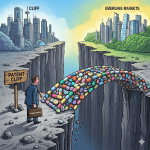
The urgency behind that build-out just increased sharply, and from an unexpected direction: US trade policy rather than Indian patent law. On September 25, 2025, the US announced a 100 percent tariff on branded and patented pharmaceutical imports effective October 1, 2025, with an exemption for companies already building US manufacturing capacity; generic drugs were explicitly exempted at the time.[39][40] That exemption has since been narrowed. On July 21, 2026, the US administration announced that imported generic drugs, which had been carrying a zero tariff, will remain untariffed only through July 2028, after which a 100 percent tariff applies for one year, rising to 200 percent from August 2029, explicitly framed as a penalty for companies that have not built US manufacturing capacity by then.[41][42] India supplies close to half of all generic drugs consumed in the US and roughly $9.7 billion in pharmaceutical exports in 2025 alone, some 90 to 95 percent of it generic.[10][43][44] Indian pharmaceutical stocks fell on the announcement, and Dr. Reddy’s CEO Erez Israeli publicly called reshoring US production impractical given thin generic margins, while analysts noted Indian manufacturing runs 40 to 60 percent cheaper than equivalent US capacity and that building comparable US capacity would take years, not months.[45][46] The result is a genuinely new variable layered on top of everything India’s own patent regime already determines: Indian manufacturers now have a roughly two-year window in which the API and bulk drug park investments already underway need to either scale toward US-facing capacity, diversify toward non-US markets, or begin actual US site construction, because the 2028 to 2029 tariff cliff is a fixed date, not a negotiable one so far.
According to an October 2025 analysis, Americans saved an estimated $219 billion on prescription drugs in 2022 because of Indian generic exports, and roughly $1.3 trillion over the preceding decade.[43]
An Original Taxonomy: Four Types of Translation Failure
Reviewing how US-trained patent strategy repeatedly misreads India’s system, four recurring failure patterns emerge. This taxonomy is original to this analysis and is offered as a working framework, not an established industry classification.
1. The Linkage Assumption
Assuming that regulatory approval in India is gated by patent status, the way an ANDA is gated by the Orange Book. It is not. Bayer v. Union of India settled this in 2010, and CDSCO has never adopted a linkage register since.[4][12] Teams operating on this assumption underinvest in civil litigation readiness because they expect the regulator to do work it has no statutory mandate to do.
2. The Efficacy Assumption
Assuming a secondary patent on a new salt, polymorph, isomer, or crystalline form will prosecute the way it would in the US, on novelty and obviousness alone. Section 3(d) requires proof of significantly enhanced therapeutic efficacy for any new form of a known substance, a requirement the Glivec case shows the Indian Patent Office and courts will actually enforce against a well-resourced global originator.[5][15]
3. The Layering Assumption
Assuming a later, narrower patent filed on top of an earlier genus patent extends effective exclusivity the way patent thickets often do in US practice. India’s pre-grant opposition system exists specifically to catch this kind of layering before grant, as Natco’s ongoing ribociclib challenge against Novartis illustrates.[16][17] A portfolio strategy that depends on stacking later filings to push out an effective expiration date needs a materially different, India-specific efficacy and inventive-step record to survive scrutiny.
4. The Ownership-Without-Use Assumption
Assuming that holding a valid, granted Indian patent is sufficient protection regardless of whether the invention is commercially worked inside India. Section 84 and the Form 27 working-statement requirement convert an unworked, import-only patent into a live compulsory-license risk, as Bayer discovered in the Nexavar case.[19][26] A patent sitting on the register while the product is sold only through imports is not the same asset in India that it is in the US, where no working requirement exists at all.
US Mechanism vs. Indian Equivalent: A Working Reference Table
US Mechanism
What It Does in the US
Indian Equivalent or Absence
Practical Effect of the Gap
Orange Book / Hatch-Waxman patent linkage
Blocks ANDA approval until patent expiry, successful challenge, or settlement
None. Confirmed absent by Bayer v. Union of India (2010)
Regulatory approval and patent enforcement are fully decoupled; the burden is on the patentee to sue
Ordinary novelty/non-obviousness standard for salts, polymorphs, and new forms
Secondary patents on new forms of known drugs are routinely granted
Section 3(d) requires proof of significantly enhanced therapeutic efficacy for any new form of a known substance
Secondary/evergreening-style patents face a real, tested substantive bar not present in US prosecution
Inter partes review (post-grant only, discretionary institution)
Third parties challenge validity only after grant, subject to institution standards
Pre-grant opposition (Section 25(1)): any person may oppose before grant, no standing requirement
Patents can be delayed or blocked years earlier in their life than any US mechanism allows
No statutory domestic-manufacturing requirement
A US patent holder need not manufacture in the US to keep the patent enforceable
Section 84 compulsory licensing plus Form 27 working-statement filings
An import-only, unworked patent is a documented, litigable compulsory-license risk (as in Bayer v. Natco)
Five-Case Comparison: How the Gap Played Out
Case
Drug
Mechanism Used
Outcome
Bayer v. Union of India (2009-2010)
Sorafenib (Nexavar)
No patent linkage
Delhi HC and Supreme Court confirmed CDGI has no obligation to check patent status before approving a generic
Novartis v. Union of India (2013)
Imatinib mesylate (Glivec)
Section 3(d) efficacy bar
Supreme Court upheld rejection of beta-crystalline form patent; generics continued production
Bayer v. Natco (2012-2014)
Sorafenib (Nexavar)
Section 84 compulsory license
India’s first and only pharma compulsory license, upheld through Bombay HC and Supreme Court
Merck v. Glenmark (2013-2015)
Sitagliptin (Januvia)
Ordinary infringement/validity litigation
Delhi HC ruled for Merck; first fully contested decree favoring a patentee
Roche v. Cipla (2008-2015)
Erlotinib (Tarceva)
Ordinary infringement litigation
Infringement found on appeal, but injunction denied as patent neared its own expiry
What This Means for Brand Manufacturers Filing in India
Filing the same claim set in India that cleared US prosecution is not a strategy, it is an assumption. Any secondary patent covering a salt, polymorph, or reformulated version of an already-known compound needs a dedicated efficacy data package built for Section 3(d) from the start of Indian prosecution, not assembled defensively after a pre-grant opposition arrives. Portfolios should assume pre-grant opposition will happen on any commercially significant filing and budget litigation-grade evidence accordingly, since the 2024 fee increase raised the cost of opposing from zero to a few hundred dollars, not to a prohibitive level. Commercial teams need to treat Form 27 working statements as a compliance obligation with downstream litigation consequences, not paperwork, and should document Indian manufacturing or licensing arrangements with the same rigor applied to Orange Book listings. Finally, litigation planning needs an India-specific timeline: an infringement suit filed the way Roche filed against Cipla, with years running before final judgment, can consume the very exclusivity period it is meant to protect if the underlying patent’s remaining life is short relative to litigation duration.
What This Means for Generic and CDMO Supply Chain Planning
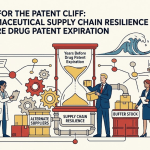
Indian generic and contract manufacturing organizations are already running on this logic, which is precisely why PLI-funded API capacity and bulk drug parks were built years ahead of any single molecule’s US patent cliff.[35][37] The semaglutide case shows the playbook in real time: build capacity and regulatory dossiers against the Indian patent clock, launch domestically and into non-US export markets the moment Indian exclusivity clears, and hold that capacity in reserve for the US market once the much later US patent cliff arrives.[1][30][31] The new complication is the 2028-2029 US generic tariff cliff, which now sits on top of the patent calculus: capacity built purely for eventual US export needs a parallel plan for either US-based finishing operations or acceptance of a 100 to 200 percent tariff, and that decision window is measured in a couple of years, not the five-to-seven-year gap the patent system itself typically provides.[41][42] Quality compliance adds a third layer that is easy to underweight: roughly 114 surprise FDA inspections of Indian facilities between 2022 and 2024 produced Form 483 observations in 94 of them, data integrity issues appear in an estimated 60 percent of FY2025 warning letters sent to Indian sites, and FDA drug-quality warning letters overall rose 59 percent from FY2024 to FY2025.[47][48] An India supply strategy that solves the patent-timing gap but arrives with a facility on FDA Import Alert 66-40 has solved the wrong problem first.
Methodology
This analysis draws on primary sources wherever available: reported Indian court judgments accessed via Indian Kanoon and case-summary services (ESCR-Net, Global Health and Human Rights Database), the text and commentary on the Patents Act, 1970 as amended in 1999, 2002, and 2005, the Patents (Amendment) Rules, 2024 as published in the Official Gazette, and Novo Nordisk’s own SEC Form 6-K filings for the semaglutide India litigation timeline. Trade and export figures are drawn from the Pharmaceuticals Export Promotion Council of India (Pharmexcil), the India Brand Equity Foundation, and UN Comtrade data as reported by Trading Economics. FDA warning letter and inspection statistics are drawn from FDA’s own published warning letters and industry compliance trackers that aggregate FDA data (The FDA Group, Certainty Software). Where a figure could not be traced to a primary source, it is identified as a secondary or industry estimate rather than presented as an independently verified statistic. The India patent case selection was limited to disputes involving a named, publicly reported drug and a final or clearly interlocutory court ruling, to avoid relying on unresolved allegations as settled fact; the ongoing Natco v. Novartis (ribociclib) and Novo Nordisk formulation-patent litigation are described as pending, with their current procedural status as of September 2026, because no final judgment had issued in either at the time of writing.
Key Takeaways
India has no patent linkage system; the Delhi High Court and Supreme Court settled this permanently in Bayer v. Union of India (2009-2010).
Section 3(d) imposes an enhanced-efficacy bar on secondary patents covering new forms of known substances, a bar with no US equivalent, tested successfully against Novartis’s Glivec patent in 2013 and still being litigated against Novartis’s ribociclib patent as of 2026.
India has granted one pharmaceutical compulsory license in its history, Natco’s 2012 Nexavar license, upheld through the Bombay High Court and Supreme Court by December 2014.
Pre-grant opposition under Section 25(1) lets anyone challenge a patent application before grant; the 2024 Rules added a modest fee but did not close the mechanism.
Semaglutide’s Indian composition patent expired in 2024 and its secondary patent in March 2026, versus a 2031-2033 US patent runway, a real-time demonstration of the gap this article describes.
India’s PLI scheme and bulk drug parks exist to fund API capacity ahead of that gap, and a new 2028-2029 US generic tariff cliff has compressed the planning window for turning that capacity toward the US market specifically.
FAQ
Does India have anything like the FDA’s Orange Book? No. India’s drug regulator, CDSCO, maintains no register linking marketed drugs to patent status, and the Delhi High Court confirmed in 2010 that no such linkage exists in Indian law.[4][12]
What is Section 3(d) of the Indian Patents Act? It is a provision, added in 2005, that bars patents on new forms of known substances, including salts, polymorphs, and isomers, unless the applicant proves significantly enhanced therapeutic efficacy over the known substance.[5][14]
Can a company still get a compulsory license for a drug patent in India today? The legal mechanism, Section 84, remains in force and has been upheld through India’s highest court, but it has only been successfully used once, in the 2012 Bayer v. Natco Nexavar case.[19][22]
What is pre-grant opposition and who can file it? Under Section 25(1), any person can oppose a patent application before it is granted, without needing to show a personal interest in the outcome. The 2024 Rules added an official fee for the first time.[9][23]
Does a US patent automatically protect a drug in India? No. Patent protection is territorial. A separate Indian patent must be sought and, if granted, is subject to India’s own substantive standards, including Section 3(d), and its own enforcement procedures, which do not include patent linkage.
What happened in the Novartis Glivec case? India’s Patent Office and later its Supreme Court rejected Novartis’s application to patent the beta-crystalline form of imatinib mesylate, finding Novartis had not proven the new form was significantly more efficacious than the previously known compound, as Section 3(d) requires.[15]
Why did Bayer lose its attempt to block Cipla’s generic version of Nexavar through the drug regulator? The Delhi High Court held that India’s Patents Act and Drugs and Cosmetics Act are separate statutory schemes and that the drug regulator has no mandate to police patent infringement when approving a generic drug.[4]
How does India’s Form 27 working requirement affect patent strategy? Patentees must periodically disclose how a patent is being commercially worked in India. A pattern of import-only, unworked use is direct evidence supporting a Section 84 compulsory-license application, as it was in Bayer v. Natco.[19][26]
Will the new US tariffs on generic drugs change India’s role in the US pharmaceutical supply chain? It is likely to accelerate decisions that were already underway. Generic drugs remain untariffed through July 2028, after which a 100 percent tariff applies for a year and 200 percent thereafter, unless manufacturers establish US production, a timeline Indian manufacturers and analysts are now actively planning against.[41][42]
Are Indian generic companies always the winners in Indian patent litigation? No. Merck won a fully contested infringement case against Glenmark over its sitagliptin patent in 2015, the first such decree favoring a patentee in India’s history, showing outcomes depend on claim drafting and evidence, not a systemic bias toward either side.[33][34]
References
Novo Nordisk A/S. (2026, May 6). Financial report for the period 1 January 2026 to 31 March 2026, Form 6-K. US Securities and Exchange Commission. https://www.sec.gov/Archives/edgar/data/0000353278/000035327826000018/caq12026.htm
FormBlends Editorial Research. (2026, July 3). When will Wegovy be generic? The patent timeline, FDA pathway, and what compounded semaglutide changes. https://formblends.com/articles/glp1-hub/when-will-wegovy-be-generic
FormBlends Editorial Research. (2026, July 3). When does semaglutide patent expire? A complete timeline for every formulation and market. https://formblends.com/articles/glp1-hub/when-does-semaglutide-patent-expire
Bayer Corporation and Another v. Union of India and Others, LPA 443/2009, 2010 (43) PTC 12 (Del) (High Court of Delhi, Feb. 9, 2010). https://indiankanoon.org/doc/1123372/
India’s Section 3(d): The definitive IP strategy guide for pharmaceutical and biotech companies. DrugPatentWatch. https://www.drugpatentwatch.com/blog/indian-pharmaceutical-patent-prosecution-the-changing-role-of-section-3d/
Bayer Corporation and Anr. v. Union of India and Ors. (2013). ESCR-Net Case Law Database. https://www.escr-net.org/caselaw/2013/bayer-corporation-and-anr-v-union-india-ors/
Bayer Corporation vs Union of India Through the Secretary, Writ Petition No. 1323 of 2013 (High Court of Bombay, July 15, 2014). https://indiankanoon.org/doc/28519340/
Lexology. (n.d.). Compulsory license granted for Nexavar to continue, holds Supreme Court. https://www.lexology.com/library/detail.aspx?g=382da65e-855a-4e1d-a263-bad4b7032b8a
SpicyIP. (2025, Feb. 12). The new patent playbook in action: A look at Rules 25(1) and 55(3) of the Patent (Amendment) Rules 2024 for pre-grant oppositions. https://spicyip.com/2025/02/the-new-patent-playbook-in-action-a-look-at-rules-251-and-553-of-the-patent-amendment-rules-2024-for-pre-grant-oppositions.html
Business Today. (2026, April 3). US pharma tariffs likely to have limited impact on Indian exports. https://www.businesstoday.in/latest/economy/story/us-pharma-tariffs-likely-to-have-limited-impact-on-indian-exports-523941-2026-04-03
Trading Economics. (2026). India exports of pharmaceutical products to United States. https://tradingeconomics.com/india/exports/united-states/pharmaceutical-products
Cyril Amarchand Blogs. (2026, Jan. 5). Linking patents to pills: Unravelling the patent linkage framework for pharmaceutical products in India. https://corporate.cyrilamarchandblogs.com/2024/02/linking-patents-to-pills-unravelling-the-patent-linkage-framework-for-pharmaceutical-products-in-india/
Congress.gov, Congressional Research Service. (2026, Jan. 21). Patent listing in FDA’s Orange Book. https://www.congress.gov/crs-product/IF12644
The Legal School. (n.d.). Recent changes in patent law: 2005 Patent (Amendment) Act & 2024 Rules. https://thelegalschool.in/blog/recent-changes-in-patent-law
Novartis AG v. Union of India and Others, Civil Appeal Nos. 2706-2716 of 2013 (Supreme Court of India, April 1, 2013). Summarized at Wikipedia, https://en.wikipedia.org/wiki/Novartis_v._Union_of_India_and_Others
Novartis AG v. Natco Pharma Limited, LPA 50/2023 (High Court of Delhi, Jan. 9, 2024). https://indiankanoon.org/doc/58428132/
Medical Dialogues. (2026, Aug.). Natco moves Delhi HC against ribociclib patent. https://medicaldialogues.in/amp/news/industry/pharma/natco-moves-delhi-hc-against-ribociclib-patent-176612
NewsBytes. (2026). Natco Pharma challenges Novartis ribociclib patent at Delhi High Court. https://www.newsbytesapp.com/news/business/natco-pharma-challenges-novartis-ribociclib-patent-at-delhi-high-court/tldr
IIPRD. (2025, May 21). How Bayer lost its monopoly: The story behind India’s first compulsory license. https://www.iiprd.com/how-bayer-lost-its-monopoly-the-story-behind-indias-first-compulsory-license/
iPleaders. (2023, March 30). Bayer Corporation vs Natco Pharma Ltd: A case analysis. https://blog.ipleaders.in/bayer-corporation-vs-natco-pharma-ltd-a-case-analysis/
LexOrbis. (2014, July 16). Bombay High Court refused to interfere with IPAB order in Nexavar compulsory license case. https://www.lexorbis.com/bombay-high-court-refused-to-interfere-with-ipab-order-in-nexavar-compulsory-license-case/
Global Health and Human Rights Database. (2014). Bayer Corporation v. Union of India, et al. https://www.globalhealthrights.org/bayer-corporation-v-union-of-india-and-ors/
Mondaq. (2024, April 1). Patent Amendment Rules 2024. https://www.mondaq.com/india/patent/1445504/patent-amendment-rules-2024
Depenning & Depenning. (2024, Dec. 17). Key changes as per “the Patents (Amendment), Rules, 2024”. https://depenning.com/news-and-insights/key-highlights-the-patent-amendment-rules-2024/
SpicyIP. (2024, March 16). Patent rules published: A quick look. https://spicyip.com/2024/03/patent-rules-published-a-quick-look.html
BananaIP. (2026, March 5). Patent (Amendment) Rules 2024 come into effect, significant changes introduced. https://www.bananaip.com/intellepedia/patent-amendment-rules-2024-key-changes-india/
Markman Advisors. (2025, Feb. 7). What is the patent landscape for Novo Nordisk’s semaglutide products, Ozempic, Wegovy and Rybelsus? https://www.markmanadvisors.com/blog/2025/2/7/what-is-the-patent-landscape-for-novo-nordisks-semaglutide-products-ozempic-wegovy-and-rybelsus
Chemical & Engineering News. (2025, Dec. 9). Looming GLP-1 drug patent expirations draw generics firms. https://cen.acs.org/pharmaceuticals/Looming-GLP-1-drug-patent/103/web/2025/12
Business Standard. (2026, Jan. 6). HC seeks Novo Nordisk’s response on Natco plea to revoke semaglutide patent. https://www.business-standard.com/industry/news/hc-seeks-novo-nordisk-response-on-natco-plea-to-revoke-semaglutide-patent-126010601070_1.html
Business Standard. (2025, Aug. 26). Will this court fight make the world’s hottest weight-loss drug cheaper? https://www.business-standard.com/health/will-this-court-fight-make-the-world-s-hottest-weight-loss-drug-cheaper-125082600722_1.html
Lexology. (2015, May 27). The battle over sitagliptin between Merck and Glenmark reaches the Supreme Court. https://www.lexology.com/library/detail.aspx?g=6ce4a9f0-061a-46ec-9d30-9ad23771e0b6
BananaIP Intellepedia. (2025, June 3). Merck v. Glenmark: A bitter battle of pills. https://www.bananaip.com/intellepedia/merck-glenmark-patent-infringement-case-sitagliptin-india/
Legal Era. (2023, June 16). Merck vs Glenmark: India’s first decree in favour of patentee in contested patent infringement suit. https://www.legaleraonline.com/articles/merck-vs-glenmark-indias-first-decree-in-favour-of-patentee-in-contested-patent-infringement-suit
Department of Pharmaceuticals, Government of India. (2020). Guidelines for the Production Linked Incentive (PLI) scheme for promotion of domestic manufacturing of critical Key Starting Materials/Drug Intermediates/Active Pharmaceutical Ingredients. https://pharma-dept.gov.in/sites/default/files/Guidelines%20for%20the%20Production%20Linked%20Incentive%20(PLI)%20Scheme%20for%20promotion%20of_0.pdf
DrugPatentWatch. (2026, March 11). India’s growing importance in generic drug API manufacturing. https://www.drugpatentwatch.com/blog/indias-growing-importance-in-generic-drug-api-manufacturing/
India Brand Equity Foundation. (2025). Pharmaceutical industry, pharmaceutical exports from India. https://www.ibef.org/exports/pharmaceutical-exports-from-india
MedGate Today. (2025, March 17). India strengthens pharmaceutical self-reliance through Production Linked Incentive (PLI) scheme. https://medgatetoday.com/india-strengthens-pharmaceutical-self-reliance-through-production-linked-incentive-pli-scheme/
Lexology / Cyril Amarchand Mangaldas Dispute Resolution Blog. (2025, Nov. 28). Trump’s tariffs on pharmaceutical industry: What Indian companies should know. https://disputeresolution.cyrilamarchandblogs.com/2025/11/trumps-tariffs-on-pharmaceutical-industry-what-indian-companies-should-know/
Ropes & Gray LLP. (2026, April 23). 100% on brand: U.S. imposes new tariffs (and key exemptions) on patented pharmaceuticals. https://www.ropesgray.com/en/insights/alerts/2026/04/100-on-brand-us-imposes-new-tariffs-and-key-exemptions-on-patented-pharmaceuticals
AJMC. (2026). Trump announces timeline for 100% generic drug tariffs beginning in 2028, 200% in 2029. https://www.ajmc.com/view/trump-announces-timeline-for-100-generic-drug-tariffs-beginning-in-2028-200-in-2029
Business Standard. (2026, July 22). Trump’s 200% tariff plan on generic drugs: What it means for India. https://www.business-standard.com/economy/news/trump-s-200-tariff-plan-on-generic-drugs-what-it-means-for-india-126072200254_1.html
CT Mirror. (2025, Oct. 1). Does the U.S. import a large share of generic drugs from India? https://ctmirror.org/2025/10/01/us-import-india-generic-prescription-drugs/
Business Today. (2025, April 3). Indian drug exports get a tariff free pass in the US. https://www.businesstoday.in/industry/pharma/story/indian-drug-exports-get-a-tariff-free-pass-in-the-us-470518-2025-04-03
BigGo Finance. (2026, July 22). Trump threatens 200% tariff on generic drugs by 2029, sending Indian pharma stocks tumbling. https://finance.biggo.com/news/63915ba1-8176-430e-b7d4-df461e6b10c7
Sahi Blogs. (2026, July 24). Trump’s 100% tariff on Indian pharma: Can generics cope? https://www.sahi.com/blogs/trump-tariff-indian-pharma-generics
Klyverity. (2026, June 18). FDA warning letters & data integrity: Lessons from real enforcement actions. https://klyverity.com/blog/fda-warning-letters-data-integrity
Certainty Software. (2026, June 24). FDA warning letters in 2026: Quality system failures every manufacturer should avoid. https://www.certaintysoftware.com/fda-warning-letters-2026-quality-system-failures/