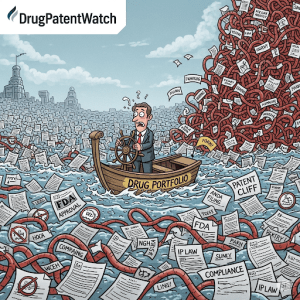
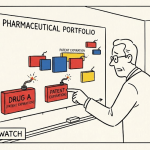
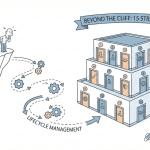
Pharmaceutical companies collectively lose an estimated $250 billion in annual revenue to patent cliffs, regulatory missteps, and compliance failures that could have been anticipated. The difference between a portfolio that weathers those events and one that hemorrhages value comes down to one thing: how well your regulatory strategy is integrated into IP planning, asset valuation, and lifecycle architecture before the first submission lands on an FDA desk.
This is the operational guide for pharma IP teams, portfolio managers, R&D leads, and institutional investors who need a technical-grade view of what regulatory complexity actually costs, how the best-run companies manage it, and where the IP value sits inside compliance decisions most teams treat as overhead.
Part I: The Regulatory-IP Interface Nobody Maps Properly
Why Regulatory Strategy Is an IP Valuation Event
Every regulatory decision a company makes either extends or compresses the effective market exclusivity window of a drug asset. That window, not the nominal patent term, is what institutional investors price. The FDA’s Orange Book lists a drug’s approved patents and exclusivity periods, but the real protection duration depends on a chain of regulatory events: when the NDA or BLA was filed, whether a New Chemical Entity (NCE) exclusivity designation was granted, whether any pediatric exclusivity extensions were secured under the Best Pharmaceuticals for Children Act (BPCA), and whether subsequent formulation or indication patents are listed in the Orange Book in time to trigger 30-month stays against generic challengers.
Eli Lilly’s dulaglutide (Trulicity) illustrates how this stacks. The compound patent expires in 2027, but Lilly holds additional Orange Book-listed patents on the GLP-1 receptor agonist’s delivery device and formulation through 2029, along with a pediatric exclusivity extension. When Teva filed its Paragraph IV certification against Trulicity in 2023, Lilly’s layered patent estate triggered automatic 30-month stay protection, buying time that translates directly into revenues in the $6-7 billion annual range. Regulatory timing here is not procedural housekeeping; it is asset defense worth billions.
For small molecules, the NCE exclusivity period is five years from FDA approval, during which the FDA cannot accept an Abbreviated New Drug Application (ANDA) that references the innovator’s drug. Biologics get 12 years of reference product exclusivity under the Biologics Price Competition and Innovation Act (BPCIA), plus a four-year early filing bar. These are hard statutory floors, but companies that understand how to layer additional regulatory designations, including Orphan Drug Exclusivity (ODE), Breakthrough Therapy Designation, and Fast Track, can extend effective market protection well beyond those baselines.
The Orange Book as a Strategic Weapon
The Orange Book is both a regulatory requirement and a competitive tool. Under 21 CFR Part 314.53, patent holders must list eligible patents within 30 days of NDA approval, or within 30 days of patent issuance for patents that issue after approval. Failure to list on time forfeits the 30-month stay right if a generic filer submits a Paragraph IV certification. Missing that window is not a paperwork error; it is a loss of litigation leverage that can cost hundreds of millions in first-mover revenue.
AstraZeneca’s experience with quetiapine (Seroquel) is instructive. The company listed patents related to the extended-release formulation (Seroquel XR) in the Orange Book after the immediate-release formulation’s core patents expired. When Par Pharmaceutical filed a Paragraph IV challenge against those XR patents, AstraZeneca sued under the Hatch-Waxman Act, triggering the 30-month stay and keeping generics off the market through 2017 while Seroquel XR generated over $1.2 billion annually. That revenue window was a product of deliberate Orange Book patent listing strategy, not organic drug performance.
Conversely, listing patents that are not properly tied to the approved drug or its method of use invites ‘delisting’ litigation from generic challengers, a route increasingly used by Mylan (now Viatris) and Teva in the 2010s to collapse 30-month stays on products from AbbVie, Allergan, and others. The IP team’s job is to list eligible patents aggressively without overreaching into patents whose nexus to the approved product is legally contestable.
Key Takeaways: The Regulatory-IP Interface
The Orange Book filing deadline is a hard competitive event, not an administrative task. Teams that treat it as such build filing calendars that map every patent issuance against the 30-day listing window and assign clear ownership for the submission. NCE exclusivity, ODE, and BPCA extensions should be assessed at IND stage, not after approval, because the design choices that qualify a product for pediatric studies or orphan designation must often be built into clinical protocols years before they deliver regulatory benefit. Every Paragraph IV certification received against your portfolio is an IP valuation signal, not just a litigation trigger; the market is telling you that a generic challenger has completed a freedom-to-operate analysis and believes your IP position is beatable.
Part II: Regulatory Staffing Models That Actually Work at Scale
CMC Remediation as a Recurring IP Defense Activity
Chemistry, Manufacturing, and Controls (CMC) compliance is where pharmaceutical IP value most frequently erodes without obvious warning. A Complete Response Letter (CRL) citing CMC deficiencies can set an NDA or sNDA back 12 to 18 months, and for assets generating hundreds of millions in annual revenue, that delay is a quantifiable loss. The FDA’s Office of Pharmaceutical Quality (OPQ) has increased its rate of CMC-related CRLs over the past five years, particularly for complex dosage forms including injectables, inhalation products, and modified-release oral solids.
The staffing model that works is not a generalist regulatory affairs team supported by occasional consultants. It is a function with dedicated CMC regulatory leads embedded alongside formulation development and manufacturing science teams, with the explicit mandate to conduct gap analyses against the current ICH Q8/Q9/Q10/Q11 quality-by-design framework before every major regulatory submission. ICH Q12 (Technical and Regulatory Considerations for Pharmaceutical Product Lifecycle Management), finalized in 2019 and now implemented in the US, EU, and Japan, provides a mechanism called Established Conditions (ECs) that, if used correctly, allows manufacturers to make post-approval changes without prior FDA approval. Failing to structure an NDA using ECs means that routine manufacturing optimizations generate prior approval supplements (PAS), each carrying a 12-month FDA review clock and each costing internal resources estimated at $500,000 to $2 million per supplement.
Biogen’s Spinraza (nusinersen), approved in December 2016 for spinal muscular atrophy, required an unusually dense CMC package given its status as the first antisense oligonucleotide approved by FDA for a CNS indication. Biogen’s regulatory team had embedded oligonucleotide manufacturing specialists during development, which allowed the CMC dossier to anticipate FDA chemistry questions that had previously caused delays for other oligonucleotide developers. The drug launched at $125,000 per injection, generating $1.8 billion in 2017 revenue. That pace of commercial launch depended on a CMC organization that prevented CRL delays, not just on clinical trial results.
Lifecycle Management Staffing: The sNDA and sBLA Engine
Regulatory teams are often staffed to approve drugs, not to protect them. The difference is the sNDA and sBLA function, which handles supplemental applications for new indications, new dosage forms, new routes of administration, and new patient populations. Each approved supplement has the potential to list additional patents in the Orange Book (for NDAs) or to trigger a new 12-year reference product exclusivity period (for BLAs, under narrow circumstances). Under the BPCIA, FDA will not grant a second 12-year exclusivity period for a licensed biological product unless it incorporates a structural modification that results in a change in safety, purity, or potency. This is a high bar, but it is not an impossible one for well-engineered biologics with post-translational modification variability.
Bristol Myers Squibb’s nivolumab (Opdivo) is the most instructive example in oncology. BMS has filed over 30 supplemental BLAs for new indications since nivolumab’s initial approval in 2014 for melanoma. Each new indication approval does not restart the 12-year exclusivity clock, but each generates new clinical data that can support method-of-treatment patents, which can then be listed in the Purple Book (the biologics analog to the Orange Book) for biologics regulated as drugs under Section 351(a). BMS’s Opdivo patent estate now includes composition-of-matter patents expiring in 2026, plus method patents extending Orange Book-listed protection into the early 2030s. The supplemental indication strategy is both a clinical and an IP lifecycle tactic, and it requires a regulatory team staffed to run parallel sNDA tracks, not a sequential queue.
Pharmacovigilance and the REMS Trap
FDA’s Risk Evaluation and Mitigation Strategy (REMS) programs present a less-discussed regulatory threat to portfolio value. When a drug carries a REMS with Elements to Assure Safe Use (ETASU), generic manufacturers must use shared REMS systems under the FDA Safety and Innovation Act of 2012. Innovators have used REMS restrictions to delay shared-system negotiations with generic challengers, an anticompetitive tactic that the FTC has scrutinized aggressively since 2018. Celgene used the REMS for thalidomide (Thalomid) and lenalidomide (Revlimid) to limit generic manufacturers’ access to drug samples necessary for bioequivalence testing for years, litigation over which resulted in a $843 million FTC settlement in 2024.
The risk runs the other way too. A post-market safety signal that triggers a new REMS requirement, or that expands an existing REMS, can create supply chain complexity severe enough to suppress sales volume for six to twelve months while compliance systems are rebuilt. Teams that treat pharmacovigilance as a reporting function rather than a portfolio risk function are structurally blind to these events until they occur.
Key Takeaways: Regulatory Staffing Models
CMC remediation capacity should be sized against the portfolio’s complexity, not its headcount budget. For portfolios with injectables, inhalation products, or oligonucleotide-based therapeutics, dedicate specialist CMC regulatory leads who have read ICH Q11 and ICH Q12 in full and who can interpret Established Conditions correctly at the NDA design stage. REMS programs are active IP risk events, not just safety administration; legal, regulatory, and business development teams should model REMS-related generic access scenarios during every Paragraph IV litigation analysis. The sNDA/sBLA supplemental indication pipeline should be tracked on the same dashboard as the primary pipeline, with explicit revenue and IP extension modeling attached to each pending supplement.
Part III: Global Regulatory Alignment and the Multi-Jurisdictional IP Stack
US, EU, and Japan: Three Distinct Patent Term Extension Frameworks
Regulatory approval timelines vary by jurisdiction, and with them, the available mechanisms for recovering patent term consumed during clinical development. In the US, Patent Term Extension (PTE) under 35 USC Section 156 allows a maximum of five years of additional patent term, capped at 14 years of post-approval exclusivity for the extended patent. The PTO, working with FDA data on regulatory review period, calculates the extension based on half the time spent in clinical trials plus the full time spent in FDA review. Companies can apply for PTE on only one patent per approved product, which forces an optimization decision about which patent in the estate will return the most IP value from an extension.
In the European Union, the Supplementary Protection Certificate (SPC) provides analogous term extension, up to five years, with the possibility of a six-month pediatric extension under the Paediatric Regulation (EC) No 1901/2006. SPCs are granted on a country-by-country basis within the EU, despite recent efforts toward a Unitary SPC aligned with the Unitary Patent system that came into force in June 2023. The strategic implication is that SPC applications must be filed in each EU member state where market exclusivity matters, each with distinct national filing deadlines calculated from the date of the first EU marketing authorization.
Japan’s patent term extension (chizai-ken no hogo) operates similarly to the US system but is calculated differently. The Japanese Patent Office (JPO) grants extensions based on the approval delay period, which Japan defines as the gap between patent grant and drug approval, subject to a five-year maximum. Japan also has a distinct re-examination period system for new active substances (eight years) and new indications (six years), which runs parallel to but independently of patent term. Companies that fail to coordinate their patent prosecution strategy with Japanese regulatory submissions often leave reexamination period protections unused.
EMA’s 2025 Digital Transformation: What It Actually Requires
The European Medicines Agency’s rollout of the IRIS (Integrated Regulatory Information System) portal and the PLM (Product Lifecycle Management) portal has been the most consequential procedural change in EU regulatory submissions in a decade. As of January 2025, new clinical trial applications for centrally authorized products must use the IRIS portal under the Clinical Trials Regulation (EU) No 536/2014, which replaced the Clinical Trial Directive and introduced harmonized assessment timelines across all EU member states. The PLM portal handles lifecycle variations, renewals, and referrals for products under the centralized procedure.
What this means operationally: companies running centralized procedure products must maintain EU-compliant eCTD version 4.0 submissions, structured according to the EMA’s submission standards, through a separate technical infrastructure from the FDA’s eCTD system. FDA requires eCTD version 3.2.2 for most submission types, with version 4.0 in pilot. Running parallel eCTD 3.2.2 and 4.0 environments is not a trivial IT project; it requires dedicated regulatory operations staff, validated document management systems, and clear version-control protocols across the submission lifecycle.
Variation classification under Commission Regulation (EC) No 1234/2008 also changed under the 2025 update cycle. Type IA ‘do and tell’ variations (the least burdensome category) now require enhanced stability data packages for certain manufacturing site changes, specifically those that affect sterile fill-finish operations. This matters for biologics manufacturers that have recently onshored or diversified their manufacturing networks in response to supply chain disruption post-COVID. A site change that would previously have been a Type IA variation can now require Type IB or Type II status with corresponding review timelines of 30 to 60 days and 60 to 90 days respectively.
ICH Q9(R1) and Risk-Based CMC Decisions Across Regions
ICH Q9(R1), the revised guideline on Quality Risk Management, was adopted by all major ICH regions in 2023 and introduced two substantive changes relevant to portfolio management. First, it added explicit language on subjectivity bias in risk assessment, requiring that risk assessments conducted by in-house teams undergo systematic challenge to ensure that familiarity with a manufacturing process does not produce underestimation of risk probability or severity. Second, it formalized the concept of ‘formality proportionality,’ which means the rigor of the risk management process should scale with the risk level of the decision, rather than applying a uniform process to all decisions.
For portfolio managers, ICH Q9(R1) changes the audit posture. CMOs and CDMOs that supply multiple products in a portfolio should now be assessed on whether their risk management systems comply with the revised guideline, particularly for shared equipment trains and shared facility scenarios where cross-contamination risk requires structured, documented risk evaluation under the ICH Q9 framework. FDA Warning Letters in 2023 and 2024 cited deficient risk management documentation at multiple CDMO sites, including issues at Recipharm’s Strängnäs facility and contract manufacturers supplying oncology injectables, which resulted in import alerts affecting US supply chains.
Investment Strategy: Multi-Jurisdictional IP Stacking
For institutional investors analyzing a pharma company’s patent estate, the most undervalued assets are often SPCs in key EU markets that still have five or more years to run, particularly where the US patent has already attracted Paragraph IV litigation. An SPC in Germany, France, Italy, Spain, and the UK (where UK SPCs continue to operate under a framework equivalent to EU SPCs post-Brexit) represents $2-8 billion in protected revenue depending on the compound, even after the US patent is lost. Analysts modeling EBITDA through a patent cliff frequently discount EU revenues prematurely because they treat EU and US exclusivity as synchronized, which they rarely are. A properly structured SPC filing strategy can extend EU market exclusivity by 18 to 30 months beyond the US expiry in cases where the EU marketing authorization was granted later than FDA approval.
Part IV: Evergreening Tactics, Their IP Mechanics, and How Generics Challenge Them
The Six Primary Evergreening Mechanisms
Evergreening, the practice of extending commercial exclusivity beyond original compound patent expiry through follow-on IP filings, is both the most studied and most litigated area of pharmaceutical patent strategy. The term is often used pejoratively, but from a portfolio management perspective, it describes a set of legally available strategies whose viability depends entirely on whether the claimed inventions represent genuine innovation over the prior art.
The six primary mechanisms are: new formulation patents (claiming a different release profile, particle size, or drug delivery vehicle), new salt or polymorph patents (claiming a chemically distinct but therapeutically equivalent form of the active ingredient), method-of-treatment patents (claiming specific dosing regimens or patient populations), combination product patents (claiming a fixed-dose combination of the original drug with a second agent), new indication patents (claiming use in a disease not covered by the original compound patent), and pediatric exclusivity extensions obtained through BPCA-qualifying pediatric studies.
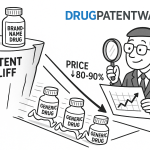
AbbVie’s strategy on adalimumab (Humira) is the most studied and financially consequential evergreening case in the industry. AbbVie filed over 250 patents on adalimumab, covering formulation (specifically the citrate-free formulation that reduces injection-site pain), dosing regimen, manufacturing processes, and combination uses. The composition-of-matter patent on adalimumab expired in December 2016 in the US and in October 2018 in the EU. However, through its patent thicket, AbbVie delayed US biosimilar entry until July 2023 via licensing agreements with all US biosimilar developers (Amgen, Samsung Bioepis, Sandoz, Pfizer, and seven others) that contained provisions prohibiting US launches before 2023. Humira generated approximately $21 billion in US revenue in 2022 alone, the last full year before biosimilar competition. In the EU, where AbbVie did not achieve equivalent licensing delays, biosimilar penetration began in October 2018 and reached 80% market share in Germany by 2022.
Polymorph and Salt Patents: Where the Science Meets the Litigation
New polymorph or salt patents are regularly challenged under Section 103 (obviousness) in IPR proceedings at the Patent Trial and Appeal Board (PTAB). The legal standard, established in KSR International Co. v. Teleflex Inc. (2007), holds that if a skilled artisan would have a reason to combine known elements to achieve a claimed result with a reasonable expectation of success, the claim is obvious. Applied to polymorph patents, this means a generic challenger will argue that routine crystallization screening, which every medicinal chemist performs, makes the discovery of any given polymorph obvious.
The counterstrategy for innovators is to generate data showing unexpected properties: a polymorph with meaningfully superior dissolution rate, stability, or bioavailability that could not have been predicted from prior art. Forest Laboratories successfully defended its eszopiclone (Lunesta) polymorph patents through this mechanism, arguing that the Form I polymorph had unexpected hygroscopic stability advantages over the known Form II. Teva’s Paragraph IV challenge failed in the District of Delaware in 2012, which preserved Forest’s exclusivity through 2014 and contributed to over $900 million in annual Lunesta revenues in the interim.
Conversely, Ranbaxy (now Sun Pharmaceutical) successfully challenged Pfizer’s Norvasc (amlodipine besylate) formulation patents in litigation that ended in 2006, clearing the way for generic amlodipine entry and collapsing what had been a $2.5 billion annual franchise. The case turned on whether Pfizer’s besylate salt patent claimed a meaningful advantage over the maleate salt used in earlier art, and the court found it did not survive obviousness challenge.
Patent Thickets vs. Patent Clusters: A Distinction That Matters in Litigation
The legal and IP community increasingly distinguishes between patent thickets (dense collections of patents that are individually weak but collectively create a barrier through litigation cost and delay) and patent clusters (coherent estates where each patent protects a distinct aspect of a genuinely complex invention). The distinction matters because thickets attract both PTAB IPR petitions and FTC scrutiny, while clusters are more defensible and generate higher IP valuations in M&A transactions.
Regeneron and Sanofi’s dupilumab (Dupixent) patent estate is an example of a coherent cluster. The antibody composition-of-matter patent, the manufacturing process patents for the cell-line expression system, and the method patents covering specific dosing in atopic dermatitis, asthma, and other indications each protect distinct inventive contributions. The estate generates defensible IP value: Dupixent exceeded $14 billion in global sales in 2024 and faces no imminent biosimilar threat because the BPCIA’s 12-year reference product exclusivity, which began at FDA approval in March 2017, does not expire until 2029.
Paragraph IV Litigation: Mechanics, Timelines, and IP Valuation Signals
When a generic manufacturer files an ANDA with a Paragraph IV certification alleging that the innovator’s Orange Book-listed patents are invalid or will not be infringed by the generic, it must notify the patent holder within 20 days. The patent holder has 45 days to sue, which automatically triggers a 30-month stay on FDA’s ability to approve the ANDA. This creates a litigation timeline that typically resolves in 18 to 30 months, either through settlement (which may include a ‘pay-for-delay’ agreement regulated by the FTC under the Actavis doctrine established in FTC v. Actavis, Inc. (2013)) or through a district court judgment.
For IP teams, Paragraph IV certifications received against a portfolio asset are a high-quality competitive intelligence signal. The generic challenger has already completed a comprehensive prior art search, claim construction analysis, and validity opinion before filing. If five or more challengers file Paragraph IVs against the same patents within a short window, the market is signaling that the IP position has identifiable weaknesses. The 180-day first-filer exclusivity awarded to the first Paragraph IV filer creates an incentive for generic manufacturers to file early, which means the first few certifications often reflect the strongest available invalidity theories.
Gilead Sciences received Paragraph IV certifications against its HIV treatment sofosbuvir (Sovaldi) and ledipasvir/sofosbuvir (Harvoni) from Mylan, Teva, and Lannett beginning in 2014, within two years of approval. Gilead litigated aggressively, the key patents survived district court challenges, and the combination product’s patent protection on the Harvoni formulation was upheld through 2030, securing a peak revenue period that saw Harvoni generate $13.9 billion in 2015 alone. The litigation outcome added years to the effective exclusivity window precisely because Gilead’s IP team had built a patent estate that survived claim construction, not merely one that would generate an automatic 30-month stay.
Key Takeaways: Evergreening Mechanics and Litigation
Any new formulation, polymorph, or method patent intended to extend commercial exclusivity must be built on a foundation of unexpected properties, not just functional equivalence to the original. Courts and PTAB have become efficient at identifying thin evergreening claims, and a failed patent defense in litigation can collapse a 30-month stay and accelerate generic entry by 18 months or more. Pay-for-delay settlements are under active FTC and DOJ scrutiny post-Actavis, and the litigation costs of defending a patent thicket have risen substantially since PTAB’s IPR process was introduced under the America Invents Act in 2012. Paragraph IV certifications should trigger an immediate cross-functional review involving regulatory, IP litigation, and business development to model the revenue risk and settlement scenario.
Part V: Biologics Regulatory Complexity and the Biosimilar Interchangeability Standard
The BPCIA Litigation Dance: The Patent Resolution Pathway
The Biologics Price Competition and Innovation Act created a distinct patent resolution framework for biologics called the ‘patent dance,’ codified at 42 USC Section 262(l). A biosimilar applicant must provide the reference product sponsor with its aBLA application and manufacturing information within 20 days of FDA acceptance. The sponsor then has 60 days to identify patents it believes would be infringed, and the parties exchange lists and ultimately reach agreement on which patents to litigate in an immediate phase and which to hold for later challenge. Participation in the patent dance is technically optional for the biosimilar applicant, but opting out forecloses certain procedural rights.
The patent dance has produced significant litigation, most prominently in Amgen Inc. v. Sandoz Inc. (2017), where the Supreme Court held that the BPCIA’s notice requirements were not a mandatory precondition to market entry. This ruling tightened timelines for reference product sponsors who must now monitor biosimilar aBLA filings closely via FDA’s Purple Book and prepare litigation postures before formal notice is received. The Amgen v. Sandoz ruling effectively accelerated the biosimilar market entry clock by eliminating some of the procedural delay that sponsors had used to extend exclusivity.
Biosimilar Interchangeability: The Clinical and Commercial Stakes
Biosimilar interchangeability designation, granted by FDA under a standard higher than biosimilarity alone, allows pharmacists to substitute a biosimilar for the reference product without prescriber intervention in states that permit substitution. As of 2024, the FDA had approved interchangeable designations for Semglee (insulin glargine-yfgn, Viatris/Biocon), Cyltezo (adalimumab-adbm, Boehringer Ingelheim), and Hadlima (adalimumab-bwwd, Samsung Bioepis), among others.
The commercial importance of interchangeability is concentrated in the retail pharmacy channel. Biologics dispensed through specialty pharmacy, including most oncology and rare disease biologics, are typically not subject to pharmacy-level substitution regardless of interchangeability status. For insulin and certain other biologics that flow through retail pharmacy, interchangeability designation directly enables formulary substitution by pharmacy benefit managers (PBMs), which can drive rapid volume uptake. Boehringer Ingelheim priced Cyltezo at an 85% discount to Humira’s wholesale acquisition cost (WAC) at launch in July 2023, making it the most aggressively priced adalimumab biosimilar at US entry. Within six months, Cyltezo had captured meaningful formulary position with CVS Caremark and OptumRx, which together manage pharmaceutical benefits for over 180 million covered lives.
Manufacturing Comparability Studies: The Hidden Regulatory Risk in Biologic M&A
When a biologic product changes ownership through M&A or licensing, the new BLA holder must submit a comparability study demonstrating that manufacturing changes introduced post-transfer do not alter the product’s safety, purity, or potency. Under ICH Q5E (Comparability of Biotechnological/Biological Products Subject to Changes in Their Manufacturing Process), this requires a package of analytical, non-clinical, and in some cases clinical data. FDA can request clinical bridging studies for manufacturing changes that introduce analytical differences not resolvable by physicochemical and biological assay data alone.
This creates a hidden regulatory cost in biologic M&A that deal teams routinely underestimate. When Pfizer acquired Arena Pharmaceuticals in 2022, it inherited the clinical-stage etrasimod (since approved as Velsipaty for ulcerative colitis) and had to manage CMC continuity through the NDA filing process. When Bristol Myers Squibb acquired Celgene in 2019 for $74 billion, it assumed responsibility for Celgene’s manufacturing comparability documentation across multiple biologics including Orencia (abatacept) and the cell therapy pipeline. Due diligence on biologic acquisitions requires CMC technical review of every pending and recent manufacturing change, not just a regulatory status review.
Technology Roadmap: Next-Generation Biologics and Emerging IP Challenges
The wave of bispecific antibodies, antibody-drug conjugates (ADCs), and RNA-based therapeutics reaching approval creates a new generation of IP and regulatory complexity. Bispecific antibodies, such as Roche’s emicizumab (Hemlibra) for hemophilia A and Amgen’s blinatumomab (Blincyto) for ALL, rely on proprietary bispecific platform technologies. Roche’s CrossMAb platform and Amgen’s BiTE (bispecific T-cell engager) platform each carry their own patent estates separate from the drug compound itself. A biosimilar developer targeting Hemlibra must not only design around the emicizumab composition patents but also the CrossMAb assembly technology patents, which cover the manufacturing process for creating a bispecific with correct heavy-chain pairing.
ADC regulatory complexity is layered differently. ADCs consist of three patent-able components: the antibody, the linker, and the cytotoxic payload. AstraZeneca and Daiichi Sankyo’s trastuzumab deruxtecan (Enhertu) carries patents on the antibody (trastuzumab, which now faces biosimilar competition as Herceptin’s patent estate is expired), the cleavable tetrapeptide linker, and the topoisomerase I inhibitor payload DXd, plus manufacturing process patents on the conjugation chemistry. Each of these components has its own patent term, meaning the effective earliest generic entry date is governed by the last-expiring, most difficult-to-design-around claim in the estate. EMA granted Enhertu marketing authorization in January 2023 for HER2-positive breast cancer, and the product reached $2.3 billion in combined AstraZeneca/Daiichi Sankyo revenues in 2023 with an IP estate that appears defensible into the mid-2030s.
RNA therapeutics present a distinct regulatory pathway challenge. siRNA drugs like Alnylam’s inclisiran (Leqvio, marketed by Novartis) and patisiran (Onpattro) are regulated as small molecules under NDA pathways despite their oligonucleotide nature, which means they receive NCE exclusivity rather than reference product exclusivity. The CMC requirements for these products are demanding: synthesis purity specifications for oligonucleotides of 50+ bases require analytical methods that FDA has not fully harmonized, and ICH S6(R1) (Preclinical Safety Evaluation of Biotechnology-Derived Pharmaceuticals) applies to the lipid nanoparticle delivery systems used in mRNA and siRNA products, adding a non-clinical regulatory burden not present for conventional small molecules.
Investment Strategy: Biologic IP Valuation in a Biosimilar Market
Institutional investors pricing biologic assets after biosimilar entry should model a two-phase revenue profile: a rapid erosion phase in the first 18 months post-biosimilar entry, where innovator volume can drop 30-60% in markets with strong payer substitution incentives, followed by a stabilization phase where the innovator retains a premium segment of prescribers who are brand-loyal or where formulary access remains strong. In the adalimumab market, AbbVie retained approximately 84% of its US Humira volume through end of 2023 despite seven biosimilar launches, primarily through a rebate strategy that kept Humira on preferred formulary positions at major PBMs. That strategy is only available to manufacturers with revenues large enough to fund deep rebates while maintaining profitability, which is why small-molecule patent cliff dynamics do not translate directly to biologics.
The biosimilar interchangeability designation itself is an IP valuation event for biosimilar developers. A biosimilar holding interchangeability has access to the pharmacy substitution channel, a competitively defensible position that non-interchangeable biosimilars lack. Investors in biosimilar platform companies should assign material premium to pipelines where interchangeability designation is being pursued.
Part VI: Technology-Driven Regulatory Compliance and the Submission Infrastructure
eCTD 4.0 and the Structured Data Transition
FDA’s Center for Drug Evaluation and Research (CDER) and Center for Biologics Evaluation and Research (CBER) have been piloting eCTD version 4.0 for certain application types since 2021. eCTD 4.0 differs from the current mandatory standard (3.2.2) in its use of XML-based document metadata, structured study data requirements, and a modular architecture that allows granular document-level versioning. The move to 4.0 is driven partly by FDA’s Structured Product Labeling (SPL) initiative and partly by the need to support machine-readable submission content for AI-assisted review.
For regulatory operations teams, the transition to eCTD 4.0 requires validated document management systems capable of generating conformant 4.0 backbones, legal counsel familiar with FDA’s technical conformance guidance, and training for regulatory writers on structured authoring environments. Companies that have already built eCTD 4.0 infrastructure for EMA submissions (where eCTD 4.0 has been required for centralized procedure since 2022) have a head start. Those that have not will face a compressed implementation timeline as FDA moves toward mandatory eCTD 4.0 for NDAs and BLAs in the coming submission cycles.
AI-Powered Adverse Event Processing: What the Data Actually Shows
Natural language processing (NLP) for adverse event (AE) case processing has moved from experimental to operational at several large-volume pharmacovigilance functions. The European Medicines Agency’s EudraVigilance system receives approximately 1.6 million individual case safety reports (ICSRs) per year, and FDA’s FAERS (FDA Adverse Event Reporting System) receives over 2.5 million reports annually. Manual processing at that volume is not feasible at acceptable quality levels.
Pfizer, Novartis, and Roche have each disclosed NLP deployment in their pharmacovigilance pipelines. Published data from validation studies, including a 2022 Pharmacoepidemiology and Drug Safety paper from a Roche-affiliated team, showed that NLP-assisted triage achieved greater than 95% concordance with expert human triage on a dataset of over 50,000 cases, with processing time reduced by roughly 40% per case. The regulatory compliance caveat is that FDA’s guidance on computer-assisted case processing (most recently updated in 2019) requires human oversight and audit trail documentation that demonstrates the automated system did not independently make regulatory decisions. AI handles triage and data extraction; qualified persons still make reportability determinations.
For supply chain integrity, blockchain-based track-and-trace systems have seen deployment at Pfizer’s oral solid dose supply chain and at McKesson’s distribution network, fulfilling requirements under the Drug Supply Chain Security Act (DSCSA). The DSCSA’s electronic interoperability deadline, repeatedly delayed, reached final enforcement for prescription drug trading partners in November 2024. Companies not in compliance risk FDA import alerts and state board of pharmacy enforcement actions.
Key Takeaways: Technology-Driven Compliance
AI in pharmacovigilance reduces cost per case but does not eliminate the qualified person requirement under EU GVP Module V or FDA’s 21 CFR Part 314.80. The legal liability for incorrect reportability decisions remains with the MAH. Blockchain track-and-trace is now a compliance requirement under DSCSA, not a competitive differentiator. eCTD 4.0 is coming for FDA submissions; companies that invest in dual-format submission infrastructure now avoid a forced implementation under time pressure. The regulatory IT stack, document management, submission authoring, pharmacovigilance, and DSCSA track-and-trace, should be evaluated as a portfolio risk factor in M&A diligence, not as a back-office overhead question.
Part VII: Generic Portfolio Strategy, Bioequivalence, and the ANDA Pipeline
The ANDA Backlog and its IP Implications
The FDA’s ANDA backlog, which peaked at over 4,000 pending applications in 2015, has been reduced substantially through GDUFA I and GDUFA II (Generic Drug User Fee Amendments), reaching approximately 1,400 pending ANDAs by late 2024 according to FDA’s monthly performance data. GDUFA II’s 10-month review goal for standard original ANDAs and its priority review designation for applications filing Paragraph IV certifications have restructured the competitive landscape.
For generic manufacturers, the Paragraph IV first-filer advantage remains the single most financially consequential strategic decision in an ANDA program. The 180-day exclusivity period awarded to the first filer translates directly into a period of duopoly with the brand (or monopoly if the brand has authorized a generic). For high-revenue products, this period can generate $200 million to $2 billion in revenue depending on the compound’s market size and the effective price at which the first-filer generic enters. Teva’s ability to use first-filer exclusivity on clonazepam, simvastatin, and sertraline in the early 2000s funded much of the company’s growth into the largest generic manufacturer by revenue.
The strategic complication is that first-filer advantage requires a successful Paragraph IV challenge, which requires either a district court win or a settlement. Settlements under the Actavis doctrine must now be structured to withstand FTC ‘scope of the patent’ scrutiny, meaning any value transfer from innovator to generic in exchange for delayed entry faces antitrust analysis. Patent counsel and regulatory counsel must work together from the moment a first-filer candidacy is identified, not after the ANDA is filed.
Bioequivalence Complexity for Narrow Therapeutic Index Drugs
The FDA’s guidance on bioequivalence for narrow therapeutic index (NTI) drugs, finalized in 2015 and revised in 2020, applies more stringent standards to products like warfarin, lithium, phenytoin, carbamazepine, and levothyroxine. For NTI drugs, FDA requires that the 90% confidence interval for the geometric mean ratio of both AUC and Cmax fall within 90-111.11% (rather than the standard 80-125%). This tighter interval requires larger bioequivalence study populations and higher-quality formulation control.
For generic manufacturers targeting NTI compounds, the tighter bioequivalence standard translates into higher development cost, which reduces the number of generic challengers willing to invest in those ANDAs. This paradoxically supports the innovator’s commercial position after LOE (loss of exclusivity) by limiting the number of generic entrants and maintaining a higher post-LOE price floor than would exist in a crowded market. NTI bioequivalence strategy is therefore relevant to both the generic challenger’s development economics and the innovator’s post-LOE revenue model.
Levothyroxine sodium provides the most detailed case study. After decades of contested bioequivalence between brand (Synthroid, AbbVie) and generic formulations, FDA in 2004 required all levothyroxine manufacturers to file NDAs (not ANDAs) because prior versions lacked adequate bioequivalence data. The resulting NDA requirement allowed Synthroid to maintain 40% market share at a significant price premium well after generic entry, because physician and patient confidence in brand stability drove prescribing behavior independent of formulary incentives. AbbVie still generates approximately $700 million in annual Synthroid revenues despite generic competition, a revenue profile that reflects both NTI brand loyalty and the regulatory history.
Stage-Gate Portfolio Evaluation for Generic Pipelines
The stage-gate process for evaluating generic pipeline candidates should incorporate five quantitative criteria: net present value (NPV) of projected revenues discounted for generic competition intensity, technical risk score assessing formulation complexity and bioequivalence challenge, IP clearance score summarizing the Paragraph IV litigation probability and estimated defense duration, market access score reflecting payer and formulary dynamics, and time-to-launch projection based on ANDA queue position and manufacturing readiness.
Monte Carlo simulation on these inputs, run across 1,000 to 10,000 scenario iterations, produces a probability-weighted NPV distribution for each candidate that is far more useful for portfolio allocation decisions than a point-estimate NPV. The simulation captures tail-risk scenarios: a product where the expected NPV is $80 million might have a 15% probability of an NPV below zero (if litigation is lost and the launch window collapses) and a 10% probability of an NPV above $400 million (if the compound faces only one generic entrant and maintains higher-than-expected price). Portfolio managers who allocate R&D resources based on expected NPV alone systematically underweight the downside scenarios that dominate realized returns in contested Paragraph IV markets.
Investment Strategy: Generic Pipeline IP Valuation
The highest-return generic pipeline assets are typically products where the Paragraph IV first-filer positions have already been established but where the district court outcome is uncertain. Pre-litigation settlement offers from the innovator in these scenarios can generate significant risk-adjusted returns, because the alternative, a full litigation cycle costing $10-50 million in legal fees for each side, motivates both parties toward compromise. Generic manufacturers with established first-filer positions on compounds with $1 billion or more in annual brand revenues are worth a meaningful premium in M&A transactions, even before the litigation resolves, because the asymmetry between potential upside (180-day exclusivity on a blockbuster) and litigation cost is favorable.
Part VIII: Risk Management, Drug Shortages, and the Regulatory Response
FDA’s Draft Guidance on Risk Management Plans and the Supply Chain Imperative
FDA’s 2022 draft guidance on Risk Management Plans (RMPs) for preventing drug shortages, issued under the FDCA Section 506C-1 added by the CARES Act, requires manufacturers of certain critical drugs to maintain and update RMPs that assess single-source supplier dependencies, manufacturing capacity constraints, and quality system vulnerabilities. This is distinct from a pharmaceutical REMS, which manages clinical safety risks. The drug shortage RMP addresses supply continuity risk and is reviewed during facility inspections.
Products on FDA’s drug shortage list, which is updated weekly and had over 200 active shortages as of late 2024, face heightened scrutiny for manufacturing capacity and quality system adequacy. Shortage designation also triggers FDA’s discretionary enforcement posture: FDA may decline to pursue enforcement action against a manufacturer that is out of compliance on certain labeling or labeling-adjacent requirements if the product is critical to patient care and no alternative supply exists. This creates a perverse incentive, manufacturers in shortage are sometimes insulated from routine enforcement, which can permit quality problems to persist longer than they would in a competitive market.
The most persistent shortage categories in recent years are sterile injectables, particularly preservative-free ophthalmic products, oncology supportive care drugs like methotrexate and carboplatin, and controlled substances. For portfolio managers holding branded or authorized generic products in these categories, a competitor’s shortage event creates a temporary revenue opportunity, but only if manufacturing capacity was pre-positioned. Companies that can flex production on a 60-to-90-day notice cycle capture shortage revenue; those that require 180 days or more of lead time for manufacturing scale-up miss it.
Compounding Pharmacies, 503B Outsourcing Facilities, and the Portfolio Intersection
The drug compounding sector, regulated under FDCA Sections 503A (traditional pharmacies) and 503B (outsourcing facilities), intersects with branded pharmaceutical portfolios when compounders produce copies of commercially available drugs at lower prices. FDA maintains a list of drugs that may be compounded by 503B facilities, and branded drugs on the shortage list are eligible for 503B compounding even if they are not otherwise on FDA’s bulk drug substances list. This creates a regulatory mechanism through which 503B compounders can legally compete with branded products during shortage periods.
Novo Nordisk and Eli Lilly faced this dynamic in 2023 and 2024 when semaglutide (Ozempic/Wegovy) and tirzepatide (Zepbound/Mounjaro) were placed on FDA’s drug shortage list due to demand exceeding GLP-1 supply. FDA initially allowed 503B facilities to compound these drugs, generating an estimated $1 billion in compounded GLP-1 revenue in 2024 from outsourcing facilities including Empower Pharmacy and Belmar Pharmacy. Novo Nordisk and Eli Lilly each lobbied FDA to remove semaglutide and tirzepatide from the shortage list once manufacturing capacity increased, which would eliminate 503B eligibility. FDA removed semaglutide from the shortage list in February 2025 and issued guidance that 503B compounding of shortage-eligible semaglutide must cease within a wind-down period. Tirzepatide’s removal followed in March 2025.
The broader portfolio lesson is that FDA drug shortage status is an active competitive variable, not a binary condition. For innovators, maintaining supply to avoid shortage designation protects against 503B compounding competition. For generic manufacturers and 503B operators, shortage status opens a window that can close quickly once the innovator resolves its supply issue.
Part IX: Regulatory Strategy for Targeted Therapies and Accelerated Pathways
Breakthrough Therapy Designation: IP and Commercial Mechanics
Breakthrough Therapy Designation (BTD), created under the FDA Safety and Innovation Act of 2012, is available for drugs that treat a serious condition where preliminary clinical evidence shows substantial improvement over existing therapies on a clinically significant endpoint. BTD provides intensive FDA guidance during development, organizational commitment from senior FDA staff, and rolling review eligibility. It does not grant additional regulatory exclusivity beyond what the drug would otherwise receive.
The commercial value of BTD is primarily in development time compression. FDA data shows that BTD drugs have achieved approval in a median of 5.2 years from Phase I initiation compared to 7.5 years for standard pathway drugs. For a drug generating $1 billion annually at peak, compressing the development timeline by two years recovers approximately $1.5 to $2 billion in net present value (at a 10% discount rate), assuming the market entry occurs before the NCE exclusivity period would have been consumed. That timeline compression also extends the effective commercial life under patent by the same margin.
Keytruda (pembrolizumab), Merck’s PD-1 inhibitor, received BTD for melanoma in April 2013 and reached accelerated approval in September 2014 based on tumor response rate in the KEYNOTE-001 trial, one of the fastest development timelines for an oncology biologic at the time. The compressed timeline preserved patent exclusivity that would have been consumed by a longer clinical program. Keytruda’s composition-of-matter patent (US 8,168,757) expires in 2028, and Merck has filed method-of-treatment patents that extend to 2036 or beyond for specific indications. Peak annual revenues of approximately $25 billion in 2023 make the IP estate supporting Keytruda among the most valuable in the industry.
Accelerated Approval, Confirmatory Trials, and the Post-Market Regulatory Risk
FDA’s accelerated approval pathway allows approval based on a surrogate endpoint reasonably likely to predict clinical benefit, with a post-market requirement for confirmatory trials. The Omnibus appropriations legislation enacted in December 2022 gave FDA new authority to require submission of confirmatory trial protocols at the time of accelerated approval and to withdraw accelerated approvals more expeditiously if confirmatory trials fail or are not being pursued with due diligence.
The commercial risk of accelerated approval products is therefore asymmetric: approval can come 12 to 18 months earlier than with standard approval, but post-market confirmatory trial failure can result in market withdrawal. Accelerated Therapeutics withdrew ADC polatuzumab vedotin (Polivy) from accelerated approval voluntarily in 2022 after receiving full regular approval based on confirmatory data, a case where the pathway worked as designed. More problematic was FDA’s withdrawal of Biogen’s aducanumab (Aduhelm) accelerated approval, which did not technically occur through formal withdrawal but through a process by which FDA’s own advisory committee recommended against approval based on inconclusive evidence, the agency nonetheless granted accelerated approval in June 2021 using surrogate amyloid plaque reduction, and then CMS restricted Medicare coverage so broadly that the drug was commercially non-viable. Biogen ultimately halted Aduhelm’s commercialization in January 2024.
The Aduhelm case illustrates a regulatory-commercial mismatch: FDA approval does not guarantee payer coverage, particularly when the clinical evidence underlying an accelerated approval decision is contested within FDA’s own expert community. IP teams and portfolio managers must model coverage and reimbursement risk as a variable independent of regulatory approval status.
Key Takeaways: Targeted Therapies and Accelerated Pathways
BTD should be pursued whenever preliminary Phase I or Phase II data supports a substantial improvement claim, because the development timeline compression recovers IP life that cannot otherwise be recaptured. Accelerated approval is a development tool with post-market obligations that are now harder to defer under 2022 FDA authorities; confirmatory trials must be adequately powered and rigorously managed from the date of accelerated approval, not treated as a post-launch obligation. CMS coverage decisions are a commercial risk event distinct from FDA approval and must be modeled explicitly for high-cost drugs seeking accelerated approval where clinical evidence is based on surrogate endpoints.
Conclusion: Regulatory Strategy as Portfolio Alpha
The pharmaceutical companies that extract maximum IP value from their portfolios do not treat regulatory affairs as a cost center. They treat regulatory decisions as a series of monetizable events: the Orange Book listing that triggers a 30-month stay, the pediatric study that earns six months of BPCA extension, the Type IA variation that is correctly structured using Established Conditions to avoid a PAS review queue, and the accelerated approval that compresses a development timeline and preserves patent life.
The costs of getting these decisions wrong are concrete and quantifiable. A missed Orange Book listing deadline costs the right to a 30-month stay. A poorly structured NDA that requires a PAS for every manufacturing optimization absorbs regulatory resources that should be building the sNDA pipeline. A REMS program negotiated reactively with generic challengers instead of proactively designed with FDA costs market access months. A biologic acquisition closed without adequate CMC due diligence generates comparability study expenses and FDA information requests that were not in the deal model.
The regulatory environment in 2025 is more complex than it was five years ago: EMA’s digital transformation, FDA’s accelerated approval reform, GDUFA II’s performance timelines, ICH Q9(R1)’s revised risk standards, and the DSCSA’s interoperability requirements all demand active management. The companies with the strongest portfolio returns are not those with the most drugs in development. They are those that have built regulatory and IP strategy functions that talk to each other, that map every drug’s lifecycle against its patent estate in real time, and that treat every regulatory submission as a strategic event with a calculable IP consequence.
Aggregate Key Takeaways
Orange Book patent listing is a 30-day deadline that triggers or forfeits the 30-month stay right; assign dedicated ownership and build calendar alerts against every patent issuance. NCE exclusivity, ODE, and BPCA extension eligibility should be assessed at IND stage, with clinical protocol design reflecting those regulatory targets. CMC remediation capacity should scale with portfolio complexity, with specialist leads for injectables, oligonucleotides, and other complex dosage forms who apply ICH Q12 Established Conditions correctly from NDA design. REMS programs are active IP risk events requiring legal and business development modeling, not just safety compliance. Multi-jurisdictional SPC filing strategies routinely add 18 to 30 months of EU exclusivity beyond US expiry; this value is systematically underweighted in EBITDA cliff models. Evergreening through formulation, polymorph, or salt patents requires unexpected properties data to survive PTAB IPR challenge. Paragraph IV certifications received are competitive intelligence events signaling identifiable IP weaknesses. Biologics M&A due diligence must include CMC technical review of all pending and recent manufacturing changes, not just regulatory status. Biosimilar interchangeability designation is a commercial differentiator in the retail pharmacy channel and carries IP valuation premium for biosimilar developers. AI-driven pharmacovigilance is now operational at major companies but does not eliminate the qualified person requirement for reportability decisions. Drug shortage designation is a dynamic competitive variable that can open 503B compounding competition for innovator products. Breakthrough Therapy Designation compresses development timelines and recovers IP life; it should be pursued aggressively when Phase I/II data supports it. Accelerated approval requires immediately initiated, adequately powered confirmatory trials under 2022 FDA authorities; CMS coverage risk must be modeled independently of FDA approval probability.
All drug names, company names, litigation cases, regulatory citations, and revenue figures referenced in this article reflect publicly available information. Patent expiration projections and revenue estimates are illustrative and should be independently verified for investment or legal purposes.