On one hand, the pharmaceutical sector is driven by a scientific and economic imperative that thrives on openness: the seamless flow of data, the cross-border integration of complex supply chains, and the “Great Liberalization” of trade that, for three decades, has correlated with an explosion in medical innovation and product quality. On the other hand, the geopolitical reality has shifted violently toward protectionism. Rising tariff walls, the decoupling of Western and Eastern biotechnology sectors via legislation like the U.S. BIOSECURE Act, and a resurgence of industrial policy are threatening to dismantle the very mechanisms that have historically delivered better, safer, and more affordable medicines to patients worldwide.
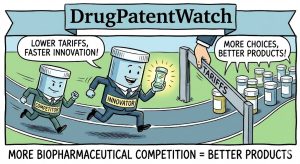
For business leaders in pharmaceutical intellectual property (IP), research and development (R&D), and corporate strategy, this report posits a provocative thesis supported by extensive economic evidence: barriers to trade are barriers to quality. While the political narrative suggests that tariffs and protectionism foster domestic security and industrial strength, the data reveals a different story. Historically, tariff cuts and the removal of trade friction have acted as a powerful selection pressure, forcing pharmaceutical firms to “escape competition” by innovating—moving from defensive patent thickets to genuine value-added medicines. Conversely, the current trajectory of rising trade costs risks creating a class of “lazy monopolists,” eroding the razor-thin margins that sustain the generic drug market, and severing access to the critical active pharmaceutical ingredients (APIs) necessary for high-quality manufacturing.
This report provides an exhaustive analysis of the relationship between trade policy and biopharmaceutical product quality. We examine the historical evidence from the Uruguay Round and the “Great Liberalization” of the 1990s to quantify the innovation boost provided by open markets. We dissect the fragility of the modern supply chain, exposing how tariffs on Key Starting Materials (KSMs) act as a tax on quality control. We explore how intelligence platforms like DrugPatentWatch have become essential survival tools, allowing firms to navigate the opaque “patent thickets” and supply chain disruptions of a fragmented world. Ultimately, we argue that while short-term protectionism offers political optics, long-term pharmaceutical dominance belongs to those who leverage global integration to drive efficiency, ensuring that the next generation of therapeutics is not just made, but made better.
1. The Macro-Economic Case: How Trade Liberalization Drives Innovation
1.1 The “Great Liberalization” Experiment: A Natural Laboratory
To understand the likely impact of the restrictive trade policies characterizing the mid-2020s, one must first examine the inverse scenario: the “Great Liberalization” of the 1990s. This period serves as a massive, natural economic experiment. Following the Uruguay Round and the establishment of the World Trade Organization (WTO), the global economy saw a dramatic reduction in tariff barriers. Average developed country tariffs dropped from approximately 6% to 3.6%, while developing nations slashed tariffs from roughly 20% to 13%.1
This era was not merely about shipping cheaper consumer goods; it fundamentally altered the incentives for intellectual property generation. Comprehensive research utilizing international firm-level patent data across 60 countries reveals a statistically robust and economically significant correlation: roughly 7% of the increase in knowledge creation during the 1990s can be directly explained by trade policy reforms.3 This finding challenges the conventional wisdom often cited by protectionist advocates—that high barriers are necessary to incubate domestic innovation. Instead, the evidence points to a dynamic where openness fuels the “creative destruction” necessary for technological advancement.
The mechanism behind this innovation boost is twofold. First, improved market access allows firms to amortize the high fixed costs of R&D over a larger global customer base, increasing the potential return on investment for new drugs. Second, and perhaps more importantly, the reduction of tariffs exposes domestic firms to foreign competition. This competitive shock forces incumbents to innovate to survive. They cannot rely on legacy products protected by tariff walls; they must develop “better products” that compete on efficacy, safety, and formulation quality.3
“Our results reveal a large effect of tariff cuts on innovation as measured by patent data… These effects are not driven by the deterioration of innovation quality, and the results are robust to controlling for changes in the patent system.”
— Coelli, Moxnes, & Ulltveit-Moe, National Bureau of Economic Research (NBER)3
1.2 The Mechanism of Quality Improvement: Escape vs. Schumpeter
The debate over trade and innovation often boils down to a clash between two economic giants: Kenneth Arrow and Joseph Schumpeter. Schumpeter argued that monopolies and market power—often secured by protectionist barriers—are necessary to generate the “super-profits” required to fund high-risk R&D. In this view, tariffs protect the goose that lays the golden egg. However, the data from the pharmaceutical sector overwhelmingly supports the Arrow effect: when barriers fall, the threat of competition forces firms to innovate to maintain their market position.
This phenomenon is known as the “escape competition” effect. When tariff walls come down, domestic firms face an influx of foreign competitors—often generic manufacturers or firms with comparable therapeutics. To avoid commoditization and margin erosion, incumbent firms must “escape” by developing superior products. They move from simple small molecules to complex biologics, they improve delivery mechanisms (e.g., moving from infusion to subcutaneous injection), and they invest in cleaner, more efficient manufacturing processes.4
Crucially, this is not merely a game of quantity. Critics might argue that firms simply file more low-quality patents to clutter the landscape. However, citation analysis—a proxy for patent quality—indicates that the quality of innovation increases alongside the quantity during periods of liberalization.3 Firms don’t just patent more; they patent better. The pressure of open trade acts as a filter, weeding out marginal improvements and incentivizing genuine breakthroughs that can command a price premium in a crowded global marketplace.
1.3 The “Trapped Factor” Phenomenon and Resource Allocation
A critical and often overlooked mechanism by which trade barriers stifle quality is the “trapped factor” phenomenon. When trade barriers are high, resources—capital, specialized talent, and manufacturing capacity—are often “trapped” in the inefficient production of older, less competitive drugs. Protectionism allows these “zombie” product lines to persist because they are shielded from more efficient foreign competitors.6
When trade liberalizes, these protective walls crumble. Firms are forced to rationalize their portfolios. They stop throwing good money after bad products and reallocate those resources toward high-value, patentable innovation. The “cost of redeploying” factors from production to innovation drops as the firm realizes that its only path to survival lies in moving up the value chain.8 This reallocation is painful in the short term, often leading to restructuring and job losses in low-value manufacturing, but it is the primary engine of long-term industry health and product quality improvement. In the current era, the “Schumpeterian” defense of tariffs is frequently little more than a cover for “evergreening”—using legal maneuvers and trade barriers to protect old products rather than creating new ones.9
2. The Supply Chain Fragility: Tariffs as a Quality Threat
2.1 The “Invisible Backbone” and the API Bottleneck
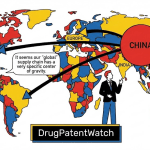
The modern pharmaceutical supply chain is not a robust web; it is a funnel that narrows precariously into East Asia. While Western pharmaceutical giants hold the IP and the branding, the physical reality of the drug—the molecules themselves—originates largely in China and India. China controls approximately 40% of global API (Active Pharmaceutical Ingredient) volume and is the dominant supplier of Key Starting Materials (KSMs), the essential chemical building blocks that precede the API.10 India, often hailed as the “Pharmacy of the World” for its massive generic output, is itself heavily dependent on this flow, importing 70-80% of its KSMs and intermediates from China.10
In this context, tariffs are not merely a financial line item or a tool of trade negotiation; they are a direct threat to product quality and patient safety. The distinction between a KSM and an API is critical here. Regulators and industry players often debate where “Good Manufacturing Practices” (GMP) must begin. Designating a material as a KSM “late” in the synthesis process saves money because earlier steps don’t require expensive GMP oversight. However, this lack of oversight creates a “black box” in the supply chain. When tariffs are imposed on Chinese imports, manufacturers face intense pressure to cut costs elsewhere to preserve margins.
This pressure creates a “Quality Spiral.” To offset a 25% or 100% tariff on inputs, a manufacturer might switch from a high-quality, reputable supplier to a lower-tier vendor who cuts corners on purity or waste disposal but offers a lower price.12 This substitution introduces variability and impurities into the drug supply, directly undermining the “Quality by Design” (QbD) principles that regulators mandate. The tariff, therefore, acts as a tax on quality control.
2.2 The Cost of Goods Sold (COGS) Crisis in Generics
The impact of tariffs is asymmetric. Brand-name manufacturers, with gross margins often exceeding 80%, can absorb input cost increases or pass them on to insurers. Generic manufacturers cannot. The generic sector operates on a volume-based model with razor-thin margins. In this environment, a tariff-driven increase in the Cost of Goods Sold (COGS) is existential.
Table 1: The Impact of Tariffs on Pharmaceutical Manufacturing Economics
Cost Component
Impact of High Tariffs
Consequence for Product Quality
Raw Materials (KSMs)
Cost increases of 15-25%
Intense pressure to source from less regulated, non-GMP suppliers, increasing impurity risks.10
Capital Equipment
Higher cost for bioreactors & lab equipment
Delayed modernization; aging infrastructure leads to higher rates of batch failures and particulate contamination.12
R&D Budget
Diverted to cover COGS inflation
Cancellation of “marginal” innovation projects, such as orphan drugs or difficult-to-formulate generics.12
Supply Chain Logic
Shift from “Just-in-Time” to “Just-in-Case”
Hoarding of raw materials leads to inventory expiration, degradation of chemically unstable inputs, and waste.13
Quality Compliance
Budget cuts to “non-essential” depts.
Reductions in QA/QC staff or frequency of supplier audits, leading to oversight gaps.12
As Table 1 illustrates, the financial shock of tariffs reverberates through the operational machinery of the firm. When a generic manufacturer is forced to hoard inventory to hedge against future tariff hikes (“Just-in-Case”), they risk using aged materials that may have degraded, subtly altering the efficacy of the final dose.13
2.3 The BIOSECURE Act and the Decoupling Crisis
The legislative landscape of 2024-2025 is dominated by the BIOSECURE Act, a bipartisan U.S. initiative aimed at preventing “biotechnology companies of concern” (specifically naming Chinese giants like WuXi AppTec, BGI, and MGI) from accessing U.S. taxpayer dollars or federal contracts.14 While framed as a national security imperative to protect American genetic data and supply chain sovereignty, the Act functions as a massive non-tariff barrier that disrupts the R&D ecosystem.
U.S. biotech firms, particularly small and mid-sized entities, rely heavily on Chinese Contract Development and Manufacturing Organizations (CDMOs) for what is known as “China Speed”—the ability to scale a molecule from the bench to the clinic rapidly and cost-effectively. Forcing a rapid decoupling creates a “technology transfer tax.” Moving a complex biologic manufacturing process from a facility in Shanghai to one in North Carolina or Europe is not a simple “copy-paste” operation. It requires:
Re-validation: Proving that the new facility produces the exact same molecule.
Stability Testing: Ensuring the product remains stable in the new storage conditions.
Regulatory Filings: Submitting new supplements to the FDA, which can take months or years.16
During this transition, innovation slows. The focus of R&D teams shifts from creating better products to simply replicating existing ones in a new geography. The “opportunity cost” of this decoupling is the new drugs that are not discovered because capital and talent were diverted to supply chain re-engineering.14
2.4 Intelligence as a Mitigation Strategy
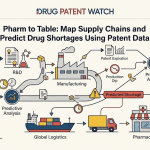
In this fractured landscape, supply chain visibility becomes a competitive advantage. This is where platforms like DrugPatentWatch provide critical leverage. By monitoring patent filings for formulations and manufacturing processes, supply chain managers can identify which competitors are locking down specific KSMs or excipients. Furthermore, understanding the patent status of upstream suppliers helps firms avoid partners who might be targeted by IP litigation or trade actions.17
For example, if a patent filing reveals a competitor’s reliance on a specific polymorph produced only in a tariff-heavy region, a savvy firm can pivot to an alternative salt form or a different supplier before the market tightens. This transforms patent data from a legal necessity into a tool for supply chain resilience.
3. The Generic Battlefield: Competition Breeding Competence
3.1 The “Flight to Quality” in Emerging Markets
One of the most compelling pieces of evidence that competition drives quality comes from the evolution of the Indian pharmaceutical industry following the implementation of the TRIPS Agreement (Trade-Related Aspects of Intellectual Property Rights).
Prior to 2005, India’s patent regime recognized only process patents, not product patents. This allowed Indian manufacturers to reverse-engineer patented Western drugs, creating a thriving industry based on producing low-cost copies via slightly modified chemical processes. While this provided affordable access, it created an industry focused on “tweaking” rather than innovating, with variable quality standards.18
The implementation of TRIPS, which mandated the recognition of product patents, was initially viewed as a death knell for the Indian generic industry. Protectionists argued it would destroy local firms. Instead, it triggered a massive “flight to quality.” Forced to compete in a world where they could no longer simply copy new drugs, Indian giants like Sun Pharma and Dr. Reddy’s Laboratories pivoted. They invested heavily in R&D, raising expenditure from a meager 2% of sales to nearly 10-12%.19
The result was a structural upgrade of the entire sector. To export to regulated markets like the U.S. and Europe—their new survival strategy—these firms had to meet stringent FDA GMP standards. They moved from simple oral solids to “complex generics,” biosimilars, and New Chemical Entities (NCEs).20 The trade liberalization forced them to upgrade their facilities, their talent, and their quality control systems. Today, Indian firms are leaders in difficult-to-manufacture injectables, a testament to how exposure to global standards (competition) forces an industrial upgrade that protectionism (the pre-2005 era) never achieved.
3.2 The Economics of Low-Competition Markets
While hyper-competition drives prices down, it can sometimes drive players out, leaving a market with so few suppliers that quality stagnates and shortages arise. Smart players use data to find the “Goldilocks” zone—markets with high barriers to entry (ensuring margins) but enough competition to drive innovation.
Low Competition Opportunities: Segments like sterile injectables, ophthalmics, and transdermal patches often have fewer than three competitors due to the complexity of manufacturing. In these markets, price erosion is slower than in the “plain vanilla” oral solid market (where prices can drop 90% with 10+ competitors).22 Because margins are preserved, firms have the capital to reinvest in quality and “incremental innovation,” such as improving the stability of the injectable or the adhesion of the patch.23
The Role of DrugPatentWatch: Identifying these opportunities requires granular data. DrugPatentWatch enables companies to filter patents not just by expiration date, but by therapeutic class, route of administration, and generic entrant count. This allows strategic planners to identify niches where they can introduce a “better product”—for example, a preservative-free formulation of an eye drop—rather than just a cheaper copy.23
4. Strategic Innovation: Beyond the “Lazy Monopolist”
4.1 Incremental Innovation vs. Evergreening
A central tension in pharmaceutical policy is distinguishing between “evergreening” (trivial changes to extend patent life) and “incremental innovation” (meaningful improvements to existing drugs). Critics often lump them together, but trade pressure reveals the difference.
When a patent cliff approaches and generic entry is imminent, the originator cannot simply rest on the original molecule. To retain market share in a free-trade environment, they must develop a Value-Added Medicine (VAM). This might involve:
Switching from Immediate Release (IR) to Extended Release (XR): This reduces pill burden and improves patient adherence.
Developing a Pediatric Formulation: Creating a liquid or chewable version for children.
Novel Delivery Systems: Moving from an intravenous infusion (requiring a hospital visit) to a subcutaneous auto-injector (allowing home administration).
While cynics call this “evergreening,” these are often genuine quality-of-life upgrades. The drive to create these improvements is directly correlated with the threat of generic commoditization. If the market were protected by high tariffs that kept foreign generics out, the incumbent would have little incentive to invest in the XR version. They could simply continue selling the IR version at a monopoly price. Trade liberalization creates the threat that necessitates the upgrade.25
4.2 The “Product Hopping” Controversy
There is, however, a dark side to this strategy known as “product hopping.” This occurs when a company executes a “hard switch”—withdrawing the original drug from the market entirely just before generic entry, forcing patients onto the new, patent-protected version.27 This strategy relies on manipulating market friction rather than competing on product merit.
However, in a regime of open trade and lower tariffs, the ability to execute a “hard switch” is diminished. Why? Because parallel imports and global competition allow the market to bypass the blockade. If a U.S. manufacturer withdraws the old drug to force a switch, but trade barriers are low, distributors might import the original version from Europe or Canada, or a foreign generic might enter the market faster. High tariffs and trade barriers, by limiting the number of available substitutes and isolating the national market, inadvertently empower abusive product hopping strategies by trapping patients within the domestic monopolist’s ecosystem.28
4.3 Radical vs. Incremental Innovation Under Protectionism
Does protectionism spur “radical” innovation even if it stifles incremental change? The “Schumpeterian” view suggests yes—that the massive profits from protected markets fund moonshot projects. However, recent studies suggest that firms in protected markets often become risk-averse. They use their surplus capital for share buybacks or marketing rather than risky R&D.
Conversely, firms facing “import competition” (the result of tariff cuts) often pivot to radical innovation as a survival strategy. If low-cost competitors can easily replicate your current portfolio, your only safety lies in inventing something they cannot copy—a new mechanism of action or a gene therapy. The “Great Liberalization” data supports this: firms exposed to trade shocks didn’t just patent more; they shifted their research focus toward newer, less crowded technology classes.29
5. Deep Dive: Leveraging Patent Data for Competitive Advantage
In a market distorted by tariffs, regulatory upheavals, and shifting supply chains, data becomes the primary hedge against risk. The era of relying solely on backward-looking sales data is over; the future belongs to those who analyze the legal and chemical underpinnings of the market to predict future disruptions.
5.1 Predicting Patent Cliffs with Precision
A patent expiration is rarely a single, clean date on a calendar. It is a complex cascade of events involving pediatric exclusivity (adding 6 months), patent term extensions (PTE) for regulatory delays, and litigation stays (30 months under Hatch-Waxman).30 Investors and developers who rely on basic expiration dates often miscalculate the “effective patent life,” leading to disastrous inventory decisions.
DrugPatentWatch provides the granularity needed to see the “Patent Thicket.” By mapping the entire family of patents—composition of matter, method of use, formulation, manufacturing process—firms can identify:
Launch Windows: The precise moment a generic can launch with minimal legal risk, accounting for all extensions.
Litigation Risks: Tracking “Paragraph IV” certifications, which signal that a generic competitor is aggressively challenging the innovator’s patents. This is a “smoke signal” for imminent competition.31
Design-Around Opportunities: Identifying which patents in the thicket are weak or narrow (e.g., a specific crystal structure) allows R&D teams to develop a bioequivalent product that bypasses specific IP claims, enabling market entry even before all patents expire.9
5.2 Supply Chain Forensics: The “Rosetta Stone”
Perhaps the most underutilized application of patent data is in supply chain resilience. Patent filings are public disclosures. To get a patent, an innovator must describe the invention. This often includes detailed descriptions of the manufacturing process, including specific solvents, catalysts, and intermediates used.
This information is a “Rosetta Stone” for sourcing managers.
Scenario: A competitor files a patent for a new amorphous solid dispersion of a drug to improve solubility. The patent describes the use of a specific polymer (e.g., HPMC-AS) and a spray-drying process.
Insight: This signals that the competitor will need significant quantities of HPMC-AS and specialized spray-drying capacity.
Action: A CDMO or supplier using DrugPatentWatch to monitor these filings can proactively secure the necessary supply chain capacity or raw materials before the broader market reacts. Conversely, if a procurement manager sees that a drug relies on a catalyst produced almost exclusively in a tariff-targeted zone (e.g., a specific palladium catalyst from China), they can identify the supply risk years before the tariff hits.17
5.3 Freedom to Operate in a Tariff-Constrained World
As tariffs rise, the cost of infringing on a patent increases—not just in legal fees, but in the inability to pivot supply chains. Companies use patent data to map “Freedom to Operate” (FTO) zones. If a tariff blocks access to a specific patented manufacturing process used in China, firms must quickly find an alternative, non-infringing process that can be executed in a tariff-free zone (e.g., Europe or Mexico). Patent databases allow R&D teams to scan for expired or abandoned process patents that can serve as the basis for these new, resilient supply chains.
6. The CDMO Landscape: Pricing, Capacity, and the “Tech Transfer Tax”
6.1 The Pricing Architecture of Outsourcing
The shift toward protectionism profoundly impacts the Contract Development and Manufacturing Organization (CDMO) sector. CDMOs act as the factories for the biotech industry. Their pricing models—typically Fee-for-Service (FFS) or Full-Time Equivalent (FTE)—are sensitive to geopolitical friction.16
Fee-for-Service (FFS): The client pays a fixed price for a specific deliverable (e.g., a batch of clinical trial material). This model transfers risk to the CDMO.
FTE: The client pays for a dedicated team of scientists. This offers flexibility but higher fixed costs.
The BIOSECURE Act and tariffs act as a “Tech Transfer Tax.” When a U.S. biotech firm is forced to move its project from a Chinese CDMO (like WuXi) to a U.S. or European one, they don’t just pay a higher hourly rate (often 30-50% higher). They pay for the Technology Transfer: the cost of teaching the new CDMO how to make the drug. This involves months of engineering runs, validation batches, and analytical method transfers. This “tax” drains R&D budgets, leaving less capital for innovation.16
6.2 The “Hidden Costs” of Decoupling
Beyond the headline rates, the decoupling of supply chains introduces “hidden costs” that degrade product value.
Raw Material Markups: Western CDMOs often charge a 15-25% markup on raw materials they procure. If they are forced to source from non-Chinese suppliers due to tariffs, the base price rises, and the markup compounds that increase.16
Stability Storage: Moving products requires new stability studies. A 5-year stability study is expensive and time-consuming. If a firm has to restart this clock because they switched manufacturers, they delay their product launch, effectively shortening their patent life and reducing the window to recoup R&D investment.
7. Emerging Markets and the “Flight to Quality”
7.1 The Pivot to Quality in India
The story of Indian pharmaceutical innovation is the definitive counter-argument to the idea that protectionism breeds quality. For decades, India’s high tariff walls and lack of product patents created a domestic industry that was self-sufficient but technologically stagnant. The “Great Liberalization”—specifically the adoption of TRIPS—changed the game.
Faced with the inability to copy, Indian firms like Sun Pharma engaged in a “flight to quality.” They began acquiring distressed assets in the U.S. and Israel to gain access to advanced technology and regulatory know-how. They built world-class R&D centers in Hyderabad and Mumbai. By 2025, Indian firms account for a significant portion of the U.S. generic supply, not just because they are cheap, but because they have mastered the regulatory game.21 This transition was painful—many smaller firms died—but the survivors emerged as global competitors capable of producing “better products.”
7.2 The Role of Government as Architect
Emerging market governments are not passive. They use policy to engineer this upgrade. For example, India’s Production Linked Incentive (PLI) scheme offers financial rewards for the domestic manufacturing of KSMs and complex molecules, explicitly aiming to reduce dependence on China.33 This is “industrial policy,” but it is industrial policy designed to enable global competition, not isolate the market from it. It encourages firms to meet global quality standards so they can export, rather than lowering standards to protect domestic incumbents.
8. Case Studies in Adaptation
8.1 Novartis: Managing the Tariff Threat
Novartis CEO Vas Narasimhan has been vocal about the impact of tariffs. While committing to invest $23 billion in U.S. manufacturing to secure supply chains, he acknowledged that tariffs are “very painful” and that while the company can manage them, they are not the driving factor for investment—market access is.34 Novartis’s strategy involves “localizing” production not just to avoid tariffs, but to increase agility. By building end-to-end manufacturing in the U.S., they reduce the lead times and inventory risks associated with trans-oceanic shipping. This is an example of a company using its scale to turn a trade barrier into an operational upgrade, effectively “escaping competition” by becoming more responsive than rivals who rely on long, fragile supply chains.35
8.2 Pfizer: The Free Trade Advocate
Pfizer CEO Albert Bourla represents the “globalist” perspective. Pfizer’s success with the COVID-19 vaccine—a product of unprecedented cross-border collaboration between U.S. (Pfizer) and German (BioNTech) scientists, using supply chains spanning dozens of countries—is a testament to open trade. Bourla has argued that “patents… give individual corporations complete monopolies,” but that the solution is collaboration, not isolation. The ability to move lipids, enzymes, and vials across borders without tariff friction was essential to the speed and quality of the global vaccine rollout.36
8.3 Teva: Capitalizing on Complexity
Teva Pharmaceutical Industries, the world’s largest generic manufacturer, illustrates the strategy of targeting “complex generics” to avoid the commoditization trap. In 2019, Teva launched a generic version of the EpiPen (epinephrine auto-injector), capitalizing on a market with limited competition due to the device’s complexity. By leveraging deep manufacturing expertise and navigating the patent thicket surrounding the device, Teva captured significant market share. This move was not driven by tariffs, but by the need to find high-margin niches in a hyper-competitive global market. It demonstrates that the path to profitability lies in solving difficult technical problems (quality), not hiding behind trade barriers.23
9. The Future of R&D: Radical vs. Incremental Innovation
9.1 The Innovation Continuum
Innovation is not binary. It exists on a continuum from Incremental (small improvements, process tweaks) to Radical (new paradigms, new molecules).38
Incremental Innovation: Often driven by customer feedback and manufacturing efficiency. Tariffs hurt this type of innovation because they raise the cost of inputs, making small margin improvements unviable.
Radical Innovation: Driven by scientific breakthrough. Tariffs can theoretically spur this by making the current market so unprofitable that firms are forced to “moonshot.” However, radical innovation requires access to the best global talent and equipment. If immigration restrictions and equipment tariffs (e.g., on mass spectrometers) make R&D harder, the “moonshot” never leaves the pad.
9.2 The “Digital Catalyst” and AI
The wild card in this equation is Artificial Intelligence (AI). AI is being deployed to accelerate drug discovery and optimize manufacturing, potentially offsetting the costs of tariffs.21
In Manufacturing: AI-driven process control can reduce waste and improve yield, helping firms absorb the higher cost of tariffed raw materials.
In Discovery: AI can identify novel molecules faster, reducing the timeline and cost of R&D. However, AI models need data. The BIOSECURE Act, by limiting data sharing with Chinese entities (who possess massive genomic datasets), threatens to Balkanize the data landscape, potentially slowing the training of global AI models for drug discovery.39
10. Conclusion: The High Cost of Walls
The evidence from the past three decades of pharmaceutical economics allows for a clear verdict: walls do not build quality; competition does.
The “Great Liberalization” of the 1990s demonstrated that when trade barriers fall, pharmaceutical firms are forced to shed inefficiency, rationalize their portfolios, and invest in genuine innovation. The 7% boost in patenting activity during this period was not a coincidence; it was the result of firms fighting for survival in a global arena.3
The current drift toward protectionism—manifested in high tariffs, the BIOSECURE Act, and “Buy American” mandates—threatens to reverse these gains. While these measures are aimed at the legitimate goal of securing domestic supply chains, they risk creating a high-cost, low-innovation island. In this protected environment, firms are incentivized to lobby for tariff maintenance rather than compete on product excellence. They become “lazy monopolists,” relying on the state to bar competitors rather than relying on their scientists to out-innovate them.
For the industry, the path forward requires a duality of strategy:
Advocate for Open Supply Chains: While diversifying away from single-source dependencies is prudent risk management, autarky is an economic suicide pact. The industry relies on the free flow of ideas, talent, and molecules.
Weaponize Intelligence: In a volatile, fragmented world, visibility is the only currency that matters. Utilizing tools like DrugPatentWatch to map patent landscapes, anticipate cliffs, and secure resilient supply chains is no longer optional—it is the baseline for survival.
The future of “better products” lies not in the fortress, but in the frontier. It belongs to those who can navigate the complexities of a connected world, not those who hide from them.
Key Takeaways
Tariffs Tax Innovation: Historical analysis of the “Great Liberalization” shows a 7% increase in innovation attributable to tariff cuts. Conversely, tariff hikes raise the cost of R&D inputs and reduce the “escape competition” incentive that drives quality improvements.3
Supply Chain Vulnerability: High tariffs on Key Starting Materials (KSMs) and APIs force generic manufacturers toward lower-tier, cheaper suppliers to preserve razor-thin margins. This “quality spiral” increases the risk of impurities and drug shortages.10
Generics Drive Quality: The post-TRIPS evolution of the Indian pharmaceutical industry proves that exposure to global standards and competition—rather than protectionism—forces industries to upgrade capabilities, leading to the rise of complex generics and biosimilars.21
Data is Resilience: In a fragmented trade environment, patent data acts as a proxy for supply chain intelligence. Monitoring filings via DrugPatentWatch allows firms to anticipate competitor moves, identify “Freedom to Operate” zones, and secure critical inputs before shortages occur.17
The Paradox of Protection: Protecting domestic industries often results in “lazy monopolists” who rely on legal maneuvering (“evergreening,” “product hopping”) rather than genuine product improvement. Open trade forces firms to innovate to survive, resulting in better drugs for patients.27
FAQ: Navigating the Trade-Innovation Landscape
Q1: How do tariffs specifically impact the quality of generic drugs compared to brand-name drugs?
A: Tariffs have a disproportionately negative impact on generic drug quality. Brand-name drugs typically command gross margins of 80% or higher, allowing them to absorb tariff costs on raw materials without compromising manufacturing standards. Generic drugs, however, operate on volume with razor-thin margins. A 25% tariff on Active Pharmaceutical Ingredients (APIs) can wipe out profitability. To survive, generic manufacturers may be forced to switch to cheaper, potentially less regulated suppliers, cut back on Quality Assurance (QA) staff, or delay equipment modernization. This creates a higher risk of impurities, batch failures, and compliance issues in the generic sector, which supplies 90% of U.S. prescriptions.12
Q2: Can the “BIOSECURE Act” actually stimulate U.S. domestic innovation in the long run?
A: In the short to medium term, the BIOSECURE Act effectively acts as a tax on innovation. U.S. biotech firms currently rely on Chinese CDMOs for “China Speed”—rapid, low-cost scaling of new molecules. Severing these ties forces U.S. companies to spend significant capital and time transferring technology to more expensive Western facilities (the “tech transfer tax”). This diverts funds away from new drug discovery. While the Act may eventually spur the construction of domestic manufacturing capacity, the transition period involves significant friction, slowed R&D timelines, and a potential “innovation gap” as small biotechs struggle to afford domestic manufacturing.14
Q3: How does patent data help supply chain managers deal with tariff risks?
A: Patent data acts as an early warning system for physical supply chain risks. By using platforms like DrugPatentWatch, supply chain managers can analyze a competitor’s manufacturing process patents. These documents often reveal the specific “Key Starting Materials” (KSMs), solvents, and catalysts being used. If a patent reveals reliance on a specific chemical intermediate that is heavily sourced from a high-tariff jurisdiction (like China) or is subject to export controls, a manager can proactively secure alternative suppliers or pivot to a different synthesis route years before the shortage hits. It connects legal IP data to physical supply chain reality.17
Q4: What is the “Arrow vs. Schumpeter” debate, and which side does recent trade data support?
A: This is a classic economic debate regarding the drivers of innovation. Joseph Schumpeter argued that monopolies (often secured by protected markets) are beneficial because the resulting “super-profits” fund high-risk R&D. Kenneth Arrow argued that competition is the superior driver because firms must innovate to distinguish themselves and survive. The data from the “Great Liberalization” of the 1990s strongly supports Arrow. It shows that when trade barriers fell and competition increased, innovation (measured by patenting) rose by 7%. Firms didn’t innovate because they had more money (Schumpeter); they innovated because they had less security and needed to “escape” the competitive pressure.3
Q5: If tariffs are detrimental to quality and innovation, why are so many countries implementing them in 2025?
A: The primary motivation is geopolitical security, not economic efficiency or product quality. Governments are increasingly prioritizing “supply chain sovereignty”—the ability to produce essential medicines domestically—over the benefits of globalized trade. They are willing to accept higher prices, lower innovation efficiency, and potential quality risks in the short term to avoid the strategic vulnerability of relying on rivals (like China) for critical drugs during a crisis (e.g., a pandemic or conflict). However, the evidence suggests this is a costly trade-off: we are buying security at the price of pharmaceutical progress.42
Radical and Incremental Innovation: The Roles of Firms, Managers and Innovators – American Economic Association, accessed December 1, 2025, https://www.aeaweb.org/content/file?id=14085