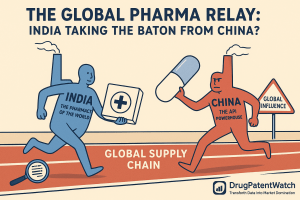
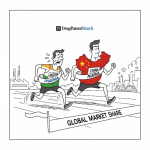
The rivalry between India and China in pharmaceuticals is the most consequential industrial contest of the next decade. It will determine who controls the world’s medicine supply, who owns the intellectual property underpinning next-generation therapies, and which nation gets to collect the rents on global health. For pharma IP teams, portfolio managers, and institutional investors, understanding its precise mechanics is not background reading. It is due diligence.
This pillar page conducts a full-spectrum analysis: market structure, API supply chain dynamics, patent portfolio strategy, PLI scheme performance versus Made in China 2025, FDA enforcement trends, CDMO contract flows, and the BioSecure Act’s implications. Every claim is grounded in real drugs, real companies, real litigation, and real regulatory events.
Section 1: Market Structure — Two Titans, Two Completely Different Growth Engines
India’s Generics Empire: Scale, Export Dependency, and the Chronic Disease Dividend
India’s pharmaceutical market was valued at USD 61.36 billion in 2024 and is projected to reach USD 174.31 billion by 2033, compounding at 11.32% annually. That headline CAGR is roughly double the global average and reflects two intersecting forces: a domestic chronic disease burden that is accelerating sharply, and an export machine that is still finding new volume.
On the domestic side, chronic-care drugs reached 38.1% of the Indian market by January 2024, up from well below 30% a decade earlier. Delhi’s Mohalla clinic network logged 13.9 million appointments in 2024 alone, signaling that treatment-seeking behavior is expanding well beyond urban tier-1 populations. The volume implications for oral solid dose formulations, particularly metformin, atorvastatin, and amlodipine combinations, are substantial.
On the export side, India supplies 20% of global generic volume, 40-plus percent of all generic medicines entering the US market, and 25% of medicines used across the UK’s NHS formulary. Its vaccine contribution is even more concentrated: 60% of global vaccine supply and 70% of antiretroviral medicines for HIV treatment move through Indian facilities, most of them in the Hyderabad and Ahmedabad clusters. Pharmaceutical exports reached USD 27.9 billion in fiscal year 2023-2024, a 9.67% gain year-on-year.
The corporate layer is anchored by a small cohort of large-cap formulation players. Sun Pharmaceutical Industries reported revenues exceeding INR 20,812 crore in its most recent fiscal year, cementing its position as India’s largest pharmaceutical company. Dr. Reddy’s Laboratories, Cipla, Lupin, and Aurobindo Pharma round out the top five. All five have substantial US ANDA portfolios, established Paragraph IV filing histories, and FDA-compliant manufacturing at scale.
IP Valuation: India’s Top Five Generic Portfolios as Assets
Each of those companies carries a patent portfolio with distinct IP value drivers. Sun Pharma’s specialty pipeline, including Ilumya (tildrakizumab) and Cequa (cyclosporine ophthalmic solution), contributes roughly 28% of US revenues and trades at a premium multiple relative to its commodity generics business. Dr. Reddy’s has aggressively built a biosimilar pipeline — its rituximab biosimilar Reditux has been commercially available in emerging markets since 2007, and its US biosimilar strategy targets adalimumab and bevacizumab follow-ons. Lupin’s US ANDA portfolio exceeded 400 approvals as of 2024, with its linaclotide authorized generic agreement with AstraZeneca providing a durable revenue stream through an evergreening-adjacent structure. Cipla’s inhalation device IP, protected by a network of formulation and device patents covering its ProAir and Advair generic equivalents, gives the company defensible margins that pure API-to-tablet players lack.
For investors, the meaningful IP premium in Indian pharma sits not in the commodity generics base, but in three specific sub-segments: complex inhalation drug-device combinations, peptide generics (where API synthesis barriers are high), and the early-stage biosimilar pipelines of the top five players.
China’s Pharmaceutical Market: State Capital, Protected Home Market, and the Biologic Pivot
China’s pharmaceutical market was valued at USD 80.41 billion in 2024 — meaningfully larger than India’s in absolute terms — and projects a 7.5% to 7.8% CAGR through 2030, reaching approximately USD 126.59 billion. The slower percentage growth rate masks the more strategically important fact: China’s profit pool is already larger, and the delta between the two markets’ absolute-dollar annual expansions is less dramatic than the CAGR comparison implies.
The domestic market operates behind a set of structural advantages that Indian companies cannot replicate. China’s National Reimbursement Drug List (NRDL) centralized procurement system — known as volume-based procurement (VBP) — has compressed margins on generic drugs dramatically, but it has done so in a way that concentrates manufacturing among the most cost-efficient domestic producers and simultaneously drives capital toward innovation. The VBP mechanism has forced firms like Jiangsu Hengrui Pharmaceuticals and CSPC Pharmaceutical Group to shift their revenue mix aggressively toward patented drugs and biologics, because the generic base is simply no longer profitable at scale.
Biologics and biosimilars are now the fastest-growing segment of the Chinese pharmaceutical market. This is not a passive market development. It is the direct output of the ‘Healthy China 2030’ strategy and the biologics-specific funding streams embedded in Made in China 2025. Oncology biologics — anti-PD-1 antibodies, ADC platforms, bispecific antibodies — have attracted the majority of Chinese venture and state capital in the life sciences over the past five years.
IP Valuation: China’s Emerging Innovator Portfolio
The IP story in China has undergone a fundamental inversion. Ten years ago, Chinese companies held minimal commercially relevant pharmaceutical patents. Today, the picture is radically different.
Jiangsu Hengrui Pharmaceuticals holds one of the most valuable oncology patent portfolios in Asia. Its PD-1 inhibitor camrelizumab is approved in China across multiple indications and has been out-licensed to Summit Therapeutics (now co-developing it in the US as ivonescimab in combination with camrelizumab) in a deal that values the asset in the hundreds of millions of dollars. BeiGene’s zanubrutinib (Brukinsa) received full FDA approval in January 2023 for chronic lymphocytic leukemia, making it the first China-originated BTK inhibitor to secure US market access — a specific, concrete illustration of Chinese IP now generating royalty streams in the world’s most competitive market. Zymeworks and Akeso have both executed multi-hundred-million-dollar licensing deals for Chinese-developed bispecific antibody platforms.
These are not portfolio companies in a venture stage. They are generating real US and European revenues from IP developed entirely within China, and the patent filings that preceded those revenues are a roadmap for where Chinese innovation is heading next.
Key Takeaways: Section 1
India’s 11.32% CAGR outpaces China’s 7.8% on a percentage basis, but China’s larger absolute market base generates a bigger domestic profit pool for R&D reinvestment. India’s corporate IP value concentrates in complex dosage forms and biosimilar pipelines. China’s IP value has shifted from zero to material in a single decade, with BeiGene’s zanubrutinib FDA approval and Hengrui’s multi-hundred-million-dollar out-licensing deals as concrete proof points. Investors tracking long-term IP appreciation should weight China’s biologic patent filings as a leading indicator of future royalty flows, while valuing Indian companies on near-term ANDA execution and biosimilar interchangeability designations.
Section 2: The API Dependency Trap — India’s Structural Vulnerability Quantified
How the Indian Patents Act of 1970 Created a Global Generic Powerhouse
The architecture of India’s current pharmaceutical position traces directly to a single legislative act. The Indian Patents Act of 1970 abolished product patents for pharmaceutical compounds, recognizing only process patents. Indian companies could legally manufacture any patented molecule provided they used a novel synthesis route. This matched the country’s core competency — process chemistry — and unleashed a generation of formulation companies.
Cipla’s 2001 decision to offer a triple antiretroviral combination therapy for approximately USD 350 per patient per year, against the prevailing price of USD 10,000 to USD 15,000 from branded manufacturers, is the most cited example of this model’s global impact. It did not just lower a price. It fundamentally altered the economics of HIV treatment in low-income countries, and it demonstrated that Indian process chemistry could produce WHO-prequalified quality at commodity cost. The World Trade Organization’s TRIPS flexibilities, including compulsory licensing provisions, were subsequently invoked by multiple governments citing Cipla’s precedent.
That legacy has scaled. India’s generics machine now operates at a volume that affects global drug access in ways no other single country can replicate.
China’s API Hegemony: From 1% to 72% of India’s Imports in Three Decades
China’s ascent to API dominance followed a methodical industrial policy. Post-WTO accession, dedicated chemical manufacturing zones — notably in Shandong, Zhejiang, and Hebei provinces — provided land subsidies, below-market utility rates, and a regulatory environment that, for many years, imposed lower environmental compliance costs than Western or Indian equivalents. The result was a cost structure that systematically undercut all competitors.
By 2023, China controlled approximately 80% of the global supply chain for generic APIs. Within India specifically, the dependency trajectory tells a stark story: in the early 1990s, API imports from China accounted for roughly 1% of India’s total requirements. By 2019, that figure exceeded 70%. By 2022, it had reached 72%, even as India’s PLI scheme was explicitly designed to reverse this trend.
The criticality list is worse than the aggregate. A government survey identified 58 APIs where India was heavily dependent on Chinese supply, and for 45 of those 58, dependency was total — meaning 100% of Indian formulation production for those molecules required Chinese sourcing. Among the most alarming specific figures: China supplies 91% of India’s paracetamol API, 99.6% of its ciprofloxacin, 89.9% of amoxicillin, 95.8% of Penicillin G and its salts, and 100% of streptomycin and sulphadimidine. These are not niche specialty drugs. They are the foundational antibiotics and analgesics on which India’s domestic healthcare system and its global generics export machine depend.
Strategic Price Dumping: China’s Active Countermeasure Against Indian Self-Reliance
The response to India’s PLI scheme has been calculated. As New Delhi began disbursing PLI incentives for bulk drug manufacturing, Chinese API producers cut prices on targeted molecules in ways that make new Indian facilities economically unviable before they reach commercial scale.
The data is specific. The landed cost of Chinese atorvastatin calcium — a core input for the world’s most-dispensed cholesterol medication — dropped to INR 8,000 per kilogram, a 33% discount to the domestic Indian price of INR 10,000. For ofloxacin, a fluoroquinolone antibiotic, Chinese pricing fell to INR 2,100 per kilogram, a 30% reduction against the Indian domestic price of INR 2,700. These cuts were not uniformly applied across all APIs. They were concentrated precisely on molecules where Indian PLI beneficiaries had committed to building new capacity, which identifies them as a targeted commercial response rather than a general market adjustment.
The mechanism is state-enabled. Chinese API manufacturers, backed by provincial government subsidies and access to below-market financing through state-owned banks, can sustain sub-cost pricing for extended periods. Indian entrants, operating without equivalent state backstops and facing higher environmental compliance costs under increasingly rigorous CPCB enforcement, cannot absorb equivalent margin compression. The strategic intent is to ensure that PLI-funded Indian API investments fail to reach economic viability.
Detailed IP Implications of API Dependency
The IP dimension of this dependency receives insufficient attention in most analyses. When an Indian formulation company sources a patented API from a Chinese manufacturer, it is not just creating a supply chain risk. It is potentially creating a freedom-to-operate problem.
Chinese API manufacturers have begun filing process patents in India under the post-TRIPS amended Patents Act. If a Chinese firm holds an Indian process patent on the synthesis route it uses to produce an API, and the Indian formulation company’s drug master file (DMF) references that process, the formulation company’s generic ANDA approval could be challenged. The CDSCO’s drug master file system does not comprehensively cross-reference IP ownership, so this risk is structural and underappreciated. India’s IP teams need to conduct process patent clearance reviews not just on innovator IP, but on the Chinese CMO’s synthesis routes as well.
Key Takeaways: Section 2
India imports 70-72% of its API requirements from China, with 100% dependency for 45 critical bulk drugs. The PLI scheme has not reversed this trend; API imports from China grew 30% in volume between 2021 and 2024. Chinese manufacturers are executing targeted price reductions of 30-33% on PLI-targeted molecules to suppress Indian investment returns. IP teams should conduct process patent clearance on Chinese API synthesis routes, not just innovator compound patents, given China’s increasing process patent activity in Indian filings. Portfolio managers pricing Indian generic companies should apply a supply chain risk discount to EBITDA for any company whose API sourcing is more than 60% concentrated in China for its core molecules.
Investment Strategy: API Dependency Risk
Long-form CDMO relationships with Indian API producers that have genuine domestic fermentation or synthesis capacity — Divi’s Laboratories for naproxen and other non-steroidal APIs, Aurobindo Pharma’s backward-integrated penicillin plant in Andhra Pradesh, Laurus Labs’ ARV API cluster — carry lower supply chain risk premiums than formulation-only players. For institutional investors, the relevant screen is whether an Indian pharma company can demonstrate a DMF-backed domestic API supply for its top ten revenue molecules. Companies that cannot should carry a higher discount rate on their terminal value.
Section 3: PLI vs. Made in China 2025 — A Policy Capability Comparison
India’s Production-Linked Incentive Scheme: Design, Disbursement, and Structural Flaws
The PLI scheme for bulk drugs carries a financial outlay of INR 6,940 crore (approximately USD 900 million) and specifically targets 41 Key Starting Materials (KSMs), Drug Intermediates (DIs), and Active Pharmaceutical Ingredients identified as critical import dependencies. The broader pharmaceutical PLI scheme adds INR 15,000 crore (approximately USD 2 billion) and aims at complex generics, patented drugs, and biopharmaceuticals. Both were launched in 2020 and are administered by the Department of Pharmaceuticals under the Ministry of Chemicals and Fertilizers.
The scheme’s design provides financial incentives linked to incremental sales over a base year, with payouts of 10% to 20% of eligible sales across a six-year period for the bulk drugs scheme. The logic is sound: by rewarding actual production rather than announced investment, it avoids the subsidy-for-nothing-built problem common in older industrial policy.
The results through March 2025 are partially encouraging and partially alarming. On the positive side, committed investment has reached INR 4,570 crore, exceeding the initial target. Cumulative sales of PLI-supported products have reached INR 1,817 crore, and the government estimates INR 1,362 crore in import substitution. The broader pharmaceuticals PLI reports domestic sales of INR 22,658 crore across more than 190 products, including a subset described as manufactured in India for the first time.
The alarming data sits in the withdrawal rate. Of 48 original beneficiaries in the Bulk Drugs PLI, 17 have exited — a 35% dropout rate that signals fundamental problems with policy design or commercial viability. The scheme’s Domestic Value Addition (DVA) requirements demand 90% for fermentation-based products and 70% for chemical synthesis routes. For companies building from scratch in a market where Chinese competitors offer fully processed APIs at prices below Indian cost-of-goods, meeting a 90% DVA threshold while simultaneously competing on price requires capital intensity that the scheme’s incentive structure does not fully compensate. Bank guarantee requirements of 50% to 100% of project cost at the time of application further restrict SME participation.
The macroeconomic punchline is damning: China’s share of India’s API imports rose from 70% to 72% between the scheme’s launch and 2022. Import volume from China grew 30% between 2021 and 2024. The PLI scheme, in its current form, is a first step in the right direction being actively defeated by superior Chinese countermeasure.
India’s Evergreening Defense: Section 3(d) of the Patents Act
One area where India’s policy framework gives it genuine structural advantage is the post-2005 amended Patents Act’s Section 3(d), which bars the grant of new Indian patents for new forms of known substances that do not demonstrate enhanced efficacy. This provision has been litigated extensively. The Supreme Court of India’s 2013 judgment in Novartis AG v. Union of India upheld the rejection of Novartis’s patent application for the beta-crystalline form of imatinib mesylate (Gleevec/Glivec), confirming that enhanced bioavailability alone, without proven superior therapeutic efficacy, does not meet the Section 3(d) threshold.
For IP teams, the practical consequence is that the standard evergreening playbook — filing patents on new polymorphs, salts, and hydrates to extend exclusivity beyond the compound patent — is substantially less effective in India than in the US or EU. This depresses the patent life premium on branded drugs in the Indian market, but it simultaneously reduces the barriers Indian generic manufacturers face when launching after primary compound patent expiry. It also means that the IP moat for any Chinese innovator attempting to commercialize patented drugs in India through local subsidiary filings faces the same Section 3(d) scrutiny as a Western multinational.
Made in China 2025 and Healthy China 2030: The Architecture of an Offensive Grand Strategy
Made in China 2025 (MIC2025) is not a pharmaceutical policy in any narrow sense. It is a national industrial transformation program across ten sectors, with biomedicine and high-performance medical devices as explicitly designated priorities. The policy’s pharmaceutical components operate through three parallel mechanisms: direct state funding of selected national champion companies, preferential access to state-directed bank loans for qualifying R&D and manufacturing investments, and government-orchestrated M&A activity to acquire foreign technology and talent.
The biomedicine targets under MIC2025 include domesticating 70% of core components and materials by 2025 — a number that closely parallels India’s PLI DVA mandate but is backed by vastly larger state financial capacity. China’s National Science and Technology Major Projects program has allocated tens of billions of renminbi specifically to drug innovation, including dedicated programs for major new drugs and infectious disease prevention. The National Development and Reform Commission and the Ministry of Science and Technology jointly administer these funding streams, creating a whole-of-government coordination that no democratic government with a more fragmented policy apparatus can easily replicate.
‘Healthy China 2030’ adds a demand-side accelerant. By committing to expand healthcare coverage, increase hospital bed density, and extend insurance coverage to the rural population, the policy guarantees a growing domestic market for premium therapies. This de-risks R&D investment for domestic firms: even if a new biologic does not achieve US or European regulatory approval immediately, the domestic Chinese market is large enough to generate returns on investment that make the R&D cost recoverable.
The results are verifiable. BeiGene’s zanubrutinib, Akeso’s ivonescimab (a PD-1/VEGF bispecific antibody partnered with Summit Therapeutics), and Zymeworks’ bispecific antibody platform (partially developed via its Chinese joint ventures) all represent China-origin IP now generating or projected to generate material US-market revenue. Hengrui’s R&D pipeline had 70-plus projects in clinical development as of 2024, a volume comparable to mid-sized Western specialty pharma companies. These outcomes are what MIC2025 was designed to produce, and they are arriving on schedule.
Comparative Policy Analysis: Tactical Defense vs. Strategic Offense
India’s PLI scheme is a defensive tactical maneuver: it attempts to rebuild a capability that eroded over 30 years and was hollowed out by a structural cost disadvantage. Its success metric is ‘imports avoided’ — a backward-looking measure. MIC2025 is an offensive grand strategy whose success metric is ‘global market share captured’ and ‘novel IP generated.’ The difference in ambition is not rhetorical; it is structural. A defensive policy that is simultaneously being undermined by targeted price dumping from the country it was designed to counteract faces a much harder road than a program that is building new capabilities from scratch in a protected and growing home market.
India’s policy design has a second problem that is less frequently discussed: it is insufficiently differentiated by molecular complexity. Incentivizing domestic production of paracetamol API — a relatively straightforward synthetic product that competes purely on cost — requires a fundamentally different policy intervention than incentivizing domestic production of complex fermentation-derived APIs like cephalosporins or macrolide antibiotics. Treating them under the same DVA framework and incentive structure produces predictable distortions. Companies rationally pursue the easiest compliance pathway rather than the highest strategic value, which means capital concentrates in simpler molecules where Chinese price competition is most intense.
Key Takeaways: Section 3
The PLI Bulk Drugs scheme has a 35% beneficiary withdrawal rate — a structural indicator of commercial non-viability rather than implementation failure. China’s API import volume grew 30% during the scheme’s operation, confirming that the policy is being defeated by targeted price competition. India’s Section 3(d) provisions limit evergreening in the Indian market but are equally hostile to Chinese innovator IP, creating a policy symmetry that benefits Indian generics more than it costs them. MIC2025’s biomedicine components are producing measurable results in new drug IP generation (zanubrutinib FDA approval, Hengrui pipeline scale, Akeso out-licensing) while India’s equivalent is still counting import substitution in INR crores.
Section 4: The R&D and Patent Gap — China’s Innovation Assembly Line vs. India’s Disconnected Pipeline
R&D Investment Disparity: The 2.4% vs. 0.64% of GDP Gap and Its Compounding Effect
China invests 2.4% of GDP in R&D. India invests 0.64%. On the basis of GDP and exchange rate as of 2024, that translates to a difference in absolute R&D spending of multiple orders of magnitude. The source of funding matters as much as the volume. In India, government accounts for 64% of total R&D spending and the private sector for 36%. In China, private-sector investment has grown to be the dominant driver of commercially oriented research, with state funding acting as a first-stage capital booster for high-risk, pre-commercial platforms.
The corporate-level comparison reinforces the structural divergence. Global pharmaceutical companies typically reinvest 15% to 18% of revenue in R&D. Indian generic majors have historically reinvested 3% to 8%. Sun Pharma’s R&D spend as a percentage of sales has increased meaningfully in recent years, reaching approximately 7% to 8% of revenue by 2024, primarily driven by its specialty biologics pipeline. Dr. Reddy’s has pushed its ratio higher as well. But the industry-wide average for Indian pharmaceutical R&D intensity remains below 5%, compared to Hengrui’s documented spend of approximately 23% of revenue in 2023.
The compounding effect matters for long-horizon IP generation. A company reinvesting 23% of a growing revenue base into R&D generates a patent estate that compounds annually. A company reinvesting 5% does not. Over a 10-year horizon, the difference in IP density, breadth, and commercial relevance between the two approaches is not linear. It is exponential, because patents beget follow-on filings, which beget thickets, which beget licensing revenue, which funds the next cycle of R&D.
Patent Filing Velocity and Strategic Focus: ADCs, CGT, and the Biologic Thicket
In 2023, China recorded over 1.5 million resident patent applications across all technology fields. Pharmaceutical-specific filings are a fraction of that total but are growing at above-average velocity, particularly in three therapeutic technology domains: antibody-drug conjugates, cell and gene therapy, and bispecific antibodies.
Between 2017 and 2019 alone, China saw over 3,000 cell and gene therapy patents granted. More recent data confirms the acceleration. Chinese companies are now top-five applicants globally for both vaccine and therapeutic patents, displacing legacy leaders from the US, EU, Japan, and South Korea in specific sub-categories.
India’s patent filing trajectory is improving but operates at a qualitatively different level. India’s total resident patent applications grew by over 8,700 in 2023, a respectable acceleration. The focus, however, remains weighted toward process patents for generic synthesis, formulation patents for complex generics, and early-stage biologic biosimilar applications. India has essentially no commercial presence in the CGT patent landscape, and its ADC patent activity is nascent, led by a handful of companies including Aurobindo’s ADC-focused subsidiary TheraNym Bio.
The patent geography has direct commercial consequences. A Chinese company that builds a dense patent thicket in ADC linker-payload combinations, ADC conjugation chemistry, or bispecific antibody engineering is not just protecting one drug. It is controlling a platform. Any Indian biosimilar or biobetter company that wants to develop an ADC in the next 10 to 15 years will need to either license in those platform patents, design around them at significant R&D cost, or challenge their validity in inter partes review-equivalent proceedings.
Paragraph IV Filings and Evergreening: India’s Historical Playbook vs. China’s Emerging Counter
India’s pharmaceutical industry built its US-market presence almost entirely through Paragraph IV certifications under the Hatch-Waxman Act. A Paragraph IV filing — an ANDA certification asserting that an innovator’s patent is invalid or that the generic does not infringe it — carries a 180-day first-to-file marketing exclusivity incentive for the generic challenger. Indian companies have dominated the Paragraph IV landscape. Dr. Reddy’s, Lupin, Sun Pharma, Cipla, and Aurobindo together account for a substantial share of all historical Paragraph IV filings.
The strategic logic is straightforward: identify drugs with large US revenues and weak or challengeable patents, file aggressively, litigate the patent challenge, and capture the 180-day exclusivity if successful. It is a high-return, relatively low-capital model that leverages legal expertise and process chemistry rather than novel compound discovery.
China has historically been almost absent from the Paragraph IV landscape. Chinese pharmaceutical companies have not invested in FDA regulatory affairs teams, US patent litigation capacity, or the ANDA infrastructure required to compete in this space. That is beginning to change. Zhejiang Huahai Pharmaceutical, which manufactures valsartan and became notorious for the 2018 NDMA contamination recall, is one of the few Chinese companies with significant US ANDA activity. But the broader Chinese industry has not yet made the Hatch-Waxman litigation investment that Indian firms have.
For India, this means the US generics market remains a domain where it holds structural advantage for at least the next five to seven years. The risk is not a direct Chinese Paragraph IV challenge in the near term. The risk is that Chinese innovators will start generating branded drugs with US patents, and the flow of ANDA opportunities that has sustained the Indian generics industry will gradually shift toward Chinese-origin drug targets rather than Western-origin ones.
Academia-Industry R&D Linkage: India’s 86th-Place Global Ranking Explained
India ranks 86th globally in university-industry R&D collaboration, according to the Global Competitiveness Index metrics. That ranking reflects specific institutional failures, not a talent deficit. Indian academic institutions, particularly the IITs and CSIR laboratories, produce rigorous basic research. The breakdown occurs in translation. Intellectual property ownership disputes between universities and their industry collaborators have repeatedly killed commercial development partnerships. Indian academic culture has historically rewarded publications over patents, which misaligns incentives. CSIR’s New Millennium Indian Technology Leadership Initiative (NMITLI), designed specifically to bridge this gap, produced limited commercial outcomes relative to its funding base.
China’s approach has been more structurally interventionist. The Chinese government funds a specific category of joint industry-university projects under the Ministry of Science and Technology, with explicit IP-sharing frameworks predetermined before the research begins. Wharton research on Chinese corporate innovation found that firms with active university linkages produced patents of higher exploratory quality and reported higher new product sales than firms without those relationships. The causal mechanism is clear: predetermined IP structures remove the negotiation friction that kills Indian equivalents before they start.
Key Takeaways: Section 4
China’s 2.4% of GDP R&D investment versus India’s 0.64% produces an annual compounding patent generation advantage that will become commercially visible in the US and EU markets within the next five to ten years. Hengrui’s 23% of revenue R&D intensity is the current high-water mark; Indian peers average 5% or below. Indian companies dominate the Paragraph IV landscape today, but the drug targets of future ANDA filings will increasingly originate in China rather than Western Europe or the US. India’s 86th-place university-industry collaboration ranking reflects preventable institutional failures, not a fundamental talent shortage, and is correctable if IP ownership structures are reformed.
Investment Strategy: R&D-Adjusted Valuation of Indian vs. Chinese Pharma
When applying a DCF to Indian generic companies, analysts should use a terminal value that reflects declining ANDA filing density as the global drug pipeline shifts toward biologic and complex modalities where India’s patent challenge expertise is less applicable. For Chinese innovator companies like BeiGene, Zymeworks, or Akeso, the appropriate discount rate should reflect US regulatory approval uncertainty and data integrity scrutiny, but the pipeline quality supports premium multiples relative to comparable Indian specialty pharma. ADC platform companies in both markets — TheraNym Bio in India, Kelun Biotech and Sichuan Biokin in China — warrant specific monitoring as the ADC market is expected to exceed USD 30 billion globally by 2030.
Section 5: The FDA Enforcement Gauntlet — Quality as Competitive Moat
India’s OAI Rate Trajectory: From 15-20% to 7% in a Decade
The FDA’s ‘Official Action Indicated’ (OAI) classification is the harshest inspection outcome, recommending regulatory action including import alerts and warning letters. For Indian facilities, the OAI rate peaked at 14-20% during the 2013 to 2018 period, driven by a wave of systemic data integrity failures at major producers. Sun Pharma’s Halol facility received a warning letter in 2014 that took three years to resolve. Wockhardt’s Aurangabad plant was placed under import alert in 2013. Ranbaxy’s chronic data integrity issues, which culminated in a USD 500 million guilty plea in 2013, were the most severe example of the period.
Since then, the Indian industry has invested heavily in quality management system overhaul. The OAI rate for Indian facilities dropped to approximately 14% in 2022 and reached approximately 7% in 2024. That improvement is not cosmetic. It reflects the installation of e-LIMS systems that prevent backdating of laboratory records, the adoption of pharmaceutical quality systems aligned with ICH Q10, and the engagement of former FDA reviewers as regulatory affairs consultants. Companies that sustained high OAI rates were systematically excluded from US tender lists, creating strong commercial pressure to remediate.
FDA warning letters issued to Indian firms between 2022 and May 2025 still cluster around a consistent set of root causes: failure to maintain product quality and purity (24% of citations), poor data documentation (21%), and inadequate hygiene and cleaning validation (21%). These issues are implementation-level problems within known regulatory frameworks, not systemic challenges to the industry’s capability base.
China’s FDA Inspection Ramp: 8 to 159 Inspections in Two Fiscal Years
The FDA conducted only 8 inspections of Chinese pharmaceutical facilities in fiscal year 2022, almost entirely because of COVID-19 border restrictions. By fiscal year 2024, that number had risen to 159, and projections suggest a return to pre-pandemic levels above 220 inspections per year in FY2025. The acceleration is deliberate policy. Congressional pressure on the FDA following the 2018 valsartan NDMA contamination recall, which traced to Zhejiang Huahai Pharmaceutical’s manufacturing process, and again following COVID-era supply chain exposure, has created sustained political pressure to increase foreign inspection intensity.
China’s OAI rate in FY2024 was 7.5%, statistically indistinguishable from India’s 7% in the same period. The convergence of OAI rates at a similar, improved level is genuine and reflects China’s NMPA reform process as well as the export-oriented manufacturers’ own investments in quality system alignment with FDA expectations.
The distinguishing feature in Chinese warning letters is data integrity at the laboratory level. Multiple recent FDA enforcement actions against Chinese API and finished dose facilities cite inadequate laboratory oversight, unexplained data anomalies in stability testing records, and failures to investigate out-of-specification results. This is the same category of failure that plagued Indian companies in 2013-2018. The historical pattern in India suggests that Chinese facilities will remediate these issues over a three to five year timeline, as commercial pressure and regulatory scrutiny accumulate.
CDSCO vs. NMPA: Regulatory Philosophy and Drug Approval Speed
India’s CDSCO operates under the Drugs and Cosmetics Act of 1940 — a statute older than many of the drug classes it now regulates. Its standard review timeline for new drug applications runs 12 to 18 months, with an expedited pathway of 6 to 9 months for specific priority categories. Recent CDSCO guideline revisions have committed to compress committee review recommendations to a seven-day turnaround, a structural improvement but not yet a demonstrated operational reality.
China’s NMPA overhauled its review system comprehensively after 2015. The reforms introduced fast-track, priority review, and breakthrough therapy designations mirroring the FDA model. For innovative drugs, the NMPA priority review pathway now achieves 6 to 9 months — equivalent to CDSCO’s expedited path. More importantly, the NMPA now participates in concurrent multinational registration strategies. Pfizer, AstraZeneca, and BeiGene itself have all pursued simultaneous FDA and NMPA submissions for oncology drugs, recognizing China as a first-tier commercial market. CDSCO is not yet on that list.
The regulatory reform gap has a direct IP implication. When a drug achieves NMPA approval concurrently with FDA approval, the patent clock in China and the US runs in parallel. For Chinese innovators seeking to monetize their IP across both markets simultaneously, NMPA modernization is a commercial force multiplier. CDSCO’s more modest reform trajectory means Indian innovators — and any company seeking to launch a novel drug in India as a primary market — still face a longer, less predictable review process.
Key Takeaways: Section 5
India’s FDA OAI rate improvement from 15-20% to 7% over a decade is real, driven by e-LIMS adoption, ICH Q10 system alignment, and commercial consequences of continued failure. China’s post-COVID inspection surge from 8 to 159 FDA visits per year will identify data integrity issues that mirror India’s 2013-2018 wave. The NMPA’s post-2015 reforms have made it a first-tier concurrent registration market for global drug launches, which CDSCO has not yet achieved. For IP teams, the NMPA’s faster review pathway means Chinese patents on locally developed drugs generate commercial revenue sooner, increasing the financial return on Chinese domestic IP generation.
Section 6: China Plus One — CDMO Contract Flows, BioSecure Act Risk, and India’s 3-5 Year Revenue Window
The China Plus One Mechanism: Why Supply Chain Resilience Took Priority Over Cost
The ‘China Plus One’ (C+1) strategy originated in procurement and supply chain functions at multinational pharmaceutical companies as a response to three sequential shocks: the US-China trade war tariffs of 2018 and 2019, which created direct cost exposure; the valsartan NDMA contamination crisis of 2018, which demonstrated the failure mode of single-source API dependency; and the COVID-19 pandemic supply chain disruptions of 2020 and 2021, which made the theoretical risk of hyper-concentrated manufacturing into a lived operational crisis for drug companies globally.
The strategic logic is not to exit China. It is to build a second qualified manufacturing partner in a different geography so that any single geopolitical or operational disruption does not create a supply gap. For pharmaceutical companies, ‘qualified’ carries specific regulatory meaning: the alternative supplier must hold an FDA-compliant facility, a clean GMP inspection history, and the technical capacity to produce at commercial scale. India satisfies all three criteria for the broadest range of small-molecule and early-stage biologic manufacturing tasks.
India has the largest number of FDA-compliant manufacturing plants outside the United States — a fact that is the direct product of three decades of generic drug export investment. The number commonly cited is over 600 US FDA-approved drug manufacturing sites in India.
Concrete CDMO Contract Wins: Syngene, Neuland, TheraNym Bio
The C+1 strategy has moved from procurement strategy documents to signed contracts. Goldman Sachs research published in early 2025, based on direct meetings with Indian CDMO and CRO management teams, confirmed specific early-stage monetization across several companies.
Syngene International, the contract research and manufacturing subsidiary of Biocon, has converted pilot diversification projects into binding commercial agreements. The company’s large-molecule biologics manufacturing capacity at Bengaluru, built to cGMP standards acceptable to the FDA and EMA, positions it for the high-value end of the C+1 mandate.
Neuland Laboratories secured three new development-stage projects from a large innovator company explicitly shifting work from Chinese CDMOs. Neuland’s focus on complex API synthesis, including peptides and high-potency APIs, makes it a viable technical alternative to Chinese specialist CMOs.
TheraNym Bio, Aurobindo Pharma’s ADC-focused subsidiary, announced a decade-long commercial manufacturing agreement with Merck Sharp & Dohme. A 10-year commercial manufacturing contract with MSD is not a pilot. It is a strategic commitment from one of the world’s largest pharmaceutical companies to a new geography, and it almost certainly reflects C+1 rationale.
Suven Pharmaceuticals’ acquisition of NJ Bio, a US-based ADC development company, is an example of Indian capital following the demand signal. ADC manufacturing requires linker-payload chemistry capabilities, specialized conjugation infrastructure, and containment systems for highly cytotoxic payloads. By acquiring NJ Bio, Suven is building the technical competence required to compete for the next generation of ADC CDMO contracts — contracts that have largely gone to Chinese specialists like Zhejiang Synbio Technologies and Kelun-Biotech in recent years.
The BioSecure Act: Geopolitical Accelerant for India’s CDMO Pipeline
The US BioSecure Act — in its various draft forms circulated in 2024 — targets Chinese biotechnology companies receiving US federal contracts, specifically naming WuXi AppTec, WuXi Biologics, BGI Genomics, and MGI Tech. The act’s core mechanism prohibits US federal agencies and recipients of federal funds from contracting with these entities. For pharmaceutical companies that receive any form of US federal research funding or operate under contracts with US government health agencies, the act would require them to terminate or not renew relationships with the named entities.
WuXi AppTec and WuXi Biologics together handle a material portion of global drug discovery outsourcing and biologics manufacturing outsourcing. WuXi Biologics manages drug substance manufacturing for hundreds of clinical-stage biologics programs globally. If those programs must migrate from WuXi to a non-Chinese CMO, the volume of work that needs a new home is substantial.
The act has not passed in its final form as of May 2026. But its policy intent has been clear, and its principal effect has already materialized: multinational pharmaceutical companies have begun pre-emptively qualifying alternative CMOs so that if the act does pass, or if WuXi’s operational access is restricted through executive action, they are not facing a regulatory manufacturing site change in the middle of a clinical trial. Site changes require FDA prior approval, take 12 to 18 months, and can delay clinical timelines. The cost of pre-emption is a qualified backup supplier. The cost of non-pre-emption in a forced migration scenario is measured in years of development delay and hundreds of millions in sunk costs.
India’s largest biologics CDMO, Syngene International, has publicly confirmed that its pipeline of inbound inquiries from companies diversifying from Chinese CDMOs has materially increased since the BioSecure Act discussions became prominent. Aragen Life Sciences and Aurigene Discovery Technologies (Dr. Reddy’s subsidiary) have reported similar inquiry increases. If the act passes in its current form, Goldman Sachs analysts project the full financial monetization timeline compresses from 3-5 years to potentially 18-24 months for the highest-volume migration scenarios.
India’s Execution Risks in the C+1 Window
The opportunity is real. The obstacles to capturing it fully are equally real, and they are internal to India rather than external.
The talent attrition problem in Indian life sciences manufacturing operates at the entry-to-mid level. Laboratory scientists and process engineers with two to five years of experience are actively recruited out of CDMO and CRO environments into IT services, financial services, and higher-paying industries. This turnover creates operational inconsistency at exactly the technical layers that global pharma clients most closely scrutinize during quality audits. Companies that cannot maintain stable analytical chemistry and quality control teams struggle to retain FDA compliance records that depend on personnel continuity.
Project execution speed is the second recurring complaint from multinational clients conducting India CDMO evaluations. Indian project management in pharmaceutical development runs at a pace that, historically, Chinese CDMOs have comfortably beaten. Clients describe regulatory approval delays, infrastructure procurement timelines, and inter-agency coordination challenges as consistently longer in India than in China’s dedicated pharmaceutical industrial parks. For drug development programs where time-to-IND or time-to-Phase I start is the commercial objective, this matters directly.
The regulatory environment for new CDMO capacity expansion also needs attention. State-level environmental clearances, land acquisition, and utility connections for new manufacturing facilities in India can take substantially longer than in purpose-built Chinese pharmaceutical parks. Addressing this requires state-level policy coordination that the Department of Pharmaceuticals cannot mandate from the center.
Key Takeaways: Section 6
India’s C+1 advantage rests on three pillars: largest non-US FDA-compliant facility count globally, established US regulatory track record, and low production costs (approximately 33% below US manufacturing costs). TheraNym Bio’s 10-year MSD agreement and Neuland’s three new innovator contracts are real proof points of monetization, not projections. The BioSecure Act’s principal commercial effect is already visible in pre-emptive CDMO qualification activity, regardless of final legislative passage. India’s three execution risks — scientific talent retention, project speed, and facility expansion timelines — are all solvable but require deliberate policy intervention at both central and state levels.
Investment Strategy: CDMO Positioning
Syngene International, Divi’s Laboratories, Laurus Labs, and Neuland Laboratories are the four Indian CDMO/API companies most directly positioned to capture C+1 contract flow. Of these, Syngene has the strongest biologics manufacturing capability. Neuland has the strongest complex API synthesis track record. Laurus Labs has the most advanced ARV API and CDMO hybrid model. Divi’s has the broadest custom synthesis revenue base. For a portfolio manager seeking C+1 exposure in Indian pharma, these four companies provide differentiated access across the small-molecule synthesis, API, and biologics manufacturing sub-segments of the opportunity.
Section 7: The Biosimilar Battlefield — Where India and China Will Directly Compete for Global Revenue
India’s Biosimilar Portfolio: First-Mover Advantage in Emerging Markets, US Entry Acceleration
India has a longer commercial biosimilar history than is typically acknowledged in Western pharmaceutical analysis. Biocon’s trastuzumab biosimilar (Canmab, later Hertraz) launched in India in 2014. Dr. Reddy’s rituximab biosimilar, Reditux, was first marketed in 2007 — before the FDA had established any biosimilar approval pathway at all. This early-mover history in emerging markets has given Indian biosimilar companies deep commercial experience, including with formulary positioning, oncologist adoption, and pricing strategy, in environments where branded biologics are too expensive for most patients.
The US biosimilar market has accelerated sharply since 2023. Humira (adalimumab) lost its final formulation patents in June 2023, and the US market now has more than a dozen FDA-approved adalimumab biosimilars. Biocon Biologics entered the US adalimumab market with Hadlima in July 2023, partnered with Samsung Bioepis. Dr. Reddy’s Laboratories received FDA approval for its trastuzumab biosimilar Trazimera in the US, commercialized through Pfizer under a co-promotion agreement.
Biosimilar interchangeability designation — the FDA status that allows pharmacists to substitute a biosimilar for its reference biologic without prescriber intervention, as they can with small-molecule generics — is the key commercial lever that determines long-term market share. Alvotech’s adalimumab biosimilar Simlandi received the first high-concentration adalimumab interchangeability designation in the US in 2023. Indian companies’ ability to compete for interchangeability designation is now a direct determinant of their US biosimilar market share potential.
China’s Biosimilar and Biobetter Strategy: Domestic Dominance First, Global Second
China’s biosimilar market has grown through a domestic regulatory pathway that differs structurally from the FDA’s. The NMPA’s biosimilar guidelines, aligned with WHO and ICH standards since the 2015 reforms, have enabled a dense domestic biosimilar market. For trastuzumab alone, more than 12 Chinese companies received NMPA approval for biosimilar versions, creating a highly competitive domestic market where price compression has been severe — a mirror of the small-molecule VBP dynamic but for biologics.
The more strategically significant development is China’s biobetter pipeline. A ‘biobetter’ is a biologic that is structurally different from the reference product in ways designed to confer clinical advantages — longer half-life, improved efficacy, reduced immunogenicity, or a novel mechanism of action. Because a biobetter cannot be approved as a biosimilar, it must be approved as a new drug, and it can carry its own patent protection. This is the biologics equivalent of the 505(b)(2) pathway for small molecules, and it is how Chinese companies are converting biosimilar manufacturing experience into a novel IP generation strategy.
Akeso’s ivonescimab is the clearest example. It began as a PD-1/VEGF bispecific antibody, a modification of the established anti-PD-1 class. It is now in Phase III trials in the United States in partnership with Summit Therapeutics, having already demonstrated superiority over pembrolizumab (Keytruda) in a direct head-to-head Chinese trial for non-small cell lung cancer — a result that, if replicated in the US trial, would be commercially explosive.
Key Takeaways: Section 7
Indian companies hold a first-mover advantage in global emerging market biosimilar commercialization but face increasing Chinese competition as Chinese biosimilar manufacturers begin qualifying for Western regulatory markets. Biosimilar interchangeability designation in the US is the near-term commercial differentiator that matters most for Indian companies’ Humira and Herceptin biosimilar programs. China’s biobetter strategy — converting biosimilar development experience into novel biologic IP via structural modification and new clinical data — is the pathway through which Chinese companies will generate their next generation of globally competitive pharma IP.
Section 8: A Dual-Mandate Strategic Roadmap for India
The competitive analysis produces a verdict with two parts. On the current supply chain competition — generic drugs, API manufacturing, CDMO services, and biosimilar follow-on products — India has a genuine and executable path to strengthening its position. On the future competition over novel biologic IP, ADC platforms, cell and gene therapy, and next-generation oncology targets, India is not currently on a trajectory to compete meaningfully with China at scale.
Winning the first competition while losing the second means India becomes a permanently high-quality but low-margin manufacturer for drugs invented elsewhere. That is a defensible, valuable position. It is not a redefinition of global influence.
Securing the Base: API Self-Reliance and Quality Leadership
The PLI scheme for bulk drugs needs a structural redesign, not more funding. The Domestic Value Addition mandate should be tiered by API complexity. Commodity APIs like paracetamol and ibuprofen, where Chinese price competition is most intense and Indian strategic value is lowest, should face lower DVA requirements or simply not be targeted by the scheme. Complex fermentation-derived APIs — penicillin G, cephalosporin intermediates, macrolide antibiotics — where India has historical competence and where Chinese supply disruption risk is highest, deserve higher PLI incentives and more flexible DVA timelines. The bank guarantee requirements that have driven SME withdrawals should be replaced with revenue-contingent repayment structures.
Anti-dumping and countervailing duty investigations against Chinese API imports for PLI-targeted molecules should be initiated. The data on Chinese atorvastatin and ofloxacin pricing, with documented 30-33% discounts specifically timed to coincide with PLI investment announcements, meets the legal threshold for a dumping investigation under WTO rules. India has used anti-dumping measures in other industrial sectors. There is no principled reason to exclude pharmaceutical APIs.
On quality leadership, India’s 7% OAI rate needs to be marketed as actively as the underlying manufacturing capacity. The brand proposition should shift from ‘cheapest compliant option’ to ‘most experienced regulated-market manufacturer.’ That reframing changes the pricing conversation in CDMO negotiations.
Leaping to the Frontier: Building the Innovation Ecosystem
Tripling private sector R&D investment requires tax architecture rather than exhortation. A 300% weighted tax deduction for pharmaceutical R&D expenditures on novel molecules — as opposed to the current deduction which does not adequately differentiate between generic process development and new chemical entity discovery — would materially shift the capital allocation calculus at Sun Pharma, Dr. Reddy’s, and the dozen mid-cap companies that have the scientific teams but not the financial incentive to invest in first-in-class drug discovery.
The academia-industry IP barrier requires a statutory fix. The current framework lacks a clear default rule on IP ownership for jointly developed research. A US Bayh-Dole equivalent — granting universities the right to own patents on federally funded research but requiring licensing to domestic companies at reasonable terms — would remove the ownership uncertainty that kills collaboration deals before they start. The eight decades that elapsed between the passage of the Bayh-Dole Act in 1980 and the commercialization wave it catalyzed in US university technology transfer is instructive. India needs to start the clock.
Cell and gene therapy is a strategic frontier where India has a specific, non-obvious competitive entry point. India’s large clinical-trial-eligible patient population and its established GCP-compliant clinical site infrastructure give Indian companies a cost-competitive path to generating the clinical data required for CGT IND filings. If an Indian biotech can run a pivotal CAR-T trial in India at a fraction of the cost of a comparable US trial, it can generate the clinical evidence to support US IND filings at a lower total development cost than its US and Chinese competitors. The National Institute of Immunology, the Centre for Cellular and Molecular Biology, and a handful of private biotechs including ImmunoACT (an IIT Bombay spin-out that received India’s first CAR-T approval in 2023) are the seed of this capability.
Key Takeaways: Section 8
PLI reform should tier DVA requirements by API complexity and replace bank guarantee barriers with revenue-contingent repayment. Anti-dumping investigations against the Chinese price-dumping pattern on PLI-targeted APIs are legally warranted and strategically necessary. A Bayh-Dole equivalent for India would unlock university-industry collaboration by resolving IP ownership uncertainty. CGT represents India’s most credible non-obvious entry point into novel biologic IP, via cost-competitive clinical development rather than R&D spending volume. Without both defensive (API resilience) and offensive (novel IP generation) moves executed in parallel, India consolidates as a high-quality contract manufacturer rather than a pharmaceutical innovator.
Conclusion: The Bifurcating Competition
The rivalry between India and China in pharmaceuticals is not heading toward a single winner. It is bifurcating into two contests with different rules, different timescales, and different incumbents.
The near-term contest — for generic drug manufacturing, API supply, CDMO services, and biosimilar production — is one India can win, or at minimum, decisively hold. Its regulatory track record, established FDA relationships, English-language IP expertise, deep Paragraph IV litigation history, and alignment with Western geopolitical preferences give it structural advantages that China cannot easily replicate. The C+1 tailwind, potentially accelerated by the BioSecure Act, is converting these advantages into signed contracts right now.
The long-term contest — for novel biologic IP, ADC platforms, bispecific antibodies, CGT products, and the patent royalties that flow from them — is one China is winning at a rate that is currently not reversible on India’s present trajectory. China’s R&D intensity is four times India’s as a percentage of GDP. Its patent filing velocity in the highest-value therapeutic technology areas is categorically above India’s. Its academia-industry linkage, NMPA reform, and home market scale create a self-reinforcing innovation cycle that India’s disjointed system cannot currently match.
India has the talent, the infrastructure, the geopolitical relationships, and the track record to compete in both contests simultaneously. Doing so requires policy action on three specific fronts: PLI redesign to actually work against Chinese price-dumping, Bayh-Dole-style IP law reform to unlock university collaboration, and a tax architecture that makes private-sector novel drug R&D financially rational. The window created by C+1 demand and BioSecure Act risk is real, but it will not stay open indefinitely. The companies and policymakers that treat it as a temporary contract opportunity rather than a structural transformation mandate will find themselves back in the same position in a decade, negotiating the next iteration of the same dependency.
Frequently Asked Questions
Is India’s 70%+ API dependency on China a recent development?
No. The dependency built over three decades, accelerating from approximately 1% of Indian API requirements in the early 1990s to over 70% by 2019. COVID-19 exposed the risk, but the structural cause was straightforward: Chinese API prices were 20-30% cheaper than any alternative, so Indian formulation companies rationally consolidated their sourcing. The PLI scheme is the first serious policy attempt to reverse the trend, but it has not yet produced the macro-level shift its designers intended.
What is the single most important patent metric for tracking China’s pharmaceutical innovation trajectory?
The volume and focus of Chinese pharmaceutical patent filings in the antibody-drug conjugate and bispecific antibody sub-categories, mapped against their PCT national phase entries in the US and EU. ADC platform patents filed in China today will begin generating US and EU royalty streams in five to ten years. PCT national phase entries in the US are the indicator that Chinese companies are preparing to assert those patents in commercial markets, not just protect them domestically.
How does Section 3(d) of the Indian Patents Act affect Western multinational strategy in India?
Section 3(d) bars Indian patents on new forms of known substances that do not demonstrate enhanced efficacy. The Supreme Court’s 2013 Novartis v. Union of India ruling on imatinib mesylate (Gleevec) confirmed that enhanced bioavailability without proven superior therapeutic outcome does not qualify. This means the standard secondary patent evergreening strategy — filing on new polymorphs, salts, or hydrates to extend exclusivity 3 to 5 years beyond the compound patent — does not work in India. Multinational companies either need to demonstrate genuine efficacy superiority for new form filings, or accept earlier generic entry in the Indian market.
What does the BioSecure Act actually prohibit, and why does it create such urgency for CDMO migration?
The act in its draft form prohibits US federal agencies and recipients of federal funding from contracting with specifically named Chinese biotechnology companies, including WuXi AppTec and WuXi Biologics. Because the scope of ‘recipients of federal funding’ potentially includes any US pharma company that has received NIH grants or operates under federal procurement contracts, the practical effect could be broad. The urgency derives from the regulatory mechanics: switching a drug substance manufacturing site from WuXi to an Indian CDMO requires a prior approval supplement with the FDA, which takes 12 to 18 months. Companies that wait until the act passes before beginning the qualification process face potential clinical trial delays. The rational response, now underway across many large pharma companies, is pre-emptive qualification of Indian alternatives.
Can Indian companies realistically compete with Chinese innovators in biologics by 2030?
On biosimilar interchangeability designations for reference products where the compound patent has expired (Humira, Herceptin, Avastin), yes — Indian companies including Biocon Biologics and Dr. Reddy’s are already in the US market. On novel biologic originator IP — first-in-class antibodies, bispecific platforms, ADC linker-payload combinations — no, not by 2030 on current trajectories. The R&D investment gap is too large and the patent filing velocity too divergent to close within five years. The realistic scenario is that Indian companies generate novel biologic IP selectively, in specific therapeutic niches where their clinical trial cost advantage or their chemistry heritage creates a non-obvious entry point, rather than competing across the full breadth of the biologic innovation landscape.