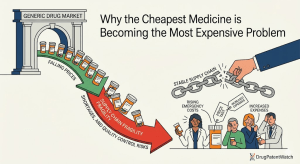
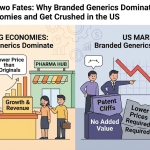
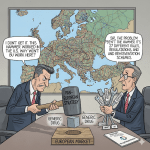
The generic drug industry saves the U.S. healthcare system roughly $216 billion annually and fills 89% of all U.S. prescriptions at just 26% of total drug costs. It is, by any measure, the most cost-efficient mechanism modern medicine has developed for expanding patient access to essential treatments. It is also, by a growing body of evidence, economically unsustainable for a large share of its portfolio.
The fundamental contradiction is this: the same market forces that make generics cheap are destroying the conditions required to keep them available. An unrelenting race to the lowest unit price has compressed manufacturer margins to near zero or below for hundreds of products, forced an estimated 3,000 drug products off the market in the past decade, and concentrated global manufacturing in a handful of overseas facilities now exposed to geopolitical and regulatory disruption. In 2023, the U.S. recorded an average of 301 active drug shortages per quarter, the highest level in ten years. Many of those shortages directly affected cancer patients, intensive care units, and surgical suites.
This report does not treat these as separate problems. They are the sequential outputs of a single, deep market failure: the systematic mispricing of supply reliability. A generic drug priced at $0.10 per unit that is unavailable 20% of the time carries a hidden cost to the healthcare system that no procurement spreadsheet currently captures. Until that cost is measured and repriced into purchasing contracts, the race to zero will continue.
Investment Thesis Summary
For institutional investors and pharma/biotech portfolio managers, the generic drug market in 2025 is not a monolithic sector to overweight or underweight. It is a bifurcated landscape. Companies with defensible positions in complex generics (sterile injectables, transdermal systems, inhaled therapies, ophthalmic formulations), robust API self-sufficiency, and domestic or ‘friend-shored’ manufacturing footprints will generate asymmetric returns relative to commodity oral solid manufacturers who are pure price-takers. The legislative and procurement policy environment, from MRAP/HRSP proposals to IRA renegotiation timelines, will drive significant valuation re-rating events over the next 24 to 36 months.
Key Takeaways: Executive Summary
The generic market’s growth projections ($515 billion globally in 2025, expanding to $775 billion by 2033) mask severe underlying profitability compression. The 2025-2030 patent cliff, representing $217-236 billion in annual brand sales, creates enormous market entry opportunities, but window-of-profitability periods are shortening. Supply chain re-shoring and the proposed MRAP/HRSP resiliency incentive programs represent the most significant potential valuation catalysts for manufacturers with domestic production assets. PBM and GPO reform legislation, advancing at both the federal and state level, will materially alter the margin structure for the retail generic market within the next five years.
II. The Paradox: Indispensable Yet Economically Broken
The Scale of the Value Proposition
Generic medicines are the financial backbone of modern prescription drug access. In the United States, they accounted for 89% of all prescriptions dispensed in 2023 while representing just 26% of total drug expenditures. Annual savings to the U.S. healthcare system from generic use are estimated at $216 billion. Cumulative savings from generics and biosimilars over the past decade have reached approximately $3.1 trillion, with $445 billion in savings in 2023 alone.
The global picture echoes this pattern. In Europe, generics represent roughly 70% of treatment volume but only 19% of total market value in monetary terms, saving European payers an estimated €100 billion annually. The global generic drug market is projected to grow from $515 billion in 2025 to approximately $775 billion by 2033, driven by patent expirations, chronic disease prevalence, and expanding access in emerging markets.
These numbers, while accurate, are structurally deceptive. They describe a market that is large, growing, and indispensable. They do not describe one that is healthy.
How the Market’s Greatest Strength Became Its Core Vulnerability
The economic architecture of the generic industry is modeled on perfect competition: many sellers, a homogeneous product, and prices driven toward marginal cost. This model works for soybeans. It does not work for pharmaceuticals that require a continuous capital investment in GMP-compliant manufacturing, quality management systems, environmental controls, and validated supply chains.
The dynamic plays out with clockwork regularity. A brand-name drug loses patent exclusivity. Generic manufacturers file ANDAs, hoping to capture the 180-day first-filer exclusivity window under Hatch-Waxman. They launch, prices drop sharply. Competing generics follow. Prices collapse by 85-95% with six or more competitors in the market. Margins for most participants approach or fall below the cost of production. Manufacturers who cannot sustain losses at these prices exit. The market contracts to one or two suppliers. A quality failure or natural disaster at one of those facilities triggers a shortage. Patients go without drugs.
This is not a supply shock story. It is an incentive-design failure. The market has been constructed in a way that destroys the very producer base it needs to function.
The Unpriced Cost of Unreliability
The key analytical point that most procurement and policy frameworks miss is the cost of drug unavailability. When a hospital cannot source a critical injectable because the sole domestic distributor is on back-order, the system pays the difference. It pays in pharmacist labor to source alternatives, in gray-market premiums of 300-500% over the standard contract price, in the clinical cost of using inferior therapeutic substitutes, and, most critically, in patient harm.
Hospitals spend an estimated $216 million annually in labor costs alone to manage active drug shortages. Gray-market procurement during shortages routinely adds markups of 300-500% for critically needed products. These costs do not appear in the unit price of the drug. They are externalized to hospitals, payers, and patients, and they are never used to inform the procurement contract that caused them.
A manufacturer that prices a generic injectable at $0.12 per unit and delivers 95% service reliability is, in system-cost terms, far cheaper than a competitor priced at $0.09 per unit with a 15% shortage probability. No current GPO contract methodology reflects that calculation. This is the fundamental mispricing at the heart of the generic drug crisis.
Key Takeaways: Section II
The generic market’s volume-to-cost ratio is genuinely impressive and genuinely fragile. The $3.1 trillion in cumulative savings is real; so are 301 active drug shortages per quarter. The market has been optimized for a single variable, lowest unit price, and that optimization has hollowed out the economic foundation required for reliable supply. The cost of unreliability is systematically externalized and therefore invisible to procurement decision-makers, which is precisely why the market cannot correct itself without structural intervention.
III. The Economic Gauntlet: Price Erosion, Buyer Consolidation, and Vanishing Margins
The Mechanics of Post-Patent Price Collapse
The price trajectory of a small-molecule oral solid after patent expiry follows a well-documented and predictable curve. A single generic entrant typically cuts the price by 30-39% relative to the brand’s pre-expiry price. Two competitors push average manufacturer prices down to roughly 54% below the brand level. Three competitors push the decline past 60-70%. At six or more competitors, the price of many products has collapsed by 85-95% from the brand baseline. With ten or more competitors, per-unit margins become negative for all but the largest, most efficient, highest-volume manufacturers.
In European markets, a similar although slightly less severe dynamic occurs, with prices falling by approximately 60% after exclusivity loss. The speed of price collapse is accelerating in both markets due to more efficient ANDA approval processes, the rise of large contract manufacturing organizations (CMOs) that can rapidly pivot to new generic launches, and the growing appetite of GPOs for winner-takes-all contracting.
This price dynamics profile is not inherently problematic for a commodity industry. It is structurally catastrophic for one that requires continuous capital investment in regulatory compliance, quality management, and supply chain infrastructure.
The 180-Day Exclusivity Window: High Stakes, Short Duration
The Hatch-Waxman Act’s 180-day first-filer exclusivity provision is the primary financial justification for the costly and risky patent challenge process. The first company to successfully file an ANDA with a Paragraph IV certification, challenging the validity or applicability of a brand-name drug’s listed patents, earns an exclusive six-month window to market the generic before other approved competitors can enter.
During this window, the first filer effectively operates as a duopoly with the brand, and pricing is far more favorable than the fully competitive market that follows. For a large, high-revenue product, this six-month window can generate hundreds of millions of dollars in profit. It is the primary economic incentive for the specialized and expensive patent litigation that clears the path for broader generic competition.
The window is also a trap. Because its value is entirely front-loaded and time-limited, companies face enormous pressure to launch at risk (before all patent disputes are resolved), to price aggressively to capture volume quickly, and to scale manufacturing capacity for peak demand that will evaporate once broader generic entry occurs. The result is a business model built around a brief, high-intensity profit event with a rapid cliff to marginal-cost pricing. This does not support the long-term manufacturing stability required for a resilient supply chain.
Buyer Consolidation: The GPO and PBM Purchasing Oligopoly
The demand side of the generic market is not fragmented and diffuse. It is highly consolidated around a small number of powerful purchasing intermediaries whose aggregate leverage over manufacturers is immense.
Group Purchasing Organizations (GPOs) aggregate purchasing volume for thousands of hospitals, nursing homes, and other healthcare providers, negotiating contracts for medical products with an emphasis on inpatient generic drugs. Pharmacy Benefit Managers (PBMs) manage prescription drug benefits for health insurers, large employers, and government programs covering more than 289 million Americans. They build formularies, negotiate rebates from brand manufacturers, and set reimbursement rates for pharmacies.
A 2018 analysis found that three large buying groups, one GPO and two PBM-affiliated purchasing entities, controlled between 72% and 81% of all generic drug purchases in the United States. This concentration gives these buyers the power to operate as effective price-setters in a market where manufacturers have no comparable leverage. Manufacturers who decline to accept GPO contract terms lose access to the hospital channel entirely. Those who cannot meet PBM reimbursement rates lose retail pharmacy access. In both cases, the alternative is market exit, which is precisely what has happened to an estimated 3,000 products over the past decade.
The “Race to the Bottom” in Numbers: Market Withdrawals and Unlaunched Products
The financial consequences of margin compression at this scale are direct and measurable. Approximately 30% of generic drugs that receive FDA approval are never commercially launched, because by the time approval arrives, the market has become so price-competitive that no viable business case remains. Many manufacturers acknowledge operating at a loss on specific products in their portfolios, continuing production to fulfill contractual obligations and maintain patient access. An estimated 3,000 generic products have been permanently withdrawn from the market in the past decade solely on economic viability grounds.
This withdrawal pattern does not distribute evenly across product categories. It concentrates in lower-revenue, high-complexity-of-care products, specifically sterile injectables, ophthalmic solutions, and low-volume specialty formulations where production cost is high, market size is small, and pricing leverage is minimal. These are precisely the products most likely to cause patient harm when they become unavailable.
Key Takeaways: Section III
Price erosion after generic entry is both predictable and structurally necessary. The problem is not competition itself; it is that the current buyer-side consolidation is extreme enough to erase all financial margin for quality investment and supply chain resilience. Three buyer groups controlling 72-81% of generic drug purchases is not a market. It is a monopsony with public health consequences. The 30% unlaunched approval rate and the 3,000 market withdrawals over a decade are the direct output of that monopsony structure. No supply-side intervention, including onshoring or reshoring, will succeed without addressing the demand-side incentive structure.
IV. IP Valuation in the Generic Sector: How Patent Assets Drive Market Entry Decisions
Why IP Matters in a ‘Patent-Free’ Market
A common misconception treats the generic drug sector as operating outside the patent system. In reality, IP strategy is the central organizing logic of every generic drug business. The decision of which product to develop, when to file, how to litigate, and whether to launch is entirely IP-driven. The value of a generic drug company is, in large part, a function of its Paragraph IV filing portfolio, its pending ANDA pipeline, its active patent challenges, and its licensing agreements with brand-name manufacturers.
For institutional analysts, understanding the IP position of a generic manufacturer is as important as reading its income statement. Margin compression from commoditization is structural and largely irreversible. IP-derived periods of exclusivity are the primary mechanism through which a generic company earns above-market returns.
Paragraph IV Filings as Core IP Assets
A Paragraph IV certification is filed as part of an ANDA when the generic applicant asserts that a patent listed in the FDA’s Orange Book for the reference listed drug (RLD) is either invalid, unenforceable, or will not be infringed by the proposed generic product. This certification triggers a 30-month automatic stay of FDA approval while the patent holder has the option to sue for infringement. If the generic manufacturer prevails in litigation, or if the brand manufacturer fails to sue within 45 days, the ANDA can be approved.
The Paragraph IV process is expensive, legally risky, and time-consuming. It is also the primary route to the 180-day first-filer exclusivity period. Each pending Paragraph IV action against a commercially significant drug is, from a valuation standpoint, a contingent asset. Its expected value is a function of the probability of successful patent challenge, the revenue potential during the exclusivity window, and the time-value adjustment for the expected litigation duration.
Portfolio managers evaluating generic companies should track the number and quality of pending first-to-file Paragraph IV challenges. A company with five pending first-filer challenges against drugs generating $500 million or more in annual brand sales has a very different risk/return profile than one whose ANDA pipeline consists entirely of competitive, multi-filer applications against long-genericized products.
Orange Book Patent Listings: The Brand Manufacturer’s IP Defense Architecture
For brand manufacturers, the FDA’s Orange Book is a strategic tool. Every patent listed in the Orange Book for a drug must be one that a generic applicant would need to challenge to market a bioequivalent product. The practice of listing multiple patents, including formulation patents, method-of-use patents, and polymorph patents, creates what the industry calls a patent thicket: a dense web of overlapping IP protections that any generic challenger must navigate simultaneously.
A well-constructed patent thicket can extend effective market exclusivity well beyond the expiry of the original compound patent. Humira (adalimumab), AbbVie’s blockbuster anti-inflammatory, had over 130 patents listed in the Orange Book at peak, many covering specific formulations, dosing regimens, and devices. The result was that the first U.S. biosimilar entrants, despite having filed Biologics License Applications years earlier, did not launch until 2023, nearly two decades after the compound’s initial approval. The valuation implication for AbbVie was enormous: those additional years of exclusivity supported billions in annual revenue that would otherwise have shifted to biosimilar competitors. For the generic/biosimilar companies that spent years and hundreds of millions in litigation trying to pierce that thicket, the calculus was equally high-stakes.
Valuing the ANDA Pipeline: A Framework for Analysts
A rigorous valuation of a generic drug company’s ANDA pipeline should account for the following variables for each material pending application: the patent expiry date of the RLD’s primary compound patent (the ‘basic’ patent); the number and expected strength of additional Orange Book-listed patents; whether the applicant has first-to-file status for Paragraph IV purposes; the litigation history and typical duration of Paragraph IV disputes in the relevant patent family; the current brand revenue and expected generic erosion curve; the number of other applicants with pending ANDAs for the same product; and the manufacturing readiness timeline.
Applying a risk-adjusted net present value (rNPV) framework to this set of variables gives a more accurate picture of pipeline value than standard pipeline count metrics. A company with 15 pending ANDAs in highly competitive, already-genericized markets may have lower rNPV than one with three well-timed Paragraph IV first-filer positions against drugs approaching their basic patent cliff.
Evergreening Tactics: The Brand Manufacturer’s IP Roadmap
Brand manufacturers use a standard set of IP strategies to extend market exclusivity beyond basic patent expiry. These strategies are collectively referred to as ‘evergreening,’ and understanding them is essential for analysts modeling generic entry timelines.
The primary evergreening tactics are as follows:
Formulation patents cover specific delivery systems, extended-release mechanisms, salt forms, or co-crystal structures. They can add 5-10 years of exclusivity beyond the basic compound patent if the FDA determines that the new formulation is the RLD against which generics must demonstrate bioequivalence. Celgene’s Revlimid (lenalidomide) used an intricate network of REMS (Risk Evaluation and Mitigation Strategy) program patents and distribution restrictions alongside compound patents, and its highly contested settlement agreements with generic manufacturers (which ultimately drew antitrust scrutiny) extended effective U.S. exclusivity into the mid-2020s.
Method-of-use patents protect specific therapeutic indications, dosing regimens, or patient populations, even after the underlying compound is free of patent. These are more difficult to enforce against generic manufacturers because the FDA’s ‘skinny labeling’ option allows a generic to carve out a patented indication from its label. However, method-of-use patents can still deter generic entry if the carved-out indication represents the primary commercial use of the drug.
Polymorph and salt-form patents protect specific crystalline structures or chemical forms of a molecule. These are particularly valuable in jurisdictions where regulators require bioequivalence testing against the specific commercial form of the drug rather than any therapeutically equivalent alternative.
Pediatric exclusivity, granted by the FDA under the Best Pharmaceuticals for Children Act (BPCA), adds six months of market exclusivity to all formulations of a drug for which a pediatric study is completed, even if the study itself shows no benefit. This is one of the most cost-effective evergreening tools available to brand manufacturers, as the required studies are relatively inexpensive and the six-month extension can be worth hundreds of millions in protected revenue for a large product.
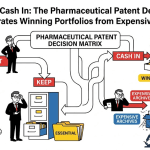
The overall structure of an evergreening strategy typically unfolds in predictable phases: the compound patent provides the initial 20-year exclusivity window (reduced in practice by the development timeline); formulation and delivery patents are filed before or shortly after the compound patent application; method-of-use and combination patents follow as clinical data emerges; pediatric exclusivity is pursued near the end of the compound patent life; and authorized generic agreements or settlement agreements with the first Paragraph IV filer can control the timing and economic terms of generic entry even after all patent defenses have been exhausted. Analysts modeling generic entry timelines should map the complete patent family for each product, not just the compound patent expiry date.
Key Takeaways: Section IV
The IP position of a generic drug manufacturer, measured by first-to-file Paragraph IV certifications, ANDA pipeline rNPV, and licensing agreement terms, is as analytically important as its manufacturing cost structure. Brand manufacturers use evergreening tactics, patent thickets, REMS programs, and pediatric exclusivity to delay generic entry systematically. Humira’s patent thicket of 130-plus Orange Book listings is the most cited example but is by no means unique. Generic companies that specialize in patent challenge litigation against complex thickets are effectively IP businesses that manufacture drugs; valuing them as commodity manufacturers misses the fundamental value driver.
Investment Strategy: IP and Patent Litigation
Investors should monitor Paragraph IV first-to-file filings in the FDA’s ANDA database as a forward-looking indicator of margin opportunity. A cluster of first-filer challenges against a single blockbuster drug, especially one with $1 billion-plus in annual U.S. sales and a primary compound patent expiring within 24 to 36 months, is a potential near-term catalyst. The litigation risk discount is real: brand manufacturers win approximately 50% of Paragraph IV litigation that goes to trial. But settlement agreements, which occur in the majority of cases and often involve authorized generic agreements or agreed-upon delayed launch dates, also generate value for the generic challenger. Neither outcome is zero-sum.
V. The Fragile Global Supply Chain: Geopolitical Exposure and the Drug Shortage Crisis
The Geography of Dependence: APIs, KSMs, and Finished Dosage Forms
The U.S. pharmaceutical supply chain is not globalized in the diversified sense. It is hyper-concentrated in a sequential, two-country dependency that is both economically rational and strategically dangerous. India supplies approximately 47% of U.S. generic prescriptions, with annual export value exceeding $10.5 billion. More than 80% of Active Pharmaceutical Ingredients (APIs) used in U.S.-consumed medicines are sourced from India and China combined.
The structure of this dependency is sequential and therefore more fragile than the headline statistics suggest. India is the dominant supplier of finished generic drug products (Finished Dosage Forms, or FDFs). But India’s manufacturing base depends on China for 70-80% of its own API supply. China’s dominance is most acute at the most upstream point in the production chain, Key Starting Materials (KSMs) and chemical intermediates, where it controls an estimated 80-90% of global supply for inputs used in critical drug classes including antibiotics, cardiovascular drugs, and oncology agents.
This means the U.S.-India supply relationship is, effectively, a three-country dependency on a two-hop supply chain: China produces the KSMs, India processes them into APIs and formulates finished products, the U.S. dispenses those finished products. A disruption at any single node of this chain, whether a Chinese environmental crackdown on chemical manufacturing, a quality failure at an Indian API plant, or an FDA import alert on an Indian FDF facility, cascades through the entire system.
The Cisplatin Case Study: One Plant, One Crisis
The 2023 shortage of cisplatin, a decades-old, first-line chemotherapy agent used in treating testicular, ovarian, bladder, lung, and cervical cancers, is the clearest illustration of the single-point-of-failure problem. When a single manufacturing facility in India responsible for approximately 50% of the U.S. supply of cisplatin experienced a production shutdown, the shortage was immediate, nationwide, and without adequate alternatives. Oncologists at major cancer centers were forced to delay or modify treatment regimens for patients whose disease was actively progressing. The supply of a drug that cost less than $20 per vial was disrupting cancer treatment at hospitals across the country.
The cisplatin shortage was not a black-swan event. It was the predictable consequence of a market structure in which extreme price competition had reduced the number of viable suppliers to a handful, concentrated manufacturing in a small number of overseas facilities, and left no domestic capacity to absorb disruptions. The same structure applies to dozens of other essential sterile injectables.
Geopolitical Risk: Export Bans, Tariffs, and Strategic Vulnerability
The geographic concentration of pharmaceutical manufacturing transforms a supply chain question into a geopolitical one. The proposed U.S. tariff of 25% on Indian imports, while pharmaceuticals have so far been exempted, demonstrated exactly how trade policy can instantaneously threaten the viability of a business model built on low-margin, high-volume manufacturing from a single low-cost country. For a generic manufacturer earning a 5-8% net margin on a drug manufactured in India, a 25% tariff on the finished product would eliminate all profitability without any offsetting pricing relief.
Export bans are a more direct and severe risk. India restricted bulk drug exports during the early COVID-19 pandemic when its own supply was constrained. France has moved to restrict exports of drugs in short supply. Any future geopolitical crisis, including one involving U.S.-China tensions over Taiwan, could trigger Chinese restrictions on KSM and API exports that would be, for practical purposes, catastrophic for the global generic drug supply chain in ways that play out over months, not years.
The U.S. dependence on a potential geopolitical rival for 80-90% of the supply of essential chemical inputs for antibiotics and other critical drug classes is a national security vulnerability. The Defense Department, BARDA, and HHS have all acknowledged this in recent years, but converting that acknowledgment into actionable domestic capacity has proved far more difficult.
Drug Shortage Data: The Scale of the Crisis
Active drug shortages in the U.S. averaged 301 per quarter in 2023, the highest sustained level in a decade. Shortages are not evenly distributed across drug classes. Sterile injectables, the most technically demanding and least profitable category of generic drugs, account for a disproportionately high share of active shortages. These include chemotherapy agents, antibiotics administered by IV, anesthetics, and critical care drugs used in surgery and intensive care settings.
The root causes trace directly back to the economic and structural vulnerabilities described in this report. Manufacturing and quality failures account for over 60% of drug shortages, and quality failures are themselves a downstream consequence of the chronic underinvestment in facilities, equipment, and quality management systems that results from years of margin compression. The industry’s standard model of “just-in-time” inventory management, which minimizes working capital but provides no buffer against sudden supply disruptions, amplifies the impact of every quality event or production stoppage.
Key Takeaways: Section V
The U.S. generic drug supply chain is a sequential, two-country dependency with no meaningful domestic backstop for critical injectables and a limited Strategic National Stockpile buffer for oral solid shortages. The cisplatin case is not exceptional; it is a template for how dozens of other shortage scenarios could unfold. A Chinese export restriction on KSMs or a severe quality crackdown in India would simultaneously affect hundreds of drugs. Tariff exposure, while currently exempted for pharmaceuticals, is a latent threat that existing low-margin generic economics cannot absorb. Manufacturing quality failures, not demand shocks, drive more than 60% of active shortages, and quality failures trace directly to chronic underinvestment caused by margin compression.
Investment Strategy: Supply Chain Positioning
Manufacturers with verified domestic API production capacity, or with multi-country sourcing strategies that meaningfully reduce India and China exposure, will command a supply chain premium as MRAP-style resiliency rating systems take hold. CDMOs (Contract Development and Manufacturing Organizations) with domestic sterile injectable capacity, a technically difficult and capital-intensive specialty, are particularly attractive as both investment vehicles and potential acquisition targets for generic companies seeking to reduce supply chain exposure. Companies dependent on single-source Indian FDF manufacturing for their critical care or oncology generic portfolios carry supply chain risk that is not currently reflected in most publicly available risk assessments.
VI. PBMs and GPOs: How Market Intermediaries Extract Value and Distort Incentives
The Scale of Intermediary Market Power
The U.S. generic drug market is not a direct relationship between manufacturer and patient. It passes through multiple intermediary layers, each of which extracts a portion of the value the manufacturer creates. In aggregate, supply chain participants including wholesalers, PBMs, and pharmacies capture approximately 64% of all generic drug revenue. The manufacturer who develops, validates, and produces the drug retains roughly 36%. This value distribution is one of the most significant and least-discussed factors in the generic market’s economic crisis.
Three buyer groups, one GPO and two PBM-affiliated purchasing entities, controlled between 72% and 81% of all U.S. generic drug purchases as of a 2018 analysis. Concentration in both the GPO and PBM segments has increased since then. PBMs manage prescription drug benefits for more than 289 million Americans. The three largest PBMs (CVS Caremark, Express Scripts, and OptumRx) collectively process the overwhelming majority of U.S. retail prescription drug claims.
How PBMs Generate Revenue From Generics: Spread Pricing
Brand manufacturers pay PBMs substantial rebates in exchange for favorable formulary placement. These rebates are typically calculated as a percentage of the drug’s list price. For generic drugs, which rarely command rebates in the same way brand drugs do, PBMs generate margin primarily through spread pricing. The PBM charges a health plan a price for a dispensed generic that is higher than the amount it reimburses the dispensing pharmacy. The difference, the ‘spread,’ is retained by the PBM.
This practice is legal, common, and largely invisible to health plans that lack access to the underlying contract data. The three largest PBMs reportedly generated approximately $1.4 billion from spread pricing on just 51 generic specialty drugs over roughly five years. Spread pricing does not directly harm manufacturers, but it does create a system in which the PBM’s financial interest lies in maximizing the spread, not in minimizing the net cost to the health plan. That misalignment has downstream consequences for the overall economics of generic drug reimbursement.
A more damaging PBM practice for generic competition is the incentive to protect high-rebate brand drugs from generic displacement. When a new generic enters the market for a drug on which the PBM receives a large percentage-based rebate from the brand manufacturer, the PBM faces a financial incentive to restrict or delay the generic’s formulary access. Every month a patient remains on a brand drug with a 40% list-price rebate is a month the PBM retains a larger revenue stream than it would from the generic alternative. The FTC’s 2024 interim report on PBM practices documented instances of this pattern and flagged it as a structural concern.
How GPOs Accelerate the Race to the Bottom
GPOs serve hospitals as purchasing agents, aggregating demand across thousands of member institutions to negotiate deep discounts on generic drugs and medical supplies. Nearly every U.S. hospital participates in a GPO. The market is dominated by a handful of large entities including Premier, Vizient, and HealthTrust.
GPO contracting for generic drugs typically takes the form of competitive bidding among approved manufacturer participants, with the contract awarded to the lowest-price bidder. In many cases, the contract is structured as a ‘sole-source’ or ‘dual-source’ agreement, meaning the winning bidder (or two winning bidders) receives access to the combined purchasing volume of thousands of member hospitals. This dramatically concentrates generic volume in a small number of suppliers, which in turn concentrates manufacturing risk.
The FTC and HHS issued a formal Request for Information in 2024 specifically investigating whether GPO contracting practices, including sole-source contracting and failure-to-supply clause enforcement, contribute to drug shortages. The concern is well-founded. When a sole-source GPO contract manufacturing plant experiences a quality failure, there is no second supplier pre-positioned with inventory and validated manufacturing capacity to fill the gap. The ‘just-in-time’ efficiency that GPO contracting optimizes for is, in shortage conditions, a system with zero resilience.
The FTC’s Investigation and the Case for Structural Reform
The FTC under Chair Lina Khan released a highly critical interim report on PBM practices in 2024, documenting how vertical integration, rebate opacity, and formulary manipulation by the three largest PBMs generate substantial costs to the health care system. The report stopped short of recommending specific legislative remedies but set the stage for ongoing enforcement action and congressional legislation.
Key proposed reforms include banning spread pricing in Medicaid and commercial contracts, requiring disclosure of rebate amounts to plan sponsors, delinking PBM compensation from drug list prices (moving to a flat-fee or fee-for-service model), and restricting preferential steering to PBM-affiliated pharmacies. At the state level, as of 2025, more than 40 states have enacted some form of PBM transparency or spread-pricing restriction, with widely varying degrees of enforcement effectiveness.
For generic drug manufacturers, meaningful PBM reform would be directionally positive, as it would reduce the incentive for PBMs to protect high-rebate brand drugs from generic substitution and potentially increase the share of generic drug revenue that flows back to manufacturers rather than being captured as spread.
Key Takeaways: Section VI
The intermediary layer of the U.S. pharmaceutical supply chain is not a cost-neutral utility. It captures 64% of generic drug revenue while bearing none of the production cost, quality risk, or supply chain investment. PBM spread pricing on generics generated $1.4 billion from 51 specialty generic drugs over five years at three firms alone. GPO sole-source contracting optimizes for the lowest per-unit price while concentrating manufacturing risk in single facilities with no redundant supply buffer. Both practices are under increasing regulatory scrutiny at federal and state levels, with structural reform legislation likely within a three-to-five-year window.
VII. The Regulatory Landscape: ANDA Mechanics, GDUFA Cost Burden, and Global Harmonization Gaps
The ANDA Pathway: Architecture and Scientific Requirements
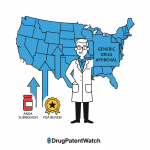
The Abbreviated New Drug Application (ANDA) was created by the Drug Price Competition and Patent Term Restoration Act of 1984 (Hatch-Waxman Act) as the regulatory mechanism for demonstrating that a proposed generic drug is bioequivalent to an already-approved brand-name reference listed drug (RLD). The ‘abbreviated’ designation reflects the core concession built into the pathway: generic applicants can rely on the FDA’s prior finding of safety and efficacy for the RLD and do not need to repeat the full pre-clinical and clinical trial program required for new molecular entities.
The scientific foundation of the ANDA is the bioequivalence (BE) study. A BE study demonstrates that the generic drug delivers the same amount of active ingredient to the bloodstream at the same rate as the RLD. The standard regulatory criterion requires that key pharmacokinetic parameters (area under the curve, or AUC, and maximum serum concentration, or Cmax) fall within the 80-125% equivalence range of the RLD under a standardized statistical analysis (typically a two-way crossover design in healthy volunteers).
This framework works well for simple oral solid dosage forms with predictable absorption profiles. It breaks down for a growing share of the generic pipeline. For complex products such as locally acting drugs (topical dermatologics, inhaled products, ophthalmic solutions, nasal sprays), modified-release injectables, and transdermal patches, establishing BE through pharmacokinetic measurements alone is scientifically inadequate. The FDA may require full clinical endpoint studies demonstrating therapeutic equivalence, which are indistinguishable in cost and duration from a Phase 3 efficacy trial for a new drug. This requirement adds $5-50 million and three to seven years of development time to a complex generic project, creating a significant and intentional barrier to competition for high-value specialty generics.
GDUFA: The Cost of Speed
The Generic Drug User Fee Amendments (GDUFA), first enacted in 2012 and reauthorized in 2017 and 2022, provided the FDA with industry-funded resources to clear a massive backlog of pending ANDAs and establish more predictable review timelines. The program has succeeded on both counts. Average ANDA review times dropped substantially post-GDUFA, and the FDA’s target of reviewing 90% of standard ANDAs within 10 months has been largely met in recent years.
The financial cost of GDUFA falls entirely on manufacturers. For Fiscal Year 2025, key fees include an ANDA filing fee of $321,920 per application, a Drug Master File (DMF) submission fee of $95,084, annual program fees for large manufacturers of approximately $1.9 million, and annual facility fees ranging from $41,580 for an API facility to $246,952 for a FDF facility. These fees are non-refundable regardless of approval outcome.
For a company filing 10 ANDAs per year with three manufacturing facilities, total annual GDUFA expenditure exceeds $5 million before accounting for the development costs, BE study conduct, and legal review underlying each application. For smaller manufacturers or companies pursuing niche products with modest revenue projections, these fees create a prohibitive barrier to entry. The financial math increasingly favors large-scale, high-volume manufacturers who can amortize GDUFA costs across large portfolios, contributing to the market consolidation that reduces supplier diversity and increases shortage risk.
Complex Generics: The FDA’s Evolving Science Framework
The FDA’s Office of Generic Drugs has developed a growing library of product-specific guidance (PSG) documents for complex generic products, detailing the specific BE methodology requirements for each individual drug. These documents represent a significant scientific investment and provide a clearer pathway for complex generic development, but they also reflect the reality that demonstrating equivalence for complex products is genuinely difficult and expensive.
The most technically demanding categories for complex generics include locally acting gastrointestinal drugs (such as vancomycin capsules), dermatological products (where skin penetration rather than systemic absorption is the relevant metric), inhalation products (where particle size distribution, device characteristics, and lung deposition patterns all matter), and long-acting injectable formulations (where the pharmacokinetic profile over days or weeks must be replicated precisely). For each of these categories, the FDA’s guidance has become more detailed and demanding over time, and the cost and timeline for a successful complex generic development program has risen accordingly.
Global Regulatory Harmonization: The Persistent Inefficiency of Market-Specific Approval
A generic manufacturer seeking to sell the same product in the United States, the European Union, Japan, and Canada must conduct separate regulatory submissions and, in most cases, separate BE studies for each jurisdiction. The primary driver of this redundancy is the requirement in most major markets that BE studies be conducted using a reference product sourced from the local market. A study using a U.S.-purchased RLD does not satisfy the EMA’s requirement for a BE study using an EU-sourced RLD, even if the two reference products are manufactured by the same company in the same facility to the same specifications.
This requirement is scientifically defensible in edge cases where regional formulation differences are known to exist. In the majority of cases, it results in duplicative spending of $1-5 million per study per jurisdiction for no scientific gain. It also creates timing discrepancies: a generic may be approved in the U.S. two or three years before or after EMA approval, not because of any difference in the quality of the evidence, but because of the sequential requirement to conduct separate studies.
The International Council for Harmonisation (ICH) has made incremental progress on harmonizing BE study methodology through guidances like ICH E6 (Good Clinical Practice) and working groups on bioequivalence standards. The WHO’s Prequalification Programme provides a pathway for generics used in low- and middle-income countries to reduce duplicative testing requirements. But a true multi-market mutual recognition framework for generic BE studies, analogous to what exists for some aspects of new drug approval, does not yet exist among major regulatory authorities.
Key Takeaways: Section VII
The ANDA pathway is fit for purpose for simple oral solids and has become an increasingly expensive and technically demanding gauntlet for complex generics. GDUFA fees impose a fixed-cost burden that favors large manufacturers and dissuades entry into niche products. The lack of global BE study harmonization costs the industry hundreds of millions annually in duplicative clinical work and imposes delay costs that benefit brand manufacturers. Regulatory complexity, not just price pressure, is a meaningful driver of market consolidation.
VIII. Evergreening, Paragraph IV Litigation, and the 180-Day Exclusivity Game
The Hatch-Waxman Litigation Ecosystem
The Hatch-Waxman Act created not just a regulatory pathway for generic approval but an entire litigation ecosystem. The act’s Paragraph IV certification mechanism, which allows a generic manufacturer to challenge the validity or applicability of a brand’s Orange Book patents, has generated thousands of patent infringement lawsuits over the past four decades. These lawsuits are the primary mechanism through which the U.S. court system regularly evaluates pharmaceutical patent validity and the primary lever through which the generic industry creates market access against brand resistance.
The financial incentives around Paragraph IV litigation are structured to encourage it. The 180-day first-filer exclusivity is available only to companies that file the first Paragraph IV certification for a given drug and patent, and who either successfully litigate the case or reach a settlement that the FDA determines triggers the exclusivity. The potential value of this exclusivity, particularly for drugs generating $500 million or more in annual brand sales, routinely runs into hundreds of millions of dollars, making the cost and risk of litigation economically rational.
Authorized Generic Agreements and Reverse Payment Settlements
Brand manufacturers have developed two primary strategies to control the terms of Paragraph IV settlements in ways that manage generic competition on favorable terms. Authorized generic (AG) agreements allow the brand manufacturer to license its own product to a generic manufacturer to sell as a generic during the first-filer’s 180-day exclusivity period. The AG competes directly with the first-filer generic, splitting market share and reducing the exclusivity period’s economic value, which can provide leverage in settlement negotiations.
Reverse payment settlements, also called ‘pay-for-delay’ agreements, involve the brand manufacturer paying the generic first-filer to delay its launch until a specified date, typically near the end of the brand’s patent protection period. The brand retains exclusivity longer, the generic receives a guaranteed payment that compensates for the foregone exclusivity window value, and both parties avoid the litigation risk of a trial. These agreements were long considered legally questionable but not definitively illegal.
The U.S. Supreme Court’s 2013 ruling in FTC v. Actavis established that reverse payment settlements are subject to antitrust scrutiny under the ‘rule of reason’ standard, meaning courts must weigh their pro-competitive and anti-competitive effects case by case. The ruling did not ban these settlements but created a framework for FTC enforcement. Since Actavis, several high-profile reverse payment cases have resulted in significant settlements and structural remedies, but the practice continues and remains a tool used in Paragraph IV negotiations.
The First-Filer Bottleneck: ‘At-Risk’ Launches and the Litigation Gamble
In cases where Paragraph IV litigation has been ongoing for several years and the first-filer believes the brand’s remaining patents are weak or near expiry, generic manufacturers sometimes choose to launch ‘at risk’ before the litigation is fully resolved. An at-risk launch means the generic manufacturer begins selling the product while a court judgment of patent infringement is still possible. If the court subsequently rules in favor of the brand, the generic manufacturer faces potential damages including disgorgement of all profits earned during the at-risk period, which for a large product could be hundreds of millions of dollars.
At-risk launches are rational when the probability-adjusted expected value of the early launch exceeds the expected value of waiting, particularly when the 180-day exclusivity is at stake and waiting may result in losing it. They are a high-stakes bet on litigation outcome, and the decision-making around them is one of the most complex and consequential that generic drug companies face.
Key Takeaways: Section VIII
Paragraph IV litigation is not peripheral to the generic industry; it is its primary strategic activity. Companies with experienced IP litigation teams, strong in-house patent analysis capability, and the financial capacity to absorb extended legal proceedings carry a structural advantage over smaller manufacturers who cannot sustain Paragraph IV campaigns. Reverse payment settlements, while subject to post-Actavis antitrust scrutiny, remain in active use and can delay generic entry by years on high-revenue products. At-risk launches are a recurring feature of the market and represent one of the most significant binary risk events in a generic manufacturer’s financial calendar.
IX. The Inflation Reduction Act: A Slow-Motion Threat to Generic Market Economics
The Mechanics of the IRA Drug Price Negotiation Program
The Inflation Reduction Act of 2022 authorized Medicare to directly negotiate prices for a specific set of high-spending drugs that lack generic or biosimilar competition. The program targets drugs based on Medicare Part D and Part B spending, with the number of drugs subject to negotiation expanding over time: 10 drugs for 2026, 15 for 2027, 15 for 2028, and 20 per year thereafter. The negotiated price, the ‘maximum fair price’ (MFP), applies to Medicare purchases and is expected to be substantially below the current list price.
For each drug subject to negotiation, the IRA sets a minimum negotiation period: 7 years from initial FDA approval for small-molecule drugs (traditional oral pills and capsules) and 11 years for biologics. These negotiation eligibility timelines are the source of what the industry has termed the ‘pill penalty.’ A small-molecule drug that would previously have faced generic competition 10-12 years post-approval now faces government price negotiation at year 7, effectively replacing the prospect of competitive-market price pressure with a government-set price before generic competition begins.
How the IRA Distorts Generic Market Economics
The IRA’s most significant and underappreciated effect on the generic industry is the alteration of the expected value calculation for Paragraph IV challenges. A first-filer challenge against a brand drug has value primarily because of two things: the 180-day exclusivity period revenue and the long-term generic market revenue after broader competition. The IRA compresses the second of these by pre-setting a lower price anchor for drugs that have been subject to negotiation.
If Medicare negotiates a $Y price for Drug X in year 7, and the natural generic entry date was year 10, the generic manufacturer entering at year 10 faces a market where the anchoring effect of the government-negotiated price has already significantly reduced the brand’s commercial price. The generic’s expected revenue during its post-exclusivity competitive period is therefore lower than it would have been in the pre-IRA world. The return on a Paragraph IV investment is commensurately reduced.
Lumanity, in a 2023 analysis, estimated that the IRA could reduce generic entry incentives for drugs with high Medicare revenue exposure by 20-40% on an NPV basis, depending on the specific drug and timeline. The Association for Accessible Medicines (AAM) has argued that this disincentive effect will reduce the number of Paragraph IV filings for IRA-eligible drugs and thereby reduce generic competition in the medium term.
The ‘Pill Penalty’ and the Structural Shift Away From Small Molecules
The 11-vs-7-year disparity between biologics and small molecules creates a structural incentive for pharmaceutical R&D investment to shift toward biologics at the expense of small-molecule drug development. From a brand manufacturer’s perspective, a biologic that generates the same revenue as a small-molecule drug provides four additional years of protection from government price negotiation, which on a high-revenue drug can mean billions of dollars in protected income. This shifts the R&D calculus in favor of biologics even for disease areas where small molecules might be scientifically preferable or more cost-effective for patients.
For the generic industry, this shift has a long-run consequence: fewer new small-molecule drugs means a smaller future pipeline of generic opportunity. If brand R&D investment rotates toward biologics over the next decade, the patent cliff of the 2030s and 2040s will be populated by a higher proportion of biologic expiries, creating opportunities for biosimilar manufacturers rather than traditional generic companies.
The Counterargument: Could the IRA Accelerate Generic Entry?
A minority analytical view holds that the IRA may paradoxically accelerate generic entry for drugs approaching their negotiation eligibility date. The argument is that once a brand drug is subject to Medicare price negotiation, the brand manufacturer loses a major revenue advantage. Allowing or even facilitating early generic entry could allow the brand manufacturer to avoid the negotiation process entirely, as drugs with generic or biosimilar alternatives are excluded from Medicare’s negotiation eligibility pool. Under this scenario, brand manufacturers might actually prefer early authorized generic agreements with Paragraph IV first-filers over extended patent litigation, because settling early and allowing generic entry exempts the drug from government price-setting.
This dynamic has been observed in early analyses of the IRA’s market effects and represents a genuine and complex countervailing force against the incentive-destruction argument. Whether the net effect of the IRA on generic market competition is positive or negative will depend substantially on the specific drugs subject to negotiation, the timeline of their patent positions, and the strategic preferences of individual brand manufacturers.
Key Takeaways: Section IX
The IRA is the most significant structural change to U.S. pharmaceutical market economics in decades, and its effects on the generic industry are genuinely uncertain. The pill penalty creates a four-year disadvantage for small molecules relative to biologics in the brand R&D calculus. The IRA’s price-setting for Medicare-negotiated drugs reduces the expected revenue from generic competition against those specific products. Both effects are real. The counterargument, that the IRA may accelerate authorized generic entry for some products, is also analytically sound. The net effect on generic pipeline economics will take 5-10 years to measure with precision. Investors and IP teams should model both scenarios for each material product in their pipeline.
X. A Strategic Framework for Market Stability: Policy, Technology, and Supply Chain Reform
The Three-Pillar Reform Architecture
No single policy intervention will stabilize the generic drug market. The economic, structural, and regulatory failures documented in this report are too deeply interrelated and too broadly distributed across the value chain for a single-lever approach to work. A coherent reform strategy requires parallel, coordinated action across three areas: reimbursement and procurement reform (to correct the fundamental mispricing of supply reliability), supply chain restructuring (to reduce geographic concentration and build redundant capacity), and regulatory and technological modernization (to reduce the cost and risk of development and manufacturing).
These three areas are not independent. Reimbursement reform without supply chain restructuring produces higher prices without better supply. Supply chain restructuring without reimbursement reform produces expensive domestic manufacturing that no GPO contract will pay for. Regulatory modernization without either of the other two reforms accelerates ANDA approvals into a market that remains structurally incapable of sustaining those products long-term.
Manufacturer Resiliency Assessment Program (MRAP): Rewarding Reliability
The HHS white paper on drug shortage prevention (ASPE, 2022) proposed the Manufacturer Resiliency Assessment Program as a formal mechanism for rating pharmaceutical manufacturers on the resilience of their supply chains. MRAP would assess manufacturers on criteria including quality management maturity (aligned with the FDA’s Quality Management Maturity, or QMM, program), manufacturing redundancy (whether a product is manufactured at multiple sites), the geographic diversity of API and KSM sourcing, and finished product inventory buffer levels.
MRAP ratings would be publicly disclosed and linked to procurement incentives through a companion Hospital Resilient Supply Program (HRSP). Under HRSP, Medicare payments to hospitals would be adjusted, with incentive payments or protection from penalties, based on whether those hospitals preferentially purchase essential medicines from MRAP-rated manufacturers. This creates a direct financial linkage between a manufacturer’s supply chain investment and its ability to win hospital contracts, effectively creating a market for resilience.
The conceptual elegance of MRAP/HRSP is that it does not require price controls or direct subsidies. It creates a market signal that rewards resilient behavior by making resilience economically valuable to manufacturers. The practical challenge is in the rating methodology, specifically the risk that MRAP scores become a box-checking compliance exercise rather than a genuine measure of supply chain robustness. Getting the measurement framework right is as important as the policy structure itself.
Hospital Resilient Supply Program (HRSP): Creating the Demand Signal
HRSP’s demand-side mechanism is the essential complement to MRAP’s supply-side incentive. Without it, manufacturers who invest in resilience remain at a disadvantage against competitors who undercut on price while cutting corners on supply chain security. The program would establish a premium payment category for drugs sourced from highly-rated MRAP manufacturers, effectively paying a modest premium for supply chain assurance in the same way that premium procurement programs in other critical infrastructure sectors reward reliability.
For the program to work, the premium must be sufficient to cover the genuine cost difference between resilient and non-resilient supply chain practices. Analyses of the cost differential between a single-source, offshore-only, just-in-time generic manufacturer and one with multi-site, domestically or friend-shored, buffer-stocked production estimate the cost premium at 10-25% depending on the product and category. A procurement premium of this magnitude, applied to essential medicines with high shortage risk profiles, would materially alter the economics of resilient manufacturing and could reverse the market’s current disinvestment pattern.
European Policy Models: What Transfers and What Does Not
European healthcare systems provide a menu of tested policy interventions. Several carry lessons for U.S. reform, with important caveats about market structure differences.
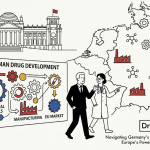
Germany’s sickness fund tender model awards large, often exclusive, contracts to the lowest-bidding generic manufacturer on a product-by-product basis. The model is highly effective at reducing prices for payers and has achieved deep generic penetration. It has also created a hyper-competitive environment in which German generic prices are among the lowest in Europe, generic manufacturers have exited the market at scale, and drug shortages have emerged as a serious domestic concern. Germany’s experience demonstrates that pure price competition, even in a structured tender format, produces the same shortage vulnerabilities as the U.S. GPO model. Germany has begun moving toward multi-winner tenders that distribute volume across several suppliers to reduce single-source risk, a lesson directly applicable to the U.S.
The United Kingdom’s Drug Tariff model, under which the National Health Service sets reimbursement prices for pharmacies, has historically worked well for common generic products while incentivizing pharmacies to source at below-tariff prices. The UK model creates less extreme price pressure than the German tender system and has maintained a somewhat more stable supplier base, though the NHS has also experienced its share of generic drug shortages in recent years.
France’s direct government price negotiation and Spain’s Reference Price System (RPS) both establish government-set price ceilings for generic product categories, reducing the scope for market-based competition while maintaining a degree of volume-based incentive for manufacturers. Neither system has fully escaped the shortage and supply concentration problems that characterize the U.S. market, suggesting that direct price controls are not by themselves a solution.
The most transferable European insight is structural: multi-winner tender or contract models that deliberately maintain two or more suppliers for critical products are more resilient than winner-takes-all models, even at a modest cost premium. The U.S. GPO market is moving very slowly in this direction, but the FTC/HHS inquiry may accelerate the shift.
Fortifying the Strategic National Stockpile
The Strategic National Stockpile (SNS) was established to hold emergency medical countermeasures for bioterrorism and pandemic scenarios. Expanding its mandate to include a rotating buffer stock of the most shortage-prone essential generic medicines, specifically sterile injectables for acute and critical care, is among the most direct near-term policy interventions available.
A meaningful SNS expansion for essential generics would require ongoing appropriations for product procurement and rotation (generics have defined shelf lives and must be replaced on a rolling basis), a formal methodology for identifying priority products based on shortage history and supply chain concentration data, coordination with the FDA’s drug shortage monitoring systems, and a rapid-release mechanism for deploying buffer stock in response to active shortages. The GAO has documented gaps in SNS governance and undefined agency roles that would need to be addressed before any mission expansion. But the core concept is sound: the SNS has been used effectively for pandemic-related drug deployment, and a systematic extension of that model to endemic shortage-prone products is operationally feasible.
Targeted Onshoring and Friend-Shoring: The Realistic Path
Full domestic onshoring of generic drug manufacturing is economically infeasible without permanent, large-scale government subsidies. Building new GMP-compliant U.S. facilities for a market segment that earns 5-8% net margins requires capital investments that cannot be recovered at commodity generic prices without pricing relief, government support, or both.
The realistic near-term approach is targeted onshoring for a defined list of the most critical and shortage-prone products, specifically sterile injectables for acute care, combined with a broader friend-shoring strategy for the wider generic portfolio. Targeted onshoring, supported by long-term government purchasing guarantees or tax incentives, can create viable domestic production capacity for a list of perhaps 50-100 critical products without requiring the transformation of the entire generic industry’s cost structure. Friend-shoring, meaning the diversification of sourcing to trusted allied countries in Europe, North America, and Southeast Asia, reduces single-country dependency for the broader product portfolio.
The domestic CDMO sector, specifically facilities with existing sterile injectable capacity, is the most plausible vehicle for near-term domestic capacity expansion. These facilities do not need to be built from scratch, and their capital costs can be shared across multiple manufacturer customers. Government support in the form of DoD or VA long-term purchasing commitments, modeled on the existing Combatant Commander agreements for other defense-critical supply chains, could de-risk the investment required for capacity expansion.
Key Takeaways: Section X
MRAP and HRSP together represent the most structurally coherent policy innovation available for correcting the market’s fundamental mispricing of supply reliability. Neither program is politically simple to implement, but both are more targeted and economically rational than broad price controls or mandated domestic sourcing. European multi-winner tender models offer a practical template for GPO reform. SNS expansion for critical generics is operationally feasible and should be pursued in parallel with supply chain restructuring. Full reshoring is not economically viable; targeted onshoring for a critical-product list combined with friend-shoring for the broader portfolio is the realistic path.
XI. Advanced Manufacturing and AI: The Technology Roadmap for Generic Drug Production
Why Manufacturing Technology Matters More Than It Used To
For the generic drug industry’s first 40 years, manufacturing technology was largely a cost management problem. The goal was to produce bioequivalent tablets or capsules at the lowest possible unit cost in GMP-compliant batch manufacturing systems. Continuous improvement was incremental, process knowledge accumulated slowly, and there was little competitive pressure for technological differentiation because all approved generics were, by regulatory definition, therapeutically equivalent.
That calculus is changing. Margin compression has made manufacturing efficiency a survival issue, not just a competitive advantage. Drug shortages have made quality management failure an existential regulatory risk. Supply chain concentration has made manufacturing flexibility and resilience a strategic priority. And the emergence of genuinely complex generic products, which require sophisticated formulation science to demonstrate equivalence, has made advanced manufacturing a prerequisite for competing in the highest-value segments of the market.
Continuous Manufacturing: The Process Revolution
Traditional pharmaceutical batch manufacturing processes each production step discretely and sequentially: API synthesis is completed and released, then transferred to blending, then to granulation, then to compression or filling, then to coating, then to packaging. Each step involves material transfer, sampling, testing, waiting, and documentation. The result is a production cycle that can take weeks or months from raw material receipt to finished product release, with numerous opportunities for contamination, error, and quality failure at each transfer point.
Continuous manufacturing integrates all production steps into a single, uninterrupted flow. Raw materials enter one end of the system, finished product exits the other, and process parameters are monitored and adjusted in real time through an array of Process Analytical Technology (PAT) instruments. FDA guidance explicitly supports and encourages the adoption of continuous manufacturing as a quality-enhancement strategy.
The advantages are material. Physical footprint for a continuous manufacturing line can be 30-40% smaller than the equivalent batch capacity, reducing facility capital and operating costs. Production time from raw material to finished product can be reduced from weeks to hours for some formulations, dramatically improving manufacturing flexibility and the ability to respond to demand fluctuations. Real-time quality monitoring reduces batch failure rates and end-of-process testing burden. For domestic manufacturers seeking to compete with offshore batch facilities on cost, continuous manufacturing is the most credible technical path to cost parity.
3D Printing and Personalized Dosage Forms
Pharmaceutical 3D printing (additive manufacturing) has moved from laboratory novelty to commercial development stage over the past decade. The FDA approved the first 3D-printed drug product, Spritam (levetiracetam) from Aprecia Pharmaceuticals, in 2015. The technology has since expanded into multiple drug product categories.
The primary commercial applications for 3D printing in the generic context are products requiring complex release profiles (multilayer tablets with different dissolution characteristics for each layer), dosage customization for populations with specific needs (pediatrics, geriatrics, patients requiring non-standard doses), and combination products that cannot be efficiently manufactured by conventional tablet compression. For supply chain resilience, 3D printing at the point-of-care, hospital pharmacies or specialized clinical compounding centers, offers the prospect of on-demand, small-batch production of selected drugs, reducing dependence on centralized manufacturing for specific high-need situations. This application is still developmental but has received significant DARPA and DoD funding for military medical applications.
AI and Machine Learning: Four High-Value Applications
Artificial intelligence has moved from a speculative topic to a practical tool in pharmaceutical manufacturing and development at a faster pace than most industry observers predicted five years ago. Four specific application areas are generating measurable returns for early adopters in the generic sector.
Formulation optimization is the first and most broadly adopted application. Machine learning models trained on large datasets of API properties, excipient interactions, and formulation performance data can predict compatible excipient systems for new generic products and optimize the ratio of components for desired release profiles. This compresses the iterative experimentation phase of formulation development from months to weeks for some product types, reducing the cost of development and improving the probability of bioequivalence study success.
Bioequivalence prediction is an emerging and high-potential application. Physiologically-based pharmacokinetic (PBPK) modeling, enhanced by machine learning optimization of tissue partition coefficients and absorption parameters, can predict the likely outcome of a BE study before it is conducted. This allows developers to optimize formulations for BE success before committing to the cost of a human study, reducing the failure rate and the associated wasted clinical expenditure.
Real-time manufacturing quality control is the third application. AI-powered spectroscopic monitoring systems (near-infrared, Raman) can analyze raw material quality and in-process blend uniformity in real time, enabling immediate corrective action rather than post-batch failure detection. Predictive maintenance algorithms analyzing equipment sensor data can flag impending failures before they occur, reducing unplanned downtime. Both applications directly address the manufacturing and quality failure causes that account for over 60% of drug shortages.
Portfolio and market intelligence optimization is the fourth. AI can analyze FDA ANDA databases, Orange Book patent listings, competitor approval pipelines, and market pricing data to identify optimal generic development targets, predict patent challenge outcomes, and model the likely competitive landscape at the time of anticipated product launch. For IP teams and business development analysts, these tools substantially improve the efficiency of opportunity screening.
The Technology Adoption Barrier and How to Remove It
The generic industry’s adoption of advanced manufacturing technology has been slow relative to the branded sector for structural reasons that policy should address. Capital investment in continuous manufacturing systems runs $10-50 million per product line, compared to $1-5 million for a conventional batch line upgrade. For a manufacturer earning thin margins on commodity generics, this investment cannot be justified on cost savings alone in a typical financial planning cycle.
FDA has responded with a targeted incentive structure: ANDA supplements requesting approval for continuous manufacturing processes receive expedited review. The agency also provides substantial pre-submission consultation for companies developing continuous manufacturing programs, reducing regulatory uncertainty. The FDA-CDER ’emerging technology team’ has facilitated over 50 continuous manufacturing development meetings since 2014.
Tax policy and direct government grants for advanced manufacturing investment, similar to the CHIPS Act model applied to semiconductor manufacturing, would accelerate technology adoption in the generic sector. A tax credit for capital investment in FDA-approved advanced manufacturing processes, combined with the demand-side signal of MRAP premium pricing for domestic continuous manufacturing output, would materially shift the investment calculus for large generic manufacturers.
Key Takeaways: Section XI
Continuous manufacturing offers the most credible technical path to domestic cost competitiveness for generic manufacturers, with a 30-40% facility footprint reduction and dramatically improved manufacturing flexibility. 3D printing at point-of-care addresses specific supply chain resilience needs for complex products and niche formulations. AI applications in formulation development, BE prediction, real-time quality monitoring, and portfolio optimization are generating measurable returns today. The capital barrier to adoption is real and requires policy support, including tax credits, expedited regulatory review, and demand-side incentives through MRAP/HRSP, to shift the investment decision calculus.
XII. Investment Strategy for Portfolio Managers and Institutional Analysts
The Core Investment Thesis in Three Parts
The generic drug market is not a sector to index. Its financial characteristics vary enormously across product categories, business models, and competitive positions. The investors who have treated it as a commodity exposure have been disappointed by margin compression and share price underperformance for the better part of a decade. Those who have identified and maintained concentrated exposure to the right subsegments have generated strong risk-adjusted returns.
The case for selective overweighting rests on three pillars: the 2025-2030 patent cliff, the MRAP/HRSP policy inflection, and the complex generics premium.
The Patent Cliff Opportunity: $217-236 Billion in Expiring Sales
Between 2025 and 2030, branded drugs generating $217-236 billion in annual global sales are expected to lose market exclusivity. This is one of the largest patent cliff cycles in pharmaceutical history, and it generates a multi-year wave of new generic market entry opportunities. The drugs in this cohort include multiple large-molecule biologics (with biosimilar opportunities rather than traditional generic), large-revenue small-molecule products in oncology, CNS, cardiovascular, and metabolic disease, and a significant number of complex formulations in inhaled, injectable, and topical categories.
For generic manufacturers with first-to-file Paragraph IV positions against drugs in this cohort, the next three to five years represent the most significant near-term revenue opportunity in at least a decade. Analysts should identify which companies hold first-filer status against the highest-revenue products approaching their basic patent cliff, adjust for litigation risk using the patent challenge success rate base (approximately 50% for litigated cases, higher for settled cases), and model the 180-day exclusivity revenue.
MRAP/HRSP Policy Inflection: The Resilience Premium
If MRAP and HRSP are enacted in their proposed form, manufacturers with domestic or friend-shored production capacity, multi-site manufacturing redundancy, and verified API sourcing diversification will receive a procurement price premium in the hospital channel. This premium is effectively a new revenue stream that does not exist today. Companies that have invested in domestic sterile injectable capacity, multi-source API agreements, and robust quality management systems will be rerated on the basis of this new revenue.
The magnitude of the potential premium is meaningful. A 10-25% price premium on essential medicines sourced from MRAP-rated manufacturers, applied across the inpatient channel, could add several hundred basis points to the operating margins of companies with the right manufacturing profile. For a mid-sized generic manufacturer with $500 million in hospital-channel revenue, a 15% average pricing uplift on qualifying products translates to $75 million in incremental annual revenue at near-100% gross margin.
Companies to watch: domestic sterile injectable manufacturers with existing GMP-compliant capacity, including Pfizer’s Sterile Injectable segment (largely hospital-focused), Hikma Pharmaceuticals (which has invested in domestic injectable capacity), and Fresenius Kabi (which has domestic manufacturing across multiple injectable product lines). Pure-play commodity oral solid manufacturers dependent on single-source Indian FDF production will not benefit from MRAP/HRSP and may face procurement disadvantages as resiliency-weighted purchasing becomes the norm.
Complex Generics: The High-Value, Defensible Subsegment
The most consistently attractive financial subsegment of the generic market is complex generics, products for which the development barrier (cost, duration, technical difficulty of BE demonstration) is high enough to limit competition to a small number of market participants. These include 505(b)(2) products, inhaled products, transdermal systems, long-acting injectable microspheres, and complex ophthalmic formulations.
In these categories, the standard commoditization curve, where prices collapse to near-zero with ten or more competitors, simply does not apply. Development costs are high enough that the maximum number of commercially rational market participants for many complex generic products is three to five. With three to five competitors, prices fall substantially from the brand level but stabilize at a commercially viable range, typically 30-60% below the brand rather than 85-95% below.
Companies with established complex generic pipelines include Amneal Pharmaceuticals (long-acting injectables, inhalation products), Sandoz (complex orals, biosimilars, injectables), Teva Pharmaceutical Industries (which despite financial challenges retains strong complex generic assets in respiratory and CNS), and Sun Pharmaceutical Industries (complex topicals, ophthalmics). Each carries its own risk profile, but the common thread is a portfolio differentiated by technical complexity rather than scale.
Risk Factors
IRA uncertainty is the primary systemic risk. If the IRA’s price negotiation program significantly reduces the expected value of Paragraph IV challenges against Medicare-eligible drugs, the returns from the patent cliff opportunity will be lower than historical analogs suggest. Investors should model a range of IRA-impact scenarios, including a high-impact scenario in which multiple top-10 patent cliff drugs by revenue are subject to Medicare negotiation timelines that materially reduce generic entry incentives.
Supply chain risk is a company-specific risk that standard financial analysis systematically underweights. A manufacturer with single-source Indian FDF dependence for its critical care injectable portfolio is not comparable, on a risk-adjusted basis, to one with multi-site, diversified manufacturing for the same products. This distinction should be explicitly modeled in SOTP valuations and DCF discount rate assumptions.
Regulatory enforcement risk is episodic but high-impact. FDA import alerts and Warning Letters to major Indian and Chinese manufacturing facilities have historically caused immediate, severe share price dislocations for affected companies. This risk is not idiosyncratic; it reflects a systematic pattern of quality management underinvestment that the industry’s economics have generated. Companies that have invested in quality management maturity programs and carry FDA-QMM ratings (as this program develops) will have lower regulatory enforcement risk.
Key Takeaways: Section XII
The generic drug investment landscape in 2025 is not uniformly unattractive. The $217-236 billion patent cliff, the MRAP/HRSP policy inflection, and the complex generic premium all represent investable opportunities. The commodity oral solid subsegment, driven by extreme buyer-side concentration and margin compression, is genuinely challenged and is likely to see continued consolidation. Investors should apply a supply chain resilience discount to companies with concentrated offshore manufacturing exposure and a premium to those with domestic complex generic capacity and Paragraph IV first-filer positions against the highest-revenue products in the 2025-2030 patent cliff cohort.
XIII. Appendix: Data Tables and Comparative Policy Analysis
Table 1: Generic Drug Price Erosion by Number of Competitors
Number of Generic Competitors
Approximate Price Reduction vs. Brand
Exclusivity Status
Strategic Implication
1
30-39%
180-day first-filer window active
Primary profitability window; launch speed is critical