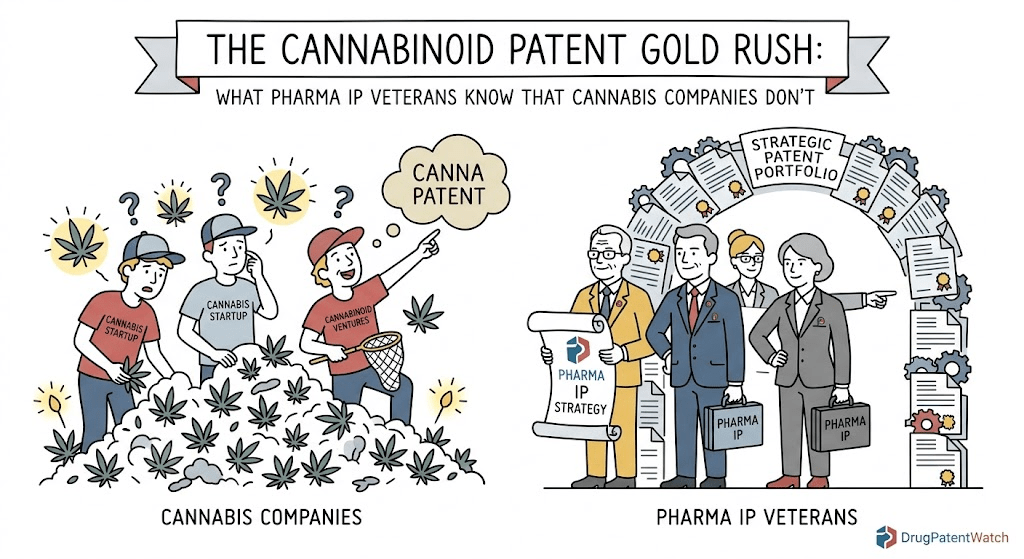
GW Pharmaceuticals spent roughly two decades and hundreds of millions of dollars turning cannabis extracts into regulated pharmaceuticals. When Jazz Pharmaceuticals acquired the company in 2021 for $7.2 billion, the deal was not about marijuana. It was about patents, FDA exclusivities, and a litigation playbook that most cannabis entrepreneurs had never read.
The cannabinoid pharmaceutical sector is now at an inflection point that rhymes with two earlier transitions in traditional pharma: the blockbuster patent cliffs of the early 2000s and the biologics exclusivity wars that began around 2010. Cannabis-derived and cannabinoid-based drugs are learning the same hard lessons about what happens when naturally occurring molecules collide with the Hatch-Waxman Act, Orange Book patent listing rules, and the relentless economics of generic entry. Some of those lessons are being learned voluntarily by well-funded biopharmaceutical companies filing method-of-use patents on Schedule I compounds. Others are being learned involuntarily, in federal district courts in New Jersey and Delaware.
This article maps the entire landscape: what kinds of cannabinoid patents are actually defensible, how Jazz played the Epidiolex exclusivity game, what the Marinol story reveals about the limits of compound patents, where Sativex fits into the regulatory mosaic, and what the next wave of cannabinoid drug developers needs to understand about Paragraph IV certifications, inter partes review at the Patent Trial and Appeal Board, and the structural differences between protecting a naturally occurring molecule versus a synthetic small molecule. Tools like DrugPatentWatch have become essential reading for anyone tracking which exclusivity periods are real and which are accounting fictions.
What Makes a Cannabinoid Patent Defensible? The Fundamental Legal Constraint
Short answer: You cannot patent CBD or THC as bare chemical compounds because they occur in nature. Defensible cannabinoid patents must claim a formulation with markedly different characteristics from the natural substance, a novel method of use, or a specific combination therapy—not the molecule itself.
The starting point for any cannabinoid IP strategy is the Supreme Court’s Association for Molecular Pathology v. Myriad Genetics (2013) decision combined with the long-standing principle from Diamond v. Chakrabarty (1980): naturally occurring compounds are not patentable subject matter. This creates a structural asymmetry that defines the entire cannabinoid patent landscape.
Delta-9-tetrahydrocannabinol (THC) and cannabidiol (CBD) are phytocannabinoids found in Cannabis sativa L. Neither compound is patentable in its natural form. The USPTO’s own guidance confirms that a substance derived from a natural product must exhibit “markedly different characteristics” from that found in nature to qualify for patent protection. [1] That single constraint shapes every patent filing decision made by every serious cannabinoid pharmaceutical company.
The Four Layers of Cannabinoid Patent Protection—and Which Ones Actually Hold
Sophisticated cannabinoid drug developers have learned to build protection across four layers, ranked roughly by legal durability:
Layer 1: Formulation patents. A highly purified CBD in a specific vehicle with defined impurity profiles, a solid dispersion using amphiphilic block copolymers, a sustained-release tablet combining THC and CBD at a fixed ratio—these claim formulations with characteristics that do not exist in any cannabis plant. A Colorado federal court found that liquid cannabinoid formulations reciting specific threshold concentrations of cannabinoids can be patent-eligible absent evidence those concentrations occur naturally in that specific form. [2] Formulation patents are the most reliable layer when claims are tightly drafted to avoid reading on anything that grows in a field.
Layer 2: Method-of-use patents. Claiming a specific therapeutic use—treating Dravet syndrome seizures with highly purified CBD at a minimum dose of 10 mg/kg/day, or reducing spasticity in treatment-resistant multiple sclerosis patients using a 1:1 THC:CBD oromucosal spray—is legitimate patent subject matter even when the compound itself is natural. GW Pharmaceuticals built its entire Orange Book portfolio on this layer. Method-of-use patents are listable in the Orange Book under 21 C.F.R. § 314.53 and trigger the automatic 30-month stay that is the cornerstone of Hatch-Waxman litigation strategy. [3]
Layer 3: Manufacturing and extraction process patents. Novel extraction processes, botanical drug substance specifications, controlled-environment cultivation yielding consistent chemotypes, and synthetic routes for producing pure cannabinoids from non-botanical starting materials can all be patented. These are not listable in the Orange Book—FDA regulations limit Orange Book listing to drug substance, drug product, and method-of-use patents—but they form a second ring of IP protection that creates practical barriers for generics manufacturers attempting to replicate manufacturing processes. [4]
Layer 4: Polymorph and particle size patents. Specific crystalline forms, particle size distributions, and salt forms of cannabinoids that are not known to occur in nature can receive protection. These are the same patents that extended exclusivity on conventional small molecules like esomeprazole and amlodipine besylate, and they face the same obviousness challenges at the USPTO and PTAB.
Why Compound Patents on CBD Are Structurally Impossible—and What That Means for Generic Strategy
The absence of composition-of-matter patents on CBD and THC has a concrete downstream effect: generic entrants cannot simply challenge a compound patent. They face method-of-use and formulation patents instead, which creates litigation dynamics quite different from typical Hatch-Waxman cases involving synthetic small molecules. A generic filer claiming non-infringement of a method-of-use patent must argue either that the labeling of its product does not induce the claimed use, or that the claimed use is obvious based on prior art predating the patent filing. Both strategies were deployed against GW and Jazz in the Epidiolex litigation, as examined in detail below.
The Epidiolex Blueprint—How GW Pharmaceuticals Built the First FDA-Approved Cannabis Drug IP Stack
Epidiolex (cannabidiol oral solution) received FDA approval on June 25, 2018 for the treatment of seizures associated with Lennox-Gastaut syndrome and Dravet syndrome in patients two years of age and older. It was the first prescription drug derived from cannabis to receive FDA approval, and the patent strategy GW deployed around it is the closest the cannabinoid sector has to a proven blueprint. [5]
GW’s approach had three legs: FDA regulatory exclusivity, a densely constructed Orange Book patent portfolio, and parallel prosecution of patent families on different claim types to create layers of protection that would outlast any single patent challenge.
Epidiolex FDA Exclusivity Stack—NCE, Orphan Drug, and Pediatric Extension
The FDA granted Epidiolex New Chemical Entity exclusivity upon approval in September 2018. NCE exclusivity provides five years of protection during which no ANDA can be submitted—with the important caveat that a Paragraph IV certification challenging the listed patents can be filed in year four of the five-year period, the so-called “NCE-1 date.” [6]
Epidiolex also received Orphan Drug Designation for its two approved indications (Lennox-Gastaut syndrome and Dravet syndrome), providing seven years of marketing exclusivity per indication from the date of approval. Because orphan exclusivity runs concurrently with NCE exclusivity rather than sequentially, the operative period for blocking generic market entry was determined by the longer of the two—in this case, orphan drug exclusivity through approximately September 2025 for the first indication and through July 2027 for the second indication approved in 2020. [7]
Jazz also pursued six-month pediatric exclusivity extensions under the Best Pharmaceuticals for Children Act, which attach to and extend any existing patent or regulatory exclusivity period. The layering effect means that generic filers faced NCE exclusivity on top of orphan exclusivity on top of pending patent expiry dates running to 2035, with each layer creating a separate procedural hurdle.
What GW’s 21 Patent Families for Epidiolex Looked Like—and How Jazz Continued Expanding the Portfolio
By the time GW Pharmaceuticals was generating investor presentations in 2019, the company disclosed 21 distinct patent families either granted or filed covering the use of CBD in the treatment of epilepsy. [8] Most claimed the use of CBD in treating particular childhood epilepsy syndromes, seizure subtypes, and interactions with co-administered anti-seizure medications. This last category—drug-drug interaction claims—became strategically significant.
One set of particularly contested patents covered the use of CBD in combination with clobazam, a benzodiazepine commonly used as adjunctive therapy in Lennox-Gastaut syndrome. The combination claim was not merely “CBD plus clobazam”—it specified that the dose of clobazam used alongside CBD could be reduced relative to the dose administered before CBD treatment, reflecting a pharmacokinetic interaction where CBD inhibits the metabolism of N-desmethylclobazam. [9] That specificity became relevant when generic filers challenged the claims on obviousness grounds: the fact that the PK interaction was documented in literature before GW’s filing date gave PTAB petitioners real ammunition.
After acquiring GW in May 2021, Jazz continued prosecuting Epidiolex patent applications. In the 2023 patent infringement suit against ANDA filers, Jazz asserted not only the patents GW had developed before the acquisition but also newly issued patents that had been granted after the ANDA filings—a standard pharmaceutical litigation tactic that extends the 30-month stay by triggering a new lawsuit clock.
The INSYS PTAB Challenge to GW Patent US9066920—What Happened and Why It Matters
Before the Epidiolex ANDA wave arrived, GW faced a more direct patent challenge from an unexpected source. INSYS Therapeutics, then developing a liquid formulation of cannabidiol, filed an inter partes review petition at the USPTO Patent Trial and Appeal Board challenging GW’s patent US9066920 covering the use of phytocannabinoids in treating epilepsy. The grounds were obviousness: INSYS argued that prior publications provided sufficient guidance for a skilled formulator to arrive at the claimed invention—specifically that CBD of botanical origin administered at a given dosage was effective against certain types of epilepsy. [10]
The PTAB challenge illustrated both the vulnerability and the resilience of method-of-use patents in the cannabinoid context. The prior art problem in cannabis is double-edged: there is a large body of older research on cannabis in epilepsy, much of it from Israel and Europe, but much of it is also methodologically weak by FDA standards. That scientific ambiguity works against PTAB petitioners trying to establish that a specific clinical claim was obvious from published prior art.
The Prior Art Problem in Cannabis Patents—Why USPTO Examiners Issue Patents That Probably Should Not Issue
Brett Schuman, co-chair of the cannabis practice at Goodwin Procter, observed that USPTO examiners “really struggle with some of the cannabis patents” filed by emerging cannabis companies, leading to issuance of patents that probably should not have been granted in the first place. [11] The root cause is a prior art gap: the amount of peer-reviewed academic literature and earlier patents in the cannabis field is smaller than in most pharmaceutical categories, meaning examiners have less to work with when evaluating novelty and non-obviousness. Federal cannabis prohibition also created a research chill that left a literature vacuum through much of the 20th century.
The practical consequence is that the cannabinoid patent landscape is divided. Pharmaceutical companies with large R&D budgets and experienced patent counsel—GW, Jazz, Insys, UCB—file well-drafted claims that are likely to survive PTAB review. Smaller cannabis-industry entrants file patents on things that were already disclosed in Israeli or Canadian research, or that are obvious extensions of known pharmacology. The latter category creates what Sterne Kessler attorneys have called a population of “questionable patents” that could be challenged relatively easily in IPR proceedings if a party had sufficient motivation to do so. [11]
Epidiolex ANDA Litigation—The Paragraph IV Battles from 2022 to 2025
Generics manufacturers began filing ANDAs for cannabidiol oral solution in late 2022, having waited out the NCE-1 window. The list of filers read like a roster of tier-one and tier-two generics houses: Teva Pharmaceuticals, Padagis US LLC, Apotex Inc., API Pharma Tech LLC, InvaGen Pharmaceuticals (a Cipla subsidiary), Lupin Limited, Taro Pharmaceutical Industries, Zenara Pharma Private Limited and Biophore Pharma, MSN Laboratories and MSN Pharmaceuticals, Alkem Laboratories, and Ascent Pharmaceuticals. [12]
Each ANDA included a Paragraph IV certification—the statutory mechanism under 21 U.S.C. § 355(j)(2)(A)(vii)(IV) by which a generic applicant certifies that the listed patents are invalid, unenforceable, or will not be infringed by its proposed generic product. A Paragraph IV certification is both a legal declaration and a commercial statement of intent, and filing it against a drug with active Orange Book patents triggers a mandatory 45-day window during which the NDA holder can sue for infringement and receive the 30-month automatic stay on FDA approval.
Jazz’s January 2023 Complaint—District of New Jersey, the Choice of Forum, and the Litigation Strategy
Jazz filed its patent infringement complaint against all ANDA filers on January 3, 2023, in the United States District Court for the District of New Jersey. [13] The forum choice follows standard Hatch-Waxman practice: New Jersey is where many generic pharmaceutical companies maintain their regulatory affairs operations and is a well-developed venue for ANDA litigation with judges experienced in pharmaceutical patent disputes.
The complaint alleged infringement of Orange Book-listed patents covering the composition and method of use of Epidiolex and methods of treatment. The defendants responded with invalidity counterclaims and allegations of improper Orange Book patent listing—arguments that the patents should not have been listed in the first place because their claims did not meet the statutory requirements for Orange Book listability under 21 U.S.C. § 355(b)(1). [14]
The improper listing argument was not frivolous. The Federal Trade Commission had been aggressively challenging Orange Book listings since its September 2023 policy statement condemning the practice, and courts had recently held in Teva v. Amneal and In re Lantus Direct Purchaser Antitrust Litigation that device-focused patents cannot be listed in the Orange Book if the claims do not recite the active pharmaceutical ingredient. [15] Whether those precedents extended to method-of-use patents with narrow drug-interaction limitations was an open question when the Epidiolex litigation commenced.
The Settlement Cascade—How Jazz Resolved the Epidiolex ANDA Litigation One Defendant at a Time
Pharmaceutical patent litigation under Hatch-Waxman rarely goes to trial. The economics of the 30-month stay create a negotiating dynamic in which both sides have strong incentives to settle: the brand protects its revenue stream with a future generic entry date, and the generic secures a license date that is earlier than patent expiry while avoiding the litigation costs and uncertainty of trial. By early 2025, Jazz had settled with every ANDA filer. Padagis was the first to settle in October 2023, receiving a license to manufacture and sell generic Epidiolex on a date contingent on certain defined events. Apotex was the last to settle. [16]
Jazz dismissed the final patent claims related to Epidiolex in February 2025. In the nine months ending September 2024—during the peak of the litigation period—Epidiolex generated $697.3 million in revenue, a 15.2% increase year-over-year. [17] The litigation did not visibly impair commercial performance. The settlement cascade preserved exclusivity through defined dates while making the eventual generic entry schedule predictable enough for Jazz to plan its own portfolio transitions.
What the Padagis Settlement Structure Reveals About Generic Entry Timing for Cannabidiol Oral Solution
Jazz has not publicly disclosed the specific generic entry dates embedded in its Epidiolex settlement agreements, but the regulatory framework constrains the range of plausible outcomes. Orphan drug exclusivity for the first Lennox-Gastaut syndrome/Dravet syndrome indication expires around September 2025; the second approval for tuberous sclerosis complex (approved July 2020) carries orphan exclusivity through approximately July 2027. Orange Book patents for Epidiolex expire in 2035 and beyond. A settlement licensing generic entry “at” orphan exclusivity expiration would place first generic entry in mid-to-late 2025 for the first indication, but the tuberous sclerosis exclusivity period creates complications for a single product with multiple listed patents and staggered exclusivity periods.
For competitive intelligence purposes, DrugPatentWatch tracks Orange Book listings and expiry dates for Epidiolex in real time, allowing generics manufacturers, payers, and investors to model the most likely LOE (loss of exclusivity) scenarios across the full exclusivity stack rather than relying on any single expiry date.
Could a Paragraph IV Challenger Succeed on Obviousness Against GW’s Combination Therapy Patents?
The clobazam combination patents represent the most legally interesting element of the Epidiolex Orange Book portfolio. The claim limitation specifying that clobazam dosing can be reduced when CBD is added reflects a genuine pharmacokinetic observation—CBD inhibits CYP2C19, the enzyme responsible for metabolizing N-desmethylclobazam, leading to elevated active metabolite levels. That metabolic interaction was described in the scientific literature before GW’s patent filing dates. A well-resourced Paragraph IV challenger could have built an obviousness case around that prior art.
Whether such a challenge would have succeeded at trial is uncertain. The legal standard for obviousness—whether a skilled chemist or pharmacologist would have had a reasonable expectation of success in combining the elements of the claim—requires more than showing the ingredients existed separately in the prior art. GW’s data on the specific magnitude of the metabolic interaction, and the clinical dosing implications, may have supplied sufficient nonobvious elements to survive. The fact that every ANDA filer settled rather than pushing the case to trial means the question was never definitively answered.
The Marinol Story—Dronabinol’s Patent Cliff and What It Teaches About LOE in Cannabinoid Pharma
Short answer: Marinol lost its key compound patent protection in the early 2000s after generating over $100 million annually at peak. Generic dronabinol capsules now dominate the market. The lesson: without a durable formulation or method-of-use patent, cannabinoid drugs are as vulnerable to generic erosion as any other small molecule.
Marinol (dronabinol) has been FDA-approved since 1985, making it the oldest approved cannabinoid pharmaceutical in the United States. Dronabinol is synthetic delta-9-tetrahydrocannabinol—the primary psychoactive cannabinoid in Cannabis sativa—formulated in sesame oil in soft gelatin capsules. Unimed Pharmaceuticals held the original NDA and the key exclusivity periods.
How Dronabinol Lost Patent Protection and What Generic Competition Did to the Market
Marinol’s peak annual revenues exceeded $100 million before its primary patent expired in the early 2000s. The compound patent on dronabinol itself was fundamentally fragile from the outset: while dronabinol is synthetic, THC is a naturally occurring compound, and the synthesis route was not sufficiently differentiated to provide long-term compound protection. Unimed attempted to extend exclusivity through use patents—including a method-of-use patent for dronabinol in treating disturbed patients with dementia, filed in 1998—but these narrower protections could not replicate the market exclusivity of a compound patent. [18]
After generic entry, the dronabinol market was restructured by volume rather than value. Generic capsules from manufacturers including Sun Pharmaceutical, Par Pharmaceutical, and AvKare displaced branded Marinol in volume terms while maintaining dollar revenue around $150 million annually across a larger patient population due to expanded prescribing. [19] By 2011, physicians were writing 243,000 annual dronabinol prescriptions; by 2015, that number had grown to 273,000—growth attributable to generic price erosion expanding access, not brand investment.
Syndros vs. Generic Marinol—The 505(b)(2) Pathway as an LOE Mitigation Strategy
Insys Therapeutics filed a 505(b)(2) application for Syndros, a liquid formulation of dronabinol (dronabinol oral solution 5 mg/mL), and received FDA approval in July 2016. The 505(b)(2) pathway allows an NDA applicant to rely on published safety and efficacy data and the FDA’s prior findings regarding a related drug, reducing the clinical trial burden while potentially qualifying for new exclusivity periods tied to the reformulation. [20]
The Syndros strategy is textbook cannabinoid LOE mitigation: take a generic compound, redesign the delivery mechanism, pursue a new NDA with fresh exclusivity, and market the clinical advantages of the new formulation—in this case, adjustable liquid dosing and faster bioavailability compared to capsules. The strategy works when payers and physicians agree that the new formulation is worth a premium over existing generics. For Syndros, commercial adoption was constrained by the pre-existing generic Marinol market and by Insys’s subsequent criminal troubles, which led to the company’s bankruptcy. [21]
The DEA classification of dronabinol also created complications. Marinol capsules are Schedule III; Syndros oral solution is Schedule II, reflecting the FDA’s determination that the liquid formulation has higher abuse potential due to faster onset. Generic manufacturers seeking to develop a liquid dronabinol product face both patent barriers and the additional regulatory burden of Schedule II manufacturing compliance. The FDA’s 2025 determination that Syndros was not withdrawn for safety reasons—a procedural step required before generic oral solution applicants can proceed—opens the door to future generic oral dronabinol solution competition. [22]
Why AbbVie Selling the Marinol NDA to Solvay, Then Solvay to Abbott, Reflects the Economics of Post-LOE Cannabinoid Drugs
The ownership history of the Marinol NDA maps exactly onto the standard pharmaceutical asset lifecycle after patent expiry. Unimed Pharmaceuticals was acquired by Solvay Pharmaceuticals, which was subsequently absorbed by Abbott Laboratories, which spun out AbbVie. The branded Marinol product became a shrinking revenue stream held for tax efficiency and residual branded prescribing, not as a core asset. That pattern—acquisition at peak, gradual revenue decline, eventual portfolio rationalization—is the default trajectory for a cannabinoid drug that fails to build a patent and regulatory exclusivity stack capable of surviving generic competition.
Sativex (Nabiximols) Patent Strategy—The Botanical Drug Complication and EMA vs. FDA Regulatory Asymmetry
Sativex (nabiximols) is approved in over 29 countries for treating moderate-to-severe spasticity in multiple sclerosis patients. It is not approved in the United States. That regulatory gap—between widespread global approval and continued U.S. non-approval—reflects a structural challenge specific to botanical drug products and illustrates a patent strategy problem that Epidiolex partially solved but Sativex has not.
Why Nabiximols Is Approved in 29 Countries But Not the United States—and What the Patent Implications Are
Sativex is a botanical drug product. It is not a single purified compound but a fixed-ratio extract from two cannabis chemotypes—one producing principally THC botanical drug substance and one producing principally CBD botanical drug substance—combined in an oromucosal spray delivering 2.7 mg THC and 2.5 mg CBD per 100 µL actuation. [23] The EMA approved it based on clinical data from European Phase 3 trials. The FDA’s path is more demanding: the agency requires demonstration of clinical superiority to existing alternatives in a controlled trial, and the FDA’s 2011 botanical drug guidance requires that the manufacturing process for a botanical product be shown to produce a consistently specified and characterized product.
GW initiated a U.S. Phase 3 program for nabiximols in MS spasticity in November 2020. The company’s stated expectation was that a positive result from any one of five planned pivotal studies would enable an NDA submission. Jazz Pharmaceuticals inherited this development program when it acquired GW in 2021, but the NDA for nabiximols in the United States has not been submitted as of 2026.
The patent implication of the U.S. non-approval is direct: without FDA approval, GW and Jazz cannot list Sativex patents in the Orange Book, cannot trigger the 30-month Hatch-Waxman stay, and cannot use the ANDA litigation system to defend the product from generic competition in the U.S. market. The entire Hatch-Waxman exclusivity architecture applies only to FDA-approved products.
The Otsuka Royalty Dispute Over Epidiolex—A Case Study in Collaborative IP Complexity
In February 2007, GW Pharmaceuticals and Otsuka Pharmaceutical signed an exclusive agreement for Otsuka to develop and market nabiximols (Sativex) in the United States. That partnership unraveled in December 2017 when GW reclaimed its Sativex U.S. rights from Otsuka without upfront payments. The collaborative IP created under the agreement, however, did not simply disappear. [24]
In January 2022, Jazz (as GW’s successor) filed a lawsuit against Otsuka in New York Supreme Court seeking a declaration that Otsuka was not entitled to royalties on Epidiolex sales under the Research Collaboration and License Agreement. Jazz settled the dispute in February 2023, with Otsuka assigning its rights in certain jointly-owned intellectual property to GW in exchange for Jazz paying Otsuka royalties on Epidiolex net sales from product launch through 2032 and potentially on certain future CBD products. [25]
The settlement structure—royalties through 2032 on the world’s top-selling cannabinoid pharmaceutical—illustrates a recurring problem in early-stage pharma collaborations: IP created jointly in early development phases creates royalty obligations that outlast the partnership itself and inflate the cost structure of the resulting product by a percentage of net sales for decades.
Canopy Growth’s 2020 Infringement Lawsuit Against GW—Cannabis Industry IP Battles Within the Cannabinoid Sector
In 2020, Canopy Growth Corporation accused GW Pharmaceuticals of infringing its patented cannabis extraction technology. The suit was later dismissed. [26] The dispute is notable not for its outcome but for what it reveals: even within the narrowly pharmaceutical segment of cannabinoid development, IP conflicts arise between agricultural/wellness cannabis companies and clinical pharmaceutical developers over processing and extraction methods that each side claims to have developed independently.
As the cannabinoid pharmaceutical sector expands, the extraction and manufacturing IP space will generate more inter-company disputes. Companies that developed large patent portfolios on extraction techniques during the pre-legalization period, when prior art documentation was poor and USPTO examiners had limited cannabis-specific expertise, may find those patents challenged by well-resourced pharmaceutical entrants arguing the claims are obvious over older Israeli or Canadian botanical research.
The Orange Book Listing Game in Cannabinoid Drugs—What Patents Are Listable and Why It Matters
Short answer: Only drug substance, drug product, and method-of-use patents are listable in the FDA Orange Book. Manufacturing process patents and device patents (absent API recitation in the claims) are not eligible. Improperly listed patents expose brand manufacturers to FTC scrutiny and delisting petitions from generics.
The Orange Book is formally titled “Approved Drug Products with Therapeutic Equivalence Evaluations.” Its patent listing function—requiring NDA holders to list applicable patents so that ANDA filers must certify against them—sits at the heart of the Hatch-Waxman Act’s design for balancing brand innovation incentives against generic competition access. [27]
Which Epidiolex Patents Were Listed in the Orange Book and Why That List Was Contested
Jazz listed multiple patents in the Orange Book for Epidiolex covering the composition and method of use of the product and methods of treatment. The generic ANDA filers challenged the listing of certain patents as improper—a standard defensive move that, if successful, removes a patent from the 30-month stay calculus and eliminates one element of the brand’s litigation leverage.
The FTC’s parallel Orange Book challenge campaign created useful cover for the ANDA defendants. Starting in September 2023, the FTC challenged over 100 patents across multiple therapeutic categories as improperly listed, and by April 2024 had expanded that challenge to over 400 patents across 20 brand-name drugs. [28] While the FTC’s primary targets were inhaler device patents (Advair, Ventolin, ProAir) and injection device patents for GLP-1 drugs, the broader campaign normalized the argument that Orange Book listings deserve scrutiny—a useful backdrop for ANDA defendants challenging GW’s method-of-use combination patents.
The Federal Circuit’s December 2024 decision in Teva v. Amneal tightened Orange Book listability standards significantly: the court held that to be listable, a patent’s claims must actually recite the active pharmaceutical ingredient of the approved drug. [29] For cannabinoid drugs, this ruling has particular relevance for any formulation patent whose claims describe an excipient combination or delivery device without explicitly reciting CBD or THC as the API. Companies with such patents currently listed in the Orange Book face delisting risk that did not clearly exist before Teva v. Amneal.
The 30-Month Stay Mechanics for Cannabinoid ANDAs—How Jazz Used Hatch-Waxman Architecture to Protect Epidiolex Revenue
The 30-month stay is the defining commercial feature of Orange Book patent listing. When an ANDA filer submits a Paragraph IV certification and the NDA holder sues for infringement within 45 days, the FDA cannot approve the ANDA until the earlier of 30 months from the date the NDA holder received the Paragraph IV notice, a court decision that the challenged patents are invalid or not infringed, or patent expiry. [30]
For Epidiolex, the ANDAs were filed in late 2022 (at the NCE-1 window), Jazz filed suit in January 2023, and the resulting 30-month stay extended FDA approval of generic cannabidiol oral solution until mid-2025 at the earliest—and later for defendants whose notices arrived later in the filing wave. Layered on top of orphan drug exclusivity running to September 2025 for the first indication, the stay served primarily as redundant protection, but it created a procedural backstop that held generic entry off the market while the parties negotiated settlement terms.
“In fiscal year 2024, the institution rate for bio/pharma IPR petitions at the PTAB was approximately 73%, and of those instituted, a substantial fraction resulted in cancellation of at least some challenged claims.”— DrugPatentWatch, Drug Patent Challenges: The Complete Strategic Playbook for IP Teams and Portfolio Managers (2024) [31]
NCE Exclusivity for Cannabinoid Drugs—What ‘New Chemical Entity’ Means When the Molecule Occurs in Nature
NCE exclusivity under 21 U.S.C. § 355(j)(5)(F)(ii) protects an approved drug containing an active moiety that has never been approved by the FDA in any form. “Active moiety” means the molecule responsible for the pharmacological activity, excluding appended groups like salts, esters, or chelates that affect solubility or bioavailability without affecting the primary activity mechanism.
Epidiolex received NCE exclusivity because cannabidiol had never previously been approved by the FDA as a drug product, despite being a naturally occurring compound. The NCE designation reflects the regulatory novelty of FDA approval, not the chemical novelty of the molecule. [32] That distinction is counterintuitive—CBD is not new; it has existed in cannabis plants for millennia—but it is consistent with the Hatch-Waxman framework, which measures novelty from the FDA’s regulatory perspective rather than from nature’s.
The practical implication is that any cannabinoid receiving its first FDA approval can qualify for NCE exclusivity if its active moiety has not previously been FDA-approved in any drug. For rare or minor cannabinoids—cannabigerol (CBG), cannabichromene (CBC), cannabinol (CBN), tetrahydrocannabivarin (THCV)—the first company to get an FDA approval could secure the same five-year NCE exclusivity that GW received for CBD. That creates a race dynamic in which speed to FDA approval is financially worth hundreds of millions of dollars in exclusivity value.
Minor Cannabinoids as the Next Patent Frontier—CBG, THCV, and the Race for NCE-Eligible Approvals
CBD and THC are the cannabinoids the industry knows. The cannabis plant produces over 100 distinct cannabinoids, most of them present in trace quantities but each with distinct pharmacological profiles. As CBD and THC face increasing generic pressure from the Epidiolex and dronabinol LOE timelines, the capital allocation in cannabinoid pharmaceutical development is shifting toward minor cannabinoids with uncrowded regulatory status and more tractable prior art situations.
Which Minor Cannabinoids Have the Most Defensible Patent Position Going Forward
The most patent-defensible position in the minor cannabinoid space combines four elements: a compound with limited prior pharmaceutical development, a targetable therapeutic indication with identifiable patient population, a synthetic manufacturing route that avoids natural product prior art problems, and a clinical development program sufficiently advanced to establish method-of-use claims around a specific indication before competitors.
Cannabidivarin (CBDV), the propyl analog of CBD, has attracted development attention in autism spectrum disorder and Rett syndrome. GW’s clinical program in CBDV (GWP42006) generated regulatory filings before the Jazz acquisition, creating a modest prior art record in autism but leaving formulation and combination therapy space potentially open for new filers. The key question—as with all minor cannabinoids—is whether enough published academic literature exists to create obviousness risks for any method-of-use claim filed today. Because much of the minor cannabinoid literature is preclinical and published after 2015, the prior art situation is actually better for patent applicants than it was for CBD in 2005.
THCV (tetrahydrocannabivarin) is being developed for metabolic disorders, particularly type 2 diabetes and obesity, in programs at several companies. The appetite-suppressing properties of THCV are mechanistically distinct from CBD’s anticonvulsant profile, and the metabolic indication space carries a larger commercially addressable patient population. The challenge is that THCV is technically a Schedule I controlled substance in the United States, which creates manufacturing regulatory hurdles before any ANDA framework even becomes relevant.
Synthetic vs. Botanical Cannabinoids—IP Strategy Differences and What They Mean for Patent Prosecution
The GW/Jazz approach was botanical: cultivate controlled cannabis chemotypes, extract and purify cannabinoids to pharmaceutical specifications, and patent the formulations and therapeutic uses. The alternative approach is synthetic: produce cannabinoids entirely through chemical synthesis, avoiding any plant source and the associated batch-to-batch variability in residual minor cannabinoids.
Synthetic production creates different but not necessarily better patent opportunities. A synthetic route for producing CBD can be patented as a process, but processes are not Orange Book-listable. The resulting synthetic CBD product is structurally identical to plant-derived CBD, which means any method-of-use claims in an Orange Book-listed patent for a synthetic CBD product face exactly the same prior art challenges as botanical CBD method-of-use claims.
One interesting claim construction wrinkle specific to synthetic cannabinoids: GW’s Orange Book patents for Epidiolex include claim limitations specifying that the CBD has “not more than 0.15% (w/w) THC.” A synthetic CBD product, produced without any cannabis plant involvement, would have exactly zero percent THC—not “not more than 0.15%.” Whether a claim that says “not more than X% THC” covers a product with zero percent THC is a genuine claim construction question. [33] If courts interpret the limitation as requiring the presence of some THC below the specified threshold (i.e., that zero does not satisfy a “not more than” limitation when the claim is read in the context of a botanical extraction), then a synthetic CBD product could potentially avoid infringement of those claims while still practicing the therapeutic method—a significant freedom-to-operate opportunity for synthetic cannabinoid developers.
Entourage Effect Patents—Can You Patent a Ratio of Cannabinoids as a Composition?
The “entourage effect”—the hypothesis that combinations of cannabinoids and terpenes produce synergistic effects exceeding those of any individual component—has attracted extensive patent filing activity by cannabis companies hoping to protect specific formulation ratios. The patent eligibility analysis for such claims follows the same framework as any other cannabinoid composition: the specific ratio or combination must have characteristics markedly different from what occurs in any natural cannabis strain to be patentable subject matter.
Some entourage effect patents survive this threshold by claiming specific quantitative ratios that do not exist in any known natural chemotype, combined with evidence of a specific pharmacological or clinical effect attributable to that ratio. Patents claiming simply “a THC:CBD ratio of 1:1 for treating [condition]” face obvious prior art risks given the long history of Sativex research at that ratio. More defensible are claims to unusual ratios—high CBD with trace THC, or specific minor cannabinoid additions—accompanied by clinical data demonstrating superior effect compared to the individual components.
How Traditional Pharma Patent Strategies Apply to Cannabinoid Drugs—and Where the Analogy Breaks Down
The cannabinoid pharmaceutical sector has had nearly a decade to observe how conventional pharma defends blockbuster drugs from generic competition. The strategies are well documented: authorized generics, product hopping to reformulated products with fresh exclusivity, patent thickets layering formulation patents on top of use patents on top of delivery system patents, citizen petitions to delay FDA approval of ANDAs, and settlement agreements granting future generic entry dates in exchange for early litigation resolution. All of these tactics have been deployed in cannabinoid drug litigation, but each has limitations specific to the cannabinoid context.
Product Hopping Strategy for Cannabinoid Drugs—Does It Work When the API Is Generic?
Product hopping—switching patients from a drug facing imminent generic entry to a reformulated version with fresh exclusivity—requires the reformulation to be clinically meaningfully different enough to justify the prescribing switch, and it requires that clinicians and payers accept the transition before generic substitution at the pharmacy level captures market share. The strategy worked famously for AstraZeneca’s Nexium (esomeprazole) over Prilosec (omeprazole), and for Allergan’s Namenda XR over Namenda.
For cannabinoid drugs, product hopping is complicated by the botanical drug framework. If a company wants to hop from Epidiolex (CBD oral solution) to a tablet formulation of CBD with enhanced bioavailability, it must demonstrate to the FDA that the tablet is a new drug product warranting NDA approval rather than merely a line extension. The 505(b)(2) pathway offers one route: file an NDA relying on Epidiolex’s safety and efficacy data, with bridging pharmacokinetic studies showing therapeutic equivalence. If approved, the new tablet would generate its own NCE exclusivity only if it contained a newly approved active moiety—which CBD is not, given Epidiolex’s prior approval.
Patent Thickets in Cannabinoid Pharma—GW’s 21 Patent Families vs. a Small-Molecule Blockbuster’s 40-Patent Stack
AbbVie’s Humira (adalimumab) infamously accumulated over 130 patents covering composition, formulation, manufacturing, and dosing methods—a patent thicket that kept biosimilars off the U.S. market until 2023 despite European biosimilar competition beginning in 2018. The Epidiolex portfolio, with 21 patent families covering a cannabinoid rather than a biologic, is structurally similar in concept but significantly narrower in scope.
The key difference is that Humira’s composition patents covered a monoclonal antibody sequence that cannot be easily derived from a natural source—creating deep compound-level protection. Epidiolex’s portfolio lacks equivalent compound protection by the design of the patent system. GW substituted depth in method-of-use claim variety for the compound protection it could not obtain, which is the right strategy for a natural product, but it does not produce the same moat.
A comparison of the patent thicket structures:
Drug
API Type
Compound Patent?
Primary Exclusivity Type
Patent Families
Generic Entry Challenge Level
Humira (adalimumab)
Biologic (mAb)
Yes (sequence patents)
Biologic exclusivity (12yr) + compound patents
130+
Very High
Epidiolex (cannabidiol)
Phytocannabinoid
No
NCE (5yr) + Orphan (7yr) + M-o-U patents
21
High (settled)
Marinol (dronabinol)
Synthetic cannabinoid
Yes (synthetic THC, but weak)
Compound patent (expired)
Low
Low (generic-dominated market)
Sativex (nabiximols)
Botanical (1:1 THC:CBD)
No
Formulation + M-o-U patents; no FDA approval
Undisclosed
N/A (not FDA approved)
Citizens Petitions as an ANDA Delay Tactic—How Jazz and GW Used FDA Process to Extend Market Exclusivity
A citizen petition to the FDA requesting that the agency impose additional requirements on ANDA applicants before approval is a recognized—and increasingly scrutinized—exclusivity extension tool in conventional pharma. The FTC and FDA have both published guidance expressing skepticism toward petitions filed shortly before ANDA approval that appear designed to delay competition rather than raise genuine safety or scientific issues.
The standard tactic is to file a citizen petition arguing that generic applicants must demonstrate bioequivalence using a specific clinical endpoint or population rather than standard PK bridging studies—an argument that, if accepted by FDA, substantially increases the generic development timeline and cost. Whether such a petition would succeed for a cannabinoid like CBD is uncertain: the FDA’s reference standard for Epidiolex bioequivalence is already specified, and a petition seeking to add additional requirements faces the same scrutiny applied to citizen petitions in conventional small molecule cases.
Authorized Generics for Cannabidiol—Is Jazz Planning One, and What Would the Commercial Impact Be?
An authorized generic is a product launched by the brand company or its licensee under the NDA but sold at generic prices, competing directly with Paragraph IV first-filer generics who would otherwise enjoy 180 days of generic exclusivity under the Hatch-Waxman framework. Authorized generics eliminate the 180-day exclusivity premium that Paragraph IV first filers seek to monetize, reducing the financial incentive for challenging brand patents.
Jazz has not publicly disclosed an authorized generic strategy for Epidiolex, but the settlement structure—licensing multiple generic entrants on condition-specific entry dates—achieves a similar outcome by diversifying the competitive landscape upon LOE rather than concentrating generic exclusivity in a single filer. With over a dozen ANDA filers settled, the post-LOE generic market for cannabidiol oral solution will face rapid price erosion typical of multi-filer markets.
ANDA Filing Strategy for Cannabinoid Drugs—What Generics Need to Know Before Filing a Paragraph IV Cert Against Epidiolex
The Paragraph IV landscape for Epidiolex is now largely settled, literally. But for future cannabinoid drug ANDAs, the analytical framework for evaluating whether to file a Paragraph IV certification requires a specialized assessment of the natural product patent vulnerability that is not required for conventional small molecule ANDAs.
How Generics Evaluate Cannabinoid Method-of-Use Patent Validity—The Three-Part Challenge Framework
A generic filer considering a Paragraph IV challenge to a cannabinoid method-of-use patent should evaluate the claim on three dimensions before filing:
First, prior art scope: what published research predating the patent’s priority date describes the claimed therapeutic use, even if the specific dosing or patient population in the prior art differs from the claim? For Epidiolex-type CBD seizure patents, the relevant prior art extends to research from Brazil’s CBD epilepsy studies in the 1980s and Israeli academic programs through the 1990s and early 2000s. The prior art is imperfect—primarily open-label or small-scale—but it creates an obviousness argument worth assessing.
Second, claim construction vulnerability: does the claim include limitations—THC content thresholds, specific purity grades, minimum dose floors—that a synthetic CBD product would not satisfy, creating a non-infringement argument independent of validity? The THC threshold analysis for synthetic CBD products, described earlier, is the clearest example.
Third, commercial context: how much does the 180-day first-filer exclusivity period (for the first ANDA filer with a Paragraph IV certification) actually generate, given the orphan drug exclusivity structure and the probability of a brand settlement before trial? If the first filer is likely to settle for a defined future generic entry date rather than win a full invalidity ruling, the financial calculus depends on the settlement terms more than the patent challenge merits.
IPR Petitions at the PTAB Against Cannabinoid Drug Patents—When Are They Worth Filing?
Inter partes review at the PTAB allows any party to challenge a patent’s validity based on prior patents and printed publications, on grounds of anticipation or obviousness. The PTAB institution rate for bio/pharma patents runs around 73%, meaning that over two-thirds of petitions result in a full review proceeding—a meaningful invalidation risk for any patent owner. [34]
For cannabinoid method-of-use patents, the prior art available for an IPR challenge is a mix of pharmaceutical journal publications, Israeli and Canadian clinical research reports, and earlier patents from university technology transfer offices. The challenge is that most of the high-quality clinical prior art for specific cannabinoid indications is relatively recent—concentrated in the 2010s, not predating GW’s earliest priority dates in the 2000s. That timeline asymmetry reduces the PTAB’s ability to invalidate the earliest GW patent families on anticipation grounds, though obviousness grounds remain available when the claimed use was predictable from a combination of pre-2000 pharmacological literature and the clinical outcomes in small early studies.
The INSYS PTAB challenge to GW patent US9066920 on obviousness grounds illustrates the typical argument structure. INSYS lost that challenge, which reflects the difficulty of establishing obviousness when the prior art on cannabinoid anticonvulsant efficacy, while suggestive, was not robust enough to demonstrate a “reasonable expectation of success” in a specific pediatric patient population at a specific dose range. [35]
First-Filer Exclusivity and the 180-Day Generic Exclusivity Premium for Cannabidiol Oral Solution—Who Gets It?
The first ANDA filer to submit a substantially complete application with a Paragraph IV certification for a particular drug product receives 180 days of generic exclusivity upon receiving FDA approval, during which no other generic can be approved. For Epidiolex, multiple companies filed ANDAs close together in time, which potentially results in a “first filer” determination that triggers shared exclusivity among simultaneous filers—or that is resolved by the settlement terms rather than by FDA determination.
The 180-day exclusivity period is worth modeling carefully. For a drug generating roughly $900 million in annual U.S. revenue, the branded product period with no generic competition is worth significantly more to the brand than the post-generic-entry period. A first-filer exclusivity window that generates six months of solo generic competition on a product of that scale generates meaningful revenue—a generic achieving 40% market share at 30% of branded price captures approximately $54 million in revenue from a $900 million-revenue drug. That figure, minus litigation costs, represents the commercial case for pursuing a Paragraph IV challenge rather than waiting for the exclusivity period to lapse.
Supply Chain and Manufacturing Exclusivity for Cannabinoid Drugs—The Controlled Substance Manufacturing Barrier
Cannabinoid pharmaceutical manufacturers face a layer of market exclusivity that does not appear in the Orange Book: DEA Schedule I and II manufacturing quotas. CBD derived from hemp (defined under the 2018 Farm Bill as cannabis with less than 0.3% THC by dry weight) is not itself a controlled substance. But pharmaceutical-grade CBD produced under GMP conditions from cannabis plants that produce above-trace amounts of THC—as GW’s manufacturing process does—requires DEA Schedule I manufacturing registration, a Drug Enforcement Administration-issued annual quota, and infrastructure that most generic manufacturers do not currently operate.
DEA Manufacturing Quotas as De Facto Cannabinoid Generic Entry Barriers—How Long Can This Last?
DEA’s annual aggregate production quotas for Schedule I and II controlled substances limit how much of a given substance can be manufactured in the United States each year. A generic manufacturer seeking to produce cannabidiol oral solution from cannabis-derived CBD must apply to DEA for a schedule I researcher or manufacturer registration, receive an individual production quota, and comply with DEA’s security and record-keeping requirements for Schedule I manufacturing facilities. These requirements are not insurmountable—they are the same requirements that Insys Therapeutics navigated to produce Syndros—but they represent meaningful startup costs and regulatory timeline additions compared to manufacturing a generic non-controlled pharmaceutical.
If the U.S. government rescheduled cannabis from Schedule I to Schedule III under the Controlled Substances Act—a process initiated by the DEA in 2024 in response to a HHS recommendation—the manufacturing registration requirements for cannabis-derived APIs would shift. Schedule III manufacturing is less restrictive than Schedule I, potentially expanding the pool of manufacturers willing to invest in cannabinoid API production and accelerating the commodity-ization of CBD as a pharmaceutical ingredient.
Cannabis Rescheduling Timeline and Its Impact on Cannabinoid Drug Patent Strategy—What Happens If DEA Moves Cannabis to Schedule III
DEA initiated rulemaking proceedings in 2024 to reschedule marijuana from Schedule I to Schedule III, acting on a 2023 HHS recommendation. [36] If completed, rescheduling would not change the patent or Orange Book exclusivity status of any existing cannabinoid pharmaceutical. FDA-approved drugs with Orange Book-listed patents retain those protections regardless of the DEA scheduling of their active ingredient.
What rescheduling would change is the research environment and the generic manufacturing infrastructure. More universities and contract research organizations could conduct cannabis-derived cannabinoid research without Schedule I registration burdens. More pharmaceutical manufacturers could add CBD and potentially THC to their controlled substance manufacturing capabilities at lower regulatory cost. The combined effect would expand both the pool of generic manufacturers and the volume of clinical research that could ultimately generate prior art relevant to future cannabinoid patent challenges.
For holders of existing cannabinoid pharmaceutical patents, rescheduling is a mixed signal. It accelerates the competitive environment while potentially expanding the addressable patient population as clinical research produces new indication data for existing approved drugs—new indications that can be the basis for new method-of-use patent filings if the research produces genuinely novel therapeutic findings.
Hemp-Derived CBD as an API—Does the 2018 Farm Bill Create a Generic Manufacturing Pathway Outside the DEA Framework?
The 2018 Agriculture Improvement Act (“Farm Bill”) removed hemp-derived cannabidiol from the Schedule I controlled substance definition, provided the CBD comes from cannabis containing less than 0.3% THC on a dry weight basis. A pharmaceutical-grade CBD product manufactured entirely from FDA-regulated hemp could, in theory, be produced without DEA Schedule I registration—a significant cost and regulatory reduction.
Whether a hemp-derived CBD generic of Epidiolex would be approvable under the FDA’s standards depends on whether the agency considers hemp-derived pharmaceutical CBD to be equivalent to GW’s cannabis-derived CBD for pharmaceutical equivalence purposes. The active moiety—cannabidiol—is chemically identical regardless of botanical source. But pharmaceutical equivalence under the Orange Book standard also requires the same dosage form, same route of administration, and same strength, and requires that the product meet applicable standards of strength, purity, and quality. A hemp-derived generic CBD oral solution meeting all those standards would be a credible pathway for a generic manufacturer willing to navigate the FDA’s bioequivalence requirements without the DEA manufacturing hurdle. Whether FDA would accept hemp-derived CBD as pharmaceutically equivalent to GW’s botanical drug substance is an open regulatory question that no ANDA filer has tested to a final agency determination as of this writing.
Pricing and Reimbursement Pressure on Cannabinoid Drugs Post-LOE—The Payer Perspective
Epidiolex entered the U.S. market in 2018 at a list price of approximately $32,500 per year for a 5 mg/kg/day dose in a 10 kg child—making it one of the more expensive drugs in its therapeutic category at launch. Jazz has increased the price modestly since then. The commercial success of Epidiolex has depended on payer coverage decisions that reflect both the drug’s rare disease designation and the absence of generic alternatives through the exclusivity period.
What Happens to Epidiolex Pricing When Generic Cannabidiol Oral Solution Enters the Market
Generic erosion economics in U.S. pharmaceutical markets follow consistent patterns. In the first year after multi-source generic entry—with more than two or three generic manufacturers competing—branded product price typically remains high but loses 80% or more of volume to generics within 12 months. In therapeutic areas where the brand has strong physician loyalty and a specialty pharmacy distribution model, brand retention is better. For pediatric rare epilepsy syndromes where neurologists have been prescribing Epidiolex for years and trust the specific formulation’s consistency, brand retention is likely higher than average.
But the directional outcome is not in doubt. With over a dozen ANDA filers having received or pending FDA approval for generic cannabidiol oral solution, the post-LOE generic market will be competitive. Payers will mandate substitution for most new patients and many existing patients. The net price Jazz receives per unit of Epidiolex—already subject to rebate negotiations with PBMs in the branded environment—will face additional downward pressure as payers use generic availability to renegotiate formulary placement and rebate terms.
Rare Disease Payer Dynamics for Cannabinoid Drugs—Does Orphan Drug Status Create Premium Pricing Durability Post-LOE?
Orphan drug designations for Lennox-Gastaut syndrome and Dravet syndrome supported Epidiolex’s initial pricing and payer acceptance. Once orphan exclusivity expires, the FDA’s market exclusivity protection disappears—but payer psychology around rare disease drugs does not immediately reset to generic commodity pricing.
For neurological rare diseases in pediatric populations, payers are generally more willing to continue covering branded products for patients who are clinically stable on the brand, even after generic entry, than in primary care therapeutic areas. The risk of a seizure from a suboptimal generic substitution in a treatment-resistant pediatric epilepsy patient is a clinical argument that specialty neurologists make effectively to medical directors. That clinical conservatism creates a brand retention floor that does not exist in, say, the generic metformin or generic lisinopril markets.
What the United Cannabis Corporation vs. Pure Hemp Litigation Taught the Industry About Cannabinoid Patent Litigation in State and Federal Courts
The United Cannabis Corporation (UCANN) v. Pure Hemp Collective case in the U.S. District Court for the District of Colorado is the first major cannabis patent infringement case litigated through to a judicial ruling on patent validity in the United States. UCANN asserted U.S. Patent 9,730,911, claiming a liquid cannabinoid formulation with specified percentages of cannabinoids. Pure Hemp challenged the patent as directed to a natural product—arguing that the claimed liquid formulation was simply a natural cannabis extract, not a non-naturally occurring composition with markedly different characteristics.
UCANN v. Pure Hemp—The Court’s Analysis of Natural Product Patent Eligibility for Cannabis Formulations
The Colorado district court found that UCANN’s claims reciting specific quantitative threshold concentrations of cannabinoids could be patent-eligible, absent evidence that those specific concentrations occur in that specific liquid form somewhere in nature. [37] This is a meaningful ruling: it establishes a workable standard for cannabinoid formulation patents—specificity of concentration in a defined form creates subject matter eligibility—while confirming that broad claims to “cannabis extract comprising cannabinoids” are not eligible.
The litigation also revealed the prior art limitation problem in cannabis patent challenges. The court’s analysis was complicated by the relatively sparse documented prior art for specific quantitative cannabinoid formulation claims. PTAB’s IPR mechanism, which restricts prior art to patents and printed publications, struggles with cannabis prior art that exists as practical knowledge in the industry but was never published in peer-reviewed form—a problem that has allowed some arguably questionable patents to survive challenges that would not survive in better-documented pharmaceutical categories.
How DrugPatentWatch Tracks Cannabinoid Drug Patent Expiry Dates and LOE Timelines
Competitive intelligence on cannabinoid drug patent portfolios requires tracking not just the patents listed in the FDA Orange Book but the full universe of patents covering a drug product, including unlisted manufacturing, process, and formulation patents that do not trigger Hatch-Waxman stays but still create freedom-to-operate questions for potential market entrants.
DrugPatentWatch provides a continuously updated database mapping approved drug products to their Orange Book-listed patents, regulatory exclusivity periods, and ANDA filing activity. For Epidiolex, the platform tracks the expiry dates of each listed patent, the exclusivity periods for each approved indication, and the ANDA filing and litigation status—giving generics manufacturers, payers, and investors a real-time view of when specific exclusivity barriers expire. [38] The site’s patent expiry data is particularly useful for modeling LOE risk on drugs with multiple Orange Book-listed patents at different expiry dates, where the operative exclusivity end date is determined by the last-expiring patent rather than by regulatory exclusivity.
Using Patent Expiry Data to Model Cannabinoid Drug LOE Risk—A Framework for Portfolio Managers
For pharmaceutical portfolio managers and healthcare investors, cannabinoid drug LOE modeling requires distinguishing between four dates that are often conflated: (1) regulatory exclusivity expiration (NCE, orphan), which determines when ANDAs can be filed or approved; (2) Orange Book patent expiry for the last-expiring listed patent, which determines the outer limit of the 30-month stay calculus; (3) contractual generic entry dates embedded in litigation settlements, which determine actual first generic launch; and (4) the date of FDA approval of the first ANDA, which triggers market entry regardless of the other dates if it occurs earlier.
For Epidiolex, the Orange Book patents run to 2035 and beyond, but the settlement agreements likely established generic entry dates correlated with the orphan exclusivity periods (2025/2027) rather than the far-future patent expiry dates. That gap between settlement entry dates and patent expiry represents the commercial value of the settlement to Jazz: by accepting early but defined generic entry, Jazz preserved a predictable revenue trajectory and avoided the uncertainty of full patent litigation on patents whose validity was genuinely contested by a sophisticated group of ANDA filers with resources to litigate.
Global Cannabinoid Patent Strategy—Differences Between U.S. Hatch-Waxman, European SPC, and Canadian Linkage Frameworks
The Hatch-Waxman framework is a U.S.-specific construct. European generic market entry operates under supplementary protection certificates (SPCs), which extend patent protection up to five years beyond the basic patent expiry date to compensate for regulatory approval time, and under a separate patent linkage system in Canada that resembles but is not identical to the U.S. ANDA framework. A cannabinoid drug company building a global IP strategy needs to account for each jurisdiction’s specific mechanisms.
European SPC Strategy for Cannabinoid Drugs—How GW Protected Epidiolex (Epidyolex) in the EU
Epidiolex is marketed as Epidyolex in the European Union, where it received EMA authorization in September 2019 for the treatment of seizures associated with Lennox-Gastaut syndrome or Dravet syndrome in conjunction with clobazam. GW filed SPC applications in multiple EU member states based on the EMA marketing authorization date and the underlying patent expiry dates for EU counterpart patents. SPCs effectively extend patent protection by up to five years, meaning EU protection for Epidyolex method-of-use patents could extend well into the 2030s depending on the patent filing dates and the SPC grant dates in each member state.
Canada approved Epidiolex (under that name, not Epidyolex) in 2023 as an adjunctive therapy for certain severe infantile-onset drug-resistant epilepsy syndromes—a decade after U.S. approval. The Canadian patent linkage system allows NDA-equivalent applicants to file Notices of Allegation against listed patents, triggering a 24-month automatic stay rather than the U.S. 30-month stay. The IP analysis for Canadian generic entry overlaps substantially with the U.S. analysis but with different timeline mechanics and a different court system. [39]
Patent Term Extensions and Pediatric Exclusivity in Cannabinoid Drug IP Planning—Value That Goes Beyond the Standard 20-Year Term
U.S. patent law allows Patent Term Adjustment (PTA) for delays at the USPTO during prosecution and Hatch-Waxman Patent Term Extension (PTE) of up to five years for regulatory review time under 35 U.S.C. § 156. A cannabinoid drug patent filed in 2010 and approved by FDA in 2018 could receive a PTE extending the 20-year term by up to five years, pushing a 2030 expiry to 2035—consistent with what the Epidiolex Orange Book patents show.
Pediatric exclusivity adds six months to any existing patent or regulatory exclusivity upon completion of FDA-requested pediatric studies under BPCA. For a drug like Epidiolex that is specifically approved in pediatric patients, GW and Jazz were well-positioned to claim this extension, and the Orange Book data reflects the six-month pediatric add-on in the exclusivity calculations for each indication.
For companies planning cannabinoid drug development programs today, the IP value of the pediatric exclusivity six-month add-on, while seemingly small, is worth tens of millions of dollars in protected revenue on a drug generating $900 million annually. It costs the sponsor the clinical research investment in pediatric studies—studies that are often required by FDA’s pediatric study plans anyway—meaning the incremental cost of the exclusivity extension is often near zero relative to the baseline development program.
The Next Wave—Psychedelic Drug Patent Strategy and What Cannabinoid IP Battles Foreshadow for Psilocybin and MDMA
Cannabinoid pharmaceuticals and psychedelic pharmaceuticals share a structural IP problem: the active compounds are naturally occurring molecules that cannot be patented as compositions. Psilocybin, MDMA, mescaline, and DMT are all naturally occurring compounds found in plants and fungi. The patent strategies available to cannabinoid drug developers—formulation patents, method-of-use patents, synthetic production route patents, and FDA regulatory exclusivity—are the same strategies available to psychedelic drug developers. The IP lessons from Epidiolex and Marinol apply directly.
How Psilocybin Drug Developers Are Replicating the GW Pharmaceuticals Method-of-Use Patent Playbook
COMPASS Pathways, the London-based company developing psilocybin therapy for treatment-resistant depression, has filed extensive patent portfolios covering specific forms of psilocybin (their COMP360 polymorph), specific treatment protocols (the combination of drug administration with psychological support sessions), and specific therapeutic indications. The portfolio strategy closely mirrors GW’s: protect what can be protected (formulation, delivery, clinical protocol) when compound protection is unavailable.
MAPS (Multidisciplinary Association for Psychedelic Studies), which developed MDMA-assisted therapy for PTSD, took a deliberately different approach—pursuing minimal patenting to preserve access. That decision reflects a philosophical commitment inconsistent with a commercially oriented pharmaceutical IP strategy, and it has directly shaped the competitive dynamics following FDA rejection of MDMA therapy in 2024. [40]
The cannabinoid pharmaceutical IP battles that ran from 2018 to 2025 will be replayed in the psychedelic pharmaceutical space over the decade from 2025 to 2035. The legal frameworks, litigation strategies, and exclusivity tools are identical. The prior art situation for psilocybin is in some ways better than for CBD—there is less clinical literature and fewer early academic publications from before 2010 that would anticipate specific method-of-use claims—but the fundamental compound patent prohibition is the same.
Schedule I Status as a Double-Edged IP Sword—How Federal Prohibition Both Restricts and Enables Patent Strategy
Cannabis and psilocybin remain Schedule I controlled substances under federal law, despite the trajectory of state-level legalization and federal administrative proceedings. Federal Schedule I status does not prevent patent filing or grant—the USPTO does not require that a patented product be lawfully usable, only that the application meets patentability requirements. [41] But Schedule I status does create manufacturing barriers, prior art documentation gaps (because research was limited), and DEA registration hurdles that function as de facto exclusivity protections for the first mover who navigates them.
A company that invests in Schedule I research infrastructure—secure cultivation facilities, DEA-registered analytical laboratories, clinical supply manufacturing—before a drug is approved has a practical head start over any potential generic entrant that must build equivalent infrastructure from scratch. That infrastructure advantage is not captured in any patent or regulatory exclusivity document, but it is commercially real and can extend effective exclusivity beyond what the Orange Book reflects.
Key Takeaways
Compound patents on CBD and THC are unavailable. Every cannabinoid pharmaceutical’s IP strategy begins from that constraint and builds on formulation patents, method-of-use patents, and FDA regulatory exclusivities instead.
GW Pharmaceuticals’ Epidiolex playbook—layering NCE exclusivity, orphan drug exclusivity, pediatric exclusivity, and 21 patent families of method-of-use and formulation claims—produced the first genuinely robust cannabinoid pharmaceutical IP stack. Jazz’s settlement of every ANDA challenge without trial validates its commercial durability.
Marinol demonstrates the floor: a cannabinoid drug without formulation or use patent protection becomes a generic commodity. Dronabinol capsule market share belongs to manufacturers like Sun and Par Pharmaceutical, not to AbbVie’s predecessor.
The Federal Circuit’s Teva v. Amneal ruling tightens Orange Book listability standards in ways that directly affect cannabinoid device and delivery system patents whose claims do not recite the API. Any cannabinoid company with Orange Book-listed patents should audit claim scope against this standard now.
Minor cannabinoids—CBG, THCV, CBDV—represent the next NCE exclusivity race. The first FDA approval of any minor cannabinoid active moiety triggers five years of NCE exclusivity regardless of the compound’s natural occurrence. Speed to approval translates directly into exclusivity value.
DEA manufacturing quotas and Schedule I research registration requirements function as de facto generic entry barriers beyond what the Orange Book captures. Cannabis rescheduling to Schedule III would lower those barriers materially over the following three to five years.
DrugPatentWatch and similar patent intelligence platforms are standard tools for tracking cannabinoid drug LOE timelines, ANDA filing activity, and exclusivity period calculations across all Orange Book-listed cannabinoid products.
The psychedelic pharmaceutical sector is on a parallel IP trajectory approximately 8-10 years behind cannabinoid pharma. Psilocybin and MDMA patent strategies face the same natural compound problem and will deploy the same solutions—with the benefit of the cannabinoid sector’s litigation record as a precedent set.
Frequently Asked Questions
1. Can you patent CBD or THC as a chemical compound?
No. CBD and THC are naturally occurring compounds found in Cannabis sativa, making them ineligible for compound patents under the Supreme Court’s natural product doctrine established in Association for Molecular Pathology v. Myriad Genetics (2013) and confirmed in USPTO guidance. You can patent formulations of these compounds with markedly different characteristics from any natural form, methods of using them to treat specific conditions, and synthetic production processes—but not the molecules themselves.
2. Why did GW Pharmaceuticals’ Epidiolex receive New Chemical Entity exclusivity if CBD is a naturally occurring compound?
NCE exclusivity under the Hatch-Waxman Act is determined by regulatory novelty—whether the active moiety has ever been FDA-approved in any drug—not by chemical novelty in nature. Because no drug containing cannabidiol had ever been approved by the FDA before Epidiolex received approval in June 2018, FDA granted five-year NCE exclusivity. The molecule’s prior existence in cannabis plants is irrelevant to this determination.
3. What is a Paragraph IV certification and how did it start the Epidiolex generic litigation?
A Paragraph IV certification is a generic drug applicant’s legal declaration that the brand drug’s listed patents are invalid, unenforceable, or will not be infringed by the proposed generic product. Under the Hatch-Waxman Act, filing a Paragraph IV certification constitutes an act of patent infringement, giving the brand company 45 days to sue and receive a 30-month automatic stay on FDA approval of the generic. In late 2022, over a dozen companies filed ANDAs for generic cannabidiol oral solution with Paragraph IV certifications against Epidiolex’s Orange Book patents, triggering Jazz’s January 2023 lawsuit in the District of New Jersey.
4. What patents can be listed in the FDA Orange Book for a cannabinoid drug?
Only drug substance patents, drug product (formulation) patents, and method-of-use patents are eligible for Orange Book listing under 21 C.F.R. § 314.53. Manufacturing process patents, extraction technology patents, and device patents whose claims do not recite the active pharmaceutical ingredient are not listable. The Federal Circuit’s 2024 decision in Teva v. Amneal reinforced this limitation, holding that a patent must have claims reciting the API to be Orange Book-eligible.
5. How long does orphan drug exclusivity last for cannabinoid drugs approved in rare pediatric epilepsy indications?
Orphan Drug Designation provides seven years of market exclusivity from the date of FDA approval for the specific rare disease indication. For Epidiolex, orphan exclusivity for the Lennox-Gastaut/Dravet syndrome indication expires approximately September 2025 (seven years from the June 2018 approval), and orphan exclusivity for the tuberous sclerosis complex indication expires approximately July 2027 (seven years from the July 2020 supplemental approval).
6. What happens to Epidiolex pricing and market share when generic cannabidiol oral solution enters the market?
Historical pharmaceutical LOE patterns suggest branded Epidiolex will retain a niche in the specialty neurology market but will lose the majority of new-patient volume to generic cannabidiol oral solution within 12-18 months of first generic launch. In multi-source generic markets (multiple ANDA filers all approved), generic prices typically reach 20-30% of brand price within two years, substantially reducing the net revenue per unit for the branded product. Payers will mandate generic substitution for most patients, but clinical conservatism in pediatric rare epilepsy may sustain higher-than-average brand retention rates compared to primary care drugs.
7. Can a company produce a generic version of Epidiolex from hemp-derived CBD instead of cannabis-derived CBD?
In principle, yes—cannabidiol is chemically identical regardless of botanical source, and hemp-derived CBD is not a DEA Schedule I controlled substance under the 2018 Farm Bill. The practical obstacles are FDA bioequivalence approval requirements (demonstrating that the hemp-derived product is pharmaceutically equivalent), FDA’s potential view of the source material’s impurity profile, and the API specification standards set by GW’s NDA. No ANDA filer has tested this pathway to a final FDA determination.
8. What is the commercial significance of the Jazz–Otsuka royalty settlement to Epidiolex’s long-term profit margins?
Jazz agreed to pay Otsuka royalties on Epidiolex net sales from the product’s launch date through 2032 in exchange for Otsuka assigning its rights in jointly-owned IP to GW. The settlement resolves a royalty dispute that arose from the original Sativex development collaboration between GW and Otsuka. The royalty obligation effectively reduces Jazz’s net margin on Epidiolex sales through 2032 by a percentage of net revenue—the specific rate has not been publicly disclosed—creating a cost structure element that will persist through much of the remaining branded exclusivity period and into the generic competition period.
9. How does cannabis rescheduling from Schedule I to Schedule III affect cannabinoid pharmaceutical patent strategy?
Rescheduling does not directly affect any existing Orange Book patent listing, FDA exclusivity period, or ANDA timeline. Its principal effects are indirect: reducing DEA manufacturing registration barriers for generic API producers, expanding the research base that generates clinical prior art for future patent challenges, and potentially increasing the pool of API manufacturers willing to produce cannabis-derived pharmaceutical ingredients. Over a 5-10 year horizon, rescheduling would accelerate the competitive environment for cannabinoid drugs by reducing the practical barriers that currently complement formal patent and regulatory exclusivity protections.
10. What should a cannabinoid drug startup do today to build a defensible IP position before its first FDA approval?
File method-of-use patent applications on specific clinical indications before the clinical trial results are published—publication creates statutory bar issues under AIA § 102(b). Draft formulation patents on the specific drug product form (particle size, polymorph, excipient combination) claiming characteristics that are demonstrably absent from any natural cannabis source. File for orphan drug designation early if the indication qualifies—the seven-year exclusivity period is worth far more than its cost to obtain. Document internal research findings before external collaborations to establish clear inventorship records, and structure any sponsored research agreements with clear IP ownership provisions to avoid Otsuka-type royalty disputes in the future.
Sources
USPTO. (2014). Guidance for Determining Subject Matter Eligibility of Claims Reciting or Involving Laws of Nature, Natural Phenomena, & Natural Products. U.S. Patent and Trademark Office.
United Cannabis Corp. v. Pure Hemp Collective Inc., No. 1:18-cv-01922-WJM-SKC (D. Colo. 2020).
21 C.F.R. § 314.53 — Submission of patent information. Code of Federal Regulations.
21 U.S.C. § 355(b)(1)(A)(viii) — Federal Food, Drug, and Cosmetic Act patent information requirements.
FDA. (2018, June 25). FDA approves first drug comprised of an active ingredient derived from marijuana to treat rare, severe forms of epilepsy. U.S. Food & Drug Administration Press Release.
Sterne Kessler. (2023, January). Watching the Pot™: GW’s Epidiolex, NCE Exclusivity, and the ANDA filing wave. Sterne Kessler Publications.
GW Research Ltd. (2023, January). Form 8-K. U.S. Securities and Exchange Commission. https://www.sec.gov/Archives/edgar/data/1232524/000119312523001607/d428802d8k.htm
GW Pharmaceuticals plc. (2018, March 13). GW Pharmaceuticals Announces Receipt of Notices of Allowance for Five New Epidiolex Patent Applications. SEC Filing Exhibit 99-1. https://www.sec.gov/Archives/edgar/data/1351288/000114420418014403/tv488417_ex99-1.htm
Cannabinoids Research. (2021). Trends in intellectual property rights protection for medical cannabis and related products. Journal of Cannabis Research. https://pmc.ncbi.nlm.nih.gov/articles/PMC7819315/
Sterne Kessler. (2019). Cannabis Patent Activity Surges Amid Industry Gold Rush. Sterne Kessler Goldstein & Fox Publications. https://www.sternekessler.com/news-insights/news/cannabis-patent-activity-surges-amid-industry-gold-rush/
Jazz Pharmaceuticals plc. (2023). Form 8-K. U.S. Securities & Exchange Commission. https://www.sec.gov/Archives/edgar/data/1232524/000119312523001607/d428802d8k.htm
FiercePharma. (2023, January 5). Jazz Pharmaceuticals sues generics makers for infringement on cannabis-derived epilepsy drug. FiercePharma. https://www.fiercepharma.com/pharma/jazz-pharmaceuticals-sues-generics-makers-over-its-cannabis-derived-epilepsy-drug
Eckert Seamans. (2025, March). To Be Listable in the FDA’s ‘Orange Book,’ Patents Must Recite the API in Claims. Eckert Seamans Legal Updates. https://www.eckertseamans.com/legal-updates/to-be-listable-in-the-fdas-orange-book-patents-must-recite-the-api-in-claims
O’Neill Institute. (2025, November). Recent Developments in Orange Book Litigation: How Patent Disputes Shape Prescription Drug Affordability. Georgetown University Law Center. https://oneill.law.georgetown.edu/recent-developments-in-orange-book-litigation-how-patent-disputes-shape-prescription-drug-affordability/
MJBizDaily. (2025, February 11). Jazz Pharmaceuticals ends patent claims related to cannabinoid drug Epidiolex. Marijuana Business Daily. https://mjbizdaily.com/jazz-pharmaceuticals-ends-patent-claims-over-cannabinoid-drug-epidiolex/
Jazz Pharmaceuticals plc. (2024). Third Quarter 2024 Financial Results. Jazz Pharmaceuticals Investor Relations.
NCBI Bookshelf. Development of Cannabinoid Drugs. Marijuana and Medicine. National Academies Press. https://www.ncbi.nlm.nih.gov/books/NBK230708/
DrugPatentWatch. Generic DRONABINOL INN equivalents, drug patent expiry and freedom to operate. https://www.drugpatentwatch.com/p/generic/dronabinol
21 U.S.C. § 355(b)(2) — Abbreviated new drug applications; 505(b)(2) application pathway.
Motley Fool. (2016, July 20). This Marijuana Drugmaker Sets Its Sights on a 9-Figure Market. https://www.fool.com/investing/2016/07/20/this-marijuana-drugmaker-sets-its-sights-on-a-9-fi.aspx
Medfinder. (2026, March). Dronabinol Shortage Update: What Patients Need to Know in 2026. https://www.medfinder.com/blog/dronabinol-shortage-update-what-patients-need-to-know-in-2026
Clinical Trials Arena. (2024). Sativex (Nabiximols) for the Treatment of Multiple Sclerosis, Europe. https://www.clinicaltrialsarena.com/projects/sativex/
Jazz Pharmaceuticals plc. (2023). Notes to Consolidated Financial Statements — Epidiolex Patent Litigation. Annual Report 2022. Proxy materials. https://materials.proxyvote.com/Approved/G50871/20230607/COMBO_544907/274.html
Sterne Kessler. (2023, January). Watching the Pot™: GW’s Canopy Growth Lawsuit and Its Dismissal. Sterne Kessler Publications.
NBER / Stanford. (2023). The NBER Orange Book Dataset: A user’s guide. Research Policy, 52(7), 104791. https://pmc.ncbi.nlm.nih.gov/articles/PMC10731339/
Congress.gov / CRS. (2026, January). Patent Listing in FDA’s Orange Book. Congressional Research Service Report IF12644. https://www.congress.gov/crs-product/IF12644
Teva Branded Pharmaceutical Products R&D, Inc. v. Amneal Pharmaceuticals of New York, LLC, No. 2024-1936 (Fed. Cir. Dec. 20, 2024).
DrugPatentWatch. (2024). Drug Patent Challenges: The Complete Strategic Playbook for IP Teams and Portfolio Managers. https://www.drugpatentwatch.com/blog/when-science-meets-law-the-art-and-strategy-of-challenging-drug-patents/
FDA. (2018). FDA approves Epidiolex for the treatment of seizures associated with two rare and severe forms of epilepsy. FDA Press Release.
IP FDA Law. Patent and FDA Strategies for Psychedelics, Psilocybin, and Cannabinoids. https://ipfdalaw.com/patent-and-fda-strategies-for-psychedelics-psilocybin-and-cannabinoids/
IPWatchdog. (2020, February). Patenting Cannabis: Possibilities and Pitfalls. https://ipwatchdog.com/2020/02/07/patenting-cannabis-possibilities-pitfalls/id=118615/
Green Market Report. (2024, January). Judge Not Swayed in Battle Over Epidiolex Patents. https://www.greenmarketreport.com/judge-not-swayed-in-patent-battle-over-epidiolex-patents/
Lexology. (2020, January). Intellectual Property In The Cannabis Industry — Protecting Innovations And Products, Part II (Patents). https://www.lexology.com/library/detail.aspx?g=43f279a2-8222-4f38-b6f9-63fdcfeb5bb6
Synapse/PatSnap. (2025, March). The patent landscape of Cannabidiol. https://synapse.patsnap.com/article/the-patent-landscape-of-cannabidiol
DrugPatentWatch. Epidiolex patent expiry tracking and ANDA filing database. https://www.drugpatentwatch.com/p/drug-price/drugname/index.php?query=dronabinol
Marijuana Moment. (2023, January 5). Pharma Company Behind FDA-Approved CBD Drug Sues A Dozen Competitors Over Alleged Patent Infringement. https://www.marijuanamoment.net/pharma-company-behind-fda-approved-cbd-drug-sues-a-dozen-competitors-over-alleged-patent-infringement/
DEA. (2024). Notice of Proposed Rulemaking — Schedules of Controlled Substances: Rescheduling of Marijuana. Federal Register.
35 U.S.C. § 101 — Patent eligibility; Diamond v. Chakrabarty, 447 U.S. 303 (1980).