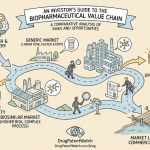
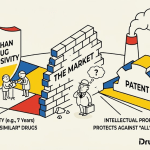
Biologics consumed more than half of all U.S. prescription drug spending in recent years, despite covering less than 2% of the patient population. The biosimilar market exists to fix that math, and it is working at the macro level: $36 billion in documented savings since 2015, accelerating to $12.4 billion in 2023 alone.
‘Working at the macro level’ does not mean the market is functioning competitively. The U.S. biosimilar pathway is structurally more hostile than any comparable market. Europe’s biosimilar penetration rates for major molecules routinely hit 60-80% within two years of patent expiry. The U.S. equivalent, where data exists, often sits below 25% at the same stage.
Four barrier categories compound each other: a scientifically necessary but commercially brutal regulatory standard; a patent system that rewards volume over validity, producing thickets of 100+ overlapping IP claims per molecule; a PBM-intermediated commercial layer where rebate economics actively penalize low-list-price products; and a clinical adoption gap driven by legitimate physician concerns about immunogenicity, extrapolated indications, and switching-related risk.
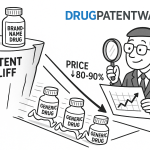
The adalimumab market proved that price alone does not move a PBM-controlled formulary. Products priced 85-86% below Humira’s WAC held a combined 2% market share for the entirety of 2023. The market only moved when PBMs exercised formulary exclusion in favor of their own private-label arrangements.
Pembrolizumab (Keytruda), dupilumab (Dupixent), and risankizumab (Skyrizi) are the next major battlegrounds. Patent thicket construction for each is already underway. The strategic lessons from adalimumab will shape how every biosimilar entrant plans its freedom-to-operate analysis, clinical development sequencing, and commercial partnership strategy for these molecules.
Three convergent forces are beginning to re-balance the landscape: the FDA’s June 2024 draft guidance eliminating switching study requirements for biosimilar interchangeability; targeted legislative proposals capping the number of patents an originator can assert in BPCIA litigation; and an FTC that has explicitly named PBM rebate walls and exclusionary formulary contracting as enforcement priorities.
Part I: The BPCIA Framework — Why ‘Abbreviated’ Is a Misnomer
What the Biologics Price Competition and Innovation Act Actually Created
Congress passed the Biologics Price Competition and Innovation Act in 2009 as part of the Affordable Care Act, giving the FDA a formal pathway to license biosimilars without requiring full de novo clinical programs. The legislative intent mirrored the Hatch-Waxman Act’s logic for small-molecule generics: allow follow-on manufacturers to reference the originator’s safety and efficacy record, reduce duplicative clinical expenditure, and let market competition drive prices down.
The analogy breaks down quickly under scientific scrutiny. Hatch-Waxman worked for small molecules because identical chemical synthesis is achievable. A generic ibuprofen tablet contains the same molecular entity as the branded version, atom for atom. A biologic is a protein produced in a living cell system — Chinese hamster ovary cells, E. coli, yeast — and the manufacturing process is inseparable from the product’s properties. Post-translational modifications, glycosylation patterns, higher-order folding, and aggregation profiles all depend on cell culture conditions, purification sequences, and formulation chemistry. Minor, natural batch-to-batch variation is inherent and expected. The field’s axiom, ‘the process is the product,’ is not marketing language. It captures a regulatory truth.
This means a biosimilar cannot be identical to its reference product. It can be, and must be, ‘highly similar,’ with no clinically meaningful differences in safety, purity, and potency. That distinction between ‘identical’ and ‘highly similar’ is the seed of every downstream barrier the U.S. market has generated. It drives the regulatory cost. It licenses the physician hesitancy. It gives originator manufacturers a credible surface to plant doubt in the minds of payers and prescribers.
The ‘Totality of the Evidence’ Standard: Technical Architecture and Cost Implications
The FDA’s biosimilar review relies on a stepwise, evidence-pyramid approach. At the base sits an exhaustive battery of analytical characterization studies. Using techniques including mass spectrometry, hydrogen-deuterium exchange, surface plasmon resonance, and multi-angle light scattering, a developer must map the proposed biosimilar’s primary amino acid sequence, secondary and tertiary structure, glycosylation profile, charge variants, aggregates, and biological activity against matched lots of the reference product. These studies are not cursory. A comprehensive analytical package for a monoclonal antibody typically generates datasets across 50 to 100 orthogonal assays.
Residual analytical uncertainty drives the next evidentiary layers. Animal toxicology studies address pharmacological and toxicological behavior. Clinical pharmacology studies demonstrate matched pharmacokinetics (absorption, distribution, metabolism, elimination) and pharmacodynamics (receptor binding, downstream biomarker effects) in human subjects. Immunogenicity assessment requires dedicated study arms, because the formation of anti-drug antibodies can neutralize a biologic’s efficacy or trigger serious immune reactions. If analytical and clinical pharmacology data do not fully resolve any residual uncertainty, the FDA may require a comparative clinical efficacy and safety trial.
The FDA’s stated preference is to reduce reliance on clinical trials where robust analytical data can do the same work. In practice, this means a developer that invests in analytical infrastructure and produces high-quality data can often reduce or eliminate the clinical efficacy trial requirement. That shift has compressed development timelines somewhat, but the cost remains formidable. A biosimilar program costs between $100 million and $250 million and runs seven to eight years from IND filing to BLA approval. A small-molecule generic costs $1 million to $4 million. The capital barrier alone eliminates most potential entrants. The biosimilar competitive landscape is structurally an oligopoly, not the fragmented, dozens-of-filers generic market that produces rapid and deep price erosion.
The Twelve-Year Exclusivity Clock and Reference Product Strategy
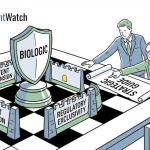
The BPCIA grants the originator biologic a 12-year period of reference product exclusivity (RPE) from the date of first licensure. During this window, the FDA cannot approve a biosimilar, regardless of the patent situation. RPE is distinct from patent protection. A biologic can face patent challenge before exclusivity expires, but FDA approval is blocked regardless of litigation outcome.
RPE has significant strategic implications for IP valuation. An originator’s exclusivity position determines the minimum entry date for any competitor. For a drug with a high unmet need and rapid revenue ramp, such as a cancer immunotherapy or a rare-disease biologic, those 12 years represent a calculable NPV differential. IP teams that model a biologic’s franchise value must incorporate both the RPE clock and the patent portfolio depth. RPE acts as a hard floor; the patent thicket extends the ceiling.
The FDA does allow submission of biosimilar applications four years after originator licensure, creating a litigation-triggering window before the exclusivity clock expires. This permits the ‘patent dance’ to begin and first-wave litigation to proceed, providing biosimilar developers with a head start on resolving IP disputes before they are legally permitted to sell. In practice, this means a well-resourced biosimilar developer can use the 8-year period between its first filing window and the end of RPE to litigate, settle, and plan a launch timed to exclusivity expiry.
Key Takeaways: Regulatory Barrier
Development cost ($100M-$250M) and duration (7-8 years) restrict the biosimilar developer pool to large, well-capitalized organizations.
The ‘totality of the evidence’ standard is scientifically appropriate and practically demanding. Companies that invest in analytical infrastructure can reduce clinical trial burden, compressing cost and time.
The 12-year reference product exclusivity period is a hard regulatory moat that patent challenges cannot breach. Modeling any biosimilar’s entry window must incorporate this floor.
The FDA is modernizing. Elimination of the switching study requirement for interchangeability is the most consequential regulatory reform in 10 years. Its downstream effects on physician adoption and formulary dynamics are not yet fully priced into commercial planning.
Investment Strategy Note for Portfolio Managers: When valuing an originator biologic with 8-10 years of remaining RPE, discount biosimilar revenue impact on cash flows only modestly for the near-term. The real valuation question is patent portfolio robustness beyond year 12. For biosimilar developers, the higher IRR program is typically a target molecule where the originator has a thin patent estate post-RPE, enabling an uncontested or quickly-settled launch rather than a multi-year litigation war.
Part II: The Patent Gauntlet — Thickets, Dance Mechanics, and IP Valuation
How Patent Thickets Are Built: The AbbVie Humira Playbook in Detail
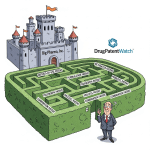
A patent thicket is not an accident of the innovation process. It is a deliberate, multi-decade IP accumulation strategy calibrated to make litigation prohibitively expensive for any challenger. AbbVie’s approach to adalimumab is the industry’s definitive case study, and every originator IP team has studied it.
The foundational adalimumab composition-of-matter patent granted in the early 2000s gave AbbVie basic protection on the antibody itself. That patent was never the durable asset. The durable asset was a systematic program to file new patent applications covering every commercially significant dimension of the drug: formulations (citrate-free, high-concentration), devices (auto-injectors, pre-filled syringes), manufacturing processes (specific cell culture parameters, purification conditions), methods of treatment for each approved indication, and combinations with other agents. AbbVie accumulated over 165 granted U.S. patents on adalimumab, with more than 100 additional applications pending at various points.
The resulting thicket delayed U.S. biosimilar entry by five years relative to Europe, where stricter patentability standards — including doctrines limiting incremental claim expansion — prevented comparable accumulation. The estimated cost to the U.S. healthcare system of that five-year delay is $19 billion or more. U.S. originator companies assert between 11 and 65 patents per product in biosimilar litigation. Canadian and UK comparators are materially lower.
The thicket strategy works because each patent, even a weak one, is a litigation asset. A challenger who needs to clear freedom-to-operate on 165 patents must either license them (paying royalties that erode margin), litigate them (spending tens of millions per patent in district court or PTAB proceedings), or reach a settlement that exchanges a licensed entry date for a cessation of hostilities. The originator controls the sequencing of assertions and can front-load the litigation calendar with its strongest patents while holding weaker ones in reserve as negotiating chips.
Evergreening Mechanics: The Technology Roadmap for Extended Exclusivity
Evergreening is the practical output of a thicket strategy. It is the use of incremental IP filings to extend effective market exclusivity beyond the expiration of foundational patents. The mechanisms are well-documented and worth itemizing with technical specificity.
The first evergreening mechanism is formulation patenting. A subcutaneous, citrate-free, high-concentration formulation of a previously IV-dosed antibody can command independent patent protection. For adalimumab, AbbVie’s transition to a citrate-free formulation was marketed as a patient comfort improvement (reduced injection pain) and simultaneously generated a new set of formulation patents that biosimilar developers had to design around or challenge. Sandoz’s Hyrimoz and Coherus’s Yusimry both required citrate-free formulations to be commercially viable, which involved navigating this secondary patent layer.
The second mechanism is device patenting. A pre-filled syringe or auto-injector designed for a specific biologic can be independently patented by both the drug company and the device manufacturer. These device patents are frequently asserted in biosimilar litigation and are among the more difficult to design around without significantly altering the patient experience and potentially re-triggering regulatory scrutiny.
The third mechanism is method-of-treatment patenting by indication. Each new FDA-approved indication for a biologic comes with a corresponding patent application covering that use. A biosimilar developer who uses ‘skinny labeling’ to carve out a patented indication must then avoid promoting their product for that use, or face an induced infringement claim. For a biologic like Humira with 14 approved indications across multiple therapeutic areas, the skinny label becomes an uncomfortably thin piece of paper.
The fourth mechanism is manufacturing process patenting. Cell culture media compositions, temperature and pH parameters during fermentation, specific purification column sequences, and fill-finish conditions can all be claimed. These patents are particularly difficult for a competitor to assess because the originator’s actual manufacturing process is a trade secret, making it hard to know whether a biosimilar’s process infringes until the patent dance exchange of manufacturing information occurs.
The fifth mechanism is combination therapy patenting. Claiming a biologic in combination with a concomitant medication (e.g., methotrexate for TNF inhibitors) extends the claim landscape into prescribing practice. A biosimilar competing in a population where the standard of care includes combination therapy must assess whether that combination use is patented.
IP Valuation: Treating the Patent Portfolio as a Core Asset
For IP teams and portfolio managers, the patent portfolio is not a legal cost center. It is a revenue-protecting asset with a calculable NPV. The correct analytical frame is to model the portfolio’s ability to sustain each additional year of exclusivity against the reference molecule’s annual net revenue, discounted for the probability that any given patent survives challenge at PTAB or in district court.
For Humira, each year of delayed U.S. biosimilar entry was worth approximately $4 billion in net revenue to AbbVie. The cost of maintaining the thicket — patent prosecution fees, litigation costs, settlements paid — was a fraction of that figure. The ROI on aggressive patent accumulation for a mega-blockbuster is overwhelming. This math explains why every major originator biologic company has a dedicated lifecycle management team whose primary output is patent filings, not drug discovery.
Biosimilar IP teams must run the mirror analysis. For each target molecule, the value of a one-year earlier launch is the product’s projected annual net revenue multiplied by the probability of achieving that launch date. A Freedom-to-Operate analysis that accurately identifies weak or challengeable patents in the thicket, and sequences PTAB inter partes review petitions to knock out those patents before the BPCIA litigation window opens, can generate hundreds of millions of dollars of launch date optionality. The IPR petition is not just a legal defensive tool. It is a revenue acceleration instrument.
The Patent Dance: Mechanics, Supreme Court Optionality, and Strategic Considerations
The BPCIA’s ‘patent dance’ is a structured pre-litigation information exchange designed to scope and sequence IP disputes before a biosimilar launches. The sequence runs as follows: the biosimilar applicant provides its aBLA and manufacturing process details to the reference product sponsor (RPS) within 20 days of FDA acceptance. The RPS has 60 days to produce its list of potentially infringed patents. The applicant then has 60 days to provide claim-by-claim noninfringement and invalidity contentions. The RPS then has 60 days to rebut those contentions. After a 15-day good-faith negotiation period, if no agreement on a litigation list is reached, a statutory mechanism allocates the patents to be litigated in a first wave. The RPS must file its first-wave lawsuit within 30 days.
The 2017 Supreme Court decision in Sandoz v. Amgen established that the dance is optional for the biosimilar applicant. An applicant can decline to provide the aBLA, triggering the RPS’s right to immediately bring a declaratory judgment action on any and all patents it believes are infringed, without the volume limitations imposed by the dance’s negotiation mechanics. This is a double-edged option. Opting out avoids the requirement to disclose manufacturing process details under tight timelines, but it surrenders control over which patents enter litigation first. For a developer with high confidence in its noninfringement positions across the full patent estate, opting out may be acceptable. For a developer that wants to force the originator to commit to its strongest patents early, participating in the dance provides that leverage.
The practical consequence of the dance, in most cases, is a multi-year litigation war. The originator has had years to prepare its patent contentions. The biosimilar developer is generating its noninfringement analysis under deadline pressure, often before its own manufacturing process is fully locked. Litigation costs per patent in district court routinely exceed $5 million through trial. A 20-patent first-wave lawsuit costs the biosimilar developer $100 million in legal fees before any jury verdict. This is the deterrence function the thicket is designed to produce.
Key Takeaways: Patent Barrier
The thicket strategy generates demonstrable, quantifiable harm. The adalimumab delay cost the U.S. healthcare system $19 billion. That number is not hypothetical. It is the baseline for understanding the scale of what aggressive evergreening can produce.
Every major originator biologic will face a similarly constructed defense. IP teams at biosimilar developers must assume the full thicket playbook is deployed and plan freedom-to-operate analysis, IPR sequencing, and settlement negotiation strategy before committing capital to clinical development.
Patent portfolio value is calculable as a NPV of exclusivity-sustained revenue. Both originator and biosimilar IP teams should run this analysis explicitly, not treat the portfolio as a static legal document.
The FDA’s interchangeability reform and FTC enforcement actions do not directly address patent thickets. Patent reform — specifically legislation capping the number of assertable patents in BPCIA litigation — is the structural fix. Its passage remains uncertain.
Investment Strategy Note: For institutional investors assessing an originator biologic company’s long-term revenue sustainability, the quality and depth of its post-expiry patent estate is the most important underappreciated variable. An originator with a thin post-RPE patent portfolio facing a well-capitalized biosimilar developer with a strong IPR strategy is in a qualitatively different competitive position than one with 150+ granted claims across formulation, device, and method-of-treatment categories. DrugPatentWatch’s patent intelligence database provides the granular estate-mapping needed to run this analysis systematically.
Part III: The Commercial Barrier — PBMs, Rebate Walls, and the Private-Label Pivot
The PBM Structure: Why Three Intermediaries Control 80% of U.S. Drug Access
Three PBMs — CVS Caremark (CVS Health), Express Scripts (Cigna), and Optum Rx (UnitedHealth Group) — manage approximately 80% of U.S. prescriptions. These are not passive processors. They are vertically integrated healthcare conglomerates that simultaneously negotiate manufacturer rebates, design formulary tiers, operate specialty pharmacies, and, in many cases, own the health insurance plans that cover the patients taking the drugs.
This vertical integration is the structural basis of PBM market power. A PBM negotiating with a biologic manufacturer is simultaneously the entity that decides whether the drug appears on the formulary, at what tier, with what prior authorization requirements, and with what patient step-therapy obligations. The manufacturer negotiating access is negotiating with a counterparty that controls all the levers of market access simultaneously. No other developed market has this structure. It is uniquely American, and it produces uniquely American distortions.
The Rebate Wall Mechanism: A Technical Decomposition
The rebate wall operates through a contractual incentive structure that, under standard economics, should not be able to block lower-priced products. The fact that it can and does is the clearest evidence of market distortion in U.S. pharmaceuticals.
An originator biologic with a high list price — Humira’s U.S. WAC was approximately $6,900 for a biweekly 40mg injection before biosimilar entry — offers the PBM a per-unit rebate, typically expressed as a percentage of WAC, in exchange for preferred formulary placement. The rebate is contractually tied to market share thresholds. If the PBM fails to maintain the originator’s share above a specified floor, the rebate rate steps down or disappears entirely.
A biosimilar enters at an 85% WAC discount — roughly $1,035 per injection for a Humira equivalent. Its rebate offer, even at a generous percentage, generates far less absolute dollar value per unit than the originator’s rebate on a $6,900 WAC. The PBM’s total rebate revenue is a function of (originator WAC) x (market share) x (rebate rate). Adding a low-WAC biosimilar to the formulary reduces the originator’s market share, triggers the threshold penalty, and collapses the rebate stream. The PBM loses more in rebate dollars than it saves in drug acquisition costs. Under this math, blocking the biosimilar is financially rational.
The harm to patients is direct and measurable. Patient cost-sharing — copays, coinsurance, deductibles — is typically calculated against the drug’s list price or a formulary tier designation that reflects the originator’s preferred status. A patient whose plan covers Humira as preferred-tier may pay a $200 specialty copay per fill. The biosimilar with an $1,035 list price, if it appeared on the formulary, would generate a lower tier copay. But it does not appear on the formulary. The patient pays high cost-sharing based on a high list price, while the PBM collects a rebate that offsets plan spending — a rebate that is not passed through to the patient at point of sale.
Adalimumab: A Full Market Anatomy
The adalimumab market is the most data-rich biosimilar case study available, and it rewards careful analysis.
January 2023 marked the first U.S. adalimumab biosimilar launch, when Amgen’s Amjevita entered at a dual WAC structure: a high-WAC version at roughly $2,100 per biweekly injection (a 69% discount to Humira) with a rebate attached, and a low-WAC version at approximately $1,200 (an 82% discount) without a rebate, designed for self-insured employers and value-based contracts. Amgen’s dual-pricing strategy was an attempt to bridge the rebate wall by offering the PBM its preferred high-WAC/high-rebate structure alongside a genuinely low-cost alternative for payers willing to forgo rebates.
Seven additional biosimilars launched between July and November 2023. Several, including Coherus’s Yusimry and Organon’s Hadlima, launched at 85-86% WAC discounts with no high-WAC option, betting that price alone would move formularies. The FDA had granted interchangeability to Boehringer Ingelheim’s Cyltezo and Pfizer’s Abrilada, generating expectations that pharmacy-level substitution would drive uptake.
The market did not move. By December 2023, the collective biosimilar share of all adalimumab prescriptions was 2%. Cyltezo’s interchangeable designation, far from accelerating adoption, had no measurable effect on its market share relative to non-interchangeable competitors. The rebate wall held because AbbVie had renegotiated its PBM contracts specifically to defend against biosimilar entry, offering deeper rebates in exchange for continued exclusive or preferred formulary status. The math for each major PBM remained: the incremental AbbVie rebate revenue exceeded the cost savings from switching patients to biosimilars.
The break came in early 2024, not from competition but from PBM self-interest taking a new form. CVS Caremark announced it was removing Humira from its commercial formularies and replacing it with Cordavis-branded Hyrimoz — a private-label version of Sandoz’s Hyrimoz manufactured by Sandoz and distributed through CVS’s own subsidiary. CVS captured both the formulary control position and the manufacturer margin in a single structural move. Express Scripts and Optum Rx followed with comparable arrangements. Biosimilar share surged from 2% to 22% within months, driven almost entirely by PBM-controlled private-label products.
The implication for future biosimilar launches is stark. PBMs are not neutral formulary managers. They are commercial actors who will adopt whichever product configuration maximizes their own revenue. For pharmacy-benefit biologics, the critical commercial question is no longer ‘what is our net price?’ It is ‘can we structure a partnership with a vertically integrated PBM that aligns our launch economics with the PBM’s margin interests?’ That is a fundamentally different commercial challenge than the one biosimilar developers were solving for in 2015.
Buy-and-Bill and the Medicare Part B Incentive Problem
Physician-administered biologics — oncology supportive care agents, infused rheumatology drugs, ophthalmology injectables — operate under a different reimbursement model. Under Medicare Part B, the physician or hospital buys the drug, administers it, and bills Medicare at the drug’s Average Sales Price plus a percentage-based add-on. From 2024, the standard add-on is ASP + 6%.
The add-on percentage is the problem. A 6% add-on on a $1,000 originator biologic generates $60 in reimbursement above acquisition cost. The same 6% add-on on a $700 biosimilar generates $42. The physician who switches to the biosimilar sacrifices $18 per administration in margin. For a high-volume infusion center administering 500 doses per year, that is $9,000 annually — not a trivial number when multiplied across a formulary of competing biologics.
The Inflation Reduction Act addressed this distortion by temporarily setting the biosimilar add-on at ASP + 8% of the reference product’s ASP for qualifying products. This inflates the biosimilar reimbursement above what the straight formula would produce, making the biosimilar financially preferable to the originator from the provider’s perspective. The provision expires after five years. Unless made permanent, the buy-and-bill incentive misalignment will resurface.
HHS data covering eight major Part B biologics with biosimilar competition documents $12.9 billion in Medicare program savings and $3.2 billion in beneficiary out-of-pocket savings between 2018 and 2023. In 2023 alone, the figures were $4.4 billion and $1.1 billion respectively. The average beneficiary using one of these biologics saved approximately $2,000 per year in potential out-of-pocket costs. The contrast with the pharmacy benefit — where system savings do not consistently reach patients — is striking and reflects the superior price transparency of the ASP-based reimbursement model.
Key Takeaways: Commercial Barrier
The rebate wall is not a rounding error. It blocked 85%-discounted biosimilars from achieving meaningful market share for the entire first year of adalimumab biosimilar competition. Price is a necessary but insufficient condition for commercial success in a PBM-controlled market.
Private-label biosimilar arrangements are the new commercial architecture for pharmacy-benefit biologics. Manufacturers who secure PBM partnerships will dominate their categories. Those who do not will compete for single-digit market share.
The Part B incentive distortion is partially corrected by the IRA’s enhanced add-on payment. That correction expires. Monitoring its legislative status is material to revenue modeling for any Part B biosimilar.
Patient out-of-pocket savings from biosimilar competition are largely captured in the Part B segment. The pharmacy benefit’s rebate opacity means most system-level savings do not reach patients at point of sale, generating sustained political pressure for PBM reform.
Investment Strategy Note: For biosimilar developers entering a pharmacy-benefit biologic category, model three commercial scenarios: (1) no PBM partnership, realistic share ceiling of 5-15%; (2) single PBM partnership with exclusive formulary placement, share of 20-40% but revenue dependent on one counterparty’s continued strategic alignment; (3) multi-PBM non-exclusive positioning, moderate share with lower revenue concentration risk. The optimal scenario depends on the competitive field. In a category where one competitor secures an exclusive PBM partnership, the non-partnered players are competing for residual share in a market structure that has already been won.
Part IV: The Clinical Adoption Gap — Physician Confidence, Patient Psychology, and the Nocebo Effect
Physician Hesitancy: What the Survey Data Actually Shows
Physician confidence is the most cited barrier to biosimilar adoption in published survey literature, with 74% of physicians in one study identifying it as a top concern. The underlying drivers of that hesitancy are worth disaggregating, because they are not uniform across specialties, patient populations, or drug classes.
Rheumatologists, gastroenterologists, and dermatologists — the specialists managing the chronic autoimmune conditions that TNF inhibitors dominate — have developed hesitancy through a specific clinical lens. Their patients are often complex, refractory cases who took years to stabilize on a given biologic. The ‘if it’s not broken, don’t fix it’ logic is clinically defensible when applied to a patient who has been on a single agent for five years with well-managed disease. The risk calculus of switching a stable patient to a biosimilar, from the physician’s perspective, includes: immunogenicity re-priming (a patient who tolerated the originator may generate antibodies to the biosimilar’s minor structural variants); disease flare during transition; and the patient’s own anxiety about the change, which can manifest as nocebo-driven symptom reporting.
Oncologists managing supportive care biologics like filgrastim (Zarxio) or pegfilgrastim operate with less hesitancy. These agents support patients through chemotherapy cycles, are not used chronically, and have a clear clinical endpoint (neutrophil count recovery). The physician’s comfort with biosimilar substitution in this setting is higher because the stakes of getting the switch ‘wrong’ are lower and more immediately assessable.
Ophthalmologists using bevacizumab (itself an off-label biologic), ranibizumab, or their biosimilar equivalents for wet AMD and diabetic macular edema face a different clinical calculus. Intravitreal injections carry procedural risks independent of the drug’s molecular properties, and any adverse event — however unrelated to the biosimilar — will be attributed to the product change. This heightens hesitancy disproportionate to the actual pharmacological risk.
The clinical community’s stated needs for increasing biosimilar confidence are clear from survey data: 68% cite robust provider education on efficacy and safety as a prerequisite for adoption, and 50% require real-world evidence of safe switching. The NOR-SWITCH study, published in The Lancet in 2017, remains the most-cited switching evidence for infliximab. Its finding that switching from Remicade to CT-P13 (Remsima) produced no statistically significant difference in disease worsening across six inflammatory conditions provided the first large-scale, randomized proof-of-concept. Subsequent real-world registries in Norway, Denmark, and the Netherlands have extended the evidence base considerably, but U.S. prescribers frequently note that U.S.-specific real-world data is sparse and its dissemination through CME programs is inconsistent.
Extrapolation remains a specific flashpoint. The FDA approves biosimilar indications by extrapolation from evidence in one condition to related conditions where the mechanism of action is shared and the clinical pharmacology is expected to be comparable. An anti-TNF biosimilar approved in rheumatoid arthritis on the basis of clinical data can receive a label that includes psoriatic arthritis, ankylosing spondylitis, Crohn’s disease, and ulcerative colitis by extrapolation. This is scientifically defensible and endorsed by regulators globally. Many physicians, particularly those treating the extrapolated conditions, remain skeptical. The absence of condition-specific clinical trial data in their own specialty feels like a gap even when regulatory science says otherwise.
Patient Psychology and the Nocebo Effect: A Quantified Problem
The nocebo effect is well-documented in the pharmaceutical literature and particularly relevant to non-medical biosimilar switching. When a patient’s expectation of a negative outcome shapes their reported experience of that outcome, adverse event reporting increases independently of the pharmacological properties of the drug. For biosimilars, the framing of the switch is the primary determinant of nocebo risk.
Survey data from a large U.S. patient sample found that 85% of biologic users expressed concern that a biosimilar would not treat their disease as effectively as their current therapy, and 83% were worried about increased adverse effects. Eighty-five percent said they would not want to switch from a working therapy. These numbers are not expressions of ignorance. They reflect rational risk aversion in a population that has often spent years managing a chronic, debilitating condition and has experienced firsthand the consequences of inadequate disease control.
Non-medical switching — a formulary-driven switch executed by a PBM or health plan rather than initiated by the treating physician — is the specific scenario where nocebo risk is highest. The patient receives a letter from their insurance company stating that their medication is changing. The physician may not have been involved in the decision. The patient arrives at the pharmacy expecting their usual drug and receives something different. In this scenario, all the conditions for maximum nocebo effect are present: patient surprise, lack of physician endorsement at point of transition, and a framing that emphasizes cost control rather than clinical equivalence.
Several health systems that have executed large-scale institutional biosimilar transitions have invested heavily in mitigating this. Yale New Haven Health System’s program, which received national attention, deployed a four-tier communication structure: oncology subcommittee briefings, Pharmacy and Therapeutics Committee education, Grand Rounds presentations, and one-on-one physician conversations. The program generated institutional designation of approved biosimilars as therapeutically equivalent, enabling formulary-based switching without individual physician approval. The patient-facing communication was framed around equivalence and system sustainability, not cost cutting.
Education Infrastructure: Medical Societies, Health Systems, and Advocacy Organizations
The educational challenge for biosimilar adoption is structurally different from generic drug education, where the concept of therapeutic equivalence was established decades ago and is now assumed. Biosimilar education requires building a concept from near-zero in a clinical community whose training did not include it.
The Biosimilars Council, a division of the Association for Accessible Medicines, produces the primary practitioner-facing reference materials, including a comprehensive Biosimilars Handbook and a toolkit of indication-specific fact sheets. Medical specialty societies — ACR for rheumatology, ASCO and ONS for oncology nursing, gastroenterology societies for IBD — have developed their own member education programs with varying depth and reach. These are additive but fragmented. A prescriber managing a patient across rheumatologic and dermatologic indications may receive inconsistent messaging from two specialty societies about the same product.
Patient advocacy organizations have taken on a dual role. Groups like AiArthritis provide patient-facing educational materials that translate regulatory science into accessible language. The Alliance for Safe Biologic Medicines (ASBM) has focused on policy advocacy, including flagging concerns about non-medical switching practices and advocating for physician involvement in formulary-driven transitions. These organizations occupy different positions on the adoption spectrum. Some have historically received originator funding, which has led critics to question the independence of messaging that emphasizes switching caution.
The most effective education programs share a structural feature: they are embedded in clinical workflow rather than external to it. Educational modules at the point of prescribing, integrated into EHR systems with biosimilar clinical decision support tools, reach physicians when they are making prescribing decisions rather than asking them to seek out information independently. Several health systems have piloted these approaches, with measurable improvement in biosimilar prescribing rates.
Key Takeaways: Clinical Adoption Barrier
Physician hesitancy is specialty-specific and partially legitimate. Blanket ‘physician education is needed’ statements miss the precision required. Rheumatologists switching stable chronic patients carry different risk calculi than oncologists using supportive care biosimilars for finite therapy courses.
The nocebo effect is the largest modifiable risk in non-medical switching programs. Communication framing — who delivers the message, in what context, with what clinical language — has measurable impact on patient-reported adverse events. Health systems executing institutional transitions that invest in physician-mediated patient communication see significantly better outcomes than those that rely on insurance company letters.
Real-world evidence generation is not optional for long-term adoption. U.S.-specific post-marketing safety and switching data is the evidence gap that practicing physicians most consistently cite. Manufacturers who invest in post-approval comparative effectiveness studies and disseminate them through specialty society channels build the clinical trust that regulatory approval cannot deliver on its own.
Part V: Market Case Studies — From Zarxio to Humira and the Next Wave
Zarxio (2015): The Proving Ground
Sandoz’s filgrastim-sndz (Zarxio) became the first FDA-approved biosimilar in March 2015 and launched commercially in September of that year. The product entered as a biosimilar to Amgen’s Neupogen, a G-CSF used to prevent febrile neutropenia in chemotherapy patients, in a market that had never seen a biosimilar competitor. Every prescriber, payer, and pharmacist Sandoz approached was engaging with the concept for the first time.
Sandoz priced Zarxio at a 15% WAC discount to Neupogen — a conservative entry that preserved margin while testing whether any discount would be sufficient to move an entirely new product category. Market penetration was slow but real. By the end of 2016, approximately 15 months after launch, Zarxio held roughly 15% of the short-acting G-CSF market. Sandoz invested substantially in physician detailing, with sales representatives generating direct prescriber engagement accounting for 54% of 2016 promotional spend.
Zarxio’s experience established several principles that have since been validated in every subsequent biosimilar launch. FDA approval is a starting point for building commercial momentum, not a trigger for automatic uptake. Physician detailing and targeted clinical education are necessary investments. Buy-and-bill reimbursement structures create formulary friction independent of product quality. And early formulary wins with major payers — Cigna moved Zarxio from ‘not covered’ to preferred within the first year — are the most efficient path to prescription volume growth.
The $100 million-$250 million development cost context matters here. Zarxio at 15% share in year two was commercially viable for Sandoz as the sole biosimilar competitor in a category with predictable patient volumes. The economics of biosimilar development require modeling market share against development cost NPV, and Zarxio’s early trajectory demonstrated that low-single-digit market share at launch is not failure — it is the starting position from which sustained commercial investment can build a defensible position.
The Adalimumab Battleground: Ten Competitors, One Lesson
No biosimilar market has been studied, modeled, and debated more than adalimumab. The data is now clear enough to support firm conclusions.
Ten adalimumab biosimilars received FDA approval before mid-2024. Each took a different approach to the commercial challenge: dual WAC pricing, single low-WAC pricing, interchangeability pursuit, high-concentration formulation differentiation, or early-mover advantage timing. None of these approaches produced material market share in 2023. The collective 2% share figure is not a data artifact. Multiple independent market research sources, including IQVIA and Samsung Bioepis’s own published market reports, confirm it.
The PBM formulary structure, not product attributes, determined the market’s first-year shape. AbbVie’s rebate contracts held until early 2024, when the PBMs themselves decided that private-label arrangements produced more attractive economics than defending AbbVie’s position. The surge to 22% collective biosimilar share in mid-2024 was driven by Cordavis-branded Hyrimoz (CVS Caremark), Sandoz’s CONTACT arrangement with Express Scripts, and comparable private-label structures at Optum Rx.
The winners of the adalimumab market are not the companies that offered the deepest discount. They are the companies that had the manufacturing scale to supply a PBM’s entire commercial book, the willingness to accept private-label branding of their product, and the contractual flexibility to absorb a PBM’s preferred margin structure. For biosimilar developers entering the next wave of blockbuster markets, the adalimumab lesson is this: commercial strategy must be designed around the PBM’s economic interests, not around the prescriber’s clinical preferences or the payer’s stated desire for lower-cost alternatives.
Table: U.S. Adalimumab Biosimilar Landscape (2023-2024)
Biosimilar
Manufacturer
Launch
Interchangeable
WAC Discount
Key Commercial Approach
Amjevita
Amgen
Jan 2023
No
~69% (high) / ~82% (low)
Dual WAC pricing
Hadlima
Organon/Samsung
Jul 2023
No
~86%
Single low-WAC
Yusimry
Coherus
Jul 2023
No
~85%
Single low-WAC
Cyltezo
Boehringer Ingelheim
Jul 2023
Yes
Dual WAC
First interchangeable adalimumab
Hyrimoz
Sandoz
Jul 2023
No
Dual WAC
PBM private-label (Cordavis/CVS)
Hulio
Biocon/Viatris
Jul 2023
No
Dual WAC
Dual WAC pricing
Idacio
Fresenius Kabi
Jul 2023
No
Dual WAC
Dual WAC pricing
Abrilada
Pfizer
Nov 2023
Yes
Dual WAC
Second interchangeable
Yuflyma
Celltrion
Jul 2023
No
N/A
High-concentration differentiation
Simlandi
Alvotech/Teva
Mar 2024
Yes
~85%
Single low-WAC
The Next Battlegrounds: Keytruda, Dupixent, and the 2028-2032 Patent Cliff
The biosimilar pipeline for the next wave of mega-blockbusters is in active clinical development. Pembrolizumab (Keytruda, Merck), with annual net revenues approaching $30 billion, is the largest single target in the history of biosimilar development. At least seven programs are in clinical development, including those from Samsung Bioepis, Sandoz, Amgen, and Celltrion, with patent expiry in the U.S. expected around 2028-2030 depending on which claims survive challenge.
The IP landscape for pembrolizumab will determine the commercial entry window. Merck has filed extensively on pembrolizumab’s formulation, manufacturing process, and method-of-treatment claims across its 20+ approved indications in oncology. The patent estate is substantial, though observers note that the foundational mechanism-of-action claims (PD-1 pathway) involve shared science that may be more vulnerable to PTAB challenge than Merck’s own prosecution portfolio suggests.
The commercial structure for a Keytruda biosimilar will differ fundamentally from adalimumab. Keytruda is primarily administered intravenously in oncology infusion centers and hospital-based cancer programs, putting it in the Medicare Part B buy-and-bill framework rather than the pharmacy benefit. PBM formulary control is less relevant. Hospital GPO contracting, academic medical center formulary inclusion, and the buy-and-bill reimbursement math will drive adoption. This means the adalimumab private-label playbook does not directly apply. The relevant precedent is the Part B biosimilar experience — bevacizumab, trastuzumab, rituximab — where hospital formulary adoption has been more rapid and where the IRA’s enhanced add-on payment creates a direct prescriber financial incentive to use the biosimilar.
Dupilumab (Dupixent, Sanofi/Regeneron) and risankizumab (Skyrizi, AbbVie) are pharmacy-benefit targets in immunology — atopic dermatitis, asthma, eosinophilic esophagitis for dupilumab; psoriasis and Crohn’s disease for risankizumab. Patent expiry projections for both fall in the early 2030s. The commercial playbook for these molecules will directly inherit whatever market structure has solidified from the adalimumab experience. If PBM private-label consolidation continues, biosimilar developers pursuing these targets will face a commercial landscape where access depends primarily on PBM partnership availability, and where the number of viable commercial positions may be as few as two or three per molecule.
Key Takeaways: Market Case Studies
Zarxio proved the concept and established the operational playbook for biosimilar commercialization: invest in physician education, win formulary placements sequentially, plan for multi-year uptake curves.
Adalimumab demonstrated that in a PBM-controlled pharmacy-benefit market, commercial success is a formulary access question before it is a price or quality question. The private-label structure that resolved the adalimumab stalemate is now the template other manufacturers and PBMs will reference.
Pembrolizumab biosimilars entering through Part B channels will face a different and potentially more navigable commercial environment than adalimumab. The buy-and-bill framework with enhanced add-on payments creates prescriber financial alignment that does not exist in the pharmacy benefit.
Patent IP intelligence on the next-wave targets (Keytruda, Dupixent, Skyrizi) is the most actionable near-term investment for biosimilar developers. Freedom-to-operate analysis, PTAB petition sequencing, and settlement timeline modeling must be underway now, ahead of commercial development decisions that will commit $100M+ in clinical spend.
Part VI: Policy Levers — Legislative Proposals, FTC Enforcement, and Regulatory Reform
The Biosimilar Red Tape Elimination Act
Senator Mike Lee reintroduced the Biosimilar Red Tape Elimination Act in June 2025. The bill proposes to amend the BPCIA to designate all FDA-approved biosimilars as interchangeable by default, eliminating the need for a separate interchangeability designation and the switching studies that historically supported it. The FDA’s own June 2024 draft guidance had already moved in this direction by removing the general expectation for switching studies. The legislation would codify that regulatory posture into statute and extend it to pharmacy-level substitution at the state level.
The practical impact would be to collapse the two-tier biosimilar market into a single tier. Every approved biosimilar would be substitutable at the pharmacy without a new prescription, subject to individual state notification and consent laws. This removes the perception that non-interchangeable biosimilars are somehow inferior, which has been an identifiable barrier to physician and patient confidence.
The pharmaceutical industry is divided on the bill. Biosimilar trade groups support it. Originator-aligned patient advocacy organizations have raised concerns about patient notification and consent protections. The Pharmaceutical Care Management Association (PCMA), representing PBMs, issued a statement noting it was ‘reviewing’ the legislation — an ambiguous response that reflects PBMs’ complex position: they benefit from formulary-driven switching but have concerns about statutory mandates that limit their formulary design flexibility.
Patent Thicket Legislation: The ETHIC Act and Comparable Proposals
The most structurally significant legislative proposals target the patent accumulation strategies that produced the Humira delay. Multiple bills, including the Eliminating Thickets and Hindrances to Innovation with Competition (ETHIC) Act, propose to cap the number of patents an originator can assert against a biosimilar challenger in first-wave BPCIA litigation. The specific cap varies by bill, but the logic is consistent: force originators to select their strongest, most defensible patents rather than asserting the full thicket and using volume as a deterrent.
This approach draws on the experience of standard-essential patent (SEP) litigation in technology sectors, where courts have long grappled with the anti-competitive use of large patent portfolios. The analogy is imperfect — SEP law requires licensing on FRAND terms, which is not the proposed mechanism here — but the underlying problem (patent volume as a strategic weapon independent of patent quality) is structurally identical.
Bipartisan support exists in concept. Both Republican and Democratic members have sponsored comparable proposals across multiple Congresses. The obstacle is lobbying from research-intensive originator manufacturers, who argue that restricting patent assertion rights would reduce innovation incentives. The empirical evidence for that claim is weak — the marginal deterrent from a 166th Humira patent on the incentive to invest in adalimumab’s original discovery is implausible — but the legislative pathway remains complicated.
The Skinny Labels, Big Savings Act
This bill addresses a specific vulnerability in the skinny labeling strategy for biosimilars (and generics). Current law allows a biosimilar to carve out patented indications from its label to avoid infringement, but courts have imposed liability for induced infringement in cases where the manufacturer’s marketing communications are found to encourage off-label prescribing for the carved-out use. For a biosimilar with one or two carved-out indications in a disease area where prescribers commonly use the drug across its full label, this creates ongoing litigation exposure that deters the strategy.
The bill proposes a statutory safe harbor: a biosimilar manufacturer who complies with the carve-out requirements should not face induced infringement liability absent evidence of intentional encouragement to prescribe for the carved-out indication. This would materially reduce the risk of skinny labeling as an IP avoidance strategy and enable earlier market entry in cases where one or two method-of-treatment patents are the only remaining barriers after the thicket has been substantially cleared.
FTC Enforcement: Beyond Pay-for-Delay
The FTC’s biosimilar enforcement posture has expanded significantly since 2022. The agency now targets three distinct categories of conduct beyond classic pay-for-delay patent settlements.
The first is patent thicket abuse. The FTC has submitted amicus briefs in biosimilar patent litigation arguing that courts should consider the anti-competitive effects of thicket strategies when evaluating injunctive relief requests. The agency has also used its 6(b) study authority to collect data from originator companies on their patent prosecution practices and litigation strategies, laying the groundwork for potential enforcement actions.
The second is product hopping. An originator that reformulates its biologic (e.g., switching from IV to subcutaneous delivery, or from citrate-containing to citrate-free formulation) and then abandons the original formulation can render interchangeable biosimilars non-substitutable without a new FDA designation. This ‘product hop’ restarts the interchangeability clock. The FTC has flagged this as a potential anticompetitive practice and is monitoring product reformulation activity for evidence of strategic timing designed to coincide with biosimilar entry.
The third is PBM exclusionary contracting. The FTC’s 2024 interim report on PBMs concluded that PBM rebate and formulary practices have harmed competition and raised drug costs. The agency has named CVS Caremark, Express Scripts, and Optum Rx as subjects of an administrative enforcement proceeding. The specific conduct at issue includes formulary exclusion of lower-cost alternatives in exchange for originator rebates, and contractual terms that penalize plan sponsors for adopting lower-cost biosimilars. If the enforcement action succeeds in restricting these practices, it would directly address the commercial barrier that blocked adalimumab biosimilars for their entire first year.
Key Takeaways: Policy and Enforcement
The regulatory barrier is partially fixed. FDA’s elimination of switching study requirements for interchangeability is consequential. The Biosimilar Red Tape Elimination Act would make it statutory. Together, they remove a barrier that has been disproportionate to the actual safety risk it was designed to address.
Patent thicket legislation is the highest-impact unfixed structural problem. Without statutory limits on the number of patents assertable in BPCIA litigation, the originator’s accumulation strategy remains economically rational and the biosimilar developer’s litigation cost remains prohibitive.
FTC action on PBM exclusionary contracting is the most acute near-term commercial variable. An enforcement outcome that restricts originator-PBM rebate exclusion contracts would directly alter the market economics that blocked adalimumab biosimilars and that will shape access for every future pharmacy-benefit biosimilar.
Legislative passage timelines for all proposed bills are uncertain. Portfolio managers and IP teams should treat these as probability-weighted scenarios in commercial planning models, not baseline assumptions.
Investment Strategy Note: The FTC’s administrative proceeding against the top three PBMs is the highest-stakes regulatory development for biosimilar commercial planning. A finding that current rebate-wall contracting practices are unlawful would restructure the formulary economics for every pharmacy-benefit biologic currently under PBM contract. This is a binary outcome with asymmetric impacts: positive for biosimilar developers and plan sponsors; negative for PBM revenue derived from rebate spread. Monitor case progression and intermediate court decisions closely. An unfavorable intermediate ruling on FTC authority could delay resolution for years.
Part VII: The Economics of Biosimilar Competition — Savings, Paradoxes, and the NPV of Access
Macro Savings: The Documented Record
Biosimilars have generated $36 billion in documented U.S. healthcare savings since 2015. The 2023 figure — $12.4 billion — reflects the acceleration effect of multiple high-value molecules now facing biosimilar competition simultaneously. The average biosimilar launch price is approximately 50% below the reference biologic’s price at the time of biosimilar entry. Biosimilar competition has also reduced the average sales price of originator biologics by approximately 25%, producing savings even for patients who remain on the originator product.
RAND Corporation’s 2017 projection of $54 billion in biosimilar savings across the 2017-2026 decade appears broadly on track, though the distribution across years is skewed later than projected due to the commercial access barriers that delayed penetration in key markets.
These numbers are real but must be placed in their proper context. Biosimilar competition is working in the macro sense while systematically underperforming its potential. The EU biosimilar market, with lower regulatory barriers to interchangeability, more transparent reference pricing for hospital formularies, and no equivalent of the U.S. PBM rebate structure, has achieved penetration rates for key biologics that the U.S. has not matched. The gap between demonstrated savings and potential savings — the counterfactual where the barriers described in this report did not exist — is conservatively in the tens of billions of dollars.
The Patient Cost Paradox
The clearest market failure in U.S. biosimilar economics is the disconnect between system-level savings and patient-level costs. This is not a subtle or contested finding. The structure of the U.S. pharmacy benefit makes it mathematically likely that patients will pay more in out-of-pocket costs on a PBM-preferred originator biologic than they would on a non-preferred biosimilar, despite the originator’s higher total cost to the system.
The mechanism: patient cost-sharing is calculated against the drug’s list price or its formulary tier assignment. An originator biologic with a $6,900 WAC that is preferred tier — because the PBM has negotiated a large rebate to cover it — may carry a $200-$300 specialty copay. A biosimilar at $1,000 WAC on a non-preferred tier may carry a $500-$600 specialty copay or may be non-covered entirely. The patient, seeing only their copay obligation, pays more for the drug that costs the system less in net terms. The PBM collects the rebate. The plan sponsor’s net drug cost decreases slightly. The patient’s out-of-pocket cost is higher.
This paradox is politically explosive and economically irrational from a patient-centered perspective. It drives calls for point-of-sale rebate pass-through requirements and net-price-based cost-sharing calculations. Multiple states have enacted or proposed legislation requiring a portion of PBM rebates to be shared with patients at the pharmacy counter for high-cost drugs. The IRA included an out-of-pocket cap for Medicare Part D beneficiaries that reduces but does not eliminate the cost-sharing paradox for that population.
The contrast with Medicare Part B is instructive. In Part B, the ASP-based reimbursement system is transparent: the Medicare price for any drug is publicly available on a quarterly basis, and patient coinsurance (typically 20% of Medicare’s allowed charge) decreases proportionally as biosimilar competition drives down ASP. When biosimilar competition reduces a Part B drug’s ASP by 30%, the patient’s 20% coinsurance falls by 30% as well. The savings mechanism is direct and automatic. The pharmacy benefit’s rebate system produces no equivalent mechanism for automatic patient savings.
Appendix: Key Data Tables
Table 1: Biosimilar vs. Generic Drug — Comparative Framework
Dimension
Generic Drug
Biosimilar
Molecular identity
Chemically identical
Highly similar (not identical)
Manufacturing
Chemical synthesis
Living cell expression systems
Batch variability
None
Inherent, controlled
Approval standard
Bioequivalence
Totality of the evidence
Development cost
$1M – $4M
$100M – $250M
Development timeline
2-4 years
7-8 years
Substitutability at pharmacy
Automatic (generic substitution)
Requires interchangeable designation or physician order
Limits patents assertable in BPCIA first-wave litigation
IP / patent thicket
Multiple Congress introductions; not enacted
Skinny Labels, Big Savings Act
Statutory safe harbor for carve-out labeling
IP / induced infringement risk
Proposed
FDA Interchangeability Guidance Update
Eliminates switching study requirement
Regulatory
Draft guidance June 2024; final pending
FTC PBM enforcement proceedings
Challenges rebate-wall and exclusionary formulary contracting
Commercial / PBM
Active administrative proceeding
IRA Part B biosimilar add-on enhancement
Increases Part B biosimilar add-on to ASP+8% of reference ASP
Commercial / buy-and-bill
In effect; expires after 5 years
Table 4: Medicare Part B Biosimilar Savings (2018-2023)
Metric
Value
Total Medicare program savings
$12.9 billion
Total beneficiary OOP savings
$3.2 billion
2023 program savings (single year)
$4.4 billion
2023 beneficiary OOP savings (single year)
$1.1 billion
Average annual OOP savings per beneficiary (2023)
~$2,000
Source: HHS ASPE analysis of Medicare Part B biologic and biosimilar spending
Frequently Asked Questions
Why are biosimilar development costs so much higher than generic drugs?
Biologics are manufactured in living cell systems, producing large, complex proteins that cannot be chemically replicated with precision. This requires the FDA to evaluate a ‘totality of the evidence’ — extensive analytical, pharmacokinetic, and sometimes clinical data — rather than the simple bioequivalence studies sufficient for small-molecule generics. The analytical infrastructure, cell line development, manufacturing process validation, and clinical programs needed to compile that evidence package cost $100 million to $250 million per program.
What exactly is a patent thicket, and why does the U.S. have worse ones than Europe?
A patent thicket is a dense collection of overlapping patents on different aspects of a single drug product — formulation, manufacturing process, delivery device, methods of treatment for each indication, combination regimens — that collectively make it prohibitively expensive to achieve freedom-to-operate without licensing or successfully challenging each claim. The U.S. has more permissive patent examination standards at the USPTO than European counterparts, making it easier to obtain numerous follow-on patents on incremental modifications. Europe’s ‘added matter’ doctrine and stricter inventive step standards make building equivalent thickets considerably harder.
Why did biosimilars priced 85% below Humira only capture 2% market share in 2023?
PBM rebate contracts. The major PBMs had existing contracts with AbbVie that paid them large rebates on every Humira prescription filled, conditional on Humira maintaining formulary exclusivity. Adding low-WAC biosimilars to formularies would reduce Humira’s market share, trigger rebate contract threshold penalties, and collapse the rebate stream. The total rebate revenue from Humira exceeded the savings from switching patients to biosimilars, making formulary exclusion financially rational for the PBMs. The market only shifted when PBMs changed their own strategy — specifically, when they decided that private-label biosimilar arrangements produced more attractive economics than defending Humira’s position.
How does the Medicare Part B reimbursement structure differ from the pharmacy benefit for biosimilars?
Part B covers physician-administered drugs. Reimbursement is set at the drug’s Average Sales Price (ASP) plus an add-on percentage paid to the administering provider. The ASP is publicly available on a quarterly basis. When biosimilar competition reduces ASP, patient coinsurance (20% of the Medicare-allowed charge) falls proportionally. The IRA temporarily enhanced the add-on for qualifying biosimilars to ASP+8% of the reference product’s ASP, creating a financial incentive for providers to prescribe biosimilars. The pharmacy benefit, by contrast, uses list prices and opaque rebate structures where savings captured by PBMs are not automatically passed to patients at point of sale.
What is the nocebo effect and how does it affect biosimilar switching outcomes?
The nocebo effect is the induction of negative symptoms or reduced perceived efficacy through negative expectation. When patients are told they are being switched to a ‘cheaper copy’ of their medication — or receive a formulary change notification without physician explanation — they report adverse events at higher rates, independent of the pharmacological properties of the new product. Communication framing at the time of transition is the primary determinant of nocebo risk. Physician-mediated conversations that frame the switch around clinical equivalence and patient safety, rather than cost management, measurably improve patient-reported outcomes after biosimilar transition.
This analysis draws on publicly available data from FDA biosimilar approval records, HHS ASPE Medicare Part B spending analyses, FTC pharmaceutical market reports, the Association for Accessible Medicines 2024 Savings Report, Samsung Bioepis biosimilar market reports, peer-reviewed literature on biosimilar clinical outcomes and physician adoption, and legislative text from proposed Congressional bills. For patent estate analysis, litigation tracking, and clinical pipeline intelligence on specific biologic molecules, DrugPatentWatch provides the data infrastructure to conduct the freedom-to-operate assessments and competitive landscape mapping described in this report.