A pharmaceutical patent is not a legal formality. It is the primary mechanism by which a company monetizes ten to fifteen years of high-attrition R&D spend, converts scientific uncertainty into investor-grade cash flow predictability, and justifies the capital structure of a drug development program. When an analyst values a pharma asset using a risk-adjusted net present value (rNPV) model, the patent estate is not a line item — it is the discount rate anchor. Remove the composition-of-matter patent on a Phase III asset, and the rNPV can collapse by 60% or more, because every projected cash flow year beyond the primary expiry gets repriced.
Patent management has moved from the legal department into the executive suite for a reason that is entirely financial. The temporary market exclusivity a patent grants is the only mechanism strong enough to attract the venture capital and institutional investment required to fund development programs whose expected cost now clears $2 billion per asset. Without it, the financial logic of pharmaceutical R&D does not work. Investors do not fund what they cannot protect.
The legal architecture underlying this exclusivity is a statutory bargain: the inventor discloses the invention fully and publicly, and in exchange, the state grants a time-limited right to exclude competitors from making, using, selling, or importing that invention. The specification is the public disclosure. The claims are the monopoly boundary. Every drafting decision in a patent application is a decision about where to set that boundary — and how wide it can be made before the disclosure requirement fails to support it.
Post-Amgen Inc. v. Sanofi (2023), the Supreme Court sharpened enablement doctrine in a way that directly changed how pre-filing data packages must be assembled. A patent claiming a broad functional genus — say, a class of antibodies defined by what they do rather than what they structurally are — must now provide working examples across the full scope of that genus to survive an enablement challenge. The practical consequence: companies must run more extensive preclinical work before filing, which front-loads cost, inflates R&D burn, and makes early-stage capital even more dependent on a clear patent strategy from day one.
Key Takeaways — Section 1
The patent is a financial instrument before it is a legal document. Its strength directly determines asset valuation, investor terms, and licensing leverage. Post-Amgen, the cost of building a defensible patent has increased because more upfront data is required to support broad claims. The companies best positioned to absorb this cost are large, capitalized organizations — which is itself a competitive moat.
Section 2: The Real Cost of Getting This Wrong — R&D Economics and the Recoupment Imperative
The 2024 average capitalized cost to develop a single new pharmaceutical asset reached $2.23 billion, based on analysis of the top 20 global biopharma companies. That figure capitalizes the cost of failures: for every drug that reaches approval, several others are terminated after consuming hundreds of millions in spend. Merck & Co. reported an R&D budget of $17.9 billion for 2024. R&D intensity across large pharmaceutical companies — R&D spend as a percentage of sales — has climbed to 19.3%. In 2021, for every dollar spent on sales and marketing by U.S. biopharma companies, $5.7 went to R&D.
These numbers do not appear in isolation. They explain why a single drug’s patent estate can be worth more than some entire pharmaceutical companies. The entire commercial rationale of the sector depends on one thing: the ability to recoup those costs during the window of market exclusivity. A patent with structural weaknesses — broad claims not supported by working examples, claims that fail written description under Ariad Pharmaceuticals v. Eli Lilly, specifications riddled with scope-narrowing “patent profanity” — is an asset that will not hold in adversarial conditions. And generics companies will probe every weakness they find.
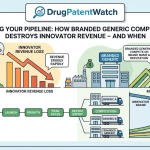
The failure mode is not obscure. A successful Paragraph IV challenge can trigger an At-Risk generic launch that destroys 80% of a brand’s revenue within months of the first tablet hitting the shelf. The post-Amgen environment creates a specific vulnerability for biologic companies: broad functional claims to antibody classes that were prosecuted before the ruling now face retroactive enablement challenges in district court. Portfolios built on pre-2023 filing strategies need a current gap assessment.
The IP Valuation Imperative: What a Composition-of-Matter Patent Is Actually Worth
When a drug carries a valid, enforced composition-of-matter (COM) patent, it commands a pricing premium unavailable to any other asset type. The COM patent covers the active pharmaceutical ingredient itself, regardless of formulation, dosage form, or indication. It is the broadest protection available. Its IP value is not just the revenue it protects; it is the revenue it enables the company to generate by foreclosing substitution entirely.
A useful IP valuation heuristic for analysts: the patent-protected premium on a branded drug can represent 70-90% of its net revenue versus a post-exclusivity price floor. AbbVie’s adalimumab (Humira) generated revenues reported as high as $47.5 million per day during peak exclusivity. That is not product value — it is exclusivity value, captured almost entirely because of a COM patent that expired in 2016, followed by a dense secondary thicket that delayed U.S. biosimilar entry until 2023. The delta between European and U.S. Humira pricing during the biosimilar entry window in Europe is a seven-year controlled experiment in what COM patent protection is actually worth.
Key Takeaways — Section 2
At $2.23 billion average capitalized cost per asset, a patent with structural weaknesses is not a minor legal problem — it is a capital allocation catastrophe. IP valuation must be integrated into pre-filing strategy, not treated as an afterthought during litigation prep. The post-Amgen environment requires a current enablement gap assessment on any biologic portfolio built on broad functional claims.
Investment Strategy Note: Portfolio managers holding positions in companies with pending Paragraph IV challenges should request an analysis of whether the challenged claims were filed pre-Amgen and whether they rely on functional genus claims. This is now a material disclosure risk.
Section 3: The 20-Year Illusion — Effective Patent Life and the Compressed Recoupment Window
The statutory patent term is 20 years from the earliest effective filing date. In practice, this number is nearly meaningless for commercial planning. The patent clock starts ticking at filing, which typically occurs years before an Investigational New Drug (IND) application, let alone approval. The FDA review process for a new drug typically consumes another one to two years after Phase III completion. Net: a drug launched after a standard development timeline may have 7 to 10 years of effective patent life — the period during which it generates revenue without facing direct generic competition.
Several statutory mechanisms partially address this erosion.
Patent Term Extension (PTE) under the Hatch-Waxman Act allows recovery of the time lost during FDA regulatory review, capped at five years and subject to the condition that total remaining patent life after extension does not exceed 14 years post-approval. Patent Term Adjustment (PTA) compensates for USPTO examination delays caused by the Office itself — not the applicant. PTA can add days or months to a patent term but is frequently contested during prosecution.
Neither mechanism fully restores the lost term. A drug with seven years of effective exclusivity remaining at launch that benefits from maximum PTE and PTA may recover two to three years, still leaving it well short of the 20-year figure printed on the patent certificate.
This gap is the primary economic driver of pharmaceutical lifecycle management. Every day of additional exclusivity carries a dollar value that can be calculated directly from net revenue per diem. For a blockbuster generating $10 billion annually, each additional month of protection is worth roughly $833 million. That number explains why companies invest tens of millions in filing secondary patents, litigating Paragraph IV challenges, and pursuing pediatric exclusivity extensions.
IP Valuation Framework: Effective Patent Life Modeling
For IP teams and analysts modeling asset value, effective patent life is more useful than statutory term. A proper model requires:
The composition-of-matter patent expiry date, adjusted for any PTE and PTA. The Orange Book listing status of all relevant patents, noting whether formulation, method-of-use, or pediatric exclusivity patents are listed. The expected timing and strength of Paragraph IV challenges, assessed using the litigation history of the generic applicant. The NCE exclusivity period, which runs independently of patent status and cannot be circumvented by a successful patent challenge. The BPCIA 12-year data exclusivity period, for biologics. The probability-weighted duration of any active IPR or PGR proceedings at PTAB.
Running these variables generates a probability-weighted exclusivity duration — the only number that actually matters for rNPV modeling.
Key Takeaways — Section 3
Effective patent life for most small-molecule drugs is 7 to 10 years, not 20. Maximum PTE is capped at five years; total remaining term cannot exceed 14 years post-approval. The dollar value of each additional exclusivity year is directly calculable from net revenue — which explains the economic logic of every secondary patent, every pediatric study, every lifecycle management tactic.
Section 4: The Full Armory — Every Patent Type and How to Stack Them
No single patent type provides complete lifecycle protection. An effective pharmaceutical patent strategy deploys multiple patent types in overlapping layers, each protecting a distinct dimension of the innovation. The goal is a thicket dense enough that a generic entrant cannot reach the market without either challenging multiple patents simultaneously or designing around all of them — both costly, time-consuming, and high-risk propositions.
Composition of Matter Patents
The composition-of-matter (COM) patent covers the active pharmaceutical ingredient itself — the new chemical entity. It is the broadest protection available because it covers the API regardless of how it is formulated, how it is manufactured, or which indication it is used for. A valid COM patent forces any competitor seeking to market the same API to either license the patent, wait for expiry, or challenge its validity. No design-around is possible without changing the active ingredient, which means developing and registering an entirely different drug.
COM claims are drafted using Markush format for chemical entities, defining a core scaffold with specified variable substituents. For biologics, the claim covers the primary amino acid sequence and often the encoding nucleic acid. COM patents are the primary target of Paragraph IV challenges because invalidating them clears the widest path to generic or biosimilar market entry.
IP Valuation: A COM patent on a blockbuster drug is typically the most valuable single IP asset a company holds. It is the primary driver of Orange Book exclusivity, the anchor for license valuations, and the first item audited in any acquisition due diligence.
Formulation Patents
Formulation patents cover the specific composition of the drug product — the combination of the API with excipients, carriers, polymers, or delivery systems. A novel extended-release formulation of a known API, for example, can receive independent patent protection if it demonstrates unexpected properties relative to the immediate-release version: improved stability, enhanced bioavailability, reduced dosing frequency, or a superior pharmacokinetic profile.
The lifecycle management value of formulation patents is that they can be filed and issued years after the COM patent, effectively extending the period during which at least some patent protection covers a commercial product. Adderall’s ammonium salts formulation is a classic example: the original amphetamine salts were not new, but a specific formulation combining four different salt forms in defined ratios received patent protection because the combination produced a distinct and clinically meaningful pharmacokinetic profile.
Drafting formulation claims requires quantitative specificity — component ratios, concentration ranges, pH specifications — paired with comparative data against prior art formulations showing the unexpected improvement. A claim to “a pharmaceutical composition comprising the API and a pharmaceutically acceptable carrier” without more is almost certainly too broad to survive prosecution and provides inadequate support for the scope claimed.
Method-of-Use Patents
Method-of-use patents protect a specific therapeutic application of a known compound. They are the primary tool for drug repurposing: when a company discovers that an existing drug is efficacious in a new indication, a method-of-use patent covering “a method of treating [new disease] comprising administering [compound X]” can provide years of protection on the new indication even after the COM patent has expired.
The strategic value extends further. A method-of-use patent on a label indication, even when the COM patent is still active, creates an independent basis for patent listing in the Orange Book and forces any ANDA filer to certify or carve out that use. Carve-outs (section viii statements) only work if the generic can successfully avoid the patented use — which in practice is often impossible for conditions where the approved use is the primary clinical indication.
Process Patents
Process patents cover the manufacturing method used to produce the API or drug product. An innovative synthesis route that achieves higher yield, better stereochemical selectivity, lower impurity profile, or reduced cost of goods is patentable independently of the compound it produces. Process patents are particularly valuable in two scenarios: where the API itself has lost composition-of-matter protection but a proprietary manufacturing process provides a quality or cost advantage, and where the process enables production of a complex molecule (a large peptide, an oligonucleotide, a complex biologic) that would otherwise be prohibitively difficult to manufacture.
A process patent does not block a competitor from making the same drug through a different route. It does provide an infringement basis if the competitor uses the patented process, including a presumption of infringement for process patents on new chemical compounds under 35 U.S.C. § 295.
Combination Patents
Combination patents cover a therapeutic product containing two or more distinct active ingredients. Their strategic value is highest in indications where clinical evidence supports combination therapy — HIV, oncology, cardiovascular disease, type 2 diabetes — and where the combination has demonstrated a synergistic or additive effect not predictable from either component’s individual activity. The patent forces any competitor wishing to market the same combination to either design around it or challenge it, even if patents on both individual components have expired.
Drafting combination claims requires data demonstrating that the combination produces an effect — pharmacokinetic, pharmacodynamic, or clinical — that was not obvious from the individual components. A combination of two known antihypertensives in a fixed-dose product, for example, must be supported by data showing the combination achieves better blood pressure control, improved tolerability, or meaningful adherence benefits compared to what a physician could achieve by co-prescribing the individual agents.
Patent Type
Core Protection
Key Drafting Requirement
Lifecycle Role
Composition of Matter
The API molecule itself
Markush structure or specific sequence; full structural characterization
Primary exclusivity anchor
Formulation
API + excipient composition
Quantitative component ratios; comparative bioavailability or stability data
Secondary extension layer
Method of Use
Specific therapeutic indication
Clinical or preclinical efficacy data linking compound to indication
Repurposing and label-specific protection
Process
Manufacturing method
Step-by-step process with identified novel steps; yield or purity data
Manufacturing differentiation
Combination
Multi-API product
Synergy or additive effect data
Fixed-dose combination protection
Key Takeaways — Section 4
Patent protection is not a single instrument; it is a layered architecture. COM patents provide the broadest protection but are the primary litigation target. Formulation, method-of-use, process, and combination patents extend commercial exclusivity independently of the COM patent. Effective lifecycle management requires all five types to be assessed and filed in a coordinated sequence, with each layer’s filing timed to its maximum strategic effect.
Section 5: Regulatory Exclusivities as a Second Wall
Patents and FDA-granted regulatory exclusivities are independent systems that can run concurrently, consecutively, or in partial overlap. A sophisticated lifecycle management strategy treats them as complementary, not redundant.
New Chemical Entity (NCE) exclusivity provides five years of protection from the date of FDA approval for a drug containing an active moiety not previously approved by the FDA. During this period, the FDA will not accept an ANDA that relies on the innovator’s safety and efficacy data — regardless of patent status. NCE exclusivity cannot be circumvented by a Paragraph IV challenge; it is a flat bar on ANDA acceptance for four of its five years.
Orphan Drug Exclusivity (ODE) grants seven years of market exclusivity for a drug approved to treat a rare disease or condition, defined as affecting fewer than 200,000 people in the U.S. at the time of designation. ODE blocks FDA approval — not just acceptance — of a competing application for the same drug in the same orphan indication, even by a different applicant using completely independent clinical data. The value of stacking ODE with patent protection is substantial: ODE can cover a period after patent expiry, and in some cases ODE alone provides the primary commercial exclusivity for a drug with a weak patent position.
Pediatric Exclusivity (PED) is structurally different from other exclusivities. It does not stand alone — it attaches to and extends all existing patents and regulatory exclusivities by six months. For a blockbuster with multiple Orange Book patents and NCE exclusivity, pediatric exclusivity can add six months to every one of those protections simultaneously. At $10 billion in annual revenue, six months of additional exclusivity is worth approximately $5 billion. Pediatric studies are expensive, typically in the range of $5 to $15 million. The return is unambiguous.
BPCIA Biologics Exclusivity grants 12 years of data exclusivity for innovative biologic drugs under the Biologics Price Competition and Innovation Act. The FDA will not approve a biosimilar application that relies on the reference product’s data for 12 years from the date of first approval. A four-year bar prevents the FDA from even accepting a biosimilar application during the initial period. This exclusivity runs independently of any patents listed in the Purple Book, and it cannot be circumvented by a patent challenge or a Paragraph IV-equivalent certification in the biosimilar context.
The 180-Day Generic Exclusivity provision of the Hatch-Waxman Act grants the first ANDA filer who succeeds in a Paragraph IV challenge 180 days of market exclusivity before other generics can enter. This creates a perverse incentive that is actually useful to understand strategically: the first-filer exclusivity is valuable enough that generic companies compete aggressively to be first, which means the innovator will face litigation from the most motivated and best-resourced generic challenger relatively early in the drug’s commercial life.
Key Takeaways — Section 5
NCE, ODE, PED, and BPCIA exclusivities operate independently of patents. A drug with a weak patent position may still have years of commercial protection through regulatory exclusivity. Pediatric exclusivity’s six-month extension across all co-existing protections has a calculable dollar value that almost always exceeds the cost of conducting pediatric studies. Biologics companies should not treat BPCIA’s 12-year data exclusivity as a replacement for a robust patent portfolio — both are needed.
Section 6: Patentability’s Four Pillars — What Courts Actually Demand Now
Novelty (35 U.S.C. § 102): Anticipation and the Single-Reference Rule
An invention is novel if it has not been previously known, used, or publicly disclosed before the patent application’s filing date. Anticipation requires that every element of a claim be disclosed within a single prior art reference. In the pharmaceutical context, novelty challenges frequently arise for polymorphs — different crystalline forms of the same API. A generic applicant may argue that a polymorph was inherently produced, and therefore disclosed, by any prior art process for making the parent compound.
Defeating an inherent anticipation argument requires experimental data demonstrating that the new polymorph has distinct and unexpected physical and chemical properties: a different X-ray powder diffraction (XRPD) pattern, a distinct melting point, meaningfully different dissolution kinetics, or a superior stability profile. The specification must describe these properties in quantitative terms, and they must be shown to be unexpected relative to the prior art form.
Non-Obviousness (35 U.S.C. § 103): Overcoming ‘Obvious to Try’
Non-obviousness is consistently the most contested ground of rejection, both at the USPTO and in district court. The standard asks whether the differences between the invention and the prior art would have been obvious to a Person Having Ordinary Skill in the Art (PHOSITA) at the time of filing.
In pharma, the ‘obvious to try’ doctrine is the most common examiner and litigation argument: if there were a finite number of identified, predictable solutions to a known problem, and skill in the art would have led to trying one of them with a reasonable expectation of success, the chosen solution is obvious. Rebutting this requires objective evidence of non-obviousness — ‘secondary considerations’ in the Graham v. John Deere framework.
Unexpected results are the most powerful secondary consideration. If a new formulation achieves a 10-fold increase in bioavailability when the prior art would have predicted a modest improvement, the magnitude of the difference supports non-obviousness. Long-felt but unsolved need is useful when the problem the invention solves has been recognized in the literature for years without a solution. Failure of others — evidence that other research groups pursued similar approaches and could not achieve the claimed result — is particularly persuasive when it can be documented from published literature or patent prosecution histories of competitors.
A pharmaceutical invention must satisfy a three-pronged utility test: the utility must be specific (tied to a particular disease or biological target, not a generic claim to ‘treating disease’), substantial (a real-world clinical or preclinical benefit, not usefulness only as a research tool), and credible (a PHOSITA must be able to believe, based on the disclosure, that the invention will work). For a new chemical entity, credibility requires at minimum in vitro biological activity data in a relevant assay system, and for many therapeutic areas, efficacy data in a validated animal model.
Written Description and Enablement (35 U.S.C. § 112): The Post-Amgen Standard
The disclosure requirement of § 112 contains two distinct obligations that courts now treat with increasing rigor.
Written description requires that the specification convey to a PHOSITA that the inventor was in actual possession of the full scope of what is claimed at the filing date. This is not satisfied by simply describing what the invention does — it requires showing what it structurally or compositionally is across the full claim scope. For broad antibody claims, post-Amgen, written description requires a sufficient number of working examples demonstrating actual antibodies spanning the claimed genus, not just a functional definition.
Enablement requires that the specification teach a PHOSITA how to make and use the full scope of the claimed invention without undue experimentation. The Wands factors govern the undue experimentation analysis: the quantity of experimentation required, the amount of direction provided in the specification, the presence of working examples, the nature of the invention, the state of the prior art, the relative skill of practitioners in the field, the predictability of the art, and the breadth of the claims.
The Amgen ruling made clear that for functional genus claims in the biologic space, providing a few representative examples and a ‘roadmap’ for making others is not enough. The specification must enable the full scope. Practically, this means that before filing a broad antibody claim covering ‘any antibody that binds PCSK9 at the sterol-binding site and blocks LDL receptor binding,’ the applicant must have made and tested antibodies across the defined functional space in sufficient number to demonstrate that enablement is real.
Key Takeaways — Section 6
Non-obviousness and § 112 disclosure are the two primary battlegrounds in pharmaceutical patent prosecution and litigation. Post-Amgen, broad functional genus claims in the biologic space require comprehensive working examples across the full claim scope — not just a representative sample. The data package assembled before filing is now determinative of whether a broad claim will survive.
Section 7: Specification Drafting — Building the Legal Foundation Before You Write the Claims
The expert approach to patent drafting reverses the intuitive sequence. Most scientists approach a patent application by writing the description of their work first, then asking their attorney to write claims based on what the description covers. This is backward. The claims are the legally operative component. The specification’s legal function is to support those claims — specifically, to provide written description and enablement for everything recited in them.
The correct sequence: draft the broadest commercially valuable independent claims first. Identify every term and limitation in those claims. Then draft the specification to provide unambiguous antecedent basis and adequate support for each of those terms, building out from the broadest claims through progressively narrower fallback positions.
This ‘claims-first’ methodology has practical consequences for how the detailed description is structured. Every term used in a claim must appear first in the specification with a clear definition and preferably multiple embodiments. ‘A pharmaceutically acceptable carrier’ must be introduced and illustrated in the specification before it appears in the claim. The specification should describe embodiments at multiple levels of specificity — broad genus, narrower sub-genus, specific species — mirroring the claim hierarchy.
The Antecedent Basis Requirement
Claim terms that lack antecedent basis in the specification are indefinite under § 112(b). An indefinite claim is invalid. This sounds like a mechanical rule, but it creates a drafting discipline that pays dividends in litigation: every element of every claim must be introduced and described in the specification before it can be claimed. When opposing counsel reads the specification looking for a basis to argue indefiniteness, a well-drafted application gives them nothing to work with.
Describing Chemical Structures, Formulations, and Methods of Use
For a new chemical entity, the specification must provide the chemical name under IUPAC nomenclature, a structural formula, and supporting analytical characterization data confirming the structure — NMR spectra, mass spectrometry, elemental analysis. For a genus claim using Markush format, the core scaffold must be drawn, each variable position identified, and the range of permitted substituents at each position specified with enough structural precision that a PHOSITA could synthesize any member of the genus without undue experimentation.
For formulation claims, the description must detail not just the API but every other component: excipients, polymers, solvents, surfactants, coating materials — with ranges of concentration or weight fraction for each. Linking the formulation to an unexpected property requires comparative data. If the claimed formulation achieves a dissolution rate at pH 6.8 that is two-fold higher than the closest prior art formulation, that comparison must appear in the specification with the experimental protocol described in enough detail to be reproduced.
For method-of-use claims, the specification must credibly connect the administration of the compound to the treatment of the claimed disease. Credibility requires biological evidence: in vitro receptor binding or cellular activity data, in vivo efficacy in a recognized animal model, or human pharmacodynamic data from early clinical work. A bare assertion that compound X ‘treats’ disease Y without mechanistic or empirical support will not survive examination or litigation.
Key Takeaways — Section 7
Draft claims first. Write the specification to support those claims. Every term in every claim requires a clear antecedent in the specification. The specification’s legal purpose is to satisfy written description and enablement for the full scope claimed — not to narrate the scientific story of how the drug was discovered.
Section 8: Working Examples, Prophetic Examples, and the Inequitable Conduct Trap
Data in a pharmaceutical patent specification does more than inform — it legally supports the scope of the claims and satisfies the enablement requirement. The distinction between working examples (based on experiments that have been conducted) and prophetic examples (based on experiments that have not been conducted) is both technical and ethical.
Working examples are the strongest possible support. They represent a reduction to practice of the invention and demonstrate that the inventor actually made and tested what is claimed. For a new API, a working example would include the synthesis route with specific reagents, conditions, and yields; the structural confirmation data; and the results of at least one biological assay demonstrating pharmacological activity relevant to the claimed utility.
Prophetic examples describe experiments that have not been run but are scientifically reasonable extrapolations from existing data. They are a legitimate and strategically important tool for extending claim scope beyond what has been physically tested. After providing a working example for a specific extended-release tablet formulation, an applicant can use prophetic examples to support a broader formulation claim covering capsules, granules, or modified-release microspheres that have not yet been made. The legal rule: prophetic examples must be written in the present tense or future tense. ‘The compound is dissolved in ethanol and combined with…’ or ‘The mixture will be heated to 60°C…’ Both are acceptable. Past tense — ‘The compound was dissolved…’ — implies the experiment was actually performed.
This is not a stylistic preference. Drafting a prophetic example in the past tense, when the work was not done, is a misrepresentation to the USPTO. If discovered — in prosecution, in an IPR, or in district court — it is grounds for a finding of inequitable conduct, which renders the entire patent unenforceable, not merely invalid. A finding of unenforceability survives even if the underlying claims are otherwise valid. The distinction between prophetic and working examples in tense is one of the most consequential details in pharmaceutical patent drafting, and it is frequently checked by litigators as part of their invalidity analysis.
Key Takeaways — Section 8
Working examples in past tense; prophetic examples in present or future tense. Violating this rule is not a technical error — it is a basis for inequitable conduct and patent unenforceability. Prophetic examples are legitimate and necessary for supporting broad genus claims, but they must be clearly distinguishable from working examples in both tense and context.
Section 9: Patent Profanity and Scope-Killing Language
In patent litigation, every word in the specification is a potential weapon in the hands of opposing counsel. Certain terms and phrasings — collectively called ‘patent profanity’ — invite courts to interpret claims narrowly, often in ways that allow a competitor to avoid infringement simply by modifying a non-claimed aspect of the product.
Absolute terms create the most damage. Words like ‘must,’ ‘essential,’ ‘necessary,’ ‘critical,’ ‘always,’ ‘never,’ ‘only,’ and ‘the key’ invite a court to treat the described feature as a mandatory element of every claim, even when the claim itself does not require it. ‘The active ingredient must be in crystalline form’ — even if no claim recites crystallinity — can be used to argue that an amorphous formulation falls outside the patent scope.
The phrase ‘the invention is…’ is similarly hazardous. Courts treat statements defining ‘the invention’ as limiting the scope of all claims, regardless of how broadly the claims themselves are written. ‘The invention is a tablet formulation’ creates a potential argument that the patents do not cover capsule formulations, even if the claims themselves do not specify dosage form.
The fix is disciplined embodiment language. ‘In one embodiment, the composition comprises…’ or ‘In some implementations, the method may include…’ preserves flexibility and signals to any future court that the description is illustrative, not exhaustive. The specification should explicitly state — early and clearly — that the disclosed embodiments do not limit the scope of the claims.
Synonym cycling creates a related problem: using multiple terms for the same concept (‘inhibitor,’ ‘blocker,’ ‘antagonist,’ ‘suppressor’) invites an argument that each term covers a different scope, potentially excluding one category of competitors from infringement even when infringement was intended. Pick the most technically accurate term and use it consistently throughout the specification and claims.
Key Takeaways — Section 9
Absolute terms (‘must,’ ‘essential,’ ‘critical’) and invention-defining statements (‘the invention is…’) can destroy claim scope in litigation even when the claims themselves are broad. Use embodiment language consistently. Avoid synonym cycling. These are not stylistic choices — they are legal risk management decisions with direct commercial consequences.
Section 10: Mastering the Claim — Preamble, Transitional Phrase, Body
A patent claim has three structural components, and each carries distinct legal significance.
The preamble introduces the class of invention: ‘A pharmaceutical composition…’ or ‘A method for treating non-small-cell lung cancer…’ Whether a preamble is limiting depends on whether it provides antecedent basis for a term in the body, or whether it breathes life and meaning into the claim. A preamble that merely names the intended use of a composition (e.g., ‘for use in treating pain’) is generally not limiting — but a preamble that establishes the structural context on which the claim body depends (‘An anti-PCSK9 antibody…’) typically is. This distinction matters when a competitor argues their product falls outside the preamble.
The transitional phrase is the single most consequential word choice in the claim. It determines whether additional, unrecited elements outside the claim body will trigger infringement. The body lists every element, step, or component of the invention that the drafter chooses to require. The art of claim drafting lies in choosing which elements to recite — each one is a potential design-around opportunity for a competitor — and at what level of specificity.
Key Takeaways — Section 10
The preamble establishes context and may or may not be limiting. The transitional phrase determines claim scope relative to additional unrecited elements. The body must include every feature necessary for patentability — and nothing more than necessary to distinguish from the prior art.
Section 11: Comprising vs. Consisting Of — One Word, Millions of Dollars
The choice between ‘comprising’ and ‘consisting of’ as the transitional phrase in a pharmaceutical claim is not a drafting convention. It is a scope decision with nine-figure revenue consequences.
‘Comprising’ is open-ended. A claim to ‘a pharmaceutical composition comprising compound X, polymer Y, and surfactant Z’ is infringed by a product containing X, Y, Z, and any number of additional excipients. The competitor cannot avoid infringement by adding a co-solvent or a stabilizer, because the open-ended transitional phrase captures any product that contains at least the listed elements. ‘Comprising’ is the preferred transitional phrase in pharmaceutical patent practice precisely because it maximizes claim scope and minimizes design-around options.
‘Consisting of’ is closed. The same claim using ‘consisting of’ covers only a composition containing exactly X, Y, and Z — nothing more. A competitor adds a fourth excipient and escapes infringement entirely. This is not a theoretical risk: in Watson Pharmaceuticals’ challenge to a Markush formulation claim, the court held that Watson’s product did not infringe because it contained an additional excipient not recited in a ‘consisting of’ claim. The innovator’s patent was valid but unenforceable against the accused product.
‘Consisting of’ does have legitimate uses. When a prior art reference discloses a composition that includes many components and the invention lies in a specific simplified composition from which certain components have been deliberately excluded, ‘consisting of’ provides a way to carve out a patentable species from a known genus. The choice requires a deliberate analysis of the prior art landscape: open-ended language maximizes scope; closed language sacrifices scope to gain clarity against a specific prior art structure.
A third option, ‘consisting essentially of,’ occupies the middle ground. It covers the listed elements plus any additional elements that do not materially affect the basic and novel characteristics of the invention. Courts apply this standard inconsistently, and using it requires the specification to define which characteristics are ‘basic and novel’ — otherwise the scope is indefinite.
Key Takeaways — Section 11
Default to ‘comprising’ for maximum claim scope. ‘Consisting of’ sacrifices breadth for precision against specific prior art but creates design-around vulnerability. ‘Consisting essentially of’ requires careful specification support. These choices must be made with full knowledge of the prior art landscape at the time of drafting.
Section 12: Genus Claims, Species Claims, and Markush Structure
A well-drafted pharmaceutical patent application contains a hierarchy of claims spanning from broad genus to narrow species. This hierarchy is both a scope strategy and a litigation insurance policy.
Genus claims cover a family of related compounds, formulations, or methods. A genus claim to a class of kinase inhibitors defined by a Markush scaffold with specified variable substituents at R1, R2, and R3 might cover thousands of individual compounds within a single claim. The commercial value is obvious: competitors cannot avoid the patent by making minor structural modifications if those modifications fall within the defined genus. The legal risk is equally clear: a genus claim must be supported by adequate written description and enablement across the full scope — which, post-Amgen, requires working examples that span the genus, not just exemplify a subset of it.
Species claims cover a single, precisely defined compound or formulation. They are narrower, easier to prosecute to allowance, and harder to invalidate — but easy to design around. A species claim to a specific compound with a specific stereochemical configuration at two defined stereocenters and a specific salt form can be invalid only if someone already made and disclosed that exact compound. However, a competitor who makes the R enantiomer rather than the S enantiomer, if both are outside the species claim, infringes nothing.
Markush Claims: Structure and Validity Requirements
The Markush claim format is the primary mechanism for protecting a genus of chemical compounds in a single claim. Named after the 1925 In re Markush decision, the format defines a core chemical scaffold with one or more variable positions: ‘wherein R1 is selected from the group consisting of alkyl, aryl, halide, and hydroxy; and R2 is selected from the group consisting of hydrogen, methyl, and ethyl.’ This allows one claim to encompass millions of structural variants.
USPTO rules impose two validity requirements on Markush groups. The members must share a single structural similarity (they belong to a recognized chemical or physical class) and a common use (they function equivalently in the context of the claimed invention). Markush groups that include structurally dissimilar members — say, alkyl groups alongside peptides — will fail the structural unity requirement and may be required to be restricted into separate applications.
The strategic implication: the broader the Markush genus, the more data the specification must provide to demonstrate that the full range of substituents at each variable position is enabled. If the working examples only demonstrate efficacy for members with small alkyl groups at R1, but the claim encompasses bulky aryl groups, an examiner or litigant can argue that the full scope is not enabled. This creates a direct tradeoff: broader Markush claims provide stronger protection but require more comprehensive data to support them.
Technology Roadmap: Markush Claim Filing Strategy for a New Kinase Inhibitor Program
Year 1 (Lead identification): File provisional covering the core scaffold with the full range of substituents identified in the medicinal chemistry campaign. Include working examples for the five to ten most potent analogs.
Year 2 (Lead optimization): File continuation-in-part (CIP) or additional provisional with data from the expanded analog library. Narrow the Markush at positions where the data shows structure-activity relationship (SAR) drop-off. File species claims on the two or three lead candidates advancing to preclinical development.
Year 3 (IND): File non-provisional claiming priority to the earliest provisional. Submit a robust working example package covering the lead candidate and supporting analogs across the claimed genus. File separate formulation patent applications based on clinical formulation work.
Year 4-6 (Clinical): File method-of-use applications as clinical data establishes efficacy in specific patient subpopulations. File any novel synthesis route applications. Evaluate polymorph and salt form patents based on the commercial form identified during Phase II.
Year 6-8 (NDA preparation): File any remaining formulation and dosing patents. Submit pediatric investigation plan to preserve pediatric exclusivity option. Assess Orange Book listing strategy for all granted patents.
Key Takeaways — Section 12
Genus claims require post-Amgen compliance: working examples spanning the claimed genus, not just representative examples. Species claims are litigation-resilient but design-around-vulnerable. Markush structure requires structural unity and common use among group members. A coordinated filing roadmap across the development timeline is required to maximize the ultimate patent portfolio at launch.
Section 13: Dependent Claim Cascades as a Defensive Architecture
Independent claims define the outer boundary of protection. Dependent claims define the pre-negotiated fallback positions that survive if the independent claim fails.
A dependent claim incorporates all limitations of the claim it depends from and adds at least one further, narrowing limitation. A cascade of dependent claims — ‘The composition of claim 1, wherein the polymer is hydroxypropyl methylcellulose acetate succinate (HPMCAS); the composition of claim 2, wherein the weight ratio of API to HPMCAS is between 1:1 and 1:4; the composition of claim 3, further comprising polyvinylpyrrolidone at 2-5% w/w’ — creates a series of progressively more specific positions.
Each dependent claim represents a distinct and patentable invention in its own right. If claim 1 is invalidated by prior art, claim 2 may survive because the additional HPMCAS limitation is not disclosed in that prior art. If claim 2 falls, claim 3 may not. The dependent claim hierarchy means that a challenger who successfully invalidates the broadest claim at PTAB has not necessarily destroyed the patent’s commercial value — the narrower claims may still cover the commercial embodiment and provide an infringement basis.
Practical drafting requires at least eight to twelve dependent claims per independent claim for a commercial pharmaceutical product. This provides enough fallback positions to survive typical PTAB challenge campaigns, which often focus on the broadest claims and do not systematically address every dependent claim.
Key Takeaways — Section 13
Dependent claims are pre-built litigation fallback positions. A successful IPR that invalidates an independent claim may leave commercially valuable dependent claims intact. Draft at minimum eight to twelve dependent claims per independent claim for any commercial asset.
Section 14: Global Filing — PCT, National Phase, and Jurisdictional Landmines
PCT Filing and the 30-Month Window
Filing a single international application under the Patent Cooperation Treaty (PCT) provides an effective simultaneous filing date in all 158 member states and buys 30 to 31 months from the priority date before the applicant must decide which countries to enter nationally. This delay has direct financial value: the applicant can use the international phase to assess clinical trial results, secure licensing deals, evaluate commercial market size by country, and identify which jurisdictions merit the cost of national phase prosecution before committing to those fees.
The PCT does not grant an international patent. No such thing exists. The PCT is a procedural mechanism — a unified filing system that preserves the option to pursue national patents in every member state. The substantive examination, and the ultimate grant or rejection, happens country by country in the national phase.
The international search report (ISR) and written opinion issued during the international phase provide early examiner feedback on the application’s patentability, based on the most relevant prior art the International Searching Authority (ISA) can find. A negative written opinion is not a death sentence — applications with negative PCT opinions are frequently allowed in national phase — but it is an early warning that should trigger a review of claim scope and specification support before entering major markets.
Key Jurisdictional Differences
Methods of treatment are patentable in the United States as direct method claims: ‘A method of treating Alzheimer’s disease in a human patient, comprising administering compound X in a therapeutically effective amount.’ The European Patent Convention (EPC) explicitly prohibits patents on methods for treatment of the human body by therapy under Article 53(c). The EPO’s workaround is the ‘purpose-limited product claim’: ‘Compound X for use in the treatment of Alzheimer’s disease.’ This claim format is legally equivalent in its protective scope within Europe, but the linguistic structure matters: it covers compound X specifically for that therapeutic use, not the method of administering it. Japan treats medical use claims as product claims and generally allows them.
Diagnostic methods face opposite treatment across jurisdictions. Post-Mayo Collaborative Services v. Prometheus Laboratories (2012), obtaining a U.S. patent on a diagnostic method is exceedingly difficult because the claims are typically characterized as directed to an unpatentable law of nature. The EPO allows diagnostic methods performed in vitro, on samples taken from the body outside the clinical setting, provided they include a technical step beyond the natural law itself. Japan has a permissive stance and generally treats diagnostic methods as patentable.
Isolated natural products — DNA sequences, proteins, natural compounds — are difficult to patent in the U.S. following Association for Molecular Pathology v. Myriad Genetics (2013), which held that isolated natural DNA is not patentable because isolation alone does not make it ‘markedly different’ from what occurs in nature. European and Japanese patent offices are more permissive, treating isolation from a natural environment as sufficient to confer patentability on a compound that was previously inaccessible.
The EPO’s added matter doctrine under Article 123(2) EPC is more stringent than any comparable U.S. doctrine. After filing, an applicant cannot amend the specification or claims to include subject matter not directly and unambiguously derivable from the application as filed. This means an applicant cannot add data from experiments completed after the filing date, cannot introduce new structural features not explicitly described, and cannot broaden claims in ways that go beyond the original disclosure. The practical consequence: the initial European application must be substantially more comprehensive than its U.S. counterpart, because fixing gaps after filing is structurally limited in ways that U.S. prosecution allows.
Patentability Criterion
U.S.
Europe (EPO)
Japan
Methods of Treatment
Patentable; direct method claims
Not patentable; use purpose-limited product claims
Patentable as medical use product claims
In Vitro Diagnostic Methods
Very difficult post-Mayo
Patentable if performed in vitro
Generally patentable
Isolated Natural Products
Difficult post-Myriad; must be ‘markedly different’
Generally patentable if isolated
Generally patentable if isolated by technical means
Inventive Step Standard
Flexible; holistic Graham/KSR framework
Structured problem-solution approach
Similar to EPO; focuses on whether PHOSITA would easily arrive at the invention
Post-Filing Amendments
Flexible; amendments permitted within original disclosure
Strict added matter bar under Article 123(2) EPC
Strict enablement requirement; working examples highly weighted
Key Takeaways — Section 14
File PCT applications to preserve global optionality for 30 months. Draft the initial application with European prosecution in mind — the EPO’s added matter doctrine means post-filing fixes are structurally limited. U.S. method-of-treatment claims require reformulation as purpose-limited product claims for European prosecution. Diagnostic method strategy differs fundamentally across all three major jurisdictions.
Section 15: Prosecution as Adversarial Negotiation
Patent prosecution is not a passive filing process. It is an adversarial negotiation with a trained examiner whose job is to reject claims until they are either allowable or abandoned. The examiner’s primary tools are § 102 (anticipation) and § 103 (obviousness). The applicant’s primary tools are argumentation, claim amendment, evidence submission, and examiner interviews.
A competent response to a final rejection strategy requires several parallel tracks. Written argumentation must directly address each rejection, explaining specifically why the cited prior art does not disclose or render obvious each element of the claim. Vague general arguments (‘the prior art does not teach the present invention’) do not overcome rejections and waste prosecution time.
Claim amendment is often the fastest path to allowance, but every amendment creates prosecution history that can limit claim scope through prosecution history estoppel. A narrowing amendment made to overcome a prior art rejection — adding a limitation to distinguish the claim from a specific reference — forecloses the patentee from later arguing, during litigation, that the claim should be construed broadly enough to cover what was surrendered. This requires careful cost-benefit analysis: what is the value of getting the claim allowed with a narrower limitation, versus continuing to argue for a broader scope?
Expert declarations under 37 C.F.R. § 1.132 are the mechanism for submitting post-filing experimental data to rebut an examiner’s obviousness rejection. If the examiner argues that a claimed formulation would have been obvious to try, the applicant can submit a declaration from a qualified expert presenting comparative test data showing unexpected results. This data was not in the original application — it was generated in response to the rejection — and it can be determinative. Courts are permitted to consider declarations submitted during prosecution as evidence of non-obviousness.
Examiner interviews are underutilized by applicants who treat prosecution as a purely written process. A 30-minute telephonic interview with the examiner, after a first office action, frequently identifies the specific limitations the examiner requires for allowance and eliminates multiple rounds of costly back-and-forth. For pharmaceutical applications where the examiner has issued a restriction requirement separating multiple patentably distinct inventions, an interview can also help prioritize which elected group to prosecute first.
Key Takeaways — Section 15
Prosecution is adversarial negotiation with long-term consequences. Every claim amendment creates prosecution history that limits future infringement arguments. Declaration evidence of unexpected results is a powerful tool but must be scientifically credible and prepared by a qualified expert. Examiner interviews reduce prosecution time and cost; they should be standard practice for pharmaceutical applications facing substance rejections.
Section 16: Freedom-to-Operate — The Pre-Launch Imperative
A Freedom-to-Operate (FTO) analysis determines whether a planned commercial product infringes the valid, enforceable patent rights of third parties in each target jurisdiction. It is not a freedom-to-market analysis — FTO addresses only patent infringement risk, not regulatory exclusivity or other IP rights. An FTO clearance is required before committing the capital associated with late-stage clinical development and commercial manufacturing scale-up.
The analysis involves searching the patent landscape in each target jurisdiction for claims that, if valid and enforceable, could be read to cover the planned product or process. This is a claim-by-claim infringement analysis: does the product include every element of the claim, under the broadest reasonable interpretation of each claim term? If the answer is yes for any claim, the product is within the patent’s literal scope, and the risk requires evaluation.
Risk mitigation options when a blocking patent is identified: design around the blocking claim by modifying the product or process so that at least one claim element is not present; negotiate a license; challenge the patent’s validity through IPR, PGR, or district court declaratory judgment; or assess whether the identified patent is actually enforceable (patents can be valid but unenforceable due to inequitable conduct or patent misuse).
A written FTO opinion from qualified patent counsel serves a second function: it is the primary defense against a finding of ‘willful infringement’ in subsequent litigation. Willful infringement can lead to treble damages under 35 U.S.C. § 284. A good-faith reliance on a written, competent FTO opinion — even if that opinion ultimately proves incorrect — demonstrates that the infringement was not willful and defeats enhanced damages. FTO opinions must be obtained before infringement begins to provide this protection.
The competitive intelligence value of FTO analysis is underrated. A thorough FTO search maps the entire relevant patent landscape in a therapeutic area, identifying every active competitor’s patent position, every filing date, every claim scope, and every expiry date. This data directly informs development strategy — which formulation approaches are blocked, which manufacturing processes are open, which dosing regimens have been claimed by whom and when.
Key Takeaways — Section 16
FTO analysis is required before committing to late-stage clinical investment. A written FTO opinion is essential protection against willful infringement enhanced damages. FTO analysis doubles as a competitive intelligence exercise that maps the entire patent landscape for a therapeutic area.
Investment Strategy Note: Companies lacking a documented FTO clearance for their lead asset carry material undisclosed IP litigation risk. Due diligence for any acquisition or large licensing deal must include an independent FTO assessment, not just reliance on the target’s internal analysis.
Section 17: Post-Grant Challenges — IPR, PGR, and PTAB Strategy
The America Invents Act of 2011 created two administrative proceedings at the Patent Trial and Appeal Board (PTAB) that fundamentally altered the patent litigation landscape: Inter Partes Review (IPR) and Post-Grant Review (PGR). Both are faster and cheaper than district court litigation, with proceedings resolved in approximately 12 to 18 months from institution. Both carry high invalidation rates relative to district court outcomes, making them the preferred weapon for generic and biosimilar companies seeking to clear the market.
IPR can be filed at any time after the ninth month post-grant, or after a PGR has concluded. IPR is limited to challenges based on prior art patents and printed publications under § 102 and § 103. The institution threshold requires a ‘reasonable likelihood’ that the petitioner will prevail on at least one challenged claim.
PGR must be filed within nine months of patent grant. It allows challenge on any ground of invalidity, including § 101 (patentable subject matter), § 112 (written description, enablement, indefiniteness), as well as § 102 and § 103. The institution threshold is higher than for IPR: ‘more likely than not’ that at least one challenged claim is unpatentable. For recently granted biologic patents with broad functional claims, PGR is particularly powerful because it allows § 112 enablement challenges under the post-Amgen standard.
Practical considerations for patent holders: claims that have been amended during prosecution to overcome prior art are somewhat more resistant to IPR challenge, because the prosecution history shows the examiner considered and accepted the amended scope. Claims allowed without substantive amendment — particularly in allowances that came without any rejection — may be more vulnerable because there is no prosecution record showing the examiner grappled with the prior art. PTAB decisions are appealable to the Federal Circuit, and the Federal Circuit has reversed PTAB institutions in cases where the Board misapplied the claim construction standard.
For patent challengers — generic manufacturers, biosimilar developers, or competitor innovators in overlapping therapeutic areas — the IPR/PGR process requires a strategically sequenced petition. The petition must identify each challenged claim, each ground of invalidity, and the specific prior art supporting each ground. A petition that tries to challenge every claim on every possible ground frequently fails to develop any single ground with sufficient depth to be persuasive. Focused petitions with strong supporting expert declarations on two to four claims on the clearest grounds of invalidity are typically more effective.
Feature
IPR
PGR
Filing Window
After 9 months post-grant, or after PGR concludes
Within 9 months of patent grant
Grounds for Challenge
§ 102 and § 103 only (prior art patents and publications)
Any ground: § 101, § 102, § 103, § 112
Institution Threshold
‘Reasonable likelihood’ of prevailing on one claim
‘More likely than not’ that one claim is unpatentable
Strategic Use
Primary tool for generic challenges after the 9-month window
Most powerful for biologic claims vulnerable to post-Amgen enablement challenge
Key Takeaways — Section 17
IPR is the generic industry’s primary patent challenge weapon. PGR is more powerful for newly granted biologic patents with broad functional claims. The nine-month PGR window closes quickly after grant — patent holders should prepare their PTAB defense strategy before grant, not after. Focused petitions with strong expert declarations outperform comprehensive ‘kitchen sink’ challenge strategies.
Section 18: The Patent Thicket — AbbVie’s Humira Playbook Dissected
A patent thicket is a dense web of overlapping patents covering multiple aspects of a single commercial drug product: the API molecule, formulations, manufacturing processes, methods of use, dosing regimens, delivery devices, and patient populations. The strategic objective is to increase the litigation cost and risk for any generic or biosimilar entrant to a level that deters market entry beyond the expiry of the primary composition-of-matter patent.
AbbVie’s protection of adalimumab (Humira) is the most extensively studied example of a pharmaceutical patent thicket in operation. AbbVie filed over 247 patent applications resulting in more than 132 granted U.S. patents on a drug whose primary composition-of-matter patent expired in 2016. The secondary patents covered formulations (including citrate-free formulations that reduced injection site pain), manufacturing processes, dosing methods, and specific patient subpopulation indications. This structure delayed the entry of U.S. biosimilar competitors until January 2023 — seven years after the primary patent expiry.
The commercial consequence: during those seven years, Humira continued generating revenues reportedly reaching $47.5 million per day in the U.S. market, with no price competition from biosimilars. Over the same period, European markets — where AbbVie’s patent thicket was substantially thinner due to differences in secondary patent filing strategies and EPO examination standards — saw biosimilar entry in 2018 and rapid price erosion. The pricing differential between the U.S. and Europe for adalimumab during the 2018-2023 period is a direct measurement of the commercial value of the U.S. patent thicket.
The Humira thicket generated significant political and legal scrutiny. Congressional investigations, Federal Trade Commission analyses, and academic studies characterized the secondary patent filings as ‘evergreening’ — the practice of extending market exclusivity through secondary patents on incremental improvements rather than breakthrough innovations. Whether these patents were individually meritorious is a distinct question from whether the aggregate effect of filing them created a barrier to biosimilar competition that exceeded what the patent system intended to provide.
Technology Roadmap: Building a Biologic Patent Thicket
Year 1-3 (Sequence identification and lead optimization): File provisional and PCT applications on the primary amino acid sequence, the encoding nucleic acid, the general class of antibodies targeting the relevant antigen, and the most promising format variants (IgG1, IgG4, bispecifics).
Year 3-5 (CMC development): File formulation patents as the commercial formulation is defined. Concentration, pH, buffer composition, excipient selection, and container-closure system can all be claimed if they provide unexpected stability or tolerability advantages. File manufacturing process patents on the cell line, fermentation conditions, and purification process steps that are novel.
Year 5-7 (Clinical): File method-of-use patents for each approved indication as clinical data becomes available. File dosing regimen patents if clinical data supports an unexpected optimal dosing schedule. File patents on biomarker-defined patient subpopulations if companion diagnostic data identifies a responsive population.
Year 7-10 (Commercial): File device patents on any novel auto-injector, prefilled syringe, or administration device. File combination patents if clinical data supports combination therapy with other agents. File patents on novel salt forms, co-crystals, or formulation variants that may be developed as lifecycle management options.
Key Takeaways — Section 18
A patent thicket extends commercial exclusivity by raising the litigation cost and complexity of generic or biosimilar entry. AbbVie’s Humira strategy demonstrates the commercial value: a seven-year delay in U.S. biosimilar entry versus Europe, directly attributable to the density of the U.S. secondary patent portfolio. Thicket construction requires a coordinated, multi-year filing program across all patentable aspects of the drug and its commercial embodiment.
Investment Strategy Note: For analysts evaluating biologic assets, the number of Orange Book or Purple Book patent listings is not a reliable measure of thicket strength — the quality, scope, and timing of those patents matters more than the count. A portfolio with 12 well-drafted, broad, recently filed formulation and method-of-use patents covering the commercial embodiment is more defensible than one with 50 narrow, redundant process patents.
Section 19: Hatch-Waxman End Game — Paragraph IV, 180-Day Exclusivity, and the Patent Cliff
The Hatch-Waxman Act created the modern framework for generic drug approval and established the adversarial intellectual property dynamic that governs the end of a branded drug’s commercial life. Understanding its mechanics is required for any analysis of a pharmaceutical asset’s terminal value.
An ANDA filer seeking generic approval must certify its relationship to each patent listed in the Orange Book for the reference listed drug. A Paragraph IV certification asserts that the listed patent is invalid, unenforceable, or will not be infringed by the generic product. Filing a Paragraph IV certification is a technical act of patent infringement under 35 U.S.C. § 271(e)(2), which gives the innovator the right to sue without waiting for any actual infringement to occur.
When the innovator files suit within 45 days of receiving Paragraph IV notice, a statutory 30-month stay automatically goes into effect, preventing the FDA from approving the ANDA for 30 months or until the litigation is resolved, whichever comes first. This stay is the primary mechanism by which innovators delay generic entry through the Hatch-Waxman framework, regardless of the ultimate merits of the litigation.
The first ANDA filer to submit a successful Paragraph IV certification receives 180 days of generic market exclusivity before other generic applicants can receive final approval. This creates a race among generic manufacturers to be first to file, which in turn means innovators face Paragraph IV challenges from the most motivated and best-resourced generic challengers relatively early in a drug’s commercial life — often shortly after approval, when the commercial stakes are clearest to both parties.
Settlement agreements between innovators and Paragraph IV challengers — often structured as ‘pay-for-delay’ or ‘reverse payment’ agreements — have been subject to FTC scrutiny and antitrust challenge since the Supreme Court’s FTC v. Actavis (2013) decision, which held that such agreements can violate antitrust law and must be assessed under a rule-of-reason standard. Innovators and generics entering into settlement agreements in the post-Actavis environment must structure them to avoid per-se antitrust violation risk.
The patent cliff is the commercial consequence of the end of patent protection. When the last enforceable patent on a drug product expires and generic competition enters, brand revenue can fall 80-90% within 12 to 24 months. This is not a gradual decline — it is a structural step-change driven by pharmacy-level substitution and formulary shifts that occur almost immediately upon generic availability. Planning for the patent cliff is a core lifecycle management discipline: innovators must either extend exclusivity through legitimate means or diversify their revenue base with new products before the cliff arrives.
Key Takeaways — Section 19
A Paragraph IV certification is a technical act of patent infringement that triggers a 30-month stay of ANDA approval upon lawsuit. The 180-day first-filer exclusivity incentivizes the most motivated generic challengers to file early and aggressively. Post-Actavis, pay-for-delay settlement agreements carry antitrust risk and must be carefully structured. The patent cliff can eliminate 80-90% of brand revenue within two years of generic entry — planning for it begins at launch, not expiry.
Section 20: AI in Drug Discovery — New Inventorship Risks and Patentability Questions
The integration of artificial intelligence and machine learning into drug discovery pipelines introduces a set of IP questions that patent law has not fully resolved. Current USPTO guidance, updated through 2024, is unambiguous on one point: only natural persons can be named as inventors on a U.S. patent application. An AI system cannot be an inventor. In Thaler v. Vidal (Fed. Cir. 2022), the Federal Circuit confirmed that ‘inventors’ under the Patent Act must be humans. Parallel decisions in the EPO and UK courts reached the same conclusion.
The practical complication arises when AI systems make substantive contributions to the conception of an invention. If a machine learning model identifies a novel scaffold with specific binding properties, and a human scientist then synthesizes and tests that scaffold, who conceived the invention? USPTO guidance states that inventorship requires a human to have contributed to the conception of the subject matter of at least one claim. If the AI’s output is the starting point but humans made the critical decisions that shaped the final claimed structure, the humans qualify as inventors. If the AI’s output is claimed essentially as generated, the inventorship question becomes more fraught.
The secondary patentability question concerns whether AI-generated prior art affects the novelty and obviousness of human-invented compounds. AI systems can generate millions of virtual molecular structures. If those structures are publicly disclosed — in a database, in a published paper, or in a patent application — they constitute prior art that can anticipate or render obvious later claims to the same or structurally similar compounds. The DABUS cases highlighted the paradox: the same AI systems that help companies invent may also be flooding the prior art landscape with structures that preempt future patent rights.
For IP teams, this requires a new due diligence step: before filing a patent application on an AI-assisted drug discovery program, search AI-generated molecular databases (Enamine REAL Space, GDB-17, computationally enumerated virtual libraries from published AI discovery papers) for structures that could constitute anticipating prior art. This search was not necessary ten years ago. It is now.
Key Takeaways — Section 20
AI cannot be named as an inventor under current U.S., EU, and UK patent law. Human conception of at least one claim’s subject matter is required. AI-generated molecular databases may constitute prior art that anticipates or renders obvious AI-assisted drug discoveries. IP teams running AI-assisted discovery programs need a new prior art search protocol that includes virtual library databases.
Section 21: Investment Strategy for Patent Portfolio Analysts
Pharmaceutical patent portfolios are balance sheet assets that require the same analytical rigor as any other material asset category. The following framework applies across buy-side equity analysis, M&A due diligence, and licensing valuation.
Primary IP Valuation Factors:
Composition-of-matter patent validity and expiry. This is the single most important factor. A COM patent that expires in four years with no secondary protection and no viable evergreening option is a distressed asset regardless of current revenue. A COM patent with eight years remaining, supported by a formulation thicket and pending pediatric exclusivity, is a significantly different investment proposition.
Orange Book listing status and Paragraph IV exposure. Every patent listed in the Orange Book is a target. For each listed patent, assess the number of ANDA filers with Paragraph IV certifications, the stage of any pending litigation, the litigation record of the generic applicants involved, and the strength of the challenged patents based on their prosecution history. A drug with 12 Orange Book patents facing Paragraph IV challenges from three separate generic filers simultaneously is in a materially different risk position than one facing a single challenge from a less experienced filer.
PTAB exposure for biologic assets. For any biologic drug approved before 2023, assess whether any granted patents contain broad functional genus claims filed before the Amgen ruling. These patents are vulnerable to PGR or IPR challenges under the now-clarified enablement standard. A biologic asset with its primary patent exposure concentrated in pre-Amgen functional claims carries latent PTAB risk that may not be priced into the equity.
Regulatory exclusivity runway. NCE, ODE, BPCIA, and pediatric exclusivity periods run independently of patent status. A drug with a challenged or expired COM patent but active regulatory exclusivity still has protected revenue. This is frequently mispriced in analyst models that equate patent expiry with exclusivity expiry.
Global patent position. The revenue contribution of ex-U.S. markets — Europe, Japan, China, rest-of-world — requires jurisdiction-specific patent analysis. AbbVie’s Humira experience shows that a strong U.S. thicket with a thin European position produces dramatically different outcomes in those two markets. For assets with significant European revenue exposure, assess the European patent landscape separately and weight it by market revenue contribution.
Investment Strategy Checklist for a Pharmaceutical Asset:
COM patent expiry date (adjusted for PTE and PTA). Secondary patent count, quality, and expiry dates. Regulatory exclusivity type and remaining duration. Paragraph IV certification status and litigation stage. PTAB petition history and any pending IPR/PGR proceedings. FTO clearance status in each major revenue market. AI-assisted discovery programs: inventorship documentation and virtual library prior art screen completed.
Section 22: Master Key Takeaways
A pharmaceutical patent is a financial instrument whose value is determined by the quality of its drafting, the strength of its specification, the breadth of its claims relative to prior art, and the density of the surrounding patent estate — not simply by its existence.
The post-Amgen environment has raised the data threshold for broad biologic claims. Functional genus claims filed before 2023 carry retroactive enablement risk. Pre-filing data packages must now be more comprehensive than was previously required for the same claim scope.
The 20-year statutory term is not the effective protection period. After development timelines and regulatory review, effective patent life for most small-molecule drugs is 7 to 10 years. PTE and PTA partially offset this erosion. Regulatory exclusivities — NCE, ODE, BPCIA, pediatric — provide independent, complementary protection that cannot be eliminated by a successful patent challenge.
Claim drafting starts with claims, not the specification. The transitional phrase determines scope. ‘Comprising’ is the default; ‘consisting of’ sacrifices scope for precision. Patent profanity — ‘essential,’ ‘must,’ ‘the invention is’ — should be eliminated from every specification. Prophetic examples must be in present or future tense; past tense implies actual experimentation and creates inequitable conduct risk.
Global filing requires jurisdiction-specific drafting strategy. EPO added matter doctrine makes comprehensive initial applications mandatory. U.S. method-of-treatment claims require purpose-limited product claim format for European prosecution. Diagnostic method strategy differs fundamentally across the U.S., EPO, and Japan.
The patent thicket extends commercial exclusivity by raising the cost and complexity of generic or biosimilar entry. AbbVie’s Humira strategy delayed U.S. biosimilar entry for seven years past COM patent expiry. Building a thicket requires a coordinated, multi-year filing program across all patentable aspects of the commercial product.
The Hatch-Waxman framework governs the end game. Paragraph IV challenges from the most motivated generic applicants will arrive early. A 30-month stay upon timely litigation provides interim protection. Post-Actavis, reverse payment settlements carry antitrust risk. The patent cliff — an 80-90% revenue step-down upon generic entry — requires planning from launch.
AI drug discovery creates new inventorship documentation requirements and a new prior art search obligation against virtual molecular libraries. Neither issue is resolved in current patent law, but both carry material risk for programs that do not proactively address them.
For data on specific drug patent expiry dates, Orange Book listings, PTAB proceedings, and Paragraph IV certification status, DrugPatentWatch provides real-time pharmaceutical IP intelligence across the full patent lifecycle.