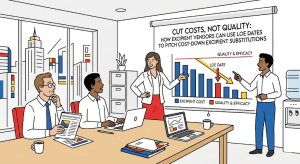
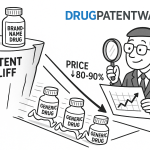
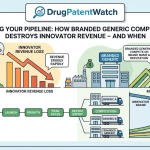
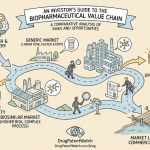
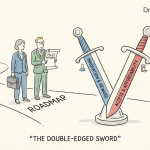
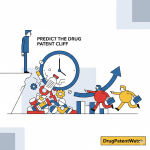
The pharmaceutical sector is approaching a revenue precipice. Between 2025 and 2030, an estimated $236 billion in global prescription sales will be exposed to generic competition as high-revenue products lose patent protection.1 This shift, known as the patent cliff, involves a predictable and severe decline in revenue for innovator firms while opening the market to lower-cost manufacturers.3 For excipient vendors, this transition is the most reliable leading indicator of future formulation activity.4
Loss of exclusivity (LOE) occurs when a brand-name drug’s legal patents expire, allowing other manufacturers to produce and sell identical versions.3 Once a drug goes off-patent, its market share often dwindles with extreme speed. Historical data indicates that some drugs lose up to 73 percent of their market share within only two weeks of a generic launch.6 This rapid erosion is driven by a price-sensitive healthcare system where payers and patients move quickly to the cheapest available therapeutic option.6
The scale of the 2025-2030 wave is defined by the loss of protection for high-value blockbusters. Products like Keytruda, Eliquis, and Januvia are scheduled to enter the public domain, triggering intense price competition and a focus on manufacturing efficiency.1
Drug Name (Brand)
Innovator Company
Primary Indication
Estimated U.S. Expiry
Peak Annual Sales
Stelara
Johnson & Johnson
Psoriasis
2025
>$10 Billion 1
Eylea
Regeneron
Macular Degeneration
2025
N/A 1
Eliquis
BMS / Pfizer
Anticoagulant
2026
>$18 Billion 1
Xarelto
Bayer / J&J
Anticoagulant
2026
N/A 1
Ozempic
Novo Nordisk
Diabetes/Obesity
2026
$20+ Billion 8
Januvia
Merck & Co.
Type 2 Diabetes
2026
$2.2 Billion 8
Keytruda
Merck & Co.
Oncology
2028
~$30 Billion 1
This period of transition creates a distinct commercial window for excipient suppliers. While the API is the therapeutic heart of the drug, excipients are the functional architects that determine if a product can be manufactured profitably at the low price points required for generic survival.9
Anatomy of a Generic Cost Structure
Generic drugs account for approximately 90 percent of all prescriptions dispensed in the United States, yet they represent only about 13 percent to 18 percent of total drug expenditure.9 This high-volume, low-margin business model relies on the ability to produce medications at a fraction of the original innovator’s cost. Because generic firms do not repeat the multi-billion dollar clinical trials required for the original drug, their research and development expenditure typically ranges from $2 million to $10 million per product.11
Once a generic enters the market, the price begins a precipitous decline. The entry of the first generic competitor can reduce the price by nearly 40 percent. If the market becomes crowded with 10 or more competitors, the price often drops by 80 percent to 95 percent compared to the original brand.9
Number of Generic Competitors
Approximate Price Reduction vs. Brand Price
1
30% – 39% 12
2
50% – 54% 12
3 to 5
60% – 79% 12
6 to 10+
80% – 95% 12
To survive in this environment, generic manufacturers must maintain a lean cost of goods sold (COGS). The active pharmaceutical ingredient (API) is the single largest and most volatile cost driver, usually accounting for 50 percent to 52 percent of the total manufacturing cost.9 While excipients represent only 5 percent to 10 percent of the COGS, they exert a massive influence on the other 40 percent of costs related to labor, overhead, and quality.9
Cost Category (Oral Solid Dose)
Percentage of Total COGS
Active Pharmaceutical Ingredient (API)
50% – 52% 9
Quality & Regulatory Compliance
25% 9
Manufacturing Overhead & Facility
10% – 20% 9
Direct Labor
10% – 15% 9
Excipients & Formulation
5% – 10% 9
Packaging & Logistics
5% – 10% 9
The hidden factory of inefficiency—waste, batch failures, and rework—is where excipients provide the most value.9 If a cheap excipient causes a batch to fail quality testing, the resulting loss far exceeds the savings from using a lower-grade ingredient.
The Excipient as an Efficiency Multiplier
Modern pharmaceutical excipients do not merely act as inert fillers. They are functional technologies that solve specific manufacturing challenges.10 In the context of the patent cliff, the most effective business development strategy for excipient vendors is to pitch products that improve manufacturing throughput and yield.
Direct Compression and Processing Speed
Traditional tablet manufacturing often uses wet granulation, a process that requires multiple steps, including mixing, wetting, granulating, drying, and milling.14 This process is labor-intensive and consumes significant energy. By switching to high-functionality excipients, manufacturers can move to direct compression (DC).14
Direct compression is a two-step operation that blends the API with excipients and compresses them directly into tablets.14 This eliminates the need for drying and granulation equipment, reducing the facility footprint and energy consumption.9 Excipients engineered for direct compression, such as silicified microcrystalline cellulose or pregelatinized starches, offer better flowability and compaction than simple blends.14
Reducing the Number of Ingredients
Using multifunctional excipients reduces the complexity of the formulation. A single ingredient that acts as a binder, filler, and disintegrant simultaneously allows the manufacturer to buy, test, and stock fewer materials.14 This simplifies the supply chain and reduces the administrative burden of quality control.14
Multifunctional Excipient Examples
Functions
Starch 1500
Binder, disintegrant, filler, lubricant 14
Ludipress
Binder, filler, disintegrant 14
F-MELT
ODT base, filler, disintegrant, lubricant 14
ProSolv
Filler, binder, glidant 14
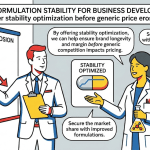
Reducing the number of excipients also decreases the surface area for potential drug-excipient interactions, which can improve the stability of the final product.14 For generic firms, stability is a critical performance metric, as any degradation over the product’s shelf life can lead to expensive recalls and damage to the company’s reputation.
Strategic Lead Generation via DrugPatentWatch
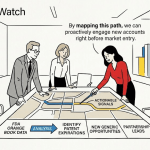
A sophisticated business development campaign for excipients must move beyond technical specifications and address the commercial reality of the patent cliff.15 Vendors can use patent and pipeline intelligence to identify which drugs are approaching exclusivity loss and which companies are preparing to launch generics.4
Targeting Tentative Approvals
The FDA issues a Tentative Approval (TA) when a generic drug meets all scientific and manufacturing requirements but cannot be marketed due to remaining patents or exclusivities.16 A TA is a definitive, predictive signal of future market entry.16
For excipient suppliers, a TA identifies a de-risked commercial lead. It confirms that the manufacturer has successfully developed a bioequivalent formulation and is ready for production as soon as the legal barriers fall.16 By analyzing which companies hold TAs for a specific blockbuster, excipient vendors can offer supply security agreements and technical support for scale-up months or years before the drug’s launch.16
Mining the National Drug Code Directory
The FDA’s National Drug Code (NDC) Directory and the Inactive Ingredient Database (IID) contain the composition data for thousands of marketed drugs.10 Excipient R&D teams can mine this data to identify formulation bottlenecks.10
If a high-value API is consistently formulated with a specific, expensive excipient, it indicates a challenge in solubility or stability that the industry has not yet solved with cheaper alternatives.10 This “white space” allows vendors to target manufacturers with superior, more cost-effective materials that address the same functional need.17
Regulatory Constraints on Substitution
While cost-down substitutions are attractive, they must navigate the FDA’s strict regulatory requirements for generic drugs. The primary mandate for any generic is bioequivalence (BE), which ensures the product performs exactly like the brand-name version.11
The Bioequivalence Window
For the FDA to approve a generic, the 90 percent confidence interval for the ratio of the generic’s average $AUC$ (total absorption) and $C_{max}$ (peak concentration) to the brand’s must fall between 80 percent and 125 percent.11 While this seems broad, the actual performance difference is usually much smaller; a review of over 2,000 studies found an average absorption difference of only 3.5 percent.11
Excipients play a decisive role in this window. They control the rate at which a tablet disintegrates and the API dissolves.10 If an excipient change alters the dissolution profile, the drug may fail to meet BE standards, requiring expensive new studies.22
Q1/Q2 Sameness in Complex Products
For parenteral (injectable), ophthalmic (eye), and otic (ear) drugs, the FDA generally requires Q1/Q2 sameness.24
Q1 (Qualitative Sameness): The generic must use the exact same inactive ingredients as the brand-name drug.24
Q2 (Quantitative Sameness): The concentration of those ingredients must be within $\pm 5$ percent of the brand-name drug.24
In these categories, excipient vendors cannot suggest a different material. The business development strategy must instead focus on being the primary source for the high-purity, high-grade versions of the specific excipients the brand used.18 Because the generic firm must use those specific materials, the vendor who supplied the innovator has a built-in advantage.
The 505(b)(2) Strategy for Premium Generics
The traditional 505(j) generic pathway is a race to the bottom on price. However, the 505(b)(2) pathway allows manufacturers to create modified versions of existing drugs while still relying on some of the original safety data.27 This is often described as a strategic escape hatch from the commoditization trap.29
Excipient vendors can pitch 505(b)(2) reformulations as a way for manufacturers to differentiate their products. For example, a manufacturer could use a novel excipient to create a fast-acting tablet or a once-a-day version of a drug that originally required multiple doses.10 This strategy allows the manufacturer to compete on value rather than just price, and it can secure new periods of market exclusivity.28
Exclusivity Type
Duration
Requirement
New Chemical Entity (NCE)
5 Years
Molecule never before approved 29
New Clinical Investigation
3 Years
New studies (e.g., FDC or new formulation) 29
Orphan Drug Designation
7 Years
Rare disease target 29
Pediatric Exclusivity
6 Months
Added to existing exclusivity 8
This pathway creates a separate, high-value demand stream for functional and performance-enhancing excipients that enable these innovations.4
Post-Approval Optimization and Compliance
Even after a generic drug is approved, manufacturers look for ways to optimize costs. Excipient vendors can pitch “post-approval changes” to simplify the supply chain or move to cheaper materials.23
The FDA categorizes post-approval manufacturing changes based on their potential risk to the patient.
Major Changes (Prior Approval Supplement – PAS): These changes have a substantial potential to affect drug quality. The manufacturer must submit and receive FDA approval before distributing the product.31
Moderate Changes (CBE-30): These changes have a moderate potential to affect quality. The manufacturer must notify the FDA 30 days before distributing the product.31
Minor Changes (Annual Report): These changes have a minimal potential to affect quality and can be documented in the next annual report.31
Vendors who can demonstrate that an excipient switch constitutes a “minor change” significantly lower the barrier to adoption. If a vendor can provide data showing that their new excipient does not alter the dissolution profile or stability of the drug, the manufacturer can implement the cost-saving change without a lengthy prior-approval process.31
Case Study: Sitagliptin and the Diabetes Market
Januvia (sitagliptin) is a DPP-4 inhibitor used for type 2 diabetes.7 With sales of over $2.2 billion and a patent cliff in 2026, it is a primary target for generic developers.7
The brand formulation of Januvia uses a standard set of inactive ingredients:
Microcrystalline cellulose 37
Calcium hydrogen phosphate dihydrate 38
Croscarmellose sodium 37
Magnesium stearate 37
Sodium stearyl fumarate 37
For excipient vendors, sitagliptin represents a high-volume opportunity. Vendors can pitch cost-down substitutions for the fillers (MCC and Calcium Phosphate) or provide high-performance versions of the lubricants to increase tablet press speed.39 Because sitagliptin is often prescribed in combination with metformin (Janumet), vendors can also pitch excipients that solve the technical challenge of formulating two different APIs into a single, stable tablet.7
Emerging Technologies in Excipient Science
The pharmaceutical landscape is shifting toward more complex molecules, requiring advanced delivery systems.30 Excipient innovation is now focused on solving the solubility and stability challenges of these new APIs.10
Nano-Excipients and Lipid Nanoparticles
Lipid nanoparticles (LNPs) were the essential technology that enabled mRNA COVID-19 vaccines.10 These specialized excipients protect the fragile mRNA and facilitate its entry into cells.10 Without these novel excipients, the rapid deployment of these vaccines would have been impossible.10
Natural and Plant-Based Excipients
There is a growing demand for “clean label” pharmaceutical products.30 Patients are increasingly concerned about potential sensitivities to animal-derived ingredients like gelatin or lactose.30 This has created a surge in demand for plant-based alternatives, such as pea starch or vegetable-derived celluloses.30
Trend
Impact on Excipient Market
Personalized Medicine
Demand for tailored, small-batch excipients 40
Biologics
Need for advanced stabilizers and delivery vehicles 30
Sustainability
Shift toward plant-based and biodegradable materials 30
Automation
Focus on excipients with consistent flow for continuous manufacturing 46
These trends allow vendors to move away from commodity pricing and position their products as specialized, high-value technologies.10
Supply Chain Resilience and Global Sourcing
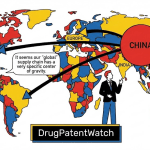
The generic drug market is highly dependent on cost-competitive production in China for APIs and India for finished manufacturing.48 However, this concentration has created systemic vulnerabilities, leading to drug shortages and quality concerns.40
Recent incidents of contaminated excipients have resulted in over 1,300 deaths worldwide, highlighting the critical importance of supply chain oversight.40 For excipient vendors, supply chain resilience is now a major selling point. Vendors who can guarantee a secure, domestic, or geographically diversified supply can differentiate themselves from low-cost competitors who may be more susceptible to geopolitical instability or regulatory shutdowns.39
The ROI of Multifunctional Ingredients
A common barrier to adopting advanced excipients is the higher price per kilogram compared to simple fillers. Excipient vendors must overcome this by calculating the true return on investment (ROI) for the manufacturer.10
The true value of an excipient is the total value of the API it enables, enhances, or protects.10 If a co-processed excipient costs $5.00 more per kilogram but reduces batch failure rates by 2 percent and increases production speed by 10 percent, the net savings to the manufacturer are substantial.10
Vendors can use ROI projection models to show procurement heads how “smart excipients” minimize the costs incurred in introducing a product to market by reducing the number of processing steps and the complexity of the formulation.10
Competitive Intelligence and Market Penetration
To gain a competitive advantage, excipient vendors must benchmark their market share at a granular level. This involves identifying exactly which drug products use their materials versus their competitors’.17
By parsing the FDA’s Inactive Ingredient Database and DailyMed records, vendors can calculate their “true” market footprint.17 This allows for surgical benchmarking. For example, a supplier can see if they are the dominant provider for a top-10 generic manufacturer or if a competitor is gaining ground in a specific therapeutic area like anticoagulants or diabetes.17
This data-driven approach turns a commoditized focus on cost into a value-driven analysis of how an excipient contributes to a final drug product’s commercial success.17
Key Takeaways
The upcoming $236 billion patent cliff is a catalyst for intense formulation activity, creating two distinct commercial opportunities for excipient vendors.1 Generic manufacturers require functional excipients that lower the total cost of production through increased yield, reduced processing steps, and minimized batch failures.9 Meanwhile, innovator firms use performance-enhancing excipients to reformulate products, defend their intellectual property, and differentiate themselves from incoming competitors.4
Survival in the generic market is a race to zero, where prices often drop by 90 percent and API costs consume over half of the manufacturing budget.9 In this environment, excipient vendors must shift their messaging from “cost-per-kilogram” to “total manufacturing efficiency”.9 Products that enable direct compression or reduce the number of ingredients solve the technical and economic challenges of the high-volume, low-margin business model.14
Success in this landscape requires the use of patent and pipeline intelligence. By tracking Tentative Approvals and mining the NDC directory, vendors can identify de-risked leads and formulation bottlenecks years before a drug’s launch.10 The vendors who will dominate the next decade are those who stop selling ingredients and start selling economic outcomes for the entire pharmaceutical ecosystem.
FAQ
How does a Tentative Approval act as a demand signal for excipient vendors? A Tentative Approval (TA) indicates that the FDA has already reviewed and validated a generic’s formulation, even if it cannot be marketed yet.16 For an excipient vendor, this is a “proof of concept” that the formulation works. It identifies a highly qualified lead—a manufacturer that is ready to produce as soon as patents expire—allowing the vendor to secure supply contracts well in advance of the product launch.16
Can a generic manufacturer switch excipients to save money without refiling their application? It depends on the risk. The FDA allows “minor changes” to be documented in an annual report, while “moderate changes” require a CBE-30 notification.31 If a vendor can provide data showing that a switch to their cheaper excipient does not alter the drug’s performance, the manufacturer can often implement the change without waiting for a lengthy prior-approval supplement (PAS).31
What is the “Middleman Problem” in pharmaceutical business development? Generic companies often have a divide between R&D scientists, who want high-performance materials to ensure bioequivalence, and procurement managers, who are tasked with cutting costs.15 Excipient vendors must bridge this gap by showing procurement that a more expensive “multifunctional” ingredient actually lowers the total cost per batch by reducing labor, energy, and the number of separate materials that must be tested and stocked.9
Why is Q1/Q2 sameness such a strict requirement for certain drugs? For injectables and eye drops, the risk of a different formulation is too high for the patient. The FDA requires the generic to contain the same ingredients in the same concentrations (within $\pm 5$ percent) to ensure safety and effectiveness.24 For excipient vendors, this means that once they are “baked in” to an innovator’s formulation, they have a secure, recurring market as generics begin to launch.18
How do co-processed excipients improve the ROI for a generic manufacturer? Co-processed excipients (CPEs) combine multiple functions into a single particle, such as a binder and a disintegrant.14 While they may cost more than a simple blend, they often enable direct compression, which is much faster and cheaper than traditional wet granulation.14 The ROI is found in the reduced energy bills, smaller equipment footprint, and significantly faster production times.10
Navigating the Pharmaceutical Patent Landscape: Impact of Patent Cliffs on Innovation and Accessibility – Preprints.org, accessed February 27, 2026, https://www.preprints.org/manuscript/202602.0423
Bioequivalence Evaluation in Healthy Volunteers: New Generic Formulations of Sitagliptin and Sitagliptin–Metformin Fixed-Dose Combination Compared with the Originator Products – PMC, accessed February 27, 2026, https://pmc.ncbi.nlm.nih.gov/articles/PMC9943811/
A pragmatic regulatory approach for complex generics through the U.S. FDA 505(j) or 505(b)(2) approval pathways – PMC, accessed February 27, 2026, https://pmc.ncbi.nlm.nih.gov/articles/PMC8597169/
Guidance for Industry: CMC Postapproval Manufacturing Changes To Be Documented in Annual Reports – FDA, accessed February 27, 2026, https://www.fda.gov/media/79182/download