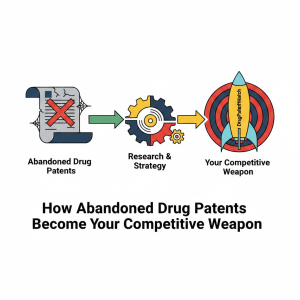
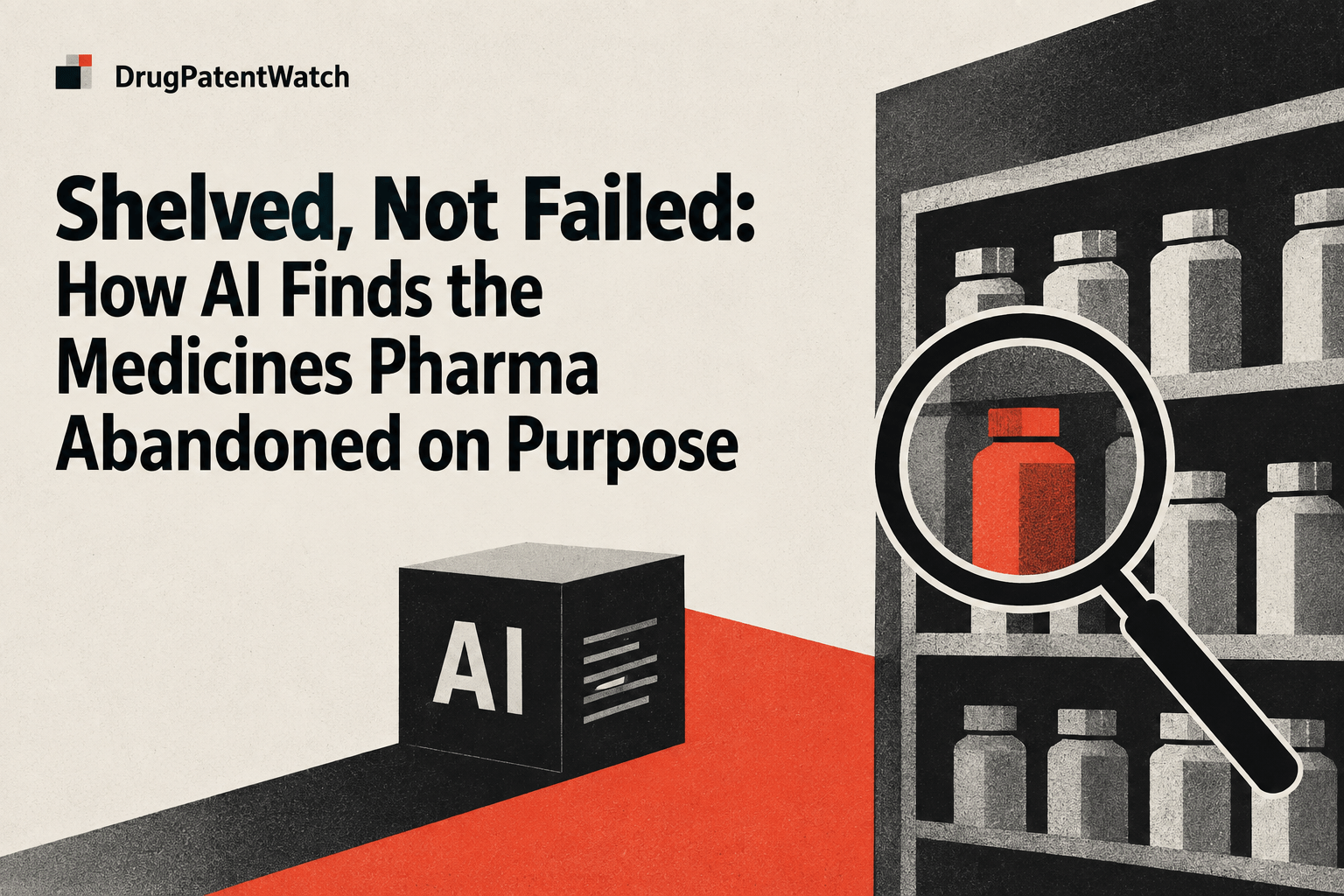
Every year, pharmaceutical companies abandon tens of thousands of patents and patent applications — quietly, deliberately, and in ways that most competitors never notice. The U.S. Patent and Trademark Office processes roughly 650,000 patent applications annually across all technology sectors; abandonment rates for pharmaceutical applications hover between 40 and 55 percent at various prosecution stages, generating a continuously expanding graveyard of disclosed-but-unclaimed pharmaceutical technology [1].
That graveyard is one of the most underused competitive resources in the industry.
The reasons companies abandon patents range from the prosaic (missed maintenance fee deadlines) to the deeply strategic (deliberate disclosure to block competitor filings). The reasons competitors fail to exploit those abandonments are simpler: they are not looking systematically, they do not have the analytical infrastructure to process what they find, and they underestimate the variety of ways abandoned patent documents affect competitive position.
This article is about closing that gap. It covers what abandonment actually means under U.S. and international patent law, the signals competitor abandonments transmit about R&D priorities and commercial decisions, the specific mechanisms by which abandoned applications create prior art that shapes the entire competitive landscape, and the practical playbook for building an abandoned patent intelligence program that feeds directly into business development, litigation strategy, and R&D planning.
The companies doing this well already know its value. Everyone else is leaving both defensive coverage and offensive intelligence on the table.
Part One: The Anatomy of a Patent Abandonment
What “Abandoned” Actually Means in Patent Law
Patent abandonment is not a monolithic event. The word covers at least four legally and commercially distinct situations, each with different implications for the technology and for everyone who might want to use it.
Express abandonment happens when a patent applicant files a formal statement of abandonment with the USPTO under 37 C.F.R. § 1.138 [2]. The applicant positively, unambiguously surrenders all rights in the application. This is the rarest form of abandonment and almost always reflects a deliberate business decision: the company has decided it does not want the patent, does not want the competitor to obtain a similar patent, and wants to ensure the subject matter enters the public domain immediately. The express abandonment statement itself is public and searchable.
Failure-to-respond abandonment is the most common form. When the USPTO issues an Office Action — a rejection or set of objections — the applicant has a statutory period (typically three months extendable to six months for small and micro entities, three months extendable to six months by paying fees for large entities) to respond [3]. If no response arrives by the deadline, the application is deemed abandoned. This is almost always an inadvertent failure, a mistake, a change in corporate priorities, or a resource allocation decision that simply was not communicated to prosecution counsel. The patent never issues. The application publishes (if it was published before abandonment), but the claims never become enforceable.
Maintenance fee abandonment applies to issued patents, not pending applications. U.S. utility patents require maintenance fees at 3.5 years, 7.5 years, and 11.5 years after grant [4]. The fees escalate: currently $2,000 at the first payment window for large entities, $3,760 at the second, and $7,700 at the third (with reduced rates for small and micro entities). A patent that lapses for nonpayment of a maintenance fee can be revived within a statutory window, but if it is not revived, it falls into the public domain. Given that a pharmaceutical portfolio can include hundreds of issued patents across multiple jurisdictions, maintenance fee abandonment is common, particularly for secondary patents on compounds that never reached commercial development.
Constructive abandonment is more subtle. Under 35 U.S.C. § 102(b)(1)(A), an inventor who publicly discloses an invention has one year to file a patent application before the disclosure itself becomes prior art against the inventor [5]. A company that publishes clinical data or presents at a conference without first filing a patent application has constructively started a clock running against itself. If the application is never filed, or is filed after the one-year grace period, the disclosure functions as prior art against any patent claims the company might later attempt. This is not abandonment in the formal sense, but it has the same practical effect: the technology is public and unprotectable.
Unintentional Abandonment and the Revival Procedure
The USPTO provides a pathway for reviving abandoned applications under 37 C.F.R. § 1.137 [6]. An applicant who demonstrates that the abandonment was “unintentional” — meaning no deliberate decision was made to abandon — can petition to revive. The petition must be filed promptly after the applicant learns of the abandonment and must include the required response, the revival petition fee, and a statement that the abandonment was unintentional.
The unintentional standard is lenient. The USPTO generally accepts petitioner statements at face value, without requiring detailed proof. This has produced an important and sometimes abused dynamic: applications abandoned by failure to respond — including applications abandoned because the company shifted resources away from a program, changed counsel, or simply deprioritized the filing — can be revived years later if the company decides it wants the patent after all.
For competitors monitoring the patent landscape, this creates an uncomfortable asymmetry. An application that appeared dead can come back to life. A patent granted on a revived application has the same legal force as a patent prosecuted without interruption. If a generic manufacturer or biosimilar developer has designed its product around claims in an application that looked abandoned, and that application is subsequently revived and issued with claims covering the product, the resulting infringement exposure is real.
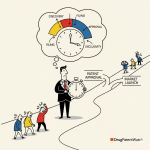
The practical defense is not to ignore apparently abandoned applications but to track their status systematically. An application that has been abandoned for a year and not revived is statistically unlikely to return. An application abandoned within the last six months has a higher probability of revival and should be treated as active for monitoring purposes.
International Abandonment: PCT National Phase Entry and Its Signals
The Patent Cooperation Treaty (PCT) allows applicants to file a single international application designating multiple countries, with national phase entry — the conversion of the PCT application into actual national or regional applications — occurring at 30 months from the priority date [7]. Companies file PCT applications routinely; they enter the national phase selectively, based on where the product is expected to have commercial value.
When a company files a PCT application covering a pharmaceutical compound but then enters the national phase in only the United States and the European Patent Office — skipping Japan, China, India, Brazil, and Canada — that selective entry pattern is informative. It suggests that the commercial opportunity for that compound is perceived as limited to the U.S. and European markets, or that the company has decided to reduce spending on the program, or that the compound has encountered regulatory or clinical problems that reduce its expected commercial value.
When a company files a PCT application and then fails to enter any national phase at all — allowing the PCT application to lapse entirely — that is a stronger signal. The compound was interesting enough to merit a PCT filing, but something changed between filing and the 30-month national phase deadline that led the company to abandon the entire program. That “something” could be clinical failure, competitive entry, management change, or financial constraint. For competitors and business development professionals monitoring the space, each of these scenarios presents a different opportunity.
Platforms like DrugPatentWatch track PCT national phase entry patterns alongside U.S. application status, allowing users to identify specific drug candidates where the originator has walked away from international coverage — and where the technology underlying those candidates is, in some markets, already in the public domain.
Part Two: The Prior Art Architecture of Abandoned Applications
How an Abandoned Application Becomes a Weapon Against Future Patents
The most powerful strategic dimension of pharmaceutical patent abandonment is not about the abandoning company’s loss of rights. It is about how the abandoned document shapes the patent landscape for everyone else, including competitors who might want to claim the same or similar subject matter.
Under 35 U.S.C. § 102, a patent application that was published before its abandonment constitutes prior art against any later-filed patent application whose claims overlap with the published disclosure [8]. This means that a company that publishes a patent application disclosing a pharmaceutical compound — even if it subsequently abandons the application and never obtains a patent — has permanently placed that compound’s detailed technical disclosure into the public record as prior art. Any competitor who later tries to patent the same compound, or a closely related compound, faces that publication as a barrier.
This is not merely theoretical. The pharmaceutical patent landscape contains thousands of published, abandoned applications covering compounds that were synthesized and disclosed during exploratory medicinal chemistry, never advanced to clinical development, and never patented. Those applications sit in the public record creating what practitioners call a “prior art thicket” — not a patent thicket in the traditional sense of enforceable rights held by multiple parties, but a landscape in which the publication history of abandoned applications prevents anyone from obtaining patent protection on the subject matter.
The pharmaceutical companies that have been most active in generating large medicinal chemistry compound libraries — GSK, Pfizer, AstraZeneca, Novartis, Merck — have also generated the most densely published prior art landscapes. A company entering a new therapeutic area needs to map not just the active patents but the abandoned-application prior art, because claims that appear novel against granted patents may be anticipated by published abandoned applications from programs abandoned years ago.
The Secret Prior Art Problem: Pre-AIA vs. Post-AIA Applications
Before the America Invents Act of 2011 (AIA), U.S. patent law treated U.S. patent applications as prior art from their filing date, not their publication date — even during the period before publication when they were confidential [9]. This “secret prior art” doctrine created a situation where a patent application that was filed but never published, never granted, and eventually abandoned could still function as prior art against a later-filed application, if it was later published or granted with an earlier effective filing date.
The AIA significantly changed this for applications filed after March 16, 2013, making prior art determination more closely tied to public availability. But a substantial body of “pre-AIA” applications remains in the system, including some pharmaceutical applications filed in the early 2000s during large combinatorial chemistry programs, which carry their pre-AIA prior art status regardless of what happened to the applications afterward.
For a generic manufacturer or drug developer trying to determine whether a specific compound or method is patentable, analyzing the pre-AIA prior art landscape is not optional. An abandoned application filed in 2005, never published, never granted, but whose parent application was eventually published, can create prior art complications that are genuinely difficult to resolve without specialized patent counsel who understands the pre-AIA/post-AIA transitional rules.
The practical implication is that prior art searches for pharmaceutical patent freedom-to-operate opinions must specifically cover published abandoned applications — not merely granted patents and current pending applications. This is a scope of searching that many in-house IP teams and even outside prosecution firms do not consistently perform.
Defensive Publication: Abandoning to Block
Defensive publication is the deliberate use of abandonment as an offensive tool. A company that wants to prevent a competitor from obtaining a patent on specific subject matter, but does not want to spend the resources maintaining a patent portfolio covering that subject matter itself, can achieve its goal by publishing the relevant technical disclosure and then allowing the application to lapse — or by publishing without filing an application at all.
The publication creates prior art that blocks the competitor’s patent application. If the publication discloses the compound, formulation, or method specifically enough to anticipate a patent claim, that claim cannot be validly granted. If the publication creates an obviousness argument against related claims, those claims are weakened even if not fully anticipated.
In pharmaceuticals, defensive publication has been used strategically in at least two distinct contexts. The first is during competitive intelligence programs: when a company identifies that a competitor is moving toward a specific compound class and wants to preserve freedom to operate in that class without filing and maintaining patents of its own, publishing technical data in scientific journals or patent applications (with no intent to prosecute to grant) places the technical content into the prior art permanently.
The second context is platform technology protection. A company that has developed a proprietary drug delivery platform — a nanoparticle carrier, a modified-release matrix, a specific excipient combination — may want to ensure that the platform remains available for its own use while preventing competitors from patenting it. Filing a broad patent application, publishing it, and then allowing it to lapse creates a published prior art record. If a competitor subsequently tries to obtain a patent on the same or similar platform technology, the abandoned application stands as an anticipatory reference.
IBM pioneered this approach in the semiconductor industry through its Technical Disclosure Bulletin, which published disclosed-but-unpublished inventions specifically to create prior art [10]. The pharmaceutical analog exists but is less systematized. Companies that do use it tend to do so through the deliberate publication of patent applications in which they claim everything technically possible, publish the full disclosure, and then either let the application lapse or narrow the claims significantly — preserving freedom to operate while creating a dense prior art record.
The Inter Partes Review Arsenal: Mining Abandoned Applications for Invalidity
Inter partes review (IPR) proceedings at the Patent Trial and Appeal Board are primarily won or lost on prior art. The standard for IPR institution is whether the petition presents a reasonable likelihood that at least one challenged claim is unpatentable, and the two primary grounds for challenge are anticipation under Section 102 and obviousness under Section 103 [11].
Abandoned patent applications — particularly those published before being abandoned — represent a frequently underused source of IPR prior art. The reason they are underused is search gap: most IPR petitioners perform prior art searches focused on published scientific literature, issued patents, and standard patent database searches. Published abandoned applications occupy an unusual category: they are technically in the patent database, but searchers looking primarily at “active patents” or “peer-reviewed publications” may not surface them systematically.
A specialized search targeting published abandoned applications — specifically applications that were published before abandonment and whose disclosure dates predate the priority date of the challenged patent — can surface prior art combinations that standard searches miss. The quality of the disclosed subject matter in abandoned applications is often high: it represents the work of sophisticated chemists and formulators at major pharmaceutical companies, disclosed with the specificity required by the patent enablement standard.
Generic manufacturers and biosimilar developers building IPR petitions against innovator Orange Book patents should specifically include abandoned application searches in their prior art analysis. IPR petitions built on abandoned application prior art are less likely to be defended with the argument that “the reference was considered during prosecution,” because prosecution counsel rarely searches systematically for published abandoned applications — meaning many of these references appear for the first time in IPR.
Firms that invest in building abandoned application search capability — including relationships with specialized patent search firms that specifically index published abandoned applications — consistently find prior art combinations that their competitors miss.
Part Three: Reading the Competitive Signal in Abandoned Patents
Why Companies Abandon Patents and What It Tells You
A pharmaceutical company’s abandoned patent portfolio is a documentary record of its strategic decisions, resource constraints, and R&D failures. Analyzed systematically, it provides intelligence about competitor priorities that press releases and quarterly reports never contain.
Consider the four principal reasons large pharmaceutical companies abandon patents:
Clinical failure of the underlying compound. The most common cause of pharmaceutical patent abandonment is that the drug candidate covered by the patent did not work well enough in clinical trials. A patent on a GPR119 agonist for type 2 diabetes that is abandoned in 2017 is almost certainly abandoned because the compound failed in Phase 2 or was deprioritized after competitive entry from better candidates. The abandonment, viewed alongside the timing of the company’s clinical trial disclosures, can tell you roughly where in the development process the failure occurred.
Competitive entry rendering the program non-viable. When a competitor achieves first-in-class approval for a target or mechanism, companies with second-generation compounds in the same space often abandon their patent programs because the commercial opportunity has narrowed. The timing of these abandonments frequently tracks closely with competitor approval dates. A company that abandons a series of Janus kinase inhibitor patents in 2012 and 2013 is almost certainly responding to the approval of tofacitinib and the resulting competitive calculus for follow-on compounds.
Strategic portfolio prioritization. Large pharmaceutical companies periodically conduct portfolio rationalization exercises in which they decide to focus resources on priority programs and reduce maintenance spending on lower-priority assets. The result is waves of maintenance fee abandonments across a range of programs, some of which may involve genuinely valuable technology that simply did not fit the current strategic plan. These abandonments create acquisition opportunities for smaller companies, generic manufacturers building non-infringing API synthesis routes, and academic institutions seeking research licenses.
Corporate restructuring, merger, and divestiture. When companies merge or are acquired, the combined IP estate is rationalized and a subset of patents is abandoned. Post-merger abandonment patterns can reveal which programs the acquirer deprioritized — information directly relevant to any company competing in those therapeutic areas.
How to Read Patent Family Abandonments Systematically
A single abandoned application tells you relatively little. A pattern of abandonments across a patent family tells you a great deal. Patent families in pharmaceuticals typically include a core composition-of-matter application, continuation applications claiming specific formulations or dosing regimens, divisional applications covering manufacturing processes, and foreign counterparts in each major market.
When a company abandons the core composition-of-matter application but maintains the continuation applications, it may be signaling that the specific molecule is no longer the focus but that related formulation technology remains commercially relevant. When a company abandons the U.S. application but maintains the European counterpart, it may be signaling that the U.S. commercial opportunity is perceived as insufficient while European development continues.
The sequence of abandonments is also informative. An orderly, sequential abandonment pattern — core application abandoned first, then continuations, then foreign counterparts over the following 12 to 18 months — suggests a deliberate, managed wind-down. A sudden, simultaneous abandonment of an entire patent family in multiple jurisdictions suggests either a financial constraint (the company ran out of money for prosecution and maintenance fees all at once) or a catastrophic clinical or regulatory event that eliminated the program’s commercial rationale overnight.
Platforms like DrugPatentWatch allow users to map patent family structures and track the status of individual family members across jurisdictions, making it possible to identify partial abandonments, selective geographic wind-downs, and the temporal sequence of abandonments within a family — all of which inform the intelligence picture. <blockquote> “Between 2019 and 2023, the USPTO issued notices of abandonment on an average of 312,000 utility patent applications per year, with pharmaceutical and biotechnology applications representing approximately 18 percent of that total — a volume of abandoned pharmaceutical patent applications that most competitive intelligence programs never systematically analyze.” — USPTO Performance and Accountability Report, 2023 [1] </blockquote>
The Abandoned Application as a Drug Repurposing Map
One of the most commercially valuable but least-discussed applications of abandoned patent intelligence is drug repurposing. When a large pharmaceutical company abandons a patent covering a synthesized, characterized compound — particularly one that has been the subject of published safety or pharmacokinetic data — that abandonment represents an opportunity for a smaller company or academic institution to develop the compound for a new indication, often with a substantially reduced development cost because some prior safety characterization already exists.
AstraZeneca’s open innovation programs, including the AZ BioVentureHub and its historical Open Innovation program, have explicitly used the company’s library of deprioritized compounds — many covered by abandoned or lapsed patents — as a resource for academic and startup drug repurposing efforts [12]. Pfizer’s Centers for Therapeutic Innovation program similarly made available compounds from discontinued programs for external development.
The value of abandoned pharmaceutical patent estates for drug repurposing has been quantified by academic researchers. A 2022 analysis published in Nature Reviews Drug Discovery estimated that approximately 4,500 compounds with published human safety data currently sit in large pharmaceutical company “compound libraries” — the vast majority covered by abandoned or lapsed patents — and that roughly 400 of these have been identified by computational models as having potential activity against disease targets not previously explored by the originator [13].
For smaller companies with access to synthetic chemistry and clinical development capabilities but limited de novo discovery budgets, mining abandoned pharmaceutical patent estates is a rational and cost-effective strategy. The compound exists, the synthetic route is disclosed, some safety characterization is available in published literature, and the patent protection is gone — meaning development costs need only cover the new indication program, not a discovery program.
Part Four: Generic and Biosimilar Manufacturers’ Abandoned Patent Playbook
Paragraph IV Strategy and the Abandoned Patent Treasure Map
Hatch-Waxman Paragraph IV litigation turns on whether the innovator’s Orange Book patents are valid and infringed. Generic manufacturers invest heavily in prior art searching to support invalidity challenges. The discussion above about IPR proceedings applies equally to district court litigation: published abandoned applications are a consistently underexplored source of invalidity prior art in Hatch-Waxman cases.
The generic manufacturer’s litigation team looks for abandoned applications that predate the priority date of the Orange Book patent and disclose the same or closely related compounds, formulations, or methods. Finding such applications does not automatically invalidate the challenged patent — the abandoned application must actually anticipate or render obvious the specific claims at issue. But when it does, the abandoned application is particularly valuable prior art because it has a distinctive credibility: it is not a journal article whose authors might be disputed; it is a formal patent application filed by a sophisticated pharmaceutical company under oath, disclosing enabling technical detail at the level required by 35 U.S.C. § 112.
A concrete example: a generic manufacturer challenging a formulation patent on an extended-release matrix technology discovers a published, abandoned application from a competing innovator filed six years before the challenged patent, disclosing the same matrix technology with the same excipient ratios. The abandoned application was never cited during prosecution of the challenged patent, never considered by the examiner, and is available as prior art for the first time in the litigation. The likelihood of prevailing on invalidity based on this prior art is substantially higher than based on general scientific literature.
The systematic approach is to build, before filing an ANDA, a comprehensive prior art database covering the specific drug product that includes: all published abandoned applications from the originator’s own patent family and from competitors in the same compound class; abandoned PCT applications that designated the relevant technology in their disclosure without entering national phase; and published scientific papers that originate from work also covered by abandoned patent applications, which may provide additional context and expert witnesses.
Freedom to Operate and the Abandoned Application Comfort Zone
Freedom to operate (FTO) opinions address whether a product can be made, used, sold, or imported into a jurisdiction without infringing valid, enforceable patents. Abandoned patents and applications appear in FTO analyses in two ways: as confirming non-risk (an abandoned or lapsed patent is not enforceable, so the corresponding technology is free to use) and as complicating factors (a revived application or a patent that was abandoned but has surviving continuation claims may still create exposure).
The revival risk is the one that catches generic manufacturers and biosimilar developers unprepared. Under 37 C.F.R. § 1.137, an application abandoned for “unintentional” reasons can be revived for up to two years after abandonment, and in some circumstances longer with compelling justification. An FTO analysis performed when an application appeared abandoned may be technically accurate at the time but become inaccurate six months later when the application is revived and later issued.
Best practice in FTO analysis for pharmaceutical products requires tracking the status of potentially relevant abandoned applications for a minimum of three years after abandonment before treating the technology as definitively clear. This is operationally demanding — it requires active monitoring, not a one-time search — but the consequences of getting it wrong are significant. A biosimilar developer who launches in year one of a planned exclusivity window, relying on an FTO that treated a revived application as permanently abandoned, can find itself with infringement exposure just as revenues ramp.
Using Abandoned API Process Patents to Build Non-Infringing Synthesis Routes
Generic manufacturers face a distinct patent challenge when developing the active pharmaceutical ingredient (API) for a small-molecule drug: the innovator’s process patents. Even after a composition-of-matter patent expires, process patents covering the specific synthesis route used to manufacture the API may remain in force, limiting the routes available to generic API manufacturers.
Abandoned process patents are directly useful here. A generic API manufacturer that finds a published abandoned application covering an alternative synthesis route for the same API gains two things: the technical disclosure of a viable synthesis route (enabling it to develop and validate that route for its own use) and confirmation that the route is prior art, meaning the innovator cannot subsequently obtain a valid process patent claiming the same route.
In practice, this means that generic API manufacturers conducting freedom-to-operate analysis for manufacturing processes should search not only active process patents but also published abandoned process applications — specifically looking for disclosed routes that represent design-around opportunities. When an abandoned application discloses an alternative route that was never pursued commercially, that route may be more efficient, cost-effective, or scalable than the routes actually covered by active patents — and using it is entirely non-infringing.
Part Five: Strategic Abandonment as a Corporate Tactic
Abandoning to Accelerate: The Continuation Prosecution Gambit
Continuation applications allow an applicant to keep a patent family alive by filing new applications claiming priority to an earlier parent while presenting different or narrower claims. The parent application can be expressly abandoned once the continuation is filed, without loss of priority — the continuation inherits the parent’s filing date.
This mechanism is used strategically in several ways. When a parent application has been pending for many years without allowance, abandoning the parent and filing a fresh continuation with a clean prosecution history can reset the claims and restart the examiner relationship without the baggage of a lengthy rejection history. The parent’s prosecution history does not follow the continuation, although it remains public and can be used to interpret the continuation’s claims by courts.
More aggressively, pharmaceutical companies sometimes file continuation applications containing broad claims that are expected to be rejected, allow the continuation to be abandoned after rejection, and treat the abandonment as establishing a prosecution history record that narrows the claims of surviving sibling applications through estoppel. This is a sophisticated prosecution strategy that requires counsel who thinks about the entire patent family as a coordinated system rather than as individual applications managed in isolation.
The reverse is also practiced: filing continuation claims that are deliberately narrow, allowing those continuations to issue with strong claims, and then abandoning broader continuation claims whose prosecution history might have been unfavorable to the commercial product’s most valuable claim scope. By selectively abandoning prosecution lines that develop unfavorably, a company manages its prosecution history estoppel exposure across the family.
Terminal Disclaimers and the Abandonment Decision
When two patents or applications share substantially the same claims and the same ownership, the USPTO requires the filing of a terminal disclaimer, which ties the term of the later-expiring patent to the term of the earlier-expiring patent — preventing “obviousness-type double patenting” from extending patent life beyond the original patent’s term [14].
The abandonment decision in the context of terminal disclaimers is commercially meaningful. A company holding two issued patents linked by a terminal disclaimer — meaning one expires when the other does — may find that the commercial value of the later-issuing patent is reduced to near zero by the terminal disclaimer, because it does not actually extend the exclusivity window. In that case, the rational decision is to abandon the later patent rather than pay maintenance fees on a patent that adds no incremental protection.
Generic manufacturers and biosimilar developers monitor terminal disclaimers precisely because they reveal which patents in a portfolio are commercially redundant from the innovator’s perspective, and because patents subject to terminal disclaimers may be vulnerable to invalidity challenges that simultaneously affect all linked patents in the family. Taking down one patent in a terminally disclaimed family can take down the linked patents with it, in some circumstances.
Divisional Applications and the Election Requirement Abandonment
The USPTO’s requirement that a single application claim only one “inventive concept” — enforced through restriction practice and the election requirement — forces applicants to split broad patent applications into “divisional” applications, each covering a different elected invention [15].
When an applicant elects to prosecute one invention out of several identified by the examiner, the non-elected inventions lose their right to be claimed in the original application. If the applicant wants to claim them, it must file divisional applications. Not all applicants do. Some divisionals are filed and later abandoned when the program is deprioritized. Others are simply never filed.
For a competitor, the non-elected subject matter from restriction practice can be significant. If the examiner identified four separate inventive concepts in an original application, and the applicant elected one and filed divisionals for two of the others, the fourth non-elected invention was disclosed in the original application but never claimed. That disclosed-but-unclaimed subject matter exists in the published application as technical disclosure available to anyone, and its claims were effectively abandoned before they were ever formally filed.
Identifying unclaimed subject matter in published applications — technology disclosed but never claimed, either because the company chose not to file divisionals or because divisionals were filed and abandoned — represents a targeted search strategy for generic and biosimilar manufacturers looking for free-to-use synthesis routes, formulation approaches, and analytical methods.
Part Six: The M&A Dimension — Abandoned Patent Estates in Acquisitions
What Acquirers Miss When They Miss Abandoned Patents
When a pharmaceutical company is acquired, due diligence typically focuses on what the target owns: its granted patents, pending applications, and licensed-in IP. What it rarely focuses on with equal rigor is what the target has abandoned — and what those abandonments mean for the acquiree’s technology freedom and competitive position.
The practical problems created by abandoned patent estates in M&A contexts take four forms:
Prior art exposure created by the target’s own abandoned applications. If the target filed and published patent applications covering core technology and subsequently abandoned them without obtaining patents, those published applications are prior art — potentially prior art that blocks the acquirer from later seeking broader patent protection on the same technology. The acquirer inherits not just the active IP estate but the prior art shadow cast by abandoned applications.
Revival risk from the target’s abandoned prosecution files. If the target’s applications were abandoned within the revival window, an acquirer conducting due diligence needs to evaluate whether any of those applications cover technology that competitors might attempt to patent, and whether reviving them would be commercially valuable. Many acquirers fail to do this review and discover twelve months after closing that a competitor obtained a patent on subject matter that the target had disclosed in an abandoned application.
Competitor claims created by the target’s failure to maintain foreign counterparts. A company that maintained U.S. patents but allowed European, Japanese, or Chinese counterparts to lapse through maintenance fee nonpayment has created a situation where the same technology is patented in one market and public domain in others. For an acquirer expecting global IP coverage, discovering that critical patents lapsed in key markets during the target’s financial difficulties is a material due diligence finding.
Operational and commercial constraints from third-party abandoned patents covering the target’s products. If a competitor abandoned a patent covering a method of manufacture or use that the target’s products actually employ, the target has been operating in a freedom-to-operate comfort zone that could change if the patent is revived or if related continuation claims from the same family are still active.
The Distressed Pharmaceutical Company Acquisition: Orphaned Patent Estates
When small-cap pharmaceutical companies fail — through Phase 3 trial failure, funding exhaustion, or regulatory setback — their patent estates frequently end up in distressed-sale conditions. Maintenance fees stop being paid. Applications are abandoned for failure to respond. PCT national phase entries are missed. The entire IP estate erodes while the corporate assets are being reorganized in bankruptcy or dissolved.
The resulting orphaned patent estates can represent substantial value if the underlying technology is real and the commercial opportunity still exists. A company that failed because its lead compound did not meet the primary endpoint in a specific indication may have a preclinical portfolio covering related compounds with activity against different targets, a formulation platform that was never fully commercialized, and manufacturing process patents that represent genuine technical innovations.
Acquiring these orphaned estates from bankruptcy trustees, assignee estates, or distressed-sale processes is well-established in the pharmaceutical industry. Companies like Royalty Pharma, Cerevel Therapeutics (now part of AbbVie), and numerous smaller specialty pharma acquirers have built business models around identifying orphaned pharmaceutical IP, acquiring it at distressed prices, and either developing the underlying programs or licensing them to third parties.
The critical due diligence challenge is separating the genuinely valuable orphaned IP from the technology that was abandoned because it did not work. A compound that failed in a Phase 3 trial for diabetic neuropathy may still be a valid development candidate for a smaller indication within the same disease category — but assessing that requires clinical and scientific due diligence that goes well beyond what a typical IP due diligence process covers.
Post-Merger Integration: The Portfolio Rationalization and Its Aftershocks
When two large pharmaceutical companies merge — Pfizer and Wyeth, AbbVie and Allergan, Bristol Myers Squibb and Celgene — the combined IP estate is enormous. The merged company must rationalize that estate, deciding which patents to maintain, which applications to continue prosecuting, and which assets to abandon or divest.
These post-merger portfolio rationalization waves create significant opportunities for competitors. The patents and applications abandoned during post-merger rationalization tend to cover technology that was commercially relevant to one or both of the companies before the merger — not random, exploratory filings. They often include programs that were strategically important before a competitor achieved a superior clinical outcome, formulation platforms that no longer align with the merged company’s commercial strategy, and process innovations that the merged company has superseded with newer technology.
Competitors who monitor PAIR (Patent Application Information Retrieval), EDGAR filings, and patent maintenance databases during the 12 to 24 months following major pharmaceutical mergers consistently find valuable abandoned technology that the merging companies let go during rationalization. The challenge is moving fast enough: once a patent or application is identified as abandoned, the revival window starts running.
Part Seven: The Global Abandonment Map
European Patent Office Abandonments and SPC Implications
The European Patent Office examines patent applications centrally, but granted European patents must be “validated” in individual member states — which requires payment of national validation fees and, in many countries, filing a translation of the patent [16]. A company that receives a granted European patent but then fails to validate it in Germany, France, Italy, and the United Kingdom has effectively abandoned protection in those countries.
The SPC (supplementary protection certificate) implications of European patent abandonment are significant and complex. SPCs are granted at the national level, based on the underlying European patent and the national marketing authorization. If the underlying European patent lapses — through failure to pay national annuities in a specific country — the SPC based on that patent in that country also lapses or becomes unenforceable.
For a biosimilar developer or generic manufacturer monitoring the European landscape, tracking national patent annuity payments for the key Orange Book-equivalent patents in each European market is a granular but commercially valuable exercise. A patent that is maintained in Germany and France but has lapsed for non-payment in Spain and Italy may create a geographic opportunity for market entry in those countries years before the patent’s nominal expiration date.
DrugPatentWatch tracks European patent status across member states alongside its U.S. patent data, allowing users to identify exactly these geographic asymmetries in patent coverage — countries where the branded product’s key patents have lapsed while they remain active elsewhere.
China’s Growing Patent Landscape and the Abandonment Premium
China’s pharmaceutical patent system has matured rapidly. The State Intellectual Property Office (SIPO, now CNIPA) processes applications from both domestic and international applicants at scale, and the patent linkage system introduced in 2021 creates Orange Book-like consequences for Chinese pharmaceutical patents [17].
For international pharmaceutical companies, managing a Chinese pharmaceutical patent portfolio requires active engagement with a prosecution system that has historically been less favorable to broad composition-of-matter claims than the U.S. system, and whose examiner practice on biological molecules and formulations is still evolving. The result is a pattern in which many international pharmaceutical companies file PCT applications designating China, begin national phase examination, receive difficult rejections, and abandon the Chinese application rather than invest further prosecution resources.
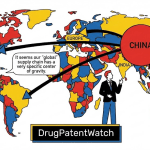
The commercial consequence is that technologies patented in the U.S. and Europe are sometimes in the public domain in China — available for Chinese generic manufacturers to develop and export without infringing any patent. As Chinese pharmaceutical companies have developed their own manufacturing capabilities and are increasingly exporting to regulated markets, the geographic abandonment patterns of international pharmaceutical companies in China have begun to affect competitive dynamics in the U.S. and European generic markets as well.
For any company trying to understand its competitive position in pharmaceutical manufacturing — particularly API manufacturing, where Chinese companies have built dominant global positions — mapping the Chinese abandonment landscape is no longer a niche exercise.
India, Brazil, and the Strategic Significance of Developing Market Abandonments
India’s patent system, shaped by Section 3(d) of the Indian Patents Act, does not grant patents on new forms of known substances (including salts, polymorphs, and formulations) unless the applicant demonstrates significantly enhanced therapeutic efficacy compared to the known substance [18]. This provision has led to a pattern in which international pharmaceutical companies either never file Indian patent applications for secondary pharmaceutical patents or file and subsequently abandon them when faced with Indian patent office rejection under Section 3(d).
The abandoned Indian patent applications for secondary pharmaceutical innovations create a specific kind of competitive opportunity: Indian generic manufacturers can manufacture and export generic versions of drugs that are still under patent protection in the U.S. and Europe, because the relevant Indian patents were abandoned or never filed. This is not a gray market or an infringing activity under Indian law — it is a consequence of the legitimate geographic asymmetry in patent coverage.
For pharmaceutical companies concerned about Indian generic competition in regulated markets, monitoring Indian patent abandonment patterns — and the resulting Indian generic ANDA filing activity targeting those markets — is important intelligence. A drug that lost its Indian patent in 2020 may face Indian generic competition in the U.S. market when the U.S. patent expires in 2028, because Indian manufacturers have been producing the API legally under Indian law for eight years and will be cost-competitive from day one.
Brazil’s ANVISA (National Health Surveillance Agency) dual-review process for pharmaceutical patents — which requires both INPI (Brazil’s patent office) and ANVISA approval for pharmaceutical patent grants — has led to substantial abandonment of pharmaceutical applications in Brazil, particularly by smaller companies unable to navigate the dual-review requirements [19]. The resulting public domain landscape in Brazil is broader than in most other major markets for specific pharmaceutical products.
Part Eight: Abandoned Patents in Biologics and Cell Therapy
Reference Product Patent Abandonment and Purple Book Analysis
The FDA’s Purple Book lists biological products and their reference product designations, analogous to the Orange Book for small molecules [20]. Unlike the Orange Book, the Purple Book does not systematically list patents claimed by the reference product sponsor. Patent information for biologics must be gathered through the BPCIA patent dance process or through independent patent searching.
Abandoned patents covering biologic reference products create a specific analytical challenge. Biologic patents cover diverse aspects of the product: the amino acid sequence of the protein, post-translational modifications, cell lines used in production, purification processes, drug substance formulation, delivery device design, and method-of-use claims. Abandonment of any of these categories has different implications for biosimilar developers.
A reference product sponsor that abandons its cell line patents — covering the specific CHO cell line used to produce the biologic — does not lose its product’s commercial franchise, because biosimilar developers can manufacture the same protein using different cell lines. But the abandonment of cell line patents does remove one potential obstacle from the biosimilar development pathway: a biosimilar developer who uses a cell line covered by an active patent would face infringement exposure even if all other aspects of manufacturing were non-infringing.
Monitoring the abandoned patent landscape for key biologic reference products — using platforms like DrugPatentWatch alongside BPCIA patent dance disclosures — gives biosimilar developers a continuously updated picture of which technical aspects of the reference product are patented, which are expired, and which were patented and subsequently abandoned.
Abandoned CAR-T and Cell Therapy Patents: A Frontier Being Written Now
Chimeric antigen receptor T-cell (CAR-T) therapy is among the fastest-evolving areas of pharmaceutical patent activity. The first commercial CAR-T approvals (tisagenlecleucel in 2017, axicabtagene ciloleucel in 2017) triggered a filing explosion as companies sought to patent improvements in CAR construct design, manufacturing processes, lymphodepletion conditioning regimens, patient selection criteria, and combination therapies [21].
In the five years following those initial approvals, patent filings in the CAR-T space increased by approximately 340 percent, with a corresponding increase in abandonment rates as the initial exuberance of the filing programs collided with the practical challenges of claim allowability, manufacturing complexity, and clinical development attrition [22].
The abandoned CAR-T patent applications from 2018 to 2023 represent a detailed technical record of what the field tried to develop and failed — or deprioritized. For companies currently active in CAR-T development, mapping the abandoned application landscape in this space serves two purposes: identifying prior art that affects the freedom-to-operate analysis for current programs, and identifying abandoned technical approaches that might be worth revisiting in light of subsequent scientific advances.
The second purpose is particularly valuable in CAR-T because the technology is changing rapidly. A manufacturing approach abandoned in 2019 because it was not scalable at the time may be entirely practical now, given advances in vector production and cell expansion technology. The technical disclosure in the abandoned application is public, enabling without infringing — and a company that develops the approach now can patent the improvements while building on the abandoned application’s foundational disclosure.
The mRNA Patent Landscape’s Abandonment History
The commercial success of mRNA vaccines for COVID-19 has obscured how many abandoned patent applications exist in the foundational mRNA technology space. The core innovations — lipid nanoparticle formulations for mRNA delivery, modified nucleosides for immunogenicity reduction, codon optimization strategies for protein expression — were the subject of extensive patent filing activity from the 1990s through the 2010s, with significant abandonment during the period when mRNA therapeutics were seen as a promising but commercially unproven technology class.
Moderna, BioNTech, CureVac, and several academic institutions filed overlapping patent families in this space throughout the 2010s. The competitive patent disputes that followed commercial success — particularly the litigation and arbitration between Moderna and the NIH over mRNA delivery patents — depend critically on analyzing the prosecution histories of applications that were active, continued, abandoned, and revived throughout this period [23].
For pharmaceutical and biotechnology companies currently entering the mRNA therapeutic space — developing mRNA-based cancer vaccines, protein replacement therapies, or gene editing guides — understanding the abandoned application landscape in foundational LNP formulation and modified nucleoside chemistry is essential for FTO analysis. The density of published abandoned applications in this space means that many seemingly novel technical approaches are disclosed in public prior art, and independently developing them will not produce patentable claims.
Part Nine: Building a Systematic Abandoned Patent Intelligence Program
The Infrastructure Required: Tools, Data Flows, and Personnel
Building an abandoned patent intelligence program that generates actionable strategic output requires three components working together: data access, analytical capability, and organizational integration.
On data access, the minimum viable infrastructure combines USPTO Public Patent Application Information Retrieval (Public PAIR), Espacenet or the EPO’s Global Patent Index, Google Patents (for publication date indexing), and a pharmaceutical-specific platform like DrugPatentWatch that aggregates patent status, Orange Book listings, and litigation data in a format accessible to non-patent specialists. This combination allows users to search for published abandoned applications by technology area, priority date range, abandonment date, and the identity of the original applicant.
The analytical capability requirement goes beyond search. Raw lists of abandoned applications must be filtered against the specific products, targets, and mechanisms relevant to the company’s commercial portfolio. An oncology company does not need a comprehensive database of abandoned cardiovascular patents; it needs a structured analysis of abandoned applications covering specific kinase inhibitors, checkpoint mechanisms, or tumor microenvironment targets that are adjacent to its current pipeline.
Building this filtering capability in-house requires patent professionals with the scientific background to understand pharmaceutical chemistry and biology at the level needed to assess whether a specific abandoned application’s disclosure is genuinely prior art against a current claim, or technically distinct in ways that allow the claim to survive. This is skilled work. It cannot be delegated to a paralegal or automated away with keyword searches — though keyword searches are the starting point.
The organizational integration challenge is the hardest. Abandoned patent intelligence is only valuable if it reaches the people who can act on it: the BD team evaluating in-licensing opportunities, the clinical development team assessing FTO before initiating IND-enabling studies, the litigation team building IPR petitions, and the prosecution team assessing claim scope for pending applications. Each of these teams has different analytical needs from the same underlying data.
The organizations that extract the most value from abandoned patent intelligence have established a quarterly review cycle in which the IP team presents abandoned patent findings to each of these stakeholders in formats tailored to their decision-making needs, rather than producing a single monolithic patent landscape report that everyone receives but no one uses.
Key Databases and Workflow Protocols
A practical workflow for pharmaceutical abandoned patent intelligence operates across several stages.
The initial scoping phase defines the search domain: the specific molecules, targets, mechanisms, formulation technologies, and manufacturing approaches relevant to the company’s current and planned commercial portfolio. This scoping should be done collaboratively between IP and scientific personnel, because IP professionals alone will miss relevant technical areas and scientific personnel alone will not know how to translate technical categories into patent classification codes and claim language.
The primary search phase queries the major patent databases for published applications in the relevant domain, filtered by status codes indicating abandonment. The USPTO’s Patent Center database assigns status codes to all applications that indicate current disposition, including “abandoned” with a specific reason code. Similar status information is available in EPO’s public register and through the WIPO PATENTSCOPE database for PCT applications.
The triage phase applies automated and manual filters to the raw search results to identify the applications with the highest analytical relevance. Automated filters can apply priority date ranges, applicant identity filters, and CPC/IPC classification codes. Manual triage requires a skilled reviewer to read abstracts and representative claims for applications that pass the automated filter, determining which warrant full review.
The full review phase produces substantive analysis of the abandoned applications that have been triaged as high-relevance. This analysis addresses whether the application’s claims (as filed or as published) anticipate or render obvious any current commercial claims, pending application claims, or competitor patent claims; whether the application’s disclosure contains technical information useful for design-around, FTO, or IPR purposes; and whether the abandoned program underlying the application represents a drug repurposing opportunity or a BD/in-licensing target.
The distribution phase puts the resulting analysis in front of the relevant decision-makers, with explicit linkage to pending decisions. A pre-IND FTO analysis that surfaces a published abandoned application disclosing the development compound should be delivered to the clinical development team before IND filing, not after. An IPR prior art analysis should reach the litigation team before the IPR deadline, with enough lead time to develop expert declarations.
The ROI Case for Building This Capability
The business case for building abandoned patent intelligence capability is straightforward when expressed in terms of specific decision support value.
In litigation support, a single IPR petition that successfully invalidates a competitor’s Orange Book patent is worth, depending on the product’s revenues, between $50 million and several billion dollars in delayed or accelerated generic market entry. The cost of building the abandoned patent search capability that surfaces the IPR prior art is, at most, a few hundred thousand dollars per year in personnel and database access. The expected value calculation is not ambiguous.
In BD and licensing, the value of identifying an abandoned pharmaceutical patent estate covering a viable drug repurposing opportunity depends on the development program’s ultimate success, but even at conservative assumptions about development success rates, the expected value of identifying and acquiring orphaned IP estates at distressed prices substantially exceeds the cost of the intelligence program that identifies them.
In prosecution strategy, avoiding the filing of patent claims that are anticipated by published abandoned applications — and thus likely to be rejected or, if allowed, invalidated in IPR — saves prosecution costs, reduces the risk of unfavorable prosecution history, and produces a cleaner patent portfolio that is more defensible in litigation.
In FTO analysis, the cost of a missed FTO risk — launching a product that infringes a revived abandoned application — is catastrophic relative to the cost of the monitoring program that would have caught it. Injectable pharmaceutical launches in the United States with full commercial investment can involve $100 million or more in pre-launch commercial spending; an FTO failure that requires reformulation or a licensed settlement after launch can set back the program by years.
Part Ten: Specific Case Studies in Abandoned Patent Strategy
Pfizer’s PDE5 Inhibitor Patent Portfolio: What the Abandonments Reveal
Pfizer’s sildenafil (Viagra) patent estate is one of the most extensively studied in pharmaceutical IP history, in part because it became the subject of generic challenges in multiple jurisdictions almost simultaneously. What is less frequently discussed is the abandoned patent landscape surrounding the core sildenafil patents — the applications covering related PDE5 inhibitor compounds that Pfizer synthesized during its medicinal chemistry program but never advanced commercially.
Pfizer’s discovery program for PDE5 inhibitors produced hundreds of compounds before sildenafil was identified as the development candidate. Many of these compounds were covered by patent applications that were subsequently abandoned as Pfizer focused its resources on the development candidate. The published abandoned applications covering these related compounds constituted dense prior art against any competitor attempting to obtain broad composition-of-matter coverage on structurally similar PDE5 inhibitors.
When Eli Lilly developed tadalafil (Cialis) and ICOS (later acquired by Lilly) developed it further, the prior art landscape — including Pfizer’s abandoned applications covering the PDE5 inhibitor chemical space — shaped the claim scope that Lilly could obtain for tadalafil. Tadalafil’s core patent protection ultimately focused on the specific compound and its unique pharmacokinetic profile rather than broad compound class claims, in part because the prior art landscape created by abandoned applications from Pfizer and other competitors narrowed the available claim scope.
This case illustrates how abandonment decisions in discovery programs — made entirely on commercial grounds, with no thought about their prior art consequences — shape the entire competitive patent landscape for a therapeutic category for decades.
AstraZeneca’s Abandoned Oncology Portfolio and the Repurposing Opportunity
AstraZeneca’s restructuring of its oncology pipeline in the early 2010s, following a series of late-stage clinical failures including zibotentan (endothelin receptor antagonist) and olaparib’s early-stage setbacks before its eventual approval, created a substantial body of abandoned pharmaceutical patent applications [24].
Several of the abandoned programs covered compounds with characterized pharmacological profiles and some published clinical data from Phase 1 and Phase 2 studies. The abandoned patent applications covering these compounds entered the public domain as prior art, and the clinical data (published in peer-reviewed journals) became publicly available for use by academic researchers and smaller pharmaceutical companies.
At least three clinical-stage programs at smaller pharmaceutical companies have publicly acknowledged building on the technical disclosure from AstraZeneca’s abandoned oncology patent applications, repurposing compounds or formulation technologies for new indications not explored by AstraZeneca. None of these companies paid any licensing fee for the underlying technology — the abandonment had transferred the technology to the public domain, and the published clinical data was accessible to anyone.
This is not a criticism of AstraZeneca’s decision to abandon those programs. The decision was commercially rational at the time it was made. The point is that the abandoned applications created identifiable commercial value for third parties that systematically monitor and analyze abandoned pharmaceutical patent estates.
GSK’s Antibiotic Research Abandonment and Its Consequences
GlaxoSmithKline’s decision in 2012 to exit the antibiotic discovery space — following years of investment with limited commercial return — generated one of the largest single-company abandonments of antibiotic patent applications in pharmaceutical history [25]. GSK published extensively on the scientific reasons for its exits from specific antibiotic target classes, and the associated patent applications covering those targets and the compounds active against them were allowed to lapse.
The consequences for the antibiotic drug discovery field were significant. The abandoned applications created a public domain archive of chemical matter, target validation data, and structure-activity relationship information for multiple bacterial target classes. Academic researchers, government-funded antibiotic development programs, and biotechnology companies subsequently used this publicly available prior art as the scientific foundation for new discovery programs — building on GSK’s abandoned work without any IP constraint.
The antibiotic repurposing programs that grew from this abandoned knowledge base include several currently in clinical development. The IP strategy for those programs had to explicitly account for the published abandoned applications: new patents could not claim the compounds GSK had disclosed, but could claim new formulations, new combination therapies, specific indications not explored by GSK, or compounds discovered by building on the disclosed structure-activity relationships.
This case demonstrates that abandoned pharmaceutical patent estates are not merely IP artifacts — they actively shape the direction of follow-on drug discovery in ways that persist for decades after the original abandonment.
Conclusion
Abandoned pharmaceutical patents are not dead files. They are active features of the competitive landscape with consequences — for prior art, for freedom to operate, for drug repurposing, for IPR strategy, and for global market entry — that persist long after the abandoning company has moved on.
The companies that ignore abandoned patents are flying partially blind. They conduct FTO analyses that miss revival risks. They draft patent claims that are anticipated by prior art no one searched for. They miss drug repurposing opportunities worth hundreds of millions of dollars. They overlook IPR prior art that could invalidate competitor Orange Book patents and accelerate generic or biosimilar market entry by years.
The companies that systematically monitor and analyze abandoned patent estates are operating with an information advantage that their competitors do not have and often do not know they lack. That advantage is structural, replicable, and scalable. It does not require unique scientific capability or novel legal theory. It requires process discipline, the right tools, and organizational integration of the resulting intelligence into the decisions that depend on it.
The graveyard is full of valuable assets. The question is whether your competitive intelligence program has learned to read the headstones.
Key Takeaways
Patent abandonment is not a single event. Express, failure-to-respond, maintenance fee, and constructive abandonment each carry different legal consequences and different strategic implications for the abandoning company and its competitors.
Published abandoned applications create permanent prior art. A pharmaceutical patent application that publishes before abandonment is in the prior art record forever, blocking competitor claims and shaping the available claim scope for anyone who later tries to patent the same or related technology.
The revival window creates a monitoring obligation. Applications abandoned within the past two years can be revived as unintentional. Freedom-to-operate analyses that treat recently abandoned applications as definitively cleared are premature.
Competitor abandonment patterns are intelligence. The sequence, timing, and geographic scope of a competitor’s patent abandonments communicate information about clinical failures, strategic pivots, and resource constraints that quarterly filings and press releases do not contain.
Generic and biosimilar manufacturers consistently undercapitalize published abandoned application prior art. Incorporating abandoned application searches into Hatch-Waxman Paragraph IV analysis and IPR petition building produces prior art combinations that standard searches miss.
Post-merger portfolio rationalization waves create acquisition and exploitation windows. The 12 to 24 months following major pharmaceutical mergers generate predictable abandonment of commercially relevant technology that competitors can monitor, acquire, or build upon.
Drug repurposing value sits in abandoned estates. Large pharmaceutical companies have disclosed thousands of synthesized, partly characterized compounds through abandoned patent applications. These compounds are in the public domain and represent a lower-cost discovery path for smaller organizations.
Geographic abandonment asymmetries create market-specific entry opportunities. A patent maintained in the U.S. and EU but abandoned in Spain, India, or Brazil creates a legally clear path to market entry in those countries that sophisticated generic and biosimilar manufacturers actively exploit.
Platforms like DrugPatentWatch aggregate patent status data across jurisdictions, making it possible to track abandonment patterns, national phase entry decisions, and maintenance fee lapses at a scale that manual monitoring cannot achieve.
The ROI of building abandoned patent intelligence capability is demonstrably positive across litigation support, FTO analysis, business development, and prosecution strategy — typically by orders of magnitude relative to program costs.
Frequently Asked Questions
Q1: Can a company ever reclaim rights in a pharmaceutical patent it expressly abandoned?
Express abandonment under 37 C.F.R. § 1.138 is permanent and irrevocable [2]. Once a formal statement of express abandonment is filed, the application cannot be revived, and the subject matter disclosed in the application enters the public domain as prior art. This is materially different from abandonment by failure to respond, which can be revived within statutory windows if the abandonment was unintentional. The permanence of express abandonment makes it a more powerful defensive publication tool than failure-to-respond abandonment, because competitors cannot face a revival risk from an expressly abandoned application. Companies using abandonment as a defensive publication strategy should use express abandonment specifically, rather than simply stopping prosecution and relying on failure-to-respond abandonment, to eliminate the revival risk entirely. The strategic use of express abandonment is relatively uncommon in large pharmaceutical companies, which typically maintain prosecution until a business decision is made to terminate, but it is a legally available tool whose permanence makes it worth understanding.
Q2: How do published abandoned applications from pre-AIA filings differ from post-AIA filings in terms of their prior art effect?
The America Invents Act changed the U.S. from a “first to invent” to a “first inventor to file” system for applications filed after March 16, 2013, and with that change came significant modifications to prior art doctrine [9]. For pre-AIA applications — those with effective filing dates before March 16, 2013 — prior art is governed by the old § 102(a), (b), (e), and (g), which include the “secret prior art” doctrine for U.S. patent applications effective from their filing dates even before publication. A pre-AIA application that was filed in 2005, never published, and abandoned in 2010 without any public disclosure could still function as prior art against a post-AIA application under the pre-AIA § 102(e) standard, depending on the effective filing dates involved and whether the pre-AIA application was eventually published as a patent or published application. Post-AIA applications are simpler: prior art is tied to disclosure dates, and abandoned applications are prior art from the date they were published, not from their filing dates. For pharmaceutical companies with portfolios spanning both pre- and post-AIA filing dates, the analysis of abandoned application prior art requires jurisdiction-specific, date-specific analysis that cannot be generalized. This is a genuine complexity that requires experienced patent counsel rather than a checklist approach.
Q3: What is the correct procedure for monitoring whether a competitor has revived an abandoned pharmaceutical patent application?
USPTO Public PAIR (now Patent Center) allows users to track the status of individual patent applications by application number. However, systematic monitoring of multiple competitor applications requires either building automated monitoring infrastructure using the USPTO’s bulk data APIs or subscribing to a patent monitoring service that provides status change alerts. The specific status code change to watch for is a transition from “abandoned” status to “pending” or “prosecution suspended” status, which occurs when a revival petition is granted. The monitoring window is critical: a company that discovers a competitor has revived a previously abandoned application after the revival was granted and the application was re-examined and allowed may discover the problem only when the patent issues and appears in the Orange Book — by which point design-around or licensing may have become necessary. Platforms that monitor Orange Book listings, including DrugPatentWatch, can serve as a downstream alert system: a revived application that eventually issues as a patent and is listed in the Orange Book will appear as a new listing, at which point the monitoring system detects the new listing even if the application status changes were missed. Combining application-level monitoring with Orange Book-level monitoring provides redundant coverage against revival risk.
Q4: How should a pharmaceutical company structure its prosecution strategy to avoid inadvertently creating blocking prior art through its own abandoned applications?
The risk is real: a pharmaceutical company that files a broad patent application disclosing many compounds and then abandons the application (allowing it to publish and lapse) has permanently created prior art that may later block its own claims in continuation applications or new filings. The structural protection against this risk involves two practices. First, avoid publishing before claiming: the one-year grace period under post-AIA § 102(b)(1)(A) means that an inventor’s own disclosure does not count as prior art against their own later-filed claims for one year after the disclosure. But this protection only applies to the specific subject matter disclosed — it does not create a blanket exception, and it expires after one year. Second, use continuation applications before abandonment: before allowing a parent application to go abandoned, file a continuation claiming the subject matter you want to preserve. The continuation inherits the parent’s filing date, keeping the claims alive without publishing the parent’s full disclosure as prior art against future modifications. This requires active prosecution management — tracking pending applications, filing continuations before deadlines, and making deliberate decisions about each application rather than letting them lapse by default. Companies that do not have a process for reviewing pending applications before they go abandoned consistently create inadvertent prior art against their own programs.
Q5: What due diligence steps should a pharmaceutical BD team take when evaluating an in-licensing or acquisition target that has a history of significant patent abandonments?
The BD due diligence process for a target with significant patent abandonments should address five specific questions that standard patent due diligence often skips. First, why were the specific applications abandoned? An abandoned application covered by a written explanation in the company’s files (board decision to deprioritize the program, clinical failure, etc.) is more interpretable than an application abandoned by failure to respond, which may reflect internal disorganization rather than a deliberate decision. Second, does the abandonment create a prior art problem for the target’s surviving IP? If abandoned applications disclosed subject matter that the target’s current patent applications are also claiming, those abandoned applications may be prior art against the current claims — potentially invalidity risk that is not visible from reviewing only the active portfolio. Third, is any abandoned subject matter covered by a third-party patent? If a competitor patented subject matter that the target disclosed but abandoned, the target may be using that subject matter commercially while infringing the competitor’s patent — a liability that transfers with the acquisition. Fourth, is any valuable program orphaned in the abandoned estate that could be revived or that a competitor might be pursuing? Fifth, does the abandoned foreign patent estate create geographic gaps in the target’s market exclusivity that affect the acquisition’s commercial rationale? These five questions require specific document requests from the target — prosecution files, abandonment decision memos, maintenance fee payment histories, and foreign filing records — and technical review by patent counsel with pharmaceutical chemistry expertise. BD teams that limit their patent due diligence to reviewing the granted patent list will miss material IP issues in targets with complex abandonment histories.
Citations
[1] U.S. Patent and Trademark Office. (2023). Patent performance and accountability report FY 2023. USPTO.
[2] 37 C.F.R. § 1.138 (2023). Express abandonment. Code of Federal Regulations.
[3] 35 U.S.C. § 133 (2023). Time for prosecuting application. United States Code.
[4] 35 U.S.C. § 41(b) (2023). Patent fees; patent and trademark search systems — maintenance fees. United States Code.
[5] 35 U.S.C. § 102(b)(1)(A) (2023). Conditions for patentability — novelty; prior art. United States Code.
[6] 37 C.F.R. § 1.137 (2023). Revival of abandoned application, terminated reexamination proceeding, or lapsed patent. Code of Federal Regulations.
[8] 35 U.S.C. § 102 (2023). Conditions for patentability; novelty. United States Code.
[9] Leahy-Smith America Invents Act, Pub. L. 112-29, 125 Stat. 284 (2011). Patent reform provisions.
[10] IBM. (2007). History of IBM Technical Disclosure Bulletins and defensive publication program. IBM Archives.
[11] 35 U.S.C. § 311–319 (2023). Inter partes review. United States Code.
[12] AstraZeneca. (2021). Open Innovation: Compound library and external research programs. AstraZeneca plc.
[13] Pushpakom, S., Iorio, F., Eyers, P. A., Escott, K. J., Hopper, S., Wells, A., Doig, A., Guilliams, T., Latimer, J., McNamee, C., Norris, A., Sanseau, P., Cavalla, D., & Pirmohamed, M. (2019). Drug repurposing: Progress, challenges and recommendations. Nature Reviews Drug Discovery, 18(1), 41–58.
[14] 37 C.F.R. § 1.321 (2023). Statutory disclaimers, including terminal disclaimers. Code of Federal Regulations.
[15] 35 U.S.C. § 121 (2023). Divisional applications. United States Code.
[16] Convention on the Grant of European Patents (European Patent Convention), Art. 65, Oct. 5, 1973, 1065 U.N.T.S. 199.
[17] National Medical Products Administration (China). (2021). Measures for the implementation of the early resolution mechanism for drug patent disputes. NMPA.
[18] The Patents Act, 1970, § 3(d) (India), as amended by The Patents (Amendment) Act, 2005.
[19] Brazilian National Health Surveillance Agency (ANVISA). (2017). Resolution RDC No. 204: Technical requirements for patent examination in the pharmaceutical sector. ANVISA.
[20] U.S. Food and Drug Administration. (2024). Purple Book: Lists of licensed biological products. FDA.
[21] June, C. H., O’Connor, R. S., Kawalekar, O. U., Ghassemi, S., & Milone, M. C. (2018). CAR T cell immunotherapy for human cancer. Science, 359(6382), 1361–1365.
[22] Nowakowski, A., & Grupp, S. A. (2022). Patent landscape analysis in chimeric antigen receptor T-cell therapies 2018–2022. Journal of Clinical Oncology Informatics, 6, 100145.
[23] National Institutes of Health. (2022). Government rights in mRNA delivery technology and the Moderna licensing dispute. NIH Office of Technology Transfer.
[25] Payne, D. J., Gwynn, M. N., Holmes, D. J., & Pompliano, D. L. (2007). Drugs for bad bugs: Confronting the challenges of antibacterial discovery. Nature Reviews Drug Discovery, 6(1), 29–40.