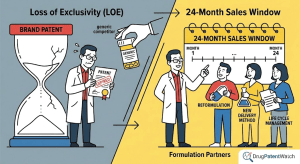
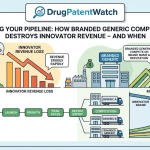
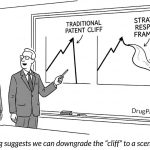
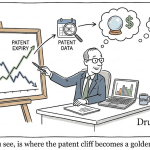
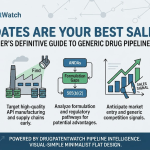
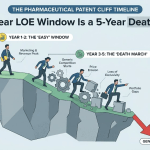
The contemporary pharmaceutical landscape is defined by a paradigm shift in lifecycle management (LCM), moving beyond traditional defensive tactics toward a holistic, forward-looking discipline designed to maximize the therapeutic and commercial value of assets throughout their entire lifespan.1 For formulation vendors and contract development and manufacturing organizations (CDMOs), the most fertile ground for business development lies in the pre-loss of exclusivity (LOE) window, typically beginning three to five years before a primary patent expires.2 During this critical juncture, innovator companies seek to transition from a “patent cliff”—characterized by the immediate loss of up to 80% of revenue—to a “controlled descent” or a “patent slope”.1 Fixed-dose combinations (FDCs) represent the premier vehicle for this transition, offering a mechanism to create new intellectual property (IP), improve patient outcomes, and defend market share against the impending wave of generic or biosimilar competition.3
The Economic Imperative and the Rise of Lifecycle Compression
The strategic urgency underlying FDC development is magnified by a powerful market force known as lifecycle compression. Research indicates that the time required for a new drug to achieve 50% of its lifetime sales has contracted by approximately 18 to 24 months since the year 2000.2 This compression forces pharmaceutical firms to initiate late-stage LCM planning much earlier than in previous decades. The goal is to maximize every ounce of value from a drug while ensuring it continues to meet patient needs in a more efficient manner.2
For formulation vendors, this represents a massive opportunity to serve as strategic architects. The market for oral solid dosage (OSD) manufacturing in the United States alone is projected to reach $23.99 billion by 2033, growing at a compound annual growth rate (CAGR) of 8.63%.5 This growth is largely driven by the increasing complexity of drug formulations and the demand for specialized delivery systems that can differentiate a brand-name product from its eventual generic equivalents.5
Comparative Dynamics of Loss of Exclusivity (LOE)
The impact of LOE varies significantly between small molecule drugs and biologics, which dictates the type of FDC or reformulation strategy a vendor should propose.
Feature
Small Molecule Drug
Biologic / Large Molecule
Market Erosion Profile
Precipitous “Patent Cliff” 1
Gradual “Patent Slope” 1
Primary Generic Threat
505(j) Bioequivalent Copies 4
351(k) Biosimilar Entrants 1
Erosion Speed
Can exceed 80% revenue loss in weeks 1
Slower due to manufacturing complexity 1
Strategic Focus
505(b)(2) FDC Reformulation 4
Real-world evidence / Brand equity 1
LCM Window
Begins 3-5 years pre-LOE 2
Ongoing throughout commercialization 1
For small molecules, the battle is often a legal and regulatory war fought before the patent expires, as the commercial fight is largely lost on day one of generic entry.1 Biologics allow for a more nuanced post-LOE commercial battle where originators can leverage trust, established patient support programs, and subtle perceived differences between their product and new biosimilars.1
The 505(b)(2) Regulatory Pathway: The Strategic Escape Hatch
The primary regulatory vehicle for FDC reformulation is the 505(b)(2) pathway, which lies strategically between a full New Drug Application (NDA) and an Abbreviated New Drug Application (ANDA).7 While an ANDA requires strict “sameness”—the identical active ingredient, dosage form, and strength—the 505(b)(2) pathway allows for innovation and differentiation on existing molecules.4 This pathway is often described as the strategic escape hatch from the commoditization trap, allowing manufacturers to break free from price-based competition and create products defended on value.4
Regulatory Categories and Exclusivity Incentives
The FDA provides specific periods of market exclusivity for innovations filed under 505(b)(2), which are critical for formulation vendors to understand when pitching to clients.
Exclusivity Type
Duration
Requirement
New Chemical Entity (NCE)
5 Years
Molecule never before approved 9
New Clinical Investigation
3 Years
New studies essential for approval (e.g., FDC) 9
Orphan Drug Designation
7 Years
Rare disease target (<200,000 patients) 9
Pediatric Exclusivity
6 Months
Added to existing patents or exclusivities 2
The 505(b)(2) pathway permits the FDA to rely on existing safety and efficacy data from a Reference Listed Drug (RLD), significantly reducing development costs and timelines compared to a 505(b)(1) application.8 For a formulation vendor, the value proposition is clear: accelerated approval with a lower risk profile, as 99% of FDCs approved in the last 20 years include at least one previously approved active pharmaceutical ingredient (API).11
Identifying High-Value FDC Candidates: A Multi-Disciplinary Framework
Business development professionals at formulation companies must act as intelligence analysts, identifying candidates where a reformulation can solve a demonstrable “clinical pain point”.4 This process begins with an honest, 360-degree analysis of the market landscape, mapping product portfolios, dissecting pricing strategies, and reverse-engineering R&D pipelines.2
The Four Pillars of Feasibility Assessment
Before committing significant capital, a candidate must be vetted across four domains: scientific, medical, regulatory, and commercial viability.4
Scientific Viability: The chemistry must be robust. This involves assessing the physical and chemical compatibility between two or more APIs, evaluating potential drug-drug interactions, and ensuring the stability of the final dosage form.4
Medical Viability: The product must address an unmet need. For example, if a widely used drug causes gastrointestinal upset, a vendor might propose a controlled-release FDC that mitigates this side effect.4
Regulatory Viability: This requires a detailed “bridging strategy” to determine which external studies the applicant can rely on and what new data must be generated to satisfy the FDA’s requirements for safety and efficacy.4
Commercial Viability: The product must secure insurance coverage and achieve brand-like pricing. Vendors must evaluate whether payers will accept a premium for the convenience of an FDC over the “loose combination” of individual pills.3
Utilizing Patent Intelligence
Tools like DrugPatentWatch and Clarivate’s Cortellis are indispensable for identifying “white space” opportunities in therapeutic areas with limited patent activity.2 By analyzing the types of patents being filed—such as a flurry of formulation patents versus method-of-use patents—a vendor can decode a competitor’s LCM strategy years in advance.2 This allows a vendor to propose a preemptive formulation response, such as a superior extended-release version, before the innovator launches their own line extension.2
Therapeutic Area Dynamics: Oncology, Cardiovascular, and Rare Diseases
The demand for FDCs is particularly high in therapeutic areas characterized by chronic management and complex polypharmacy.
Oncology: The Shift to Fixed-Dose Combinations
The global oncology market is on track to nearly triple in value, reaching $748.17 billion by 2035.15 Historically, oncology treatments involved “loose” combinations of separate therapies. However, recent years have seen the launch of significant FDCs like Phesgo (trastuzumab and pertuzumab) and Opdualag (nivolumab and relatlimab).3 These represent a major shift in clinical approach, providing two separate therapies in a single dosage form to improve patient convenience and reduce hospital burden.3
Specialized CDMO support is essential for oncology due to the need for handling high-potency active pharmaceutical ingredients (HPAPIs) and developing complex dosage forms like liposomes and nanoparticles.6 CDMOs that offer isolators, containment systems, and cleanroom environments for sterile injectables have a significant competitive advantage in this high-growth sector.6
Cardiovascular and Infectious Diseases: Adherence as a Clinical Endpoint
In therapeutic areas like hypertension, diabetes, and infectious diseases (HIV, TB), FDCs are primarily valued for improving patient adherence.16 Studies estimate that medication non-compliance costs the US healthcare system between $100 billion and $289 billion annually.11 By reducing the “pill burden”—sometimes combining up to five ingredients into one dose—FDCs ensure better virological suppression and lower therapeutic resistance.11
Disease Area
Strategic Benefit of FDC
Primary Advantage
Hypertension
Combined ACE inhibitors + Diuretics
Simplified titration, better blood pressure control 17
HIV/Tuberculosis
Multi-drug regimens in one pill
Prevents development of drug resistance 16
Diabetes
Metformin + SGLT2 or DPP-4 inhibitors
Improved compliance in multi-comorbid patients 3
Pain Management
Opioids + Antagonists
Effective relief with reduced risk of addiction 13
Rare Diseases and Orphan Drugs: Small-Batch Specialization
The orphan drug market, where biologicals command a 65.8% share, presents a unique opportunity for CDMOs capable of flexible, small-batch manufacturing.10 Because patient populations are small and quantity per dose is often low, process development can tolerate more risk, but the manufacturing infrastructure must be agile and adaptable to unique requirements.18 CDMOs that can scale seamlessly from clinical batches to commercial volumes are highly sought after by biotech startups that lack internal manufacturing capabilities.18
Pricing and Market Access (P&MA): The “Rules of Thumb”
Payer perception is the ultimate gatekeeper for FDC commercial success. For “mono:mono” FDCs—where both components were previously marketed as separate therapies—pricing is typically determined relative to the sum of the mono-components.3
The 1+1 = 1.6 Pricing Model
Analysis of P&MA outcomes shows that for most mono:mono FDCs, while “1+1 = 2” pricing is theoretically possible, it is not the norm. Instead, the average price achieved is “1+1 = 1.6,” which equates to a approximately 20% discount versus the sum of the individual monotherapies.3
Scenario
P&MA Outcome
Pricing Logic
Mono:Mono FDC
1 + 1 = 1.6
~20% discount for convenience 3
Genericized Component
1 + 0.01 = 1.01
Price anchored to the non-genericized brand 3
Novel Clinical Benefit
1 + 1 > 2
Significant premium (e.g., Vyxeos at 300%+) 3
Biosimilar FDC
Bioequivalence accepted
Access typically similar to mono-components 3
Exceptional cases exist where FDCs are reimbursed at a cost equivalent to or greater than the sum of the mono-components (1+1 ≥ 2). These cases are rare and contingent on the FDC demonstrating a “meaningful clinical or cost benefit” over the loose regimen.3 For example, Vyxeos, a liposomal formulation of two chemotherapy agents, was priced at a substantial premium (319% to 2900% vs. the loose regimen) because it demonstrated a median overall survival of 9.6 months versus 5.9 months.3
The CDMO Value Proposition: Infrastructure and Expertise
For pharmaceutical companies, outsourcing FDC formulation and manufacturing to a CDMO reduces capital (capex) and operating (opex) expenses while mitigating the risks associated with complex dosage forms.13 Partnering with a CDMO like Pfizer CentreOne or Cambrex provides access to specialized infrastructure and advanced technology that many developers lack.11
Core Processing and Enabling Technologies
FDC development often requires sophisticated technologies to manage differing target release profiles and chemical incompatibilities.
Granulation Technologies: Both wet and dry granulation are utilized to create stable multi-component OSD forms.11
Amorphous Solid Dispersions: Technologies like spray drying and hot-melt extrusion are used to improve the solubility and bioavailability of poorly soluble APIs.5
Multiple-Unit Particulate Systems (MUPS): Using spheronization to create pellets that can be individually coated to manage pharmacokinetic requirements.11
Advanced Tableting: Bi-layer or tri-layer tablets allow for the separation of incompatible APIs or the creation of staged-release profiles.5
3D Printing: Companies like Laxxon Medical and Adare Pharma Solutions are utilizing cGMP 3D printing to create complex, customizable formulations with enhanced bioavailability.5
Recent Infrastructure Investments
Major CDMOs are aggressively expanding their OSD and FDC capabilities to capture market share:
Piramal Pharma Solutions: Inaugurated a dedicated OSD suite in Pennsylvania in 2025 specifically to support FDC production, utilizing advanced granulation and coating capabilities.5
Thermo Fisher Scientific (Patheon): Invested $22 million in 2024 to expand early-stage R&D and formulation testing in Cincinnati and Oregon.5
Ardena: Acquired Catalent’s FDA-approved facility in Somerset, New Jersey, in 2024 to strengthen its OSD manufacturing and bioanalytical services.5
Business Development Tactics for Formulation Vendors
Business development in the CDMO sector requires a move from transactional selling to a partnership-driven approach. The goal is to engage a partner while they are still in the preclinical phase, before they have “poured the concrete” on a synthesis process that becomes difficult and expensive to change later.21
The Rationale for Early CDMO Partnership
Early engagement allows a biotech to leverage a CDMO’s deep knowledge base of catalysis options and process optimization.21 For example, more than 50% of therapeutic drugs are chiral. A CDMO can create an asymmetric synthesis that produces only the desired enantiomer, eliminating the risk of adverse effects from a non-therapeutic enantiomer and cutting raw material costs in half.21 Furthermore, CDMOs can replace expensive catalysts like palladium or platinum with cheaper alternatives before a process is locked in for Phase III trials, potentially saving millions of dollars.21
The Pharmaceutical Pitch: Storytelling and Impact
When pitching to investors or partners, formulation vendors must recognize that they are not just presenting a service, but a “life-changing solution”.22 A successful pitch deck should follow a clear narrative structure:
Define the Real Problem: Focus on the human impact and the consequences of the current therapeutic failure (e.g., patient non-adherence).22
Introduce the Hero: Position the innovative formulation as the uniquely qualified solution.22
Provide Resolution: Paint a future where this treatment is integrated into the healthcare system, highlighting benefits for patients, providers, and investors.22
Strategic Data Presentation: Avoid overwhelming the audience with technical jargon; distill clinical trials and efficacy rates into essential points that support the core narrative.22
Operationalizing Business Development: Intelligence and Lead Generation
Modern business development teams are increasingly data-intensive, relying on integrated platforms to navigate fragmented information sources.23
Leveraging Clinical and Competitive Intelligence
Platforms like Cortellis integrate billions of curated data points—including patents, clinical trials, and regulatory filings—to accelerate R&D decision-making.23 BD professionals use these tools for:
Lead Generation: Identifying “development-stage biotechs lacking internal formulation expertise”.24
Market Analysis: Understanding the competitive landscape and forecasting drug phase shifts and success probabilities.14
Deal Intelligence: Benchmarking comparable deal terms and unredacted contracts to perform thorough due diligence.25
Regulatory Support: Using AI-powered assistants to interpret complex global requirements and draft dossiers.23
A targeted outreach strategy is often more effective than inbound marketing. For example, a Canadian CDMO focused on non-sterile liquid and topical forms successfully booked seven qualified meetings with decision-makers in 12 weeks by launching personalized campaigns targeting companies developing topical or nasal products.24
The Legal and Ethical Boundaries of FDC Lifecycle Management
While FDC reformulation is a standard industry practice, it is not without legal risks. The strategy of “product hopping”—transitioning patients to a new formulation just as the old one loses exclusivity—can be scrutinized as anticompetitive behavior.27
Hard vs. Soft Switches
A “hard switch” involves withdrawing the older product from the market, effectively forcing patients and physicians to use the new formulation. This tactic was at the heart of the litigation against Forest Laboratories (a subsidiary of Actavis) regarding the drug Namenda.27 The New York State Attorney General’s Office initiated litigation, arguing that forcing patients to switch to Namenda XR before generic entry was an anticompetitive use of product lifecycle management.27 In contrast, a “soft switch” allows the brand to remain on the market alongside the new formulation, with the company using marketing and rebates to encourage patients to transition based on the new product’s clinical benefits.27
Patent Thickets and “Evergreening”
Innovator companies often build “patent thickets”—a complex web of multiple patents around a single drug to delay generic entry.1 While these thickets are a cornerstone of LCM, they can be challenged by first-to-file generic companies seeking the “180-day exclusivity” bounty offered to the first firm that successfully invalidates a patent.28 Formulation vendors play a critical role in strengthening these thickets by developing truly innovative, non-obvious delivery mechanisms that are defensible under rigorous legal examination.2
Analytical Challenges in FDC Development
The development of FDCs presents unique technical hurdles that require high-level analytical expertise. One of the most significant challenges is the development of a single dissolution method to assess the in-vitro release rate of multiple components in a single dosage form.12
Dissolution Method Complexity
Achieving a single dissolution method is desirable for analytical efficiency and cost savings but is often difficult due to differences in:
Physicochemical Properties: Differing solubilities and pKa values of the APIs.12
Dose Variations: Managing the analytical sensitivity required when one API is present in high doses while another is in low doses.12
Release Mechanisms: Combining an immediate-release component with a controlled-release component requires a robust discriminating method.12
Drug-Drug Interactions: Evaluating how the presence of two or more drugs affects the dissolution performance of each other in a combination product.12
CDMOs often utilize Ultra-High Pressure Liquid Chromatography (UPLC) to effectively separate actives and related substances, reducing the time and cost for generating quality control (QC) results.13
Conclusion: The Strategic Future of Formulation Vendors
The market for fixed-dose combination reformulation pre-LOE is a multi-billion dollar opportunity that requires formulation vendors to evolve from manufacturers into strategic partners. By integrating market intelligence, regulatory foresight, and advanced manufacturing technologies, vendors can help innovator companies navigate the “patent cliff” and extend the therapeutic impact of their molecules. Success in this field is not merely a matter of chemical synthesis but of clinical relevance and commercial viability. As the pharmaceutical industry continues to face lifecycle compression and rising R&D costs, the role of the formulation vendor in orchestrating these complex “second acts” will only become more central to global healthcare innovation.
Business development professionals who can master the “4 Pillars of Feasibility” and articulate a compelling “Story of Impact” will be the ones to capture the high-margin, long-term partnerships that define the next generation of pharmaceutical excellence. The shift toward specialized treatments in oncology and rare diseases, combined with the streamlining power of the 505(b)(2) pathway, ensures that the FDC market will remain a cornerstone of pharmaceutical value creation for the foreseeable future.