For pharma IP teams, portfolio managers, R&D leads, and institutional investors who need more than headline growth figures.
Executive Summary
Latin America’s pharmaceutical market has crossed a threshold that most forecasters underestimated. The region is not simply growing; it is being structurally reoriented around two converging imperatives: the clinical need for high-complexity specialty therapies to treat a rising burden of chronic disease, and the fiscal need to replace branded specialty drugs with affordable, equivalent alternatives before public health budgets collapse under the weight of biologics and oncologics.
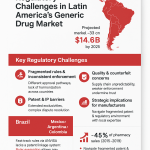
The combined Latin America and Caribbean pharmaceutical market sits at approximately USD 197 billion in 2025. The specialty generics segment within it, currently anchored by complex injectables and off-patent small-molecule oncologics, will roughly double in most Big Four markets before 2030. The biosimilar sub-segment alone represents an addressable opportunity estimated at USD 3.9 billion by 2025, of which a substantial fraction remains uncaptured.
This pillar page treats the specialty generics opportunity not as a single trade but as a portfolio of country-specific bets, each governed by a distinct IP framework, regulatory doctrine, manufacturing requirement, and competitive dynamic. The analytical framework runs from macro demand drivers through molecular-level patent expiry analysis to country-by-country regulatory arbitrage, competitive profiling, and an IP asset valuation methodology that portfolio managers can apply directly to due diligence workflows.
The core finding: complexity is the moat. The regulatory fragmentation, GMP inspection burdens, patent linkage litigation, and physician trust deficits that deter underprepared entrants are, for a well-capitalized and data-driven operator, the most durable sources of pricing power and market exclusivity in the region.
Key Takeaways: Executive Summary
The LatAm specialty generics market is not a single trade; it is a portfolio of country-specific IP, regulatory, and commercial bets requiring differentiated strategies.
Brazil’s ANVISA GMP inspection requirement is the single longest lead-time item in the region. Budget 18-24 months from initial contact to certificate issuance for complex sterile manufacturing sites.
Mexico’s Linkage Gazette patent system makes pre-launch Paragraph IV-equivalent litigation a required line item in any Mexico commercialization budget, not an optional contingency.
Colombia’s five-year data exclusivity period, not patent expiry, determines the actual go-to-market clock for new specialty molecules.
Argentina’s Gador has demonstrated that a domestic firm can launch a clinically and technically credible generic of one of the world’s most complex specialty biologics (nusinersen/Spinraza) outside of Russia, setting a competitive ceiling for multinational entrants to reckon with.
Regulatory reliance on FDA/EMA dossiers is now codified in multiple LatAm markets, making the first-filing jurisdiction decision a strategic, multi-market call, not a bilateral one.
Biosimilar interchangeability policy remains inconsistent across the region. Until national pharmacovigilance frameworks mature, automatic substitution at the pharmacy level will remain blocked in most markets, preserving a commercial execution moat for established first-movers.
Why This Market, Why Now: The Structural Case for Specialty Generics in LatAm
The Growth Arithmetic
The aggregate LatAm pharma market is projected to grow at a 9.7% CAGR through 2026 by some analysts, with other methodologies converging on a 5.4% CAGR to approximately USD 102.2 billion by 2030 for the formal market. The delta between these projections reflects definitional disagreements about what counts as ‘pharmaceutical spending’ across heterogeneous public and private payer systems. Both trajectories, however, point the same direction: outperformance relative to North America and Western Europe.
Within the overall market, the fastest-growing segment is biologics and biosimilars. That is not incidental. Biologic drugs, which account for a disproportionate share of specialty drug spend, are entering a patent expiry super-cycle globally. Between 2025 and 2032, biologics with combined global sales exceeding USD 300 billion face loss of exclusivity. Latin America will not capture all of that opportunity, but even a modest conversion rate produces a biosimilar addressable market with no historical precedent in the region.
The specialty generics story in LatAm runs on two parallel tracks. Track one covers complex small-molecule generics: modified-release oncologics, narrow-therapeutic-index (NTI) drugs, complex inhalation products, and transdermal systems where formulation IP, not just the active pharmaceutical ingredient, is the competitive variable. Track two covers biosimilars: monoclonal antibodies, fusion proteins, peptide hormones, and recombinant cytokines where the manufacturing process itself is, in the regulatory and commercial sense, the product.
Both tracks converge on the same structural reality: payers need cost relief, and the patent clocks on the drugs generating the most expenditure are running out.
The Fiscal Unsustainability Problem
Brazil’s federal government spends approximately BRL 15 billion annually through the Componente Especializado da Assistência Farmacêutica (CEAF) program to provide high-cost specialty medicines to the public. A meaningful share of that budget goes to a small number of branded biologics for conditions including rheumatoid arthritis, multiple sclerosis, and rare diseases. The math is not sustainable at current brand-name pricing. Every percentage point of biosimilar penetration in the top 10 CEAF molecules translates to hundreds of millions of reais in annual savings available for redeployment to other health priorities.
Mexico’s public procurement through IMSS (Instituto Mexicano del Seguro Social) and ISSSTE faces a structurally identical problem. The government has periodically invoked compulsory licensing provisions and executed consolidated purchasing through UNOPS specifically to compress prices on high-cost specialty drugs. The political will to expand the specialty generic and biosimilar supply base is not rhetorical; it is backed by procurement data.
This fiscal pressure is not a temporary cyclical phenomenon driven by any particular administration. It reflects a structural collision between an aging population with rising complex-disease prevalence, a growing middle class that demands access to globally standard therapies, and a public budget that cannot indefinitely absorb originator biologic pricing without crowding out everything else in the health system.
The Macro Engine: Demographics, Epidemiology, and the Cost-Access Collision
Demographic Trajectory Through 2040
Latin America’s population exceeded 650 million in 2024. The cohort aged 65 and over is projected to double within three decades, shifting from approximately 9% of the population today to roughly 18% by 2050. That cohort disproportionately carries chronic disease burden.
The epidemiological transition is already visible in mortality data. Cardiovascular diseases account for approximately 17.9 million deaths globally per year. Cancer accounts for roughly 9.3 million. Latin America contributes substantially to both figures, and its share is rising as urbanization, dietary shifts, and reduced physical activity drive non-communicable disease (NCD) incidence higher. Rheumatoid arthritis, type 2 diabetes, oncological malignancies, and autoimmune conditions collectively represent the therapeutic categories where specialty drug spending is heaviest and where the specialty generic pipeline offers the greatest relief.
The Middle-Class Demand Amplifier
Latin America’s expanding middle class has a healthcare expectation profile that increasingly mirrors that of middle-income cohorts in Southern Europe and Southeast Asia. Patients and their families are better informed, more likely to seek specialist care, and more willing to pay out-of-pocket for therapies they trust. That last phrase, ‘therapies they trust,’ is the commercial crux of the specialty generics challenge in the region. The demand for advanced therapies is real. The acceptance of non-originator versions of those therapies depends entirely on trust architecture: trust in the regulatory process that certified equivalence, trust in the manufacturer’s quality systems, and trust communicated by the prescribing physician.
This is why physician education and medical affairs investment are not optional line items in a LatAm specialty generic commercialization budget. They are the product.
Patent Expiry Pipelines Feeding the LatAm Specialty Generic Wave
The Global Biologics Patent Cliff, 2025-2032
The global biologics patent cliff has been analyzed extensively in the North American and European contexts, but its implications for Latin America are underappreciated. The molecules entering their expiry windows between 2025 and 2032 include some of the highest-revenue specialty drugs ever commercialized: adalimumab, bevacizumab, trastuzumab, natalizumab, ustekinumab, and a cohort of recombinant hormone and cytokine products. Most of these have already had biosimilars launched in the US or EU. Latin America, with its own patent term structures and data exclusivity periods, operates on a partially different clock.
How LatAm Patent Terms Deviate from US/EU Timelines
Patent terms in most LatAm countries nominally run 20 years from filing date, consistent with TRIPS Article 33. However, the effective market exclusivity period diverges from the US and EU for several structural reasons. Patent term extensions (PTEs) equivalent to the US Hatch-Waxman restoration mechanism are either absent or limited in most LatAm jurisdictions. Supplementary protection certificates (SPCs) as used in the EU do not exist in the region. This means the effective patent cliff in LatAm often arrives earlier than the equivalent expiry in the US, creating windows where a biosimilar or specialty generic can launch in Brazil or Argentina before it can legally do so in the United States.
Conversely, evergreening through secondary patent filings covering new formulations, new dosing regimens, new salt forms, or new delivery systems is practiced by originator companies across the region. Mexico’s Linkage Gazette amplifies this tactic because secondary patent listings create a legal blockade at the COFEPRIS level regardless of whether the secondary patent would survive a validity challenge. The originator’s strategic incentive is not necessarily to win the litigation, but to delay the generic launch long enough to exhaust the commercial window.
Key Molecules with Near-Term LatAm Expiry Events
The following categories are high priority for specialty generic and biosimilar pipeline development targeting LatAm markets, based on patent term analysis and public procurement spend data:
Oncology biologics (monoclonal antibodies targeting HER2, VEGF, EGFR, and CD20) represent the highest-value biosimilar opportunity, with multiple molecules having core patents already expired or within 24 months of expiry across Brazil, Mexico, Argentina, and Colombia. Autoimmune biologics, particularly anti-TNF agents, have a more complex secondary patent landscape but represent large public procurement spend targets. Neurological specialty drugs, including natalizumab for multiple sclerosis and nusinersen for spinal muscular atrophy (SMA), have already seen first-mover generic launches in Argentina (Gador’s nusinersen generic, Ligonux) and represent a template for others.
Small-molecule specialty generics with near-term LatAm opportunity include narrow-therapeutic-index immunosuppressants (tacrolimus, cyclosporine), oncology orals (imatinib generics, which have already launched in several markets but where quality differentiation remains commercially relevant), and modified-release formulations in CNS and cardiovascular indications.
IP Valuation: Specialty Generic Asset Appraisal Methodology
For portfolio managers and business development teams appraising a specialty generic asset’s value in a LatAm context, a simple NPV model is insufficient. The following framework captures the primary value drivers and risk adjusters specific to this region.
The base revenue model requires country-by-country market sizing using IMS/IQVIA public procurement tender data and private market consumption data for the reference molecule, then applying a generic penetration rate assumption calibrated to: (a) whether substitution policy supports pharmacy-level generic dispensing or requires physician prescribing, (b) the number of competing generic entrants expected within 24 months of patent expiry, and (c) the payer reimbursement structure.
The IP risk multiplier must account for four variables that are distinct from a standard US Paragraph IV analysis. First, the existence and strength of secondary patent families filed in each specific country, not the US equivalent. A molecule may have clean IP in Brazil but a thicket of secondary patents in Mexico’s Linkage Gazette. Second, the originator’s litigation history specifically in LatAm jurisdictions, not global behavior. Third, data exclusivity expiry dates, which in Colombia and several other markets may extend beyond the primary patent term. Fourth, any regulatory data protection granted to the reference product at the national level, which can function as a non-patent exclusivity period independent of IP status.
The regulatory timing model must use country-specific historical review time distributions, not global averages. ANVISA’s review clock for a new biosimilar under RDC No. 875, from dossier acceptance to approval, has historically run 18-36 months. COFEPRIS reviews for products with an existing FDA or EMA approval under the reliance pathway can be compressed to 12-18 months in favorable cases, but patent linkage litigation can extend effective market exclusivity regardless of regulatory approval timing. INVIMA in Colombia has active backlog reduction programs but variable throughput.
The manufacturing cost and capability risk adjustment requires an assessment of whether the company’s existing GMP-certified manufacturing sites can supply the LatAm markets, and specifically whether the site has or can obtain ANVISA GMP certification. This is not a binary variable. The cost of an ANVISA inspection, the remediation costs if deficiencies are found, and the opportunity cost of delayed market entry should all be quantified and discounted back into the asset’s NPV.
Country Deep-Dives: Brazil, Mexico, Argentina, Colombia
Brazil: Scale, ANVISA, and the GMP Inspection Bottleneck
Market Sizing and Segment Structure
Brazil’s specialty generics market stood at approximately USD 1.9 billion in 2021. Projections place it at USD 4.2 billion by 2030, representing a 9.3% CAGR driven primarily by the injectable segment, which accounted for more than 60% of specialty generic revenue in 2021 and continues to grow fastest. The overall pharmaceutical market reached USD 17.08 billion in sales in 2021, making Brazil one of the ten largest pharmaceutical markets globally by sales volume.
The public sector is a dominant buyer. CEAF, Brazil’s specialized component of pharmaceutical assistance, governs high-cost drug procurement at the federal level, while states have varying degrees of supplementary procurement. Public tender experience and a track record with Brazil’s Ministry of Health procurement processes are not just commercial assets; they are prerequisites for meaningful market participation in several specialty categories.
ANVISA: Technical Architecture of the Regulatory Framework
ANVISA, established under Law 9.782/1999, operates with an explicit mandate of sanitary control over production and commercialization. Its approach to regulatory science is methodologically sophisticated. Regulatory Impact Analysis (RIA) is embedded in the agency’s process for new regulatory instruments, meaning rule changes go through formal cost-benefit modeling before adoption. This produces a more internally consistent and predictable regulatory environment than many peer LatAm agencies, but it also means regulatory updates are slower and more deliberate.
For specialty generic and biosimilar manufacturers, three elements of ANVISA’s framework have direct commercial impact.
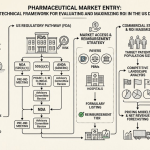
The first is the GMP inspection requirement. Unlike COFEPRIS in Mexico, which accepts third-party GMP certifications from FDA, EMA, and other recognized authorities, ANVISA conducts its own on-site inspections. For a foreign manufacturer seeking Brazil market access, this means scheduling an ANVISA inspection team visit, which can involve a queue of 12-24 months from initial request. The inspection itself assesses the site against Brazilian RDC standards, which are harmonized with but not identical to ICH Q7/Q10/Q11. Deficiency findings require corrective and preventive action (CAPA) plans, with re-inspection possible for critical findings. The all-in timeline from initial inspection request to certificate issuance, including a remediation cycle, realistically runs 18-30 months for complex sterile manufacturing sites.
The second is the new Reliance Regulatory Framework, approved in March 2024. This policy allows ANVISA to accept and rely upon marketing authorizations from recognized foreign regulatory authorities, specifically the FDA, EMA, Health Canada, and a small number of other agencies designated as high-surveillance regulators. Critically, reliance under this framework does not mean ANVISA simply rubber-stamps the foreign approval. The applicant must submit a complete Brazilian registration dossier that maps the foreign data package to Brazilian regulatory requirements, provides labeling translated and adapted to Brazilian specifics, and demonstrates GMP compliance through Brazilian channels. The GMP certification requirement, notably, is not waived under the reliance framework. What reliance reduces is the need to generate entirely new efficacy and safety data for the Brazilian market. The technical review of the clinical and non-clinical data package can reference the foreign authority’s assessment, compressing that portion of the review timeline.
The third is RDC No. 875, issued in May 2024, which governs biosimilar registration specifically. This regulation codifies a three-step comparability exercise: analytical characterization establishing physicochemical and functional similarity to the reference biologic; non-clinical studies covering pharmacodynamic and, where warranted, toxicological comparability; and clinical comparative studies including pharmacokinetic/pharmacodynamic assessments and at least one confirmatory clinical study in a sensitive indication. The regulation aligns broadly with EMA and FDA biosimilar guidance but has Brazil-specific requirements around reference product sourcing (the reference must be the Brazilian-approved version in clinical studies where practicable) and post-authorization pharmacovigilance commitments.
IP Landscape in Brazil
Brazil has a complex and, for generic manufacturers, generally favorable IP environment. The primary mechanism of note is Article 229-C of Law 9.279/1996, which required ANVISA’s prior consent (‘anuência prévia’) before INPI (Brazil’s patent office) could grant patents for pharmaceutical products and processes. This provision, frequently challenged by the originator industry, functioned for years as a second-layer review that resulted in refusals or narrowing of claims for a number of pharmaceutical patents. Legislative and judicial developments have modified this framework over time, so real-time patent status verification is essential.
Brazil does not have a patent linkage mechanism equivalent to Mexico’s Linkage Gazette. ANVISA approval is not formally gated by INPI patent status. The generic manufacturer bears the responsibility for ensuring it does not infringe valid patents, but ANVISA does not run a patent clearance check as a condition of approval. This structural difference has significant commercial implications: a generic or biosimilar can receive ANVISA marketing authorization and enter the market subject to the risk of a patent infringement lawsuit, rather than being pre-emptively blocked from approval. The litigation risk is real, but the asymmetry is favorable to generic entrants compared to the Mexico model.
Competitive Landscape
The Brazilian market’s domestic industry is concentrated among four major groups that together account for a substantial share of the generic and branded-generic market. Eurofarma, privately held, has the broadest international footprint of the Brazilian players, with operations across 20 countries in LatAm and partnerships in Africa. It launched Fiprima (filgrastim biosimilar) in 2015 as the first biosimilar in Latin America, demonstrating early commitment to the complex biologic segment. EMS, part of Grupo NC, claims a significant share of the domestic prescription and OTC market, with a manufacturing base that supports both domestic supply and export. Aché has a pipeline of 193 development projects, including novel drug candidates derived from Brazilian biodiversity. Hypera Pharma, publicly listed on B3, has pursued an aggressive acquisition strategy and has deep distribution penetration through its sales force.
For multinational entrants, direct competition with these players across the full branded-generic portfolio is structurally disadvantaged. Their distribution density, physician relationships, and brand equity took decades to build. The viable entry strategy for most multinationals targets the highest-complexity segment of the market, specifically biosimilars and injectable specialty generics, where manufacturing capability is the primary differentiator and where the local players’ advantages in distribution and brand loyalty are partially offset by the technical barriers to entry.
Key Takeaways: Brazil
ANVISA GMP inspection scheduling is the rate-limiting step for foreign manufacturers. Any company not already in the ANVISA queue for its manufacturing site should treat this as the immediate first action item. The March 2024 reliance framework is a genuine efficiency tool for companies with existing FDA or EMA approvals, but it does not bypass GMP requirements. The new RDC No. 875 biosimilar regulation creates clarity but imposes a rigorous comparability exercise that requires full Phase III clinical data in at least one indication. Brazil’s lack of patent linkage is a structural advantage for generic entrants relative to Mexico: approval and litigation are decoupled. The ANVISA approval, once obtained, carries regional credibility that can accelerate submissions in smaller LatAm markets.
Investment Strategy: Brazil
For institutional investors, the Brazilian specialty generics market rewards a long-duration capital allocation model. The regulatory entry cost is high and the timeline is long, but the payoff is access to the region’s largest market with a defensible position protected by the same barriers that delayed entry. The highest-conviction asset class within Brazilian specialty generics is biosimilars targeting CEAF-listed biologics, where public procurement provides contracted volume and where price erosion is more gradual than in the US because the number of competing biosimilars per molecule is lower. Companies with existing ANVISA GMP certification on complex sterile manufacturing sites trade at a structural premium in this market.
Mexico: Patent Linkage, Nearshoring, and the Legal Campaign Model
Market Sizing and Segment Structure
Mexico’s generic drug market was valued at USD 7.4 billion in 2024. The specialty generics sub-segment is projected to grow at 10.4% CAGR to reach nearly USD 2.5 billion by 2030. Complex injectables dominate, consistent with the broader LatAm specialty generic pattern. The market has a strong preference for branded generics over unbranded commodity generics, a cultural dynamic rooted in physician prescribing habits and patient familiarity with trade names.
Public sector procurement runs primarily through IMSS, ISSSTE, and INSABI (now IMSS-Bienestar). These institutions historically procure through consolidated national tenders, which in recent years have been managed through UNOPS under a government initiative to reduce costs and address supply shortages. The consolidation of procurement has, paradoxically, created both opportunity and risk for generic manufacturers. Opportunity, because the consolidated tender process is theoretically more price-transparent and accessible to qualified suppliers. Risk, because supply chain execution failures at the national level are highly visible and have resulted in public controversies that damaged both government credibility and supplier reputations.
COFEPRIS: Regulatory Framework and Harmonization
COFEPRIS operates under the Ley General de Salud and its implementing regulations. Mexico’s membership in ICH and PIC/S reflects a genuine institutional commitment to international harmonization that has practical consequences for generic manufacturers. A GMP certificate from FDA’s CDER, EMA’s authorized inspectorates, or equivalent PIC/S member authorities is accepted by COFEPRIS as evidence of manufacturing compliance. This reliance on third-party GMP certifications is the single greatest regulatory efficiency advantage Mexico holds over Brazil for foreign manufacturers with existing FDA or EMA approvals.
For bioequivalence requirements, COFEPRIS follows guidance aligned with ICH M9 for BCS-based biowaivers and has established a national bioequivalence testing infrastructure. For complex products, COFEPRIS has issued specific guidance on equivalence study design for modified-release formulations, inhalation products, and parenteral products. The overall regulatory science framework, while still maturing compared to FDA and EMA, is credible and increasingly consistent.
The Linkage Gazette: Mexico’s Patent Blockade Mechanism
The patent linkage system under Article 47 bis of the Ley de la Propiedad Industrial, and its implementing regulations, requires COFEPRIS to consult IMPI’s Linkage Gazette before granting a generic marketing authorization for any product where a linked patent is in force. The originator company can list patents in the gazette covering the drug substance, specific formulations, methods of use, and dosage forms. COFEPRIS is legally barred from issuing the generic authorization while a valid, listed patent is in force.
The system’s structural flaw from a competition policy perspective is that patent listing in the Gazette is initiated by the patent holder with minimal independent review at the listing stage. An invalid, overbroad, or improperly listed patent can block a generic authorization for years until successfully challenged through IMPI’s administrative invalidation process or through Mexican federal court litigation. The originator’s incentive to list every applicable and arguably applicable patent is strong, because each listing extends the blockade and shifts the burden and cost of challenge to the generic applicant.
For a specialty generic manufacturer, the practical workflow in Mexico must include a pre-filing Gazette clearance analysis, identification of all listed patents, an assessment of each patent’s validity and relevance based on Mexican patent law standards (which differ from US standards in claim interpretation and obviousness doctrine), and a strategic decision about whether to file for authorization and simultaneously challenge blocking patents, or to delay filing until specific patents expire or are invalidated by other challengers.
This is where patent intelligence from a platform like DrugPatentWatch that tracks Mexican Gazette listings alongside US and European patent families becomes operationally critical. A secondary formulation patent listed in Mexico that has already been invalidated by a European court, or that was rejected by the EPO for lack of inventive step, provides a factual basis for an IMPI invalidation proceeding. Without systematic cross-jurisdictional patent mapping, a company cannot efficiently identify these arbitrage opportunities.
Teva-Rimsa: The Acquisition Template
Teva’s 2015 acquisition of Rimsa for USD 2.3 billion remains the defining M&A transaction in the Mexican specialty pharma market. Rimsa brought a portfolio of branded specialty products, a direct sales infrastructure with established physician relationships, and, critically, a portfolio of Mexican patents covering its own specialty products. From Teva’s perspective, the acquisition was simultaneously a market access play (immediate commercial footprint), a brand acquisition (trusted trade names with physician loyalty), and an IP acquisition (patents that provided regulatory exclusivity for key products). The combined IP and commercial value of Rimsa’s branded portfolio was the primary justification for the acquisition multiple.
For IP teams benchmarking specialty generic asset valuation in Mexico, the Rimsa deal provides a reference point for how branded-generic IP portfolios, including secondary patents on formulations and delivery systems, are valued in a strategic M&A context. The implication for generic manufacturers: owning defensible Mexican IP on differentiated specialty formulations, not just having a bioequivalent product, is a source of durable value.
Key Takeaways: Mexico
Patent linkage means the effective launch date is determined by litigation timeline, not regulatory review timeline, in most specialty generic categories. Pre-filing Gazette analysis and a parallel legal campaign budget are not optional. The COFEPRIS GMP reliance pathway makes Mexico an attractive ‘second filing’ for companies with FDA or EMA approvals. The branded generic preference requires a commercial model that includes a trade name, physician detailing, and brand investment. Public procurement through consolidated tenders offers volume but requires supply chain execution at national scale. Teva-Rimsa remains the valuation and strategic blueprint for major market entry.
Investment Strategy: Mexico
The Mexican specialty generics market rewards a hybrid regulatory-legal investment model. Companies that can compound a fast COFEPRIS approval (leveraging FDA reliance) with a successful pre-launch patent challenge generate the most favorable risk-adjusted returns. The highest-value targets for patent challenge are secondary formulation patents filed after 2005 that cover specialty injectables currently dominating IMSS tender spend. Investors evaluating Mexican specialty generic assets should weight the strength and status of the IP challenge pipeline as heavily as the regulatory approval status.
Argentina: Local Champions, Technical Capability, and Economic Volatility Management
Market Sizing and Segment Structure
Argentina’s specialty generics market is projected to grow from USD 507 million in 2021 to over USD 1.2 billion by 2030, a 10.1% CAGR despite persistent macroeconomic turbulence. The domestic pharmaceutical industry accounts for more than two-thirds of sector turnover, an industry concentration that reflects decades of protectionist policy, active government support for local production, and the genuine technical sophistication that Argentine pharmaceutical chemists and biologics scientists have developed.
The Argentine market is the only market outside of Russia where a generic version of Biogen’s nusinersen (Spinraza) has been commercially launched. Gador’s Ligonux is not a hypothetical; it is a sold, reimbursed, and commercially deployed specialty biologic generic. Nusinersen is an antisense oligonucleotide (ASO) for spinal muscular atrophy with a price in the originator version exceeding USD 700,000 per year in some markets. Gador’s ability to produce and market a generic version required mastery of ASO synthesis at pharmaceutical scale, a manufacturing capability that only a small number of companies globally possess. This single data point recalibrates any assumption that LatAm domestic manufacturers are limited to small-molecule generics or simple formulations.
ANMAT: Pro-Access Regulatory Philosophy
ANMAT’s regulatory framework for biosimilars, anchored in Resolution 7729/11 and updated by Resolution 741/2025, takes a science-based, access-oriented approach. The 741/2025 resolution defines the comparability exercise requirements for biosimilar registration in terms broadly consistent with WHO guidelines and EMA biosimilar guidance, while preserving flexibility in the extent of clinical data required based on the molecule’s complexity and the availability of adequate analytical characterization tools. For well-characterized recombinant proteins where robust analytical comparability can be demonstrated, ANMAT has shown a willingness to accept a reduced clinical data package, which compresses development timelines and costs relative to FDA or EMA requirements.
Decree 1741/2025 represents an explicit government policy commitment to promoting locally manufactured biosimilars as a health sovereignty tool. The decree establishes incentives for domestic biosimilar production, including preferential treatment in public tender scoring for locally produced products. This is not a marginal preference weighting; it is a structural competitive advantage for domestic manufacturers in the largest procurement channel.
Argentina does not have a patent linkage system. ANMAT’s marketing authorization process is decoupled from INPI’s patent status, meaning the generic manufacturer must manage its own patent clearance but is not pre-emptively blocked from regulatory approval. Data exclusivity provisions in Argentina are less extensive than in Colombia, and the practical enforcement of data protection rights has historically been weaker than in markets with formal pharmaceutical patent linkage.
Economic Volatility as a Competitive Filter
Argentina’s macroeconomic environment, characterized by recurring peso devaluations, inflation rates that have exceeded 100% annually in recent periods, and capital controls that complicate profit repatriation, creates operational complexity that functions as a natural market filter. Companies without the institutional infrastructure to manage multi-currency accounting, inflation-indexed pricing, and regulatory interactions in a bureaucratic environment where informal relationships matter will underperform or exit.
The companies that thrive in this environment, Gador, Laboratorio Bagó, Richmond, and a handful of others, have built operational models specifically adapted to Argentine economic conditions. They manage pricing through periodic government-negotiated adjustments, hedge exposure through USD-denominated supplier contracts, and maintain close relationships with the Ministry of Health’s procurement office. A foreign company attempting to replicate this model from scratch faces a steep learning curve and high cash consumption in the early years.
The most efficient entry model for most foreign specialty generic companies in Argentina is a licensing or co-commercialization agreement with one of the established local champions. The foreign company provides the molecule, the manufacturing technology, and the global clinical data package. The local partner provides the ANMAT registration pathway (leveraging its regulatory experience), the distribution infrastructure, the physician relationships, and the operational know-how to survive Argentine macroeconomic conditions. Royalty rates in such deals typically range from 8-18% of net sales depending on the molecule’s commercial positioning and the local partner’s manufacturing contribution.
Key Takeaways: Argentina
Gador’s nusinersen generic launch is the most technically demanding specialty generic launch in LatAm history and demonstrates that Argentine domestic manufacturers can compete at the frontier of biosimilar complexity. Decree 1741/2025 formally entrenches a preferential procurement position for locally manufactured biosimilars, making direct competition with established local producers in public tenders structurally disadvantaged. The absence of patent linkage is a regulatory efficiency advantage. Economic volatility is best managed through a local partnership model rather than a wholly owned subsidiary. ANMAT’s biosimilar framework under Resolution 741/2025 provides regulatory pathway clarity with built-in access-oriented flexibility.
Investment Strategy: Argentina
Argentina is a market for patient capital with a high tolerance for operational complexity. The highest-conviction opportunity lies in licensing high-complexity specialty generic assets, particularly ASOs, siRNA therapeutics, and complex recombinant proteins, to established domestic manufacturers who can navigate the commercial and regulatory environment. The valuation of these licensing deals should be discounted for currency risk and repatriation constraints, but the underlying market growth and the absence of effective patent linkage create a fundamentally attractive IP monetization environment for molecules with strong clinical differentiation.
Colombia: Data Exclusivity Clocks, Pro-Generic Culture, and INVIMA Reform
Market Sizing and Segment Structure
Colombia’s pharmaceutical market generated sales of approximately USD 4.95 billion in 2021. It has a long history of government-driven generic promotion policy. Between 1992 and 2009, policies specifically designed to support generic drug production and adoption increased the generic share of the market from under 5% to over 66%, a transformation that created both a physician culture receptive to prescribing generics and a domestic manufacturing base that invested in quality upgrades to meet evolving GMP standards.
Tecnoquimicas, a Colombian domestic manufacturer, played a central role in this expansion and remains a significant commercial force. The Sandoz-SteinCares partnership, which deploys Sandoz’s complex specialty portfolio through SteinCares’ regional specialty distribution infrastructure, is the template for how a multinational can access the Colombian market efficiently through a specialized local partner.
INVIMA and the Biosimilar Approval Architecture
INVIMA has established three regulatory pathways for biologic products. The complete dossier pathway applies to novel biologics seeking a first marketing authorization. The biosimilar comparability pathway requires a structured comparability exercise demonstrating similarity to the approved reference product across analytical, non-clinical, and clinical domains. The abbreviated pathway applies to well-known biological substances with a long history of use and an established safety profile.
Under new leadership as of 2024-2025, INVIMA has launched a comprehensive reform initiative. The agency is working to clear submission backlogs, implement electronic dossier management, and publish more detailed guidance documents to reduce the uncertainty that has historically extended review timelines. Industry associations have been involved in the reform design, which increases the likelihood that the implemented changes will address the practical bottlenecks that manufacturers experience.
Data Exclusivity: The Non-Patent Exclusivity Period That Governs Launch Timing
Colombia’s data exclusivity framework grants a five-year period of protection for the clinical trial data submitted by an originator company to obtain marketing authorization for a new chemical or biological entity. During this period, a generic or biosimilar applicant cannot reference, rely upon, or use the originator’s clinical data as part of its own registration dossier.
The practical effect is a five-year exclusivity period that runs from the date of the originator’s Colombian marketing authorization approval, regardless of patent status. A specialty generic manufacturer with a fully developed, non-infringing product ready for market launch cannot legally submit a registration dossier that relies on the originator’s safety and efficacy data until the five-year clock expires. The workaround, conducting independent clinical studies that do not rely on the originator’s data, is theoretically available but practically prohibitive for most specialty molecules given the cost, time, and ethical constraints of duplicating clinical research.
This creates a specific planning requirement: for every specialty molecule targeted for Colombia, the commercialization team must track both the primary patent expiry and the Colombian data exclusivity expiry date independently. For recently approved specialty drugs, data exclusivity may extend years beyond the primary patent’s Colombian expiry, making it the binding constraint on launch timing. Failure to track this accurately leads to revenue forecast errors that can be material in asset valuations and licensing deal structures.
Key Takeaways: Colombia
The data exclusivity period, not patent expiry, determines the earliest legal launch date for recently approved specialty molecules. INVIMA’s 2024-2025 reform initiative should compress review timelines, though backlogs remain. Colombia’s decades-long pro-generic policy legacy has created a prescribing culture and physician mindset that is receptive to high-quality generic alternatives, reducing the commercial investment required to overcome brand loyalty relative to Mexico. Sandoz-SteinCares is the current best-practice template for multinational market access through a specialized regional partner. Public payer emphasis on cost containment aligns structurally with the specialty generic value proposition.
Investment Strategy: Colombia
Colombia’s pro-generic environment and growing payer emphasis on cost containment make it one of the more commercially efficient markets in LatAm for specialty generics from a launch-cost perspective. The commercial investment required per new generic launch is lower than in Mexico because the baseline physician acceptance of generics is higher. The primary financial risk is data exclusivity miscalculation in forecast models. Investors evaluating Colombian specialty generic assets should require explicit verification of data exclusivity expiry dates alongside patent expiry dates in any due diligence data room.
The Regulatory Reliance Revolution
How FDA and EMA Approvals Unlock LatAm Access
The emergence of formal regulatory reliance frameworks across Latin America represents the most consequential structural change in regional market access strategy of the past decade. Regulatory reliance, in its operational form, means that a LatAm national agency formally accepts and relies upon the scientific assessment conducted by a recognized high-surveillance authority (HSA) as part of its own review process, rather than conducting an independent full evaluation of the complete clinical and non-clinical data package.
The practical consequence is significant. A company that has already invested in generating the complete global clinical data package required for FDA or EMA approval has, in effect, pre-invested in the evidentiary foundation required for LatAm submissions under reliance pathways. The incremental cost of a LatAm registration is reduced to local regulatory requirements: translated labeling, country-specific labeling adaptations, bioequivalence or comparability data using locally approved reference products where required, pharmacovigilance commitments, and, in Brazil, the separate GMP certification track.
ANVISA’s March 2024 reliance framework, COFEPRIS’s longstanding acceptance of FDA and EMA GMP certificates, and INVIMA’s evolving reliance procedures collectively mean that a global launch sequencing strategy that prioritizes FDA or EMA approval first, then pursues LatAm filings immediately after, is now demonstrably more efficient than the historical approach of treating LatAm filings as independent regulatory campaigns.
Anchor Market Strategy: Sequencing for Regional Efficiency
The ‘anchor market’ concept applies this structural insight to launch sequencing. By designating the US or EU as the anchor jurisdiction where the complete evidentiary package is generated and the first regulatory approval is obtained, a company creates a strategic asset that can be leveraged across multiple secondary jurisdictions under reliance frameworks.
The optimal anchor market selection depends on the molecule type and target indication. For biosimilars, the EMA has a longer track record and more detailed guidance than FDA, and several LatAm agencies have explicitly named EMA as a recognized reference authority. For complex small-molecule specialty generics, FDA’s bioequivalence standards are more precisely defined for challenging product types (orally inhaled products, complex injectables, transdermal systems), and COFEPRIS in Mexico explicitly accepts FDA GMP certifications. The anchor decision is not merely a regulatory choice; it determines the structure of the global clinical program and the composition of the data package that will support LatAm filings.
Biosimilar Commercialization: The Technical Roadmap
Manufacturing Process Development: Where the Product Lives
For biosimilars, the manufacturing process is, in the regulatory and commercial sense, the product. Two biosimilars manufactured to the same amino acid sequence but with different glycosylation profiles, aggregation levels, or charge variant distributions may have materially different pharmacokinetic profiles, immunogenicity risks, and clinical outcomes. Regulators require, and sophisticated payers increasingly understand, that biosimilar approval is conditional on a demonstrated analytical similarity that goes far beyond sequence identity.
The technical development roadmap for a monoclonal antibody biosimilar targeting LatAm markets proceeds through four stages. The cell line development and upstream process optimization stage establishes the production cell clone and culture conditions that generate a molecule with a glycan profile, oxidation level, and aggregate content within the comparability corridor established by analysis of the reference biologic. This stage is the most IP-intensive: process patents covering specific culture media compositions, perfusion bioreactor configurations, and downstream purification sequences are a primary target for Freedom-to-Operate (FTO) analysis. Several originator companies have filed broad process patents in LatAm jurisdictions specifically to complicate biosimilar manufacturing without blocking the clinical use of the molecule.
The analytical characterization stage generates the head-to-head fingerprint comparison between the biosimilar candidate and the reference product using an orthogonal panel of techniques: peptide mapping, glycan analysis, charge variant profiling, aggregation characterization by SEC-MALS and AUC, and functional assays for mechanism-relevant activities. The depth and rigor of this analytical package determine whether the subsequent clinical program can be designed as a targeted PK/PD study with limited immunogenicity data, or requires a full comparative clinical efficacy trial.
The clinical comparability stage, for a molecule where analytical similarity is robustly established, typically requires a single pharmacokinetic study in healthy volunteers or appropriate patients, a pharmacodynamic comparability assessment where a PD marker is available, and immunogenicity evaluation over at least 12 months of comparative exposure. ANVISA’s RDC No. 875 and ANMAT’s Resolution 741/2025 both permit a streamlined clinical program for highly similar molecules with comprehensive analytical packages, but the standard of ‘highly similar’ is rigorously applied.
The extrapolation of indications, the regulatory practice of approving a biosimilar for all indications of the reference product based on data in a single indication, is accepted in principle by ANVISA, ANMAT, and INVIMA. COFEPRIS has been more cautious. Companies planning multi-indication launches in Mexico should not assume automatic extrapolation and should seek explicit COFEPRIS guidance on indication scope early in the approval process.
Biosimilar Interchangeability Policy: The Substitution Barrier
Biosimilar interchangeability, the designation that allows a pharmacist to substitute a biosimilar for the reference biologic at the point of dispensing without physician intervention, is the commercial variable that most directly determines the speed of biosimilar uptake in any market. In the United States, FDA’s formal interchangeability designation requires additional clinical data beyond standard biosimilar approval (specifically, the ‘switching study’ demonstrating that alternating between the biosimilar and the reference product produces no additional immunogenicity or efficacy impact).
In Latin America, interchangeability policy is inconsistent and, in most markets, underdeveloped. Brazil, under ANVISA’s framework, has provisions for biosimilar substitution but has not implemented a comprehensive interchangeability designation program equivalent to the FDA’s. Argentina’s ANMAT has been cautious on interchangeability. Colombia’s INVIMA guidelines are similarly circumspect. Mexico’s COFEPRIS has been the most conservative, with biosimilar prescribing remaining largely at physician discretion.
The practical commercial consequence is that physician prescribing behavior, not pharmacist substitution, drives biosimilar adoption across most LatAm markets. This makes the medical affairs and scientific education investment the primary commercial lever. Companies that build strong Key Opinion Leader (KOL) networks and invest in evidence generation, including local registry studies and real-world evidence programs, will convert prescribers at faster rates than companies relying on price alone.
Evergreening, Secondary Patent Challenges, and the IP Offensive Playbook
Evergreening Tactics: The Originator’s Defense Toolkit
Evergreening describes a portfolio of strategies by which originator pharmaceutical companies extend effective market exclusivity beyond the expiry of the primary composition-of-matter patent. The tactics are well-documented globally but take specific forms in LatAm markets that reflect the region’s particular IP laws and regulatory frameworks.
The most common evergreening tactics in LatAm include secondary patent filings on new formulations (extended-release systems, co-formulations with other actives), new salt or polymorph forms, new dosage regimens or titration schemes, new methods of use, pediatric formulations, and drug-device combination products. In Mexico, the value of a secondary patent is amplified by its ability to be listed in the Linkage Gazette, where it functions as a regulatory blockade regardless of whether it would survive a substantive validity challenge. A patent claim of questionable inventive step, properly listed in the Gazette, can block a generic authorization for 3-5 years while the invalidity challenge works through IMPI’s administrative process and the courts.
Device patents are an increasingly relevant evergreening tool for injectable specialty drugs. Originator companies have filed device patents in Mexico and Brazil covering autoinjector mechanisms, pen injector systems, and prefilled syringe assemblies for their major specialty biologics. These device patents are often held by subsidiary or affiliated entities separate from the drug patent holder, complicating a generic manufacturer’s FTO clearance analysis because the drug substance and device claims may be held by different legal entities with different litigation risk profiles.
The Generic Manufacturer’s Offensive IP Strategy
The appropriate response to an evergreening landscape is not passive; it is a coordinated IP offensive that proceeds in parallel with regulatory development. The five-component offensive IP strategy consists of:
Proactive secondary patent challenge filings with IMPI (Mexico), INPI (Brazil), or the relevant national patent office, targeting weak secondary patents before the reference molecule’s primary patent expires. Early challenges that succeed create a clean IP landscape for launch; challenges filed after the primary patent expires may succeed eventually but cannot recover the launch delay.
Cross-jurisdictional invalidity evidence mining, identifying technical weaknesses in secondary patent claims that have been litigated or invalidated in other jurisdictions and deploying that evidence in LatAm proceedings. A German Federal Patent Court ruling on a formulation patent, an EPO Opposition Division revocation of a polymorph patent, or a US IPR (Inter Partes Review) Final Written Decision adverse to the originator are all admissible as relevant prior art evidence in appropriately framed LatAm invalidity proceedings.
FTO analysis for device claims, ensuring that the generic product’s delivery system design clears all device patents, not just drug substance and formulation patents, before regulatory submission.
Data exclusivity monitoring, tracking the five-year data exclusivity window in Colombia and analogous provisions in other markets independently from patent status.
Post-grant opposition filing for newly granted LatAm patents on specialty molecules of commercial interest, using opposition windows (typically 6-12 months post-grant in most LatAm jurisdictions) to challenge newly issued secondary patents before they become entrenched.
Competitive Landscape: Multinational Giants vs. Local Champions
The Multinationals
Teva Pharmaceutical Industries holds the largest generic medicines market share globally, and its 2015 Rimsa acquisition for USD 2.3 billion is the defining strategic transaction in Mexican specialty pharma. Rimsa brought not just market access but a branded product portfolio with embedded secondary patent protection, a combination that illustrates how IP assets and commercial assets are inseparable in the branded-generic model. Teva’s LatAm portfolio spans both branded generics and innovative specialty products, allowing it to participate in multiple segments of the market simultaneously.
Sandoz, the Novartis generics and biosimilars division currently being established as a stand-alone entity following its 2023 spin-off, has built a meaningful biosimilar presence in Brazil through its own portfolio and has adopted a partnership-driven commercial model in Colombia through its agreement with SteinCares. SteinCares handles commercialization and distribution of the Sandoz complex specialty portfolio in hematology, CNS, and oncology in the Colombian market, which allows Sandoz to deploy its product assets without building a separate Colombian commercial infrastructure. The SteinCares model is worth studying in detail because it represents the most fully operationalized version of the multinational-local-specialist partnership architecture.
Pfizer, through its Upjohn legacy generics operations and its own specialty biologic portfolio, participates selectively in LatAm specialty categories. Dr. Reddy’s Laboratories has expanded its LatAm presence in injectable specialty generics through a combination of direct operations and distribution partnerships. Fresenius Kabi is a significant player in injectable oncology generics and has a manufacturing presence in Brazil.
The Local Champions
Eurofarma is the most internationally active of the Brazilian domestic manufacturers, with commercial operations across 20 countries in LatAm and Africa and a biosimilar pipeline that goes beyond Fiprima to include a range of recombinant proteins and monoclonal antibodies in development. Its decision to become the first LatAm company to launch a biosimilar was both a technical achievement and a strategic positioning statement that it is competing for the highest-complexity segment of the market.
EMS (Grupo NC) holds a commanding position in Brazil’s domestic generic market and has an expanding oncology portfolio that includes both oral and injectable specialty generics. Its revenue base provides the financial foundation for investment in complex formulation development.
Gador in Argentina represents the most technically demanding specialty generic capability in the region, demonstrated by its nusinersen generic launch. The company also has a significant portfolio of oncology generics and specialty small molecules. Its willingness to take on the most complex specialty molecules, rather than focusing on easier-to-manufacture categories, defines its competitive identity.
Tecnoquimicas in Colombia has leveraged the country’s pro-generic history to build a portfolio spanning prescription generics, OTC products, and hospital supply. Its established procurement relationships with Colombian public health institutions are a durable commercial asset.
Go-to-Market Architecture: Three Models, Ranked by Risk-Adjusted Return
Model One: Direct Entry with Owned Commercial Infrastructure
This model involves establishing a wholly owned subsidiary with direct sales force, medical affairs team, and supply chain operations. It delivers maximum control over commercial execution, full capture of in-market margins, and the ability to build a proprietary physician relationship database. It is the highest-cost, highest-risk, and most time-intensive model. The timeline from entity incorporation to meaningful revenue generation is typically 3-5 years in a new LatAm market for a multinational entering from outside the region.
This model makes economic sense only for companies with a large, diversified specialty generic portfolio where the fixed infrastructure cost can be spread across multiple molecules, a long-term commitment to the market at scale, and significant capital to absorb the operating losses of the ramp-up period. Teva’s Rimsa acquisition, which bypassed the organic build phase entirely by buying an existing commercial infrastructure, was a rational response to the inefficiency of building from scratch in a market where the local players already have entrenched positions.
Model Two: Licensing and Co-Commercialization with a Regional Specialist
This model involves licensing the specialty generic asset to a regional specialist that handles registration, commercial launch, and ongoing commercial operations in exchange for a royalty on net sales. The Sandoz-SteinCares arrangement in Colombia is the current best-practice example. The foreign company contributes the molecule, the manufacturing technology, and the clinical data package. The local partner contributes regulatory know-how, commercial infrastructure, physician relationships, and operational capability.
The risk-adjusted return on this model is often superior to direct entry for companies with a smaller portfolio or a more cautious capital allocation philosophy, particularly in markets with high operational complexity like Argentina. The trade-off is royalty rate compression relative to the gross margin of direct operations, and less direct control over commercial execution quality, physician messaging, and pricing strategy.
Model Three: Public Tender Participation Through a Registered Local Partner
For companies whose primary target is public sector procurement in IMSS, ISSSTE, CEAF, or equivalent public health institution tenders, a registration and supply agreement with a locally licensed importer or distributor is the most capital-efficient entry model. The foreign manufacturer provides the product under ANVISA, COFEPRIS, or INVIMA approval, and the local partner handles importation, customs, regulatory compliance, and tender submission.
This model has the lowest upfront cost and shortest time-to-first-revenue but the lowest margin and the least control over commercial strategy. It is most appropriate for commodity-like specialty generics where price is the primary tender differentiator, and less appropriate for biosimilars or novel specialty generics where physician education and medical affairs investment are required for commercial success.
API Supply Chain Sovereignty: The Long Game
Current Dependency Profile
Latin America’s specialty pharmaceutical manufacturing sector is deeply dependent on imported APIs, primarily from China and India. The API supply concentration risk was made visible during the COVID-19 pandemic, when supply disruptions and export restrictions by major API-exporting countries created drug shortages across the region. The political response in Brazil, Mexico, and Argentina was a renewed focus on domestic API production capacity, with varying degrees of policy follow-through.
ABIQUIFI, Brazil’s pharmaceutical industry association, has explicitly articulated the strategic case for domestic API investment, framing it in terms of health sovereignty and economic development. Brazil’s industrial policy framework includes provisions for pharmaceutical sector incentives, including BNDES financing for pharmaceutical manufacturing investment and CIDE tax rebates for domestically produced pharmaceutical inputs.
The economic reality of building API manufacturing capacity for complex specialty molecules is, however, sobering. A single GMP-compliant API manufacturing facility for a recombinant protein biologic requires capital investment of USD 200-500 million and 5-8 years from project inception to commercial supply readiness. For complex small-molecule APIs with challenging synthetic routes, the investment horizon is shorter but still runs to USD 50-150 million for a properly equipped facility. No LatAm government has committed the capital or the decade-long policy continuity that would be required to build a globally competitive regional API supply base from current infrastructure levels.
The practical implication for specialty generic manufacturers is that supply chain resilience in the medium term requires geographic diversification of existing API supplier relationships, not waiting for regional API production to materialize. A company relying on a single Chinese CMO for a critical API in its LatAm specialty generic portfolio should be qualifying alternative suppliers in India, Korea, or Europe as a risk management priority, independent of the long-term domestic production narrative.
Investment Strategy for Institutional Analysts
Portfolio Construction Framework for LatAm Specialty Generic Exposure
Institutional investors seeking exposure to the LatAm specialty generic growth theme face a structurally fragmented opportunity set. No single publicly traded company offers clean, pure-play exposure to the LatAm specialty generic market. The theme is accessed through a combination of positions in Brazilian publicly listed pharmaceutical companies (Hypera Pharma on B3 being the most liquid), positions in multinationals with meaningful LatAm specialty generic revenue (Teva, Sandoz post-spin, Fresenius Kabi), private equity stakes in domestic mid-cap pharma, and licensing deal structures for biotech companies with LatAm-relevant specialty generic assets.
Key Value Drivers and Risk Factors
The primary positive value drivers for LatAm specialty generic equities and assets are: the biosimilar patent cliff providing a structural pipeline of new high-value asset opportunities, the regulatory reliance trend reducing the cost and time of LatAm registrations, the public sector procurement dynamics that create contracted volume demand for cost-effective alternatives, and the growing middle-class demand for advanced therapies.
The primary risk factors are: currency volatility, particularly in Argentina and to a lesser extent Brazil, which affects both reported revenues and asset valuations; regulatory execution risk, specifically the GMP inspection timeline in Brazil and the litigation risk in Mexico; competitive intensity from both domestic manufacturers with government-aligned market positions and multinationals with capital to absorb entry costs; and the physician trust deficit for biosimilars and complex specialty generics that requires sustained medical affairs investment to overcome.
Valuation Multiples: Benchmarks
For specialty generic assets with a defined LatAm commercialization plan, valuation benchmarks from recent transactions suggest the following ranges. Biosimilar assets in late-stage clinical comparability with a clear Brazilian filing pathway have been valued at 3-6x projected peak annual LatAm net sales in licensing deal structures. Complex small-molecule specialty generics with clean IP landscapes and existing ANVISA approvals have been acquired at 5-8x historical LatAm net sales by strategic acquirors seeking to add differentiated products to established commercial infrastructures. These multiples compress when there are unresolved patent challenges, manufacturing quality issues, or pending ANVISA inspection outcomes that introduce binary risk.
Key Takeaways by Segment
Macro and Market
LatAm is the fastest-growing pharmaceutical region globally, driven by aging demographics, rising NCD prevalence, and expanding public and private health spending.
The specialty generics segment benefits from a policy-driven tailwind that is structural, not cyclical: public health systems require the fiscal relief that specialty generics and biosimilars provide.
Biosimilars and complex injectables are the fastest-growing sub-segments within specialty generics, concentrating the highest-value opportunity at the highest technical barrier.
Regulatory
Brazil’s ANVISA GMP inspection is the rate-limiting step for foreign market entry. Initiate the inspection scheduling process 18-24 months before target launch.
Mexico’s Linkage Gazette requires a parallel legal campaign strategy; regulatory approval does not mean commercial freedom to operate.
Colombia’s data exclusivity period is the binding launch constraint for recently approved specialty molecules, not patent expiry.
Argentina’s ANMAT provides a pro-access, flexible regulatory environment but the economic operating context requires a local partner with proven resilience.
IP and Competitive
Secondary patent filings, particularly formulation and device patents, are the primary evergreening tool in LatAm, and proactive challenge filings before primary patent expiry is best practice.
Cross-jurisdictional invalidity evidence from US IPR proceedings and European opposition outcomes is material in LatAm patent challenge proceedings.
Gador’s nusinersen generic launch sets the technical ceiling for domestic manufacturer capability in LatAm and should recalibrate competitive assumptions about what local players can achieve.
Biosimilar interchangeability policy remains underdeveloped across the region, making physician-level commercial execution the primary adoption lever, not pharmacy-level substitution.
Commercial
The physician trust deficit for specialty generics and biosimilars requires investment in evidence-based medical education as a primary commercial strategy, not a support function.
Public tender experience and supply chain reliability are prerequisites for CEAF and IMSS procurement participation, not just nice-to-have credentials.
The branded generic preference in Mexico and parts of Brazil requires a trade name strategy and sales force investment, even for bioequivalent products.
Frequently Asked Questions
Which market offers the best risk-adjusted entry for a company with an existing FDA approval but no LatAm presence?
Mexico. The COFEPRIS reliance pathway for FDA-approved products can compress the regulatory review to 12-18 months, and GMP certification is accepted directly. The primary risk is patent linkage, which must be budgeted for explicitly. The branded generic preference requires a trade name and commercial investment, but the market size justifies it. Brazil’s ANVISA inspection requirement, by contrast, creates a 18-30 month gating item that does not depend on the FDA approval at all.
How does the regulatory reliance framework change the financial model for a regional LatAm launch program?
It reduces the incremental regulatory investment for LatAm submissions from approximately 40-60% of the original anchor-market investment to approximately 20-30%, assuming the company has a comprehensive global data package from an FDA or EMA submission. The reduction comes primarily from elimination of duplicative clinical study costs. The residual incremental costs are country-specific labeling, local bioequivalence or comparability studies using locally approved reference products where required, and the Brazil GMP inspection cost, which is not affected by reliance.
What is the single most common financial modeling error analysts make when projecting Colombian specialty generic revenues?
Treating the patent expiry date as the launch date. In Colombia, data exclusivity, not patent expiry, is the binding constraint for recently approved specialty molecules. For a drug approved in Colombia in 2022, the data exclusivity period runs through 2027 regardless of whether the primary patent expires in 2024. Revenue models that do not explicitly incorporate data exclusivity expiry dates will materially overstate the available market in their forecast periods.
How should a biosimilar manufacturer think about the decision to pursue biosimilar interchangeability designation in LatAm markets?
Pursue it where a formal pathway exists and where the evidentiary requirements are achievable with incremental clinical investment. In most LatAm markets, however, the primary value driver for biosimilar uptake is physician prescribing behavior, not pharmacist substitution. Until interchangeability policy frameworks mature and pharmacovigilance reporting systems are robust enough to support automatic substitution, the commercial returns on pursuing a formal interchangeability designation in LatAm are lower than the equivalent investment in medical affairs and KOL engagement.
For a private equity firm evaluating a Brazilian specialty generic company acquisition, what are the five most important diligence items?
First, the ANVISA GMP certification status of all manufacturing sites, including the date of the most recent inspection, findings, CAPA completion status, and the next scheduled re-inspection date. Second, the patent landscape for the top five revenue-generating products, including any pending litigation or patent challenges by originators. Third, the CEAF and hospital tender contract pipeline, including contract durations, renewal terms, and competitive re-bid exposure. Fourth, the API supplier concentration risk and the existence of qualified alternative sources for critical APIs. Fifth, the biosimilar development pipeline, specifically the stage of comparability exercise completion and the projected ANVISA filing timeline for the highest-value pipeline assets.
This analysis draws on publicly disclosed regulatory filings, company announcements, academic literature, IQVIA market data, and patent databases. Patent expiry dates and regulatory decisions are subject to change; all commercial decisions should be supported by current primary source verification.