Section 1: What ‘Pharmerging’ Actually Means in 2025
Defining the Tier Structure
IQVIA’s ‘pharmerging’ classification groups approximately 21 countries by pharmaceutical spending growth rate and absolute spending trajectory, separating them from both mature markets (US, EU5, Japan) and frontier markets too small to register in global portfolio planning. The Tier 1 pharmerging cluster, which includes China, Brazil, and India, each carries annual pharmaceutical spending above $20 billion. The Tier 2 cluster spans Russia, Mexico, Turkey, Saudi Arabia, Indonesia, and several others in the $5 to $20 billion band. Tier 3 captures high-growth-rate markets like Vietnam, Bangladesh, Nigeria, Egypt, and Pakistan, where absolute spend is lower but year-on-year growth consistently runs 8 to 12 percent.
The critical analytical mistake most portfolio teams make is treating these three tiers as a single category. They are not. A biosimilar strategy calibrated for Brazil’s ANVISA pathway will fail in Indonesia’s BPOM system. A tender pricing model built for Turkey’s SSI procurement framework will destroy margins if copy-pasted into Nigeria’s NAFDAC environment. Segment discipline is the price of admission.
Market Sizing: The Numbers That Justify the Investment
IQVIA’s 2023 Global Use of Medicines report projects pharmerging markets will account for 30 percent of global pharmaceutical spending growth through 2027, reaching a combined spend of approximately $500 to $600 billion annually by the end of the decade. That figure, however, obscures the generics-specific opportunity. In most pharmerging markets, generics account for 60 to 85 percent of volume and 40 to 60 percent of value, a ratio that inverts the structure of US or German markets where branded products still capture most of the value pool.
The accessible generic market in pharmerging countries, meaning drugs that are off-patent and physically reachable through existing distribution infrastructure, is conservatively estimated at $180 to $220 billion annually as of 2025. The segment of that pool where technical barriers (complex formulations, biologics, cold-chain dependency) limit competition to fewer than five manufacturers globally represents perhaps $40 to $60 billion, and it is the segment every sophisticated generic player is racing toward.
Key Takeaways: Section 1
‘Pharmerging’ is a IQVIA-defined analytical category, not a geographic description. Tier 1, 2, and 3 markets require wholly distinct regulatory, commercial, and IP strategies.
The $180 to $220 billion accessible generic opportunity in these markets is real, but the highest-margin subset sits in technically complex molecules where fewer than five global manufacturers can credibly compete.
Treating Brazil, Vietnam, and Nigeria as interchangeable in a portfolio plan is a structural error that shows up in lost market authorizations and mispriced tenders.
Section 2: The Patent Cliff 2.0 — Which Molecules, Which Markets, Which Windows
The First Cliff Versus the Current One
The 2010-2015 patent cliff was primarily a small-molecule event. Lipitor (atorvastatin, Pfizer) lost US exclusivity in November 2011, wiping roughly $9.5 billion in annual US revenue from Pfizer’s books within 18 months. Plavix (clopidogrel, sanofi-BMS) followed, then Singulair (montelukast, Merck), Lexapro (escitalopram, Forest), and Diovan (valsartan, Novartis). The generics industry captured the value; healthcare systems captured the savings.
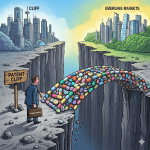
The current cliff is structurally different. It is weighted toward biologics, specialty small molecules, and drugs targeting oncology and immunology indications. These are higher-priced assets with more complex IP estates, longer development timelines for biosimilar or generic challengers, and, critically, markets that had essentially zero access to the originator products due to price. The access-expansion dynamic is mathematically more powerful in emerging markets than the drug-switching dynamic that drove value in the first cliff.
Priority Loss-of-Exclusivity Events for Pharmerging Strategy, 2025-2030
The following drugs represent the highest-priority targets for generic or biosimilar development in pharmerging markets through 2030. US LOE dates are used as reference benchmarks; local patent landscapes vary materially by country and require independent analysis before launch decisions.
Adalimumab (Humira, AbbVie). US composition-of-matter patent expired January 2023, and the biosimilar market opened with ‘high-concentration’ formulation patents providing partial protection until mid-2023. By early 2025, more than ten biosimilar versions are on the US market. In pharmerging markets, particularly Brazil, India, and the Middle East, the originator’s pricing ($20,000 to $25,000 USD per patient per year for branded adalimumab in private Brazilian markets) creates a compelling biosimilar case. AbbVie’s IP estate around adalimumab contains more than 200 individual patents globally, covering formulation, device, and manufacturing process claims. Clearing this estate in each pharmerging market requires a dedicated patent mapping exercise. IP valuation note: for a biosimilar manufacturer, the addressable revenue pool for adalimumab biosimilars in Tier 1 and Tier 2 pharmerging markets is estimated at $1.2 to $1.8 billion annually by 2028 at 70 percent price discount to originator.
Bevacizumab (Avastin, Roche/Genentech). The composition-of-matter patent expired across most major markets by 2020 to 2022. Bevacizumab biosimilars are now commercially available in India (Zirabev, Pfizer; Bevatas, Intas; multiple others), and Indian manufacturers have been aggressively supplying lower-income markets. The IP complexity here is lower than adalimumab, but the manufacturing complexity (Chinese hamster ovary cell line production, complex purification) remains a technical barrier. In Sub-Saharan Africa and Southeast Asia, branded Avastin pricing at $1,500 to $2,500 per vial puts it entirely out of reach for public health systems. A biosimilar priced at $300 to $500 per vial would open markets that currently have zero treatment penetration. IP valuation note: bevacizumab biosimilar manufacturing rights and marketing authorization packages in three to five pharmerging markets, aggregated, represent a portfolio asset valued at $80 to $150 million for a mid-sized manufacturer with qualifying infrastructure.
Trastuzumab (Herceptin, Roche). Core biologic patents have expired in most markets. Biosimilar competition is most advanced in India and Korea, with Biocon’s Canmab and Samsung Bioepis’s Ontruzant widely referenced. The HER2-positive breast cancer burden is substantial in pharmerging markets, particularly in China (which has its own domestic biosimilar industry), Brazil, and Southeast Asia. Physician education remains the primary barrier to uptake, not price alone, because treating oncologists in these markets often trained in institutions that anchored on originator brand performance data.
Sitagliptin (Januvia, Merck). Merck’s core composition-of-matter patent for sitagliptin expires in 2026 in the US. Secondary formulation and polymorph patents extend protection in some markets. India’s generic manufacturers have already filed for approval of sitagliptin generics in multiple jurisdictions, anticipating the expiry. Given India’s 80+ million diabetic population (IDF 2021 estimate), the domestic market alone justifies development investment. The global pharmerging opportunity for sitagliptin generics, including fixed-dose combinations with metformin, is estimated at $600 million to $1 billion annually at competitive generic pricing.
Empagliflozin (Jardiance, Boehringer Ingelheim/Lilly) and Dapagliflozin (Farxiga, AstraZeneca). The SGLT2 inhibitor class carries core patents expiring in the 2025-2028 window across various jurisdictions. These are among the most important generic opportunities of the decade because of cardiovascular outcomes data (EMPA-REG OUTCOME, DAPA-HF) that have made SGLT2 inhibitors standard-of-care in heart failure management, a condition with explosive prevalence growth in pharmerging populations. The challenge is that originator companies have filed extensive secondary patent portfolios, particularly around specific crystal forms and co-crystal structures, creating patent thickets that require careful navigation. A Paragraph IV equivalent filing strategy (or its local analog) in Brazil, India, and Turkey may generate 180-day exclusivity-equivalent windows, depending on jurisdiction.
Lenalidomide (Revlimid, Bristol Myers Squibb). The US LOE situation for lenalidomide is complex. BMS executed a series of volume-cap agreements with first-filer generic companies, essentially limiting generic supply for several years post-expiry to protect revenue during the managed transition. In pharmerging markets, access to lenalidomide for multiple myeloma has been extremely limited due to price. BMS’s controlled-distribution system (REMS in the US; equivalent programs internationally) adds regulatory complexity beyond standard generic approval. Companies developing lenalidomide generics for emerging markets must build distribution programs that satisfy risk management requirements while maintaining cost structures compatible with public health procurement.
Key Takeaways: Section 2
The Patent Cliff 2.0 is biologic-weighted, creating biosimilar opportunities that are structurally more valuable in pharmerging markets than in the US or EU because the access gap is larger.
Adalimumab, bevacizumab, and trastuzumab are the three highest-priority biologic LOE events for pharmerging strategy through 2028. SGLT2 inhibitors represent the highest-priority small-molecule opportunity.
US LOE dates are reference points only. Every target molecule requires independent patent landscape analysis in each pharmerging jurisdiction before committing development resources.
Section 3: IP Valuation — Scoring Emerging Market Drug Assets
Why Standard DCF Models Fail for Pharmerging Generic Assets
Standard discounted cash flow (DCF) valuation of a generic drug asset assumes relatively stable regulatory timelines, predictable price erosion curves, and currency stability. All three assumptions break down in pharmerging markets. A valuation model that uses a flat 15 percent annual price erosion curve, appropriate for a US generic market, will produce wildly optimistic projections for a tender-driven market like Turkey or Indonesia where price cuts of 30 to 50 percent in a single tender cycle are documented.
Accurate IP valuation for pharmerging generic assets requires four specific adjustments.
The first is a jurisdiction-specific regulatory timeline distribution. Rather than a single expected approval date, analysts should model a probability-weighted distribution across three scenarios: best case (regulatory reliance pathway, 18 to 24 months), base case (full national dossier review, 36 to 48 months), and adverse case (clinical data deficiency letter, re-submission, 60 to 72 months). The weights assigned to each scenario should be calibrated against the manufacturer’s track record with that specific NRA.
The second adjustment is a tender probability and price scenario model. In government-dominated markets, the relevant revenue question is not ‘what price can this drug command?’ but rather ‘what is the probability of winning the next tender cycle, and at what price floor?’ For a market like Brazil’s public sector, where CONASS (Conselho Nacional de Secretários de Saúde) procurement pricing is determined by competitive tender, modelling a single expected price is analytically incomplete.
The third adjustment is currency risk. Generic manufacturers selling into pharmerging markets typically invoice in USD or EUR and receive payment in local currency. Depreciation events in the Turkish lira (which lost approximately 80 percent of its value against the USD between 2018 and 2023), the Argentine peso, or the Nigerian naira can erase an entire year’s projected profit margin in a quarter.
The fourth is IP clearance risk premium. Before any commercial revenue can be modelled, the probability of successfully clearing the patent estate must be assessed. A molecule with a single expired composition-of-matter patent and no active secondary patents carries near-zero clearance risk. A molecule like adalimumab, with 200+ global patents, many of which require jurisdiction-specific analysis, carries substantial clearance risk until a thorough freedom-to-operate (FTO) analysis is complete.
A Practical IP Valuation Framework for Emerging Market Generic Assets
The following framework produces a risk-adjusted net present value (rNPV) appropriate for emerging market generic assets. It is not a full model, but it captures the variables that standard generic valuation tools systematically underweight.
Step one: Map the complete patent estate using commercial databases (DrugPatentWatch, Derwent Innovation, Cortellis) to identify all active patents on the target molecule in each target jurisdiction. Categorize each patent by type: composition-of-matter, formulation, manufacturing process, polymorph, method-of-use. Assign an expected expiry date and a likelihood-of-invalidation score if the manufacturer anticipates challenging any patents.
Step two: Model three market entry scenarios per jurisdiction. Scenario A is uncontested entry at or after patent expiry with no IP litigation risk. Scenario B is contested entry requiring a challenge to a secondary patent, with a 24 to 36 month litigation period factored in. Scenario C is blocked entry, where the manufacturer cannot clear the IP estate in the relevant window and the asset must be deprioritized.
Step three: Apply country-specific tender and pricing assumptions. For each target jurisdiction, use historical tender data to calibrate the expected price as a percentage of the originator’s public list price. This ratio varies substantially: Indian public sector generic pricing typically runs 5 to 15 percent of originator list; Brazilian SUS pricing for small molecules typically runs 25 to 45 percent; Gulf Cooperation Council markets often run 40 to 60 percent.
Step four: Model regulatory approval probability and timeline using the jurisdiction-specific distribution from step one.
Step five: Apply a currency depreciation stress test using the five-year trailing depreciation rate of the local currency against USD. For currencies with high volatility (TRY, ARS, NGN), apply an additional structural risk discount of 10 to 15 percent to projected revenues.
Step six: Aggregate the jurisdiction-specific rNPV figures. Deduct total development costs (bioequivalence studies, regulatory submission costs, manufacturing scale-up), applying those costs at realistic timelines.
The output is an asset-level rNPV for the emerging market generic portfolio, which can then be compared against development costs to produce a priority ranking across the pipeline.
IP Valuation Case Study: Sitagliptin Generic in India and Brazil
Sitagliptin’s primary composition-of-matter patent (Merck US 6,699,871) covers the DPP-4 inhibitor pharmacophore. That patent expired in the US in January 2026. Merck has filed secondary patents on crystalline forms (the phosphate monohydrate salt, US 7,326,708) and specific formulation compositions (US 7,655,650).
In India, Merck’s Indian patent estate for sitagliptin faced challenges from the Indian Patent Office under Section 3(d) of the Patents Act, which disallows patents on new forms of known substances that do not demonstrate enhanced efficacy. Indian courts and the IPO have applied 3(d) aggressively in the past (the Novartis Glivec case being the reference precedent). Several Indian generic manufacturers pre-positioned for sitagliptin launch by filing challenges to the secondary crystal form patents under 3(d), creating a reasonable probability of early market entry.
In Brazil, ANVISA conducts its own patent analysis through the INPI-ANVISA dual-review mechanism under Brazil’s IP law. Merck’s Brazilian patent estate for sitagliptin includes composition-of-matter coverage through 2026 and formulation patents potentially extending into 2027-2028. A generic developer targeting Brazil would need to file an anuencia previa (prior consent) request with INPI and ANVISA simultaneously, and could face a 12 to 18 month review period even after the primary patent expires.
Conservative rNPV for a sitagliptin 100mg generic targeting both markets, including fixed-dose combination with metformin, assuming competitive pricing at 20 percent of originator price in India and 30 percent in Brazil: $45 to $75 million over a 10-year forecast horizon, net of development and regulatory costs. That figure increases substantially for a manufacturer positioned to be first-to-market in Brazil, where a 6-month head start before the second generic entrant typically allows a price that is 15 to 25 percent higher than the eventual commodity floor.
Key Takeaways: Section 3
Standard DCF models systematically overstate the value of emerging market generic assets by ignoring tender price volatility, currency depreciation, and jurisdiction-specific IP clearance risk.
A proper rNPV model for these assets requires five inputs that most generic company finance teams do not routinely build: regulatory timeline distributions, tender scenario pricing, currency stress tests, IP clearance probability, and a litigation timeline model for contested market entry.
Sitagliptin generics targeting India and Brazil, using conservative assumptions, carry an rNPV of $45 to $75 million per molecule, net of development costs. First-to-market premium in Brazil alone can add $10 to $20 million to that figure.
Section 4: The Regulatory Labyrinth — Country-by-Country Dossier Intelligence
The CTD/eCTD Reality Check
The ICH Common Technical Document format provides a theoretical global standard for drug registration dossiers. In practice, every major pharmerging NRA imposes country-specific requirements on top of the CTD structure, and the extent of those deviations determines whether a multi-market submission strategy saves time or creates delays by misaligning with local expectations.
The following covers the six most commercially material pharmerging regulatory environments in detail.
Brazil: ANVISA
ANVISA (Agencia Nacional de Vigilancia Sanitaria) is among the most sophisticated NRAs in pharmerging markets. Its Generic Drug Resolution (RDC 204/2017 and its successors) requires demonstration of bioequivalence under Brazilian-specific conditions, including in vivo BE studies conducted at GCP-compliant CROs pre-approved by ANVISA. ANVISA maintains its own list of approved BE study sites; studies conducted at non-listed facilities, even WHO-listed GCP sites, are not acceptable.
The anuencia previa system adds a layer not found in most markets. ANVISA and INPI jointly review whether the generic application conflicts with active patents before the registration can proceed. This review can add 12 to 36 months to approval timelines for molecules with active secondary patent coverage in Brazil.
ANVISA’s electronic submission platform (SOLICITA) has been progressively upgraded. As of 2024, full eCTD submissions are mandatory for new product registrations, though the specific technical specifications of ANVISA’s eCTD implementation differ from the ICH eCTD standard at the metadata level, requiring format adaptation by regulatory teams familiar with the US FDA or EMA eCTD specifications.
Brazil’s stability data requirement mandates Zone IVb (40 degrees C/75 percent relative humidity) data, appropriate for tropical climates. A study designed to ICH Zone IVb specifications satisfies this requirement, but a company submitting Zone II (25 degrees C/60 percent RH) data from a European-designed study will receive an immediate deficiency letter.
India: CDSCO
The Central Drugs Standard Control Organisation operates under the Drugs and Cosmetics Act (as amended by the Drugs and Cosmetics Amendment Act, 2008) and the New Drugs and Clinical Trials Rules (NDCTR, 2019). For generic drugs with approved comparator products in the Indian market, CDSCO requires bioequivalence studies using the Indian reference listed drug (RLD), which may differ from the comparator product used in FDA or EMA BE studies if the formulation or strength is different in India.
CDSCO registration timelines for generics have historically been inconsistent, ranging from 12 months for straightforward applications to 48 months or longer for complex molecules or applications with data queries. The 2020 introduction of the online submission platform (SUGAM) has improved transparency in application tracking. CDSCO’s price-approval linkage via the National Pharmaceutical Pricing Authority (NPPA) and the Drugs Price Control Order (DPCO) means that regulatory approval and commercial launch pricing must be coordinated; a drug approved by CDSCO but subject to an NPPA price cap below breakeven margins cannot be commercially launched.
India’s Section 3(d) of the Patents Act remains one of the most important IP tools for generic developers globally. It prohibits patent grants on new forms of known substances (salts, polymorphs, esters, hydrates) unless the applicant demonstrates ‘enhanced efficacy.’ This provision has been used to challenge secondary evergreening patents on dozens of molecules, including imatinib (Gleevec/Glivec, Novartis), and creates a structurally more favorable IP environment for generic entry in India than in any other Tier 1 pharmerging market.
China: NMPA
China’s National Medical Products Administration has undergone the most rapid regulatory modernization of any major pharmerging NRA over the past decade. The 2015-2017 drug regulatory reform wave introduced a marketing authorization holder (MAH) system, mandatory bioequivalence testing for existing generics (the Generic Drug Consistency Evaluation program), and a priority review pathway for innovative drugs and unmet medical needs.
China’s Generic Drug Consistency Evaluation program, which began in 2016 and accelerated from 2018, required manufacturers of previously approved generic drugs to retroactively prove bioequivalence to the reference listed drug. This program created a massive compliance burden for domestic manufacturers but ultimately elevated the quality floor for the Chinese generic market. By 2024, approximately 80 percent of the highest-volume generics in China’s National Reimbursement Drug List (NRDL) had completed the consistency evaluation.
China’s centralized procurement system (volume-based procurement, or VBP) is the most aggressive government pricing mechanism in any major pharmerging market. In VBP tender rounds, manufacturers submit bids, and the lowest bidders that meet quality thresholds receive multi-year, high-volume contracts. Average price cuts in VBP tenders have ranged from 52 percent to 98 percent versus pre-tender prices across multiple rounds. This mechanism has made the Chinese generic market simultaneously high-volume and structurally low-margin for commodity molecules, pushing competitive advantage toward complex generics and biologics where VBP participation requirements differ.
For foreign generic manufacturers, entering China requires either a full NMPA registration (typically 24 to 48 months) or a partnership with a local MAH holder. Local manufacturing partnerships remain common for cost reasons, though regulatory changes now permit foreign-owned facilities to hold MAH status, which was not previously possible.
Indonesia: BPOM
Indonesia’s Badan Pengawas Obat dan Makanan requires full dossier submission in the CTD format with Indonesian-language labeling. BPOM’s review timelines have historically been among the longest in ASEAN, often running 36 to 60 months for full national registration. However, BPOM participates in the ASEAN Common Technical Dossier (ACTD) harmonization framework, which allows mutual recognition of approvals from reference ASEAN agencies (Singapore’s HSA or Malaysia’s NPRA) in an abbreviated pathway.
Indonesia’s JKN (Jaminan Kesehatan Nasional) national health insurance scheme, which covers approximately 270 million citizens as of 2024, is the largest captive public payer market in Southeast Asia. JKN formulary inclusion requires BPOM registration followed by a separate HTA (health technology assessment) submission and pricing negotiation with BPJS Kesehatan (the scheme’s administrative body). The formulary review process adds 12 to 24 months post-registration before commercial sales through the public channel can begin.
Saudi Arabia: SFDA
The Saudi Food and Drug Authority operates a relatively structured registration system compared to other Gulf markets, and its approvals are referenced by several GCC member states through a reliance pathway. SFDA accepts BE data from WHO-listed BE study sites and operates a relatively efficient electronic dossier review system. Average generic review timelines run 18 to 30 months.
Saudi Arabia’s mandatory health insurance for expatriates (covering approximately 40 percent of the population) and the government’s Vision 2030 healthcare expansion commitments have created a growing private pharmaceutical market alongside the government procurement channel. Price controls apply in the public sector; the private channel allows more pricing flexibility, making Saudi Arabia one of the more commercially attractive GCC markets for premium-priced generic and biosimilar products.
Turkey: TİTCK
Turkey’s Medicines and Medical Devices Agency (TİTCK) is an EMA-referenced NRA for several categories of pharmaceutical applications, which means that EMA approval can be used as the primary basis for Turkish registration through a reliance pathway in some circumstances. For generic drugs, Turkey requires TİTCK-specific bioequivalence studies conducted at Turkish-approved CROs, and a Turkish reference listed drug must be used.
Turkey’s currency crisis (the lira depreciated approximately 80 percent against the USD between 2018 and 2023) severely compressed pharma profitability. Many multinational manufacturers raised ex-factory prices in USD terms, which generated regulatory conflict with TİTCK’s fixed local-currency pricing mechanism. The Turkish SSI (Social Security Institution) dominates reimbursement, and its list prices are set by Ministry of Health decree with reference to a basket of European comparator countries. For generic manufacturers, Turkey remains attractive for revenue volume but requires currency hedging or USD-invoicing structures to preserve margins.
Key Takeaways: Section 4
No pharmerging NRA accepts a ‘copy-paste’ dossier from an EMA or FDA submission without modification. Each of the six profiled markets has at least two to three country-specific requirements that create deficiency letters if missed.
Brazil’s anuencia previa mechanism and China’s VBP pricing create the two most distinctive regulatory-commercial dynamics in pharmerging markets: one extends timelines significantly, the other compresses margins to near-zero for commodity molecules.
Turkey’s reliance pathway on EMA data reduces technical barriers to entry but does not eliminate them, and the currency volatility in that market requires financial structuring that most generic manufacturers have historically underinvested in.
Section 5: Patent Thickets, Evergreening, and Paragraph IV Equivalents Abroad
How Originator Companies Build Thickets
Patent thickets are not accidents. They are the product of systematic IP lifecycle management executed by originator companies over the 10 to 15 years following a drug’s initial approval. The mechanics are well-documented. A composition-of-matter patent on the active molecule is the primary protection layer. Secondary patents are then layered on top across several axes, each with a separate filing date and expiry timeline.
Polymorph and salt patents cover specific crystalline forms or salt versions of the active ingredient that are claimed to offer processing, stability, or formulation advantages. Formulation patents cover specific excipient combinations, coating technologies, or drug release mechanisms used in the commercial tablet or injectable. Manufacturing process patents cover the synthetic route or downstream processing steps, making it difficult for a generic manufacturer to use a different synthesis pathway without alternative route development. Method-of-use patents cover specific clinical indications that were approved after the primary composition-of-matter patent filed, sometimes decades after the original discovery.
Each category has different litigation exposure for a generic manufacturer. Composition-of-matter patents, once expired, are cleared. Secondary patents are vulnerable to invalidity challenges on the grounds of obviousness, lack of novelty, or, in India specifically, failure to meet the 3(d) enhanced efficacy requirement. The strategic challenge for a generic developer is not just identifying which patents exist, but correctly assessing which are commercially blocking and which are vulnerable to challenge.
Evergreening Roadmap for Key Molecules
The following illustrates the patent estate architecture for three high-priority generic targets in pharmerging markets.
Empagliflozin (Jardiance). The core composition-of-matter patent covers the SGLT2 inhibitor scaffold. Boehringer Ingelheim’s secondary patent estate includes patents on the glucose tetrahydrate crystal form used in the commercial formulation, specific film-coating compositions for the commercial tablet, the pharmaceutical composition including the specific particle size distribution of the API, and several method-of-use patents covering cardiovascular outcomes indications (heart failure, renal protection) that were added to the label after the original diabetes approval. In the US Orange Book, empagliflozin lists multiple patents with expiry dates ranging from 2025 to 2031 depending on the patent category. Generic developers targeting pharmerging markets must independently map the local patent estate in each jurisdiction, as not all secondary US patents are necessarily validated or maintained in every market.
Adalimumab (Humira). AbbVie’s patent strategy for adalimumab represents the most extensively documented example of biologic evergreening. The core antibody composition patents expired in the US around 2016. AbbVie then defended market exclusivity through the ‘patent thicket’ of more than 200 patents filed on citrate-free formulation, high-concentration formulation (the shift from the original 40 mg/0.8 mL to 40 mg/0.4 mL), autoinjector device designs, methods of treatment for specific disease subtypes, and manufacturing process parameters. These secondary patents collectively extended effective US market exclusivity until January 2023, seven years beyond the primary biologic composition patent. In pharmerging markets, AbbVie’s enforcement of these secondary patents has been jurisdiction-specific and inconsistent; several Indian biosimilar manufacturers have launched without challenge in domestic markets where AbbVie chose not to pursue injunctions.
Imatinib mesylate (Gleevec/Glivec, Novartis). The Novartis Gleevec case in India remains the defining global precedent for the application of Section 3(d). Novartis sought to patent the beta-crystalline form of imatinib mesylate, a salt form of the active molecule. The Supreme Court of India ruled in 2013 that the beta-crystalline form did not demonstrate enhanced efficacy over the known free base form, and therefore failed the 3(d) test. This ruling opened the Indian market to generic imatinib at prices approximately 95 percent below the Gleevec originator price, enabling treatment access for CML patients who previously had none. The case is directly applicable as precedent for any secondary patent challenge on a crystalline form in India.
Compulsory licensing under TRIPS Article 31 permits a WTO member government to authorize production of a patented drug without the patent holder’s consent, subject to conditions including payment of adequate remuneration and restriction to predominantly domestic supply. The practical use of this mechanism in pharmerging markets requires a country-by-country assessment.
India issued its first compulsory license in March 2012 for Bayer’s sorafenib (Nexavar), granting Natco Pharma production rights at a royalty of 6 percent of net sales. The license was justified on grounds of non-availability (Bayer had not ensured adequate supply in India) and non-affordability (Nexavar was priced at approximately 280,000 INR per month in India at the time; Natco’s licensed version launched at 8,800 INR per month). The Natco CL was upheld through the Indian judicial system, including an appeal to the Intellectual Property Appellate Board.
Thailand issued government-use licenses (a form of CL applicable when a government agency rather than a private manufacturer uses the patent) for efavirenz (an antiretroviral), lopinavir/ritonavir (HIV), and clopidogrel (cardiovascular) between 2006 and 2008. The Thai government licenses for antiretrovirals were internationally controversial but were upheld under TRIPS Article 31 provisions applicable to government non-commercial use.
Brazil has used the threat of CL as a negotiating tool in procurement pricing for antiretrovirals and, most prominently, issued a CL decree for efavirenz in 2007 after failing to reach a satisfactory price agreement with Merck. The Brazilian CL for efavirenz enabled procurement from Indian generic manufacturers, reducing per-patient treatment costs by approximately 72 percent.
For generic manufacturers, CLs present a complex commercial calculus. A government CL can open a market that was previously inaccessible due to patent barriers, but the royalty structure, supply restrictions (typically limited to the domestic market of the issuing country), and potential diplomatic or commercial relationship consequences with originator companies must all be factored. CLs are a viable strategic tool in a narrow set of circumstances: public health emergency justification is present, the patent barrier is clearly blocking access to an essential medicine, and the issuing government has institutional capacity to administer the licensing process.
Key Takeaways: Section 5
Evergreening of secondary patents follows a predictable architecture: polymorph, formulation, device, manufacturing process, method-of-use. A complete FTO analysis must assess all five categories per jurisdiction before launch.
India’s Section 3(d) remains the most powerful statutory tool globally for challenging secondary pharmaceutical patents. Generic developers with Indian exposure should systematically assess which secondary patents on their target molecules are vulnerable to a 3(d) challenge.
Compulsory licensing is viable in approximately 8 to 12 pharmerging jurisdictions with the institutional capacity to administer the process. It is not a general-purpose market entry tool, but for specific essential medicines with significant price barriers, it is legally available and has been successfully executed.
Section 6: Biosimilars in Pharmerging Markets — The Full Development Roadmap
Why the Biosimilar Opportunity Is Larger in Pharmerging Markets Than in the EU or US
In the EU, biosimilar switching replaces an existing biologic prescription with a cheaper alternative. In most pharmerging markets, there is no existing prescription to switch. The originator biologic was priced entirely beyond public reimbursement and most private coverage. A biosimilar that enters at 50 to 70 percent below originator price is not creating price savings; it is creating first-access for patients who had zero treatment options.
This structural difference has a direct consequence for biosimilar commercial modeling. The EU biosimilar market is a displacement market: the biosimilar captures share from the originator. The pharmerging biosimilar market is an access creation market: the biosimilar captures share from ‘untreated,’ which is a much larger pool with no ceiling other than the disease burden and healthcare infrastructure constraints. The ceiling is not originator market share; it is GDP per capita, insurance coverage expansion, and physician prescribing capacity.
The Biosimilar Development Roadmap: Phase by Phase
Developing a biosimilar for pharmerging market launch requires a 7 to 10 year development program. The following roadmap covers each phase with specific technical and regulatory requirements.
Phase 1: Reference Product Selection and Analytical Characterization (Year 0-2). The reference biological product (RBP) must be selected for each target market. The EU reference product and the US reference product for the same biologic may differ in glycosylation pattern or other quality attributes if manufactured at different facilities. Pharmerging NRAs differ in which country’s RBP they will accept for the comparative analytical characterization exercise. ANVISA Brazil, for example, accepts the Brazilian-registered reference product or, in cases where no Brazilian RBP exists, the FDA-licensed or EMA-approved version. BPOM Indonesia has historically accepted ASEAN-registered RBPs.
Analytical characterization uses an extensive battery of physicochemical and biological assays. For a monoclonal antibody biosimilar, this typically includes primary structure confirmation by peptide mapping and mass spectrometry, higher-order structure analysis by circular dichroism and X-ray crystallography, glycan profiling, receptor binding assays (FcRn, Fc-gamma receptors, target antigen), and Fc effector function assays. The analytical similarity exercise is the scientific foundation of the biosimilar development program; deficiencies in this package are the most common cause of regulatory rejection at the NRA level.
Phase 2: Manufacturing Process Development and Cell Line Work (Year 1-3). A biosimilar manufacturer develops its own proprietary cell line (typically Chinese hamster ovary or NS0) expressing the same amino acid sequence as the reference biologic. The cell line is independently developed and not licensed from the originator. Manufacturing process parameters, including cell culture conditions, harvest, purification chromatography steps, and formulation, are optimized to produce a product that is analytically similar to the RBP.
For pharmerging-focused biosimilar programs, manufacturing cost structure is a critical design parameter. A biosimilar manufactured in an FDA/EMA-grade biomanufacturing facility in Western Europe at $50,000 to $80,000 per gram of antibody may not achieve a price point viable for public procurement in a Tier 2 or Tier 3 pharmerging market. Manufacturers with single-use bioreactor platforms in lower-cost geographies (India, South Korea, China) have demonstrated 30 to 50 percent manufacturing cost advantages over legacy stainless-steel plants in Western facilities.
Phase 3: Non-Clinical Package (Year 2-4). Most pharmerging NRAs require a non-clinical package that includes pharmacokinetic studies in at least one relevant animal model and a repeat-dose toxicology study demonstrating no unexpected immunogenicity signals. The extent of required non-clinical testing is generally less than that required for a new biologic, but it is substantially more than required for a small-molecule generic.
Phase 4: Clinical Pharmacology Studies (Year 3-5). A PK/PD bridging study in healthy volunteers or appropriate patient population is the primary clinical data requirement. This study compares the pharmacokinetic profile of the biosimilar against the reference product in a crossover or parallel-group design. For most monoclonal antibody biosimilars, a single-dose PK study in healthy volunteers is the standard, though some NRAs require a patient population study for certain indications. The PK study typically enrols 50 to 150 subjects and requires approximately 12 to 18 months to complete.
Phase 5: Pivotal Comparative Clinical Study (Year 4-7). A confirmatory efficacy and safety study is required for most biosimilar approvals in regulated markets. This study, typically designed as a randomized, double-blind, parallel-group equivalence trial, compares the biosimilar to the reference product in a sensitive clinical setting. For trastuzumab biosimilars, the standard pivotal study design uses HER2-positive early breast cancer (neoadjuvant setting) as the sensitive population. For adalimumab biosimilars, rheumatoid arthritis is the standard sensitive indication.
The clinical study is the largest single cost element in biosimilar development, typically representing $30 to $80 million depending on indication, trial size, and geography. For pharmerging-focused programs, conducting the pivotal study at clinical sites in India, Poland, or other lower-cost geographies can reduce per-patient costs by 40 to 60 percent compared to North American sites, without sacrificing data acceptability to most NRAs that apply ICH GCP standards.
Phase 6: Regulatory Dossier Submission and Review (Year 6-9). Dossier compilation and submission to priority NRAs begins as the pivotal study completes. The submission strategy for pharmerging markets typically prioritizes the one or two markets where the manufacturer has the strongest regulatory track record and the largest commercial opportunity, then uses those approvals to support reliance pathways in secondary markets.
WHO prequalification of biosimilars, administered by the WHO Prequalification Team, is the most efficient pathway for supplying biosimilars to procurement agencies (UNICEF, PAHO, the Global Fund) that supply multiple pharmerging markets simultaneously. WHO prequalification requires a complete dossier submission and GMP inspection of the manufacturing facility, but an approved WHO prequalification serves as the basis for expedited national registration in approximately 50 countries that recognize WHO PQ as the primary scientific review.
Biosimilar Interchangeability in Pharmerging Markets
Biosimilar interchangeability, the regulatory designation that allows automatic substitution of a biosimilar for the reference biologic at the pharmacy level (without prescriber intervention), is a US-specific concept under the Biologics Price Competition and Innovation Act. No pharmerging market has an equivalent statutory interchangeability designation. In pharmerging countries, substitution is a policy decision made at the institutional, insurer, or government procurement level rather than at the individual pharmacy transaction level.
This matters commercially because the pathway to biosimilar uptake in pharmerging markets is not pharmacy-level substitution. It is formulary inclusion by the national health scheme, public tender award, or prescriber-level education and adoption. A biosimilar manufacturer that invests in physician engagement, medical education, and clinical data generation in local populations will achieve faster uptake than one that assumes automatic substitution will drive volume, because automatic substitution does not exist as a mechanism in these markets.
Key Takeaways: Section 6
The pharmerging biosimilar opportunity is structurally distinct from the EU or US market: it is an access-creation opportunity, not a price-displacement opportunity. The total addressable population is the untreated disease burden, not the originator’s current market share.
A full biosimilar development program for a monoclonal antibody takes 7 to 10 years and costs $100 to $250 million. Manufacturing cost structure is a critical design parameter for pharmerging viability; Indian and Korean manufacturers with single-use bioreactor platforms have documented 30 to 50 percent cost advantages.
Biosimilar interchangeability as a US regulatory concept does not exist in any pharmerging market. Uptake is driven by formulary inclusion, tender award, and prescriber adoption, not pharmacy-level substitution.
Section 7: The NCD Opportunity — Specific Molecules, Specific Markets, Specific Timelines
The Epidemiological Transition in Quantitative Terms
The WHO’s 2023 Global Health Estimates report documents that non-communicable diseases now account for 74 percent of all global deaths, with more than 75 percent of those deaths occurring in low- and middle-income countries. This is not a projected future state; it is the current disease burden. Within the NCD category, cardiovascular disease is the leading cause of death in every pharmerging region except Sub-Saharan Africa. Diabetes causes 6.7 million deaths annually by WHO count, with India, China, Pakistan, and Indonesia ranking in the top five countries by absolute diabetic population.
The generic drug opportunity in NCDs is not primarily about developing new treatments. Every first-line NCD therapeutic class, including metformin (type 2 diabetes), amlodipine (hypertension), atorvastatin (dyslipidemia), metoprolol (heart failure), and salbutamol (asthma), has been off-patent for decades. The opportunity is about getting these molecules to the patients who need them, which requires the full commercial stack: regulatory approval in the local market, local distribution infrastructure, reimbursement or affordable pricing for out-of-pocket payers, and physician prescribing habits that support generic substitution.
The next-generation NCD opportunity is more technically complex. SGLT2 inhibitors, GLP-1 receptor agonists (semaglutide, liraglutide), DPP-4 inhibitors, newer heart failure drugs (sacubitril/valsartan, empagliflozin), and PCSK9 inhibitors are either at or approaching patent expiry. These molecules carry significantly more technical complexity (semaglutide is a 31-amino acid peptide requiring peptide synthesis or recombinant manufacturing; sacubitril is a prodrug with a complex API) and correspondingly higher development costs, but they also carry higher launch prices and a longer runway before commodity pricing sets in.
India: The Diabetes Playbook
India had approximately 101 million people living with diabetes in 2021 (IDF Diabetes Atlas, 10th edition), overtaking China as the country with the highest absolute diabetic population. IDF projects that figure will reach 135 million by 2045. The Indian public sector treatment gap for diabetes remains wide: less than 50 percent of diagnosed diabetics receive consistent medication, largely due to affordability and supply chain gaps.
The Indian generic market for antidiabetics is intensely competitive at the first-line molecule level. Metformin, glibenclamide, and glimepiride have essentially commodity pricing. The commercially interesting space is in fixed-dose combinations of two or three agents, newer second-line molecules in their early generic life, and injectable therapies (insulin biosimilars, GLP-1 agonists).
For GLP-1 receptor agonists specifically, semaglutide’s composition-of-matter patent and relevant formulation patents create a development window that Indian generic manufacturers are actively preparing for. Liraglutide’s core patents have already expired in several jurisdictions; Biocon Biologics launched a liraglutide biosimilar in India in 2024 at approximately 60 percent below the Victoza originator price. The commercial model for GLP-1 generic and biosimilar products in India requires a pen device strategy (autoinjector or prefilled pen), as patient self-injection compliance drops significantly with vial-and-syringe formats.
Nigeria and Sub-Saharan Africa: Building the Infrastructure Alongside the Portfolio
Nigeria’s pharmaceutical market was estimated at approximately $2.5 billion in 2024, with generics accounting for roughly 70 percent of the market by volume. Nigeria’s NAFDAC (National Agency for Food and Drug Administration and Control) registration timelines have historically been unpredictable, running anywhere from 18 months to 5+ years for new product registrations. NAFDAC’s 2022 digitalization of its submission portal reduced some administrative bottlenecks, but the technical review capacity for complex dossiers remains limited.
The NCD burden in Nigeria is substantial. Hypertension prevalence in Nigerian adults is estimated at 30 to 40 percent, with awareness, treatment, and control rates each below 50 percent. The antihypertensive generic market, particularly amlodipine, lisinopril, and their fixed-dose combinations, represents high volume at very low price points. The commercial model that works in Nigeria is high-volume, low-margin, with strong local distribution partnerships. Margins are thin; the strategic rationale is building market presence and distribution infrastructure for higher-value products in the pipeline.
The African Medicines Agency, established formally under the Kigali Declaration in 2021 and beginning its operational ramp-up in 2023-2024, is designed to provide continental-level scientific and regulatory coordination. In its initial operational phase, the AMA is focused on mutual recognition procedures for WHO-prequalified products and on supporting NRA capacity building across African Union member states. For a generic manufacturer, the most actionable implication of the AMA in the short term is that WHO prequalification for a product creates a near-term pathway to expedited registration across the 15 to 20 AU member states that have committed to AMA reliance procedures.
Key Takeaways: Section 7
The NCD generic opportunity in pharmerging markets has two layers: a mature first-generation layer (metformin, atorvastatin, amlodipine) where competition is commodity-level, and an emerging second-generation layer (SGLT2 inhibitors, GLP-1 agonists, sacubitril combinations) where patent expiry windows, technical complexity, and first-mover advantages create sustainable margins.
India’s diabetic population exceeds 100 million and is growing at approximately 3 million new diagnoses per year. The commercially interesting generic opportunity is in fixed-dose combinations and early-generic-life DPP-4 and SGLT2 inhibitor products, not commodity metformin.
Nigeria and Sub-Saharan Africa are infrastructure-building markets in the near term. WHO prequalification is the most efficient market-authorization pathway for reaching multiple African markets simultaneously, given the AMA’s evolving mutual recognition procedures.
Section 8: Supply Chain Architecture — API Sourcing, Cold Chain, and Track-and-Trace
The API Concentration Problem
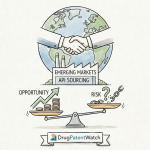
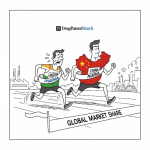
COVID-19 made visible what supply chain analysts had documented for years: the global pharmaceutical API supply chain is critically concentrated. China and India jointly account for approximately 80 percent of global API manufacturing capacity by volume, according to IQVIA and FDA analyses. Within that, China dominates fermentation-based APIs (including many antibiotic precursors and vitamins) and certain chemical synthesis categories. India dominates formulated generic drug manufacturing and is a major API producer for small-molecule therapeutics.
This concentration creates three distinct risks for pharmerging market generic strategies.
The geopolitical risk is that a US-China technology or trade conflict, or an India-Pakistan tension event, creates either export restrictions or shipping disruption that cuts off API supply. India’s 2020 export restrictions on 26 API categories during the early COVID period demonstrated that this risk is not hypothetical.
The quality-concentration risk is that a single major quality failure at a Chinese or Indian API site, such as the nitrosamine contamination events that triggered recalls of valsartan and ranitidine APIs between 2018 and 2020, can simultaneously affect multiple generic manufacturers across multiple markets.
The regulatory risk is that the FDA, EMA, or other importing-country authorities issue import alerts on specific API manufacturing sites, blocking supply from those facilities. Between 2015 and 2024, the FDA issued import alerts on approximately 40 Indian and Chinese API manufacturing sites. A generic manufacturer sourcing from one of those flagged sites loses its supply at the moment of the import alert.
Diversification Strategies: The ‘China + 1 + 1’ Model
The ‘China + 1’ supply chain model has become standard vocabulary in corporate supply chain planning. For pharmaceutical API sourcing in pharmerging markets, where both geopolitical risk and quality concentration risk are elevated, a more robust model requires China + 1 + 1: a primary source, a qualified backup source in a different geography, and a tertiary strategic reserve or in-house synthesis capability for the most critical molecules.
European API manufacturers in Italy, Germany, and Spain offer established GMP quality with diversification away from Asian supply, but at cost premiums of 20 to 50 percent over Asian equivalents. For a manufacturer competing in tender-driven pharmerging markets where price differentiation of a few percentage points can determine tender outcome, European API sourcing for high-volume commodity molecules is typically not commercially viable. The more practical diversification strategy is qualifying backup Indian API suppliers that are manufactured at different facilities from the primary supplier, supplemented by in-house API manufacturing capability for the four to six molecules that represent the highest revenue concentration in the portfolio.
Cold Chain Infrastructure for Biologics
The cold chain challenge for biologic products (including insulin analogs, biosimilars, and vaccines) in pharmerging markets is one of the most underestimated operational costs in market entry planning. A biologic that requires 2 to 8 degrees C storage throughout the distribution chain needs refrigerated warehousing, refrigerated transport, refrigerated last-mile delivery, and proper storage at the point of administration.
In Indonesia, Brazil, or Nigeria, the last-mile cold chain infrastructure outside major cities is unreliable or absent. A product that requires unbroken cold chain cannot be commercially sold through traditional distribution networks in rural or semi-urban areas, regardless of registration status. The options for a biosimilar manufacturer seeking to reach these patient populations are: partner with a distributor that has independently validated cold-chain capability in the target geography; co-invest with a government or NGO partner in cold chain infrastructure build-out; or invest in formulation development for heat-stable variants of the product that can tolerate ambient temperature storage.
Heat-stable insulin formulations have been a focus of development effort specifically because the cold chain gap in Sub-Saharan Africa limits diabetes treatment access. Merck’s Sayana Press program for DMPA-SC contraceptive and PATH’s work on thermostable malaria vaccine formulations offer commercial examples of what is technically achievable when heat stability is made a primary design requirement.
Serialization and Track-and-Trace: Minimum Requirements by Market
WHO estimates that substandard and falsified medicines account for 10 percent of medical products in low- and middle-income countries by volume, with higher rates in less-regulated markets. Serialization, which assigns a unique identifier to each individual product unit that can be scanned and verified through the distribution chain, is the primary technical tool for combating falsification.
Brazil’s ANVISA mandated serialization for all pharmaceutical products at the unit level from 2020, with phase-in by company size. Brazil’s serialization system is integrated with the SNCM (Sistema Nacional de Controle de Medicamentos) database, which tracks every serialized pack from manufacturing to pharmacy. ANVISA’s serialization requirement is now a market entry prerequisite for Brazil; any manufacturer that cannot supply serialized product is blocked from the Brazilian market.
China’s NMPA has operated a mandatory serialization system (the Chinese Drug Tracking System, or CDTS) since 2019 for all drugs sold in China. The Chinese system uses a 2D barcode format and requires integration with NMPA’s central database. India’s MedTech and drug serialization rollout has been slower than Brazil’s or China’s, but the Ministry of Health’s traceability system (formerly known as Track and Trace, now being upgraded) is expanding coverage to additional drug categories.
For manufacturers entering multiple pharmerging markets, the practical challenge is that serialization systems are not interoperable across jurisdictions. Brazil’s SNCM codes, China’s CDTS codes, and any future African serialization requirements use different technical standards and require different system integrations. A company entering five markets needs five parallel serialization system implementations, which represents a significant IT infrastructure investment.
Key Takeaways: Section 8
The global pharmaceutical API supply chain’s concentration in China and India creates geopolitical, quality, and regulatory risks that are directly material to pharmerging market supply continuity. A ‘China + 1 + 1’ diversification model is operationally prudent for manufacturers with high pharmerging revenue concentration.
Cold chain gaps outside major urban centers in pharmerging markets are a commercial barrier to biosimilar and biologic distribution that cannot be solved at the regulatory level. They require operational solutions: validated distributor partnerships, co-investment in infrastructure, or heat-stable formulation development.
Brazil and China each mandate serialization as a market entry requirement. A multi-market serialization strategy requires jurisdiction-specific technical implementations; the systems are not interoperable. IT infrastructure investment for serialization compliance should be included in pharmerging market entry cost modeling.
Section 9: Commercial Models That Work — Tiered Pricing, Tenders, and PPPs
Tiered Pricing Architecture
Differential pricing across market segments is commercially necessary in pharmerging markets and legally permissible in most jurisdictions if structured correctly. A single ex-factory price applied uniformly across public sector tenders, private insurance channels, and cash-pay pharmacy markets will always be either too high to win the public tender or too low to generate adequate margin in the private channel.
A workable tiered pricing structure for a pharmerging generic portfolio typically has four tiers. The public tender price is the floor, set by competitive bidding dynamics and calibrated to generate a contribution margin above zero after direct manufacturing and logistics costs. The essential medicines list (EML) or national formulary price is negotiated separately with health ministry pharmacists or HTA bodies; this price often tracks close to the tender floor. The private insurance channel price is higher than the tender floor, typically by 25 to 40 percent, and reflects the administrative cost of working with insurer reimbursement systems and the reduced volume risk. The cash-pay pharmacy price is the ceiling, set at the maximum price that out-of-pocket patients in the target income segment can sustain for a chronic disease medication without treatment abandonment.
Winning Government Tenders
Tender management in pharmerging markets is a specialized commercial capability that receives insufficient attention in generic company organizational designs. The following competencies are non-negotiable for consistent tender success.
Tender intelligence, meaning systematic monitoring of upcoming tender cycles, specifications, reference prices, and award patterns, requires dedicated resources with country-level expertise. A multinational generic company managing tenders across 20 pharmerging markets without country-resident tender specialists is operating at a structural disadvantage against local champions who have full-time teams focused on single markets.
Product registration timing must be aligned with tender cycle timing. In markets with annual tender cycles (common in the GCC, parts of Southeast Asia), a product registered two months after the tender submission deadline misses a full year of commercial opportunity. Regulatory timeline modeling and tender calendar tracking must be integrated in the same planning process, which most generic companies manage in separate organizational silos.
Quality documentation for tender bids must be calibrated to the specific NRA’s requirements. Some pharmerging NRAs require GMP certificates from both the manufacturer of the drug substance and the drug product; others require WHO prequalification as a bid condition. Missing a required quality document is an automatic disqualification in most tender systems, regardless of price competitiveness.
Public-Private Partnerships: Structure and Commercial Logic
PPPs in the pharmerging pharmaceutical context typically take one of four structural forms.
Technology transfer partnerships involve an originator or multinational generic company transferring manufacturing technology to a local or regional manufacturer in exchange for market access support, regulatory dossier sharing, or co-investment in manufacturing capacity. India’s domestic vaccine manufacturers (Serum Institute, Bharat Biotech) built much of their technical capability through technology transfer partnerships with international institutions and companies.
Co-investment in distribution infrastructure is particularly relevant for cold chain and for reaching underserved rural populations. A manufacturer co-investing with a government health ministry in refrigerated storage hubs gets both the infrastructure it needs to distribute its products and the preferential commercial relationship with the ministry procurement team.
Disease management program partnerships combine drug supply with digital or community health programs. A generic antidiabetic manufacturer that co-funds a diabetes education and monitoring program with a Ministry of Health builds prescriber loyalty and patient adherence that is structurally more durable than price-alone market share.
Local manufacturing joint ventures are increasingly common as governments in markets like South Africa, Indonesia, and Saudi Arabia make preferential treatment in tender awards contingent on local manufacturing content. A foreign generic company that partners with a local manufacturer (taking a minority or majority stake) gains access to the local manufacturing preference while providing the local partner with product technology and regulatory expertise.
Key Takeaways: Section 9
Tiered pricing across four market segments (public tender, EML/formulary, private insurance, cash-pay) is both necessary and legally sustainable in most pharmerging markets. A single-price strategy is not competitive.
Tender intelligence, registration-to-tender timing alignment, and quality document preparation are the three most common failure points in pharmerging tender management. All three require country-resident expertise, not remote regional management.
PPPs in four structural forms create sustainable commercial relationships that are more durable than price competition alone. Local manufacturing joint ventures, in particular, will become commercially necessary in more pharmerging markets as governments extend domestic content preferences in public procurement.
Section 10: Technology Roadmap — AI, Continuous Manufacturing, and Digital Regulatory Systems
AI and Machine Learning in Generic Formulation Development
The application of machine learning to pharmaceutical formulation development has moved from academic research to commercial deployment in the period between 2020 and 2025. Several specific applications are now generating measurable development cycle time reductions.
Excipient compatibility prediction models, trained on large datasets of API physicochemical properties (pKa, logP, crystallinity, hygroscopicity) and excipient functional properties, can predict likely compatibility issues, degradation pathways, and dissolution profile characteristics before any physical formulation batches are made. Companies using these tools report that the early-stage formulation screening phase, which traditionally consumed 6 to 18 months of laboratory time, can be compressed to 6 to 12 weeks for molecules within the model’s training distribution.
Regulatory document automation using large language models is emerging as a practical tool for generating the common sections of CTD dossiers from structured data inputs. Sections 2.3 (Quality Overall Summary), 3.2 (Pharmaceutical Development), and 2.7 (Clinical Summary for BE studies) contain large amounts of templated technical content that can be drafted by an AI tool trained on previously approved dossiers, then reviewed and finalized by a regulatory scientist. This does not replace regulatory expertise; it eliminates the mechanical writing labor that currently consumes a large fraction of regulatory staff time.
For bioequivalence study design, simulation tools using population PK modeling can predict the sample size required to achieve the 90 percent confidence interval criterion (the 80-125 percent acceptance criterion for AUC and Cmax ratios) for a target generic formulation. These simulations, run before the first human study participant is enrolled, reduce the risk of underpowered BE studies that fail not because the formulation lacks bioequivalence, but because the study was insufficiently powered to demonstrate it statistically.
Continuous Manufacturing: The Cost and Quality Case
FDA’s current good manufacturing practice framework explicitly supports the adoption of continuous manufacturing, and the agency issued its first approval of a drug made by continuous manufacturing (Orkambi, Vertex) in 2015. By 2024, more than 20 drugs approved by the FDA or EMA are manufactured using continuous manufacturing processes.
The economic case for continuous manufacturing in pharmerging market contexts is strongest for high-volume solid oral dosage forms: tablets and capsules that are made in very large quantities and subject to extreme price pressure. The direct manufacturing cost advantage of a continuous line relative to an equivalent-capacity batch facility is approximately 15 to 30 percent, driven by smaller physical footprint, lower labor requirements per unit output, higher equipment utilization rates (continuous lines run 24/7 versus batch lines that run 60 to 70 percent of available time), and lower in-process waste.
The quality case is equally compelling. Continuous manufacturing lines use in-line analytical sensors (NIR spectroscopy, Raman spectroscopy, real-time dissolution monitoring) to measure critical quality attributes of every unit of product as it is manufactured, rather than testing samples from a batch after the fact. This real-time monitoring allows immediate process adjustments to keep product within specification and generates a continuous quality record rather than batch-level release testing data.
For pharmerging-focused generic manufacturers, the business case for investing in continuous manufacturing lines is strongest for molecules with the following characteristics: high forecast volumes (tens of millions of units annually), intense price pressure that makes per-unit manufacturing cost the primary margin driver, and regulatory markets (Brazil, China) where the quality monitoring data from continuous manufacturing supports a stronger regulatory submission.
Digital Regulatory Information Management
Managing regulatory submissions, post-approval lifecycle changes, and health authority correspondence across 20 to 30 pharmerging markets simultaneously is an information management problem of substantial complexity. The number of active regulatory filings, pending queries, upcoming renewal deadlines, and variation submissions a company maintaining a 50-product portfolio across 25 markets must track exceeds 10,000 individual action items.
Purpose-built Regulatory Information Management (RIM) systems from vendors including Veeva Vault RIM, IQVIA Regulatory Submission and Analytics (RSA), and Sparta Systems have become the standard infrastructure for this function at companies above a certain scale. These cloud-based platforms provide a single repository for all submission-relevant documents, a workflow engine for managing multi-country submission projects, integration with health authority electronic submission portals where those exist, and compliance tracking dashboards that surface upcoming deadlines and overdue actions.
The return on investment from RIM system implementation is primarily in regulatory staff productivity (fewer errors, less manual tracking work, faster dossier assembly) and in risk reduction (fewer missed deadlines, faster responses to health authority queries, more complete regulatory intelligence for business development decisions). For a company actively managing submissions across 20 or more pharmerging markets, the cost of a RIM system implementation is recovered within 18 to 36 months in avoided regulatory delay costs and staff time savings.
Key Takeaways: Section 10
AI-driven formulation screening, regulatory document automation, and population PK simulation for BE study design can compress generic development timelines by 20 to 35 percent for molecules within the model’s training distribution.
Continuous manufacturing offers 15 to 30 percent direct cost advantages over equivalent batch capacity for high-volume solid oral dosage forms, with additional quality monitoring benefits that support stronger regulatory submissions. The case is strongest for molecules subject to severe tender price pressure.
RIM system implementation for pharmerging market portfolios is cost-justified at 20+ active market portfolios. ROI is realized through staff productivity gains and risk reduction, not through capital savings.
Section 11: Investment Strategy for Analysts
Screening the Generic Pharmerging Universe
The investment case for generic drug companies with material pharmerging market exposure is built on five screening criteria that collectively distinguish companies with structural competitive advantage from those competing on commodity positioning.
The first criterion is portfolio complexity concentration. Companies with more than 40 percent of their generic pipeline in technically complex categories (injectables, inhalation products, biosimilars, transdermals, long-acting formulations, fixed-dose combinations with three or more components) carry structurally higher gross margins and lower competition intensity than those concentrated in commodity solid oral dosage forms.
The second is regulatory track record in priority markets. A company with a consistent history of first-cycle approvals, low deficiency letter rates, and zero import alerts from major NRAs in Brazil, India, China, and the GCC is trading regulatory capability as a competitive moat. Deficiency letter rates per submission type are available from some NRAs and can be compared against company disclosure.
The third is biosimilar pipeline stage. Companies with one or more biosimilar assets in Phase 3 comparative clinical study stage represent 3 to 5 year optionality on the highest-margin segment of the pharmerging generic opportunity. The capital expenditure has largely been committed; the value is in the approval and commercialization execution.
The fourth is API supply chain diversification. Companies that have disclosed qualified backup API suppliers for their highest-revenue molecules, or that have in-house API manufacturing capability, carry lower supply interruption risk than those with single-sourced critical APIs from concentrated geographies.
The fifth is local manufacturing footprint alignment with government procurement policy. Companies with owned or joint-venture manufacturing facilities in Brazil, India, China, Saudi Arabia, or South Africa are positioned to benefit from domestic content preferences in public procurement, a trend that is accelerating across all major pharmerging markets.
Company Profiles: Strengths and Vulnerabilities
Sun Pharmaceutical Industries is India’s largest pharmaceutical company by market capitalization and one of the most geographically diversified generic companies globally. Sun’s pharmerging market strength is its deep presence in India’s private market and its specialty generic portfolio in dermatology and ophthalmology, which carries higher margins than commodity internal medicine generics. Its vulnerability is in biosimilars: Sun’s biosimilar pipeline is less advanced than Biocon Biologics or Dr. Reddy’s, creating a risk of missing the first-wave biologic LOE window for adalimumab and bevacizumab in Indian and ASEAN markets.
Dr. Reddy’s Laboratories has the most advanced biosimilar portfolio among Indian generic companies, with approved biosimilars for trastuzumab, bevacizumab, rituximab, and pegfilgrastim in multiple markets. Dr. Reddy’s has been among the first Indian manufacturers to receive FDA and EMA biosimilar approvals, which translates to regulatory credibility in pharmerging NRAs that use Western approvals as quality signals. The company’s risk is geographic concentration: its revenue is heavily weighted to India and the US, and its direct commercial presence in Sub-Saharan Africa and Southeast Asia is limited relative to the market opportunity.
Biocon Biologics, spun out from Biocon Limited, is the most biosimilar-focused large generic manufacturer globally in terms of revenue mix. Biocon’s manufacturing partnership with Viatris provides global commercial reach for its biosimilar assets. The partnership structure introduces commercial complexity, but the manufacturing cost base and the breadth of the biosimilar pipeline (including insulin analogs, which are critical for pharmerging markets with NCD burden) are strong competitive advantages. Biocon’s capital intensity is high relative to peers; its biosimilar manufacturing scale-up commitments require consistent access to capital markets.
Viatris (formed from the Mylan/Upjohn merger) has the broadest geographic commercial footprint of any generic company in pharmerging markets, with direct operations in more than 165 countries. Viatris’s commercial reach is a durable asset, but its pipeline replenishment has been a concern since the merger, and its organizational complexity following the integration has slowed decision-making relative to more focused competitors.
Teva Pharmaceutical’s pharmerging market strategy has been inconsistent. Teva’s 2016 acquisition of Allergan Generics created a large but debt-heavy company that subsequently divested several emerging market businesses (including its operations in certain European and Middle Eastern markets) to service debt. Teva’s core strength remains generic small-molecule formulation across respiratory and CNS categories, but its biosimilar pipeline is less deep than Biocon or Dr. Reddy’s, and its financial leverage constrains capital allocation for pharmerging market investment.
Risk Factors for Pharmerging Generic Investment
Currency risk deserves portfolio-level treatment, not just company-level acknowledgment. A portfolio of generic pharmaceutical equities with high pharmerging market revenue exposure will carry systematic currency risk that correlates with EM FX volatility broadly. Investors using generic pharma positions for EM healthcare exposure should be aware that the currency beta in these stocks is substantially higher than in developed-market pharma equities.
Tender concentration risk occurs when a company’s pharmerging market revenue is heavily dependent on winning annual tenders in one or two large markets. Losing a Brazilian SUS tender, a Chinese VBP bid, or a Saudi MOH procurement contract can create a revenue step-change that is large relative to the company’s total earnings, with minimal lead time for commercial adjustment.
Regulatory import alert risk is underpriced in generic pharma equities. FDA and CDSCO import alerts on API or finished product manufacturing sites have historically created abrupt supply disruptions and revenue gaps that were not anticipated in consensus models. Companies with multiple manufacturing sites for each product line carry lower import alert concentration risk.
Key Takeaways: Section 11
The five screening criteria that distinguish structurally advantaged pharmerging generic companies are: portfolio complexity concentration, regulatory track record, biosimilar pipeline stage, API diversification, and local manufacturing footprint.
Sun Pharma, Dr. Reddy’s, and Biocon Biologics are the highest-conviction pharmerging generic plays within the Indian generic universe, each with distinct portfolio and geographic risk profiles.
Tender concentration, currency, and regulatory import alert risks are systematically underweighted in consensus models for generic pharma companies with high pharmerging revenue exposure.
Section 12: Key Takeaways by Segment
Market Opportunity
The accessible generic market in pharmerging countries runs $180 to $220 billion annually. The high-margin technically complex subset is $40 to $60 billion.
Growth rates of 8 to 12 percent per year in Tier 3 markets and 4 to 7 percent in Tier 1 markets will persist through 2030, driven by NCD burden growth, government healthcare expansion, and patent LOE events.
IP and Patent Strategy
Paragraph IV equivalent challenge strategies exist in Brazil (via anuencia previa), India (3(d) and pre-grant oppositions), and several other markets. These tools are underutilized by companies focused on post-expiry generic launches.
Compulsory licensing is legally available and has precedent in India, Brazil, and Thailand. It is a viable strategic tool for essential medicines facing clear access barriers.
Regulatory Execution
No pharmerging NRA accepts a direct copy of an EMA or FDA submission. At minimum, Zone IVb stability data, local RLD-based BE studies, and country-specific labeling are required across most markets.
WHO prequalification is the most efficient multi-market authorization pathway for Sub-Saharan African markets.
Biosimilars
Biosimilar development for pharmerging markets costs $100 to $250 million and takes 7 to 10 years. Manufacturing cost structure is the critical variable for commercial viability.
The access-creation dynamic in pharmerging markets makes biosimilar commercial modeling structurally different from US or EU substitution models.
Commercial Execution
Tiered pricing across four market segments is necessary for competitive positioning across the full pharmerging market structure.
Local manufacturing footprint is becoming a de facto commercial requirement in Brazil, Saudi Arabia, Indonesia, and South Africa.
Section 13: FAQ — Hard Questions, Direct Answers
How should a mid-sized generic company prioritize which pharmerging markets to enter first?
The selection framework has four inputs: patent clearance timeline for the target molecule in each candidate market, regulatory timeline probability distribution based on NRA track record with similar product types, commercial size of the accessible market segment (public tender, private, or cash-pay, depending on the product category), and the company’s existing regulatory and distribution relationships in the market. Running this analysis across 15 candidate markets will typically concentrate the top-priority cluster on 4 to 6 markets, not 15. Spreading resources across 15 markets simultaneously without deep local infrastructure is the most common generic market entry failure mode.
Is India’s Section 3(d) a reliable defense against secondary patent blocking?
It is a reliable legal tool but not an automatic one. 3(d) challenges require filing a pre-grant or post-grant opposition at the Indian Patent Office and must be supported by evidence that the secondary patent claim fails to meet the enhanced efficacy standard. The Novartis Gleevec precedent established the legal framework; subsequent cases have refined what ‘enhanced efficacy’ means in the clinical context (it means enhanced therapeutic efficacy, not just improved bioavailability or stability). Companies planning to rely on 3(d) challenges should engage specialized Indian IP counsel with a track record in pharmaceutical patent opposition proceedings, not general IP counsel.
What is the realistic regulatory timeline for a first-time applicant to Brazil’s ANVISA for a complex generic?
For a complex generic, meaning anything beyond a standard solid oral dosage form with a clean patent landscape, plan for 36 to 54 months from full dossier submission to registration. That estimate assumes a complete and compliant dossier at first submission. A deficiency letter, which is common for first-time applicants unfamiliar with ANVISA-specific requirements, adds 12 to 24 months to that baseline. First-time applicants to ANVISA consistently underestimate the specificity of Brazil’s dossier requirements relative to FDA or EMA.
How should a generic manufacturer approach the Chinese VBP if its product category is included in an upcoming tender round?
Participation is effectively mandatory for commercial viability in the public hospital channel, which accounts for the majority of pharmaceutical volume in China for most therapeutic categories. Non-participation means zero public hospital sales for the contract period (typically 1 to 2 years). The bidding strategy requires accurate cost modeling at the unit level, because the clearing price in VBP rounds consistently surprises companies that model costs using Western pharma cost assumptions. Manufacturers with manufacturing facilities in China or with high-efficiency Indian supply chains are the most competitive bidders in VBP rounds. Companies that cannot manufacture at or below the VBP clearing price while preserving positive contribution margin should explore whether a partnership with a local MAH holder at a lower cost structure is viable.
Are public-private partnerships worth the organizational complexity they introduce?
Selectively, yes. The PPPs that deliver consistent commercial value are those with a clearly defined shared objective (disease burden reduction in a specific therapeutic area), a government partner with budget and decision-making authority, and a contract structure that ties commercial benefits (formulary preference, tender preference) to the generic manufacturer’s performance on access or quality metrics. PPPs designed primarily as public relations vehicles without embedded commercial logic rarely deliver durable commercial value and tend to consume management attention disproportionate to their contribution.
What is the realistic window for a first-mover biosimilar advantage in pharmerging markets?
A first-approved biosimilar in a pharmerging market that lacks originator competition enjoys a materially longer commercial window than its US or EU equivalent, because new biosimilar entrants typically take 2 to 4 years longer to achieve regulatory approval in pharmerging markets than in the US or EU. The total first-mover window (from first pharmerging approval to the third competitor entering) is typically 3 to 6 years, compared to 12 to 18 months in the US market. For adalimumab biosimilars in Southeast Asian markets, for example, manufacturers who achieved regional approvals in 2022 to 2023 are likely to face fewer than three competitors through 2027 in most ASEAN markets.
This analysis draws on publicly available data from IQVIA, WHO, IDF, FDA Orange Book, INPI Brazil patent filings, Indian Patent Office records, ANVISA regulatory guidance, and company public disclosures. Patent landscapes and regulatory timelines change; all data should be verified against current sources before commercial decisions are made.
For ongoing patent expiry monitoring, Paragraph IV filing intelligence, and litigation tracking across pharmerging jurisdictions, DrugPatentWatch provides real-time database access covering the complete patent estate of small molecules and biologics across major pharmerging markets.