Launching a drug without a freedom-to-operate analysis is like building a factory on land you haven’t verified you own. You may have done everything right — great science, solid clinical data, a clear regulatory path — and still watch a court order halt your commercial launch because a patent holder you overlooked files for an injunction the week your product hits pharmacy shelves.
Freedom-to-operate (FTO) analysis is the legal and strategic process of determining whether a company can make, use, sell, import, or offer for sale a specific product or practice a specific process within a given jurisdiction without infringing valid, enforceable patents held by third parties [1]. It does not guarantee non-infringement. No legal opinion can do that with absolute certainty. What FTO analysis does is give decision-makers a documented, reasoned basis for commercial action — and a defense against claims of willful infringement if litigation follows.
This guide walks through FTO analysis step by step, with particular focus on the pharmaceutical sector, where the density of patent coverage, the scale of commercial stakes, and the complexity of regulatory-patent interactions make FTO one of the most consequential analytical exercises in the industry. Executives, IP counsel, business development professionals, and R&D leaders who work through these steps with diligence will make better decisions and spend less money correcting preventable mistakes.
The guide draws on real-world case law, deal dynamics, and data from platforms like DrugPatentWatch, which tracks the patent and regulatory exclusivity status of approved drugs and gives practitioners a searchable, up-to-date view of the patent landscape around specific active pharmaceutical ingredients (APIs), formulations, and methods of use.
Part I: What Freedom-to-Operate Actually Means
The Legal Definition vs. the Business Reality
In patent law, a patent gives its holder the right to exclude others from practicing the claimed invention. It does not give the patent holder the right to practice that invention themselves — a distinction beginners often miss. You can hold a patent on a new use for an existing drug and still need a license from the compound’s original patent holder to commercialize your product. Patent rights are exclusionary, not permissive.
FTO analysis asks the inverse question: can your company practice a specific invention without infringing someone else’s exclusionary rights? The practical answer depends on three variables: whether a patent covers your product or process, whether that patent is valid and enforceable, and whether it remains in force in the jurisdictions where you plan to operate.
The business reality is messier than the legal definition. A technically favorable FTO assessment can still leave a company exposed if it relied on incomplete search data, mischaracterized the scope of key claims, or failed to account for pending continuation applications that a competitor later prosecutes with deliberately broadened claims. Conversely, a patent that reads superficially on your product may fail on validity grounds, or its claims may be easily designed around once you understand their exact scope. FTO analysis is a risk management exercise, not a binary pass/fail test.
Why “No Patent Found” Is Not “Free to Operate”
One of the most dangerous phrases in pharmaceutical IP is “we searched and found nothing.” Patent databases are imperfect. Patent searching is an art that depends on the skill of the searcher, the comprehensiveness of the databases queried, and the quality of the search strategy deployed. Published patent applications, which become prior art on publication but may not be examined for years, represent a category of risk that a surface-level search misses entirely.
Pending applications are equally problematic. A competitor may have filed a patent application on a composition or method that covers your product, and that application may not yet have published. Under the current U.S. system, applications publish 18 months after their earliest priority date, which means a company that filed 17 months ago on technology directly competitive with yours has created an invisible threat. You will not find it in any database today.
Search limitations also arise from the structure of patent claims themselves. A patent on “a compound having the formula [X]” may read on your slightly different compound if the specification discloses a genus of compounds broad enough to encompass your structure, and if the claims, through the doctrine of equivalents, extend beyond their literal boundaries. An FTO assessment that stops at literal claim language misses this risk.
The Difference Between Validity, Infringement, and FTO
These three concepts are related but distinct, and conflating them produces analytical errors.
Infringement asks: does my product or process fall within the scope of a patent claim? Validity asks: is that patent claim legally valid — was the invention actually novel, non-obvious, and adequately disclosed? FTO analysis integrates both questions because a claim that reads on your product poses no real risk if it is clearly invalid. But invalidity is not a defense you can assert in advance; you can only assert it in litigation or in an administrative challenge proceeding. An FTO opinion that says “we do not infringe, but even if we did, the patent is invalid” gives a more complete picture of commercial risk than one that stops at infringement alone.
Enforceability is a third layer. A valid, infringed patent may be unenforceable due to inequitable conduct during prosecution, laches, or other equitable defenses. These defenses are fact-specific and typically available only in litigation, but they inform a strategic FTO assessment when the facts supporting them are visible in the prosecution history.
Part II: The Business Case for FTO Analysis
The Cost of Skipping It
Pharmaceutical patent litigation is among the most expensive commercial litigation in any industry. A single patent infringement suit in the United States costs defendants a median of $3.5 million through the end of discovery, with cases involving more than $25 million at risk costing a median of $5.5 million through trial, based on survey data from the American Intellectual Property Law Association [2]. Those figures do not include the cost of an injunction that halts product sales.
The commercial costs of an injunction in pharma exceed litigation costs by orders of magnitude. A branded drug generating $1 billion per year in revenue produces roughly $2.7 million per day. A six-month injunction pending resolution of patent litigation costs $500 million in lost revenue before the first trial exhibit is introduced. For a generic manufacturer racing to be first to market under the Hatch-Waxman Act, an injunction triggered by a Paragraph IV certification can eliminate the entire value proposition of the generic launch.
These numbers explain why serious pharmaceutical companies treat FTO analysis as a cost center that prevents far greater losses, not as an optional legal expense. The return on investment from FTO work done at the right time — before substantial development capital is committed — is straightforward to calculate. If a $200,000 FTO analysis prevents a $50 million misdirected investment, the ROI is 24,900%.
Quantifying the ROI of Early-Stage FTO Work
The ROI calculation changes depending on when in the development pipeline you conduct FTO analysis. Early-stage FTO, conducted at the discovery or lead optimization phase, costs less and produces higher returns because the cost of course correction is low. A compound with an FTO problem at the discovery stage can be modified, deprioritized, or replaced at a fraction of the cost of running that compound through preclinical and clinical development before discovering the IP barrier.
By the time a drug enters Phase 3 clinical trials, development costs have typically reached $500 million to $800 million for a novel small molecule [3]. Discovering at that stage that a critical process patent blocks your manufacturing route, or that a formulation patent controls the delivery system you chose, forces either a licensing negotiation from a position of weakness or an expensive technical pivot. Neither outcome is good. Both were avoidable with earlier FTO work.
The pharmaceutical industry spends approximately 20% of its R&D budget on late-stage failures [4]. A portion of those failures trace to IP problems that comprehensive early-stage FTO work would have identified. The fraction is hard to quantify precisely, but the directionality is clear: earlier FTO investment reduces expensive late-stage surprises.
Case Study: The Pemetrexed Litigation and Its FTO Lessons
The pemetrexed cases offer a useful illustration of how FTO analysis interacts with commercial strategy at scale. Pemetrexed, marketed by Eli Lilly as Alimta, is an antifolate chemotherapy agent approved for non-small cell lung cancer and mesothelioma. Lilly held multiple patents covering the compound itself, methods of use, and critically, a vitamin supplementation regimen that reduced the drug’s toxicity — a regimen required by the FDA label.
When generic manufacturers filed Paragraph IV certifications against the Orange Book-listed patents, the litigation that followed involved the precise scope of the vitamin supplementation patent. The core question was whether administering pemetrexed with folic acid and vitamin B12 infringed Lilly’s patent on that regimen even when the manufacturer’s label did not explicitly instruct the regimen. The UK Supreme Court, ruling in Actavis v. Lilly [2017] UKSC 48, held that a doctrine of equivalents analysis applied, finding infringement despite the variant not falling within the literal claim language [5].
For any generic company conducting FTO analysis on pemetrexed-based products, the Actavis decision changed the landscape fundamentally. FTO analyses conducted before the Supreme Court ruling that relied exclusively on literal claim interpretation would have produced a different risk assessment than analyses conducted after. This illustrates a core principle: FTO is not static. The legal landscape shifts, and the analysis must be updated accordingly.
When FTO Analysis Pays for Itself in Licensing Negotiations
Beyond litigation avoidance, FTO analysis produces direct financial value in licensing negotiations. A company that enters a licensing discussion with a comprehensive, current FTO analysis knows which patents it must license, which are design-aroundable, which are weak candidates for validity challenges, and what its alternatives are if a license is unavailable or unaffordable. That knowledge is leverage.
Patent holders negotiating licenses understand that a well-advised licensee has options. If the FTO analysis shows that the blocking patent has a weak claim, or that an IPR petition would be viable, the licensee negotiates from a position of knowledge rather than ignorance. Licensing royalties in pharma for established compounds range from 3% to 12% of net sales depending on the technology, the competitive landscape, and the relative bargaining positions of the parties [6]. A well-informed licensee operating with a current FTO analysis can distinguish the licenses it must have from those it can negotiate hard on or avoid entirely.
Part III: The Pharmaceutical Patent Landscape
How Pharmaceutical Patents Work
A pharmaceutical patent, like any utility patent, requires a claimed invention to be novel (not previously disclosed), non-obvious (not an obvious variation of what was previously known to a person skilled in the art), and adequately disclosed in the patent specification. In the United States, a utility patent has a term of 20 years from its earliest effective filing date [7]. In practice, because pharmaceutical companies often file patent applications years before a drug reaches the market, the effective commercial exclusivity period is much shorter than 20 years.
The FDA approval process for a new drug typically takes 10 to 15 years from initial discovery to market. If a company files its first compound patent at the time of discovery, it may have only 5 to 10 years of patent-protected commercial life remaining by the time the drug reaches patients. This compression of commercial exclusivity created the legislative rationale for patent term extensions (PTEs) in the United States and supplementary protection certificates (SPCs) in Europe — mechanisms that extend effective exclusivity to partially compensate for regulatory delay.
Types of Patents That Create FTO Risk
Pharmaceutical patent coverage is not monolithic. A single approved drug may be covered by dozens of patents of fundamentally different types, each requiring a separate FTO analysis.
Compound patents cover the chemical entity itself — the API at a specific level of structural specificity. These patents, often called “genus” patents when they cover a broad class of compounds, or “species” patents when they cover a single compound or small set, represent the primary layer of protection for a novel drug. A compound patent typically expires 20 years from filing, and in the U.S., can receive a PTE of up to five years under the Hatch-Waxman Act based on time lost during regulatory review.
Formulation patents cover specific pharmaceutical compositions — the combination of an API with excipients, delivery systems, dosage forms, or other formulation elements. These patents are frequently the subject of “evergreening” disputes because brand companies file them late in a drug’s commercial life to extend effective market exclusivity beyond the compound patent’s expiration. The formulation of a solid oral dosage form, an extended-release mechanism, or a specific salt form may each attract separate patent protection.
Method-of-use patents cover specific therapeutic indications or treatment regimens. A compound originally patented as an antiviral may acquire additional method-of-use patents as new indications are discovered and approved. These patents are particularly complex in FTO analysis because they raise the question of induced infringement: if a generic label does not explicitly claim a patented use, does the manufacturer induce infringement by doctors who prescribe the drug for that use?
Process patents cover manufacturing methods — the synthetic route, the purification process, the crystallization conditions, or other steps in producing the API or finished dosage form. A generic manufacturer using a different synthesis route may have complete freedom to operate with respect to compound patents but infringe a process patent if its manufacturing method falls within the scope of a patented process. Process patent FTO analysis requires detailed knowledge of your own manufacturing process, not just the final product.
Secondary Patents and the Evergreening Problem
The term “evergreening” refers to the practice of obtaining new patents on modifications of an existing drug to extend effective market exclusivity. Common evergreening strategies include patents on active metabolites of an existing drug, new polymorphic forms of the API, new salt forms, new dosage strengths, new delivery systems, pediatric formulations, and new combination products.
These patents are not inherently illegitimate — a new polymorph with genuinely superior stability characteristics, or a new extended-release formulation with a meaningful clinical benefit, may represent genuine innovation. What makes evergreening strategically significant for FTO purposes is that secondary patents frequently expire later than the compound patent, and they are the ones most likely to block a generic or biosimilar entrant that would otherwise have clear freedom to operate with respect to the expired original compound patent.
Data compiled by researchers examining the top-selling drugs in the United States in 2017 found that 78% had at least one secondary patent, and secondary patents accounted for 38% of the total exclusivity period across the analyzed drugs [8]. For companies conducting FTO analysis on established branded drugs with an eye toward generic entry, the secondary patent landscape is often where the real work lies.
DrugPatentWatch tracks both Orange Book-listed patents and non-Orange Book patents associated with approved drugs, giving practitioners a comprehensive view of secondary patent coverage that would require manual FDA database cross-referencing to assemble from primary sources. This capability is particularly valuable when scoping the secondary patent landscape around a target molecule.
Patent Thickets in Pharma
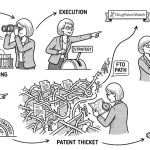
A patent thicket is a dense web of overlapping patent rights held by one or multiple parties that a company must navigate to commercialize a product [9]. In pharmaceuticals, patent thickets arise when a single drug is covered by compound patents, formulation patents, multiple method-of-use patents, process patents, and device patents (for combination drug-device products), held by a mix of originators, research institutions, and third parties.
Biologics are particularly susceptible to patent thickets. AbbVie’s adalimumab (Humira) has been associated with more than 250 patents in the United States, a figure widely cited in academic and policy literature examining barriers to biosimilar competition [10]. While not all of those patents may be enforceable against a given biosimilar product, the cost of conducting FTO analysis across hundreds of patents — and the litigation exposure even from weak patents that a well-resourced originator might assert — represents a meaningful barrier to entry.
For FTO practitioners, recognizing when you are operating in a patent thicket changes the scope of the analysis and the resources required. Thicket analysis often requires mapping the patents held by multiple parties, assessing which claims actually read on the specific biosimilar or generic product being developed, and prioritizing validity challenges and design-around strategies for the highest-risk patents rather than trying to resolve every potential issue at once.
Part IV: Step 1 — Define the Scope of Your FTO Analysis
Identifying the Product or Process
The first and most consequential step in FTO analysis is defining exactly what you are analyzing. Vague scope definitions produce vague, unhelpful analyses. The more precisely you define the product or process under review, the more targeted and actionable the analysis becomes.
For a small molecule drug, scope definition includes the chemical structure of the API at the level of stereochemistry, salt form, and polymorphic form; the formulation components and their concentrations; the intended route of administration; the intended therapeutic indication or indications; and the manufacturing process at the level of synthetic route and key process parameters. Changes to any of these elements may affect the FTO analysis outcome substantially.
For a biologic, scope definition is more complex because biologics are large, heterogeneous molecules defined partly by their manufacturing process. A biosimilar applicant must define not only the amino acid sequence of the protein but also the cell line used for expression, the upstream and downstream manufacturing conditions, the glycosylation profile of the resulting protein, and the formulation. Each of these elements may be covered by separate patents, and changes to manufacturing process that affect the molecule’s characteristics may move the product in or out of the scope of specific claims.
Process patents require that you define your manufacturing process with sufficient specificity to compare it against patent claims. This means working with your process chemistry, manufacturing, and analytical teams early in the FTO process to document the process clearly. FTO counsel cannot assess process patent risk from a black-box description of “our proprietary synthesis.”
Defining the Jurisdictions
Patent rights are territorial. A patent granted by the United States Patent and Trademark Office provides no rights against activities conducted entirely in Germany. An FTO analysis must identify the jurisdictions where the product will be manufactured, sold, imported, and used.
For pharmaceutical companies launching in multiple markets, this typically means analyzing patent coverage in the United States, the European Union (or key EU member states separately, since patent litigation in Europe remains largely national despite the Unified Patent Court’s growing role), Japan, China, Canada, Australia, and other significant commercial markets. Each jurisdiction has different patent law, different claim construction standards, different invalidity doctrines, and different litigation costs and timelines.
Prioritizing jurisdictions matters when resources are constrained. A company planning to launch first in the United States, with European and Japanese launches following 12 to 18 months later, should conduct a comprehensive U.S. FTO analysis immediately and a more streamlined priority assessment for Europe and Japan that can be deepened as the launch timeline approaches.
Manufacturing jurisdiction deserves special attention. A product manufactured in India that is imported into the United States may infringe a U.S. process patent under 35 U.S.C. § 271(g), which extends U.S. process patent rights to products made abroad using a patented process and imported into the United States [11]. A company that conducts FTO analysis only for the U.S. market and ignores the manufacturing jurisdiction risks exactly this exposure.
Setting the Timeline
FTO analysis is time-sensitive in two directions. You need it completed before you make investment decisions that would be affected by its outcome, and you need it updated as the patent landscape evolves, as your product definition changes, and as your commercial plans develop.
At the discovery stage, a rapid FTO screen — sometimes called a “patentability and FTO landscape” — takes one to three weeks and costs $10,000 to $30,000. It identifies the major blocking patents and sets a rough risk profile for the program. This is not a comprehensive FTO analysis; it is an early warning system that informs whether the program warrants deeper investment.
A comprehensive FTO analysis suitable for supporting a major investment decision — a licensing transaction, a clinical trial initiation, or a commercial launch — takes four to twelve weeks depending on the complexity of the patent landscape and typically costs $50,000 to $200,000 in legal fees. The analysis should be updated at key decision gates: before IND filing, before Phase 3 initiation, before NDA/BLA submission, and before commercial launch.
Part V: Step 2 — Build Your Search Strategy
Selecting the Right Databases
No single patent database covers the global patent landscape comprehensively. Effective FTO searching requires using multiple databases with complementary coverage and strengths.
The European Patent Office’s Espacenet database and platforms such as PatSnap provide broad multilingual access to patent publications from most major patent offices. Google Patents offers user-friendly search functionality and full-text search capability across a large corpus of patents and published applications. The Derwent Innovation database, a commercial product from Clarivate, provides enhanced indexing of patent documents with chemical structure search capability — essential for pharmaceutical FTO work where you may need to search by structure rather than text alone.
For pharmaceutical-specific FTO work, DrugPatentWatch is an indispensable complement to general patent databases. The platform aggregates FDA Orange Book patent listings, tracks patent expiration dates with PTE and SPC adjustments, monitors new patent filings and patent challenges, and provides structured search tools organized around approved drugs and their active ingredients. A searcher using DrugPatentWatch can rapidly identify all Orange Book-listed patents for a given drug, see which are contested by Paragraph IV certifications, and access prosecution history links for detailed claim analysis — work that would take days of manual FDA database cross-referencing otherwise.
Chemical structure databases are critical for small molecule FTO work. Reaxys and SciFinder Scholar allow you to search by chemical structure or substructure, finding patents that cover your compound or closely related compounds even when the patent text does not use the same name or CAS number for the compound that you would use. These tools require trained chemists to operate effectively, and integrating chemical structure search results with text-based patent search results is a key step in comprehensive pharmaceutical FTO work.
Crafting Boolean Search Strings
Text-based patent searching uses Boolean operators (AND, OR, NOT) and proximity operators to find documents containing specific combinations of terms. Effective search strings require careful vocabulary selection because patent claims often use technical language that differs from scientific literature, trade names differ from IUPAC names, and the same concept may be described using different terminology across patents from different countries or time periods.
For a pharmaceutical FTO search, a starting text search string might combine the INN (international non-proprietary name) of the API with its synonyms and CAS number; a description of the general chemical class (such as “kinase inhibitor” or “GLP-1 agonist”); the therapeutic indication; and key mechanistic terms. The goal of the initial broad search is to capture all potentially relevant patents in one pass, erring on the side of over-inclusion.
Refining the search string iteratively is standard practice. After reviewing the first set of results, you identify the most relevant patents, examine their claims and descriptions for additional vocabulary, and incorporate that vocabulary into subsequent search iterations. This cycle continues until new searches return primarily documents already in your set — a reasonable indicator that you have reached the boundaries of the relevant patent landscape, though never a guarantee of completeness.
Using CPC and IPC Classification Codes
The Cooperative Patent Classification (CPC) system and the International Patent Classification (IPC) system organize patents by technology area using hierarchical codes. For pharmaceutical FTO searches, CPC codes in the A61K (pharmaceutical preparations), A61P (therapeutic activity), and C07 (organic chemistry) subclasses provide a structural entry point to the relevant patent literature that complements text-based searching.
Class-based searching catches patents that a text search misses — patents that claim related compounds without using your target compound’s specific name, patents that claim the formulation approach you are using without specifying the API, or patents that claim the manufacturing process without naming the final product. Combining class-based searching with text-based searching and chemical structure searching is the triad of comprehensive pharmaceutical patent searching.
The practical limit of class-based searching is granularity. CPC subclasses for therapeutic compounds can contain hundreds of thousands of patents, and reviewing all of them is not feasible. Class-based searches work best as a supplement to text and structure searches, used to catch documents that fell outside the text search but fall within the right technology class.
DrugPatentWatch as a Specialized Intelligence Tool
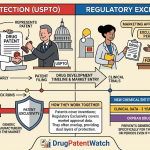
For companies conducting FTO analysis on drugs that have already received FDA approval or are close to approved drugs, DrugPatentWatch provides a level of patent-regulatory integration not available in general patent databases. The platform’s core value for FTO practitioners is that it connects the regulatory data (FDA approvals, Orange Book listings, REMS requirements, exclusivity grants) with the patent data (claims, expiration dates, prosecution history links, litigation records) in a single searchable interface.
A typical FTO workflow using DrugPatentWatch might start with a search for all patents listed in the Orange Book for the brand drug most similar to your development candidate. The results show not just the patent numbers and expiration dates but also whether each patent has been challenged by a Paragraph IV certification, which generic companies filed the certification, and the current status of any resulting litigation. This tells you immediately whether the most valuable patents in the landscape are already being contested and by whom — information that shapes both your design-around strategy and your validity challenge assessment.
DrugPatentWatch also tracks patent applications that cite approved drug patents, which helps identify potential continuation and divisional applications that a competitor may be prosecuting to expand their claim coverage. Monitoring these applications is part of the continuous FTO surveillance function discussed later in this guide.
Prior Art Search vs. FTO Search: Understanding the Distinction
Prior art searches and FTO searches are related but serve different purposes. A prior art search looks for existing disclosures — patents, publications, public uses — that would invalidate a patent claim by establishing that the invention was previously known or obvious. An FTO search looks for existing patents that might block your commercial activity regardless of whether they are valid.
The distinction matters in practice because you will conduct both types of searches during pharmaceutical development, but at different times and for different purposes. Prior art searches are primarily used to assess the patentability of your own inventions and to challenge competitors’ patents in IPR proceedings. FTO searches assess the risk your product faces from existing patent claims in the market where you plan to operate.
A comprehensive FTO analysis integrates both perspectives: it identifies patents that might read on your product, then evaluates the strength of those patents against available prior art to assess whether a validity challenge would be viable. This combined analysis gives decision-makers a two-dimensional risk picture: patents that are both infringed and strong require licensing or design-around; patents that are infringed but weak may be challengeable; patents that are not infringed are removed from the risk register regardless of their strength.
Part VI: Step 3 — Retrieve and Screen the Patent Universe
Broad Retrieval First
The initial phase of a pharmaceutical FTO search should retrieve more patents than you expect to need. The goal is completeness, not precision. Experienced FTO searchers typically retrieve thousands of documents in the initial pass and narrow systematically to the relevant set. Starting too narrow risks missing important patents because a search term was too specific or a patent used unexpected vocabulary.
Broad retrieval means running all your search strategies — text, class, and structure — without aggressive filtering by date, jurisdiction, or assignee. You can filter later. Filtering prematurely risks excluding relevant patents based on assumptions that turn out to be wrong.
A reasonable initial retrieval for a small molecule drug targeting a competitive market might return 2,000 to 5,000 patent documents. That number is not as daunting as it sounds, because most of those documents will be excluded rapidly in the first screening pass.
Screening for Relevance
The screening phase applies increasingly specific criteria to reduce the initial retrieval set to a manageable number of patents requiring detailed analysis. The process is hierarchical: first you screen by technology relevance, then by claim scope relevance, then by legal status relevance.
Technology relevance screening eliminates patents clearly directed to different technologies. A patent in a kinase inhibitor FTO search that turns out to cover an agricultural herbicide is not relevant and is excluded. This first pass reduces the set by 60% to 80% in most searches and can be done by a trained patent searcher or technician reviewing titles and abstracts.
Claim scope relevance screening focuses on the remaining set. Patents with abstract or claim language suggesting potential relevance to your product, process, or therapeutic use are retained for detailed analysis. Patents whose claims, on careful reading, are directed to compounds, formulations, or uses sufficiently different from your product are excluded with documented reasoning.
Legal status screening eliminates expired patents, abandoned applications, and patents that have been conclusively invalidated in litigation or administrative proceedings. A patent that expired three years ago does not threaten your commercial activity today. Checking legal status requires examining the patent office’s patent status database and, for U.S. patents, reviewing the USPTO’s Patent Center records for maintenance fee payment status.
Building the Patent Matrix
After screening, the surviving patents are organized into a patent matrix — a structured document that becomes the working tool for the rest of the analysis. Each row in the matrix represents one patent. Columns capture the patent number, assignee, filing date, expiration date, representative claim, claim type (compound, formulation, use, process), a preliminary infringement assessment, a preliminary validity assessment, and a recommended action.
The patent matrix serves multiple functions throughout the FTO process. It is the organizing document for the legal analysis, the communication tool for briefings to management, the basis for the risk stratification exercise, and the reference document for updating the analysis as the patent landscape evolves. A well-maintained patent matrix built early in a development program becomes a living IP intelligence tool.
Part VII: Step 4 — Analyze Claim Scope
Independent vs. Dependent Claims
Patent claims define the scope of the patent holder’s exclusive rights. A patent may contain dozens or even hundreds of claims organized in a hierarchy. Independent claims stand alone — they define the invention without reference to any other claim. Dependent claims refer back to an independent claim and add additional limitations, making them narrower in scope than the independent claim from which they depend.
For FTO purposes, independent claims are the primary concern because they define the broadest scope of protection. If your product does not fall within an independent claim, it cannot fall within any dependent claim that depends from it, since dependent claims are always narrower. If your product potentially falls within an independent claim, you should also analyze the dependent claims, because a product that avoids an independent claim through a design-around may inadvertently fall within a different independent claim in the same patent.
In pharmaceutical patents, independent claims typically cover: the compound itself (or a class of compounds); a pharmaceutical composition comprising the compound; a method of treatment using the compound; or a process for making the compound. Each independent claim type requires a different FTO analysis. You may have freedom to operate with respect to the compound claims because the compound patent has expired, while still potentially infringing formulation claims that remain in force.
The Role of the Specification and Prosecution History
Claim scope is not determined solely by the claim language itself. Two interpretive resources constrain claim meaning: the specification (the written description accompanying the claims) and the prosecution history (the record of communications between the applicant and the patent examiner during examination).
The specification defines terms used in the claims, provides examples of embodiments of the invention, and sets the overall context for understanding the claims. When a claim term is ambiguous, the specification is the primary interpretive resource. A patent claim that uses the term “pharmaceutically acceptable salt” means whatever the specification defines that term to mean, which may be broader or narrower than the general industry understanding.
The prosecution history records every argument, amendment, and interview that occurred between the applicant and the examiner. If an applicant amended a claim to narrow it in response to a prior art rejection, the prosecution history establishes that the original broader scope was surrendered. This surrender is known as prosecution history estoppel, and it limits the patent holder’s ability to use the doctrine of equivalents to recapture surrendered claim territory.
Reading prosecution histories is time-consuming but essential for high-risk patents. The prosecution history often reveals weaknesses in a patent that the claims alone do not show — arguments the examiner made that the applicant accepted, prior art cited by the examiner that came close to the invention, and claim amendments that surrendered important scope.
Literal Infringement and the Doctrine of Equivalents
Patent infringement analysis begins with literal infringement: does each and every element of a patent claim appear in the accused product or process? If your product includes all the elements of an independent claim, you literally infringe that claim. If your product is missing any one claim element, you do not literally infringe.
The doctrine of equivalents extends infringement beyond literal claim language to cover products or processes that do not literally infringe but are insubstantially different from the claimed invention [12]. Under the classic “function-way-result” test articulated in Graver Tank v. Linde Air Products, an element in an accused product is equivalent to a claim element if it performs substantially the same function in substantially the same way to achieve substantially the same result. The doctrine was designed to prevent competitors from making trivial variations to avoid literal claim language while capturing the benefit of the patented invention.
For pharmaceutical FTO analysis, the doctrine of equivalents has practical importance when your compound differs slightly from a patented compound. A structure that is not literally within a compound claim may still infringe under equivalents if the structural difference is insubstantial — if it does not change the pharmacological activity in a meaningful way. The Actavis case in the UK, discussed earlier, illustrates how a non-literal infringement theory can change the FTO analysis for a clinically similar product.
Designing around a patent must account for equivalents. A design-around that avoids literal infringement but falls within the doctrine of equivalents provides no protection. The design-around must be substantial enough to be clearly outside the scope of the equivalents analysis.
File Wrapper Estoppel
When a patent applicant narrows a claim during prosecution to overcome a prior art rejection or an enablement objection, the prosecution history estoppel created by that amendment bars the patent holder from later using the doctrine of equivalents to recapture the surrendered territory [13]. This principle is called file wrapper estoppel, and it represents one of the most powerful analytical tools in FTO work.
When you identify a patent whose claims appear to read on your product through the doctrine of equivalents, the prosecution history is the first place to look for estoppel arguments. Did the applicant amend those claims? Did they make arguments distinguishing prior art that cover the structural variation in your product? If so, the patent holder may be estopped from asserting infringement against you under equivalents for exactly that variation.
File wrapper estoppel analysis requires careful reading of the prosecution history against the specific infringement theory you are testing. Estoppel is claim-specific and argument-specific. An estoppel arising from an amendment to one claim element does not necessarily bar equivalents arguments about different elements of the same claim.
Part VIII: Step 5 — Assess Patent Status and Validity
Checking Expiration Dates
A patent that has expired cannot be infringed. Calculating expiration dates for pharmaceutical patents requires more than subtracting 20 years from the filing date.
For U.S. patents, the base term of 20 years from the earliest effective filing date may be extended by: a patent term extension (PTE) under 35 U.S.C. § 156, which compensates for time spent in regulatory review and can add up to five years to the patent term; patent term adjustment (PTA) under 35 U.S.C. § 154, which compensates for USPTO examination delays; and terminal disclaimer filings, which may shorten the term to match a related patent. For European patents, supplementary protection certificates (SPCs) can extend effective exclusivity for up to five years beyond the standard 20-year patent term.
The interaction between PTEs, PTAs, and terminal disclaimers can produce patent expiration dates that diverge significantly from the simple 20-year calculation. DrugPatentWatch calculates adjusted expiration dates for Orange Book-listed patents, accounting for PTE grants and SPC data where available, which makes it a practical resource for this step of the analysis.
Maintenance fee status must also be verified. In the United States, utility patents require maintenance fee payments at 3.5, 7.5, and 11.5 years after grant. A patent on which maintenance fees have not been paid lapses, and its claims become unenforceable from the lapse date forward. Verifying maintenance fee status in the USPTO Patent Center is a routine step that occasionally reveals that an apparently threatening patent has actually lapsed for failure to pay fees.
Patent Term Extensions and Supplementary Protection Certificates
Patent term extensions in the United States are available for patents covering FDA-approved drugs, medical devices, food additives, and color additives, where regulatory review has consumed a portion of the patent’s effective commercial life [14]. The maximum PTE is five years, and the total effective exclusivity period after regulatory approval cannot exceed 14 years for drugs. Only one PTE can be granted per regulatory approval.
The PTE calculation is based on half the IND period (the time between IND filing and NDA submission) plus the full NDA review period. For complex drugs with long development timelines, PTEs regularly add three to four years of effective exclusivity beyond the base patent term. An FTO analysis that ignores PTE grants can produce an expiration date that is incorrect by several years, which may materially affect the assessment of when generic competition becomes legally permissible.
European SPCs operate similarly but are calculated differently and issued by individual national patent offices. The SPC calculation is based on the difference between the filing date of the basic patent and the date of first marketing authorization in the EU, minus five years. The maximum SPC duration is five years, with a six-month pediatric extension available under certain conditions. For multinational FTO work, calculating SPC status in each EU member state is a necessary step that adds material complexity to the analysis.
Challenging Validity: IPR, PGR, and Patent Opposition
The most powerful tool a company facing an FTO problem with a weak but valid-appearing patent has is an administrative validity challenge. In the United States, two primary mechanisms exist: inter partes review (IPR) and post-grant review (PGR), both created by the America Invents Act in 2011 and adjudicated by the Patent Trial and Appeal Board (PTAB).
IPR challenges validity on the grounds of prior art — specifically, whether the claimed invention was anticipated by or obvious in view of prior art patents or printed publications [15]. An IPR petition must be filed within one year of being served with a complaint alleging patent infringement, and petitions not filed within that window can only be filed proactively (before litigation is filed). The IPR process is significantly faster and less expensive than district court litigation: PTAB final written decisions are due within 12 months of institution, compared to the multi-year timeline of district court patent trials.
IPR has become a standard tool in pharmaceutical FTO strategy. A company facing a formulation patent that blocks its generic launch may file an IPR petition challenging the patent’s validity based on prior art, simultaneously with or shortly after its Paragraph IV certification triggers an infringement suit. If PTAB institutes the IPR and eventually invalidates the patent, the FTO barrier is removed without the need to win a full district court trial. The threat of an IPR petition also gives companies leverage in licensing negotiations: a potential licensee with a credible IPR case has a “walk away” option that affects the negotiating dynamics.
PGR petitions, available only within nine months of a patent’s grant, allow challenges based on a broader range of invalidity grounds including written description and enablement. For newly granted pharmaceutical patents, PGR represents an early opportunity to attack validity before the patent has been enforced against anyone.
Part IX: Step 6 — Assess the Infringement Risk
The Freedom-to-Operate Opinion
A formal FTO opinion is a written legal document, typically prepared by outside patent counsel, that sets out the legal analysis supporting a conclusion about whether a specific product or process infringes specific patent claims [16]. FTO opinions are not required before commercializing a product, but they serve two critical functions: they give decision-makers a documented, expert assessment of their IP risk position, and they provide a defense against claims of willful infringement if litigation follows.
Willful infringement, under 35 U.S.C. § 284, can support an award of enhanced damages of up to three times the actual damages in a patent infringement case. To establish willfulness, a patent holder must show that the infringer acted despite an objectively high likelihood that its actions constituted patent infringement. A well-reasoned FTO opinion concluding non-infringement, obtained before commercialization, is strong evidence that the company did not act with the requisite culpable state of mind even if a court later finds infringement [17].
The protective value of an FTO opinion depends on its quality. An opinion that skips key patents, mischaracterizes claim scope, or reaches a conclusion that is clearly incorrect provides little protection and may even hurt a defendant who relies on it. Decision-makers should expect FTO opinions from reputable patent counsel to include a thorough description of the search methodology, analysis of each relevant patent claim against the specific product at issue, assessment of the strength of non-infringement and invalidity arguments, and an overall risk rating.
Risk Stratification: Red, Yellow, Green
Not all patent risks in an FTO analysis are equal, and communicating the results to non-legal decision-makers requires translating legal analysis into actionable risk categories.
A red-light patent is one where the FTO analysis concludes that your product likely infringes a valid, enforceable, in-force claim with no obvious design-around and no credible short-term validity challenge. Red-light patents require one of the four mitigation strategies discussed in the next section: design around, license, challenge, or avoid the market. They cannot be ignored.
A yellow-light patent is one where the infringement analysis is uncertain (claim scope is broad or ambiguous), the validity arguments are plausible but not strong, or a design-around is technically feasible but requires development work. Yellow-light patents should be monitored closely and reassessed as the claim scope is clarified through litigation or prosecution, as the design-around is developed, or as the IPR landscape evolves.
A green-light patent is one where non-infringement is clear, or where the patent has expired, or where validity is so weak that the patent poses no practical commercial threat. Green-light patents are cleared from the risk register and do not require ongoing attention unless the patent holder commences prosecution of a continuation application with broadened claims.
When to Get a Written Opinion
Written FTO opinions should be obtained when commercial stakes are high enough to justify the cost and when the patent risk is material enough that a documented, expert analysis provides both decision support and legal protection. Specifically, companies should obtain written FTO opinions in four situations: before initiating Phase 3 clinical trials, when the investment at that stage typically exceeds $100 million; before any licensing transaction in which patents from the target company are being acquired or licensed; before filing an NDA or BLA; and before commercial launch in any major market.
Companies that defer written opinions until after litigation is filed lose the willful infringement defense value. The opinion must predate the infringement to be relevant to the willfulness analysis. Obtaining an opinion after a lawsuit is filed may still serve an internal risk assessment purpose, but it provides none of the legal protection that a pre-suit opinion provides.
Part X: Step 7 — Risk Mitigation Strategies
Design Around
Design-around is the process of modifying your product or process to avoid falling within the scope of a blocking patent’s claims. It is often the most commercially attractive mitigation strategy because it eliminates the FTO risk without requiring negotiation with the patent holder or paying ongoing royalties.
Effective design-around requires a thorough understanding of the patent claim scope, including the prosecution history limitations discussed above, and close collaboration between IP counsel and the technical team. The design modification must be both outside the scope of the blocking claim (including equivalents) and technically feasible, regulatorily approvable, and commercially viable.
In pharmaceutical development, design-around most commonly involves modifying the compound structure (for compound patents), changing the formulation composition or delivery system (for formulation patents), targeting a different indication (for method-of-use patents), or using a different synthetic route (for process patents). Each of these modifications has development costs and timelines, and the decision to design around versus license must account for both the technical difficulty of the modification and the royalty cost and business limitations of a license.
A well-executed design-around can also produce patentable improvements. A formulation modification that avoids a blocking patent may itself be patent-eligible if it produces unexpected benefits. Companies that design around existing patents and file their own patents on the resulting improvements build a stronger IP position over time.
Licensing
When design-around is technically difficult, commercially undesirable, or would require regulatory re-work that delays launch, licensing the blocking patent may be the preferred route. Pharmaceutical licensing is a well-developed commercial activity with established norms, precedents, and deal structures.
Licensing negotiations begin with understanding what you need — which patents, for which products, in which jurisdictions, for what duration — and what your alternatives are. A potential licensee that has no credible alternatives to a license negotiates from a position of weakness. One with a viable design-around and a pending IPR petition negotiates from a position of strength.
Royalty rates in pharmaceutical patent licensing vary by the strength of the patent, the availability of alternatives, the commercial value of the product, and the stage of development at which the license is sought. Industry benchmarks place royalty rates for small molecule drug patents at 3% to 8% of net sales for process and formulation patents, and 5% to 15% for composition and method-of-use patents covering primary indications [6]. Licenses sought under litigation threat, or after a Paragraph IV certification, typically command higher rates reflecting the deteriorated bargaining position of the licensee.
Licensing negotiations in pharma frequently involve more than royalties. They may include field-of-use restrictions, geographic restrictions, milestone payments, most-favored-nation clauses, and co-promotion rights. Understanding the full deal structure — not just the headline royalty rate — is essential for evaluating whether a license is commercially viable.
Challenge
Challenging the validity of a blocking patent through IPR, PGR, or equivalent foreign proceedings is a mitigation strategy that, if successful, eliminates the FTO problem entirely for all parties. Unlike a license, which pays the patent holder for access, a successful validity challenge creates a permanent, free path to market for everyone.
The risk is failure. A losing IPR petition exhausts the statutory estoppel provisions: if PTAB denies institution or issues a final written decision upholding the patent on a ground raised or that reasonably could have been raised, the petitioner is estopped from raising those grounds again in district court [18]. A poorly planned IPR petition can actually strengthen the patent holder’s position by clearing prior art that district court litigation could have relied on without the estoppel limitation.
Challenge strategy works best when the prior art case is strong. The best IPR petitions combine clearly anticipatory prior art references with expert testimony explaining the technical equivalence between the prior art and the claimed invention. Petitions built on references that only arguably meet the claim elements, without strong expert support, are less likely to succeed and carry higher estoppel risk.
Collaboration, Acquisition, and Cross-Licensing
In some situations, neither design-around, licensing, nor validity challenge is the right answer. The blocking patent may be so fundamental, and so clearly valid, that the only commercially sensible path is to acquire or partner with its holder.
Patent-driven acquisitions and collaborations are common in the pharmaceutical industry. A company that owns a blocking patent on a key target mechanism, formulation technology, or manufacturing process may be acquired specifically because of that IP position. The acquirer gains the freedom to operate it needs while also removing the IP barrier for competitors who did not make the acquisition.
Cross-licensing — the mutual grant of licenses between two companies each holding patents the other needs — is common between large pharmaceutical companies with overlapping research programs. Cross-licenses may be royalty-free (pure freedom-to-operate trades) or royalty-bearing, and they frequently cover broad fields of technology rather than specific products. Strategic defensive patenting, building your own patent portfolio in areas adjacent to your product to create cross-licensing value, is a long-term IP strategy that complements individual FTO mitigation decisions.
Part XI: FTO Through the Drug Development Pipeline
FTO at the Discovery Stage
At the discovery stage, FTO analysis is a screening tool rather than a comprehensive risk assessment. The goal is to identify major IP barriers early enough to influence compound selection and program prioritization, before significant development capital is committed.
Discovery-stage FTO screens typically focus on compound patents — the primary layer of IP protection for novel drugs — and on any method-of-use patents that would block the specific indication being pursued. Formulation and process patents are less relevant at this stage because the dosage form and manufacturing process have not yet been defined.
A discovery-stage FTO screen should answer three questions: are there in-force compound patents that would block development of your lead compound or its close analogs? Are there in-force method-of-use patents that would block the specific therapeutic indication you are pursuing? And are there published patent applications suggesting that a competitor is pursuing the same target, which may create future FTO risks as those applications are examined and granted?
FTO at IND-Enabling Studies
By the time a drug candidate enters IND-enabling studies, the product definition is becoming clearer. The compound structure is set, the intended indication is defined, and the formulation approach is taking shape.
This is the right time for a more comprehensive FTO analysis. The compound FTO work done at discovery should be revisited with the benefit of more specific product definition. The formulation FTO analysis should begin as the dosage form is selected. The process FTO analysis should start as the synthetic route is developed.
IND-enabling FTO analysis should also assess whether the clinical trial program itself is covered by any patents. Method-of-use patents on clinical trial designs, patient selection methods, or dosing regimens can create complications even at the investigational stage, though the FDA’s safe harbor under 35 U.S.C. § 271(e)(1) shields activities “reasonably related to the development and submission of information under a Federal law which regulates the manufacture, use, or sale of drugs” from patent infringement claims [19]. The safe harbor is broad but not unlimited, and understanding its boundaries matters for complex clinical programs.
FTO at Phase 2 and Phase 3 Clinical Trials
The decision to initiate Phase 2 and Phase 3 clinical trials commits companies to hundreds of millions of dollars in development spending. FTO analysis before these decisions should be comprehensive: it should cover compound, formulation, method-of-use, and process patents; it should address all major commercial markets; and it should be supported by written FTO opinions from qualified patent counsel for the markets where commercial exposure is greatest.
By Phase 3, the commercial formulation is typically established, the manufacturing process is defined, and the target indication and patient population are clearly specified. The FTO analysis at this stage has a complete product definition to work with, enabling a more precise claim-scope analysis than was possible at earlier stages.
Phase 3 FTO analysis should specifically address: the Orange Book listing strategy (which of your patents, if any, will be listed in the Orange Book, and when?); the potential for generic Paragraph IV challenges upon approval; the secondary patent strategy (are there formulation or method-of-use patents you should be prosecuting to create additional layers of protection?); and the international exclusivity position (are PTEs and SPCs available for your key markets?).
FTO at NDA and BLA Submission
The NDA or BLA filing stage requires the full commercial patent strategy to be in place. Orange Book patent listings must be determined before approval, and the patents listed will be the ones subject to Paragraph IV certifications from potential generic entrants.
Orange Book listing requires careful judgment. Only patents that claim the approved drug product or an approved method of using the drug product are eligible for listing [20]. Listing a patent that does not meet the eligibility requirements creates exposure under the Hatch-Waxman framework, under which the FDA may delist the patent on a generic applicant’s complaint without a court ruling on the merits.
The FTO analysis at NDA submission should also cover the product’s global patent position with respect to the competitor landscape. If a competitor is developing a similar product — a follow-on compound in the same class, a biosimilar to your biologic, or a combination product using your API with a different companion agent — their development activities may be monitored using patent application tracking through platforms like DrugPatentWatch and the patent databases discussed earlier.
Part XII: Biologics and Biosimilars — A Special FTO Case
The Complexity of Biologic Patent Coverage
Biologics — large molecule drugs including monoclonal antibodies, fusion proteins, enzymes, cytokines, and vaccines — present FTO challenges that differ fundamentally from those of small molecule drugs. A biologic’s therapeutic activity depends not only on its amino acid sequence but also on higher-order protein structure, glycosylation patterns, post-translational modifications, and manufacturing-induced product-related substances. Each of these properties can be the subject of separate patent claims.
The biologic patent landscape is typically denser than the small molecule landscape. A monoclonal antibody product may face patents on the antibody sequence and structure, the cell line used for production, the upstream cell culture process, the downstream purification process, the formulation, the device used for administration, specific epitopes recognized by the antibody, and methods of treating specific diseases with the antibody. Originator companies invest heavily in building this multi-layered patent portfolio, and FTO analysis for a biosimilar developer must assess all of these layers.
The BPCIA Patent Dance
The Biologics Price Competition and Innovation Act (BPCIA), the biosimilar analog to the Hatch-Waxman Act, creates a structured patent exchange process between the reference product sponsor and the biosimilar applicant that practitioners call the “patent dance” [21]. The patent dance is a formal information exchange in which the biosimilar applicant provides its manufacturing and product information to the originator, the originator identifies patents it believes are infringed, the parties negotiate which patents to litigate in a first wave of litigation, and remaining patents may be litigated later.
The patent dance has direct implications for FTO analysis in the biosimilar context. The biosimilar applicant’s decision to engage in the dance (which is technically optional but has strategic consequences for patent litigation timing) affects how quickly the originator can bring patent infringement claims and how much information is exchanged. A biosimilar developer that has conducted comprehensive FTO analysis before filing its 351(k) application is better positioned to make strategic dance-participation decisions.
FTO for Biosimilar Developers
The FTO analysis for a biosimilar developer begins with identifying the reference product’s patent estate. DrugPatentWatch provides patent listings for approved biologics, including Orange Book information for those biologics subject to Hatch-Waxman. Identifying which patents are enforceable in the biosimilar context, as opposed to those covering the reference product’s specific features that the biosimilar by definition does not copy, requires careful technical and legal analysis.
Biosimilar FTO analysis must grapple with the doctrine of equivalents more seriously than small molecule FTO typically requires. Because a biosimilar is by definition similar to but not identical to the reference product, differences in glycosylation, charge variants, or impurity profiles may take the biosimilar outside the literal scope of claims covering the reference product’s specific molecular characteristics — but may still fall within equivalents if the differences are insubstantial. <blockquote> “As of 2023, the FDA had approved more than 40 biosimilar products in the United States, yet the average biosimilar applicant faces litigation on approximately 15 patents per reference product — a figure that reflects the density of the patent thickets biosimilar developers routinely encounter.” [22] </blockquote>
The FTO investment for a biosimilar program is correspondingly significant. Leading biosimilar developers allocate five to ten patent attorneys to a single biosimilar FTO project during the peak of the analysis, and the total FTO-related legal spend for a complex biologic reference product may run to $2 million to $5 million before a single litigation proceeding is filed.
Part XIII: Generic Drugs and the Hatch-Waxman Framework
Hatch-Waxman as Structured FTO
The Drug Price Competition and Patent Term Restoration Act of 1984, commonly called the Hatch-Waxman Act, created the most structured FTO framework in any regulated industry. Under Hatch-Waxman, a generic drug applicant filing an Abbreviated New Drug Application (ANDA) must certify its position with respect to each patent listed in the FDA’s Orange Book for the reference listed drug.
Four types of certifications are available. A Paragraph I certification states that no patent is listed in the Orange Book. A Paragraph II certification states that the patent has expired. A Paragraph III certification states that the applicant will not launch until after the patent expires. A Paragraph IV certification states that the listed patent is invalid, unenforceable, or will not be infringed by the generic product [23].
Only the Paragraph IV certification is an FTO decision in the full sense of the term. It requires the ANDA applicant to take a legal position — supported by a detailed statement of the factual and legal bases for the certification — that the patent is either invalid or not infringed. This statement must be accompanied by notice to the patent holder, which triggers the 45-day window in which the patent holder can file suit to trigger the 30-month stay on FDA approval.
Paragraph IV Strategy as FTO in Practice
A Paragraph IV certification strategy is the formal, regulatory manifestation of the FTO analysis process. The detailed statement of bases for the Paragraph IV certification — which the FDA requires to be provided to both the patent holder and the FDA itself — is essentially a public filing of the generic company’s FTO analysis, setting out its specific infringement and validity arguments for each listed patent.
The strategic value of being the first ANDA applicant to file a Paragraph IV certification is the 180-day generic exclusivity period awarded by the Hatch-Waxman Act. The first filer to receive approval and launch gets 180 days during which no other ANDA applicant can receive approval for the same drug. For a major brand drug with $1 billion or more in annual sales, 180 days of generic exclusivity on a product priced at 15% to 20% below brand is worth $100 million to $150 million in gross revenue.
This exclusivity incentive has made the Paragraph IV certification process intensely competitive. Generic companies monitor the Orange Book patent listings for major drugs years before those patents expire, build their FTO analyses and invalidity cases years in advance, and race to file their ANDA on the day they believe they can support a Paragraph IV certification. The FTO analysis in this context is not just a risk management exercise — it is the foundation of a commercial strategy worth hundreds of millions of dollars.
ANDA Litigation as FTO Enforcement
When a brand company receives notice of a Paragraph IV certification and files an infringement suit within 45 days, the resulting litigation is the judicial review of the generic company’s FTO analysis. The generic company’s Paragraph IV statement becomes the roadmap for its litigation strategy, and the brand company’s infringement case is the challenge to the FTO opinion the generic company submitted.
Paragraph IV litigation statistics show that generic companies prevail, in whole or in part, in a majority of contested Paragraph IV cases. Research examining Paragraph IV outcomes found that generic companies succeeded in invalidating or designing around Orange Book patents in approximately 70% of cases that were litigated to a decision [24]. This success rate reflects both the quality of generic FTO analysis and the inherent weakness of many secondary patents that are routinely Orange Book-listed by brand companies.
The litigation record from Paragraph IV cases is a rich source of FTO intelligence for generic and specialty pharmaceutical companies. Published decisions from Paragraph IV cases provide detailed judicial analysis of pharmaceutical patent claim scope, validity arguments, and infringement theories that inform FTO analyses for related drugs and related patent types.
Part XIV: Common FTO Pitfalls and How to Avoid Them
Overlooking Foreign Patents
U.S.-focused companies sometimes conduct thorough FTO analysis for the American market while neglecting Europe, Japan, China, and other jurisdictions where they plan to sell or manufacture. Foreign patents can block U.S. companies just as effectively as U.S. patents in those markets, and in some cases, foreign patent prosecution strategies produce claim scopes that differ materially from the corresponding U.S. patents.
European patent prosecution takes place before the European Patent Office under examination standards that diverge from the USPTO in important respects. A patent that received narrow claims in the United States because the examiner cited strong prior art may have received broader claims in Europe if the European examiner found the prior art less relevant. Assuming that U.S. claim scope mirrors European claim scope without independently analyzing the European prosecution history is a mistake that experienced FTO practitioners avoid.
China has become a critical jurisdiction for pharmaceutical FTO analysis as both a manufacturing hub and an increasingly important commercial market. Chinese pharmaceutical patent law has evolved significantly over the past decade, and both patent holders and generic companies have become more sophisticated in using the Chinese patent system. A pharmaceutical FTO analysis that ignores China is incomplete for any product with Chinese manufacturing or commercial ambitions.
Missing Divisional and Continuation Applications
Patent families can sprawl. An original patent application may give rise to one or more continuation applications, which claim the same priority date and can present new claims directed to different aspects of the invention. Continuation-in-part applications add new disclosure while retaining priority for the original subject matter. Divisional applications, required when the USPTO determines that an application claims two or more independent inventions, result in separate patents covering different aspects of the original application.
A company that conducts FTO analysis based only on granted patents, without reviewing the family members of those patents and any pending continuation or divisional applications, may achieve a clear FTO result today only to face a blocking patent from a continuation filed years ago when the original application published. Continuation applications can have the same priority date as the parent application but different claims — claims that may be drafted specifically to cover competitor products identified after the original application was filed.
Tracking patent family members is a core function of comprehensive FTO analysis. Using the patent database tools discussed earlier, FTO teams should map each relevant patent to its full family, identify pending continuation or divisional applications within the family, and assess the scope of claims likely to issue from those pending applications. This last step requires reading the pending application claims and comparing them against your product — a prospective FTO analysis on applications that have not yet been granted.
Ignoring Pending Applications
Pending patent applications are not yet enforceable — you cannot infringe a patent that has not yet issued — but they represent future FTO risks that can materialize quickly. The average pendency for a U.S. patent application in the pharmaceutical technology area is approximately 28 months from filing to grant, though applications with final rejections, appeals, or continuation prosecution can take much longer.
A company that builds a commercial strategy around the current FTO position without monitoring relevant pending applications may find that a patent issues during Phase 3 clinical trials or just before commercial launch that changes the FTO calculus. This risk is particularly acute for method-of-use patents, which often are filed later in a drug’s development lifecycle than compound patents, and for patents on combination therapies, where the combination itself may become patented after the individual components are well-known.
Monitoring pending applications should be built into the FTO surveillance program discussed in the next section. Setting alerts for publications in technology classes relevant to your product, and for applications citing key prior art patents in your space, provides early warning of emerging patent risks before they crystallize into granted claims.
Underestimating Claim Broadening During Prosecution
Patent applications often start with broad claims and get narrowed during examination. But the opposite also occurs: applicants sometimes file applications with intentionally narrow claims, obtain allowance quickly, and then file continuation applications with progressively broader claims as the prior art is better understood and competitor activities are observed.
This claim-broadening strategy can produce surprise blocking patents years after the original application was filed. A company that cleared a method-of-use patent in an FTO analysis based on claims narrowly directed to a specific dosing regimen may face a continuation patent with claims broad enough to cover any use of the compound for the indication.
The defense against claim-broadening surprises is proactive monitoring of patent family prosecution status combined with interval FTO updates at major development milestones. A company that reviews its patent matrix every six months and checks for new continuations or recently allowed claims in relevant patent families will catch claim-broadening developments before they become commercial threats.
Part XV: Building a Continuous FTO Monitoring Program
Why FTO Is Not a One-Time Event
The patent landscape surrounding a pharmaceutical product changes continuously throughout that product’s development and commercial life. New patents issue, pending applications publish, patents expire, litigation outcomes alter claim scope through court construction, IPR proceedings invalidate claims, and new continuation applications present fresh threats. A single FTO analysis, no matter how thorough, becomes outdated the moment a new relevant patent issues or application publishes.
Treating FTO as a point-in-time exercise, conducted once at a major decision gate and then filed away, is a mistake that exposes companies to the risks it was designed to prevent. The companies with the strongest IP positions are those that maintain living FTO intelligence programs — continuous surveillance systems that flag relevant changes in the patent landscape and trigger periodic reassessment of the risk register.
Building a continuous FTO program requires modest but sustained investment: typically one to two IP professionals monitoring the landscape on a part-time basis, supported by automated alert systems from patent databases and specialized platforms. The cost is small relative to the cost of a missed patent that leads to a launch injunction or a surprise licensing demand on the eve of a commercial launch.
Setting Up Patent Watch Alerts
Automated patent alerts are the backbone of continuous FTO surveillance. Major patent database platforms — Espacenet, PatSnap, Derwent Innovation, and others — allow users to set keyword and classification alerts that deliver new patent publications matching specified criteria to a named recipient on a weekly or biweekly basis.
Effective alert design for pharmaceutical FTO monitoring combines alerts for: the API name and its synonyms; the target disease or therapeutic class; key assignees (the original patent holders and their known affiliates); and specific patent family members for patents already on the risk register. These alerts will capture new publications in each category as they appear in the database, typically within one to four weeks of their official publication date.
Alert management requires a process for reviewing, triaging, and acting on alerts. Most alerts will identify irrelevant publications that can be quickly dismissed. A small percentage will identify publications requiring further analysis. A smaller number will require updating the FTO analysis and potentially triggering a risk reassessment. Building this workflow into the IP function’s standard operating procedures — with defined escalation paths for high-risk findings — is the organizational complement to the technical alert infrastructure.
Using DrugPatentWatch for Ongoing Monitoring
DrugPatentWatch’s patent monitoring capabilities make it a valuable tool for ongoing FTO surveillance, particularly for the Orange Book-listed patents that represent the most immediate commercial threats to pharmaceutical products approaching launch.
The platform’s patent expiration tracking allows FTO teams to build dashboards showing the expiration dates of all relevant patents in their FTO landscape, adjusted for PTEs and SPCs. This gives a real-time view of when the patent barriers to competition expire — a critical data point for commercial launch planning and partnership negotiations.
DrugPatentWatch also tracks Paragraph IV certification filings, which are public indicators that a competitor has conducted its own FTO analysis and taken a legal position regarding the blocking patents. When a Paragraph IV certification is filed against a patent on your risk register, it signals both that the patent is being actively challenged and that at least one sophisticated party has concluded that the patent is either invalid or not infringed. This intelligence can inform your own FTO strategy — both for evaluating the patent’s strength and for assessing the competitive landscape for your product.
New patent listings in the Orange Book are monitored by DrugPatentWatch as they occur, providing early warning when a brand company adds new patents to the Orange Book for a drug you are tracking. This is the primary defensive surveillance tool for generic and biosimilar developers who need to know immediately when a new exclusivity barrier has been listed.
Integrating FTO Into Your R&D Decision Framework
The most effective pharmaceutical companies integrate FTO analysis into their stage-gate development process as a standard decision criterion alongside clinical, regulatory, and commercial criteria. At each stage gate — advancement from discovery to development, from Phase 1 to Phase 2, from Phase 2 to Phase 3, and from Phase 3 to NDA submission — the FTO status of the program is one of the criteria that must be satisfactorily addressed before advancement.
This integration means that the FTO analysis team is engaged throughout the development process, not called in episodically to conduct emergency analyses when a deal or a launch is imminent. It means that IP risk is discussed in the same meetings as clinical risk and regulatory risk, with the same rigor and the same accountability. When an FTO problem is identified, the organization has time to address it before the commercial stakes are too high to afford the optimal solution.
R&D portfolio management increasingly uses IP landscape analysis — which is an FTO analysis at the portfolio level — as a tool for prioritizing between development programs. Two programs with similar clinical profiles and market sizes may differ substantially in their FTO risk profiles: one faces a clean patent landscape with expiring compound patents and no secondary patent threats, while the other faces a dense thicket of formulation and method-of-use patents requiring either expensive licensing or difficult design-around work. Incorporating FTO risk into the portfolio prioritization model produces better capital allocation decisions.
The operational link between FTO analysis and R&D decision-making is the IP strategy review — a regular meeting, typically quarterly, at which the IP, legal, regulatory, and commercial teams review the current FTO status of active programs, update risk ratings based on new patent activity, and make recommendations for risk mitigation actions. Companies with this governance structure rarely face patent problems at launch; those without it frequently do.
Key Takeaways
FTO analysis is a business tool, not just a legal formality. It produces measurable ROI by preventing misdirected investment, improving licensing negotiation positions, and avoiding the catastrophic cost of a post-launch injunction.
The pharmaceutical patent landscape has multiple layers. Compound patents are only the starting point. Formulation, method-of-use, process, and device patents create independent layers of risk that each require separate analysis. Secondary patents from evergreening strategies commonly extend effective patent barriers well beyond the original compound patent’s expiration.
Scope definition drives everything. A vague product or process definition produces a vague, unhelpful FTO analysis. The more precisely you define the product, process, jurisdictions, and timeline at the outset, the more actionable the results.
No search is complete. Patent databases have gaps, pending applications are invisible until publication, and continuation applications can present new claim scopes without warning. FTO analysis manages risk; it cannot eliminate it.
Prosecution history analysis is non-negotiable for high-risk patents. The specification and prosecution history of a blocking patent often contain scope limitations — and invalidity arguments — that the claim language alone does not reveal.
Risk stratification turns legal analysis into commercial decisions. A patent matrix with red, yellow, and green risk ratings gives decision-makers actionable information. A legal memorandum without risk stratification does not.
Four mitigation paths exist: design around, license, challenge, and collaborate. The right choice depends on the technical feasibility of the design-around, the strength of the blocking patent, the cost and timeline of each option, and your commercial alternatives.
FTO must be updated continuously. The patent landscape changes throughout a product’s development and commercial life. A one-time FTO analysis is not a continuous FTO program. Both are necessary; neither substitutes for the other.
Specialized tools improve FTO efficiency. General patent databases cover the global patent landscape broadly; pharmaceutical-specific platforms like DrugPatentWatch integrate patent data with FDA regulatory data in ways that are particularly valuable for Orange Book analysis, exclusivity tracking, and Paragraph IV monitoring.
Integrate FTO into stage-gate decisions. Companies that treat FTO as a standard advancement criterion at each development stage gate make better investment decisions and face fewer unpleasant surprises at launch than those that conduct FTO analysis only when a deal or a problem forces the issue.
FAQ
Q1: How much does a comprehensive pharmaceutical FTO analysis actually cost, and what drives the variation?
The cost of a comprehensive pharmaceutical FTO analysis ranges from $50,000 to $250,000 in professional fees, with the variation driven by four primary factors: the number of jurisdictions covered, the density of the relevant patent landscape, the technical complexity of the product, and whether the analysis requires detailed prosecution history review for a large number of high-risk patents. A single-jurisdiction analysis of a small molecule with a relatively clear compound patent landscape at the low end; a multi-jurisdiction analysis of a biologic with a dense secondary patent thicket and multiple method-of-use and formulation patents requiring detailed prosecution history review at the high end. Companies that invest in ongoing FTO surveillance programs reduce per-decision costs because the patent matrix is already built and maintained rather than reconstructed for each analysis.
Q2: Does obtaining an FTO opinion actually protect a company in patent litigation, and under what circumstances?
An FTO opinion from qualified patent counsel, obtained before the accused infringement began, is relevant but not automatically dispositive in a willful infringement analysis. Under the Supreme Court’s decision in Halo Electronics v. Pulse Electronics (2016), willful infringement requires subjective awareness of a high risk of infringement, and a credible pre-infringement opinion concluding non-infringement is strong evidence against subjective awareness. The opinion must be reasonable — a clearly erroneous analysis of claim scope or a willful blindness to key patents provides little protection. Courts look at the quality of the analysis, the qualifications of the opinion counsel, whether all relevant patents and claims were addressed, and whether the company actually relied on the opinion in making its commercial decision. An opinion stored in a drawer and never communicated to decision-makers carries much less protective weight than one that was briefed to leadership before the launch decision was finalized.
Q3: What is the relationship between FTO analysis and freedom to commercialize under regulatory exclusivities like NCE or ODE exclusivity?
FTO analysis and regulatory exclusivity are entirely distinct frameworks that operate independently. Regulatory exclusivities — including the five-year new chemical entity (NCE) exclusivity, the seven-year orphan drug exclusivity (ODE), and the 12-year biologic exclusivity granted by the BPCIA — are FDA-administered data protection periods that prevent a generic or biosimilar applicant from referencing the originator’s clinical data to support a derivative application during the exclusivity period. They say nothing about patents. A drug can be outside its regulatory exclusivity period but still protected by valid, in-force patents; conversely, a drug may be within its regulatory exclusivity period but have weak or expired patents. An originator company enjoys both protections concurrently during the overlap period; a generic applicant must navigate both independently. FTO analysis addresses only the patent side of this equation.
Q4: How should companies handle the FTO risk from continuation patent applications that have not yet published?
Pending applications that have not yet published are genuinely invisible to FTO searches, and no amount of search diligence will reveal their existence before the 18-month publication date. The practical response to this limitation is two-part. First, conduct interval FTO updates at every major decision gate, specifically including a review of recently published applications in relevant technology classes, so that applications that published since the last analysis are captured. Second, use the prosecution history of granted patents in your FTO landscape to understand the full original disclosure scope — the specification of the patent application as filed. Continuation applications cannot add new matter beyond the original disclosure, so understanding the full disclosure tells you the outer boundary of what claims a continuation could present, even if the specific claims have not yet been written. This prospective claim-scope analysis for pending continuations is standard practice for FTO teams working on programs with high commercial stakes.
Q5: In the context of the Unified Patent Court in Europe, how has FTO analysis changed for pan-European pharmaceutical launches?
The Unified Patent Court (UPC), which became operational in June 2023, created a new litigation venue in which a single court can grant injunctions and decide on validity for European patents with unitary effect in participating member states simultaneously [25]. For pharmaceutical FTO analysis, the UPC changes the risk calculus in two important ways. First, a pan-European injunction from the UPC carries a geographic scope that previously required successful litigation in multiple national courts — a much higher enforcement effort for the patent holder. This makes the litigation threat from a strong European patent more immediate and commercially severe than it was before the UPC. Second, the UPC’s opt-out mechanism allowed patent holders to remove their European patents from UPC jurisdiction during a transitional period, meaning the portfolio of patents subject to UPC jurisdiction versus national court jurisdiction is uneven and patent-specific. FTO analysis for European pharmaceutical launches now requires a determination, for each relevant European patent, of whether it is within UPC jurisdiction or subject only to national court litigation — a threshold question that affects the patent holder’s enforcement options and therefore the licensee’s risk exposure.
References
[1] Mueller, J. M. (2013). Patent law (4th ed.). Wolters Kluwer.
[2] American Intellectual Property Law Association. (2023). AIPLA report of the economic survey 2023. AIPLA.
[3] DiMasi, J. A., Grabowski, H. G., & Hansen, R. W. (2016). Innovation in the pharmaceutical industry: New estimates of R&D costs. Journal of Health Economics, 47, 20–33. https://doi.org/10.1016/j.jhealeco.2016.01.012
[4] Paul, S. M., Mytelka, D. S., Dunwiddie, C. T., Persinger, C. C., Munos, B. H., Lindborg, S. R., & Schacht, A. L. (2010). How to improve R&D productivity: The pharmaceutical industry’s grand challenge. Nature Reviews Drug Discovery, 9(3), 203–214. https://doi.org/10.1038/nrd3078
[5] Actavis UK Ltd v. Eli Lilly and Company [2017] UKSC 48. UK Supreme Court.
[6] Razgaitis, R. (2009). Valuation and pricing of technology-based intellectual property. Wiley.
[7] 35 U.S.C. § 154(a)(2). Patent term.
[8] Feldman, R., & Frondorf, E. (2017). Drug wars: A new generation of generic pharmaceutical delay. Harvard Journal on Legislation, 53(2), 499–560.
[9] Shapiro, C. (2001). Navigating the patent thicket: Cross licenses, patent pools, and standard-setting. In A. B. Jaffe, J. Lerner, & S. Stern (Eds.), Innovation policy and the economy (Vol. 1, pp. 119–150). MIT Press.
[10] Initiative for Medicines, Access & Knowledge. (2018). Evergreening how-to: The AbbVie Humira patent thicket. I-MAK.
[11] 35 U.S.C. § 271(g). Infringement of patent.
[12] Graver Tank & Mfg. Co. v. Linde Air Products Co., 339 U.S. 605 (1950).
[13] Festo Corp. v. Shoketsu Kinzoku Kogyo Kabushiki Co., 535 U.S. 722 (2002).
[14] 35 U.S.C. § 156. Extension of patent term.
[15] 35 U.S.C. §§ 311–319. Inter partes review.
[16] Wegner, H. C. (2004). Patent law in biotechnology, chemicals & pharmaceuticals (2nd ed.). Sweet & Maxwell.
[17] Halo Electronics, Inc. v. Pulse Electronics, Inc., 579 U.S. 93 (2016).
[18] 35 U.S.C. § 315(e). Estoppel.
[19] 35 U.S.C. § 271(e)(1). Safe harbor for regulatory submissions.
[20] 21 C.F.R. § 314.53. Submission of patent information.
[21] Biologics Price Competition and Innovation Act of 2009, Pub. L. No. 111-148, 124 Stat. 804 (2010).
[22] Food and Drug Administration. (2023). Biosimilar product information. U.S. Department of Health and Human Services. https://www.fda.gov/drugs/biosimilars/biosimilar-product-information
[23] 21 U.S.C. § 355(j)(2)(A)(vii). Abbreviated new drug applications.
[24] Hemphill, C. S., & Sampat, B. N. (2012). Evergreening, patent challenges, and effective market life in pharmaceuticals. Journal of Health Economics, 31(2), 327–339. https://doi.org/10.1016/j.jhealeco.2012.01.004
[25] Agreement on a Unified Patent Court, Feb. 19, 2013, O.J. (C 175) 1.