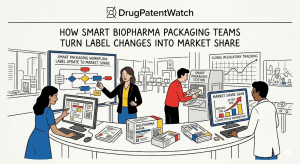
The global biopharmaceutical industry is undergoing a structural transformation characterized by the convergence of advanced material science, stringent regulatory evolution, and a pivot toward patient-centric delivery models. As the pharmaceutical landscape shifts from small-molecule generics to complex biologics, cell and gene therapies (CGTs), and personalized medicines, the role of packaging has evolved from a passive containment vessel to a critical component of the therapeutic system.1 This transition has necessitated a new paradigm in business development for packaging companies: the bundling of packaging redesign services with comprehensive regulatory variation filing support. This integrated model addresses the high stakes of product stability, the complexities of multi-market compliance, and the urgent need for supply chain resilience.3
The valuation of the global pharmaceutical packaging market, estimated at approximately $\$110.55$ billion in 2024 and projected to reach over $\$177$ billion by 2032, reflects the increasing capital intensity of this sector.2 Growth is driven by the expansion of the biologics pipeline, which often requires specialized containment to prevent protein adsorption, aggregation, and degradation.5 Consequently, business development strategies in the packaging sector now prioritize “Integrated Solutions” that alleviate the technical and administrative burdens on biopharmaceutical sponsors, allowing them to focus on core drug development while the packaging partner manages the lifecycle of the delivery system.7
The Business Development Logic of Bundled Services
The strategic bundling of redesign and regulatory support is rooted in the “Total Cost of Ownership” (TCO) model. Biopharmaceutical companies traditionally managed packaging procurement and regulatory affairs as siloed functions. However, the technical complexity of modern therapies means that a change in packaging material—such as transitioning from borosilicate glass to cyclic olefin polymers (COP)—triggers a cascade of regulatory requirements that can stall market access if not managed proactively.4 By offering a bundle, packaging firms provide a value proposition centered on “de-risking” the transition.
Comparative Value Proposition of Integrated vs. Siloed Packaging Models
Feature
Siloed Component Procurement
Integrated Redesign & Regulatory Bundle
Technical Responsibility
Shared between sponsor and multiple vendors
Centralized with the packaging partner
Data Generation
Sourced from disparate labs; inconsistent formats
Standardized analytical packages (E&L, CCI)
Regulatory Risk
High; sponsor must synthesize all data for filings
Low; partner provides eCTD-ready dossiers
Time-to-Market
Often delayed by misaligned validation cycles
Accelerated via synchronized design and testing
Cost Structure
Variable; hidden costs in internal RA/QA time
Transparent; project-based or subscription models
The economic rationale for this bundle is further strengthened by the regulatory classification of packaging changes. Under European Medicines Agency (EMA) and U.S. Food and Drug Administration (FDA) guidelines, modifications to primary packaging are frequently categorized as Type II variations or Prior Approval Supplements (PAS), requiring extensive stability data and validation.4 Packaging firms that maintain internal Chemistry, Manufacturing, and Controls (CMC) departments can generate the necessary documentation, such as Drug Master File (DMF) updates and Letters of Authorization (LoA), more efficiently than a third-party consultant.4
Material Science as a Catalyst for Redesign
The impetus for packaging redesign often begins with the chemical sensitivity of the drug itself. Biologics, particularly monoclonal antibodies (mAbs) and vaccines, are highly susceptible to interactions with their containers. Traditional glass vials can introduce risks such as delamination, alkali leaching, and tungsten contamination from the syringe manufacturing process.6
The Glass-to-Polymer Transition
A significant area of redesign business development involves the shift to advanced polymers like the Daikyo Crystal Zenith® (CZ) system. Unlike traditional Type I glass, CZ polymers are silicone oil-free and offer superior break resistance, which is critical for expensive biologics and autoinjector integration.5 The technical benefits of polymers are substantial, yet the regulatory hurdle of switching materials is a major deterrent for many pharma companies.
To address this, companies like West Pharmaceutical Services have integrated their CZ polymer offering with an “Integrated Solutions Program”.6 This program includes analytical testing to demonstrate that the new polymer does not adversely affect the drug’s Critical Quality Attributes (CQAs). By providing stability data for intervals up to 36 months under real-time conditions and 6 months under accelerated conditions, the packaging partner effectively builds the regulatory case for the redesign on behalf of the client.7
Performance Metrics of Primary Packaging Materials
Metric
Type I Borosilicate Glass
Cyclic Olefin Polymer (COP)
High-Density Polyethylene (HDPE)
Chemical Inertness
High, but prone to alkali leaching
Very High; no ion leaching
High; suitable for secondary use
Break Resistance
Low (fragile)
Extremely High
High
Gas Barrier
Excellent
Good (variable by thickness)
Moderate
Transparency
Excellent
Excellent
Translucent/Opaque
Sustainability
Recyclable but energy-intensive
Recyclable (mono-material)
Recyclable; high demand
Regulatory Variation Filing Support: Mechanics and Strategies
Regulatory support is the “glue” that makes a packaging redesign commercially viable. Business development teams emphasize their ability to navigate the complex web of global regulations, including the transition to the electronic Common Technical Document (eCTD) format.4
CMC and Dossier Compilation
The compilation of a CMC dossier for a packaging variation requires a deep understanding of the manufacturing process. Packaging companies now provide expertise in:
Extractables and Leachables (E&L) Analysis: Identifying potential chemical migrants from the packaging material into the drug product using sophisticated techniques like ICP-MS and GC-MS.8
Container Closure Integrity (CCI) Testing: Using deterministic methods like helium leak detection to ensure the sterile barrier remains intact throughout the product’s shelf life.7
Biocompatibility Studies: Ensuring materials meet USP and ISO standards for direct product contact.4
Companies such as Stevanato Group have established Technology Excellence Centers (TEC) in global hubs like Boston and Italy to provide these services.10 These centers act as a regulatory bridge, offering “right-the-first-time” decisions that de-risk the submission process.10 For example, Stevanato’s TEC provides root cause investigations using glass fractography and FTIR spectroscopy to resolve packaging failures before they become regulatory “deficiencies” during an agency review.10
International Registration and Post-Approval Maintenance
In the global market, a single packaging redesign might require filings in dozens of countries, each with its own variation classification system. Regulatory support teams assist with:
Market-Specific Strategy: Tailoring submissions for the FDA (US), EMA (Europe), NMPA (China), and PMDA (Japan).1
DMF Management: Maintaining and updating Drug Master Files with health authorities so that clients can reference them via Letters of Authorization (LoA).4
License Maintenance: Managing post-approval changes such as label updates and line extensions to optimize the commercial life of the product.4
Sustainability Mandates: The New Driver for Redesign
The regulatory landscape is being further complicated by environmental legislation, most notably the EU’s Packaging and Packaging Waste Regulation (PPWR), Regulation (EU) 2025/40.12 This mandate requires that all packaging in the EU market be designed for recyclability by 2030, which will force a massive wave of packaging redesigns across the biopharma sector.12
PPWR Compliance and Integrated Support
Business development in this area focuses on helping companies transition from non-recyclable multi-layer films to mono-material or “recycle-ready” solutions.1 This transition is not merely a design challenge but a regulatory one, as any change in the secondary or tertiary packaging materials must be assessed for its impact on the primary container’s protective properties.
Packaging providers are now offering “Sustainability Readiness” assessments. These include:
Material Substitution: Replacing traditional plastics with bio-based or recycled-content materials without compromising the sterile barrier.1
Waste Reduction: Optimizing package size to eliminate excess “void space,” which is a key target of the PPWR.12
Digital Product Passports: Integrating QR codes or other digital markers to provide transparency on material composition and recycling instructions.12
Specialized Applications: Cell and Gene Therapy (CGT)
The rise of CGTs has created a niche but high-value market for bundled packaging services. These therapies often require cryogenic storage at temperatures ranging from $-150^\circ C$ to $-196^\circ C$.3 Redesigning packaging for such extreme environments requires materials that do not become brittle or lose their seal integrity.
Cryogenic Packaging Validation
Companies like Cryoport and Clinigen have developed specialized service models for the CGT sector. These include “Shipping Lane Qualification” and “Packaging Performance Validation”.3 The regulatory support here involves providing “audit-ready” documentation that validates the entire cold chain, which is often required by agencies for Investigational New Drug (IND) and Biologics License Application (BLA) submissions.3 The integration of real-time location monitoring (RTLM) and temperature sensors into the packaging—often referred to as “Smart Packaging”—is a critical part of the regulatory data package for these therapies.14
Technological Integration: AI and Digitalization in Compliance
Digitalization is the latest frontier in the packaging redesign and regulatory bundle. The use of Artificial Intelligence (AI) to automate compliance checks is becoming a significant business development differentiator.
AI-Driven Regulatory Review
Platforms like Esko’s “Comply” utilize AI to scan packaging artwork against global regulatory rulebooks.15 This automation helps catch errors in:
Mandatory Declarations: Ensuring net quantity, ingredient lists, and allergen warnings meet font size and placement requirements.15
Symbol Accuracy: Verifying that recycling marks, flammability icons, and CE marks are used correctly.15
Barcode Verification: Checking scannability and GS1 compliance to prevent supply chain bottlenecks.15
For a packaging company, offering AI-driven artwork control as part of a redesign bundle reduces the cycle time for regulatory approval and minimizes the risk of costly post-market recalls due to labeling errors.15
Economic Impact and Total Cost of Ownership (TCO)
The adoption of an integrated packaging and regulatory model is driven by the need to control costs over the entire product lifecycle. While the initial investment in a bundled service may be higher than simple component sourcing, the avoidance of regulatory delays and product quality failures provides a significant Return on Investment (ROI).
Lifecycle Value of Integrated Packaging Solutions
Phase
Benefit of Integrated Model
Economic Impact
Development
Accelerated prototyping and early E&L data
Reduced time-to-clinic
Regulatory Filing
eCTD-ready dossiers and DMF referencing
Faster market entry; reduced internal labor
Launch
Synchronized supply chain and serialization
Minimized risk of stock-outs or launch delays
Post-Approval
Managed variations and line extensions
Extended patent life and revenue optimization
Disposal
Compliance with sustainability mandates (PPWR)
Avoidance of fines and market access restrictions
The “Cost of Delay” for a blockbuster biologic can exceed $\$1$ million per day in lost revenue. By bundling regulatory support with redesign, packaging companies provide a form of “insurance” against these delays.17
Clinical Trial Supply and Redesign
The requirements for packaging in the clinical trial phase differ significantly from commercial production. Clinical packaging often requires small-batch flexibility, complex kitting (syringes, vials, swabs, and instructions), and rapid turnaround times.18
On-Demand and Direct-to-Patient Services
Clinigen’s “On-Demand” services, which can package and label an Investigational Medicinal Product (IMP) within 48 hours, represent a specialized arm of the redesign/regulatory bundle.19 This service is particularly vital for decentralized clinical trials (DCTs), where packaging must be redesigned for Direct-to-Patient (DtP) shipping. Regulatory support in this context includes navigating the “Clinical Trial Regulation” (CTR) in the EU and ensuring that labels are compliant with multi-country requirements in a single trial.19
Future Outlook: Pharma 4.0 and Smart Packaging
The future of biopharma packaging business development lies in the concept of “Pharma 4.0″—the integration of physical packaging with digital ecosystems. This includes “Active Protection” technologies that monitor drug degradation in real-time and “Connected Devices” that track patient adherence.21
The Evolution toward Active Material Science
Aptar CSP Technologies’ “Activ-Blister™” technology is an example of active packaging that integrates desiccant and scavenger materials directly into the blister film.21 This redesign mitigates the risk of impurities like nitrosamine formation, a major regulatory concern in recent years.21 Bundling this technology with “Full CMC Package” support allows pharma companies to implement these advanced solutions without the need for lengthy internal reformulation efforts.21
Conclusion
The biopharmaceutical packaging industry is no longer a vendor of commodities but a partner in therapeutic delivery. The business development strategy of bundling packaging redesign with regulatory variation filing support is a strategic response to the increasing complexity of modern medicine and the tightening of global regulations. By leveraging internal CMC expertise, advanced material science, and digital compliance tools, packaging firms like West, Stevanato, Aptar, and Oliver are redefining the drug development journey. For biopharmaceutical sponsors, this integrated model offers a pathway to accelerate speed-to-market, ensure patient safety, and navigate the dual challenges of biologics sensitivity and environmental sustainability. As the industry moves toward the 2030 recyclability mandates and the widespread adoption of cell and gene therapies, the companies that successfully integrate these “bundled” services will emerge as the architects of the next generation of healthcare delivery.