The global pharmaceutical industry in 2026 exists in a state of hyper-dynamic transition, defined by the convergence of the most significant patent “super-cliff” in history and a radical reorganization of the regulatory and technological landscape. This period represents a departure from the traditional binary of patent protection versus generic entry, evolving instead into a complex architecture of “managed slopes” and high-stakes intellectual property (IP) litigation.1 Between 2026 and 2030, an estimated $180 billion to $400 billion in annual brand revenue is at risk globally, with 2026 alone serving as a milestone for multi-billion dollar assets such as sitagliptin, apixaban, and ustekinumab.1 The strategic mandate for pharmaceutical executives, investors, and analysts has shifted from simple lifecycle management to the navigation of a polycrisis: the aggressive price negotiation mandates of the Inflation Reduction Act (IRA), the maturation of agentic artificial intelligence (AI) in patent scouting, and the tightening procedural gatekeeping of the Patent Trial and Appeal Board (PTAB).1
As the industry moves into the second half of the decade, the Paragraph IV (PIV) challenge remains the primary engine of market disruption, but its execution is now inextricably linked to digital transformation and the biologic transition to subcutaneous delivery.2 For the senior pharmaceutical executive, understanding the nuances of the 2026 market means moving beyond the “Orange Book” to master the intersection of the Biologics Price Competition and Innovation Act (BPCIA), the shifting standards of the United States Patent and Trademark Office (USPTO), and the economic realities of vertically integrated pharmacy benefit managers (PBMs).8
The Regulatory Foundation: Hatch-Waxman and the Mechanism of Artificial Infringement
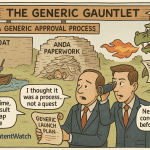
The contemporary battlefield of pharmaceutical competition was sculpted by the Drug Price Competition and Patent Term Restoration Act of 1984, commonly known as the Hatch-Waxman Act. This legislation established a delicate equilibrium between incentivizing innovation and facilitating the entry of low-cost generic alternatives.8 Central to this framework is the Abbreviated New Drug Application (ANDA) pathway, which permits generic manufacturers to rely on the safety and efficacy data of the reference listed drug (RLD) provided they can demonstrate bioequivalence through rigorous pharmacokinetic (PK) and pharmacodynamic (PD) testing.8
The legal trigger for competition is the Paragraph IV certification. Under $35$ U.S.C. $\S 271(e)(2)$, the filing of an ANDA containing a Paragraph IV certification is defined as an “artificial act of infringement”.8 This legal construct provides the brand manufacturer with the standing to sue the generic applicant before any actual commercial harm has occurred, initiating a legislated timeline for dispute resolution.12 In 2026, the strategic deployment of PIV challenges has become a high-stakes commercial conflict, characterized by a winner-take-most economic model for the first generic challenger to successfully navigate the litigation gauntlet.12
The Four Pillars of Patent Certification and Regulatory Timing
A generic applicant must certify against every patent listed in the FDA’s “Orange Book” for the target RLD. The certification chosen dictates the timing and risk profile of market entry, with Paragraph IV representing the most aggressive stance.8
Certification Type
Legal Basis
Strategic Implication for 2026
Paragraph I
Patent information has not been filed with the FDA.
Rare for modern blockbusters; suggests a major oversight in IP protection.
Paragraph II
The listed patent has already expired.
Immediate approval possible; market becomes a commodity price-play instantly.
Paragraph III
The applicant will wait for the patent to expire on its stated date.
Predictable entry; allows for “at-risk” inventory buildup without litigation.
Paragraph IV
The patent is invalid, unenforceable, or will not be infringed by the generic.
Initiates litigation; grants 180-day exclusivity prize to the first “substantially complete” filer.
The Paragraph IV certification is not a passive declaration; it is a direct assertion that the brand’s intellectual property fortress is legally deficient.13 Upon filing, the generic manufacturer must provide a “Notice Letter” to the brand sponsor within $20$ days of FDA acceptance.8 This letter must contain a detailed factual and legal basis for the belief that the patent is invalid or not infringed.8 Failure to provide an adequate basis can result in the awarding of attorney’s fees to the brand plaintiff, raising the stakes for generic legal teams to perform exhaustive pre-filing diligence.11
The Mechanics of the 30-Month Stay and Market Preservation
Upon receiving a Paragraph IV notice letter, the brand manufacturer has a $45$-day window to initiate patent infringement litigation.8 If the brand company files suit within this window, an automatic $30$-month regulatory stay is triggered.8 During this period, the FDA generally cannot grant final approval to the generic application, effectively preserving the brand’s monopoly while the legal dispute is adjudicated.8
In the 2026 landscape, the $30$-month stay is weaponized as a revenue protection asset. For a drug like Merck’s Januvia, which faces a $2026$ cliff, the stay period provides the necessary time to execute “Product Hopping” or transition patients to alternative dosage forms.8 The economic value of a $30$-month stay for a blockbuster drug can be measured in billions of dollars, providing the innovator with a “controlled descent” rather than a vertical drop.5
The 2026 Patent Super-Cliff: Asset-Level Erosion and IP Valuation
The industry is currently standing at the precipice of a revenue hemorrhage that dwarfs the generic waves of the early 2010s.1 Between 2025 and 2030, nearly $200$ blockbuster drugs are set to lose patent protection.5 This erosion is fueled by the expiration of core “composition of matter” patents, but the timing is increasingly dictated by the outcome of PIV challenges against secondary formulation and method-of-use patents.1
Small Molecule Giants: The Januvia and Eliquis Precedents
Merck’s sitagliptin (Januvia) and its combination with metformin (Janumet) represent one of the highest-volume losses in 2026.3 Combined U.S. sales exceeded $3.6$ billion in $2023$, and litigation settlements have cleared the path for generic entry by Spring 2026.3 Because sitagliptin is a small molecule with a high prescription volume, the “Clean Cliff” model applies: once multiple generics enter, the price is expected to fall by $80\%$ to $90\%$ within months.15
Bristol-Myers Squibb and Pfizer’s Eliquis (apixaban) presents a more complex IP valuation case. Its original patent was extended to November 21, 2026, meaning generic competitors are poised to enter the anticoagulant market almost immediately thereafter.3 As one of the most widely prescribed drugs in the U.S., the 2026 LOE of Eliquis will reshape the Factor Xa inhibitor landscape, forcing a pricing reset for the entire category as PBMs prioritize the lower-cost generic alternatives.1
Drug Asset
Primary Manufacturer
Therapeutic Area
2026 Strategic Status
Januvia (Sitagliptin)
Merck
Diabetes
Multi-source generic entry expected Spring 2026.3
Eliquis (Apixaban)
BMS / Pfizer
Cardiovascular
Patent extension ends Nov 21, 2026; immediate erosion.3
Stelara (Ustekinumab)
J&J
Immunology
Conflict between biosimilar entry and IRA negotiation.1
Expiry April 2026; follow-on to Bydureon erosion.3
IP Valuation as a Core Asset: Case Study of Merck’s Januvia
For an investment analyst, the IP valuation of Januvia in 2026 is a study in “Residual Value Extraction.” While the primary revenue stream is set to collapse, Merck has utilized the PIV litigation process to secure a series of settlements that staggered generic entry, preventing a “flash crash” of the brand’s share in 2024 and 2025.1 The 2026 exit is a “managed event” that has allowed the company to pivot its R&D focus toward oncology and vaccines, using the Januvia cash flow to fund the $19.2$ billion in M&A deals executed in the preceding years.5
The Biologic Paradigm: BPCIA and the “Subcutaneous Shield” Strategy
Unlike the small-molecule cliff, the transition for biologics is increasingly defined by the “Managed Slope.” Originator companies are leveraging the Biologics Price Competition and Innovation Act (BPCIA) and advanced formulation technologies to extend their market control far beyond the expiration of the original molecule patent.2
The Technology Roadmap: The IV to Sub-Q Pivot
The most sophisticated defensive tactic in the 2026 landscape is the pivot from intravenous (IV) infusion to subcutaneous (SC) injection.1 This strategy is designed to change the standard of care before key patents on the original IV version expire, creating “commercial obsolescence” for the biosimilars that are bioequivalent only to the older IV standard.2
Technological Integration: Utilizing hyaluronidase enzymes (such as Halozyme’s ENHANZE platform) to temporarily degrade hyaluronan in the subcutaneous space, allowing for the rapid delivery of large volumes of antibodies (e.g., $10$ mL).18
Strategic Conversion: Launching the SC version (e.g., Keytruda Qlex) $2$-$3$ years before the IV patent cliff to migrate the patient population and oncology workflows.1
Workflow Advantage: Oncology centers prefer SC formulations because they free up infusion chairs, increasing the center’s throughput and billable capacity.2
IP Layering: Filing extensive waves of secondary patents (over $100$ for Keytruda SC) related to the formulation, the delivery device, and the specific concentration required for SC administration.2
Keytruda (Pembrolizumab): The Archetype of IP Durability
Merck’s Keytruda is the definitive example of the “Subcutaneous Shield.” While the IV patent is set to lose protection in 2028, the 2025/26 launch of Keytruda Qlex (pembrolizumab and berahyaluronidase alfa-pmph) aims to switch a significant portion of the patient base to a form protected by patents into the 2030s or even 2040.1 Analysts project that by 2028, up to $60$-$70\%$ of the monoclonal antibody market could shift to SC formulations, leaving biosimilars to compete for a shrinking “remnant” market of patients who still require or prefer IV administration.1
The PTAB Battlefield: IPR, PGR, and the Shift in Institution Authority
The Patent Trial and Appeal Board (PTAB) remains a critical theater for PIV challenges, but 2026 has seen the “Death of Defaulting to IPR” as a standard defensive maneuver.7 Under Director John A. Squires, the PTAB has centralized institution authority, moving away from a panel-centric model to one that emphasizes resource gatekeeping and “settled expectations”.6
The Resurgence of Ex Parte Reexamination (EPR)
As Inter Partes Review (IPR) institution rates plummeted (reaching as low as $4\%$ in some tech segments late in 2025), sophisticated challengers have recalibrated toward Ex Parte Reexamination.7 EPR is no longer a “mothballed” tool; it is a strategic alternative when IPR paths are blocked by discretionary denials or “Fintiv” factor constraints related to parallel district court litigation.6
PTAB Metric (2025/26)
Value / Observed Trend
Strategic Implication
IPR Institution Rate (Bio/Pharma)
~67%
Biopharma remains more vulnerable than tech.21
Post-Grant Review (PGR) Status
Highly Favored
PGRs are encouraged as they occur before “settled expectations”.20
Discretionary Denial Rate
Rising (Centralized)
Petitioners must demonstrate “compelling” reasons for review.6
Total Patent Challenges (2025)
1,433
Robust volume despite stricter gatekeeping.22
The Doctrine of Settled Expectations
A pivotal shift in 2026 is the emergence of “settled expectations” as a significant factor favoring discretionary denial. In multiple decisions, the PTAB has ruled that if a patent has been in force for six or more years and has been widely enforced, the patent owner’s expectations in those rights are “settled”.6 This doctrine has specifically impacted oncology challenges, such as Amgen’s IPRs against Bristol-Myers Squibb’s Opdivo patents, which were discretionarily denied because the patents were considered too mature for administrative disruption.24
AI-Driven Predictive Insights: The 2026 Technology Roadmap for IP Strategy
In 2026, artificial intelligence has evolved from a tool for patent searching to an autonomous agent capable of predictive litigation and innovation scouting.1 The integration of agentic AI into pharmaceutical CI (Competitive Intelligence) teams allows for a “War Room” approach to Paragraph IV preparation.1
Agentic Workflows and Predictive Litigation
AI discovery engines now ingest data continuously from patent filings, clinical registries, and news feeds to perform semantic clustering and knowledge graph analysis.25 This enables “Supply Chain Forensics,” where an analyst can predict a generic launch by identifying “choke points” in the API supply chain from China and India years before an ANDA is filed.14
Trend & Technology Mapping: AI turns fragmented signals from $70,000$ IPC fields into actionable clusters.25
Opportunity Scoring: Evaluating potential targets based on “strategic fit,” “market pull,” and “technical credibility”.25
The “Kill” Metric: Using AI to identify internal programs with high litigation risk early, allowing for “avoided cost” savings that define the ROI of modern CI teams.1
The USPTO’s Kim Memo and AI Patentability
The 2025 “Kim Memo” issued by Deputy Commissioner Charles Kim has clarified the assessment of AI-related inventions.26 This memo reminds examiners that machine learning algorithms, which process data volumes beyond human capacity, should not be rejected under Section 101 as mere “mental processes”.26 For pharma, this means that AI-driven drug discovery platforms and predictive dosing algorithms are now more patent-eligible, creating a new layer of IP protection for digital-health integrations.26
Advanced Evergreening and Product Hopping Success Rates
The “evergreening playbook” in 2026 has become a sophisticated, multi-layered “fortress of intellectual property”.27 Critics view these as exclusionary tactics, but innovator companies frame them as “Continuing Innovation” that rewards the identification of new uses for existing molecules.15
The Taxonomy of Evergreening Strategies
Strategy
Mechanism
2026 Legal Success / Risk
Chiral Switch
Isolating a single enantiomer (e.g., Nexium).27
Low success if no clinical advantage is demonstrated.27
Patent Thicket
Staggering 100+ patents on a single drug.15
Hard to circumvent; creates high cost for challengers.28
Product Hopping
Migrating patients to a new formulation via “Soft Switch”.27
High risk if “Hard Switch” (discontinuation) is used.27
Citizen Petitions
Filing concerns to trigger FDA review delays.27
92% filed near expiry; 505(q) reforms have limited impact.27
The “No-Economic-Sense” test has become the standard for assessing whether a product hop is anti-competitive. If a company’s move to a new formulation makes no economic sense but for its effect on generic competition, it faces intense antitrust scrutiny.27 However, “Soft Switches”—where the old product remains available but the company uses co-pay cards and marketing to move the volume—remain highly effective and legally defensible in 2026.16
IP Valuation as a Core Asset: Company-Specific Roadmaps
For the senior investment analyst, the 2026 cliff requires an asset-by-asset deconstruction of IP durability.
Merck & Co. (MSD): The Dual-Track Erosion
Merck faces the 2026 LOE of Januvia and the looming 2028 LOE of Keytruda IV.3
Januvia Valuation: The asset is currently in a “Harvest Phase.” Revenue is being extracted through high-margin established markets while the generic entry timeline is managed through settlements.3
Keytruda Valuation: The “Subcutaneous Shield” (Keytruda Qlex) is the most valuable IP asset in the portfolio. By leveraging Alteogen’s technology, Merck is transforming a 2028 cliff into a 2040 slope.2
Bristol-Myers Squibb (BMS): The Immuno-Oncology Transition
BMS is navigating the 2026 extension of Eliquis and the 2028 LOE of Opdivo.1
Eliquis Valuation: The asset is highly vulnerable to “Clean Cliff” erosion in Nov 2026. The company’s focus is on scaling its cell therapy and immunology portfolio to offset the expected $9$ billion in lost revenue.1
Opdivo Valuation: Like Merck, BMS is testing subcutaneous formulations of nivolumab (Opdivo SC) to preserve its PD-1 leadership.19
Johnson & Johnson (J&J): The Stelara Pricing Paradox
J&J’s Stelara is the litmus test for the “Biosimilar Paradox”.1
Stelara Valuation: The IP valuation is now dictated by the IRA’s Maximum Fair Price (MFP). If the negotiated price is too low, it may actually deter biosimilar entry, ironically preserving J&J’s market share, albeit at a lower price point.1
The Biosimilar Paradox and the Impact of the IRA
The Inflation Reduction Act has introduced a “Statutory Cliff” that operates independently of patent expiration.15 For biologics like Stelara, which are subject to negotiation, the price controls can reach $60\%$ to $66\%$ off the list price.1
The “Biosimilar Void” and PBM Rebate Walls
The conflict between the BPCIA (which fosters competition) and the IRA (which imposes price controls) has created a “Biosimilar Void”.10 If a brand’s price is already capped by the government, the “spread” for a biosimilar to offer a discount shrinks, making the multi-million dollar development cost difficult to recoup.1
Furthermore, vertically integrated PBMs have created a “rebate wall.” By 2026, PBMs have increasingly launched “Private Label” biosimilars, where they capture the margin previously held by the innovator.10 This transformation from price-takers into rebate-generators fundamentally distorts the biosimilar market, favoring PBM-owned entrants over independent biosimilar manufacturers.10
The 2026 Interchangeability Shift
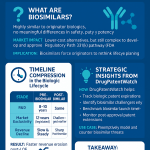
By the first half of 2026, the FDA is expected to finalize guidance that may designate all non-vaccine biosimilars as “interchangeable” by default.9 This would allow pharmacists to substitute the biosimilar for the reference product without physician intervention, mimicking the small-molecule generic model.9 While this improves uptake, it also triggers “First Interchangeable Exclusivity” (FIE), potentially delaying second-to-file biosimilars if the first approved product captures the exclusivity window.9
Contrarian Investment Strategy: Capitalizing on the 2026 Market
For the senior analyst, the 2026 patent cliff is not a catastrophe but a “predictable, scheduled market transformation”.5
1. The “Oversold Incumbent” Thesis
Market volatility often leads to an overreaction to patent cliff headlines. The contrarian investor identifies companies with “Managed Slope” strategies that are not fully priced in.5 For example, the market may over-penalize Merck for the Januvia loss while under-valuing the $2040$ durability of Keytruda SC.1
KPIs: Pipeline Replacement Ratio, IP Thicket Density, M&A Cash Reserves.5
2. The “Scavenger” Portfolio (Specialty Acquirers)
Investing in specialty pharma firms and private equity-backed platforms that acquire “legacy assets”.5 These “Scavengers” profit by extracting value from mature brands that incumbents no longer deem core to their growth narrative.5
3. The 2026 M&A Bonanza
2026 is projected to be a record-breaking year for M&A, with deal flow potentially hitting $3.9$ trillion.33 Large pharma firms must replenish their pipelines to offset the $236$ billion revenue erosion.3 Target mid-cap biotech firms with validated platforms (e.g., ADCs, GLP-1s, or gene therapies) that serve as “Innovation Engines” for the giants.33
Key Takeaways for Payers: Navigating the 2026 Formulary
Payers and PBMs must evolve their procurement strategies to address the complexity of 2026’s “managed slopes.”
Version-Agnostic Reimbursement: With the rise of interchangeability, payers should adjust policies to be agnostic to which version of a biologic a patient receives, focusing on the lowest “Net Cost” rather than the highest rebate.32
Audit the “Private Label” Trap: PBM-owned biosimilars may increase the net cost to the payer while maximizing the PBM’s internal margin.10 Payers should demand transparency on “manufacturing” and “licensing” fees associated with these products.10
Evaluate the “Subcutaneous Premium”: While SC formulations offer convenience, payers must analyze the “Total Cost of Ownership.” If the SC version is significantly more expensive than an IV biosimilar, site-of-care policies may need to favor the IV version to capture market-driven savings.2
IRA-Driven Strategy: Payers must factor in the “Maximum Fair Price” (MFP) for negotiated drugs. A biosimilar targeting a drug likely to be negotiated in 2027 carries a higher risk profile for the formulary than one targeting a non-negotiated biologic.1
Conclusion: The Strategic Integration of Legal, Tech, and Finance
The pharmaceutical industry in 2026 has transitioned from a science-led model to one of integrated strategic warfare. The successful enterprise is no longer the one with the best molecule, but the one with the most sophisticated “IP Fortress,” the most advanced AI-driven competitive intelligence, and the most agile response to the IRA-BPCIA collision.1 For the investor and the executive, the 2026 “Crucible” represents the ultimate test of long-term vision vs. short-term erosion. In this environment, Paragraph IV challenges are merely the starting gun for a multi-year marathon where the prize is not just market entry, but the total domination of the post-cliff landscape.12