For pharma IP teams, portfolio managers, R&D leads, and institutional investors tracking the $72B biosimilar market.
1. Executive Summary and Key Market Signals
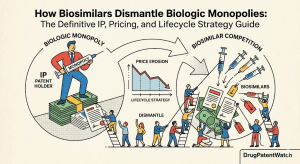
The biologic drug lifecycle now has a structural adversary, and that adversary is generating $36 billion in cumulative US savings since 2015. Biosimilars, approved as ‘highly similar’ to an originator reference product with ‘no clinically meaningful differences’ in safety, purity, or potency, have moved from regulatory curiosity to market force. The FDA approved a record 18 biosimilars in 2024, bringing the total to nearly 70 approvals across 19 reference products.
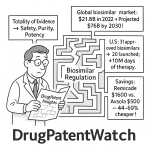
The global biosimilar market was approximately $35 billion in 2025 and is on a trajectory to $72.3 billion by 2035 at a 7.5% CAGR; some analyses using broader competitive scope put that 2034 figure at $175.8 billion at 17.6% CAGR. Both projections depend on whether systemic barriers, particularly PBM rebate mechanics, patent thicket litigation, and the absence of global regulatory harmonization, get addressed faster than the industry’s inertia.
Key market signals for 2025-2030:
At least 15 biologics with combined 2024 revenues exceeding $90 billion face primary patent expiration by end of 2029. Pembrolizumab (Keytruda) alone generated $29.5 billion in 2024.
Only 29% of molecules nearing patent expiry in Europe currently have a biosimilar in active development. That gap is a capital allocation failure, not a scientific one.
Adalimumab biosimilars, after nearly two years on the US market, hold only 23% market share. Trastuzumab biosimilars hold 86%. The 63-point spread explains why oncology R&D return on investment for biosimilars dwarfs immunology.
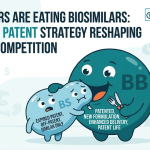
Patent thicket litigation produces a median 2.5-year delay from patent expiry to biosimilar launch when settled, and 16.5 years when the biosimilar applicant loses in court.
Biosimilar development costs $100-300 million per product, takes 5-9 years, and requires a cell line, manufacturing process, and comparability data set built entirely independent of the originator. That is not a generic drug.
Key Takeaways: Section 1
The biosimilar market is large, growing, and structurally underpenetrated relative to potential savings.
Patent expiry does not equal market entry. Litigation, PBM mechanics, and the interchangeability designation each add independent delay.
Oncology biosimilars deliver faster, deeper market share than immunology. Investment strategy should reflect that asymmetry.
The 2025-2030 patent expiration wave is the largest in biologic history. Pembrolizumab, nivolumab, daratumumab, and ocrelizumab represent the single largest opportunity set biosimilar developers have ever faced.
2. What a Biologic Actually Is, and Why ‘The Product Is the Process’ Decides Everything
Biologics are derived from living cells, whether mammalian (CHO), bacterial (E. coli), or yeast expression systems, and they are not synthesized. They include monoclonal antibodies, fusion proteins, cytokines, recombinant hormones, coagulation factors, and cell-based therapies. A monoclonal antibody like adalimumab has a molecular weight of roughly 148 kDa and contains approximately 1,330 amino acids arranged in a precise three-dimensional conformation that governs receptor binding, effector function, and pharmacokinetic behavior. A generic small molecule like atorvastatin is a 559-Da compound that any competent chemistry lab can synthesize identically.
The phrase ‘the product is the process’ is not marketing; it is a regulatory and IP axiom. Because the final biologic molecule’s critical quality attributes, including its glycosylation pattern, charge variant distribution, aggregation state, oxidation profile, and deamidation level, emerge directly from cell culture conditions, purification sequences, and formulation choices, two manufacturers producing the same amino acid sequence will not produce identical molecules. They produce highly similar molecules. That distinction is the entire scientific and legal basis for the biosimilar regulatory framework.
Why this matters for IP litigation: When an originator company holds a process patent, it is not merely protecting a manufacturing convenience. It is protecting a defining characteristic of the product. Courts have upheld process patents in biosimilar litigation at a higher rate than many IP teams anticipated, which is why manufacturing patents constitute roughly half of all patents asserted in BPCIA proceedings, even though they produce less average delay than composition or method-of-use patents.
Why this matters for development cost: A biosimilar manufacturer cannot simply reverse-engineer the originator’s process. It must independently derive a cell line, cell culture media, upstream and downstream purification sequences, and formulation strategy that produce a molecule meeting similarity thresholds across dozens of critical quality attributes, including glycoforms such as G0F, G1F, and G2F for IgG1 antibodies and post-translational modifications that regulators scrutinize with tools including mass spectrometry, nuclear magnetic resonance, and surface plasmon resonance. That is a $100-300 million R&D program.
Key Takeaways: Section 2
Molecular complexity is the root cause of every downstream cost, regulatory, and IP challenge in the biosimilar space.
‘The product is the process’ explains why process patents are litigation instruments, not just manufacturing protections.
Originator companies exploit the inherent variability in biologic manufacturing to resist ‘sameness’ arguments in court and in formulary negotiations.
Investment due diligence on a biosimilar development program must include a rigorous assessment of the originator’s process patent portfolio, not just the composition-of-matter claims.
3. The Science of ‘High Similarity’: Totality of Evidence, Interchangeability, and What Designation Actually Buys You
3.1 The Totality of Evidence Framework
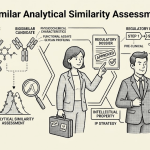
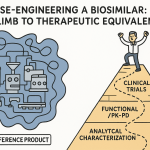
The FDA and EMA both require biosimilar applicants to demonstrate similarity through a ‘totality of evidence’ approach, which is a hierarchical data package with analytical characterization as the foundation. The analytical tier, also called Step 1 in the FDA’s stepwise approach, includes extensive structural and functional characterization: primary sequence confirmation, higher-order structure (circular dichroism, hydrogen-deuterium exchange mass spectrometry), glycan profiling, charge variant analysis, binding assays for target receptor and FcRn, and cell-based potency assays. These analytical data carry more evidentiary weight per dollar than any clinical trial, which is why the 2023 trend among the FDA, EMA, Health Canada, and WHO toward reducing mandatory comparative Phase III clinical efficacy trials is scientifically well-grounded.
3.2 The Interchangeability Designation: A Market Access Lever, Not a Quality Signal
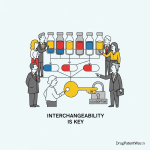
In the US, a biosimilar can earn an additional ‘interchangeable biosimilar’ designation, which permits pharmacists to substitute the biosimilar for the reference product without consulting the prescriber, the same mechanism used for small-molecule generics. To earn it, applicants must complete ‘switching studies’ demonstrating that alternating between the biosimilar and reference product does not alter safety or efficacy.
The FDA has been unambiguous: both biosimilars and interchangeable biosimilars are equally safe and effective. The interchangeable designation does not signal superior quality; it is an additional legal classification that unlocks pharmacy-level substitution under state laws. Yet the market treats absence of designation as a quality deficiency. That perception gap costs biosimilar developers uptake and creates a commercially irrational development cost: switching studies add time and expense to demonstrate what the FDA already accepts as scientifically established for approved biosimilars.
The EU handles this more rationally. The EMA considers all approved biosimilars interchangeable at the regulatory science level; substitution policies vary by member state, but the EU does not require a separate designation or additional switching studies. The result: Europe achieves faster uptake and greater cumulative savings than the US, despite arguably less retail-level substitution infrastructure.
Recommendation for US policy: Eliminating the separate interchangeable designation and applying EU-equivalent science-based interchangeability at approval would remove an estimated 12-18 months from biosimilar development timelines for products targeting pharmacy-dispensed indications. The FTC’s 2022 report on PBM practices and the IRA’s revised Medicare Part B reimbursement rules are steps in the right direction, but the interchangeability requirement itself is the most structurally damaging regulatory artifact for US biosimilar adoption.
Key Takeaways: Section 3
The totality of evidence approach centers on analytical data, not clinical trials. Structural and functional characterization is where biosimilar applications succeed or fail.
The US interchangeability designation adds development cost and creates market confusion without adding clinical evidence.
EU-approved biosimilars achieve higher substitution rates and faster market penetration, in part because they do not carry the designation burden.
Biosimilar developers targeting US pharmacy-dispensed biologics (e.g., subcutaneous adalimumab, subcutaneous trastuzumab) must budget for switching studies or accept a non-interchangeable label that limits formulary access.
4. Regulatory Pathways Decoded: BPCIA 351(k), EMA Centralized Procedure, Health Canada, and PMDA
4.1 United States: BPCIA and the 351(k) Abbreviated Pathway
The Biologics Price Competition and Innovation Act, enacted March 23, 2010, created the first US regulatory pathway for biosimilar approval. Before the BPCIA, follow-on biologics had no defined route to market. The BPCIA established the 351(k) abbreviated pathway, under which biosimilar applicants rely on the FDA’s prior finding of safety and efficacy for the reference product and submit comparative analytical, nonclinical, and clinical data rather than a full development program.
Key structural features:
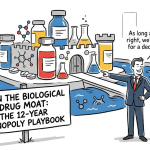
12-year market exclusivity for reference products from date of first US licensure. No biosimilar application can be approved during this period.
4-year data exclusivity within that 12-year window, during which a biosimilar application cannot even be submitted if it relies on the originator’s data.
No ‘Orange Book’ equivalent for biologics. The patent dispute mechanism is the ‘patent dance’ (see Section 8).
No automatic 30-month stay of FDA approval upon patent challenge filing, unlike the Hatch-Waxman framework for small molecules. This shifts litigation timing risk considerably.
The FDA approved its first biosimilar in March 2015: Zarxio (filgrastim-sndz, Sandoz), referencing Neupogen. Since then, 18 biosimilars were approved in 2024 alone, a record that reflects both the pipeline maturing and the FDA’s increasing experience with abbreviated review.
4.2 European Union: EMA Centralized Procedure
The EMA approved the world’s first biosimilar in 2006, giving Europe a decade of regulatory learning that the US lacked at BPCIA enactment. The EMA’s centralized procedure produces a single marketing authorization valid across the EU, eliminating the need for separate national approvals.
European exclusivity follows the ‘8+2+1’ model: 8 years of data exclusivity (during which biosimilar applications cannot reference originator data), 2 years of market exclusivity (during which an approved biosimilar cannot be sold), and an optional 1-year extension for originators that obtain approval for a new indication offering significant clinical benefit, for a potential 11-year total protection period.
4.3 Health Canada
Health Canada’s biosimilar guidance does not replicate either the US or EU model precisely. Federal interchangeability designation does not exist; substitution decisions rest with provincial formulary authorities and prescribers. Health Canada’s June 2025 draft guidance explicitly acknowledged that comparative Phase III clinical efficacy trials may not be routinely necessary if robust PK/PD and analytical data adequately demonstrate similarity, aligning with the EMA’s risk-based evolution.
4.4 Japan: PMDA
The PMDA has historically required comparability studies against locally sourced reference products, which adds cost and time for biosimilar developers who have already compared against US- or EU-sourced reference products. Japan has re-evaluated this requirement and is moving toward a less rigid local comparator mandate, but the transition is incomplete. Japan also does not have a formal interchangeability designation. Substitution practice is physician-driven.
4.5 Comparative Framework Summary Table
Feature
United States
European Union
Canada
Japan
Primary Authority
FDA
EMA
Health Canada
PMDA
Enabling Legislation
BPCIA (2010)
Regulation (EC) 726/2004
Food and Drugs Act
Biosimilar Guidelines
Reference Product Exclusivity
12-year market + 4-year data
8+2+1 model
Patent + data protection (variable)
Patent + data protection (variable)
Interchangeability Policy
Separate optional designation
Integrated; member-state substitution law
No federal designation
No formal designation
Comparative Phase III
Risk-based evolution (still often required)
Risk-based evolution (often waived)
New 2025 draft: not routinely required
Re-evaluated; trend toward waiver
Local Reference Product Required
No
No
No (bridging data for non-Canadian source)
Historically yes; evolving
5. Global Regulatory Divergence: Where It Adds Cost and Why It Persists
The persistence of regulatory divergence across major markets is not primarily a scientific disagreement. It is a policy and resource allocation problem. No major regulatory authority disputes the fundamental biosimilar framework; all require high similarity, all apply totality of evidence, and all accept that approved biosimilars do not require the same clinical trial investment as novel biologics. The divergence is in implementation.
Specific cost-adding divergences:
Japan’s local reference product requirement forces biosimilar developers to run additional bridging studies that add an estimated $10-25 million per program and 12-18 months of timeline.
Animal toxicology requirements, which the scientific community broadly considers to add little to biosimilar risk assessment, persist in several Asian markets. The FDA and EMA eliminated routine comparative animal studies years ago.
The US interchangeability designation requires switching studies costing an estimated $20-40 million per product. The EU equivalent is zero: all approved biosimilars carry implicit interchangeability at the regulatory level.
Divergent clinical study design requirements across markets force developers targeting multi-regional launch to run parallel or sequential programs rather than a single global development program.
Harmonization talks under the International Coalition of Medicines Regulatory Authorities (ICMRA) and WHO’s biosimilar guidelines have made incremental progress, but no binding convergence mechanism exists. The FDA and EMA have increasingly aligned on analytical methodology while remaining divergent on the interchangeability question.
Capital implication: A biosimilar developer building a global launch strategy must budget $20-60 million in regulatory premium above a single-market program to cover local reference product studies, redundant clinical data packages, and market-specific registration dossiers. For products targeting indications with annual revenues below $500 million globally, that premium is often enough to make development economically unviable.
Key Takeaways: Section 5
Regulatory divergence is a capital tax on biosimilar development that reduces the number of viable development programs.
Japan’s local reference product requirement and the US interchangeability designation are the two highest-cost divergences relative to scientific necessity.
Harmonization at the WHO or ICMRA level could reduce per-program global regulatory cost by an estimated $30-50 million, which would materially improve viability for mid-revenue biologic targets.
Developers should model the regulatory premium explicitly in NPV analyses rather than using a flat regulatory cost assumption.
Investment Strategy: Section 5
Biosimilar developers with strong regulatory affairs capability and established bridging study infrastructure have a structural advantage in multi-regional programs. Companies like Sandoz, Samsung Bioepis, Celltrion, and Formycon have built this infrastructure over multiple programs. Early-stage developers entering the biosimilar space for the first time face a steeper regulatory learning curve that should be priced into deal valuations and partnership terms.
6. Patent Protection vs. Data Exclusivity: The Dual-Shield Architecture
Originator companies defend market position through two legally distinct mechanisms that operate on different clocks and are controlled by different authorities.
Patents are granted by the USPTO, EPO, or national patent offices and run 20 years from filing date, regardless of when the drug receives regulatory approval. A biologic can carry dozens or hundreds of patents with different filing dates, expiry dates, and claim scopes. The critical point: patents and regulatory exclusivity are fully independent. A drug can be on-patent without regulatory exclusivity, or protected by regulatory exclusivity after all relevant patents have expired.
Data exclusivity (and market exclusivity) are granted by regulatory authorities, not patent offices, upon drug approval. They protect the originator’s clinical data from being referenced by a follow-on applicant for a fixed statutory period. In the US, this is 12-year market exclusivity (no biosimilar approval) plus 4-year data exclusivity (no biosimilar application). In the EU, it is 8-year data exclusivity plus 2-year market exclusivity plus optional 1-year extension.
The interplay: Both shields can run concurrently, meaning a product with a 2010 first US approval gained 12-year market exclusivity through 2022 while simultaneously holding composition-of-matter patents filed in 2000 that expire in 2020 and method-of-use patents filed in 2015 that expire in 2035. The regulatory exclusivity expired in 2022, but the method-of-use patents remain in force. Any biosimilar entering the market in 2023 must either design around those method-of-use patents or litigate them.
This architecture is precisely why ‘patent expiry’ as a biosimilar entry trigger is imprecise. What matters is the expiry of the last material patent, which for products with large evergreening portfolios may be years or decades after both primary composition-of-matter and regulatory exclusivity protection ends.
Key Takeaways: Section 6
Regulatory exclusivity and patent protection are independent. IP teams must track both clocks simultaneously.
The most accurate biosimilar entry timeline model incorporates the last material patent, not just composition-of-matter expiry or regulatory exclusivity end.
Originator companies time new patent filings specifically to ensure the last patent in the portfolio expires after any likely biosimilar launch window, creating a continuous deterrent effect.
For institutional investors, the ‘patent cliff’ narrative applied to biologics is routinely overstated. The cliff is often a slope, degraded over years by litigation and settlement timelines.
7. Originator IP Strategy: Patent Thickets, Evergreening, and the ‘Platform Empire’ Playbook
7.1 The Architecture of a Patent Thicket
Evergreening describes the deliberate accumulation of secondary patents around a reference product to extend commercial monopoly beyond the primary composition-of-matter patent. For biologics, this has evolved from a defensive tactic into a comprehensive portfolio-building discipline. Originator companies file patents covering the following categories, in rough order of strategic priority:
Composition of matter (primary patent; typically the highest-value, hardest to design around)
Method of use patents (specific indications, dosing regimens, patient populations, biomarker-defined subgroups)
Device and delivery system patents (auto-injectors, pen devices, prefilled syringe designs)
Crystalline form and polymorph patents (less relevant for large-molecule biologics but applicable to conjugates)
Combination therapy patents (co-administration with specific agents)
The platform empire strategy extends beyond individual patent stacking. Companies like Roche, AbbVie, and Amgen treat a core therapeutic protein as a platform and continuously file indication expansion patents as clinical programs identify new patient populations. Each new indication filing restarts the method-of-use patent clock for that specific use, meaning a molecule approved in 2000 can hold method-of-use patents expiring in 2040 for indications approved in 2020.
7.2 AbbVie/Humira IP Valuation Case Study
AbbVie’s adalimumab (Humira) is the textbook case for aggressive patent portfolio construction. Humira, approved by the FDA in 2002 for rheumatoid arthritis, generated $21.2 billion in 2022 global revenues before biosimilar entry. AbbVie filed over 100 patents in the US covering virtually every aspect of Humira’s manufacture, formulation, and clinical use.
IP portfolio composition (approximate):
Composition-of-matter patents: expired 2016 (US) and 2018 (EU)
Manufacturing process patents: extended effective protection through 2022 and beyond in some jurisdictions
Formulation patents: citrate-free high-concentration formulation, enabling the Humira CF transition
Device patents: proprietary auto-injector design
Method-of-use patents: spanning 14 approved indications including RA, Crohn’s disease, psoriasis, uveitis, and pediatric extensions
IP valuation framework: At peak, Humira’s patent portfolio represented approximately $15-18 billion in net present value of protected cash flows (using a 10% discount rate, a 75% probability of litigation success based on historical BPCIA outcomes, and a 3-year median delay from patent challenge to market entry). AbbVie executed cross-licensing settlements with Amgen, Samsung Bioepis, and multiple other biosimilar developers, granting US launch rights as early as January 31, 2023, under license agreements. This settlement structure extracted royalties estimated at 2-7% of net sales from each biosimilar entrant, converting the patent thicket from a complete barrier into a revenue-generating toll booth.
Post-biosimilar entry dynamics: By Q3 2024, adalimumab biosimilars held 23% of the US market, with Hyrimoz (Sandoz) and Hadlima (Samsung Bioepis) leading. AbbVie’s US Humira revenues declined sharply but AbbVie offset this with Skyrizi (risankizumab) and Rinvoq (upadacitinib), which collectively exceeded $12 billion in 2023, demonstrating the originator’s portfolio transition strategy in real time.
Residual IP value: AbbVie holds active device and formulation patents that biosimilar manufacturers choosing device differentiation must navigate. The citrate-free formulation patent (covering reduced injection-site pain) remains a meaningful market differentiator in the pen/auto-injector segment.
7.3 Roche/Herceptin Portfolio Architecture Case Study
Genentech (Roche) built the trastuzumab franchise into a HER2 therapeutic platform with over 1,500 patents across Herceptin, Perjeta (pertuzumab), Kadcyla (ado-trastuzumab emtansine), and Phesgo (pertuzumab/trastuzumab fixed-dose combination). The platform empire strategy here is explicit: each new indication, each new combination regimen, and each new formulation is protected by a discrete patent cluster that extends the platform’s IP horizon.
IP valuation framework for Herceptin: Herceptin’s composition-of-matter and primary manufacturing patents expired in the 2018-2020 window (US/EU). Biosimilar trastuzumab products (Kanjinti, Herzuma, Trazimera, Ontruzant, Ogivri) subsequently achieved 86% combined US market share. The IP value destroyed at trastuzumab biosimilar launch was roughly $2.5-3.5 billion NPV. However, Roche retained value through Perjeta (primary patent expiry 2025) and Kadcyla (primary expiry 2026), meaning the platform cascade extended commercial exclusivity well beyond Herceptin’s cliff.
Investment implication: Roche’s HER2 platform demonstrates that originator IP value is never fully captured by analyzing a single product. Analysts must map the entire franchise IP architecture to assess at-risk revenue accurately.
7.4 Merck/Keytruda: Pre-Patent-Cliff IP Positioning
Pembrolizumab (Keytruda) is the largest revenue biologic in the world at $29.5 billion in 2024. Its US composition-of-matter patents begin expiring in 2028. Merck has filed extensively on manufacturing process, dosing regimen, biomarker-defined patient populations (MSI-H, TMB-H, PD-L1 expression thresholds), and combination regimens.
IP valuation framework: The NPV of Keytruda’s patent portfolio at risk of biosimilar displacement is difficult to calculate precisely because of the extraordinary breadth of indication coverage, approximately 30 approved FDA indications. Method-of-use patents for recent indications (2022-2025 approvals) will extend into the 2042-2045 range. The most valuable IP is the PD-L1 combination therapy coverage, where biosimilar manufacturers face ‘freedom to operate’ challenges even if they replicate the molecule.
Biosimilar competitive landscape: Multiple developers, including Samsung Bioepis, Formycon, and Coherus, have disclosed preclinical or early clinical biosimilar pembrolizumab programs. The 2028 composition-of-matter expiry is the strategic gate, but real market entry under the last standing method-of-use patents may not occur until 2030-2032 in key oncology indications.
Key Takeaways: Section 7
Patent thickets for major biologics routinely extend effective market protection 8-15 years beyond composition-of-matter expiry.
Evergreening tactics, specifically indication expansion and device patents, are the hardest for biosimilar developers to design around without sacrificing label coverage or commercial viability.
AbbVie’s Humira settlement strategy shows that a fully litigated patent thicket can be monetized as a royalty-bearing licensing program rather than a pure barrier. This is an underappreciated revenue stream in originator financial modeling.
Analysts valuing a biologic franchise should calculate IP NPV at the portfolio level, not the molecule level, accounting for all active patents, pending applications, and probable litigation outcomes.
Investment Strategy: Section 7
For originator companies: a patent portfolio’s value is not its nominal filing count; it is the probability-weighted NPV of delays it can impose on biosimilar entry. AbbVie’s Humira demonstrates that a 7-year effective delay post-composition-of-matter expiry adds roughly $60-70 billion in cumulative US revenues (2016-2023). That is the clearest ROI calculation in pharmaceutical IP history.
For biosimilar developers: the first step before any molecule selection decision is a ‘Freedom to Operate’ (FTO) analysis covering all US, EU, and key Asian patent families. Patents in the device and formulation clusters are frequently the most commercially impactful and the most underweighted in early-stage FTO analyses. Formulation patents on high-concentration, citrate-free, or buffer-free presentations directly constrain the biosimilar’s ability to match the originator’s patient experience, which formularies use as a product differentiation criterion.
8. Biosimilar Patent Litigation: The ‘Patent Dance,’ Litigation Outcomes, and What the Data Show
8.1 The BPCIA ‘Patent Dance’: Mechanics and Strategic Choices
The BPCIA created a structured information-exchange and litigation sequencing procedure for biosimilar-originator patent disputes. Colloquially known as the ‘patent dance,’ the process works as follows:
The biosimilar applicant provides the reference product sponsor with its 351(k) application and manufacturing process information within 20 days of FDA acceptance.
The reference product sponsor identifies patents it believes could be infringed and notifies the biosimilar applicant within 60 days.
The parties exchange patent lists and negotiation statements. The total structured timeline, if all maximum periods are used, runs approximately 250 days.
The biosimilar applicant provides a 180-day notice of commercial marketing intent before launch. This notice can be issued before or after FDA approval.
The patent dance is not mandatory. A biosimilar applicant can opt out, accepting that the reference product sponsor retains more control over which patents to litigate first and on what timeline. Opting out also affects declaratory judgment options. Most sophisticated biosimilar applicants with strong FTO analyses choose selective dance participation, complying with early steps to preserve DJ rights while limiting manufacturing process disclosure.
Key difference from Hatch-Waxman: The absence of an Orange Book equivalent and the lack of an automatic 30-month stay means the FDA can approve a biosimilar even while patent litigation is ongoing. This creates the strategic possibility of FDA approval followed by an ‘at-risk’ launch under active litigation, as several biosimilar developers have executed.
8.2 Litigation Outcome Data: What 32 Biosimilar Market Entries Show
Analysis of 32 biosimilar market entries between 2010 and 2022 reveals three outcome categories with materially different commercial timelines:
Biosimilar wins in court (16% of cases): Average time from patent expiry to biosimilar launch: 2.3 years.
Biosimilar loses in court (9% of cases): Average time from patent expiry to biosimilar launch: 16.5 years. This outcome is the tail risk that drives most strategic settlement behavior.
Settlement (75% of cases): Average time from patent expiry to biosimilar launch: 2.5 years.
Manufacturing patents account for approximately half of all patents asserted in BPCIA proceedings. Despite their volume, manufacturing patents have produced less average market-entry delay than composition, API, and treatment patents. This suggests that composition and method-of-use patents are the litigation instruments that most directly affect commercial timelines, even if manufacturing patents constitute the bulk of filings.
Policy note: Research published in the Journal of Law and the Biosciences argues that allowing biosimilar applicants to challenge reference product patents earlier in the development timeline, specifically at Phase 3 initiation rather than 351(k) submission, would compress the 2.3-year post-expiry delay for settled and won cases to potentially under 1 year. This reform would require Congressional action on the BPCIA.
Key Takeaways: Section 8
Settlement is the dominant outcome in biosimilar patent litigation, reflecting rational risk aversion on both sides given the 16.5-year delay risk of losing.
Settlements with launch license rights are a feature, not a failure, of the biosimilar market. They provide regulatory-like certainty on entry dates that pure litigation cannot.
Composition-of-matter and method-of-use patents drive delay most severely. Manufacturing patents are high in volume but lower in commercial impact per patent.
Earlier litigation standing (at Phase 3 start) would be the single highest-impact BPCIA reform for accelerating biosimilar market entry.
Investment Strategy: Section 8
For biosimilar developers: the litigation risk-adjusted NPV of a biosimilar program should discount cash flows by both probability of loss (estimated 9%) and expected settlement timeline (2.5 years post-expiry). For a molecule generating $3 billion annually in the US, a 2.5-year delay post-expiry costs approximately $1.5 billion in NPV at a 12% discount rate. That math determines acceptable upfront development investment thresholds.
For institutional investors: track BPCIA ‘patent dance’ completion and 180-day marketing notice filings as biosimilar launch catalysts. Public filings and Federal Register notices provide the clearest timeline signal for imminent market entry of specific biosimilar candidates.
9. Major Biologic Patent Expirations 2025-2030: Revenue at Risk and Biosimilar Entry Timelines
Note on Keytruda specifically: The pembrolizumab biosimilar opportunity is the largest single displacement event in biologic history by revenue. A biosimilar developer achieving 53% market share (the 5-year average for biosimilar oncology entrants) within 5 years of launch would generate approximately $7-8 billion in annual revenues at pricing 40% below reference. The development cost of $150-250 million represents a 20-30x ROI at those volumes, before accounting for litigation risk and settlement delays.
10. Manufacturing: Cell Line Development, Scale-Up Challenges, PTMs, and Cost-Efficiency Roadmap
10.1 The Manufacturing Development Sequence for Biosimilars
Biosimilar manufacturing development is not a replication exercise; it is an independent discovery and optimization program. The typical sequence:
Reference product characterization (12-24 months): Exhaustive characterization of commercially sourced reference product lots across multiple markets and manufacturing sites. This includes glycan profiling, charge variant analysis, aggregation characterization, FcRn binding, target receptor binding kinetics, and cell-based potency assays. The goal is to define the target attribute space the biosimilar must match.
Cell line development (6-18 months): Independent transfection and clonal selection from the amino acid sequence of the reference molecule. The cell line must produce a protein with post-translational modification profiles (particularly glycosylation) that match the target attribute space. Multiple rounds of clone screening are typically required.
Upstream process development (6-12 months): Cell culture media optimization, feed strategy development, bioreactor scale-up studies. Parameters including dissolved oxygen, pH, temperature shift protocols, and nutrient feeding strategies directly affect glycoform distribution.
Downstream process development (6-12 months): Purification sequence design including Protein A capture, ion exchange, and hydrophobic interaction chromatography steps. Virus inactivation and filtration steps are regulatory requirements. The downstream process must achieve target purity, aggregation, and charge variant profiles simultaneously.
Formulation development (6-12 months): Selection of excipients, pH, and tonicity agents to achieve required stability profile. For subcutaneous biologics, high-concentration formulations introduce viscosity management challenges. The trend toward buffer-free or citrate-free formulations, driven by patient-preference data, introduces additional development complexity.
Scale-up and technology transfer (12-18 months): Transition from laboratory and pilot scale to commercial manufacturing scale. This is where many programs encounter unexpected critical quality attribute drift, requiring process reoptimization.
10.2 Post-Translational Modifications: The Technical Battleground
Glycosylation is the PTM that most frequently determines whether a biosimilar achieves its similarity target and whether litigation focuses on quality attribute arguments. For IgG1 monoclonal antibodies, the N-linked glycan at Asn297 in the Fc region directly modulates ADCC (antibody-dependent cellular cytotoxicity) and complement activation. Regulatory authorities track the distribution of major glycoforms (G0F, G1F, G2F, afucosylated variants) as critical quality attributes. A biosimilar with systematically higher high-mannose content than its reference may have different receptor binding kinetics in functional assays, which could require additional clinical data to contextualize.
The challenge: glycosylation is uniquely sensitive to cell culture conditions. Media composition, feeding strategy, dissolved oxygen level, and even bioreactor geometry affect the final glycoform profile. Two manufacturers using the same host cell line and the same amino acid sequence will produce different glycoform distributions under different process conditions. This is the scientific basis for why process patents in biologic manufacturing have genuine IP value, beyond mere process protection.
Investment implication: Biosimilar programs targeting Fc-effector-function-dependent antibodies (rituximab, trastuzumab, cetuximab, daratumumab) face a higher analytical characterization burden because glycoform matching is directly linked to mechanism-of-action claims. Programs targeting antibodies where ADCC is not the primary mechanism (pembrolizumab, nivolumab, bevacizumab) face a lower glycosylation matching burden and may move through development faster.
10.3 Cost-Efficiency Technology Roadmap
The trajectory of biosimilar manufacturing cost reduction follows a predictable technology adoption curve:
Stage 1 (current, 2020-2027): Single-use bioreactor systems. Single-use bioreactors eliminate the cleaning validation burden associated with stainless steel systems, reduce cross-contamination risk, and lower capital cost for mid-scale programs (500L-2000L). Disadvantage: higher consumable cost per batch at large scale (>10,000L equivalent production).
Stage 2 (emerging, 2025-2030): Continuous bioprocessing. Perfusion upstream combined with continuous capture chromatography (e.g., periodic counter-current chromatography) reduces facility footprint, increases volumetric productivity, and achieves more consistent critical quality attributes by eliminating the batch-to-batch variability of fed-batch processes. Multiple biosimilar CDMOs have invested in continuous processing platforms. Manufacturers achieving continuous processing at commercial scale can reduce cost of goods by an estimated 30-40% compared to equivalent fed-batch operations.
Stage 3 (medium-term, 2028-2035): AI-driven process control. Multivariate process control systems using machine learning to predict and adjust critical process parameters in real time based on at-line analytical data. Early implementations have demonstrated reductions in batch failure rate and improved consistency of critical quality attributes including glycosylation. This technology also reduces development timeline by accelerating process characterization studies.
Stage 4 (long-term, 2030+): High-throughput cell line development. Automated clone screening platforms using microfluidics and fluorescence-activated cell sorting (FACS) with integrated titer and quality attribute analytics compress cell line development from 18 months to under 9 months. Combined with improved CHO host cell lines engineered for consistent glycosylation, this reduces one of the most time-intensive early development phases.
Key Takeaways: Section 10
Biosimilar manufacturing development is a $50-150 million program independent of regulatory costs, requiring specialized infrastructure that most organizations do not possess at inception.
Glycosylation matching is the most technically demanding aspect of biosimilar development for Fc-effector-function-dependent antibodies and directly determines the analytical data burden in regulatory submissions.
Continuous bioprocessing is the highest near-term manufacturing cost reduction lever. Developers and CDMOs investing in this technology now will hold structural cost advantages from 2027 onward.
Process patents are most likely to be filed and litigated around cell culture parameters that control glycoform distribution, because those are the process steps most directly linked to product quality.
11. Supply Chain Risk: Cold Chain, Raw Material Sourcing, and Geopolitical Exposure
11.1 Cold Chain as a Structural Cost
Most biologic drugs require cold chain storage and transport, typically 2-8 degrees Celsius, with some requiring deep-freeze conditions. Cold chain failure is not a rare edge case: biological sensitivity to temperature excursions means a single unmonitored transit event at ambient temperature for several hours can render a batch non-releasable. The financial consequence is not merely the product loss; it includes the opportunity cost of supply disruption to patients on continuous dosing regimens.
For biosimilar manufacturers, cold chain execution quality is a market differentiation factor, particularly in hospital GPO (Group Purchasing Organization) and specialty pharmacy contracting. GPOs increasingly include supply reliability metrics in biosimilar contracting criteria alongside price. A biosimilar manufacturer with a documented cold chain failure history faces formulary disadvantage that price concessions cannot fully offset.
Cost estimates: Industry data suggest cold chain logistics adds $8-15 per patient per dose for subcutaneous biologics and $20-50 per dose for IV-administered hospital biologics, before accounting for the cost of temperature monitoring equipment and qualified cold-chain personnel.
11.2 Raw Material Vulnerability
The biotech manufacturing supply chain depends on a set of highly specialized inputs: CHO cell culture media components (amino acids, vitamins, lipids, trace elements), bioreactor consumables (filters, bags, tubing), and downstream chromatography resins. Several key resin types (Protein A resins) have a small number of global suppliers, creating single-source dependency risk.
The COVID-19 pandemic exposed a second-order vulnerability: when global demand for mRNA vaccine manufacturing consumed available single-use bioreactor components and Protein A resin capacity in 2020-2021, biosimilar manufacturers competing for the same consumables faced unexpected shortages. Geopolitical disruptions, including US-China trade tensions and potential tariff escalation on pharmaceutical inputs, represent a persistent background risk to raw material availability and cost.
Mitigation strategies: Dual-sourcing of Protein A resin (Cytiva MabSelect vs. Purolite A800), qualified backup media formulations, and strategic buffer stock policies for single-source consumables are the standard risk management toolkit. Manufacturers with custom-developed media formulations trade concentration risk for unique capability.
11.3 Geopolitical Exposure in API and Starting Material Sourcing
Unlike small-molecule drugs, biologics do not have an API in the traditional sense (the protein is manufactured, not sourced). However, several critical inputs to biologic manufacturing are geographically concentrated: cell culture media amino acids from Asian suppliers, specialty lipids, and fermentation-derived raw materials. API-equivalent concentration risk exists in the upstream cell bank supply chain, where master and working cell banks are stored in a limited number of GMP-qualified facilities.
Key Takeaways: Section 11
Cold chain execution is a commercial differentiator for biosimilars, not just a regulatory compliance requirement. GPO contracting explicitly scores supply reliability.
Single-source raw material dependency (Protein A resin, specific cell culture media components) is the primary supply chain systemic risk for biosimilar manufacturers and should be addressed in risk management planning with dual-sourcing qualification.
Geopolitical tariff risk adds uncertainty to manufacturing cost models, particularly for manufacturers with single-region sourcing strategies for critical inputs.
12. Global Market Size, CAGR Projections, and Where the Savings Actually Go
The global biosimilar market in 2025 sits at approximately $35 billion, growing to $72.3 billion by 2035 at a 7.5% CAGR. The wider range estimates ($175.8 billion by 2034) reflect inclusion of biosimilar-adjacent markets such as GLP-1 receptor agonist follow-ons (Trulicity biosimilars, eventual semaglutide biosimilars) and the anticipated first wave of cell therapy follow-ons.
US-specific savings data:
2022: $9.4 billion in annual US savings from biosimilars; cumulative savings since 2015 reached $23.6 billion.
2023: $12.4 billion in annual savings; cumulative $36 billion.
Year-over-year savings growth of roughly 32% between 2022 and 2023 reflects the adalimumab biosimilar launches (January 2023 for Cyltezo, Hadlima, and others; July 2023 for Hyrimoz and Hyrimoz Citrate-Free).
Where the savings go: This question has a less satisfying answer than the headline numbers suggest. In the Medicare Part B (hospital-administered IV biologics) setting, the ‘buy-and-bill’ mechanism distributes savings across payers and providers based on ASP reimbursement mechanics. In the commercial and Medicare Part D (pharmacy-dispensed) setting, PBM rebate structures capture a significant portion of list price differential between biosimilar and originator, which may or may not translate to reduced patient out-of-pocket cost depending on plan design. Research has documented cases where patients pay higher out-of-pocket costs for lower-WAC biosimilars under certain co-insurance designs because the biosimilar’s lower list price means the co-insurance dollar amount is lower, but the originator’s rebate-driven net price may result in the originator having lower formulary tier placement. This is the structural perversity the IRA’s Medicare drug negotiation provisions and revised Part B add-on payment policies are attempting to address.
Key Takeaways: Section 12
Biosimilar savings are real and growing, but a substantial portion is captured by PBMs and intermediaries rather than patients and payers.
The GLP-1 biosimilar market (Trulicity 2027, eventual semaglutide) represents the single largest incremental savings opportunity after the PD-1/PD-L1 checkpoint inhibitor wave.
Patient-level savings require plan design reform in addition to biosimilar market entry. List price reduction alone, without formulary tier and co-insurance structure reform, does not reliably reduce patient out-of-pocket costs.
13. Pricing Mechanics: WAC vs. ASP Dynamics, Dual-Pricing Models, and Price Erosion Curves
13.1 WAC vs. ASP: Two Different Numbers, Two Different Markets
Wholesale Acquisition Cost (WAC) is the list price that manufacturers charge wholesale distributors, before rebates, chargebacks, or any contractual adjustments. Average Sales Price (ASP) is the actual average manufacturer selling price after rebates and chargebacks, as reported to the Centers for Medicare & Medicaid Services (CMS) on a quarterly basis for Part B drugs. For biosimilars, WAC and ASP routinely diverge substantially from both each other and from the reference product’s corresponding figures.
At biosimilar launch, WAC is typically set at 10-30% below the reference product’s WAC. In contrast, ASP for many biosimilar oncology products drops quickly to 40-66% below the originator’s ASP within 12-18 months of market entry, as competitive bidding among biosimilar entrants intensifies. Examples from the data:
Trastuzumab biosimilars: average 52% ASP discount vs. reference
Rituximab biosimilars: average 66% ASP discount
Bevacizumab biosimilars: average 49% ASP discount
Many originator brand biologics also reduce their ASP significantly post-biosimilar entry. Brand trastuzumab ASP fell over 45% after biosimilar entry; brand infliximab adopted a ‘sole preferred’ strategy with 50%+ ASP reductions to defend formulary position. The net market effect: total class spending falls substantially even as the originator retains some market share.
13.2 Dual and Multiple WAC Strategies
The adalimumab biosimilar market introduced a pricing innovation: dual WAC offerings. Sandoz launched Hyrimoz with both a high-WAC (10% below Humira) and a low-WAC (80% below Humira) version of the same product. The high-WAC version generates rebate-eligible revenue in PBM formularies; the low-WAC version competes on net price in channels where rebate mechanics are less dominant, such as 340B hospitals and some commercial plans.
This dual-WAC strategy reflects a sophisticated understanding of channel economics. PBMs evaluate formulary decisions based on net cost after rebates, not list price. A biosimilar with a very low WAC but no rebate infrastructure may have lower effective cost to the plan than a high-WAC biosimilar with rebates, but PBM analytic systems built around rebate capture may not score it equivalently. Dual-WAC allows the manufacturer to be competitive in both formulary environments simultaneously.
13.3 Price Erosion Curve Dynamics
Price erosion in the biosimilar market follows a two-phase pattern:
Phase 1 (first 6-18 months post-launch): Moderate WAC competition (10-30% below reference). Originator may hold price or offer modest ASP reductions. Market share for biosimilar entrants is limited by prescriber inertia, formulary lag, and payer contract cycles.
Phase 2 (18+ months, multiple entrants): Accelerating ASP competition as biosimilar entrants bid for GPO contracts and PBM preferred formulary placement. Originator either executes sole-preferred pricing strategy (deep ASP cuts, sole preferred placement) or accepts market share loss. In oncology, where ‘buy-and-bill’ economics are clear and prescriber substitution barriers are lower, Phase 2 can produce 60-70% ASP erosion within 3 years.
Profitability risk: Rising biosimilar manufacturing costs, driven by raw material inflation and cold chain cost increases, combined with accelerating ASP erosion in multi-entrant markets, have already forced several biosimilar manufacturers to exit specific product markets or delay launches. This ‘race to the bottom’ pricing dynamic in competitive oncology biosimilar markets creates a structural risk that markets with 6-10 biosimilar entrants become unprofitable for all participants within 5 years. This is not hypothetical; it has occurred in the European bevacizumab market.
Key Takeaways: Section 13
ASP is the commercially relevant pricing metric for biosimilar market analysis. WAC understates actual price competition intensity by a factor of 2-4x in mature biosimilar markets.
Dual-WAC strategies are a direct response to PBM formulary economics and will likely spread beyond adalimumab to other high-volume subcutaneous biosimilars.
Multi-entrant markets with 6+ biosimilar competitors face structural profitability pressure within 5 years. Product selection strategy should account for expected number of entrants, not just first-mover advantage.
Investment Strategy: Section 13
For biosimilar developers: first-mover advantage in a market with limited subsequent entrants (2-4 competitors) generates superior economics vs. the 6th entrant in a competitive oncology market. Product selection should weight anticipated competitive intensity as heavily as market size. The pembrolizumab biosimilar market, while extraordinarily large, will likely attract 6-10 entrants. Economic modeling must account for that compression.
For investors in originator companies: the ‘sole preferred’ pricing defense (Janssen’s infliximab strategy) has demonstrated that an originator can retain 20-30% market share with 50%+ ASP reductions and generate sufficient contribution margin to remain commercially viable, particularly when the saved market share contribution funds next-generation pipeline programs.
14. Therapeutic Area Breakdown: Oncology vs. Immunology Market Share Data
The 53% average biosimilar market share achieved after 5 years of competition disguises a significant bifurcation by therapeutic area.
Oncology: 81% average market share after 5 years. Leading examples:
Bevacizumab biosimilars: 90% market share
Trastuzumab biosimilars: 86%
Pegfilgrastim biosimilars: 85%
Rituximab biosimilars: 76%
The oncology advantage reflects several structural factors. First, hospital-based administration under Medicare Part B creates an ‘ASP + add-on’ reimbursement model where providers share economically in biosimilar savings through the differential in ASP between originator and biosimilar. Second, oncology prescribers tend to be higher-volume prescribers working in large cancer centers with pharmacy and therapeutics committees that systematically evaluate biosimilar substitution. Third, oncology indications generally involve shorter treatment durations than chronic immunology indications, reducing prescriber concern about mid-therapy switching.
Immunology: 26% average market share after 5 years. Adalimumab biosimilars at 23% after nearly 2 years represent the upper-middle range for immunology. Infliximab biosimilars have achieved higher penetration (82% in some analyses), but infliximab’s hospital-administered IV route gives it oncology-adjacent reimbursement economics. The subcutaneous self-injection immunology market (adalimumab, ixekizumab, secukinumab, ustekinumab) faces significantly higher prescriber switching inertia, patient preference complexity, and PBM rebate dynamics than hospital-administered biologics.
Therapeutic area pipeline concentration risk: 92% of all biosimilar R&D is concentrated in oncology and immunology. Rheumatology, dermatology, gastroenterology, ophthalmology, and neurology biologics outside these two categories represent a significant underserved opportunity. The ustekinumab biosimilar market (Stelara reference, multiple approved biosimilars) is an example of a dermatology/gastroenterology biologic with strong biosimilar development, but it faces the ‘competing next-generation branded’ challenge: AbbVie’s Skyrizi (risankizumab) has been actively marketed to physicians as a superior alternative to Stelara, complicating biosimilar market share projections.
Key Takeaways: Section 14
Oncology is the highest-returning therapeutic area for biosimilar developers by market share and speed of penetration. Programs should be evaluated against 5-year oncology average (81%) not the blended 53%.
Subcutaneous immunology biologics face structural formulary and prescriber inertia barriers that require active managed care contracting and patient support investment to overcome.
‘Next-generation branded’ competition is an underappreciated risk factor for biosimilar market share projections, particularly in immunology where AbbVie, Eli Lilly, and Novartis are actively investing in novel mechanism molecules to pull prescribers away from biosimilar-threatened incumbents.
15. PBM Formulary Power: How Rebate Mechanics Slow Biosimilar Penetration
Pharmacy Benefit Managers, primarily CVS Caremark, Express Scripts (Cigna), and OptumRx (UnitedHealth), control drug coverage decisions for the majority of commercially insured Americans. Their formulary decisions for biosimilars reveal a structural tension that the savings headline numbers obscure.
When adalimumab biosimilars launched in January 2023, all three major PBMs placed them on preferred formulary tiers. That is the positive story. The complication: all three simultaneously maintained original Humira on the same preferred tier. When the reference product and its biosimilars occupy the same preferred tier, prescriber and patient behavior does not change, because no differential financial incentive to switch exists at the point of care.
PBMs are economically rational actors within their own incentive structure. AbbVie, facing imminent biosimilar competition, offered Humira rebates as high as 80% of WAC to maintain formulary parity, meaning a PBM could collect more in rebates by keeping Humira preferred than it could by steering volume to a 80%-below-WAC biosimilar with no rebate. Under a percentage-based fee model linked to gross drug cost, higher WAC plus higher rebates produces more fee revenue for the PBM than lower WAC with no rebates, even if the net cost to the plan is identical. This is the rebate trap that critics have identified in PBM economics since the FTC’s 2022 interim report.
The IRA’s Inflation Reduction Act provisions on Medicare Part D redesign (effective 2025) restructure plan liability in a way that increases plan incentive to drive to lower-list-price products. Early evidence suggests Part D formulary behavior for biosimilars is shifting. Commercial plan formularies lag Medicare by 12-24 months in structural reform adoption.
Key Takeaways: Section 15
PBM formulary co-placement of originator and biosimilar on the same preferred tier is the primary mechanism by which biosimilar savings potential is unrealized in commercial markets.
The rebate economics that incentivize co-placement are a function of fee structure, not deliberate obstruction, though the practical effect is identical.
Medicare Part D restructuring under the IRA represents the most material near-term driver of commercial formulary behavior change, with downstream effects on biosimilar penetration rates from 2025-2027.
Biosimilar manufacturers should develop rebate-eligible contracting infrastructure from program initiation. A biosimilar without rebate contracting capability cannot compete effectively in PBM-controlled commercial formulary environments.
Investment Strategy: Section 15
The biosimilar developers most likely to achieve superior market penetration in commercial channels are those with commercial infrastructure that matches the PBM-contracting sophistication of originator companies. Pure product developers without commercial capability (contracting, patient support, co-pay assistance, GPO relationships) face structural market access disadvantage regardless of product quality and price. This is a key criterion in evaluating acquisition targets or licensing partners in the biosimilar space.
16. The Biosimilar Development Gap: 71% of Off-Patent Molecules Without a Follow-On
By 2030, an estimated 118 biologics in the US and 69 in Europe will have lost or be losing primary patent protection. Only 29% of European molecules nearing expiry currently have a biosimilar in development. This 71% development gap reflects a market failure with identifiable economic root causes.
Root cause 1: Revenue threshold economics. Biosimilar development costs $100-300 million per product over 5-9 years. For a molecule generating less than $500 million in global annual revenues (the ‘low-revenue’ threshold used in European Commission biosimilar policy analysis), the development economics are marginal or negative, particularly when patent litigation risk is incorporated. Unlike small-molecule generics, biosimilars cannot achieve the same degree of market commoditization; a molecule with two or three biosimilar entrants in a $400 million market cannot sustain three manufacturers at viable margins.
Root cause 2: Pipeline concentration. 92% of all biosimilar R&D is in oncology and immunology. Biologics in endocrinology (beyond insulin and GLP-1), hematology outside of oncology support care, ophthalmology, and rare diseases lack biosimilar development despite approaching or passing patent expiry. Ophthalmology is a particularly stark example: ranibizumab (Lucentis) had a biosimilar finally approved in the US only in 2022, years after European approval, and bevacizumab has been used off-label in ophthalmology for decades, depressing the economic case for on-label biosimilar investment.
Root cause 3: Complexity deterrence. Antibody-drug conjugates (ADCs), bispecific antibodies, and cell and gene therapies introduce biosimilarity challenges that substantially exceed those of conventional monoclonal antibodies. No regulatory guidance yet defines what ‘biosimilarity’ means for an ADC like Kadcyla (ado-trastuzumab emtansine), where the drug-to-antibody ratio, linker chemistry, and released drug identity are all potential similarity endpoints in addition to the standard antibody characterization package.
Key Takeaways: Section 16
The 71% development gap is not a pipeline delay; it is a structural market failure that will leave most off-patent biologics without competitive follow-on products.
Policy interventions, specifically revenue-threshold-adjusted development incentives analogous to orphan drug incentives, could materially close the gap for molecules in the $200-500 million annual revenue range.
The absence of ADC biosimilar guidance from FDA is an implicit deterrent to development investment. Regulatory clarity on ADC biosimilarity standards would unlock a non-trivial pipeline.
Investment Strategy: Section 16
The development gap represents an asymmetric opportunity for developers willing to target second-tier revenue molecules where competitive entry is absent. A biosimilar of a $400 million molecule with no competition may generate better risk-adjusted returns than a biosimilar of a $5 billion molecule with 8 competing programs. This requires a business model accepting lower absolute revenue ceilings in exchange for reduced competitive intensity and potentially more favorable litigation landscapes.
17. Cell and Gene Therapy Biosimilars: The Next IP Frontier and Why It Is a Capital Trap Without Reform
By the end of this decade, the first cell and gene therapies (CGTs) approved in the 2017-2020 period will be approaching potential follow-on competition windows. Kymriah (tisagenlecleucel, Novartis) was approved in August 2017. Yescarta (axicabtagene ciloleucel, Kite/Gilead) was approved in October 2017. Their primary patents do not expire until the mid-2030s, but the regulatory framework for CGT follow-ons needs to be developed now if follow-on development programs are to be initiated in time.
Why CGT biosimilars are categorically different:
Manufacturing complexity: CAR-T cell therapy manufacturing is patient-specific (autologous) or donor-matched (allogeneic), involves live cell engineering, and produces a heterogeneous product whose ‘sameness’ to a reference product cannot be defined the same way as a protein’s amino acid sequence. The regulatory concept of ‘high similarity’ developed for protein biologics does not translate directly to a living cellular product.
Trade secret reliance: CGT manufacturers rely heavily on trade secrets for process protection, not just patents. Manufacturing process details that are not publicly disclosed through patent filings are protected indefinitely by trade secret law, as long as confidentiality is maintained. This means the ‘patent dance’ disclosure mechanism is less effective for biosimilar developers trying to characterize the originator’s process.
Market size limitations: Approved CGTs target relatively small patient populations (ALL, large B-cell lymphoma, multiple myeloma). Even a 50% market share for a CGT follow-on in a $500 million annual revenue market produces marginal economics given the $300-500 million estimated cost of CGT follow-on development.
Regulatory guidance gap: The FDA has acknowledged the need for CGT follow-on guidance but had not published a product-specific or modality-specific framework for CAR-T or gene therapy biosimilarity as of early 2026. Without guidance, developers cannot scope development programs with sufficient confidence to commit capital.
IRA impact: The IRA’s Medicare drug price negotiation provisions could depress the reference product price for CGTs before follow-on entry, reducing the economic opportunity that would otherwise incentivize CGT biosimilar investment.
Key Takeaways: Section 17
CGT follow-on development is technically feasible for allogeneic therapies and gene therapies with non-personalized manufacturing, but regulatory guidance is the critical missing enabler.
Trade secret reliance by CGT manufacturers is a more formidable barrier to follow-on development than patents, because it is not subject to the ‘patent dance’ disclosure mechanism.
Capital commitment to CGT follow-on programs before FDA guidance publication is high-risk. The rational posture is monitoring guidance development rather than early investment.
18. Streamlining Biosimilar Development: Eliminating Redundant Studies and the Regulatory ‘Catch-Up’
The regulatory frameworks for biosimilar approval were designed in 2006-2010, when the evidence base for biosimilar safety and efficacy was limited. Two decades and hundreds of approved biosimilars later, that evidence base is extensive. The major regulatory streamlining opportunities, supported by the scientific literature and increasingly endorsed by the FDA, EMA, Health Canada, and WHO, are as follows:
1. Eliminating routine comparative Phase III clinical efficacy studies. Multiple systematic reviews of biosimilar clinical programs have demonstrated that Phase 3 efficacy trials for biosimilars are predictable: when analytical and PK/PD similarity is established, clinical outcomes are invariably consistent. The marginal value of a $30-80 million Phase 3 trial per biosimilar is low relative to the analytical data package. The EMA’s recent trend toward accepting PK/PD bridging without Phase 3, and Health Canada’s 2025 draft guidance explicitly questioning the routine necessity of Phase 3, reflects this scientific consensus. FDA adoption of a comparable risk-based standard for Phase 3 waiver eligibility would reduce per-program development cost by $30-80 million and shorten timelines by 18-24 months.
2. Eliminating the US interchangeable biosimilar designation. This has been addressed in Section 3. The switching study requirement adds $20-40 million and 12-18 months of development time per product to demonstrate what the FDA already accepts as scientifically established: approved biosimilars are safe to alternate with their reference products.
3. Eliminating comparative PK studies between US-sourced and EU-sourced reference products. Some biosimilar programs targeting both US and EU markets run separate comparative PK studies against US-sourced and EU-sourced reference product. For products where the originator has already demonstrated global manufacturing consistency, this is scientifically redundant. Regulatory agreements to accept a single reference product source across markets, or to accept cross-reference of existing global comparability data, would eliminate this cost.
4. Risk-based immunogenicity testing. Two decades of biosimilar experience have demonstrated that immunogenicity profiles of approved biosimilars reliably match their reference products when analytical similarity is established. Routine comparative immunogenicity programs can be replaced with risk-stratified approaches: standard testing for molecules with known immunogenicity risk factors, and streamlined surveillance for molecules with established low immunogenicity.
5. Leveraging real-world evidence post-approval. Regulatory frameworks that allow robust real-world evidence to substitute for certain pre-approval clinical requirements, while maintaining post-approval pharmacovigilance standards, would reduce pre-approval cost while actually enhancing the breadth of safety monitoring across diverse patient populations.
Key Takeaways: Section 18
Phase 3 clinical efficacy trial elimination for well-characterized biosimilars is the highest-value single regulatory reform. It reduces per-program cost by $30-80 million and development time by 18-24 months.
The interchangeability designation reform and comparative PK harmonization together would remove approximately $40-60 million from per-program development cost.
These reforms collectively could close half of the development gap for mid-revenue molecules by improving economics for programs that are currently marginally viable.
Investment Strategy: Section 18
Track FDA guidance evolution closely. An FDA guidance document proposing Phase 3 waivers for well-characterized monoclonal antibody biosimilars would be a materially positive catalyst for biosimilar developer valuations, particularly for development-stage companies with programs targeting molecules where Phase 3 currently represents the largest cost component.
19. Investment Strategy: Positioning for the 2025-2030 Patent Expiration Wave
The 2025-2030 patent expiration wave is the most significant in biologic history by revenue at risk. Investors in biosimilar developers, originator companies, and healthcare payers each face distinct strategic considerations.
For biosimilar developer investors:
Molecule selection quality matters more than pipeline size. A developer with 3 programs targeting pembrolizumab, nivolumab, and Darzalex has superior risk-adjusted return potential to a developer with 10 programs targeting low-revenue molecules with multiple competitive entrants.
Manufacturing capability is a moat. Biosimilar developers with proprietary continuous bioprocessing capability, deep CHO cell line expertise, and vertically integrated analytical characterization infrastructure have structural cost advantages that compound over multiple programs. The CDMO model (outsourcing all manufacturing) works for a first program but sacrifices margin and supply control at commercial scale.
Commercial infrastructure separates winners from also-rans. PBM contracting capability, GPO relationships, and patient support program investment determine actual market share. Product quality and price are table stakes; commercial execution is the differentiator in mature biosimilar markets.
Watch the interchangeability guidance. Any FDA guidance eliminating or streamlining the interchangeability designation would disproportionately benefit commercial-stage biosimilar developers in the subcutaneous self-injection market (adalimumab, ixekizumab, secukinumab biosimilars) where pharmacy-level substitution is the primary market share mechanism.
For originator company investors:
Assess pipeline transition strength. AbbVie’s Skyrizi and Rinvoq transition from Humira is the template. Originators without clearly superior next-generation candidates in indications covered by their biosimilar-threatened franchise face permanent market share and revenue loss, not just pricing pressure.
Patent portfolio quality matters, not quantity. A 100-patent portfolio with weak claims and narrow scope provides less protection than a 20-patent portfolio with broad composition-of-matter and method-of-use coverage. IP quality analysis requires reviewing claim scope, not just patent count.
Pembrolizumab is the dominant event risk. Merck’s exposure to a successful pembrolizumab biosimilar after 2028 is the single largest revenue-at-risk event in the industry. Merck’s pipeline depth (including co-formulations, subcutaneous pembrolizumab approval, new indications filed in 2023-2025) represents the primary defense strategy.
For healthcare payer and PBM investors:
Regulatory reform on rebate structures changes PBM economics. If the FTC or Congressional action restructures PBM fee models away from percentage-based rebate capture, PBM-managed biosimilar formulary strategies will shift toward net-cost optimization, accelerating biosimilar penetration and reducing originator rebate leverage. Model both regulatory scenarios in payer and PBM valuations.
Medicare Part B biosimilar volume is growing faster than commercial. Hospital-administered biosimilar volume is less PBM-mediated and more directly driven by ASP mechanics, which systematically favor biosimilar adoption. Revenue projections for hospital GPOs and specialty distributors should reflect higher biosimilar volume growth than commercial channels through 2027.
20. Strategic Recommendations by Stakeholder
20.1 For Originator Biologic Manufacturers
Build the next-generation pipeline before the biosimilar launches, not after. AbbVie had Skyrizi and Rinvoq generating material revenue before the first Humira biosimilar launched. That sequencing is the model.
Execute proactive lifecycle management around formulations and devices that deliver genuine patient benefit: subcutaneous conversion for IV biologics (Darzalex SC, Herceptin SC), high-concentration citrate-free formulations that reduce injection-site pain, and auto-injector designs that improve adherence. These generate both clinical and IP value simultaneously, and they are significantly harder to replicate in the biosimilar than the primary molecule.
Price defensively and early. Maintaining originator list price after biosimilar launch while providing deep rebates to defend formulary position is a credible strategy in commercial markets where rebate capture is PBM-mediated. It is less credible in Medicare Part B, where ASP mechanics directly reward net price reduction.
Do not allow the patent thicket to become the primary defense strategy. A portfolio of 200 patents primarily covering minor formulation and process variations is expensive to maintain, creates litigation cost and management distraction, and attracts regulatory and legislative scrutiny. Focus patent investment on claims with genuine commercial relevance: the formulation that reduces immunogenicity, the device that improves adherence, the manufacturing process that enables the high-concentration subcutaneous presentation.
20.2 For Biosimilar Manufacturers
The molecule selection decision is irreversible once CMC development begins. Run a rigorous FTO analysis before committing to development. Map the full patent landscape, specifically the device patents and formulation patents, which are the claims most likely to affect commercial positioning post-launch. A biosimilar that cannot use the originator’s auto-injector design and citrate-free formulation may face formulary disadvantage that no amount of price reduction fully overcomes.
Build commercial infrastructure from development initiation, not at launch. Hire PBM contracting leads, GPO relationship managers, and patient support program architects 24 months before anticipated launch. The commercial contracting cycle for major PBMs runs 12-18 months from initial discussions to formulary inclusion.
Advocate for regulatory streamlining at every FDA and EMA public comment opportunity. The Phase 3 waiver guidance, interchangeability designation reform, and comparative PK harmonization are each worth $30-60 million per program to the biosimilar development community. Organized manufacturer advocacy through BBIA (Biosimilars Council) and EBE (European Biopharmaceutical Enterprises) is the highest-ROI regulatory affairs activity available.
20.3 For Healthcare Systems and Policymakers
Reform Part B reimbursement mechanics to ensure that the add-on differential between biosimilar and reference product ASP actually reaches providers, rather than being compressed by rapid ASP decline that eliminates the financial incentive to prescribe the biosimilar. The 2022 IRA provision providing an additional 8% add-on for qualifying biosimilars in Part B is a step in the right direction; evaluate its impact rigorously and extend it if market share data confirm efficacy.
Address PBM rebate economics directly. The FTC’s 2022 and 2024 reports provide the evidence base. Reform mechanisms include fee-for-service contracting (replacing percentage-based rebate capture), direct-to-payer rebate pass-through requirements, and formulary transparency mandates. These reforms collectively align PBM incentives with biosimilar adoption rather than originator rebate extraction.
Invest in prescriber and patient education. The nocebo effect for biosimilars, where patient-perceived inferiority driven by lower cost reduces reported outcomes, is real and quantifiable. Professional society-endorsed switching protocols, pharmacist-led education programs, and patient advocacy engagement have each demonstrated measurable impact on biosimilar acceptance.
21. Reference Data Tables
Table A: US Biosimilar Market Share and ASP Dynamics by Therapeutic Area (5-Year Average)
Therapeutic Area
5-Year Average Market Share
ASP Discount vs. Reference
Oncology (all products)
81%
49-66%
Oncology: Bevacizumab
90%
49%
Oncology: Trastuzumab
86%
52%
Oncology: Rituximab
76%
66%
Oncology: Pegfilgrastim
85%
50%+
Immunology (all products)
26%
Variable
Immunology: Adalimumab (first ~2 years)
23%
10-80% (dual WAC)
Immunology: Infliximab
82%
60-73%
All therapeutic areas (blended)
53%
53%
Table B: Development Cost and Timeline Benchmarks
Development Stage
Cost Estimate
Timeline Estimate
Reference product characterization
$10-20M
12-24 months
Cell line development
$15-30M
6-18 months
Process development (upstream + downstream)
$20-40M
12-24 months
Formulation development
$5-15M
6-12 months
Analytical comparability package
$10-20M
12-18 months
Nonclinical studies
$5-15M
6-12 months
Clinical PK/PD and comparative efficacy studies
$30-100M
24-48 months
Regulatory filing and review
$5-15M
12-18 months
Total (typical range)
$100-300M
5-9 years
Table C: Regulatory Exclusivity Periods
Jurisdiction
Data Exclusivity
Market Exclusivity
Extension Option
United States
4 years
12 years from first licensure
Pediatric (+6 months)
European Union
8 years
+2 years from marketing authorization
+1 year for new indication with significant clinical benefit
Canada
Compound (patent + data protection)
Variable
No fixed formula
Japan
Compound (patent + data protection)
Variable
No fixed formula
Table D: Litigation Outcome Statistics for US Biosimilar Market Entries (2010-2022, n=32)
Outcome
Frequency
Avg. Years: Patent Expiry to Biosimilar Launch
Biosimilar wins
16%
2.3 years
Biosimilar loses
9%
16.5 years
Settlement
75%
2.5 years
Data sources include: FDA BPCIA 15th Anniversary report (2025), Association for Accessible Medicines 2022 and 2023 Savings Reports, Center for Biosimilars market analysis, PhRMA Biosimilar Market Overview Report (June 2023), GlobeNewswire Global Biosimilars Forecast (July 2025), Journal of Law and the Biosciences (2024), PMC/NCBI peer-reviewed analysis of litigation outcomes, IQVIA and ZS Associates biosimilar market data, EMA marketing authorization documentation, and public patent database analysis.
This document is for informational purposes only and does not constitute investment, legal, or regulatory advice. Patent expiry dates and market entry timelines are estimates based on publicly available data and are subject to change based on litigation outcomes, regulatory decisions, and market conditions.