As of January 2026, the United States biosimilars market stands at a critical juncture, characterized by a fundamental tension between proven economic potential and systemic structural obstruction. While the sector has successfully generated over $56.2 billion in savings since 2015 and expanded patient access to life-altering therapies 1, the “Top 5 Challenges” facing the industry have evolved from theoretical hurdles into entrenched market realities. The simplistic narrative of “lower prices driving adoption” has been dismantled by the complex mechanics of pharmacy benefit manager (PBM) consolidation, the unintended consequences of the Inflation Reduction Act (IRA), and the proliferation of impenetrable patent thickets.
This report provides an exhaustive analysis of the biosimilar landscape, specifically addressing the five core challenges: (1) Commercial barriers and the rebate wall, (2) Legislative and regulatory policy collisions, (3) Intellectual property litigation strategies, (4) Manufacturing and supply chain fragility, and (5) Provider acceptance and the nocebo effect. By synthesizing data from 2024 and 2025, including the watershed removal of Humira from major formularies and the collision of Medicare price negotiation with the launch of Stelara biosimilars, this analysis offers a definitive look at the state of biologic competition.
1. Commercial Challenges: The Rebate Wall and Vertical Integration
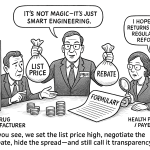
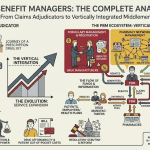
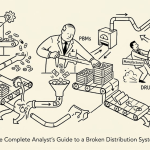
The most formidable barrier to biosimilar adoption in the United States is no longer scientific or regulatory; it is commercial. The structure of the pharmaceutical supply chain, dominated by vertically integrated Pharmacy Benefit Managers (PBMs), has created a “rebate wall” that incentivizes high list prices and blocks lower-cost competitors. This dynamic fundamentally distorts the free market, transforming biosimilars from price-takers into rebate-generators.
1.1 The Evolution of the Rebate Trap
The commercial failure of the initial adalimumab (Humira) biosimilar launch in 2023 serves as the definitive case study for the rebate trap. Despite the entry of multiple low-cost competitors, the reference product retained over 95% market share throughout 2023 because PBMs prioritized the high rebate volume generated by the expensive brand over the net cost savings of the biosimilars.2
The market did not shift based on organic demand but rather through calculated formulary exclusions. In April 2024, CVS Caremark removed branded Humira from its major national commercial formularies. Almost overnight, biosimilar utilization on those plans surged from near-zero to 97%.3 However, this shift revealed a deeper structural issue: the primary beneficiary was Cordavis Hyrimoz, a co-branded product legally affiliated with CVS Health.
Table 1: The Impact of Formulary Control on Adalimumab Market Share (2023–2024)
Vertical Integration: CVS Caremark formulary exclusion of brand.
Biosimilar share jumped to 97% on affected plans.
2025 Status
Private Label Biosimilars
Profit Retention: PBMs shift volume to affiliated co-brands.
Market fragmented by PBM affiliation rather than price.
This data suggests that market access is now a function of PBM affiliation. Independent manufacturers who cannot offer comparable rebates or lack a co-manufacturing agreement with a major PBM (CVS/Caremark, Cigna/Evernorth, or UnitedHealth/Optum) face a commercial blockade, regardless of their product’s price or quality.3
1.2 The Rise of Private Label Biosimilars
By 2026, the strategy of “private label” biosimilars has become the industry standard for PBMs to maintain revenue streams in a post-brand world. This vertical integration allows PBMs to replace the rebates they effectively lose when a brand loses exclusivity with “manufacturing” or “licensing” revenues from their own biosimilars.
CVS Health and Cordavis: CVS launched Cordavis in 2023 to co-produce biosimilars. By contracting with Sandoz to produce Hyrimoz under the Cordavis label, CVS captures the margin previously lost to external manufacturers.6
Cigna/Evernorth and Quallent: Similarly, Cigna’s subsidiary Quallent Pharmaceuticals distributes biosimilars (including ustekinumab) specifically for Express Scripts formularies. Quallent products are often listed at varying price points (High WAC and Low WAC) to maximize contracting flexibility.7
UnitedHealth/Optum and Nuvaila: Optum’s Nuvaila subsidiary secured exclusive distribution rights for a version of Amgen’s Wezlana (ustekinumab), ensuring that Optum retains value from the transition away from Stelara.7
This trend raises profound antitrust and competitive concerns. If the entity deciding the formulary (the PBM) is also the manufacturer of the drug (via a subsidiary), independent competitors face an insurmountable conflict of interest. The market is shifting from an oligopoly of brand manufacturers to an oligopoly of PBM-affiliated biosimilars, potentially stifling long-term price competition.9
1.3 Dual Pricing Strategies: High WAC vs. Low WAC
To navigate this distorted landscape, manufacturers have universally adopted a “dual pricing” strategy, launching two identical versions of the same biosimilar with different Wholesale Acquisition Costs (WAC).
High WAC Strategy: Priced 5–10% below the reference product. This allows the manufacturer to offer steep rebates (~50%+) to PBMs, mimicking the brand’s rebate structure. This option is typically preferred by traditional PBMs who rely on rebate retention.10
Low WAC Strategy: Priced 80–95% below the reference product. This unrebated “net price” model appeals to transparent PBMs, cash-pay patients, and integrated health systems like Kaiser Permanente.11
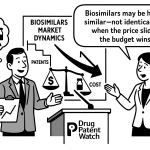
In the ustekinumab (Stelara) market launch of 2025, this strategy was deployed aggressively. While the brand Stelara has a list price of over $25,000, biosimilars like Selarsdi and Pyzchiva launched with Low WAC options reflecting 85–90% discounts.12 However, despite these massive discounts, early adoption data from 2025 suggests that the High WAC/High Rebate options continued to see significant utilization within the “Big Three” PBMs, confirming that the addiction to rebates continues to override list price savings.5
2. Policy Challenges: The Collision of IRA and Biosimilars
The second major challenge is the unintended policy collision between the Biologics Price Competition and Innovation Act (BPCIA), designed to foster market competition, and the Inflation Reduction Act (IRA), designed to impose government price controls. In 2026, these two distinct frameworks crashed into each other in the ustekinumab market.
2.1 The Stelara Paradox: Negotiation vs. Competition
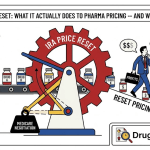
Stelara (ustekinumab) was selected as one of the first 10 drugs for Medicare price negotiation under the IRA. CMS established a “Maximum Fair Price” (MFP) for Stelara that represents a ~66% discount off its 2023 list price, effective January 1, 2026.13
Simultaneously, biosimilar competition began in January 2025. By the time the negotiated price took effect in 2026, market competition had already driven biosimilar list prices down by 85% to 90%.12
Table 2: The Stelara Pricing Paradox (January 2026)
Pricing Mechanism
Product
Discount Level
Outcome
IRA Negotiation
Brand Stelara (MFP)
~66% off 2023 List
Government price floor is higher than market price.
Market Competition
Biosimilars (Low WAC)
85–90% off Current List
Free market delivered deeper savings than negotiation.
This creates a perverse incentive structure. Because Medicare Part D plans are statistically required to cover negotiated drugs, and because the brand manufacturer might offer rebates on the negotiated price, PBMs may be incentivized to keep the higher-priced brand Stelara on formulary. This locks out the significantly cheaper biosimilars, neutralizing the market competition that the BPCIA was intended to create.9 Industry analysis suggests that if the government price floor effectively becomes the market standard, the incentive for biosimilar developers to invest $200M+ to bring a competitor to market evaporates.14
2.2 The “Special Rule” Failure and the “Biosimilar Void”
The IRA includes a “Special Rule” intended to delay negotiation for biologics if biosimilar entry is “imminent” (within two years).15 However, the strict qualification criteria and the unpredictability of FDA approval timelines render this rule largely ineffective as a strategic planning tool.
The broader consequence is a “chilling effect” on investment. A 2024 IQVIA report identified a looming “biosimilar void”: 90% of biologics losing patent protection between 2025 and 2034 currently have no biosimilars in development.16 The threat of government negotiation caps the potential return on investment (ROI). If a manufacturer knows the government will set a price ceiling of 60% off, and development costs remain high, the risk-adjusted Net Present Value (NPV) of developing a biosimilar for a product with <$1 billion in sales becomes negative.17
2.3 Reimbursement Distortions: ASP+8%
To counter these headwinds, the IRA temporarily increased the Medicare Part B add-on payment from ASP+6% to ASP+8% of the reference product’s price for qualifying biosimilars.18
The Theory: Providers are reimbursed the Average Sales Price (ASP) of the biosimilar plus a percentage of the higher brand price, incentivizing them to prescribe the cheaper drug without losing revenue.
The Reality: While this has helped in buy-and-bill environments (oncology), it does not address the pharmacy benefit (Part D) where PBMs dominate. Furthermore, as the reference product’s ASP declines due to competition, the absolute dollar value of the 8% add-on shrinks. Once the 5-year window expires, providers may face a “financial cliff” where prescribing biosimilars becomes revenue-negative compared to brands.20
3. Legal Challenges: Patent Thickets and “At-Risk” Launches
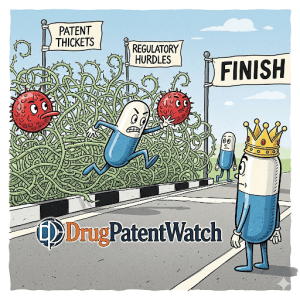
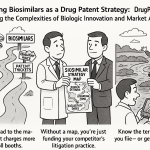
The third challenge is the weaponization of the patent system. Originator companies have moved beyond defending the core molecule to constructing “patent thickets”—dense webs of secondary patents covering formulations, dosing regimens, and manufacturing processes—to delay competition years beyond the expiration of the primary patent.
3.1 The Eylea (Aflibercept) Litigation Wars
The litigation surrounding Eylea (aflibercept) represents the apex of this strategy. Regeneron, the manufacturer of Eylea, asserted a thicket of over 30 patents against biosimilar applicants including Mylan, Celltrion, Samsung Bioepis, and Amgen.21
Unlike previous battles that often ended in settlements, Regeneron aggressively pursued Preliminary Injunctions (PIs) to block launches. In 2024, the courts granted PIs against Samsung Bioepis and Celltrion, effectively freezing their ability to launch despite FDA approval.23 The central patent in these disputes was often U.S. Patent No. 11,084,865, covering an ophthalmic formulation—a secondary patent filed long after the original molecule patent.
Table 3: Eylea (Aflibercept) Litigation Status 2024–2025
Defendant
Status
Outcome
Implication
Mylan/Biocon
Permanent Injunction
Blocked from launch
Validated the “thicket” strategy.
Samsung Bioepis
Preliminary Injunction
Blocked from launch
Affirmed by Federal Circuit.24
Amgen (Pavblu)
PI Denied
Launched At-Risk (Oct 2024)
Created a fractured market where one competitor entered while others were blocked.24
Amgen’s decision to launch Pavblu “at risk” (while litigation was still pending) in late 2024 was a rare and high-stakes gamble. If Amgen loses the final trial, they could be liable for treble damages. This environment creates an uneven playing field where only the largest, most capitalized companies (like Amgen) can afford the risk of market entry, while smaller pure-play biosimilar companies are forced to settle for delayed entry dates.25
3.2 Legislative Solutions: The Skinny Labeling Act
To combat patent thickets, 2025 saw renewed legislative focus on “skinny labeling”—the practice of seeking approval only for off-patent indications. The “Skinny Labels, Big Savings Act” (S 5573) was introduced to codify the right of biosimilars to carve out indications protected by method-of-use patents without being sued for induced infringement.26
This legislation addresses a critical legal gray area. Originators often sue biosimilars for “induced infringement,” arguing that even if the biosimilar label excludes the patented use, payers and doctors will use it for that indication anyway. Codifying skinny labeling protections is essential to prevent originators from using a patent on a minor indication (e.g., a specific pediatric orphan use) to block competition for the entire adult market.
4. Scientific and Development Challenges: Redefining “Similarity”
The fourth challenge lies in the high cost of development. Historically, the FDA required massive, expensive Phase 3 Comparative Efficacy Studies (CES) to prove that a biosimilar works exactly like the reference product. This requirement contributed to the $100–$300 million price tag for developing a single biosimilar.27
4.1 The Pivot to Analytical Assessment
In late 2025, the FDA issued landmark draft guidance proposing the elimination of Comparative Efficacy Studies for most biosimilars.28
The Scientific Basis: Modern analytical tools (mass spectrometry, X-ray crystallography) are now so sensitive that they can detect structural differences between proteins with far greater precision than a clinical trial ever could. If the molecule is structurally identical, the clinical outcome must be the same.
Economic Implication: Removing CES could reduce development costs by $20 million to $100 million per product and shorten timelines by 1–2 years.31
This regulatory shift is the single most important factor in addressing the “Biosimilar Void.” By lowering the barrier to entry, it makes it commercially viable to develop biosimilars for products with smaller annual revenues ($300M–$500M), potentially saving the pipeline for orphan biologics.
4.2 The Death of the Switching Study
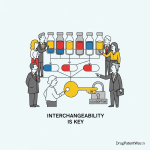
For years, the US was unique in distinguishing between “Biosimilar” and “Interchangeable” products, requiring a separate “switching study” (proving that switching back and forth creates no risk) for the latter. This distinction was weaponized by brand manufacturers to sow doubt about the safety of non-interchangeable biosimilars.28
In June 2024, the FDA reversed course, issuing guidance that switching studies are generally no longer needed to demonstrate interchangeability.33 This harmonization with European standards (where all biosimilars are interchangeable) removes a significant scientific and financial hurdle, effectively acknowledging that “biosimilarity” implies “interchangeability”.28
5. Adoption Challenges: The Nocebo Effect and Provider Education
The final challenge is the psychological barrier known as the nocebo effect—where patients experience negative side effects or perceived loss of efficacy solely due to their negative expectations of a “cheaper” or “different” drug.35
5.1 Clinical Evidence of Nocebo
Research published in 2024 and 2025 confirmed that the nocebo effect is a measurable driver of biosimilar discontinuation. A systematic review found that discontinuation rates were significantly higher in open-label studies (where patients knew they were switching) compared to double-blind studies (where they did not).36
Data: Discontinuation rates in open-label trials reached 14.3%, compared to just 6.95% in blinded trials.36
Implication: The adverse events reported (fatigue, pain) were real to the patient but were driven by anxiety and lack of confidence rather than pharmacological differences.
5.2 Education and Shared Savings
The solution to the nocebo effect is trust. Studies from Europe (e.g., Denmark’s mandatory switch) show that when providers confidently endorse the switch and explain that the savings are reinvested in the hospital system, acceptance rates are high.10
In the US, however, the “savings” often disappear into the PBM’s ledger rather than returning to the patient or clinic. This misalignment makes providers hesitant to expend the political capital required to convince a stable patient to switch. Innovative “shared savings” models, such as those piloted in the Oncology Care Model, are attempting to fix this by allowing practices to keep a portion of the savings generated by prescribing biosimilars.37
Conclusion: The Path Forward
The “Top 5 Challenges” of 2026 paint a picture of an industry in transition. The scientific and regulatory battles are largely being won—the FDA has streamlined development and removed artificial barriers like switching studies. However, the commercial and legal battles have intensified. The PBM rebate wall has evolved into a vertical integration trap, and the IRA has introduced new uncertainties that threaten investment in future pipelines.
For the biosimilar promise to be fully realized, policy must evolve to address these market distortions. This includes:
Antitrust Enforcement: Scrutinizing the vertical integration of PBMs and private-label biosimilars to ensure fair market access for independent developers.
IRA Technical Corrections: Ensuring that government-negotiated prices do not inadvertently act as a floor that blocks lower-cost market competition.
Patent Reform: Codifying skinny labeling protections to prevent the abuse of method-of-use patents.
Incentivizing Orphans: Leveraging the removal of CES to create specific pathways for developing biosimilars for rare diseases.
Without these interventions, the US risks creating a “two-tier” biologic market: highly competitive markets for the largest blockbusters (like Humira and Stelara), and a monopolistic void for the hundreds of smaller, life-saving biologics that patients rely on.