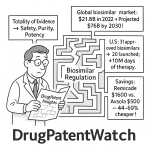
The Foundation: Differentiating Biologics, Biosimilars, and Generics
The landscape of pharmaceuticals is undergoing a seismic shift, driven by the maturation of the market for biologic medicines and the rise of their competitive counterparts, biosimilars. Biologics represent the cutting edge of medical treatment, offering targeted therapies for complex conditions like cancer, autoimmune disorders, and diabetes.1 However, their high cost has created significant barriers to access and strained healthcare budgets globally.1 The introduction of biosimilars promises to alleviate these pressures by fostering competition, but their adoption hinges on a nuanced understanding of their scientific nature and the regulatory frameworks that govern them. Central to this understanding in the United States is the concept of “interchangeability,” a designation that is often misunderstood yet holds profound implications for market dynamics. This report provides a comprehensive analysis of interchangeability, deconstructing its scientific basis, regulatory history, and real-world impact on the adoption of biosimilar therapies in the U.S. market.
The Science of Complexity: Why Biologics Cannot Be Identical
To grasp the regulatory distinctions that define the biosimilar market, one must first appreciate the fundamental scientific differences between biologic drugs and traditional small-molecule pharmaceuticals. A conventional drug, such as aspirin, is a small, chemically synthesized molecule with a simple, well-defined, and easily replicable structure.4 Its generic equivalent is required to be chemically identical to the brand-name reference product.1
Biologics, in stark contrast, are large, highly complex molecules—such as proteins, monoclonal antibodies, or nucleic acids—that are produced in or derived from living systems like microorganisms, plant cells, or animal cells.2 For example, the chemical drug aspirin contains just 21 atoms, whereas a biologic like Remicade contains over 18,000 atoms.4 This immense structural complexity means that biologics cannot be fully characterized by analytical methods alone.7
Furthermore, the manufacturing process for a biologic is inextricably linked to the final product—a principle often summarized as “the process is the product”.7 These intricate processes, which involve living cells, are inherently variable. Consequently, even between different manufacturing batches of the very same originator biologic, minor, clinically insignificant variations are normal and expected.1 This inherent variability makes it scientifically impossible to create an exact, identical copy of a reference biologic. This scientific reality is the cornerstone of the entire biosimilar regulatory paradigm; it explains why a biosimilar is defined as “highly similar” rather than “identical,” and it underpins the more rigorous and extensive data requirements for their approval compared to simple generics.1 The scientific nuance that a biosimilar is not a perfect replica creates a perception gap that does not exist for generic drugs. This gap can be exploited by originator manufacturers through legal and marketing strategies designed to sow doubt about the safety and efficacy of biosimilars, a tactic unavailable in the chemically identical world of small-molecule generics.11
Defining the Tiers: Biosimilarity vs. Interchangeability
The U.S. Food and Drug Administration (FDA) has established a two-tiered system for follow-on biologics, creating distinct definitions for “biosimilar” and “interchangeable” products.
A biosimilar is a biological product that is FDA-approved based on a demonstration that it is “highly similar” to an already-approved reference product. Critically, a biosimilar must also have “no clinically meaningful differences” from its reference product in terms of safety, purity, and potency (a term encompassing safety and effectiveness).14 This is the foundational standard that every biosimilar must meet to gain market approval. A physician can prescribe any approved biosimilar in place of the reference product with the same confidence in its clinical performance.14
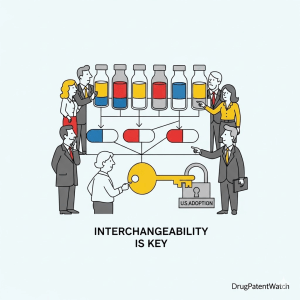
Interchangeability is an additional, optional designation unique to the U.S. regulatory framework established by the Biologics Price Competition and Innovation Act (BPCIA).14 To earn this designation, a product must first meet the rigorous standard for biosimilarity and then satisfy additional statutory requirements.1 The primary and most significant consequence of an interchangeability designation is that it permits a pharmacist to substitute the interchangeable biosimilar for the prescribed reference product without the direct intervention of the prescribing healthcare provider, a practice known as pharmacy-level substitution.2 This practice is, however, subject to individual state pharmacy laws.21
It is a critical point of clarification, emphasized repeatedly by the FDA, that the interchangeability designation is a regulatory and legal construct pertaining to substitution practices, not a clinical one. It does not signify that an interchangeable product is safer, more effective, or of a higher quality than a biosimilar that lacks the designation.14 Both biosimilars and interchangeable biosimilars are considered equally safe and effective as their reference product.14 Despite this official position, the very existence of a separate, higher regulatory bar for interchangeability has inadvertently fostered a market perception of a two-tiered quality system. This misperception has acted as a significant, albeit unintentional, barrier to the adoption of non-interchangeable biosimilars, compelling the FDA to actively engage in educational campaigns to dismantle a market confusion that its own regulatory structure helped to create.14
Characteristic
Generic Drug
Biosimilar
Interchangeable Biosimilar
Active Ingredient
Identical to reference drug 4
Highly similar to reference biologic 14
Highly similar to reference biologic 14
Source
Chemical synthesis 4
Living organisms (cells, microorganisms) 6
Living organisms (cells, microorganisms) 6
Molecular Complexity
Low (small molecule) 4
High (large, complex molecule) 4
High (large, complex molecule) 4
Approval Pathway
Abbreviated New Drug Application (ANDA) 10
351(k) Biologics License Application (BLA) 19
351(k) BLA with additional data 10
Clinical Data Requirement
Demonstrate bioequivalence 26
Demonstrate “no clinically meaningful differences” based on “totality of the evidence” 14
Meet biosimilarity standard plus additional requirements to ensure same clinical result upon switching 19
Pharmacy Substitution
Automatic substitution for brand name, per state law 2
Requires a new prescription from the provider 14
Automatic substitution for reference product, per state law 14
FDA Designation of Superiority
No
No
No; not considered safer or more effective than a non-interchangeable biosimilar 14
The U.S. Regulatory Framework: The Biologics Price Competition and Innovation Act (BPCIA)
The legal and commercial landscape for biosimilars in the United States was created by the Biologics Price Competition and Innovation Act (BPCIA), a landmark piece of legislation designed to introduce competition into the burgeoning and costly market for biologic medicines.
Forging a Pathway: The Goals and Key Provisions of the BPCIA
Enacted on March 23, 2010, as part of the Patient Protection and Affordable Care Act, the BPCIA had a clear objective: to create an abbreviated licensure pathway for biosimilar products, thereby balancing the need for pharmaceutical innovation with the societal benefit of increased access to more affordable medicines.15 The Act was modeled, in principle, on the Drug Price Competition and Patent Term Restoration Act of 1984 (commonly known as the Hatch-Waxman Act), which successfully established the modern generic drug industry.27
The BPCIA amended the Public Health Service (PHS) Act to establish the 351(k) regulatory pathway. This pathway allows a biosimilar developer to submit an abbreviated Biologics License Application (aBLA) that relies, in part, on the FDA’s previous finding that the originator biologic (the “reference product”) is safe and effective.4 By leveraging this existing data, biosimilar manufacturers can avoid the need to conduct a full, duplicative set of costly and lengthy clinical trials, which are required for a novel biologic.2
The core provisions of the BPCIA perform several critical functions:
They legally define the standards for both “biosimilarity” and “interchangeability,” establishing the scientific and clinical data required to meet each designation.19
They create a complex, structured process for resolving patent disputes between the biosimilar applicant and the reference product sponsor before market launch, a process known as the “patent dance”.33
They establish specific periods of market exclusivity for both originator biologics and the first biosimilar to achieve an interchangeable designation, creating a carefully calibrated system of incentives.25
Balancing Innovation and Access: The 12-Year Exclusivity Period
A central feature of the BPCIA—and a point of significant debate—is the provision of a 12-year period of marketing exclusivity for a new originator biologic, beginning from the date of its first licensure by the FDA.29 During this decade-plus span, the FDA is prohibited from approving any biosimilar that references the originator product.29
This extended period of protection was a key component of the legislative compromise that enabled the BPCIA’s passage. Innovator pharmaceutical companies argued that the immense cost and risk associated with developing novel biologics—with estimates often exceeding $2.6 billion per new drug—necessitated a longer period of market protection to recoup their investment and fund future research and development.9 This 12-year exclusivity is a powerful protection that operates independently of any patent rights and cannot be challenged in court, unlike patents.34 While intended to foster innovation, this provision has been criticized for significantly delaying the onset of biosimilar competition and, consequently, the realization of cost savings for the healthcare system, especially when compared to the shorter exclusivity periods for small-molecule drugs.27 The BPCIA’s very architecture reflects a delicate, and some argue flawed, compromise. The abbreviated pathway was a concession to biosimilar developers and payers, but the long 12-year exclusivity period was a major concession to innovator pharma. This foundational compromise has resulted in a system that is inherently slower, more litigious, and more complex than its generic drug counterpart, leading to more protracted market entry timelines and less aggressive initial price competition than many stakeholders had anticipated.27
The Interchangeability Designation: A Uniquely American Construct
While the concept of biosimilarity is global, the formal regulatory designation of “interchangeability” is a construct unique to the United States. It establishes a higher regulatory bar that, if cleared, grants a biosimilar a commercial advantage analogous to that of a generic drug: the ability to be automatically substituted at the pharmacy.
The Statutory Standard: What “Same Clinical Result” and “No Additional Risk” Mean
The BPCIA statute defines a two-part standard that a biosimilar must meet to be designated as interchangeable, which goes beyond the foundational requirement of biosimilarity.19 The manufacturer’s application must demonstrate that the proposed product:
Can be expected to produce the same clinical result as the reference product in any given patient.19
For a product that is administered more than once to an individual, the risk in terms of safety or diminished efficacy of alternating or switching between the use of the biological product and the reference product is not greater than the risk of using the reference product without such alternation or switch.19
The first prong reinforces the high standard of clinical equivalence, while the second prong directly addresses the safety of moving a patient back and forth between the originator and the biosimilar—a key concern for clinicians and patients. It is this second requirement that historically formed the basis for the FDA’s expectation of dedicated “switching studies.”
The “Totality of the Evidence” Approach
The FDA’s evaluation for both biosimilarity and interchangeability is not based on a single, pivotal trial. Instead, the agency employs a “totality of the evidence” approach, building a comprehensive scientific bridge between the biosimilar and its reference product.42 This evidence is often visualized as a pyramid, with the most extensive data forming the base.
Extensive Analytical Studies: This forms the foundation of the pyramid. The manufacturer must use a battery of state-of-the-art analytical techniques to conduct a head-to-head comparison of the structural and functional attributes of its proposed biosimilar and the reference product. This includes assessing characteristics like purity, molecular structure, and bioactivity to demonstrate that the product is highly similar at the molecular level.4
Animal Studies: Nonclinical studies in animals may be used to assess toxicity and further support the demonstration of similarity.4
Clinical Pharmacology Studies: These human studies are a critical component, comparing the pharmacokinetics (PK) and pharmacodynamics (PD) of the biosimilar and the reference product. PK studies measure how the drug is absorbed, distributed, metabolized, and eliminated by the body, while PD studies measure the drug’s effect on the body.42 These studies, often conducted in healthy volunteers, are highly sensitive and can detect subtle differences between products.45 In some cases, strong PK/PD data can reduce or eliminate the need for large-scale comparative clinical efficacy trials.45
The Historical Role of Switching Studies in Building Confidence
To satisfy the BPCIA’s statutory requirement regarding the safety of alternating use, the FDA, in its initial guidance, set an expectation that manufacturers seeking an interchangeability designation would need to conduct one or more dedicated switching studies.18
The typical design of such a study involves a patient population that is first stabilized on the reference product. Patients are then randomized into two groups: a control group that continues on the reference product, and a switching arm where patients alternate multiple times (e.g., at least three switches) between the reference product and the proposed interchangeable biosimilar.20 The primary goal is to demonstrate that this switching does not lead to any increased safety risks, particularly immunogenicity (the potential for the body to develop an immune response against the drug), or any reduction in efficacy compared to continuous treatment with the originator.18
These studies represented a significant investment of time and resources for developers, costing millions of dollars and adding years to the development timeline.50 This high hurdle created a crucial strategic dilemma. A manufacturer had to weigh the substantial upfront cost of conducting a switching study against an uncertain return on investment. The primary benefit of the designation is enabling automatic pharmacy substitution, but this is only one path to gaining market share. The more dominant path is securing preferred status on the formularies of powerful pharmacy benefit managers (PBMs), whose decisions are driven primarily by net cost and rebates, not necessarily by interchangeability status.25 This high-risk, uncertain-reward calculation led many early biosimilar developers to forgo seeking the designation, which is a key reason why so few interchangeable products reached the market in the BPCIA’s first decade.50
The Evolving Regulatory Landscape: From Switching Studies to Scientific Justification
The FDA’s approach to interchangeability has not been static. As scientific understanding and real-world experience have grown, the agency’s regulatory posture has evolved, culminating in a significant policy shift in 2024 that promises to reshape the path to achieving an interchangeable designation.
Accumulating Evidence: The Global Safety Record of Switching
Over the past 15 years, and particularly in Europe where biosimilars have been available since 2006, a vast and compelling body of evidence has been generated on the safety of switching patients from an originator biologic to a biosimilar.56 This evidence comes from both controlled clinical trials and extensive real-world clinical practice.
Recognizing this growing body of data, the FDA conducted its own systematic review and meta-analysis of switching studies. The results, published in 2023, were unequivocal: the analysis found no statistically significant differences in the risk of death, serious adverse events, treatment discontinuations, or immunogenicity-related events between patients who switched between a biosimilar and its reference product and those who did not switch.14 This robust evidence base provided the scientific foundation for the FDA to reconsider its requirements for demonstrating interchangeability.
The June 2024 Turning Point: Analyzing the FDA’s Updated Draft Guidance
In a landmark move, the FDA issued updated draft guidance in June 2024 that significantly alters the pathway to interchangeability.59 The new guidance
removes the agency’s general recommendation that a dedicated, repeated-switch clinical study be conducted.
Instead, the FDA now states that an applicant may provide a comprehensive scientific justification, based on the totality of its existing evidence, to demonstrate that the standard for interchangeability has been met.25 This justification would lean heavily on the extensive comparative analytical and clinical pharmacology (PK/PD) data already required for a biosimilarity determination.
The FDA’s rationale for this change is twofold. First, the accumulated real-world evidence and the agency’s own meta-analysis have largely resolved the residual uncertainty about the safety of switching.63 Second, the FDA has acknowledged that modern analytical technologies are now so advanced and sensitive that they can often detect minute structural and functional differences between two products with greater precision than a clinical switching study, which may not be sensitive enough to detect subtle but potentially relevant differences.59 This policy evolution was strongly supported by the Federal Trade Commission (FTC), which viewed the previous requirements as an unnecessary barrier to entry that stifled competition and delayed patient access to lower-cost alternatives.64
Implications of a Streamlined Pathway for Developers and the Market
This policy shift is expected to have profound implications for the biosimilar market. By removing the need for costly and time-consuming switching studies, the FDA has substantially lowered the barrier to achieving an interchangeable designation.14 This de-risks the development pathway and is likely to encourage more manufacturers to seek the designation, particularly for products dispensed through retail and specialty pharmacies where automatic substitution is most impactful.14
This evolution in FDA policy fundamentally alters the competitive strategy for biosimilar developers. Previously, undertaking a costly switching study was a high-stakes gamble to gain a potential market advantage. With the barrier now significantly lowered, the interchangeability designation may transform from a strategic differentiator into “table stakes”—a baseline requirement that most, if not all, serious competitors in the pharmacy-benefit space will be expected to achieve. While this levels the playing field among biosimilar manufacturers, it also reduces the ability of any single company to gain a durable competitive advantage based solely on the designation. Consequently, the primary locus of competition will shift even more decisively toward other factors, such as manufacturing efficiency, supply chain reliability, and, most critically, the ability to negotiate favorable net pricing and rebate agreements with PBMs. The FDA’s move, intended to spur competition, may inadvertently amplify the market-making power of these large payers.
A Tale of Two Systems: Contrasting the FDA and European Medicines Agency (EMA) Approaches
The U.S. model of interchangeability stands in sharp contrast to the regulatory philosophy adopted by the European Medicines Agency (EMA), which has the longest track record of regulating biosimilars in the world. Understanding these differences is crucial for global pharmaceutical companies developing products for both markets.
The EMA’s Position: Scientific Interchangeability as a Default
The EMA’s approach is grounded in the scientific principle that if a product is proven to be biosimilar, it is also inherently interchangeable. In a landmark joint statement issued in September 2022 with the Heads of Medicines Agencies (HMA), the EMA officially declared that all biosimilar medicines approved in the EU are considered interchangeable from a scientific viewpoint.56
This position is based on over 15 years of regulatory experience, the review of more than one hundred biosimilar applications, and the analysis of over one million patient-treatment years of safety data.57 The EMA’s rationale is that the comprehensive and rigorous comparability exercise required to demonstrate biosimilarity in the first place is sufficient to ensure that no clinically meaningful differences will arise from switching a patient between the reference product and the biosimilar, or even between two different biosimilars of the same reference product.56 Consequently, the EMA does not require manufacturers to conduct additional switching studies to prove interchangeability.57
Analyzing the Impact of Divergent Regulatory Philosophies
The core difference between the two systems lies in their conceptualization of interchangeability.
The EMA treats interchangeability as a scientific conclusion that flows directly from a robust demonstration of biosimilarity.
The FDA has historically treated interchangeability as a separate, higher regulatory standard linked specifically to the practice of pharmacy-level substitution.58
A critical distinction in the European system is the separation of scientific assessment from pharmacy practice policy. The EMA’s declaration of scientific interchangeability provides a harmonized, EU-wide position that gives prescribers confidence in switching patients. However, the decision on whether to permit automatic substitution by a pharmacist without prescriber consultation is left to the discretion of individual EU member states.56 The EMA’s scientific stance serves as a green light, empowering national health authorities to implement substitution policies if they choose, but it does not mandate them.
The FDA’s recent evolution, particularly the 2024 draft guidance, signals a slow but clear convergence toward the EMA’s scientific consensus. This shift is being driven by the overwhelming weight of global real-world evidence that has validated the EMA’s long-held position. This trajectory suggests that the initial, more cautious U.S. approach, codified in the BPCIA, may have been an overcorrection that created unnecessary regulatory hurdles, costs, and delays that could have been avoided by adopting a framework more aligned with the accumulating scientific reality.
Regulatory Aspect
U.S. Food and Drug Administration (FDA)
European Medicines Agency (EMA)
Definition of Interchangeability
A specific regulatory designation that permits pharmacy-level substitution 14
A scientific principle inherent to any approved biosimilar, confirming it can be exchanged with the reference product 56
Requirement for a Specific “Interchangeable” Designation
Yes, a manufacturer must specifically apply for and be granted this designation 14
No, all approved biosimilars are considered scientifically interchangeable 57
Role of Switching Studies
Historically expected for designation; new 2024 draft guidance removes this general recommendation in favor of scientific justification 59
Not required for biosimilar approval or for the product to be considered interchangeable 57
Implication for Pharmacy Substitution
The designation enables automatic substitution at the pharmacy, but the practice is governed by individual state laws 14
Provides the scientific confidence for individual EU member states to decide whether to implement their own pharmacy-level substitution policies 56
Scope of Interchangeability
Applies only to specific biosimilar products that have been granted the interchangeable designation 14
Applies to all biosimilars approved in the EU for a given reference product 56
The Pharmacy Counter: State Laws and the Role of the Pharmacist in Substitution
While the FDA grants the federal designation of interchangeability, the actual practice of pharmacy is regulated at the state level. This division of authority means that the promise of automatic substitution is ultimately realized through a complex and varied patchwork of state laws and regulations.
Enabling Automatic Substitution: The Primary Function of Interchangeability
The single most important function of the FDA’s interchangeability designation is that it serves as the federal prerequisite for pharmacy-level substitution.2 For a conventional generic drug, this substitution is a routine and foundational aspect of pharmacy practice. For biologics, the BPCIA framework and subsequent state laws have created a more controlled system. Without an interchangeability designation, a pharmacist receiving a prescription for a reference biologic cannot dispense a biosimilar without first obtaining a new prescription from the provider.14 The “interchangeable” status removes this barrier, empowering the pharmacist to make the switch directly, subject to the laws of their state.70
This distinction is most relevant for biologics that are self-administered by patients and dispensed through retail or specialty pharmacies, such as insulin pens or pre-filled syringes for autoimmune conditions.50 For biologics administered by a healthcare professional in a clinical setting (e.g., intravenous infusions in a hospital or clinic), the concept of pharmacy-level substitution is largely inapplicable. In these settings, the choice of which product to use is typically determined by the institution’s formulary, making the interchangeability designation less of a commercial priority for manufacturers of such drugs.14
A Patchwork of Policies: How State Laws Govern Pharmacist Actions
Following the passage of the BPCIA, nearly all states and Puerto Rico have enacted their own legislation to govern the substitution of interchangeable biosimilars.47 While these laws generally permit substitution, they are not uniform and often impose specific requirements on pharmacists that go beyond those for generic drug substitution.73
These state-level variations create a complex operational landscape for national pharmacy chains, payers, and manufacturers. Common requirements and variations include:
Prescriber Notification: A majority of states require the pharmacist to communicate the substitution to the prescribing physician. However, the mandated timeframe for this notification varies widely, from within a “reasonable time” in Colorado to within 3 business days in Nevada or 5 business days in New York and Indiana.73
Patient Notification and Consent: Many state laws mandate that the patient be informed of the substitution at the point of dispensing. Some states, such as Florida and Connecticut, go further and require the patient’s consent before the substitution can be made.73
Record-Keeping: States typically specify the duration for which the pharmacy must maintain a record of the substitution, often for at least two years.76
Cost-Savings Provisions: Several states, including Nevada and New York, permit substitution only if the interchangeable product is less expensive for the patient, and may require the pharmacist to pass on the cost savings.72
Prescriber’s Veto: All states preserve the prescriber’s right to prevent a substitution by indicating “Dispense as Written” or a similar instruction on the prescription.73
These administrative requirements, while designed to ensure transparency and physician oversight, can create what amounts to a “soft barrier” to substitution. For a busy pharmacy, the additional steps of notifying a prescriber within a specific timeframe or obtaining patient consent add operational friction that does not exist for most generic substitutions. If the financial or workflow incentives are not sufficient to overcome this administrative burden, pharmacies may be less inclined to perform the substitution, thereby diluting the market impact that the interchangeability designation was intended to create.77
State (Illustrative)
Patient Consent Required?
Prescriber Notification Window
Other Key Provisions
Florida76
Yes
Not specified, but record must be made.
Pharmacist must notify the person presenting the prescription.
Colorado73
No
“Within a reasonable time”
Must be less expensive for the patient.
New York72
No
Within 5 business days
Substitution is required if the interchangeable is less expensive, unless prescriber prohibits it.
Nevada73
Patient may decline, but consent not required if paid by public funds.
Within 3 business days
Must be less expensive for the patient.
Market Dynamics and Adoption: The Real-World Impact of Interchangeability
The ultimate test of the interchangeability designation’s value is its ability to drive biosimilar adoption and generate healthcare savings. The recent launches of biosimilars for two blockbuster biologics—adalimumab (Humira) and insulin glargine (Lantus)—have provided crucial, real-world case studies on the interplay between regulatory designations, payer strategies, and market competition.
Case Study 1: The Adalimumab (Humira) Revolution
The introduction of biosimilars for AbbVie’s Humira, the best-selling drug in history, has been the most significant test of the U.S. biosimilar market to date. The results have been a stark lesson in the limits of regulatory designations and the overwhelming power of commercial payers.
Initial Stagnation (January 2023 – March 2024)
Despite the launch of ten different adalimumab biosimilars, including one with an interchangeability designation, the initial market impact was negligible. For over a year, the originator, Humira, successfully defended its market, retaining an astonishing 97% of the total adalimumab prescription volume through March 2024.79 This market inertia persisted even though biosimilar manufacturers offered substantial list price discounts, with some priced 85% lower than Humira’s wholesale acquisition cost.80 This period unequivocally demonstrated that the mere availability of lower-priced biosimilars, even with the FDA’s “interchangeable” seal of approval, was insufficient to dislodge an entrenched originator protected by the U.S. payer system. The primary reason for this stagnation was the “rebate wall,” where large PBMs continued to favor the high-list-price, high-rebate Humira on their formularies because it was more profitable for them than the low-list-price biosimilars.78
The PBM Power Play (April 2024 Onward)
The market landscape was upended in April 2024 when CVS Caremark, one of the nation’s largest PBMs, executed a decisive formulary change. It removed the originator Humira from its major national commercial formularies and instead gave preferred, exclusive status to Sandoz’s biosimilar, Hyrimoz. This was done through Cordavis, a wholly owned subsidiary of CVS Health created to commercialize and co-promote biosimilars, effectively creating a “private-label” product for CVS.79
The impact was immediate and dramatic. Hyrimoz’s share of all U.S. adalimumab claims skyrocketed from approximately 1% before the change to 14% in April 2024 and 16% by June 2024.79 This event provided definitive proof that in the U.S. pharmacy-benefit market,
PBM formulary control is a far more powerful driver of biosimilar adoption than the interchangeability designation. The market moved not when a scientifically validated, lower-cost alternative became available, but when a dominant payer unilaterally decided to force the switch.
Product
Market Share (Q1 2024)
Market Share (Q2 2024, post-change)
Key Event
Humira (Originator)
~97% 81
Decreased Significantly
Removed from major CVS Caremark formularies in April 2024 79
Hyrimoz (Biosimilar)
~1% 81
16% (by June 2024) 81
Made preferred/exclusive on CVS Caremark formularies via Cordavis partnership 79
Other Biosimilars
<2% (combined) 80
Remained low 80
Largely excluded from the formulary shift, remaining marginalized 80
Case Study 2: The Insulin Glargine (Lantus) Experience
The market for long-acting insulin provides another important, though different, test case. Semglee (insulin glargine-yfgn) became the first-ever interchangeable biosimilar approved by the FDA in July 2021, followed by Rezvoglar (insulin glargine-aglr).25
Despite the availability of these interchangeable options, which can be automatically substituted at the pharmacy, uptake has been modest. The originator, Sanofi’s Lantus, has maintained a dominant market position through a combination of brand loyalty, prescriber inertia, and aggressive pricing strategies.84 In a striking example of competitive response from the UK market, the manufacturer of Lantus strategically lowered its price to the point where it became the least expensive insulin glargine option, completely neutralizing the cost-saving incentive to switch to a biosimilar.85 This case study demonstrates that even with the full regulatory advantage of an interchangeability designation, a biosimilar’s market success is not guaranteed if the originator manufacturer chooses to compete aggressively on net price, effectively defending its market share.
These case studies reveal a critical paradox. Interchangeability was intended to foster a vibrant, competitive market akin to that for small-molecule generics. However, the prevailing U.S. market structure, dominated by PBMs and their rebate-driven business models, has subverted this goal. Instead of open competition among multiple biosimilars, the adalimumab market is consolidating around a few PBM-backed “winners” through exclusive partnerships. This model of “gated competition” may limit long-term price erosion and could discourage investment from biosimilar manufacturers who are unable to secure such a deal with a major payer, ultimately constraining the full competitive and cost-saving potential envisioned by the BPCIA.79
Stakeholder Perspectives: Navigating the Complex Web of Influence
The adoption of interchangeable biosimilars is not a simple top-down process. It is the result of a complex interplay between the motivations, perceptions, and economic interests of multiple stakeholders: prescribers, patients, and payers.
The Prescriber’s Dilemma: Confidence vs. Reluctance
Physicians are central to the biosimilar adoption equation, and their perspective is characterized by a notable duality. On one hand, surveys indicate a high level of confidence in the science behind biosimilars and the rigor of the FDA’s approval process. A 2021 survey found that 92% of prescribing physicians were confident in the safety and efficacy of biosimilars, and 89% would prescribe one to a new, treatment-naïve patient.88
On the other hand, there is significant and widespread physician resistance to non-medical switching. This refers to a change in a patient’s medication regimen that is mandated by a payer or PBM for cost and coverage reasons, rather than for clinical reasons, particularly for a patient who is stable and doing well on their current therapy.88 Multiple surveys have found that a majority of physicians—ranging from 58% to as high as 84%—are uncomfortable with such third-party-mandated substitutions and believe the treatment decision should remain a collaborative one between the physician and the patient.88 While the FDA’s interchangeability designation was intended to build confidence in substitution, many physicians remain wary, with nearly half citing the need for specific, comparable efficacy data from switching studies as a key factor in their comfort level—highlighting the very perception gap the FDA’s 2024 guidance aims to close.89
The Patient Experience: Concerns, Education, and the Nocebo Effect
Patient acceptance is a critical and often underestimated barrier to biosimilar uptake. For a patient with a chronic, complex disease who has achieved stability on a biologic therapy, the prospect of switching to a different product, even one deemed equivalent by regulators, can be fraught with anxiety.
Surveys of patients reveal profound concerns. In one study, 85% of patients were worried that a biosimilar would not treat their disease as effectively as their current biologic, and 83% were concerned that switching might cause new or worse side effects.92 These fears can give rise to the
nocebo effect, a phenomenon where a patient’s negative expectations about a treatment can lead to the perception of negative outcomes, such as increased side effects or reduced efficacy, even if the treatment is clinically identical.58
Research has shown that the switching process itself is a major determinant of patient outcomes. When patients feel that the decision was made without their input, or when they receive inadequate information and support, satisfaction is low.93 Conversely, successful switching programs are characterized by strong communication, shared decision-making between the patient and provider, and thorough education and training, particularly on any differences in the delivery device (e.g., autoinjector).93
The Payer’s Calculus: Rebate Walls, Formulary Design, and Private Labels
While physicians prescribe and patients consume, it is the payers—insurers and the PBMs that manage their pharmacy benefits—who are the ultimate arbiters of market access for biosimilars.52 Their decisions are driven by a complex financial calculus in which the interchangeability designation is often a secondary consideration.
The primary barrier erected by payers is the “rebate wall.” This is a contracting strategy where the manufacturer of a high-list-price originator biologic offers a substantial, confidential rebate to a PBM in exchange for making the originator the exclusive or preferred product on its formulary.78 This arrangement creates a powerful disincentive for the PBM to cover a lower-list-price biosimilar. While the biosimilar may have a lower net cost to the health system, the PBM’s own revenue is maximized by the large rebate it receives from the originator. This misalignment of incentives was the primary reason for the initial failure of adalimumab biosimilars to gain market share.78
The recent emergence of PBM-owned or co-promoted “private-label” biosimilars, as seen with CVS/Cordavis and Hyrimoz, represents a strategic evolution. By vertically integrating and taking a direct stake in the biosimilar, the PBM can capture the financial value of the lower-cost product directly, bypassing the rebate-driven model and realigning its financial interests with the use of the biosimilar.79 This demonstrates that overcoming commercial barriers requires changing the fundamental economic incentives of the payers who control the market.
Strategic and Legal Battlegrounds: Beyond the Science
The competition between originator biologics and biosimilars is fought not only in the laboratory and the clinic but also, and perhaps more fiercely, in the courtroom and the marketplace. The scientific demonstration of interchangeability is merely the entry ticket to a complex war of attrition shaped by legal maneuvering, aggressive commercial tactics, and sophisticated defense strategies.
The “Patent Dance”: How Litigation Delays Market Entry
The BPCIA established a unique and highly structured process for managing patent disputes, colloquially termed the “patent dance”.33 This framework outlines a series of timed steps for the biosimilar applicant and the reference product sponsor to exchange confidential information about the biosimilar’s manufacturing process and to identify relevant patents that could be subject to infringement litigation.100
While the Supreme Court has ruled that participation in the patent dance is not mandatory for the biosimilar applicant, the decision to engage or to opt out has significant strategic consequences for both parties, influencing which patents can be litigated and when.100 In practice, this process frequently culminates in protracted and expensive patent litigation that can delay the market launch of an FDA-approved biosimilar for years after its approval. The case of adalimumab biosimilars, which were approved by the FDA as early as 2016 but were kept off the U.S. market until 2023 due to settlement agreements stemming from patent litigation, is a prime example of this dynamic.103
Originator Defense Playbook: Thickets, Rebates, and Misinformation
Originator manufacturers have developed a sophisticated, multi-pronged playbook to defend their blockbuster biologics from biosimilar competition long after the primary patent on the molecule has expired. Key strategies include:
Patent Thickets: This involves filing a dense web of dozens or even hundreds of secondary patents covering every conceivable aspect of the product beyond the core molecule. These can include patents on specific formulations (e.g., a citrate-free version that reduces injection pain), manufacturing and purification processes, methods of use for specific indications, and delivery devices.9 AbbVie’s defense of Humira, which involved over 100 patents, created a formidable legal minefield that was designed to deter or delay biosimilar challengers.9
Rebate Walls: As previously discussed, this commercial strategy uses substantial rebates to PBMs to secure exclusive formulary placement, effectively blocking market access for lower-priced competitors.87
Product Hopping or “Evergreening”: This strategy involves launching a next-generation version of the product—a “bio-better” with an improved dosing schedule, a new formulation, or a more convenient delivery device—and working to switch patients to the new product before the original loses exclusivity. This tactic aims to make the reference product for the biosimilars obsolete by the time they can launch, forcing them to compete against a newer, patent-protected product.106
Disinformation Campaigns: Some originator companies have been accused of funding or promoting messaging designed to create fear, uncertainty, and doubt (FUD) among physicians and patients regarding the safety and efficacy of biosimilars, particularly focusing on the risks of switching.11 These tactics, which have been criticized by former FDA commissioners, seek to exploit the “highly similar, not identical” nature of biosimilars to undermine confidence.107 This has prompted the FDA and FTC to form a joint task force to address and deter such potentially anticompetitive and misleading communications.109
The Business Case: Re-evaluating the ROI of Pursuing Interchangeability
For a biosimilar developer, the decision to pursue the interchangeability designation is a complex cost-benefit analysis. The development of a biosimilar is already a costly endeavor, estimated at $100 million to $300 million.51 The historical requirement for an additional, expensive switching study further increased this investment.50
The primary benefit of the designation is the potential for increased uptake through automatic pharmacy substitution, which can reduce the rate of prescription abandonment that occurs when a pharmacist must contact a busy prescriber to approve a switch.110 One economic analysis attempted to quantify this benefit, estimating that for adalimumab, the interchangeability designation could be worth approximately $765 million in realized savings by preventing such abandonments.110
The FDA’s June 2024 guidance, by largely removing the need for a separate switching study, dramatically improves the return-on-investment (ROI) calculation. By lowering the cost and time required to achieve the designation, the new guidance makes it a much more attractive and strategically viable option for nearly all developers of pharmacy-benefit biologics.14 This shifts the strategic calculus from a high-risk bet to a more routine step in the commercialization process.
The Future of Interchangeability and the U.S. Biosimilar Market
The U.S. biosimilar market is at a critical inflection point. As regulatory barriers to interchangeability are lowered and the market gains experience with major product launches, the landscape is set to evolve rapidly, with profound implications for healthcare costs, market competition, and stakeholder strategies.
The introduction of biosimilars has already delivered substantial savings to the U.S. healthcare system. According to the Association for Accessible Medicines, biosimilars generated $12.4 billion in savings in 2023, contributing to a total of $36 billion saved since the first biosimilar launch in 2015.111
Future projections point to an even greater impact. A 2022 study by the RAND Corporation estimated that biosimilars would generate $38.4 billion in savings from 2021 to 2025, with a more optimistic scenario projecting savings as high as $124.5 billion.113 Other analyses project savings of $181 billion between 2023 and 2027.115 These savings are realized through two primary mechanisms: the direct cost reduction from using the lower-priced biosimilar, and the indirect savings generated when the originator manufacturer is forced to lower its own net price to compete.113
The Next Wave: Analyzing the Pipeline of Interchangeable Products
The pipeline for future biosimilar competition is robust. Over the next decade, 118 biologics are expected to lose patent protection, representing a potential market opportunity of over $232 billion in originator sales.117 As these blockbuster products face loss of exclusivity, the number of biosimilar and interchangeable options available to patients is poised to grow exponentially.
Given the FDA’s new, more streamlined guidance, it is highly probable that a greater proportion of future biosimilars, especially those dispensed through pharmacies, will either launch with an interchangeable designation or seek it soon after approval.119 The FDA has signaled its long-term commitment to this pathway by planning future scientific workshops and guidance documents to further facilitate the development of interchangeable products, ensuring that the regulatory framework continues to evolve with the science.122
Strategic Recommendations for Stakeholders: Navigating the Evolving Landscape
The shifting dynamics of the biosimilar market necessitate a recalibration of strategies for all key stakeholders.
For Biosimilar Developers: With the scientific and regulatory hurdles for interchangeability being lowered, the designation is becoming a competitive necessity rather than a differentiator. The primary battleground for market share will increasingly be fought in the offices of PBMs and payers. Success will depend less on the regulatory designation and more on sophisticated pricing strategies, robust supply chains, and the ability to forge innovative commercial partnerships.
For Payers and PBMs: The success of the vertically integrated or tightly partnered model (e.g., CVS/Cordavis) is likely to be replicated. The market may see a consolidation of power, where a few large payers anoint specific biosimilar “winners” for their formularies. While this can drive rapid uptake and short-term savings, it risks creating a series of co-monopolies that could stifle broader, long-term competition.
For Prescribers and Patients: Education and communication are paramount. As the practical distinction between “biosimilar” and “interchangeable” narrows from a data-requirement perspective, healthcare providers will need to be equipped to reassure patients that all FDA-approved biosimilars are equally safe and effective. Proactive communication strategies will be essential to manage payer-mandated switches and mitigate the nocebo effect.
For Policymakers: The legislative and regulatory focus should now pivot from the scientific standards of interchangeability—which are now largely aligned with global consensus—to the commercial and legal practices that continue to impede a fully competitive market. Addressing issues like patent thickets, rebate walls, and other anticompetitive behaviors will be critical to realizing the full cost-saving promise of the BPCIA.
Ultimately, the evolution of the interchangeability designation may be overshadowed by broader health policy shifts. The price negotiation provisions of the Inflation Reduction Act (IRA), for instance, could fundamentally alter the economic landscape. If the government negotiates a significantly lower price for an originator biologic before its biosimilar competitors can launch, it could drastically shrink the potential market and profit margin for those biosimilars. This could chill investment in future biosimilar development for drugs targeted by the IRA, creating a powerful market cross-current.37 The future of biosimilar competition, therefore, will be shaped not just by the FDA’s scientific and regulatory decisions, but by the complex interplay of these powerful economic and legislative forces.
Works cited
Are you on a biologic medication? What you need to know about biosimilar treatment options – FDA, accessed August 20, 2025, https://www.fda.gov/media/165656/download
Biosimilarity and Interchangeability in the Biologics Price Competition and Innovation Act of 2009 and FDA’s 2012 Draft Guidance for Industry – PMC, accessed August 20, 2025, https://pmc.ncbi.nlm.nih.gov/articles/PMC3827854/
Postapproval Manufacturing Changes to Biosimilar and Interchangeable Biosimilar Products Questions and Answers Guidance for Industry – FDA, accessed August 20, 2025, https://www.fda.gov/media/180206/download
Interchangeability of Biosimilars: What Level of Clinical Evidence is Needed to Support the Interchangeability Designation in the United States?, accessed August 20, 2025, https://pmc.ncbi.nlm.nih.gov/articles/PMC7669758/
Physician attitudes about non-medical switching to biosimilars: results from an online physician survey in the United States – PubMed, accessed August 20, 2025, https://pubmed.ncbi.nlm.nih.gov/30712393/
Patient attitudes about non-medical switching to biosimilars: results from an online patient survey in the United States – PubMed, accessed August 20, 2025, https://pubmed.ncbi.nlm.nih.gov/30618353/
Influence of information provided prior to switching from Humira to biosimilar adalimumab on UK patients’ satisfaction: a cross-sectional survey by patient organisations | BMJ Open, accessed August 20, 2025, https://bmjopen.bmj.com/content/12/2/e050949