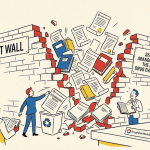
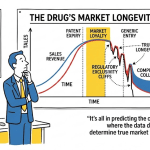
Eight of Teva’s nine Copaxone patents expired in May 2014. The first FDA-approved generic, Sandoz’s Glatopa, didn’t reach a pharmacy shelf until June 2015, thirteen months later.[1][5] Nothing in the Orange Book explains that gap. The patent clock said the market was open. A separate clock, the one that governs whether regulators and manufacturers can actually prove a generic works and can actually make it, said otherwise.
This happens often enough that treating “loss of exclusivity” as a single date is a modeling error, not a simplification. Patent status answers one question: can a generic company legally sell the product without being sued into oblivion. It says nothing about whether the FDA will accept the company’s evidence that the generic is equivalent, and nothing about whether the company’s factory can reliably make it. Those are different signals, tracked by different institutions, on different timelines. DrugPatentWatch’s own patent and exclusivity data captures the first signal precisely. This article is about the other two, and about what happens to a forecast that ignores them.
The Short Answer
Patent and exclusivity expiration marks the earliest date a generic or biosimilar could enter a market. It does not mark the date one actually will. Three case studies below show three distinct failure modes: a patent-cleared drug whose entry was delayed more than a year by unresolved analytical science (Copaxone), a market with no patent barrier at all whose supply collapsed anyway because of a manufacturing inspection (cisplatin and carboplatin), and a patent-cleared entry that succeeded on schedule and then failed months later for reasons that had nothing to do with patents (generic Lipitor). A fourth pattern, tied to device and biologic regulatory pathways, shows up in Advair Diskus and in interchangeable insulin. Federal data confirms these are not edge cases: the Government Accountability Office found that only 12 percent of generic applications clear FDA review on the first attempt.[8]
Why Patent-Only Models Keep Missing the Date
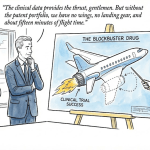
A patent-only model of generic entry assumes that once the last relevant patent expires or is invalidated, a qualified generic maker will have a product ready to file, and the FDA will approve it, and the factory will produce it without incident. Each of those assumptions can fail independently of the others.
What “Loss of Exclusivity” Actually Measures
Loss of exclusivity, as most patent trackers define it, measures the expiration or invalidation of the last Orange Book-listed patent and the last FDA regulatory exclusivity period covering a drug. It is a legal and regulatory milestone. It says a generic applicant is now free to seek approval and to launch without infringement risk. It does not say the applicant has an approvable application, and it does not say the applicant’s supply chain can sustain a launch.
The Three Clocks: Patent, Clinical and Supply
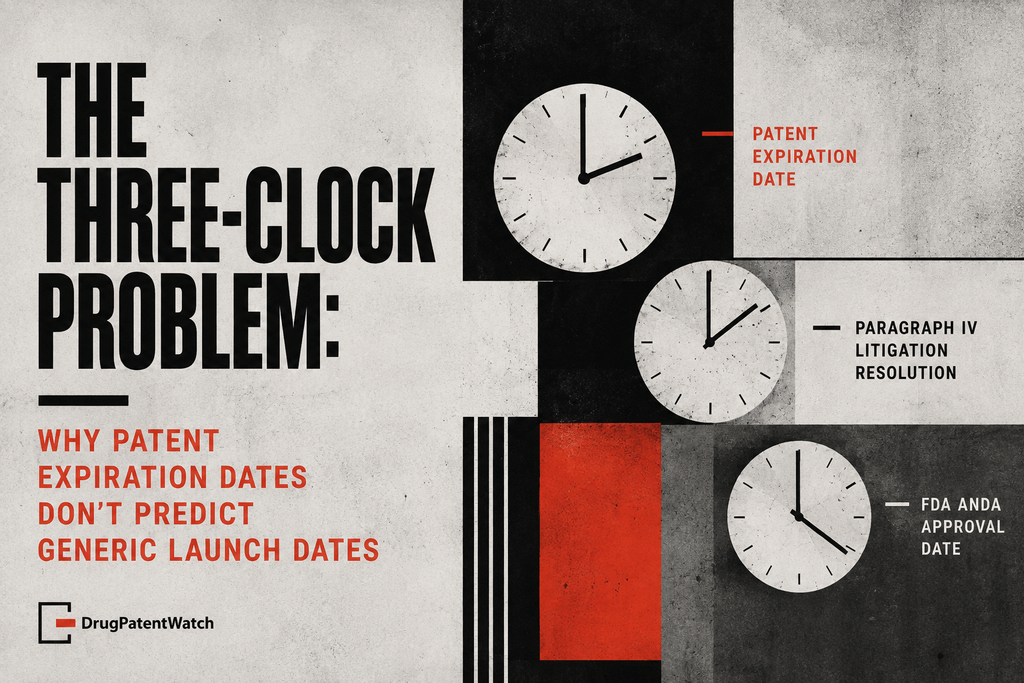
Three independent clocks determine when a generic or biosimilar actually reaches patients.
Clock One: The Patent and Exclusivity Signal
This is the clock most coverage of generic competition tracks: Orange Book listings, Paragraph IV litigation outcomes, settlement terms, and statutory exclusivities such as 180-day first-filer status or orphan exclusivity. It is necessary. It is not sufficient.
Clock Two: The Clinical and Analytical Signal
This clock tracks whether a generic applicant can demonstrate bioequivalence, or, for complex drugs, whether the FDA has an accepted scientific pathway to demonstrate equivalence at all. For simple oral tablets this clock usually runs faster than the patent clock. For complex generics, injectables with device components, inhalers, topical products, and non-biological complex drugs like glatiramer acetate, it can run for years after patents clear.
Clock Three: The Supply and Manufacturing Signal
This clock tracks whether a facility that has an approved application can actually produce conforming product at scale. Import alerts, warning letters, and Current Good Manufacturing Practice, or CGMP, violations stop this clock regardless of patent or clinical status. Because a large share of generic sterile injectables and active pharmaceutical ingredients are manufactured at a small number of overseas sites, this clock is unusually concentrated: a single facility’s inspection outcome can govern national supply of a molecule that has been off patent for decades.
Methodology
The three primary case studies below were selected because each has a documented, source-verifiable patent or exclusivity timeline and a documented clinical or supply event that diverged from what that timeline alone would predict. Sources prioritized are FDA public records (approval histories, warning letters, public statements), federal court and Supreme Court opinions, SEC filings, and contemporaneous reporting from established health and business publications. Calculated intervals, such as the gap between patent clearance and generic launch, are original to this analysis and are labeled as calculated wherever they appear. Where a company’s own patent-litigation timeline includes a patent still in active litigation past a stated expiration date, that fact is noted rather than smoothed over.
Case One: Copaxone and the Complex-Drug Problem
The Patent Timeline
Teva’s Copaxone (glatiramer acetate) held nine Orange Book patents covering its active ingredient, copolymer-1. Eight of the nine expired in May 2014.[1] The ninth, the ‘808 patent, covering a manufacturing process, was still in active litigation. A district court upheld it in 2012; the Federal Circuit invalidated it in 2013 for indefiniteness; the Supreme Court reversed and remanded in Teva Pharmaceuticals USA, Inc. v. Sandoz, Inc. in January 2015, ruling that appellate courts owe deference to a trial court’s factual findings on claim construction.[2][3] The ‘808 patent’s stated expiration was September 1, 2015.[1]
The Analytical Characterization Problem
Patent status was never the binding constraint on Copaxone generics. Glatiramer acetate is a mixture of polypeptide chains of varying length and sequence, not a single defined molecule, which put it outside the standard small-molecule bioequivalence framework built around identical active ingredients and comparable pharmacokinetics. In a 2014 SEC filing made while its patents were still being litigated, Teva stated that the inability to fully characterize the active ingredient led many experts to believe that safety, efficacy, and immunogenicity of any generic could only be established through full-scale, placebo-controlled clinical trials in multiple sclerosis patients, not through the abbreviated pathway used for ordinary generics.[1] That was a genuine, at-the-time open scientific question, independent of anything happening in patent court.
Momenta Pharmaceuticals, working with Sandoz, spent years developing proprietary physicochemical and immunological characterization methods intended to demonstrate equivalence without new clinical trials.[6] The FDA ultimately accepted a four-point analytical and immunogenicity equivalence standard, and approved Sandoz’s Glatopa on April 16, 2015, as a fully substitutable generic based on that pathway, not on new clinical outcome data.[4][6] Commercial launch followed on June 18, 2015.[5]
Only 12 percent of the 2,030 generic drug applications the FDA reviewed between fiscal years 2015 and 2017 won approval in the first review cycle; the rest needed at least one more round, a process that can add years to a launch date that a patent calendar alone would never flag.[8]
Teva separately filed eight citizen petitions attempting to block or delay generic competition for Copaxone; federal reviewers denied all eight.[7] That is a documented example of a non-patent regulatory lever aimed at the same outcome patent litigation is usually assumed to control, and it is invisible to any model that tracks only Orange Book status.
Calculated Metric: Patent-Clear-to-Launch Gap
Using the May 2014 expiration of the eight uncontested patents as the reference point, and the April 16, 2015 FDA approval of Glatopa as the endpoint, the gap is approximately eleven months. Using the June 18, 2015 commercial launch date, the gap widens to about thirteen months. This is a calculated interval, not an officially reported figure, and it reflects analytical-science review time running in parallel with, and ultimately outlasting, patent litigation on the ‘808 patent.
Case Two: Cisplatin and Carboplatin, a Shortage With No Patent Signal at All
Cisplatin and carboplatin are platinum-based chemotherapy agents that have been off patent for decades. No patent tracker would have flagged either drug as at risk in 2022. Both went into national shortage anyway, for reasons entirely unrelated to intellectual property.
The Inspection That Triggered a National Shortage
From November 22 to December 2, 2022, FDA investigators inspected an Intas Pharmaceuticals facility in Sanand, Gujarat, that supplied roughly half of the U.S. cisplatin market.[10][11] Inspectors found what one contributor writing in the American Journal of Managed Care described as a pattern of quality-assurance failures serious enough to shut the plant down, including data records that had been shredded and, in one instance, doused in acetic acid inside the facility’s quality-control scrap area.[11] Intas voluntarily halted manufacturing at the site.[12]
The Government Response
The FDA listed cisplatin as an official shortage on February 10, 2023, and carboplatin on April 28, 2023, months after the inspection itself.[10] Gray-market pricing for a $30 bottle of carboplatin reportedly reached $185 within days and $345 a week later.[12] By June 2023, the FDA was authorizing temporary imports of unapproved cisplatin from China’s Qilu Pharmaceutical, distributed in the U.S. through Apotex.[13] By November 14, 2023, FDA had placed Intas under a formal import alert.[9] A congressional letter in August 2023 noted the facility had by then halted production for roughly eight months.[14]
Calculated Metric: Inspection-to-Shortage-Designation Gap
From the close of the nine-day FDA inspection on December 2, 2022, to the FDA’s formal cisplatin shortage designation on February 10, 2023, is approximately ten weeks. This is a calculated interval showing that even after a supply-side failure is discovered, official shortage recognition, and any policy response tied to it, lags the underlying event by months. No patent event occurred anywhere in this sequence.
Case Three: Generic Lipitor and a Supply Signal That Arrived After Entry
This case shows the mirror image of Copaxone: patent status predicted entry correctly, entry happened on schedule, and a supply failure still disrupted the market less than a year later.
A Clean Patent Win
Pfizer’s Lipitor (atorvastatin) lost U.S. patent exclusivity on November 30, 2011. Ranbaxy Laboratories, through its U.S. subsidiary, won 180-day first-filer exclusivity and launched generic atorvastatin that same day.[17] On paper, this is the case the patent-only model handles well: a clear expiration date, a first filer ready with an approved application, and a same-day launch.
The Recall That Followed
Ranbaxy was already operating under a December 20, 2011 consent decree with the FDA tied to earlier data-integrity findings at its plants.[16] On November 9, 2012, less than a year after launch, the company recalled 41 lots of 10-, 20-, and 40-milligram atorvastatin tablets after discovering small glass particles, later traced to a piece of glass housing missing from manufacturing equipment.[15][16] The FDA said on November 29, 2012, that Ranbaxy would not resume manufacturing atorvastatin until it identified and fixed the cause.[15] The recall and production halt occurred entirely on the manufacturing-quality clock, with no patent event involved.
From the November 30, 2011 launch to the November 9, 2012 recall notice is approximately eleven months. A model built only on patent and exclusivity data would show this drug’s competitive picture as fully resolved on day one. The actual supply of the first-filer’s product was disrupted less than a year later.
A Fourth Pattern: The Regulatory-Pathway Signal
Two further examples illustrate a related but distinct pattern: cases where the constraint is neither classic bioequivalence science nor factory quality, but the maturity of the regulatory pathway itself.
GlaxoSmithKline’s Advair Diskus combined a corticosteroid and a long-acting beta-agonist in a dry-powder inhaler device, a drug-device combination that the FDA has historically required in-vivo comparative studies and device-use human-factor data to match, not just chemical equivalence. Mylan’s Wixela Inhub, the first FDA-approved generic, did not reach approval until January 30, 2019, following an ANDA accepted for substantive review in 2017 after an earlier 2016 submission had been rejected for what the agency characterized as deficiencies.[20][21][22] Mylan disclosed more than $700 million invested in the underlying research and development program.[20] The gating factor throughout was device-comparability science, not the compound patents on fluticasone propionate and salmeterol.
Insulin glargine shows a related but structurally different pattern. Basaglar, a follow-on insulin product, had already reached the U.S. market in 2016 under an older drug-approval pathway.[99] A full interchangeable biosimilar designation, the status that lets a pharmacist substitute automatically without prescriber sign-off, did not exist for any biosimilar insulin until the FDA approved Viatris and Biocon’s Semglee as interchangeable with Lantus on July 28, 2021, following the regulatory transition of insulin into the Biologics Price Competition and Innovation Act framework in March 2020.[18] Commercial launch of the interchangeable version followed on November 16, 2021.[19] Here the constraint was neither classic bioequivalence nor manufacturing quality, but the multi-year maturation of an entirely new regulatory category.
What the Data Shows: A Four-Type Taxonomy of Generic-Entry Signal Failures
Across these cases, four distinct patterns recur. This classification is original to this analysis.
Patent-cleared, clinical-blocked. Patents expire or are invalidated, but the analytical or comparative-use science needed for FDA approval is not yet settled. Copaxone and, on a longer timeline, Advair Diskus fit this pattern.
Patent-irrelevant, supply-blocked. No patent barrier exists, sometimes none ever did, but a manufacturing-quality failure at a concentrated supply node halts the market anyway. Cisplatin and carboplatin fit this pattern.
Patent-cleared, entry achieved, supply-fragile. Patent and exclusivity data predict entry correctly, entry happens on schedule, and a quality failure disrupts continuity of supply afterward. Generic Lipitor fits this pattern.
Patent-cleared, pathway-immature. The intellectual-property picture is resolved, but the regulatory category itself, such as interchangeable biosimilar status, is new and still developing its own review standards and timelines. Interchangeable insulin fits this pattern.
CGMP failure at a single facility supplying ~50% of U.S. cisplatin
~10 weeks (inspection to shortage listing)
Lipitor / atorvastatin (Ranbaxy)
Supply / manufacturing, post-entry
Cleared, first-filer exclusivity won
Glass-particle contamination recall, production halt
~11 months (launch to recall)
Advair Diskus / Wixela Inhub
Clinical / device
Cleared
Device-comparability and human-factors data
Years (multi-cycle ANDA review)
Lantus / Semglee
Regulatory pathway
Not the binding constraint
Interchangeable-biosimilar pathway maturation
~16 months (2020 BPCIA transition to 2021 interchangeable approval)
How Common Is This, Really?
The Government Accountability Office reviewed 2,030 generic drug applications the FDA processed from fiscal years 2015 through 2017 and found that only 12 percent were approved in the first review cycle; the agency told GAO that applications go through an average of three review cycles before approval, a process that can add years to an application’s timeline.[8] GAO also found that certain complex drug types, including products administered through the eye, were less likely to clear review on the first attempt, and that manufacturing-facility deficiencies were a documented factor in a meaningful share of applications that missed first-cycle approval.[8] None of that variance shows up in a patent-expiration calendar. It shows up only in FDA review-cycle and inspection data, which is a separate dataset from Orange Book listings and requires separate tracking.
What This Means for Generic Entry Forecasting
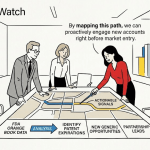
A forecast built solely on Orange Book expiration dates and Paragraph IV litigation outcomes will be systematically early for complex generics and biosimilars, and it will be blind to supply risk entirely. A more complete forecast tracks all three clocks separately: patent and exclusivity status from Orange Book and litigation dockets, clinical and analytical readiness from FDA guidance documents, ANDA and BLA review-cycle history and product-specific guidances, and supply risk from FDA inspection classifications, warning letters, and import alert status for the specific facilities named in an application.
What This Means for Brand Manufacturers
Brand manufacturers defending a franchise against generic or biosimilar entry have historically concentrated resources on the patent clock: litigation strategy, settlement structuring, and Orange Book listing decisions. The Copaxone case shows that non-patent levers, including citizen petitions targeting a novel approval pathway, can extend a franchise’s effective life independent of patent outcomes, though the same case shows regulators denying that particular tactic every time it was tried.[7] For complex products, the more durable form of lifecycle protection is the underlying analytical or device complexity itself, which competitors must solve regardless of when patents expire.
What This Means for Investors and Payers
A patent-cleared generic entry is not the same event as a durable, price-eroding competitive market. The Lipitor case shows a first-filer entry disrupted by a quality failure within a year. The cisplatin and carboplatin case shows that even a fully genericized, multi-decade-old molecule can experience a national shortage with attendant price spikes on the gray market, entirely independent of any patent event.[12] Payers and investors modeling loss-of-exclusivity revenue impact should treat manufacturing concentration risk, specifically the number and inspection history of facilities actually supplying a molecule, as a distinct input from patent expiration.
Key Takeaways
Eight of Teva’s nine Copaxone patents expired in May 2014; the first generic was not approved until April 2015 and did not launch until June 2015, an eleven-to-thirteen-month gap driven by analytical-science requirements, not patent litigation.[1][4][5]
Teva filed eight citizen petitions attempting to delay Copaxone generic competition; federal reviewers denied all eight.[7]
Cisplatin and carboplatin, both off patent for decades, went into official FDA shortage in February and April 2023 after a single Indian facility supplying roughly half the U.S. cisplatin market failed a CGMP inspection in late 2022.[10][11]
Generic Lipitor’s first filer, Ranbaxy, launched on schedule on November 30, 2011, then recalled 41 lots and halted production entirely within a year, after glass-particle contamination was discovered.[15][16][17]
Only 12 percent of generic drug applications the FDA reviewed from fiscal years 2015 through 2017 were approved on the first review cycle; the agency estimates an average of three cycles per approval.[8]
Wixela Inhub, the first generic Advair Diskus, was not approved until January 2019, gated by inhaler device-comparability data rather than compound patent status.[20][22]
The first interchangeable biosimilar of any kind, Semglee, was not approved until July 2021, more than a year after insulin’s regulatory transition into the biosimilar framework, illustrating a pathway-maturation gap distinct from both clinical and supply signals.[18]
FAQ
Does patent expiration guarantee a generic will launch immediately? No. Patent and exclusivity expiration only removes the legal barrier to entry. A generic still needs an FDA-approved application and a compliant manufacturing facility, and both can lag patent status by months or years, as Copaxone’s eleven-to-thirteen-month gap shows.[1][4][5]
Can a drug shortage happen with no patent involved at all? Yes. Cisplatin and carboplatin had been off patent for decades when a single facility’s manufacturing failure triggered a national shortage of both drugs in 2023.[10][11]
Why did it take so long to approve a generic Copaxone? Glatiramer acetate is a complex mixture rather than a single defined molecule, which meant the FDA needed an accepted analytical and immunogenicity characterization framework before it could approve a generic without new clinical trials. That framework, not patent litigation, set the pace.[1][6]
What is the difference between a generic drug shortage and a patent-driven delay? A patent-driven delay means a legally cleared generic still cannot launch because of unresolved science or unresolved litigation. A supply-driven shortage means an approved, marketed generic stops being reliably available because of a manufacturing or quality failure, as with Ranbaxy’s atorvastatin recall.[15][16]
How many generic drug applications get approved on the first try? Twelve percent, according to a GAO review of 2,030 applications from fiscal years 2015 through 2017; the FDA told GAO the average application needs about three review cycles.[8]
Did citizen petitions actually delay Copaxone’s generic competition? Teva filed eight citizen petitions aimed at Copaxone generic competition, and regulators denied all eight, so in this documented instance the tactic did not succeed, though the petitions still had to be reviewed and resolved before generic approval could proceed.[7]
Why did generic Lipitor face a recall so soon after launch? Ranbaxy, the first-filer manufacturer, was already under an FDA consent decree tied to earlier quality issues when it discovered glass particles in atorvastatin tablets in late 2012, less than a year after its November 2011 launch, and had to halt manufacturing entirely.[15][16]
Is Advair Diskus’s generic delay typical of inhaler products generally? Device-comparability requirements have historically slowed generic entry for combination inhalers relative to oral tablets, since regulators require evidence the inhaler itself, not just the drug, performs equivalently, as seen in Wixela Inhub’s multi-year, multi-cycle review before its January 2019 approval.[20][21][22]
What made Semglee different from earlier follow-on insulins? Semglee was the first product to receive the FDA’s interchangeable biosimilar designation, which allows pharmacy-level substitution without prescriber approval, a status that did not exist for any biosimilar until July 2021, after insulin’s 2020 transition into the biosimilar regulatory framework.[18][19]
What should a generic-entry forecast track besides patent expiration? A complete model tracks Orange Book and litigation status, FDA review-cycle and product-specific guidance history for clinical or analytical readiness, and facility-level inspection, warning-letter, and import-alert status for supply risk, since each clock can independently delay or disrupt entry regardless of patent outcomes.
References
Teva Pharmaceutical Industries Ltd. Form 6-K, U.S. Securities and Exchange Commission, March 31, 2014. https://www.sec.gov/Archives/edgar/data/0000818686/000130901414000232/exhibit1.htm
Teva Pharmaceutical Industries Ltd. Form 6-K, U.S. Securities and Exchange Commission, January 20, 2015. https://www.sec.gov/Archives/edgar/data/0000818686/000130901415000050/exhibit1.htm
Teva Pharmaceuticals USA, Inc. v. Sandoz, Inc., 574 U.S. 318 (2015). Justia U.S. Supreme Court Center. https://supreme.justia.com/cases/federal/us/574/318/
Sandoz (Novartis). “Sandoz receives FDA approval for Glatopa as the first generic competitor to MS therapy Copaxone 20mg.” Novartis press release, April 16, 2015. https://www.novartis.com/news/media-releases/sandoz-receives-fda-approval-glatopatm-first-generic-competitor-ms-therapy-copaxone-20mg
Momenta Pharmaceuticals. “Momenta Announces Launch of Glatopa.” GlobeNewswire/BioSpace, June 18, 2015. https://www.biospace.com/momenta-announces-launch-of-glatopa-glatiramer-acetate-injection-the-first-substitutable-generic-for-copaxone-glatiramer-acetate-injection-20mg
Bell C, et al. “Development of Glatopa (Glatiramer Acetate): The First FDA-Approved Generic Disease-Modifying Therapy for Relapsing Forms of Multiple Sclerosis.” PMC, 2017. https://pmc.ncbi.nlm.nih.gov/articles/PMC6144347/
Brookings Institution. “The FDA could do more to promote generic competition: Here’s how.” https://www.brookings.edu/articles/the-fda-could-do-more-to-promote-generic-competition-heres-how/
U.S. Government Accountability Office. “Generic Drug Applications: FDA Should Take Additional Steps to Address Factors That May Affect Approval Rates in the First Review Cycle.” GAO-19-565, 2019. https://www.gao.gov/products/gao-19-565
U.S. Food and Drug Administration. Warning Letter, Intas Pharmaceuticals Limited, November 21, 2023. https://www.fda.gov/inspections-compliance-enforcement-and-criminal-investigations/warning-letters/intas-pharmaceuticals-limited-662868-11212023
The Washington Post. “Behind cancer-drug shortage in U.S., a fragile supply of generic drugs.” June 27, 2023. https://www.washingtonpost.com/business/2023/06/27/cancer-drug-shortage-generics/
American Journal of Managed Care. “Contributor: Grappling With Ongoing Cancer Drug Shortages.” https://www.ajmc.com/view/contributor-grappling-with-ongoing-cancer-drug-shortages
KFF Health News. “Drugmakers Are Abandoning Cheap Generics, and Now US Cancer Patients Can’t Get Meds.” https://kffhealthnews.org/health-industry/drugmakers-are-abandoning-cheap-generics-and-now-us-cancer-patients-cant-get-meds/
CNBC. “FDA considers temporary cancer drug imports from unapproved companies to ease U.S. shortage.” June 1, 2023. https://www.cnbc.com/amp/2023/06/01/cancer-drug-shortage-fda-mulls-overseas-chemotherapy-imports.html
U.S. Senate. Letter to FDA Commissioner Robert M. Califf, August 24, 2023. https://www.warnock.senate.gov/wp-content/uploads/2023/08/FINAL-Letter-to-Commissioner-Califf-re-Chemotherapy-Drug-Shortage.pdf
U.S. Food and Drug Administration. “FDA Statement on the Ranbaxy Atorvastatin Recall.” November 29, 2012. https://www.fda.gov/drugs/drug-safety-and-availability/fda-statement-ranbaxy-atorvastatin-recall
CBS News. “Ranbaxy stops generic Lipitor production amid recall for tiny glass particles.” November 30, 2012. https://www.cbsnews.com/news/ranbaxy-stops-generic-lipitor-production-amid-recall-for-tiny-glass-particles/
PMLive. “Ranbaxy recalls generic Lipitor in US.” https://pmlive.com/pharma_news/ranbaxy_recalls_generic_lipitor_in_us_451870/
Viatris Inc. and Biocon Biologics Ltd. “Viatris Inc. and Biocon Biologics Receive Historic Approval for First Interchangeable Biosimilar Semglee.” Press release, July 28, 2021. https://newsroom.viatris.com/2021-07-28-Viatris-Inc-and-Biocon-Biologics-Receive-Historic-Approval-for-First-Interchangeable-Biosimilar-Semglee-R-insulin-glargine-yfgn-injection-for-the-Treatment-of-Diabetes
Big Molecule Watch. “FDA Approves First Interchangeable Biosimilar Insulin Product (UPDATE – 11/23/2021).” https://www.bigmoleculewatch.com/2021/11/23/breaking-news-fda-approves-first-interchangeable-biosimilar-insulin-product/
Mylan N.V. “Mylan Announces FDA Approval of Wixela Inhub, First Generic of ADVAIR DISKUS.” PRNewswire, January 31, 2019. https://www.prnewswire.com/news-releases/mylan-announces-fda-approval-of-wixela-inhub-fluticasone-propionate-and-salmeterol-inhalation-powder-usp-first-generic-of-advair-diskus-fluticasone-propionate-and-salmeterol-inhalation-powder-300787783.html
Pharmafile. “Mylan’s Wixela becomes first FDA-approved generic version of GSK’s Advair inhaler.” January 31, 2019. https://pharmafile.com/news/mylans-wixela-becomes-first-fda-approved-generic-version-gsks-advair-inhaler/
Mylan N.V. Form 10-K, U.S. Securities and Exchange Commission, fiscal year 2019. https://www.sec.gov/Archives/edgar/data/0001623613/000162361320000011/myl10k20191231doc.htm