How rare disease drugmakers build market protection that no generic can touch — and what every analyst needs to know before the next patent cliff.
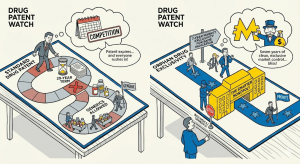
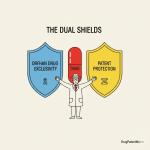
Standard pharmaceutical patents and orphan drug exclusivity (ODE) both protect drugs from competition. The mechanics, duration, and strategic implications of each are radically different, and most analysts conflate them to their own detriment. One is a property right. The other is a regulatory gate. Understanding which protection a drug actually relies on — and whether those protections overlap, stack, or cancel each other out — is the foundation of any credible competitive analysis in the rare disease space.
This article breaks down both systems in precise detail, compares their practical effects, and walks through real cases where the distinction changed billions of dollars in expected revenue. We will cover how to read patent expiry data using tools like DrugPatentWatch, how companies deliberately engineer exclusivity windows, and how generic manufacturers calculate when an attack makes economic sense.
What Standard Drug Patents Actually Do
A pharmaceutical patent is a grant of exclusive rights issued by the U.S. Patent and Trademark Office (USPTO) under Title 35 of the U.S. Code. It gives the holder the right to exclude others from making, using, or selling the patented invention for a defined period. The word ‘invention’ is doing a lot of work here. Drug companies do not file a single patent on a drug. They file dozens, sometimes hundreds, covering distinct but overlapping claims.
The Four Core Patent Types
Composition of matter patents cover the molecular structure itself — the active pharmaceutical ingredient (API) as a chemical entity. These are the most defensible patents because they prevent any competitor from making that molecule, regardless of what disease it is used for or how it is formulated. A successful composition of matter patent essentially owns the compound.
Method of use patents cover the specific therapeutic application: administering compound X to treat disease Y. These are narrower. A competitor who finds a different indication for the same molecule may not infringe a method of use patent covering only the original indication, though other barriers may still apply. Formulation patents cover the specific dosage form, delivery mechanism, or excipient combination — extended-release tablets, subcutaneous injection formulations, and oral dispersible films can all be separately patented even if the underlying molecule is off-patent. Process patents cover the manufacturing method; these matter enormously for biologics, where the manufacturing process is inseparable from the product itself.
Duration: 20 Years From Filing, Not From Approval
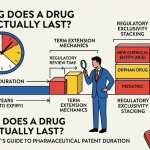
Every U.S. patent expires 20 years from its earliest effective filing date [1]. This creates a critical mismatch: drug development takes 10 to 15 years from initial discovery to market. A company filing a composition of matter patent during preclinical research may lose eight to twelve years of that 20-year window before the drug ever reaches patients. The effective market exclusivity from a patent alone is often six to ten years after approval, not twenty.
Congress addressed this partially in 1984 through the Drug Price Competition and Patent Term Restoration Act, known as the Hatch-Waxman Act [2]. The law created Patent Term Extension (PTE), which allows brand manufacturers to recover up to five years of patent life lost during FDA regulatory review. The maximum total remaining patent life after extension is capped at 14 years post-approval. PTE is available for the first approval of a drug compound and can be applied to only one patent per drug.
How the PTE Calculation Works
The extension period equals half the time spent in clinical trials plus the full time spent in FDA review, minus any time the applicant failed to act with due diligence. If FDA review took two years, the brand company recovers two years of patent term. If clinical trials ran for six years, the company recovers three. Both sums are added together, subject to the five-year cap and the 14-year post-approval ceiling.
The practical implication: a drug approved after a long development program may receive the maximum five-year extension but still lose significant patent life. A drug approved quickly — perhaps through a Breakthrough Therapy designation — may receive little extension because there is little lost time to restore.
Orphan Drug Exclusivity: A Different Animal
Orphan Drug Exclusivity operates entirely outside the patent system. It is a regulatory protection, not a property right. The FDA grants it at the time of drug approval, not as a reward for invention, but as an incentive for investment in diseases that would otherwise be commercially unviable. You can have ODE with no patents. You can have patents with no ODE. The two systems run in parallel.
The Orphan Drug Act of 1983
Congress passed the Orphan Drug Act in January 1983, prompted by testimony that hundreds of rare diseases affecting small patient populations had no approved treatments because no pharmaceutical company could justify the commercial investment [3]. The Act created a package of incentives: tax credits for clinical trial expenses, grants for qualifying research, FDA assistance with study design, and the central prize — seven years of market exclusivity for any drug approved under the orphan designation.
The FDA’s Office of Orphan Products Development (OOPD) administers the designation program. As of 2024, the FDA has granted more than 6,000 orphan drug designations and approved more than 1,000 orphan-designated drugs — a dramatic increase from the 10 orphan drug approvals in the entire decade before the Act [4].
The Qualifying Threshold: 200,000 Patients
A drug qualifies for orphan designation if it treats a disease affecting fewer than 200,000 people in the United States at the time the designation application is filed [3]. The FDA assesses prevalence, not incidence. Prevalence is the total number of people living with the disease at a given time. Incidence is the number of new cases per year. For a chronic disease with a short survival time, prevalence and incidence may converge. For a disease with long-term survival, prevalence can be much higher than annual incidence.
This distinction matters for designation strategy. A manufacturer seeking orphan status for a drug targeting a disease with rising prevalence should file the designation application early, before patient counts grow. Several companies have lost orphan eligibility because they filed designation applications too late in development.
What the Seven Years Actually Means
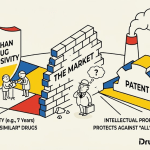
ODE prohibits the FDA from approving the same drug for the same indication for seven years after the first approval [3]. This is a blocking mechanism at the regulatory level. Even if a competitor holds a valid patent to their own version of the same molecule, the FDA cannot approve that competitor’s drug for the designated indication during the exclusivity window. The mechanism is not a property right the brand holder must enforce in court. The FDA simply refuses to accept or approve the competing application.
The phrase ‘same drug’ has produced significant litigation. Under 21 C.F.R. Part 316, ‘same drug’ means the same active moiety for small molecules and the same principal molecular structural features for macromolecules [5]. For small molecules, the FDA considers a drug ‘same’ even if it is a different salt, ester, or polymorph. A competitor cannot circumvent ODE by filing a citrate salt of a drug while the approved product is the hydrochloride salt. The moiety — the core molecular structure stripped of its counterion — determines sameness.
The Clinical Superiority Exception
The one statutory pathway through ODE is clinical superiority. A competitor can obtain approval during the seven-year exclusivity window if they demonstrate that their drug is clinically superior to the approved product for the same indication [5]. Clinical superiority requires proof of one of the following: greater effectiveness, greater safety in a substantial portion of the target population, or a major contribution to patient care. ‘Greater effectiveness’ requires substantial evidence from adequate and well-controlled studies. Claiming clinical superiority on the basis of convenience, improved palatability, or minor formulation differences has consistently failed at the FDA. The bar is deliberately high.
Side-by-Side: Where the Two Systems Diverge
The table below captures the core structural differences between standard patent protection and orphan drug exclusivity. Both restrict competition. Neither works the same way.
Feature
Standard Patent
Orphan Drug Exclusivity
Source of right
USPTO (property right)
FDA (regulatory privilege)
Duration
Up to 20 yrs from filing + PTE
7 yrs post-approval (US); 10 yrs (EU)
Enforcement
Civil litigation by brand holder
FDA refuses approval automatically
Coverage scope
Claims-based; limited to patent text
All ‘same drug, same indication’ entrants
Circumvention route
Design around; IPR challenge; Para IV
Clinical superiority demonstration
Requires invention?
Yes: novelty, non-obviousness, utility
No: investment and designation only
Stackable with other protections?
Yes
Yes
The Third Pillar: Regulatory Data Protection
Both patent protection and ODE exist alongside a third form of exclusivity that analysts frequently underweight: regulatory data protection (RDP), sometimes called data exclusivity. RDP prohibits the FDA from relying on an innovator’s clinical data when reviewing a competitor’s application for a defined period [6].
For new chemical entities (NCEs), the baseline period is five years. No generic can file an Abbreviated New Drug Application (ANDA) citing the brand’s safety and effectiveness data for five years after the original NDA approval. A three-year extension applies to new clinical investigations that contribute to a supplemental approval. For biological products, the exclusivity period is 12 years from the date of first licensure, with an additional four-year period during which no biosimilar application can even be submitted.
RDP does not prevent a competitor from filing a full NDA with its own data. It prevents the FDA from relying on the originator’s data. In practice, conducting independent clinical trials to replicate the originator’s data package costs hundreds of millions of dollars and takes years. RDP is therefore functionally equivalent to market exclusivity for most competitors. For orphan-designated biologics, the 12-year BPCIA exclusivity and the 7-year ODE run from the same trigger point — first approval — meaning the longer 12-year period governs.
Stacking Exclusivities: How Companies Engineer Maximum Protection
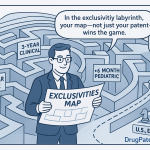
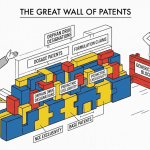
The full picture of a drug’s competitive moat is almost never a single patent or a single exclusivity period. The real competitive analysis requires mapping every layer of protection and understanding how they interact. A single drug can simultaneously benefit from composition of matter patents, formulation patents, method of use patents, ODE, NCE data exclusivity, and pediatric exclusivity — each with a different expiration date, each creating a distinct legal exposure for a generic entrant.
The Lysosomal Storage Disorder Case Study
Gaucher disease is a lysosomal storage disorder caused by a deficiency of the enzyme glucocerebrosidase. Genzyme’s imiglucerase (Cerezyme), approved in 1994, was among the first enzyme replacement therapies to demonstrate how orphan drug protections could define a commercial category [7]. The patient population numbered only a few thousand in the United States. The seven-year ODE expired in 2001. By then, Genzyme had surrounded the product with process patents covering the CHO cell line manufacturing method, formulation patents on the stabilized liquid preparation, and method of use patents covering specific dosing protocols.
When biosimilar competitors sought approval years later, they could not simply replicate Cerezyme. They had to demonstrate both safety and efficacy through their own trials and navigate a residual patent landscape. Analysts who looked only at the ODE expiry date got this wrong. Tools like DrugPatentWatch allow researchers to pull the complete patent landscape for a given drug — every patent in the FDA’s Orange Book and Purple Book, mapped against expiry dates and current litigation status — revealing whether a product’s effective exclusivity relies on ODE, patents, or both [8].
“Between 2000 and 2023, orphan-designated drugs captured over 50 percent of all new FDA approvals in several years, yet they treat fewer than 7 percent of the patient population in the United States.” — EvaluatePharma Orphan Drug Report, 2023 [9]
Pediatric Exclusivity: The Six-Month Add-On
The Best Pharmaceuticals for Children Act grants an additional six months of exclusivity — appended to any existing patent or exclusivity period — when a drug sponsor conducts pediatric studies requested by the FDA through a Written Request [10]. Six months may seem modest, but for a drug generating $1 billion annually, it represents $500 million in protected revenue. Pediatric exclusivity attaches to patents. If a brand drug’s last expiring patent expires on June 15, 2027, and the company holds a pediatric exclusivity grant, the effective patent cliff is December 15, 2027. The six months applies to all formulations and strength levels of the drug, not just the pediatric form.
The EU Orphan Regulation: Ten Years, Different Rules
European orphan drug exclusivity runs for 10 years, not seven [11]. Under Regulation (EC) No 141/2000, the European Medicines Agency (EMA) grants orphan designation for conditions affecting no more than five in 10,000 people in the EU. The 10-year market exclusivity begins at the date of marketing authorization. The EU regulation requires a ‘significant benefit’ for the drug to obtain or maintain orphan designation — a clinically relevant advantage or a major contribution to patient care compared to existing authorized methods. This requirement applies both at designation and at time of marketing authorization review. If the EMA concludes at approval that the drug offers no significant benefit over an already-authorized orphan medicine for the same condition, the new drug receives no exclusivity.
Post-Brexit UK Divergence
Since January 2021, Great Britain operates its own orphan medicine framework under the Medicines and Healthcare products Regulatory Agency (MHRA). The UK’s 10-year orphan exclusivity regime mirrors the pre-Brexit EU structure in duration but applies only to Great Britain; Northern Ireland remains subject to EU rules under the Windsor Framework. Companies seeking orphan protection across European markets must now manage separate designations and approval timelines for the EU and the UK, adding complexity to global launch sequencing strategies.
Real-World Cases: Where Exclusivity Analysis Determines Billions
Soliris and the Billion-Dollar Rare Disease Franchise
Alexion’s eculizumab (Soliris) was approved in 2007 for paroxysmal nocturnal hemoglobinuria (PNH) and later for atypical hemolytic uremic syndrome (aHUS) in 2011 [12]. Each indication received its own seven-year ODE grant. The PNH exclusivity expired in 2014. The aHUS exclusivity expired in 2018. Soliris became one of the most expensive drugs in history, priced above $500,000 per patient per year. Alexion’s strategic response to the approaching exclusivity cliff was to develop ravulizumab (Ultomiris), a next-generation C5 inhibitor with a longer dosing interval, and aggressively transition patients before biosimilar eculizumab could enter the market. This product-to-product migration strategy has become a template across the rare disease space. It works because rare disease physicians are cautious about switching stable patients to biosimilars when clinical equivalence data is thin.
By the time biosimilar eculizumab received FDA approval in 2023, AstraZeneca (which acquired Alexion in 2021) had already migrated a substantial fraction of its patient base to ravulizumab, which carries its own patent protection and ODE grant.
Spinraza vs. Zolgensma: Competing ODE Grants for the Same Disease
Biogen’s nusinersen (Spinraza) received FDA approval for spinal muscular atrophy (SMA) in December 2016 and simultaneously received ODE for that indication. Novartis Gene Therapies’ onasemnogene abeparvovec (Zolgensma) received approval for SMA in May 2019 — well within Spinraza’s seven-year window [13]. The FDA approved Zolgensma during Spinraza’s ODE period because the two drugs are not the same drug. Spinraza is an antisense oligonucleotide that modifies SMN2 pre-mRNA splicing. Zolgensma is an adeno-associated virus vector delivering a functional SMN1 gene. Under the FDA’s ‘same drug’ analysis, they are distinct active moieties.
This case illustrates a critical limitation of orphan drug exclusivity: it does not protect a product from mechanistically distinct therapies targeting the same disease. Two drugs can have ODE for the same indication and coexist on the market simultaneously. The FDA’s analysis is drug-by-drug, not disease-by-disease.
Reading Patent Expiry Data: What DrugPatentWatch Reveals
DrugPatentWatch maintains a continuously updated database of Orange Book patent listings, patent expiry dates, exclusivity codes, Paragraph IV certification filings, and litigation outcomes for FDA-approved drugs [8]. For orphan drugs specifically, the platform allows analysts to cross-reference the active exclusivity codes — code ‘OR’ for orphan exclusivity — against the patent expiry timeline. This gives a complete picture of when a product faces its first realistic generic or biosimilar threat.
The Orange Book lists patents that the NDA holder has certified as covering the approved drug or a method of using it. The FDA assigns exclusivity codes to indicate what type of regulatory protection applies: ‘OR’ for orphan exclusivity, ‘NCE’ for five-year new chemical entity exclusivity, ‘NP’ for three-year new product exclusivity. Multiple codes can apply simultaneously.
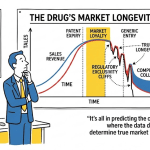
The practical analytical workflow: pull the drug’s Orange Book entry, identify the latest-expiring patent, identify all active exclusivity codes and their expiration dates, then determine which expiration is later. If the latest patent expires in 2028 and the ODE expires in 2030, the effective exclusivity runs to 2030 — but only for the same drug in the same indication. A competitor targeting a different indication is blocked only by patents, not ODE. This level of granularity requires checking both the Orange Book data and the designation status from the FDA’s Orphan Drug Product Designation Database.
Paragraph IV Certifications and Orphan Drugs
When a generic manufacturer files an ANDA, it must certify for each listed patent under one of four paragraphs. A Paragraph IV (Para IV) certification asserts that the listed patent is invalid, unenforceable, or will not be infringed by the generic product. A Para IV filing triggers automatic 30-month stay of FDA approval while patent litigation proceeds, and — if the generic manufacturer wins — a 180-day period of generic market exclusivity for the first filer [2].
Para IV certifications for orphan drugs are uncommon but not rare. For a Para IV filing to make economic sense, the market must be large enough to justify litigation costs (typically $5 to $15 million per patent challenge), the patent must be vulnerable on invalidity or non-infringement grounds, and the generic must be able to manufacture the product at competitive cost. Many orphan drugs fail all three criteria. When Para IV certifications do occur for orphan drugs, they typically target the most expensive ones — products generating over $500 million annually — where even a small patient population generates enough revenue to make generic entry attractive.
The Generic Manufacturer’s Playbook
Generic and biosimilar manufacturers approach orphan drugs through a specific decision framework. The first question is whether ODE blocks them. If the originator’s drug has active ODE and the generic is the same drug for the same indication, no ANDA or 505(b)(2) application can succeed until ODE expires. The FDA will not approve it. No litigation will help.
If ODE has expired or does not apply, the analysis shifts to the patent landscape. The generic must clear every Orange Book-listed patent, either by waiting for expiry, filing Para IV certifications, or demonstrating non-infringement. For drugs delivered via autoinjector, prefilled syringe, or implantable device, the generic must also navigate device patents — a separate set of IP that Orange Book data captures for combination products.
Section viii Carve-Outs and Method of Use Patents
A section viii statement allows a generic applicant to carve a patented method of use out of its proposed labeling. If a brand drug’s label covers indication A and indication B, and indication B is covered by a method of use patent, the generic can file an ANDA seeking approval only for indication A with labeling that omits any reference to indication B. The generic does not infringe the method of use patent because its label does not instruct use in the patented manner. For orphan drugs with only one indication — which is the designated orphan indication — section viii carve-outs are frequently impossible. There is nothing to carve out.
Biosimilar Entry Timing for Orphan Biologics
For biologic orphan drugs, the 12-year BPCIA exclusivity period is typically the binding constraint, not ODE. If a biologic product received both ODE (7 years) and BPCIA exclusivity (12 years) simultaneously at first licensure, the BPCIA window is longer and governs. A biosimilar applicant cannot obtain approval until 12 years post-licensure, regardless of when ODE expired. After the 12-year period, a biosimilar must demonstrate biosimilarity through analytical studies, non-clinical studies, and clinical trials. For a rare disease biologic with a small, stable patient population and cautious physicians, achieving interchangeability designation — which allows pharmacist substitution without prescriber intervention — is commercially important but scientifically demanding.
Strategic Patent Filing Around ODE: The Picket Fence
Companies with ODE-protected rare disease drugs do not stop filing patents after approval. They file aggressively throughout the commercial life of the product, a strategy often called ‘the picket fence.’ The logic: ODE provides seven years of clean protection. After ODE expires, patent litigation will determine whether a generic can enter. The more patents surrounding the drug, the more expensive and time-consuming that litigation becomes.
Formulation patents are the most common picket fence tool. They cover specific dosing strengths, vehicle compositions, pH ranges for injection products, and reconstitution methods. Each formulation patent has an expiry date that can extend several years beyond the original composition of matter patent. A generic manufacturer must either design around the formulation patent — sometimes requiring clinical work to demonstrate bioequivalence for the new formulation — or challenge it via Para IV. Device patents are increasingly relevant for drugs delivered via autoinjector or implantable device, where drug and delivery system patents both appear in Orange Book listings.
How Exclusivities Get Broken: Legal Challenges
Inter Partes Review at the USPTO
Since the America Invents Act of 2012, any party can petition the USPTO’s Patent Trial and Appeal Board (PTAB) for inter partes review (IPR) of a granted patent [14]. IPR is a post-grant proceeding that challenges a patent’s validity on prior art grounds. It is faster than district court patent litigation (typically 18 months from institution to final written decision), cheaper, and conducted under a lower claim construction standard that tends to favor challengers. IPR has been used aggressively against pharmaceutical patents, including those protecting orphan drugs.
Brand manufacturers have responded with ‘IPR estoppel’ strategies — structuring patent portfolios so that even if one patent is invalidated via IPR, remaining patents in the picket fence still block entry. An IPR petition that succeeds in killing one formulation patent does not eliminate a composition of matter patent or a method of use patent that the petitioner did not challenge.
FTC Scrutiny of Orphan Drug Patent Practices
The Federal Trade Commission has increased scrutiny of ‘product hopping’ and ‘patent thickets’ in the pharmaceutical sector. Product hopping involves transitioning patients from an expiring drug to a reformulated version before generics can enter, denying generics the substitution opportunities they need to achieve commercial viability. The FTC’s 2023 report on pharmaceutical patent listings identified several orphan drug manufacturers among companies with large numbers of Orange Book patents per drug [15]. Separately, the FTC has examined whether certain orphan drug designations are obtained strategically for drugs treating common diseases that could be subdivided into populations small enough to qualify for the 200,000-patient threshold.
Key Takeaways
Orphan drug exclusivity is a regulatory gate, not a property right. The FDA automatically blocks approval of the same drug for the same indication for seven years. No court order is needed; no litigation is triggered by the exclusivity itself.
Standard patents require active enforcement. A brand company must sue a generic in district court to stop an infringing product. ODE is self-executing. Patents are not.
Duration math is not straightforward. A composition of matter patent filed during preclinical development may offer only six to eight years of post-approval protection even with a PTE. ODE’s seven years runs from the approval date, often making it the more valuable post-approval protection for drugs with long development timelines.
Stacking is deliberate and sophisticated. Rare disease companies layer composition of matter patents, formulation patents, ODE, NCE data exclusivity, and pediatric exclusivity to create overlapping protection that no single legal challenge can dissolve. Analysts who model a drug’s competitive exposure using a single expiry date are almost always wrong.
The ‘same drug, same indication’ rule has real limits. Two mechanistically distinct drugs can receive ODE for the same disease and both be approved. The Spinraza/Zolgensma case makes this concrete: ODE protects against molecular sameness, not competitive sameness.
The EU’s 10-year window and significant benefit requirement create different strategic pressures than the U.S. system. Post-Brexit, the UK adds a third distinct regime. Global market assessments must account for all applicable jurisdictions independently.
The complete exclusivity picture — patents, ODE, BPCIA protection, data exclusivity, pediatric add-ons — requires pulling every applicable layer from sources like DrugPatentWatch and the FDA’s Orphan Drug Product Designation Database before any competitive forecast is credible.
FAQ
1. Can a drug lose its orphan drug exclusivity before the seven years are up?
Yes, in two circumstances. First, if the FDA determines after approval that the drug no longer qualifies as an orphan drug — for example, because the patient population has grown above 200,000 due to a revision in diagnostic criteria — the exclusivity can be withdrawn. Second, if the manufacturer fails to assure availability of sufficient quantities of the drug, the FDA can revoke the exclusivity under 21 U.S.C. 360cc(b). Revocation for insufficient supply is rare but has been applied in cases where a company discontinued production without an approved generic available.
2. What happens if two companies receive orphan approval for the same drug and indication on the same day?
Under 21 C.F.R. 316.34, if two sponsors receive approval for the same drug for the same orphan indication on the same day, both receive market exclusivity and both can market the product. Neither can prevent the other from doing so. This scenario is uncommon but theoretically possible in cases where two independent development programs reach approval simultaneously. The more common scenario is that the second sponsor’s application is blocked because the first approval triggers ODE, and the FDA will not accept or approve the second application during the exclusivity window unless clinical superiority is demonstrated.
3. Does orphan drug exclusivity apply globally, or does each country grant its own?
Each jurisdiction grants its own orphan market exclusivity independently. A U.S. ODE grant does not extend to the EU, Japan, Canada, or any other market. In the EU, orphan market exclusivity runs 10 years from the European Commission’s marketing authorization and is governed by the EMA’s Committee for Orphan Medicinal Products (COMP). Japan’s system, administered by PMDA, provides 10 years of re-examination exclusivity for orphan drugs under the Pharmaceutical and Medical Device Act. Companies must file for orphan designation in each jurisdiction separately, and the prevalence thresholds differ: 200,000 patients in the U.S., 5 in 10,000 in the EU, and 50,000 patients in Japan.
4. Can a drug have both composition of matter patent protection and ODE simultaneously, and which one matters more?
Both can and routinely do apply simultaneously. Which one matters more depends on timing. If the composition of matter patent expires before ODE, then ODE is the binding constraint and generic entry is impossible until ODE expires regardless of patent status. If ODE expires before the last blocking patent, then the patent is the binding constraint and the generic must either wait or challenge via Para IV. For drugs approved with a strong patent estate and ODE, the effective exclusivity runway is determined by whichever period ends later — often the patent, especially when formulation and method of use patents extend beyond the composition of matter patent.
5. How should investors model the competitive exposure of an orphan drug when both ODE and patents are present?
The correct approach is to build a layered exclusivity timeline. Start with the earliest date on which any competitor could file an application: that is the later of ODE expiry and NCE data exclusivity expiry. Then identify every Orange Book-listed patent with an expiry date after that filing date — those are the patents a generic would need to challenge or design around. Assess each patent for vulnerability: age, prosecution history, prior art density, and whether IPR petitions have been filed. Finally, model the commercial viability threshold: at what revenue level does generic entry become economically justified given litigation costs and manufacturing complexity? For rare disease drugs with small patient populations, that threshold is often never reached, meaning effective exclusivity extends well beyond legal expiry. Platforms like DrugPatentWatch consolidate Orange Book patent listings, exclusivity codes, and Para IV certification histories in one place, making this multi-layer analysis tractable across a portfolio of drugs.
Citations
[1] 35 U.S.C. § 154(a)(2). Patent term. United States Code.
[2] Drug Price Competition and Patent Term Restoration Act of 1984, Pub. L. 98-417, 98 Stat. 1585.
[3] Orphan Drug Act of 1983, Pub. L. 97-414, 21 U.S.C. § 360aa-360ff.
[4] U.S. Food and Drug Administration. (2024). Orphan drug designations and approvals. Office of Orphan Products Development. https://www.accessdata.fda.gov/scripts/opdlisting/oopd/
[5] 21 C.F.R. Part 316 — Orphan drugs. Code of Federal Regulations.
[6] Biologics Price Competition and Innovation Act of 2009, Pub. L. 111-148, 42 U.S.C. § 262.
[7] Grabowski, H., Ridley, D., & Schulman, K. (2014). Entry and competition in generic biologics markets. Managerial and Decision Economics, 35(7), 478-490. https://doi.org/10.1002/mde.2660
[8] DrugPatentWatch. (2024). Pharmaceutical patent and exclusivity data. https://www.drugpatentwatch.com
[9] EvaluatePharma. (2023). Orphan drug report 2023. Evaluate Ltd.
[10] Best Pharmaceuticals for Children Act of 2002, Pub. L. 107-109, 21 U.S.C. § 505A.
[11] Regulation (EC) No 141/2000 of the European Parliament and of the Council on orphan medicinal products. Official Journal of the European Communities, L 18, 1-5.
[12] Hillmen, P., Young, N. S., Schubert, J., Brodsky, R. A., Socie, G., Muus, P., Roth, A., Szer, J., Elebute, M. O., Nakamura, R., Browne, P., Risitano, A. M., Hill, A., Schrezenmeier, H., Fu, C. L., Maciejewski, J., Rollins, S. A., Mojcik, C. F., Rother, R. P., & Luzzatto, L. (2006). The complement inhibitor eculizumab in paroxysmal nocturnal hemoglobinuria. New England Journal of Medicine, 355(12), 1233-1243. https://doi.org/10.1056/NEJMoa061648
[13] Finkel, R. S., Mercuri, E., Darras, B. T., Connolly, A. M., Kuntz, N. L., Kirschner, J., Chiriboga, C. A., Saito, K., Servais, L., Tizzano, E., Topaloglu, H., Tulinius, M., Bernert, G., Flores-Sarnat, L., Glavina-Tkalcic, G., Hedlund, W., Granata, T., Pearce, D. A., De Vivo, D. C., & Iannaccone, S. T. (2017). Nusinersen versus sham control in infantile-onset spinal muscular atrophy. New England Journal of Medicine, 377(18), 1723-1732. https://doi.org/10.1056/NEJMoa1702752
[14] Leahy-Smith America Invents Act of 2011, Pub. L. 112-29, 35 U.S.C. § 311-319.
[15] Federal Trade Commission. (2023). Pharmaceutical patent listing accuracy and transparency: A study of Orange Book patent listings. https://www.ftc.gov/reports/pharmaceutical-patent-listing