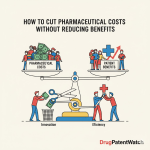
Generic drugs fill roughly 90% of all U.S. prescriptions while accounting for only 13.1% of total drug spend. That gap is not an abstraction. In 2023, it translated to $445 billion in documented savings for the U.S. healthcare system, part of an estimated $3.1 trillion in savings over the preceding decade. For a health plan actuary or a hospital formulary committee, these figures explain why generic substitution is not merely encouraged but structurally mandated through tiered co-pay design and automatic substitution laws in 46 states.
The paradox at the core of this industry is well-documented but rarely confronted directly: the mechanism that produces these savings, namely, relentless price competition, also makes the business of manufacturing generics financially precarious. When the price of a tablet falls below the cost of maintaining FDA-compliant manufacturing, something has to give. The last decade has produced hundreds of documented drug shortages, and nearly every one of them traces back to a manufacturer deciding that the margin no longer justified the regulatory overhead. That is not a failure of the free market. It is the free market operating exactly as designed, and it is a structural problem that no amount of policy rhetoric has yet solved.
Understanding this tension is the starting point for any serious analysis of generic drug development. This is an industry that operates simultaneously as a public health infrastructure and a profit-seeking commercial enterprise, and the strategies that work in it must respect both imperatives.
Key Takeaways: Section 1
The $445 billion annual savings figure is real but hides a cost-transfer problem. When manufacturers exit markets due to unsustainable pricing, drug shortages impose their own costs, financial and clinical, on the healthcare system. Analysts valuing generic companies must model not just revenue per SKU but the probability of continued market supply given price trajectories. A product generating $12 million in annual revenue from 11 competitors at a unit price of $0.04 per tablet is not an asset. It is a liability dressed as a revenue line.
Section 2: Hatch-Waxman: A Legal Architecture, Not Just a Law
The Drug Price Competition and Patent Term Restoration Act of 1984 (Hatch-Waxman) did not simply create a pathway for generic drugs. It created an entire legal and commercial ecosystem by embedding four interlocking mechanisms into a single piece of legislation. Before 1984, generic drugs held roughly 19% of U.S. prescriptions. Today that number is above 90%. That shift is the direct consequence of this legal architecture.
The Act’s designers understood that neither side, innovator nor generic, would accept a purely adversarial framework. The result is a structure that simultaneously lowers barriers to generic entry and compensates innovators for the regulatory time they lose during FDA review. Every component of Hatch-Waxman reflects that negotiated compromise.
The ANDA Pathway: IP Valuation of the Abbreviated Route
The Abbreviated New Drug Application (ANDA), codified under Section 505(j) of the FD&C Act, is the mechanism that makes generic development economically viable. A generic applicant does not run its own clinical trials to prove safety and efficacy. It relies on the FDA’s prior determination that the Reference Listed Drug (RLD) is safe and effective, substituting that evidentiary foundation for its own.
The practical effect on IP valuation is significant. A traditional New Drug Application (NDA) costs an innovator between $1 billion and $2.6 billion and takes 9 to 15 years to reach approval. An ANDA costs between $2 million and $10 million for a standard small-molecule oral solid and takes 18 to 36 months. That cost differential is the commercial rationale for the entire industry. But it also defines the ceiling on what any single ANDA product can be worth: a commodity product in a competitive market will price down to near-cost regardless of the development investment. Sustainable margins require either first-mover exclusivity, technical complexity that limits competitors, or both.
Patent Term Extension: How Innovators Recover Lost Clock Time
Hatch-Waxman created a patent term extension mechanism that allows innovators to restore a portion of patent life consumed during FDA regulatory review. The maximum extension is five years, and the total remaining patent term after the extension cannot exceed 14 years from the date of approval. The calculation is based on the period of regulatory review, reduced by half the time the applicant failed to act with ‘due diligence’ in pursuing approval.
For IP valuation purposes, patent term extension is not simply a legal formality. It represents quantifiable additional revenue protection. A drug generating $4 billion annually where the primary composition-of-matter patent would otherwise expire two years early, but receives a two-year extension, has an extension worth roughly $8 billion in protected revenue (before adjusting for the eventual generic entry discount). Analysts who fail to model term extensions into their exclusivity timelines consistently underestimate near-term branded revenue for drugs with long development times.
Regulatory Exclusivity: The Non-Patent IP Layer
Exclusivity periods granted by the FDA are entirely separate from patent protection and represent a distinct IP asset class. They cannot be challenged through Paragraph IV filings. They cannot be invalidated by a court. They operate as pure regulatory shields, and they stack with or run concurrent to patent terms in ways that significantly complicate generic entry timing.
New Chemical Entity (NCE) exclusivity blocks the FDA from even accepting an ANDA submission for five years from the date of innovator approval. This is not a stay of approval; it is a refusal to accept the application at all, which means the generic timeline does not begin accumulating during that period. If the generic applicant plans a Paragraph IV challenge, the ANDA may be submitted after four years, but this accelerated filing option requires the challenger to absorb a full 30-month stay with less runway before the NCE period ends.
Three-year new clinical investigation exclusivity is granted when an approval or supplement rests on new clinical investigations. It does not block ANDA filing; it blocks ANDA approval. A generic can prepare its application, submit it, and receive tentative approval during the three-year window, but it cannot launch. The distinction matters for timing models: the FDA review clock runs during the exclusivity period, so a well-prepared applicant can be positioned to launch the day the exclusivity expires.
Pediatric exclusivity adds six months to all existing patents and exclusivities when a sponsor conducts requested pediatric studies under a Written Request from the FDA. This seemingly modest extension can represent billions of dollars for high-revenue products. AbbVie’s adalimumab (Humira) received pediatric exclusivity extensions across multiple patents, each adding months of protected U.S. revenue on a drug generating over $20 billion annually at peak.
Orphan Drug Exclusivity grants seven years of market protection for drugs treating diseases affecting fewer than 200,000 U.S. patients. During that period, the FDA cannot approve another application for the same drug for the same indication unless the new applicant demonstrates clinical superiority. The clinical superiority bar, demonstrated through greater efficacy, greater safety, or a major contribution to patient care, is high, making orphan exclusivity among the most durable IP positions in the pharmaceutical industry.
The Safe Harbor Provision: Pre-Expiration Development Rights
Before Hatch-Waxman, using a patented compound for any purpose, including development work required to file an ANDA, constituted patent infringement. This created a de facto extension of market exclusivity: even after a patent expired, generic companies could only begin testing at that point, adding months or years before a product could reach market.
Section 271(e)(1) eliminated this constraint. It shields generic companies from infringement liability for activities solely related to developing information required for federal drug regulatory submissions. The Supreme Court interpreted the provision broadly in Merck KGaA v. Integra Lifesciences (2005), covering activities beyond what is ultimately included in the regulatory submission. As a practical matter, a competent generic company can have a product ready to launch on patent expiry day, with manufacturing validated, bioequivalence established, and the ANDA filed and awaiting only final approval. Companies that exploit the safe harbor aggressively compress the time between patent expiry and generic availability.
The Orange Book: The Database That Runs the Industry
The FDA’s ‘Approved Drug Products with Therapeutic Equivalence Evaluations,’ universally called the Orange Book, is the definitive public record of approved drugs, their therapeutic equivalence ratings, and the patents that brand-name companies assert cover their products. Every patent listed in the Orange Book must be one that the NDA holder reasonably believes would be infringed by a generic product. This is a duty, not merely an option, and false or strategically inflated listings can constitute antitrust violations.
Orange Book listings fall into two categories: drug substance patents (composition-of-matter claims covering the API itself) and drug product patents (formulation or method-of-use claims covering specific dosage forms or indications). Process patents, which cover how a drug is manufactured, are not listable in the Orange Book. This distinction has significant strategic implications: a generic company that develops a non-infringing synthesis route can avoid process patent infringement without needing to challenge the patent directly.
Patent Certifications: Four Declarations That Set the Stage
When filing an ANDA, the applicant must certify for each Orange Book patent one of four positions. A Paragraph I certification states that no patent has been filed. A Paragraph II certification states that the patent has expired. A Paragraph III certification states that the generic will not be marketed until the patent expires, which is the default position for products where the generic company decides the patent is valid and not worth challenging. A Paragraph IV certification states that, in the applicant’s opinion, the patent is invalid, unenforceable, or will not be infringed.
The Paragraph IV certification is the legal trigger for the most consequential activities in the generic industry. It initiates the notice letter process, creates the possibility of a 30-month litigation stay, and, for the first filer, creates the 180-day exclusivity right. None of these consequences apply to any other certification type.
Key Takeaways: Section 2
Hatch-Waxman is a system of layered IP assets, not a single patent expiration event. Generic entry timing requires mapping composition-of-matter patent expiry, all secondary patent expirations, NCE exclusivity end dates, any pediatric or orphan exclusivity extensions, and ongoing litigation outcomes simultaneously. Analysts who use a single ‘patent cliff date’ without disaggregating these layers routinely produce entry timing forecasts that are off by one to three years, which in a high-revenue product can represent billions of dollars in misallocated market share assumptions.
Section 3: Product Selection: Where Deals Are Won or Lost Before the Lab Opens
The single most consequential decision in generic drug development happens at a whiteboard, not a laboratory bench. Product selection determines the regulatory pathway, the litigation exposure, the manufacturing capital required, the likely number of competitors, and ultimately the revenue per unit at steady state. A company that makes consistently good product selection decisions can build a sustainable business on modest CMC capabilities. A company with world-class manufacturing that consistently selects overcrowded or technically intractable targets will fail.
Deconstructing the Patent Thicket
The term ‘patent cliff’ implies a clean drop-off in IP protection at a single date. In practice, innovators build layered patent portfolios that extend effective market exclusivity well beyond the primary composition-of-matter patent. This structure, commonly called a patent thicket, typically includes patents at four distinct levels.
The composition-of-matter patent covers the API itself. It is the broadest and most difficult to design around. When it expires without challenge, every generic manufacturer can enter simultaneously, and price erosion is immediate. Formulation patents cover the specific combination of active and inactive ingredients or the delivery system, such as extended-release matrices, osmotic pump technologies, or specific polymorphic forms of the drug substance. Method-of-use patents cover approved indications. They cannot block a generic from entering the market for other indications, but they create a ‘carve-out’ labeling requirement that can complicate substitution in some pharmacy benefit designs. Process patents cover the manufacturing route; as noted, they are not Orange Book listable, but they can still be asserted in litigation, and a generic company relying on the same synthetic pathway as the innovator faces additional infringement exposure.
Mapping the full patent thicket requires cross-referencing the Orange Book with the USPTO database, monitoring continuation and continuation-in-part filings that extend the patent family, and tracking any inter partes review (IPR) petitions at the Patent Trial and Appeal Board (PTAB) that may already have challenged and narrowed individual patents.
IP Valuation of Target Products: A Framework for Generic Analysts
Before any laboratory work begins, a quantitative IP valuation of the target drug is required. This is not the same as the brand company’s IP valuation exercise. The generic analyst’s task is to determine the probability-weighted commercial opportunity conditional on different patent challenge outcomes.
Start with the brand’s revenue at the patent cliff: annual U.S. net sales at the time the primary patent expires, adjusted for any prior price erosion from off-label prescribing shifts or therapeutic competition. Apply a patent challenge probability, based on the strength of the Paragraph IV position assessed by IP counsel. Apply an FTF exclusivity probability: is the 180-day exclusivity still unclaimed, and what is the probability of being first to file? Model three scenarios. In the first scenario, the company wins the patent challenge and captures the 180-day exclusivity with no authorized generic (AG): the FTF generic typically prices at 15-30% below brand and captures 60-80% of unit volume during the exclusivity window. In the second scenario, the brand launches an AG on day one of the exclusivity period: the FTF revenue is split roughly 40/60 in favor of the AG, compressing the exclusivity value by 50-70%. In the third scenario, the patent challenge fails or settles on unfavorable terms: the product enters the market at or after the patent expiry date with no exclusivity, competing immediately against all filers.
The expected value of a Paragraph IV challenge, weighted across these scenarios, is the number that justifies the litigation investment. For a drug with $3 billion in annual U.S. net sales, the 180-day exclusivity under the first scenario might generate $400-600 million in incremental revenue. The litigation cost, including outside counsel, expert witnesses, and management time, typically runs $10-30 million per case. The expected-value math, even accounting for a 40-50% probability of loss, often strongly favors challenging.
Leveraging Competitive Intelligence: The Role of Patent Surveillance Platforms
By the time a generic company is doing IP analysis from scratch on a new target, it has likely missed the first-to-file window. The companies that capture 180-day exclusivity systematically monitor patent landscapes years before the patent cliff. Platforms such as DrugPatentWatch aggregate FDA Orange Book data, USPTO filings, PTAB proceedings, and ANDA filing records into a single intelligence layer. The strategic use cases go well beyond finding expiration dates.
Monitoring competitor ANDA filings reveals who has already submitted Paragraph IV certifications, what their technical approach is (inferred from formulation patents they have challenged), and how many companies are likely to be in the market at launch. This competitor mapping directly informs the price erosion model. Tracking Drug Master File (DMF) submissions identifies which API suppliers are positioning for a specific market, signaling that multiple generic manufacturers are in active development. Tracking PTAB inter partes review petitions shows which patents are under independent challenge, with PTAB invalidation being a potentially faster and cheaper route to clearing the IP landscape than Hatch-Waxman litigation.
Technical and Regulatory Complexity as a Competitive Filter
Not all products that pass the IP analysis are worth developing. The second filter is manufacturing and regulatory complexity. The FDA classifies generic products along a spectrum from simple to complex, and the market economics differ substantially across that spectrum.
A simple oral solid, such as an immediate-release tablet of a Biopharmaceutics Classification System (BCS) Class I compound, can be developed by dozens of manufacturers globally. The marginal cost of entry is low, the number of competing ANDAs at launch is high, and the long-run price is close to raw material cost plus manufacturing overhead. These products are still important, particularly for essential medicines where assured supply matters, but they are not where generic companies build durable competitive advantage.
Complex generics face a different competitive structure. Products such as metered-dose inhalers, dry powder inhalers, liposomal injectables, ophthalmic emulsions, transdermal patches, and long-acting injectable microsphere formulations require sophisticated manufacturing capabilities, specialized bioequivalence methodologies, and often years of iterative development before a viable product emerges. The FDA may not yet have issued a Product-Specific Guidance (PSG) for some of these products, adding regulatory uncertainty. But that uncertainty is itself a competitive barrier: manufacturers without the in-house scientific capability to navigate an undefined bioequivalence requirement cannot participate in the market at all.
First-to-File Analysis: Is the Prize Still Available?
The final quantitative filter before committing development resources is an FTF availability analysis. A real-time query of ANDA filing records reveals whether any Paragraph IV certifications have already been submitted for the target. If none has been filed, the FTF opportunity is still available. If one or more have been filed, the 180-day exclusivity question becomes more complex: multiple first-filers who submit on the same day share the exclusivity, and subsequent filers do not participate in it at all.
Companies sometimes pursue a Paragraph IV challenge even without FTF exclusivity potential, reasoning that a successful patent invalidation benefits all generics in the market and may be worth the litigation cost if it accelerates entry across a large-enough market. This is a viable strategy but requires a different financial model, one based on total market volume and competitive share rather than exclusivity-period economics.
Key Takeaways: Section 3
The most profitable generic pipeline is one assembled through rigorous pre-development IP and commercial analysis, not one that targets the largest brand revenues. The combination of a commercially significant product, a Paragraph IV-vulnerable patent portfolio, a technically complex formulation that limits competitors, and an unclaimed first-to-file position is rare, but when it exists, it justifies aggressive development investment. Platforms that track patent filings, ANDA submissions, and DMF activity in real time give companies who use them systematically a measurable head start on identifying these opportunities before competitors do.
Section 4: The Science of Replication: De-formulation, QbD, and CMC as Competitive Moat
Once a target product survives the IP and commercial gauntlet of product selection, the work moves to the laboratory. The scientific mandate is precise: produce a pharmaceutical equivalent that is bioequivalent to the RLD. ‘Pharmaceutical equivalent’ means the same active ingredient, same dosage form, same route of administration, and same labeled strength. ‘Bioequivalent’ means the same rate and extent of systemic drug absorption. Meeting both requirements is the minimum bar. How a company meets them, and how quickly and reproducibly it can do so, is where competitive differentiation is built.
De-formulation: The Reverse Engineering Methodology
De-formulation is systematic deconstruction. The goal is a complete qualitative and quantitative map of the RLD’s composition, meaning the identity and amount of every ingredient, active and inactive, in every component of the dosage form.
The process begins with physical characterization of the RLD. For an oral tablet, this includes weight, dimensions, hardness, and friability; for a capsule, shell composition and fill properties; for a complex product like an inhaler, aerodynamic particle size distribution and device resistance. High-Performance Liquid Chromatography (HPLC) quantifies the active pharmaceutical ingredient and resolves the impurity profile. The impurity fingerprint is analytically significant: the nature and relative proportion of process-related impurities often reveal information about the synthetic route used to manufacture the API, which in turn suggests the reaction conditions and raw material sources the originator uses.
Excipient identification and quantification is technically the hardest part of de-formulation. Fourier-Transform Infrared Spectroscopy (FTIR) identifies functional groups across the solid matrix and can distinguish between polymer types in extended-release systems. Thermogravimetric Analysis (TGA) measures water content and solvent retention, which are critical for hygroscopic excipients. Differential Scanning Calorimetry (DSC) characterizes the thermal behavior of the drug substance and detects polymorphic transitions that may affect bioavailability. X-ray Powder Diffraction (XRPD) confirms the crystalline form of the API in the final dosage form. Mass spectrometry, particularly liquid chromatography-tandem mass spectrometry (LC-MS/MS), provides molecular weight confirmation for low-level components that HPLC cannot fully resolve.
For complex products with device components, such as pressurized metered-dose inhalers (pMDIs) or autoinjectors, de-formulation extends to the device itself. The aerodynamic particle size distribution of an inhaled product, measured by Next Generation Impactor (NGI) cascade impaction, must match the RLD within defined ranges to support a bioequivalence claim. Device geometry, mouthpiece resistance, and valve metering accuracy are all characterizable and must be matched or surpassed in the generic device design.
Formulation Development: Quality by Design in Practice
Modern generic formulation development operates within a Quality by Design (QbD) framework, which the FDA actively promotes through its critical path initiatives and has embedded into its process validation guidance. QbD is not a separate regulatory activity; it is a development methodology that produces submissions with better-defined design spaces and more predictable scale-up behavior.
The practical workflow starts with defining the Quality Target Product Profile (QTPP), which specifies all the desired characteristics of the final product: physical description, assay limits, dissolution profile that matches the RLD, impurity limits aligned with ICH Q3B thresholds, content uniformity requirements, and stability specifications. From the QTPP, the development team identifies Critical Quality Attributes (CQAs), the properties of the drug product that must be within a defined range to ensure acceptable safety and efficacy. Assay, dissolution, content uniformity, and particulate matter in injectables are typical CQAs.
A structured risk assessment, often using a Failure Mode and Effects Analysis (FMEA) or Ishikawa diagram, maps every material attribute and process parameter to its potential impact on each CQA. This generates a prioritized list of Critical Material Attributes (CMAs) and Critical Process Parameters (CPPs). For example, in a wet granulation tablet process, granulation endpoint moisture content (a CPP) may be critical to tablet hardness and dissolution profile (CQAs), while a non-critical parameter like impeller speed within a broad range may have negligible impact.
The Design of Experiments (DoE) phase systematically varies CPPs and CMAs to define the Design Space, the multidimensional region within which the product consistently meets all CQAs. A well-characterized Design Space provides manufacturing flexibility: the manufacturer can adjust process parameters within the space without requiring a prior approval supplement to the ANDA, which reduces regulatory overhead during commercial production.
Analytical Method Development: Lifecycle Approach Under ICH Q2(R2) and Q14
Analytical methods are the primary control system for pharmaceutical quality throughout a product’s lifecycle. Developing and validating them is not a one-time event but a continuous process that begins in development and continues through commercial production and post-approval changes.
The ICH Q2(R2) guideline on Validation of Analytical Procedures, updated in 2022, and the companion ICH Q14 guideline on Analytical Procedure Development, introduced a lifecycle approach that mirrors the QbD philosophy applied to formulation development. Under this framework, analytical procedures are developed with an explicit Analytical Target Profile (ATP), analogous to the QTPP for the drug product. The ATP defines the performance characteristics required from the method, such as specificity, precision, accuracy, and the required measurement uncertainty.
Method validation is no longer a checklist exercise. It requires a demonstration that the method is fit for purpose across its intended lifecycle, including robustness data showing that minor, defined variations in method parameters, such as mobile phase pH, column temperature, or gradient slope in an HPLC method, do not meaningfully affect method performance. The FDA expects companies to define an Analytical Method Operable Design Region (AMODR) in the ANDA submission, analogous to the Design Space in the drug product: a defined range of operational conditions within which the method performs reliably.
For companies developing complex generics, analytical methods often require novel development work with no compendial precedent. An inhaled product requires cascade impaction methodology for aerodynamic particle size, which has different validation parameters than a standard dissolution or assay method. A liposomal formulation requires analytical methods that distinguish encapsulated from free drug, characterize vesicle size distribution, and assess membrane integrity. These method development investments are expensive, but they represent IP in their own right: a validated analytical control strategy for a technically complex product is a barrier to competitor entry that does not expire.
Scale-Up, Process Validation, and GMP Compliance: The Financial Reality
Scale-up from lab bench to commercial production is where many generic development programs stall. A formulation that performs perfectly at 1-kilogram batch scale may exhibit unexpected behavior at 200-kilogram commercial scale due to equipment geometry differences, mixing dynamics changes, or heat and mass transfer effects that do not manifest at small scale. Process validation requires three stages under FDA’s 2011 Process Validation Guidance: Process Design (establishing the commercial manufacturing process), Process Qualification (demonstrating the process consistently produces acceptable quality at scale), and Continued Process Verification (ongoing statistical monitoring of process performance in routine commercial production).
Current Good Manufacturing Practice (cGMP) compliance is the non-negotiable operating condition for all pharmaceutical manufacturing, brand or generic. The FDA inspects all manufacturing facilities supplying the U.S. market, including those in India and China, under the same standards applied to domestic facilities. An FDA 483 observation or Warning Letter at a manufacturing site can halt ANDA approvals for all products made at that site, not just the product under inspection, creating portfolio-wide commercial risk from a single facility compliance failure.
The Indian pharmaceutical industry, which supplies a substantial fraction of generic APIs and finished dosage forms for the U.S. market, spends roughly $1 billion annually maintaining its FDA-approved manufacturing infrastructure. This figure illustrates the ongoing capital intensity of cGMP compliance. Companies that cut corners on compliance infrastructure are not saving money; they are deferring a cost that arrives as a regulatory crisis when it eventually surfaces.
The CMC Competitive Moat
The pharmaceutical industry has historically treated Chemistry, Manufacturing, and Controls (CMC) as a cost center. That framing is no longer accurate for companies competing in complex generics or biosimilars.
In a market dominated by simple oral solid tablets, CMC capabilities are a necessary but insufficient competitive differentiator. Every manufacturer can produce a tablet to cGMP standards, and the market prices accordingly. But for a metered-dose inhaler containing a micronized API with a defined aerodynamic particle size distribution, a non-chlorofluorocarbon propellant system, a specified valve metering accuracy, and a device that must deliver consistent dose through a range of patient inhalation flow rates, CMC capability is the product. A manufacturer that cannot reliably produce the device component to specification, control API particle size distribution batch-to-batch, and validate a bioequivalence-supporting aerodynamic characterization method cannot participate in the market at all, regardless of its patent position or regulatory strategy.
The same logic applies to nitrosamine impurity management, which emerged as an industry-wide compliance challenge beginning in 2018. Companies with superior analytical chemistry capabilities detected nitrosamine impurities at trace levels, identified root causes in their synthesis routes or packaging materials, and implemented corrective controls without supply disruption. Companies without those capabilities faced recalls, import alerts, and market withdrawal. CMC strength did not just protect quality in those cases; it protected market share.
Key Takeaways: Section 4
Generic development science is not routine chemistry. For complex products, it requires a multi-disciplinary analytical and formulation capability that takes years to build and cannot be replicated quickly by a competitor entering the market late. Companies that have systematically invested in QbD-aligned development processes, lifecycle analytical method management, and robust scale-up capabilities have a technical moat that price competition cannot erode in the short term. IP teams and portfolio managers should assess CMC organizational capability as rigorously as they assess patent position when evaluating a generic developer’s pipeline.
Section 5: Bioequivalence in Depth: Statistical Frameworks, Complex Generics, and Edge Cases
Bioequivalence (BE) is the scientific and legal heart of generic drug approval. Every ANDA rests on a demonstration that the proposed generic product delivers the same amount of active ingredient to the site of action over the same time course as the RLD. But ‘same’ in regulatory science means something specific, statistically defined, and subject to more variation and complexity than the plain-language definition suggests.
The Standard Pharmacokinetic Framework
For most systemically absorbed drugs, BE is demonstrated through a randomized, two-period, two-sequence crossover study in healthy adult volunteers, typically 24 to 48 subjects. Each subject receives both the test product (generic) and the reference product (RLD) in randomized order, separated by a washout period long enough for the drug to be fully eliminated before the second treatment period.
Serial blood samples collected over the dosing interval are analyzed for drug concentration. Two primary pharmacokinetic parameters are derived: Cmax, the maximum observed plasma concentration, reflecting peak exposure and related to both efficacy and peak-concentration-dependent adverse effects; and AUC(0-t) or AUC(0-inf), the area under the concentration-time curve representing total systemic exposure. The FDA’s acceptance criterion requires that the 90% confidence interval of the geometric mean ratio (test/reference) for both Cmax and AUC falls entirely within 80.00% to 125.00%. This is the ’80-125% rule,’ which despite its name is actually an average bioequivalence criterion: it controls the mean ratio, not the individual subject variability.
Reference-Scaled Average Bioequivalence for Highly Variable Drugs
Some drugs exhibit high intra-subject variability in pharmacokinetics, meaning the same subject receiving the same product on two separate occasions may produce Cmax or AUC values that differ by 40-100% simply due to biological noise. For these highly variable drugs (HVDs), defined as those with an intra-subject coefficient of variation above 30% for Cmax or AUC, the standard 80-125% criterion is often impossible to meet with a conventional study design, even for two formulations that are essentially identical.
The FDA’s Reference-Scaled Average Bioequivalence (RSABE) approach addresses this by scaling the acceptance interval to the measured variability of the reference product. Under RSABE for HVDs, the width of the acceptance interval expands proportionally with the reference product’s variability. A drug with an intra-subject CV of 50% for Cmax might have an acceptance interval that expands to approximately 69.84-143.19% rather than 80-125%. RSABE is not a regulatory concession to poor-performing generics; it is a statistical recognition that a wider interval appropriately reflects the clinical uncertainty inherent in a highly variable drug. A generic that meets RSABE criteria for an HVD is no less therapeutically equivalent than a standard product that meets the 80-125% window.
The practical implication for generic developers is that identifying target drugs as HVDs early in development, and selecting the RSABE methodology from the outset, avoids the common failure mode of a standard BE study that produces a point estimate within 80-125% but whose confidence interval breaches the boundary due to unexpectedly high variability.
Bioequivalence for Complex Generics: The Weight-of-Evidence Approach
For complex generics where systemic pharmacokinetics do not predict local efficacy, the standard crossover PK study is scientifically inadequate. The FDA has developed product-specific bioequivalence methodologies for hundreds of complex products, documented in Product-Specific Guidances (PSGs) that represent the regulatory consensus on what evidence is required.
For an inhaled corticosteroid such as fluticasone propionate inhalation powder, systemic PK is largely a measure of swallowed dose rather than inhaled dose. The FDA’s PSG for this product class requires an in vitro equivalence package comparing aerodynamic particle size distribution across the full range of patient inhalation flow rates, a pharmacokinetic study to compare systemic exposure, and a pharmacodynamic study measuring cortisol suppression as a surrogate for lung absorption. All three components are required, and deficiency in any one is grounds for a Complete Response Letter.
For topical dermatological products such as acyclovir cream, the vasoconstrictor assay used for corticosteroids is not applicable, and clinical endpoint studies are prohibitively expensive. The FDA has moved toward in vitro permeation testing (IVPT) as a surrogate, using human cadaver skin mounted in Franz diffusion cells to measure flux rates of the generic versus the RLD. This approach requires careful donor skin characterization, rigorous analytical method validation for the permeant, and demonstration of equivalence in flux rate across multiple skin donors. IVPT is not yet universally accepted across all topical drug classes, and companies developing topical generics without a specific FDA PSG face regulatory risk until the FDA’s guidance framework catches up with the product types in development.
For ophthalmic products, BE may be demonstrated through PK studies measuring aqueous humor drug concentrations (requiring anterior chamber paracentesis in subjects undergoing cataract surgery, which limits sample size and introduces ethical complexity), pharmacodynamic studies measuring intraocular pressure for glaucoma products, or in vitro quality attribute comparisons under the Q1/Q2/Q3 sameness doctrine, where a product identical in ingredients (Q1), amounts (Q2), and physicochemical properties (Q3) to the RLD may support a biowaiver for certain ophthalmic solutions.
Biowaivers: When In Vivo Studies Are Not Required
A biowaiver exempts an ANDA from the in vivo BE study requirement for a specific strength or dosage form. Two major biowaiver mechanisms exist in the U.S. ANDA pathway.
The BCS-based biowaiver applies to oral immediate-release solid dosage forms containing a drug substance classified as BCS Class I (high solubility, high permeability) or BCS Class III (high solubility, low permeability, with additional conditions). A drug with high solubility and high permeability dissolves completely in the gastrointestinal fluid and is rapidly and completely absorbed; under these conditions, the dissolution rate is not rate-limiting to absorption, and demonstrating rapid in vitro dissolution in multiple pH media is sufficient to establish bioequivalence without a clinical study. BCS Class III biowaivers require more stringent conditions: the formulation must be qualitatively and quantitatively the same as the RLD, and in vivo dissolution must be rapid at all pH conditions.
The solution biowaiver applies to products where the drug is dissolved in an aqueous solution, such as oral solutions or intravenous injectables with the same inactive ingredients as the RLD. Absorption is not a formulation-dependent variable for true solutions, so in vitro studies are unnecessary.
Key Takeaways: Section 5
Selecting the correct bioequivalence methodology at the start of development is not a detail. It is a strategic decision that determines study cost, timeline, probability of success, and regulatory risk. A company that conducts a standard crossover PK study for an HVD without applying RSABE methodology risks spending $1.5-3 million on a study designed to fail. A company developing a topical or inhaled product without first obtaining the relevant FDA PSG risks investing two to four years in a development program that the FDA will require to be substantially redesigned at ANDA submission. Regulatory intelligence, specifically understanding what the FDA will accept as BE evidence for a given product, is as important as the science of producing the generic formulation.
Section 6: Global Regulatory Pathways: ANDA, EU Multi-Track, and Emerging Markets
The U.S. and European Union together represent the majority of global branded pharmaceutical revenue and thus the primary targets for generic entry. But each market has a distinct regulatory architecture, and the companies that operate successfully across both have learned to design integrated development programs that meet divergent requirements without duplicating work unnecessarily.
The U.S. ANDA Process: Timeline, Review Mechanics, and GDUFA Goals
The ANDA is submitted electronically in eCTD format to the FDA’s Office of Generic Drugs (OGD) within CDER. Under the Generic Drug User Fee Amendments (GDUFA II and its successor framework), the FDA committed to specific review timelines in exchange for user fee payments from ANDA applicants: a 10-month goal for standard ANDAs and a 8-month goal for priority ANDAs from the filing date of a complete, acceptable application.
These GDUFA goals represent a substantial improvement from pre-GDUFA review times, which commonly exceeded 36 months. But the goals apply from the filing date of a ‘complete’ application, not from the submission date. The FDA’s refuse-to-file criteria catch incomplete submissions early, but Discipline Review Letters (DRLs) or Information Requests (IRs) issued during review can reset the clock. A well-prepared submission that anticipates and addresses likely deficiencies in the CMC module, bioequivalence documentation, and labeling is the single best way to compress the actual elapsed time from submission to approval.
The ANDA review covers four primary areas: chemistry (the CMC module, including API and drug product specifications, manufacturing processes, and stability data), microbiology (for sterile or topical products), bioequivalence, and labeling. Each has a separate reviewing team within OGD, and deficiencies in any one module can trigger a Complete Response Letter that holds up the entire application until all issues are resolved. Priority ANDA designation, available for products in shortage or for first generic applicants for certain drug types, provides the faster 8-month review goal but requires a specific eligibility request and justification.
Tentative Approval (TA) is issued when an ANDA is scientifically and regulatorily approvable but cannot receive final approval due to unexpired patent or exclusivity protections. TA is strategically important for first-to-file applicants: receiving TA confirms that the generic product meets all FDA quality standards and that the only remaining barrier to market entry is legal, not scientific. When the patent or exclusivity clears, final approval can often be converted rapidly.
The European Multi-Track System: Strategic Pathway Selection
The EU market requires a fundamentally different regulatory strategy because there is no single pan-European generic approval pathway equivalent to the U.S. ANDA. Three pathways exist, and selecting the right one for a given product requires analyzing the regulatory history of the innovator product and the generic company’s geographic marketing objectives.
The Centralized Procedure (CP), managed through the EMA, produces a single marketing authorization valid across all 27 EU member states and the three EEA countries. It is mandatory for generics of products originally approved centrally. The CP is the most resource-intensive pathway but provides the broadest market access from a single regulatory investment. The EMA’s Committee for Medicinal Products for Human Use (CHMP) conducts the review, and the target timeline is 210 days of active review time, though clock stops for applicant responses to questions can extend the elapsed calendar time considerably.
The Decentralized Procedure (DCP) is the most common pathway for generics entering the EU market for the first time when the innovator product does not have a centralized approval. The applicant submits the same dossier simultaneously to a chosen Reference Member State (RMS) and one or more Concerned Member States (CMS). The RMS leads the scientific assessment and prepares an Assessment Report. If all member states reach a positive consensus, each grants a national marketing authorization. DCP timelines vary considerably depending on the RMS and CMS workloads and the complexity of the questions raised, but are often longer in practice than the theoretical 210-day target.
The Mutual Recognition Procedure (MRP) extends an existing national authorization to additional member states. It is available only when the product already holds a national approval in one EU country. MRP is a sequential expansion strategy, allowing companies to enter key European markets one or two countries at a time rather than committing to a simultaneous multi-country launch. The tradeoff is speed versus operational risk: MRP is lower-risk per country but takes longer to achieve pan-European coverage.
Emerging Market Regulatory Frameworks
India’s Central Drugs Standard Control Organisation (CDSCO) regulates generic drug approvals through a system that distinguishes between new drugs (requiring data from Indian clinical trials in some cases) and drugs already approved in specified reference countries. For drugs approved by the FDA, EMA, or other stringent regulatory authorities, CDSCO allows a more abbreviated review. India’s domestic market has its own pricing regulation through the National Pharmaceutical Pricing Authority (NPPA), which sets ceiling prices for essential medicines under the National List of Essential Medicines (NLEM). The NPPA ceiling price calculation uses a market-based average of the top brands in a category, which means that in competitive categories, ceiling prices can be quite low.
China’s National Medical Products Administration (NMPA) underwent a significant reform beginning in 2015, implementing a generic drug quality and efficacy consistency evaluation program (BE evaluation program) that required all previously approved generic drugs to demonstrate bioequivalence to originator products. This was not merely a regulatory modernization exercise; it was a market rationalization tool that eliminated thousands of inadequately characterized generics from the Chinese market and raised the entry bar substantially. Companies now seeking to enter the Chinese generic market face a rigorous NMPA review that requires complete CMC data and a China-specific BE study using Chinese regulatory standards.
Key Takeaways: Section 6
The global regulatory landscape is fragmented, and attempting to run identical development programs for every market simultaneously is rarely the right approach. The most capital-efficient strategy is to design a core development package that satisfies the most stringent requirement (typically FDA or EMA), then overlay market-specific adaptations for secondary markets. Choosing the wrong EU pathway for a given product, or failing to anticipate NMPA-specific requirements for China, routinely adds 18 to 36 months to market entry timelines and seven-figure costs in duplicated regulatory work.
Section 7: Patent Challenges, Paragraph IV Litigation, and the 180-Day Exclusivity Calculus
Patent litigation under Hatch-Waxman is not a reactive legal event triggered by a brand company’s lawsuit. For generic companies that execute it well, it is a proactive strategic program, planned years in advance, designed to clear legal barriers that stand between an approved product and a lucrative market.
The Paragraph IV Notice Letter: Opening the Legal Proceeding
Filing a Paragraph IV certification obligates the ANDA applicant to send a detailed notice letter to the NDA holder and each patent owner within 20 days of FDA acceptance of the ANDA for filing. This notice letter must contain a comprehensive ‘detailed statement’ of the factual and legal bases for the applicant’s opinion that each challenged patent is invalid, unenforceable, or not infringed. Courts have consistently held that a deficient notice letter can undermine the validity of the Paragraph IV certification itself, which is why the letter is drafted with the same rigor as a legal brief.
The notice letter is the opening submission in what may become multi-year litigation, and its quality signals to the brand company and its legal team the seriousness and sophistication of the challenger. A detailed, well-supported invalidity analysis citing specific prior art references and claim construction arguments forces the brand to take the challenge seriously and may influence its decision about whether to file suit within the 45-day window or let the 30-month stay lapse.
The 30-Month Stay: Strategic Use by Both Sides
When a brand company files a patent infringement suit within the 45-day window after receiving the notice letter, an automatic 30-month stay of ANDA approval takes effect. The stay runs from the date the brand received the notice letter, not the date of suit. It can be shortened by a court order (when the court finds the asserted patent invalid or not infringed) or extended by the court beyond 30 months if the parties fail to complete the litigation.
The 30-month stay is the brand’s primary legal tool for preserving market exclusivity during patent challenge. It converts what would otherwise be a rapid market entry, potentially within the 10-month GDUFA review timeline, into a multi-year litigation process. Brands routinely use the full 30 months to complete discovery, brief claim construction issues, and conduct expert preparation, even when the ultimate merits of their patent position are weak. The financial value of the 30-month delay, for a drug generating $500 million quarterly in branded revenue, can exceed $3 billion, making even expensive and ultimately unsuccessful litigation a rational economic strategy.
For the generic challenger, the 30-month stay creates optionality. A company that files its Paragraph IV ANDA, receives FDA tentative approval, and then wins the patent litigation has a product ready to launch at patent expiry, potentially years ahead of any competitor who chose a Paragraph III ‘wait and see’ approach. The entire litigation cost, properly modeled against the probability of a successful invalidity or non-infringement determination, often makes the Paragraph IV strategy clearly superior to passive waiting.
The 180-Day Exclusivity: Mechanics, Forfeiture, and Authorized Generic Dilution
The 180-day exclusivity is awarded to the first applicant to submit a substantially complete ANDA containing a Paragraph IV certification. When multiple applicants file on the same day, they share the exclusivity. The exclusivity runs from the first commercial marketing of the generic product by any of the FTF applicants, or from a court decision holding the patent invalid or not infringed, whichever comes first.
The forfeiture provisions enacted by the Medicare Modernization Act of 2003 added significant complexity. An FTF applicant forfeits its exclusivity under several conditions: it fails to market the product within 75 days of final approval; it enters into an agreement with the brand that the FTC determines is unlawful; or it fails to obtain approval within 30 months of filing. The forfeiture provisions were designed to prevent ‘parking,’ where a FTF applicant uses its exclusivity position as leverage in a settlement negotiation with the brand rather than actually bringing a lower-cost product to market.
The authorized generic (AG) is the most commercially significant dilutant to the 180-day exclusivity value. A brand company can launch an AG, which is the brand product marketed under a generic label through an NDA amendment or a license to a third party, at any time including the first day of the FTF exclusivity period. The AG is not an ANDA product and is not blocked by the FTF exclusivity. When a brand launches an AG on day one of the 180-day period, the market has three products from launch: brand, FTF generic, and AG. The FTF generic’s duopoly is immediately a three-way split, and AG pricing aggressively at 20-25% below brand further constrains the FTF generic’s ability to price at the 15-25% discount that would maximize its exclusivity-period economics.
Research from Health Affairs documented that AG launches have become systematic for high-revenue branded products facing Paragraph IV challenges, occurring in the majority of large-market cases. Companies that build their Paragraph IV investment case on full exclusivity-period revenue without discounting for the AG probability are systematically overestimating the commercial return.
Key Takeaways: Section 7
The 180-day exclusivity is a real and potentially valuable commercial asset, but its value is probabilistic and must be modeled as such. A rigorous Paragraph IV investment case discounts for patent challenge success probability, authorized generic launch probability, and the realistic pricing dynamics of a three-way market during the exclusivity period. Companies that have historically been most successful in Paragraph IV litigation, building institutional knowledge of specific patent types, specific brand company legal tactics, and specific judicial district tendencies, have a systematic advantage that justifies their continued investment in the program even as individual case economics have become more complex.
Section 8: Evergreening Tactics: A Technical Roadmap of Every Known Defense Strategy
Innovator companies facing the patent cliff deploy a range of strategies to extend effective market exclusivity beyond the expiry of the primary composition-of-matter patent. These strategies, collectively labeled ‘evergreening,’ range from scientifically substantive reformulation efforts to legally contested delay tactics.
Formulation and Delivery System Patents: Secondary IP Construction
The most defensible evergreening strategy involves genuine reformulation to improve patient outcomes, generating secondary patents that a court will be reluctant to invalidate. Extended-release technologies are the most common example. The original drug product may be an immediate-release tablet dosed three times daily. The brand develops an extended-release formulation, achieves once-daily dosing, runs clinical trials demonstrating superior tolerability or similar efficacy with improved adherence, and obtains a new NDA approval for the modified product. The extended-release formulation is protected by new patents covering the polymer matrix composition, the drug release mechanism, or the coating system.
AstraZeneca’s transition from omeprazole (Prilosec) to esomeprazole (Nexium) is frequently cited in this context. Esomeprazole is the S-enantiomer of the racemic omeprazole mixture. AstraZeneca patented the purified enantiomer and ran clinical trials demonstrating marginally superior efficacy in certain patient subgroups. When generic omeprazole flooded the market, AstraZeneca had already shifted substantial prescribing to Nexium under patent protection. Whether the clinical difference between the two products justified the price premium was a matter of genuine debate among prescribers, but the IP strategy achieved its commercial objective.
Polymer matrix extended-release systems such as OROS (osmotic release oral system), Methocel-based hydrophilic matrices, and Eudragit-based enteric coating systems are all separately patentable formulation technologies. A brand company that builds its extended-release platform on multiple such systems, each protected by formulation patents held by itself or licensed from a technology provider, can construct a patent thicket around the delivery system that is genuinely difficult to design around. A generic company cannot simply use a different extended-release polymer if the desired dissolution profile, which the FDA requires to match the RLD, is only achievable with the patented polymer system.
Polymorphism and Salt Form Patents
Active pharmaceutical ingredients often exist in multiple crystalline forms (polymorphs) or as different salt forms, each with distinct physicochemical properties including solubility, dissolution rate, hygroscopicity, and chemical stability. Brand companies frequently patent specific polymorphs or salt forms after the initial API patent is filed, creating additional IP coverage that may extend effective exclusivity.
The classic example is atorvastatin calcium (Lipitor). The primary composition-of-matter patent covered the atorvastatin acid. Warner-Lambert subsequently obtained patents covering specific polymorphic forms of the calcium salt, particular particle size ranges, and specific impurity profiles. Generic challengers had to navigate not only the primary patent but also the polymorph patents, since their manufacturing process naturally produced the same thermodynamically stable polymorphic form covered by the brand’s patent. The Federal Circuit’s eventual ruling in Pfizer v. Ranbaxy (2006) invalidated key atorvastatin patents and accelerated generic entry, but the litigation had consumed years and substantial resources.
Designing around a polymorph patent requires producing the API in a specific crystalline form that is not covered by the patent. This requires careful process chemistry: controlling crystallization conditions (solvent system, supersaturation, temperature profile, seeding strategy) to consistently produce the desired polymorph at commercial scale. XRPD is used to confirm polymorph identity in each batch, and it must be included as a specification test in the ANDA when the crystalline form is relevant to product performance.
Dosing Regimen and Method-of-Use Patents
Method-of-use patents cover approved therapeutic indications or specific dosing regimens. A generic manufacturer can, in principle, carve out a patented indication from its labeling, filing what is called a ‘skinny label’ ANDA that seeks approval only for the unpatented indications. The FD&C Act specifically permits this through Section 505(j)(2)(A)(viii), which allows omission of patented methods of use from generic labeling.
The skinny label approach has been the subject of intense litigation, with brand companies arguing that even a skinny-labeled generic infringes method-of-use patents through induced infringement when physicians prescribe the generic for the patented indication. The Federal Circuit’s 2020 decision in GlaxoSmithKline v. Teva, which held that Teva’s promotion of generic carvedilol for heart failure induced infringement of GSK’s method-of-use patent even with a skinny label, fundamentally complicated the skinny label strategy. The case was subsequently reversed by an en banc panel on different grounds, but the legal uncertainty around induced infringement from skinny labels remains a significant consideration for generic companies analyzing method-of-use patents.
Product Hopping
Product hopping occurs when a brand company makes a minor modification to its drug product, typically a change in dosage form, salt form, or strength, and aggressively shifts the market to the new product shortly before the original product’s patents expire. Because the new product has its own separate NDA with its own patent protections, generic entry against the original product arrives to a market where prescribers have largely moved on to the new formulation.
The competitive impact depends on the substitution rules in each state and each payer’s formulary design. If the modified product has a substantially similar therapeutic profile and pharmacy benefit systems allow substitution of the generic for the modified product, the generic can still capture a meaningful share. If the products are sufficiently different in their approved labeling or dosage form that automatic substitution is not permitted, generic entry against the original product may largely be rendered commercially meaningless.
Patent Thicket Density and PTAB Challenge Strategy
As of 2025, the average number of Orange Book-listed patents per branded drug product has increased substantially compared to the early Hatch-Waxman era. High-revenue products such as adalimumab (AbbVie’s Humira) were protected by over 130 patents at peak, covering the antibody composition, manufacturing processes, formulation characteristics, administration devices, and dosing regimens for specific patient populations. No single Paragraph IV challenge could address this entire landscape simultaneously. Biosimilar and generic challengers must prioritize which patents to challenge, accepting that some will survive challenge and require design-around strategies or negotiated licensing.
PTAB inter partes review (IPR) has become an important adjunct to Hatch-Waxman litigation for invalidating secondary patents. IPR petitions are filed at the USPTO and reviewed by a panel of three Administrative Patent Judges (APJs) with technical expertise. The standard of proof for invalidity at PTAB is ‘preponderance of the evidence,’ which is lower than the ‘clear and convincing evidence’ standard applied in district court. IPR proceedings typically resolve within 18 months of institution, faster than most district court Hatch-Waxman cases, and institution rates for petitions with strong prior art arguments have historically been above 60%. A coordinated strategy that uses IPR to invalidate weaker secondary patents while litigating the primary patent in district court can be more resource-efficient than challenging all patents through a single district court proceeding.
Key Takeaways: Section 8
Evergreening is not a monolithic strategy. It ranges from legitimate and scientifically substantive reformulation to tactics that courts and regulators have found anticompetitive. For generic developers, the analytical task is to distinguish between patents that protect genuine innovations and are likely to survive challenge, patents that cover minor modifications and are vulnerable to obviousness attacks, and patents whose claims do not read on the generic’s formulation and can be cleared through a Paragraph IV non-infringement certification. This requires sophisticated patent claim construction analysis that goes well beyond reading the patent expiration date.
Section 9: The Commercial Warzone: Price Erosion, PBMs, and Market Maturation
Receiving FDA approval is not the end of the generic drug development journey. It is the beginning of a commercial competition where the fundamental economics are defined by how rapidly price falls and who controls access to patients.
The Price Erosion Curve: A Predictive Model
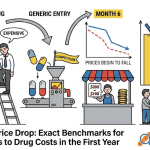
The relationship between generic competitor count and price is among the most well-documented phenomena in pharmaceutical economics. A single generic entrant typically prices 30-40% below brand and captures 30-40% of unit volume in the first month. The brand retains a disproportionate share of dollar sales because managed care plans and patients who prefer the branded product remain with it, and the brand may not reduce its own price aggressively in the early generic stage.
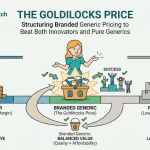
As a second generic enters, market prices fall further to approximately 54% below brand. With six or more competitors, price approaches the floor of manufacturing cost plus regulatory overhead, often more than 95% below the pre-generic brand price. This price trajectory, often called the ‘price cascade,’ is highly predictable from the number of ANDA approvals, and companies that model it accurately can predict their own revenue trajectory at launch with reasonable precision.
The practical implication for commercial planning is that the launch window, specifically the first 6 to 18 months in market before the full competitor set arrives, is disproportionately important for cumulative product economics. Companies that launch on the day of patent expiry with adequate supply capture a materially larger share of lifetime product revenue than companies that launch 6 months late with inventory constraints.
Pharmacy Benefit Managers: The Access Gatekeepers
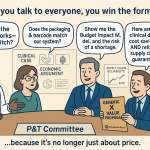
In the U.S. market, the three largest pharmacy benefit managers, CVS Caremark, Express Scripts (now Evernorth), and OptumRx, collectively manage prescription drug benefits for the majority of commercially insured Americans. Their role in generic drug adoption is both structural and deliberate: they design formularies that place generics on Tier 1 (lowest co-pay) and brands on Tier 3 or higher, creating a cost differential that makes generic substitution automatic for most patients.
The average generic co-pay in U.S. commercial benefit plans runs approximately $6-10, versus $50-70 or higher for brand-name drugs on Tier 3. This cost structure drives the generic dispensing rate above 90% at the product level for most multi-source drugs. For generic companies, the implication is that formulary placement is not a competitive variable in the traditional sense; every approved generic gets Tier 1 placement. Competition among generic manufacturers happens at the pharmacy wholesale level, where price is the primary differentiator.
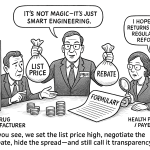
The PBM market structure is itself under regulatory scrutiny. Congressional hearings in 2023 and FTC investigations into vertical integration between PBMs, specialty pharmacies, and mail-order dispensing have raised questions about whether the rebate system that governs brand drug coverage also creates conflicts of interest in generic drug substitution. The long-term implications for generic manufacturers depend on how any structural reforms to the PBM system affect formulary design and the speed of generic uptake.
International Pricing Regimes: Germany, UK, Spain, China
Germany’s statutory health insurance system uses reference pricing (Festbetrag), where the GKV (Gesetzliche Krankenversicherung, the statutory sickness fund system) sets a maximum reimbursement amount for a drug class. Patients pay the difference between the reference price and the actual drug price out of pocket. For generics, which are typically priced at or below the reference amount, this system effectively makes the reference price the ceiling. The combination of reference pricing with competitive tendering by individual sickness funds creates continuous downward pressure on generic prices in Germany, making it one of the most price-competitive generic markets globally.
The UK operates a broadly market-based pricing system for branded drugs through voluntary price agreements with the Department of Health, but generic drugs are subject to intensive price competition among manufacturers and community pharmacy purchasing groups. The NHS electronic prescribing system actively promotes International Non-proprietary Name (INN) prescribing rather than brand-name prescribing, which facilitates generic substitution at the dispensing level. The result is some of the lowest generic prices in Europe.
China’s Volume-Based Procurement (VBP) program, launched nationally in 2018, is the most disruptive government purchasing intervention in the global generic industry to date. Under VBP, a national procurement group organizes a tender for specific drug categories, guaranteeing the winning manufacturer a defined volume of purchases through the public hospital system in exchange for a price commitment. The procurement volumes are large enough, covering 70-80% of institutional purchasing in some categories, that winning a VBP tender is commercially transformative. Losing a tender, or being priced out, essentially removes a manufacturer from the institutional market segment. Price reductions achieved through VBP tenders have commonly exceeded 90% from pre-tender levels. The program has been extended to additional drug categories every year since its national launch, and by 2025 it covers several hundred products.
The Drug Shortage Crisis: When Price Competition Produces Its Own Failure Mode
The sustainability of the generic drug market as a reliable supply system is directly threatened by the same price dynamics that drive its public health value. When the price of a multi-source generic falls below the fully loaded cost of maintaining cGMP-compliant manufacturing infrastructure, manufacturers exit the market. Exits reduce the competitive set, which should theoretically raise prices, but the FDA’s approval of additional ANDAs continues to add new suppliers, often at lower-cost manufacturing sites in regions with less stringent infrastructure standards. The result is a continuous race to the bottom that some drugs never escape.
The FDA’s drug shortage database documented hundreds of active shortages in 2024, concentrated in sterile injectables, oncology drugs, and older small-molecule products with limited commercial appeal but significant clinical importance. A shortage in a drug with no therapeutic equivalent does not simply inconvenience patients; it delays surgery, forces oncologists to modify chemotherapy regimens, and imposes direct costs on hospitals that must source scarce supply through the secondary market at above-market prices.
Key Takeaways: Section 9
Commercial success in the generic industry requires more than approval timing. It requires supply chain readiness at launch, pricing strategy that balances initial capture against long-run margin, and an honest assessment of product lifecycle economics before the development investment is committed. Products with ten or more likely competitors at launch, no technical differentiation, and ongoing GMP compliance costs that are high relative to volume have a negative expected net present value. Building a generic portfolio around them is not a conservative strategy. It is a path to managed decline.
Section 10: Biosimilars: Development Cost, IP Valuation, and the ‘Patent Dance’
Biosimilars occupy a fundamentally different position in the pharmaceutical competitive landscape than traditional small-molecule generics. They are not copies; they are highly similar products developed through independent manufacturing processes to demonstrate no clinically meaningful differences from the reference biologic in safety, purity, and potency. This distinction, enshrined in the Biologics Price Competition and Innovation Act (BPCIA) of 2010, defines every aspect of biosimilar development economics.
Development Economics and IP Valuation
A biosimilar development program costs between $100 million and $300 million and takes 6 to 9 years from candidate selection to approval. The variability in both cost and timeline reflects the complexity of the reference biologic and the completeness of the company’s existing characterization data. A monoclonal antibody biosimilar for a product with a well-characterized reference biologic and a defined FDA comparability exercise framework may be developed at the lower end of the cost range. A biosimilar targeting a complex glycoprotein with limited public structural characterization data requires substantially more analytical development work.
The IP position for reference biologics is also categorically different from small-molecule drugs. Biologics receive 12 years of regulatory exclusivity (data exclusivity) from the date of their first approval in the U.S., during which the FDA cannot approve a 351(k) biosimilar BLA that relies on the reference product’s safety and efficacy data. This exclusivity period runs independently of patent protection and cannot be challenged through any litigation mechanism. Combined with the typical 20-year patent term on composition-of-matter patents filed at the time of initial development, effective market exclusivity for blockbuster biologics has routinely exceeded 15 years.
Adalimumab (Humira) illustrates the magnitude of this IP architecture. At peak, AbbVie held more than 130 patents covering adalimumab’s composition, manufacturing process, formulation, dosing regimens, and administration device. Biosimilar developers spent years navigating this patent thicket before a settlement framework allowed U.S. market entry in January 2023, nine years after adalimumab biosimilars had been available in Europe. The U.S.-EU pricing differential during that period, where adalimumab in the U.S. was priced at 6 to 10 times the European list price, represents the direct financial consequence of the extended IP exclusivity architecture.
The ‘Patent Dance’: BPCIA Litigation Architecture
The BPCIA created a unique patent dispute resolution mechanism for biologics, which practitioners call the ‘patent dance,’ an information-exchange and negotiation process that precedes and structures biosimilar litigation.
After the FDA accepts a 351(k) biosimilar BLA for review, the biosimilar applicant must provide the reference product sponsor with a confidential copy of its BLA, including all manufacturing information, within 20 days. The reference product sponsor reviews the BLA and, within 60 days, provides a list of patents it believes could be infringed by the commercial marketing of the biosimilar. The biosimilar applicant then responds with a statement of non-infringement, invalidity, or unenforceability for each listed patent, along with its factual and legal basis. The parties then negotiate to identify which patents will be litigated immediately and which will be litigated closer to commercial launch.
The patent dance is not mandatory in its entirety. The Supreme Court in Sandoz v. Amgen (2017) held that biosimilar applicants are not required to provide their BLA to the reference product sponsor, though failing to do so forfeits certain procedural protections. Most applicants now go through the full dance because the structured information exchange narrows the scope of early litigation and creates a clearer pathway to launch.
Interchangeability Designation: The Biosimilar Competitive Moat
A biosimilar that receives FDA approval is approved for the same indications as the reference biologic but may not be automatically substituted by a pharmacist in most states without physician consent, unlike small-molecule generics where automatic substitution is standard practice. An ‘interchangeable’ biosimilar, which requires additional switching studies demonstrating that alternating between the biosimilar and the reference product produces no greater risk than using the reference product alone, can be automatically substituted at the pharmacy level, significantly accelerating market penetration.
The interchangeability designation is a competitive differentiator. The first biosimilar to receive interchangeability designation for a given reference product holds a one-year exclusivity period during which no other biosimilar can receive interchangeability for the same reference product. Given that automatic substitution by pharmacists drives substantially higher generic dispensing rates than physician-driven substitution, the interchangeability designation and its associated exclusivity have real commercial value that must be factored into biosimilar investment cases.
Biosimilar Market Dynamics: Why Uptake Is Slower Than for Small-Molecule Generics
Biosimilar market penetration consistently underperforms relative to small-molecule generic uptake, even in markets with supportive formulary design. Several structural factors explain this pattern.
Physicians who have been prescribing a specific biologic for years, and whose patients are stable on that product, are reluctant to switch without clinical evidence specific to their patient population. This ‘nocebo’ effect, where patients expect worse outcomes from a switch and experience them as a self-fulfilling psychology, is real and documented in rheumatology and gastroenterology literature. Payer tools such as step therapy and utilization management can drive biosimilar adoption, but they require physician compliance and patient education investments that do not arise in small-molecule generic markets where pharmacist substitution handles most of the market transition.
Innovator companies have also used patient assistance programs, copay cards, and rebate contracting aggressively to retain biosimilar-eligible patients on the reference biologic. By subsidizing patient cost-sharing to make the branded biologic cost the patient less out-of-pocket than the biosimilar, innovators can maintain brand loyalty even when the payer’s formulary nominally prefers the biosimilar.
Key Takeaways: Section 10
The biosimilar market by 2030 will be one of the most significant commercial opportunities in pharmaceutical history. Dozens of biologics generating combined U.S. revenues exceeding $200 billion annually face exclusivity loss by the end of the decade. But translating that patent cliff into biosimilar revenue requires a development investment that is 10 to 100 times larger than a small-molecule generic, a litigation process that is uniquely complex, and a commercialization strategy that must overcome structural adoption barriers absent in the small-molecule market. Companies entering biosimilar development without at minimum $150 million in committed development capital, robust analytical characterization capabilities for large molecules, and a clear commercialization strategy addressing physician and payer barriers will not succeed.
Section 11: Technology Roadmap: AI, Continuous Manufacturing, and What Changes by 2030
The technical foundations of generic drug development are changing faster than at any point since the Hatch-Waxman era. Three technology platforms, artificial intelligence applied to formulation and manufacturing, continuous manufacturing replacing batch production, and blockchain-based supply chain integrity systems, are at different stages of maturation and will collectively reshape competitive dynamics by 2030.
Artificial Intelligence in Formulation Development: Current State and Five-Year Roadmap
Machine learning applications in generic formulation development are currently concentrated in two areas: excipient compatibility prediction and dissolution modeling. Excipient compatibility prediction uses gradient boosted tree models or deep neural networks trained on historical drug-excipient interaction data to predict the probability of incompatibility (degradation, crystallinity changes, moisture interaction) between a specific API and candidate excipients. This reduces the experimental screening effort by focusing wet-lab work on the highest-probability compatible combinations identified by the model.
Dissolution modeling using physics-informed neural networks can predict in vitro dissolution profiles for modified formulations without requiring physical prototype manufacturing, provided sufficient training data from similar formulations exists. This capability has material implications for formulation cycle time: a design iteration that currently requires two to four weeks of laboratory work (formulation prototype, stability screening, dissolution testing) can be compressed to days when ML-based dissolution models provide reliable direction for the next experimental point.
By 2027, the next generation of AI application in generic development will likely center on integrated process modeling. Process analytical technology (PAT) sensors already generate continuous real-time data from manufacturing equipment, including near-infrared (NIR) spectroscopy for blend uniformity, Raman spectroscopy for crystallinity monitoring, and acoustic emission sensors for granulation endpoint detection. Connecting this sensor data to machine learning models trained on historical batch data will enable real-time process control adjustments that maintain CQA targets automatically, reducing batch failure rates and out-of-specification events without manual intervention.
The FDA’s 2023 discussion paper on AI in drug development acknowledged that AI/ML models used to support ANDA submissions will require validation documentation analogous to analytical method validation, including evidence of model training data quality, performance against out-of-sample data, and defined applicability domains. Companies that develop their AI infrastructure with regulatory defensibility from the outset, documenting training data provenance and model performance metrics, will have a significant advantage when the FDA formalizes its AI validation framework.
Continuous Manufacturing: The Capital Investment Case
Batch manufacturing has been the pharmaceutical industry’s production paradigm for over a century. Continuous manufacturing (CM), where raw materials flow continuously through integrated unit operations (blending, granulation, tablet compression, coating) without interruption, offers measurable advantages: a smaller manufacturing footprint, real-time quality control through embedded PAT systems, faster response to quality deviations (minutes to hours versus days to weeks for batch release testing), and improved product quality consistency through tighter process control.
The FDA issued its first guidance on continuous manufacturing for oral solid dosage forms in 2019 and has approved several drug products manufactured by CM, including Vertex’s ivacaftor (Kalydeco), which was the first NDA product approved with CM technology. For generic companies, CM adoption requires capital investment in purpose-built integrated manufacturing equipment and development of CM-specific process validation methodologies, since the traditional three-batch validation paradigm does not directly translate to a continuous process.
The economic case for CM in generic manufacturing depends heavily on product volume and manufacturing cost structure. For high-volume products with thin margins, the capital cost of CM equipment ($5-15 million per manufacturing line) may be justified by ongoing manufacturing efficiency gains. For lower-volume specialty generics, the capital investment may not be recovered within the product lifecycle. By 2030, CM is expected to be the standard approach for new generic manufacturing line investments at companies with the scale to justify the capital expenditure, while smaller generic manufacturers will continue to use conventional batch manufacturing.
Blockchain for Supply Chain Integrity and DSCSA Compliance
The U.S. Drug Supply Chain Security Act (DSCSA), fully implemented in November 2023, requires drug manufacturers, distributors, and dispensers to track and trace pharmaceutical products at the individual package unit level throughout the supply chain. This created a compliance requirement for serialization, verification, and electronic data exchange that affects every participant in the pharmaceutical supply chain.
Blockchain technology offers a technical architecture for DSCSA compliance that provides additional security benefits: immutable transaction records that cannot be retroactively altered, distributed verification that does not depend on any single party’s data integrity, and cryptographic proof of each custody transfer. Pharmaceutical supply chain blockchain implementations, including the MediLedger network, which includes several major pharmaceutical manufacturers and distributors, provide a shared ledger where DSCSA-required product verification queries can be executed without sharing commercially sensitive information between competitors.
For generic manufacturers specifically, blockchain-based supply chain documentation reduces the compliance overhead of DSCSA requirements, provides a tamper-evident record of custody that can be used in regulatory inspections to demonstrate supply chain integrity, and creates a technical barrier to counterfeit product infiltration. By 2028, DSCSA-compliant blockchain implementation is likely to become a standard operating requirement for generic manufacturers supplying the U.S. institutional market.
Key Takeaways: Section 11
The technology investments required to remain competitive in generic drug development by 2030 are substantial and cannot be deferred. Companies that are not actively implementing ML-assisted formulation development, evaluating continuous manufacturing for their highest-volume products, and building DSCSA-compliant supply chain infrastructure are accumulating competitive disadvantage. These are not exploratory R&D projects; they are operational transformations that require capital commitment and organizational change management in the near term.
Section 12: The IRA Headwind: How Medicare Negotiation Reprices the Patent Cliff
The Inflation Reduction Act of 2022 introduced direct government price negotiation for selected Medicare Part D and Part B drugs for the first time in U.S. history. The implications for the generic industry are indirect but structural.
How Medicare Negotiation Works and What It Changes
Under the IRA, the Department of Health and Human Services (HHS) can negotiate a ‘Maximum Fair Price’ (MFP) for drugs that meet specific selection criteria: high Medicare spending, no currently marketed generic or biosimilar, and post-approval age exceeding nine years for small molecules or thirteen years for biologics. The negotiated MFP applies to Medicare beneficiaries and results in a federally mandated ceiling on what the manufacturer can charge Medicare for the product.
The first ten drugs selected for negotiation were announced in August 2023, targeting products including apixaban (Eliquis), rivaroxaban (Xarelto), sitagliptin (Januvia), and seven others. Negotiated prices, effective in 2026, are expected to produce discounts of 40-79% from current list prices. Subsequent negotiation cycles, expanding to twenty drugs in 2026 and more in subsequent years, will progressively apply the MFP framework to a broader set of high-revenue branded products.
The Impact on Generic Incentives
For drugs selected for Medicare price negotiation, the IRA reduces the brand’s U.S. net price before patent expiry, which shrinks the revenue base from which generic entry generates savings. A drug generating $10 billion annually at current pricing that receives a 60% MFP reduction has a post-negotiation Medicare revenue base of roughly $4 billion. The generic price floor, which is set by manufacturing economics rather than by the brand price, does not change. But the percentage discount from brand that generics can offer is compressed, reducing the absolute dollar value of the generic market and therefore the commercial return from developing a generic for that product.
The IRA also creates a novel incentive distortion: the MFP applies only to drugs without a generic or biosimilar. When a generic enters the market, the drug is no longer eligible for the MFP negotiation framework. This means that the IRA effectively creates an incentive for brand companies to avoid generic competition, or to settle Paragraph IV challenges in ways that delay generic entry, in order to maintain their drug’s eligibility for the negotiated price framework rather than face unlimited generic competition. Whether this incentive produces observable changes in settlement behavior remains an open empirical question, but it is a structural feature of the IRA framework that the FTC and Congress will likely revisit.
For generic developers specifically, the IRA’s most direct impact is on the product selection decision. Drugs that are candidates for MFP negotiation are by definition small-molecule products more than nine years post-approval with high Medicare spend and no generic competition. These are precisely the products that generic developers find commercially attractive. If the brand’s negotiated price reduces the generic market revenue potential, the expected value of developing a generic for that product falls proportionally. Systematic modeling of IRA eligibility as a downside scenario in the financial case for Paragraph IV challenges against high-revenue Medicare drugs is now a required element of any responsible product selection analysis.
Key Takeaways: Section 12
The IRA does not eliminate generic drug incentives, but it creates a new variable in the commercial model that must be explicitly addressed. Generic developers and their investors need IRA eligibility screening as a standard component of the product selection toolkit, applied alongside patent analysis, competition mapping, and bioequivalence complexity assessment. The products most likely to be affected are large-market small molecules in therapeutic areas with high Medicare utilization: anticoagulants, diabetes drugs, and cardiovascular products. For biosimilar developers, the 13-year eligibility threshold means fewer reference biologics are immediately at risk under the IRA framework, but the 2026 and 2027 negotiation cycles will begin including some older biologics.
Section 13: Investment Strategy for Analysts: Identifying Winners Before the Market Does
The preceding sections contain the technical and regulatory framework that separates generic drug development analysis from surface-level patent expiration tracking. This section distills that framework into a structured investment methodology for portfolio managers and institutional investors covering pharmaceutical and biotech companies.
Four-Factor Screening Model for Generic Pipeline Valuation
A rigorous generic pipeline valuation rests on four sequential screens applied before assigning probability-weighted revenue to any development asset.
The first screen is IP clarity. Determine the complete patent and exclusivity expiration timeline for the target product: primary composition-of-matter patent, all Orange Book-listed secondary patents, NCE or NCI exclusivity, any pediatric extensions, and active Orange Book patent certifications by ANDA filers. Tools such as DrugPatentWatch provide integrated views of this data that would otherwise require manual aggregation across FDA, USPTO, and court record sources. The output of this screen is a probability distribution of possible generic entry dates, not a single point estimate.
The second screen is competitive set sizing. Count the number of existing ANDAs filed for the target product, differentiate between those with Paragraph IV certifications (active challengers) and those with Paragraph III certifications (passive waiters), and assess the likelihood of additional entrants based on the product’s technical complexity and the current API supply chain depth. A product with two active Paragraph IV filers and four passive Paragraph III waiters will have a very different launch-day price than one with twelve active filers.
The third screen is technical complexity assessment. Rate the product on the FDA complexity spectrum: is it a simple oral solid (low barrier), a complex oral modified release (moderate barrier), or a highly complex product such as a combination drug-device with undefined PSG (high barrier)? The complexity rating predicts the probability that the competitive set will be smaller than the ANDA count suggests, because some filers will fail to achieve adequate bioequivalence and will not receive final approval within the commercially relevant window.
The fourth screen is launch timing. Map the regulatory pathway: current ANDA review status, any outstanding Complete Response Letters or ongoing litigation 30-month stays, the specific expiration dates of all identified barriers. This gives a realistic probability distribution for first commercial date for the generic company being evaluated.
Identifying Mispriced Assets: Where the Market Gets It Wrong
The generic drug market is systematically mispriced in two recurring patterns. The market overvalues simple, large-market products near their patent cliffs because the headline revenue figures are visible and the generic opportunity appears straightforward. The market undervalues technically complex products in less prominent drug categories because the headline revenue is smaller and the technical complexity requires detailed analysis that consensus research often does not perform.
The highest-return generic investments consistently involve the second category: technically complex products where a company with specific CMC expertise has a meaningful competitive advantage that limits the competitor set to two or three credible filers rather than ten. The revenue per unit is sustainably higher, the launch economics are better, and the product maintains commercial relevance for longer. Drug patent expiration databases that include Product-Specific Guidance status, complexity flagging, and analytical chemistry characterization data give analysts the raw material to identify these opportunities before they become obvious.
Short positions in innovator companies are periodically mispriced in the opposite direction: markets sometimes underweight patent challenge risk for a specific product because the patent looks strong on a composition-of-matter basis while missing the fact that secondary formulation patents have been challenged or invalidated at PTAB. A comprehensive patent landscape review that includes PTAB IPR petition status and Federal Circuit decision history can identify situations where the market’s consensus patent cliff date is substantially earlier than the stock price reflects.
Red Flags in Generic Company Due Diligence
Several indicators suggest a generic company’s pipeline is less valuable than its stated development count implies. A pipeline concentrated in simple oral solids with no technical differentiation, multiple ongoing FDA Warning Letters or import alerts at manufacturing sites, a high proportion of Paragraph III rather than Paragraph IV ANDA filings (suggesting the company is not doing patent challenge work), an absence of disclosed first-to-file positions in pipeline disclosures, and a history of Complete Response Letters for bioequivalence deficiencies in complex products all indicate a portfolio that will produce lower-margin, higher-competition revenue than headline product counts suggest.
Conversely, a company that regularly achieves first-to-file positions, has a track record of successful bioequivalence studies for complex products, maintains a clean cGMP compliance record across its manufacturing network, and is investing in the AI and continuous manufacturing infrastructure discussed in Section 11 has structural competitive advantages that will compound over multi-year investment horizons.
Key Takeaways: Section 13
Generic drug investing rewards systematic analysis and penalizes pattern-matching to patent expiration calendars. The companies that outperform over 5-year investment horizons are those whose IP teams and R&D organizations have built the intelligence infrastructure to identify non-obvious opportunities years before the patent cliff and the scientific capability to execute on technically complex targets that competitors cannot match. Identifying those companies requires the same level of analytical rigor in your investment process that those companies apply to their product selection. Patent databases, regulatory intelligence platforms, and a firm grasp of the bioequivalence and CMC science covered in this document are not optional background reading. They are the primary tools of the trade.
Appendix: Key Data Reference Tables
Hatch-Waxman Exclusivity and Protection Summary
Protection Type
Duration
Who Benefits
Can Be Challenged?
NCE Exclusivity
5 years (4 if Para IV filed)
Innovator
No
New Clinical Investigation Exclusivity
3 years
Innovator
No
Pediatric Exclusivity
6 months added to all existing protections
Innovator
No
Orphan Drug Exclusivity
7 years
Innovator
No (unless clinical superiority shown)
180-Day Generic Exclusivity
180 days from first commercial marketing
First ANDA filer
Subject to forfeiture conditions
Patent Term Extension
Up to 5 years, max 14 years remaining
Innovator
Yes, via PTAB or district court
Generic Price Erosion by Competitor Count
Number of Generic Competitors
Average Price vs. Brand
1
~61% of brand (39% discount)
2
~46% of brand (54% discount)
3-5
20-30% of brand (70-80% discount)
6+
<5% of brand (>95% discount)
Small-Molecule Generic vs. Biosimilar Development Comparison
Characteristic
Small-Molecule Generic
Biosimilar
Molecular complexity
Simple, fully characterizable
Large protein, ‘highly similar’ only
Development cost
$2M – $10M
$100M – $300M
Development timeline
2-4 years
6-9 years
U.S. regulatory pathway
ANDA (505(j))
351(k) BLA
U.S. innovator data exclusivity
5 years (NCE)
12 years (first licensure)
Primary IP challenge mechanism
Paragraph IV / Hatch-Waxman litigation
‘Patent dance’ / BPCIA litigation
Automatic pharmacy substitution
Yes (in all 50 states for AB-rated)
Only for ‘interchangeable’ designation
Typical price erosion at steady state
>90% below brand
30-60% below brand
Key competitive variable
First-to-file timing
Manufacturing process replication
This pillar page does not constitute legal, regulatory, or investment advice. All data points are sourced from publicly available regulatory documents, peer-reviewed literature, and industry reports. Readers should verify all patent and exclusivity data against current FDA Orange Book listings and USPTO records before making business decisions.