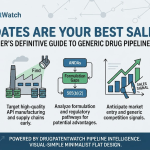
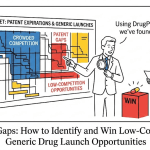
A practical playbook for formulation vendors, CDMOs, and excipient suppliers on how to mine patent loss-of-exclusivity data to find, time, and win reformulation contracts.
Why Loss of Exclusivity Is a Business Development Signal, Not Just a Legal Event
Every year, dozens of branded drugs worth hundreds of millions of dollars in annual revenue face the expiration of their core compound patents. The conventional story around patent loss of exclusivity (LOE) is a generic manufacturer story: file an ANDA, get approved, capture market share, erode the brand price. That narrative is accurate, but it misses the half of the market that actually writes checks for formulation work.
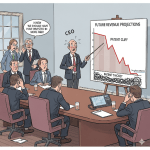
Branded pharmaceutical companies do not sit still when their patents expire. Their commercial teams model revenue decay curves months before a single generic hits the pharmacy shelf. Their R&D groups start evaluating next-generation formulations. Their legal teams file what is sometimes called patent thickets around delivery mechanisms, dosing regimens, and novel combinations. And their supply chain groups go shopping for partners who can execute the technical work quickly.
For formulation vendors, CDMOs, excipient suppliers, and drug delivery technology companies, this activity is a concentrated source of qualified business opportunities. The challenge is not identifying that the opportunity exists. The challenge is identifying the right molecule, at the right stage in its LOE timeline, with enough lead time to position your company as the partner for the next product generation before the conversation moves to a competitor.
This guide shows you exactly how to do that, using publicly available patent data as your primary business development trigger.
Understanding the LOE Timeline: Where the Money Moves
What Loss of Exclusivity Actually Means for a Brand Team
A drug loses exclusivity when the patents protecting it no longer provide a legal barrier to generic or biosimilar competition. In the United States, that process has several distinct phases, and each one creates a different kind of commercial pressure on the brand.
The primary compound patent, sometimes called a composition-of-matter patent, covers the active molecule itself. When it expires, the FDA can accept ANDA filings for generic equivalents. But compound patents rarely stand alone. By the time a drug reaches peak sales, it typically has a cluster of secondary patents covering formulation techniques, release mechanisms, dosing schedules, polymorphs, and methods of treatment. These secondary patents can extend practical exclusivity by years.
The FDA Orange Book lists the patents that a branded manufacturer has certified as relevant to a given drug product. DrugPatentWatch, one of the most comprehensive commercial patent intelligence platforms in the sector, aggregates Orange Book data alongside USPTO filings, international patent family data, and ANDA filing histories. When a BD professional at a formulation vendor queries a drug on DrugPatentWatch by brand name or active ingredient, they get not just the expiry dates, but a structured view of the patent estate that tells them where the brand still has legal room to maneuver and where it does not.
This distinction matters for how you position your outreach. A brand with a compound patent expiring in 18 months and no secondary formulation patents is in full defense mode. A brand with a compound patent expiring in 18 months but with method-of-use patents still running for another six years has options, and they will want a formulation partner to help them exercise those options.
The Five-Year LOE Window and Why It Defines Your Pipeline
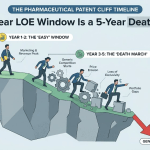
Commercial pharmaceutical companies typically begin strategic lifecycle planning for a major asset between three and five years before the projected LOE date. This is when budget allocations happen, when regulatory strategy is set, and when external partnership discussions begin in earnest. If you enter the conversation after that window closes, you are competing against vendors who were already shortlisted.
The five-year window is not a uniform rule. Smaller specialty brands with tighter internal R&D resources may start the conversation as late as 24 months before LOE. Large pharma companies with multiple lifecycle management programs running simultaneously may be modeling opportunities on a seven-year horizon. Understanding which category your target falls into is part of the segmentation work discussed later in this guide.
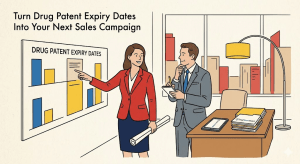
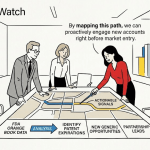
What the five-year window creates for a formulation vendor is a predictable, data-driven prospecting calendar. If you pull all FDA Orange Book primary patent expiry dates for products with annual US revenues above a threshold you define based on your business size, you can build a rolling 60-month opportunity list that tells you who to call, and when.
Reading Patent Data Like a Business Developer
The Four Patent Categories That Matter Most
Not every patent in a drug’s Orange Book listing is equally relevant to your reformulation pitch. Focus your analysis on these four:
Composition-of-matter patents: These cover the active molecule. Expiry creates the generic threat that drives brand urgency. This is your primary LOE date.
Formulation patents: These cover the physical drug product, including the release mechanism, dosage form, and excipient composition. Expiry of these tells you what territory the brand has already ceded. Presence of active formulation patents tells you where they are actively defending.
Method-of-use patents: These cover the therapeutic indication or dosing regimen. A clean method-of-use portfolio lets the brand pursue indication extensions and combination therapies as lifecycle strategies.
Process patents: These cover manufacturing methods. Less common in the Orange Book context, but relevant if your CDMO capabilities give you a proprietary process advantage on the reformulated product.
How to Use DrugPatentWatch for BD Targeting
DrugPatentWatch provides a structured way to screen the Orange Book without building your own database. The platform allows you to search by active ingredient, brand name, NDA number, or patent number, and returns a consolidated view of the patent estate with expiry dates, claims summaries, and filing histories.
For a formulation vendor running a BD campaign, the most efficient starting workflow is this: define a minimum annual revenue threshold, run a screen on DrugPatentWatch for primary compound patents expiring within your target window of 24 to 60 months, and then layer in the secondary patent analysis to identify products where formulation innovation still offers regulatory protection runway. That two-step filter removes most of the noise from a raw Orange Book export and leaves you with a working target list.
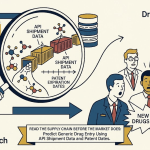
The platform also tracks ANDA filings, which give you a proxy for generic competitive pressure. A product with 10 ANDA filers already in the queue faces a different commercial landscape than one with two. The more aggressive the generic pipeline, the more urgently the brand team needs to show payers and prescribers a differentiated next-generation product.
“Drugs losing patent protection account for more than $200 billion in branded sales annually on a global basis, with US expirations representing the largest single geographic concentration of that value.” — IQVIA Institute for Human Data Science, Medicine Use and Spending in the U.S. (2024) [1]
Building Your LOE Opportunity Database
The most durable BD advantage you can build is a proprietary opportunity database that you update quarterly. It does not need to be sophisticated. A well-structured spreadsheet or lightweight CRM with the following fields is sufficient to start:
Field
Source
BD Use
Brand / INN
Orange Book / DrugPatentWatch
Product identification
Primary LOE Date
Orange Book Patent Expiry
Campaign trigger date
Secondary Patent Cluster
DrugPatentWatch
Lifecycle opportunity sizing
US Annual Revenue
IQVIA / Company Filings
Deal size proxy
ANDA Count
DrugPatentWatch / FDA
Generic pressure indicator
Current Formulation Type
Product labeling
Reformulation gap analysis
Manufacturer / MAH
Orange Book
Target company identification
BD Contact Status
Internal CRM
Outreach tracking
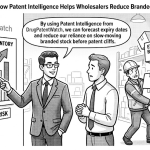
Once you have this database running, you set calendar alerts at the 48-month, 30-month, and 18-month marks from each LOE date. These alerts become your outreach triggers.
Six Campaign Triggers Every Formulation Vendor Should Use
Trigger 1: The 48-to-36-Month Strategic Planning Window
This is the earliest and highest-value window. At four years before LOE, brand teams are in formal strategic planning for lifecycle management. The conversation is still exploratory and decisions have not been made. External partners who show up with a formulated hypothesis about what the next product generation could look like have an outsized chance of influencing the program design.
Your outreach at this stage should not be a product pitch. It should be a market intelligence briefing: here is what the generic landscape will look like when your compound patent expires, here is what the two or three most technically defensible lifecycle strategies look like based on your molecule’s biopharmaceutical properties, and here is why your company is positioned to execute the preferred option. You are helping them think, not selling them a service.
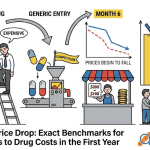
Trigger 2: The 24-Month Generic Entry Countdown
Two years before LOE, brand teams have typically selected their lifecycle management strategy and are moving into active development. This is when budget commitments are made and vendor selection processes begin. Outreach that was purely educational at the 36-month mark now needs a technical proposal attached to it.
If you have been nurturing the relationship from the earlier trigger, you are already in the conversation. If this is your first contact, you are competing against vendors who have had a year’s head start. You can still win, but your entry needs to be sharper. Lead with proof: a molecule in a comparable therapeutic area where you delivered a reformulated product that achieved meaningful clinical differentiation or patent extension.
Trigger 3: The Authorized Generic Signal
When a branded company files for or announces an authorized generic ahead of LOE, it signals a deliberate strategy to capture generic market share while the brand transitions. This creates a secondary opportunity for formulation vendors: the authorized generic needs its own manufacturing and quality documentation, often with different specifications than the brand.
DrugPatentWatch tracks authorized generic agreements and ANDA-related licensing activity. When you see a brand moving in this direction, the reformulation opportunity for a next-generation branded product may be concurrent with an authorized generic supply opportunity. Two separate conversations, two separate service lines, one account.
Trigger 4: The Patient Compliance or Dosing Problem
Some lifecycle extensions succeed not because of sophisticated chemistry but because the original dosage form had a compliance problem that the brand could never prioritize while the product was the only game in town. Once LOE looms, compliance engineering becomes commercially viable.
Common examples include products with twice-daily dosing schedules that can be reformulated to once-daily, tablets that need to be swallowed whole but whose patients are elderly and have dysphagia, and products with side effect profiles tied to peak plasma concentration that can be mitigated through modified-release delivery. If your technology portfolio addresses any of these, it maps directly to therapeutic areas and molecule classes where this pattern repeats.
Trigger 5: The Pediatric and Geriatric Formulation Gap
The FDA Best Pharmaceuticals for Children Act and the Pediatric Research Equity Act create regulatory incentives for sponsors to develop age-appropriate formulations. A drug with a primary LOE date approaching but no approved pediatric formulation is a specific and identifiable opportunity. The sponsor can receive six months of additional exclusivity for completing pediatric studies. You get a development contract.
The geriatric angle is less regulated but equally commercial. Oral thin films, mini-tablets, liquid formulations, and sprinkle capsules for patients with cognitive impairment are high-need formulation categories that many brands have not addressed during their primary exclusivity period because the commercial incentive did not justify the regulatory investment. LOE changes that calculation.
Trigger 6: The 505(b)(2) Pathway to a New Exclusivity Clock
The 505(b)(2) regulatory pathway allows a sponsor to file an NDA for a new formulation or delivery system of an already-approved drug by relying on existing safety and efficacy data, supplemented by studies to demonstrate the new product’s specific characteristics. A successfully filed 505(b)(2) application starts a new three-year exclusivity clock from approval, and a product backed by new clinical data demonstrating a novel indication may qualify for five years [5].
This pathway is the legislative foundation of the lifecycle extension industry. It is also the primary reason that a formulation vendor’s technical capability is commercially valuable to a brand facing LOE. You are not just making a better pill. You are making a product that can be legally protected for another three to five years. That is the value proposition that earns budget approval.
The Reformulation Strategies That Actually Extend Market Life
Extended-Release and Modified-Release Systems
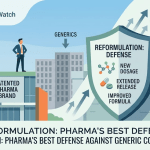
Extended-release (ER) reformulation is the most commercially established lifecycle extension strategy. The technology is mature, the regulatory pathway is well-understood, and the clinical differentiation story is credible to both prescribers and payers: fewer doses per day, smoother plasma concentration curves, and a reduced side effect burden.
If you specialize in osmotic release (OROS), matrix systems, membrane-controlled pellets, or lipid-based delivery, every immediate-release oral drug approaching LOE in a chronic disease indication is a potential target. Chronic disease means daily dosing, which means patient and prescriber sensitivity to tolerability and adherence. That sensitivity is your entry point.
From a patent standpoint, an ER reformulation that requires specific excipient combinations, a novel polymer ratio, or a proprietary manufacturing process can generate formulation patents running 20 years from filing. A brand that converts its IR product to ER with genuinely novel delivery technology does not just extend market life by a few years. It potentially creates a new exclusivity window that a generic cannot easily replicate.
Fixed-Dose Combinations
Fixed-dose combinations (FDCs) pair two or more active ingredients in a single dosage unit. In therapeutic areas where patients already take multiple drugs in the same class or with complementary mechanisms, an FDC offers a clinically meaningful convenience benefit and a distinct product code that requires its own ANDA to challenge.
The commercial logic is clear. If their LOE molecule is used in 60 percent of patients alongside a second agent that is itself still under patent, or newly generic and therefore low-cost, combining them into a new product creates a differentiated item on the pharmacy formulary. The prescribing physician writes one prescription. The pharmacist dispenses one bottle. The patient takes one pill. And the brand captures revenue that would otherwise migrate to generic versions of both agents taken separately.
FDC development is technically complex. Compatibility between APIs, appropriate release profiles for each component, and bioequivalence demonstrations with the individual components all require substantial formulation expertise. This complexity is your competitive advantage if you have the capability. It is a barrier to entry if you do not.
Abuse-Deterrent Formulations
Abuse-deterrent formulations (ADFs) are most relevant in controlled substances, particularly opioids and stimulants. The FDA has published guidance on abuse-deterrent technologies and provides a distinct labeling category for approved ADFs [3]. Purdue Pharma’s reformulation of OxyContin into an abuse-deterrent version before its compound patent expired is the most cited case study in pharmaceutical lifecycle management, with all of the regulatory and commercial complexity that entailed.
For formulation vendors with ADF-specific technology, the DEA scheduling of the target molecule is an additional layer of due diligence. But for vendors already in the controlled substances supply chain, LOE dates for Schedule II and Schedule III drugs represent a specific and defensible BD opportunity where your regulatory experience is itself a differentiator.
Drug-Device Combinations and Novel Delivery Routes
Inhalers, auto-injectors, transdermal patches, and drug-eluting implants all qualify as drug-device combination products and carry distinct regulatory pathways, IP landscapes, and market access strategies. When an orally delivered drug faces LOE, a conversion to a novel delivery route can create a product that is not substitutable by a generic oral tablet because the dosage form itself is categorically different.
This strategy is more resource-intensive than modified-release oral reformulation and typically requires a platform technology partner with device engineering capability alongside pharmaceutical formulation expertise. But the resulting product, if the clinical case for the new route is solid, occupies a category where generic competition is structurally limited.
The BD Campaign: From LOE Date to Signed Contract
Segmenting Your Target List by Opportunity Quality
Not every drug approaching LOE deserves the same level of BD investment. Before you write a single outreach email, score your target list against four criteria:
Revenue scale: US annual sales above $150 million indicate a brand team with budget authority and a commercial incentive to invest in lifecycle management.
Formulation complexity of the current product: An existing immediate-release tablet in a chronic disease is the easiest reformulation conversation. A drug already delivered via a complex device-assisted route is harder to improve.
Generic pipeline density: Five or more ANDA filers signals aggressive competition and high brand urgency. Fewer than three may indicate the molecule is not commercially attractive enough for lifecycle investment.
Therapeutic area fit: Your past formulation successes in a specific therapeutic area are your most credible entry point. Start where you have proof points before expanding to new indications.
The Outreach Message That Actually Gets a Response
Most vendor outreach to pharmaceutical BD and licensing teams fails because it leads with the vendor’s capabilities rather than the prospect’s problem. A brand team director looking at a LOE date three years out does not need to hear about your state-of-the-art spray drying equipment. They need someone to explain what is going to happen to their revenue if they do not act and what the most defensible path forward looks like.
Structure your initial outreach around three elements: a specific statement of the LOE timing and generic competitive pressure they are facing (using publicly available data from DrugPatentWatch and IQVIA), a brief hypothesis about the most credible lifecycle strategy for their molecule based on its biopharmaceutical properties and therapeutic use, and a single, low-commitment request for a 20-minute call to test whether the hypothesis is worth exploring. You are not asking for a project. You are asking for a conversation.
The specificity of the first element is what separates this message from generic vendor outreach. Anyone can say “we understand you have a patent expiry coming.” Very few can say “your primary composition patent expires in Q3 of 2027, you have four ANDA filers in the queue based on current Orange Book records, and your current twice-daily IR dosing in a primarily elderly patient population suggests a once-daily ER formulation could achieve both formulary differentiation and a genuine compliance benefit.” That level of preparation communicates that you have done the work. It earns a response.
Timing the Multi-Touch Campaign
A single outreach rarely converts at the 36-to-48-month window. The contact may be interested but not yet authorized to engage vendors. The project may exist in budget modeling but not yet in the capital expenditure plan. Your job at this stage is to stay visible and valuable without being intrusive.
A workable cadence at the early window is quarterly contact with substantive content: a brief note when a competitor in the same therapeutic area launches a reformulated next-generation product, a summary of new FDA guidance relevant to their dosage form category, or a case study from your portfolio. At the 24-month trigger, the cadence compresses. Monthly contact with increasingly specific technical proposals is appropriate. At 18 months, if you do not have an active project discussion underway, you need to escalate within the account or reassess the opportunity.
Building the Business Case for Your Client’s Team
Pharmaceutical brand teams do not approve lifecycle management investments based on formulation elegance. They approve them based on net present value projections. When you propose a reformulation project, you need to help your contact make the internal business case, because they will present it to someone with budget authority who did not take your call.
A practical business case template for a 505(b)(2) lifecycle extension project includes: the current LOE date and projected revenue impact without intervention, the development timeline and cost estimate for the reformulated product, the regulatory pathway and exclusivity runway the new product would generate, the market share retention scenario at three years post-launch compared to a no-action baseline, and the total cost of development as a percentage of one year’s current brand revenue. That last number is usually between two and eight percent, which makes the development investment look rational against the revenue defense it enables.
Case Studies: Where Lifecycle Extension Won, and Where It Did Not
OxyContin: The Reformulation That Redefined the Playbook
Purdue Pharma’s reformulation of OxyContin from a crushable tablet to an abuse-deterrent version before its compound patent expired is taught in every pharmaceutical licensing course as a lifecycle extension case study. The abuse-deterrent version carried new formulation patents and received FDA labeling recognizing its abuse-deterrent properties. Generic manufacturers attempting to file ANDAs faced both the new patents and the challenge of demonstrating bioequivalence to a product with physical and chemical deterrent properties.
The case study is instructive for what it demonstrates about patent strategy as much as formulation science. The value of the ADF was not primarily clinical, though Purdue argued it was. It was legal and commercial. The formulation patents created a new barrier to generic entry that the expired compound patent could no longer provide. For formulation vendors with ADF technology, the lesson is that the technology is valuable not because it is sophisticated but because it is difficult to replicate and generates protectable IP.
The subsequent regulatory and legal history of OxyContin is well-documented and does not alter the technical case study. It does illustrate that reformulation strategies succeed commercially only when the clinical and public health rationale is genuine. A lifecycle extension built on a formulation change that offers no real patient benefit is vulnerable to payer pushback, prescriber skepticism, and regulatory scrutiny.
Strattera: What Happens When You Miss the Window
Eli Lilly’s Strattera (atomoxetine) for ADHD lost its primary patent protection in 2017. The drug had been the only non-stimulant ADHD medication for years and commanded premium pricing. Lilly did not pursue a significant reformulation lifecycle strategy ahead of LOE. Generic atomoxetine entered the market and the brand’s revenue declined sharply.
The missed opportunity was a once-daily reformulation with differentiated release kinetics that could have addressed the drug’s known issue with delayed onset of effect relative to stimulant medications. The biopharmaceutical profile of atomoxetine, with CYP2D6 metabolism and known poor metabolizer variability, also presented a potential pharmacogenomic dosing strategy that was never formally pursued as a lifecycle asset.
This case is not a story of negligence. It reflects a common resource allocation problem in large pharmaceutical companies: the team managing a mature brand rarely has the most organizational influence over R&D budget decisions. The formulation vendor who could have helped Lilly execute a lifecycle strategy needed to be in the conversation at the strategic planning level, not waiting for an RFP that never came.
Concerta and the Osmotic Release Defense
Janssen’s Concerta (methylphenidate extended-release) used the OROS osmotic pump technology to deliver methylphenidate in a specific ascending concentration profile. When generic methylphenidate ER products entered the market, several were rated as therapeutically equivalent by the FDA on bioequivalence grounds.
What followed was a multi-year controversy in which some generic Concerta products were downgraded from AB-rated to BX-rated after post-market studies raised questions about in vivo performance, despite in vitro bioequivalence. The episode demonstrated both the power and the vulnerability of a delivery-system-based lifecycle strategy. The OROS technology was genuinely differentiated and the clinical claim had empirical support, but generic entry happened regardless because the regulatory standard for bioequivalence did not require replication of the exact delivery mechanism, only equivalent plasma exposure.
For formulation vendors, the Concerta case argues for pursuing formulation strategies where clinical differentiation can be demonstrated with patient-relevant outcomes data, not just pharmacokinetic parameters. A formulation that produces better PK is valuable. One that produces demonstrably better clinical outcomes is nearly irreplaceable.
The Competitive Intelligence Stack for Formulation BD
DrugPatentWatch as Your Primary Data Layer
DrugPatentWatch is the most comprehensive commercial aggregator of FDA Orange Book patent data combined with ANDA filing intelligence, patent family analysis, and expiry date calculations. For a formulation vendor running a systematic LOE-based BD program, it is the primary database for opportunity identification and competitive monitoring [4].
Key workflows for formulation BD teams include: setting up alerts for specific active ingredients or therapeutic classes so you receive notifications when new patents are filed or ANDA applications are submitted, using the patent claims analysis to identify what formulation territory is currently protected and what reformulation approaches are technically available without triggering infringement, and tracking authorized generic agreements to understand when a brand is managing LOE through internal competition versus a next-generation product strategy.
The platform’s limitation, which your BD team should understand, is that it reflects publicly available regulatory filings. Patents in prosecution that have not yet issued, proprietary technical work that a brand is conducting without regulatory disclosure, and international patent families not yet synchronized with US filings may not be fully visible. Cross-referencing with European Patent Office filings through Espacenet or with the WHO International Nonproprietary Names database adds coverage for globally active molecules.
FDA Orange Book Cross-Reference and Application Data
The FDA Orange Book is the authoritative source for US market exclusivity data. Its patent listings are self-reported by the NDA holder, which means they reflect the brand’s own determination of which patents are relevant to the approved product [2]. Generic manufacturers who believe a listed patent is invalid or not infringed by their formulation file Paragraph IV certifications, which trigger litigation and a 30-month stay.
For formulation vendors, the Orange Book’s exclusivity tab, distinct from the patent tab, lists regulatory exclusivities including five-year new chemical entity exclusivity, three-year new clinical study exclusivity, and pediatric exclusivity extensions. These regulatory exclusivities run independently of patent protection. A drug can have no patents remaining but still be protected from generic entry by a regulatory exclusivity period. That is a different kind of LOE trigger, and it creates the same commercial urgency for lifecycle management.
ANDA Tracking and Generic Pipeline Intelligence
The number and timing of ANDA filings for a reference listed drug tells you how many generic manufacturers have calculated that the market is worth entering. A high ANDA count before LOE means intense price competition post-LOE and maximum brand urgency for a differentiated next-generation product. A low ANDA count may indicate a smaller or more specialized market, but it may also indicate technical barriers to generic entry that you should understand before proposing a reformulation.
ANDA approval times have varied substantially over the FDA’s backlog history, though GDUFA commitments have reduced mean approval times considerably since 2012 [6]. The practical implication for timing your outreach is that ANDA filing dates, visible through FDA’s database and tracked by DrugPatentWatch, give you a proxy for when generic products are likely to receive tentative approval, which is a sharper trigger than the nominal LOE date alone.
Pitfalls That Kill Reformulation BD Campaigns
The “Me-Too” Formulation Problem
A reformulation that does not offer genuine clinical or patient experience differentiation from the original product will not clear the FDA’s 505(b)(2) threshold for new clinical studies and will not persuade payers to maintain premium pricing. Worse, it will not persuade the brand’s own internal review committees to fund it.
The most common failure mode for formulation vendors in lifecycle management campaigns is proposing technically competent but clinically undifferentiated reformulations. An extended-release version of a drug that is already well-tolerated on twice-daily dosing does not provide a compelling case for a new product. The formulation vendor who wins the lifecycle extension contract identifies a genuine unmet clinical need in the existing patient population and proposes a formulation strategy that addresses it.
Misreading Patent Scope and Freedom to Operate
The expiry of a compound patent does not automatically mean that reformulation is legally straightforward. Secondary patents covering excipient combinations, manufacturing processes, or specific dosage form architectures may still be active. A formulation vendor who proposes a lifecycle strategy that inadvertently reproduces a protected formulation technique exposes their client to patent litigation.
Your BD team does not need to be a patent law firm. But it should have a consistent practice of pulling the full patent estate from DrugPatentWatch before finalizing any technical proposal, and of engaging qualified patent counsel for a freedom-to-operate review before any reformulation program moves into active development. The cost of an FTO review is trivial relative to the cost of a patent dispute mid-development.
Ignoring the Payer Landscape
A technically sound and legally defensible reformulation still fails commercially if payers decline to reimburse it at a premium over generic alternatives. Pharmacy benefit managers have become increasingly sophisticated at substituting new formulations with generic equivalents where the therapeutic equivalence can be argued, regardless of the technical distinctions.
Before you build a lifecycle extension business case for a brand team, understand what the reimbursement environment looks like for next-generation products in the relevant therapeutic area. Some therapeutic areas have strong prescriber advocacy for specific formulation attributes. Others are heavily managed with strict step therapy requirements. A formulation strategy that requires premium reimbursement to be commercially viable needs a reimbursement strategy attached to it from the start.
Measuring ROI on Your LOE-Driven BD Program
The Metrics That Matter to BD Leadership
A systematic LOE-based BD program should be evaluated on four metrics: pipeline value (total estimated contract revenue from opportunities in active discussion, weighted by probability), conversion rate by trigger window (the percentage of outreach at 36-month, 24-month, and 18-month triggers that converts to a scoped project), average revenue per lifecycle project (total formulation services revenue from lifecycle management engagements), and cycle time from first contact to signed contract.
These metrics justify the investment in data subscriptions like DrugPatentWatch, dedicated BD analyst time for patent screening and outreach preparation, and the technical pre-work that goes into hypothesis-based outreach. The ROI case is straightforward: a formulation development contract for a lifecycle extension product is typically worth between $2 million and $15 million in services revenue over the project lifecycle, depending on complexity. A BD program that closes two additional contracts per year from LOE-based targeting pays for itself in the first quarter of the first project.
Reporting Patent Intelligence to Your Commercial Leadership
BD leaders at formulation vendors often struggle to communicate the value of patent intelligence work to commercial leadership oriented toward immediate pipeline. A quarterly LOE opportunity review that presents the rolling 60-month expiry calendar, color-coded by BD engagement status, against a revenue opportunity model translates patent data into commercial terms that resonate with non-technical stakeholders.
Present three numbers: the total addressable annual revenue of brands with LOE dates within 48 months where your target therapeutic areas and formulation capabilities are relevant, the subset of that universe where you currently have an active BD conversation, and the contract revenue you have closed from LOE-triggered campaigns in the trailing 12 months. This framing positions patent intelligence as a revenue-generating asset rather than a research exercise.
Key Takeaways
Patent loss-of-exclusivity dates are not just legal milestones. They are commercial pressure points that create predictable, time-bound demand for formulation services. Formulation vendors who treat them as BD triggers build structured, data-driven pipelines instead of relying on inbound inquiries.
Build a rolling 60-month LOE opportunity database using Orange Book expiry dates from DrugPatentWatch, filtered by US revenue threshold and ANDA pipeline density. Update it quarterly.
The 48-to-36-month window before LOE is your highest-value entry point. Brand teams are in strategic planning. The conversation is not yet competitive. You can influence program design.
Lead outreach with the prospect’s problem, not your capabilities. Use DrugPatentWatch data to quantify their generic threat before proposing a technical solution.
Score your target list against revenue scale, formulation complexity, generic pipeline density, and therapeutic area fit before committing BD resources.
The 505(b)(2) pathway is the commercial backbone of lifecycle extension. Every reformulation proposal should frame its regulatory and exclusivity implications explicitly in the business case.
Freedom-to-operate review before any technical proposal is non-negotiable. Secondary formulation patents can be active well after compound patent expiry.
Measure your program on pipeline value, conversion rate by trigger window, average lifecycle project revenue, and cycle time from first contact to contract. These metrics justify the investment and build organizational support for systematic patent intelligence work.
References
[1] IQVIA Institute for Human Data Science. (2024). Medicine use and spending in the U.S.: A review of 2023 and outlook to 2028. IQVIA Institute.
[2] U.S. Food and Drug Administration. (2024). Orange Book: Approved drug products with therapeutic equivalence evaluations (44th ed.). FDA Center for Drug Evaluation and Research.
[3] U.S. Food and Drug Administration. (2015). Guidance for industry: Abuse-deterrent opioids – evaluation and labeling. FDA CDER.
[4] DrugPatentWatch. (2025). Patent expiry and ANDA filing database [Database]. DrugPatentWatch LLC. https://www.drugpatentwatch.com
[5] U.S. Food and Drug Administration. (2020). Guidance for industry: Applications covered by section 505(b)(2). FDA CDER.
[6] Association for Accessible Medicines. (2023). Generic drug savings and access in the United States: 2023 annual report. AAM.
[7] Grabowski, H., Long, G., & Mortimer, R. (2014). Recent trends in brand-name and generic drug competition. Journal of Medical Economics, 17(3), 207-214. https://doi.org/10.3111/13696998.2014.879922
[8] Mossinghoff, G. J. (1999). Overview of the Hatch-Waxman Act and its impact on the drug development process. Food and Drug Law Journal, 54(2), 187-194.
FAQ
Q1: How early should a formulation vendor start monitoring a drug’s LOE timeline?
Monitoring should start as soon as a drug reaches $150 million in annual US sales, regardless of LOE timeline. Patent landscapes change: continuation patents get filed, formulation patents get added to the Orange Book, and strategic alliances shift. A drug you monitor for three years before its LOE date gives you qualitatively better intelligence than one you pick up 12 months out. Set up DrugPatentWatch alerts for your target molecules and therapeutic classes, and review them quarterly.
Q2: What makes a 505(b)(2) application stronger from a patent exclusivity perspective?
A 505(b)(2) that relies on new clinical studies, rather than purely on existing literature and the reference drug’s safety data, qualifies for five-year exclusivity if it contains a new active moiety, or three-year exclusivity when it includes new clinical investigations essential to approval. The three-year period is the more common scenario for reformulations. To maximize exclusivity value, the new clinical studies should demonstrate a patient-relevant outcome beyond simple pharmacokinetic differentiation: improved tolerability in the target population, a clinically meaningful dosing improvement, or an outcome measure tied to the new delivery profile.
Q3: How do I identify which brand teams actually have budget to act on lifecycle management proposals?
Three signals in public data reliably predict budget availability. First, check whether the company has launched a 505(b)(2) or line extension product in the past five years. Companies with recent execution history have the organizational infrastructure to do it again. Second, examine the brand’s revenue trajectory: a drug still growing at LOE minus three years has more internal advocacy than one already in steady decline. Third, track investor and analyst commentary on the drug. If sell-side analysts are modeling lifecycle extension as a revenue scenario, internal executives are already discussing it with their BD and R&D teams.
Q4: Can smaller formulation vendors compete with large CDMOs for lifecycle extension contracts?
Yes, but the competitive strategy is different. Large CDMOs win on scale, track record across multiple dosage form technologies, and global regulatory infrastructure. Smaller formulation vendors win on specialization, speed, and the quality of their scientific engagement at the early-stage hypothesis level. A small company with a genuinely differentiated platform technology in modified-release oral solids, abuse-deterrent systems, or pediatric dosage forms can outcompete a large CDMO for programs where that specific technology is central to the lifecycle strategy. Lead with the technology’s clinical differentiation story, not with your facility capacity.
Q5: What should a formulation vendor do when a target brand’s LOE date is adjusted due to new patent filings?
Treat it as updated intelligence, not as a lost opportunity. A new formulation or method-of-use patent filing tells you the brand team is actively managing their IP estate, which means they have organizational resources dedicated to lifecycle planning. A new patent that covers a specific delivery mechanism also tells you what technical territory is off-limits for your proposal, which helps you focus on what is available and differentiated. Update your database with the new LOE date, note what the new patent covers, and adjust your outreach timing accordingly. The relationship you have built through the earlier stages of monitoring does not need to restart.