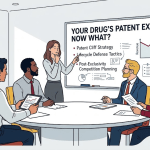
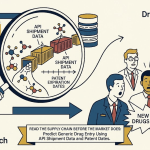
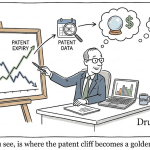
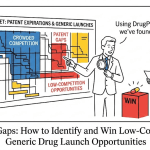
Every year, billions of dollars in branded pharmaceutical revenue evaporate on a specific date. The branded manufacturer knew it was coming. Their commercial team dreaded it. Their finance team modeled it. And most of their market access vendors missed the business opportunity entirely because they showed up too late.
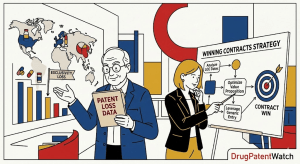
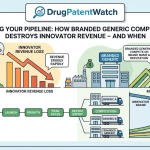
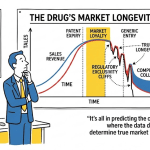
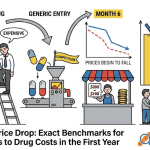
Loss of exclusivity — the moment when a drug’s patent protection expires and generics are legally free to enter the market — is one of the most commercially disruptive events in the pharmaceutical industry. For a blockbuster drug, generic entry can erode branded volume by 80 to 90 percent within 12 months [1]. Revenues that once supported entire business units can fall from $3 billion to under $500 million in a single fiscal year.
That compression is a crisis for the manufacturer. For vendors offering contracting strategy, managed care consulting, GPO advisory, patient retention programs, or market access analytics, it is a precisely dated, foreseeable business development opportunity. The manufacturers who need help the most are the ones approaching LOE, and the vendors who get the work are almost always the ones who arrived with a plan 18 to 30 months before generic day one.
This guide explains how to build that practice. It covers where to find clean LOE data, how to segment targets by urgency, what contracting problems manufacturers actually face before generic entry, and how to structure an outreach narrative that gets you in front of the right decision-makers before your competitors knock on the same door.
What Loss of Exclusivity Actually Means
The Patent Stack Behind a Drug’s Exclusivity
The term “patent expiry” gets used loosely. In practice, a branded drug does not rest on a single patent. Most small-molecule drugs have a compound patent, one or more formulation patents, method-of-use patents, and process patents. Biologics add additional layers including biosimilar reference product exclusivity granted under the Biologics Price Competition and Innovation Act (BPCIA).
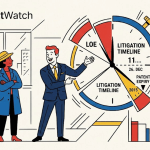
Each of those patents has a different expiration date, and the pharmaceutical company’s legal team will have filed suits against any would-be generic or biosimilar filer under Paragraph IV of the Hatch-Waxman Act. A 30-month stay triggered by such a suit delays FDA approval of the generic even if the challenger ultimately wins. The result is that the “effective LOE date” — the date when a commercially competitive generic or biosimilar is actually on pharmacy shelves — can differ substantially from the nominal primary patent expiry.
This complexity is exactly why vendors need structured LOE intelligence rather than a simple patent lookup. A compound patent might expire in 2026, but formulation and pediatric exclusivity extensions might push effective generic entry to 2029. Alternatively, a successful Paragraph IV challenge could accelerate entry to 2025. Vendors who build their outreach around the nominal date will consistently misjudge timing.
Patent Term Extensions and Regulatory Exclusivity
Two mechanisms routinely extend the life of branded drugs beyond their initial patent term. Patent Term Extensions (PTEs) under 35 U.S.C. § 156 compensate for regulatory review time, potentially adding up to five years to a patent’s life. Regulatory exclusivity — Hatch-Waxman’s five-year New Chemical Entity exclusivity, three-year new clinical investigation exclusivity, or seven-year Orphan Drug exclusivity — runs independently of patent status and can block generic entry even after all patents have expired [2].
For biologics, FDA grants 12 years of reference product exclusivity under the BPCIA, and biosimilar filers face a complex “patent dance” that can stretch litigation for years. The first biosimilar to market often captures less than 20 percent of the reference product’s volume in year one, a dynamic that differs markedly from small-molecule generic erosion [3].
Vendors advising on contracting strategy need to understand these distinctions because the commercialization response differs by exclusivity type. A brand losing small-molecule exclusivity to a crowded generic field needs different managed care contracting tools than a biologic facing its first biosimilar from a single well-capitalized competitor.
How to Read an LOE Date
When practitioners talk about LOE dates, they typically mean the earliest date on which a commercially viable generic or biosimilar could reach patients — not just the patent expiry or the ANDA approval date. That calculation requires integrating patent expiry, PTE, regulatory exclusivity, pending Paragraph IV litigation, and the FDA ANDA review backlog.
Tools like DrugPatentWatch aggregate and reconcile these data points into a single, searchable intelligence layer. DrugPatentWatch tracks patent expiry dates, Orange Book listings, Paragraph IV filings, court decisions, and exclusivity codes for thousands of branded drugs, allowing commercial teams and their advisors to model effective LOE dates with reasonable confidence one to five years in advance [4]. For vendors building a business development pipeline, this kind of structured LOE intelligence is the foundation of everything else.
The Commercial Vendor’s Strategic Advantage
Why Most Vendors Wait Too Long
Ask any account executive at a market access consultancy or a managed care contracting vendor when they typically approach a manufacturer about LOE-related work, and the honest answer is usually: after the RFP hits the street. By then, the brand team is already in triage mode, contracts are being renegotiated reactively, and three other firms are pitching the same solutions.
The procurement process at a major pharma company typically takes three to six months from RFP issuance to contract signing. Add the time to onboard a vendor and build the analytical foundation for a contracting strategy, and you’ve consumed a full year of the pre-LOE runway without doing anything useful. The manufacturer is now 12 months from generic day one, scrambling for a solution that should have been designed 24 months earlier.
This dynamic persists because most vendors rely on relationship-based outreach rather than data-triggered outreach. They wait for a client to mention that LOE is coming. Clients almost never volunteer that information proactively because doing so feels like admitting vulnerability. The vendor who arrives first — not with a pitch, but with a specific analytical perspective on that manufacturer’s LOE risk — changes the conversation entirely.
The 18-to-36-Month Sweet Spot
Research on pharmaceutical commercial strategy consistently supports a 24-month pre-LOE window as the optimal time to begin building a defense. McKinsey’s pharmaceutical practice has documented that brands which begin redesigning their managed care contracting strategy 24 months before LOE retain 15 to 25 percent more revenue than those that start within 12 months [5]. The difference is not magical — it reflects the time required to renegotiate multi-year payer agreements, qualify biosimilar exclusion provisions, and build data-sharing arrangements that justify formulary protection.
For vendors, this means the business development target is not the brand team at 12 months before LOE. It is the brand team at 24 to 36 months before LOE, before they have fully committed to a strategy or a vendor. That window is identifiable, predictable, and searchable — if you have clean LOE data.
The 36-month threshold matters for a specific reason. At 36 months before LOE, many brand teams have not yet re-run their budget models to account for post-LOE revenue. Senior leadership is still thinking of the drug as a growth asset. A vendor who arrives at this stage with a clear analysis of the LOE risk — quantified in dollars, segmented by payer channel, and mapped to specific contract vulnerabilities — is not competing with other vendors. They are shaping the conversation before the conversation officially starts.
Mapping Pain Points to Your Services
Not all commercial vendors serve the same pre-LOE problem set. The key is to map your specific capabilities to the manufacturer’s most acute pain points at the relevant time horizon. The table below illustrates how four common vendor service categories align to LOE timing:
Managed care contracting advisory: Most relevant 24 to 36 months before LOE, when multi-year payer agreements are still renewable on favorable terms.
GPO and specialty pharmacy channel strategy: Most relevant 18 to 30 months before LOE, when channel access and preferred placement can be locked in before generics qualify for GPO formularies.
Patient retention and adherence programs: Most relevant 12 to 24 months before LOE, when switching programs and patient assistance transitions need to be designed.
Market access analytics and revenue modeling: Relevant across the full 36-month window, with particular urgency at 24 months when budget planning cycles are open.
The practical implication: your BD outreach should be calibrated to your service category, not to a single generic LOE timeline. A contracting advisory firm should be knocking on doors at 30 to 36 months. A patient retention vendor has a legitimate reason to be in the room at 18 months. Showing up at 6 months with either service means you are pitching a fire extinguisher to someone whose house is already burning.
Building an LOE-Triggered Intelligence System
Using DrugPatentWatch to Build Your Target Pipeline
Any vendor serious about LOE-driven BD needs a structured process for identifying targets. DrugPatentWatch provides the core data layer. The platform indexes Orange Book patent listings, expiry dates, Paragraph IV certification filings, ANDA approvals, and regulatory exclusivity codes for the full universe of FDA-approved branded drugs. Its search interface lets users filter by estimated LOE date range, therapeutic area, revenue tier, and patent status [4].
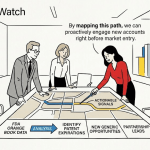
The practical workflow is straightforward. Pull all drugs with anticipated LOE dates in your target window — typically 24 to 48 months from today. Filter by revenue threshold (drugs below $200 million in annual sales often lack the budget for premium advisory services, though there are exceptions for specialty and rare disease products). Cross-reference with therapeutic areas where your firm has relevant case studies. The result is a ranked target list of 20 to 60 brands where you have both a legitimate service rationale and a predictable engagement window.
Run this exercise quarterly. LOE dates shift as litigation resolves, extensions are granted, and ANDA reviews are completed. A drug that showed a 2028 LOE in January 2025 may have an accelerated 2027 date by June 2025 if a Paragraph IV challenger wins at the district court level. Quarterly updates catch those shifts and let you prioritize outreach accordingly.
Segmenting Your Target List by Urgency
Once you have a target list, segment it by two variables: LOE proximity and contract structure complexity. LOE proximity is self-explanatory — how many months until effective generic entry. Contract structure complexity reflects how many layers of managed care, PBM, GPO, and specialty pharmacy agreements the manufacturer needs to restructure.
High-complexity, high-proximity targets are your immediate outreach priority. These are typically branded drugs in heavily managed therapeutic areas — diabetes, immunology, oncology — where payer agreements are multi-layered and LOE is 18 to 30 months away. The manufacturer has a real problem, limited time, and enough budget to pay for serious advisory support.
Lower-proximity targets (30 to 48 months out) are your relationship-building priority. You do not need to sell a specific engagement at 36 months. You need to be in front of the right person with a credible analytical perspective so that when the urgency window opens, you are already the trusted resource. One well-timed analysis shared at 36 months is worth more than 10 cold outreach attempts at 18 months.
Reading the Signals That Mean a Deal Is Forming
LOE dates are not the only signal worth tracking. Several other events indicate that a manufacturer is moving into active pre-LOE planning mode. Watch for these:
A Paragraph IV certification filing by a generic manufacturer, which triggers 30-month stays and signals that generic entry is being actively pursued.
A district court ruling on patent validity in a Hatch-Waxman case, which often resets the effective LOE timeline.
Executive commentary in quarterly earnings calls about LOE risk for a specific product — this indicates that senior leadership has started the commercial defense planning cycle.
New RFP activity on contract vehicles like pharmaceutical consulting frameworks, which sometimes signal that the market access team is scoping pre-LOE advisory work.
LinkedIn activity can also be telling. A branded pharmaceutical company posting for a “Loss of Exclusivity Strategy Director” or a “Market Access Contracting Lead — LOE Products” is giving you a precise timestamp on when their planning effort is being resourced. That job posting is your outreach trigger.
Contracting Strategy Support: What Manufacturers Actually Need
When brand teams talk about pre-LOE contracting strategy support, they mean at least four distinct categories of work. Vendors who understand the specifics of each will pitch more precisely and win more credibly.
Managed Care and PBM Contract Restructuring
Most branded drug contracts with commercial payers and PBMs are structured around rebate arrangements tied to market share and formulary placement. As LOE approaches, these contracts face several simultaneous pressures. Payers who previously granted preferred formulary position in exchange for rebates begin to anticipate switching to the generic, reducing their willingness to maintain branded preferred placement. PBMs begin signaling that post-LOE formulary exclusion of the brand (in favor of the generic) is on the table.
The contracting strategy question is: what concessions, data commitments, or contract structures can the manufacturer offer to retain preferred placement — or at least non-exclusion — post-LOE, and for how long? The answer varies significantly by therapeutic area. In areas with narrow therapeutic index or documented clinical differentiation (certain epilepsy drugs, for example), payers are more receptive to biosimilar or generic exclusion provisions. In commodity therapeutic areas, the conversation is much harder.
Vendors who specialize in this space typically offer a combination of payer landscape mapping, contract language audit, rebate optimization modeling, and negotiation support. The deliverable is a concrete recommendation on which contracts to renegotiate, in what sequence, and with what specific terms. This is high-value, high-margin advisory work — and it requires lead time measured in years, not months.
GPO Strategy Before and After Genericization
Group Purchasing Organizations play a specific role in pre-LOE strategy for hospital-administered drugs and specialty products distributed through specialty pharmacies aligned with GPO contracts. As LOE approaches, GPOs typically develop preferred supplier arrangements for the incoming generic or biosimilar. Branded manufacturers who have not built contractual protections — typically through portfolio-based preferred pricing arrangements that cover multiple products in the manufacturer’s pipeline — can find themselves excluded from GPO formularies within months of generic entry.
The strategic window for addressing this problem is 24 to 36 months before LOE, when multi-year GPO contracts are still open for renewal. Vendors advising on GPO strategy need expertise in GPO contract mechanics, the specific exclusivity and preferred tier structures that individual GPOs offer, and the portfolio-level negotiating leverage that manufacturers with multiple products can deploy. Smaller manufacturers with single-product LOE exposure are in a structurally weaker position, and honest advisory work will acknowledge that clearly.
Price Erosion Defense and Patient Retention Economics
The pricing dynamic around LOE is frequently misunderstood. Manufacturers know that branded list price becomes largely irrelevant post-LOE in commodity therapeutic areas, but the net price trajectory — what the manufacturer actually realizes after rebates and discounts — is the variable that matters for financial modeling. A brand that entered LOE at a high list price but low net price (due to heavy rebating) faces a different competitive calculus than one that maintained a tight spread between list and net.
Patient retention programs add another layer. For chronic disease products where patient compliance and continuity of care are clinically meaningful, manufacturers often invest in adherence programs, co-pay assistance, and patient engagement platforms during the 12 to 24 months before LOE to build inertia against switching. The economics here are straightforward: the lifetime value of a patient who stays on the branded product even at a lower post-LOE net price can exceed the cost of the retention program within 18 months.
Vendors offering patient retention program design, outcomes data analysis, or co-pay assistance structuring have a clean pre-LOE entry point. The challenge is that these programs require regulatory compliance review, database infrastructure, and pharmacy network partnerships. A vendor pitching this service without those capabilities risks over-promising. Manufacturers who have been through LOE before will ask hard operational questions.
“Brands that proactively restructured payer contracts 24 or more months before LOE retained an average of 22 percent more net revenue in the first post-LOE year compared to brands that initiated contract changes within 12 months of generic entry.”— IQVIA Institute for Human Data Science, “Managing Branded Drug Revenue Through Patent Expiry,” 2023 [5]
Constructing the Outreach Narrative
Leading With the Revenue Number, Not Your Product
The most common mistake in LOE-focused BD outreach is leading with the vendor’s capabilities rather than the manufacturer’s problem. A cold outreach that begins “We specialize in pre-LOE contracting strategy and have worked with 12 pharmaceutical companies” is less effective than one that begins “Your compound patent on [drug] expires in Q3 2027. Based on the Paragraph IV filings already on file with the FDA, effective generic entry could come 18 months earlier. Here is what that means for your managed care contracts.”
The second version works because it demonstrates that you have done work on their specific situation. You are not selling a generic service. You are delivering a specific insight about a specific problem, unprompted. That positions you as a domain expert before any formal conversation has started.
The data for this insight is available. DrugPatentWatch’s database provides the patent timeline, the Paragraph IV filing history, and the regulatory exclusivity expiry dates that anchor the LOE analysis. Build a one-page brief for each target account that translates that data into a dollar impact estimate. Use publicly available revenue data from the manufacturer’s 10-K or annual report to quantify what LOE means in gross sales terms. Most brand teams have already done this analysis internally, but they will pay attention to a vendor who arrives having done it independently.
The Four-Part Value Proposition
Structure the outreach value proposition around four elements:
The specific LOE date and what drove your effective-entry estimate (make the data visible).
The dollar exposure: what percent of current revenue is at risk based on comparable generic entry events in the same therapeutic area.
The contracting gap: which specific contract structures — PBM agreements, GPO contracts, specialty pharmacy access agreements — are most vulnerable and why.
Your engagement model: what you do, how long it takes, and what a manufacturer who engages 24 months before LOE gets that one who engages at 12 months cannot.
Keep the initial outreach brief. A two-page analysis document and a three-paragraph cover email is more effective than a 20-page deck. The goal of the first contact is a meeting, not a contract. The goal of the first meeting is a paid diagnostic engagement. The paid diagnostic generates the relationship and the data that lead to a full engagement.
Case Study: A Specialty Immunology Drug Approaching LOE
Consider a mid-sized specialty pharmaceutical company with a biologic approved for moderate-to-severe plaque psoriasis and psoriatic arthritis. The drug generates approximately $1.8 billion in annual net sales. Its primary composition-of-matter patent expires in mid-2027, but it carries a pediatric exclusivity extension through late 2027. Three biosimilar applications are on file with FDA. The earliest approval could come in early 2026 if the 30-month stays from pending litigation expire or are resolved in the challengers’ favor.
A market access consultancy monitoring biosimilar pipeline data through DrugPatentWatch would have flagged this situation in early 2024, when the first biosimilar application was submitted. By mid-2024 — roughly 30 months before the most likely first biosimilar launch date — this drug should be in their active BD pipeline.
The specific problems this manufacturer faces, and which a pre-LOE vendor can address, include the following:
Commercial payer contracts with preferred formulary placement that were written assuming no biosimilar competition before 2028. Those contracts need amendment clauses or biosimilar exclusion provisions renegotiated now.
A specialty pharmacy channel where the brand has built preferred placement through rebate arrangements. As biosimilars qualify for the same specialty pharmacy networks, that preferred placement is no longer guaranteed.
A patient support program serving approximately 40,000 patients. If the biosimilar enters at a meaningful list price discount and PBMs begin excluding the reference biologic from non-medical-exception pathways, the co-pay assistance structure needs redesigning.
A contracting advisory firm that arrives in mid-2024 with a specific analysis of these three problems — grounded in actual contract structure risks, not generic LOE talking points — is positioned to win a multi-year engagement worth $2 to 5 million in fees. That same firm arriving in 2026, after the biosimilar has launched and the manufacturer is managing active market share erosion, is competing for a smaller, less strategic, more reactive project.
Case Study: A Primary Care Blockbuster Facing First Generic Entry
A different profile: a large-molecule oral therapy for type 2 diabetes with $2.4 billion in U.S. net sales. The compound patent expires in 2026. There are no formulation or method-of-use patents with meaningful remaining term. Six ANDA filers have already received tentative FDA approval. The drug has no pediatric exclusivity and no BPCIA protection. It is a textbook Hatch-Waxman situation: multiple generics ready to launch on day one of LOE.
In this case, the effective LOE date is precisely knowable, the generic field is large, and the price erosion in the first 12 months post-LOE will be severe. Branded volume in markets with six-plus generic entrants typically falls 80 to 90 percent within 12 months [1]. The manufacturer cannot realistically defend branded market share through managed care contracting in this scenario — the economics for payers and PBMs are overwhelmingly in favor of rapid generic substitution.
What can pre-LOE contracting strategy actually accomplish here? The honest answer is narrower but still commercially meaningful:
Authorized generic strategy: The manufacturer can launch an authorized generic (AG) through a subsidiary or licensing partner, capturing generic economics rather than ceding that revenue to ANDA filers. The AG decision needs to be made and executed 12 to 18 months before LOE. A vendor with AG launch experience can compress that timeline and structure the distribution agreements.
Formulary retention for specific populations: In certain managed care and Medicaid contracts, there is a short window to negotiate non-substitution provisions for specific patient subpopulations — patients with documented tolerability issues with particular excipients, for example. This strategy has limited scale but can protect a narrow branded revenue stream for 12 to 24 months post-LOE.
Pipeline bridge contracting: If the manufacturer has a next-generation compound in the same therapeutic area, pre-LOE contracting can be structured to create preferred placement for the successor product as part of the LOE transition arrangement. This requires that the pipeline asset be sufficiently advanced to be included in multi-year payer agreements.
The vendor who arrives with this nuanced analysis — acknowledging what is not winnable rather than overselling a broad defense — builds substantially more trust than one who promises comprehensive branded market share protection in a multi-generic launch scenario. Clients who have been through LOE before will immediately recognize that intellectual honesty.
Pricing Your LOE-Adjacent Services
What Manufacturers Will Pay
Pre-LOE contracting strategy is priced on a spectrum determined by the scope of the problem and the size of the revenue at risk. Manufacturers with drugs generating more than $1 billion in annual net sales facing LOE in 24 to 36 months regularly invest $3 to 8 million in pre-LOE advisory and contracting strategy support when that support is initiated at the right time horizon [6].
Smaller engagements — diagnostics, contract audits, payer landscape assessments — are priced at $150,000 to $500,000 for project-based work. These are the right starting point for new relationships, particularly at the 30-to-36-month mark when the manufacturer may not have a formally budgeted LOE program yet. The diagnostic creates the data foundation for a larger engagement and establishes the vendor as the logical choice to execute on the strategy.
Retainer-based engagements, typically structured as 12 to 24 month programs, command $500,000 to $2 million annually depending on scope. These are appropriate for manufacturers in the 18-to-30-month window who have committed to a formal pre-LOE commercial strategy and need ongoing advisory support as payer and PBM negotiations proceed.
Structuring the Engagement
The most effective engagement structure for pre-LOE contracting work follows a two-phase model. Phase one is a six-to-eight-week diagnostic that produces a concrete LOE risk assessment: specific contracts identified by name and structure, ranked by vulnerability, with recommended intervention types and estimated revenue retention impact. This phase is sold as a fixed-fee project at $150,000 to $350,000.
Phase two is the implementation advisory — supporting the manufacturer’s contracting team through actual payer negotiations, GPO renewals, and specialty pharmacy arrangement restructuring. This is typically a 12-to-18-month retainer engagement. Pricing it contingently on revenue retained post-LOE creates alignment but introduces cash flow uncertainty for the vendor. A hybrid model — base retainer plus a success component tied to retention above a modeled baseline — is the structure most commonly accepted by manufacturer procurement teams.
Four Obstacles, and How to Clear Them
1. “We Handle LOE Strategy Internally”
Most manufacturers with drugs approaching LOE do have internal market access and contracting teams. The honest response to this objection is that internal teams are excellent at executing the strategy they know but typically lack the external benchmarking data, cross-manufacturer pattern recognition, and negotiation precedent library that a specialized vendor brings. The question is not whether internal teams can do this work — they can. The question is whether they can do it as effectively, and whether their time is better spent managing relationships while a specialist handles the analytical design.
2. “We Already Have a Relationship With [Competitor]”
Incumbent relationships are real advantages, but they are not permanent. The most effective counter is a specific analysis the incumbent has not provided. If you arrive with a concrete LOE risk assessment that identifies contract vulnerabilities the manufacturer has not quantified, you are not asking them to replace an incumbent — you are giving them a reason to expand their advisory resources. Competing on price alone is a losing strategy. Competing on insight gets you in the room.
3. Procurement Timing Mismatches
Pharmaceutical procurement cycles are often misaligned with LOE urgency. A manufacturer 28 months from LOE may not have an open procurement process for contracting advisory work until they formally budget the program — often 18 to 24 months before LOE. The solution is to invest in the relationship before the procurement opens. A no-cost diagnostic offer, a thought leadership piece specific to the drug’s LOE profile, or an introduction through a mutual payer relationship builds the credibility that gets you shortlisted when the RFP does issue.
4. Data Credibility Questions
Manufacturers often ask where the vendor’s LOE date estimates come from and how confident they are. Using DrugPatentWatch data addresses this directly. The platform’s Orange Book integration, Paragraph IV filing tracking, and litigation database give vendors a credible, auditable source for their LOE analysis rather than relying on informal estimates. When you can show a manufacturer the specific patent numbers, the ANDA filing dates, and the court history underlying your LOE estimate, the conversation shifts from “where did you get this?” to “what does this mean for our contracts?”
Key Takeaways
Loss of exclusivity is a precisely dated, foreseeable commercial event. Vendors who track LOE timelines through tools like DrugPatentWatch can identify target accounts 24 to 48 months before the event and outpace competitors who rely on reactive outreach.
The 24-to-36-month pre-LOE window is the highest-value business development target for contracting strategy vendors. Manufacturers engaged at this stage retain significantly more revenue post-LOE than those who begin defensive planning at 12 months.
Outreach that leads with the manufacturer’s specific LOE risk — anchored in their actual patent and litigation data — converts at higher rates than capability-first pitches. Show your analysis before you show your credentials.
Not every pre-LOE engagement looks the same. Specialty biologics facing single-competitor biosimilar entry require different contracting strategies than primary care oral drugs facing multi-generic Hatch-Waxman launches. Tailoring the service scope to the actual competitive scenario is the mark of a credible pre-LOE advisor.
A two-phase engagement model — fixed-fee diagnostic followed by retainer implementation — gives manufacturers a low-commitment entry point and gives vendors the data and relationship depth to execute a larger program.
LOE monitoring must be continuous. Litigation outcomes, regulatory decisions, and ANDA approvals shift effective LOE dates regularly. Quarterly updates to your BD pipeline ensure you are tracking the right targets at the right urgency level.
Frequently Asked Questions
Q1: How do I identify the “effective” LOE date versus the nominal patent expiry date?
The nominal patent expiry date is listed in the FDA Orange Book and is publicly available. The effective LOE date — the date on which a commercially meaningful generic or biosimilar actually reaches patients — requires integrating several additional data points: Patent Term Extension grants, regulatory exclusivity expiry dates, the status of any pending Paragraph IV Hatch-Waxman litigation, and the FDA ANDA or BLA review timeline. Platforms like DrugPatentWatch aggregate these data points and give you a defensible effective LOE estimate. For biologics, also factor in the 12-year BPCIA reference product exclusivity and the patent dance resolution timeline, which can add 18 to 36 months beyond the nominal composition-of-matter patent expiry.
Q2: Which therapeutic areas offer the best pre-LOE contracting strategy opportunity for vendors?
Therapeutic areas where formulary placement is actively managed and where clinical differentiation between branded and generic or biosimilar is contested offer the richest opportunity for contracting strategy advisory work. Immunology (particularly TNF inhibitors and IL-17/23 inhibitors approaching biosimilar competition), diabetes (GLP-1 receptor agonists will face LOE events in the late 2020s), rare disease and Orphan Drug products, and oncology support medications all have the contract complexity and revenue scale to justify premium advisory fees. Commodity therapeutic areas — older primary care oral drugs with crowded generic fields — offer narrower opportunities, primarily in authorized generic strategy and pipeline bridge contracting.
Q3: How do we handle the situation where a manufacturer has already engaged a competitor for pre-LOE advisory work?
The incumbent has a real advantage in relationship continuity, but incumbents often develop blind spots from proximity to the client’s existing strategy. The most effective approach is to identify a specific gap or risk that the incumbent’s work has not addressed. Patent analytics tools frequently surface contract vulnerabilities — specific PBM agreements, GPO arrangements, or specialty pharmacy contracts — that get missed in broad strategic reviews. Arriving with a concrete, specific finding that the incumbent has not highlighted creates an opening for a complementary or supplementary engagement without requiring the client to replace their existing advisor.
Q4: What data sources, beyond patent databases, should vendors use to build a comprehensive pre-LOE intelligence picture?
LOE intelligence should integrate at least four data layers. Patent and exclusivity data (DrugPatentWatch, FDA Orange Book, the USPTO patent database) provides the timing foundation. IQVIA or Symphony Health commercial sales data gives you the revenue-at-risk quantification. CMS formulary data and PBM formulary disclosure filings give you a picture of the branded drug’s current payer landscape and how much of its volume depends on protected formulary position. SEC filings and earnings call transcripts from the manufacturer give you insight into how internally the LOE risk has been characterized and what defensive strategies leadership has telegraphed publicly. Combined, these sources let you build a comprehensive LOE brief that manufacturers find immediately credible.
Q5: How do biosimilar LOE events differ from small-molecule generic LOE events for contracting strategy purposes?
The differences are substantial and shape the entire contracting strategy. Small-molecule Hatch-Waxman generics are therapeutically substitutable by law in all 50 states (though interchangeability determinations add nuance for some products). Pharmacists can substitute without physician or patient consent in most settings. Price erosion with multiple generic entrants is rapid — often 80 to 90 percent of branded volume lost within 12 months. Biosimilars, by contrast, require either an FDA interchangeability designation for automatic pharmacist substitution or explicit prescriber authorization to switch. First biosimilar uptake is structurally slower. Payer and PBM contracting leverage is different: a brand facing its first biosimilar has substantially more room to negotiate formulary protection than one facing the sixth generic ANDA approval. This means the pre-LOE contracting strategy for a biologic is more nuanced, more expensive to execute, and often more effective — making it the higher-value advisory opportunity for specialized vendors.
References
[1] IQVIA Institute for Human Data Science. (2023). Medicine use and spending in the U.S.: A review of 2022 and outlook to 2027. IQVIA Institute. https://www.iqvia.com/insights/the-iqvia-institute/reports/medicine-use-and-spending-in-the-us
[2] U.S. Food and Drug Administration. (2023). Patent and exclusivity information. FDA Orange Book: Approved Drug Products with Therapeutic Equivalence Evaluations. https://www.accessdata.fda.gov/scripts/cder/ob/index.cfm
[3] IQVIA Institute for Human Data Science. (2023). Biosimilars in the United States 2023-2027: Competition, savings, and sustainability. IQVIA Institute. https://www.iqvia.com/insights/the-iqvia-institute/reports/biosimilars-in-the-united-states-2023-2027
[4] DrugPatentWatch. (2026). Pharmaceutical patent and exclusivity database. DrugPatentWatch. https://www.drugpatentwatch.com
[5] McKinsey & Company. (2022). Defending branded drug revenue through loss of exclusivity: A commercial strategy framework. McKinsey Pharmaceuticals & Medical Products Practice. https://www.mckinsey.com/industries/life-sciences
[6] Deloitte. (2023). 2024 global life sciences outlook: Innovating life sciences for a healthier world. Deloitte Insights. https://www2.deloitte.com/us/en/insights/industry/life-sciences/life-sciences-industry-outlook.html