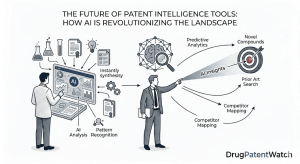
The patent is the fundamental unit of value in the pharmaceutical industry. A single compound patent on a blockbuster drug can represent $5 billion to $15 billion in net present value, making its defense, extension, and eventual challenge the central financial contest of the biopharmaceutical business. For decades, the intelligence infrastructure that informs those contests ran on Boolean keyword queries, spreadsheet exports, and the institutional memory of senior patent counsel. That infrastructure is now being rebuilt around artificial intelligence.
This report covers the full scope of that rebuild. The pharmaceutical context introduces layers of complexity that general IP analysis ignores: Hatch-Waxman Paragraph IV challenges, Orange Book and Purple Book listing strategy, the 12-year biologic exclusivity window under the BPCIA, evergreening tactics from polymorph patents to method-of-use claims, Patent Term Extension calculations under 35 U.S.C. § 156, and the Inter Partes Review (IPR) gauntlet at the Patent Trial and Appeal Board (PTAB). Each of these requires a category of analytical depth that AI is only now capable of providing at scale.
The core technology stack, NLP-driven semantic search, machine learning for predictive analytics, and generative AI for claim drafting and document synthesis, is examined not in the abstract but through its application to pharma-specific workflows. The report includes detailed technology roadmaps for biologics IP fortification and small molecule evergreening, case studies on the patent strategies of Merck (Keytruda/pembrolizumab), Novo Nordisk (semaglutide), and AbbVie (adalimumab/Humira), and a structured vendor comparison of platforms relevant to pharmaceutical IP teams.
Central Argument: AI does not replace the patent attorney, the IP strategist, or the drug development team. It removes the computational ceiling that has always constrained how much data those professionals can work with. Organizations that deploy these tools rigorously, with clear protocols for hallucination checking, data provenance verification, and human expert oversight, will generate better patents, survive more PTAB petitions, and make more accurate LOE forecasts than those that do not.
Part I: The Strategic Stakes of Pharmaceutical Patent Intelligence
Chapter 1: Why Drug Patent Data Is Different
1.1 The Orange Book, Purple Book, and the Economics of Exclusivity
Pharmaceutical patent intelligence occupies a distinct tier of operational consequence compared to most other industries. In consumer electronics or software, a patent loss is painful but rarely existential. In pharma, the expiration or invalidation of a single compound patent can cut a company’s revenue by 30 to 80 percent within 18 months of generic market entry. That dynamic concentrates analytical attention on patent data in ways that have no real equivalent elsewhere in corporate law.
The U.S. regulatory framework amplifies this concentration through two linked mechanisms: the Orange Book (formally, the FDA’s Approved Drug Products with Therapeutic Equivalence Evaluations) for small molecule drugs approved under an NDA, and the Purple Book for biologics approved under a BLA. Sponsors of approved drugs must list all patents that claim the drug substance, drug product, or a method of using the drug for an approved indication. The listings are not voluntary in any practical sense: a company that fails to list a relevant patent forfeits its right to trigger the 30-month automatic stay that follows a Paragraph IV certification under Hatch-Waxman.
The 30-month stay is the central piece of negotiating leverage in the branded-generic relationship. When a generic applicant files an ANDA with a Paragraph IV certification asserting that a listed Orange Book patent is invalid, unenforceable, or not infringed, the branded company has 45 days to file an infringement suit. Filing that suit triggers the stay, which blocks FDA from granting final approval of the ANDA for 30 months, or until a court decides the case. Given that a blockbuster drug might generate $15 million per day in U.S. sales, a 30-month stay, even one that ultimately does not survive litigation, is worth several billion dollars in protected revenue.
The Purple Book operates under different but equally consequential rules, governed by the BPCIA of 2010. Rather than a single 30-month stay, the BPCIA establishes a ‘patent dance,’ a phased disclosure and negotiation process between the reference product sponsor and the biosimilar applicant that governs which patents enter the first wave of litigation. The 12-year reference product exclusivity period under the BPCIA means that biosimilar applicants cannot file a BLA with FDA until 4 years after the reference product’s approval, and FDA cannot grant approval until 12 years have passed. This exclusivity is entirely separate from, and cumulative with, any patent protection.
1.2 IP Valuation as a Core Balance Sheet Asset
For any pharma or biotech company above a certain commercial threshold, the patent portfolio is the dominant intangible asset on the balance sheet. Under U.S. GAAP and IFRS, these assets are typically carried at amortized cost, which almost always understates their market value. A drug patent that cost $2 million to prosecute and is carried at $1.2 million after amortization may represent $8 billion in risk-adjusted NPV if the underlying compound is a PD-1 inhibitor in a large oncology indication.
AI-powered valuation tools address the book-versus-market gap by processing inputs at a scale that fundamentally changes the economics of the exercise. A platform that can simultaneously analyze the forward citation trajectory of every patent in a portfolio, map each patent’s claim scope against the current competitive landscape, model IPR petition success rates for each patent family based on analogous PTAB decisions, and compute the probability-weighted LOE date for each asset, provides a live picture of portfolio value that a traditional review process provides only as a static snapshot, at a cost of several months and significant professional fees.
1.3 The Revenue-at-Risk Framework
Revenue-at-risk (RAR) is the most direct way to translate patent intelligence into financial language. For each product in a branded company’s portfolio, RAR is the cumulative net revenue that would be lost if the compound patent, or the cluster of patents protecting market exclusivity, were invalidated or successfully challenged at the earliest possible date.
Calculating RAR requires four inputs: the product’s projected revenue trajectory, the probability of each relevant patent surviving challenge, the expected timing of generic or biosimilar market entry under different patent scenarios, and the expected revenue erosion curve given the number of competitive entrants. Small molecule generics typically drive 80 to 90 percent price erosion within 12 months of market entry; biosimilars have historically been slower, depending on interchangeability designation.
Key Takeaways: Part IThe Orange Book and Purple Book are strategic instruments that determine whether a branded company can trigger the 30-month stay protecting billions in annual revenue. AI tools that automate real-time monitoring of ANDA filings and Paragraph IV certifications give IP and commercial teams the response time they need within the 45-day notice period. Buy-side analysts modeling large-cap pharma should require an AI-assisted LOE schedule that accounts for IPR petition risk and biosimilar interchangeability timelines, not just nominal patent expiration dates. The divergence between nominal expiration and probable exclusivity period can be three to seven years for a well-constructed patent thicket, or negative two years for a portfolio genuinely vulnerable to inter partes review.
Part II: The Pre-AI Infrastructure and Its Structural Limitations
Chapter 2: The Cost of Legacy Patent Search in Pharmaceutical Development
2.1 From Index Cards to Boolean Databases
The evolution of pharmaceutical patent search follows the same arc as patent search generally, from parchment rolls to print indexes to digital databases, but the scale and stakes differ sharply. A chemical compound search that might retrieve 50 results in a general technology field can return 10,000 or more in a crowded small molecule space like kinase inhibitors or GPCR modulators. The Markush structures that define the chemical scope of pharmaceutical patents add a further layer of complexity: a single Markush claim may cover billions of possible chemical structures, and determining whether a novel candidate compound falls within the scope of an existing claim requires chemical structure analysis that pure text search cannot perform.
By the mid-2010s, the volume of filings from Chinese applicants alone, particularly from companies like Hengrui, HUTCHMED, and university-affiliated entities filing on generic API variants, created a search burden that the keyword-Boolean methodology could not adequately address within rational time and cost constraints.
2.2 The Billion-Dollar False Negative
The single most financially consequential failure mode in pharmaceutical patent intelligence is the false negative: missing a piece of prior art that, if found during the application stage, would have prompted narrower or differently structured claims, or missing an in-force patent that a new product infringes. When Merck’s VIOXX was withdrawn in 2004, IP-related litigation costs exceeded $5 billion. The pattern of costly discovery failures is well established in pharmaceutical IP.
A more structurally relevant example is the compound patent situation for adalimumab. AbbVie built a portfolio of more than 132 patents covering not just the antibody sequence but also formulations, manufacturing processes, delivery devices, and dosing methods. Biosimilar applicants who conducted FTO analyses early in their development programs and missed formulation or device patents in the secondary thicket faced expensive surprises when AbbVie asserted those patents in BPCIA litigation. The financial damage from an incomplete FTO search in a biologic program can run into hundreds of millions of dollars in delayed market entry.
2.3 The Language Barrier in Global Generic Manufacturing
Chinese CNIPA filings have grown dramatically since 2015, and Chinese generic drug manufacturers often file patents on API synthesis routes, polymorph forms, and intermediates that directly affect the FTO landscape for drug substances they supply to regulated markets. A U.S.-based FTO analysis that does not include translated CNIPA filings can miss Chinese process patents relevant to whether an API supplier’s manufacturing route is commercially clear in export markets.
Korean, Japanese, and Indian filings present similar challenges in specific therapeutic areas. India’s Patents Act Section 3(d) restricts evergreening of known substances, and understanding Indian patent prosecution history for a compound often requires analysis of documents not available in English. AI tools with multilingual neural machine translation and cross-lingual semantic search provide access to this prior art corpus that keyword search cannot replicate.
Part III: The AI Toolkit Applied to Pharmaceutical Patent Intelligence
Chapter 3: Semantic Search and the NLP Layer in Pharma
3.1 How Semantic Models Interpret Patent Language for Chemical Entities
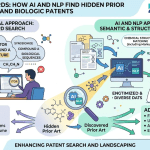
Semantic search translates text into high-dimensional numerical vectors, positioning documents in a mathematical space where conceptual proximity corresponds to vector proximity. In pharmaceutical patent analysis, the problem is more complex because chemical entities have multiple valid representations: systematic IUPAC names, common names, trade names, CAS registry numbers, SMILES strings, InChI keys, and Markush structural descriptions. A compound may be referenced differently in the claims, the specification, the prior art, and the commercial literature.
Advanced AI platforms trained specifically on pharmaceutical patent corpora address this by combining NLP-based semantic search with chemical structure search. Structure-based search operates on SMILES or InChI representations, computing chemical similarity scores, with a Tanimoto coefficient threshold typically set at 0.85 or higher for close analogue searches. The most powerful platforms integrate both modalities: a researcher can submit a chemical structure and a natural language description of the intended biological activity, and the system retrieves patents relevant on either dimension, ranked by a combined relevance score.
This dual-modality search is particularly important for FTO analysis of new chemical entities (NCEs). A novel kinase inhibitor at the IND stage may be structurally distinct from any known compound but fall within the scope of a broad Markush claim in an existing patent filed 15 years ago. A text-only semantic search will not find that Markush claim unless the patent’s specification describes the NCE’s specific scaffold type. Structure-based search, applied to the Markush cluster, will find it.
3.2 Cross-Lingual Prior Art: CNIPA and the API Manufacturer Problem
CNIPA received approximately 1.58 million patent applications in 2023, a substantial portion in chemistry and pharmaceutical technology. The filing behavior of Chinese generic API manufacturers creates a specific FTO risk: a manufacturer might file a process patent on a synthetic route for a widely used API and then license that route exclusively to certain customers. A generic applicant manufacturing through an infringing route because their FTO analysis did not cover CNIPA filings faces potential infringement exposure, even for a compound whose compound patent expired years ago.
Modern semantic search platforms with cross-lingual capabilities apply transformer-based multilingual models, such as those derived from multilingual BERT or XLM-RoBERTa architectures, that map Chinese-language patent text and English-language query text into a shared vector space. WIPO Translate, covering 11 patent-specific language pairs including Chinese-English, provides a complementary resource for full-document translation of retrieved filings. A comprehensive FTO analysis today requires AI-enabled multilingual search as a baseline, not an optional enhancement.
Chapter 4: Machine Learning for Predictive Patent Analytics
4.1 Predicting IPR Institution Rates and PTAB Outcomes
PTAB processed 1,737 IPR petitions in fiscal year 2024. Institution rates have varied between 56 and 67 percent over the past five years, depending on the art unit and the petitioner. For pharmaceutical patent holders, understanding which of their Orange Book-listed patents are most likely to face IPR petition and to be invalidated at the merits stage is a core risk management function.
Machine learning models trained on the full corpus of PTAB decisions provide probabilistic estimates of both institution and final written decision outcomes. Input features include the technology classification of the challenged patent, the claim breadth assessed using NLP-based claim scope metrics, the prosecution history (number of office actions, claim amendments, and restriction requirements), the identity and IPR track record of the petitioner, the assigned PTAB judge panel, and the prior art references cited by the petitioner. Research from the Carnegie Mellon University Center for AI and Patent Analysis has demonstrated that such models can achieve out-of-sample predictive accuracy in the 70 to 75 percent range for institution decisions.
For generic drug companies and biosimilar developers, the same models serve an offensive function: they help identify which patents in a competitor’s Orange Book or Purple Book listings are most cost-effective to challenge. Filing an IPR petition costs $30,000 to $100,000 in professional fees and $23,000 in PTAB fees. A company that can estimate with reasonable confidence that a given petition has a 70 percent probability of institution and a 60 percent probability of an invalidity finding will make better filing decisions than one relying solely on attorney judgment.
4.2 Paragraph IV Filing Pattern Analysis
Paragraph IV certification filings follow predictable patterns that machine learning can describe and forecast. Generic companies tend to file when a product’s trailing-12-month U.S. revenues exceed approximately $150 million to $200 million, when the lead compound patent expires within a window that makes development investment rational (generally within 8 years), and when the legal team assesses a viable Paragraph IV position based on prosecution history, prior art landscape, and existing litigation precedent.
ML models trained on historical ANDA filing data, Orange Book listings, and IMS/IQVIA revenue data can predict which branded drugs are most likely to face Paragraph IV certifications in the next 12 to 24 months. These models have direct commercial applications for branded companies (allowing them to reinforce patent thickets proactively), for generic companies (helping prioritize development programs), and for investors (providing a forward-looking signal on LOE timing more accurate than simple Orange Book expiration date analysis).
4.3 LOE Curve Modeling and Revenue Erosion Prediction
Loss of exclusivity (LOE) modeling is arguably the highest-stakes application of ML in pharmaceutical IP analytics. The LOE curve describes how branded revenue falls after generic or biosimilar market entry, and its shape varies substantially depending on therapeutic area, the number of entrants, whether any entrant achieves interchangeability designation, and the pricing behavior of the branded company.
For small molecule drugs, the historical data is extensive. The Hatch-Waxman system has operated since 1984, and revenue erosion patterns for Paragraph IV launches are well characterized. For biologics, the LOE modeling problem is harder because the biosimilar market is less mature and adoption dynamics differ from small molecule generics. Biosimilar market share uptake has been slower than many analysts projected, partly because of pharmacy benefit manager contracting behavior, partly because of the absence of interchangeability designations for most biosimilars until recently, and partly because of aggressive contracting and rebate strategies by reference product sponsors.
Investment Strategy: Parts III-IVBuy-side and sell-side analysts covering pharmaceutical companies should integrate AI-assisted patent surveillance at the product level as a routine input to the earnings model. For each product above a materiality threshold, the model should incorporate an AI-derived patent risk score, an ML-based estimate of the probability of Paragraph IV challenge within 24 months, a probability-weighted LOE date accounting for litigation outcomes, and a biosimilar market penetration curve derived from comparable transaction analysis. PTAB outcome prediction and LOE curve modeling represent the two most financially consequential AI applications in pharmaceutical patent analytics.
Part IV: AI Across the Pharmaceutical Patent Lifecycle
Chapter 5: Prior Art and Freedom-to-Operate in Drug Development
5.1 FTO for Biologics: The BPCIA Patent Thicket
Freedom-to-operate analysis for a biosimilar development program is structurally more complex than for a small molecule generic. A biologic drug may be protected by overlapping patent families covering distinct aspects: the amino acid sequence of the therapeutic protein, the nucleic acid sequences encoding it, the host cell lines and culture conditions used to manufacture it, the purification and formulation processes, the delivery device, the dosing regimens, and the patient support protocols.
The leading example is AbbVie’s adalimumab (Humira), which, at the peak of its patent thicket, was protected by more than 132 patents covering all of these categories. When the compound patent and primary antibody sequence patents expired in 2016, AbbVie’s secondary thicket remained largely intact, and the company successfully concluded settlement agreements with most biosimilar applicants that delayed U.S. market entry until January 2023. The financial impact of that delay ran into tens of billions of dollars across the industry. AI tools applied to this problem provide a structured patent thicket analysis that would take weeks of manual work, mapping every layer and assessing the litigation risk of each cluster.
5.2 Small Molecule FTO: Polymorph, Formulation, and Metabolite Gaps
For small molecule generic drug development under Hatch-Waxman, the FTO analysis must extend well beyond the compound patent. Pharmaceutical companies have developed a repertoire of secondary patent strategies that, taken together, can extend effective market exclusivity for years beyond the core compound patent expiration.
Polymorph patents cover specific crystalline forms of an API. Since different crystalline forms may have different bioavailability profiles, and since an ANDA applicant must match the reference listed drug’s specifications, a generic company whose synthesis process naturally produces a patented polymorph faces infringement risk even if the compound patent expired years ago. Formulation patents cover specific excipient compositions, release profiles, or particle size distributions. Metabolite patents cover pharmacologically active metabolites of the parent compound. Salt and ester patents cover specific pharmaceutical salt forms. Method-of-use (MOU) patents cover specific dosing schedules, patient selection criteria, or combination therapy regimens. A comprehensive AI-assisted FTO search must systematically retrieve and assess patents in each of these categories, integrating semantic search, chemical structure search, and ML-based claim scope analysis.
Chapter 6: Drafting Pharmaceutical Patent Claims with Generative AI
6.1 The Markush Claim Problem and Why General LLMs Fail
The Markush structure is the defining drafting challenge of pharmaceutical patent prosecution. A Markush claim defines a genus of chemical compounds by specifying a core scaffold with variable substituents drawn from defined lists. A well-crafted Markush claim can cover millions or billions of possible individual compounds with a single claim, providing the broad genus coverage that protects the innovator’s investment in a therapeutic class.
General-purpose large language models struggle with Markush claim generation for several reasons. They lack the chemical knowledge needed to ensure substituent groups are chemically reasonable and consistent with the synthetic examples in the specification. They cannot independently verify that the proposed Markush genus does not overlap with an existing patent, because that requires integration with a chemical structure search engine. And they do not understand the prosecution history considerations that constrain claim scope in continuation and divisional applications. Pharmaceutical-specific AI drafting tools address these limitations through domain-specialized training and database integration, but they do not eliminate the need for a qualified chemical patent attorney to review and refine the output.
6.2 Method-of-Use Claims, § 101 Eligibility, and the AI Drafting Risk
Method-of-use claims present a distinct AI drafting challenge because they operate at the intersection of patent law and clinical medicine. An MOU claim covering a method of treating a specific disease with a specific drug is generally patent-eligible. But MOU claims that recite natural phenomena, such as administering a drug to a patient with an elevated biomarker level, can face § 101 subject matter eligibility challenges under the Mayo/Alice framework if the natural phenomenon is considered the claim’s central element.
Generative AI tools trained on approved pharmaceutical patent claims will produce MOU claims that look formally correct but may embed § 101 eligibility risks that require an attorney with specific experience in Mayo/Alice jurisprudence to identify. The EPO equivalent problem involves Article 53(c) of the EPC, which does not permit patents claiming methods for treatment of the human body. A tool generating U.S.-format method-of-use claims without automatically adapting them to Swiss-type or purpose-limited product claim formats for European prosecution will produce claims that are facially defective in Europe. This is a specific instance of the broader generative AI evaluation gap documented in academic literature.
Chapter 7: Evergreening Technology Roadmaps
7.1 The Small Molecule Evergreening Playbook
Evergreening is the systematic use of secondary patents to extend effective commercial exclusivity beyond the expiration of the primary compound patent. It is commercially rational, legally permissible subject to applicable constraints, and one of the most studied phenomena in pharmaceutical IP strategy.
The compound patent, typically filed at or before the IND stage, provides the broadest protection and anchors the Orange Book listing. Patent Term Extension under 35 U.S.C. § 156 can extend the patent term by up to five years to compensate for regulatory review time, with the total patent term including the extension capped at 14 years from the date of regulatory approval. An additional six months of pediatric exclusivity, available when the sponsor voluntarily conducts pediatric studies at FDA’s request, attaches to any Orange Book-listed patent that has not yet expired and stacks on top of PTE.
After the compound patent, the roadmap branches into parallel tracks. Polymorph patents are typically filed when the drug development program identifies the optimal crystalline form during Phase I or II. Formulation patents follow the clinical program, often tied to Phase II or III data supporting an extended-release formulation developed to improve tolerability. Device patents become relevant for subcutaneously administered drugs or inhaled products. The most durable strategy is the continuation patent program, in which the original application is kept alive through a series of continuation and continuation-in-part applications that introduce new claims as clinical data accumulates. A company running aggressive continuations can maintain an active prosecution docket for 15 to 20 years after the original filing date, periodically issuing new patents with claims covering the product as it is actually sold, each eligible for Orange Book listing.
7.2 The Biologics IP Fortification Roadmap
The biologics IP fortification roadmap shares structural features with the small molecule playbook but differs in several important respects. The 12-year BPCIA exclusivity period provides a floor of protection with no small molecule equivalent, giving biologic sponsors time to build a comprehensive secondary patent portfolio without the same time pressure.
The primary biologics patent is typically a sequence patent covering the amino acid sequence of the therapeutic protein, often filed at or near the IND application. For monoclonal antibodies, primary patents typically cover the CDR sequences, the variable domain sequences, and the full-length heavy and light chain sequences. The secondary fortification strategy proceeds along four parallel tracks: manufacturing patents covering cell lines, culture media, and purification processes; formulation patents covering excipient composition, buffer system, and pH; device patents covering autoinjectors, prefilled syringes, or vial configurations; and method-of-use and dosing regimen patents covering treatment protocols established in clinical trials.
7.3 Case Study: Keytruda’s IP Moat
Keytruda (pembrolizumab), Merck’s PD-1 checkpoint inhibitor, is the world’s best-selling prescription drug by revenue, generating approximately $25 billion in 2024 sales. Pembrolizumab’s primary sequence patents are subject to the standard BPCIA 12-year exclusivity clock, which began running from Keytruda’s first BLA approval in 2014. However, Merck’s secondary patent portfolio extends well beyond the core sequence patents, covering specific PD-L1 combination therapies, specific patient populations identified by PD-L1 expression level or TMB score, specific dosing regimens including flat dosing versus weight-based approaches, and manufacturing process improvements.
An AI-assisted analysis of Merck’s pembrolizumab patent portfolio would begin by clustering all issued and pending patents by technical category, then assessing the validity and infringement risk of each cluster. The output reveals that pembrolizumab’s revenue in any given indication does not fall off a single cliff at 12 years post-approval. It faces differentiated LOE timing across indications, depending on which method-of-use patents cover each indication, potentially extending commercial protection in specific high-value oncology indications to 2030 or beyond. This is the kind of analysis that changes an LOE model, and an investment thesis.
7.4 Case Study: The Semaglutide Patent Thicket
Novo Nordisk’s semaglutide (Ozempic for type 2 diabetes, Wegovy for obesity) presents one of the most commercially consequential patent situations in current pharmaceutical analysis, with Wegovy alone generating approximately $5 billion in 2024 sales and projected to reach $14 billion or more by 2028. The core peptide patent, covering the modified GLP-1 analogue sequence, is set to expire in 2031-2032 depending on jurisdiction and any PTE adjustments.
Novo has filed continuation and divisional patents covering the specific C18 fatty acid linker structure that gives semaglutide its long half-life enabling once-weekly dosing, the specific solid-state form of the API used in the oral formulation (Rybelsus), the SNAC absorption enhancer used in oral semaglutide’s formulation, and the dosing escalation regimen for obesity treatment established in the STEP clinical trials. The oral formulation and absorption enhancer patents create a secondary thicket that extends protection in the oral weight loss indication beyond the core peptide patent. For investors, the semaglutide LOE question is not a binary 2031/2032 event. It is a multi-year, indication-specific unwinding of exclusivity that depends on which secondary patents biosimilar applicants choose to challenge and which they choose to design around.
7.5 Case Study: AbbVie’s Adalimumab Strategy and Its Aftermath
The AbbVie adalimumab (Humira) IP strategy produced the most studied patent thicket in pharmaceutical history. The core adalimumab antibody patents began expiring in the United States in 2016. AbbVie had by then listed more than 100 patents in the Purple Book and had active continuation prosecution in multiple families, ultimately producing a portfolio of more than 132 issued U.S. patents. The result was a series of BPCIA patent dance settlements with virtually every major biosimilar applicant, delaying U.S. market entry until January 2023, approximately seven years after the original compound patents expired.
European markets saw biosimilar entry in 2018, following successful EPO opposition proceedings that led to revocation of several key AbbVie patents. This demonstrates both the jurisdiction-specific character of patent protection and the importance of the EPO opposition procedure as a validity challenge mechanism. For pharmaceutical IP teams, the adalimumab case provides a specific lesson: the value of a secondary patent thicket depends entirely on its ability to survive validity challenge. A large portfolio of patents that cannot withstand IPR review or EPO opposition provides less protection than a smaller portfolio of patents with strong prosecution histories. AI tools that can simulate the IPR institution probability for each patent in a thicket, using ML models trained on PTAB outcomes, provide a more operationally useful assessment of portfolio strength than a simple patent count.
Chapter 8: Paragraph IV Litigation, IPR Strategy, and AI-Assisted Response
8.1 Managing the 45-Day Notice Window
When a branded drug company receives a Paragraph IV notice letter from an ANDA applicant, it has 45 days to file an infringement suit and trigger the 30-month automatic stay. Processing the notice letter, assessing the legal merit of the applicant’s invalidity and non-infringement arguments, and making a litigation filing decision within 45 days has historically required mobilizing a large team of patent attorneys on short notice.
AI tools can accelerate this process by automating the initial analysis of the Paragraph IV notice letter. NLP-based systems can parse the notice letter’s arguments, cross-reference the cited prior art against the prosecution history of the challenged patents, identify the specific claim elements at issue in the invalidity contentions, and generate a preliminary assessment of the strength of the applicant’s position within hours of receipt. This compresses the time required to get from raw information to a preliminary litigation recommendation, allowing more time for substantive strategy development within the 45-day window.
8.2 AI-Assisted Claim Chart Generation in ANDA and IPR Proceedings
For pharmaceutical companies on both sides of an IPR proceeding, the claim chart is the central document. In an IPR, the petitioner must demonstrate that the cited prior art discloses each element of the challenged claims (for anticipation) or that a person of ordinary skill in the art would have been motivated to combine prior art references to arrive at the claimed invention (for obviousness). Preparing detailed claim charts mapping claim elements to prior art disclosures is one of the most labor-intensive tasks in patent litigation, often requiring dozens of attorney-hours per patent per prior art reference.
AI platforms, particularly those combining NLP-based claim parsing with document analysis, can automate a significant portion of this work. Patlytics has reported that its claim chart generation tool can compress a task traditionally requiring tens of thousands of dollars and several weeks of attorney time into hours of machine-assisted work, requiring attorney review and refinement rather than construction from a blank page. The reliability of AI-generated claim charts in a pharmaceutical context requires validation against the specific technical nuances of the case, including expert review by a chemist or pharmacologist, not just an attorney, for cases turning on chemical structure, formulation composition, or clinical dosing parameters.
Part V: IP Valuation in the Age of AI-Assisted Analysis
Chapter 9: Quantitative Frameworks for Drug Patent Valuation
9.1 The Three Approaches Revisited for AI-Augmented Analysis
The three standard patent valuation approaches, income, market, and cost, each benefit from AI-augmented analysis in distinct ways. The income approach receives the greatest enhancement because it directly incorporates the probability-weighted LOE modeling that AI tools execute most effectively. It requires projecting the revenue and profit attributable to a patent-protected product over the remaining patent life, discounting those cash flows to present value, and applying a risk adjustment reflecting the probability of the patent surviving its remaining useful life without successful challenge.
In the pre-AI era, the risk adjustment was the weakest component of this analysis, typically estimated as a qualitative ‘low/medium/high’ risk judgment inconsistently applied across portfolios. AI-assisted analysis replaces this qualitative judgment with a quantitative probability estimate derived from ML models trained on historical patent litigation outcomes, specifically calibrated to the technical characteristics and prosecution history of the patent being valued.
9.2 AI-Driven Patent Scoring and Portfolio Pruning
For companies managing large patent portfolios, the annual maintenance cost of keeping all issued patents in force across relevant jurisdictions can reach $5 million to $20 million per year for a mid-size pharmaceutical company. AI-driven patent scoring systems assign a multi-dimensional value score to each patent based on forward citation count and citation velocity, patent family size and geographic coverage, claim breadth measured by NLP-based scope analysis, litigation history, and relevance to current commercial products measured by semantic similarity to product literature.
These scores provide a continuous, real-time signal about which patents are gaining or losing strategic value, enabling portfolio managers to make maintenance decisions based on current data rather than stale periodic assessments. For a company with a 500-patent portfolio paying average annuity costs of $2,000 per patent per year, eliminating 150 low-value patents through a rigorous AI-assisted pruning exercise saves $300,000 annually. More importantly, the resources freed from maintaining low-value patents can be redirected to aggressive prosecution of high-value continuation applications in the most commercially important areas.
Investment Strategy: Part VPharmaceutical patent valuation done well is an AI-assisted exercise, not a purely AI-driven one. For investors, the practical application is to weight patent quality scores and litigation risk estimates alongside nominal patent expiration dates when modeling branded company revenue durability. A patent with a low-quality score facing a pending IPR petition with a 70 percent estimated institution probability is not the same as a patent with a strong prosecution history and high forward citation count, even if both nominally expire on the same date.
Part VI: The Vendor Ecosystem for Pharmaceutical Patent Intelligence
Chapter 10: Platform Comparison and Selection Criteria
10.1 Evaluating Platforms Against Pharma-Specific Requirements
The general AI patent intelligence vendor landscape must be evaluated against pharmaceutical-specific selection criteria. Chemical structure search capability is essential: a platform that cannot search by SMILES or InChI structure is inadequate for FTO analysis of NCEs or biosimilars. Orange Book and Purple Book integration, including real-time monitoring of new patent listings and Paragraph IV certification filings, is a baseline requirement. PTAB outcome prediction calibrated to pharmaceutical patent art units (3700s for chemical and 1600s for biotech at the USPTO) provides more accurate estimates than models trained on all technology areas equally. And data security adequate for handling pre-filing invention disclosures is non-negotiable.
Platform Comparison for Pharmaceutical IP Teams
Platform
Chemical Structure Search
Orange Book / Purple Book
PTAB Prediction
Multilingual
Security
Best Fit
Patlytics
Partial
Yes, real-time monitoring
ML-assisted
Major languages
SOC 2
Full-cycle corporate IP / litigation
Solve Intelligence
Limited
Monitoring available
Limited
107 jurisdictions
Enterprise grade
Prosecution-focused law firms
IPRally
No
No
No
15+ languages
Enterprise grade
Deep tech landscape / prior art
PatSnap
Via integration
Via data feeds
Analytics module
100+ countries
SOC 2
R&D / competitive intelligence
Derwent Innovation
Via STN integration
Limited
Limited
Extensive (DWPI)
Enterprise grade
Enterprise IP departments
XLSCOUT
Partial (via module)
Limited
Limited
Major languages
Enterprise grade
Prosecution, validity search
PQAI (open source)
No
No
No
English-primary
N/A (open source)
Startups, individual inventors
Chapter 11: The Regulatory and Institutional Landscape
11.1 The 2023 Orange Book Final Rule
In November 2023, FDA finalized a rule amending Orange Book patent listing requirements in ways that directly affect evergreening strategies. The final rule addressed device patents specifically, clarifying that patents claiming drug delivery devices are listable in the Orange Book only if the device is approved as part of the NDA and is integral to the drug’s approved labeling. This was a direct response to adalimumab-type device patent strategies, following FTC amicus briefs in several ANDA litigations arguing that device patent listings were being used to improperly trigger 30-month stays for patents of marginal therapeutic relevance.
AI tools that monitor Orange Book listing compliance, flagging newly listed patents for review against the 2023 final rule criteria, provide branded companies with an early warning system for potential delisting petitions and give generic companies a systematic process for identifying listing errors that can be challenged.
11.2 The EPO Technical Effect Doctrine and Article 53(c)
The EPC does not permit patents claiming ‘methods for treatment of the human or animal body by surgery or therapy’ under Article 53(c). U.S.-format method-of-use claim strategies must therefore be translated into Swiss-type claims or purpose-limited product claims for European prosecution. An AI drafting tool that generates U.S.-format claims without automatically adapting them for EPC Article 53(c) compliance will produce claims that are facially defective for European filing.
The EPO Board of Appeal decision in T1193/23, explicitly rejecting the notion that an LLM could be considered the ‘person skilled in the art’ for the purpose of assessing inventive step, has practical significance for pharmaceutical patent prosecution. The Board’s decision preserves the human-expert benchmark, which is favorable for applicants prosecuting claims in complex fields where the relevant technical knowledge is distributed across multiple disciplines.
11.3 WIPO’s Evolving Position and PCT Implications
WIPO’s policy conversation on AI and IP has addressed the copyright implications of AI training data, the inventorship status of AI systems, and the global consistency of AI patentability standards. WIPO’s position on AI-assisted invention documentation will affect how PCT applications must describe the role of AI in the inventive process, with particular relevance for pharmaceutical companies that operate across dozens of jurisdictions. WIPO’s neural machine translation service, covering the main pharmaceutical patent filing languages, provides a practical resource for cross-lingual prior art searches available without a commercial platform subscription.
Part VII: Risks, Ethics, and the Human Expert
Chapter 12: AI Hallucinations and High-Stakes Legal Environment
12.1 The Pharma-Specific Hallucination Risk
AI hallucinations carry different consequence profiles in different professional contexts. In a customer service application, a hallucination is an annoyance. In pharmaceutical patent prosecution, it can result in incorrect prior art citations, fabricated references, or claim language that inadvertently concedes non-existent prior art. Two failure modes are specifically dangerous in pharmaceutical patent analysis.
The first is the fabricated citation: an LLM generating a prior art analysis may cite a scientific paper or patent that does not exist. A patent attorney who submits an information disclosure statement containing fabricated citations violates the duty of candor under 37 C.F.R. § 1.56, which can result in the patent being unenforceable for inequitable conduct. The USPTO’s guidance on AI use explicitly states that reliance on an AI tool does not constitute a ‘reasonable inquiry’ and that practitioners are fully responsible for the accuracy of all submissions. The second failure mode is the incorrect claim construction: an LLM generating a claim chart may map a claim element to a prior art reference that does not, in fact, disclose that element, leading a legal team to either overestimate or underestimate the prior art’s relevance.
The mitigation is a structured review protocol. Every AI-generated output that will appear in a document submitted to the USPTO, EPO, WIPO, or a federal court must be verified by a qualified professional against the original source documents. The AI produces the draft; the attorney checks the draft against the primary sources. This protocol preserves the efficiency gains of AI drafting while maintaining the accuracy standards that the legal context demands.
12.2 Confidentiality and the Invention Disclosure Problem
The pre-filing disclosure risk is the most significant data security issue for pharmaceutical AI tool users. An invention disclosure document for an NCE that has not yet been filed as a patent application is the most commercially sensitive document a pharmaceutical company generates. If that document is submitted to a cloud-based AI tool and processed in a way that makes it accessible to other users or incorporates it into a shared training corpus, the consequences could include premature public disclosure (triggering the one-year grace period in the U.S. and destroying absolute novelty in most ex-U.S. jurisdictions), trade secret misappropriation, and, in the worst case, patent filing by a third party.
Most commercial AI patent tools deployed by enterprise customers use contractual provisions prohibiting the use of customer data for model training, supported by SOC 2 certification programs. Pharmaceutical IP teams using free or freemium AI tools, including general-purpose LLMs accessed through consumer interfaces, have no such contractual protection. The responsible protocol maintains a clear classification system for patent-related documents, with pre-filing invention disclosures restricted to AI tools that have been vetted for data segregation and that have executed appropriate non-disclosure agreements.
Chapter 13: Inventorship in the Age of AI-Assisted Drug Discovery
13.1 The Significant Contribution Standard
The most contested legal frontier in pharmaceutical patent law involves inventorship for compounds identified through AI-assisted drug discovery programs. Companies including Exscientia, Insilico Medicine, and Recursion Pharmaceuticals have built drug discovery platforms in which AI systems play a central role in identifying, prioritizing, or designing novel chemical structures. The USPTO’s guidance, following the Federal Circuit’s decisions in Thaler v. Vidal, establishes that only natural persons can be named as inventors. The relevant standard is whether a human made a ‘significant contribution’ to the conception of each claim.
The practical implication for pharmaceutical R&D organizations is that documentation of human decision-making at each stage of an AI-assisted drug discovery program is now a legal requirement as well as a scientific obligation. Electronic laboratory notebooks that record not just the data but also the reasoning behind human decisions to pursue, modify, or reject AI-generated structural candidates provide the evidentiary basis for inventorship claims. AI tools that generate audit trails of their outputs, and that clearly identify the human decisions that shaped those outputs, facilitate this documentation in a way that unstructured LLM interactions do not.
Part VIII: The 2025-2030 Technology Roadmap and Strategic Imperatives
Chapter 14: Emerging Capabilities and Strategic Recommendations
14.1 Multimodal AI and Agentic Systems
The next generation of pharmaceutical patent intelligence tools will extend AI capability into three areas that are currently partially developed or emerging. Multimodal chemical AI, which can natively process and reason about protein structures (PDB format), chemical structures (SMILES, InChI, and graphical depictions), 3D molecular models, and spectroscopic data alongside patent text, will enable prior art searches comprehensive across the full representation space of pharmaceutical innovation.
Agentic patent systems, in which AI is given a goal-level instruction rather than a single query, are beginning to emerge. A system instructed to ‘assess the FTO landscape for compound X in the top 20 pharmaceutical markets and identify the three highest-risk patent families, with a preliminary LOE model for each’ and then autonomously executes the search, analysis, claim mapping, jurisdictional research, and report generation, would compress a six-to-eight week consulting engagement into several hours. Personalized AI assistants that learn from an organization’s historical patent decisions, drafting conventions, and litigation outcomes will become a form of institutional memory that supplements and extends the knowledge of individual practitioners.
14.2 Strategic Recommendations for Pharmaceutical IP Teams
The 2025-2030 strategic priority for pharmaceutical IP departments is to build a live, AI-assisted link between the patent portfolio and the commercial forecast. Every major revenue product should have a patent risk dashboard, updated in real time, tracking the status of all Orange Book and Purple Book listings, flagging incoming Paragraph IV certifications and IPR petitions as they are filed, reporting on the progress of pending litigation, and maintaining a probability-weighted LOE model for each asset. This dashboard should be a standard input to the quarterly commercial planning process.
Pharmaceutical IP departments should also invest in building internal AI competency that does not depend on any single vendor platform. Teams that understand the underlying technology, that can evaluate a new platform’s chemical structure search capability, test its claim chart generation against known outcomes, and assess its data security infrastructure, will adapt to the changing vendor landscape better than teams that have outsourced their analytical capability entirely to a single tool.
14.3 Strategic Recommendations for R&D and Business Development
For pharmaceutical R&D and BD teams, AI patent intelligence tools should be integrated into the earliest stages of the innovation and deal evaluation process. A project team evaluating an external molecule for licensing or acquisition that spends six weeks waiting for outside counsel to produce an FTO opinion is making decisions with incomplete information. AI tools can produce a preliminary FTO landscape within hours, identifying the highest-risk patent families and the key validity questions, which the outside counsel’s formal opinion can then address in depth.
For BD teams evaluating external assets, AI-assisted patent due diligence should be a standard component of the pre-term sheet process. A pharmaceutical company that acquires an asset and then discovers, post-close, that the target’s patent portfolio contains significant LOE risk or infringement exposure not adequately flagged has failed in its diligence obligation. AI tools that rapidly map the target’s full patent landscape, identify IPR-vulnerable patents in Orange Book listings, and model the LOE timeline under different patent scenarios give BD teams the analytical foundation they need to negotiate appropriate representations, warranties, and indemnifications.
14.4 Strategic Recommendations for Institutional Investors
For buy-side and sell-side analysts covering pharmaceutical companies, AI patent intelligence tools are becoming a standard of professional practice. An analyst who models a large-cap pharma company’s revenue without incorporating systematic analysis of IPR petition risk, Orange Book listing vulnerability, and biosimilar interchangeability timelines will produce LOE estimates materially less accurate than those of analysts who do. The gap in analytical quality will show up in model accuracy and, eventually, in investment performance.
The recommended investment research workflow integrates AI-assisted patent surveillance at the product level as a routine input to the earnings model. For each product above a materiality threshold, the model should incorporate an AI-derived patent risk score, an ML-based estimate of the probability of Paragraph IV challenge within 24 months, a probability-weighted LOE date accounting for litigation outcomes, and a biosimilar market penetration curve derived from comps analysis. The cost of building or licensing this capability is a fraction of the research budget of any serious institutional investor with pharma exposure.
Final Key TakeawaysAI is not changing what pharmaceutical patent strategy is about. It is changing what is computationally achievable within the time and budget constraints that real organizations operate under. The goals, comprehensive FTO coverage, a defensible patent thicket, accurate LOE forecasting, optimal IPR strategy, have been constant for decades. The tools available before AI were inadequate to those goals at the scale the modern pharmaceutical business demands. AI addresses that inadequacy directly. The organizations that will benefit most are those that treat AI as a professional infrastructure investment, subject to governance, security protocols, and competency development. The professionals who will be most valuable are those who understand what the tools can and cannot do and who apply the legal and scientific judgment that the tools cannot replicate.
Sources and Methodology
Sources include USPTO patent examination guidance (2024), EPO Boards of Appeal T1193/23, WIPO Technology Trends: AI, FDA Orange Book Final Rule (November 2023), Carnegie Mellon Center for AI and Patent Analysis research, PTAB historical outcome data (USPTO FY2024 Performance Report), and the academic literature on patent claim generation evaluation (arXiv:2505.11095). Platform capabilities reflect publicly available information as of Q1 2026. Financial figures are from company-reported data and consensus analyst estimates. This report does not constitute legal advice or investment advice.