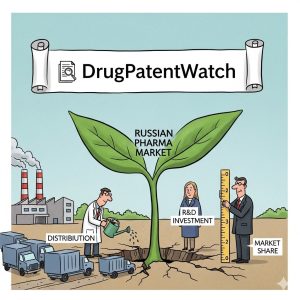
The Russian pharmaceutical industry presents a formidable paradox. On one hand, it is a vast, multi-trillion-rouble arena demonstrating robust growth in local currency, a market of immense and undeniable opportunity. On the other, it is a landscape profoundly shaped by geopolitical pressures, economic volatility, and an unwavering, state-led crusade for technological sovereignty. For any business professional, strategist, or investor looking to navigate this terrain, a surface-level understanding is not just insufficient; it’s dangerous.
Are you prepared to operate in a market where double-digit local growth can vanish in a puff of currency depreciation? Do you have a strategy for a landscape where the government is not just a regulator but an active, and often preferential, market participant?
This report is designed to be your definitive strategic guide. We will move beyond the headline numbers to dissect the market’s unique dynamics, tracing its evolution from a centrally planned Soviet apparatus to a complex model of modern state capitalism. We will analyze its bifurcated structure, explore the ambitious “Pharma 2030” strategy that dictates its future, map the competitive arena of domestic champions and embattled multinationals, and demystify the intricate web of regulations and intellectual property rights. Our goal is to provide the deep, actionable intelligence necessary to turn data into a decisive competitive advantage in one of the world’s most challenging and rewarding pharmaceutical markets.
The Foundations of a Modern Market: From Soviet Command to State Capitalism
To truly grasp the forces shaping Russia’s pharmaceutical industry today, one must look back—not just years, but decades. The current market is not a recent creation; it is a landscape deeply scarred and structured by its Soviet past and the tumultuous transition that followed. The government’s aggressive push for self-sufficiency is not merely an economic policy; it is the culmination of a century-long ideological cycle, swinging between absolute state control and chaotic market liberalization.
The Soviet Legacy (Pre-1991): A Foundation of State Control
Before the 1917 revolution, Russia’s pharmaceutical industry was nascent, heavily reliant on imports, particularly from Germany, and focused primarily on botanical remedies. The Bolsheviks’ rise to power triggered a radical transformation. In line with their ideology, they nationalized all private pharmacies and factories, consolidating them into a state-controlled trust. This single act established a foundational principle that has echoed through Russian history: pharmaceuticals are not just commercial goods but strategic state assets, integral to public health and national security.
The Soviet period, especially from 1945 to 1991, witnessed the creation of a domestic pharmaceutical industry from scratch, an immense undertaking driven by the logic of a command-and-control economy. The state was the sole architect, planner, and financier. This system had its achievements, establishing a network of state-owned research institutes like the famed Gamaleya Institute and ensuring a basic supply of essential medicines across the vast Soviet Union.
However, the system was riddled with inherent flaws. Central planning led to chronic inefficiencies, frequent shortages of some drugs and gluts of others, and a notorious disconnect between scientific research and industrial production. Quality control was often poor, and the lack of market competition stifled true innovation.1 The industry lurched forward, but it was far from healthy, plagued by logistical nightmares and dilapidated factories. This Soviet-era experience cemented a “security-first” mindset in the national consciousness, a belief that the state is the ultimate guarantor of public health. This perspective is the key to understanding the motivations behind modern policies like “Pharma 2030,” which prioritize national control over pure market efficiency.
The “Shock Therapy” Era (1990s): A Trauma of Dependency
The collapse of the Soviet Union in 1991 plunged the state-run pharmaceutical system into chaos, leading to widespread drug shortages. The new government’s response was “shock therapy”: rapid privatization and the wholesale liberalization of the market. This had an immediate, positive effect on supply. Foreign pharmaceutical companies, which had been kept at arm’s length for decades, rushed into the vacuum.
The result was a dramatic and near-total shift in the market’s composition. By the late 1990s, foreign imports accounted for as much as 75-80% of the market in value terms. While this solved the immediate problem of empty pharmacy shelves, it created a new and, in the eyes of many policymakers, more dangerous set of challenges. Domestic Active Pharmaceutical Ingredient (API) production, unable to compete with more efficient producers in India and China, collapsed, falling by a staggering 80% between 1991 and 1999. Access to medicine was no longer limited by state-managed supply but by a patient’s ability to pay market prices—a significant hurdle in an era of deep economic turmoil.
This period created a “national trauma” of dependency that directly fuels the protectionist and nationalist fervor of today’s state strategies. The policymakers who came of age during this era witnessed the near-total collapse of their domestic industry. This experience is the primary psychological driver behind the current aggressive push for self-sufficiency. “Pharma 2030” is not just an economic plan; it is a direct and forceful reaction to the perceived failures and national humiliation of the 1990s.
Market Analysis: A Tale of Two Currencies
The Russian pharmaceutical market in 2024 is a complex, multi-trillion-rouble entity defined by a stark and strategically critical divergence: robust growth in its local currency, the rouble, which is almost entirely negated by currency devaluation when viewed through the lens of international currencies. For any foreign company operating in Russia, understanding this dichotomy is the first step toward building a viable business strategy.
Market Size and Dichotomous Growth
In 2024, the total value of the Russian pharmaceutical market reached an impressive 2.85 trillion roubles, marking a solid 10% increase over 2023.1 This growth trajectory is expected to continue, with some forecasts predicting the market could reach 3.2 trillion roubles in the near term and a value of $40 billion by 2027.1
However, this robust local-currency performance tells only half the story. When viewed in hard currency, the picture changes dramatically. In US dollar terms, the market remained completely flat in 2024, holding steady at $30.9 billion, the same as in 2023. In euros, the market actually saw a slight contraction of -0.5% to 28.4 billion euros.
This divergence is a critical strategic consideration. It demonstrates that the market’s expansion is being driven significantly by local factors, including a high drug inflation rate of 7.8% in 2024, while being simultaneously offset by the devaluation of the rouble. For multinational corporations (MNCs) that do not have localized production, this creates a phenomenon of “phantom growth.” Revenue growth reported in roubles is being entirely erased by currency depreciation when those profits are repatriated. This reality transforms the strategic discussion about localization from a matter of political compliance into one of absolute financial necessity. Local production, with its local cost base, becomes a natural and essential hedge against currency risk.
Table 1: The Russian Pharmaceutical Market’s Dichotomy (2023-2024)
Metric
2023 Value
2024 Value
YoY Growth (%)
Total Market Value (RUB)
2.6 trillion
2.85 trillion
+10.0%
Total Market Value (USD)
$30.9 billion
$30.9 billion
0.0%
Total Market Value (EUR)
28.5 billion
28.4 billion
-0.5%
Commercial Segment (RUB)
1.437 trillion
1.635 trillion
+13.8%
Drug Inflation Rate
–
7.8%
–
Source: 1
Segmentation Deep Dive
The Russian market is clearly bifurcated into two distinct segments: a large and dynamic commercial retail sector and a politically significant state procurement sector.
The Commercial Segment: Retail and E-commerce
This is the larger and more vibrant part of the market, encompassing sales through a vast network of over 50,000 pharmacy chains and a rapidly growing e-commerce channel. In 2024, the commercial market was worth 1.635 trillion roubles, surging by 13.8%. This growth was primarily fueled by inflation and a return to typical “seasonal” purchasing patterns, with prescription drug consumption remaining stable and over-the-counter (OTC) sales spiking during cold and flu season.
Prescription drugs have traditionally dominated this segment, representing 63.3% of sales in 2019. Within this category, generics are king, constituting a massive 68.4% of prescription sales by volume, reflecting both government incentives and consumer price sensitivity.
The e-commerce sub-segment is particularly noteworthy. In 2024, it accounted for 283 billion roubles, or 14% of the total pharmacy market. The online service Apteka.ru commands a dominant 32% share of this digital space, highlighting the importance of a robust online strategy for reaching Russian consumers.
The State Procurement Segment
The public sector, which includes hospital purchasing and subsidized drug provision programs, is the second major pillar of the market. Its share, however, has been shrinking, declining from a peak of 42% in 2021 to just 33% by the end of 2024. In 2023, total state purchases of drugs decreased by 7% to 864.3 billion roubles, partly due to the winding down of large-scale COVID-19-related procurement.
A critical feature of this segment is the profound lack of competition. A staggering 86.4% of contracts for vital and essential medicines are concluded with a single supplier. This trend, combined with the shrinking overall size of the state segment, reveals a market being deliberately consolidated around a handful of state-preferred domestic champions. This is not a random market fluctuation; it is the tangible result of protectionist policies designed to channel state funds to companies aligned with the government’s strategic goals, effectively squeezing out foreign competitors who cannot meet stringent localization requirements.
Therapeutic Area Analysis and Top-Selling Products
The epidemiological profile of Russia drives market demand. The most prevalent diseases are cardiovascular diseases, cancer, and HIV, creating sustained demand for associated pharmaceutical products. Globally, the key therapy areas driving growth are oncology and immunology, a trend that is also reflected in Russia’s innovation pipeline.6
An analysis of the best-selling drugs provides a clear snapshot of where commercial value lies. In 2024, the market was dominated by high-value cardiovascular medicines, particularly anticoagulants.
Table 2: Top 10 Best-Selling Drugs in Russia (2024)
Rank
Brand Name
Company
2024 Sales (billion RUB)
YoY Growth (%)
1
Xarelto
Bayer
18.08
+22%
2
Elikvis
Pfizer
18.02
+29%
3
Nurofen
Reckitt Benckiser
10.86
+14%
4
Edarbi
Takeda
10.76
N/A
5
Detralex
Servier
10.44
N/A
6
Heptral
Abbott
9.62
N/A
7
Pentalgin
Pharmstandard (Russia)
9.58
+11%
8
Teraflu
GSK
9.39
N/A
9
Forxiga
AstraZeneca
9.27
N/A
10
Mexidol
Pharmasoft (Russia)
8.63
+10%
*Source: *
The dominance of foreign-developed anticoagulants Xarelto and Elikvis underscores the continued reliance on imported innovation for high-value therapies. However, the strong performance of two Russian-developed drugs, the analgesic Pentalgin and the antioxidant Mexidol, demonstrates that domestic players can successfully compete and achieve blockbuster status in the commercial market.
The State’s Grand Strategy: Deconstructing “Pharma 2030”
To operate successfully in Russia, one must understand that the government’s industrial policy is not a background factor; it is the single most powerful force shaping the market’s future. The “Pharma 2030” strategy is the blueprint for this transformation, a comprehensive and ambitious plan to forge a technologically sovereign and globally competitive domestic pharmaceutical industry.
From “Pharma 2020” to “Pharma 2030”: The Evolution of a National Priority
The current strategy is built on the foundation of its predecessor, “Pharma 2020.” Launched over a decade ago, Pharma 2020 was the government’s first major post-Soviet effort to reverse the industry’s decline. It set aggressive targets, aiming to increase the share of domestic production to 75% of all medicine sold in Russia by 2020, with a specific goal of manufacturing 90% of all medications on the country’s Vital and Essential Drug List (EDL) locally.5
While these ambitious targets were not fully met, the strategy succeeded in attracting significant investment and kickstarting the localization trend. The Russian Association of International Pharmaceutical Manufacturers (AIMP) estimated that foreign companies alone pumped as much as 1 trillion roubles (approximately $17 billion) into various localization projects over the past decade.
“Pharma 2030” was officially approved by the government as the next evolutionary step. Its stated purpose is to ensure citizens have access to high-quality medicines and, crucially, to establish complete technological independence from foreign producers. It represents a doubling-down on the principle of import substitution and national security.
Core Objectives and Internal Debates
The headline goals of Pharma 2030 are striking. The strategy aims to double domestic medicine production to almost 1.4 trillion roubles by 2030 and to increase the share of Russian-made drugs in the market to nearly 70% in value terms.
However, a closer look at various official documents and expert commentary reveals an internal debate over the strategy’s true ambition. Some versions of the plan cite a more modest goal of increasing the domestic share to just 43% in monetary terms by 2030. This discrepancy is not merely a numerical rounding error; it reflects a fundamental strategic crossroads for the entire Russian industry.
Industry leaders like Andrey Ivashchenko, a key figure at the ChemRar High Tech Center, have publicly criticized the 43% target as “outdated,” arguing that it “preserves the generic scenario” and fails to drive true innovation. He and others advocate for the more ambitious 70% target, which would necessitate a massive shift towards developing and producing high-value, original domestic drugs.
This conflict reveals that “Pharma 2030” is not a monolithic plan but an active battleground between two competing visions for the industry’s future: one that sees Russia as a low-cost “generic factory” focused on import substitution, and another that envisions it as a high-value “innovation hub” capable of creating original blockbusters. The outcome of this debate will determine the nature of opportunities for foreign firms. A “generic factory” model will prioritize price and protectionism, while an “innovation hub” model will require technology transfer, R&D partnerships, and a more robust intellectual property environment.
Table 3: Deconstructing Pharma 2030: Key Goals and Ambitions
Metric
Baseline Target (“Generic Factory” Vision)
Ambitious Target (“Innovation Hub” Vision)
Domestic Share of Market (Value)
Increase from 36% to 43% by 2030
Increase to 70% by 2030
Domestic Production Volume
Double to 1.4 trillion RUB by 2030
Exceed 1.4 trillion RUB with higher-value products
API Production
Localize production for Vital & Essential Drugs
Full-cycle production for all strategically important drugs
Innovation Focus
Import substitution of existing generics and biosimilars
At least 30% of domestic share to be innovative drugs
Export Volume
Double current export levels
Become a significant global exporter of innovative drugs
The Levers of Power: How the Strategy is Being Implemented
The government is not relying on market forces alone to achieve its goals. It is deploying a powerful toolkit of regulatory and financial levers to steer the industry in its desired direction.
Procurement Preferences: The most potent tool is the “Third Wheel” rule (also known as “Three’s a Crowd”). In any state tender, if at least two bids are submitted from companies within the Eurasian Economic Union (EAEU), all bids from foreign manufacturers are automatically disqualified. This creates an enormous, protected market for localized producers.
Financial Incentives and State Investment: The government provides a range of financial carrots, including direct state investment, subsidies, tax incentives, and grants to companies that invest in local manufacturing and R&D.
The All-Important Push for API Localization: Policymakers recognize that the industry’s 95% dependency on imported APIs is its Achilles’ heel. A core component of Pharma 2030 is to stimulate domestic production of raw materials and pharmaceutical substances, reducing reliance on supply chains from India and China.12 This includes supporting small-scale chemical manufacturers to build up the necessary foundational capacity.
The Competitive Arena: Titans, Champions, and Gatekeepers
The Russian pharmaceutical market is a dynamic battleground where established global giants, rising domestic champions, and powerful local distributors vie for dominance. Understanding the key players and their strategic positioning is essential for navigating this complex ecosystem.
The Domestic Champions
Fueled by state support and a protected procurement market, a new class of powerful domestic pharmaceutical companies has emerged. They are no longer mere local players but strategic national assets.
Pharmstandard: As the largest domestic manufacturer by sales, Pharmstandard is a diversified giant. Founded in 2003, it boasts a vast portfolio of over 400 pharmaceutical products and a massive annual production capacity of 1.7 billion packages, covering major therapeutic areas like cardiology, diabetes, neurology, and oncology.1
BIOCAD: Positioned as Russia’s premier biotech innovator, BIOCAD’s strategy is centered on scientific excellence and R&D. The company has a sharp focus on high-value, complex therapies in oncology (treating lymphomas, lung, and breast cancers), autoimmune diseases (psoriasis, rheumatoid arthritis), and developing biosimilars for global distribution.1
R-Pharm: R-Pharm’s strategy is characterized by its close alignment with government needs, making it a dominant force in the state procurement market. The company specializes in strategically important areas like oncology, autoimmune diseases, and antiviral therapies.1
Geropharm: A prime example of a successful niche player, Geropharm has carved out a dominant position in specific therapeutic areas, particularly endocrinology (insulin for diabetes), neurology, and ophthalmology.
The Multinational Dilemma
Despite the rise of domestic firms, multinational corporations continue to dominate the Russian market in value terms, a testament to their innovative, high-priced portfolios.
“The localization of pharmaceutical production, the measures of state support for Russian drug manufacturers, and the support of the scientific community – all this has helped build drug safety significantly in our country. We have learned how to deal with challenges and set ourselves ambitious goals for further development, both in serving the domestic market and in developing exports of Russian pharmaceuticals. The industry has great potential that is ready to be tapped.”
— Viktor Fisenko, First Deputy Minister of Health of the Russian Federation
However, their position is increasingly precarious. Geopolitical pressures have forced a strategic rethink. Many major players, including Novartis, Bayer, and Pfizer, have ceased all new capital investment projects in Russia and suspended non-essential activities like advertising and promotional events.
For those who remain committed to the market, the strategic imperative has shifted from importation to localization. This is now the primary path to maintaining market access and mitigating the risks of being locked out by protectionist procurement rules. MNCs are pursuing this through two main models:
Building and Owning: Some companies, like Takeda with its $96 million plant, have made the full commitment of building their own local manufacturing facilities.
Partnering and Outsourcing: A more common and flexible model involves partnering with local players for contract manufacturing. Pfizer, for instance, has a strategic partnership with ChemRar to develop and commercialize innovative compounds, while Sanofi uses a hybrid model of operating its own plant and engaging in local partnerships.1
This creates a profound strategic bind for MNCs. They must localize to secure short-term market access, but in doing so, they risk transferring the technology and know-how that will strengthen their future domestic competitors. Every localized production line and every technology transfer agreement empowers a potential rival, contributing to the very industrial base the government intends to use to displace them.
Table 4: The Competitive Hierarchy: Top 10 Players in Russia (2023)
Rank
Company
Country of Origin
2023 Sales (billion RUB)
Market Share (%)
1
Bayer
Germany
77.1
3.5%
2
Novartis
Switzerland
76.4
3.4%
3
Sanofi
France
67.7
3.0%
4
AstraZeneca
UK/Sweden
65.7
2.9%
5
F. Hoffmann-La Roche
Switzerland
61.9
2.8%
6
Johnson & Johnson
USA
58.0
2.6%
7
Stada
Germany
56.1
2.5%
8
Abbott
USA
46.6
2.1%
9
OTCPharm
Russia
45.6
2.0%
10
Servier
France
45.0 (Est.)
2.0% (Est.)
*Source: *
The Power Brokers: Russia’s Distribution Oligopoly
No analysis of the Russian market is complete without understanding the immense power wielded by its pharmaceutical distributors. The distribution landscape is highly consolidated, effectively an oligopoly. In the first quarter of 2025, the top 10 distributors controlled a staggering 80.4% of the entire market.
The “big three”—Protek, Pulse, and Katren—are the undisputed titans of this sector, together holding over 36% of the market in 2023. These companies are the essential gatekeepers, the critical link between hundreds of manufacturers and the vast, fragmented network of over 50,000 pharmacies and thousands of hospitals across Russia’s eleven time zones.
This consolidated power gives them immense leverage over manufacturers, both foreign and domestic. They influence pricing through wholesale mark-ups, control physical access to pharmacy shelves, and play a crucial role in promotional activities. For any pharmaceutical company, a successful Russia strategy is impossible without forging strong, strategic partnerships with these powerful distributors.
Navigating the Regulatory Gauntlet: From National Approval to EAEU Harmonization
The path to bringing a new drug to the Russian market is a complex journey through an evolving regulatory landscape. What was once a purely national system is now being integrated into a broader, harmonized framework under the Eurasian Economic Union (EAEU), adding new layers of complexity for market entrants.
The Russian National System
The foundational regulatory framework in Russia is governed by Federal Law No. 61, “On the Circulation of Medicines”. The primary regulatory bodies are:
The Ministry of Health (Minzdrav): The main governing body responsible for the overall drug registration procedure and issuing final marketing authorizations.22
Roszdravnadzor: The Federal Service for Surveillance in Healthcare, which oversees inspections (including GMP compliance), pharmacovigilance, and post-market surveillance.
Under the national procedure, the official timeline for a standard drug registration is 160 business days. However, this clock stops during periods when the applicant is responding to queries from experts, a process which can be allotted up to 90 business days. This, combined with time needed for sample submission and potential clinical trials, means the actual registration period often extends to around 12 months. A critical prerequisite for any application is a valid Russian Good Manufacturing Practice (GMP) certificate, issued by the Ministry of Industry and Trade for each specific production site and drug form.
The Eurasian Economic Union (EAEU) Centralized Procedure
Since January 1, 2022, the regulatory landscape has fundamentally shifted. The EAEU centralized registration procedure has become mandatory for all new drug applications. This system aims to create a single, common pharmaceutical market across its five member states: Russia, Belarus, Kazakhstan, Armenia, and Kyrgyzstan.
The key advantage of this system is that a single successful application results in a marketing authorization that is valid across all five countries, streamlining market access across the region. The process is designed to align with international standards, requiring a dossier in the ICH-compliant Common Technical Document (CTD) format.
However, there are crucial local requirements. Module 1 of the CTD, which contains administrative and labeling information, must be submitted entirely in Russian for all member states. Furthermore, foreign manufacturers must appoint a local representative based in at least one of the EAEU countries to manage the application and act as the primary point of contact with regulatory authorities.
This shift to a mandatory EAEU system is more than a technical simplification; it is a tool of geopolitical and regulatory influence. By creating a unified bloc, the framework effectively expands Russia’s regulatory sphere of influence. It harmonizes standards, but it harmonizes them to a Russian-centric model, where the Russian language is paramount and inspections by Roszdravnadzor are widely recognized. This creates a larger, more cohesive market that is more difficult for outsiders to penetrate without significant, dedicated resources tailored to the specific requirements of the EAEU.
Intellectual Property: The High-Stakes Game of Patents and Exclusivity
For innovative pharmaceutical companies, intellectual property (IP) is the bedrock of their business model. In Russia, the IP landscape is a high-stakes arena where patents and data exclusivity can be powerful tools, but their enforcement is subject to the crosscurrents of state policy, competition law, and an evolving judicial environment. Understanding these nuances is critical for developing a robust lifecycle management strategy.
Patent Protection and Term Extensions (PTEs)
Russia provides a standard patent term of 20 years from the application filing date. Recognizing that a significant portion of this term is consumed by lengthy clinical trials and regulatory reviews, the legal framework allows for a Patent Term Extension (PTE). This mechanism can extend the patent for a medicinal product by up to five years, compensating the patent holder for the time lost in securing marketing authorization.25
The legal basis for PTEs is found in Article 1362 of the Civil Code of the Russian Federation. It is crucial to note that this extension is not an automatic right. The patentee must file a formal application with the Russian Patent and Trademark Office (Rospatent) within a strict six-month deadline from either the date of the first marketing authorization or the patent grant, whichever is later.
Since 2015, Rospatent has adopted a significantly stricter policy on granting PTEs. Previously, it was often possible to extend the full, broad scope of a patent’s claims. Now, Rospatent issues a supplementary patent with considerably more restricted claims, narrowed to precisely cover only the specific medicinal product for which marketing authorization has been granted. This makes meticulous claim drafting and a deep understanding of Rospatent’s examination practices essential for success.
Table 5: IP Showdown: Russian PTE vs. EU SPC
Feature
Russia (PTE)
European Union (SPC)
Governing Law
Article 1362(2) of the Civil Code
Regulation (EC) No 469/2009
Eligible Patents
Primarily patents with “product claims” (compound, composition)
Patents covering the active ingredient, combinations, or product
Maximum Extension
5 years
5 years
Pediatric Extension
No
Additional 6 months available
Filing Deadline
6 months from marketing authorization or patent grant (whichever is later)
6 months from marketing authorization or patent grant (whichever is later)
Type of Extension
Supplementary patent with restricted claims
Supplementary Protection Certificate (SPC)
*Source: *
The Data Exclusivity Conundrum
Data exclusivity is a separate but equally important form of IP protection. It prevents generic manufacturers from relying on the originator’s preclinical and clinical trial data to gain their own marketing approval for a set period. In Russia, the law provides for a six-year term of data exclusivity for reference medicines. This is split into a four-year period of registration exclusivity, during which a generic company cannot even file an application, followed by a two-year period of market exclusivity.
The strength of this regime has been a subject of intense legal debate. The landmark Novartis v. Biointegrator case in 2015-2016 delivered a major blow to innovators. The court ruled that data exclusivity protection applied only to undisclosed, non-public information. Since most clinical trial data is published in scientific journals, the court found that generic firms could legitimately use this public information, effectively gutting the protection.27
For years, this precedent left data exclusivity as a right that existed on paper but had little practical force. However, a stunning reversal occurred in a 2023 case involving the Russian manufacturer Pharmnovations. In a precedent-setting decision, the Court of Appeal ordered the Ministry of Health to annul a competitor’s generic drug registration precisely because the application was submitted within the four-year registration exclusivity period.
These conflicting rulings reveal an evolving legal landscape. The state appears to be attempting to rebalance the scales. The 2016 decision aligned with the goal of promoting low-cost generics. The 2023 decision suggests a recognition that completely eroding IP protections could deter MNCs from bringing new, innovative drugs to Russia at all, which would undermine the long-term goal of modernizing the healthcare system. This creates a new strategic calculus: data exclusivity in Russia is no longer a dead letter but a contested and evolving right that may now be worth defending vigorously in court.
Case Study in Focus: The Osimertinib Dispute
A recent and highly illustrative conflict is the legal battle surrounding AstraZeneca’s blockbuster cancer drug, osimertinib (Tagrisso). The case pits AstraZeneca against the Russian generic manufacturer Axelpharm and brings a powerful new player onto the IP battlefield: the Federal Antimonopoly Service (FAS).
After Axelpharm registered a generic version of the patented drug, AstraZeneca didn’t just file a standard patent infringement lawsuit. In a key strategic move, it also filed a complaint with the FAS, alleging that Axelpharm’s at-risk launch constituted “unfair competition.” The FAS investigated and, in November 2024, ruled in favor of AstraZeneca, imposing a substantial fine on Axelpharm and ordering it to cease selling the generic.
However, the saga continued. Axelpharm challenged the FAS’s decision in court. In May 2025, the Arbitration Court of Moscow overturned the FAS ruling, stating that the antimonopoly service had failed to provide sufficient evidence of patent infringement, had not properly established that the companies were in direct competition, and had incorrectly applied the law.
This case demonstrates that patent disputes in Russia are not purely legal matters fought only in patent courts. They are increasingly intertwined with competition law and state industrial policy, creating a multi-front battleground for IP holders. The FAS’s willingness to intervene underscores its growing influence in the pharmaceutical sector. While its decision was ultimately reversed in this instance, the case sets a precedent for how IP disputes can be framed and fought. A comprehensive IP strategy in Russia must now consider engaging not just the courts but also regulatory and administrative bodies like the FAS.
Leveraging IP for Competitive Intelligence with DrugPatentWatch
The Russian patent landscape, with over 15,000 active pharmaceutical patents—more than half of which are held by non-Russian entities—is a treasure trove of competitive intelligence. For companies looking to gain a strategic edge, platforms that aggregate and analyze this data are indispensable.
Services like DrugPatentWatch provide the tools to move beyond simply tracking patent expiry dates and into the realm of true strategic analysis. By leveraging comprehensive patent databases, companies can:
Anticipate Generic Entry: Monitor the patent filings of domestic Russian players. Are they patenting new formulations or crystalline forms of your blockbuster drug? This is a clear signal of their intent to launch a generic competitor the moment your primary patent expires.
Decode Competitor R&D Strategy: Analyze the types of patents your competitors are filing. A flurry of patents on novel compounds in a specific therapeutic area reveals their core R&D focus, while a focus on second-medical-use patents might indicate a lifecycle management or repositioning strategy.
Map State Priorities and Judicial Trends: Track patent litigation outcomes, like the osimertinib case. Which domestic companies are aggressively challenging MNC patents? And more importantly, how are the courts and bodies like the FAS ruling? These outcomes provide a valuable proxy for understanding government priorities and the evolving interpretation of IP law in Russia.
In a market as opaque and dynamic as Russia’s, turning public patent data into private competitive intelligence is not just an advantage; it’s a necessity for survival and growth.
The Innovation Ecosystem: Ambition vs. Reality
A central pillar of the “Pharma 2030” strategy is the transition from an industry based on imitation to one driven by genuine innovation. The government’s ambition is to create a powerful domestic R&D sector capable of producing original, globally competitive drugs. However, a critical assessment of the current innovation ecosystem reveals a significant gap between this ambition and the on-the-ground reality.
R&D Investment and Output
The fundamental challenge for Russian pharmaceutical innovation is a chronic lack of investment. Russia’s spending on basic research, as a share of its GDP, is 3 to 11 times lower than that of Western countries. This underfunding has predictable and stark consequences for the R&D pipeline.
The output of this system is telling. Original Russian drugs account for less than 2% of the domestic market in value terms, and the success rate for drugs emerging from preclinical trials is less than 3%. The overwhelming focus of the domestic industry remains on replication, not invention. An analysis of clinical trials conducted by Russian companies reveals that about half are aimed at registering generics and biosimilars (i.e., proving bioequivalence). Only 25% of their original drug trials are focused on treating critical illnesses like cancer or cardiovascular disease. This stands in stark contrast to the U.S., where 99% of company-sponsored research is dedicated to original drugs.
This data points to an innovation ecosystem trapped in a “generic mindset.” The entire infrastructure, from research funding to regulatory pathways and commercial incentives, is overwhelmingly geared towards the faster, less risky, and more immediately profitable path of producing copies. While “Pharma 2030” calls for innovation, the commercial environment heavily favors imitation.
The Clinical Trial Environment
Russia has a well-established infrastructure for conducting clinical trials, with over 2,100 active trials currently underway. Leading clinical research organizations like IQVIA have a long and successful history in the country, having conducted over 500 trials involving thousands of patients since 1997, with a quality record proven by inspections from the FDA and EMA.
However, the ecosystem is critically dependent on foreign sponsorship. Of the 2,100 active trials, over 1,300 are sponsored by companies from the U.S. and other Western nations. Russia provides the patients and the clinical sites, but the innovation, the novel compounds, and the funding for the majority of cutting-edge trials have historically come from abroad. With many MNCs now halting new investments and suspending the initiation of new trials in Russia, this vital pipeline of innovation is at significant risk.1
Furthermore, there are persistent concerns about the quality and regulatory compliance of some domestically sponsored trials. One exploratory study published in a peer-reviewed journal found that a substantial fraction of clinical trials initiated by domestic sponsors and reported in Russian medical journals had failed to obtain the mandatory prior evaluation and approval from the Ministry of Health. This raises questions about the scientific validity of the results and the protection of study participants.
This dual challenge—a heavy reliance on foreign sponsors for innovative trials and questions about the rigor of some domestic studies—poses a significant threat to the “Pharma 2030” innovation goals. If Russia cannot rapidly improve the quality, funding, and output of its own domestic clinical trial ecosystem, its ambition to create original drugs will likely fail, forcing it to remain in the “generic factory” model.
Future Outlook and Strategic Recommendations
As we look toward the end of the decade, the trajectory of the Russian pharmaceutical market is not predetermined. It will be shaped by the interplay of state policy, geopolitical forces, and the strategic choices made by both domestic and international companies. Navigating this future requires a clear-eyed assessment of potential scenarios and the development of resilient, adaptable strategies.
Scenarios for 2030
Two primary scenarios emerge for the Russian pharmaceutical market by 2030, reflecting the internal tensions within the “Pharma 2030” strategy.
Base-Case Scenario (The “Hybrid” Model): In this scenario, the market grows to a projected 4.5 trillion roubles. The government’s import substitution policy intensifies, and domestic champions capture a larger share of the generics and biosimilars market. However, Russia remains dependent on foreign innovation for the most advanced, high-tech therapies and on foreign supply chains for critical APIs. MNCs that have committed to deep localization—including local manufacturing and R&D partnerships—survive and thrive in high-value niches, coexisting with a strengthened domestic industry.
Downside Scenario (The “Fortress Russia” Model): Here, market growth is slower, reaching a projected 3.9 trillion roubles. A deepening of geopolitical tensions leads to a more aggressive exit of foreign firms and potentially direct sanctions on the pharmaceutical sector. The market shifts heavily towards cheaper, unbranded domestic generics to manage costs. Intellectual property protection weakens further as the government prioritizes access over innovation incentives, possibly through the expanded use of compulsory licensing. The market becomes highly insular and protectionist, with limited opportunities for foreign players.
Key Challenges on the Horizon
Regardless of which scenario unfolds, several fundamental challenges will define the operating environment.
API Dependency: The “Achilles’ heel” of the entire “Pharma 2030” strategy remains the industry’s staggering 95% reliance on imported APIs and raw materials. Building a full-cycle domestic API industry is a multi-year, multi-billion-dollar challenge. Any disruption to supply chains from China and India could cripple Russian domestic production.
Geopolitical Uncertainty: The ongoing conflict in Ukraine and the resulting sanctions create a volatile and unpredictable operating environment. The risk of further sanctions, logistical disruptions, and financial instability will remain a constant strategic consideration.
Brain Drain: The long-term success of Russia’s ambition to become an “innovation hub” depends on its scientific talent. The exodus of highly skilled scientists, researchers, and technical professionals following recent geopolitical events could cripple this goal, leaving the industry without the human capital needed to develop original drugs.
Strategic Recommendations for Industry Players
Success in the Russian pharmaceutical market requires a bespoke strategy that acknowledges its unique risks and opportunities. A one-size-fits-all emerging market approach is doomed to fail.
For Innovator MNCs:
Deep Localization is Non-Negotiable: Simple importation is a dying model. To secure market access, particularly in the state procurement segment, a tangible local presence is required. This means investing in local manufacturing, either directly or through trusted contract manufacturing partners.
Forge Strategic Alliances: Partner with well-connected domestic players who understand the political landscape and have established relationships with the government and key distributors.
Defend IP Aggressively: The IP environment is evolving. Do not assume protections are unenforceable. Be prepared to defend patents and data exclusivity rights through a multi-pronged strategy that engages not only the courts but also administrative bodies like the FAS.
Focus on the High Ground: Concentrate on complex biologics, gene therapies, and niche orphan drugs that are difficult to replicate locally. This maintains a value proposition that even a protectionist state cannot easily replace.
For Generic and Biosimilar Players:
Master the EAEU Framework: The Russian market is now the EAEU market. Success requires mastering the centralized regulatory process and its specific requirements.
Secure Your Supply Chain: Given the push for API localization within Russia, securing a reliable, long-term API supply from established partners in India, China, or other friendly nations is a critical competitive differentiator.
Build Distributor Relationships: In a market dominated by a few powerful distributors, getting your product to the pharmacy shelf is half the battle. Invest heavily in building strong commercial relationships with Protek, Pulse, Katren, and other key players.
For All Players:
Invest in Government Relations and Regulatory Monitoring: The rules of the game in Russia are dynamic and politically driven. A passive approach is not an option. It is essential to have on-the-ground intelligence and to actively engage with policymakers to understand and shape the evolving regulatory environment. In Russia, understanding the mindset behind the policy is just as important as understanding the policy itself.
Key Takeaways
A Market of Contradictions: The Russian pharmaceutical market shows strong 10% annual growth in local currency (roubles), but this is completely offset by currency devaluation, resulting in 0% growth in US dollars. This makes localization a financial necessity, not just a political one.
“Pharma 2030” is the Defining Force: The government’s “Pharma 2030” strategy is the single most important factor shaping the market. Its goal is to achieve technological sovereignty by doubling domestic production and increasing the local market share to nearly 70%, using powerful levers like preferential procurement rules.
Two Competing Futures: There is an internal debate within Russia about whether to become a low-cost “generic factory” focused on import substitution or a high-value “innovation hub” creating original drugs. The outcome will define the nature of future opportunities for foreign firms.
Localization is Non-Negotiable: For multinational companies, a strategy of simple importation is no longer viable. Maintaining market access, especially in the lucrative state sector, requires a significant local presence through owned manufacturing plants or partnerships with domestic players.
IP Rights are a Battlefield: Intellectual property protections like Patent Term Extensions and Data Exclusivity exist but are constantly being contested in the courts and by regulatory bodies. Recent court rulings show a complex and evolving landscape, suggesting that these rights are worth defending aggressively.
Domestic Champions are Rising: Fueled by state support, powerful domestic companies like Pharmstandard, BIOCAD, and R-Pharm are rapidly gaining market share and capabilities, shifting from being partners to becoming formidable competitors.
API Dependency is the Achilles’ Heel: The entire Russian domestic industry is critically vulnerable due to its 95% reliance on imported Active Pharmaceutical Ingredients (APIs), primarily from China and India. This remains the biggest obstacle to achieving true self-sufficiency.
Frequently Asked Questions (FAQ)
1. Is the Russian pharmaceutical market still a viable opportunity for Western companies given the geopolitical situation?
Yes, but the nature of the opportunity has fundamentally changed. The market remains large and is growing in local currency, with significant demand for innovative medicines. However, the strategy must shift from simple importation to deep localization. This involves local manufacturing, partnerships, and navigating a complex regulatory and political environment. Companies unwilling to make this commitment will find their market access increasingly restricted. The dilemma is that localization helps Russian industry become more competitive in the long run.
2. What is the single biggest mistake foreign companies make when entering or operating in the Russian market?
The biggest mistake is underestimating the role of the state and viewing Russia as a standard free-market economy. The Russian government is not just a regulator; it is an active participant that uses industrial policy, procurement preferences (like the “Third Wheel” rule), and financial incentives to shape the market towards its strategic goal of self-sufficiency. A successful strategy requires a deep understanding of these non-market forces and a proactive government relations approach.
3. How has the “Pharma 2030” strategy impacted the balance between innovative drugs and generics?
“Pharma 2030” has created a dual-track effect. On one hand, its emphasis on import substitution and cost-containment has massively boosted the production and market share of domestic generics and biosimilars. On the other hand, its stated ambition to create an “innovation hub” has led to increased state support for domestic R&D. However, the ecosystem is still heavily skewed towards generics. For now, Russia remains reliant on foreign companies for most breakthrough innovations, creating a continued, albeit challenging, market for high-value patented drugs.
4. What does the evolving case law on data exclusivity and patent challenges mean for IP strategy in Russia?
It means that IP strategy must be dynamic and assertive. The era of assuming IP rights were unenforceable after the 2016 Novartis decision is over. The 2023 Pharmnovations case on data exclusivity and the involvement of the Federal Antimonopoly Service (FAS) in the Osimertinib patent dispute show that Russian courts and administrative bodies are willing to protect IP rights, but they will be rigorously tested. Companies must be prepared to defend their IP on multiple fronts—in patent courts, before regulatory bodies, and against antitrust challenges.
5. Beyond localization, what is the most critical factor for long-term success in the Russian pharmaceutical market?
Building strong, trusted relationships with the powerful domestic distributors. The Russian distribution sector is a highly consolidated oligopoly, with companies like Protek, Pulse, and Katren acting as essential gatekeepers to the entire market. Without a robust distribution strategy and strong partnerships with these key players, even a fully localized product with regulatory approval will struggle to achieve significant market penetration and commercial success.