Every pharmaceutical company files patents to protect its investment. Every one of those patents is a public document. And yet, the majority of R&D and business intelligence teams at mid-tier drug companies still rely on informal patent searches, scattered alerts from outside counsel, and the occasional scan of a competitor’s annual report to understand what the other side is doing.
That gap is not a knowledge problem. It is a workflow problem.
The data exists. The U.S. Patent and Trademark Office (USPTO), the European Patent Office (EPO), and specialized platforms like DrugPatentWatch publish granular, searchable, and continuously updated patent data that covers every drug in commercial development or approved sale. When you know how to read that data, you can reconstruct a competitor’s formulation strategy from their patent claims, predict when their key drug will lose exclusivity, identify which therapeutic areas they are deprioritizing, and spot licensing opportunities before the rest of the market does.
This article explains exactly how to do that. It covers how pharmaceutical patent databases are structured, how to decode patent claims for formulation intelligence, how to build an R&D surveillance workflow from scratch, and how to use platforms like DrugPatentWatch to track patent expirations, generic entry timelines, and competitive portfolio movements. The examples are drawn from real drugs and real patent filings. The techniques are ones that sophisticated business development, IP strategy, and competitive intelligence teams use today.
If you are a director of strategy, a BD analyst, a formulation scientist watching a competitor, or a generic drug manufacturer planning your next ANDA filing, this is a practical field guide.
Why Drug Patents Contain More Intelligence Than Most Analysts Realize
The standard view of a pharmaceutical patent is defensive: a company files it to keep competitors out. That view is correct but incomplete. Because patents require public disclosure in exchange for exclusivity rights, they also function as mandatory intelligence reports on the technology they describe.
Under U.S. law, specifically 35 U.S.C. § 112, a patent must contain a written description sufficient to enable a person skilled in the art to make and use the invention. For a drug formulation patent, that means disclosing the active ingredient, often the excipients, the dosing rationale, and frequently the clinical reasoning behind the formulation choices. A patent for an extended-release tablet may disclose the polymer matrix system, the drug loading percentage, and the target dissolution profile. A biologics patent may describe the cell culture conditions, the purification process, and the glycosylation profile that defines the molecule’s therapeutic activity.
This disclosure requirement is why a well-read patent file is one of the most information-dense documents in the pharmaceutical industry. It reflects years of laboratory work, clinical hypothesis testing, and formulation science. The company that filed it had to show its hand.
That creates an asymmetry you can exploit. Your competitor cannot patent something without telling you, in considerable technical detail, what they built and how.
“Patent documents account for approximately 80% of the world’s technical information, and up to 30% of the research contained in patents never appears anywhere else.” – European Patent Office, Patent Information Services for Business [1]
That 30% figure is particularly important in pharmaceutical formulation work. Novel delivery systems, salt selection strategies, and co-crystal forms routinely appear in patent filings years before any peer-reviewed publication. If your competitive intelligence process depends primarily on journal articles and conference presentations, you are working with a systematically delayed picture of what your competitors are doing.
How a Drug Patent Database Is Actually Structured
Before you can use a patent database strategically, you need to understand what data it holds and how that data maps to the regulatory and commercial lifecycle of a drug.
The Core Data Layers
A pharmaceutical patent database typically integrates information from four distinct source systems.
The first source is the patent office itself. The USPTO, EPO, World Intellectual Property Organization (WIPO), and national patent offices publish full patent documents, including filing dates, priority claims, prosecution history, claims, drawings, and legal status updates. The raw text is available through public portals like Google Patents and the USPTO Patent Full-Text Database, but parsing this data at scale requires either specialized software or a platform that has already done the aggregation work.
The second source is the FDA’s Orange Book. Formally titled “Approved Drug Products with Therapeutic Equivalence Evaluations,” the Orange Book lists patents that brand-name drug manufacturers have declared as covering their approved products. These listings are legally significant: they trigger the 30-month stay that delays generic approval when a generic manufacturer files a Paragraph IV certification challenging an Orange Book-listed patent. As of 2024, the Orange Book contains tens of thousands of active patent listings across more than 3,000 products [2].
The third source is the FDA’s Purple Book, which covers biologics. The Purple Book lists reference product sponsors, their licensure dates, and exclusivity information for biologic drugs approved under the Public Health Service Act. Biosimilar applicants must navigate both the Purple Book data and a separate patent exchange process under the Biologics Price Competition and Innovation Act (BPCIA).
The fourth source is litigation data. When a generic or biosimilar manufacturer challenges a brand patent, the resulting litigation becomes public record. These cases, tracked in platforms like DrugPatentWatch, reveal which patents are most commercially significant and which claims have been found invalid or unenforceable by courts.
Platforms like DrugPatentWatch consolidate all four of these data streams and provide structured search, alerting, and analytical tools on top of them. Rather than manually checking the USPTO for patent status, the Orange Book for listings, and PACER for litigation records, an analyst can access a unified view of a drug’s entire patent position from one place.
Patent Term and Exclusivity: Not the Same Thing
A common source of confusion in pharmaceutical competitive intelligence is the difference between patent term and regulatory exclusivity. They run simultaneously but are governed by entirely different rules, and conflating them produces badly wrong forecasts.
Patent term under 35 U.S.C. § 154 runs 20 years from the earliest effective filing date. For a pharmaceutical product, the patent on the active compound may have been filed during early-stage research, potentially eight to twelve years before FDA approval. By the time the drug reaches market, the remaining patent life could be as short as eight years.
To compensate for the time lost to regulatory review, the Hatch-Waxman Act authorizes a Patent Term Extension (PTE) of up to five years, subject to a ceiling that the remaining patent term plus the extension cannot exceed 14 years from the date of FDA approval [3]. The Drug Price Competition and Patent Term Restoration Act of 1984 created this system precisely to preserve the commercial incentive to develop new drugs given lengthy FDA review timelines.
Regulatory exclusivity is separate from patent protection. A New Chemical Entity (NCE) receives five years of data exclusivity during which the FDA cannot accept an ANDA referencing the innovator’s data. New formulations of existing drugs, new indications, and new patient populations may receive three years. Orphan drug designation can provide seven years. Pediatric studies can add six months. Biologic drugs approved under the BPCIA receive twelve years of reference product exclusivity.
In practice, these periods overlap in complex ways. A drug might lose compound patent protection in year ten of its commercial life but retain three-year exclusivity for a new formulation approved in year nine. Tracking these overlapping timelines accurately, not just for your own portfolio but for competitors, is one of the core use cases of a purpose-built pharmaceutical patent database.
Reading a Pharmaceutical Patent Strategically
The patent document itself has a defined structure. Once you know what each section is actually telling you, you can extract formulation and R&D intelligence far more efficiently than a cover-to-cover read.
The Claims: Where the Legal Boundaries Are Drawn
The claims section is the only part of the patent that legally defines the scope of protection. Everything else in the document, the specification, the drawings, the examples, is interpretive context. The claims define what the patentee can exclude others from making, using, or selling.
For formulation intelligence purposes, the claims fall into two broad categories. Independent claims stand alone. They define the broadest scope the applicant believes they are entitled to. An independent claim for a controlled-release formulation might read: “A pharmaceutical composition comprising (a) between 10 and 40% by weight of a pharmaceutically active agent; (b) between 20 and 60% by weight of a hydrophilic polymer matrix; and (c) a pharmaceutically acceptable carrier.” That claim, if granted, blocks any formulation meeting all three elements, regardless of what other excipients are present.
Dependent claims narrow the independent claim by adding limitations. They typically reflect fallback positions: if the independent claim is invalidated, the dependent claim may survive. A series of dependent claims on a controlled-release formulation might progressively specify the polymer as hydroxypropyl methylcellulose (HPMC), then narrow the HPMC viscosity grade, then specify that the drug loading must be between 20 and 30%.
Reading this claim hierarchy tells you two things simultaneously. First, it tells you the broadest formulation space the patentee is trying to protect. Second, the dependent claims often reveal the specific technical solution they actually built and tested, because companies typically draft dependent claims that track their actual working formulation.
The Specification: The Laboratory Report
The specification is the section where the patentee explains the invention in detail. In pharmaceutical patents, the specification often includes the background of the invention (which identifies the problem the formulation is solving), the detailed description of preferred embodiments (which walks through the preferred formulation in technical detail), working examples (which describe actual experiments conducted during development), and comparative examples (which show why the invention outperforms prior art).
The working examples are often the highest-value section for a formulation scientist because they represent real laboratory data: specific ingredient ratios, processing conditions, and performance results. A patent for a novel salt form of a poorly soluble drug may include side-by-side bioavailability data comparing the new salt to the parent compound. That data, disclosed publicly in the patent, is a gift to any competitor analyzing the drug’s development history.
Priority Dates and What They Reveal
The priority date of a patent is typically earlier than its filing date. When a company files a PCT application or a U.S. application claiming the benefit of an earlier provisional application, the effective date for prior art purposes is the earliest application date in the priority chain.
For competitive intelligence, the gap between priority date and publication date (which is 18 months after filing for most applications) tells you how far ahead your competitor was working on a problem before you knew about it. A drug approved in 2020 with a compound patent priority date of 2005 means the competitor was working on this molecule fifteen years before it reached the market. Tracking priority dates across a competitor’s portfolio reveals the typical lag between their research activity and public disclosure, which in turn lets you calibrate how much of their current R&D pipeline is still invisible.
Continuation Patterns: Reading the R&D Roadmap
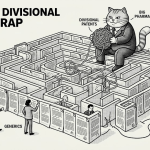
Patent families are groups of related patents that share a common priority claim. A brand-name drug company will typically file an initial application covering the compound, then file continuation applications covering specific formulations, manufacturing processes, methods of treatment, and new dosing regimens as the drug progresses through development and commercial life.
These continuation patterns are an R&D roadmap. When a company starts filing a new cluster of continuation applications focused on pediatric formulations, it signals a pediatric indication study is underway. When the continuation applications shift to methods of treatment claims specifying new patient subpopulations, it often indicates a label expansion is in progress. When a company files continuation applications covering new salt forms or polymorphs of a compound nearing patent expiration, it signals a next-generation compound strategy aimed at extending commercial exclusivity beyond the original compound patent.
A systematic review published in PLOS Medicine found that of the 100 best-selling drugs in the United States, 74% received at least one additional patent after their original approval, extending their market exclusivity beyond what the initial compound patent would have allowed [4]. Tracking these continuation filings in real time, using platforms like DrugPatentWatch, is how generic manufacturers spot the potential barriers they will need to design around or challenge.
Formulation Intelligence: What Competitor Patents Actually Tell You
The most actionable competitive intelligence in a pharmaceutical patent is formulation intelligence: concrete technical information about how a competitor built their dosage form, what delivery system they chose, and what manufacturing process they rely on.
Decomposing a Formulation Patent
A formulation patent for an oral solid dosage form will typically disclose some combination of the following elements: the active pharmaceutical ingredient (API) and its physical form (crystalline polymorph, amorphous, specific salt); the drug loading and particle size; the excipient system (binders, fillers, disintegrants, lubricants, coating agents); the functional polymer if it is a controlled-release product; the manufacturing process; and the in vitro performance specification.
Consider a concrete example: AstraZeneca’s extended-release formulation of quetiapine, sold as Seroquel XR. The key patent covering this formulation, U.S. Patent No. 6,855,344, describes a matrix tablet using a combination of HPMC polymers to achieve controlled release [5]. The claims specify a weight ratio of lower-viscosity to higher-viscosity HPMC that produces the target 12-hour release profile. A generic manufacturer designing around this patent faces a constrained problem: they need to achieve bioequivalence with the reference listed drug while using a different polymer combination or structure than the one claimed. The patent teaches them exactly what they cannot copy and, by implication, what technical territory they need to explore.
Salt and Polymorph Intelligence
The solid-state form of a drug compound is one of the most strategically important areas of pharmaceutical patent activity. Different salt forms of the same API can have dramatically different solubility, bioavailability, stability, and processability characteristics. Different polymorphs of the same compound can differ in dissolution rate, hygroscopicity, and compressibility.
When a company patents a specific salt or polymorph of a drug, the intelligence implications run in two directions. If you are trying to compete with the drug, the salt and polymorph patents define the physical form landscape you can and cannot occupy. If you are a formulation scientist at a competing branded company, a competitor’s polymorph patent filings tell you which physical forms they have already characterized, which shapes your own solid-state screening work. Courts have found that a generic manufacturer using a different polymorph of an API can still infringe a composition of matter claim if the claim is broad enough to cover the active compound regardless of its crystalline form. This was the central dispute in GlaxoSmithKline v. Teva Pharmaceuticals in the paroxetine litigation [6].
Delivery System Benchmarking
Drug delivery patents, covering systems like osmotic pumps, matrix tablets, multiparticulate systems, transdermal patches, and inhaled formulations, are particularly rich sources of technical intelligence because the delivery technology often defines the drug’s therapeutic and commercial profile more than the API itself.
The development of Concerta (methylphenidate HCl extended-release) illustrates this point. ALZA Corporation’s OROS (Osmotic Release Oral System) technology, covered by a family of patents including U.S. Patent No. 6,919,373, delivered methylphenidate in an ascending concentration pattern across the day, producing a duration of action that differentiated it from earlier extended-release competitors [7]. The delivery system was the product differentiation. Anyone reading ALZA’s patent filings in the late 1990s could see exactly what they were building and why: the specification explicitly argues that ascending drug delivery better mirrors the pharmacokinetic profile needed for ADHD symptom management throughout the school day.
That specification-level clinical reasoning is market intelligence, not just technical disclosure. It tells you how the company is positioning the product, what clinical claims they intend to make, and therefore which patient segments they are targeting.
Excipient Claims and Manufacturing Process Intelligence
Excipient claims carry important information for anyone trying to manufacture a competitive product. When a patent claims specific excipients by function rather than by name, it typically covers a broad range of commercially available materials. When it claims by specific chemical identity, it narrows the scope but also reveals the specific supplier relationship or material property the patentee found critical.
Lubricants are a common example. Magnesium stearate is the most widely used tablet lubricant, but its concentration dramatically affects dissolution. A patent claiming “0.3 to 0.6% by weight of magnesium stearate” tells a formulation scientist that the patentee found this range optimal. If you are developing a competitive product and need to choose your lubricant system, these claims constrain and inform your design simultaneously.
Manufacturing process claims, though technically directed to methods rather than products, also contain valuable intelligence. A hot melt extrusion (HME) patent reveals that the formulator was working with an amorphous solid dispersion approach, typically because the API has poor aqueous solubility. A patent claiming a specific spray-drying process with inlet temperature and outlet humidity ranges tells you about the material’s thermal sensitivity and the formulator’s approach to maintaining amorphous form stability during manufacture.
R&D Intelligence: Mapping a Competitor’s Pipeline from Patent Filings
Beyond individual drug analysis, a systematic review of a competitor’s patent portfolio over time reveals their R&D priorities, therapeutic area strategy, and technology platform investments.
Portfolio-Level Analysis
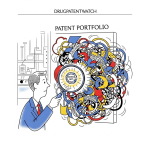
A portfolio-level patent analysis examines the aggregate filing activity of a company across all therapeutic areas and technology platforms over a defined period. The questions this analysis answers include: Which therapeutic areas is the company investing in? Which are they exiting? Are they building a formulation platform or focusing on new chemical entities? Are they licensing in technology?
To conduct this analysis, you pull all patents where the assignee is your target company, filter to a five-year window, and categorize by International Patent Classification (IPC) code and by drug mechanism of action where identifiable. A shift in IPC class distribution over time directly maps to a shift in R&D investment. The IPC system’s A61P codes cover therapeutic areas directly, making this analysis straightforward with the right database access.
Inventor Network Analysis
Patents list the inventors responsible for the technical work. Tracking inventor names across a company’s patent filings over time reveals the composition and movement of their R&D teams. When a group of inventors who previously filed exclusively in oncology begins filing in immunology, it suggests a research team has been redirected. When a key inventor stops appearing on filings, it may indicate they have left the company or moved to a different division.
Cross-company inventor analysis reveals partnership activity before any press release. When the same inventors appear on patents assigned to two different companies, a research collaboration is underway. This is one of the earliest signals of licensing or partnership activity available in public data. LinkedIn and academic publication records can supplement patent inventor analysis to build a more complete picture of research activity.
Citation Networks and Prior Art Mapping
When a patent examiner reviews a new application, they cite prior art they consider relevant to the claims. Together with applicant-cited references, these citation networks reveal the technical lineage of a field. For competitive intelligence, tracking which of your competitors’ patents are being cited as prior art in new applications tells you which of their technologies are influencing the direction of an entire field. High-citation patents are foundational.
If your competitor’s new patent application cites your own earlier patents as prior art, that is a signal they are working in a space adjacent to yours and are aware of your technology. DrugPatentWatch and similar platforms provide citation data as part of their patent intelligence suite, allowing analysts to build citation maps without manually reviewing individual USPTO records.
The Time Lag Between Patent Filing and Pipeline Disclosure
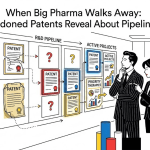
Pharmaceutical companies are not required to disclose their R&D pipeline until drugs reach the stage where clinical trial registration is required (Phase II in most jurisdictions). Patent filings, which happen years earlier, can reveal pipeline investments that are not yet disclosed through any other channel.
The typical timeline works as follows: a provisional patent application is filed when promising preclinical data emerges, usually one to three years into a drug discovery program. A full PCT or national-phase application follows within twelve months of the provisional. The application publishes eighteen months after its earliest priority date. By the time a drug appears in clinical trial registries and analyst reports, its patent filing is typically three to five years old.
This means patent filings are a leading indicator of pipeline activity, not a lagging one. A company that filed twenty PCT applications covering a specific kinase inhibitor chemistry in 2021 and 2022 is almost certainly running those compounds through IND-enabling studies now. This information, available through a systematic search of published patent applications, would not appear in any corporate pipeline disclosure until years later.
Using DrugPatentWatch for Systematic Competitive Intelligence
DrugPatentWatch is one of the most widely used platforms for pharmaceutical patent intelligence because it integrates the patent, Orange Book, litigation, and regulatory data streams described above into a structured, searchable format designed specifically for pharmaceutical professionals.
Patent Expiration Tracking and the Patent Cliff
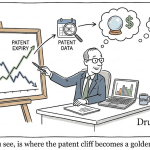
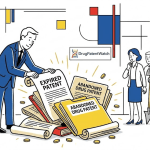
The patent cliff is the most commercially significant event in any drug’s commercial history. When the compound patent and major formulation patents on a branded drug expire, generic manufacturers can enter the market, typically driving prices down by 80 to 90% within the first year [8]. For the brand-name company, this represents a catastrophic revenue drop. For generic manufacturers, it represents the market entry opportunity they have been preparing for.
DrugPatentWatch tracks expiration dates for Orange Book-listed patents, with adjustments for PTEs, pediatric exclusivity extensions, and any other term modifications. For a generic company evaluating its ANDA pipeline, this data directly determines the commercial priority of each development project. A drug with $3 billion in annual U.S. sales and a primary patent expiring in eighteen months is a different priority than one expiring in eight years.
The expiration tracking function also covers NCE data exclusivity and other regulatory exclusivity periods, not just patents. This is important because even if a patent expires or is invalidated, data exclusivity may prevent ANDA or 505(b)(2) approval. DrugPatentWatch displays both patent and exclusivity end dates side by side, so analysts can identify the true first-possible generic entry date rather than relying on patent expiration alone.
Orange Book Analysis and Paragraph IV Activity
When a generic manufacturer files an ANDA with a Paragraph IV certification challenging an Orange Book-listed patent, the certification triggers the brand company’s opportunity to file suit within 45 days. If suit is filed, a 30-month stay delays FDA approval. This litigation dynamic is one of the most commercially significant events in pharmaceutical patent strategy, and tracking it requires access to both patent and FDA databases simultaneously.
DrugPatentWatch monitors Paragraph IV filings and associated litigation in real time. For a brand-name company’s competitive intelligence team, this data answers several questions immediately: Which of our patents are being challenged, and by whom? Has the challenger made a substantial validity argument or an infringement argument? Have multiple generics filed simultaneously, indicating a first-filer exclusivity race?
The case of AbbVie’s Humira (adalimumab) illustrates the commercial stakes. AbbVie maintained a portfolio of more than 130 patents covering Humira, spanning composition of matter, manufacturing processes, formulation, and methods of treatment [9]. This portfolio delayed biosimilar entry in the United States until 2023, nearly a decade after the European market was opened to biosimilar competition. Tracking this portfolio, patent by patent, was essential for any biosimilar manufacturer planning their regulatory strategy and commercial launch timeline.
Generic Entry Forecasting
Beyond tracking current patent status, the analytical value of a patent database lies in building forecasts of generic entry probability and timing across a portfolio of drugs.
A generic entry forecast answers this question: given all the patents currently listed in the Orange Book for a given drug, and accounting for patent expiration dates, any existing Paragraph IV challenges, litigation outcomes, and regulatory exclusivity periods, what is the earliest date at which an FDA-approved generic can reach the market? This calculation is not trivial. A single branded product may have a compound patent expiring in one year, a formulation patent expiring in three years, a method of use patent expiring in five years, and a pediatric exclusivity extension running for an additional six months beyond the compound patent.
Building these forecasts for an entire portfolio of targeted drugs, updated in real time as new patent filings and litigation results come in, is the systematic version of the analysis that most BD teams do episodically and manually. Structuring it as a recurring workflow using DrugPatentWatch’s monitoring tools produces a continuously current pipeline of competitive opportunities.
Monitoring Competitor Filing Activity
A systematic monitoring workflow uses DrugPatentWatch and direct USPTO feeds to watch specific companies’ patent filings in near real time. New applications publish at 18 months; assignments and continuations post within weeks of filing. Configuring alerts on a competitor’s assignee name, key inventors, and relevant technology class codes produces an ongoing stream of intelligence on their R&D activity.
A well-constructed monitoring system also tracks the company’s known research collaborators and licensees (because their partner may be filing on jointly developed technology), key inventors by name, and related IPC codes. A company active in one area of chemistry often files in adjacent areas before those areas appear in any public disclosure.
Case Studies in Patent-Driven Competitive Intelligence
Case Study 1: The Revlimid Patent Wall and Generic Strategy
Bristol-Myers Squibb’s lenalidomide (Revlimid) was one of the most extensively litigated pharmaceutical patent disputes of the 2010s and early 2020s. The base compound patent was set to expire in 2019, but Celgene (acquired by BMS in 2019) had built a wall of formulation, manufacturing, and REMS-related patents intended to delay generic entry.
Generic manufacturers including Natco Pharma, Alvogen, and Dr. Reddy’s Laboratories filed Paragraph IV certifications challenging this patent wall beginning around 2015. The litigation and subsequent settlements structured a staggered entry for authorized generics, with full open generic competition ultimately allowed starting in March 2022 [10].
What is instructive for competitive intelligence analysts is how much of this competitive landscape was readable from patent filings years before the litigation resolved. DrugPatentWatch and similar platforms showed the complete Orange Book listing for Revlimid, including each patent’s expiration date and the growing queue of Paragraph IV filers. Any analyst monitoring this data in 2017 or 2018 could see that a wave of generic entrants was structured to arrive starting in 2022, which was directly relevant to BMS’s acquisition calculus for Celgene (announced November 2018).
Case Study 2: Humira Biosimilar Intelligence Before the Launch Wave
The Humira biosimilar race was one of the most closely analyzed patent situations in pharmaceutical history. AbbVie’s 130-patent portfolio for adalimumab covered not just the antibody itself but its high-concentration formulation (160 mg/mL), the citrate-free formulation that reduced injection site pain, specific manufacturing cell lines, and purification processes.
Amgen, Samsung Bioepis, Sandoz, and others filed biosimilar applications with the FDA years before they could commercially launch, in part because the BPCIA’s patent dance process required exchanging information about manufacturing processes and then litigating resulting claims. The settlement agreements that ultimately defined the U.S. launch timeline (January 2023) were structured around specific formulation and manufacturing patents, not just the antibody composition patent.
For any company watching this space in 2018 or 2019, reading the patent landscape through a database like DrugPatentWatch revealed several things clearly. First, the citrate-free formulation patent (U.S. Patent No. 8,889,135, expiring in 2022) was critical because patients preferred the low-pain formulation; a biosimilar launching without that formulation would face a commercial disadvantage [11]. Second, the staggered expiration dates across the 130-patent portfolio meant that multiple formulation and manufacturing process barriers remained even after primary antibody patents expired.
Case Study 3: Small Molecule Next-Generation Strategies
One of the most commercially significant patent intelligence use cases involves tracking a brand company’s filings for next-generation compounds as its first-generation drug approaches patent expiration.
Bristol-Myers Squibb’s development of apixaban (Eliquis) provides a useful window into how compound and formulation patent strategies interact. The original compound patent for apixaban was filed in 2002, giving BMS and partner Pfizer a compound patent with a base expiration in 2022. During the intervening years, BMS filed continuation and related patents on specific formulation approaches, polymorphic forms, and methods of treatment [12]. For a generic manufacturer beginning ANDA planning in 2016, the relevant analysis was not just “when does the compound patent expire” but rather “which of the subsequent formulation and polymorph patents can we design around, which are likely vulnerable to invalidity challenge, and what is the realistic first-possible launch date given all of them?”
Building a Patent Intelligence Workflow That Actually Gets Used
The failure mode for pharmaceutical competitive intelligence is not a lack of data. It is a lack of a structured workflow that turns data into decisions. A systematic patent intelligence workflow has four components: monitoring, analysis, distribution, and decision integration.
Monitoring: Setting Up the Right Alerts
A monitoring system covers competitor companies (including subsidiaries), key inventors, relevant IPC codes, and specific drugs or drug classes. The cadence should be weekly for new patent publications and daily for Orange Book changes, Paragraph IV filings, and litigation updates. The volume of alerts should be sized to what your team can actually process, because an overwhelmed analyst stops reading alerts within weeks of receiving them.
DrugPatentWatch provides configurable alerts on drug products, companies, and patent expirations that can be set to deliver via email or API. Pairing these product-specific alerts with USPTO full-text search alerts on competitor assignee names creates a two-layer monitoring system: one layer tracks the commercially significant events (Orange Book listings, Paragraph IV filings), and the other tracks the upstream R&D activity (new patent applications) that precedes those events by years.
The technology stack for a serious monitoring operation also includes integrations with ClinicalTrials.gov (to correlate patent filings with trial registrations), the SEC EDGAR database (to correlate patent disclosures with material event filings), and regulatory approval databases (FDA Drugs@FDA, EMA EPAR) to track when clinical programs convert to regulatory applications.
Analysis: Translating Patent Data into Competitive Intelligence
Raw patent data is not intelligence. A list of patent expiration dates is not intelligence. Intelligence is the answer to a specific question: When will the first generic enter this market? What formulation approach is our competitor building toward? Which of our patents are most likely to be challenged in the next 24 months?
Moving from data to intelligence requires structured analytical frameworks. Patent gap analysis compares your portfolio to a competitor’s across a defined technology space and identifies areas where the competitor has coverage and you do not, or vice versa. Timeline modeling constructs a scenario analysis around the realistic generic entry date for a drug, accounting for each listed patent’s expiration, pending Paragraph IV challenges, litigation outcomes, and exclusivity periods. Competitive positioning analysis examines how a specific patent position translates into commercial barriers, assessing claim scope rather than just patent count.
Distribution: Getting Intelligence to Decision Makers
The standard failure mode is that patent intelligence sits in reports that nobody reads. The solution is to embed intelligence into the workflows where decisions are already being made. For a BD team evaluating an acquisition target, this means incorporating patent landscape data into the diligence package alongside the financial model. For an R&D formulation team, it means providing periodic alerts when a competitor files a formulation patent in a relevant therapeutic area. For a senior leadership team, it means translating patent expiration timelines into revenue impact forecasts.
Decision Integration: Using Intelligence Before It Is Urgent
The highest-value use of patent intelligence is prospective, not reactive. Companies that act on patent data only when a Paragraph IV is filed or a patent is about to expire are operating on the wrong side of the timeline. By the time those events happen, the significant decisions have already been made by someone else.
The prospective workflow looks like this: a company identifies, twelve to thirty-six months before a patent expiration event, that a specific drug will face generic competition. They model the revenue impact, analyze whether a next-generation product or a lifecycle management strategy is viable, and make resource allocation decisions based on that analysis. Companies like Teva, Mylan (now Viatris), and Apotex became dominant generic manufacturers in part because they built systematic patent surveillance programs that identified ANDA opportunities years before most competitors.
Advanced Techniques: Competitive Patent Intelligence Beyond the Basics
Freedom-to-Operate Analysis and Design-Around Strategy
A freedom-to-operate (FTO) analysis determines whether a planned product or process would infringe any valid, enforceable patent claim in a given jurisdiction. In pharmaceutical formulation development, FTO analysis is not a one-time exercise; it is a continuous process that updates as new patents publish, claims are amended during prosecution, and litigation outcomes change the validity landscape.
The connection between FTO analysis and competitive intelligence is direct: every time you conduct FTO work on a competitor’s formulation patents, you produce intelligence about what they have built and where your design freedom lies. The fact that a competitor patented one polymer combination tells you that other combinations might work; the specification’s teaching of what they tried and why it worked or did not constrains but also guides your own formulation science.
Cross-Jurisdictional Patent Analysis
A drug patent does not have the same scope in every market. A U.S. patent may cover a specific formulation, while the corresponding European patent was rejected on similar claims during prosecution. The European claims may be narrower or directed to a different technical approach.
Cross-jurisdictional analysis, examining the same patent family across the USPTO, EPO, and key national offices like Japan, China, and Canada, reveals both where the strongest protection lies and where geographic market entry is less encumbered. A generic manufacturer planning global market entry needs this picture: the drug might be freely available to produce and sell in Germany based on EPO claim scope, while the U.S. Orange Book listing remains an impediment.
Tracking Assignee Changes and Licensing Activity
When a patent is assigned from one entity to another, the assignment is recorded at the USPTO. These assignment records, available through the USPTO Assignment Search database, reveal licensing agreements, acquisitions, divestitures, and spinout activity that may not be publicly disclosed through any other channel.
Monitoring assignment records on the specific drugs and technology areas you care about is a low-cost, high-signal monitoring strategy. The volume of filings is manageable if you filter to relevant assignees and IPC codes, and the intelligence value of catching a significant technology transfer before it is publicly announced can be substantial.
Patent Prosecution History and Claim Amendment Analysis
The prosecution history of a patent is the record of all communications between the patent applicant and the USPTO examiner from initial filing to grant. This history, available through the USPTO Patent Center, includes every claim amendment, every examiner’s rejection, and every applicant’s response.
Arguments made by the applicant during prosecution to distinguish their claims from prior art create “prosecution history estoppel,” which limits the applicant’s ability to later argue that their claims cover subject matter they explicitly disclaimed. A claim that started as covering any polymer matrix and was amended to cover only HPMC is a much weaker barrier than it first appears. Reading prosecution histories is how sophisticated IP analysts understand the real, rather than nominal, scope of a competitor’s patent protection.
Legal and Ethical Dimensions of Patent Intelligence Gathering
Everything described in this article involves gathering and analyzing information from public sources. Patent filings are public documents. Orange Book listings are public data. Court records are public records. EDGAR filings are public disclosures. There is no legal or ethical issue with systematically analyzing this information for competitive intelligence purposes.
The boundaries that do exist are these: patent counsel should not access competitor information that would constitute misappropriation of trade secrets, such as formulation data embedded in a court filing obtained under a confidentiality order or internal communications obtained through unauthorized access. Physical samples of a competitor’s product obtained through legitimate commercial channels can be analyzed for reverse-engineering purposes, subject to applicable restrictions.
For competitive intelligence derived from patent filings, none of these concerns apply. The data is public, the disclosure is mandatory, and the analysis is legitimate. The more nuanced ethical question involves using patent intelligence to identify and file IPR petitions against commercially important competitor patents. This practice, while legally permissible, has generated criticism as an abuse of the IPR process, and the Patent Trial and Appeal Board has applied some scrutiny to petitions that appear primarily commercially motivated rather than directed at improving patent quality.
Building vs. Buying: Internal Capability and External Data Platforms
The Build Argument
Some organizations prefer to build internal patent intelligence capability: hiring IP analysts, subscribing to full-text patent databases like LexisNexis TotalPatent or Derwent Innovation, and developing proprietary analytical tools. This approach provides maximum flexibility and builds internal expertise that compounds over time. An analyst who spends years systematically tracking a therapeutic area develops tacit knowledge that goes beyond what any platform can provide. The investment is substantial: a senior pharmaceutical patent analyst commands $90,000 to $150,000 in annual compensation in the U.S. market, and comprehensive patent database subscriptions can run $50,000 to $200,000 per year.
The Hybrid Model
Purpose-built pharmaceutical patent intelligence platforms like DrugPatentWatch offer structured data, integrated Orange Book and litigation monitoring, and pre-built analytical views that would take an internal team years to replicate. The value proposition is not primarily about raw data access (which is theoretically available from public sources) but about data quality, structure, completeness, and analytical tooling. For an organization where patent intelligence is one input among many into BD and strategic decision-making, a platform subscription is almost always more cost-effective than building equivalent internal capability.
The practical resolution for most organizations is a hybrid model: subscribe to one or two purpose-built platforms like DrugPatentWatch for the core patent expiration, Orange Book, and litigation monitoring functions, and maintain a smaller internal IP analysis capability for the more bespoke analytical work (FTO analysis, prosecution history review, claim scope assessment) that requires legal training and tacit domain knowledge.
Integrating Patent Intelligence with BD Workflows
Business development teams evaluating licensing deals, co-development agreements, or acquisitions should integrate patent intelligence at every stage of the process. At deal origination, patent landscape analysis of a potential target’s products identifies the true remaining commercial life of their portfolio. At the term sheet stage, patent coverage representations should be assessed against independent third-party patent data. At the due diligence stage, a full patent landscape analysis covering all products, all Orange Book-listed patents, all pending Paragraph IV challenges, and all relevant continuation filings provides the factual basis for adjusting purchase price and structuring contingent payments around patent challenge outcomes.
The Biologic and Biosimilar Dimension
Why Biologic Patent Intelligence Is Harder
The patent intelligence framework described above applies most cleanly to small-molecule drugs. Biologic drugs, including monoclonal antibodies, recombinant proteins, and gene therapies, present additional complexity because the product itself is defined by its manufacturing process in a way that small molecules are not. A small-molecule drug has a defined chemical structure. A biologic drug produced in different cell lines will have different glycosylation patterns, different aggregation profiles, and potentially different clinical immunogenicity. The manufacturing process is not just a production method; it is part of the product definition.
For biologic patent intelligence, process patents covering cell culture conditions, purification steps, and formulation approaches are often as commercially significant as composition of matter claims. A biosimilar manufacturer must develop an analytical and manufacturing process that produces a product sufficiently similar to the reference product to demonstrate biosimilarity to the FDA’s standard, without infringing the innovator’s process patents. Reading process patents for biologic drugs requires a different set of technical skills than reading small-molecule formulation patents.
BPCIA Patent Dance and Intelligence Opportunities
The BPCIA created a structured patent exchange process through which biosimilar applicants and reference product sponsors exchange information about the biosimilar’s manufacturing process and identify patents they believe are relevant and infringed. This process, set out in 42 U.S.C. § 262(l), produces a highly structured record of which patents a reference product sponsor believes are relevant to biosimilar competition.
Court opinions from BPCIA litigations, including the Amgen vs. Sandoz litigation over filgrastim and the AbbVie biosimilar litigations, contain detailed analysis of which patents the parties considered most commercially significant. Reading these opinions, available through PACER and summarized in patent intelligence platforms, provides a shortcut to the patents that actually matter in a given biosimilar market.
Regulatory Intelligence: Where Patents and FDA Data Intersect
The 505(b)(2) Pathway and Patent Opportunity
The 505(b)(2) NDA pathway allows an applicant to rely partially on published literature or the FDA’s prior finding of safety and effectiveness for an existing approved drug. This pathway is used by companies developing new formulations, new routes of administration, new salts, or new combinations of existing drugs. For companies using this pathway, patent analysis serves a specific function: identifying the patent landscape for the reference listed drug, understanding what Orange Book-listed patents they will need to certify around, and determining whether their new formulation approach is sufficiently differentiated to support a patent position of their own.
Tracking 505(b)(2) opportunities requires monitoring both the Orange Book for RLD patent expirations (which signals when the 505(b)(2) window opens) and new patent filings for formulation innovations targeting those RLDs. DrugPatentWatch provides the Orange Book monitoring component; pairing it with USPTO alerts on relevant IPC codes and API names provides the formulation patent monitoring component.
Pediatric Exclusivity as a Strategic Tool
The Best Pharmaceuticals for Children Act authorizes the FDA to request pediatric studies for approved drugs and to grant six months of additional exclusivity to companies that complete such studies. This exclusivity period attaches to all existing patents on the drug, potentially adding six months of market exclusivity to every Orange Book-listed patent simultaneously.
For competitive intelligence, pediatric exclusivity requests (which are public documents issued by the FDA as Written Requests) signal that a company is seeking to extend commercial exclusivity on a product approaching patent expiration. When a company receives pediatric exclusivity on a product approaching generic entry, the practical effect is that all ANDA approvals are delayed by six months beyond what the patent expiration alone would have dictated.
Quantifying the ROI of Patent Intelligence
A senior pharmaceutical executive evaluating investment in patent intelligence infrastructure needs a concrete value framework. The ROI comes from four sources.
The first source is deal pricing accuracy. Patent intelligence that accurately identifies the true remaining exclusivity of a target company’s portfolio prevents overpayment in acquisitions and licensing negotiations. A $100 million acquisition premium justified by an eight-year patent runway is a bad deal if accurate patent analysis shows the practical exclusivity is three years because key formulation patents expire earlier.
The second source is generic launch timing. For generic manufacturers, filing an ANDA at the earliest possible date after patent challenge or expiration and launching at first-possible FDA approval maximizes the commercial return on development investment. The economic value of 180-day first-filer exclusivity on a high-revenue drug can be hundreds of millions of dollars [13].
The third source is R&D resource allocation. Knowing which competitors are investing in which therapeutic areas and technology platforms prevents duplicated effort and identifies white spaces worth pursuing. A company that discovers, through patent landscape analysis, that three competitors are building similar extended-release formulation platforms in a given indication can make a different investment decision than it would have without that information.
The fourth source is litigation avoidance and management. FTO analyses conducted before product launch identify infringement risks that can be addressed through design-around, licensing, or invalidity arguments before they become injunctions or damages awards. A 2019 FDA analysis found that the 180-day generic exclusivity incentive created by Hatch-Waxman has saved U.S. consumers over $4 billion annually compared to a scenario without the first-filer incentive [14].
The Future of Pharmaceutical Patent Intelligence
AI-Assisted Patent Analysis
Large language models and machine learning tools are beginning to change the economics of patent analysis. Tasks that previously required a skilled patent agent several hours, such as summarizing the key claims of a complex formulation patent, mapping the claim hierarchy from independent to dependent claims, and identifying potential invalidity arguments from prior art, can now be completed in minutes with AI assistance.
This does not eliminate the need for trained analysts. Legal judgment, claim interpretation in the context of prosecution history, and strategic assessment of patent strength versus commercial significance still require human expertise. What AI tools do is collapse the time and cost required for initial data processing and summarization, allowing analysts to spend more time on higher-order strategic judgment. Platforms in the patent intelligence space are beginning to integrate AI-powered claim analysis, prior art mapping, and patent family summarization into their interfaces.
Real-Time Patent Intelligence APIs
As pharmaceutical patent databases develop more sophisticated API infrastructure, the integration of patent intelligence into real-time decision support tools is becoming practical. Rather than an analyst querying a database manually, patent expiration data and litigation alerts can flow directly into financial models, CRM systems, and pipeline management tools. This creates the possibility of a dashboard that automatically flags, for every product in a company’s development pipeline, the competitive patent landscape it will enter.
Globalization of Patent Intelligence
The pharmaceutical market is global, and patent intelligence workflows that focus exclusively on U.S. data are incomplete. The European Medicines Agency, the Japanese PMDA, the Indian CDSCO, and the Chinese NMPA each have different approaches to pharmaceutical exclusivity and patent linkage. In China, the National Medical Products Administration implemented a patent linkage system in 2021 similar to the U.S. Paragraph IV process. In Europe, the supplementary protection certificate (SPC) system extends patent-like protection beyond the 20-year patent term in a manner analogous to U.S. PTE.
A complete pharmaceutical patent intelligence workflow tracks the parallel patent positions and regulatory exclusivity periods across the major markets. For a drug with global sales, the timing of generic entry in Europe, Japan, and major emerging markets can be as commercially significant as U.S. generic entry timing.
Key Takeaways
Pharmaceutical patent databases are not just IP management tools. Used systematically, they are one of the most information-dense competitive intelligence resources available to anyone in the pharmaceutical industry.
Patent claims in drug filings disclose real formulation data, real manufacturing choices, and real clinical reasoning. The disclosure requirement of patent law is your competitor’s mandatory intelligence report to you.
The difference between patent expiration and regulatory exclusivity matters enormously for competitive timing. A drug’s real exclusivity often extends well beyond the compound patent through PTE, pediatric exclusivity, and formulation patents listed in the Orange Book.
Paragraph IV Certification activity is the most commercially significant event in pharmaceutical patent competition, and tracking it in real time through a patent database is essential for both brand and generic companies.
Patent continuation filing patterns are a leading indicator of R&D pipeline activity. A systematic analysis of when and where a competitor is filing continuations, and which inventors are named, reveals their research priorities years before any clinical trial registration or corporate disclosure.
A structured patent intelligence workflow, covering monitoring, analysis, distribution to decision makers, and integration into BD and R&D processes, creates durable competitive advantage. The companies that build it systematically outperform those that use patent data only reactively.
AI tools are beginning to reduce the cost and time of initial patent analysis steps. The strategic judgment layer, assessing commercial significance, designing around claims, and evaluating litigation risk, still requires trained human analysts.
FAQ
Q1: Is the patent intelligence described in this article legally permissible, or does reading a competitor’s patent filing create any risk of “contamination” of my own R&D?
Reading published patents is entirely legal and creates no IP risk by itself. The “contamination” concern, sometimes called “willful infringement” exposure, arises from the legal rule that knowingly infringing a patent can result in enhanced damages of up to three times actual damages. Before the Supreme Court’s Seagate decision in 2007 and its further refinement in Halo Electronics v. Pulse Electronics in 2016, some companies had policies restricting engineers from reading competitor patents. Current law requires that willfulness be demonstrated by objective recklessness, not mere knowledge of a patent. Most IP counsel today view competitive patent reading as standard practice, provided your R&D team is actively working to design around known claims rather than copying them. Your own legal counsel should advise on your specific situation.
Q2: How far in advance can patent data reliably predict a generic drug’s market entry?
Reliably is the operative word. The patent expiration dates for Orange Book-listed patents can be read years in advance, and they set a definitive outer bound for generic entry timing. The complicating factors are whether any listed patent will be challenged and invalidated before its expiration date (which advances entry) and whether the brand company has continuation applications pending that could result in new Orange Book listings extending the timeline. With a platform like DrugPatentWatch monitoring all of these variables in real time, a generic manufacturer can build a reasonably accurate entry timeline model two to four years out, with high uncertainty for drugs facing active litigation or heavy continuation filing activity.
Q3: What is the most common mistake pharmaceutical teams make when using patent data for competitive intelligence?
Conflating patent count with patent strength. A company that has filed fifty patents on a drug has not necessarily created a stronger barrier than a company with five patents, if those fifty patents are all narrow dependent claims on variations that a skilled formulator can easily design around. The relevant metric is claim scope, particularly the breadth of the independent claims in the most commercially significant patents. A single independent claim broad enough to cover all controlled-release formulations of an API is a far more significant barrier than twenty dependent claims covering specific HPMC viscosity grades. Claim scope analysis requires reading the actual claims with technical and legal judgment, not just counting patent filings.
Q4: How should a business development team use patent data during the diligence process for a drug acquisition?
BD teams should run a patent landscape analysis at three stages. At origination, before approaching the target, verify the base patent expiration dates and identify whether any Paragraph IV challenges have already been filed. At the term sheet stage, conduct a full Orange Book analysis identifying every listed patent, its expiration date, and its legal status, and commission an independent claim scope assessment for the patents with the longest remaining terms. At due diligence, commission a FTO opinion for the acquirer’s intended use of the product and review the full patent prosecution history for any potentially problematic arguments made to the patent office during examination. The aggregate result tells you the true expected exclusivity runway, adjusted for risk.
Q5: Can patent intelligence help a branded drug company defend against generic competition, or is it only useful for generic manufacturers?
Patent intelligence is equally valuable for branded drug companies. Systematic monitoring of Paragraph IV filings gives early warning of incoming generic competition and allows litigation strategy to be developed proactively. Monitoring continuation filing opportunities ensures that the company is capturing all patentable improvements to its products, building the multi-layer patent protection that characterizes the most durable branded franchises. Tracking competitor portfolio filings reveals whether a rival is developing a next-generation compound that could cannibalize the market before the brand’s own lifecycle management program is ready. And regularly auditing your own Orange Book listings against DrugPatentWatch’s patent status data ensures that no erroneous listing remains in place and that no valid patent has been inadvertently omitted.
References
[1] European Patent Office. (2020). Patent information services for business: A guide to using patent databases for research and competitive intelligence. EPO Publications. https://www.epo.org/learning/materials/businessmen.html
[2] U.S. Food and Drug Administration. (2024). Electronic Orange Book: Approved drug products with therapeutic equivalence evaluations. FDA. https://www.accessdata.fda.gov/scripts/cder/ob/
[3] 35 U.S.C. § 156 – Extension of patent term. Drug Price Competition and Patent Term Restoration Act of 1984 (Hatch-Waxman Act), Pub. L. 98-417 (1984).
[4] Feldman, R. (2018). May your drug price be evergreen. Journal of Law and the Biosciences, 5(3), 590-647. https://doi.org/10.1093/jlb/lsy022
[5] AstraZeneca AB. (2005). Pharmaceutical formulation comprising quetiapine. U.S. Patent No. 6,855,344. U.S. Patent and Trademark Office.
[6] GlaxoSmithKline LLC v. Teva Pharmaceuticals USA, Inc., 7 F.4th 1320 (Fed. Cir. 2021).
[7] ALZA Corporation. (2005). Osmotic dosage forms comprising semipermeable membranes of controlled permeability. U.S. Patent No. 6,919,373. U.S. Patent and Trademark Office.
[8] Grabowski, H., Long, G., Mortimer, R., & Boyo, A. (2016). Updated trends in U.S. brand-name and generic drug competition. Journal of Medical Economics, 19(9), 836-844. https://doi.org/10.1080/13696998.2016.1176578
[9] Feldman, R., & Wang, C. (2021). A patent troll visits the pharmacy: Understanding and addressing the pharmaceutical patent thicket problem. Harvard Journal on Legislation, 58, 281-318.
[10] In re: Lenalidomide Patent Litigation. Settlement agreements and consent judgments, 2020-2022. District of New Jersey and related courts.
[11] AbbVie Inc. (2015). Citrate-free antibody formulations. U.S. Patent No. 8,889,135. U.S. Patent and Trademark Office.
[12] Bristol-Myers Squibb Company. (2002-2018). Apixaban patent family. Multiple U.S. Patents. U.S. Patent and Trademark Office.
[13] Berndt, E. R., Mortimer, R., Bhattacharjya, A., Parece, A., & Tuttle, E. (2007). Authorized generic drugs, price competition, and consumers’ welfare. Health Affairs, 26(3), 790-799. https://doi.org/10.1377/hlthaff.26.3.790
[14] U.S. Food and Drug Administration. (2019). Novel drug approvals and economic impact of Hatch-Waxman exclusivity provisions. FDA Center for Drug Evaluation and Research. https://www.fda.gov/drugs/drug-approvals-and-databases/novel-drug-approvals-fda