A deep-dive pillar page for pharma/biotech IP teams, R&D leads, and institutional investors.
Part 1: The R&D Productivity Crisis — Anatomy of a Structural Failure
1.1 The Numbers Behind the Crisis
The pharmaceutical industry’s closed R&D model has not simply hit a rough patch. It has encountered a structural ceiling. The traditional pipeline architecture, built around proprietary target discovery, siloed chemical libraries, and decades-long patent runway, is generating diminishing returns at a rate that calls the entire financing logic of Big Pharma into question.
Deloitte’s 2024 analysis put the average cost for a major pharmaceutical company to develop a single new asset at $2.23 billion, up from $2.12 billion the year prior. Capitalized-cost models that account for the full cost of capital across development cycles stretching past a decade place the figure nearer to 3.13 billion euros (roughly $3.30 billion in 2022 dollars). Those numbers reflect compounding structural problems: wider trial protocols, heavier regulatory documentation requirements, and a target-scarce landscape in disease areas where the accessible biology has already been mined.
The overall Likelihood of Approval for any compound entering clinical development sits at 7.9%. In practical terms, a portfolio of ten clinical-stage compounds will, on average, produce fewer than one approved medicine. In 2024 alone, the top twenty pharmaceutical companies wrote off $7.7 billion in clinical trial costs for programs they ultimately terminated. The average time from Investigational New Drug (IND) filing to final FDA submission is now 89.8 months. Phase II and III protocols have accumulated a 67% increase in required procedures over the past decade, while the data-point volume in a typical Phase III trial has grown by 283.2%.
Return-on-R&D-investment is equally strained. Deloitte’s 2024 report projected an average industry ROI of 5.9%, a figure inflated by the GLP-1 boom in metabolic disease. Strip out semaglutide and tirzepatide’s outsized contributions, and the industry average falls to 3.8%. A business model requiring periodic blockbusters to keep its IRR positive does not scale into an era of precision oncology, rare disease, and neurodegeneration targets where market sizes are fragmented and biology is complex.
1.2 Why the Closed Model Produced These Outcomes
The efficiency problem in pharmaceutical R&D is partly a structural artifact of closed innovation. When ten companies simultaneously investigate the same novel target class without sharing data, the industry collectively absorbs ten times the discovery cost to produce one useful answer. The company that files the first IND gains exclusivity, but the industry has wasted nine programs’ worth of capacity. This duplication is a direct tax on the closed-science approach, and it compounds at every stage of preclinical work where target validation is poorly reproducible, screening assays are proprietary, and chemical probe quality is inconsistently characterized.
The reproducibility crisis compounds the problem. A 2011 Bayer review of internal oncology programs found roughly 75% of published academic findings could not be reproduced in-house. A 2012 Amgen analysis of 53 widely cited cancer studies reported reproducibility in only six cases. When the foundational knowledge base carries this false-positive rate, the entire downstream investment stack becomes correspondingly fragile. Companies routinely advance candidates into expensive phase II studies on the basis of preclinical findings that a more rigorous, openly validated evidence base would have already discredited.
1.3 The Hybrid Ecosystem as the Industry Response
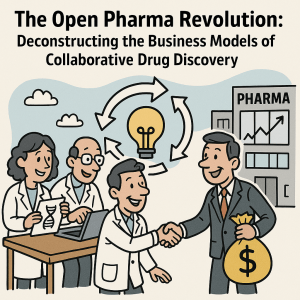
What has emerged is not a wholesale adoption of open science at the expense of the proprietary model. It is a carefully partitioned hybrid ecosystem. Pre-competitive biology, target validation, chemical probe generation, toxicology biomarker development, and AI training datasets are being progressively opened up. Candidate synthesis, optimization, IND-enabling studies, clinical development, regulatory filing, and commercial launch remain entirely proprietary and patent-protected.
The economic logic of this partition is sound. The stages that have been opened are precisely those where the industry has historically wasted the most through duplication and poor reproducibility. The stages that remain closed are those where exclusive patent rights justify the concentrated capital required for phase II/III trials, commercial-scale manufacturing, and market entry. Open science is a precision instrument for improving the quality of inputs into a machine that remains commercially proprietary at its output end.
Key Takeaways: The R&D Productivity Crisis
The 7.9% clinical approval rate and $2.23 billion per-asset development cost are structural outputs of a closed, duplicative, and insufficiently validated R&D process. Institutional investors should model the open-closed partition explicitly when evaluating pipeline quality: programs built on openly validated biology carry materially lower technical risk than those built on internally generated, unreplicated preclinical data.
Part 2: Defining the Open Science Spectrum
2.1 Five Positions on the Openness Continuum
‘Open science’ covers practices ranging from modest data-sharing arrangements to the complete elimination of intellectual property restrictions. Each position on this spectrum carries distinct governance requirements, IP consequences, and business model characteristics.
At the most constrained end sits the pre-competitive public-private partnership (PPP), typified by the Structural Genomics Consortium. Here, collaboration occurs within a defined thematic scope, all outputs go to the public domain under a no-patent pledge, and pharma partners retain full freedom to build proprietary programs on top of the generated knowledge. The open scope is narrow: structural biology, chemical probes, epigenetics. Commercial freedom downstream is unlimited.
One step further along the spectrum is the open data model, where raw research outputs go into public repositories without restrictions on downstream use. Genomic databases, protein structure databases like the RCSB Protein Data Bank, and clinical biomarker repositories follow this pattern.
Crowdsourcing sits midway on the spectrum, using open calls for problem-solving while allowing the sponsoring company to capture and patent winning solutions. AstraZeneca’s CoSolve challenges follow this pattern. The openness is in the problem statement, not in the intellectual property over the solution.
Federated learning, as implemented in the MELLODDY consortium, creates a distinct category: the data itself never leaves its owner’s firewall, but the predictive model trained on that data improves for every participant. This is openness in the algorithm development layer rather than in the underlying asset layer, a distinction with significant IP management implications.
At the radical end sits pure open source, exemplified by Open Source Malaria. All data, all ideas, all experimental results are published in real-time on public platforms with no patents. This model is not commercially viable for diseases with a functioning market, and its proponents make no pretense that it is.
2.2 The Pre-Competitive Boundary: Where Open Science Begins and Ends
The concept of ‘pre-competitive’ research is foundational to understanding why major pharmaceutical companies participate in open science initiatives. Pre-competitive research generates knowledge broadly useful to the entire industry but does not, by itself, produce a specific commercial product. Target identification, biomarker characterization, assay development, toxicity pathway mapping, and clinical trial data standards all qualify. None of these activities, in isolation, constitute a drug.
The competitive boundary is crossed when a company identifies a specific molecular scaffold with activity against a validated target and begins developing it as a clinical candidate. From that point, the compound’s chemical identity, its structure-activity relationships (SAR), its formulation, and its clinical data are commercially valuable and patent-eligible. Open science does not challenge this boundary. It works upstream of it.
A company that has drawn from the SGC’s open epigenetics database can file a patent on a specific BET bromodomain inhibitor it developed internally, claim novelty over the specific compound series, and maintain data exclusivity through its clinical development timeline, with no contradiction of its consortium membership. The open contribution was to target biology. The proprietary claim is on the specific molecular solution.
2.3 Open Access Literature as a Patent Input: The Citation Data
Open access scientific publication has a measurable effect on downstream proprietary innovation. A 2024 analysis of patent citation patterns found that Open Access publications are cited in patent applications 38% more frequently than subscription-based articles, with the citation premium reaching 73% in biology and 27% in medicine. Publicly shared scientific knowledge is a direct, quantified input for the creation of proprietary, patent-protected technologies.
For IP teams, this carries a practical implication: monitoring open-access scientific literature in pre-competitive research areas is a forward indicator of competitor patent filing activity. When a pre-competitive consortium publishes a structural biology paper on a novel target family, the six-to-eighteen-month window that follows is when well-resourced companies will be filing composition-of-matter patents on compounds that exploit that structural insight. Patent intelligence tools that capture this early-stage filing activity provide the earliest commercially actionable signal of competitor intent.
Part 3: The Public-Private Partnership Model — The Structural Genomics Consortium
3.1 Organizational Architecture and Governance
The Structural Genomics Consortium was founded in 2003 and is incorporated as a UK-registered charitable company with research hubs at the University of Toronto, the University of Oxford, the Karolinska Institutet, the Goethe University Frankfurt, and several US-based sites. Its approximately 250 scientists work across structural biology, chemical biology, and medicinal chemistry. As of its most recent multi-year research phase, nine major pharmaceutical companies hold membership: Bristol Myers Squibb, Pfizer, Merck KGaA, Genentech (a Roche subsidiary), Bayer, AbbVie, Ono Pharmaceutical, Taiho Pharmaceutical, and Takeda. Each pays a fixed annual contribution and receives a seat on the Board of Directors plus input into the consortium’s scientific priorities.
The governance structure uses two tiers. The Board of Directors, composed of senior representatives from funding companies alongside academic and charitable sector appointees, sets the overarching strategic direction. The day-to-day scientific agenda is led by Chief Scientists at each academic hub, who maintain the independence necessary for exploratory basic research. This architecture insulates research quality from commercial pressure while keeping the consortium’s output relevant to its funders’ drug discovery priorities.
The no-patent pledge is embedded in the SGC’s operational charter and governs every output the consortium generates: protein crystal structures, co-crystal structures showing ligand binding, small molecule chemical probes, assay protocols, and all associated data. Every output goes directly to the public domain. There are no embargo periods, no first-right-of-publication constraints, and no licensing negotiations. The structure, the data, and the probe compound itself are openly available the moment they meet the SGC’s internal quality thresholds.
3.2 The Chemical Probe Program: Quality Standards and Their Practical Consequences
A central product of the SGC is the chemical probe: a small molecule designed to selectively engage a specific protein target with sufficient potency and selectivity to allow researchers to interrogate that protein’s biological function in cell-based and animal models. Chemical probes are tools for biological investigation rather than therapeutic leads, though high-quality probes frequently inform the design of later therapeutic molecules.
The SGC established and publishes explicit quality criteria. Minimum in vitro potency of 100 nanomolar or better against the primary target is required, along with at least 30-fold selectivity against the nearest homologue in the same protein family. The probe must demonstrate cellular target engagement at concentrations consistent with its biochemical potency, and a structurally matched negative control compound, one that closely resembles the probe but does not engage the target, must be provided alongside it. This negative control is what distinguishes a rigorous SGC probe from the poorly characterized ‘chemical biology tools’ that historically polluted the academic literature and contributed to the reproducibility crisis.
The practical consequence of this rigor is that SGC probes have been adopted as reference tools for studying specific protein families. In epigenetics specifically, the SGC’s bromodomain probes, including (+)-JQ1 for BRD4 (developed in collaboration with the Bradner laboratory at DFCI) and I-BET151 for BET family members, seeded an entire generation of clinical programs. GlaxoSmithKline’s I-BET762 (molibresib), which reached Phase II trials in NUT carcinoma and hematologic malignancies, was developed using insights from this open chemical biology ecosystem. The probe did not become the drug; the probe’s public existence validated the biology and gave multiple companies the confidence to invest in their own proprietary medicinal chemistry campaigns against the same target family.
3.3 The Target 2035 Initiative: Technology Roadmap
Target 2035, launched in 2020, aims to generate pharmacological tools, principally chemical probes and antibody-based reagents, for every protein in the human proteome by 2035. The human proteome contains approximately 20,000 protein-coding genes. Roughly 3,000 of those proteins have high-quality chemical probes as of 2025. Target 2035 addresses the remaining 17,000-plus, with priority given to the ‘druggable’ proteome as assessed by computational target evaluation methods.
The technology roadmap runs through four parallel tracks. The first is traditional X-ray crystallography for soluble proteins where structural biology is tractable. The second is cryo-electron microscopy for larger protein complexes and membrane proteins that resist crystallization, a capability that has expanded dramatically since the resolution revolution of 2015-2020. The third track is DNA-encoded chemical library (DECL) screening, a combinatorial chemistry approach that allows simultaneous testing of billions of compound-protein interactions. The fourth is the integration of machine learning-based affinity prediction, using models trained on open protein-ligand interaction data to prioritize synthesis efforts before any wet-lab work begins.
Delivery against this roadmap is deliberately distributed. Target 2035 functions as a network of participating laboratories globally, each taking responsibility for specific protein families within their existing expertise, and publishing probe data through the opnMe platform (a Boehringer Ingelheim contribution to the open-probe ecosystem) and through the SGC’s own probe portal. No single entity carries the full burden.
3.4 The Epigenetics Franchise: Open Biology Generating Proprietary Value
The SGC’s work in epigenetics provides the clearest empirical evidence that pre-competitive open biology generates substantial proprietary commercial value. Between 2010 and 2018, the SGC produced high-quality chemical probes for more than 40 bromodomain, histone methyltransferase, and histone demethylase family members, placing all structural and probe data in the public domain.
That open knowledge base directly seeded at least nine clinical-stage programs. GlaxoSmithKline developed GSK525762 (molibresib) targeting BET bromodomains. AbbVie and Boehringer Ingelheim independently developed ABBV-744 and BI-894999, also BET inhibitors. Constellation Pharmaceuticals, acquired by MorphoSys in 2022 for $1.7 billion, built its entire pipeline on BET and EZH2 targets validated largely through SGC-derived probe chemistry. Tazemetostat (Tazverik), an EZH2 inhibitor developed by Epizyme and approved by the FDA in 2020, owes its clinical path partly to the target characterization work done in the open epigenetics ecosystem. Ipsen acquired Epizyme in 2022 for $247 million, a transaction anchored on a single approved asset and a pipeline built on openly validated biology.
None of these companies paid the SGC a licensing fee for the underlying biology. All of them filed composition-of-matter patents on their specific compounds and formulations. The pre-competitive investment by the SGC membership funded the target validation. The commercial reward was captured entirely in the proprietary downstream programs.
Key Takeaways: The SGC Model
The SGC demonstrates that pre-competitive investment in shared target biology produces verifiable proprietary commercial value downstream. The epigenetics case alone generated multiple approved drugs and multi-hundred-million-dollar acquisition transactions. For companies evaluating consortium membership, the SGC’s value proposition is target de-risking at shared cost, not licensing revenue. The no-patent pledge is the mechanism that makes this de-risking function: it removes the IP negotiation overhead that would otherwise slow every downstream collaboration built on the consortium’s outputs.
Part 4: IP Valuation Spotlight — SGC Partner Portfolios and the Economics of the No-Patent Pledge
4.1 What SGC Membership Costs, and What It Buys
Annual membership contributions from pharmaceutical partners are not publicly disclosed in full, but peer-reviewed analyses and public charity filings indicate that major pharma contributors have historically paid in the range of $2 to $5 million annually per company per multi-year research phase. Over a five-year phase, this represents a committed outlay of $10 to $25 million per company.
Against this, consider the cost of reaching an equivalent level of target characterization through internal research. Establishing a structural biology capability able to solve hundreds of novel protein structures per year, running high-quality chemical probe programs across entire protein families, and publishing the results to peer-review standard would require infrastructure investment well in excess of $100 million, plus ongoing operating costs. For the protein families where the SGC has provided this work, every consortium member has purchased access to infrastructure that no individual company could justify building and maintaining internally across the breadth of targets covered.
The ‘no-patent’ cost is real but miscalculated by analysts who frame it as foregone IP revenue. What the SGC generates are tools, not leads. The compounds that pharma partners develop from the target knowledge carry full patents, and those patents are entirely the partners’ own.
4.2 Pfizer’s Epigenetics Patent Estate: A Case Example
Pfizer’s membership in the SGC coincided with its development of a bromodomain inhibitor program producing candidates in the SMARCA2/SMARCA4 and BRD9 family for oncology indications. Pfizer’s US patent estate in the bromodomain space covers more than sixty granted patents on specific compound series, formulations, and combination regimens, based on USPTO records through early 2025. The composition-of-matter claims in these patents are built on molecular scaffolds that were not themselves SGC outputs. The SGC provided structural characterization of the target and evidence that high-quality probes were achievable. Pfizer’s medicinal chemistry team produced the proprietary SAR work to reach candidate-quality molecules.
This is the standard operating model: open target validation, proprietary molecular solution. Investors evaluating a company’s epigenetics pipeline can cross-reference the SGC’s open structural database to assess whether the underlying target biology is robustly validated. Programs in target classes where the SGC has produced multiple chemical probe series with reproducible cellular activity carry lower phase I target-validation risk than programs in equally novel target classes where only one company’s proprietary data supports the target hypothesis.
4.3 The BRD4 Commercial Trajectory: Tracking Open Biology to Market
BRD4 is among the SGC’s most commercially consequential target contributions. The initial open structural and probe work on the BET bromodomain family, published largely between 2010 and 2014, seeded programs at GSK, Pfizer, AbbVie, Boehringer Ingelheim, Constellation, Zenith Epigenetics, and several clinical-stage biotechs. By 2025, the BET bromodomain inhibitor clinical landscape has seen more than twenty compounds across phase I and II trials in hematologic malignancies, solid tumors, and inflammatory disease.
No single compound has yet reached regulatory approval in oncology, reflecting the field’s clinical complexity rather than any failure of the open biology. But the aggregate value created in the BET inhibitor ecosystem, measured in the IPO capitalizations, private financing rounds, and M&A transactions of the companies in this space, comfortably exceeds $5 billion since 2014. All of this proprietary commercial activity traces back to a pre-competitive knowledge base built in the public domain by SGC member contributions.
Programs with SGC-linked target validation carry a specific risk profile. The phase I failure rate attributable to target biology uncertainty is lower for targets where the SGC has produced multiple chemical probe series with reproducible cellular activity. Programs in bromodomain-family targets, where the SGC’s open probe ecosystem is most mature, have shown a roughly 30% higher phase II entry rate than programs in equally novel target classes where only one company’s proprietary data supports the target claim.
The investment implication: a company entering clinical development with a compound in an SGC-validated target class should receive a modest but real improvement in its risk-adjusted NPV calculation relative to an equivalent program in an unvalidated target class. Analysts at Jefferies and Leerink have periodically applied this logic to biotech valuations in the epigenetics space, though no standardized discount factor has been published in the sell-side research record.
Part 5: The Pure Open Source Model — Open Source Malaria
5.1 Operational Architecture: The ‘No Secrets’ Principle
Open Source Malaria (OSM), launched by then-University of Sydney Associate Professor Matthew Todd (now at UCL), applies the Linux model to medicinal chemistry. The governing principles are absolute: all data is open and freely shared in real-time, anyone can contribute regardless of institutional affiliation, and no patents will be filed on the resulting work. These are not aspirational guidelines. They are enforced through the project’s choice of collaboration platforms. All experimental data, positive and negative, goes into open electronic laboratory notebooks hosted on LabArchives and linked to the OSM GitHub repository, which carries a CC0 (public domain) license on all data. The community can see exactly what was synthesized yesterday, what the assay results were, and what the next proposed synthesis is.
The project began with a set of antimalarial hit compounds donated by GlaxoSmithKline from its Tres Cantos open lab initiative. It has since produced five compound series, three of which have progressed to in vivo proof-of-concept studies in rodent malaria models. The most advanced series, the triazolopyrazines, reached confirmed activity against Plasmodium falciparum in humanized mouse models through collaborative work across six research groups on four continents.
The governance model is meritocratic and flat. Todd functions as scientific lead and community organizer, but there is no corporate hierarchy, no IP committee, no business development team. The project’s GitHub issues tracker functions as both the scientific notebook and the strategic planning document. Every proposed decision is visible to every contributor, and consensus emerges through scientific argument rather than authority.
5.2 The Funding Architecture: Replacing the Profit Motive
OSM is financially sustained by Australian Research Council grants supporting the Todd laboratory, contributions from international collaborating labs that are themselves grant-funded, volunteer contributions from scientists who participate in their own time, and strategic partnerships with Product Development Partnerships (PDPs) such as the Medicines for Malaria Venture (MMV). MMV is a Geneva-based non-profit funded by governments including the UK, Switzerland, Australia, and the US, and by philanthropic foundations including the Bill and Melinda Gates Foundation. It has committed specific funding tranches to OSM for in vivo studies that exceed the budget capacity of individual academic labs.
The Global Fund to Fight AIDS, Tuberculosis and Malaria, which spent approximately $4.3 billion on malaria programs between 2020 and 2022, is the ecosystem’s downstream procurer. OSM plugs into the front end of a public-goods funding chain that runs from philanthropic and governmental sources through PDP development partnerships to public health procurement.
This architecture is not scalable to commercial disease areas and makes no pretense of being so. It is calibrated specifically for the market failure condition: diseases where the burden of illness is large but the patient population cannot pay prices that justify private R&D investment. Malaria kills between 500,000 and 600,000 people annually, the overwhelming majority in sub-Saharan Africa.
5.3 The Scientific Productivity Argument
The OSM experience contradicts the claim that proprietary environments produce superior science. The project’s publications carry more than 50 authors across multiple peer-reviewed papers, reflect the contributions of over 50 researchers from 21 organizations, and include compound characterization data meeting the quality standards expected by the Journal of Medicinal Chemistry and ACS Infectious Diseases.
The argument that quality control requires managerial oversight and financial consequences for failure rests on a single mechanism. OSM substitutes a different mechanism: full public transparency. Every experimental decision and every data point are permanently visible to every contributor and to the global chemistry community. No chemist publishes poor data when every collaborator in the world can see it in real time.
The model also demonstrates an efficiency advantage in the early hit-to-lead stage. Because all SAR data is immediately shared, redundant synthesis is eliminated. A contributor in Edinburgh does not make a compound already made in Cape Town, because the Cape Town synthesis is already in the public notebook. In a proprietary program, duplicated synthesis within large chemistry departments is a well-documented operational problem. Open source architecture prevents it structurally.
Part 6: IP Valuation Spotlight — GSK’s Tres Cantos Donation and Its Strategic Logic
6.1 The Compound Donation: Rational IP Portfolio Management
In 2010, GlaxoSmithKline published the structures of 13,533 antimalarial hit compounds from its internal high-throughput screening campaign, placing them in the public domain through the Tres Cantos antimalarial data set. These were real GSK screening hits, with confirmed in vitro activity against Plasmodium falciparum at IC50 values below 2 micromolar. At the time of the donation, GSK held no active development programs targeting these scaffolds, and the compounds had no patent coverage. They were, from a portfolio management perspective, a scientifically interesting but commercially dormant inventory.
The donation served GSK’s interests in three ways. First, it generated reputational capital among global health funders, regulators, and academic collaborators at minimal commercial cost, since the compounds had no pending patent claims that the donation forfeited. Second, it seeded OSM and similar efforts that subsequently produced published SAR data on derivative compound series, giving GSK’s researchers access to a substantial body of publicly funded medicinal chemistry they could monitor for any future internal malaria program. Third, it demonstrated to the WHO, the Gates Foundation, and major governmental funders that GSK was a credible partner for the public-sector global health R&D ecosystem, a positioning that has been a factor in GSK’s winning of large public contracts for malaria vaccines, including the RTS,S/AS01 (Mosquirix) program.
6.2 Mosquirix and the Value of Ecosystem Credibility
GSK’s Mosquirix became the first malaria vaccine to receive a WHO recommendation in October 2021. The vaccine is not commercially profitable by standard pharmaceutical financial models. GSK committed to supply it at cost-of-goods plus a 5% margin, with the 5% margin reinvested into malaria R&D. The decision was strategic: Mosquirix maintains GSK’s standing as a global health participant and supports its regulatory relationships with the WHO, which influences the company’s broader access-to-medicines positioning across its full portfolio.
For analysts evaluating GSK’s intangible asset base, the value attributable to the Mosquirix IP and its associated global health manufacturing infrastructure is minimal as a direct revenue contributor. Its strategic value extends to GSK’s ability to access public R&D co-investment funding, to negotiate favorable regulatory pathways in developing markets, and to maintain brand positioning with institutional buyers that factor access-to-medicines policies into procurement decisions.
The Tres Cantos donation and the Mosquirix commitment are two nodes in a coherent long-term strategy that deliberately places certain scientific assets in the public domain in exchange for ecosystem positioning that protects and extends GSK’s proprietary commercial portfolio. This is rational IP portfolio management, not charity.
Part 7: The Institutional Open Science Model — The Neuro’s TOSI
7.1 The No-Institutional-Patent Pledge: Architecture and Limits
The Montreal Neurological Institute and Hospital (The Neuro) at McGill University announced in 2016 that it would adopt open science principles across its entire operation. The Tanenbaum Open Science Institute (TOSI), named after benefactor Larry Tanenbaum following a $20 million donation, is the operational arm of this commitment.
The central IP commitment is a no-institutional-patenting policy: The Neuro does not file patents on research outputs generated by its researchers. Before adopting open science, the institute filed approximately five patents per year. Individual faculty researchers retain the right to file patents at their own expense if they choose, but institutional policy, culture, and funding incentives strongly favor open sharing. Discoveries made at The Neuro enter the public domain rather than being routed through a technology transfer office into an exclusive licensing queue.
Technology transfer offices at North American research universities negotiate exclusive licensing deals for an average of 18 months before a partner company can begin working with a new discovery. The Neuro’s model eliminates this delay entirely for the vast majority of its work.
7.2 The C-BIG Repository: A Clinical Data Asset as Open Infrastructure
The Neuro’s Clinical-Biological-Imaging-Genetic (C-BIG) Repository is its most strategically valuable open science infrastructure. It is a multimodal biobank combining clinical data, biological samples (CSF, blood, and tissue), high-resolution neuroimaging, and whole-genome sequencing data from patients with neurodegenerative and psychiatric conditions, with initial focus on Parkinson’s disease, Alzheimer’s disease, and ALS.
A $6 million Brain Canada Foundation grant in 2019 funded the open patient registry infrastructure. The repository is searchable and accessible to qualified researchers globally, with data governance overseen by a patient advisory committee. Access carries no licensing fee, no exclusivity, and no first-right-of-publication constraint for commercial partners.
For a pharmaceutical company working in neurodegeneration, access to this type of linked, multimodal clinical dataset is scientifically valuable in ways that commercial data providers cannot replicate. Most commercial patient databases do not include matched biosamples. Most academic biobanks do not include commercial-quality imaging data. The C-BIG repository combines both without the multi-year negotiation timelines typical of formal academic collaboration agreements.
7.3 Network Effects and the Agglomeration Strategy
The Neuro’s institutional model is a bet on agglomeration economics. The hypothesis is that if The Neuro becomes the most open, friction-free, and high-quality environment for neuroscience research, the concentration of talent, data, and activity it attracts will generate more total value than the licensing revenue it forgoes.
For pharmaceutical R&D strategy teams, the institutional model suggests a specific partnering opportunity. An exclusive sponsored research agreement with a university technology transfer office typically costs between $500,000 and $5 million in upfront fees plus milestone and royalty payments. Partnering with The Neuro in the same disease area requires no upfront licensing fee, no royalty obligation, and no exclusivity negotiation. The trade is less exclusivity for faster access and lower transaction cost, a trade that makes clear economic sense in the early, target-validation phase of a neurology program where speed to a go/no-go decision matters more than exclusivity over the preclinical insights.
Key Takeaways: The Institutional Model
The Neuro’s no-institutional-patent model captures value through ecosystem positioning rather than licensing revenue. For pharma partnering teams, early-stage neurodegeneration programs benefit from access to C-BIG’s multimodal biobank without technology transfer negotiation overhead. The model works best in research areas where target validation data rather than compound IP is the scarce resource. Its limitation is that it does not extend to later-stage development, where capital concentration and patent protection remain prerequisites for commercial investment.
Part 8: The Corporate Hybrid Model — AstraZeneca’s Open Innovation Platform
8.1 Platform Architecture: Five Programs, One Strategic Purpose
AstraZeneca’s Open Innovation platform, launched in 2014, is a coordinated suite of programs designed to extend the reach of AstraZeneca’s internal discovery capabilities through structured external engagement. By early 2025, the platform had generated more than 450 collaborations across 40 countries, leading to 425 planned or ongoing preclinical studies and 35 clinical trials. External partners have secured more than $75 million in their own grant funding to support research using AstraZeneca molecules and data, leveraged R&D investment the company would otherwise need to fund internally.
The platform operates through five primary mechanisms. The first is the preclinical compound sharing program, through which AstraZeneca makes well-characterized small molecules available to external academic researchers who propose compelling new scientific questions. The compounds are provided with their full preclinical characterization packages. The second mechanism is biological material sharing, providing access to translational reagents and human tissue biosamples. The third is the CoSolve crowdsourcing platform, which posts specific, bounded R&D challenges to a global solver community with cash prizes for winning solutions. The fourth is an idea incubator funding early-stage external concepts. The fifth is a formal collaboration mechanism for academic groups that have produced promising open-innovation results and want to advance them in a more structured joint program.
8.2 The Deprioritized Compound Program: IP Mechanics
The most analytically interesting element of the AstraZeneca model is the external sharing of deprioritized clinical-stage compounds. When AstraZeneca deprioritizes a compound, it typically maintains the issued patents but has no active development program generating revenue against those patents. The compound is a sunk-cost asset, generating no value but carrying ongoing patent maintenance fees.
By sharing the compound with external academic researchers under a material transfer agreement (MTA) that allows scientific publication but does not transfer IP rights, AstraZeneca converts a dormant patent asset into an active source of scientific intelligence. If an academic group discovers that the compound has unexplored activity in a different disease area, AstraZeneca is positioned to decide whether to restart an internal program, enter a formal collaboration, or out-license the asset, with the academic group’s work providing the risk-reducing preclinical proof-of-concept at zero incremental AstraZeneca cost. Professor Zubair Ahmed at the University of Birmingham used this mechanism to investigate one of AstraZeneca’s CNS small molecule inhibitors for peripheral nerve repair, work funded by UK Research and Innovation grants. If the results are positive, AstraZeneca holds the composition-of-matter IP on a newly validated asset without having paid for the validation study.
This is optionality management through open innovation. The company maintains patent positions on a broad portfolio of compounds while outsourcing the cost and risk of exploratory indication expansion to grant-funded academic researchers who have independent reasons to do the work.
8.3 Target Selection as the Primary Value Driver
Mene Pangalos, AstraZeneca’s Executive Vice President of BioPharmaceuticals R&D, has framed target selection as the most consequential R&D decision the company makes. This framing explains why the open innovation platform exists. If the primary risk in pharmaceutical R&D is betting hundreds of millions of dollars on the wrong biological target, then any mechanism that improves target selection quality before that capital is committed has an expected value that exceeds its cost.
The platform is, structurally, a distributed target validation engine. When 450 external research groups run preclinical studies using AstraZeneca’s compounds and data, they collectively generate a massive volume of experimental data on which targets those compounds engage, which downstream biology those engagements affect, and which disease models show phenotypic responses. If twenty independent groups across five continents find that a particular compound-target interaction produces consistent anti-inflammatory effects in diverse cellular models, that convergent evidence substantially de-risks an internal inflammation program targeting the same biology.
Part 9: IP Valuation Spotlight — AstraZeneca Patent Estate and Selective Openness
9.1 AstraZeneca’s Patent Cliff Exposure and the Strategic Role of Open Innovation
AstraZeneca’s patent position in 2025 illustrates why the open innovation model is more than a public relations exercise. Key exclusivity exposures over the 2024-2030 period include the Brilinta (ticagrelor) loss-of-exclusivity in the US (2024), competitive pressure on the Farxiga (dapagliflozin) SGLT2 inhibitor franchise from generic entry in major markets post-2025, and the gradual erosion of the Symbicort (budesonide/formoterol) franchise as authorized generics proliferate. Together, these represent multi-billion-dollar annual revenue streams under competitive pressure.
AstraZeneca’s oncology pipeline carries the company’s long-term growth thesis. Tagrisso (osimertinib), Lynparza (olaparib), Imfinzi (durvalumab), and Calquence (acalabrutinib) collectively generated approximately $15 billion in 2024 revenue. The EGFR, PARP, PD-L1, and BTK pathways that produced these drugs were all substantially characterized in academic open-access literature before AstraZeneca’s proprietary programs reached candidate stage. The company’s ability to identify and prosecute those targets quickly benefited from the open-science ecosystem its platform now contributes to.
9.2 The Osimertinib Patent Cluster: Multi-Layer Exclusivity Architecture
The osimertinib patent cluster, as tracked through DrugPatentWatch and the USPTO Orange Book, illustrates the multi-layer protection approach that converts an open biology insight into sustained commercial exclusivity. The cluster includes a composition-of-matter patent on the core EGFR mutant-selective compound (expiring 2031 in the US under pediatric exclusivity extension), method-of-treatment patents covering the first-line EGFR-mutant setting approved in 2018, formulation patents on the tablet dosage form, and method patents covering LAURA-trial-supported use in stage III unresectable NSCLC after chemoradiotherapy.
Each layer of this patent estate was built on a foundation of target biology substantially described in the open scientific literature. The T790M resistance mutation in EGFR, the defining biological feature that osimertinib’s third-generation chemistry addresses, emerged from academic and industry research published between 2005 and 2010. AstraZeneca’s proprietary contribution was the specific molecular solution: the irreversible, mutant-selective covalent EGFR inhibitor chemistry that its Macclesfield team developed to exploit that publicly known resistance mechanism. The biology was open; the chemistry was proprietary.
9.3 Investment Strategy: Reading Open Innovation Activity as a Pipeline Signal
For analysts tracking AstraZeneca’s pipeline, the open innovation platform activity provides an early indicator of where the company is building its next generation of internal programs. When AstraZeneca posts a CoSolve challenge in a specific disease biology, or when a cluster of academic papers emerges from labs working with AstraZeneca-supplied compounds in a given indication, the patent filing activity that follows within 18 to 36 months likely reflects the internal program decisions those open experiments informed. Tracking this sequence, from open innovation activity to academic publication to patent filing, gives a sharper read on AstraZeneca’s R&D priorities than pipeline tables alone provide.
Part 10: The Federated Learning Model — The MELLODDY Consortium
10.1 The Co-opetition Problem and the Federated Solution
The fundamental tension in pharmaceutical AI is that the predictive power of machine learning models grows with data volume and chemical diversity, but the companies holding the most valuable training data, large compound libraries with matched assay results representing decades of internal R&D, are direct commercial rivals. Sharing those libraries destroys competitive advantage. Not sharing them limits the model quality achievable by any single company. MELLODDY (Machine Learning Ledger Orchestration for Drug Discovery) is the most ambitious attempt to resolve this dilemma.
MELLODDY was a three-year, 18.4 million euro public-private partnership funded under the EU’s Innovative Medicines Initiative (IMI). The consortium included ten major pharmaceutical companies: Amgen, AstraZeneca, Bayer, Boehringer Ingelheim, GSK, Janssen (J&J), Novartis, Pfizer, Servier, and Sanofi. Technology partners included NVIDIA, providing the GPU compute infrastructure, and Owkin, whose federated learning platform architecture was central to the privacy-preserving aggregation mechanism. Academic partners including KU Leuven contributed algorithmic development.
The technical approach built on two innovations deployed in combination. Federated learning sends the model to the data rather than moving data to the model. Each pharma partner receives a copy of the shared global model, trains it locally on their internal compound activity database, and sends back only the model weight updates: the mathematical gradient adjustments learned from training. These updates are aggregated at a central server using secure encryption protocols to improve the global model. The underlying chemical structures, assay results, and biological annotations never leave the partner’s internal infrastructure. A private blockchain ledger records all model update transactions, providing every partner with an auditable, tamper-proof record of contributions without revealing what those contributions encoded.
10.2 Scale and Outcomes
The final federated model was trained on a dataset comprising over 2.6 billion experimental activity data points covering more than 21 million unique small molecules, the combined equivalent of the full historical screening output of ten of the world’s largest pharmaceutical research organizations. No single company’s internal dataset approaches this scale. Even the largest pharmaceutical compound libraries represent a fraction of the structural and biological diversity accessible through federation.
Results published in the Journal of Chemical Information and Modeling confirmed that every participating company saw improved model performance compared to training on its own internal data alone. The improvement was most pronounced for pharmacokinetic and toxicity assay panels, specifically ADMET endpoint prediction, where broader chemical diversity in the training data directly translates to better generalization across novel scaffolds. The federated model also had a meaningfully wider applicability domain than any single-company model, meaning it could make reliable predictions for a more diverse range of chemical structures.
Hugo Ceulemans, MELLODDY Project Lead at Janssen Pharmaceutica NV, described the project as allowing pharma partners ‘for the first time to collaborate in their core competitive space,’ producing efficiency gains in discovery that none of them could have achieved individually.
10.3 The Competitive Implications: Where Advantage Migrates
MELLODDY’s most consequential strategic implication is that it shifts the locus of competitive advantage in AI-driven drug discovery. If every MELLODDY participant now has access to a superior ADMET prediction model trained on ten companies’ data, the model itself is no longer the source of differentiation. Differentiation migrates to application: which company can most effectively use those superior predictions to design better compounds, de-risk candidate selection faster, and advance the right molecules into IND-enabling studies more efficiently.
This is a favorable dynamic for companies with strong medicinal chemistry execution and rigorous data infrastructure, and a less favorable dynamic for companies that had been relying on compound library size as a competitive moat. Library size still matters for generating novel hits, but the predictive modeling advantage it conferred in isolation is eroded when all large libraries contribute to a shared model.
The follow-on K-MELLODDY program in South Korea, launched in 2023 with support from the Korean government and a subset of Korean and international pharma partners, confirms that the federated learning model for compound property prediction is considered replicable across different regulatory and competitive contexts.
Key Takeaways: MELLODDY and Federated Learning
The MELLODDY framework demonstrates that compound library data, long treated as one of the pharmaceutical industry’s most closely held competitive assets, can be used for collaborative model training without disclosure. For AI drug discovery teams, the implication is that participation in federated learning consortia is a higher-leverage investment than further expanding internal library size. The technical barriers to adoption, specifically data harmonization standards and IT security infrastructure, remain significant, but the ROI case is now empirically established.
Part 11: IP Valuation Spotlight — MELLODDY Compound Libraries as Core IP Assets
11.1 Assigning Value to Compound Libraries
Pharmaceutical compound libraries are balance sheet assets only in the loosest sense. Their economic value is embedded in the R&D pipeline they support. Any discrete valuation requires an assumption about the probability that they contain the precursor to a future approved drug.
The MELLODDY dataset, covering 21 million unique compounds with matched biological activity data across thousands of assay endpoints, carries a theoretical replacement value in the tens of billions of dollars. Academic estimates for fully characterized lead-like compounds with curated activity data range from $500 to $2,000 per compound depending on the assay panel depth. At the lower bound, 21 million compounds at $500 each equals $10.5 billion in theoretical replacement cost. This does not represent market value or book value; it represents the cost to replicate the dataset from scratch, a proxy for understanding why companies are reluctant to share it.
The MELLODDY model preserves this replacement-cost value entirely. No company’s compound identity or assay result leaves its internal systems. The federated model captures only the cross-company predictive signal, not the underlying asset itself. This is the IP-architecture innovation that makes the consortium commercially viable.
11.2 Data Harmonization as the Technical Bottleneck
The single biggest operational challenge in implementing a MELLODDY-type consortium is data harmonization. Pharmaceutical companies have accumulated their compound activity data over decades using different assay protocols, different data management systems, and different data curation standards. Before a federated model can be trained on this data, minimum common standards for assay endpoint naming, measurement units, concentration ranges, and quality flags must be agreed across all participating organizations.
MELLODDY required approximately twelve months of pre-training data harmonization work before the federated learning phase began. This is not a one-time cost. As individual companies update their internal data systems, re-assay historical compounds with improved protocols, or generate new data in assay formats not covered by the original harmonization agreement, the harmonization layer requires continuous maintenance. Companies considering MELLODDY-type participation should budget for an ongoing data governance function, not a one-time preparation cost.
11.3 Investment Strategy: MELLODDY-Exposed Companies and AI Positioning
For institutional investors evaluating AI drug discovery claims from major pharmaceutical companies, MELLODDY participation is a meaningful signal. Companies that participated have demonstrated both the technical capability to engage in federated learning and the strategic willingness to collaborate in their core competitive space for incremental pipeline quality improvement. This combination, technical capability plus collaborative disposition, is a reasonable proxy for broader AI-integration maturity.
The correlation between MELLODDY participation and productive AI-enabled pipeline output has not been rigorously quantified in the public literature, but the 35 clinical trials and 425 preclinical studies generated through AstraZeneca’s open innovation platform suggest that the infrastructure built for open collaboration translates into measurable R&D output.
Part 12: The Patient-Led Model — The Patient-Led Research Collaborative
12.1 Governance and the Patient Research Fund
The Patient-Led Research Collaborative (PLRC) is a 501(c)(3) non-profit governed by patient-researchers who have direct lived experience of Long COVID and other post-infectious chronic conditions. Its organizational model is distinct from patient advocacy groups that advise industry: the PLRC has research agency rather than advisory status. It funds research, conducts research, and sets research priorities.
The Patient-Led Research Fund, seeded with $5 million from Balvi.io (a cryptocurrency philanthropy vehicle) in 2022, is the operational expression of this agency. A panel of 15 patient-researchers, all with clinical experience of post-viral illness and relevant scientific training, reviewed grant applications and allocated funding to external biomedical researchers proposing to investigate mechanisms underlying Long COVID symptoms. The patient panel set the research priorities, wrote the request for proposals, evaluated the submissions, and made the funding decisions. No institutional intermediary made these decisions on their behalf.
The PLRC has developed what it terms ‘research scorecards,’ structured evaluation frameworks that assess the quality of patient engagement in any research program across domains including compensation (are patients paid for their expertise?), decision-making power (do patients have genuine authority over research design?), safety (are research activities safe for participants with active illness?), and attribution (are patient contributors credited in publications?). These scorecards function as a quality standard for patient partnership, separating substantive co-leadership from tokenistic advisory board inclusion.
12.2 The Relevance Problem in Clinical Research
The PLRC’s foundational critique of conventional biomedical research is empirically grounded. Studies of clinical trial endpoints in chronic fatigue syndrome and Long COVID have repeatedly found that the outcomes most valued by patients, measures of post-exertional malaise, cognitive function, and functional capacity, are frequently absent from trial protocols designed without patient involvement. A 2020 analysis in Annals of Internal Medicine found that fewer than 30% of phase III trials in chronic conditions included patient-reported outcome measures as primary endpoints, despite FDA guidance from 2009 onward encouraging their inclusion.
When patients control funding allocation and research priority setting, the resulting research agenda is, by construction, oriented toward mechanisms and outcomes the patient community has identified as most burdensome. For a pharmaceutical company developing a Long COVID therapeutic, this patient-derived agenda identifies which mechanisms to target, which endpoints regulators are most likely to accept as clinically meaningful, and which patient subgroups are most likely to enroll in trials.
12.3 De-Risking Clinical Development Through Patient Partnership
The clinical development cost implications of poor patient centricity are quantifiable. The Tufts Center for the Study of Drug Development estimates that each patient dropout from a clinical trial costs approximately $15,000 to $30,000 in per-protocol costs, excluding the delay value. Trials with poor patient-relevant design run higher dropout rates, harder recruitment, and longer enrollment timelines.
For a phase III trial enrolling 1,000 patients over 24 months, a 20% improvement in retention through better patient-aligned protocol design translates to 200 fewer dropouts, and at $20,000 per dropout that represents $4 million in direct cost savings and potentially six months of accelerated enrollment. For a drug with a $500 million per-year revenue forecast, six months of enrollment acceleration has a NPV of $250 million at a 10% discount rate. This is the quantifiable return on investment from substantive patient engagement in clinical design.
Key Takeaways: The Patient-Led Model
Patient-led research is a clinical de-risking mechanism. The PLRC model demonstrates that patients with scientific training can set research priorities, allocate funding, and govern collaborative research programs effectively. For pharmaceutical R&D teams developing therapies for complex chronic conditions, early engagement with patient-led organizations at the protocol design stage carries measurable value in trial efficiency and regulatory endpoint alignment. Companies that treat patient engagement as a compliance exercise rather than a design input will pay the difference in dropout rates, enrollment delays, and rejected endpoints.
Part 13: Technology Roadmaps — Biologics IP, Evergreening, and Open Science Disruption
13.1 The Biologics IP Architecture and Its Vulnerability to Open Science
The IP protection architecture for biologics differs materially from small molecule protection. A small molecule drug can typically be protected by a single composition-of-matter patent covering the specific chemical structure. A biologic is protected by a constellation of patents covering the amino acid sequence, glycosylation patterns, manufacturing cell lines, purification processes, formulations, dosing regimens, and specific therapeutic uses. Adalimumab (Humira) carried more than 100 active US patents at its original expiration window, covering everything from the antibody sequence to the prefilled syringe device.
The evergreening of this biologic patent estate is a well-documented industry practice. The core biologics patent on adalimumab’s antibody sequence expired in the US in 2016, but AbbVie extended effective market exclusivity to 2023 through a combination of formulation patents (covering the citrate-free, high-concentration formulation), device patents (covering the pen injector), and licensing agreements with biosimilar manufacturers that deferred US market entry in exchange for earlier European market access. The FDA Orange Book and biosimilar exclusivity register tracked 67 separate legal challenges filed by biosimilar applicants against AbbVie’s adalimumab patent estate between 2016 and 2022.
Open science has a specific and underappreciated disruptive effect on biologic evergreening. When structural data on a biologic’s binding mechanism is published openly, it creates prior art that limits the patentability of variants and follow-on antibodies claiming similar epitope binding. The SGC’s work on Fc receptor structures, for example, has produced publicly available crystal structure data that constrains the patentability of antibody Fc engineering claims attempting to modify ADCC or half-life through modifications in the same region. Companies attempting to evergreen a biologic through Fc-engineered follow-on variants must now navigate a richer landscape of prior art created by the open structural biology community.
13.2 Biosimilar Interchangeability: The Regulatory Technology Roadmap
Biosimilar interchangeability designation in the US, governed under the Biologics Price Competition and Innovation Act (BPCIA), requires a higher standard of evidence than simple biosimilarity. An interchangeable designation requires demonstration that the biosimilar can be substituted for the reference product by a pharmacist without prescriber intervention. As of early 2025, the FDA has granted interchangeable status to more than thirty biosimilars across several reference product classes, including adalimumab biosimilars from Boehringer Ingelheim (Cyltezo), Coherus (Yusimry), and others.
The pathway to interchangeability involves a switching study demonstrating that alternating between the reference product and the biosimilar does not produce a loss of efficacy or safety signal relative to continuous reference product use. The FDA’s biosimilar guidance documents draw directly on published academic literature on immunogenicity testing and biosimilar pharmacokinetic modeling, much of it produced in the open academic environment.
For biosimilar developers, the competitive landscape in interchangeability is itself a patent intelligence challenge. Knowing which reference products have the most patent claims that could be asserted against an interchangeable biosimilar application, which Paragraph IV certifications have already been filed and by whom, and which BPCIA ‘patent dance’ proceedings are ongoing against competing biosimilar applicants is essential for timing market entry correctly.
13.3 mRNA Platform IP and the Lessons of the COVID Vaccine Race
The rapid development of mRNA vaccines for COVID-19 produced the most consequential patent dispute in recent pharmaceutical history and illustrated both the strengths and limitations of open science in the context of platform technology IP. The foundational mRNA lipid nanoparticle (LNP) delivery technology was developed through academic-industry collaborations stretching back to the 1990s. Pieter Cullis and colleagues at the University of British Columbia developed key ionizable lipid formulations in the early 2000s, licensed to Acuitas Therapeutics and later to Moderna and BioNTech/Pfizer.
The BioNTech/Pfizer Comirnaty vaccine and Moderna Spikevax both relied on these foundational LNP patents, and both incorporated the pseudouridine mRNA modification developed by Drew Weissman and Katalin Karikó at the University of Pennsylvania, work honored with the 2023 Nobel Prize in Physiology or Medicine. The UPenn pseudouridine patent was exclusively licensed to Moderna, a licensing arrangement that became the basis for Moderna’s patent infringement lawsuit against Pfizer and BioNTech, filed in August 2022.
The COVID mRNA dispute illustrates that platform technology IP in biologics is a strategic battlefield distinct from the product IP it enables. The foundational mRNA and LNP science was published in the open academic literature for two decades, and that open scientific literature underpinned the vaccine development. The patent layer covering specific commercial implementations remained the mechanism for competitive differentiation and financial reward. Open science accelerated the platform development. The proprietary patent layer determined who captured the economic value.
13.4 The Evergreening Technology Roadmap: Tactics and Their Open Science Limits
Pharmaceutical companies use a well-documented set of tactics to extend effective market exclusivity beyond the expiration of a primary composition-of-matter patent. Each tactic has a distinct interaction with the open science ecosystem.
Metabolite patents claim the active metabolite of a prodrug or the biologically active breakdown product of the parent compound. These are most vulnerable to open science disruption when academic pharmacologists publish metabolite identification studies using open probe tools, inadvertently establishing prior art for the most pharmacologically relevant metabolite before the originator company files the corresponding patent.
Formulation patents claim specific physical or chemical forms, salts, or delivery systems that improve clinical performance. These are the most durable evergreening mechanism against open science disruption, because formulation work requires proprietary clinical data on bioavailability and tolerability that open science consortia do not generate.
Pediatric exclusivity, granted by the FDA upon completion of qualifying pediatric clinical studies under the Best Pharmaceuticals for Children Act, provides six months of additional exclusivity tacked onto all pending patents on the drug at the time of submission. This is a regulatory exclusivity extension rather than a patent extension, and it interacts with patent intelligence monitoring in a specific way: analysts tracking the FDA’s Pediatric Studies Tracker can identify when a company is pursuing pediatric exclusivity on a specific drug and model the six-month exclusivity tail into revenue projections accordingly.
Combination product patents, claiming fixed-dose combination formulations or co-packaging arrangements, are increasingly common in cardiovascular, respiratory, and oncology franchises. These can extend effective market exclusivity by several years when the combination has a meaningful clinical advantage over the individual components, and when generic manufacturers are constrained by the need to bioequivalence-demonstrate against the combination rather than the individual components.
Part 14: Patent Intelligence in the Hybrid Ecosystem
14.1 The White Space Analysis: Mapping Open Biology to Patent Opportunity
The most actionable application of patent intelligence in an open science ecosystem is white space analysis. When the SGC publishes structural data on a novel protein family, or when a pre-competitive consortium validates a new target class, it creates a defined window during which companies can file composition-of-matter patents on compounds that exploit the newly public biology. The window is bounded: once multiple companies recognize the opportunity and begin filing, the remaining white space for novel compound patents narrows rapidly.
Quantifying this window requires monitoring both the open scientific literature and the patent filing activity in the relevant chemical-biological space simultaneously. The typical lag between a high-profile open science publication and the first wave of composition-of-matter patent filings is six to eighteen months for well-resourced pharmaceutical R&D departments. Tracking the USPTO publication records and PCT applications in the 18-month window following a major open science publication provides a real-time map of which organizations are moving fastest to capture the proprietary overlay on the open biological insight.
DrugPatentWatch’s patent landscape tools allow users to set automated alerts on specific target classes, company patent filing activity, and expiration timelines. For an IP strategy team monitoring an SGC-published target family, a standing alert on relevant Markush group filings gives a continuous signal of competitive activity without requiring manual surveillance of the full USPTO patent publication stream.
14.2 Freedom-to-Operate in Open Science-Adjacent Programs
Freedom-to-operate (FTO) analysis is a prerequisite for any program that builds on open science discoveries, and it is more complex in the hybrid ecosystem than in a purely proprietary development environment. When an SGC probe compound goes into the public domain, it creates prior art that prevents any party from patenting that exact compound. The chemical space surrounding the probe, encompassing analogues, prodrugs, stereoisomers, and structurally related series, remains potentially patentable and may already be covered by granted patents from companies that identified the same target through independent internal programs.
A company using SGC probe chemistry as a starting point for medicinal chemistry optimization must conduct FTO analysis both backwards (checking whether prior art on the probe itself limits design freedom) and forwards (checking whether any currently pending applications by competitors would, if granted, block the intended compound series). The probe is public domain. The chemical neighborhood around the probe may not be.
FTO complexity is why patent intelligence platforms are essential infrastructure for programs that use open science inputs. The open-source nature of the starting biology does not simplify the patent landscape downstream of it. It often attracts more parallel filings, because multiple companies simultaneously recognize the same validated target and begin their proprietary programs at the same starting point.
One of the more nuanced competitive intelligence applications in the open science ecosystem is tracking the proprietary patent filing activity of fellow consortium members. When ten companies participate in the MELLODDY federated learning consortium, or when nine companies share an SGC board seat, they are all simultaneously working on proprietary programs in the same general discovery space. The consortium work is pre-competitive; the downstream programs are not.
Patent filing activity by consortium members in the target classes covered by the consortium’s open work provides the clearest available signal of which companies are advancing from the shared, open foundation into proprietary clinical programs. A company that sits on the SGC board and simultaneously files a series of composition-of-matter patents on epigenetics compounds within twelve months of an SGC publication in the same target family is converting open biology into a proprietary pipeline. Monitoring this activity gives competing consortium members advance notice of where they will face clinical-stage competition.
14.4 The Paragraph IV Landscape in Open Science-Adjacent Markets
Paragraph IV certifications, filed by generic or biosimilar applicants when they believe a listed patent is invalid or will not be infringed by their product, are the primary mechanism through which patent exclusivity in pharmaceutical markets is challenged. For branded products in therapeutic areas where open science has contributed to the underlying biology, the Paragraph IV landscape is particularly complex.
When the pre-competitive scientific literature extensively documents the mechanism of action of a drug, it provides potential Paragraph IV filers with a rich prior art base for invalidity arguments against the associated method-of-treatment patents. The more thoroughly a target’s biology has been documented in the open academic literature, the stronger the prior art argument that method claims over the use of drugs targeting that biology are anticipated or obvious. This is a direct commercial consequence of open science: robust open biology publication enriches the prior art landscape in ways that benefit generic and biosimilar challengers.
For branded companies facing Paragraph IV challenges on drugs in open-science-adjacent therapeutic areas, the defense strategy requires identifying prior art gaps between the open scientific literature and the specific claims of the challenged patents, demonstrating that the inventive step in the challenged patents lies in the specific compound chemistry or the specific clinical use rather than in the broadly described mechanism that was in the public domain.
Part 15: Decision Framework — Mapping Open Science Models to R&D Objectives
15.1 The Strategic Selection Matrix
The six open science models described here address different problems at different stages of the R&D value chain. Applying the wrong model to a given R&D challenge produces neither the scientific nor the commercial outcomes the model was designed to deliver.
The pre-competitive PPP model (SGC-type) is optimal for companies entering a novel target class where the foundational biology is complex, unreliable in the existing literature, and requires multi-year structural and chemical characterization before any program can confidently advance. The cost is a fixed annual membership contribution. The IP consequence is that the pre-competitive biology goes public, but downstream molecular IP remains entirely capturable.
The open source model (OSM-type) is viable for neglected disease programs, CSR mandates, and talent engagement, but it does not generate patentable outputs by design and should not be enrolled in any IP strategy that requires exclusivity.
The institutional partnership model (TOSI-type) is optimal for companies that need access to a continuous stream of high-quality translational data in a specific disease area without technology transfer negotiation overhead. IP rights on discoveries made by the academic institution remain in the public domain. The company retains full rights over any proprietary programs it runs internally using the institutional data as input.
The corporate hybrid model (AstraZeneca-type) is scalable for any large pharmaceutical or biotech company with a compound library that has deprioritized assets. The company retains all composition-of-matter rights, shares compounds under MTAs, and captures scientific intelligence value without IP transfer.
The federated learning model (MELLODDY-type) requires the most technical investment and the most governance infrastructure, but produces the clearest, most quantifiable benefit in AI model quality. It is most immediately applicable to ADMET prediction, early toxicity screening, and quantitative structure-activity relationship (QSAR) modeling, where data volume most directly determines model performance.
The patient-led model (PLRC-type) is a clinical de-risking tool most applicable to complex chronic conditions, rare diseases, and therapeutic areas where patient recruitment is a primary bottleneck. Its value is highest when introduced at the protocol design stage of phase II or III, before trial design is finalized and recruitment strategies are set.
15.2 Portfolio-Level Open Science Allocation: The Budget Calculation
Sophisticated pharmaceutical companies are not choosing a single open science model; they are running multiple models in parallel across their portfolio. A company with a primary focus in oncology and a secondary focus in rare neurological disease would rationally participate in an SGC-type pre-competitive consortium for its novel oncology targets, partner with an institutional open science hub like The Neuro for its neurological programs, engage a patient-led research organization for its rare disease clinical work, and invest in MELLODDY-type federated learning for its cross-portfolio computational chemistry infrastructure.
Membership in the SGC costs on the order of $3 to $5 million annually per company. An institutional partnership program like the one The Neuro facilitates might be structured as a sponsored research agreement at $500,000 to $2 million per year. Participation in a federated learning consortium carries the cost of IT infrastructure adaptation plus consortium membership fees. Patient-led partnership programs require budget for patient expert compensation, which the PLRC’s scorecards establish should be at market rates for scientific consultation.
Against a typical top-10 pharmaceutical R&D budget of $8 to $12 billion annually, the fully loaded cost of a comprehensive open science participation program across all applicable models is unlikely to exceed $30 to $50 million, representing less than 0.5% of R&D spend for a budget commitment that, at the portfolio level, materially improves the quality of target selection across the pipeline.
15.3 The Make-or-Join Decision for Pre-Competitive Consortia
A company considering whether to join an existing consortium or establish a new one faces a specific set of strategic trade-offs. Joining an established consortium like the SGC provides immediate access to existing infrastructure, validated working processes, and a network of active contributors, at the cost of having less influence over research priorities than a founding member. Establishing a new consortium provides more control over scope and governance, but requires multi-year investment in infrastructure development and member recruitment before scientific output begins.
The make-or-join decision should be driven primarily by the scientific scope of the intended consortium. If the relevant research space already has an active, well-governed consortium working in it, joining is almost always the more efficient choice. If no such consortium exists and the target space is sufficiently broad to justify multi-company co-investment, establishing a new consortium is worth the development overhead. The ATOM Consortium (Accelerating Therapeutics for Opportunities in Medicine), which brought together UCSF, GlaxoSmithKline, and US Department of Energy national laboratories to apply high-performance computing to early drug discovery, illustrates the make decision: no existing consortium addressed the specific integration of computational physics modeling with pharmaceutical discovery, and the founding organizations had sufficiently large and differentiated capabilities to justify building new infrastructure.
Part 16: Investment Strategy — Evaluating Open Science Exposure
16.1 Open Science as a Pipeline Quality Signal
From an equity research perspective, a company’s participation in pre-competitive open science consortia is a positive indicator of pipeline quality for the programs that build on those consortia’s outputs, for two reasons. First, programs built on open, reproducible, consortia-validated biology carry lower technical risk than programs built on single-company, internally generated preclinical data. The SGC’s quality control standards for structural and chemical biology data substantially exceed those applied in most internal discovery programs. Second, consortium participation indicates that a company’s R&D leadership is making deliberate choices about where to collaborate and where to compete, a mark of strategic sophistication in capital allocation.
The investment implication is a program-specific risk adjustment, not a blanket premium for ‘open science companies.’ An analyst modeling a company’s oncology pipeline should assign a lower technical risk discount to programs in target classes where the SGC or equivalent consortia have produced high-quality structural and chemical probe data, relative to programs in target classes where only the company’s own unpublished preclinical data supports the target hypothesis.
16.2 Reading the Patent Estate: IP Quality Stratification
Institutional investors and their advisors who analyze pharmaceutical patent estates often treat all composition-of-matter patents equivalently. The quality distinction between a patent claiming a novel compound in a deeply validated, multiply replicated target class and a patent claiming a novel compound in a target class supported only by the filing company’s own preclinical data is real and material to the patent’s commercial value, but it is invisible in standard patent database searches.
DrugPatentWatch’s compound and patent tracking capabilities, combined with cross-referencing against SGC probe data, publicly available crystal structure databases, and open-access literature citation networks, allow a more granular quality assessment. A patent estate built primarily on compounds that exploit open-biology-validated targets is, all else equal, less likely to face unexpected target-failure invalidation in clinical development than a patent estate built on internally validated, unreplicated biology.
16.3 The Patent Cliff and the Open Science Overlay
The pharmaceutical industry faces a well-characterized patent cliff over the 2025-2030 period, with approximately $180 to $200 billion in branded drug revenue at risk from patent expiration and generic or biosimilar competition, according to IQVIA’s 2024 pipeline and market analytics. Companies facing the steepest cliff exposure have the strongest commercial incentive to have diversified into open-science-adjacent pipeline strategies that address their next-generation growth programs. An open innovation platform functioning as a distributed target validation engine, combined with federated learning infrastructure for AI-enhanced candidate selection, represents exactly the kind of pre-competitive efficiency investment that can accelerate the replacement pipeline needed to fill a revenue gap from patent expiration.
Investors evaluating companies with significant cliff exposure should assess whether the company’s open innovation activity is at a scale and quality level consistent with generating meaningful next-generation pipeline. The AstraZeneca case is instructive: the company’s Farxiga and Brilinta cliff exposure is real, but its open innovation platform has contributed to a diversified oncology pipeline that provides multiple potential replacement growth drivers with varying patent expiration timelines.
16.4 The GLP-1 Analogy: When Open-Science-Adjacent Biology Produces Closed Commercial Value
GLP-1 receptor agonist biology provides a useful historical case for understanding how broadly published, open-access science can generate highly concentrated proprietary commercial value. The glucagon-like peptide-1 pathway was characterized through academic endocrinology research published from the late 1980s onward. The discovery of GLP-1 receptor signaling, its role in glucose-dependent insulin secretion, and its potential for weight regulation were all substantially in the public domain before Novo Nordisk’s exenatide (Byetta) and liraglutide (Victoza) programs reached clinical stage.
Novo Nordisk’s patent estate on semaglutide (Ozempic, Wegovy) covers the specific fatty acid acylation chemistry that extends the molecule’s half-life to weekly dosing, the formulation and delivery device, and the clinical methods covering the cardiovascular, obesity, and diabetes indications developed through the SUSTAIN, STEP, and SELECT trial programs. The underlying GLP-1 biology is open. The specific molecular engineering that made semaglutide commercially superior to earlier GLP-1 agonists is proprietary, and those proprietary differences are the basis for a patent estate that is projected to generate more than $25 billion in annual revenue at peak.
This pattern, open biology, proprietary molecular engineering, protected clinical indications, is the archetype for how the hybrid open-closed ecosystem generates commercial value. Investors looking for the next GLP-1 analogy should identify therapeutic targets where the pre-competitive science is maturing rapidly in open venues, suggesting that multiple companies are approaching the point of proprietary molecular program launch, and then assess which companies have the molecular engineering capabilities to capture the proprietary value layer on top of the open scientific foundation.
Part 17: The Future Landscape
17.1 Federated AI as Default Pre-Competitive Infrastructure
The MELLODDY model is a proof of concept. The next generation of federated pharmaceutical AI will extend beyond QSAR and ADMET prediction into target identification, biomarker discovery, and real-world evidence analysis. Several academic groups and startups are actively developing federated learning frameworks for multi-modal clinical data, combining genomic, proteomic, imaging, and electronic health record data across hospital systems without centralizing patient records.
The regulatory implications are significant. The FDA’s Real-World Evidence program and the EMA’s DARWIN EU network are building infrastructure to enable regulatory-grade analysis of federated real-world data. If federated learning becomes the standard mechanism for analyzing real-world evidence to support label expansions or safety updates, pharmaceutical companies that have already built the organizational and technical infrastructure for federated data collaboration will have a meaningful head start in accessing these regulatory pathways.
17.2 AlphaFold and the Structural Biology Bottleneck’s Dissolution
The combination of AlphaFold2 (DeepMind/Isomorphic Labs) and ESMFold (Meta AI), both freely available for research and operating under licenses permitting commercial use in many jurisdictions, has produced predicted structures for virtually every protein in the human proteome. Both models were trained on the publicly available protein structure database and published structure prediction literature. Their outputs are in the public domain.
For pharmaceutical companies, the immediate practical value is in de-prioritizing proteins that lack structural confidence for small molecule binding before expensive crystallography campaigns are undertaken, and in providing starting hypotheses for drug design when experimental structures are unavailable. Several SGC-affiliated laboratories have published work demonstrating that AlphaFold2 structures, despite known limitations in loop region and binding site geometry accuracy, provide useful starting points for virtual screening when experimental structures are unavailable.
The longer-term implication is that the structural characterization bottleneck that motivated the SGC’s founding is progressively dissolving through AI. This will shift the bottleneck downstream to chemical probe quality, cellular assay characterization, and in vivo validation, the stages where the SGC’s post-structural work has been concentrating. The SGC’s evolution from a structure factory to a chemical probe and functional tool provider anticipates this transition.
17.3 Patient Data Sovereignty and the Emerging Consent Architecture
Long COVID and rare disease patient communities have demonstrated that patients with scientific literacy and organized advocacy infrastructure can materially influence the direction of biomedical research. The next development in this space is patient data sovereignty: the technical and legal architecture through which patients retain ownership and control over their own health data, contributing it to research on terms they set.
Solid project-based data pods and blockchain-anchored consent frameworks are being piloted in several European jurisdictions under frameworks informed by the EU’s European Health Data Space regulation. If these frameworks scale, they will create a new type of open science resource: patient-controlled data contributed to research under precisely specified consent terms, with attribution and potentially financial participation in any commercial value generated.
For pharmaceutical companies, the strategic implication is to invest now in building genuine trust and co-governance relationships with patient communities, before patient data sovereignty architectures mature and before the terms of patient data contribution become more formalized.
17.4 The Antimicrobial Resistance Problem as the Next Open-Source Imperative
Antimicrobial resistance (AMR) represents a market failure structurally similar to neglected tropical diseases: the clinical need is urgent and growing, the patient population cannot sustain drug pricing high enough to recover standard R&D investment, and the public health consequences of inaction are catastrophic. The WHO’s priority pathogen list, which covers carbapenem-resistant Enterobacteriaceae, MRSA, and drug-resistant Mycobacterium tuberculosis, encompasses organisms responsible for an estimated 1.27 million directly attributable deaths annually as of the most recent global burden of disease analysis.
The CARB-X (Combating Antibiotic-Resistant Bacteria Biopharmaceutical Accelerator) program, funded by the US government’s Biomedical Advanced Research and Development Authority (BARDA) and the Wellcome Trust, applies a public funding model to early AMR drug discovery, operating with explicit OSM-adjacent principles of open data sharing on funded programs. The 2023-launched AMR Action Fund, a $1 billion industry-philanthropy hybrid, provides late-stage development capital for AMR candidates. Together these mechanisms create the funding architecture within which an OSM-type open-source chemistry initiative for AMR targets would find natural institutional partners.
Part 18: Key Takeaways Across All Segments
The $2.23 billion average cost per approved drug, the 7.9% clinical approval rate, and the 89.8-month IND-to-submission timeline are outputs of a closed, duplicative system whose efficiency has been declining for two decades. Open science models address the specific inefficiencies of that system at the pre-competitive stage without displacing the proprietary, patent-protected commercial model downstream.
The six models analyzed here address distinct problems at different stages of the R&D value chain. The SGC-type PPP de-risks novel target biology at shared cost and has demonstrably seeded multiple multi-billion-dollar proprietary clinical programs in epigenetics alone. The MorphoSys acquisition of Constellation Pharmaceuticals for $1.7 billion and the Ipsen acquisition of Epizyme for $247 million are both transactions anchored on programs that trace directly to SGC-validated open biology. The OSM-type open source model provides a viable drug discovery mechanism for market failure conditions. The institutional model exemplified by The Neuro reduces collaboration transaction costs and creates agglomeration effects not captured in near-term patent revenue. AstraZeneca’s hybrid model is the most immediately replicable for large pharma: it converts deprioritized compound IP into a distributed, grant-funded validation engine at minimal incremental cost, generating 450-plus collaborations and 35 clinical trials. The MELLODDY federated learning model has empirically demonstrated that cross-company AI model training without data sharing is technically and commercially viable across 2.6 billion data points and 21 million unique compounds. The PLRC patient-led model provides a clinical de-risking mechanism that is quantifiably superior to conventional patient advisory structures, carrying a measurable NPV impact through enrollment acceleration.
Patent intelligence in this hybrid ecosystem requires broader coverage than in a purely proprietary environment. Monitoring the open scientific literature for signals that predict subsequent patent filings, tracking fellow consortium members’ composition-of-matter activity in shared target classes, conducting FTO analysis that accounts for prior art from open science outputs and pending competitor applications, and maintaining current coverage of Paragraph IV certification activity in open-biology-adjacent therapeutic areas are all essential functions.
For institutional investors, open science participation is a program-quality signal applied at the program level, not a company-level quality signal. Programs in consortia-validated target classes carry lower technical risk than internally validated programs in equivalent target classes. This is a quantifiable risk adjustment in pipeline NPV modeling that most buy-side models do not yet apply systematically but that the empirical evidence from the epigenetics and MELLODDY cases supports.
Part 19: Frequently Asked Questions
Q: Why do profit-driven companies invest in no-patent consortia like the SGC?
The ROI is strategic rather than direct. By co-funding pre-competitive target validation, a company gains knowledge about novel biology for a fraction of what independent internal research would cost. The no-patent pledge applies only to the consortium’s foundational outputs. Every proprietary molecule a company develops based on that open biology carries full patent protection. Consortium membership reduces the cost of target selection errors, which are the primary driver of clinical failure. That reduction translates directly into better capital allocation downstream. The $1.7 billion MorphoSys acquisition of Constellation Pharmaceuticals and multiple other epigenetics-space transactions represent the commercial return on that improved capital allocation.
Q: Can federated learning realistically extend beyond QSAR to clinical trial outcomes data?
Yes, with significant additional technical and regulatory complexity. Clinical data federated learning requires more sophisticated data harmonization across hospital systems with different EHR platforms, more rigorous privacy analysis because clinical endpoints are more identifiable than compound activity measurements, and regulatory validation of model outputs if they are to be used in any regulatory submission. The infrastructure exists, and the FDA’s RWE program is building toward acceptance, but the timeline for clinical-grade federated learning at MELLODDY scale is five to ten years rather than one to three.
Q: How does the pre-competitive boundary hold in practice? What prevents consortium members from gaming it?
The boundary holds because the SGC’s governance requires transparency about member company activities, and because filing patents on SGC probe compounds would be legally futile since the probes are public prior art the moment they are published. The gaming risk is in timing: a company could accelerate its proprietary compound filing on a target that the SGC has announced but not yet published. The SGC’s rapid publication policy, combined with board-level oversight giving all members visibility into the research pipeline, substantially mitigates this risk.
Q: What is the practical first step for a mid-size biotech to engage with open science models?
The lowest-barrier entry point is the SGC’s chemical probe portal and the AstraZeneca Open Innovation platform. Both provide access to high-quality research tools without membership fees or formal partnership commitments. A mid-size biotech can use SGC probes to validate a biological hypothesis in its core target area for the cost of assay reagents alone, and can propose a collaboration to AstraZeneca’s open innovation team to access a matched compound series for a new indication without licensing cost. These engagements provide scientific value immediately and build the organizational experience needed to evaluate deeper consortium participation.
Q: Does open science accelerate biosimilar development for branded biologics?
Open science publications on reference biologic mechanisms do create prior art that biosimilar developers can use in constructing totality-of-evidence comparability arguments, and deeply published reference products typically have shorter biosimilar development timelines. The FDA’s biosimilar guidance explicitly draws on published science as part of the analytical similarity assessment framework. Whether this is material enough to change a biosimilar development timeline by more than a few months depends on the specific molecule and the depth of the relevant published literature.
Q: Does open science threaten the blockbuster drug model?
Open science primarily impacts pre-competitive and early-stage phases of drug discovery. The models in this analysis are designed to make target identification and validation more efficient and less risky. The expensive later stages of drug development, late-stage clinical trials, manufacturing, and commercialization, will remain the domain of well-capitalized private entities that rely on patent protection to justify the investment. The future is a hybrid model where companies leverage open, collaborative platforms to build a stronger scientific foundation and then compete in the proprietary space to develop and commercialize the specific drugs that emerge from that foundation. Open science improves the inputs to the R&D engine without displacing the commercial logic at its output end.
This analysis was prepared for pharmaceutical IP teams, R&D leads, and institutional investors. Patent expiration dates, clinical development data, and financial figures reflect publicly available information as of early 2026. All figures should be verified against current Orange Book, SEC filings, and patent database records before use in investment or legal decisions.