The Billion-Dollar Gamble: Confronting the Unforgiving Realities of Pharma R&D
In the world of biopharmaceutical research and development, we operate within a high-stakes paradox. We are driven by a noble mission: to turn profound scientific insights into life-altering medicines. Yet, this pursuit is governed by some of the most unforgiving economic and scientific realities of any industry on earth. The journey from a promising molecule on a lab bench to a prescription in a patient’s hand is not just long and arduous; it is a multi-billion-dollar gamble where the odds are overwhelmingly stacked against success. To navigate this treacherous landscape, we can no longer rely on intuition or isolated data streams. We need a new kind of navigation system, a strategic compass capable of revealing the hidden currents and submerged risks that lie ahead. This report will argue, and demonstrate, that a sophisticated, proactive approach to patent trend analysis is that indispensable compass.
The Paradox of Eroom’s Law: Why We’re Spending More to Discover Less
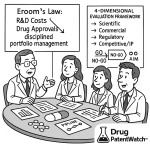
For decades, the tech industry has been defined by the relentless optimism of Moore’s Law, which observes the exponential increase in computing power for a given cost. In our world, we face its grim inverse: “Eroom’s Law”.1 This is the brutal observation that, despite monumental advances in technology and biological understanding, the cost to develop a new medicine has been doubling roughly every nine years, even when adjusted for inflation.1 Simultaneously, the number of new drugs approved per billion R&D dollars has been in a state of stubborn, frustrating decline.2
This isn’t an abstract academic theory; it’s the central operational challenge that defines our daily reality. The numbers are staggering. The fully capitalized cost to bring a single new molecular entity to market is now conservatively estimated to be between $1.3 billion and $2.6 billion.1 This figure, which accounts for the cost of the many failures that precede one success, is the price of admission to the market. Some analyses, looking at the most productive pharmaceutical companies, have even placed the cost per approved drug as high as $5.5 billion when the full portfolio of failed projects is factored in.4 This colossal investment is spread across a development timeline that routinely stretches 10 to 15 years from initial discovery to regulatory approval.3
This punishing economic environment has created a subtle but powerful secondary effect: a vicious cycle of institutional risk aversion. When the cost of failure is measured in billions of dollars and a decade of work, the organizational incentives naturally shift from rewarding breakthrough innovation to, more pressingly, avoiding catastrophic failure. This rational response to risk leads decision-makers to gravitate toward projects perceived as “safer”—so-called “me-too” drugs in well-validated target classes, incremental line extensions for existing products, or entries into already crowded therapeutic areas where the biological and clinical pathways are well-understood.5
This strategic conservatism is amplified by a host of well-documented cognitive biases that plague portfolio management. “Champion bias” allows a project with a powerful internal advocate to survive long past its expiration date, while the “sunk-cost fallacy” makes it psychologically painful to terminate a project into which hundreds of millions have already been poured, even when the data turns negative.1
The result is a portfolio strategy that, while logical from the perspective of mitigating single-asset risk, directly contributes to the macro-level problem of stagnant R&D productivity. The focus on incrementalism leads to a glut of products competing for the same market space, forcing any new entrant to clear the impossibly high bar of being “better than the Beatles”—demonstrating not just efficacy, but significant superiority over an already effective standard of care.7 This dynamic ultimately suppresses the very innovation the industry is meant to produce. It is this cycle that creates the urgent, strategic need for a tool that can do more than just manage risk—it must identify opportunities where the potential for a breakthrough reward justifies the inherent risk. Patent trend analysis is precisely that tool, offering a data-driven method to find the truly novel, less-crowded frontiers where a bold R&D investment has a clearer path to success.
A Taxonomy of Failure: Deconstructing the Multifaceted Risks in Drug Development
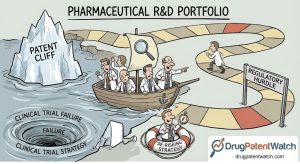
The term “R&D risk” is often used as a monolithic catch-all, but to effectively mitigate it, we must first dissect it into its constituent parts. A drug candidate’s journey is a gauntlet, and failure can come from any number of directions. Understanding this taxonomy of risk is the first step toward building a de-risking strategy that addresses each vulnerability specifically.7
Scientific & Technical Risk: This is the most fundamental risk: is the core biological hypothesis correct?.12 True validation of a molecular target’s role in human disease is exceptionally challenging and often isn’t definitively proven until a drug is successfully developed.13 This category is rife with questions that can derail a program before it even enters the clinic. Can we design a molecule with the requisite properties—sufficient potency on the target, selectivity to avoid off-target effects, adequate solubility and bioavailability to reach the target tissue, and a viable manufacturing process?.7 A failure in any one of these technical areas can render a brilliant scientific concept commercially and clinically useless.
Clinical Risk: This is, by a wide margin, the single greatest cause of R&D failure. Over 90% of drug candidates that enter clinical trials will ultimately fail to reach the market.1 The likelihood of approval (LOA) for a drug entering Phase 1 has plummeted to a mere 6.7%.15 The primary reason for this staggering attrition rate, especially in the crucial and expensive Phase II trials, is a simple lack of efficacy.2 What worked in a petri dish or an animal model simply does not translate to a therapeutic benefit in human patients. Unexpected toxicity and adverse events are another major contributor, as the complex physiology of the human body reveals safety issues that preclinical models could not predict.
Regulatory Risk: Successfully navigating the clinical trial process is no guarantee of market entry. The regulatory bodies—the FDA in the United States and the EMA in Europe—represent a formidable gauntlet of their own. Regulatory requirements have become increasingly stringent over time, and even with the availability of expedited pathways like accelerated approval, the bar for demonstrating a favorable risk-benefit profile remains exceptionally high.11 A company can spend over a billion dollars and a decade of effort only to have its New Drug Application (NDA) rejected by regulators.
Commercial & Market Risk: Even a safe, effective, and approved drug can fail if it doesn’t succeed in the marketplace. Will payers and health systems provide reimbursement for the new therapy? Will physicians choose to prescribe it over existing, often cheaper, alternatives? Does the drug offer a compelling and demonstrable value proposition that justifies its price?.8 A failure to accurately assess these market dynamics can lead to a commercial disaster, where a drug reaches the market but never achieves the sales necessary to recoup its development costs.
Intellectual Property (IP) Risk: This is the silent killer of R&D programs. A scientifically brilliant and clinically successful drug is rendered commercially worthless if its launch infringes upon a competitor’s valid patent. This risk is twofold: the risk of being blocked by a third party’s IP (a lack of Freedom to Operate, or FTO) and the risk that your own patent portfolio is too weak to prevent competitors from quickly launching generic or biosimilar versions. In an industry where market exclusivity is the very foundation of the business model, underestimating IP risk is a fatal error.
The Consequences of Miscalculation: Beyond the Financial Write-Off
When a promising drug candidate fails, particularly in late-stage development, the immediate focus is often on the financial loss. A single failed Phase III trial can result in a direct write-off of between $200 million and $500 million, with the total sunk cost for the entire program easily exceeding $1 billion.1 But to view this merely as a line item on a balance sheet is to profoundly misunderstand the true, cascading cost of failure.
The most significant damage is often the squandered opportunity cost. The years spent pursuing a flawed candidate represent a squandering of a company’s most precious and finite resources: the time and talent of its highly specialized scientists and clinicians.1 Those thousands of hours and millions of dollars could have been deployed on more promising projects that were perhaps shelved due to resource constraints. This is a loss from which a company can never truly recover.
Furthermore, a high-profile late-stage failure sends shockwaves through the organization and the market. It can severely damage a company’s reputation, erode the confidence of investors, and trigger a precipitous drop in stock value.1 Internally, such an event can have a chilling effect on the corporate culture, breeding a deeper sense of risk aversion and making teams hesitant to champion bold, innovative, but inherently risky projects in the future. This reinforces the very cycle of incrementalism that contributes to the industry’s broader productivity challenges. The stakes, therefore, are far higher than a single P&L statement can capture. Every R&D decision is a bet on the future, and a miscalculation costs not just money, but time, opportunity, and the very innovative spirit that drives the enterprise forward.
From Legal Hurdle to Strategic Weapon: Redefining the Role of Patent Intelligence
For too long, patent strategy has been confined to the corporate periphery, treated as a specialized, often opaque, function of the legal department. This traditional view frames patent analysis as a reactive, defensive necessity—a series of boxes to be checked rather than a strategic lever to be pulled. This perspective is not just outdated; in the current biopharma landscape, it is a dangerous liability. The modern imperative is to fundamentally redefine the role of patent intelligence, transforming it from a mere legal hurdle into our most potent offensive weapon for navigating the R&D minefield and securing a sustainable competitive advantage.
The Old Paradigm: Patents as a Defensive Shield
Historically, the engagement of R&D and business teams with the world of patents was often limited and late-stage. Patent searching was viewed through a narrow, defensive lens: a cumbersome but necessary legal check, typically a “freedom to operate” (FTO) search, conducted at the eleventh hour to ensure a new product wouldn’t infringe on a competitor’s IP before launch.19
In this old paradigm, the patent department was a service provider, not a strategic partner. They were brought in to “protect” an invention that had already been created, effectively acting as scribes and guardians for decisions made in a vacuum, devoid of IP context.20 This reactive posture meant that companies were constantly playing defense on a competitive field that had already been shaped and defined by the more forward-thinking strategies of their rivals. The R&D pipeline would churn forward, driven by scientific and clinical considerations alone, only to discover late in the game that the path to market was blocked by a competitor’s well-placed patent, forcing costly redesigns, desperate licensing negotiations, or even the complete abandonment of a nearly-market-ready asset.
The New Paradigm: Patents as an Offensive Strategic Weapon
The punishing economics of Eroom’s Law and the hyper-competitive nature of modern drug development have rendered the old, defensive paradigm “dangerously obsolete”.19 Market leaders now understand that a company’s sophistication in leveraging patent intelligence is a “direct proxy for its strategic maturity”.19 The strategic paradigm has shifted dramatically.
Today, patent analysis is the primary mechanism for gathering actionable competitive intelligence, for mapping complex technological landscapes, for identifying untapped market opportunities, and for making the kind of data-driven strategic decisions that can define a company’s trajectory for years to come.19 It is no longer about simply protecting what you’ve invented; it is about using the global patent system as a forward-looking sensor array to guide
what you choose to invent in the first place.19
This offensive approach means integrating patent intelligence into the R&D process from its earliest stages. Before a single experiment is run on a new biological target, a landscape analysis should be performed to understand the competitive density. Before a lead compound is optimized, a preliminary FTO search should be conducted to identify potential roadblocks. This proactive stance transforms the patent portfolio from a collection of defensive shields into a “map of the future”.23 It provides a blueprint of competitors’ pipelines, their strategic priorities, their technological bets, and their likely timelines, often years before that information becomes public through financial reports or press releases.
Why Patent Data is the Ultimate Source of Competitive Truth
In a world awash with corporate communications, marketing materials, and speculative press releases, patent data stands apart as a uniquely reliable source of competitive truth. This reliability stems from the fundamental nature of the patent system itself. At its core, the patent system represents a grand bargain, a quid pro quo between the innovator and society. In exchange for a temporary, legally enforceable monopoly—typically 20 years from the filing date—the innovator is required to publicly disclose their invention in sufficient detail for others in the field to understand and replicate it.19
This mandatory disclosure transforms the world’s patent databases into an unparalleled repository of technical and commercial knowledge, much of which is found nowhere else.22 Unlike a press release, which can be aspirational or promotional, a patent application represents a significant investment of time, money, and strategic intent. Companies do not undertake the expensive and rigorous process of patenting an invention lightly. Therefore, a patent filing is a hard signal of where a company is actively placing its R&D bets and committing its resources.21
This makes patent data a powerful leading indicator of strategic shifts in the industry. Consider the typical flow of information. A company’s annual report or an announcement of a new Phase III clinical trial are lagging indicators. By the time a major trial is publicly registered, the critical R&D decisions, the target selection, and the initial compound design occurred years, or even a decade, earlier. The strategic die has long been cast.
Patent filings, in contrast, provide the earliest possible signal of a company’s intentions. A company must file for patent protection during the discovery or preclinical phase, long before the asset becomes a visible part of the public pipeline. Therefore, a sudden surge in patent filings by a competitor around a specific biological target, a new technology platform like antibody-drug conjugates (ADCs), or in a particular therapeutic area is a clear and early warning of a new strategic initiative. Systematically monitoring these trends allows an organization to anticipate competitor moves and emerging market dynamics, not just react to them. It is the closest thing we have to a corporate crystal ball, enabling a more agile, proactive, and ultimately, more successful R&D strategy.
The Analyst’s Toolkit: Mastering the Methodologies of Patent Trend Analysis
To transform patent data from a raw resource into a strategic asset, one must master the core analytical methodologies. These are not interchangeable techniques; each serves a distinct purpose, answers a different strategic question, and is best deployed at a specific stage of the R&D lifecycle. Think of them as a set of lenses for your strategic microscope and telescope. Patent landscaping provides the broad, panoramic view of the entire terrain. White space analysis zooms in to find the unexplored clearings. And freedom-to-operate analysis provides the high-magnification view needed to navigate a specific, narrow path. Mastering this trifecta is the foundation of data-driven R&D de-risking.
Methodology 1: Patent Landscaping – Mapping the Competitive and Technological Terrain
What It Is and Why It Matters
A patent landscape analysis is, at its core, the creation of a “comprehensive map of existing patents” designed to analyze and visualize the state of a specific technology or industry.25 Its purpose is to provide a high-level, strategic overview—a “telescope” view of the entire IP universe for a given domain.26 This is not a search for a single “killer” prior art document or a specific infringement risk. Rather, it is an exercise in pattern recognition. By mapping the landscape, you can identify the key players (both established and emerging), pinpoint nascent technology trends, and uncover areas of intense patenting activity, often referred to as “patent thickets”.27 For an R&D organization, this provides invaluable context, preventing you from blindly wandering into a technologically saturated or legally contentious field.
The Step-by-Step Process
Conducting a robust patent landscape analysis is a systematic process that moves from broad data collection to focused strategic interpretation.
Define the Scope: The first and most critical step is to clearly define the boundaries of your analysis. Are you interested in a broad therapeutic area (e.g., oncology), a specific disease (e.g., non-small cell lung cancer), a biological target or pathway (e.g., the PD-1/PD-L1 axis), or a technology platform (e.g., mRNA delivery systems)? A well-defined scope is essential to ensure the results are relevant and actionable.27
Data Collection: The next step is to gather the raw material. This involves systematically searching comprehensive patent databases like those from the USPTO, WIPO, and the EPO, as well as free tools like Google Patents and professional, subscription-based platforms. The search strategy will employ a combination of relevant keywords, company names (assignees), and, most importantly, patent classification codes like the Cooperative Patent Classification (CPC), which allows for a more systematic and language-independent search.28
Data Cleaning & Analysis: The raw search will likely yield thousands, if not tens of thousands, of documents. This data must be cleaned (e.g., normalizing assignee names to account for mergers and subsidiaries) and organized. The analysis then begins, looking for key trends: Who are the top filers? How has filing activity (velocity) changed over time? In which geographic jurisdictions is patenting concentrated? This analysis reveals the major players and the level of maturity and market interest in the technology.27
Visualization & Interpretation: The human brain excels at identifying patterns visually. Therefore, a key output of a landscape analysis is the visualization of the data. Tools like patent heatmaps, 3D topographical maps, and cluster diagrams can make complex datasets intuitive. These visualizations can instantly reveal where patenting is densely concentrated (the “mountains” or “thickets”) and where it is sparse (the “valleys” or “white spaces”), transforming raw data into a strategic map.25
Strategic Outputs for R&D De-Risking
The final output of a patent landscape is not the map itself, but the strategic decisions it enables.
Competitive Intelligence: The landscape will clearly identify the dominant IP holders in a given space. But more importantly, it can reveal non-obvious players—stealthy startups, academic institutions, or companies from adjacent industries—that are pioneering new approaches and could become future competitors or valuable partners.21
Technology Scouting: By analyzing the trends in patent filings, you can spot emerging technologies on the horizon. For example, a sudden increase in patents related to a new type of ADC linker technology or a novel gene editing delivery system could signal a technological shift. This intelligence can inform your own R&D direction or highlight potential in-licensing and acquisition opportunities.25
Risk Assessment: The landscape map makes “patent thickets” visible. These are dense, overlapping, and interlocking webs of intellectual property around a specific target or technology, often designed to deter competitors.23 Identifying these thickets early is a critical de-risking activity. It signals that this is a legally contentious and high-risk area, one that should either be avoided or approached only with a very sophisticated and well-funded IP strategy.
Methodology 2: White Space Analysis – Finding Untapped Frontiers for Innovation
What It Is and Why It Matters
If landscaping is about mapping the existing terrain, white space analysis is about finding the uncharted territory. It is the logical and crucial next step, focusing specifically on identifying the “gaps in the patent landscape where there is little to no patenting activity”.31 These “white spaces” are the valleys and plains on the patent map. They represent areas that have been potentially overlooked or underserved by competitors, and therefore present valuable opportunities to develop new, highly defensible inventions.21 Pursuing a white space strategy allows an organization to build its IP fortress on open ground rather than trying to lay siege to a competitor’s heavily fortified castle.
The Process of Discovery
Finding a true white space requires a more focused and investigative approach than a broad landscape.
Start with the Landscape: The visual outputs from the patent landscape analysis are the starting point. The sparsely populated areas on the heatmaps and cluster diagrams are your initial candidates for investigation.
Hypothesize the Gap: The most important question to ask is: why is this space empty? Is it a genuine, overlooked opportunity? Or is there a good reason no one is there? Perhaps the underlying science is unproven, the technical challenges are insurmountable with current technology, or there is no perceived commercial market or unmet clinical need.
Targeted Search & Validation: Once a potential white space is identified, you must conduct highly targeted and specific searches around its periphery to confirm that it is truly empty. The goal is to prove a negative—to ensure the space wasn’t simply missed by the initial broad search methodology. This requires a deep and creative search strategy.31
Connect to Market Needs: An intellectual property white space is strategically worthless if it does not align with a real-world need. The final and most critical step is to overlay the IP analysis with commercial and clinical intelligence. Is there an unmet patient need that a solution in this white space could address? This integration of IP data with market data is what transforms an empty spot on a map into a viable business opportunity.33
Strategic Outputs for R&D De-Risking
A validated white space analysis provides a powerful directive for R&D strategy.
Guide Early-Stage Research: It provides a clear, data-driven rationale for directing discovery efforts toward less-crowded and more defensible areas. This significantly increases the probability of securing strong, broad, foundational patents that can form the cornerstone of a new product’s exclusivity.31
Build a Stronger Portfolio: By systematically identifying and pursuing opportunities in white spaces, a company can build a more diverse, robust, and valuable IP portfolio. This not only provides better protection for its own products but also increases the company’s overall valuation and makes it a more attractive target for investors and potential partners.31
A prime example of this principle in action can be seen in the rise of companies leveraging artificial intelligence for drug discovery. Firms like Recursion Pharmaceuticals effectively identified a massive white space. Traditional pharma had focused on hypothesis-driven, small-scale experiments. The white space was the ability to generate and analyze biological data at an unprecedented scale, using AI to find patterns and identify drug targets that were invisible to conventional methods.35 They didn’t just find a gap in the patent landscape; they found a gap in the entire R&D paradigm and built their company within it.
Methodology 3: Freedom-to-Operate (FTO) Analysis – Clearing the Path to Market
What It Is and Why It’s Non-Negotiable
A Freedom-to-Operate (FTO) analysis is the most specific and legally critical of the three methodologies. It is not an exploratory exercise; it is a focused, product-centric investigation designed to answer one crucial question: “Can we make, use, or sell our specific product in a specific country without infringing the valid and enforceable patent rights of a third party?”.37 If landscaping is the “telescope,” FTO is the high-power “microscope,” examining a single, predetermined path in minute detail.26 It is a proactive measure of due diligence and an essential component of commercial risk assessment.
It is absolutely vital to understand the distinction between FTO and patentability, as confusing the two is one of the most common and costly mistakes in IP strategy. Patentability asks, “Is my invention new and non-obvious? Can I get a patent on it?” Freedom to Operate asks, “Even if I can get a patent on my invention, does it step on the toes of someone else’s existing patent?” You can, for example, invent and patent a brilliant new extended-release formulation for an existing drug, but if another company still holds a valid, in-force patent on the active pharmaceutical ingredient (API) itself, you have no freedom to operate. Your patent gives you the right to stop others from using your specific formulation, but it does not give you the right to practice your invention if it infringes a broader, underlying patent.26
Best Practices for a Robust FTO
A reliable FTO analysis requires a level of rigor and legal precision that goes far beyond a simple keyword search.
Define the Scope Rigorously: The quality of an FTO is determined by the precision of its scope. This involves creating a detailed description of the product, deconstructing it into all its essential components, ingredients, and manufacturing processes. It also requires defining the specific jurisdictions (countries) where the product will be manufactured and sold, as patent rights are territorial.26
Conduct a Thorough Search: Unlike a patentability search, which looks for prior art from any time, an FTO search is focused only on in-force patents and pending applications that could potentially be infringed. This generally means searching patents filed within the last 20-25 years to account for the standard patent term and potential extensions.26
Analyze the Claims: This is the heart of the FTO analysis and where deep legal and technical expertise is required. The analysis must focus exclusively on the legally binding language of the patent claims, not the general descriptive text in the specification. Each element of the claims of a potentially relevant patent must be meticulously compared against the features of your product to determine the likelihood of infringement.37
Obtain a Legal Opinion: The culmination of a comprehensive FTO analysis is typically a formal, written opinion from a qualified patent attorney. This document is more than just a summary of the findings; it is a critical legal shield. In U.S. patent litigation, a finding of “willful infringement” can lead to a court awarding enhanced damages, up to three times the actual damages. A well-reasoned FTO opinion demonstrates that the company performed its due diligence and proceeded with a good-faith belief that it was not infringing, making a finding of willfulness much less likely.26
Strategic Outputs for R&D De-Risking
The output of an FTO analysis directly informs critical, high-stakes R&D decisions.
Go/No-Go Decision Point: A negative FTO opinion—one that identifies a high, unavoidable risk of infringement—is a major red flag. It should serve as a critical input into the Go/No-Go decision-making process, potentially leading to the termination of a project before hundreds of millions of dollars are invested in late-stage clinical trials and commercial launch preparations.37
Informing “Invent-Around” Strategies: An FTO analysis doesn’t just identify problems; it provides a roadmap to solutions. By pinpointing the specific patent claims that pose a threat, it gives the R&D team a precise blueprint of what to avoid. This allows them to strategically modify the product’s formulation, delivery mechanism, or manufacturing process to “design around” the blocking patent, effectively engineering a path to freedom to operate.39
Identifying Licensing/M&A Needs: In some cases, a blocking patent is so broad and fundamental that it cannot be designed around. The FTO analysis is crucial in identifying these situations early. It transforms a legal risk into a clear business development objective: the specific patent that must be licensed-in or the company that must be acquired to clear the path to market.26
To provide maximum clarity, the distinct roles and characteristics of these three essential methodologies are summarized in the table below.
Feature
Patent Landscaping
White Space Analysis
Freedom-to-Operate (FTO)
Strategic Question
What is the state of technology and competition in this entire field?
Where are the untapped opportunities for innovation in this field?
Can we launch our specific product without being sued for infringement?
Binoculars: Scanning the horizon for clearings and open land.
Microscope: Examining a single grain of sand for flaws.
Aligning IP with R&D: A Framework for Data-Driven Decision-Making
Mastering the methodologies of patent analysis is only half the battle. The true strategic value is unlocked when the insights generated from these analyses are systematically integrated into the R&D decision-making process. This requires breaking down the traditional silos between the legal, scientific, and commercial functions of the organization. IP risk cannot be an afterthought; it must be a core criterion, a critical filter applied at every major inflection point in the drug development lifecycle. By weaving patent intelligence into the fabric of R&D strategy, we can make smarter, more informed, and fundamentally less risky decisions about where to place our billion-dollar bets.
The very first strategic decision in any drug discovery program—the selection of a biological target—is arguably the most important. It sets the course for a decade or more of research and investment. Traditionally, this decision has been driven almost exclusively by scientific and clinical rationale. However, initiating a major research program without first conducting a thorough patent landscape analysis is akin to planning a cross-country road trip without looking at a map.
A comprehensive landscape analysis can reveal the density and complexity of the patenting activity around a potential target, its associated pathways, and relevant biomarkers. A target that is the subject of a massive, tangled “patent thicket,” with key IP held by multiple, often litigious, competitors, represents a significantly higher-risk proposition from day one.1 Pursuing such a target means knowingly entering a legal and competitive warzone where the path to market will be fraught with challenges.
Conversely, a biologically promising target that exists in a relatively open and uncrowded IP landscape—a validated white space—is an exponentially more attractive proposition.31 It offers a much clearer path to securing strong, dominant, and foundational intellectual property. By making patent landscape analysis a mandatory prerequisite for target validation, an organization can strategically steer its R&D engine toward these more promising frontiers, de-risking the entire portfolio before the first significant investment is even made.
Go/No-Go Decisions at Phase Gates: Using IP as a Critical Filter
Effective R&D portfolio management is not just about picking winners; it is about the disciplined and timely termination of projects that are unlikely to succeed.1 Each phase transition in the clinical trial process represents a major escalation in cost and commitment. Therefore, the “Go/No-Go” decision points, or phase gates, are the most critical junctures for risk management.
Historically, these decisions have been based on an evaluation of scientific data, clinical outcomes, and commercial forecasts. A truly robust process, however, must elevate IP risk to be a formal and co-equal criterion in this evaluation framework.1
Preclinical to Phase I Transition: Before a candidate enters human trials for the first time, a preliminary FTO assessment should be a mandatory deliverable. This initial screen can identify any obvious, high-risk blocking patents that would make further development futile.
Phase II to Phase III Transition: This is arguably the most critical financial gate in all of drug development. Moving into Phase III involves a massive increase in investment, often costing hundreds of millions of dollars. At this stage, a comprehensive, formal FTO opinion from qualified patent counsel is not a luxury; it is an absolute necessity. A high and unavoidable infringement risk identified at this point can save the company from making its largest and most costly mistake. The courage to say “No-Go” based on a negative FTO opinion at the end of Phase II is the hallmark of a mature, data-driven R&D organization.1
Designing “Invent-Around” Strategies: Navigating the Patent Thicket
When a Freedom-to-Operate analysis identifies a blocking patent that threatens a promising program, the strategic response is not always to terminate the project. In many cases, the FTO analysis itself provides the key to salvation by enabling a focused “invent-around” strategy.
The detailed claims analysis that forms the core of the FTO provides a precise legal blueprint of what the competitor’s patent protects. It defines the exact boundaries of their intellectual property. This information is a gift to a creative R&D team. It transforms a vague legal threat into a well-defined scientific challenge. Armed with this knowledge, chemists and formulation scientists can systematically work to design a new version of the product that achieves the desired clinical effect while intentionally avoiding the specific elements of the competitor’s claims. This could involve developing a different crystalline form (polymorph) of the API, creating a novel formulation with different excipients, designing an alternative drug delivery system, or developing a new and non-infringing manufacturing process.23 This proactive, IP-informed approach to R&D can navigate a path through even the densest of patent thickets.
Fueling Business Development & Licensing
The insights generated from patent analysis are not only for internal R&D guidance; they are a powerful engine for external business development and corporate strategy. In an era where even the largest pharmaceutical companies increasingly rely on external innovation to replenish their pipelines, patent analysis is a primary tool for identifying and evaluating opportunities.41
A broad patent landscape analysis can act as a technology scouting tool, identifying smaller biotech companies or academic labs that hold foundational patents in an area of strategic interest for the company.21 It can shine a spotlight on potential M&A targets or in-licensing opportunities long before they appear on the radar of investment bankers.
Furthermore, a deep and rigorous patent analysis is a cornerstone of the due diligence process for any potential deal. When evaluating a company for acquisition or a product for in-licensing, investors and corporate development teams must scrutinize the target’s IP portfolio with extreme care. They will assess the validity and enforceability of the patents, the clarity of ownership, the breadth of the claims, and, critically, the target’s own freedom to operate.43 A weak or encumbered IP position can be a deal-killer, or at the very least, can significantly reduce the valuation of the asset. By leveraging patent analysis, business development teams can more accurately assess the true value and risk of an external opportunity, leading to smarter, more successful transactions.
Lessons from the Battlefield: Real-World Case Studies in IP Strategy
Theory and frameworks are essential, but the most powerful lessons are often learned from the real-world application of strategy. The history of the biopharmaceutical industry is replete with battles fought in the courtroom and the marketplace, where the strategic deployment of intellectual property was the deciding factor. By dissecting these pivotal cases, we can distill abstract principles into concrete, actionable lessons that have shaped, and continue to shape, the competitive landscape.
Case Study 1: The Humira Fortress – A Masterclass in Lifecycle Management and the Patent Thicket
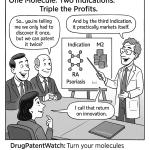
There is perhaps no better example of strategic, lifecycle-focused patent management than AbbVie’s defense of its blockbuster drug, Humira (adalimumab). For years, Humira was the best-selling drug in the history of medicine, and its commercial longevity was a direct result of one of the most sophisticated and formidable IP strategies ever devised.
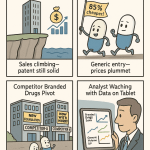
The core “composition of matter” patent covering the Humira molecule itself expired in the United States at the end of 2016.45 In a traditional model, this would have signaled the end of the drug’s market exclusivity and the beginning of a rapid revenue decline due to the entry of biosimilar competitors. However, AbbVie had spent over a decade constructing a veritable fortress of secondary patents around its flagship product. This “patent thicket” consisted of at least 132 additional, overlapping U.S. patents covering a vast array of ancillary inventions, including specific manufacturing methods, various formulations of the drug, and new methods of use for treating different inflammatory conditions.45
This dense web of IP created a legal minefield for would-be biosimilar competitors. To launch their product, a competitor would not just need to navigate the expired composition of matter patent; they would have to challenge and invalidate, or design around, dozens of these secondary patents. The sheer cost and complexity of this litigation created a powerful deterrent, allowing AbbVie to use a series of legal settlements to orchestrate the entry of biosimilars on its own terms, delaying significant U.S. competition for years past the 2016 cliff.45
The strategic brilliance of AbbVie’s approach becomes even clearer when comparing the situation in the United States to that in Europe. AbbVie’s European patent portfolio for Humira was dramatically smaller and less complex, comprising only a handful of non-duplicative patents.46 As a result, when the primary European patent expired in 2018, biosimilar competition entered the market almost immediately.
This stark jurisdictional difference reveals a profound lesson. Advanced patent strategy is not a one-size-fits-all endeavor. It is a form of geopolitical chess, where the strategy must be tailored to the specific rules, costs, and procedures of each country’s legal and patent system. The U.S. system, with its higher litigation costs, specific discovery rules, and unique legal precedents, made the “patent thicket” a particularly effective deterrent. The Humira case demonstrates that de-risking a global R&D portfolio requires a nuanced, jurisdiction-specific patent analysis. It’s not enough to know what is patented; you must understand where and how it is patented, and how that will play out in the local litigation arena.
Case Study 2: The Enablement Earthquake (Amgen v. Sanofi) – Redefining the Scope of Protection
In May 2023, the U.S. Supreme Court issued a unanimous decision that sent shockwaves through the world of biotechnology IP. The case, Amgen Inc. v. Sanofi, fundamentally reshaped the strategic considerations around patenting complex biological inventions, particularly antibodies, and provided a powerful new tool for challenging overly broad patents.47
The dispute centered on Amgen’s patents for its cholesterol-lowering drug, Repatha. Amgen had obtained broad “genus” claims that purported to cover an entire class of antibodies that function in a specific way (binding to the PCSK9 protein and blocking it from binding to the LDL receptor). While Amgen’s patents described 26 specific antibody sequences, their claims were written to cover potentially millions of other antibodies that achieved the same functional result.47 Sanofi developed its own competing drug, Praluent, which worked in the same way but used a different antibody sequence not explicitly described in Amgen’s patents.
The Supreme Court sided with Sanofi, invalidating Amgen’s broad claims on the grounds of a lack of “enablement.” The court reaffirmed a cornerstone principle of patent law: the patent’s specification must describe the invention in enough detail to “enable any person skilled in the art… to make and use the same” without “undue experimentation”.48 The court’s core holding was simple and powerful:
“The more one claims, the more one must enable”.49 Because Amgen had claimed a vast “universe of antibodies” but had only provided a “roadmap” for discovering them through a trial-and-error process, the claims were invalid.
The strategic implications of this decision for R&D and IP strategy are profound:
A Shift from Breadth to Depth: The era of securing extremely broad, functional genus claims early in the R&D process may be over. The new strategic imperative is to generate sufficient data to support a robust portfolio of narrower, well-defined “species” claims that cover specific embodiments of the invention. R&D programs can no longer rely on a single, broad patent to protect a new platform; they must build a picket fence of many strong, well-supported patents.47
Documentation is Paramount: This ruling elevates the importance of meticulous documentation throughout the R&D process. The lab notebook, the experimental records, and the detailed characterization data are no longer just scientific records; they are critical legal evidence needed to demonstrate that the full scope of the invention has been enabled.
A New Weapon for FTO and Validity Analysis: The Amgen decision provides a powerful new line of attack for companies seeking to clear a path to market. When conducting an FTO analysis, it is now essential to assess not just for infringement, but also for the “enablement validity” of a competitor’s potentially blocking patents. A competitor’s seemingly broad and intimidating patent may, in fact, be a paper tiger, vulnerable to an Amgen-style invalidity challenge. This could open up a freedom-to-operate pathway that was previously considered closed.
Case Study 3: The Genentech Blueprint – A Legacy of Science-Driven Strategy
Genentech is not just a company; it is the foundational story of the entire biotechnology industry. Its enduring success provides a timeless blueprint for how to build an innovative and resilient R&D organization, with lessons that are more relevant today than ever.
Founded in 1976 on the revolutionary breakthrough of recombinant DNA technology, Genentech’s strategy was built on a powerful dual-pronged approach.50 First, they relentlessly pursued pioneering, first-in-class science, often leveraging fundamental discoveries from publicly funded academic research to create blockbuster drugs like recombinant human insulin, Herceptin, Avastin, and Rituxan.50 They did not focus on incremental improvements; they focused on creating entirely new categories of medicine.
Second, and just as importantly, Genentech’s leadership recognized a fundamental truth from the very beginning: most innovation occurs outside the walls of any single company.52 They cultivated a deep and authentic culture of external collaboration, exemplified by their transformative, long-term partnership with Roche, which eventually led to a full acquisition in 2009.50 This strategy allowed them to maintain an independent, science-driven research group (gRED) while leveraging the global commercial and development power of a major pharmaceutical partner.53
The de-risking lesson from the Genentech model is profound. They de-risked their portfolio by creating a resilient “ecosystem” of innovation, balancing the high risk of their own groundbreaking internal research with a constant influx of the best external science they could find.53 Their deep “scientific fluency” across the organization allowed them to be exceptionally skilled at identifying and partnering on the most promising external technologies.52 This model of a strategically balanced, externally-aware R&D engine remains the gold standard today, especially as large pharma companies become increasingly reliant on M&A and licensing to replenish their pipelines in the face of looming patent cliffs.41
The Road Ahead: Integrating Advanced Tools and Future-Proofing Your Strategy
The principles of patent analysis are enduring, but the tools and the environment in which we apply them are in a state of constant, rapid evolution. The sheer volume of data, the increasing complexity of biological innovation, and the relentless pressure to improve R&D productivity demand that we look beyond traditional methods. The future of de-risking the R&D portfolio lies in the intelligent integration of advanced analytical tools, the fusion of disparate data sources into a holistic intelligence platform, and a fundamental rewiring of the R&D organization to be more collaborative, data-fluent, and strategically agile.
The Rise of AI and Machine Learning in Patent Analysis
The global patent system has become a victim of its own success. With an estimated 3.46 million new patent applications filed worldwide in 2022 alone, the data deluge is overwhelming.22 Manually sifting through this ocean of information to find relevant trends and risks is becoming an impossible task. This is where artificial intelligence (AI) and machine learning (ML) are transitioning from a futuristic concept to an essential, practical tool.
The applications of AI in patent analysis are already making a significant impact:
Semantic Search: Traditional patent searching relies on keywords, which are inherently limited and prone to missing relevant documents that use different terminology. AI-powered semantic search engines can understand the context and concepts behind a query, not just the words themselves. This leads to far more accurate, comprehensive, and efficient search results, reducing the risk of missing a critical prior art document or a blocking patent.26
Automated Clustering & Landscaping: AI and ML algorithms can analyze vast datasets of patents and automatically group them based on technological similarity. This capability dramatically accelerates the creation of patent landscapes, allowing analysts to quickly visualize technology clusters, identify key players, and spot emerging trends without weeks of manual categorization.25
Predictive Analytics: The next frontier is the use of AI for predictive purposes. By integrating patent data with other datasets, such as clinical trial outcomes, scientific publications, and market data, ML models can be trained to forecast technology trajectories and even predict the potential success rate of certain classes of patented compounds. This moves patent analysis from a descriptive tool to a predictive one, offering an unprecedented level of strategic foresight.25
The Power of Integrated Data: Beyond the Patent Document
A patent document, viewed in isolation, provides a valuable but incomplete picture. Its true strategic power is only revealed when it is connected to the broader ecosystem of regulatory, legal, and clinical data that surrounds a drug product. True strategic insight requires an integrated view.
This is where specialized business intelligence platforms provide an indispensable advantage over generic patent search engines. A platform like DrugPatentWatch, for example, is architected around this very principle of data integration. It moves beyond being a simple repository of patent documents and instead serves as a central hub that connects patent information directly to other mission-critical datasets.55
“The biopharmaceutical industry stands at a strategic inflection point, defined by a fundamental paradox: research and development (R&D) expenditures are escalating at an unsustainable rate, while the output of novel, value-creating medicines remains stubbornly flat. This phenomenon, often termed “Eroom’s Law,” places unprecedented pressure on the R&D portfolio, transforming it from a pipeline of scientific projects into a high-stakes collection of assets that must be managed with the rigor and discipline of a premier investment fund.” 1
By using such a platform, an analyst can see the full picture for a competitor’s drug:
FDA Regulatory Data: The platform links patents directly to their listings in the FDA’s Orange Book (for small molecules) or Purple Book (for biologics). This allows a user to see not just the patent expiration dates, but also the various regulatory exclusivities—such as New Chemical Entity (5 years), Orphan Drug (7 years), or Biologic (12 years)—that also protect the drug from competition.19 This is critically important because the effective period of market monopoly is determined by whichever protection, patent or regulatory, lasts the longest.23
Litigation Records: The platform integrates data on patent litigation, including Paragraph IV challenges filed by generic companies and inter partes review (IPR) proceedings at the Patent Trial and Appeal Board (PTAB).19 This provides real-time intelligence on which patents are being actively challenged, how strong those challenges are, and how robust the patents are proving to be in court. This is a direct measure of a patent’s real-world strength.
Clinical Trial Information: By linking patents to drugs currently in development, these platforms provide a much clearer and more timely view of a competitor’s pipeline and their progress toward the market.19
This holistic, multi-dimensional view is what enables a truly strategic analysis. It allows a company to move beyond simply looking at a patent’s expiration date and instead to accurately forecast the true “loss of exclusivity” (LOE) date, which is the single most critical variable in any commercial model. This integrated approach transforms disparate data points into a coherent, actionable strategic narrative.23
The Future-Proof R&D Organization: Breaking Down Silos
Ultimately, the most advanced tools and the most brilliant analyses are worthless if the insights they generate are not acted upon. De-risking the R&D portfolio is not just a technical challenge; it is an organizational and cultural one. The insights from patent analysis cannot remain locked within the legal department or a specialized competitive intelligence group. They must be woven into the very fabric of R&D decision-making.
The most successful and productive companies in the industry are those that foster what GSK’s Chief Commercial Officer, Luke Miels, calls a “positive tension” between their R&D, commercial, and IP teams.52 This requires deep, continuous collaboration and mutual respect. The R&D organization must understand the commercial and IP realities that will shape a drug’s future, and the commercial and IP teams must have a deep “scientific fluency” to engage meaningfully with their R&D colleagues.52
The ultimate goal is to build a “truth-seeking” organization—one that values and rewards objectivity, that embraces data from all sources, and that is not afraid to “fail fast” and terminate a project based on a clear-eyed assessment of all the risks, including scientific, clinical, commercial, and, critically, intellectual property.1 In the unforgiving landscape of modern drug development, the companies that succeed will be those that use every tool at their disposal to see the terrain more clearly than their competitors. The patent compass, when wielded by a well-aligned and data-fluent organization, is the most powerful navigation tool we have.
Key Takeaways
Acknowledge the Unforgiving Reality: The economics of pharmaceutical R&D, defined by “Eroom’s Law,” are brutal. Escalating costs and stagnant output make a reactive, intuition-based approach to portfolio management a recipe for failure. A data-driven de-risking strategy is not optional; it is a prerequisite for survival and success.
Embrace the Offensive Paradigm: Shift your organizational mindset to view patent analysis not as a defensive legal chore, but as an indispensable offensive weapon. Use it proactively to gather competitive intelligence, map technological landscapes, and guide R&D strategy from the earliest stages of discovery.
Master the Analytical Trifecta: A comprehensive IP strategy requires proficiency in three distinct but complementary methodologies. Use Patent Landscaping for a broad, strategic overview; White Space Analysis to identify untapped innovation opportunities; and rigorous Freedom-to-Operate (FTO) Analysis to clear the specific path to market for your products.
Integrate IP into Every Decision: IP risk must be a formal, co-equal criterion alongside scientific, clinical, and commercial factors at every “Go/No-Go” stage-gate in the R&D lifecycle. This systematic integration is critical for optimizing resource allocation and avoiding catastrophic late-stage failures that can cripple a company.
Learn from the Battlefield: The strategic lessons from landmark cases like AbbVie’s defense of Humira and the Supreme Court’s decision in Amgen v. Sanofi are not just legal history; they are active, evolving parts of the strategic playbook. Understand them to both build your own defensive patent fortresses and to identify vulnerabilities in those of your competitors.
Leverage Integrated Data Platforms: The future of R&D de-risking lies in moving beyond isolated patent searches. Leverage AI-powered tools and integrated data platforms, such as DrugPatentWatch, to achieve a holistic, real-time understanding of the competitive landscape by connecting patent data with critical regulatory, litigation, and clinical trial information. This integrated view is the source of true competitive advantage.
Frequently Asked Questions (FAQ)
1. At what stage is it “too early” to conduct a patent analysis? Shouldn’t we focus on the science first?
It’s never too early to start. While a deep, formal Freedom-to-Operate (FTO) analysis is more appropriate for later stages, a preliminary patent landscape analysis should be conducted before significant resources are committed to a new biological target or research program. This initial screen acts as a strategic filter, preventing the company from unknowingly investing in a technologically saturated or legally contentious area that is already a “patent thicket.” The science and the IP landscape are not sequential hurdles; they must be evaluated in parallel from day one to ensure the scientific path is also a viable commercial one.
2. Our company is a small biotech with a limited budget. How can we afford this level of sophisticated analysis?
The more pointed question is, can you afford not to? For a small biotech, your intellectual property is often your single most valuable asset. The cost of failing to secure it properly or, worse, infringing a competitor’s patent, is existential. The key is to be strategic and scalable. Start with foundational landscaping using powerful free tools like Google Patents. As you approach key value inflection points—such as securing a seed round or preparing for partnering discussions—investing in a professional platform and targeted legal opinions for your lead assets provides a massive ROI. For venture capital investors, a robust and well-vetted IP position is a non-negotiable component of due diligence, directly impacting valuation and the ability to secure funding.43
3. How has the rise of biologics and cell/gene therapies changed the patent analysis landscape?
It has increased the complexity exponentially. For traditional small-molecule drugs, patent analysis often centers on a well-defined chemical structure. For biologics, it requires sophisticated biosequence searching for antibodies and therapeutic proteins.37 For cell and gene therapies, the IP landscape is even more complex, often involving a web of patents covering not just the therapeutic agent itself, but also the viral vectors used for delivery, the gene editing tools (like CRISPR), and highly specific manufacturing and cell manipulation processes. The landmark
Amgen v. Sanofi case is a direct consequence of this biological complexity. The core principles of landscaping, white space, and FTO remain the same, but their execution requires deeper, more specialized scientific and legal expertise.
4. What is the single biggest mistake companies make when it comes to using patent data for R&D strategy?
The most common and financially devastating mistake is confusing patentability with Freedom to Operate.26 R&D teams often get excited about their novel invention and the prospect of securing a patent, incorrectly assuming that a granted patent gives them an affirmative right to sell their product. They fail to conduct the separate, crucial FTO analysis that would reveal a dominant, underlying patent that completely blocks their commercial path. This fundamental misunderstanding leads to millions in wasted R&D investment on products that can never be legally launched.
5. My team sees a “white space” with very few patents. Does this automatically mean it’s a great opportunity?
Not necessarily. An IP white space is a compelling starting point for investigation, but it is not, by itself, a guaranteed win. The critical next step is to rigorously interrogate why that space is empty.31 Is it empty because of (a) insurmountable scientific or technical hurdles that have stumped others, (b) a lack of a viable commercial market or a significant unmet clinical need, or (c) is it a genuinely overlooked opportunity that your company is uniquely positioned to exploit? The IP white space map must be overlaid with equally rigorous scientific, clinical, and commercial analysis to determine if you have discovered a goldmine or a barren desert.
Drug Development Challenges – Improving and Accelerating Therapeutic Development for Nervous System Disorders – NCBI Bookshelf, accessed August 16, 2025, https://www.ncbi.nlm.nih.gov/books/NBK195047/