Humira had U.S. net revenues of $21.237 billion in 2022. [1] It made up about 37% of AbbVie’s total net revenues that year. [2] Two years later, Humira sold $8.993 billion worldwide, and U.S. sales alone had fallen 41.3% in 2024. [3] The basic U.S. patent for Humira expired in 2016. [4] The revenue did not fall in 2016. It fell after January 31, 2023, when the first U.S. biosimilar launched. [5]
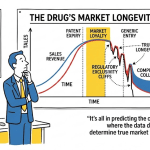
That gap of six to seven years is the reason this article exists. A patent expiration date is a legal fact about one patent. A loss of exclusivity (LOE) date is a commercial event: the day real competition starts. Strategy teams that track only the first date will forecast the wrong year. This article compares the two dates for six branded drugs, builds a five-gate model that explains why the dates differ, and lists the fields a team needs to track.
The Short Answer
What Is Loss of Exclusivity (LOE)?
Loss of exclusivity is the point at which a branded drug faces generic or biosimilar competition in a market. AbbVie uses the term in its own filings to describe the end of Humira’s protected U.S. position. [2] [3] In this article, LOE means the first date on which a competitor can lawfully and actually sell a copy. That working definition is ours. It is not a defined term in FDA regulations.
LOE vs. Patent Expiration: What Is the Difference?
A patent expiration date marks the end of one patent term. An LOE date marks the start of competition. Four things can put the LOE date before or after the patent date: regulatory exclusivity, litigation outcomes, settlement licenses, and commercial restrictions written into those licenses. The FDA states that exclusivity “may run concurrently with a patent but need not do so.” [6]
The Five Findings That Matter
Each finding below is stated so that you can quote it without reading the rest of the article. Calculated figures are marked as analysis.
Finding 1. The basic U.S. Humira patent expired in 2016, and the first U.S. adalimumab biosimilar launched on January 31, 2023. That is a gap of about six to seven years. [4] [5] (Analysis: the 2016 source gives a year, not a day.)
Finding 2. Humira’s global net revenue fell from $21.237 billion in 2022 to $8.993 billion in 2024. That is a drop of $12.244 billion, or 57.7%. [1] [3] (Analysis: calculated from the two reported figures.)
Finding 3. Revlimid’s primary patent expired in 2019, but licensed generics stayed volume-limited until January 31, 2026. That is a gap of about six to seven years. [9] [10] (Analysis: year-level source for the 2019 date.)
Finding 4. Eliquis has three different public entry dates in the record: a 2026 to 2031 range that analysts expected before a 2021 court ruling, a November 2026 expiry for the EU composition patents, and an April 1, 2028 U.S. date for the companies that settled. [10] [11]
Finding 5. Four Stelara biosimilar makers received license dates spread across 104 days, from January 1, 2025 to April 15, 2025. [14] (Analysis: the day count is ours.)
Finding 6. FDA data from 2015 to 2017 show that the median generic price falls from 61.4% of the brand price with one generic competitor to 6.1% with six, using the AMP measure. [17] The number of competitors matters as much as the entry date.
How Do Patents and Regulatory Exclusivity Differ?
What the FDA Says Exclusivity Is
The USPTO grants patents. The FDA grants exclusivity. The FDA describes a patent as “a property right granted by the United States Patent and Trademark Office” and says patents can be granted at any point in a drug’s development. [6] It describes exclusivity as “exclusive marketing rights granted by the FDA upon approval of a drug.” [7] It also says exclusivity refers to “delays and prohibitions on approval of competitor drugs.” [6]
The two systems do not share a calendar. A drug can have patents and no exclusivity, exclusivity and no patents, both, or neither. [6] A team that reads only the patent column of the Orange Book sees half of the picture.
FDA Exclusivity Types and Lengths
The table lists the exclusivity types that the FDA names in its patents and exclusivity FAQ. [6]
Exclusivity type
Code
Length
What it does
Source
New chemical entity
NCE
5 years
Delays approval of competitor drugs
[6]
Orphan drug
ODE
7 years
Delays approval of competitor drugs
[6] [7]
New clinical investigation
none listed
3 years
Applies when criteria are met
[6]
GAIN (antibiotics)
GAIN
5 years
Added to certain exclusivities
[6]
Pediatric
PED
6 months
Added to existing patents and exclusivities
[6]
Patent challenge
PC
180 days
ANDAs only
[6]
Competitive generic therapy
CGT
180 days
ANDAs only
[6]
Orphan, NCE, and Three-Year Exclusivity
These three types attach to the drug at approval. They do not depend on any patent. A new molecule with a weak patent position can still hold a fixed period of protection from FDA. A team that models only patents will miss that floor.
Pediatric Exclusivity: Six Months on Top of Everything
Pediatric exclusivity adds six months to all existing patents and exclusivities on the sponsor’s applications for that active moiety. [6] It does not stand alone. [6] When it attaches, the patent appears twice in the Orange Book, once with its original date and once with the extended date. [6] Entresto is the clearest recent example, and we cover it below.
180-Day ANDA Exclusivities
The patent challenge and competitive generic therapy exclusivities belong to generic applicants, not to the brand. [6] They shape who enters first and when others can follow. A strategy team on the brand side needs to know them because they set the pace of the first six months after entry.
How Long Is Biologic Exclusivity Under the BPCIA?
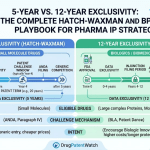
Biologics follow a different rule. The FDA states that a biosimilar application may not be made effective until 12 years after the reference product’s first licensure. [8] It also states that a biosimilar application may not be submitted until 4 years after first licensure. [8] The FDA adds that the expiration date includes any pediatric exclusivity. [8] These periods sit beside patents, not in place of them. Humira shows how the patent side can outlast the regulatory side.
What Are the Five Gates to Loss of Exclusivity?
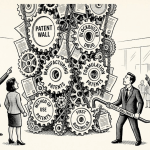
This section is an original framework. It is not an established industry classification. We call it the five-gate model. Each gate can set the LOE date. The latest gate usually wins.
Gate 1: The Patent Gate
The patent gate asks when the last enforceable patent that blocks the competitor expires. This is the date most databases show first. It is also the date most forecasts use. It is the right answer only when no other gate comes later.
Gate 2: The Regulatory Exclusivity Gate
The regulatory gate asks when FDA exclusivity ends, including any pediatric six months. [6] This gate can be later than the patent date, as the Entresto case shows. It can also be earlier, which leaves the patents as the only barrier.
Gate 3: The Litigation and Settlement Gate
The litigation gate asks what a court decided and what the parties agreed. A court ruling can confirm a date. A settlement can set a date that no patent states. Humira, Revlimid, Eliquis, and Stelara all reached their LOE dates through this gate. [2] [10] [11] [14]
Gate 4: The Listing and Label Gate
The listing gate asks whether the patents that appear to block entry are valid listings and whether a generic label can avoid them. Two recent rulings changed this gate: Teva v. Amneal on device patent listings, and Hikma v. Amarin on skinny-label inducement. [18] [19]
Gate 5: The Commercial Gate
The commercial gate asks what the entry terms allow in practice. A license can cap volume. A launch can use a price tier that payers do not favor. Revlimid’s volume limits and Humira’s biosimilar price tiers belong here. [5] [9]
Methodology: How We Built the Comparison
What Data We Used
We compared six drugs: Humira, Revlimid, Eliquis, Entresto, Stelara, and Keytruda. We chose them because each has public documents that state at least one patent date and at least one entry or licensed-entry date. The documents are company filings and press releases, FDA pages, a Federal Circuit summary, and trade and law-firm reports. We read them in October 2026. We counted a record as included if it gave a date or a dollar figure that we could trace to a named source. We did not combine duplicate figures from different sources. Where two sources disagreed, we kept both and said so.
We calculated three kinds of figures. The first is the gap between a patent date and an entry date. The second is the percentage change between two reported revenue figures. The third is a count of days between license dates. Each calculated figure is marked as analysis in the text.
Limits of This Analysis
Six drugs are a case set, not a statistical sample. Several patent dates in our sources are year-level, so the gaps are ranges. We derived Humira’s 2023 revenue from reported 2024 percentage changes because the 2024 release gives the changes and not the 2023 dollars. [3] We did not read court dockets or Orange Book entries directly for this draft. A team that uses these numbers for a forecast should confirm each date in the primary document. Two sources about Keytruda give dates that do not line up. We flag that in the Keytruda section.
Patent Timeline vs. LOE Timeline: What the Data Shows
Drug
Patent date in the record
Entry or LOE event in the record
Gate that set the date
Source
Humira (adalimumab)
Basic U.S. patent expired 2016; 132 later patents, last expiring 2034
First U.S. biosimilar launch January 31, 2023
Litigation and settlement
[2] [4] [5]
Revlimid (lenalidomide)
Primary patent expired 2019
Volume-limited generics from early 2022; no volume limits as of January 31, 2026
Settlement and commercial terms
[9] [10]
Eliquis (apixaban)
EU composition patents and SPCs expire November 2026
U.S. date of April 1, 2028 for settling generics, subject to further challenges
Litigation and settlement
[10] [11]
Entresto (sacubitril/valsartan)
‘659 patent extended by pediatric exclusivity to July 15, 2025; ‘918 patent expires November 2026
FDA approval date for MSN reset to no earlier than July 16, 2025; generics in the U.S. market in Q3 2025
Regulatory exclusivity and litigation
[12] [13]
Stelara (ustekinumab)
Not verified in our sources
License dates January 1, 2025 to April 15, 2025
Settlement
[14]
Keytruda (pembrolizumab)
U.S. compound patent December 2028, per one report
Merck expects U.S. exclusivity loss in 2028
Patent (not yet tested)
[15]
Humira: Patent Expiry in 2016, LOE in 2023
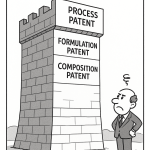
The basic U.S. patent for Humira expired in 2016. [4] AbbVie then obtained 132 additional patents on the drug, and the last of them expires in 2034. [4] AbbVie settled with several adalimumab biosimilar makers. Under those settlements, European licenses began in 2018 and U.S. licenses began in 2023. [2] In August 2022, the Seventh Circuit held that AbbVie’s patent acquisition and enforcement practices did not breach federal antitrust law. [4]
Analysis: the thicket did not stop biosimilars forever. It set the price of entry. The entry date came from the litigation and settlement gate, not from the patent gate.
What the Revenue Did After LOE
Humira’s U.S. net revenue was $18.619 billion in 2022. [1] In 2024 it was $7.142 billion, a fall of 41.3% from 2023. [3] Analysis: working back from that percentage gives about $12.166 billion for U.S. 2023 revenue. That is a 34.7% fall from 2022 in the first LOE year. The second year fell faster, at 41.3%. Over the two years, U.S. revenue fell 61.6%. International revenue fell from $2.618 billion in 2022 to $1.851 billion in 2024, or 29.3%. [1] [3]
Analysis: the lesson for a forecast is that erosion does not stop after year one. A model that tests only the first twelve months will understate the loss.
What the Price Tiers Did
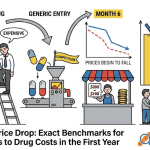
Amgen’s Amjevita launched in the United States with two price points. One was a 5% discount to the reference product’s list price. The other was a 55% discount, available when insurers did not use rebates and discounts. [5] Analysis: a launch with two tiers shows that the commercial gate matters. Entry on paper and share shift in practice are different events.
Revlimid: A Staircase, Not a Cliff
I-MAK reports that Revlimid’s primary patent expired in 2019. It also reports that Celgene and Bristol Myers Squibb filed 206 patents on the drug and that 117 were granted. [9] Generic companies that settled were limited to 7% of the market starting in early 2022, and restrictions eased in the following years. [9] Bristol Myers Squibb’s 2025 annual report states that licenses “are no longer volume-limited” as of January 31, 2026. [10]
The 7% Cap
A cap of 7% in the first period means the brand kept 93% of the market that the cap protected. Analysis: this is why a team cannot treat “generic entry” as one date. The first date opens the market. The last date ends the limit.
What Unrestricted Entry Means
After January 31, 2026, the licenses no longer cap volume. [10] Analysis: for Revlimid, the commercial gate closed about six to seven years after the primary patent expired. A forecast that used the 2019 date would have been wrong for most of that period.
Eliquis: Three Dates for One Drug
Where the Date Came From
In September 2021, the Federal Circuit affirmed a win for Bristol Myers Squibb and Pfizer on two Eliquis patents, a composition of matter patent and a formulation patent. [11] The challengers in that case were Sigmapharm, Sunshine Lake Pharma, Hec Pharm, and Unichem. [11] The companies said they expected Eliquis to retain exclusivity until April 1, 2028. Before the ruling, they had expected generic entry between 2026 and 2031. [11]
What Remains Open
Bristol Myers Squibb’s 2025 annual report says that the generic companies it settled with are permitted to launch in 2028, “subject to additional challenges.” [10] The same report states that the EU apixaban composition patents and related SPCs expire in November 2026. [10] Analysis: the EU date comes 16 to 17 months before the April 1, 2028 U.S. date. That comparison is a reminder that markets differ. It does not mean U.S. patents expire in November 2026.
Entresto: Pediatric Exclusivity Moves the Calendar
IPFray reports that U.S. Patent No. 8,101,659 had already expired but received pediatric exclusivity that extended it to July 15, 2025. [12] It also reports that the Delaware court ordered the FDA in April 2025 to reset MSN’s approval date to no earlier than July 16, 2025. [12] A second patent, U.S. Patent No. 11,096,918, is due to expire in November 2026. [12] The IPFray article is not clear on which patent a June 2025 settlement order covers, so a team should read that order directly. [12]
Zacks reports that generics entered the U.S. market in the third quarter of 2025. It also reports that Entresto sales in the fourth quarter of 2025 were $1.2 billion, down 45% at constant exchange rates. [13] Analysis: here the regulatory exclusivity gate, not a new patent, set the day the market opened.
Stelara: Four Dates in 104 Days
Fierce Pharma reported the following license dates for Stelara biosimilars. Amgen’s Wezlana was likely to launch on January 1, 2025. Samsung Bioepis could launch on February 22, 2025. Teva and Alvotech could launch no later than February 21, 2025. Fresenius Kabi and Formycon had a license date of no later than April 15, 2025. [14] Stelara brought in $9.7 billion for Johnson & Johnson in the year the article calls “last year,” which is most likely 2022. [14]
Analysis: from January 1 to April 15, 2025 is 104 days. A team that models “Stelara LOE in 2025” is right to the year and wrong about the order of entry. The order affects who wins the first formulary decisions.
Keytruda: 2028 and a Date Problem
OncoDaily reports that Merck expects loss of U.S. exclusivity following expiration of the U.S. compound patent in December 2028. The same report says Merck’s risk disclosures expect Keytruda’s U.S. sales to decline beginning in January 2028, and expect to lose European exclusivity in 2031. [15] Those two U.S. dates do not match, because January 2028 comes before December 2028. We did not resolve the difference. A team should read Merck’s annual report for the exact wording. Merck reported Keytruda and Keytruda Qlex sales of $31.7 billion for 2025 and $29.5 billion for 2024. [15] Analysis: that is a 7.5% increase, and it is the revenue that the 2028 date will test.
The Keytruda record shows why a tracker needs a source for every date. Two sentences in one article already disagree.
How Much Revenue Faces LOE? The IQVIA Numbers
IQVIA projects that losses for originator products from exclusivity expiry will rise from $111 billion to $192 billion by the end of 2028, including $145.5 billion in the United States. [16]
Small Molecules vs. Biologics
The $192 billion global figure includes $133 billion from small molecules and $59 billion from biologics. [16] The U.S. figure of $145.5 billion includes $106 billion from small molecules and $39.5 billion from biologics. [16] The report is IQVIA Institute’s Global Use of Medicines 2024: Outlook to 2028, dated January 17, 2024. [16] The named contributors include adalimumab, lisdexamfetamine, rivaroxaban, and ustekinumab. [16]
Analysis: the projected figure rises by $81 billion, or about 73%, between the two IQVIA data points. That number assumes the LOE dates that were public in January 2024. Every date that has moved since then changes the total.
Why Projections Need Date Discipline
IQVIA’s figure is a projection, not a confirmed event. It is useful as a scale check. It is not a substitute for a drug-level date model. The Eliquis and Keytruda records show that a single drug can carry more than one plausible date in a public file.
What Happens After LOE? Generic Price Erosion by Competitor Count
How Fast Do Generic Prices Fall?
Prices fall as more generics enter. An FDA analysis by Conrad and Lutter, published in December 2019, used CMS AMP data and IQVIA data for products with initial market entry from January 2015 through December 2017. [17] The table shows the median ratio of generic price to brand price. [17]
Generic competitors
AMP: percent of brand price
AMP: reduction
Invoice: percent of brand price
Invoice: reduction
1
61.4%
39%
69.6%
31%
2
46.5%
54%
56.2%
44%
3
32.2%
68%
44.7%
55%
4
21.2%
79%
26.8%
73%
5
14.4%
86%
15.2%
85%
6
6.1%
94%
9.9%
90%
Source: Conrad and Lutter (2019). [17] The reduction columns are calculated from the table’s percent-of-brand medians. The report’s own text describes reductions of more than 95% for six or more competitors, while the six-competitor row shows about 94% on AMP. The higher-competition groups likely explain the difference. [17]
Why Competitor Count Matters More Than the Entry Date
Across all competition groups, the median generic-to-brand ratio is 40% on AMP and 49% on invoice prices. [17] Analysis: a forecast that stops at “generic entry” misses most of the price effect. A drug with one generic competitor for a year has a different revenue path from a drug with six. That is why Stelara’s four license dates and Revlimid’s staged limits matter more than the first date in either record.
Biosimilars: Why Humira’s First Year Looked Slow
Biosimilar price effects do not follow the table above, which covers generic drugs. Humira’s launch tiers (5% and 55%) show a market where the net price depends on the payer’s rebate position. [5] The revenue record shows large erosion anyway: U.S. Humira revenue fell 61.6% over two years by our calculation. [1] [3] We do not attribute that fall to biosimilar volume alone, because our sources do not break it down.
Why Listing and Label Rules Can Move the LOE Date
Teva v. Amneal: Which Patents Can Block Generics?
On December 20, 2024, the Federal Circuit affirmed a district court order that five device patents were improperly listed in the Orange Book for ProAir HFA. [18] The patents “did not claim the active ingredient of the drug at issue.” [18] The court read the statute to require that “a patent must claim at least what made the product approvable as a drug.” [18] Teva listed the patents and sued Amneal for infringement. Amneal answered with antitrust claims alleging improper listing. [18]
Analysis: the ruling means that a listed patent is not always a blocking patent. A tracker that counts every Orange Book listing as a barrier will overstate protection for products with device patents.
Hikma v. Amarin: Can a Skinny Label Cause Inducement Liability?
On June 4, 2026, the Supreme Court decided Hikma Pharmaceuticals USA Inc. v. Amarin Pharma, Inc., No. 24-889, by a unanimous vote. Justice Jackson wrote the opinion. [19] The Court held that Amarin’s complaint did not plausibly allege inducement under 35 U.S.C. 271(b). It found that Hikma’s skinny label, website statements, and press releases did not amount to the affirmative conduct needed to show active encouragement of infringement. [19] The Court reversed the Federal Circuit. [19]
Analysis: the holding was about whether a complaint could survive a motion to dismiss. It does not give every skinny-label launch a free pass. It does make the label gate easier to pass for a generic that carves out a protected use and avoids promotional statements about it.
Scenario Analysis: Three Forecasts for One Drug
This scenario uses only the Eliquis dates in the public record. [10] [11] It is an illustration, not a prediction.
Scenario A: Assume the Early End of the Range (2026)
Before the 2021 Federal Circuit ruling, the companies expected generic entry between 2026 and 2031. [11] A team that used 2026 would assume erosion about a year and a half to two years before the April 1, 2028 date. (Analysis: the 2026 figure is year-level.)
Scenario B: Use the Settlement Date (April 1, 2028)
This is the date the companies stated after the ruling. [11] Bristol Myers Squibb’s annual report still adds that the 2028 permission is subject to additional challenges. [10] A team that uses this date should track who sits outside the settlement group.
Scenario C: Assume the Late End of the Range (2031)
A team that used 2031 would hold revenue at brand levels for about three years after the April 2028 date. (Analysis: year-level.) That forecast would overstate revenue in 2028, 2029, and 2030.
Analysis: the cost of an error runs both ways. An early date makes the plan too cautious. A late date makes the plan too optimistic. Neither error appears if the team tracks the LOE event instead of a patent date.
What This Means for Brand Manufacturers
Brand teams should plan for the LOE date that the litigation and settlement record supports, not the latest patent date. The Humira case shows that 132 additional patents did not stop a 2023 entry. [4] It also shows that the thicket helped set the date. Brand teams should record each settlement date, each volume limit, and each unsettled challenger. The Eliquis report names “additional challenges” as a live risk. [10]
Brand teams should also model the second year of erosion. Humira’s U.S. revenue fell faster in 2024 than in 2023 by our calculation. [3] A plan that ends its erosion model after year one has a gap in it.
What This Means for Generic and Biosimilar Developers
Developers should treat each gate as a separate question. The Entresto record shows that pediatric exclusivity can hold a date past an expired patent. [12] The Teva v. Amneal ruling shows that some listed patents may not block entry. [18] The Hikma ruling lowers one label risk. [19] The Stelara record shows that license dates can differ by weeks, and that order of entry is part of the plan. [14]
Developers should also check how many competitors they expect. The FDA data show that the first entrant faces a median price of 61.4% of brand on AMP, and that price falls with each added competitor. [17]
What This Means for Strategy, Investor, and Portfolio Teams
Which Fields Should an LOE Tracker Hold?
An LOE tracker needs more than a patent column. Based on the five-gate model, we suggest six fields:
The latest date for each patent that blocks entry, and whether each listing is valid.
The end date of each FDA exclusivity, including pediatric six months. [6]
The earliest settlement-licensed entry date for each known challenger.
Open litigation, including challengers outside any settlement group.
Volume limits or tier terms in each license. [9]
The expected number of competitors in the first twelve months. [17]
How Does DrugPatentWatch Fit?
DrugPatentWatch is a database that collects patent, exclusivity, and litigation records for branded drugs. Teams can use it to find the records for each field above. They should then confirm each date in the primary document, such as the FDA page, the court opinion, or the company filing. A database is a finding aid. It does not replace the filing, and it does not decide which gate is latest.
What Happens Next: Dates to Watch
November 2026: the ‘918 Entresto patent is due to expire. [12]
November 2026: the EU apixaban composition patents and SPCs expire. [10]
2028: Merck expects Keytruda U.S. exclusivity loss. Confirm the month in Merck’s filing. [15]
April 1, 2028: the U.S. date for the Eliquis generics that settled, subject to additional challenges. [10] [11]
2031: Merck expects European Keytruda exclusivity loss, per the OncoDaily report. [15]
These are announced or expected dates. They are not confirmed events until the product is on the market.
Key Takeaways
Patent expiration is one input. LOE is the event that moves revenue.
Humira’s basic U.S. patent expired in 2016, and U.S. biosimilar entry came on January 31, 2023. [4] [5]
Humira’s global revenue fell 57.7% from 2022 to 2024 (analysis from two reported figures). [1] [3]
Revlimid’s volume limits ended on January 31, 2026, about six to seven years after the primary patent expired. [9] [10]
Eliquis has a settlement-based U.S. date of April 1, 2028, and the report that states it also names additional challenges. [10] [11]
Pediatric exclusivity adds six months to existing patents and exclusivities. [6]
Generic prices fall with each added competitor. The six-competitor median is 6.1% of brand price on AMP. [17]
Track each date with its source. Public records can disagree, as the Keytruda record does. [15]
FAQ
Can generic or biosimilar entry happen while patents are still in force?
Yes. AbbVie obtained 132 additional Humira patents, and the last expires in 2034. [4] Biosimilars still launched in the United States in 2023 under settlement licenses. [2] [5]
How much does pediatric exclusivity add?
It adds six months to all existing patents and exclusivities on the sponsor’s applications for the same active moiety. [6]
How long is exclusivity for a biologic?
The FDA states that a biosimilar application may not be made effective until 12 years after the reference product’s first licensure. It may not be submitted until 4 years after first licensure. [8]
How much do generic prices fall after the first competitor?
In the FDA’s 2015 to 2017 sample, the median generic price with one competitor was 61.4% of the brand price on AMP, a 39% reduction. [17]
How much brand revenue faces LOE through 2028?
IQVIA projected in January 2024 that originator losses would reach $192 billion globally by the end of 2028, and $145.5 billion in the United States. [16]
What happened to Humira revenue after biosimilars launched?
Global net revenue went from $21.237 billion in 2022 to $8.993 billion in 2024. [1] [3] U.S. revenue fell 41.3% in 2024 alone. [3]
When can generic Eliquis launch in the United States?
The companies stated an expected date of April 1, 2028 after the 2021 Federal Circuit ruling. [11] Bristol Myers Squibb’s annual report says settling generics may launch in 2028, subject to additional challenges. [10]
Does an Orange Book listing prove that a patent blocks generics?
No. In Teva v. Amneal, the Federal Circuit affirmed on December 20, 2024 that five device patents were improperly listed because they did not claim the active ingredient. [18]
Does a skinny label create inducement liability?
Not on the facts in Hikma v. Amarin. The Supreme Court held on June 4, 2026 that Amarin’s complaint did not plausibly allege inducement under 35 U.S.C. 271(b). [19]
What is a volume-limited license?
It is a settlement license that lets a generic company sell only up to a set share or quantity. Revlimid generics were limited to 7% of the market starting in early 2022. [9] The limits ended on January 31, 2026. [10]
References
AbbVie Inc. (2023). AbbVie reports full-year and fourth-quarter 2022 financial results. AbbVie Investor Relations. https://investors.abbvie.com/node/17496
AbbVie Inc. (2023). Form 10-K for the fiscal year ended December 31, 2022. U.S. Securities and Exchange Commission. https://www.sec.gov/Archives/edgar/data/1551152/000155115223000011/abbv-20221231.htm
AbbVie Inc. (2025). AbbVie reports full-year and fourth-quarter 2024 financial results. AbbVie Investor Relations. https://investors.abbvie.com/news-releases/news-release-details/abbvie-reports-full-year-and-fourth-quarter-2024-financial
Bristows LLP. (2022). What’s wrong with having lots of patents? Humira patent thicket survives antitrust challenge. https://www.bristows.com/news/whats-wrong-with-having-lots-of-patents-humira-patent-thicket-survives-antitrust-challenge/
American Journal of Managed Care. (2023, January 31). First Humira biosimilar Amjevita launches in the United States. https://ajmc.com/view/first-humira-biosimilar-amjevita-launches-in-the-united-states
U.S. Food and Drug Administration. (2020). Frequently asked questions on patents and exclusivity (content current as of February 5, 2020). https://www.fda.gov/drugs/development-approval-process-drugs/frequently-asked-questions-patents-and-exclusivity
U.S. Food and Drug Administration. (n.d.). How can I better understand patents and exclusivity? https://www.fda.gov/industry/fda-basics-industry/how-can-i-better-understand-patents-and-exclusivity
U.S. Food and Drug Administration. (n.d.). Background information: List of licensed biological products with reference product exclusivity and biosimilarity or interchangeability evaluations. https://www.fda.gov/drugs/biosimilars/background-information-list-licensed-biological-products-reference-product-exclusivity-and
I-MAK. (2025, April 4). How Celgene and Bristol Myers Squibb used volume restrictions to delay Revlimid competition. https://www.i-mak.org/2025/04/04/how-celgene-and-bristol-myers-squibb-used-volume-restrictions-to-delay-revlimid-competition/
Bristol-Myers Squibb Company. (2026). Form 10-K for the fiscal year ended December 31, 2025. U.S. Securities and Exchange Commission. https://www.sec.gov/Archives/edgar/data/14272/000001427226000004/bmy-20251231.htm
Fierce Pharma. (2021, September 7). Bristol Myers, Pfizer score another win in their Eliquis patent defense, protecting the blockbuster until 2028. https://www.fiercepharma.com/pharma/bristol-myers-pfizer-score-another-win-their-eliquis-defense-protecting-blockbuster
IPFray. (n.d.). Novartis and MSN settle part of chronic heart failure patent fight, but key patent remains. https://ipfray.com/novartis-and-msn-settle-part-of-chronic-heart-failure-patent-fight-but-key-patent-remains/
Fierce Pharma. (2023, November 30). With J&J settlement, Samsung Bioepis and Sandoz lock down Stelara biosimilar license. https://www.fiercepharma.com/pharma/jj-settlement-samsung-and-sandoz-lock-down-stelara-biosimilar-license
OncoDaily. (n.d.). Merck splits oncology business unit as Keytruda patent expiry nears. https://oncodaily.com/technology/merck461936
Jeremias, S. (2024, January 18). IQVIA projects $192 billion loss for originators by 2028 thanks to biosimilar, generic competition. Center for Biosimilars. Citing IQVIA Institute for Human Data Science, Global Use of Medicines 2024: Outlook to 2028 (January 17, 2024). https://www.centerforbiosimilars.com/view/iqvia-projects-192-billion-loss-for-originators-by-2028-thanks-to-biosimilar-generic-competition
Conrad, R., & Lutter, R. (2019, December). Generic competition and drug prices: New evidence linking greater generic competition and lower generic drug prices. U.S. Food and Drug Administration. https://fda.gov/media/133509/download
Crowell & Moring LLP. (n.d.). Only drugs allowed: Federal Circuit affirms order to delist device patents from the Orange Book. https://crowell.com/en/insights/client-alerts/only-drugs-allowed-federal-circuit-affirms-order-to-delist-device-patents-from-the-orange-book
American Intellectual Property Law Association. (2026, June 4). Supreme Court issues unanimous decision in Hikma Pharmaceuticals USA Inc. v. Amarin Pharma, Inc. https://www.aipla.org/detail/news/2026/06/04/supreme-court-issues-unanimous-decision-in-hikma-pharmaceuticals-usa-inc.-v.-amarin-pharma–inc