The global pharmaceutical industry is running out of time. Between 2024 and 2030, roughly $200 billion in branded drug revenue sits in the crosshairs of patent expiration. Internal R&D — historically the industry’s identity — cannot plug that gap on its own. The probability of a Phase I asset reaching approval hovers around 11% across all modalities. The cost to bring a single drug to market runs into the billions. Licensing is no longer a backup plan. For most large pharmaceutical companies, it is the primary mechanism of growth.
This guide covers every dimension of pharmaceutical licensing: the financial anatomy of deals, IP valuation methodology, contract architecture, CMC and regulatory tripwires, geopolitical risk factors, and the specific litigation that has reshaped how ‘Commercially Reasonable Efforts’ clauses get drafted. It is written for IP teams, portfolio managers, business development leads, R&D directors, and institutional investors who need the full picture — not a summary.
Why Licensing Has Replaced Internal R&D as the Primary Growth Engine
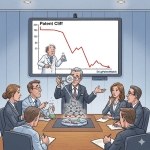
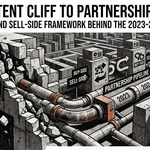
The Patent Cliff: A Structural Problem, Not a Cycle
The patent cliff is not a temporary dip. It is a structural revenue withdrawal that repeats, at scale, every five to seven years as the blockbuster wave of a prior decade reaches expiry. The current cliff is one of the largest in industry history. Key franchises facing loss of exclusivity (LOE) through 2030 include Keytruda (pembrolizumab, Merck), with U.S. composition-of-matter patents expiring in 2028, and Eliquis (apixaban, Bristol Myers Squibb/Pfizer), which lost key protections in 2026 following Paragraph IV litigation. Combined, these two assets alone represent tens of billions in annual revenue that their respective owners must replace.
Internal R&D timelines run 10 to 15 years from candidate identification to approval. A company staring at a 2028 LOE date cannot start a Phase I trial today and fill the gap in time. Licensing a Phase II or Phase III asset solves that timing mismatch. This explains why upfront payments for late-stage assets have remained elevated even as deal volumes fluctuate: the licensee is paying for speed, not just science.
The math is straightforward. If a Phase III asset has a 58% probability of approval and addresses a market worth $5 billion annually, a company facing a 2028 LOE can justify paying a significant upfront to lock in that asset today. The alternative — watching $3 to $5 billion in revenue disappear with no approved replacement — is worse than the deal risk.
The Probability-of-Success Stack
Phase transition probabilities, per IQVIA analysis of 2024 cohorts, run approximately as follows: Phase I to Phase II sits at around 63%, Phase II to Phase III at 31%, Phase III to NDA/BLA submission at 58%, and NDA/BLA to approval at roughly 85-90%. Multiplied cumulatively, the probability of a Phase I asset reaching market is about 11 to 14%. A Phase III asset carries a cumulative approval probability closer to 50 to 55%.
This probability stack is why deal economics stratify so sharply by development stage. A Phase I license might carry a $20 to $50 million upfront with a total deal value of $500 million to $1 billion (mostly biobucks). A Phase III license might command $200 to $500 million upfront and a total potential value exceeding $3 billion. The upfront-to-total ratio — roughly 6 to 10% for Phase III deals in 2024, per J.P. Morgan biopharma licensing data — reflects how heavily back-loaded modern deals have become.
Why Biotechs License Out
For small to mid-sized biotech companies, the calculus runs in the opposite direction. The IPO market has remained selective since 2022. Venture capital, burned by several high-profile clinical failures, has become concentrated in a small number of well-known franchise platforms. Many biotechs that raised capital in 2020 and 2021 now face a cash runway problem.
Out-licensing solves two problems at once. It provides non-dilutive capital, meaning the company funds its operations through milestone payments and royalties rather than by issuing new shares at depressed valuations. It also provides market validation — a signed deal with Pfizer, Novartis, or Eli Lilly signals to every remaining investor that a credible commercial-stage organization has reviewed the science and committed capital to it.
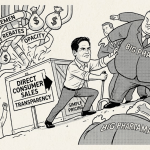
The regional split structure has become a standard tool for biotechs that want to retain upside in their home market while collecting royalties globally. Argo Biopharma’s deal with Novartis for RNAi cardiovascular assets ($160 million upfront, $4.165 billion total potential) is the clearest recent example: Novartis took ex-China rights while Argo retained the domestic Chinese market. This structure lets Argo build a commercial infrastructure in China without surrendering the global economics, and lets Novartis avoid the geopolitical complexity of a Chinese operating entity in its supply chain.
Key Takeaways: The Structural Licensing Imperative
The industry is not licensing more aggressively because it is strategically enlightened. It is doing so because the alternative — relying solely on internal R&D to fill patent cliffs — has consistently failed to produce sufficient approved drugs at the pace required. The market is pricing in this structural dependency: deal volume for Phase II and III assets in oncology and immunology has grown faster than any other BD subcategory over the past four years. Any IP team or portfolio manager who treats licensing as a supplementary tool rather than a core competency is already behind.
Deal Archetypes and Structure: What Modern Agreements Actually Look Like
In-Licensing and Out-Licensing: The Classic Split
In-licensing is the dominant mechanism for large pharma pipeline replenishment. The term describes a transaction where a company acquires rights to a drug or platform owned by another entity, typically a biotech or academic spinout. In 2024, the median upfront for a Phase III in-licensing deal was measurably higher than in 2023, reflecting competition among large pharma for a limited pool of late-stage, de-risked assets.
Out-licensing runs the other way. A company with an asset outside its strategic focus, or a biotech with cash needs, grants rights to another party in exchange for upfront payments, milestones, and royalties. Large pharma occasionally out-licenses non-core assets: AstraZeneca, for example, has periodically out-licensed older portfolio drugs to regional specialists or specialty pharma companies to generate revenue from assets that no longer fit its therapeutic focus.
Both structures live in the same legal framework but require different due diligence emphases. The in-licensee needs to scrutinize the IP stack, Freedom to Operate (FTO) opinion quality, and CMC scalability. The out-licensor needs to structure CRE clauses, audit rights, and data reversion terms tightly enough to protect the asset if the partner underperforms.
Option-to-License: Gating the Commitment
The option-to-license structure has grown substantially in use since 2022. Here, a company pays an upfront fee for the exclusive right to license an asset after a specific clinical or preclinical trigger — typically a Phase I/Ib readout, a proof-of-concept data package, or a manufacturing milestone.
The Celltrion-TriOar deal, announced in 2024 with a $350 million potential value, follows this structure: Celltrion paid for an option on the TROCAD antibody platform, retaining the right to license specific targets after evaluating the preclinical profile. This allows Celltrion to test the platform’s fit with its own pipeline priorities before committing to development and commercial milestone payments.
The structure benefits both parties in a high-uncertainty environment. The potential licensee limits its sunk cost to the option fee if the data disappoints. The licensor receives immediate cash to fund the trial that generates the trigger data and retains the asset if the licensee walks away. The risk is asymmetric: the licensor bears the clinical risk of generating compelling data; the licensee bears only the option premium.
Co-Development and P&L Splits
For the highest-value assets, originators increasingly refuse to accept a royalty-only structure. Co-development and co-commercialization agreements split both costs and profits in defined markets, rather than handing the licensee full control in exchange for a percentage of net sales.
The mechanics: instead of receiving a 12 to 18% royalty on U.S. net sales, the biotech partner contributes 40 to 50% of U.S. commercialization costs and receives 40 to 50% of U.S. profits. This structure produces higher absolute returns for the biotech if the drug succeeds — profit shares on a $3 billion peak sales drug at 50% economics outperform a 15% royalty significantly — but also exposes the biotech to commercial cost obligations it may struggle to meet.
The Argo-Novartis deal included an option for Argo to elect a P&L split in the U.S. for certain assets, providing a pathway from pure R&D partner to co-commercialization entity. This option structure is increasingly common for biotechs with aspirations to build a commercial presence without prematurely committing the balance sheet to it.
The NewCo Geopolitical Structure
The BIOSECURE Act, passed by the U.S. House in September 2024, targets direct manufacturing and service relationships between U.S. companies and named Chinese biotechnology firms including WuXi AppTec, WuXi Biologics, BGI Genomics, and their affiliates. The legislation creates a mechanism to debar federal contractors from using these suppliers, with a transition period through 2032 for existing contracts.
In response, investors and Chinese biotechs have developed the NewCo structure. A Chinese biotech licenses its ex-China rights (excluding Greater China) to a newly incorporated U.S. or European entity — the NewCo — staffed by Western management and capitalized by Western institutional investors. The NewCo holds the IP, contracts with non-Chinese CDMOs for manufacturing, and runs Western clinical development programs. The Chinese parent retains Greater China rights and typically receives royalties or milestones from the NewCo.
This structure separates IP ownership from the Chinese entity for regulatory and political purposes, making it cleaner for a large pharma to in-license from the NewCo without triggering BIOSECURE-related complications. It also positions the NewCo for an independent IPO or acquisition in Western markets without the stigma of a direct Chinese parent on the cap table.
The challenge is that the NewCo model does not fully resolve IP provenance questions. FDA’s Complete Response Letters have cited concerns about data integrity from trials conducted in China. A NewCo needs to ensure that all pivotal trial data generated in China meets FDA standards, which in some therapeutic areas requires additional bridging studies in Western populations.
Synthetic Royalty Financing
Royalty monetization has split into two distinct instruments. Traditional royalty monetization involves a company selling an existing royalty receivable from a licensing agreement to a third-party investor for a lump sum. Synthetic royalty financing creates a new royalty stream where none previously existed — a company sells a percentage of future product revenues directly to an investor, effectively converting future sales into present capital without taking on conventional debt or issuing equity.
Royalty Pharma deployed nearly $2.8 billion in capital in 2024 alone, including a $950 million transaction with Amgen for royalties on Imdelltra (tarlatamab), the bispecific T-cell engager approved for small cell lung cancer, and a $1.25 billion arrangement with Revolution Medicines tied to its RAS-targeted oncology pipeline. These deals are structured against specific products, not corporate creditworthiness, making them accessible to mid-stage biotechs that lack the balance sheet for investment-grade debt.
The growth rate for synthetic royalty transactions averaged 33% annually over the five-year period ending in 2024, per Gibson Dunn’s 2025 royalty finance report. This is no longer a niche instrument. CFOs at biotechs with approved products or late-stage assets now routinely model synthetic royalty financing alongside equity offerings and term loans when planning their capital structure.
Investment Strategy Note: Deal Structure as a Signal
For portfolio managers, deal structure reveals the negotiating leverage of each party. An option-heavy, back-loaded deal with a modest upfront suggests the licensor lacked competitive tension at the table — possibly because the asset is earlier-stage or in a less crowded therapeutic area. A large upfront with tiered royalties starting above 15% suggests multiple bidders and a validated data package. When Novartis paid $160 million upfront to Argo against a $4.165 billion total deal, the upfront-to-total ratio of roughly 3.8% reflected that the RNAi assets were still early enough to carry meaningful development risk. That ratio is a useful benchmark when comparing deal quality across portfolio companies.
IP Valuation: The Methodology Behind Billion-Dollar Decisions
What Makes Pharma Valuation Different
Corporate valuation in most industries treats cash flows as uncertain but continuous. Pharmaceutical asset valuation treats cash flows as binary at every clinical gate: the drug either advances or it does not. A Phase III failure takes an asset from a multi-billion-dollar valuation to near zero overnight. AbbVie’s experience with emraclidine, Cerevel Therapeutics’ schizophrenia candidate, is the canonical 2024 example: after two Phase II failures (EMPOWER-1 and EMPOWER-2) published in late 2024, AbbVie absorbed a valuation loss that substantially damaged the return profile of its $8.7 billion acquisition of Cerevel.
Standard discounted cash flow (DCF) analysis cannot handle this binary risk structure without modification. The industry uses risk-adjusted Net Present Value (rNPV) specifically because it separates clinical risk (handled by probability adjustments) from time-value and commercial risk (handled by the discount rate).
The rNPV Framework
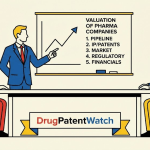
The rNPV calculation proceeds through five steps. First, forecast peak and declining revenues using epidemiology data (diagnosed patient population, treatment rates, market penetration assumptions), pricing benchmarks from comparable approved drugs, and competitive landscape modeling. Second, build a full cost model: clinical trial costs by phase, regulatory submission costs, manufacturing scale-up, and commercialization spend.
Third, apply phase-specific Probability of Success (PoS) adjustments to each year’s projected cash flows. A Phase II asset might carry a cumulative market probability of 15.3% (calculated as 0.31 Phase II-to-III transition, times 0.58 Phase III-to-submission, times 0.85 submission-to-approval). Each year’s projected revenue gets multiplied by this probability before discounting.
Fourth, apply the discount rate. Big pharma typically uses 8 to 10% weighted average cost of capital (WACC). Biotech companies, with higher cost of equity, apply 12 to 18%. The critical distinction here: because PoS adjustments already capture the clinical risk, the discount rate should only reflect the time value of money and commercial execution risk. Applying a 40% venture-style discount rate on top of PoS-adjusted cash flows double-counts the risk and produces systematic undervaluation — a frequent source of disagreement between biotech sellers and pharma acquirers in deal negotiations.
Fifth, sum the probability-adjusted, discounted cash flows and subtract the probability-adjusted development costs. The resulting number is the rNPV of the asset at its current stage. For co-development deals, model this separately for each territory, then subtract the partner’s cost contribution.
Patent Expiry as a Hard Ceiling on Value
Patent remaining life is the single most important variable in any pharmaceutical asset valuation, and it is routinely understated by sellers in data rooms. A composition-of-matter patent expiring in 2030 on a drug currently in Phase II (implying a 2028 to 2029 launch at best) leaves only one to two years of full exclusivity before generic entry begins eroding revenue.
Patent Term Extension (PTE) in the U.S. allows sponsors to recover some exclusivity lost during FDA review, up to a maximum of five years and a total post-approval term of 14 years from approval, whichever is shorter. Supplementary Protection Certificates (SPCs) in the EU provide similar benefits. Both mechanisms must be included in any honest valuation model, and both carry procedural requirements that, if missed, permanently forfeit the benefit.
Evergreening tactics — filing new patents on formulations, metabolites, dosing regimens, enantiomers, or pediatric exclusivity — can extend the effective exclusivity well beyond the original composition-of-matter expiry. AbbVie’s management of the Humira (adalimumab) IP estate is the industry’s most-analyzed example: the company built a portfolio exceeding 130 patents around the biologic, delaying U.S. biosimilar entry until July 2023, years after the core patent expired. Evaluating an asset’s potential for post-approval IP layering is a required component of acquisition diligence.
Comparables and the Intelligence Layer
Beyond rNPV, dealmakers use comparable transaction analysis. If two recent Phase II ADC deals closed with upfronts of $80 and $120 million respectively, a third similar-stage ADC asset has a market reference point. The quality of comparables analysis depends entirely on the completeness of the deal database.
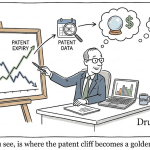
Patent intelligence tools allow BD teams to identify which large pharma companies have imminent LOE events, map their pipeline gaps, and correlate those gaps with available assets in the licensing market. A company with a Phase III asset in cardiovascular disease, aware that a major pharma faces a primary care franchise LOE in 24 months with no late-stage cardiovascular drug in its own pipeline, can price that timing premium into its ask. The leverage is real and quantifiable: the buyer’s BATNA (best alternative to a negotiated agreement) is zero when there is no internal replacement and insufficient time to build one.
Key Takeaways: IP Valuation Discipline
rNPV only produces reliable outputs when both PoS rates and cash flow projections are grounded in current data. Using outdated phase-transition rates (pre-2020 data, for example, which predate the precision oncology era’s differential success rates) will systematically overvalue oncology assets. Patent expiry modeling must account for the full IP estate, not just the lead composition-of-matter patent. Any deal model that fails to model the generic/biosimilar competitive entry scenario is incomplete.
The IP Estate: How to Assess What You’re Actually Buying
The Patent Stack: Composition, Method, Formulation
Pharmaceutical IP protection is rarely a single patent. A well-managed drug has a layered IP estate that includes at minimum a composition-of-matter (CoM) patent covering the active ingredient’s molecular structure, one or more method-of-use patents covering specific therapeutic indications or dosing protocols, and formulation patents covering the drug delivery system (extended release, nanoparticle, fixed-dose combination, etc.).
Each layer provides independent exclusivity that can outlast the others. A CoM patent typically expires 20 years from filing, adjusted for PTE. A method-of-use patent filed later in development might expire five to seven years after the CoM. This layered structure means generics cannot simply replicate the molecule and launch on day one of CoM expiry — they must also design around the method and formulation patents, or face Orange Book Paragraph IV litigation.
Orange Book listing strategy is itself a strategic act. A brand manufacturer files patents in the FDA’s Orange Book (for small molecules) or Purple Book (for biologics) to trigger automatic 30-month regulatory stays against ANDA filers. Listing a patent in the Orange Book without genuine infringement risk is risky — courts have found brands liable for wrongful listing — but underfiling, leaving valid patents out, forfeits stay rights. The assessment of Orange Book listing completeness is a mandatory component of IP diligence for any small molecule in-license.
Freedom to Operate: The FTO Minefield
Owning a patent on your drug does not mean you can sell it. Freedom to Operate (FTO) analysis asks whether the drug’s manufacture, use, or sale would infringe any unexpired third-party patent. In crowded technology spaces — CRISPR-Cas9 gene editing, ADC linker chemistry, bispecific antibody formats, RNA delivery mechanisms — the FTO landscape is dense and contested.
ADC linker chemistry is particularly acute. The dominant linker technologies (maleimide-based, disulfide, enzymatically cleavable) are covered by overlapping patent estates from multiple originators. Seagen (now part of Pfizer), Immunomedics (now part of Gilead), and ImmunoGen each hold substantial ADC linker and payload IP. A new ADC developer using a commonly available antibody against a novel target may still face FTO concerns on the linker or payload chemistry that were developed independently by another party. The Daiichi Sankyo-AstraZeneca collaboration on trastuzumab deruxtecan (Enhertu) required extensive FTO clearance on both the linker and the topoisomerase I inhibitor payload before commercialization agreements could be finalized.
CRISPR is similarly complex. The Broad Institute (MIT/Harvard) and UC Berkeley hold competing foundational patents on Cas9 editing in eukaryotic cells, with licensing programs that have been evolving since the Patent Trial and Appeal Board (PTAB) interference proceedings resolved in favor of the Broad in 2022. Any gene therapy or cell therapy company using Cas9 editing requires a clear license from the Broad’s commercialization vehicle, Editas Medicine having an exclusive license for certain applications and MilliporeSigma holding non-exclusive rights for research use.
Biological Patent Nuances: The Reference Biologic Problem
For biologics licensed under a BLA (Biologics License Application), the IP picture includes regulatory data exclusivity in addition to patent protection. The Biologics Price Competition and Innovation Act (BPCIA) provides 12 years of reference product exclusivity from the date of first approval, during which no biosimilar can be approved against that reference product. This exclusivity runs independently of patent protection and can provide meaningful revenue protection even if patent challenges succeed.
The biosimilar applicant and the reference product sponsor engage in the BPCIA’s ‘patent dance,’ a statutory exchange of information about the biosimilar’s manufacturing process and the reference product’s patent estate, prior to any litigation. Brand manufacturers have used delays and incomplete information disclosures in the patent dance to extend litigation timelines and delay biosimilar launches, a practice the FTC has scrutinized in recent consent orders.
The interchangeability designation, which the FDA grants when a biosimilar demonstrates that it can be substituted for the reference product without physician intervention, carries significant commercial value. Pharmacists in most U.S. states can substitute an interchangeable biosimilar for a brand biologic at the point of dispensing, without a new prescription. Humira biosimilars granted interchangeability designation — including Cyltezo (adalimumab-adbm, Boehringer Ingelheim), which received the first interchangeability designation for an adalimumab product — command higher market access than non-interchangeable biosimilars in formulary negotiations.
Investment Strategy Note: Assessing IP Residual Value
The most common due diligence error is treating patent expiry dates as fixed endpoints rather than starting points for strategic IP extension analysis. Before accepting a seller’s representation of exclusivity duration, acquirers should independently map the full patent estate using Orange Book and Purple Book cross-references, review any pending continuation applications that might generate future exclusivity, and model the generic/biosimilar entry scenario under two assumptions: base case (only CoM patents survive challenge) and upside case (all listed patents are successfully defended). The difference between these scenarios can be hundreds of millions of dollars in present value.
Contract Architecture: Where Deals Are Won or Lost
Commercially Reasonable Efforts: The Industry’s Most Litigated Clause
The phrase ‘Commercially Reasonable Efforts’ (CRE) has generated more pharmaceutical litigation than any other single contract term. The conceptual tension is structural: the licensor wants the licensee to prioritize the licensed drug above competing assets. The licensee wants the flexibility to reallocate resources if the drug underperforms or if competitive dynamics shift.
Courts have consistently failed to define CRE with precision, leaving the meaning to case-by-case interpretation. The 2024 Delaware Chancery Court ruling in Shareholder Representatives LLC v. Alexion found that Alexion had not met its CRE obligation for a licensed CNS asset, despite Alexion’s defense that it had conducted ongoing clinical assessments. The court found that the ‘assessments’ substituted for development activity rather than driving it. The damages award ran into the hundreds of millions.
The J&J-Auris Health judgment was larger. AurisHealth had been acquired for approximately $3.4 billion in 2019 for its robotics-assisted surgical platform. J&J shelved the core Monarch robotic bronchoscopy system after concluding post-acquisition that the development timeline and regulatory pathway were more complex than the acquisition diligence suggested. The resulting breach of CRE claim produced a judgment exceeding $1 billion.
Both cases have had immediate and measurable effects on contract drafting. Modern CRE provisions now routinely specify objective benchmarks rather than relying on the reasonableness standard. A typical 2024 clause might read: ‘Licensee shall dedicate resources equivalent to no fewer than [X] FTE-equivalents to clinical development activities for the Licensed Product, and shall spend no less than $[Y] million annually on development activities, consistent with the efforts applied to its other priority oncology assets.’ Minimum FTE and spend floors, alongside explicit definitions of what qualifies as a development activity, are now near-universal in late-stage deal negotiations.
Data Reversion and IP Return Mechanics
If a licensee terminates a deal — whether for convenience, CRE breach, or change of control at the licensor — the licensor needs the asset back. Data reversion clauses govern this process, and poorly drafted versions have left licensors with nominal patent rights but no access to the clinical data generated during the partnership.
A complete reversion package should include: assignment or exclusive license-back of all regulatory filings (IND, NDA/BLA, EMA dossier), transfer of all trial data (raw and processed), assignment of third-party contracts with CROs and CDMOs relevant to the licensed product, and rights to use any manufacturing process improvements developed during the partnership. Without explicit transfer of CRO contracts and data packages, a licensor who recovers its patent rights may still be unable to continue development because the trial data remains contractually controlled by the previous licensee’s vendor relationships.
The 2024 wave of deal terminations — Genentech’s termination of its Adaptimmune collaboration for allogeneic T-cell therapies, Bristol Myers Squibb’s termination of its Agenus partnership covering CTLA-4 antibody candidates — provided live stress tests for these clauses. Adaptimmune stated it retained full rights to its SPEAR T-cell technology following the termination, suggesting the data reversion mechanics worked as intended. The financial damage, however, was substantial: Adaptimmune had been counting on the Genentech partnership milestones to fund its pipeline and was forced into a major restructuring.
Change of Control Provisions
Most licensors negotiate change-of-control (CoC) provisions that give them rights in the event their licensing partner is acquired. A standard CoC provision might allow the licensor to terminate the agreement if the acquirer is a direct competitor, or require a minimum guaranteed spend on the licensed asset post-acquisition.
The strategic problem is that large pharma companies routinely acquire biotechs specifically because they want a competing asset shelved — a practice the FTC defines as a ‘killer acquisition.’ CoC provisions do not prevent this; they provide damages rights after the fact. More recent deal structures include affirmative covenants requiring the surviving entity post-acquisition to continue development on defined timelines, with automatic milestone forfeitures if the product is deprioritized beyond specified thresholds.
Sublicensing Economics
Sublicensing clauses govern whether the licensee can grant further rights to third parties and, critically, what share of sublicensing income flows back to the original licensor. Most licensors receive a ‘sublicensing revenue share’ — a percentage (typically 15 to 40%, sliding down as the asset matures) of any upfront or milestone income the licensee receives from a further sublicense.
This is financially material. If a large pharma in-licenses a Phase II asset from a biotech and later sublicenses that asset to a regional partner in Japan for $150 million, the original biotech licensor may be entitled to $30 to $60 million of that income. Acquirers of biotechs with active licenses must carefully model these sublicensing obligations, as they reduce the net economics of downstream regional deals.
CMC and Manufacturing: The Deal-Killer No One Discusses at the LOI Stage
Why CMC Has Become a Primary Diligence Gate
Chemistry, Manufacturing, and Controls (CMC) diligence was historically the domain of technical consultants brought in late in a deal process to check boxes. For small molecules, it rarely changed deal economics. For large molecules — monoclonal antibodies, bispecific antibodies, ADCs, cell and gene therapies — CMC is now a primary deal gate. The manufacturing process for these modalities is the product: change the process after approval, and you may have changed the drug.
FDA’s expectation for process validation in biologics is codified across multiple guidance documents and ICH Q guidelines (Q8 through Q12). A BLA filed for a biologic represents a specific manufacturing process at a specific facility with specific analytical methods. Post-approval changes require Prior Approval Supplements (PAS) for major changes, Changes Being Effected in 30 Days (CBE-30) for moderate changes, and Annual Reports for minor changes. Moving manufacturing from a licensor’s CDMO to the licensee’s own facility after deal close almost always requires a PAS and comparability studies demonstrating that the relocated process produces a product with equivalent quality attributes.
ADC Manufacturing: The Bipartite Complexity
Antibody-Drug Conjugates are two-component biological-chemical systems. The antibody portion requires mammalian cell culture (typically CHO cells) for expression, followed by protein A chromatography, viral inactivation, and ultrafiltration/diafiltration — a standard biologic manufacturing process. The small molecule cytotoxic payload requires conventional pharmaceutical synthesis under strict containment conditions, because ADC payloads (calicheamicins, auristatins, pyrrolobenzodiazepines, camptothecin derivatives) are typically highly potent at nanomolar concentrations and require specialized Occupational Exposure Band (OEB) 4 or 5 containment.
The conjugation step — chemically linking the payload to the antibody via the linker — is the most technically demanding part of ADC manufacturing. Conjugation conditions affect the Drug-to-Antibody Ratio (DAR), the DAR distribution (heterogeneity), and residual unconjugated antibody or payload levels. All three parameters are critical quality attributes that affect both safety and efficacy. A high-DAR ADC (e.g., DAR 8) often has inferior pharmacokinetics and higher toxicity compared to a lower-DAR product (e.g., DAR 4), even if the nominal molecule is identical.
When acquiring an ADC license, CMC diligence must verify that the current CDMOs have capacity for commercial-scale production, that the conjugation process is validated and reproducible at scale, and that no critical raw materials come from single-source suppliers on the BIOSECURE Act watchlist. WuXi Biologics, one of the most widely used CDMOs for biologic manufacturing, is among the named entities in the BIOSECURE Act, meaning any ADC whose antibody component is currently manufactured at WuXi Biologics requires a manufacturing transfer plan before it can be commercialized in the U.S. government-funded market.
Module 3: Reading the Technical Dossier
The Common Technical Document (CTD) organizes the regulatory submission into five modules. Module 3 covers Quality — the pharmaceutical equivalent of the manufacturing and quality control package. For diligence purposes, Module 3 is where CMC risk lives.
Key Module 3 red flags include: an insufficiently characterized reference standard (meaning the analytical methods used to confirm identity and purity are not validated to ICH Q2 standards), an incomplete forced degradation study (suggesting the drug’s stability profile under stress conditions is not fully characterized), absence of a comparability study following any manufacturing change during development, and reliance on a single-source critical starting material without a validated alternative supplier.
For gene therapies and cell therapies, Module 3 complexity increases by an order of magnitude. Viral vector manufacturing (AAV, lentiviral) involves potency assays that are inherently variable, process-related impurities (empty capsids, residual host cell proteins, residual plasmid DNA) that require validated clearance steps, and release specifications that must be set prospectively without the benefit of the large clinical databases available for small molecules. A single Module 3 deficiency letter from FDA can delay an NDA/BLA by 12 months or more.
Key Takeaways: CMC as a Deal Variable, Not a Checkbox
Every ADC deal signed in the last two years has a BIOSECURE manufacturing dependency risk that must be quantified before pricing. Deals where manufacturing is currently concentrated at a Chinese CDMO require an explicit supply chain transition plan, with cost estimates and timeline projections built into the deal’s financial model. If the transition cost and regulatory comparability burden runs to $50 to $100 million — a realistic number for a complex biologic — that cost belongs in the NPV model, not in a footnote.
Geopolitics, FTC Enforcement, and Regulatory Risk
The BIOSECURE Act: Scope and Practical Impact
The BIOSECURE Act passed the U.S. House in September 2024 with broad bipartisan support, targeting federal contracting relationships with five named entities: BGI Genomics, MGI Tech, Complete Genomics, WuXi AppTec, and WuXi Biologics. Companies that receive federal funding (including CMS reimbursements, meaning effectively any company selling drugs to Medicare or Medicaid) would be prohibited from contracting with these entities after a phase-out period extending to 2032 for existing contracts.
The practical impact is broader than the literal text. Chinese CDMOs beyond the five named entities now face heightened scrutiny from U.S. pharma business development teams, who worry that future legislation might expand the list. Surveys of U.S. life sciences companies in 2024 found 30 to 50% reporting reduced confidence in new Chinese manufacturing partnerships, even with entities not currently named in the legislation.
China simultaneously remains the industry’s most productive source of novel molecules. In 2024, approximately 31% of molecules in-licensed by large pharma originated from Chinese biotechs, up from 29% in 2023. The paradox is not easily resolved: China produces superior chemistry, but the geopolitical infrastructure around Chinese manufacturing and data is increasingly inhospitable for Western commercialization. The licensing market’s response has been to separate the IP from the manufacturing — take the molecule from China, build it in India, Ireland, or Singapore, and commercialize it in the West.
India is the most likely near-term beneficiary. Indian CDMOs including Biocon Biologics, Divi’s Laboratories, and Piramal Pharma Solutions have capacity for biologic and small molecule manufacturing that meets FDA and EMA standards, and their cost structures are competitive with China. The transition from Chinese to Indian CDMO manufacturing for biologics typically requires 18 to 36 months and a comparability study — a manageable but non-trivial cost that dealmakers are now building into deal timelines.
FTC Enforcement: Killer Acquisitions and Reverse Payments
The FTC’s approach to pharmaceutical M&A and licensing under the current administration has maintained the intensified scrutiny established during the Biden era. The agency’s theory of ‘killer acquisitions’ — that large pharma companies acquire early-stage competitors specifically to shelve the competitive drug and protect an existing franchise — has been applied in investigation of several transactions. This enforcement posture has pushed more large pharma toward licensing structures, which can be designed to avoid full ownership transfer of the asset and thereby sidestep the antitrust analysis that applies to full acquisitions.
On reverse payments, the FTC’s April 2025 enforcement overview documented continued scrutiny of patent settlement agreements between brand manufacturers and Paragraph IV filers where the brand pays the generic to delay entry. The Actavis framework established by the Supreme Court in 2013 requires these agreements to be evaluated under rule-of-reason antitrust analysis rather than being treated as per se lawful simply because they resolve patent litigation. The FTC’s current focus has extended beyond cash payments to ‘quantity restrictions’ and other non-cash value transfers in settlement agreements — including supply agreements, co-promotion rights, and ‘no-authorized-generic’ (no-AG) commitments.
A no-AG commitment, where the brand manufacturer agrees not to launch its own generic (authorized generic) during the first-filer’s 180-day exclusivity period, is particularly valuable to generic applicants because authorized generics historically capture 40 to 50% of the market during the exclusivity window. The FTC now treats no-AG commitments in Paragraph IV settlements as suspect value transfers subject to antitrust review, even when no cash changes hands.
Investment Strategy Note: Geopolitical Risk in Deal Pricing
Deals involving Chinese-originated assets require a geopolitical risk premium in valuation models. This premium is not speculative; it is a concrete estimate of the cost and probability of needing to: (a) rebuild the supply chain on a non-Chinese CDMO, (b) run a comparability study after transfer, (c) navigate potential future legislation that may restrict the NewCo structure itself. A conservative model prices this risk at $30 to $80 million for a biologic asset currently manufactured in China, depending on the complexity of the molecule and the degree of existing CMC documentation supporting a transfer.
The 2024 Deal Autopsy: What Actually Happened
BMS and BioArctic: Layered Neuroscience Strategy
Bristol Myers Squibb’s December 2024 licensing agreement with BioArctic, the Stockholm-based company that codeveloped lecanemab (Leqembi) with Eisai, covers BioArctic’s next-generation neurodegenerative assets. BMS had acquired Karuna Therapeutics for $14 billion in January 2024, primarily for KarXT (xanomeline-trospium), a muscarinic agonist approved for schizophrenia as Cobenfy in September 2024 — the first new mechanism for schizophrenia in decades.
Rather than acquiring BioArctic outright, BMS used a licensing structure with a modest upfront and $1.25 billion in milestones. The rationale is financial discipline: BMS had stretched its balance sheet with the Karuna acquisition and needed to preserve capacity for other BD activity. The milestones structure manages development risk — BMS does not pay the majority of the deal value unless BioArctic’s assets advance. This is also a hedge against the central risk in neurodegeneration: amyloid-targeting drugs including lecanemab have shown modest cognitive benefit in the CLARITY AD trial but face commercial headwinds from the restrictive coverage policy CMS has adopted for anti-amyloid agents.
The BioArctic deal extends BMS’s CNS footprint around KarXT’s schizophrenia base without full acquisition cost. If BioArctic’s next-generation assets (which include antibodies targeting novel aggregation pathways beyond amyloid) produce strong Phase II data, BMS has secured preferential access. If they fail, the option and milestone structure limits the loss.
AbbVie and emraclidine: The Phase II Failure Case Study
AbbVie acquired Cerevel Therapeutics for $8.7 billion in January 2024. The deal’s primary thesis was emraclidine, a selective M4 muscarinic receptor positive allosteric modulator (PAM) in Phase II for schizophrenia. AbbVie’s rationale was clear: schizophrenia is a large market, and the muscarinic mechanism — validated by Karuna/KarXT — represented a new therapeutic option for patients who respond poorly to D2 antagonists.
Emraclidine failed both EMPOWER-1 and EMPOWER-2 in late 2024, missing the Positive and Negative Syndrome Scale (PANSS) total score primary endpoint. The failure was not a minor miss — the placebo-subtracted effect size was insufficient across both trials. AbbVie took a substantial impairment charge against the Cerevel goodwill.
The strategic lesson is the option-to-license counterfactual. Had AbbVie structured this as an option deal — paying $500 million to $1 billion for an exclusive option to acquire Cerevel following Phase II readout, with the acquisition completing only upon data maturity — the failure would have cost a fraction of $8.7 billion. The acquisition model concentrates both upside and downside. The option-to-license model distributes it. The emraclidine failure almost certainly accelerated the shift of large pharma BD strategy toward options and back-loaded milestone structures for Phase II CNS assets.
Novartis and Argo Biopharma: The RNAi Validation
Novartis’s deal with Argo Biopharma, the Chinese RNAi company, for cardiovascular assets represents several strategic bets simultaneously. The $160 million upfront and $4.165 billion total deal value covers ex-China rights to multiple RNAi molecules targeting cardiovascular risk factors including lipoprotein(a), a genetically elevated plasma protein associated with atherosclerosis and major adverse cardiovascular events for which no approved pharmacological therapy existed until recently.
Inclisiran (Leqvio), co-developed by Novartis following its $9.7 billion acquisition of The Medicines Company, provided Novartis’s template for small interfering RNA (siRNA) in cardiovascular disease. Inclisiran uses PCSK9 silencing to lower LDL cholesterol with twice-yearly dosing, a significant adherence advantage over daily oral statins. The Argo deal extends this siRNA platform to additional cardiovascular targets, with Lp(a) the most commercially significant given the large unmet need.
The deal’s geopolitical structure is notable: Novartis took ex-China rights, explicitly leaving China for Argo. This allows Novartis to commercialize the assets in the U.S. and EU without Chinese manufacturing dependencies in its supply chain, while Argo builds commercial capability in the world’s second-largest pharmaceutical market. The option for Argo to elect a U.S. P&L split means Novartis may eventually have a co-commercialization partner in its largest market — a structure that requires careful attention to co-promotion governance and promotional expense allocation.
Royalty Pharma’s Imdelltra Transaction: Synthetic Royalty at Scale
Royalty Pharma’s $950 million deal with Amgen for royalties on Imdelltra (tarlatamab) is an example of synthetic royalty financing against a newly approved drug. Tarlatamab, a bispecific T-cell engager targeting DLL3 on small cell lung cancer cells, received accelerated approval from FDA in May 2024 for previously treated extensive-stage small cell lung cancer. The drug is the first approved DLL3-targeting bispecific in a tumor type with one of the worst prognoses in oncology.
Amgen received $950 million upfront from Royalty Pharma in exchange for a percentage of Imdelltra’s future global net sales. For Amgen, this monetizes future revenue at a time when the commercial trajectory of a newly approved cancer drug is still being established, providing capital for pipeline investment without equity dilution or conventional debt. For Royalty Pharma, the transaction represents a bet on tarlatamab’s commercial durability as it expands into earlier treatment lines and combination regimens with atezolizumab and other agents.
Market Intelligence: The Data Infrastructure for Deal Execution
Patent Cliff Mapping as Negotiation Leverage
Every large pharmaceutical company’s patent cliff is public information, encoded in FDA Orange Book filings, Purple Book entries, and USPTO patent databases. The gap between this information being publicly available and being operationally useful is enormous. Translating raw patent data into a ranked list of companies facing specific LOE events in a specific therapeutic area within a defined time window — and then cross-referencing that against their internal pipeline’s ability to cover the gap — requires either a dedicated IP intelligence team or a purpose-built platform.
Tools like DrugPatentWatch provide this cross-referencing capability. By tracking patent expiration dates across the full branded drug portfolio of a target company, a BD team can identify precisely which of their potential licensing partners faces the most acute competitive pressure. A company whose best-selling asset faces generic entry in 18 months but carries no Phase III asset in the same therapeutic area is a motivated buyer — willing to accept accelerated due diligence timelines, higher upfronts, and more aggressive development commitments to lock in an asset that solves the problem.
Sellers who understand their counterparty’s patent cliff position negotiate from a more informed position. The information asymmetry that historically allowed large pharma to dictate deal terms to small biotechs has eroded materially as patent intelligence platforms have become accessible to biotech BD teams.
Competitive Landscape Mapping Before Signing
Before executing a license, both parties need to know who else is working on the same target or mechanism. The risk of a ‘me-too’ situation — where the licensed asset enters a Phase III program already crowded by two or three competitive compounds — is manageable if identified early but catastrophic if discovered at NDA filing. A crowded Phase III field raises the bar for FDA approval if no comparative trial is feasible, and compresses the commercial launch window even if approval is obtained.
Patent searches across pending applications, granted patents, and PCT filings reveal competitors’ IP positions months before their clinical programs become public through ClinicalTrials.gov registration. A competitor’s continuation application filing in a specific target class, combined with an investigational new drug (IND) filing, is a reliable early signal that a competitive asset is entering the clinic.
The 2025 and 2026 Outlook: Where the Market Is Going
AI-Discovered Molecules: Milestone-Heavy by Design
Drug discovery companies built on machine learning platforms — Recursion Pharmaceuticals, Insilico Medicine, Relay Therapeutics, Exscientia (now part of Recursion following the 2024 merger) — have generated significant deal flow. But the deal structures for AI-discovered assets consistently reflect pharmaceutical partners’ skepticism about whether AI-discovered drugs are genuinely differentiated. Upfronts for AI platform deals remain modest relative to total deal value. The weight sits on clinical milestones: Phase I initiation, Phase I completion, Phase II initiation, and proof-of-concept data readout.
This structure will persist until at least one AI-discovered drug produces a Phase III success with a clearly mechanistic explanation for why the AI-generated hypothesis outperformed conventional medicinal chemistry. Recursion’s REV-001 program and Insilico’s ISM001-055 (a TNIK inhibitor for IPF) in Phase II are the programs closest to generating that validation data. Until it arrives, large pharma will pay for options on AI platforms rather than the platforms themselves.
The India CDMO Pivot
As Chinese CDMO dependency becomes strategically uncomfortable, Indian contract manufacturers are receiving unprecedented investment and inquiry. Biocon Biologics has expanded its Bangalore and Malaysia capacity for biologic drug substance manufacturing. Piramal Pharma Solutions has invested in high-potency API (HPAPI) manufacturing, making it relevant for ADC payload synthesis. Divi’s Laboratories dominates API synthesis for several key generic drug classes and is expanding into specialty molecule synthesis.
The transition is real but slow. Validating a new CDMO for a GMP biologic manufacturing process requires site audits, process transfer runs, comparability studies, and regulatory filings — a minimum of 18 months even under aggressive timelines. Companies with Chinese manufacturing dependencies that are negotiating deals today need to build CDMO transition plans into term sheets, with explicit representations from the licensor about the feasibility and cost of transitioning manufacturing to a non-BIOSECURE Act entity prior to U.S. commercial launch.
Synthetic Royalties as CFO-Toolkit Standard
The 33% average annual growth rate in synthetic royalty transactions over 2020-2024 reflects a secular shift in capital structure thinking at biotech companies. As the public markets have remained unreliable as a capital source — biotech IPOs in 2024 raised less than 30% of the 2021 peak volume — synthetic royalties have filled the gap. CFOs at companies with approved products increasingly treat royalty monetization as a standard capital tool, comparable to revolving credit facilities or term loans, rather than as a last resort.
The ceiling on this growth rate is the pool of royalty-generating assets. As new drugs receive approval and generate revenue streams, the total addressable market for royalty transactions expands. Royalty Pharma’s $2.8 billion in 2024 deployment, combined with active programs from Blackstone Life Sciences, Oberland Capital, and HealthCare Royalty Partners, suggests the market is absorbing supply without material compression in pricing terms for high-quality assets.
Master Key Takeaways
Licensing has become the primary mechanism through which large pharmaceutical companies manage both growth and risk. Internal R&D cannot produce Phase III assets fast enough or cheaply enough to cover the patent cliff alone. This structural gap is not closing; it is widening as biologic complexity and manufacturing costs increase.
Modern deal structures have evolved to distribute risk across the development timeline rather than transferring it at signing. Option-to-license deals, back-loaded milestones, and co-development P&L splits reflect a market where neither party is willing to price full development risk at the outset. The emraclidine failure at AbbVie-Cerevel will be studied for years as the clearest demonstration of what full acquisition risk looks like when a Phase II trial fails.
China’s role as a molecule source is irreplaceable in the near term. Thirty-one percent of 2024 large-pharma in-licensed molecules originated from Chinese biotechs. The BIOSECURE Act creates manufacturing complications, not molecule scarcity. Deal structures are adapting: IP separation from manufacturing, NewCo formations, and explicit CDMO transition obligations in term sheets are the tools the market has developed in response.
Contract drafting has become a specialized discipline. The ‘Commercially Reasonable Efforts’ litigation of 2024 — Alexion and the J&J-Auris Health judgment — has reshaped how CRE clauses get written. Objective FTE floors, minimum annual development spend requirements, and explicit product prioritization benchmarks are now standard. Any agreement that still uses unmodified ‘CRE’ language without these specifics is a litigation waiting to happen.
CMC diligence for ADCs and biologics is not a technical checkpoint; it is a deal-pricing variable. The cost of manufacturing transfer, comparability studies, and supply chain rebuilding belongs in the NPV model before term sheets are signed.
Patent intelligence — specifically, the ability to map a counterparty’s LOE schedule and pipeline gaps before entering negotiations — is the most consistently underused leverage tool available to BD teams. The information exists and is public. The competitive advantage belongs to the team that converts it into a structured negotiation position.
Frequently Asked Questions
What is a Paragraph IV filing and why does it matter to licensing deals?
A Paragraph IV filing is a certification made by a generic drug applicant under the Hatch-Waxman Act, asserting that a patent listed in the FDA Orange Book is either invalid or will not be infringed by the generic drug. Filing a Paragraph IV triggers an automatic 30-month stay of FDA approval for the generic, during which the brand manufacturer can sue for patent infringement. The first generic filer to submit a successful Paragraph IV certification receives 180 days of marketing exclusivity during which no other generic can launch, creating substantial financial incentive. In licensing due diligence, evaluating the defensibility of Orange Book-listed patents against potential Paragraph IV challenges is required for any small molecule asset with significant commercial value.
What is the difference between rNPV and standard NPV?
Standard NPV discounts projected cash flows at a rate that reflects both the time value of money and the riskiness of the investment. For pharmaceutical assets, this double-counts risk when used alongside clinical success probabilities, because a high discount rate already implies high risk of failure. rNPV separates these two risk types: it adjusts each future cash flow by the probability of the asset reaching that commercial stage (the PoS adjustment), then discounts the probability-weighted flows at a rate that reflects only time value and commercial uncertainty. This produces a more precise valuation, particularly for early-stage assets where the dominant risk is clinical, not commercial.
How does biosimilar interchangeability affect licensing strategy for biologics?
FDA’s interchangeability designation allows pharmacists to substitute a biosimilar for its reference biologic at the point of dispensing, without a new prescription. This is commercially significant because formulary access, particularly in retail and mail-order pharmacy, is substantially easier for an interchangeable biosimilar. For a licensor of a biologic seeking to out-license global rights while retaining specific geographic markets, the interchangeability status in each jurisdiction affects the commercial value of each territory. A U.S. partner with an interchangeable biosimilar designation has meaningfully higher commercial prospects than one with a non-interchangeable product, and this difference should be reflected in royalty rate negotiations.
What is evergreening and how does it affect asset valuation?
Evergreening refers to the practice of filing additional patents on a drug’s formulation, delivery mechanism, metabolites, polymorphs, or method of use after the original composition-of-matter patent is filed, extending the overall period of patent exclusivity beyond the original expiry date. AbbVie’s management of Humira’s IP estate is the most-cited example: over 130 patents covered the adalimumab franchise, and U.S. biosimilar entry was delayed until July 2023, years after the original patent expired. For asset valuation purposes, a well-managed evergreening strategy can add two to seven years of effective exclusivity and hundreds of millions to billions of dollars in present value. Diligence must assess both the existing evergreening IP and the feasibility of additional filings.
Why does the ‘NewCo’ structure not fully resolve BIOSECURE Act concerns?
The BIOSECURE Act as passed primarily targets direct federal contracting relationships with named Chinese entities and their affiliates. A NewCo structure, by separating IP ownership from the Chinese entity and placing it in a U.S. or European domicile, addresses the most direct contracting concern. However, several residual risks remain. First, if the NewCo retains any manufacturing, clinical, or data relationships with a named BIOSECURE entity, those relationships may themselves be problematic. Second, FDA’s data integrity concerns about clinical trial data generated in China under the original Chinese company’s sponsorship are not resolved by an IP transfer to a NewCo. Third, future legislative expansion of the BIOSECURE entity list could reach the Chinese parent company’s activities even if the NewCo is structurally clean, particularly if the Chinese parent receives royalty payments from the NewCo that flow back to a parent entity.
This analysis draws on public deal data, court records, FDA filings, and published industry reports. All deal figures cited are drawn from public announcements and disclosed regulatory filings.