The Billion-Dollar Blind Spot in Pharmaceutical Strategy
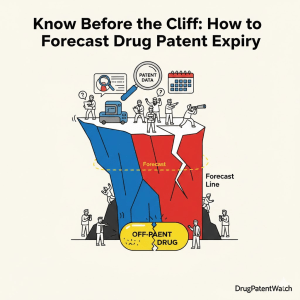
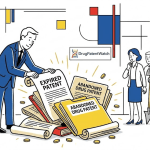
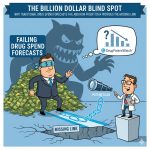
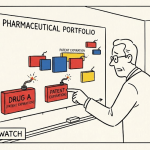
Every year, pharmaceutical executives sit in board meetings with revenue projections that quietly contain a time bomb. The bomb is not a failed trial or a surprise competitor. It is a patent expiration date that is either misread, misunderstood, or just plain wrong.
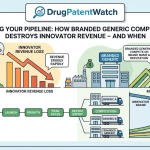
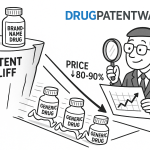
The consequences are not theoretical. When AstraZeneca’s Nexium lost exclusivity, the company watched generics capture more than 80 percent of the market within twelve months. When Pfizer’s Lipitor patent expired in 2011, the company shed roughly $5 billion in annual revenue in under two years. These are not edge cases. They are the predictable result of failing to forecast patent expiry with precision.
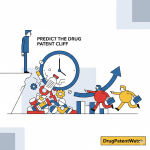
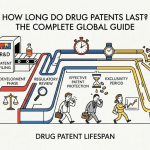
The problem is that patent expiry is not a single date. It is a cascade of overlapping intellectual property protections, regulatory exclusivities, litigation settlements, and pediatric extensions that interact in ways that surprise even experienced patent attorneys. Forecasting that cascade accurately requires a structured analytical process, the right data sources, and an understanding of how each layer of protection operates.
This guide walks through that process, step by step. It is written for competitive intelligence professionals, investment analysts, generic drug manufacturers, and senior strategists who need to know when a drug’s market protection actually ends, not just when its core patent technically expires.
Why Patent Expiry Forecasting Is Harder Than It Looks
The first mistake most analysts make is treating patent expiry as a lookup task. They go to the FDA’s Orange Book, find the listed patent for a drug, note the expiration date, and move on. That approach will be wrong more often than it is right.
Here is why.
A single blockbuster drug can sit under a portfolio of dozens of patents covering the compound itself, specific formulations, manufacturing processes, methods of use, delivery mechanisms, and metabolite compositions. Each of those patents has its own filing date, issue date, and expiration. Some will be listed in the FDA Orange Book. Others will not. Some will be enforced aggressively. Others are defensive filings that would never survive litigation. The date that actually matters for competitive strategy is the date when generic entry becomes legally viable and commercially attractive, which is not always the date the last patent expires.
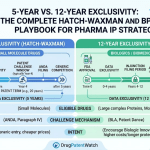
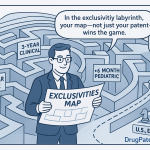
Regulatory exclusivities add another layer. The FDA grants several categories of exclusivity that are entirely separate from patent protection. These include five-year new chemical entity exclusivity, three-year new clinical investigation exclusivity, seven-year orphan drug exclusivity, and pediatric exclusivity, which adds six months to any existing exclusivity or patent protection. A drug can have expired patents and still be shielded from generic competition by a regulatory exclusivity that has nothing to do with the patent system.
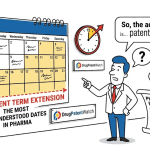
Patent term extensions complicate things further. The Hatch-Waxman Act allows brand manufacturers to apply for a patent term restoration that compensates for time lost during FDA review. This can add up to five years to a patent’s life. The actual calculation is technical and fact-specific, and the extended date is not always easy to find in public records.
Then there are paragraph IV certifications, citizen petitions, and litigation settlements that can delay generic entry well beyond what any patent or exclusivity date would suggest. The settlement between a brand company and a generic filer can include a “pay-for-delay” arrangement that keeps the generic off the market for years while both parties share monopoly profits. Those arrangements are legal in the United States, subject to antitrust scrutiny, and they make forecasting entry dates genuinely difficult. <blockquote> “Generic drugs account for 90 percent of all prescriptions dispensed in the United States, but only about 20 percent of total drug spending, a ratio that holds almost entirely because of the patent system’s role in governing when competition begins.” — Association for Accessible Medicines, Generic Drug & Biosimilar Access in America, 2023 </blockquote>
The point is not that patent expiry forecasting is impossible. It is that it requires a systematic process that accounts for each of these layers rather than stopping at the first date you find.
Step One: Identify the Full Patent Estate
The first step in any patent expiry forecast is mapping the complete patent portfolio for the drug in question. This means going beyond the Orange Book.
Start with the FDA Orange Book
The Orange Book, formally titled “Approved Drug Products with Therapeutic Equivalence Evaluations,” lists the patents that brand manufacturers have submitted for FDA listing. These are patents the brand believes cover the approved drug product, its formulation, or its approved methods of use. The Orange Book is the most important starting point because these are the patents that generic filers must address through their Abbreviated New Drug Application (ANDA) certifications.
You can search the Orange Book by active ingredient, drug name, or application number. Each entry shows the patent number, expiration date, and the type of patent (drug substance, drug product, or method of use). For each relevant patent, note the expiration date but treat it as preliminary, because Orange Book dates frequently exclude term extensions that have been applied but not yet updated in the database.
Cross-reference with the USPTO Patent Full-Text Database
Every patent listed in the Orange Book exists as a public document at the U.S. Patent and Trademark Office. Pull the full text of each patent. You want to confirm the issue date, the priority date, the claims structure, and any recorded assignments or licensing arrangements. The priority date is particularly important because it determines the relevant prior art window for any validity challenge a generic filer might mount.
Extend the Search to Non-Orange Book Patents
Orange Book-listed patents are only the patents the brand chose to submit. Many patents in a brand drug’s portfolio are deliberately not listed there. Process patents, manufacturing patents, and certain method-of-use patents are often kept off the Orange Book to preserve enforcement flexibility or to avoid triggering Hatch-Waxman paragraph IV litigation. These unlisted patents can still be asserted against generic manufacturers in district court, outside the Hatch-Waxman automatic 30-month stay framework.
To find non-Orange Book patents, search the USPTO database by the brand manufacturer’s assignee name and by the active ingredient’s chemical name and common synonyms. Review the International Patent Classification (IPC) codes relevant to the therapeutic category. Run a search through the European Patent Office’s Espacenet database to identify international filings that may have U.S. counterparts not yet showing in your primary search.
Use Specialized Patent Intelligence Databases
General patent searches are time-consuming and prone to gaps. DrugPatentWatch aggregates pharmaceutical patent data and links it directly to FDA product data, clinical trial registrations, and ANDA filing activity. For each drug, DrugPatentWatch shows the full list of associated patents, estimated expiration dates with and without pediatric exclusivity, and historical generic filing information. This gives analysts a structured starting point that would take weeks to build manually from raw USPTO and FDA data.
The output of Step One is a master patent list: every patent number, issue date, expiration date, and patent type associated with the drug. At this stage, the list is raw. The next steps refine it into a defensible forecast.
Most patents on a drug expire 20 years from the earliest effective filing date. That is the statutory rule. But several adjustments can change the actual expiration date, sometimes dramatically.
Patent Term Adjustment (PTA)
The USPTO grants patent term adjustment when examination delays are caused by the agency rather than the applicant. PTA is calculated on a day-by-day basis and can add anywhere from a few months to several years to a patent’s life. The granted PTA is recorded on the patent face and is also searchable in the USPTO Patent Center database. Do not assume the raw 20-year calculation is correct without checking PTA for each patent.
Patent Term Extension (PTE) Under Hatch-Waxman
The Hatch-Waxman Act’s patent term restoration provision allows brand manufacturers to apply for an extension of one patent per approved product to compensate for regulatory review time. The extension is calculated as half the investigational period plus the full regulatory review period, capped at five years and subject to a ceiling that the remaining patent term cannot exceed 14 years from FDA approval. The FDA and USPTO jointly administer this process.
Check whether a term extension has been applied for or granted using the USPTO’s Patent Term Extension database. This is separate from PTA and is applied to only one patent per product. Identifying which patent received the extension and calculating the new expiration date is critical because the extended patent is often the compound patent, the one that would otherwise be the last protection standing.
Pediatric Exclusivity
The Best Pharmaceuticals for Children Act (BPCA) grants six months of additional market exclusivity when a brand manufacturer completes an FDA-requested pediatric study. This six-month exclusivity attaches not just to one patent but to all Orange Book-listed patents and all regulatory exclusivities for that drug. If a drug has a compound patent expiring December 31, 2027, and pediatric exclusivity applies, the effective exclusivity runs to June 30, 2028.
Pediatric exclusivity is frequently overlooked in quick-read analyses. Check the FDA’s list of written requests issued and studies completed to determine whether pediatric exclusivity applies and when the relevant patent or exclusivity period would extend to.
Regulatory Exclusivity Periods
Beyond patents, calculate all applicable FDA exclusivity windows. The five-year new chemical entity (NCE) exclusivity begins on the date of first FDA approval and prohibits generic ANDA filers from even submitting an application during the first four years. The three-year clinical exclusivity applies to new conditions of use, new formulations, or new dosage forms supported by new clinical investigations, and it runs from the approval date. Orphan drug exclusivity provides seven years of protection for drugs approved for rare diseases.
Each of these exclusivities operates independently of patents and can protect a drug from competition long after its patents have expired. Build a separate exclusivity timeline alongside the patent timeline and identify the date when both protections finally lapse.
Step Four: Locate ANDA Filings and Paragraph IV Certifications
The most actionable signal in drug patent expiry analysis is not a date. It is a filing. When a generic manufacturer submits an ANDA with a paragraph IV certification, they are asserting that they can enter the market before the brand’s patents expire, either because the patents are invalid or because their product does not infringe. That filing triggers a 45-day window in which the brand can sue for infringement and automatically obtain a 30-month stay on FDA approval of the generic.
The presence and timing of paragraph IV filings tells you several things. It tells you which patents generic manufacturers believe are vulnerable. It tells you which drugs are commercially attractive enough to justify the litigation cost. It tells you roughly when generic manufacturers believe they can bring a product to market. And it tells you whether first-to-file exclusivity, which gives the first ANDA filer 180 days of generic market exclusivity, is in play.
How to Find Paragraph IV Filings
The FDA publishes a list of paragraph IV certifications at the time of first notification. This list is updated regularly and is searchable by drug name and active ingredient. DrugPatentWatch tracks paragraph IV filing history comprehensively, linking each certification to the specific patents challenged, the generic filers involved, and the litigation outcomes where available.
Review the list of paragraph IV filers for the drug you are analyzing. If there are multiple filers, note whether they filed on the same day, because that matters for first-filer exclusivity. Review public litigation records to determine whether the brand sued within 45 days. If litigation is ongoing, monitor the docket for settlement discussions, summary judgment rulings, and trial dates.
Reading the Litigation Outcome
A judgment of invalidity or non-infringement in favor of the generic filer essentially removes that patent as a barrier to entry. A settlement can result in an authorized generic launch date that is different from what the patent landscape would otherwise suggest. Some settlements include “at-risk” launch provisions where the generic enters the market before final judgment, accepting the litigation risk in exchange for being first to market.
Understanding the litigation outcome is not optional for a precise expiry forecast. The same drug can have wildly different effective exclusivity end dates depending on whether a key compound patent has been successfully challenged.
Step Five: Map the Biosimilar Pathway (for Biologics)
For biologic drugs, the patent expiry framework is fundamentally different from small-molecule pharmaceuticals. Biologics are regulated under the Biologics Price Competition and Innovation Act (BPCIA), not Hatch-Waxman, and their exclusivity structure reflects that.
The 12-Year Reference Product Exclusivity
Under the BPCIA, a reference biologic product receives 12 years of exclusivity from the date of FDA approval during which no biosimilar or interchangeable product can be approved. A four-year bar runs concurrently: a biosimilar application cannot even be submitted until four years post-approval. For practical purposes, the 12-year exclusivity is often the binding constraint, not the patent estate.
This is different from small-molecule drugs, where patents typically provide the primary protection and regulatory exclusivity is shorter. For biologics, plan your analysis around the 12-year exclusivity first, then layer the patent analysis on top.
The Patent Dance
The BPCIA established an information exchange process, commonly called the “patent dance,” in which the reference product sponsor and biosimilar applicant share confidential manufacturing and application information and negotiate over which patents will be litigated before and after biosimilar launch. The patent dance is complex, frequently litigated in its own right, and produces a list of patents that may be the subject of pre-launch litigation, post-launch litigation, or both.
When analyzing a biologic’s exclusivity position, identify whether the biosimilar applicant has engaged in the patent dance and, if so, what patents are in dispute. Court filings in BPCIA litigation are publicly accessible and often contain more detail about the competitive timeline than any FDA database.
Biosimilar Interchangeability
A biosimilar designated as “interchangeable” can be substituted at the pharmacy level without prescriber intervention, which dramatically accelerates market penetration compared to a non-interchangeable biosimilar. Track whether any biosimilar applicants are pursuing interchangeability designation and what additional clinical data requirements that entails. An interchangeable biosimilar entering the market will have different revenue impact dynamics than a standard biosimilar.
Step Six: Assess Lifecycle Management Strategies
Brand pharmaceutical companies do not watch patent cliffs approach without deploying defensive strategies. Understanding those strategies is essential to accurate forecasting, because they can extend effective market protection well beyond what the existing patent estate suggests.
Reformulation and New Dosage Forms
The most common lifecycle management strategy involves developing new formulations of an existing drug, such as an extended-release version, a new delivery mechanism, or a fixed-dose combination with another molecule. These new formulations can receive their own patents and their own three-year clinical exclusivity periods. If a brand is successful in shifting prescribers and patients to the new formulation before the original patent expires, the revenue impact of generic entry on the original formulation may be smaller than expected.
Assess whether any new formulation approvals, pending NDAs, or supplemental NDA filings exist for the drug. Search the FDA’s drug approval database and the brand company’s pipeline disclosures in SEC filings. If a long-acting or extended-release version is approved close to the original’s patent expiry, model the revenue shift scenario as part of your analysis.
Authorized Generics
When a brand company launches its own generic version of its drug, either through a subsidiary or through a licensing arrangement with a generic manufacturer, it does so as an authorized generic. Authorized generics do not need to challenge any patents because they operate under the brand’s original NDA. They can launch on day one of generic availability and directly compete with independent generics.
The presence of an authorized generic affects the competitive dynamics of the post-patent market. It reduces the revenue premium that the first generic filer would otherwise enjoy during its 180-day exclusivity period, because the authorized generic does not count as a separate generic for exclusivity purposes but still competes for market share. Some brand companies use the threat of an authorized generic as a settlement tool in paragraph IV litigation.
New Active Moiety Combinations
Some brand companies pursue fixed-dose combination products that combine the existing active ingredient with a new one, positioning the combination as a successor product. If the combination receives new exclusivity protections and clinical data supports a differentiated efficacy or safety profile, it can capture a meaningful share of prescriptions before the original drug faces generic competition.
Step Seven: Build the Exclusivity Waterfall Model
At this point in the analysis, you have a full patent list with calculated true expiration dates, a regulatory exclusivity timeline, information on paragraph IV challenges and their status, knowledge of any lifecycle management activity, and an understanding of the biosimilar pathway if the drug is a biologic. The next step is to organize that data into a visual structure that makes the effective market exclusivity clear.
The Waterfall Structure
Think of market protection as a waterfall of overlapping barriers. The compound patent is typically the widest and most important. Behind it sits the formulation patent, then method-of-use patents, then regulatory exclusivities. Behind those sit pediatric exclusivity extensions, lifecycle management formulations, and authorized generic arrangements.
Build a timeline spanning from the current date out 15 years. Plot each protection type as a horizontal bar. Label each bar with the type of protection, the specific patent or exclusivity, and the expiration date. Where litigation is ongoing, add a confidence band showing the range of possible outcomes from early generic entry to full patent term.
Identifying the True “Go Dark” Date
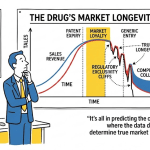
The date that matters commercially is not when the last patent expires. It is when a generic product can receive FDA approval, launch commercially, and gain meaningful market share at a significantly lower price. That date depends on the interaction of patent expiry, regulatory exclusivity, and litigation outcomes.
In many cases, the binding constraint is a regulatory exclusivity that expires after the last patent. In others, the binding constraint is a litigation settlement that allows generic entry on a specific date regardless of the remaining patent term. In a few cases, particularly where no paragraph IV challenge has been filed, the binding constraint is the last Orange Book-listed patent.
Calculate this date explicitly and call it the “effective exclusivity expiry” in your model. Build scenarios around it: a base case, a bull case for the brand (litigation success, lifecycle management uptake), and a bear case (early paragraph IV invalidation, no authorized generic).
Step Eight: Source and Validate Your Data
A patent expiry forecast is only as good as its underlying data. The pharmaceutical patent landscape involves multiple government databases that are updated on different schedules, private data aggregators that interpret raw data with varying degrees of accuracy, and corporate disclosures that are selectively complete. Building a reliable forecast requires cross-referencing at least four data sources for every material conclusion.
Primary Government Sources
The FDA’s Orange Book is updated monthly. The USPTO Patent Center provides real-time patent status information, including maintenance fee payments (a lapsed maintenance fee means a patent has expired early, which is easy to miss). The FDA’s Paragraph IV Certification List is updated as certifications are received. The FDA’s Orange Book Exclusivity information is updated after each approval.
Access all four of these sources directly. Do not rely on secondary summaries of this data without checking the primary source for material items.
DrugPatentWatch as an Integration Layer
DrugPatentWatch aggregates data from these government sources and supplements it with historical filing data, litigation tracking, and generic manufacturer activity. For analysts who track a large number of drugs simultaneously, it provides a structured view of the patent landscape that would take significantly longer to build from individual government databases. The platform’s patent expiry forecasts include adjustments for regulatory exclusivities and flag known paragraph IV challenges, making it useful for initial scoping and for identifying drugs that need deeper analysis.
Use DrugPatentWatch as a starting point and cross-check layer rather than as the sole source for any high-stakes forecast. For material investment or litigation decisions, verify every key date in the primary government databases.
Corporate Disclosures and Analyst Reports
Brand pharmaceutical companies disclose expected patent expiry dates in their annual reports, 10-K filings, and investor day presentations. These disclosures are not always complete, particularly regarding patents the company considers litigation-sensitive. Generic company 10-K filings and pipeline disclosures sometimes reveal ANDA filing plans before the FDA’s public data is updated. Law firm publications and patent attorney analyses can provide useful interpretive context for complex patent situations.
None of these sources should substitute for primary data, but they provide useful context and sometimes reveal information not yet reflected in public databases.
Step Nine: Stress-Test the Forecast Against Historical Patterns
Any patent expiry forecast should be validated against the historical behavior of similar drugs in similar circumstances. This is not about finding analogues to copy. It is about identifying the base rates of outcomes that should inform your probability estimates.
How Often Do Paragraph IV Challenges Succeed?
Research by the Federal Trade Commission and academic analysts has consistently found that generic challengers prevail in Hatch-Waxman patent litigation approximately 70 to 80 percent of the time, whether through a court ruling in their favor or a settlement with a permitted-early-entry date. This does not mean any specific challenge will succeed, but it means the prior probability of generic entry before patent expiry is meaningfully higher than many brand analysts assume.
For your forecast, if a paragraph IV challenge is active, assign a probability to early generic entry consistent with historical win rates and adjust for the specific patent’s claim structure, breadth, and prosecution history.
How Quickly Does Market Share Shift After Generic Entry?
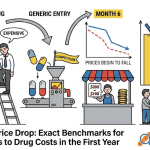
Historical data on generic penetration rates is well-established. For oral solid dosage forms of drugs with significant commercial value, generics typically capture 80 to 90 percent of prescription volume within six months of the first day of generic availability. For complex formulations, injectables, and specialty drugs, the penetration curve is slower but the trajectory is similar. Revenue impact typically exceeds prescription volume impact because branded drug prices decline sharply in response to generic competition.
Build these penetration curves into your financial modeling. A drug that faces generic entry in January will look very different financially from a drug where generics enter in July of the same year.
Lifecycle Management Success Rates
Not all lifecycle management strategies work. Extended-release formulations sometimes fail to gain prescriber adoption. Fixed-dose combinations can struggle to earn formulary placement. New formulations face their own patent challenges. Research from pharmaceutical industry sources suggests that fewer than half of lifecycle management products successfully extend a brand’s commercial life meaningfully. Build this failure rate into your scenarios rather than assuming lifecycle management strategies will succeed by default.
Step Ten: Produce a Tiered Output for Different Audiences
A patent expiry forecast is not useful as a data dump. The information has to be structured differently for different audiences and different decisions.
For Investment Analysts
The most relevant output for investment analysis is the effective exclusivity expiry date for each drug in a company’s portfolio, weighted by its contribution to current revenue, combined with the probability-weighted revenue impact of generic entry. For a portfolio of drugs, this produces a “patent cliff” visualization showing annual revenue at risk over a five-to-ten-year window. The analysis should distinguish between drugs facing near-certain generic entry in the forecast period and those with contested or uncertain timelines.
Supplement this with a scenario analysis showing the revenue impact under different litigation outcomes and lifecycle management assumptions. Investors need to understand the range of outcomes, not just the base case.
For Generic Manufacturers
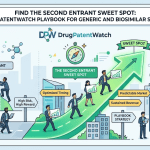
Generic manufacturers need the forecast to be actionable in a specific way: which drugs will have a commercially attractive exclusivity window, when can they file their ANDA, what is the likely first-filer situation, and when can they realistically expect to launch. The output should focus on the paragraph IV landscape (is the market open for challenge?), the exclusivity calendar (is regulatory exclusivity a binding constraint?), and the 180-day first-filer dynamics.
For a generic manufacturer, the difference between being the first ANDA filer and the second can be worth hundreds of millions of dollars in first-mover exclusivity profits. Precise forecasting of filing windows and expected litigation timelines is directly valuable.
For Brand Manufacturers
Brand companies need the forecast to plan lifecycle management investments, authorized generic decisions, and litigation strategies. The most useful output is a risk-ranked list of their own patents, showing which are most likely to face early challenge, which have the strongest claim to validity, and which are the binding constraints on their competitive position. The analysis should include an honest assessment of each patent’s vulnerability based on prior art and prosecution history, not just its face expiration date.
Common Forecasting Mistakes and How to Avoid Them
Even experienced analysts make recurring mistakes in patent expiry forecasting. Knowing them in advance saves time.
Mistake One: Relying Exclusively on Orange Book Data
The Orange Book lists only the patents the brand submitted. It does not list all enforceable patents. Analysts who stop their search at the Orange Book miss non-listed patents that can be used to sue generic manufacturers outside the Hatch-Waxman framework. Always extend the search to the full patent estate.
Mistake Two: Ignoring Pediatric Exclusivity
Pediatric exclusivity is worth six months of market exclusivity. On a drug generating $2 billion annually, that is $1 billion in additional brand revenue. It is frequently overlooked because it is not always reflected in the Orange Book expiration dates until the pediatric study is completed and exclusivity is formally granted. Check the FDA’s written requests list and the Orange Book’s exclusivity data separately.
Mistake Three: Treating Settlement Dates as Uncertain
When a paragraph IV lawsuit ends in a settlement that specifies a permitted entry date, that date is usually disclosed in SEC filings and sometimes in court records. Analysts who model the settlement date as “uncertain” when it is in fact specified are introducing unnecessary uncertainty into their forecast. Find and read the settlement terms.
Mistake Four: Conflating Patent Expiry with Generic Entry
A patent can expire and generic entry still not happen immediately. FDA approval of an ANDA takes time. Manufacturing scale-up takes time. Commercial launch preparation takes time. For drugs where no ANDA has been filed and the patent is approaching expiry, the realistic generic entry date may be 18 to 24 months after patent expiry. Do not assume that the day after a patent expires, a generic appears on the shelf.
Compound patents are relatively straightforward. Formulation patents are not. A drug can have a dozen formulation patents with different expiry dates covering different aspects of the physical product. Generic manufacturers must design around all of them, not just the primary compound patent. If any formulation patent survives challenge, it can delay the specific generic product from reaching the market even if the compound patent has been defeated.
The Global Dimension: How Expiry Dates Differ by Market
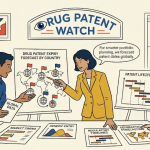
A drug’s patent position in the United States is not its patent position in Europe, Japan, or the rest of the world. Each major market has its own patent system, its own data exclusivity rules, and its own generic approval pathway. For a complete commercial forecast, particularly for a globally marketed product, you need to analyze each major market separately.
Europe
The European Patent Office grants patents with a 20-year term from filing date, consistent with U.S. rules. But Europe also has Supplementary Protection Certificates (SPCs) that function like patent term extensions and can add up to five years of protection after the core patent expires. SPCs are granted on a country-by-country basis, and the calculation methodology differs slightly by member state. A drug can have its SPC expire in Germany three months before it expires in France.
The European Medicines Agency grants data exclusivity through an eight-plus-two-plus-one framework: eight years of data exclusivity during which generic applications cannot reference the brand’s clinical data, followed by two years during which generics can be approved but not marketed, with an additional one-year extension possible for new indications. This totals up to eleven years of data protection, which is longer than the U.S. NCE exclusivity but structured differently.
Japan
Japan grants patent term extensions for pharmaceutical products similar to the U.S. system, capped at five years. Data exclusivity in Japan is eight years from approval for new molecular entities and six years for certain other new drug categories. Japan’s generic market has historically been less developed than the U.S. or European markets, though regulatory reforms have been pushing generic penetration higher.
Emerging Markets
In markets like India, Brazil, China, and South Africa, patent protection for pharmaceutical products is governed by local law and enforcement varies significantly. India does not grant patents for new forms of known molecules without demonstrated enhanced efficacy, a provision of its patent law under Section 3(d) that has blocked several pharmaceutical patents that were upheld in the United States. China has strengthened pharmaceutical patent protection in recent years, but enforcement remains uneven. For commercial forecasting in emerging markets, the practical competitive dynamics often differ from what the formal patent position would suggest.
Technology Tools That Change the Analysis
The patent expiry forecasting process described above is analytically intensive. Technology tools have not replaced the analytical judgment required, but they have changed what is tractable in a given time frame.
Patent Intelligence Platforms
DrugPatentWatch covers the pharmaceutical-specific layer of the problem, integrating FDA and USPTO data with historical competitive intelligence. Derwent Innovation and Clarivate Analytics provide broader patent landscape analysis including freedom-to-operate assessments and competitor portfolio mapping. For analysts who need to cover a large drug universe, these platforms provide structured, searchable data that reduces the manual work required for initial scoping.
Natural Language Processing Tools
Recent advances in large-language-model technology have made it practical to process large volumes of patent claim language and litigation documents quickly. These tools can help identify which specific claims in a patent are most likely to be asserted against a generic competitor and which aspects of the prior art are most relevant to a validity challenge. They are not substitutes for attorney analysis of patent validity, but they can help prioritize which patents deserve deeper legal review.
Financial Modeling Platforms
Bloomberg, FactSet, and Evaluate Pharma include patent expiry data as part of their pharmaceutical pipeline analytics. The data these platforms provide is useful for first-pass analysis and for tracking the publicly reported patent positions of large pharmaceutical portfolios. For any drug requiring precise forecasting, these platform estimates should be cross-checked against primary sources.
A Worked Example: Walking Through a Hypothetical Forecast
To make the process concrete, consider a hypothetical small-molecule drug, call it Drug X, approved by the FDA in 2010 for a common indication. It generates $3 billion annually and faces increasing competitive pressure from newer agents in the same class. An analyst needs to forecast when Drug X will face generic competition.
The Orange Book shows three listed patents. Patent A is a compound patent issued in 2005, expiring in 2025. Patent B is a formulation patent for the extended-release version, issued in 2009, expiring in 2029. Patent C is a method-of-use patent, issued in 2011, expiring in 2031.
Step one is to check Patent A for PTA and PTE. The USPTO records show 18 months of PTA, extending the effective expiry to mid-2026. No PTE has been granted. Pediatric exclusivity does not apply, as no written request was issued.
Step two is to check regulatory exclusivity. Drug X was a new chemical entity in 2010, so NCE exclusivity ran five years to 2015. That exclusivity has expired.
Step three is to look for paragraph IV filings. Three generic manufacturers filed ANDAs with paragraph IV certifications against Patent A in 2019. The brand sued within 45 days on all three, triggering 30-month stays that nominally ran to mid-2022. All three stayed cases settled in 2021 with permitted entry dates of January 1, 2026.
This is the key finding. The compound patent would expire in mid-2026 with PTA, but the settlement specifies January 1, 2026 as the permitted entry date. For commercial forecasting purposes, January 1, 2026 is the relevant date for generic entry on the original formulation.
But Patent B, the formulation patent for the extended-release version, expires in 2029. If the brand has successfully shifted prescribers to the extended-release version, the 2026 generic entry for the original formulation may affect only a fraction of total revenue. Check the prescription data. If 70 percent of Drug X prescriptions are now written for the extended-release version, the practical revenue impact of January 2026 entry is significantly smaller than a naive view of the patent situation would suggest.
The brand has also filed a new NDA for a fixed-dose combination of Drug X with a second molecule, which received FDA approval in 2022. That combination product has its own compound patent running to 2040 and three-year clinical exclusivity to 2025. A small but growing share of prescriptions is shifting to the combination.
The complete forecast therefore has at least three scenarios. In the base case, Drug X original formulation faces generic entry January 1, 2026, with rapid erosion on that formulation consistent with historical penetration rates. The extended-release version maintains exclusivity through 2029 unless challenged. The combination product maintains exclusivity to 2040 but commands a smaller share of total volume. In the bull case for the brand, prescribers continue shifting to the extended-release and combination products, reducing the revenue impact of 2026 generic entry substantially. In the bear case, a paragraph IV challenge against Patent B succeeds, extending generic competition to the extended-release market by 2027 or 2028.
That is the kind of output a rigorous patent expiry forecast produces.
What Good Forecasting Actually Costs (and What It Is Worth)
Patent expiry analysis is not free. A rigorous analysis of a single complex drug, done properly, requires attorney time, access to specialized data platforms, financial modeling expertise, and time. For a major blockbuster drug, a complete analysis costs $50,000 to $150,000 when conducted by specialized intellectual property consulting firms.
For investment analysts managing a pharmaceutical portfolio, the cost of missing a patent expiry inflection is far larger. If an analyst’s model fails to capture a six-month pediatric exclusivity extension on a $4 billion drug, the revenue forecast error is $2 billion. That error propagates through the valuation model and produces a materially incorrect estimate of the company’s value.
For generic manufacturers, the economics are even more concentrated. Missing the first-filer window on a major drug because your ANDA was filed a day after a competitor can cost hundreds of millions in foregone exclusivity revenue. The analysis cost is trivial relative to the value of being right.
For brand manufacturers, the cost of not anticipating a successful paragraph IV challenge is the failure to invest in lifecycle management, authorized generic preparation, or litigation defense at the right time. An accurate forecast allows rational resource allocation. An inaccurate one produces exactly the kind of board meeting surprise described at the start of this article.
Building a Repeatable Forecasting Process
Individual drug analysis is valuable. But most pharmaceutical organizations and investment managers need to track dozens or hundreds of drugs simultaneously. The individual-drug process described above needs to be systematized.
Build a Master Patent Tracker
Create a structured database covering every drug in your relevant universe. For each drug, record the Orange Book patents, the calculated effective expiration dates, the regulatory exclusivities, the paragraph IV filing status, and the lifecycle management activity. Flag any drug where a material change in the patent situation has occurred in the last 90 days. DrugPatentWatch provides a notification service for patent and exclusivity changes that can automate much of this monitoring.
Establish a Review Calendar
Set a quarterly review schedule for the highest-priority drugs. Set an annual review for the rest of the portfolio. Trigger an out-of-cycle review whenever a paragraph IV certification is filed, a litigation outcome is announced, or a new formulation approval is granted for a tracked drug.
Document Your Assumptions
Every patent expiry forecast rests on assumptions about litigation outcomes, lifecycle management success rates, and generic penetration timing. Document those assumptions explicitly. When the actual outcome differs from the forecast, understand why the assumption was wrong. That understanding improves the next forecast.
Get Legal Review for Material Decisions
Patent expiry forecasting is not legal advice. For any decision where a patent timeline materially affects the outcome, get a patent attorney’s review of the key patents and litigation positions. Analysts can build frameworks. Attorneys assess the legal merits of specific patent claims and litigation positions. The two functions are complementary, not substitutable.
The Future of Patent Expiry Analysis
The drug patent landscape is not static. Two developments deserve close attention over the next decade.
Drug Pricing Legislation and Patent Challenges
The Inflation Reduction Act introduced Medicare drug price negotiation for a subset of single-source drugs that have been on the market without generic competition for an extended period. The IRA creates a new form of price pressure on late-lifecycle drugs that previously benefited from sustained monopoly pricing after the patent expiry of competitors. The interaction between IRA price negotiation timelines and patent expiry calendars is a new analytical dimension that pharmaceutical analysts need to incorporate.
The IRA may also change the incentive economics for pediatric exclusivity and lifecycle management strategies. If a drug is subject to negotiation anyway, the value of extending exclusivity by six months through a pediatric study is different from what it was before the IRA.
Artificial Intelligence in Patent Management
Large pharmaceutical companies are deploying artificial intelligence tools for patent portfolio management, patent landscape analysis, and prior art searching. These tools are improving the speed and breadth of patent analysis on both the brand and generic sides of the market. A generic manufacturer with AI-assisted prior art tools may be able to identify vulnerabilities in a brand patent faster and more comprehensively than was previously possible. That dynamic may accelerate paragraph IV challenge activity and change the historical base rates of challenge success that analysts currently rely on.
Pay attention to how AI tools change the litigation landscape over the next five years. The base rates from historical data may shift.
Key Takeaways
Patent expiry forecasting requires mapping the complete patent estate for a drug, not just the Orange Book-listed patents. Non-listed patents can still be enforced and must be accounted for in any competitive analysis.
True expiration dates differ from face-value patent dates because of patent term adjustment, patent term extension, and pediatric exclusivity. Calculate each adjustment separately for every material patent.
Regulatory exclusivities are entirely separate from patents and can protect a drug from generic competition even after all patents have expired. The five-year NCE exclusivity, three-year clinical exclusivity, and seven-year orphan drug exclusivity each operate independently.
Paragraph IV certifications and their litigation outcomes are often more important than the patent expiry dates themselves. A settled paragraph IV case typically specifies a permitted entry date that becomes the controlling date for generic entry.
Biologics operate under a completely different framework from small-molecule drugs. The 12-year reference product exclusivity is the primary protection, and the patent dance creates a separate patent dispute resolution process.
Lifecycle management strategies can extend effective market protection beyond the original patent estate. Model these strategies as scenarios rather than certainties, using base rates of lifecycle management success as the prior probability.
Build the analysis output in tiers for different audiences: an effective exclusivity expiry date with scenario range for investors, a filing window and first-filer analysis for generic manufacturers, and a patent vulnerability ranking for brand strategists.
Use DrugPatentWatch as a structured integration layer for large-universe monitoring, but verify material dates and assumptions against primary FDA and USPTO databases for high-stakes decisions.
Frequently Asked Questions
Q: What is the difference between a patent expiration and an exclusivity expiration, and which one actually determines when a generic can launch?
Both matter, and neither alone is sufficient. A patent expiration sets a legal boundary on the brand’s intellectual property rights, but a patent can be invalidated before it expires through litigation. An exclusivity period set by the FDA prohibits even the submission or approval of a generic application regardless of the patent situation. The date when a generic can actually launch is the later of these two barriers, unless litigation results in earlier entry through a permitted-entry settlement. Always calculate both timelines and identify which is binding.
Q: If a company lists 30 patents in the Orange Book for a single drug, do I need to analyze every one of them?
Not with equal depth, but you need to screen all of them. Start by grouping them by type: compound, formulation, and method-of-use. Identify the expiry dates and flag any that extend meaningfully beyond the others. Focus deep analysis on the patents most likely to be the last protection standing and on the patents that generic manufacturers are actively challenging through paragraph IV filings. Patents that expired five years ago are not worth detailed analysis. Patents expiring in the forecast window and subject to active challenge deserve full scrutiny.
Q: How reliable is the FDA’s Orange Book patent expiry data for planning purposes?
The Orange Book is updated monthly and is generally accurate for the listed dates, but it has two systematic limitations. First, it does not include all enforceable patents, only those the brand chose to submit. Second, the expiry dates sometimes do not reflect granted patent term extensions until after the extension is formally recorded with the USPTO and FDA, which can lag the actual grant by months. For planning purposes, always verify material patent dates directly in the USPTO Patent Center and check the FDA’s Paragraph IV Certification List for current litigation activity.
Q: Can a drug face generic competition even if none of its listed patents have expired?
Yes, in two ways. First, a successful paragraph IV challenge can result in a court ruling that a specific patent is invalid or not infringed, clearing the way for generic entry before patent expiry. Second, a brand company can authorize a generic version of its own drug, allowing it to launch under the brand’s original NDA without any patent challenge. Authorized generics are fully legal and are a tool brand companies use both offensively and as part of litigation settlements.
Q: How do I handle a drug where the patent situation is actively being litigated and no outcome is certain?
Build a probability-weighted scenario model. Start with the base rates: generic challengers win roughly 70 to 80 percent of Hatch-Waxman patent cases through judgment or settlement. Adjust those base rates based on the specific characteristics of the patents being challenged, the strength of the prior art identified by the challenger, and the commercial stakes that influence settlement dynamics. Assign a probability to each scenario: generic entry at the challenge date, at the settlement-specified date, or at the full patent term. Compute an expected value for the key commercial metric under each scenario. Treat the weighted expected value as the base case and the scenario range as the risk band around it.
This article was researched and written using publicly available patent, regulatory, and litigation data. Patent term calculations and exclusivity determinations for specific drugs should be confirmed with qualified intellectual property counsel before being used as the basis for commercial, investment, or legal decisions.