Introduction: The New Generic Imperative – Beyond Cost Leadership to Strategic Dominance
Welcome to the new era of generic pharmaceuticals. For decades, our industry’s narrative has been straightforward and powerful: we provide access to affordable medicine. We are the engine of healthcare savings, the force that democratizes treatment for millions. The numbers speak for themselves. The global generic drug market, valued at a staggering $435.3 billion in 2023, is on a trajectory to exceed $655.8 billion by 2028, expanding at a robust compound annual growth rate (CAGR) of 8.5%. In the United States alone, generics account for 90% of prescriptions dispensed yet represent only a fraction of the total drug cost, saving the healthcare system trillions of dollars over the last decade.2 This is our legacy, and it is a proud one.
But let’s be candid. The very ground beneath our feet is shifting. The simple, volume-driven model that defined our past is no longer a reliable blueprint for our future. We are living in an age of profound contradiction—what I call the “Affordability Paradox.” The same relentless price competition that allows us to offer drugs at prices 80% to 85% lower than their branded counterparts is the very force that compresses our margins to wafer-thin levels, destabilizes our supply chains, and, in a cruel twist of irony, contributes to the very drug shortages we aim to prevent.1 The relentless pursuit of the lowest possible price, while a massive societal benefit, has inadvertently created a fragile ecosystem where long-term sustainability is no longer a given.
So, where do we go from here? How do we build a durable, profitable enterprise in a market that seems determined to commoditize our products into oblivion? The answer is a radical strategic evolution. We must move beyond the singular pursuit of cost leadership and embrace a new vision of strategic dominance. The future of the generic drug industry will not be won by the company that is merely the cheapest, but by the one that masters a new triad of competitive differentiators.
First is the embrace of Complexity. The most significant and sustainable growth opportunities no longer lie in simple oral solid dosage forms. They are concentrated in high-value segments like complex generics—injectables, inhalables, transdermal patches—and the burgeoning field of biosimilars. These products are scientifically challenging and costly to develop, creating formidable barriers to entry that protect against the hyper-competition that plagues simpler markets.
Second is the integration of Technology. Disruptive innovations are no longer a luxury; they are a critical lever for competitive advantage. Artificial intelligence (AI) in drug formulation, continuous manufacturing for unparalleled efficiency, and advanced data analytics for supply chain resilience are redefining speed-to-market, quality, and cost. Companies that fail to invest in these technologies will be outmaneuvered by those who do.6
Third is the mastery of Geography. The global market is increasingly fragmented. A one-size-fits-all strategy is a blueprint for failure. From the policy shocks of the Inflation Reduction Act (IRA) in the United States to the centralized procurement systems in China and the unique pricing challenges in Europe, success now demands highly tailored, region-specific approaches to regulatory affairs, market access, and supply chain management.
This report is a blueprint for that transformation. It is a guide for the strategic decision-maker aiming to build a generic pharmaceutical company that not only survives but thrives in the decade to come. We will deconstruct the entire generic drug lifecycle, from the art of product selection and the science of development to the high-stakes chess game of patent litigation and the operational precision of a global launch. This is not a manual for the status quo. It is a long-term strategy for market leadership in an era of complexity. Let’s begin.
Part I: The Strategic Foundation – Building a Defensible and Profitable Portfolio
The foundation of any successful long-term strategy in the generic drug industry is not built in the laboratory or the manufacturing plant; it is forged in the boardroom. Before a single gram of active pharmaceutical ingredient (API) is sourced or a single bioequivalence study is designed, the most critical decisions have already been made. These are the decisions that define the company’s portfolio—the collection of assets that will either propel it to market leadership or condemn it to a perpetual struggle for profitability. In this new era, a portfolio cannot be a random assortment of expiring patents. It must be a curated, defensible, and strategically aligned collection of assets designed to win in specific, high-value segments. This requires a disciplined and data-driven approach to product selection and an aggressive, forward-looking strategy for navigating the intellectual property landscape.
The Art and Science of Product Selection: Your First, Most Critical Decision
The decision of which drug to pursue is the single most important determinant of a generic program’s success. A well-chosen candidate can generate hundreds of millions in revenue, while a poor choice can become a black hole for R&D resources, culminating in a crowded, low-margin market or, worse, a complete development failure. A robust selection process integrates a rigorous, multi-factor analysis of the external market with an honest, unflinching assessment of internal capabilities.
Multi-Factor Market Analysis: Seeing Beyond the Sales Figures
The starting point for any analysis is, of course, the market potential of the brand-name drug, or Reference Listed Drug (RLD). A blockbuster with billions in annual sales is an obvious beacon. However, top-line revenue is only the beginning of the story. A truly strategic market assessment digs deeper to understand the quality and accessibility of that opportunity. This involves a multi-pronged investigation:
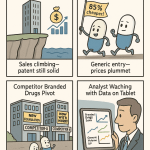
Competitive Landscape: How crowded will the market be on day one? The number of Abbreviated New Drug Application (ANDA) filers is a primary determinant of price erosion. The first generic entrant can command a significant price premium, but with five or more competitors, prices can plummet by nearly 85%. Intelligence on who else is developing the product is paramount. Are you competing against a handful of specialized players or a dozen large-scale manufacturers?.
Therapeutic Area Dynamics: Is the market for this class of drugs stable, or is the standard of care evolving? A critical question is whether the brand company is actively working to switch patients to a next-generation, patent-protected product or a line extension. If the brand is successfully migrating its patient base to a new formulation, the market for the original generic could evaporate before you even launch.
Market Structure: It is crucial to understand that the brand and generic markets operate under fundamentally different economic models. The brand market is typically a monopoly or oligopoly, where manufacturers compete for formulary placement by offering substantial rebates to Pharmacy Benefit Managers (PBMs) and health plans. In this world, the brand manufacturer retains a large portion of the revenue. The generic market, by contrast, is a multi-competitor model driven by price. Generic manufacturers rarely, if ever, negotiate rebates; instead, the supply chain captures a much larger percentage of the revenue, and the manufacturer with the lowest cost often wins. This structural difference means that a large brand market does not automatically translate to high profits for a generic, especially if the supply chain is highly consolidated and can exert immense pricing pressure.
Internal Capability Assessment: The Strategic Filter
A dazzling market opportunity is worthless if your organization lacks the technical prowess to seize it. A common and costly mistake is to chase a high-value product without a realistic assessment of the internal capabilities required to develop, manufacture, and regulate it. This self-assessment must be a strict strategic filter, not a hopeful wish list. Key questions include:
Technical and Manufacturing Expertise: Does the target product align with our core competencies? If your company has a long history of producing simple oral solid dosage forms, pursuing a complex sterile injectable or a transdermal patch represents a significant leap. This doesn’t mean it’s impossible, but it requires a clear-eyed evaluation of the required investment in new equipment, facilities, and, most importantly, human talent.
Capital and Resource Allocation: What is the true cost of entry? Beyond the ANDA filing fees, what capital expenditures will be necessary? Will we need to build a new manufacturing line? Purchase specialized analytical equipment? Hire a team with experience in a new dosage form?.
Regulatory Experience: Does our regulatory affairs team have experience with the specific challenges of this product type? Navigating the requirements for a complex generic or a drug-device combination product is vastly different from a standard immediate-release tablet.
This process should not be linear but an iterative loop. A promising market analysis should immediately trigger a rigorous internal capability review. If a gap is identified, the strategic question is not “can we do this?” but rather “is the risk-adjusted return on this opportunity large enough to justify the multi-million-dollar investment required to close our capability gap?” This transforms the assessment from a simple checklist into a sophisticated capital allocation decision.
To operationalize this complex decision-making process, leading companies employ a quantitative scoring framework. This allows for an “apples-to-apples” comparison of diverse opportunities, removing subjectivity and focusing the debate on data.
Based on RLD annual sales, patient population, and growth trends. Sources: IQVIA, Symphony Health.
Competitive Intensity
25%
2
0.5
4
1.0
Inverse score based on number of known ANDA filers and anticipated launch timing. Sources: FDA databases, competitive intelligence.
IP Complexity
20%
3
0.6
2
0.4
Score based on number and type of Orange Book patents, potential for Paragraph IV challenge, and risk of “patent thicket” litigation. Sources: DrugPatentWatch, USPTO.
Technical Feasibility
15%
5
0.75
2
0.3
Score based on alignment with in-house formulation/manufacturing capabilities, API sourcing difficulty, and complexity of BE studies. Source: Internal R&D assessment.
Strategic Fit
10%
4
0.4
5
0.5
Alignment with long-term portfolio goals (e.g., focus on oncology, complex generics, vertical integration). Source: Corporate strategy documents.
Total Score
100%
3.75
3.4
Mastering the Patent Landscape: Turning IP Intelligence into Opportunity
In the world of generic pharmaceuticals, patents are not just legal documents; they are the terrain upon which the entire competitive battle is fought. A reactive approach to intellectual property—simply waiting for patents to expire—is a strategy for followers, not leaders. A proactive, aggressive IP strategy, grounded in deep landscape analysis, is what separates a company that seizes market share from one that is left fighting for scraps.
Deconstructing the “Patent Thicket”
A blockbuster drug is rarely protected by a single patent. Instead, innovator companies meticulously construct a multi-layered “web of protection,” often called a “patent thicket,” designed to delay generic entry for as long as possible.11 Understanding the anatomy of this fortress is the first step to dismantling it:
The Crown Jewel (Composition of Matter Patent): This is the foundational patent covering the active pharmaceutical ingredient (API) itself. It is typically the strongest and most difficult to challenge, providing the broadest protection.11
Secondary Patents (The Moat): Surrounding the core patent is a moat of secondary patents. These can cover a vast range of innovations, including specific formulations (e.g., an extended-release mechanism), methods of use (i.e., treating a specific disease), manufacturing processes, or even specific crystalline forms (polymorphs) of the API.12 While individually weaker than the composition of matter patent, a dense thicket of these patents can create a formidable and expensive legal barrier for a generic challenger.
Conducting a Pharmaceutical Patent Landscape Analysis
A thorough patent landscape analysis provides the map to navigate this thicket. The goal is to identify not only the expiration dates of key patents but also potential weaknesses and strategic opportunities. A best-in-class analysis involves several steps 15:
Define Your Goals: What are you trying to achieve? Are you looking for the earliest possible launch date? Identifying patents to challenge via a Paragraph IV certification? Or developing a “design-around” formulation that avoids infringement altogether?
Develop a Comprehensive Search Strategy: This goes beyond simple keyword searches. It involves using a combination of keywords, patent classifications (IPC/CPC), and tracking the patenting activity of key assignees (the brand company) and inventors.
Utilize Integrated Intelligence Platforms: This is where modern strategy diverges from traditional patent searching. Standalone patent databases are no longer sufficient. The real strategic value comes from platforms that integrate disparate data sets. For example, a service like DrugPatentWatch is invaluable because it doesn’t just provide patent information; it connects that data directly to the FDA’s Orange Book listings, regulatory exclusivities, and, critically, ongoing litigation records from District Courts and the Patent Trial and Appeal Board (PTAB). This provides a holistic, real-time view of a product’s entire IP and regulatory ecosystem, allowing you to see not just what patents exist, but how they are being actively defended and challenged in the real world.
Analyze and Visualize the Data: The final step is to synthesize the data into actionable intelligence. Who are the key players? What are the filing trends? Where are the “white spaces” or opportunities for innovation? Visualizations like patent heatmaps can reveal patterns that are not obvious from raw data alone.
From Defense to Offense: The Strategic Imperative
This deep analysis is not a defensive compliance exercise; it is an offensive strategic weapon. The insights gained directly inform two critical paths:
The Paragraph IV Challenge: The analysis may reveal that a key secondary patent is weak—perhaps it’s based on obvious prior art or the claims are written too broadly. This becomes the basis for a Paragraph IV challenge, an aggressive strategy to enter the market before patent expiry.9
The “Design-Around” Strategy: The patent landscape may reveal a path to create a novel formulation or manufacturing process that does not infringe on the brand’s existing patents. This “design-around” approach can avoid litigation altogether and, in some cases, even allow the generic company to file its own patents on the new formulation, creating a small but valuable IP moat of its own.
It is essential to recognize that the patent landscape is not a static map but a dynamic battlefield. A long-term strategy must, therefore, include a dedicated competitive intelligence function that continuously monitors this landscape. Tracking a competitor’s new patent filings, the outcome of their litigation, and shifts in regulatory policy provides the real-time intelligence needed to pivot your strategy, defend your portfolio, and seize opportunities faster than the competition. This proactive, continuous surveillance is what transforms patent data from a historical record into a powerful predictive tool for market domination.
Part II: The Scientific Core – Mastering Development from Formulation to Bioequivalence
Once a product has cleared the strategic hurdles of selection and IP analysis, the focus shifts to the laboratory. This is where the theoretical opportunity becomes a tangible product. The scientific core of generic drug development is a high-stakes endeavor defined by a single, uncompromising objective: proving sameness. The proposed generic must be a pharmaceutical equivalent and bioequivalent to its branded counterpart. While this sounds simpler than discovering a new molecule from scratch, the process is fraught with scientific complexity and financial risk. A failed bioequivalence study can terminate a multi-million-dollar project overnight. Therefore, a long-term strategy cannot rely on luck; it must be built on a foundation of scientific excellence, leveraging advanced analytical techniques and systematic development methodologies like Quality by Design (QbD) to de-risk the path to approval.
Reverse Engineering the Innovator: The Art of Deformulation
Before you can replicate a product, you must first understand it at a molecular level. This process of deconstruction, known as reverse engineering or deformulation, is the critical first step in the development process. It is a sophisticated analytical investigation aimed at “decoding” the innovator’s product to reveal its precise composition and structure.
The Goal of Q1/Q2/Q3 Equivalence
The objective of deformulation is to establish different levels of sameness, which form the basis for a successful generic formulation and can support regulatory submissions 18:
Q1 (Qualitative Equivalence): This means the generic formulation contains the exact same inactive ingredients (excipients) as the reference listed drug (RLD).
Q2 (Quantitative Equivalence): This requires that the concentration of each excipient in the generic is the same as in the RLD, typically within a narrow margin of +/- 5%.
Q3 (Physicochemical Equivalence): This is the most complex level, referring to the similarity of the product’s microstructure and physicochemical properties. For a solid oral dosage form, this could involve matching the particle size distribution of the API and the arrangement of components within the tablet.
Achieving Q1/Q2 sameness is often a regulatory prerequisite for certain types of products and can be essential for securing biowaivers (a waiver of the requirement to conduct in vivo bioequivalence studies). More broadly, a thorough understanding of the RLD’s Q1/Q2/Q3 characteristics is a powerful developmental tool that dramatically reduces the number of experimental trial formulations needed to achieve bioequivalence.
A Toolkit of Analytical Techniques
Deformulation is not a single method but a multi-faceted investigation using an arsenal of advanced analytical instruments. Each technique provides a different piece of the puzzle 20:
Chromatography (HPLC, GC): These techniques are the workhorses for separating, identifying, and quantifying the individual components of a formulation, including the API and various excipients.
Spectroscopy (FTIR, Raman, NMR, Mass Spectrometry): These methods provide detailed information about the chemical structure of the molecules, helping to confirm the identity of ingredients and detect any impurities. Raman micro-spectroscopy is particularly powerful as it can map the spatial distribution of different components within a tablet, providing critical Q3-level insights.
Microscopy (SEM): Scanning Electron Microscopy provides high-resolution images of the product’s physical structure, revealing information about particle shape, size, and surface morphology, which can be influenced by the manufacturing process.
Thermal Analysis (DSC, TGA): These techniques measure how a substance responds to heat, which can be used to identify the crystalline form (polymorph) of the API—a critical attribute that can affect solubility and stability.
This deep characterization of the innovator product is a critical risk-mitigation investment. While it requires significant upfront resources in terms of both time and capital, it is an investment that pays enormous dividends. A comprehensive deformulation effort provides a clear roadmap for the formulation team, dramatically increasing the probability of success in the pivotal, and far more expensive, bioequivalence studies. A failed BE study can set a project back by years and millions of dollars, potentially rendering it commercially non-viable. In contrast, an initial deformulation that reveals unexpected complexity merely requires a strategic pivot in the lab. From a portfolio management perspective, funding a state-of-the-art analytical characterization program is one of the highest ROI decisions a company can make, as it systematically de-risks a key milestone on the path to market.
Embracing Quality by Design (QbD) for Robust and Consistent Manufacturing
Historically, generic formulation development was often an empirical, trial-and-error process. Scientists would create a series of test batches with slight variations and hope that one would pass the bioequivalence test. This approach is inefficient, costly, and provides no guarantee of success. The modern, strategic approach is Quality by Design (QbD), a systematic methodology endorsed by regulatory agencies like the FDA.
QbD flips the traditional model on its head. It is a proactive approach that begins with the end in mind: to consistently produce a bioequivalent product. The core principles of QbD include :
Define a Quality Target Product Profile (QTPP): This involves prospectively defining the desired quality characteristics of the final drug product. For a generic, the primary QTPP is to be bioequivalent to the RLD.
Identify Critical Quality Attributes (CQAs): These are the physical, chemical, biological, or microbiological attributes of the product that must be controlled within a specific range to ensure the desired product quality. For an oral tablet, CQAs could include drug release profile, hardness, and impurity levels.
Link Material Attributes and Process Parameters to CQAs: This is the heart of QbD. It involves conducting risk assessments and experiments to understand how the properties of the raw materials (e.g., API particle size, excipient grade) and the parameters of the manufacturing process (e.g., compression force, drying time) impact the CQAs.
Establish a Design Space: The result of this scientific investigation is a “design space”—a multidimensional combination and interaction of input variables (e.g., material attributes) and process parameters that has been demonstrated to provide assurance of quality. Manufacturing within this validated design space is not considered a change and does not require a new regulatory filing, providing significant operational flexibility.
Implement a Control Strategy: This involves a planned set of controls, derived from product and process understanding, that ensures process performance and product quality. It can include real-time monitoring of the manufacturing process to ensure it remains within the design space.
By using tools like modeling and simulation, a company can establish a relationship between formulation variables and in vivo performance, helping to identify the optimal formulation for bioequivalence with fewer human studies. This scientific, risk-based approach not only increases the likelihood of a successful development program but also results in a more robust and consistent commercial manufacturing process, reducing the risk of batch failures and recalls down the line.
The Bioequivalence Minefield: Proving Sameness for Simple and Complex Drugs
The culmination of all formulation and development work is the pivotal bioequivalence (BE) study. This is the moment of truth where the generic product is tested, typically in healthy human volunteers, against the RLD to prove that it performs in the same way in the body.
The Scientific and Statistical Standard
For most systemically acting drugs, bioequivalence is established by comparing key pharmacokinetic (PK) parameters after administration of both the generic (test) and brand (reference) products. The “holy trinity” of these parameters includes 24:
Cmax (Maximum Concentration): The highest concentration the drug reaches in the bloodstream. This is a measure of the rate of drug absorption.
AUC (Area Under the Curve): This represents the total exposure to the drug over time, calculated from the plasma concentration-time curve. This is a measure of the extent of drug absorption.
Tmax (Time to Maximum Concentration): The time it takes to reach Cmax.
To be deemed bioequivalent by the FDA, the 90% confidence interval for the ratio of the geometric means (Test/Reference) for both Cmax and AUC must fall entirely within the predefined limits of 80.00% to 125.00%. This is a strict statistical standard that leaves little room for error.
The Challenge of Complex Generics
While the BE pathway for a simple immediate-release tablet is well-trodden, the path for complex generics is a veritable minefield. Complex products are those with complex active ingredients, formulations, routes of administration, or drug-device combinations. Examples include topical creams, nasal sprays, inhaled asthma medications, and long-acting injectables.
For these products, measuring the drug concentration in the blood is often not a relevant or feasible way to assess therapeutic equivalence. How do you measure the “bioavailability” of a topical cream at its site of action on the skin? This scientific challenge is one of the biggest hurdles in generic development and a major reason why many complex drugs face little to no generic competition for years after their patents expire.
Regulatory agencies have established a hierarchy of alternative BE methods for these products, but each comes with its own set of challenges :
In Vitro Studies: For some products, laboratory-based tests can be used to demonstrate equivalence. For an inhaler, this might involve extensive testing to show that the generic device delivers the same particle size distribution and spray pattern as the brand. This is the most desirable and efficient pathway.
Pharmacodynamic (PD) Studies: These studies measure a drug’s effect on the body (a biomarker) rather than its concentration in the blood. For a topical corticosteroid, for example, a skin-blanching assay can be used to measure the drug’s vasoconstrictive effect.
Comparative Clinical Endpoint Studies: This is the option of last resort. It involves conducting a full-scale clinical trial with patients to show that the generic produces the same clinical outcome as the brand. These studies are incredibly expensive (adding $2–6 million or more to development costs), time-consuming, and carry a high risk of failure due to their inherent variability.
The immense scientific and financial difficulty of conducting these alternative BE studies, particularly clinical endpoint trials, acts as a powerful economic moat. Many generic companies will simply not pursue products that require such studies. This is precisely where the strategic opportunity lies. Companies that make the long-term investment to build the specialized scientific expertise and technological capabilities to master these complex BE methodologies can create a profound and sustainable competitive advantage. They can enter lucrative markets with high barriers to entry, face far fewer competitors, and command more stable and profitable pricing. This transforms the scientific challenge of bioequivalence from a developmental hurdle into a cornerstone of a long-term market leadership strategy. A company’s R&D budget should therefore include not just project-specific spending, but also strategic investment in developing novel BE methodologies, as this capability is a direct enabler of entry into the most valuable segments of the generic market.
Part III: The Regulatory Gauntlet – Turning Global Compliance into a Competitive Edge
Navigating the global regulatory landscape is one of the most formidable challenges in generic drug development. It is a world of intricate rules, divergent requirements, and ever-shifting expectations. For many companies, regulatory affairs is viewed as a cost center—a bureaucratic necessity to be endured. However, this is a dangerously shortsighted perspective. In today’s market, regulatory mastery is not just a support function; it is a powerful strategic differentiator. Companies that cultivate a deep understanding of global regulatory frameworks can expedite their market entry, outmaneuver competitors, and transform the complexity of compliance into a competitive moat. A long-term strategy must, therefore, be built on a foundation of global regulatory intelligence, with a clear plan for navigating the distinct pathways of the world’s major health authorities, primarily the U.S. Food and Drug Administration (FDA) and the European Medicines Agency (EMA).
Navigating the FDA’s ANDA Pathway: A US-Centric Approach
In the United States, the cornerstone of generic drug approval is the Abbreviated New Drug Application (ANDA) pathway, established by the landmark Hatch-Waxman Act. This streamlined route allows a generic manufacturer to rely on the FDA’s previous findings of safety and effectiveness for the RLD, forgoing the need for expensive and lengthy preclinical and clinical trials.
The ANDA Process Deconstructed
The ANDA journey is a multi-stage process that demands meticulous preparation and scientific rigor :
Pre-ANDA Research and Development: This foundational phase involves not only the formulation development and deformulation work discussed previously but also a thorough analysis of the RLD’s regulatory history, labeling, and composition. Strict adherence to Current Good Manufacturing Practices (cGMP) is essential from the very beginning.
ANDA Submission: The ANDA is an extensive dossier submitted to the FDA in the electronic Common Technical Document (eCTD) format. It must contain comprehensive data on the drug’s Chemistry, Manufacturing, and Controls (CMC); the results of the pivotal bioequivalence studies; and proposed labeling that is identical to the RLD’s, with only minor permissible differences. Key administrative forms include Form FDA 356h (the main application form) and the Generic Drug User Fee cover sheet. The FDA provides detailed checklists and guidance documents to assist applicants in preparing a complete and high-quality submission.23
FDA Review and Communication: Upon receipt, the FDA conducts a multi-phase review. This includes a scientific evaluation of the CMC and bioequivalence data, inspections of all manufacturing facilities to ensure cGMP compliance, and a detailed review of the proposed labeling. During this process, the FDA may issue Information Requests or Deficiency Letters seeking clarification or additional data. Timely and comprehensive responses are critical to avoiding delays.
Final Decision: If all requirements are met, the generic drug receives final approval. However, if significant deficiencies remain that cannot be resolved through minor correspondence, the FDA will issue a Complete Response Letter (CRL). The CRL details all unresolved issues that must be addressed before the application can be reconsidered for approval, often requiring substantial new work and a full resubmission.
The GDUFA Effect
The landscape of ANDA review has been fundamentally altered by the Generic Drug User Fee Amendments (GDUFA). Reauthorized every five years, GDUFA allows the FDA to collect fees from generic manufacturers to fund and expedite the review process. This has been a double-edged sword. On one hand, GDUFA has introduced performance goals that have brought greater predictability and timeliness to review cycles. On the other hand, it has significantly increased the upfront cost of entry. The ANDA filing fee alone is now several hundred thousand dollars, a cost that is set to increase. This substantial financial barrier makes strategic product selection even more critical; companies can no longer afford to file applications for products with marginal commercial potential. The high cost of GDUFA reinforces the need to “get it right the first time” to avoid costly review cycles and CRLs.
For complex generics, GDUFA has also introduced the Pre-ANDA Program, which provides a vital channel for early communication with the FDA. This program allows sponsors to request meetings and written correspondence to gain clarity on complex scientific and regulatory issues—such as the design of a bioequivalence study—before committing to a full development program. This proactive engagement is a critical tool for de-risking the development of high-value complex products.26
The European Maze: Centralised, Decentralised, and Mutual Recognition Pathways
While the U.S. offers a single, unified pathway, the European Union presents a more fragmented and complex regulatory maze. A successful European strategy requires a deep understanding of the different available pathways and a deliberate choice based on the company’s specific commercial objectives. There are four primary routes to market in the EU :
Centralised Procedure (CP): This is the “one-stop-shop” for a pan-European marketing authorisation. An application is submitted directly to the European Medicines Agency (EMA). If approved by the EMA’s Committee for Medicinal Products for Human Use (CHMP), the marketing authorisation is valid in all EU member states. This pathway is mandatory for certain types of drugs (e.g., biologics) and is the preferred route for a blockbuster generic intended for launch across the entire EU market.33
National Procedure (NP): This is the simplest pathway, used when a company seeks marketing authorisation in only a single EU member state. The application is submitted directly to that country’s national competent authority. This route is often used for products with a limited market or as a first step before seeking wider approval via mutual recognition.
Mutual Recognition Procedure (MRP): This procedure is used to extend an existing national marketing authorisation to other EU countries. The country where the initial approval was granted acts as the “Reference Member State” (RMS). The RMS’s assessment report is then shared with the other “Concerned Member States” (CMS) where approval is sought. If the CMSs agree with the assessment, they grant their own national authorisations. This is the only available route if the reference product was originally approved via a national procedure.
Decentralised Procedure (DCP): This pathway is used when a product has not yet been authorised in any EU country, and the applicant wishes to obtain simultaneous authorisation in several member states. The applicant chooses one country to act as the RMS to lead the assessment. The application is submitted concurrently to the RMS and the chosen CMSs. If the assessment is positive and all states agree, national authorisations are granted in all involved countries.
The choice of pathway is a critical strategic decision. A Centralised Procedure offers the broadest market access but can be a more intensive and scrutinized process. The DCP and MRP offer more flexibility for a phased or targeted launch strategy but require careful management of interactions with multiple national agencies.
The divergence between the FDA and EMA systems presents a significant challenge for companies pursuing global development programs. While the core scientific principles of quality and bioequivalence are similar, the specific data requirements, the selection of the reference product, the design of BE studies, and post-approval pharmacovigilance obligations can differ substantially. This often means that a single global development program cannot be perfectly leveraged for both submissions, requiring duplicated effort, staggered launches, and increased costs. For any company with global ambitions, a comparative understanding of these two major regulatory systems is not just helpful—it is an absolute strategic necessity.
Table 2: FDA vs. EMA Generic Approval Pathways – A Comparative Overview
Feature
U.S. Food and Drug Administration (FDA)
European Medicines Agency (EMA) & National Authorities
Application Type
Abbreviated New Drug Application (ANDA)
Marketing Authorisation Application (MAA)
Governing Legislation
Hatch-Waxman Act, GDUFA
EU Directives (e.g., 2001/83/EC), Regulation (EC) No 726/2004
Primary Approval Pathways
Single, centralized ANDA pathway for the entire U.S. market.
Must use the U.S.-approved Reference Listed Drug (RLD) listed in the Orange Book.
Must use the EU-approved Reference Medicinal Product. Sourcing can be complex if the RLD is not marketed in the country of study.
Bioequivalence Standard
90% Confidence Interval of geometric mean ratios for Cmax and AUC must be within 80.00-125.00%.
Similar statistical principles, but may have different requirements for fasting vs. fed studies, or for highly variable drugs.
Exclusivity Incentives
180-day market exclusivity for the first-to-file a successful Paragraph IV patent challenge.
8 years of data exclusivity + 2 years of market protection for the innovator product. No direct equivalent to the 180-day exclusivity for patent challengers.
Review Timeline
GDUFA goals aim for 10 months for standard reviews, but complex generics can take significantly longer.
Centralised Procedure aims for a 210-day review timeline (excluding “stop-clock” periods for applicant responses).
Post-Approval Obligations
Post-Marketing Adverse Drug Experience (PADE) reporting. Facility inspections.
More fragmented system requiring compliance with EudraVigilance, Periodic Safety Update Reports (PSURs), and country-specific requirements.
Part IV: The Patent Chessboard – Proactive IP Litigation and Market Entry Strategy
In the high-stakes world of generic pharmaceuticals, the courtroom is as important as the laboratory. Intellectual property is not a static legal hurdle but a dynamic, competitive chessboard. Brand-name manufacturers have become masters at using the patent system to extend their monopolies, creating intricate legal fortresses to fend off competition. A long-term strategy for a generic company cannot be passive. It must be aggressive, sophisticated, and proactive, treating patent litigation not as a risk to be avoided, but as a strategic tool to be wielded for early market entry and competitive advantage. This means understanding how to challenge patents, anticipating the brand’s defensive maneuvers, and leveraging the powerful incentives built into the regulatory framework.
The Paragraph IV Challenge: An Aggressive Path to Market
The most potent offensive weapon in the generic arsenal is the Paragraph IV certification. Under the Hatch-Waxman Act, when submitting an ANDA, a generic company must make a certification for each patent listed in the FDA’s Orange Book for the reference drug. A Paragraph IV certification is a bold and direct challenge: it is a declaration that, in the generic applicant’s opinion, the brand’s patent is invalid, unenforceable, or will not be infringed by the proposed generic product. This filing is considered a technical act of patent infringement, deliberately initiating a legal confrontation with the brand manufacturer.
Mechanics of the Challenge
The process unfolds along a strict, legally defined timeline 17:
ANDA Filing with P-IV Certification: The generic company submits its ANDA to the FDA, including the Paragraph IV certification.
Notice Letter: Within 20 days of the FDA accepting the ANDA for review, the generic applicant must send a detailed “notice letter” to the brand company and the patent holder, explaining the basis for its challenge.
The 45-Day Window: Upon receiving the notice letter, the brand company has a 45-day window to file a patent infringement lawsuit against the generic applicant. This is a critical decision point for the brand.
The 30-Month Stay: If the brand files suit within that 45-day window, it triggers an automatic 30-month stay of FDA approval for the generic’s ANDA. This provision gives the brand a significant period to resolve the patent dispute in court before generic competition can begin. If the litigation is resolved in the generic’s favor before the 30 months are up, the stay is lifted.
The First-to-File (FTF) Incentive
Why would a generic company willingly invite a costly lawsuit? The answer lies in the immense prize at the end of the process: the 180-day period of marketing exclusivity. The first generic applicant to submit a substantially complete ANDA with a Paragraph IV certification is granted a 180-day period of exclusivity upon commercial marketing.23 During this six-month window, the FDA cannot approve any subsequent ANDAs for the same drug.
This exclusivity period is the financial engine of the Paragraph IV strategy. The first-to-file (FTF) generic enters a market where it competes only with the high-priced brand, allowing it to capture substantial market share at a price point significantly higher than what will be possible once multiple generics enter the market and trigger a price war. For a blockbuster drug, this 180-day period can be worth hundreds of millions of dollars in revenue, making the risk and expense of litigation a highly calculated and often very profitable investment. The high success rate of these challenges—one study found a 76% success rate—further fuels the aggressive pursuit of FTF opportunities.
Strategic Implications and Case Studies
The outcome of Paragraph IV litigation often hinges on nuanced legal and technical arguments. Recent court decisions provide valuable lessons for crafting a winning strategy :
The Power of the Label: The language in the proposed generic label is paramount. In Janssen Pharms., Inc. v. Mylan Lab’ys Ltd., the court found that a label describing a “re-initiation regimen” for a schizophrenia drug induced infringement of a patent covering that specific process, even if the primary use of the drug was non-infringing. This highlights the need for meticulous label drafting to avoid inadvertently inducing infringement of method-of-use patents.
The “Ghost” of Prosecution History: Statements made by the brand company’s lawyers to the patent office during the original patent application process can come back to haunt them. In Azurity Pharms., Inc. v. Alkem Lab’ys Ltd., the court found that the brand had disclaimed a specific ingredient (propylene glycol) during patent prosecution to overcome prior art. This prior disclaimer prevented them from later claiming that a generic containing that ingredient infringed their patent, effectively creating a “design-around” opportunity for the generic. These cases underscore that a successful litigation strategy requires not just challenging the patent’s validity, but also a deep dive into the entire history of the patent’s prosecution to find such vulnerabilities.
Defending Against Brand “Evergreening” and Other Defensive Tactics
Brand manufacturers do not sit idly by as their patents approach expiration. They employ a sophisticated playbook of “evergreening” or “life-cycle management” strategies designed to extend their monopoly and frustrate generic competition.37 A robust long-term generic strategy must anticipate and counter these moves.
Recognizing the Brand Playbook
Common defensive tactics include:
Building “Patent Thickets”: As discussed, this involves filing numerous, often overlapping, secondary patents on minor variations of a drug, creating a dense legal jungle that is expensive and time-consuming for a generic to clear.
“Product Hopping”: Shortly before the original product’s patent expires, the brand company may launch a “new and improved” version—perhaps a slightly different dosage or an extended-release formulation—and heavily promote it to physicians to switch patients over. This tactic aims to shrink the market for the original generic just as it is about to launch.
Launching an “Authorized Generic” (AG): The brand company can license its own drug to a generic subsidiary or partner, which then launches an “authorized generic” on the same day as the FTF challenger. The AG is the exact same product as the brand, just in different packaging. This move is designed to compete directly with the FTF generic during its 180-day exclusivity period, significantly diluting the financial reward and reducing the incentive for future patent challenges.
“Pay-for-Delay” Settlements: In some cases, a brand company may settle a patent lawsuit by paying the generic challenger to delay its market entry. These “reverse payment” settlements have come under intense scrutiny from antitrust regulators as they can be seen as a way for both parties to benefit at the expense of consumers and other potential generic competitors.37
Counter-Strategies for Generics
A proactive generic company can counter these tactics. This involves challenging weak secondary patents that form the “thicket” and refusing to be deterred by the threat of costly litigation. A more advanced strategy involves moving up the value chain to develop products that are more difficult for the brand to marginalize. This can include developing “value-added medicines” (VAMs). A VAM takes a known, off-patent molecule and improves upon it in a meaningful way—for example, by creating a new extended-release formulation, a novel delivery system (like a nasal spray for a drug that was previously a pill), or a new combination therapy.40 These innovations can often be patented themselves, allowing the generic company to create its own intellectual property and build a differentiated, higher-margin product that is insulated from both the brand’s evergreening tactics and the intense price competition of the standard generic market. This represents a fundamental shift from simply copying the innovator to innovating on the innovator’s foundation.
Part V: The Operational Engine – Forging a Resilient and Cost-Efficient Supply Chain
In the generic drug industry, strategy is executed on the factory floor and across a sprawling global network of suppliers, logistics providers, and distributors. For too long, the supply chain has been viewed through a single lens: cost reduction. This relentless focus, while understandable in a price-sensitive market, has created an operational model that is dangerously brittle. A long-term strategy for market leadership requires a paradigm shift. We must begin to view the supply chain not as a cost center to be squeezed, but as a strategic asset to be cultivated. An operational engine that is not only cost-efficient but also resilient, agile, and technologically advanced can become a powerful source of competitive advantage, ensuring product availability, protecting against shortages, and ultimately, building trust with customers and patients.
Advanced Manufacturing and Cost Optimization
While the strategic focus must broaden beyond cost alone, efficiency remains a cornerstone of profitability in the generics business. The leaders of tomorrow will be those who leverage advanced manufacturing technologies to drive down costs while simultaneously improving quality and flexibility.
The Power of Automation and Continuous Manufacturing
The traditional “batch” manufacturing process—where drugs are produced in discrete, sequential steps—is being challenged by more advanced methods :
Automation and Robotics: Incorporating automation for repetitive tasks like packaging and deploying robotics for more complex processes like drug synthesis and quality control can enhance precision, reduce the need for manual labor, and significantly improve overall efficiency.
Continuous Manufacturing: This represents a fundamental shift in production philosophy. Instead of making drugs in separate batches, materials flow continuously through an integrated, closed system. This can lead to substantial increases in efficiency, reduced downtime, smaller manufacturing footprints, and enhanced product quality and consistency.43 The FDA has actively encouraged the adoption of continuous manufacturing, recognizing its potential to create a more robust and modern pharmaceutical manufacturing sector.
The impact of these technologies is not theoretical. As Pfizer’s Chairman and CEO Albert Bourla noted, the company is leveraging AI-powered manufacturing processes to increase throughput by 20%, enabling them to “deliver more medicines to patients faster”. This is the new benchmark for operational excellence.
Strategic Sourcing and Supplier Management
The cost of a finished drug product is heavily influenced by the cost of its raw materials, particularly the API and key starting materials (KSMs). A sophisticated procurement strategy is therefore essential for cost optimization :
Diversifying Suppliers: Relying on a single supplier for a critical raw material is a recipe for disaster. Engaging with multiple suppliers across different geographical locations not only fosters competitive pricing through negotiation leverage but also dramatically enhances the resilience of the supply chain against regional disruptions.5
Effective Supplier Relationship Management (SRM): The goal should be to build long-term partnerships with reliable suppliers, moving beyond purely transactional relationships. This can lead to more favorable pricing, secure supply during periods of market instability, and collaborative efforts to improve quality and efficiency.
Optimizing Inventory Levels: Carrying excess inventory ties up capital and incurs significant holding costs. Implementing Just-In-Time (JIT) inventory systems, where raw materials are procured only when needed for production, can significantly reduce these costs. This approach, however, requires highly accurate demand forecasting, often powered by predictive analytics, to avoid stockouts that could halt production.
Building a Resilient Global Supply Chain: Mitigating Risk
The COVID-19 pandemic laid bare a stark reality: the global generic drug supply chain is dangerously vulnerable. For decades, the industry has chased lower costs by concentrating manufacturing in a few key regions, creating a system with little to no redundancy.
The Vulnerability of Concentration
The over-reliance on China and India for the vast majority of the world’s APIs and KSMs is the supply chain’s single greatest point of failure.46 This geographic concentration means that a single event—a natural disaster, a geopolitical conflict, a public health crisis, or a localized quality control failure—can trigger a cascade of disruptions with global consequences. We have seen this play out repeatedly:
Hurricane Maria (2017): When Hurricane Maria devastated Puerto Rico, it crippled manufacturing facilities that were a primary source of saline IV bags for the U.S., leading to widespread and prolonged shortages in hospitals across the country.47
The Valsartan Contamination (2018): The discovery of carcinogenic impurities (nitrosamines) in valsartan, an API manufactured by a single company in China, led to massive recalls of the widely used blood pressure medication. The subsequent shortage had measurable negative health impacts on patients, including an increase in cardiac events.49
These events are not black swans; they are predictable outcomes of a system designed for maximum efficiency at the expense of minimum resilience.
Risk Management Strategies
A long-term strategy must prioritize building a resilient supply chain capable of withstanding such shocks. This is no longer just good practice; it is a strategic imperative. Key strategies include 5:
Geographic Diversification: Actively reducing dependence on a single region by investing in manufacturing capabilities in different parts of the world. This includes “near-shoring” (moving production to a nearby country) or “reshoring” (bringing production back to the domestic market). While potentially more expensive in the short term, this diversification is a critical insurance policy against catastrophic disruption.
Strategic Buffer Stocks: Maintaining a safety stock of critical raw materials and finished products provides a crucial buffer to absorb short-term supply shocks and allows time for alternative sources to be brought online.
Advanced Data Analytics and Predictive Modeling: Using AI and advanced analytics to monitor the global supply chain in real-time can provide early warnings of potential disruptions. These systems can analyze a vast range of inputs—from shipping data and weather patterns to geopolitical risk assessments and public health alerts—to predict bottlenecks before they occur.
A crucial shift in thinking is required here. For years, a lean supply chain was the ideal. Today, a resilient supply chain is the goal. This resilience can, and should, be marketed as a competitive advantage. As large purchasers like hospital systems, group purchasing organizations (GPOs), and even national governments become increasingly aware of the immense clinical and financial costs of drug shortages, they are beginning to look beyond price alone. A generic manufacturer that can verifiably demonstrate a more robust, diversified, and reliable supply chain may be able to secure preferential contracts or even a modest price premium. This transforms the operational necessity of resilience into a powerful commercial differentiator, providing a potential escape from the relentless “race to the bottom” on price.
The Evolving Role of Contract Development and Manufacturing Organizations (CDMOs)
For many generic companies, particularly small or virtual firms, building and maintaining a global manufacturing footprint is not feasible. This is where Contract Development and Manufacturing Organizations (CDMOs) play an increasingly vital strategic role.
From Vendor to Strategic Partner
The role of the CDMO has evolved significantly. They are no longer simply “factories for hire” focused solely on manufacturing. Modern CDMOs have become integrated, strategic partners offering a comprehensive suite of services that span the entire development lifecycle 53:
Development Services: Many CDMOs now offer formulation development, analytical method development and validation, and stability testing.
Regulatory Support: Experienced CDMOs can provide invaluable support in preparing the CMC sections of an ANDA and navigating the complexities of FDA and EMA facility inspections.
Commercial Scale-Up: They possess the infrastructure and expertise to scale a process from the lab bench to full commercial production.
Partnering with a CDMO allows a generic company to access state-of-the-art facilities and specialized expertise without the massive capital investment required to build them in-house. This enables a more flexible, asset-light business model, allowing the company to focus its resources on its core competencies, such as portfolio strategy and commercialization.
Key Selection Criteria
The choice of a CDMO is a critical long-term partnership decision, and a poor choice can lead to catastrophic delays, quality failures, and regulatory sanctions. A rigorous selection process is essential, evaluating potential partners on a range of criteria 55:
Technical Expertise and Experience: Do they have a proven track record with your specific dosage form and technology? Ask for case studies of similar products they have successfully brought to market.
Quality and Regulatory Track Record: What is their history with regulatory inspections from the FDA, EMA, and other major health authorities? Review their inspection reports (e.g., Form 483s) and compliance history.
Scalability and Capacity: Can they support your project from clinical trial batches through to the potentially large volumes of a commercial launch? Ensure they have the capacity to meet your forecasted demand.
Project Management and Communication: A successful partnership requires transparency and excellent communication. A dedicated project manager and clear communication protocols are essential.
Cultural Fit: Is this a partner you can collaborate with effectively? A strong cultural alignment and a shared commitment to quality and transparency are often the intangible factors that define a successful long-term relationship.
Part VI: The Commercial Playbook – From Approval to Market Penetration
Securing regulatory approval is a monumental achievement, but it is not the finish line. It is the start of the race. In the hyper-competitive generic drug market, a well-executed commercial launch strategy is the difference between a blockbuster success that defines a company’s trajectory and a costly flop that languishes on pharmacy shelves. The window of opportunity, especially for a first-to-file product, is short and unforgiving. Success requires a dynamic and data-driven playbook that integrates sophisticated pricing strategies, deep engagement with payers and other key stakeholders, and relentless post-launch monitoring and optimization.
Crafting a Dynamic Pricing and Market Access Strategy
The commercial viability of a generic product is inextricably linked to its price and its accessibility to patients through insurance coverage. These two elements must be planned in concert, long before the launch date.
Beyond Cost-Plus Pricing: The Art of the Launch Price
Setting the launch price for a generic is a delicate art. It’s a strategic decision that must balance multiple competing factors :
The Affordability Mandate: The core value proposition of a generic is its lower cost. The price must be significantly lower than the brand to incentivize switching by payers, pharmacists, and patients.
The Perception of Quality: Pricing the product too low can inadvertently signal poor quality or desperation, potentially creating hesitancy among prescribers and patients.
Competitor and Market Dynamics: The price must be set in the context of the competitive landscape. If you are the first and only generic, you have significant pricing power. If you are the fifth entrant, your price will be dictated by the prevailing market rate.
Profitability: The price must, of course, cover the costs of development, manufacturing, and distribution, and generate a sufficient margin to provide a return on investment.
A strategic approach involves analyzing competitor pricing, modeling different price erosion scenarios based on the number of entrants, and understanding the reimbursement thresholds of key payers. The goal is to find the sweet spot that maximizes uptake and revenue, particularly during the lucrative 180-day exclusivity period.
Navigating Payer and PBM Dynamics
In the U.S., gaining favorable formulary placement is the key to unlocking market access. This means convincing payers (insurance companies) and the powerful PBMs that manage their drug benefits to cover your product, preferably on a low co-pay tier. This is a complex negotiation process that requires more than just a low price.8 A compelling value proposition should be built, highlighting not only the direct cost savings but also other potential benefits. As discussed, demonstrating a more resilient and reliable supply chain could become an increasingly important factor in these negotiations, as payers seek to avoid the high costs associated with managing drug shortages.
The European landscape is even more complex. Instead of a single payer system, you face a patchwork of national systems, each with its own pricing and reimbursement mechanisms. These can include:
Reference Pricing: Where the reimbursement level is set based on the price of other drugs in the same therapeutic class.
Tendering Systems: Where companies bid for the exclusive right to supply a particular drug to the national health system, often driving prices down to extremely low levels.
Clawbacks and Paybacks: Policies where manufacturers are required to pay back a portion of their revenue to the government if spending exceeds a predefined budget.
A successful European launch requires a bespoke market access strategy for each key country, demanding deep local expertise and a flexible pricing model.
Case Study: Teva’s Masterful Launch of Generic Viagra
A prime example of a winning commercial strategy is Teva Pharmaceuticals’ launch of generic sildenafil in 2017. Their playbook was a masterclass in execution. They secured a first-to-file position, allowing them to enter the market early. They priced their product aggressively but strategically at approximately half the price of the brand, offering a compelling value proposition without completely eroding the market’s value. Critically, they didn’t just rely on price. They launched a data-driven marketing campaign that specifically targeted urologists—the key prescribers—with information on bioequivalence and patient savings. The result was market domination: Teva captured an estimated 70% of the market within a year, turning a patent cliff into a massive commercial success.
Executing a Flawless Launch: Stakeholder Engagement and Post-Launch Monitoring
A successful launch is a coordinated effort that engages all the key players in the healthcare ecosystem.
Targeting Key Stakeholders
The marketing and communication plan must be tailored to the specific needs and concerns of different audiences :
Physicians: Prescribers need to be confident in the generic’s quality and efficacy. The messaging to them should focus on the rigorous FDA/EMA approval standards and the scientific proof of bioequivalence. Digital campaigns, webinars, and medical science liaisons can be effective channels for delivering this information.
Pharmacists: As the gatekeepers of substitution, pharmacists are a critical audience. They need to be informed about the product’s availability, packaging (e.g., clear labeling, barcoding), and any patient support programs.
Patients: Building trust with patients is essential, especially for those who may be skeptical of generics for treating serious conditions.62 Patient advocacy groups can be valuable partners in this effort. Educational materials that explain the concept of bioequivalence in simple, clear terms can help alleviate concerns and improve adherence when a switch is made.
Post-Launch Optimization
The launch date is not the end of the strategy; it’s the beginning of the optimization phase. A continuous feedback loop is essential for adapting to the dynamic market environment 8:
Track Key Performance Indicators (KPIs): Companies must relentlessly monitor KPIs such as prescription volume (new and total), market share by region, and sales velocity. Real-time dashboards can provide immediate insight into how the launch is progressing.
Monitor Competitor Activity: Keep a close watch on when the next wave of generics enters the market and how they are priced. This intelligence is crucial for making dynamic adjustments to your own pricing strategy to defend market share.
Gather Market Feedback: Actively solicit feedback from physicians, pharmacists, and patients. Are there concerns about the tablet’s appearance? Is the packaging difficult to open? Addressing these seemingly minor issues can have a significant impact on perception and adherence.
In the generic market, the first few months post-launch are critical. A company that is prepared, data-driven, and agile can capture a dominant market position that can be sustained for years. A company that is slow, reactive, or fails to engage its key stakeholders will quickly be lost in the noise.
Part VII: Future-Proofing Your Strategy – Navigating the Headwinds of Tomorrow
The generic drug industry is standing at a strategic inflection point. The forces that have shaped our market for the past four decades—patent cliffs, price competition, and globalized manufacturing—are being compounded by a new set of transformative trends and policy shocks. A strategy built for today will be obsolete tomorrow. Future-proofing your organization requires a clear-eyed view of the horizon and a willingness to invest in the capabilities that will define the next generation of market leaders. Three forces, in particular, will reshape our industry: the rise of artificial intelligence, the new market reality created by the Inflation Reduction Act, and the inescapable imperative to move up the value chain.
The Transformative Impact of Artificial Intelligence (AI)
Artificial intelligence is not a distant sci-fi concept; it is a present-day reality that is beginning to permeate every aspect of the pharmaceutical value chain. For the generic industry, AI and its subset, machine learning (ML), represent an unprecedented opportunity to accelerate development, enhance efficiency, and create a powerful competitive advantage.65
AI in R&D and Formulation
The traditionally slow and iterative process of generic development is ripe for AI-driven disruption. AI algorithms can analyze vast datasets of chemical structures, formulation properties, and clinical outcomes to 7:
Accelerate Deformulation: AI can analyze spectroscopic and chromatographic data to more quickly and accurately identify the components of an innovator product.
Optimize Formulations: ML models can predict how changes in excipients or manufacturing parameters will affect a drug’s dissolution profile and bioavailability, dramatically reducing the number of physical experiments required.
Predict Bioequivalence: One of the most promising applications is the use of AI to predict the likelihood of a given formulation passing a BE study, allowing companies to prioritize the most promising candidates and de-risk their development pipelines.
Facilitate “Design-Arounds”: Generative AI models can even propose novel, non-infringing formulations or chemical polymorphs, providing a powerful tool for navigating complex patent thickets.
AI in Manufacturing and Supply Chain
The impact of AI extends beyond the lab and onto the factory floor. As Pfizer has demonstrated, AI can be used to monitor manufacturing processes in real-time, identify the parameters of a “golden batch,” and recommend actions to operators to keep production within optimal specifications, boosting yield and reducing cycle times. In the supply chain, AI-powered algorithms can create far more accurate demand forecasts by analyzing not just historical sales but also a wide range of external factors like epidemiological trends and social media sentiment, leading to more efficient inventory management and a reduced risk of shortages.
The adoption of AI will not be uniform. It requires significant investment in data infrastructure, specialized talent, and new workflows. This will inevitably create a new competitive divide. Companies that successfully integrate AI into their core processes will be able to develop more complex products faster, cheaper, and with a higher probability of success. Those that lag behind will find themselves unable to compete on speed or cost. This technological gap will likely be a major driver of future industry consolidation, as larger, tech-savvy players acquire smaller companies for their product pipelines, which the smaller firms lack the AI-powered tools to develop efficiently.
The Inflation Reduction Act (IRA): A New Market Reality
Signed into law in 2022, the Inflation Reduction Act (IRA) represents the most significant change to U.S. pharmaceutical policy in decades. While its primary aim is to lower drug costs for Medicare beneficiaries, its provisions will have profound and far-reaching consequences for the generic drug industry, fundamentally altering the financial incentives that have long guided our portfolio strategies.
Understanding the IRA’s Impact
The core of the IRA’s impact stems from the Medicare Drug Price Negotiation Program. This program empowers the federal government to negotiate a “Maximum Fair Price” (MFP) for a selection of high-spend drugs covered by Medicare. Critically, these negotiations occur before the drugs’ patents have expired.
This upends the traditional generic business model. Historically, the most attractive targets for generic development have been blockbuster drugs with high sales and high prices, as these offered the largest revenue opportunity post-patent expiry. The IRA’s negotiation program targets these exact same drugs. The result is that the “prize” at the end of the patent life will be significantly smaller, as the generic will have to compete not with a high-priced brand, but with a government-negotiated MFP. This reduced price differential directly lowers the potential revenue for a generic manufacturer, diminishing the incentive to invest in developing and litigating these products.
Strategic Recalibrations
The IRA also creates a crucial distinction in timelines: small-molecule drugs are eligible for negotiation just 7 years after their initial FDA approval, while biologics are granted a longer 11-year window of protection. This disparity is likely to accelerate an existing trend of innovator companies shifting their R&D investment away from small molecules and toward biologics. For the generic industry, the long-term implication is clear: fewer new small-molecule drugs being developed today means fewer generic opportunities tomorrow.
Generic companies must now integrate this new reality into their strategic planning. Portfolio selection models must be updated to include a “negotiation risk” factor. The potential for a reference drug to be selected for price negotiation must be weighed alongside market size and patent complexity when deciding whether to commit to a development program.
Table 3: Strategic Implications of the Inflation Reduction Act (IRA) for Generic Portfolios
IRA Provision
Direct Impact
Strategic Implication for Generic Companies
Medicare Price Negotiation
Reduces the price of high-spend brand drugs before patent expiry.
Lowers the potential revenue and ROI for generic versions of targeted drugs.
Shorter Exemption for Small Molecules (7 years vs. 11 for biologics)
Incentivizes innovator R&D to shift from small molecules to biologics.
Reduces the long-term pipeline of future small-molecule generic opportunities.
Impact on New Indications
Reduces brand incentive to invest in new indications for drugs nearing negotiation eligibility.
Shrinks the total market size for a brand drug, further reducing the commercial attractiveness for generic follow-ons.
Payer Dynamics
MFPs may be used by commercial payers as a benchmark for their own negotiations.
Creates downward price pressure across the entire therapeutic class, not just for the negotiated drug, impacting all related generics.
Overall Strategy Shift
The most lucrative generic opportunities are now subject to significant pricing risk.
Portfolio strategy must diversify away from over-reliance on traditional small-molecule blockbusters and accelerate the move toward more defensible, higher-value products.
The Imperative to Move Up the Value Chain: Complex Generics and Biosimilars
In the face of intensifying price erosion for simple products and the new headwinds from the IRA, the strategic path forward is clear: generic companies must innovate to escape commoditization. The long-term sustainability of the industry depends on a decisive shift up the value chain toward more scientifically challenging and commercially defensible products.70
Escaping Commoditization
This means prioritizing investment in:
Complex Generics: As discussed, these products have higher barriers to entry due to their complex formulation, delivery, or bioequivalence requirements. This results in fewer competitors and more stable, sustainable margins.
Value-Added Medicines (VAMs): By adding a novel innovation to an existing molecule, companies can create a differentiated product with its own IP protection, carving out a unique market position.
The Biosimilar Challenge
The ultimate step up the value chain is into the world of biosimilars—highly similar versions of complex biologic drugs. The development of biosimilars is an order of magnitude more complex and expensive than even complex small-molecule generics. It involves navigating a different and still-evolving regulatory pathway (the BPCIA), mastering incredibly complex manufacturing processes for large molecules, and facing down even more formidable “patent thickets” from innovator companies.72
Despite these immense challenges, biosimilars represent one of the largest and most important growth frontiers for the off-patent industry. As dozens of blockbuster biologics lose exclusivity over the next decade, the market opportunity is measured in the hundreds of billions of dollars. For companies with the capital, patience, and scientific expertise to succeed, biosimilars offer a path to long-term, high-margin growth that is simply unavailable in the traditional generics space.
Conclusion: The Blueprint for the Next-Generation Generic Leader
The generic pharmaceutical industry stands at a crossroads. The path of least resistance—a continued reliance on a high-volume, low-cost model for simple generics—is a path to diminishing returns and, for many, eventual obsolescence. The market forces of intense price competition, supply chain fragility, and transformative policy changes like the IRA have rendered this traditional strategy untenable for long-term, sustainable growth. The future does not belong to the cheapest manufacturer; it belongs to the most strategic.
The blueprint for the next-generation generic leader is one of deliberate transformation. It is a strategy built not on reaction, but on anticipation; not on imitation, but on innovation. This new model requires a fundamental shift in mindset and capability across every function of the organization.
Strategic Foundation: It begins with a portfolio strategy that is ruthlessly disciplined. Product selection must be a data-driven exercise that balances immense market opportunities against an honest assessment of internal capabilities and a sophisticated analysis of a complex and dynamic IP landscape.
Scientific Core: It is powered by an R&D engine that embraces complexity. The leaders will be those who master the art of deformulation and the science of Quality by Design, and who invest in the specialized expertise to navigate the bioequivalence minefield for complex generics and biosimilars, turning scientific hurdles into competitive moats.
Regulatory and Legal Acumen: It is guided by a proactive and aggressive approach to regulatory and legal affairs. The winning company will treat global regulatory compliance as a competitive advantage, expediting market entry through deep expertise. It will view patent litigation not as a threat, but as a strategic tool, using the Paragraph IV pathway to unlock market opportunities ahead of the competition.
Operational Excellence: It is supported by an operational engine built for both efficiency and resilience. Advanced manufacturing technologies and AI will drive down costs, while a diversified, intelligent global supply chain will protect against the disruptions that have plagued our industry, turning reliability into a marketable asset.
Commercial Agility: It culminates in a commercial playbook that is dynamic and stakeholder-focused. Success requires sophisticated pricing, deep payer engagement, and flawless launch execution that builds trust with physicians, pharmacists, and patients alike.
This is not an easy path. It demands significant investment, a long-term vision, and the courage to move beyond the comfortable orthodoxies of the past. But the choice is clear. We can continue to compete in an increasingly crowded and commoditized space, fighting for ever-thinner slices of a shrinking pie, or we can embrace this new blueprint. We can build organizations that are more technologically advanced, scientifically sophisticated, and strategically agile than ever before. By doing so, we will not only secure our own future but also strengthen our fundamental promise to society: to ensure sustainable access to high-quality, affordable medicines for generations to come.
Key Takeaways
The Old Model is Broken: Relying solely on being the lowest-cost provider for simple generics is an unsustainable long-term strategy due to intense price erosion, supply chain fragility, and new policy headwinds like the Inflation Reduction Act (IRA).
Strategy Begins with Selection: The most critical decision is choosing the right products. This requires a disciplined process that balances market potential, competitive intensity, IP complexity, and a realistic assessment of your company’s technical and manufacturing capabilities.
Master Complexity as a Moat: The most profitable and defensible market segments are in complex generics and biosimilars. Investing in the scientific and regulatory expertise to master these products creates high barriers to entry and insulates your portfolio from hyper-competition.
Weaponize Intellectual Property: A proactive patent strategy is essential. Use deep patent landscape analysis to identify weak patents for Paragraph IV challenges, which can unlock highly profitable 180-day exclusivity periods and provide a first-mover advantage.
Build a Resilient Supply Chain: The traditional “lean” supply chain is too fragile. A modern, resilient supply chain built on geographic diversification, strategic buffer stocks, and strong supplier partnerships is a strategic asset that mitigates risk and can be marketed as a competitive advantage to payers.
Embrace Technology and AI: Artificial intelligence and advanced manufacturing are no longer optional. These technologies are critical for accelerating development, reducing costs, improving quality, and making the supply chain more predictive and efficient. Companies that fail to invest will be left behind.
Adapt to the IRA: The IRA’s price negotiation program fundamentally changes the ROI calculation for many blockbuster drugs. Portfolio planning must now account for this negotiation risk, likely accelerating the strategic shift toward more complex products and biologics.
From Imitator to Innovator: The ultimate long-term strategy involves moving up the value chain. This includes developing “value-added medicines” (VAMs) with novel improvements that can be patented, creating a differentiated market position beyond that of a traditional generic.
Frequently Asked Questions (FAQ)
1. How should a smaller generic company with limited resources prioritize its investments to compete with larger players?
A smaller company cannot compete with large players on scale, so it must compete on strategy and focus. The priority should be to carve out a defensible niche. This means avoiding the hyper-competitive markets for simple, high-volume oral solids. Instead, resources should be focused on developing a limited number of complex generics where the scientific or regulatory hurdles are high enough to deter dozens of competitors. Partnering strategically with a high-quality CDMO is also critical to access advanced manufacturing capabilities without massive capital expenditure. The goal is to be a leader in a smaller, more profitable pond rather than a price-taker in the ocean.
2. What is the single biggest mistake companies make in their Paragraph IV litigation strategy?
The biggest mistake is insufficient preparation before filing. A successful Paragraph IV challenge is not just a legal maneuver; it’s the culmination of a deep scientific and legal investigation. Companies often fail because they underestimate the strength of a secondary patent or miss a critical detail in the brand’s patent prosecution history. A winning strategy requires a cross-functional team of patent attorneys, regulatory experts, and formulation scientists working together from the earliest stages to build an ironclad case for non-infringement or invalidity before the ANDA is ever submitted and the 30-month clock starts ticking.
3. With the rise of the IRA, are small-molecule generics still a viable long-term investment?
Yes, but the calculus has changed. The IRA’s price negotiation program undeniably reduces the potential upside for generic versions of the highest-spending Medicare drugs. This makes the “blockbuster-chasing” strategy much riskier. However, thousands of small-molecule drugs will never meet the spending threshold for negotiation. The viability now depends on more nuanced portfolio construction. The focus should shift toward: (1) “mid-sized” products with solid but not astronomical sales that will fly under the IRA’s radar, (2) complex or difficult-to-manufacture small molecules with limited competition, and (3) value-added medicines that create new IP and are not directly tied to the RLD’s pricing fate.
4. How can we build trust with physicians and patients who are skeptical of generics, especially for treating serious conditions?
Building trust requires a multi-pronged approach focused on education and transparency. For physicians, companies must provide clear, accessible data on bioequivalence and highlight the rigorous FDA/EMA approval standards. Engaging with medical societies and key opinion leaders can help disseminate this information credibly. For patients, the key is demystifying the process. Partnering with patient advocacy groups to create easy-to-understand materials that explain what “bioequivalent” means and debunk myths (e.g., that generic means lower quality) is crucial. Consistency in the physical appearance (color, shape) of a generic can also reduce patient confusion and improve adherence when they are switched from a brand.
5. What is the realistic ROI on investing in AI and advanced manufacturing, and what is the best way to start?
The ROI on these technologies is long-term and strategic, manifesting as increased speed-to-market, higher success rates in development, and lower operational costs. A realistic expectation is not an immediate profit boost, but a sustained competitive advantage over 3-5 years. The best way to start is with a targeted pilot project, not a massive, company-wide overhaul. For example, apply an AI model to optimize the formulation of a single, challenging product, or implement continuous manufacturing on one specific production line. This allows the organization to build expertise, demonstrate tangible value, and secure buy-in for a broader, phased implementation, mitigating the risk of a large-scale, failed initiative.
The Potential of Artificial Intelligence in Pharmaceutical Innovation: From Drug Discovery to Clinical Trials – PMC – PubMed Central, accessed August 1, 2025, https://pmc.ncbi.nlm.nih.gov/articles/PMC12195710/
Analytical techniques for Reverse Engineering of Reference products for the development of generic Oral Solid Dosage Forms | International Journal of Pharmaceutical Sciences and Drug Research, accessed August 1, 2025, https://ijpsdronline.com/index.php/journal/article/view/9983