Part I: Why Biologic Patents Are a Different Animal
A biologic patent application is not a harder version of a small-molecule application. It is a categorically different legal instrument protecting a categorically different asset class. The failure to internalize that distinction at the outset is how innovator companies lose cases they should win and write off IP investments that should have lasted a decade.
Small molecules, aspirin being the prototype, are synthesized through chemical processes that are fully reproducible and yield products that are chemically identical batch to batch. A monoclonal antibody like adalimumab (Humira), by contrast, is produced in living Chinese Hamster Ovary (CHO) cells, and the resulting product is not one molecule but a population of similar molecules with variable glycosylation patterns, charge variants, and aggregation states. This micro-heterogeneity is not a manufacturing defect — it is an intrinsic property of the biology.
That biological reality flows directly into every decision a patent drafter makes: what to claim, how to describe it, what data to generate before filing, and how to define the claimed invention without being hostage to a single exemplary molecule.
Biologics Defined: A Regulatory and Scientific Taxonomy
The FDA defines biologics as products derived from living sources — microorganisms, plant cells, animal cells — and the category covers therapeutic proteins, monoclonal antibodies, fusion proteins, gene therapies, cell therapies, RNA therapeutics, and vaccines. Both the FDA (under the Public Health Service Act, or PHSA) and the EMA anchor their definitions in biological origin rather than molecular weight. The FD&C Act governs small molecules via New Drug Applications (NDAs). Biologics require a Biologics License Application (BLA).
Molecularly, the contrast is stark. A small molecule sits below 900 Daltons and contains 20 to 100 atoms. A therapeutic monoclonal antibody runs to approximately 150,000 Daltons and contains roughly 20,000 atoms folded into a precise three-dimensional structure critical to its function. Any change to that structure — including post-translational modifications no drafter can fully control — can alter potency, immunogenicity, pharmacokinetics, or all three.
This structural complexity is why a competitor can never make an exact copy of a biologic. The FDA recognizes this explicitly: the follow-on product pathway for biologics yields a “biosimilar,” defined by high similarity and the absence of clinically meaningful differences, not by identity. That is the scientific and regulatory moat around which the entire patent strategy is built.
Market Scale: What Is Actually at Stake
Biologics represented roughly 31% of the global pharma market in 2018. By 2023, that share reached 42%, with biologics growing at approximately three times the rate of small molecules. Analysts who track sales trajectories project biologics will exceed $1 trillion in annual global sales by 2035, from a base near $300 billion in 2020 and a projected $567 billion by 2028.
The economics of R&D are proportionally extreme. U.S. biopharmaceutical companies reinvest approximately 34% of revenues into R&D, a ratio six times higher than the broader manufacturing sector average. Global biopharmaceutical R&D spending reached $276 billion in 2021. The capitalized cost of bringing a single drug through approval — accounting for failures, which come at a rate of roughly 88% of all clinical candidates — runs between $2.2 billion and $2.6 billion per approved asset. Phase III trials alone average $350 million and can exceed $1 billion.
A patent application drafted against those numbers is not a formality. It is the primary financial defense of a multi-billion-dollar investment.
Key Takeaways: Part I
The inherent heterogeneity of biologics makes exact replication impossible, which creates both the patent opportunity and the patent challenge. The FDA’s biosimilar pathway acknowledges this by demanding ‘high similarity’ rather than identity, giving innovators a scientific moat that their legal strategy must be built to exploit. The market scale ($1 trillion by 2035) justifies the cost of building a comprehensive, multi-layered patent estate — not just a single composition claim.
Part II: IP Valuation — What a Biologic Patent Portfolio Is Actually Worth
Before drafting a single claim, an IP team needs a clear valuation framework. A patent is an asset. Its value is not binary (valid or invalid) but probabilistic, and that probability depends on factors a drafter can influence at the time of filing.
The Dual-Pillar Asset Model
Biologic IP protection rests on two independent legal instruments: patent rights granted by the USPTO and regulatory data exclusivity granted by the FDA under the BPCIA. Portfolio managers who model these as a single continuous revenue stream systematically overvalue the early period and undervalue the mid-life period. They are separate clocks.
The BPCIA grants 12 years of data exclusivity from the date of first FDA licensure. During this window, the FDA cannot approve a biosimilar aBLA that references the innovator’s clinical data. A biosimilar aBLA can be submitted after four years but cannot become effective before the 12-year mark. This is a regulatory guarantee, immune to patent validity challenges.
Patent protection is independent and potentially additive. A composition of matter patent filed the day before BLA submission and issued two years later has roughly 18 years of term remaining when the product launches — years one through 12 of which overlap with data exclusivity. The composition patent’s expiration does not end data exclusivity; data exclusivity’s expiration does not end the composition patent.
Where the dual-pillar model becomes strategically powerful is in the decade after data exclusivity expires. If the innovator has prosecuted continuation applications on manufacturing processes, formulations, new indications, and device-drug combinations, patent coverage can extend 15 to 20 years beyond the initial data exclusivity cliff.
IP Valuation Metrics for Biologic Assets
Pharma IP teams and analysts should assess biologic patent portfolios using the following framework.
Patent density. Count the number of independently asserted patent families (not individual patents) covering the asset. A robust portfolio has families covering composition of matter, manufacturing process, formulation, device, and at minimum two distinct methods of use. AbbVie’s Humira estate contained over 130 patents across more than a dozen families, representing the upper bound of deliberate thicket construction.
Claim quality score. For each family, assess whether the independent claims are structural or functional in character, post-Amgen. Structural claims anchored to specific CDR sequences or amino acid sequences have materially lower invalidity risk than functional claims defining antibodies by binding target and biological effect. A portfolio heavy with post-Amgen functional claims carries a latent invalidity discount.
Geographic coverage. A composition patent issued only in the U.S. provides no protection against biosimilar manufacturing in India or South Korea that supplies the EU market. A global filing strategy — PCT entry into the U.S., EU (via EPO), Japan, China, South Korea, Australia, and Canada — is the baseline for a commercially significant biologic.
Remaining term by claim type. Model the expiration dates of each claim type separately. Composition claims filed at IND often expire 8 to 10 years after launch. Manufacturing and formulation patents filed at or after BLA submission can extend protection to year 18 or 20 post-launch, which is the real lifecycle management prize.
Litigation history. Patents that have survived Inter Partes Review (IPR) at the PTAB carry a validated premium. Patents that have never been challenged may have unresolved weaknesses. PTAB petition rates in biologics run high: AbbVie faced numerous IPR petitions against its Humira estate before biosimilar entrants opted for settlement.
IP Valuation for Specific Asset Classes
Monoclonal antibodies. The primary composition claim — the antibody’s six CDR sequences or variable region sequences — is the crown jewel and typically represents 60 to 70% of the asset’s IP value. Manufacturing process patents represent 15 to 25% for highly complex glycoprotein products where process defines product. Formulation patents are a 5 to 15% contributor depending on the route of administration and whether subcutaneous self-injection represents a distinct commercial advantage.
Gene therapies. For AAV-based gene therapies, the capsid sequence, tropism-determining surface residues, and the promoter-transgene cassette are each independently patentable. Given that no single company owns all the foundational technology, in-licensing costs for freedom-to-operate often run into nine figures and represent a direct haircut to the IP valuation.
CAR-T therapies. The patent landscape is crowded with foundational claims held by academic institutions (the NCI/St. Jude estate, the University of Pennsylvania estate) and first-movers (Novartis/Kymriah, Gilead/Kite). A new CAR-T entrant must license or design around multiple blocking claim families before it can commercialize. The FTO gap is a material impairment to IP valuation for late entrants.
Key Takeaways: IP Valuation
The BPCIA’s 12-year data exclusivity and patent term are independent instruments running on separate clocks. Analysts who conflate them systematically mismodel revenue duration. Patent quality — assessed by structural vs. functional claim character, geographic reach, and litigation history — is as material to IP valuation as patent quantity. For antibodies, the composition-of-matter family is the primary value driver. For gene therapies and CAR-T, in-licensing obligations to access foundational IP are a material liability that belongs on the valuation cap table from day one.
Part III: 35 U.S.C. § 112 — The Disclosure Gauntlet
Biologics clear the standard patentability hurdles — novelty under § 102, non-obviousness under § 103 — at roughly the same rate as other complex technologies. The real battlefield is § 112(a). This section requires the specification to contain three things: an adequate written description of the invention, an enabling disclosure, and the best mode for carrying out the invention. The written description and enablement requirements are where biologic patent applications win or die.
Part IV: The Written Description Requirement
The Federal Circuit reads the written description requirement as a “possession” test. The specification must show, at the filing date, that the inventor actually had possession of the claimed invention, not merely an idea of where to look for it.
For a small molecule, demonstrating possession is typically straightforward: provide the chemical structure or name. For a biologic claiming a broad genus — say, all antibodies that bind to amino acid residues 153 and 159 of PCSK9 and block its interaction with LDL receptors — possession is far harder to establish.
The Federal Circuit in Ariad Pharmaceuticals v. Eli Lilly set out the governing framework. A purely functional definition, defining the claimed genus only by what it does, is not sufficient. The disclosure must provide either a representative number of structurally described species falling within the genus, or a disclosure of common structural features shared by all members of the genus that distinguish them from molecules outside the genus.
For an antibody genus claim, this translates to hard requirements at the drafting stage. The specification must include full variable region sequences — or at minimum, all six CDR sequences — for multiple antibodies with distinct binding characteristics, not just the lead clinical candidate. The quantity must be representative of the full scope. An antibody class covering millions of potential sequences disclosed through two examples is not possession of the class; it is possession of two antibodies.
Biological Deposits as a Supplementary Tool
When the biological material central to the invention cannot be adequately described in writing — a unique hybridoma cell line, a recombinant expression system with proprietary characteristics — the inventor can deposit the material with an International Depositary Authority (IDA) recognized under the Budapest Treaty, such as the American Type Culture Collection (ATCC).
A deposit satisfies the requirement to make the material accessible to the public after patent expiration, but it does not substitute for a complete written description. Patent examination proceeds on the written text. The specification must describe the deposited material in as much structural and functional detail as the written record can support. The deposit accession number and repository must be recited in the specification.
Post-Amgen Implications for Written Description
Before Amgen v. Sanofi, practitioners often treated written description and enablement as related but analytically distinct requirements, with written description primarily policing priority date issues and enablement policing breadth. Post-Amgen, the Supreme Court’s unanimous holding on enablement has effectively raised the evidentiary floor for written description as well. If a specification cannot enable the full scope of its claims, it almost certainly cannot demonstrate possession of that scope either. The two requirements now converge in their practical demands: extensive, diverse, structurally described examples with supporting quantitative functional data.
Part V: The Enablement Standard
Enablement requires that the specification teach a person having ordinary skill in the art (PHOSITA) to make and use the full scope of the claimed invention without undue experimentation. The word “full” is doing enormous work in that sentence.
The Wands Factors: A Working Analysis Tool
The Federal Circuit in In re Wands identified eight factors courts and the USPTO use to determine whether required experimentation crosses into ‘undue.’ These are not a checklist to be satisfied sequentially but a framework for holistic assessment.
Factor 1: Breadth of the claims. The wider the claimed genus, the heavier the enablement burden. A claim to all PCSK9-blocking antibodies that bind a particular epitope sweeps in molecules that did not exist when the application was filed. Courts treat this breadth as a strong indicator of potential non-enablement.
Factor 2: Nature of the invention. Antibody science and protein engineering are classified as ‘unpredictable arts.’ Small changes in amino acid sequence can obliterate binding affinity, introduce immunogenicity, or change pharmacokinetics in ways no computational model can reliably predict. This unpredictability is factored directly into how much supporting data courts expect.
Factor 3: State of the prior art. A well-developed prior art landscape can fill specification gaps, reducing the burden on the drafter. In emerging fields — bispecific antibodies, AAV gene therapy for novel targets, mRNA therapeutics for rare diseases — the prior art is thin and the drafter must supply more.
Factor 4: Level of skill in the art. A higher baseline skill level in the relevant field means the PHOSITA can perform more sophisticated tasks without explicit instruction. Antibody engineering has a well-trained professional population, which helps. But that professionalism does not make the art predictable.
Factor 5: Predictability of the art. This is the critical factor for biologics and the one that most consistently defeats broad functional claims. The Supreme Court in Amgen highlighted unpredictability as the core reason why Amgen’s specification failed: a PHOSITA could not know, without extensive trial and error, whether a novel antibody sequence would perform the claimed function.
Factor 6: Amount of guidance. A specification that provides only a starting point (a general immunization or phage display protocol) and a desired endpoint (a blocking antibody) without a reliable roadmap between them is not enabling. The specification must identify the structural principles or screening criteria that predictably lead to functional antibodies within the claimed genus.
Factor 7: Existence of working examples. Working examples — experiments that have actually been performed, described in the past tense — carry the greatest weight in enablement analysis. For a broad genus claim, the working examples must be representative of the full scope, not concentrated in one corner of the claimed space.
Factor 8: Quantity of experimentation required. The ultimate question: is the work required to practice the full scope of the claims routine screening, or is it a new research project? If a PHOSITA would need to conduct thousands of binding and functional assays with no reliable predictive framework, the required experimentation is undue.
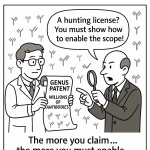
The ‘Full Scope’ Mandate and Its Commercial Implications
The ‘full scope’ rule — the more one claims, the more one must enable — creates a direct tension between commercial ambition and legal defensibility. A broad composition claim covering an entire functional genus of antibodies could, in theory, block every competitor from the space for 20 years. That is an enormous commercial prize. But post-Amgen, claiming that broad a space requires proving the specification enables every molecule within it, which requires disclosing and functionally characterizing hundreds or thousands of representative examples.
The practical implication: patent strategy for biologics must now be calibrated at the data generation stage, not at the claim drafting stage. The data package needed to enable a broad claim must be planned into the R&D budget 18 to 36 months before the anticipated filing date.
Part VI: Amgen v. Sanofi — What the Ruling Actually Changed
The 2023 Supreme Court decision in Amgen Inc. v. Sanofi is the most consequential patent ruling for the biopharmaceutical industry since Diamond v. Chakrabarty in 1980. Its effects are still compounding.
What Amgen Was Claiming
Amgen’s patents on evolocumab (Repatha) did not claim specific antibody sequences. They claimed an entire functional genus: all antibodies that (1) bind to a specified set of amino acid residues on PCSK9 and (2) block PCSK9 from binding to LDL receptors. The specification disclosed 26 exemplary antibodies by sequence and provided two methods for finding additional members of the genus: a ‘roadmap’ involving sequential screening steps, and a ‘conservative substitution’ approach involving systematic amino acid substitutions.
Sanofi’s competing drug, alirocumab (Praluent), bound PCSK9 in the same functional manner but with different amino acid sequences. Amgen argued that Praluent fell within the claimed genus and therefore infringed. Sanofi argued the claims were not enabled.
The Supreme Court’s Holding
Justice Gorsuch, writing for a unanimous Court, held that Amgen’s claims were invalid for lack of enablement. The 26 examples disclosed in the specification represented a small fraction of the potentially millions of antibodies that could bind PCSK9 in the claimed manner. Amgen’s proposed methods for finding others were characterized as research assignments requiring painstaking experimentation rather than skilled routine work. The Court reaffirmed without qualification the principle that enablement must extend to the full scope of the claims.
The ruling did not create a new legal standard. It applied the existing Wands framework and the full scope mandate with full force against a well-resourced innovator making textbook-style functional genus claims. The message to patent drafters was explicit: functional claiming strategies that were tolerated by the Federal Circuit in the 1990s and early 2000s will not survive Supreme Court scrutiny today.
What Changed in Practice
Post-Amgen, the following shifts are now observable in biologic patent prosecution.
Claim scope has narrowed at the independent claim level. Applicants who previously would open with a functional genus claim now open with structurally defined CDR-based claims and reserve functional language for dependent claims or separate continuation applications where the data can be built out.
Provisional application strategy has changed. A ‘thin’ provisional with one or two working examples was once acceptable as a placeholder. Post-Amgen, the provisional must contain the data package needed to enable the contemplated full scope of the eventual genus claim. Data added after filing is new matter and cannot reach back to the provisional priority date.
Continuation strategy is being used to sequence claims by data availability. Applicants file an initial application with the data they have, then build out enabling examples in parallel with clinical development, filing continuations as the data set grows.
IP Valuation Implication of Amgen
Any existing biologic patent portfolio built substantially on broad functional genus claims carries a latent invalidity risk that the Amgen decision quantified. Analysts valuing biologic IP assets should apply a discount to functionally defined claims filed before 2023 that have not yet been through IPR or litigation. The discount magnitude depends on the breadth of the genus, the number and diversity of disclosed examples, and whether the specification provides any structure-function correlation. A claim to a genus of ‘all antibodies binding epitope X’ with five examples and no structural predictive framework should be modeled as fragile.
Part VII: Landmark Case Law — U.S. and European Precedent
U.S. Foundational Cases
Diamond v. Chakrabarty (1980) established that living, human-made microorganisms are patentable subject matter under § 101. The Court drew the line between naturally occurring phenomena (not patentable) and human-engineered organisms with markedly different characteristics (patentable). This ruling opened the legal basis for the entire biotechnology industry.
Mayo Collaborative Services v. Prometheus Laboratories (2012) invalidated claims covering a method of optimizing drug dosage by observing a law of nature — the correlation between metabolite levels and therapeutic response — without adding an inventive concept beyond that observation. The two-step framework Mayo established (is the claim directed to a patent-ineligible concept? if so, does it add an inventive concept?) governs § 101 challenges to diagnostic methods and personalized medicine claims. Method-of-treatment claims that incorporate a diagnostic step are particularly vulnerable to Mayo challenges if the ‘additional’ steps are conventional.
Association for Molecular Pathology v. Myriad Genetics (2013) held that isolated genomic DNA is a product of nature and not patent-eligible. Myriad’s patents on isolated BRCA1 and BRCA2 genes were invalidated on this basis. The Court reached the opposite conclusion for complementary DNA (cDNA) — a synthetic construct created by reverse-transcribing mRNA — because cDNA does not exist in nature and represents a human-made invention. For biologic patent drafters working with nucleic acid therapeutics or gene therapies, the practical rule from Myriad is clear: draft claims around synthetic, non-naturally occurring nucleic acid constructs, not isolated genomic sequences.
Thaler v. Vidal (Fed. Cir. 2022) established that an AI system cannot be named as an inventor under U.S. patent law. Inventors must be natural persons. This ruling governs all AI-assisted drug discovery programs and requires that human researchers who use AI tools to identify or design biologic candidates document their specific, substantive intellectual contribution to the final invention.
European Cases That Diverge from U.S. Law
The EPO operates under the European Patent Convention (EPC) and the EU Biotechnology Directive, and its treatment of biologic inventions differs from U.S. law in commercially significant ways.
Howard Florey/Relaxin (EPO T 0272/95) held that an isolated human gene encoding the hormone relaxin was not an unpatentable ‘discovery.’ The EPO focused on industrial applicability: the act of isolating the gene made it available for a specific therapeutic application for the first time. This directly contrasts with the U.S. Myriad holding. European applications for isolated natural substances can survive if the specification identifies a concrete and specific industrial use.
Harvard/Oncomouse (EPO T 0019/90) developed the ‘utilitarian balancing test’ for inventions involving transgenic animals. The EPO weighs the suffering caused to the animal against the benefit to humanity. For cancer research, the Oncomouse passed this test. For applications involving transgenic animals with less clear medical benefit, the EPC’s Article 53(a) exclusion for inventions contrary to morality becomes a real barrier.
Brüstle v. Greenpeace (CJEU C-34/10) interpreted the EU Biotech Directive’s exclusion of inventions requiring the prior destruction of human embryos broadly. The CJEU defined ‘human embryo’ expansively and applied the exclusion to downstream uses even if the inventor did not directly perform embryo destruction. This ruling has materially reduced the patentability of human embryonic stem cell-derived technologies in Europe, a gap that does not exist in the U.S.
Tomatoes/Broccoli (EPO G2/12, G3/19) resolved a long-running dispute by holding that plants and animals obtained exclusively by essentially biological processes — traditional breeding methods — are not patentable. The ruling aligned EPO practice with the intent of the EU Biotech Directive and narrows the scope of European agricultural biotech protection.
Practical Divergence Table
Issue
U.S. Position
European Position
Isolated genomic DNA
Not patentable (Myriad)
Patentable if industrial use disclosed (Relaxin)
Human embryo-derived technology
Subject to § 101 analysis
Excluded under moral provisions (Brüstle)
Functionally defined antibody genus
Subject to stringent enablement (Amgen)
Subject to ‘sufficiency of disclosure’ under Art. 83 EPC (analogous but distinct)
Transgenic animals
Patentable if not a product of nature
Patentable subject to utilitarian balancing test
AI-identified inventions
Human inventor required (Thaler)
Same position under EPC
Part VIII: Filing Strategy — Provisional, PCT, and Continuation Practice
The Provisional Application Is Now a Data Document
A provisional patent application buys 12 months. In the pre-Amgen era, it bought 12 months to build a data package while holding a priority date. Post-Amgen, that framing reverses: the provisional’s filing date only protects claims the provisional already enables.
A non-provisional claim that seeks to benefit from the provisional’s priority date must be fully enabled and described in the provisional. If the enablement requires 50 working examples of structurally diverse antibodies, those examples must exist — in the laboratory, with data — before the provisional is filed. They cannot be added later without losing the priority date for any claims that depend on them.
The cost implication is real. Building a data package sufficient to enable a meaningful genus claim before a provisional filing requires accelerated discovery work. For antibody programs, this typically means high-throughput screening campaigns yielding dozens to hundreds of characterized binders before the IP team is ready to file. Budgeting that work as a pre-patent cost rather than a post-provisional cost is the structural change the Amgen decision demands.
PCT Applications: Global Preservation at 30 Months
A Patent Cooperation Treaty (PCT) filing within 12 months of the priority date preserves the right to seek protection in over 150 member countries. The PCT process generates an International Search Report and Written Opinion within 16 to 18 months, providing early signal on claim scope and enablement issues before the cost of national phase entry. Applicants can request International Preliminary Examination for a second opinion.
National phase entry is deferred to 30 or 31 months from the priority date, depending on the jurisdiction. This window allows companies to reassess geographic priorities based on interim clinical data, competitor activity, and market intelligence. For a biologic with a $1 billion peak sales projection, the cost of PCT filing in 15 to 20 jurisdictions is immaterial against the protected revenue. For a biologic with a $100 million peak sales projection, geographic triage is necessary.
Continuation Strategy: Building the Thicket Over Time
Continuation applications are the primary tool for translating a single foundational specification into a multi-year, multi-patent estate. Three continuation types have distinct strategic uses.
A standard continuation pursues new or different claims on the same disclosure. If the parent application issued with narrow CDR-based composition claims, a continuation can pursue broader structural claims, method-of-use claims for new indications discovered in Phase III, or manufacturing claims made apparent by process scale-up.
A divisional application arises when the USPTO issues a restriction requirement finding that the parent application claims multiple distinct inventions. The divisional pursues the non-elected invention(s). For antibody applications claiming both the antibody composition and the encoding nucleic acid, a restriction requirement generating a divisional family is routine and strategically useful — it creates a separate examination track for each claim type.
A continuation-in-part (CIP) adds new matter to the parent specification. New claims directed to the new matter are only entitled to the CIP’s filing date, not the parent’s priority date. CIPs are appropriate for inventions that represent genuine scientific advances over the parent — a new generation of the molecule, a new delivery system — but they must be used carefully. Any claim that relies on the new matter will be compared to prior art that accrued between the parent filing date and the CIP filing date.
The strategic target for a well-managed biologic is to have at least one patent application pending at the USPTO continuously from the original filing through the product’s commercial life. This keeps the ‘continuation window’ open and preserves the ability to pursue new claims as competitive intelligence accumulates and as the BPCIA patent dance reveals a biosimilar applicant’s manufacturing approach.
Part IX: Drafting the Specification — A Data-First Framework
The Specification as a Legal Record of What You Knew
A patent specification for a biologic drug is simultaneously a scientific disclosure and a legal document. Its purpose is not to educate the reader about the field. Its purpose is to prove, as of the filing date, that the inventor possessed a fully conceived and enabled invention of the scope defined by the claims. Every sentence in the specification should serve that legal purpose.
Drafters who approach biologic specifications as scientific manuscripts — organized around discovery narrative, experimental chronology, and general field education — produce documents that fail on § 112 grounds. The specification must be organized around the claims: what structural features define the invention, what functional data proves those features confer the claimed properties, what examples demonstrate the invention’s operability across its full claimed scope.
Structural Data Requirements
For an antibody therapeutic, the specification must disclose the full amino acid sequences of both heavy and light chain variable regions, with specific delineation of all six complementarity-determining regions (CDRs) using a recognized numbering scheme (Kabat, Chothia, IMGT, or AbM — choose one and apply it consistently). Where glycosylation at specific asparagine residues is material to the mechanism of action or pharmacokinetic profile, the glycan structure at those positions should be characterized. Where the antibody is an IgG subclass (IgG1, IgG2, IgG4), the Fc region sequence and any engineered modifications affecting FcRn binding, complement activation, or ADCC should be disclosed.
For gene therapies, the viral vector genome — including inverted terminal repeats, promoter sequence, coding sequence for the therapeutic transgene, polyadenylation signal, and any regulatory elements — must be disclosed in full. Capsid sequences for AAV vectors, including any surface-exposed residues that determine tropism or immunogenicity, are both structurally and strategically important.
For mRNA therapeutics, the sequence of the mRNA construct, including 5′ cap structure, 5′ and 3′ untranslated regions, codon-optimized coding sequence, and poly-A tail design, constitutes the structural core of the composition. The lipid nanoparticle (LNP) formulation, including the ionizable lipid structure, lipid molar ratios, and particle size distribution, is a separately patentable composition with significant commercial value.
Functional Data Requirements
Structural disclosure without functional data does not establish that the disclosed molecules actually work. The specification must include quantitative functional data for each disclosed exemplar. For antibodies, this means binding affinity constants (KD) measured by surface plasmon resonance (SPR) or biolayer interferometry (BLI), epitope mapping data (competitive binding, hydrogen-deuterium exchange, or X-ray crystallography), and in vitro functional data (IC50 for target inhibition, cell-based activity assays). Where in vivo animal model data exists, it should be included and referenced.
For a genus claim, the functional data must cover a representative set of the disclosed examples, not just the lead molecule. If the specification discloses 30 antibodies, all 30 should have binding affinity data. At minimum, 15 to 20 should have in vitro functional data. This distribution demonstrates that the claimed function is not unique to the lead candidate but is a consistent property of the disclosed class.
Working Examples vs. Prophetic Examples
Working examples describe experiments that have been performed and use past tense: ‘Antibody A12 was expressed in HEK293 cells and purified by Protein A affinity chromatography. Binding affinity to PCSK9 was measured by SPR and found to be 3.2 nM.’ These are the backbone of enablement.
Prophetic examples describe experiments that could be performed based on established scientific principles and use present tense: ‘Antibody variants are generated by conservative substitution at position 52H and screened for binding by ELISA.’ These supplement working examples and help demonstrate the roadmap for generating additional genus members, but they cannot substitute for actual data where the art is unpredictable.
Post-Amgen, a specification that relies primarily on prophetic examples to demonstrate the operability of a broad genus is analytically equivalent to what Amgen submitted — and Amgen lost unanimously.
Manufacturing Process Data
Process patents on biologics depend on manufacturing data in the specification. The drafter must describe the host cell system (CHO, HEK293, E. coli, yeast), the expression vector design, the culture conditions (bioreactor parameters, media composition, feeding strategy), the downstream purification process (capture step, polishing steps, viral inactivation and filtration steps), and the analytical methods used to characterize the drug substance. Where a specific glycosylation profile is claimed, the glycan analysis methods and the process parameters that reproducibly achieve the target profile must be disclosed.
Part X: Claim Architecture — Balancing Breadth Against Validity Risk
Structural Claim Hierarchy for Antibody Therapeutics
Post-Amgen, a defensible antibody patent claims the following in descending order of breadth:
The broadest independent claim defines the antibody by its six CDR sequences, allowing for conservative amino acid variations at non-contact positions only where the specification demonstrates functional equivalence. A second independent claim of intermediate breadth defines the antibody by its full variable region sequences. A third independent claim of narrow scope claims the specific antibody comprising the exact heavy and light chain sequences of the lead candidate. Dependent claims add specific IgG subclass assignments, Fc engineering features, conjugation to cytotoxins (in the ADC context), and formulation parameters.
This hierarchy creates multiple validity tiers. If the broadest CDR-based claim is invalidated on enablement grounds, the variable region claim and the sequence-specific claim remain. If prior art surfaces that anticipates the variable region claim, the lead sequence claim may survive. A biosimilar applicant must invalidate every tier to clear the composition claims entirely.
Transitional Phrase Strategy
The choice between ‘comprising,’ ‘consisting of,’ and ‘consisting essentially of’ in the claim’s transitional phrase has specific strategic consequences for biologics.
‘Comprising’ is the default choice for composition claims on biologics intended to cover biosimilars. A biosimilar that contains the claimed antibody plus excipients, stabilizers, and preservatives still infringes a ‘comprising’ claim on the antibody. ‘Consisting of’ would exclude a biosimilar that uses any excipient not recited in the claim, which is counter-productive.
For manufacturing process claims, ‘comprising’ similarly preserves infringement coverage against biosimilar applicants who use the claimed process steps plus additional steps not recited in the claim. ‘Consisting essentially of’ is useful for process claims where the material effect of the claimed steps is specifically defined — for example, a purification process where any additional non-recited step that alters the glycan profile would be excluded.
Method-of-Use Claims for Lifecycle Extension
Method-of-use claims are the primary vehicle for lifecycle management after the composition patents expire. A composition claim covers every use of the molecule. A method claim covers only the specific claimed use, but it can be granted years after launch based on new clinical data and have a full 20-year term from its filing date.
The strategic approach is to file method-of-use continuation applications for every new indication as Phase II proof-of-concept data becomes available, typically 4 to 7 years post-launch for a major biologic. Dosing regimen claims — for example, a specific Q8W (every 8 weeks) or Q12W dosing schedule shown in pivotal trials — are a commonly overlooked category that biosimilar label carve-outs cannot fully circumvent when the dosing schedule is integral to the approved label.
Product-by-Process Claims
A product-by-process claim defines the biologic by the process used to make it. For example: ‘An antibody produced by the method of claim 12, wherein…’ Product-by-process claims are useful when the structure of the product cannot be fully characterized but the process can be precisely described. However, they carry a significant limitation under U.S. law: the product, not the process, determines novelty and non-obviousness. If a structurally identical antibody existed in the prior art — even if made by a different process — the product-by-process claim is invalid. In Europe, the EPO takes a more process-dependent view, giving product-by-process claims stronger scope.
Part XI: Manufacturing Process Patents — The Undervalued Weapon
Manufacturing process patents are the most consistently underappreciated component of a biologic patent portfolio, and after Amgen v. Sanofi, they are arguably the most strategically important.
Why Process Patents Outperform Composition Claims Late in the Product Lifecycle
A composition of matter patent on a biologic is typically filed at or before IND, which is 10 to 12 years before the product might lose data exclusivity. By the time biosimilar competition begins, the composition patent may have 8 to 10 years of term remaining. But process patents on manufacturing improvements — filed during process development for commercial-scale manufacture, which occurs during Phase II and III — are filed 5 to 7 years after the composition patent and therefore have 5 to 7 more years of term.
For products like Humira, where the manufacturing process is a CHO cell system producing a fully human IgG1 antibody with a specific glycosylation profile, the process is both highly proprietary and difficult to reverse-engineer. A biosimilar manufacturer who cannot precisely replicate the innovator’s glycosylation profile without infringing the process patent faces a stark choice: pay a license, find a non-infringing manufacturing route, or abandon the product.
The BPCIA Patent Dance Creates Process Patent Advantages
The BPCIA’s patent dance, the structured information exchange between a biosimilar applicant and the reference product sponsor, requires the biosimilar applicant to provide its application (aBLA) and detailed manufacturing process information to the innovator early in the dispute resolution process. This disclosure — unavailable in any other litigation context until late discovery — gives the innovator’s IP team an early, detailed look at the biosimilar’s manufacturing approach. If the biosimilar uses any process step covered by the innovator’s process patent portfolio, the innovator can assert those patents in the initial wave of litigation.
The Supreme Court held in Sandoz v. Amgen (2017) that a biosimilar applicant cannot be compelled to participate in the patent dance. But choosing to opt out sacrifices the applicant’s ability to control which patents are litigated first, shifting strategic initiative to the innovator. Most biosimilar applicants participate, giving the innovator’s process patent team exactly the information it needs.
What to Patent in the Manufacturing Process
The following aspects of biologic manufacturing have been successfully patented and should be included in every comprehensive IP strategy.
Host cell expression system: the specific cell line (CHO-K1, NS0, HEK293), the expression vector design, the promoter/enhancer elements, and any codon optimization of the transgene sequence. Where a proprietary cell line has been developed through gene editing (CRISPR-based knockout of fucosyltransferase genes to produce afucosylated antibodies with enhanced ADCC, for example), the edited cell line and the editing method are both patentable.
Upstream bioprocess: bioreactor configuration, seed train protocol, culture medium composition (where novel and non-obvious), dissolved oxygen setpoint, pH control strategy, feed timing and composition. Each parameter that demonstrably affects the quality attributes of the drug substance — glycosylation profile, aggregate level, charge variant distribution — is potentially patentable if the parameter selection was non-obvious.
Downstream purification: Protein A affinity capture conditions, viral inactivation method (low-pH conditions, detergent, UV-C), polishing chromatography steps (ion exchange, hydrophobic interaction, mixed-mode), ultrafiltration/diafiltration parameters, and final formulation buffer composition. Where the purification process achieves a specific impurity profile or product quality attribute not achievable by the prior art, the process is patentable.
Part XII: The BPCIA Framework — Regulatory Exclusivity and Patent Litigation Architecture
The 12-Year Exclusivity Runway: Mechanics and Limitations
The BPCIA, enacted in 2009, provides the reference product sponsor (RPS) with 12 years of data exclusivity from the date of first FDA licensure. The practical consequence: the FDA cannot make any biosimilar aBLA referencing the innovator’s data effective before that 12-year mark.
A biosimilar aBLA can be submitted four years after reference product licensure — the FDA can accept, review, and nearly complete its review — but it cannot be licensed and made effective for 8 more years. This ‘four-year submission / 12-year effective’ structure means a biosimilar applicant filing at year four is essentially in FDA review limbo for most of the remaining exclusivity period. The practical submission timing for most biosimilar applicants is year 8 to 9 post-reference product approval, targeting review completion near the year-12 cliff.
No equivalent to 12-year data exclusivity exists in Europe. The EU grants 8 years of data protection followed by 2 years of market protection (the ‘8+2’ rule), with an optional additional year for a new indication. The 4-year gap between U.S. and EU data exclusivity has made the U.S. market, for most major biologics, the site of initial and most intensely contested biosimilar competition.
Pediatric Exclusivity
The BPCIA incorporates the provisions of the Pediatric Research Equity Act (PREA) and the Best Pharmaceuticals for Children Act (BPCA). A sponsor that conducts qualifying pediatric studies — whether required under PREA or voluntarily under BPCA — can earn a 6-month extension of data exclusivity, extending the 12-year period to 12.5 years. This extension, while modest in absolute months, can be commercially significant for a product generating $2 to 5 billion annually: it represents $1 to 2.5 billion in incremental protected revenue.
The Patent Dance in Practice
After the FDA accepts a biosimilar aBLA, the biosimilar applicant must (if participating in the patent dance) provide the innovator with its aBLA and all relevant manufacturing process information within 20 days of FDA acceptance. The innovator then has 60 days to provide a list of patents it believes could reasonably be asserted against the biosimilar. The biosimilar applicant responds with its non-infringement and invalidity positions. The parties negotiate to a final list of patents for immediate litigation — typically a narrower list than the innovator’s initial submission.
Litigation on the first wave of patents must commence within 30 days of the final list. The biosimilar applicant may not launch its product during this litigation period, creating a de facto injunction by process design.
The innovator retains a ‘Biologics Injunction’ option for any patent not on the first-wave list. These can be asserted only after the biosimilar launches, and the court’s willingness to grant a preliminary injunction at that stage depends on the standard eBay factors.
Part XIII: Case Study — AbbVie’s Humira Thicket and Its Lessons
Adalimumab (Humira) is the most-studied example of deliberate patent thicket construction in biopharmaceutical history. Its lessons are both instructive for innovators and cautionary for policymakers.
IP Valuation of the Humira Estate
At its commercial peak, Humira generated over $20 billion in annual global sales. The primary composition of matter patent covering adalimumab was set to expire in 2016, creating an apparent cliff. AbbVie’s IP strategy converted that cliff into a gradual slope through the accumulation of over 130 patents organized into more than a dozen distinct patent families.
The majority of these patents were filed after Humira launched, covering aspects of the product that were developed or discovered during commercial use: specific subcutaneous formulations with citrate-free buffers (which reduced injection-site pain and commanded patient preference), high-concentration presentations enabling self-injection with a prefilled syringe or autoinjector, manufacturing process improvements targeting glycan profiles and aggregate reduction, and method-of-use patents for indications approved after initial launch including Crohn’s disease, juvenile idiopathic arthritis, and uveitis.
The IP valuation implication: the formulation and device patents alone, covering the citrate-free prefilled autoinjector that became the standard presentation for U.S. patients, were estimated to represent $5 to 8 billion in protected revenue over the 2016 to 2023 period when biosimilar entry was delayed. A portfolio manager who modeled Humira’s IP as expiring in 2016 based solely on the composition patent would have been wrong by seven years and trillions of yen, dollars, and euros.
The Settlement Architecture
Every major biosimilar developer — Samsung Bioepis, Sandoz, Coherus, Amgen, Mylan, Fresenius Kabi — ultimately settled with AbbVie rather than litigate through the full patent estate. The settlements followed a consistent structure: accelerated European entry (typically 2018 or 2019, shortly after the EU composition patent expired) and delayed U.S. entry in exchange for a royalty-bearing license, with U.S. launch dates ranging from January 2023 through mid-2023.
These settlements did not represent biosimilar weakness. They reflected a rational calculation that the cost of invalidating 130+ patents, with no guarantee of success, exceeded the net present value of a royalty-bearing license that enabled early European revenue. AbbVie’s thicket was effective precisely because it raised the legal cost of market entry above the threshold at which settlement becomes rational.
Antitrust Challenges and Their Failure
Plaintiffs including insurers and patient advocacy groups brought antitrust challenges arguing that AbbVie’s settlement structure constituted an illegal market division. The Seventh Circuit affirmed dismissal in 2022, finding that AbbVie’s patent assertion conduct fell within the Noerr-Pennington doctrine’s protection for legitimate petitioning activity. The settlements were not per se illegal; they were the resolution of genuine patent disputes.
Legislative proposals including the Affordable Prescriptions for Patients Act have sought to limit an RPS to asserting 20 or fewer patents in BPCIA litigation, directly targeting the structural advantage conferred by a large thicket. As of 2026, no such limitation has been enacted.
Lessons for IP Strategy
The Humira model established several principles now standard in biologic lifecycle management. Secondary patent families — formulation, device, manufacturing, new indications — filed throughout the commercial life of a product can accumulate to provide protection equivalent to or exceeding the original composition term. Each additional patent does not need to be particularly strong on its own; the strategic value is aggregate, not individual. A biosimilar applicant assessing a 50-patent estate faces a different risk calculus than one assessing a 5-patent estate, even if 40 of the 50 patents are probably invalid.
The Humira lessons also expose limitations. Thicket strategies depend on filing sufficient secondary patents before competitors identify and design around them. For a product like Humira with a 15-year commercial life before biosimilar entry, there was ample time. For biologics with shorter commercial windows — orphan disease products with smaller markets and less biosimilar development incentive — the economics of secondary patent accumulation may not justify the cost.
Part XIV: Cell and Gene Therapy Patents — The Frontier Filing Strategy
Cell and gene therapies represent the most complex and commercially important emerging class of biologic therapeutics, and their patent landscape is correspondingly dense and contested.
IP Asset Structure for CAR-T Therapies
A CAR-T product like tisagenlecleucel (Kymriah) or axicabtagene ciloleucel (Axi-cel) is a living drug — an autologous T cell product genetically engineered to express a chimeric antigen receptor (CAR). Defining the patentable components requires decomposing the product into its structural layers.
The CAR construct itself is a synthetic fusion protein comprising an extracellular antigen-binding domain (typically a single-chain variable fragment, or scFv), a hinge region, a transmembrane domain, one or more intracellular co-stimulatory domains (CD28, 4-1BB), and the CD3-zeta signaling domain. Each of these components has its own patent estate. The foundational patents on CAR constructs incorporating CD3-zeta were filed by the National Cancer Institute in the late 1980s and early 1990s and are now expired. Patents on specific co-stimulatory domain configurations (4-1BB, licensed from St. Jude Children’s Research Hospital/UPenn to Novartis) remain live and are a material cost item for any CD19-targeting CAR-T program using 4-1BB.
The viral vector used to transduce the T cells — typically a lentiviral or retroviral vector — is separately patentable through its genome design, tropism pseudotyping choice, and manufacturing process. The T cell manufacturing process — apheresis, enrichment, activation, transduction, expansion, cryopreservation — is proprietary and process patent-eligible at multiple steps.
Freedom-to-Operate in CAR-T: A Non-Negotiable First Step
The CAR-T patent landscape as of 2026 contains thousands of granted patents and pending applications across jurisdictions. No new entrant can commercialize a CAR-T product without a comprehensive FTO analysis that covers at minimum: the scFv binding domain (is the target antigen epitope subject to blocking claims?), the co-stimulatory domain (are 4-1BB or CD28-based CAR configurations still covered by live patents in the target jurisdictions?), the vector (does the lentiviral vector design infringe Lentigen, bluebird bio, or other foundational vector patents?), and the manufacturing process (do the cell processing steps infringe Novartis, Gilead/Kite, or autologous cell therapy manufacturing patents?).
The FTO gap cost — the aggregate in-licensing royalties required to secure freedom to operate across all blocking claim families — has been estimated for some CAR-T programs at $50 to $150 million in upfront payments plus royalties of 5 to 10% of net sales. This is a material component of the economics of a CAR-T program and belongs in financial models from the earliest stage.
Patent vs. Trade Secret: The Manufacturing Know-How Decision
Cell and gene therapy manufacturing involves a substantial body of proprietary know-how that is not captured in any patent — media compositions, specific culture conditions, process controls that improve yield and viability, analytical release assays. The decision about what to patent versus what to protect as trade secret is consequential.
Patent protection requires public disclosure. Any competitor who reads the patent can attempt to replicate the claimed process. Trade secret protection requires only that the information be kept confidential through reasonable measures (access controls, NDAs, compartmentalization). Trade secret protection has indefinite duration, unlike a patent’s 20-year term.
For biologic manufacturing, the practical question is whether a competitor could reasonably reverse-engineer the trade secret from the product itself or from published scientific literature. Where the manufacturing process leaves detectable fingerprints in the product (glycan profiles, aggregation patterns, residual host cell protein identity), a competitor with advanced analytical tools could potentially back-engineer the process. In those cases, patent protection may be superior. Where the know-how is purely procedural and leaves no detectable trace, trade secret protection may be more durable.
Gene Therapy: Capsid, Tropism, and Regulatory Vectors
For AAV gene therapies, the patent landscape centers on four axes: AAV capsid sequences (the protein shell that determines tissue tropism and immunogenicity), the promoter and regulatory elements that control transgene expression, the transgene sequence itself, and the manufacturing process for producing clinical-grade vector at scale.
The natural AAV serotypes — AAV2, AAV5, AAV8, AAV9 — are broadly considered natural phenomena and face significant § 101 challenges in the U.S. under the Myriad framework. Engineered capsid variants — developed through directed evolution, rational design, or computational design — are human-made inventions with markedly different characteristics and are patent-eligible. Companies like Spark Therapeutics, AveXis (now Novartis Gene Therapies), and MeiraGTx have built substantial IP estates around engineered AAV capsids for specific tissue targets.
Manufacturing process patents are particularly important in gene therapy because the manufacturing process is extraordinarily complex, expensive, and difficult to replicate. The transition from baculovirus-based production to HEK293 transient transfection to stable producer cell lines represents successive waves of patentable innovation. Each platform generation is both scientifically distinct and commercially valuable.
Part XV: AI in Drug Discovery — Inventorship, Obviousness, and the Enablement Opportunity
AI platforms are producing biologic drug candidates at a rate that human-based discovery programs cannot approach. This acceleration creates specific legal questions that patent practitioners must resolve before filing.
The Inventorship Problem: Who Conceived the Invention?
U.S. patent law requires inventors to be natural persons who made a ‘significant contribution’ to the conception of each claimed invention. The Federal Circuit in Thaler v. Vidal held this requirement clearly and without qualification. An AI system cannot be named as an inventor.
Where AI generates drug candidates — designing an antibody sequence, identifying a novel protein target, or predicting a structure-activity relationship — the patent strategy depends on identifying the human intellectual contributions that qualify as co-inventorship. The USPTO’s 2024 guidance on AI-assisted inventions identifies several qualifying human contributions: designing the AI training protocol for a specific problem, constructing the data set used to train the model, formulating the specific query or constraint set that drove the AI output, and making substantive scientific judgments about which AI-generated candidates to select and advance.
Merely running a general-purpose AI tool and accepting its top output does not constitute inventorship. The human researcher must have applied specific intellectual effort to the problem, and that effort must be documented contemporaneously in laboratory notebooks and invention disclosure forms. For programs where AI plays a central role in lead identification, documentation protocols should be built into the research workflow from day one.
The Obviousness Problem: When Does AI-Assisted Discovery Raise the Bar?
Non-obviousness is judged from the perspective of a PHOSITA. As AI tools become standard laboratory equipment in drug discovery, the USPTO and courts will likely treat a PHOSITA as having access to those tools. An invention that a skilled researcher could have identified by running a standard AI-assisted virtual screening campaign may be obvious, even if no human had previously made the same discovery.
This dynamic pushes the non-obviousness argument toward the unpredictability of the AI’s output rather than the difficulty of the technical work. An AI that predicts unexpected potency in a compound that the prior art would have suggested was inactive is analogous to the discovery of an unexpected result — a traditional basis for arguing non-obviousness. Documenting the AI’s specific predictions, the prior art expectations against which they were evaluated, and the experimental confirmation of unexpected results is the core evidentiary strategy.
The Enablement Opportunity: AI as the Solution to Amgen
Post-Amgen, the fundamental challenge for broad genus claims is providing a representative, diverse set of examples demonstrating operability across the claimed scope. Human researchers can physically make and test dozens to hundreds of examples per year. An AI system capable of computationally generating and validating thousands of putative genus members could provide the breadth of support that physical experiments cannot practically supply.
Including AI-generated computational validation data — binding affinity predictions, structural stability assessments, predicted off-target selectivity profiles — as supplementary support for genus claims is a developing strategy. Its legal status is not yet settled. Courts have not addressed whether computational predictions generated by an AI model constitute sufficient enablement evidence in a biologic context. The most defensible position is to use AI-generated data as corroborating support for claims primarily enabled by physical working examples, rather than as the primary or sole enablement evidence.
Part XVI: Regulatory Exclusivity as a Parallel Asset
Mapping Data Exclusivity to Patent Coverage: The Asset Overlap Model
Portfolio managers should model the BPCIA’s 12-year data exclusivity and patent coverage on separate timelines, then identify the gap periods where one protection has expired and the other remains.
For a typical major biologic approved in year zero with a composition patent filed 3 years before approval:
The composition patent expires 17 years post-approval (20-year term minus 3 years of pre-approval prosecution). Data exclusivity expires 12 years post-approval. The 5-year gap between data exclusivity expiration and composition patent expiration is the period of exclusive patent protection without regulatory protection. During this window, biosimilar aBLAs can be made effective but the innovator can still block their manufacture and sale with the composition patent. Secondary patents — formulation, process, method-of-use — begin supplementing the composition patent as early as year 8 and can extend meaningful protection to year 20 or beyond.
The periods most vulnerable to biosimilar entry are the 3 to 5 years after composition patent expiration and after any secondary patent protection has been exhausted. Identifying these gaps in advance and filling them with continuation applications is the core portfolio management task.
Biologics vs. Small Molecules: The Exclusivity Gap
Small-molecule new chemical entities receive 5 years of Hatch-Waxman data exclusivity. Biologics receive 12 years of BPCIA data exclusivity. The 7-year gap reflects the immense additional cost and complexity of biologic development and the scientific reality that biosimilar development is far more resource-intensive than generic drug development. This policy asymmetry is frequently challenged by payers and generic manufacturers as excessive, and proposals to reduce BPCIA exclusivity to 7 years have recurred in Congress, most recently in proposals linked to Medicare negotiation provisions. Any reduction would compress the guaranteed revenue protection window and increase the premium on patent portfolio quality.
Part XVII: Global Portfolio Strategy — U.S. vs. European Divergence
The U.S.-EU Bifurcation
A single global patent application strategy does not work for biologics. The legal differences between U.S. and European patent law are not nuances; they produce opposite outcomes on the same factual record.
The U.S. Myriad rule makes isolated genomic DNA unpatentable. The EPO’s Relaxin decision makes it patentable, provided an industrial application is disclosed. A company developing a gene therapy based on a human gene sequence needs two different claim strategies: one for the U.S. (anchored in synthetic cDNA and engineered vectors) and one for Europe (potentially claiming the isolated gene itself, with explicit industrial application language).
The EPO’s sufficiency of disclosure requirement under Article 83 EPC is the European analogue to U.S. enablement under § 112. The EPO has applied increasingly stringent standards to broad functional claims, particularly for antibodies, in a trajectory parallel to but not identical to the U.S. post-Amgen position. European practitioners should expect continued tightening of EPO standards for functional antibody genus claims and should apply the same ‘structure-first, data-rich’ drafting principles as U.S. filings.
The EPC’s exclusions for inventions contrary to ‘ordre public or morality’ (Article 53(a)) and for essentially biological processes (Article 53(b)) have no direct U.S. equivalents. For companies developing embryonic stem cell-derived therapies in Europe, the Brüstle framework means that claims dependent on destructive embryo derivation will be excluded. For companies developing products through conventional breeding or mutagenesis, the Tomatoes/Broccoli ruling limits product claims while leaving process claims available.
Asia-Pacific Filing Considerations
China, Japan, and South Korea together represent a material share of the global biologics market and an increasingly important source of biosimilar development activity.
China’s patent system has substantially aligned with international norms following its accession to TRIPS, but examination practice for biologics still diverges from U.S. and EPO standards in important ways. Chinese patent examiners have historically applied a stricter view of the written description requirement for antibody genus claims, often requiring more structural examples per unit of claimed scope than U.S. practice. The China National Intellectual Property Administration (CNIPA) has also taken a more restrictive position on the patentability of medical treatment methods, which are generally not patentable in China but can be captured through Swiss-style ‘use for manufacture’ claims.
Japan’s patent office (JPO) operates with generally predictable examination standards for antibody applications and recognizes both sequence-based and functional claim formats. South Korea’s KIPO has followed U.S. and EPO trends closely and currently represents a higher-value jurisdiction than China for composition of matter claims given its established biosimilar manufacturing sector and the commercial value of blocking market entry there.
Part XVIII: Investment Strategy for Analysts and Portfolio Managers
Patent Portfolio Quality as a Valuation Signal
The quality of a biologic company’s patent portfolio is a forward-looking revenue signal that most financial models underweight. The following framework gives analysts a structured approach to patent portfolio due diligence.
Claim type distribution audit. Request or extract from public records the ratio of composition claims to method-of-use claims to process claims in the patent portfolio. A portfolio weighted toward method-of-use claims for currently approved indications has a near-term revenue protection bias but is vulnerable as composition patents expire. A portfolio with strong process patent coverage in recently filed applications represents a longer-duration protection profile.
Post-Amgen vulnerability screen. Identify all composition claims filed before May 2023 that use functional language in the independent claim to define the antibody or protein genus. These claims face elevated invalidity risk in inter partes review proceedings and litigation. Where a company’s primary composition protection for a billion-dollar asset rests on a single broad functional genus claim with fewer than 20 disclosed structural examples, the patent is fragile. Model it accordingly.
Continuation pipeline assessment. Identify whether a company has pending continuation applications in active prosecution. A company with no pending continuations has a closed patent estate — it cannot respond to biosimilar competitors’ design-around strategies or assert newly issued patents. A company with 5 to 15 active continuation applications has a responsive portfolio capable of adapting to competitive intelligence.
Patent dance intelligence. For biosimilar applicants, the patent dance disclosure reveals the innovator’s manufacturing process in early litigation. For innovators, the dance reveals the biosimilar’s manufacturing approach. Review public BPCIA litigation filings to identify which process claims have been asserted against which biosimilar applicants. Patents that have survived BPCIA litigation are validated assets; patents that were dropped from assertion or stipulated as non-infringed are impaired.
M&A Patent Due Diligence
In biopharmaceutical M&A, the IP due diligence process often identifies material risks that are not apparent from public patent databases. Priority date chain analysis is essential: for every patent in the target’s portfolio, trace the priority chain through all continuations and provisionals to identify whether the earliest priority date is the legally effective one for all claims. A claim drafted into a continuation that adds matter not in the original provisional has its priority date set at the continuation filing, not the provisional. If prior art falls in the gap, the claim may be invalid.
Cross-license obligations from academic founders and co-development partners represent a specific liability class. Many biologic assets originate from academic research funded by NIH or other federal sources, which triggers Bayh-Dole march-in rights — the right of the federal government to license the invention to third parties if the assignee fails to commercialize it adequately. While march-in has never been exercised by NIH, its theoretical availability represents an overhang that sophisticated acquirers discount.
Biosimilar Investor Perspective
For investors in biosimilar companies, the patent dance creates an information advantage that is available in public BPCIA court filings. A biosimilar applicant’s final patent list — the patents it has agreed to litigate in the first wave — reveals which patents the innovator considers most defensible. Patents excluded from that list, even if in the innovator’s initial submission, are implicitly identified as weaker. This information is public at the time of litigation commencement and represents genuine legal intelligence that can inform position sizing in both innovator and biosimilar company positions.
Part XIX: Sequence Listings, Technical Requirements, and Filing Mechanics
WIPO ST.26: The Mandatory XML Standard
All patent applications disclosing nucleotide or amino acid sequences that meet length thresholds — 10 or more contiguous nucleotides, or 4 or more contiguous amino acids — must include a formal Sequence Listing. Effective July 1, 2022, the USPTO, EPO, and all other WIPO member offices mandate the use of WIPO Standard ST.26, which requires submission in an XML-formatted file.
ST.26 replaced the previous ST.25 text-based format. The XML structure captures each sequence with mandatory fields including sequence length, sequence type (nucleotide or amino acid), and feature annotations. The standard harmonizes sequence data across global patent offices and public databases (GenBank, UniProt), enabling automated cross-referencing and prior art searching.
Drafters must assign each disclosed sequence a Sequence Identifier (SEQ ID NO:) and use those identifiers consistently throughout the specification and claims. A sequence referenced in the specification but absent from the ST.26 Sequence Listing will trigger an office action. A sequence in the Listing that differs from the sequence in the specification creates a potential written description problem if the difference is material.
The XML files for large biologic applications — those disclosing hundreds of antibody sequences — can exceed 1 gigabyte in size. Electronic submission via the USPTO’s Patent Center is required. Applicants should build ST.26 generation into their bioinformatics pipeline rather than treating it as a last-step administrative task.
Budapest Treaty Deposits: Mandatory and Advisory Cases
When the biological material is necessary to practice the invention and cannot be reproduced from the written description, deposit with an IDA under the Budapest Treaty is required. Mandatory deposit cases include novel cell lines used to produce a monoclonal antibody where the cell line’s derivation cannot be reproduced from the patent disclosure alone, unique viral vectors where the packaging cell line or helper virus system is not available from commercial sources, and microbial strains for biologic production where the strain’s fermentation characteristics are critical and not reproducible from sequence data.
Advisory deposit cases — where deposit is not legally required but strategically valuable — include any biological material where future enforceability might depend on demonstrating that the deposited material performs as claimed. A deposit made early in prosecution, before any validity challenges, is more credible than a deposit made reactively.
The deposit accession number and the name of the IDA must be disclosed in the specification. The deposit must be unrestricted, available to any person entitled to receive the patent, before the patent application publishes. Restricted deposits do not satisfy the Budapest Treaty requirements.
Part XX: Master Checklist — Spec Drafting for the Post-Amgen Era
Pre-Filing Data Package
Before filing a biologic patent application — particularly a provisional application intended to support a broad genus claim — confirm that the data package contains the following.
Structural data for a representative and diverse set of disclosed examples. For antibody genus claims, this means full variable region sequences and all six CDR sequences, using a consistent numbering scheme, for no fewer than 10 to 30 structurally distinct antibodies spanning the claimed genus. For broader claims, more examples are required. The examples must be structurally diverse, not concentrated around a single CDR framework.
Binding affinity data for every disclosed structural example. At minimum, measured KD values by SPR or BLI for each antibody against the target antigen. Where the claim is epitope-specific, epitope binning or competitive binding data demonstrating that each exemplar binds within the claimed epitope region.
Functional data for a representative subset. In vitro functional assay data — IC50, Emax, or equivalent — for at least 10 to 15 exemplars covering the full range of structural diversity. In vivo efficacy data from a validated disease model for the lead candidate, with reference to published model validation where available.
Structure-function correlation analysis. Where the specification claims that a structural feature confers a functional property — CDR3 loop length determines binding affinity, for example — provide data from multiple molecules demonstrating the correlation. This is the ‘roadmap’ element that distinguishes a claim that teaches from one that merely aspires.
Manufacturing process data sufficient to enable the claimed process steps, including host cell, vector design, culture conditions, and purification protocol.
Specification Drafting Checklist
Write the specification as a legal record, not a scientific narrative. Each section should serve the written description or enablement function explicitly.
Title and abstract: reflect the core structural and functional features of the invention, not a general description of the therapeutic area.
Background: define the technical problem the invention solves, with reference to specific prior art limitations. This establishes the context for non-obviousness arguments and frames the utility of the invention.
Detailed description of the invention: disclose every alternative embodiment foreseen for the product lifecycle — alternative sequences, alternative formulations, alternative dosing regimens, alternative indications, alternative manufacturing approaches. This is the ‘wellspring’ that supports future continuations. Drafters who limit the detailed description to the lead candidate sacrifice all continuation optionality.
Sequence listing cross-references: every amino acid or nucleotide sequence in the specification must be cross-referenced to its SEQ ID NO in the ST.26 Sequence Listing. Spot-check all sequences for accuracy before filing. A single transposition error in a CDR sequence can invalidate a composition claim.
Working examples: number and label each working example clearly. Each working example should stand independently as a demonstration of operability for a specific embodiment. Title each example with its exact function (‘Example 12: Determination of Binding Affinity of Anti-PCSK9 Antibodies to Recombinant PCSK9 by SPR’).
Claims: draft an independent claim hierarchy with at minimum three tiers of structural specificity. Dependent claims should capture formulation, dose, dosing regimen, patient subpopulation, combination therapy, and manufacturing process features. No dependent claim should be an exact copy of an independent claim with only a transitional phrase change.
Key Takeaways
The post-Amgen filing strategy. Broad functional genus claims for antibodies are legally fragile. Structure-first claims anchored to CDR sequences or variable region sequences, supported by extensive, diverse working examples, are the standard that survives validity challenges.
The provisional application is a data document. Filing a thin provisional and adding data later does not preserve priority for claims relying on that data. The enabling data must exist before the provisional is filed.
Manufacturing process patents are strategically undervalued. Their later filing date gives them longer remaining term when biosimilar competition begins, and the BPCIA patent dance gives the innovator early access to the biosimilar’s confidential manufacturing information to enable precise assertion.
Patent term and data exclusivity run on independent clocks. Modeling them as a single protection period misstates both the revenue duration and the strategic options. A fully funded lifecycle management strategy needs both instruments.
IP and R&D are now the same conversation. The data requirements for a commercially viable biologic patent in 2026 must be built into R&D project plans and budgets from the earliest discovery stage. The patent attorney who receives a one-page invention disclosure 30 days before the planned filing date cannot construct a defensible post-Amgen application from it.
Global strategy requires bifurcation. U.S. and European claim strategies must diverge on gene sequences, morality exclusions, and process claims. A uniform global strategy will fail in at least one major jurisdiction.
AI raises the inventorship documentation burden. Every AI-assisted discovery program needs a contemporaneous documentation protocol that captures the human intellectual contributions sufficient to support inventorship claims and defend against § 102 obviousness arguments based on AI-accessible prior art.
For analysts: patent quality, not count, predicts revenue duration. A portfolio of 50 fragile functional claims is less valuable than 15 structurally anchored claims that have survived IPR. Count the families, assess the claim types, and apply a post-Amgen invalidity discount to broad functional genus claims in any pre-2023 estate.