The specialty pharmaceutical market is undergoing a structural realignment as high-value biologics and small molecules face their first wave of generic competition. Specialty drugs account for only 4% of total U.S. prescriptions but drive 50% of total drug spending.1 This concentration of capital creates a specific profit opportunity for pharmacies that can navigate the transition from branded exclusivity to generic competition. Market data values the global specialty pharmaceutical sector at approximately $746 billion in the mid-2020s, with forecasts suggesting a climb to $1.6 trillion by 2033.1 For specialty pharmacies, the immediate period following a generic launch is the most profitable phase in a drug’s lifecycle.
The Unit Economics of Specialty Generic Arbitrage
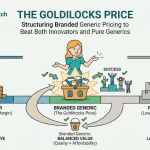
The profitability of a specialty pharmacy is not determined by the list price of a medication but by the spread between the acquisition cost and the reimbursement rate. Branded specialty drugs typically offer thin margins because manufacturers maintain high wholesale acquisition costs (WAC) and PBMs set tight reimbursement limits. Pharmacies often operate on a gross margin of 3.5% for branded products.2 When a $10,000 medication is dispensed, the pharmacy might retain only $350, which often fails to cover the high costs of cold-chain logistics, clinical support, and prior authorization management.4
Generic entry fundamentally alters this ratio. While the list price of the drug decreases, the percentage of the margin retained by the pharmacy increases significantly. Data indicates that pharmacy gross margins on generic drugs average 42.7%.2 In practical terms, for every $100 spent at a retail pharmacy, the pharmacy keeps $32 for generics compared to only $3 for branded products.3 This represents a ten-fold increase in dollar-for-dollar profitability.
Drug Type
Average Pharmacy Gross Margin
Average Pharmacy Net Margin
Profit per $100 Spend
Branded Specialty
3.5%
1.0%
$3.00
Generic Specialty
42.7%
4.0%
$32.00
The economics of specialty dispensing rely on the dollar margin rather than the percentage margin. A 5% margin on a $10,000 specialty drug provides $500 in gross profit, whereas a 25% margin on a $10 traditional generic might only yield $2.50.4 Specialty pharmacies leverage this by focusing on high-cost generics where the dollar spread remains wide even as competition enters the market.
Exploiting the 180-Day Exclusivity Window
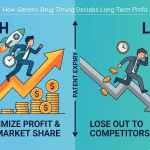
The Hatch-Waxman Act provides a 180-day marketing exclusivity period to the first generic manufacturer that successfully challenges a brand-name drug’s patent via a Paragraph IV certification.5 This window creates a temporary duopoly between the brand manufacturer and a single generic entrant. Because competition is limited during these six months, price erosion is controlled. The first generic entrant typically prices its product at a 15% to 30% discount relative to the brand price.6
Specialty pharmacies use this period to maximize returns through buy-side negotiations. Because there is only one generic source, the pharmacy can negotiate volume-based discounts with the first-to-file (FTF) manufacturer. The FTF manufacturer is highly incentivized to capture as much market share as possible before the 180-day window expires and a “race to the bottom” ensues.6
Market Share Stickiness and First-Mover Advantage
Capturing market share during the initial launch phase provides long-term financial benefits. Research shows that the first generic entrant captures a market share advantage that persists for years, often maintaining a share 6 percentage points higher than later entrants a decade after the launch.8 This stickiness is driven by two primary factors:
Supply Chain Inertia: Wholesalers and pharmacies prefer stability and are reluctant to switch suppliers once a reliable clinical and logistical workflow is established for a specific NDC.8
Contractual Entrenchment: First movers often lock in long-term contracts with major purchasing consortia and PBMs during the exclusivity period.8
Specialty pharmacies that align with the first-to-file manufacturer can secure reliable supply chains for complex therapies, which is critical for drugs with high manufacturing barriers or REMS requirements.8
Buy-Side Tactics for Acquisition Cost Optimization
The ability of a specialty pharmacy to leverage higher margins depends on its procurement strategy. Large pharmacy chains and specialty hubs bypass traditional wholesaler markups by purchasing directly from manufacturers or through massive buying consortia.2
The Role of Buying Consortia
The U.S. market is dominated by three wholesale buying consortia that represent 90% of all generic purchases by volume.9 These entities exert immense downward pressure on generic prices. Specialty pharmacies that operate within these consortia can access generic NDCs at prices significantly lower than the National Average Drug Acquisition Cost (NADAC).
Consortia Influence
Market Impact
Volume Representation
90% of US generic volume
Price Pressure
Can drive prices to 20% of brand price or less
Manufacturer Strategy
Forces manufacturers to adopt low-cost manufacturing strategies
Launch Timing
Consortia often dictate which generics are stocked first
Pharmacies maximize their margins by exploiting the gap between these negotiated acquisition costs and the Maximum Allowable Cost (MAC) set by PBMs. During a new generic launch, there is often a “MAC lag” where PBM reimbursement rates do not update as quickly as the actual market price falls.10
Sell-Side Strategies and PBM Reimbursement Models
The reimbursement landscape is controlled by Pharmacy Benefit Managers (PBMs), with the top three firms—Express Scripts, CVS Caremark, and OptumRx—handling 80% of U.S. specialty pharmacy claims.1 These entities use formulary management to dictate which products are dispensed.
The Impact of Vertical Integration
Vertical integration has allowed PBMs to capture the high margins of specialty generics for their own affiliated pharmacies. For example, CVS Health uses its Cordavis subsidiary to distribute private-label biosimilars, effectively removing the middleman and keeping the profit within the corporate structure.12
“Vertically integrated PBMs limited the adoption of lower-cost versions of branded Humira, protecting $2 billion in revenue for their specialty pharmacies while costing health plans and employers up to $6 billion in potential savings.” 11
Specialty pharmacies that are not part of a vertically integrated PBM must focus on “spread pricing” models where they can retain the difference between the insurer’s reimbursement and the drug’s acquisition cost. However, PBMs have increasingly moved toward transparent “pass-through” models and higher DIR fees to reclaim these margins.10
Managing DIR Fees and Performance Metrics
Direct and Indirect Remuneration (DIR) fees are clawbacks assessed by PBMs based on pharmacy performance metrics, such as generic dispense rates (GDR) and adherence scores.14 Between 2020 and 2022, pharmacy DIR fees increased by 46.8%, totaling $9.5 billion.14 To protect margins, specialty pharmacies must maintain high GDRs. When a generic launches, the pharmacy should immediately switch all eligible patients to the generic to avoid penalties and maximize the GDR incentive payments.13
The Biosimilar Transition: From Cliffs to Slopes
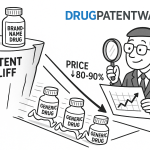
Small-molecule generics typically experience a “patent cliff” where the brand loses 80% to 90% of its market share within 90 days of generic entry.7 Biologics and biosimilars follow a different trajectory, often described as a “slope”.15 Biosimilar uptake is slower due to physician hesitancy, payer rebate walls, and the lack of automatic interchangeability.15
The Adalimumab (Humira) Market Shift
The launch of Humira biosimilars in 2023 serves as a case study for specialty pharmacy margin management. Initially, biosimilars captured less than 3% of the market because AbbVie increased rebates to PBMs to maintain preferred formulary status.12 The situation shifted in 2024 when CVS Caremark excluded branded Humira in favor of its private-label biosimilars through Cordavis.12
Timeframe
Market Event
Biosimilar Share Impact
January 2023
First biosimilar launch (Amjevita)
<1% share
December 2023
Nine biosimilars on market
3% share
April 2024
CVS excludes brand Humira
15% share jump in 2 months
August 2024
CVS conversion complete
97% biosimilar share in CVS plans
Specialty pharmacies can leverage these shifts by stocking the specific biosimilar NDCs preferred by major PBMs. However, the diverse product preferences of different payers can lead to “swollen pharmacy inventory,” as the pharmacy must stock multiple versions of the same molecule to satisfy different formulary requirements.19
Strategic Use of Patent and Pipeline Intelligence
Pharmacies cannot wait for a generic to launch to begin their strategy. Predictive modeling is required to understand the “effective life” of a drug, which usually averages only 7 to 12 years of commercial exclusivity despite the 20-year patent term.7
Tracking NCE-1 and Paragraph IV Filings
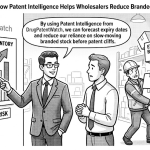
The first legal opportunity for a generic firm to file an Abbreviated New Drug Application (ANDA) is four years after the brand drug’s approval, known as the NCE-1 date.8 Pharmacies use platforms like DrugPatentWatch to monitor these filings and predict launch dates.7
Identify Blockbusters: Focus on drugs with annual sales exceeding $1 billion, as these are the primary targets for Paragraph IV challenges.6
Monitor Tentative Approvals: An FDA tentative approval indicates that a generic is ready to launch but is waiting for a specific patent to expire or a legal stay to lift.20
Assess Settlement Terms: Many generic launches are the result of settlements that allow for “limited volume” entry, which maintains higher prices and higher pharmacy margins for a longer period.22
Navigating the Legal Complexities of Skinny Labeling
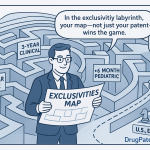
Specialty pharmacies often dispense generic versions of drugs that are approved for only some of the brand’s indications. This “skinny labeling” (Section viii carve-out) allows generics to enter the market for unpatented uses while the brand retains exclusivity for others.23
The Risk of Inducement Liability
The Amarin v. Hikma decision created a liability minefield for the industry. The court suggested that a generic manufacturer could be liable for patent infringement if its marketing materials or “AB-rating” descriptions induce physicians or pharmacists to use the drug for a carved-out, patented indication.24
For specialty pharmacies, this means internal protocols must be strictly literal. Pharmacists must dispense the AB-rated generic as per state law but should avoid clinical counseling that explicitly promotes the generic for indications not listed on its skinny label.24 This “hygiene protocol” protects the pharmacy from being drawn into inducement litigation between brand and generic manufacturers.
The Revlimid Model: Managed Margin Erosion
Revlimid (lenalidomide) is the most prominent example of a managed specialty generic launch. Bristol Myers Squibb (BMS) settled with multiple generic manufacturers to allow for staggered, volume-limited entries beginning in 2022.22
Staggered Entry: Teva launched first with volume caps, followed by Natco and others.22
Volume Caps: Generic manufacturers are limited to a mid-single-digit percentage of the total market volume initially, increasing to 33% by 2025.22
Price Stability: Because volume is constrained, the generic price does not plummet immediately. This allows specialty pharmacies to maintain a high dollar-margin for years rather than months.22
This model is becoming the blueprint for future specialty transitions, as it provides a predictable revenue stream for the brand and a high-margin opportunity for early generic entrants and their pharmacy partners.
Operational Excellence in Specialty Transitions
Dispensing specialty generics requires more than just procurement; it requires clinical and logistical precision. Specialty therapies often require cold-chain handling and strict adherence monitoring.1
Inventory Management and the Inventory Cliff
As a drug nears its patent expiration, specialty pharmacies must aggressively manage their brand-name inventory. Overstocking a $20,000-a-month therapy just days before a generic launch can lead to significant financial loss if the brand product cannot be returned to the wholesaler.26
Stability Data Leverage: As drugs age, they accumulate extensive stability data. Pharmacies can use this to simplify logistics, moving from expensive real-time monitoring to more cost-effective packaging solutions for off-patent products.26
Just-in-Time Procurement: Leading specialty pharmacies use predictive analytics to transition to just-in-time ordering for brands in the 90 days preceding a generic launch.26
Clinical Support and the Nocebo Effect
Patient education is critical during a generic or biosimilar switch. The “nocebo effect”—where a patient experiences negative symptoms because they perceive the generic to be inferior—can lead to treatment discontinuation and lost pharmacy revenue.19 Specialty pharmacies that invest in high-touch education programs can mitigate these risks and ensure that patients remain adherent to the higher-margin generic therapy.
Financial Modeling of the Specialty Generic Lifecycle
The lifecycle of a specialty generic can be divided into three distinct phases of profitability.
Phase
Duration
Competition
Pharmacy Margin Strategy
Exclusivity
180 Days
1 Generic + Brand
Maximize buy-side volume discounts with FTF manufacturer
Early Competition
6–24 Months
2–5 Generics
Shift to MAC-lag arbitrage as PBMs update reimbursement
Mature Market
2+ Years
10+ Generics
Focus on administrative fees and clinical service revenue
The most significant price reductions occur when the number of competitors reaches six or more, at which point prices can plummet by 95%.6 Pharmacies must maximize their dollar-profit during the first two phases before the molecule becomes a low-margin commodity.
Regulatory Headwinds and the Future of Specialty Margins
The FTC is currently investigating PBM practices that prioritize high-list-price brands over lower-cost generics.11 Proposed reforms seek to delink PBM fees from list prices and ban spread pricing.10 These changes could shift the profit center from the PBM back to the pharmacy, provided the pharmacy can demonstrate superior clinical outcomes and cost-effective dispensing.
The Inflation Reduction Act and MFP
The Inflation Reduction Act (IRA) introduces Maximum Fair Price (MFP) negotiations for top-selling drugs in Medicare Part D.16 While MFP is not a patent expiration, it functions similarly by forcing a significant price reduction. Specialty pharmacies must adapt their reimbursement models to account for these government-mandated price drops, which may occur before a generic even enters the market.16
Conclusion: The $400 Billion Opportunity
The period between 2025 and 2030 will see the largest transfer of value in pharmaceutical history, with up to $400 billion in annual branded sales at risk of generic and biosimilar competition.15 Specialty pharmacies that master the mechanics of the 180-day exclusivity window, leverage buying consortia for procurement, and manage clinical transitions will be the primary beneficiaries. By focusing on high-dollar margins and superior pipeline intelligence, these firms can transform the “patent cliff” from a threat into a strategic engine for growth.
Key Takeaways
Dollar Margins Matter: Specialty generic profitability is driven by the dollar spread, which is significantly higher than the thin margins found on branded specialty products.3
The 180-Day Window is the Golden Hour: The first 180 days of a generic launch provide a unique high-margin duopoly that pharmacies must aggressively exploit through buy-side negotiations.6
Vertical Integration is the New Barrier: PBMs are increasingly using internal pharmacies and private-label generics to capture specialty margins, forcing independent pharmacies to specialize in clinical niches.12
Intelligence is a Competitive Edge: Using platforms like DrugPatentWatch to monitor NCE-1 and Paragraph IV filings allows pharmacies to time their inventory and procurement strategies with surgical precision.7
FAQ
How does the “MAC lag” create profit for specialty pharmacies? Maximum Allowable Cost (MAC) is the price cap a PBM will pay for a generic. When a generic first launches, its acquisition cost often falls rapidly, but the PBM may take weeks to lower the MAC reimbursement rate. The pharmacy captures the entire spread between the old MAC and the new, lower acquisition cost during this delay.10
Why do some specialty generics maintain high prices even with multiple competitors? In many cases, such as Revlimid, manufacturers settle patent disputes by allowing generics to launch with volume limits. Because supply is artificially restricted, the price does not experience the typical 90% “cliff” drop, keeping pharmacy margins elevated for a longer duration.22
What is the difference between a “skinny label” and a “full label” generic launch? A skinny label generic is approved only for indications no longer protected by patents. While this allows for earlier market entry, it creates legal risks if the pharmacy or manufacturer promotes the drug for the brand’s still-patented indications.23
Can a specialty pharmacy be liable for “inducing” patent infringement? Yes. Recent court cases suggest that even accurate descriptions of therapeutic equivalence (AB-rating) can be used as evidence of intent to induce infringement if the generic is used for a patented indication. Pharmacies must maintain a “clean” communication protocol to mitigate this risk.24
How do DIR fees impact the decision to dispense a generic over a brand? PBMs often penalize pharmacies with lower reimbursements if they fail to meet a certain Generic Dispense Rate (GDR). Dispensing a specialty generic not only provides a better immediate margin but also helps the pharmacy avoid clawbacks on its entire book of business by improving its GDR score.13