Executive Summary: The Transition from Data Aggregation to Prescriptive Analytics
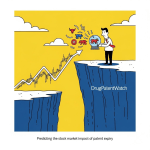
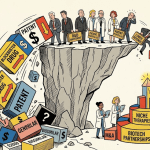
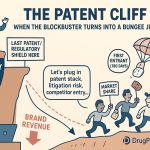
The global biopharmaceutical industry operates within an environment of unprecedented structural volatility. As the sector approaches the “Patent Cliff” of 2026–2030, where blockbuster assets representing over $236 billion in annual revenue face loss of exclusivity (LOE), the margin for strategic error has effectively vanished.1 This economic precipice is compounded by a fundamental fragmentation in therapeutic modalities—shifting from small molecules to complex biologics and cell/gene therapies—and a regulatory environment increasingly defined by the aggressive price negotiation mandates of the U.S. Inflation Reduction Act (IRA).
In this high-stakes landscape, business intelligence (BI) has evolved from a support function—primarily concerned with aggregating historical sales data—into a critical strategic engine driving decision-making across the entire value chain. The market for commercial pharmaceutical analytics, valued at approximately $23.28 billion in 2024, is projected to expand at a compound annual growth rate (CAGR) of 19.04%, reaching $158.37 billion by 2035.3 This explosive growth is not merely a function of increased data volume but of a fundamental shift in the nature of intelligence required. The traditional “pull” model, where analysts query databases for static answers, is being replaced by “push” models driven by predictive AI and machine learning (ML), which identify risks and opportunities before they become visible to human observers.
The contemporary intelligence stack must now solve for “Hybrid Intelligence”—the seamless integration of commercial sales data, real-world evidence (RWE), regulatory foresight, and clinical trial telemetry. It must navigate the “Exclusivity Stack” of patents and regulatory protections while simultaneously decoding the complex supply chains of viral vectors and biosimilars.
This report provides an exhaustive analysis of the leading biopharmaceutical business intelligence services. It moves beyond superficial feature lists to analyze the strategic utility, data provenance, and return on investment (ROI) of the industry’s dominant platforms—IQVIA, Clarivate (Cortellis), Citeline, Evaluate, and GlobalData—while also examining the disruptive role of AI-native platforms like AlphaSense and niche specialists in gene therapy and biosimilars. The analysis is designed for experienced professionals who require a nuanced understanding of how to construct a “best-of-breed” intelligence stack that mitigates risk in an era of regulatory volatility and scientific disruption.
Part I: The Macro-Strategic Environment Driving Intelligence Demand
To evaluate the utility of specific BI platforms, one must first deeply understand the strategic pressures dictating their necessity. The modern pharmaceutical enterprise does not merely need “data”; it requires intelligence capable of navigating three specific macro-threats: the Loss of Exclusivity (LOE) “Super-Cliff,” the fragmentation of therapeutic modalities, and the intensification of global regulatory complexity.
1.1 The 2026–2030 “Super-Cliff” and the Architecture of Exclusivity
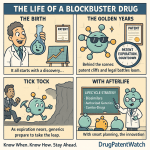
The primary driver of intelligence spending in the latter half of this decade is the impending expiration of patents for a cohort of high-value biologic and small-molecule assets. Unlike the patent cliffs of the early 2010s, which were characterized by the expiration of simple small molecules like Lipitor (atorvastatin), the 2026–2030 cycle involves complex biologics.1 This shift fundamentally alters the revenue erosion curve.
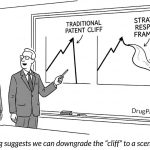
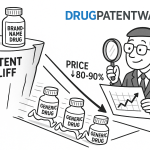
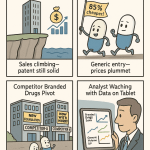
For small molecules, the entry of generics typically results in a “Cliff”—a precipitous drop where the brand loses 90% of its market share within 12 months due to automatic pharmacy substitution. However, for biologics, the erosion profile is a “Slope.” The entry of biosimilars is governed by adoption rates, physician comfort, and, crucially, the “Interchangeability” designation granted by the FDA.4
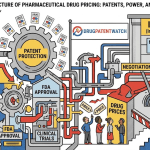
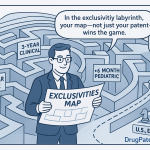
Strategic planners require intelligence that goes beyond statutory expiration dates. They must analyze what industry legal experts term the “Exclusivity Stack”—the layered fortress of protection that includes composition of matter patents, method-of-use patents, formulation patents, and regulatory exclusivities (e.g., Orphan Drug, Pediatric, New Chemical Entity).5 Platforms like DrugPatentWatch and Cortellis are essential for distinguishing between the nominal expiry date and the effective commercial end-of-life. This effective date is often determined not by the patent registry, but by “at-risk” generic launches, settlement agreements, and the 30-month litigation stays triggered by Paragraph IV certifications under the Hatch-Waxman Act.6 Intelligence platforms must therefore model probabilistic outcomes of litigation in the Eastern District of Texas or Delaware, rather than simply scraping USPTO databases.
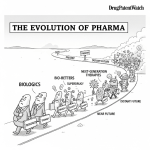
1.2 The Fragmentation of Modalities: Cell, Gene, and RNA Therapies
The industry is shifting capital allocation toward high-complexity modalities. The global cell and gene therapy (CGT) market, valued at roughly $13.9 billion in 2024, is projected to reach $105.83 billion by 2033.8 This shift renders traditional small-molecule databases insufficient and obsolete for R&D planning.
Intelligence in this sector requires granular ontologies. A generalist database might categorize a therapy simply as “gene therapy,” whereas a specialist platform like Beacon (Hanson Wade) distinguishes between “AAVrh74 capsid” and “AAV9,” or tracks specific manufacturing constraints such as viral vector yield and capsid purity.9 The high cost of failure in CGT clinical trials—often due to poor site selection, patient recruitment bottlenecks for rare diseases, or manufacturing failures—demands intelligence that integrates clinical feasibility with supply chain reality.11
Furthermore, the manufacturing of these therapies involves complex supply chains that are often the bottleneck for commercial success. Intelligence services must now track CDMO (Contract Development and Manufacturing Organization) capacity, identifying which facilities have the bioreactor scale and regulatory certifications (e.g., GMP for lentiviral vectors) to support a commercial launch.12
1.3 Regulatory Volatility and the Inflation Reduction Act (IRA)
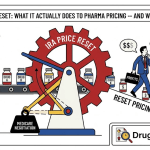
Regulatory intelligence has shifted from a compliance exercise to a core component of commercial strategy. The Inflation Reduction Act (IRA) in the United States has introduced price negotiation mechanisms that effectively function as a “de facto LOE,” potentially stripping assets of pricing power years before their patents expire.1
Consequently, BI platforms are now evaluated on their ability to model these regulatory impacts. Tools that can compare global regulatory pathways—tracking the divergence between FDA, EMA, and PMDA requirements—are critical for synchronizing global launches and managing lifecycle variations.14 The ability to predict which assets will be selected for Medicare price negotiation is now as valuable as predicting clinical trial success.
Part II: The “Big Four” – A Comparative Analysis of Generalist Titans
The pharmaceutical intelligence market is dominated by four integrated providers—IQVIA, Clarivate (Cortellis), Citeline, and Evaluate—along with the broad-spectrum challenger GlobalData. Each offers a distinct value proposition rooted in its data heritage. While they often compete, their capabilities are frequently complementary, leading large pharmas to maintain subscriptions to multiple services in a “best-of-breed” stack.
2.1 IQVIA: The Commercial & Real-World Evidence Hegemon
Core Value Proposition:
IQVIA is the undisputed leader in commercial analytics and Real-World Evidence (RWE). Its dominance stems from its data heritage (the merger of IMS Health and Quintiles), granting it unparalleled access to prescription data, hospital claims, and longitudinal patient records. It covers over 1 billion patient records across 100+ countries, processing over 4 billion prescription claims annually.16
Strategic Capabilities:
Orchestrated Analytics & Commercialization: IQVIA’s strength lies in operationalizing data for sales and marketing. Its platform does not just report what happened; it prescribes what to do next. The “Next Best Action” algorithms leverage machine learning to analyze physician prescribing behaviors, allowing commercial teams to target HCPs with high precision.17 This moves beyond static targeting lists to dynamic, behavioral-based segmentation. For example, it can identify a physician who has just diagnosed a patient with a rare disease and trigger an alert to the relevant Medical Science Liaison (MSL).
Real-World Evidence (RWE): As payers increasingly demand evidence of value beyond clinical efficacy, IQVIA’s RWE capabilities are essential for market access strategies and value-based contracting.19 Its “E360” platform allows researchers to build synthetic control arms and conduct epidemiology studies without leaving the secure data environment.17
Clinical Trial Optimization: IQVIA leverages its commercial data to optimize site selection. By analyzing historical performance data, it can predict enrollment rates based on patient density and site operational history, reducing the risk of costly trial delays.20
Limitations & Critique:
Despite its data depth, users frequently cite complexity and cost as significant barriers. The platform’s sheer scale can make customization difficult, and the interface for some legacy modules is described as “clunky” compared to modern SaaS competitors.21 Furthermore, while its private market data is pristine, some users note discrepancies in government supply and tender data, which can be critical for markets outside the US and EU.21
Table 1: IQVIA Capability Matrix
Feature
Strategic Utility
User Feedback Trend
National Sales Data (NSD)
The currency of pharma commercial performance.
Essential, non-negotiable for commercial teams.
Next Best Action (AI)
Operationalizes insights for field force efficiency.
Highly valued for increasing sales rep ROI.
Real-World Evidence
Supports payer negotiations and value dossiers.
Unmatched scale, though complex to query.
Orchestrated Customer Engagement
Integrates CRM with analytics.
Powerful but high implementation burden.
2.2 Clarivate (Cortellis): The R&D and Regulatory Fortress
Core Value Proposition:
Clarivate, through its Cortellis suite, holds the premier position in early-stage R&D, regulatory intelligence, and intellectual property (IP). If IQVIA owns the “commercial” end of the molecule, Cortellis owns the “creation” and “compliance” phases. Its lineage traces back to Thomson Reuters IP & Science, giving it a foundational strength in patent and scientific literature curation.23
Strategic Capabilities:
Regulatory Intelligence: Cortellis is the industry standard for regulatory tracking, trusted by 100% of the top 20 pharma companies.24 Its database covers 80+ global markets, providing granular CMC (Chemistry, Manufacturing, and Controls) requirements.14 This is critical for Regulatory Affairs professionals managing global submissions, ensuring that a dossier approved by the FDA can be efficiently adapted for the EMA or NMPA (China).
Generative AI Integration: Clarivate has aggressively deployed “Agentic AI” via its Regulatory Assistant. This tool allows users to query complex regulations in natural language (e.g., “Compare CMC requirements for monoclonal antibodies in Brazil vs. Japan”). The AI retrieves answers with citations to the original regulatory documents, significantly reducing the time spent on manual research.26
Competitive Intelligence (CI): The platform integrates patent data, clinical trials, and deals into a unified view. Its ability to track early-stage assets (pre-clinical) is highly regarded. The “Drug Timeline & Success Rates” tool uses AI to predict the probability of a drug advancing to the next phase, providing a benchmark for portfolio risk assessment.28
Limitations & Critique:
The user experience can be fragmented across its various modules (Regulatory, CI, Clinical, Deals), although efforts are underway to unify them on the Cortellis Cloud. Some users find the interface less intuitive than newer entrants, and the breadth of data can sometimes result in “overlapping content” confusion between legacy modules.29
Table 2: Cortellis Module Analysis
Module
Core Function
Strategic Relevance
Regulatory Intelligence
Global submission planning & compliance tracking.
Critical for reducing “Time to Approval.”
Competitive Intelligence
Pipeline tracking & SWOT analysis.
Essential for BD&L and Portfolio Strategy.
CMC Intelligence
Manufacturing regulation tracking.
Vital for supply chain compliance and quality.
Deals Intelligence
M&A and licensing benchmarking.
Supports valuation during due diligence.
2.3 Citeline: The Clinical & R&D Specialist
Core Value Proposition:
Citeline (formerly part of Informa/Pharma Intelligence) is a powerhouse in clinical trial intelligence and pipeline tracking. Its flagship products, Pharmaprojects and Trialtrove, are synonymous with R&D surveillance. Citeline focuses deeply on the clinical development lifecycle, from protocol design to investigator selection.
Strategic Capabilities:
Pharmaprojects: As the definitive source for tracking global drug R&D, Pharmaprojects has over 40 years of history. It profiles over 90,000 drugs, including 20,000 in active development.31 Its “Drug Similarity” tool allows users to identify competitor assets based on mechanism of action or chemical structure, facilitating “white space” analysis.
Trialtrove: This is the industry’s most comprehensive database of clinical trials. It aggregates data from registries, publications, and press releases to provide a detailed view of trial status, endpoints, and timelines. For clinical operations teams, Trialtrove is essential for benchmarking trial duration and identifying potential enrollment challenges.32
Sitetrove: This module focuses on investigator and site intelligence. By ranking sites based on historical recruitment performance and quality, it helps sponsors select the best locations for their studies, a critical factor in accelerating time-to-market.32
Limitations & Critique:
Citeline is often viewed as a “pure play” R&D tool. While excellent for clinical and scientific intelligence, it historically lacked the commercial depth of IQVIA or the financial forecasting rigor of Evaluate. However, recent integrations under the Norstella umbrella (merging with MMIT, Evaluate, etc.) are beginning to bridge these gaps.
2.4 Evaluate: The Gold Standard for Forecasting and Valuation
Core Value Proposition:
Evaluate (formerly EvaluatePharma) acts as the financial nervous system of the industry. It is the primary source for consensus forecasts, Net Present Value (NPV) modeling, and commercial opportunity assessment. When Wall Street analysts or Business Development (BD) teams value an asset, Evaluate is the benchmark.33
Strategic Capabilities:
Consensus Forecasting: Evaluate aggregates forecasts from hundreds of equity research analysts to provide a “consensus” view of an asset’s future revenue. This is critical for benchmarking internal forecasts against market expectations. If a company’s internal model shows $1B peak sales while the consensus is $500M, Evaluate highlights the “expectation gap” that Investor Relations must address.33
EvaluateOmnium: Recognizing the limitations of consensus data (which often lags real-time events), Evaluate introduced Omnium, a machine-learning-driven forecasting tool. Omnium predicts risk-adjusted peak sales and probability of success (PTRS) at a granular level, including for early-stage and private assets that lack analyst coverage. It often identifies “fallen angels” or undervalued assets before the broader market.34
Visual Analytics: The platform is renowned for its clean, high-level visualizations of market share and therapeutic area trends (e.g., the “World Preview” reports), making it a favorite for executive presentations and investor relations decks.35
Limitations & Critique:
Evaluate is traditionally viewed as a strategic/financial tool rather than an operational one. It lacks the patient-level granularity of IQVIA or the deep regulatory text of Cortellis. Its pricing structure and the distinct separation between legacy modules can be a point of friction for budget-conscious firms.36
2.5 GlobalData: The Integrated Challenger
Core Value Proposition:
GlobalData positions itself as a “one-stop-shop,” offering an integrated Intelligence Center that spans clinical, commercial, and market access data. It competes on breadth, covering the entire value chain from “molecule to market” at a price point often more accessible than the combined cost of its competitors.29
Strategic Capabilities:
Integrated Taxonomy: GlobalData uses a proprietary taxonomy that links datasets across sectors (e.g., Medical Devices, Pharma, Consumer, Tech). This is uniquely valuable for identifying macro-trends and cross-industry opportunities, such as the intersection of digital health (Tech) and drug delivery (Pharma).37
Thematic Research: Unlike its competitors, GlobalData places a heavy emphasis on “Thematic Intelligence.” It scores companies on their exposure to mega-trends like AI, ESG, and Robotics. This provides a qualitative layer of strategic context often missing from pure data providers. For example, a user can analyze how “AI in Drug Discovery” is driving deal activity across the sector.38
Drugs Database: Its database tracks over 278,000 pipeline and marketed drugs, offering strong coverage of emerging markets and niche companies that might be overlooked by US-centric providers.40
Limitations & Critique:
While broad, GlobalData is often criticized for lacking the depth of the specialists. Its clinical data may not be as granular as Citeline’s, and some users note that its consensus data can lag real-time events compared to Evaluate.29 It acts as a “mile-wide” solution that is excellent for generalist CI but may need supplementation for deep technical due diligence.
Part III: The AI Disrupters – Changing the Paradigm of Search
While the “Big Four” dominate structured data, a new class of “AI-Native” platforms is disrupting how professionals access unstructured intelligence (documents, transcripts, filings). The challenge in 2026 is not data scarcity, but data overload.
3.1 AlphaSense: The “Google for Business Intelligence”
AlphaSense has emerged as a critical tool for qualitative competitive intelligence. Unlike traditional databases that rely on human-curated fields, AlphaSense indexes millions of unstructured documents—broker research, earnings transcripts, regulatory filings, expert call transcripts (Stream), and trade journals—and uses Natural Language Processing (NLP) to make them searchable.41
Strategic Advantage:
Speed to Insight: Case studies, such as that of Royalty Pharma, demonstrate that AlphaSense can reduce research workflows by 30-50%. It allows a lean team of 3-4 analysts to perform the work of a much larger department by automating the retrieval of “programmatically available data”.42
Sentiment Analysis: The platform’s AI can analyze the tone of management during earnings calls. It can detect hesitation or confidence regarding clinical trial readouts—a “soft signal” often missed in structured databases but critical for investors and competitors.43
GenAI Summarization: AlphaSense’s generative AI features summarize long-form R&D reports and regulatory guidance. Crucially, it validates these summaries against the source text to minimize “hallucinations,” extracting key performance indicators (KPIs) like trial enrollment numbers directly from text.43
Use Case:
A competitive intelligence manager monitoring a rival’s PD-1 inhibitor does not just want to know the status (Phase III); they want to know why the trial was delayed. AlphaSense can instantly surface a specific comment from a CFO in a fireside chat transcript mentioning “supply chain constraints,” a detail that would never appear in a clinical registry field.
3.2 AI in Drug Discovery as Intelligence
It is important to note that companies like Recursion, Insilico Medicine, and Exscientia are blurring the line between “biotech” and “intelligence provider.” By generating proprietary biological datasets (e.g., Recursion’s cellular imaging maps or Insilico’s aging clocks), they create a form of intelligence that no external vendor can sell. For pharma partners, “intelligence” increasingly means accessing these proprietary AI discovery platforms through partnerships to identify targets that are invisible to the public literature.44
Part IV: Niche Intelligence – The Vertical Specialists
As therapy areas become more specialized, generalist platforms often fail to capture the necessary technical nuance. This has given rise to “Vertical Intelligence” providers who focus deeply on specific modalities or market segments.
4.1 Gene and Cell Therapy: Beacon (Hanson Wade)
Generalist databases often struggle with the complex ontologies of genetic medicine. Beacon, developed by Hanson Wade, addresses this by providing manually curated data specific to the Cell & Gene Therapy (CGT) sector.
Strategic Value:
Granularity: Beacon allows users to filter by specific technical attributes: capsid type (e.g., AAV9 vs. AAVrh74), promoter, delivery vehicle, and armoring approach.9 This level of detail is critical for R&D teams trying to design non-immunogenic vectors or benchmark manufacturing yields.
Clinical Context: It tracks trial failures and successes with a focus on the mechanistic reasons (e.g., identifying toxicity trends associated with high-dose AAV administration). This allows developers to learn from competitors’ failures in a way that generalist databases (“Trial Suspended”) do not facilitate.10
Commercial Insights: For a BD team evaluating a gene therapy asset, Beacon provides the technical context to determine if a “novel” capsid is truly differentiated or merely a derivative of a crowded IP space.
4.2 Biosimilars: The Center for Biosimilars & Clival
The biosimilar market operates on different economic physics than the innovative market. Intelligence here focuses on “interchangeability,” manufacturing capacity, and legal defense strategies.
Clival: Provides a unique focus on the “supply” side of intelligence. It tracks API availability and CDMO capacity, which is crucial because biosimilar delays are often manufacturing-related rather than clinical. It helps companies identify which CDMOs have the specific bioreactor capacity and regulatory approvals (e.g., US/EU GMP) to manufacture complex biologics.13
The Center for Biosimilars: A key resource for “soft” intelligence—policy shifts, payer adoption trends, and provider sentiment. It tracks the practical implementation of biosimilars in clinical practice, monitoring how providers deal with “switching” and “substitution” protocols, which are often the bottlenecks for adoption.45
Regulatory Nuance: Platforms in this space must monitor the subtle but critical divergence between US regulations (where “interchangeability” is a distinct regulatory bar required for automatic substitution) and EU regulations (where substitution is often standard practice). This dictates market entry strategy and the level of clinical evidence required.4
4.3 Patent Intelligence: DrugPatentWatch
While Cortellis offers broad IP coverage, DrugPatentWatch provides specialized “deep surveillance” of the pharmaceutical patent landscape.
Strategic Capabilities:
Predictive Modeling: It goes beyond listing expiry dates to modeling “at-risk” launch scenarios. It calculates the probability of a generic launch before patent expiry based on litigation outcomes and settlement signals. This helps generic companies identify “white space” and brand companies fortify their “patent thickets”.1
Supply Chain Linkage: A unique feature is the connection between patent data and supply chain planning. By forecasting LOE with precision, it allows API manufacturers and supply chain managers to adjust inventory levels to match the expected “cliff” or “slope” of revenue erosion. It tracks Drug Master Files (DMFs) to see which generic manufacturers are preparing to enter a market years before the public launch.46
Part V: Strategic Analysis – Building the Intelligence Stack
For biopharmaceutical leaders, the challenge is not choosing one provider, but constructing an interoperable stack that delivers high ROI. No single platform can satisfy the diverse needs of R&D, Commercial, Regulatory, and BD teams.
5.1 The “Franken-Stack” Architecture
A robust intelligence function typically layers specialized tools on top of a generalist foundation. The architecture often looks like this:
Layer 1: The Foundation (The Generalists).IQVIA or GlobalData provides the baseline market data, sales tracking, and broad competitor monitoring. This is the “system of record” for commercial performance.
Layer 2: The Specialist (The Vertical).Cortellis (for Regulatory/IP), Citeline (for Clinical Operations), or Beacon (for Gene Therapy) supports the specific technical focus of the company. A gene therapy biotech must have Beacon; a generics house must have DrugPatentWatch.
Layer 3: The Accelerator (The AI Layer).AlphaSense or EvaluateOmnium accelerates workflow and provides predictive “alpha.” This layer is used by strategy teams to synthesize insights from the layers below.
5.2 ROI and Pricing Dynamics
The pricing models for these services are shifting. Traditionally sold on a “per-seat” basis, the rise of AI is pushing vendors toward “hybrid” models.
Seat-Based vs. Enterprise: Vendors are moving toward enterprise-wide licensing to encourage broad adoption, but often charge premiums for “AI consumption” (e.g., number of AI summaries generated).47
Calculating ROI: The ROI of intelligence is best measured by “Cost Avoidance” and “Opportunity Capture”.48
Failure Avoidance: If Beacon helps a team identify a toxicity signal in a competitor’s capsid that matches their own candidate, leading to an early “kill” of the program, the savings (often $50M–$100M in avoided clinical costs) pay for the subscription for decades.
Litigation Strategy: Accurate prediction of an LOE date by DrugPatentWatch can allow a generic firm to secure “First-to-File” status, capturing the lucrative 180-day exclusivity period, which can represent hundreds of millions in revenue.6
Table 3: Pricing & ROI Models
Model
Description
Pros
Cons
Per-Seat
License per user.
Cost control for small teams.
Discourages broad adoption; data silos.
Enterprise
Unlimited access.
Encourages data democratization.
High upfront cost; unused seats waste budget.
Consumption
Pay per API call/AI query.
Aligns cost with value.
Unpredictable costs; penalizes heavy users.
Part VI: Operationalizing Intelligence – Best Practices for 2026
To extract maximum value from these platforms, organizations must adopt specific operational behaviors. Access to data is not enough; the workflow determines the value.
6.1 Integration and Interoperability
Data silos are the enemy of insight. The trend is toward API-first platforms. IQVIA, Cortellis, and GlobalData all offer APIs to feed data directly into internal data lakes or CRM systems (e.g., Salesforce, Veeva).49
Recommendation: Do not treat these platforms as isolated portals. Mandate API integration to blend external market data with internal R&D data. This allows for “Hybrid Intelligence”—e.g., overlaying internal clinical trial timelines with external competitor recruitment rates to benchmark performance in real-time.
6.2 The Rise of Agentic AI
We are moving from “Passive Search” (where a user logs in and searches) to “Agentic AI” (where an agent pushes insights to the user). In 2026, the best practice is to deploy AI agents that autonomously monitor the landscape.
Example: Instead of an analyst manually checking ClinicalTrials.gov every week, an AI agent can be tasked to “Monitor Competitor X’s PD-1 inhibitor for recruitment delays and alert me if the completion date slips by more than 3 months”.51 Clarivate’s Regulatory Assistant is a precursor to this, allowing for conversational interrogation of compliance data.26
6.3 Governance and Validation
As AI generates more summaries and insights, “Hallucination Risk” becomes a strategic liability. Firms must establish governance protocols where AI-generated intelligence is treated as a draft requiring human validation, particularly for high-stakes regulatory or IP decisions.51 Users must verify AI summaries against the source documents provided by platforms like AlphaSense or Cortellis to ensure accuracy before making capital allocation decisions.
Conclusion: The Intelligence Imperative
The biopharmaceutical industry is entering a period of maximum velocity. The convergence of the 2026 Patent Cliff, the explosive growth of complex modalities like Cell & Gene Therapy, and the democratization of AI has fundamentally altered the competitive landscape.
In this environment, “Business Intelligence” is no longer a back-office support function—it is a frontline strategic capability. The winners of the next decade will not necessarily be the companies with the most data, but those with the most effective intelligence architectures—stacks that can synthesize IQVIA’s commercial breadth, Beacon’s technical depth, and Evaluate’s financial foresight into coherent, actionable strategy.
For the strategic leader, the directive is clear: audit your current intelligence stack not for what data it contains, but for the decisions it enables. In a market defined by cliffs and complexity, clarity is the ultimate competitive advantage.
Deep Dive Appendices
Appendix A: Regulatory & CMC Intelligence – The Global Compliance Grid
Analysis of features for managing global submission variations.
Feature
Cortellis Regulatory
IQVIA Regulatory
Use Case
CMC Intelligence
High Granularity (Module 3 format)
Integration with Safety/QMS
Sourcing API/Manufacturing Planning
Global Coverage
80+ Markets
Global + Strong Local Affiliates
Simultaneous Global Launch
AI Capabilities
Agentic Assistant (Query-based)
NLP for Safety/PV
Rapid Impact Assessment of New Laws
Source
14
19
Appendix B: Gene Therapy Intelligence – The Technical Ontologies
Comparison of data depth for Advanced Therapy Medicinal Products (ATMPs).
Attribute
Generalist DB (e.g., GlobalData)
Specialist DB (Beacon)
Strategic Value
Vector Classification
“AAV” or “Lentivirus”
“AAV9”, “AAVrh74”, “Lenti-VSVG”
Freedom-to-Operate analysis; IP avoidance
Manufacturing
General “In-house” vs “Outsourced”
Specific Yields, Cell Lines (HEK293 vs Sf9)
COGS modeling; CDMO selection
Trial Data
Phase, Status, Endpoints
Patient-level safety, specific toxicity signals
De-risking clinical trial design
Source
29
9
Appendix C: Patent Intelligence – Forecasting the Cliff
Methodologies for predicting Loss of Exclusivity (LOE).