In March 2002, Teva filed an ANDA for generic carvedilol targeting a patent that would not expire for five more years. The patent’s expiration date was not a secret. It was sitting in the Orange Book, calculable from the patent’s own face, for anyone who cared to look. Teva launched its skinny-label generic in 2007, on schedule, and spent the next fifteen years in court over what it did after launch — not over whether it had correctly read the calendar before launch [3][4]. That is the part of the skinny-label story that gets skipped. The litigation is dramatic. The timing is not. The timing is public record, sitting in plain sight for years before a single ANDA gets filed.
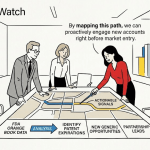
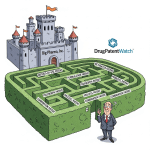
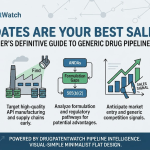
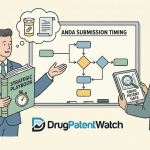
This piece is about the timing. It builds a repeatable method for finding the gap between a brand’s composition-of-matter patent and its method-of-use patents — the gap a Section viii carve-out is designed to exploit — using nothing but publicly filed patents, FDA approval histories, and Orange Book use codes. DrugPatentWatch’s patent-tracking data forms the backbone of the monitoring workflow described below, though the underlying legal mechanics come from statute, regulation, and a run of Federal Circuit and Supreme Court decisions stretching from 2003 to June 2026.
The Short Answer
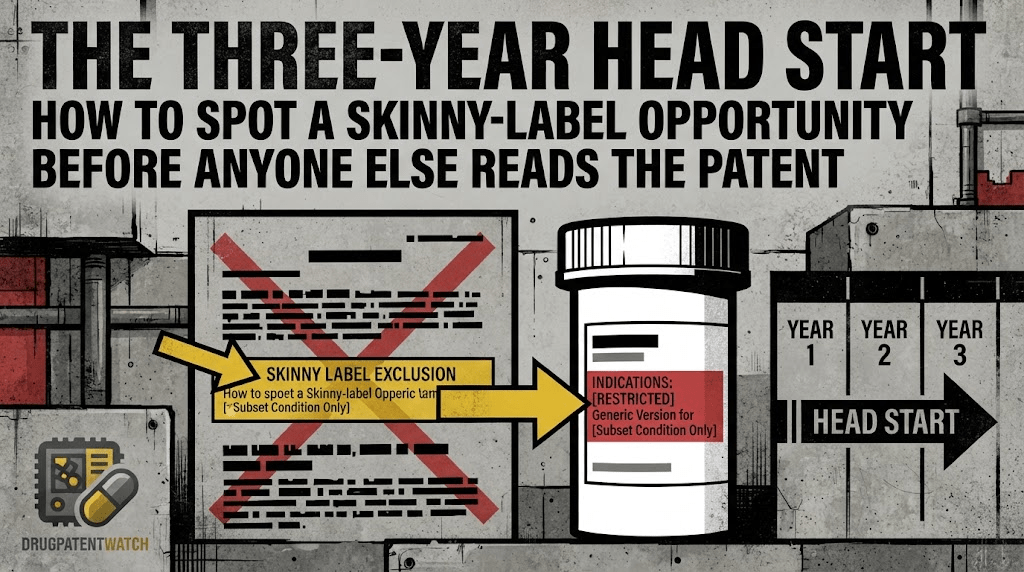
A skinny-label opportunity becomes visible the moment a brand’s method-of-use patent estate diverges from its composition-of-matter patent — and that divergence is usually written into the patent record two to five years, sometimes closer to two decades, before a generic can act on it. The signal is not secret intelligence. It is the ordinary sequence of NDA approval history, Orange Book use-code filings, and patent continuation activity, read in the order it was actually filed rather than the order a competitor happens to notice it.
The Five Findings That Matter
Teva’s 2002 ANDA filing for generic carvedilol targeted a patent expiration five years out; the compound patent’s face value made the 2007 launch date calculable at filing [3].
Warner-Lambert’s epilepsy-method patent on gabapentin expired January 16, 2000; Apotex filed its ANDA on April 17, 1998 — nearly two years ahead of the date the patent record already disclosed [2].
Takeda and Lundbeck’s narrowest Trintellix method-of-use patents (the ‘096 and ‘910 patents) run to March 21, 2032 and June 15, 2027, respectively — patents filed and issued years after Trintellix’s original September 30, 2013 approval, extending the brand’s effective exclusivity well beyond the earlier method patent’s 2022 expiration [5][7].
On June 4, 2026, the Supreme Court ruled 9-0 in Hikma Pharmaceuticals USA Inc. v. Amarin Pharma, Inc. that Amarin had not plausibly alleged induced infringement from Hikma’s skinny-labeled generic Vascepa, resetting a legal standard that had grown hostile to Section viii launches since 2021 [8][10].
In November 2023, the FTC used FDA’s administrative patent-listing-dispute process to challenge more than 100 Orange Book patents it viewed as improperly listed, a volume that signals how routinely use codes overstate what a patent actually claims [13].
What a Section VIII Statement Actually Does
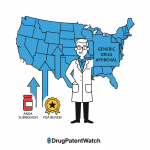
A Section viii statement is the fourth of the four Hatch-Waxman certification options an ANDA filer can make against an Orange Book-listed patent. Instead of certifying that a patent is invalid or won’t be infringed (a Paragraph IV certification, which triggers a 30-month litigation stay), the filer certifies that it isn’t seeking approval for any use still covered by an unexpired method-of-use patent. It proposes labeling that omits — carves out — the language tied to that patented use [1].
The Statutory Mechanics of 21 U.S.C. § 355(j)(2)(A)(viii)
The statute lets a generic applicant seek approval only for the indications not covered by a listed method-of-use patent, so long as FDA agrees the drug can be used safely and effectively without the omitted labeling information [1]. Unlike a Paragraph IV filing, a Section viii statement does not delay FDA’s ability to approve the ANDA — there’s no automatic stay to run out [1]. That is the entire commercial logic of the pathway: a correctly carved-out label can reach the market on the day the last blocking patent that actually applies to it expires, with no litigation clock running in between.
FDA’s Ministerial Role and Why It Matters for Timing
FDA does not independently verify that a submitted patent claims the drug or an approved method of using it. Its role in listing patents and use codes is, in its own description, ministerial — it lists what the NDA holder submits on Form FDA 3542 without adjudicating scope [24][25]. That matters for anyone trying to spot opportunities early, because it means the Orange Book is not a curated signal of what’s actually protected. It is a raw feed of what brands have claimed is protected, unfiltered, and that gap between claim and reality is exactly where the analysis in this piece lives.
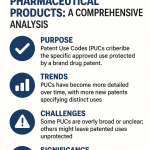
Use Codes: The Translation Layer Between Patent Claims and Label Text
Every method-of-use patent listed in the Orange Book carries a use code — a short alphanumeric description the NDA holder writes on Form FDA 3542 to describe what the patent covers [15][20]. The use code, not the patent claims themselves, is what an ANDA filer has to carve around. If the use code is written broadly enough to sweep in indications the patent doesn’t actually claim, a would-be skinny-label filer can be boxed out of a use it has every legal right to pursue [1][15].
Why the Window Opens Years Before Anyone Files an ANDA
Every small-molecule drug eventually loses its composition-of-matter patent. What survives — sometimes for a decade or more afterward — is a layered set of method-of-use patents, each covering a narrower slice of the label than the last. Reading that layering in the order the patents were actually filed, rather than the order a generic sponsor happens to notice them, is what turns a skinny-label opportunity from a surprise into a forecast.
Composition-of-Matter vs. Method-of-Use: The Patent Family Ladder
The pattern recurs across therapeutic classes: a compound patent covers the molecule itself and runs out first. A first-generation method-of-use patent, often filed close to the original NDA approval, covers the drug’s original indication. Later, narrower method patents — covering a specific sub-population, a specific combination therapy, or a newly studied indication — get filed and issued years afterward, each extending exclusivity over a shrinking slice of the label. A skinny-label filer only has to identify which patents in that ladder still apply to the indications it actually wants to sell into.
Case Study: Neurontin’s Two-Year Runway
Warner-Lambert’s foundational case remains the cleanest illustration. Parke-Davis received NDA approval for gabapentin (Neurontin) in 1993 for adjunctive epilepsy therapy. Warner-Lambert separately held a patent covering methods of treating neurodegenerative diseases with gabapentin — a use FDA had never approved [17]. Apotex filed its ANDA on April 17, 1998, seeking approval only for the epilepsy indication, targeting the epilepsy-method patent’s already-known expiration of January 16, 2000 [2]. Warner-Lambert argued that because three-quarters of Neurontin prescriptions were written off-label, mostly for the neurodegenerative uses Apotex’s label excluded, Apotex’s ANDA would still induce infringement [16]. The district court granted summary judgment for Apotex, and the Federal Circuit affirmed in 2003, holding that infringement analysis under § 271(e)(2) turns on the use for which approval is sought — not on how doctors might use the drug once it’s on shelves [2][17]. The lesson for opportunity-spotters: the epilepsy patent’s expiration date was public from the moment it issued. The nearly two-year gap between Apotex’s filing and the patent’s expiration was pure lead time, available to any competitor reading the same public record.
Case Study: Coreg’s Five-Year Runway
GSK’s carvedilol (Coreg) received its first two indications — hypertension and congestive heart failure — in 1995 and 1997 [54]. Teva filed its ANDA for generic carvedilol in March 2002, seeking both indications and filing a Paragraph III certification against GSK’s compound patent while contesting the validity of the separate ‘069 method-of-use patent [60]. In 2003, GSK secured a third indication — reducing cardiovascular mortality following myocardial infarction in patients with left ventricular dysfunction — and Teva updated its proposed label to match [60]. FDA tentatively approved Teva’s ANDA in 2004, with a launch date tied to the 2007 expiration of the compound patent [60]. Just before that 2007 launch, Teva carved out the congestive-heart-failure indication under Section viii [60]. In January 2008 — months after Teva was already on the market — the USPTO issued a reissue patent, RE40,000, with narrower claims, and GSK relisted it in the Orange Book [60]. That sequencing is itself a signal worth noting: a brand reissuing a use patent with narrowed claims immediately after a skinny-label launch is a defensive move, not an accident, and it is the kind of USPTO prosecution activity a monitoring workflow should flag on its own.
Case Study: Trintellix’s Nineteen-Year Patent Ladder
Takeda and Lundbeck’s vortioxetine (Trintellix, originally Brintellix) received FDA approval for major depressive disorder on September 30, 2013 [86][87]. Two compound-related patents not at issue in later litigation expired June 17, 2026 and October 2, 2022 [5]. After the original MDD approval, Lundbeck and Takeda obtained two additional method-of-use patents: the ‘096 patent, covering vortioxetine’s use in patients switching from another antidepressant because of sexual side effects, and the ‘910 patent, covering its use for cognitive impairment in MDD patients — expiring March 21, 2032 and June 15, 2027 [5][63]. Generic filers sued under Hatch-Waxman prevailed at the district court on noninfringement, lost on invalidity, and the Federal Circuit affirmed across the board in a precedential December 7, 2023 opinion, holding that a properly scoped skinny label carrying substantial noninfringing uses defeats both induced- and contributory-infringement theories [6][63][67]. The pattern to track here isn’t the litigation outcome — it’s that both later patents were filed and issued years after the original 2013 approval, publicly extending the brand’s real exclusivity runway on the narrow slices of label they covered, while leaving the base MDD indication open to a correctly scoped carve-out.
How a Patent Reissue Signals Brand Strategy
The Coreg reissue is worth generalizing. A reissue application under 35 U.S.C. § 251, or a late-filed continuation patent narrowing claims to a specific sub-population or combination, is a brand’s way of extending a use patent’s practical life without waiting for a new indication to clear clinical trials. Tracking USPTO reissue and continuation filings against a drug’s existing patent family — not just watching for brand-new patent numbers — catches this kind of defensive layering months before it shows up as a new Orange Book listing.
Vascepa and the Highest-Stakes Test of the Thesis
No skinny-label case tests the timing thesis as cleanly as Amarin’s icosapent ethyl (Vascepa), because the record includes a clean split between an original indication, a later clinically-proven indication, and a Supreme Court ruling that landed while this article was in production.
The REDUCE-IT Timeline: From Trial to Patented Indication
FDA approved Vascepa in 2012 for severe hypertriglyceridemia (the SH indication) [8]. A second approval followed in 2019, for reducing cardiovascular risk in certain patients with elevated triglycerides (the CV indication), based on the REDUCE-IT trial [8]. Amarin listed patents covering the CV indication in the Orange Book. After Amarin’s original SH-indication patents were found invalid, FDA approved Hikma’s ANDA in May 2020 with a Section viii statement carving out the CV use, limiting Hikma’s label to the SH indication alone [51]. Hikma launched its generic in November 2020; Dr. Reddy’s followed with its own generic in June 2021 [48]. The seven-year gap between Vascepa’s original 2012 approval and the 2019 CV-indication approval was, again, the exact kind of divergence a monitoring workflow is built to catch — years before any ANDA filer had to act on it.
What Hikma v. Amarin Changed on June 4, 2026
Amarin sued Hikma in November 2020, alleging that Hikma’s label, website, and press releases — despite the formal carve-out — induced infringement of the CV-indication patents [8]. The district court dismissed the complaint; the Federal Circuit reversed in 2024, finding it at least plausible that a physician could read Hikma’s marketing materials as encouragement to prescribe the generic for the patented use [46][51]. The Supreme Court granted certiorari, heard argument April 29, 2026, and on June 4, 2026 reversed unanimously in an opinion by Justice Jackson [10][47]. The Court held that Amarin had not plausibly alleged that Hikma took active steps to encourage infringement, and specifically that Hikma’s public statements had an obvious alternative explanation: ordinary compliance with labeling law and standard industry practice [44][51]. The Court also held that “mere omissions, inactions, or nonfeasance” — Hikma leaving the CV limitation off its label, as Section viii requires — cannot by themselves support an inducement claim [52].
In November 2023, the FTC used FDA’s own administrative patent-listing-dispute process to challenge more than 100 patents it viewed as improperly listed in the Orange Book, including device patents on products like asthma inhalers [13].
What the Ruling Means for Future Section VIII Timing
The Hikma decision does not change patent law’s underlying mechanics — it changes the risk calculus around them. Between the Federal Circuit’s 2021 GSK v. Teva opinion and the Supreme Court’s 2026 Hikma ruling, brand-side litigators had a five-year window in which ordinary marketing language — an “AB-rated generic equivalent” claim, a therapeutic-category description — carried real inducement risk for a skinny-label launcher [9][58]. That risk premium likely pushed some generic sponsors to wait, litigate under Paragraph IV instead, or price the carve-out more conservatively. With the Supreme Court’s narrower pleading standard now controlling, the years-in-advance patent-ladder analysis described in this piece becomes more directly actionable — a spotted opportunity is less likely to be neutralized after the fact by an inducement theory built on ordinary label language.
The Legal Risk Pendulum: GSK v. Teva to Lundbeck v. Lupin to Hikma v. Amarin
Reading the skinny-label opportunity purely as a patent-expiration calendar ignores half the picture. The other half is a decade of Federal Circuit and Supreme Court decisions that determined how much post-launch marketing risk a correctly carved-out label actually carries.
GSK v. Teva Set the Chilling Precedent
GSK sued Teva in 2014, years after the 2007 carvedilol launch, alleging that Teva’s marketing materials — including catalog language describing its product as the “AB rated generic equivalent” of Coreg — induced infringement of the reissued congestive-heart-failure patent [58][62]. A 2017 jury awarded GSK $235.51 million [53][59]. The district court threw the verdict out on JMOL in 2018, finding the evidence showed doctors relied on independent clinical guidelines and GSK’s own decades of promotion, not Teva’s label, when prescribing carvedilol for heart failure [62]. The Federal Circuit reversed in a 2-1 decision in 2020, later replaced by a 2021 opinion, reinstating the verdict and finding Teva’s marketing sufficient evidence of inducement [22][57]. Teva petitioned for certiorari; the Supreme Court denied it on May 15, 2023 [53][58]. GSK and Teva quietly settled the dispute afterward, on undisclosed terms, closing out more than a decade of litigation [56].
Lundbeck v. Lupin Narrowed It Back
The Federal Circuit’s December 7, 2023 opinion in H. Lundbeck A/S v. Lupin Ltd. pulled the standard back toward the generic side. The court held that a properly crafted skinny label, standing on its own — without accompanying advertising or promotional activity encouraging the patented use — does not support inducement, and it explicitly limited GSK v. Teva to situations involving that kind of extra-label marketing conduct [6][9]. A second 2023 Federal Circuit decision, Lundbeck A/S v. Lupin Ltd. in the December 7, 2023 companion ruling, reaffirmed that plaintiffs relying solely on an ANDA’s proposed label as the inducing conduct — with no identified advertising or promotional material — cannot make out an inducement claim [9].
Hikma v. Amarin Reset the Standard Nationally
The Supreme Court’s June 2026 ruling completed the swing back. It rejected what the Court itself called a Federal Circuit “trend” of finding inducement from ordinary label and marketing language, and it held that the correct inquiry is whether a brand plausibly alleged active, affirmative encouragement — not whether a physician could theoretically misread routine compliance language as an instruction to infringe [52]. Read together, the three cases show a standard that tightened sharply after 2021 and then loosened decisively in 2026, which is itself a data point for anyone modeling the marketing-conduct risk attached to a spotted skinny-label opportunity.
Correcting the Record: What Caraco v. Novo Nordisk Means for Opportunity-Spotters
Because FDA lists use codes without verifying their accuracy, an overly broad use code can block a legitimate carve-out before a generic filer ever gets to the merits of infringement. The Supreme Court gave generic sponsors a direct tool to fix that in 2012.
The Prandin Use-Code Dispute
Novo Nordisk’s repaglinide (Prandin) had three FDA-approved uses: as monotherapy, combined with metformin, and combined with thiazolidinediones [20]. Novo Nordisk’s patent covered only the metformin-combination use, and its use code originally reflected that narrow scope. After Caraco filed an ANDA with a Section viii carve-out for the two uses outside the patent, Novo Nordisk revised its use code to describe “a method for improving glycemic control in adults with type 2 diabetes” — language broad enough to sweep in all three approved uses [21]. On April 17, 2012, the Supreme Court ruled 9-0, in an opinion by Justice Kagan, that a generic manufacturer may bring a counterclaim under 21 U.S.C. § 355(j)(5)(C)(ii)(I) to force correction of a use code that inaccurately describes what a patent actually claims [73][75][78].
Why the Counterclaim Provision Is an Underused Detection Tool
Caraco matters for timing analysis because it means a use code isn’t the last word — it’s a claim a brand made that can be legally tested and, if wrong, corrected. A monitoring workflow that treats every use code as an accurate description of patent scope will miss opportunities that a workflow comparing use-code language against the underlying patent’s actual claims will catch. The gap between the two is exactly where Novo Nordisk’s revised Prandin use code lived for years before Caraco challenged it.
An Original Framework: Three Signals That Predict a Skinny-Label Window
The case studies above share a common structure. Below is a taxonomy — original to this analysis, built from the patterns in the cases discussed — for identifying that structure before a competitor does.
Signal 1 — Indication-Approval Lag
Compare a drug’s original NDA approval date against every subsequent supplemental approval for a new indication. Every gap represents a period during which the original indication was, or will soon be, open to a narrower label than the brand’s current full prescribing information — exactly the structure behind Vascepa’s 2012-to-2019 SH-to-CV gap and Trintellix’s 2013-to-later method-patent layering [8][63].
The Vascepa Precedent as a Timing Model
The seven years between Vascepa’s 2012 SH approval and its 2019 CV approval were fully public. A monitoring system that flags every new supplemental indication approval against a drug’s existing Orange Book patent listings would have surfaced the coming divergence in 2019, a full year before Hikma’s May 2020 ANDA approval [8][51].
Signal 2 — Use-Code Overreach
Compare each listed use code’s language against the patent’s actual claims, the way Caraco’s counsel did with Novo Nordisk’s Prandin filing. A use code that reads more broadly than the granted claims is either an error worth challenging or, at minimum, a sign that the brand is using label-level ambiguity as a soft barrier beyond what its patents can legally support [21][73].
Reading FDA Form 3542
Form 3542 is the actual document where a use code originates. Tracking amendments to it over a drug’s Orange Book history — not just the current use code on file — reveals exactly when and how a brand’s description of its own patent scope has shifted, the same pattern Novo Nordisk’s revised repaglinide use code showed after Caraco’s ANDA filing [15][21].
Signal 3 — Patent-Family Layering
Track every continuation, divisional, and reissue application filed against a drug’s original patent family, the way GSK’s RE40,000 reissue followed its original ‘069 patent. A brand narrowing its own claims through reissue, or filing a late continuation covering a specific sub-population, is telegraphing which slice of the label it still considers defensible — and, by implication, which slices it has effectively conceded [60].
An Illustrative Lead-Time Calculation
The following is a hypothetical, clearly labeled illustration of how the three signals combine — not a real drug or a reported figure. Suppose a brand’s original method-of-use patent, filed at NDA approval, has a calculable expiration eight years out. Two years later, the brand receives approval for a second indication and files a new method patent claiming only that narrower use, with a term extending four years past the first patent’s expiration. A monitoring system checking indication-approval lag (Signal 1) and patent-family layering (Signal 3) at that two-year mark would identify the coming carve-out window — the eight-year-out expiration of the original patent, against the label the brand held before the second patent existed — roughly six years before any ANDA filer needs to act on it. The exact lead time in a real case depends entirely on the actual filing and issuance dates involved, which is why the case studies above, not this illustration, are the load-bearing evidence in this piece.
Who Is Exposed: Four Real Skinny-Label Cases Side by Side
ANDA approved May 2020; Hikma launched Nov. 2020, Dr. Reddy’s June 2021
SCOTUS June 4, 2026: no plausible inducement, 9-0
[8][48][51]
Building a Monitoring Cadence
Turning the framework above into a repeatable process means checking three public data sources on a fixed schedule rather than reacting to news of a launch after the fact.
What to Pull From the Orange Book Each Quarter
New patent listings, use-code amendments to existing listings, and patent delistings against every drug in a therapeutic class of interest. DrugPatentWatch’s Orange Book tracking surfaces these changes as they’re filed, which is the raw material Signals 1 and 2 run against — though the analytical step of comparing a use code’s language to the underlying patent’s granted claims still has to be done deliberately, the way Caraco’s counsel did with Prandin [21][73].
What to Pull From USPTO Prosecution Files
Continuation, divisional, and reissue filings against a drug’s existing patent family, checked against the pattern GSK followed with its post-launch RE40,000 reissue. A late-stage narrowing amendment or a reissue filed shortly after a competitor’s ANDA becomes public is a tell that the brand is defending a specific, shrinking slice of its label rather than the whole thing [60].
Setting Up Patent Family Alerts
The practical version of this is an alert keyed to the original patent family — not just the drug name — so a continuation or reissue surfaces the moment it publishes, rather than months later when it appears as a new Orange Book listing.
What to Pull From Clinical Trial Registries
New Phase 3 readouts for existing approved drugs, the way REDUCE-IT preceded Vascepa’s 2019 CV approval. A positive trial for a new indication is the earliest public signal that a new, narrower method patent — and a corresponding narrowing of the older indication’s remaining protection — is likely on the way [8].
What This Means for Generic Manufacturers
The post-Hikma legal environment rewards sponsors who can show their carve-out decision was made on the patent record, not around it. A file that documents exactly which use code, which patent claims, and which approval-history gap justified a given label — built months or years before the ANDA is filed — is now both a stronger regulatory position and a stronger litigation record if a brand sues anyway.
What This Means for Brand Manufacturers
The same monitoring signals run in reverse. A brand watching its own indication-approval lag, use-code language, and patent-family layering can see a coming carve-out as early as a generic competitor can — and can decide, with years of lead time, whether to file a Caraco-proof use code, pursue a defensive reissue on the GSK model, or accept that a narrow slice of the label is not going to be defensible past the compound patent’s expiration.
Methodology
This analysis draws on primary sources: Federal Circuit and Supreme Court opinions and slip opinions, FDA prescribing information and approval-history records, Congressional Research Service reports, FTC policy statements, and company SEC filings, supplemented by law-firm case analyses published contemporaneously with each ruling. Dates cited are drawn from official case dockets, FDA records, or SEC filings where available. The illustrative lead-time calculation in this piece is explicitly labeled as hypothetical and is not drawn from any specific drug’s patent record. No statistic in this piece beyond those directly attributed to a named source (the FTC’s 100-plus-patent figure, the $235.51 million verdict, and the specific dates cited) should be read as this publication’s own calculation; where this analysis draws an inference — such as the reissue-timing pattern discussed under the Coreg case study — that inference is presented as analysis, not as an independently reported fact.
Definitions and Taxonomy
Section viii statement: An ANDA certification under 21 U.S.C. § 355(j)(2)(A)(viii) stating that the applicant is not seeking approval for any use still covered by an unexpired, listed method-of-use patent [1].
Use code: The alphanumeric description an NDA holder submits on FDA Form 3542 to describe what a listed method-of-use patent covers; it is the operative text an ANDA filer must carve around, whether or not it accurately reflects the patent’s actual claims [15][20][21].
Indication-approval lag (original framework term used in this piece): The gap between a drug’s original approved indication and any later-approved indication, during which the original indication may become open to a narrower carve-out than the drug’s current full label.
Patent-family layering (original framework term used in this piece): The practice of filing successive, narrower method-of-use patents — through new applications, continuations, divisionals, or reissues — against a single drug, each extending exclusivity over a shrinking portion of the approved label.
Key Takeaways
Skinny-label windows are built into public patent and FDA records years before an ANDA gets filed; Neurontin’s runway was about two years, Coreg’s about five, and Trintellix’s method-patent ladder spans nearly two decades from original approval [2][5][60].
Because FDA lists patent information and use codes without verifying their accuracy, use-code overreach is a real and correctable risk — Caraco v. Novo Nordisk gives generic filers a direct counterclaim tool to fix it [21][73].
The legal risk attached to a correctly carved-out label swung sharply after the Federal Circuit’s 2021 GSK v. Teva opinion, narrowed back with Lundbeck v. Lupin in 2023, and reset nationally with the Supreme Court’s unanimous June 4, 2026 ruling in Hikma v. Amarin [6][9][10].
Post-launch patent reissues, like GSK’s RE40,000 filed months after Teva’s 2007 Coreg launch, are themselves an early-warning signal of which parts of a label a brand still intends to defend [60].
The FTC’s November 2023 challenge to more than 100 Orange Book patents shows use-code and listing overreach is common enough to warrant systematic checking, not case-by-case discovery [13].
FAQ
What is the legal difference between a Paragraph IV certification and a Section viii statement? A Paragraph IV certification asserts a listed patent is invalid or won’t be infringed and triggers a 30-month litigation stay if the brand sues within 45 days. A Section viii statement instead certifies the applicant isn’t seeking approval for any use still covered by an unexpired method patent, and it carries no automatic stay [1].
Can a brand company block a skinny label just by writing an overly broad use code? It can create a practical obstacle, since FDA lists use codes without verifying their accuracy, but Caraco v. Novo Nordisk gives generic filers a statutory counterclaim to force correction of a use code that describes a patent’s scope inaccurately [21][73].
Did the Supreme Court’s Hikma v. Amarin ruling eliminate induced-infringement risk for skinny labels entirely? No. The Court held Amarin hadn’t plausibly alleged Hikma took active steps to encourage infringement in that case; it did not hold that skinny labels can never support an inducement claim, and marketing conduct that goes beyond ordinary compliance language remains a live risk under the framework from GSK v. Teva and Lundbeck v. Lupin [6][52].
How long after an ANDA filing can a skinny-label patent dispute actually launch? It varies by case. Teva’s Coreg ANDA was filed in March 2002 for a 2007 launch tied to the compound patent’s expiration — about five years. Apotex’s Neurontin ANDA was filed in April 1998 for a January 2000 patent expiration — about two years [2][60].
What is a use code and where does it come from? A use code is the alphanumeric description an NDA holder submits on FDA Form 3542 describing what a listed method-of-use patent covers. It becomes the operative language an ANDA filer must carve its label around [15][20].
Does FDA verify that a listed patent actually claims the drug or an approved use before publishing it in the Orange Book? No. FDA has described its role in Orange Book patent listing as ministerial — it lists what NDA holders submit without independently adjudicating whether the patent information meets the statutory requirements [24][25].
What happened in the GSK v. Teva Coreg case after the Supreme Court denied certiorari in 2023? The case returned to the Delaware district court for further proceedings; GSK and Teva subsequently settled the dispute on undisclosed terms, closing out litigation that had run since 2014 [53][56].
Why did Lundbeck and Takeda keep filing new patents on Trintellix years after its original 2013 approval? The ‘096 and ‘910 patents, obtained after Trintellix’s original MDD approval, cover narrower uses — switching from another antidepressant due to sexual side effects, and treating cognitive impairment in MDD patients, respectively — extending protection over those specific uses to 2032 and 2027 even as an earlier method patent’s protection ran out in 2022 [5][63].
How many Orange Book patents has the FTC challenged as improperly listed? In November 2023, the FTC announced it had used FDA’s administrative patent-listing-dispute process to challenge more than 100 patents it viewed as improperly listed, including device patents on products such as asthma inhalers [13].
Is a properly carved-out skinny label ever completely safe from an inducement lawsuit? No pathway is litigation-proof. What the run of cases from Warner-Lambert through Lundbeck v. Lupin and the 2026 Hikma decision shows is that a label carved out strictly around the patented use, without accompanying marketing that actively encourages the patented use, has repeatedly defeated inducement claims — while marketing conduct beyond the label itself has been the recurring point of exposure [2][6][58].
References
Congressional Research Service. (2024). “Skinny Labels” for generic drugs under Hatch-Waxman (IF12700). Library of Congress. https://www.congress.gov/crs-product/IF12700
Warner-Lambert Co. v. Apotex Corp., 316 F.3d 1348 (Fed. Cir. 2003). Justia U.S. Federal Case Law. https://law.justia.com/cases/federal/appellate-courts/F3/316/1348/581776/
Taft Law. (2021, August 10). GSK v. Teva is a big win for brand pharma companies; a glimmer of hope for generics. https://www.taftlaw.com/news-events/law-bulletins/gsk-v-teva1-is-a-big-win-for-brand-pharma-companies-a-glimmer-of-hope-for-generics/
Fierce Pharma. (2026, February 11). GSK, Teva quietly settle Coreg ‘skinny label’ dispute after long legal back-and-forth. https://www.fiercepharma.com/pharma/gsk-teva-quietly-settle-coreg-skinny-label-dispute-after-more-decade-legal-back-and-forth
AO Shearman. H. Lundbeck A/S v. Lupin Ltd. AO Shearman Insights. https://www.aoshearman.com/en/insights/ao-shearman-on-life-sciences/h-lundbeck-as-v-lupin-ltd
National Law Review. (2023, December 18). The Federal Circuit weighs in on Hatch-Waxman “skinny” label infringement dispute. https://www.fr.com/insights/thought-leadership/blogs/the-federal-circuit-weighs-in-on-hatch-waxman-skinny-label-infringement-dispute/
Drugs.com. Trintellix (vortioxetine) FDA approval history. https://www.drugs.com/history/trintellix.html
Choate, Hall & Stewart LLP. (2026, June 5). Hikma v. Amarin: Supreme Court unanimously rejects induced infringement claims in generic “skinny label” case. https://www.choate.com/insights/hikma-v-amarin-supreme-court-unanimously-rejects-induced-infringement-claims-in-generic-skinny-label-case/
Intellectual Property Law Blog. (2024, January 18). Federal Circuit affirms skinny label carve outs. https://www.intellectualpropertylawblog.com/archives/federal-circuit-affirms-skinny-label-carve-outs/
Cornell Law School, Legal Information Institute. Hikma Pharmaceuticals USA Inc. v. Amarin Pharma, Inc., No. 24-889 (U.S. June 4, 2026). https://www.law.cornell.edu/supremecourt/text/24-889
Caraco Pharmaceutical Laboratories, Ltd. v. Novo Nordisk A/S, 566 U.S. 399 (2012). Justia U.S. Supreme Court Center. https://supreme.justia.com/cases/federal/us/566/399/
Faegre Drinker Biddle & Reath LLP. (2012, April 17). Supreme Court decides brand-name-drug “use code” case: Caraco Pharmaceutical Laboratories, Ltd. v. Novo Nordisk A/S. https://www.faegredrinker.com/en/insights/publications/2012/4/supreme-court-decides-brandnamedrug-use-code-case-caraco-pharmaceutical-laboratories-ltd-v-novo-nord
Congressional Research Service. (2026, January 21). Patent listing in FDA’s Orange Book (IF12644). Library of Congress. https://www.congress.gov/crs-product/IF12644
Federal Trade Commission. (2023, September). Federal Trade Commission statement concerning brand drug manufacturers’ Orange Book patent listing practices. https://www.ftc.gov/system/files/ftc_gov/pdf/p239900orangebookpolicystatement092023.pdf
Wilson Sonsini Goodrich & Rosati. FDA’s proposed rules to address inaccurate Orange Book use codes. https://www.wsgr.com/a/web/148/orange-book.pdf
Bloomberg Law. (2018, May 7). Skinny labels and the line between mere information and inducement to infringe in ANDA litigation. https://news.bloomberglaw.com/health-law-and-business/skinny-labels-and-the-line-between-mere-information-and-inducement-to-infringe-in-anda-litigation
Studicata. Warner-Lambert Co. v. Apotex Corp. — case brief summary. https://studicata.com/case-briefs/case/warner-lambert-co-v-apotex-corp/