On October 31, 2025, the director of the U.S. Patent and Trademark Office denied institution of thirteen inter partes review petitions in a single notice. He gave no reason for any of them.[1] Eleven days earlier, he had told the patent bar that he alone, not the specialized judges who had handled the job since 2012, would now decide whether any IPR petition gets a hearing.[2] By February 2026, the overall share of petitions the agency agreed to even hear had fallen 43 percent from where it stood sixteen months before.[3]
None of this required a new statute. Congress did not touch the law that created inter partes review. One office, one memo, and one director changed how every drug patent in the country gets tested for validity, and it happened inside a single calendar year. That is the myth this article takes apart: the idea that a drug patent, once granted, sits on stable ground until the expiration date printed on the certificate. The ground moves. Sometimes it moves because a challenger with no clinical pipeline and no interest in medicine decides a stock will fall if a patent does. Sometimes it moves because a political appointee changes how much weight a six-year-old patent carries. Either way, a patent that looked unbreakable in January can look very different by December.
The Short Answer
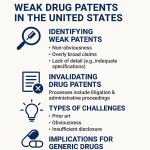
Inter partes review (IPR) lets almost anyone challenge an issued patent at the Patent Trial and Appeal Board (PTAB) instead of in federal court, using a lower evidentiary bar and a faster clock. Since 2012, IPR has cancelled patents that blocked biosimilar and generic competition and cut branded drug revenue by a median of 79 percent within a year of invalidation, in one peer-reviewed study of biologic drugs.[4] It has also forced billion-dollar franchises such as Acorda’s Ampyra and Celgene’s Revlimid into public fights over patents once assumed to be settled. Then, in 2025 and 2026, the USPTO itself reversed course. It invented a new “settled expectations” doctrine that shields older patents from review and centralized every institution decision under one director.[5] The result is a system where the odds of a drug patent surviving a challenge, or even getting a hearing, can flip within months, not because the science changed, but because the agency did.
What Inter Partes Review Actually Does to a Drug Patent
The Leahy-Smith America Invents Act created inter partes review in 2011. Its IPR provisions took effect on September 16, 2012, giving any person other than the patent owner a way to ask the PTAB to cancel patent claims as anticipated or obvious over prior patents and printed publications.[6] It replaced, and mostly retired, the older and slower inter partes reexamination process. For a drug patent holder, this meant a new venue existed where a generic or biosimilar maker, a competitor, or a third party with no product at all could challenge patent validity years before a district court would reach the same question through Hatch-Waxman or biosimilar litigation.
The Legal Standard: Preponderance of Evidence, Not Clear and Convincing
District courts presume an issued patent is valid and require a challenger to prove invalidity by clear and convincing evidence. The PTAB uses a lower standard: preponderance of the evidence, the ordinary “more likely than not” bar used in most civil litigation.[5] That single difference in legal standard is a major reason IPR became a preferred venue for challenging weak drug patents rather than waiting for a Paragraph IV case to reach trial.
The Statutory Clock: Institution, Trial, and Final Written Decision Deadlines
The statute sets hard deadlines. The PTAB generally issues its institution decision within about six months of filing.[7] If it institutes, the board must issue a final written decision within one year of institution, extendable by up to six months for good cause under 35 U.S.C. § 316(a)(11).[8] Most IPRs run about eighteen months from petition filing to final written decision, start to finish.[7]
Cost Comparison: IPR vs. District Court Patent Litigation
USPTO filing fees for an IPR petition currently start at $23,750 for up to twenty challenged claims, with an additional $28,125 fee due if the board institutes review.[7] Full IPR proceedings, counsel included, typically run into the mid-six figures. A November 2025 analysis in Health Affairs Scholar, citing survey data from the American Intellectual Property Law Association, put the average cost of a life-sciences administrative patent challenge at about $725,000, resolved in about twelve months. It put the average cost of equivalent district court patent litigation at about $6.1 million, typically resolved over multiple years.[5]
Life-sciences administrative patent challenges cost roughly $725,000 and resolve in about a year, against roughly $6.1 million and multiple years for equivalent district court patent litigation, a cost gap of more than eight to one, according to a November 2025 analysis in Health Affairs Scholar citing AIPLA survey data.[5]
Patent-intelligence platforms such as DrugPatentWatch track this cost and timeline asymmetry at the individual patent-family level, flagging which Orange Book-listed patents on a given drug have already drawn IPR petitions, which survived, and which remain untested. For a brand team managing a patent thicket with a dozen or more Orange Book entries, that kind of per-patent visibility is the difference between reacting to a challenge and anticipating one.
The Five Findings That Matter
Bio/pharma petitions had the highest institution rate of any PTAB technology center in fiscal year 2024, 73 percent, despite making up only 6 percent of total petitions filed.[9]
Biosimilar manufacturers used IPR to invalidate 14 of 20 (70 percent) biologic patents they challenged between 2012 and 2021; brand manufacturers defending competing products used the same mechanism to invalidate 17 of 23 patents they challenged over the same period.[4]
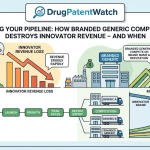
Branded biologic drug revenue fell by a median of 79 percent in the year after a patent covering that drug was invalidated through IPR.[4]
Between roughly May and September 2025, the USPTO granted 60 percent of 506 discretionary-denial requests, nearly triple the average annual rate of denials recorded from 2018 through 2021.[5]
From late October through late November 2025, after Director John Squires took personal control of institution decisions, the agency denied every one of the first 91 petitions it decided, a 0 percent institution rate.[3]
How the “Patent Death Squad” Era Began: Coalition for Affordable Drugs (2015-2017)
The clearest demonstration that IPR could move a drug patent’s fortunes overnight came not from a generic manufacturer but from a hedge fund.
Kyle Bass’s Activist Short Strategy, Explained
On February 10, 2015, hedge fund manager Kyle Bass, through an entity called the Coalition for Affordable Drugs, filed his first IPR petitions against a branded drug patent, targeting Acorda Therapeutics’ Ampyra.[14] Bass called it an “activist short strategy”: file a petition against a drug patent, publicize the challenge, and take a short position in the target’s stock, on the theory that markets would price in patent risk immediately, regardless of the eventual outcome at the PTAB.[23] By the campaign’s end, Bass and affiliated entities had filed 36 IPR petitions against patents held by 16 different pharmaceutical companies, including Acorda, Celgene, Shire, Biogen, Jazz Pharmaceuticals, and Pozen.[23]
Acorda Therapeutics and the Ampyra Stock Swings: A Timeline
Acorda’s experience shows how directly IPR news could move a single-product biotech’s valuation, sometimes within a trading day.
February 10, 2015: The Coalition for Affordable Drugs files its first IPR petitions against two Ampyra patents. Acorda shares fall almost 10 percent the day the challenge becomes public, in a company with roughly $1.5 billion in market capitalization at the time.[14]
August 24, 2015: The PTAB declines to institute review of either petition, ruling that the coalition had not shown the cited prior art was sufficiently publicly accessible.[14][15]
September 2015: The coalition files four new IPR petitions against four of Ampyra’s five Orange Book-listed patents.[16]
October 2015: Acorda settles separate Hatch-Waxman litigation with generic challenger Actavis, which agrees not to launch a generic Ampyra before 2027. Shares rise roughly 10 percent following the announcement.[17]
March 9, 2017: The PTAB issues a final written decision upholding all four challenged Ampyra patents. Acorda shares rise nearly 7 percent on the news.[18][19]
Calculated: across those three announcement days alone, IPR-related news moved Acorda’s stock price by a combined magnitude of roughly 27 percentage points, in a single-product biotech whose annual Ampyra sales were under $500 million.[14][18] The company’s clinical and commercial performance did not change on any of those three days. Only the market’s read on patent risk did.
Celgene and the Coalition: A Sanctions Fight Over Revlimid and Thalomid
Celgene became one of the coalition’s most contested targets, facing IPR petitions against patents covering Revlimid (lenalidomide), Thalomid (thalidomide), and Pomalyst (pomalidomide), including patents tied to Celgene’s Risk Evaluation and Mitigation Strategy program for those drugs.[20] On July 28, 2015, Celgene asked the PTAB to sanction the coalition, arguing the petitions were an abuse of the IPR process driven by a pure profit motive rather than a genuine patentability challenge.[20] In his opposition brief, Bass argued that an economic motive does not itself make a petition abusive, noting that Celgene priced Revlimid at roughly $580 per pill, more than $200,000 per patient annually.[20] The board denied Celgene’s sanctions motion in September 2015, allowing the underlying IPR petitions to proceed on their merits.[21] On October 27, 2015, the PTAB went further and instituted review of two of the challenged Celgene REMS patents, finding the coalition had shown a reasonable likelihood the patents were invalid.[22]
Win-Loss Record: How Many of Bass’s Patents Actually Fell?
By late October 2015, the board had decided 14 of the coalition’s petitions, splitting them evenly, seven instituted and seven denied, a 50 percent institution rate at that snapshot.[22] The final tally, compiled by Polsinelli in June 2017 after the campaign had largely concluded, found that about 68 percent of Bass’s attempts to invalidate a pharmaceutical patent were thwarted, 42 percent denied institution outright and another 26 percent instituted but ultimately found patentable.[23]
Shire’s Lialda: The First Final Written Decision, and a Loss for Bass
On October 5, 2016, the PTAB issued the first final written decision of the entire Bass campaign, upholding Shire’s only Orange Book-listed patent for Lialda, a mesalamine treatment for ulcerative colitis, after finding the coalition had not shown a motivation to combine the cited prior art references.[24]
Shire’s Gattex: A Win Sixteen Days Later
The outcome flipped fast. On October 21, 2016, just sixteen days after the Lialda ruling, the PTAB found most claims of Shire’s Gattex patent, covering a short bowel syndrome treatment acquired through Shire’s purchase of NPS Pharmaceuticals, invalid, putting Bass at one win against one loss in his two decided cases against the same company within the same month.[25]
Biogen’s Tecfidera patent also survived a Bass-filed IPR on the merits, one of several instances where an institution decision did not translate into a final invalidation.[27] Torrent Pharmaceuticals and Argentum Pharma, unrelated to Bass, separately used IPR in the same period to invalidate patents shielding Novartis’s Gilenya and Johnson & Johnson’s Zytiga, evidence that other, more conventional generic challengers succeeded with the same tool even as Bass’s activist-short campaign mostly did not.[26]
The Constitutional Gauntlet: Three Rulings That Defined How IPR Works
Before drug patent holders could fully assess IPR risk, the Supreme Court and Federal Circuit had to settle whether the process was constitutional at all, and how it had to operate procedurally.
Oil States Energy Services v. Greene’s Energy Group (2018): Is IPR Even Constitutional?
On April 24, 2018, the Supreme Court held 7-2 in Oil States Energy Services, LLC v. Greene’s Energy Group, LLC, 584 U.S. 325 (2018), that inter partes review does not violate Article III of the Constitution or the Seventh Amendment right to a jury trial.[31] Writing for the majority, Justice Thomas reasoned that granting a patent is an exercise of a public franchise, so Congress may authorize an executive-branch agency to reconsider that grant under the public-rights doctrine without offending Article III.[32] The ruling foreclosed the broadest possible attack on IPR: that the process was unconstitutional on its face, for every type of patent, including drug patents.
SAS Institute v. Iancu (2018): All Claims or None
The same month, in SAS Institute Inc. v. Iancu, the Supreme Court held 5-4 that once the PTAB institutes an IPR, it must issue a final written decision addressing every claim the petitioner challenged, not only the claims the board found likely to be unpatentable at the institution stage.[34] Before SAS, the board often instituted review on some claims while screening out others, a partial-institution practice the Court held the statute’s text did not authorize.[34] For drug patent holders, the practical effect was binary institution decisions: a petition covering an entire Orange Book patent family now stands or falls as a whole at the institution gate, raising the stakes of that single early decision.
Celgene Corp. v. Peter (2019): Is Cancelling a Pre-AIA Patent a Taking?
The same Celgene REMS patents that the Bass coalition had challenged in 2015 eventually reached the Federal Circuit as Celgene Corp. v. Peter, 931 F.3d 1342 (Fed. Cir. 2019), decided July 30, 2019.[33] Celgene argued that applying IPR retroactively to patents issued before the AIA’s relevant provisions took effect on September 16, 2012, amounted to an unconstitutional taking of property without just compensation under the Fifth Amendment.[6] The Federal Circuit rejected that argument, holding that patent owners have always held their grants subject to a possibility of administrative reconsideration, and that IPR was sufficiently similar in kind to the ex parte and inter partes reexamination procedures that existed when older patents were granted.[6] The ruling closed off a second broad challenge to IPR’s legitimacy, this time specific to the large population of drug patents issued before 2012 that remained in force and Orange Book-listed years later.
The Restasis Gambit: Can a Drug Patent Hide Behind Tribal Sovereign Immunity?
If Kyle Bass showed how a challenger could weaponize IPR, Allergan showed how far a patent holder would go to escape it.
Allergan’s Deal With the Saint Regis Mohawk Tribe
Mylan Pharmaceuticals, joined by Teva Pharmaceuticals and Akorn, petitioned for IPR of six Allergan patents covering Restasis (cyclosporine ophthalmic emulsion), and the PTAB instituted review and scheduled a consolidated hearing.[30] Before that hearing, on September 8, 2017, Allergan recorded a patent assignment transferring the six Restasis patents to the Saint Regis Mohawk Tribe, then licensed them back.[28][29] The Tribe moved to terminate the IPRs on the ground that it was entitled to assert tribal sovereign immunity, and Allergan separately moved to withdraw from the proceedings.[30]
Saint Regis Mohawk Tribe v. Mylan Pharmaceuticals: What the Federal Circuit Decided
The PTAB denied both motions, and the Federal Circuit affirmed in Saint Regis Mohawk Tribe v. Mylan Pharmaceuticals, Inc., 896 F.3d 1322 (Fed. Cir. 2018), decided July 20, 2018.[29][30] Writing for a panel that included Judges Dyk and Reyna, Judge Moore reasoned that IPR is more like an agency’s reconsideration of its own grant than a private civil suit between two parties, a category tribal sovereign immunity does not cover.[29] The Federal Circuit later denied a petition for rehearing en banc, and the Supreme Court declined to take up the case, leaving the Federal Circuit’s ruling as the final word.[29]
Why This Ruling Closed the Door on Sovereign-Immunity Patent Shields
The decision mattered beyond Restasis because it foreclosed an entire category of defensive strategy: assigning patents to a sovereign entity in an attempt to place them outside PTAB jurisdiction. After Saint Regis, no brand manufacturer has successfully used that structure to block an IPR petition against a drug patent.
What the Data Shows: IPR’s Real Impact on Biologic and Small-Molecule Drug Prices
43 Biologic Patent Challenges, 2012-2021: What Happened to the Patents
A 2025 Health Affairs study by Raymakers, Van de Wiele, Kesselheim, and Tu identified 43 IPR challenges against biologic drug patents that reached final written decisions between 2012 and 2021.[4] The study separated two distinct categories of challenger. Biosimilar manufacturers seeking to enter the market for an off-patent biologic brought 20 of those challenges and invalidated 14 of the patents at issue, a 70 percent success rate on challenged patents.[4] Competing brand manufacturers defending their own products in the same therapeutic class brought 23 challenges and invalidated 17 patents, a 74 percent success rate.[4]
The 79 Percent Revenue Drop: What Happens After a Drug Patent Falls
The same study measured the commercial consequence of invalidation: branded biologic revenue fell by a median of 79 percent within one year of a patent being invalidated through IPR.[4] The follow-up Health Affairs Scholar analysis noted that similar, though not identical, revenue declines have been documented for small-molecule drugs following IPR invalidation as well.[5]
Orange Book Patents at the PTAB: A Small but Consequential Slice
Orange Book-listed patents make up a small fraction of all patents challenged at the PTAB. A 2024 USPTO study, cumulative from fiscal year 2013, found that only 3 percent of all AIA petitions target Orange Book patents.[11] On a claim-by-claim basis, 17 percent of all challenged Orange Book patent claims were found unpatentable across the life of the program, rising to 33 percent among claims that reached institution.[11] Biologic patent claims fared worse once instituted: a companion 2023 update to the same USPTO study found 25 percent of challenged biologic claims were found unpatentable, rising to 57 percent of instituted biologic claims.[12]
Claim-by-Claim Unpatentability Rates for Orange Book and Biologic Patents
Metric
Figure
Source
Orange Book claims challenged, found unpatentable (all petitions)
17%
USPTO Orange Book/biologic patent study, via Finnegan[11]
Orange Book claims found unpatentable (instituted claims only)
33%
USPTO Orange Book/biologic patent study, via Finnegan[11]
Biologic claims challenged, found unpatentable (all petitions)
25%
USPTO Orange Book/biologic patent study, via Foley & Lardner[12]
Biologic claims found unpatentable (instituted claims only)
57%
USPTO Orange Book/biologic patent study, via Foley & Lardner[12]
Median branded biologic revenue decline, year after invalidation
79%
Raymakers et al., Health Affairs 2025[4]
DrugPatentWatch’s own analysis of this same USPTO dataset frames the practical takeaway for brand teams: once a biologic IPR clears institution, a large share of its claims tend to fall, so the institution decision itself, not the eventual final written decision, is often the moment that matters most for a biosimilar-exposed patent family.[13]
Why Bio/Pharma Petitions Have the Highest Institution Rate of Any Technology Center
PTAB trial statistics for fiscal year 2024 show bio/pharma petitions made up only about 6 percent of the 1,288 total petitions filed that year, but those petitions were instituted at a 73 percent rate, the highest of any PTAB technology center, ahead of electrical/computer (69 percent), mechanical and business methods (66 percent), and chemical (46 percent).[9] Read one way, this means drug patent challenges are relatively rare compared to software and electronics patents. Read another way, it means that when a challenger does bring a life-sciences IPR petition, it tends to be well-prepared and well-targeted, clearing the institution bar more often than the average petition across every other field.
The Game Changes Overnight: Inside the 2025-2026 Institution-Rate Collapse
Everything described so far, the Bass campaign, the Oil States and SAS Institute rulings, the Saint Regis sovereign-immunity fight, the biosimilar invalidation data, describes an IPR system that, for over a decade, generally favored challengers relative to district court litigation. Then, within roughly nine months, the USPTO rebuilt the system from the inside, without a single new statute.
A Timeline of the 2025 Policy Reversals
January 20, 2025: Coke Morgan Stewart is sworn in as Acting Director of the USPTO.[5]
February 2025: Stewart rescinds prior guidance that had narrowed the use of discretionary denials tied to parallel district court litigation, reopening the door to more aggressive application of the multi-factor test set out in Apple Inc. v. Fintiv, Inc., IPR2020-00019, Paper 11 (PTAB Mar. 20, 2020).[5]
March 26, 2025: The USPTO issues its “Interim Processes for PTAB Workload Management” memorandum, creating a bifurcated procedure in which patent owners can request discretionary denial directly from the Director before any panel reaches the merits, and introducing “settled expectations,” meaning how long a patent has been in force, as an explicit factor weighing against institution.[5]
June 6, 2025: In iRhythm Technologies, Inc. v. Welch Allyn, Inc., the acting Director issues the first decision to deny institution primarily on settled-expectations grounds, even though the traditional Fintiv factors favored allowing the case to proceed.[5]
September 1, 2025: The USPTO cuts the allowable length of discretionary-denial briefing by roughly 60 percent, from about 14,000 words to about 5,000 words, or roughly 20 pages.[5]
September 18, 2025: The Senate confirms John Squires as USPTO Director.[2]
October 17, 2025: Squires issues an open letter, “Bringing the USPTO Back to the Future,” announcing that he will personally decide every IPR and post-grant review institution question, effective October 20, 2025.[2]
October 31, 2025: Squires issues his first “summary notice,” denying institution of 13 petitions at once with no stated reasoning for any of them.[1]
November 23, 2025: Having decided 91 petitions since taking personal control, Squires has denied every one, a 0 percent institution rate.[3]
The “Settled Expectations” Doctrine: A Six-Year Shield for Older Patents
The core legal innovation of this period is the settled-expectations doctrine. Under it, a patent that has been in force for roughly six years or more is presumed to have generated a reasonable expectation, on the part of its owner, that it will no longer face administrative challenge, and that expectation alone can justify denying institution regardless of the technical merit of the challenge.[5] The doctrine did not exist in any USPTO guidance before 2025.[5] According to the November 2025 Health Affairs Scholar analysis, the average patent age at the time of a settled-expectations denial was 5.6 years for drug patents and 7.5 years for non-drug patents.[5]
How the Doctrine Was Applied to Drug Patents: The Numbers
Of 506 discretionary-denial requests decided from roughly May through September 2025, 304 were granted, a 60 percent grant rate, nearly triple the average of about 105 total discretionary denials per year recorded from 2018 through 2021.[5] Drug patents made up 42 of those 506 decisions, about 8 percent of the total, and 14 of the 42 (33 percent) resulted in a discretionary denial, a lower share than the 60 percent rate across all technology areas in the same dataset.[5] Settled expectations was cited as a rationale in 58 percent of all granted denials, and in 21 percent of the drug-patent denials specifically.[5]
Director Squires Takes Personal Control: The October 2025 Memo
Squires’ October 17, 2025 letter went further than Stewart’s earlier reforms by removing PTAB panels from the institution decision entirely, concentrating that authority in a single official.[2] Because institution decisions are not ordinarily subject to judicial review under the statute, and the Federal Circuit held in a trio of November 6, 2025 rulings that discretionary denials specifically are unreviewable on appeal, that concentration of authority is effectively insulated from the courts.[5]
Zero for Ninety-One, With No Explanations
In the five weeks after the October 17 memo took effect, Squires issued decisions on petition after petition, mostly through brief summary notices listing case numbers by disposition category with no individualized reasoning attached. By November 23, 2025, he had decided 91 petitions and denied every one, a 0 percent institution rate, though 31 additional cases remained under review at that point.[3]
From 65 Percent to 37 Percent: Charting the Institution-Rate Freefall
Zooming out from any single decision, the USPTO’s own disclosures show the overall institution rate across all technology areas falling from roughly 65 percent in October 2024 to roughly 37 percent by February 2026, a 43 percent relative decline in sixteen months.[3] Full-year PTAB statistics confirm the direction of that trend at each checkpoint along the way. Fiscal year 2024 closed with 1,288 petitions filed and technology-specific institution rates as high as 73 percent for bio/pharma.[9] Fiscal year 2025 closed at 50 percent overall, a decline the PTAB Law Blog’s own analysis pegged at roughly 10 percentage points from the prior year, split between a 60 percent discretionary-denial grant rate on referred cases and a 66 percent institution rate on the petitions the Director allowed to reach a panel.[10]
Period
Approximate institution rate
Governing policy
October 2024
~65% (all technologies)
Pre-reform PTAB panel practice[3]
FY2024 (full year), bio/pharma
73%
Pre-reform PTAB panel practice[9]
FY2025 (full year), all technologies
50%
Fintiv rescission; settled-expectations memo[10]
Late Oct.-Nov. 23, 2025 (first 91 decisions)
0%
Director-centralized institution authority[3]
February 2026
~37% (all technologies)
Director-centralized institution authority[3]
Calculated: the drop from roughly 65 percent to roughly 37 percent between October 2024 and February 2026 represents a 28-percentage-point absolute decline and a 43 percent relative reduction in the odds that any given petition, drug patent or otherwise, is heard on the merits at all.[3]
What This Means for Brand Manufacturers
For a brand manufacturer holding an Orange Book patent thicket built up over a decade or more, the settled-expectations doctrine functions as an unplanned extension of practical exclusivity. A secondary patent issued seven or eight years ago, once a plausible IPR target, now carries a strong argument against institution simply because of its age, independent of whether the underlying claims would actually survive a validity challenge on the merits.[5] That does not make the patent safe from every avenue of attack. District court litigation under Hatch-Waxman or the Biologics Price Competition and Innovation Act remains available to generic and biosimilar challengers regardless of what happens at the PTAB, and it now carries relatively more weight precisely because IPR has become less predictable.
What This Means for Generic and Biosimilar Challengers
For challengers, the lesson from the 2025-2026 reforms is timing. In the Health Affairs Scholar dataset, “early challenge to patents” was cited as a reason for rejecting a discretionary-denial request in 68 percent of the drug-patent cases where the challenger won that argument, nearly the mirror image of the settled-expectations pattern working against older patents.[5] A biosimilar developer that files an IPR petition against a newly listed Orange Book patent, well before it accumulates years of “settled expectations,” faces meaningfully better institution odds under the current framework than one that waits.
An Original Taxonomy: Four Categories of IPR Volatility Risk for Drug Patent Portfolios
Drawing on the documented mechanisms described above, drug patents can be sorted into four risk categories based on how exposed they are to a sudden shift in IPR institution odds. This classification is an original framework built for this analysis, not an established PTAB or industry category, meant to help portfolio teams triage where policy volatility matters most.
Category One: Young, Recently Listed Orange Book Patents
Patents listed within roughly the last five years carry the highest exposure to challenge under the current framework, since they cannot yet claim settled expectations and remain squarely within the window where “early challenge” arguments favor institution.[5]
Category Two: Aging Secondary and Method-of-Use Patents
Patents in force for roughly six years or more, particularly secondary patents covering formulations, methods of use, or delivery systems rather than the core active ingredient, are the patents most likely to benefit from the settled-expectations doctrine as currently applied.[5]
Category Three: Biologics With Active Biosimilar Competition
Biologic patents facing an identified biosimilar competitor sit in the highest-consequence category regardless of age, since the historical data show a 70 percent invalidation rate on biosimilar-initiated challenges and a 79 percent median revenue decline once invalidation occurs.[4] A reduced institution rate does not eliminate this exposure; it only changes the odds of the fight happening at all.
Category Four: Patents With Parallel District Court Litigation
Patents already in active Hatch-Waxman or BPCIA litigation face discretionary-denial arguments tied to forum overlap and trial-date timing, the single most common basis cited for granting a discretionary denial across all technology areas in the Health Affairs Scholar dataset.[5]
How Litigation Funders and Short Sellers Read the New PTAB
Would a Kyle Bass Strategy Work in 2026?
The Coalition for Affordable Drugs model depended on two things: a reasonable chance of institution, and a market willing to price in that risk immediately. The second condition still holds. Acorda’s 2015-2017 stock swings show how sharply single-product biotechs react to IPR news, and nothing about the 2025-2026 reforms changes that market behavior. The first condition is now much weaker. With drug-adjacent petitions facing settled-expectations denials at meaningfully higher rates than in the Bass era, and with institution decisions increasingly issued as unexplained summary notices, a hedge fund replicating the 2015 playbook today would face materially worse odds of even getting a hearing, let alone a favorable final written decision, than Bass did a decade earlier.[3][5]
Methodology
This analysis draws on primary sources wherever available: Supreme Court and Federal Circuit opinions, the text of 35 U.S.C. §§ 311, 314, and 316, SEC filings, and PTAB decisions and director notices, supplemented by peer-reviewed analyses published in Health Affairs and Health Affairs Scholar, and by PTAB trial-statistics reporting from law firms and legal publications that track USPTO disclosures. Institution-rate figures for 2024 through early 2026 are drawn from the USPTO’s own periodic public disclosures as reported by IP-focused legal publications; the agency does not appear to have published a single consolidated dataset covering the full period, so figures for different sub-periods come from different reporting checkpoints and should be read as directional rather than as one continuous series. Dollar and percentage figures attributed to a specific study are reported as that study presented them; figures explicitly labeled “calculated” in this article are original arithmetic performed on reported figures, not independently reported statistics. Case selection favored disputes with documented outcomes, official filings, or peer-reviewed data behind every figure; claims that could not be re-confirmed against a specific, checkable source were excluded rather than presented as fact.
What Happens Next: Litigation Challenging the New Discretionary-Denial Regime
The centralization of institution authority has already drawn legal challenge. Multiple parties, including Instacart in a widely covered mandamus petition, have gone to federal court arguing that the USPTO’s expanded use of discretionary denial, including the settled-expectations doctrine, exceeds the agency’s statutory authority.[5] On November 6, 2025, the Federal Circuit ruled in a trio of cases that discretionary denials of IPR institution are not reviewable on appeal, a significant setback for that litigation strategy and a reminder of how insulated the current framework is from ordinary judicial checks.[5] That insulation cuts both ways. A policy built entirely on agency discretion, with no statutory anchor, can be unwound by a future director as quickly as it was built by this one.
Key Takeaways
Inter partes review operates under a preponderance-of-evidence standard and a statutory 12-to-18-month clock, both structurally different from district court patent litigation, which uses a clear-and-convincing standard and typically runs for years.[5][8]
Kyle Bass’s Coalition for Affordable Drugs filed 36 IPR petitions against 16 pharmaceutical companies from 2015 to 2017; about 68 percent of those challenges were thwarted, but the campaign still produced measurable, repeated stock-price swings in targets like Acorda Therapeutics.[14][18][23]
Three rulings between 2018 and 2019, Oil States, SAS Institute, and Celgene v. Peter, settled IPR’s constitutionality and procedural mechanics; a fourth, Saint Regis Mohawk Tribe v. Mylan, closed off tribal sovereign immunity as a defensive shield for drug patents.[29][31][33][34]
Biosimilar-initiated IPR challenges invalidated 70 percent of the biologic patents they targeted between 2012 and 2021, and branded revenue fell a median of 79 percent within a year of invalidation.[4]
Beginning in 2025, the USPTO introduced a “settled expectations” doctrine that discretionarily denies institution for patents roughly six years or older, and by late October 2025 the newly confirmed director had centralized all institution decisions under his own office, driving the overall institution rate from roughly 65 percent to roughly 37 percent within about sixteen months.[2][3][5]
None of the 2025-2026 changes required new legislation; they were implemented entirely through USPTO director memoranda and individual case decisions, which means a future director could reverse them just as quickly.[2][5]
FAQ
What is the difference between inter partes review and Hatch-Waxman Paragraph IV litigation?
IPR is an administrative proceeding at the USPTO’s Patent Trial and Appeal Board that can only challenge patent validity based on prior patents and printed publications, using a preponderance-of-evidence standard. Paragraph IV litigation under Hatch-Waxman happens in federal district court, can raise a broader range of invalidity and non-infringement arguments, and requires clear and convincing evidence to invalidate a patent, a materially higher bar for the challenger.[5]
Can a drug patent be challenged in both IPR and district court at the same time?
Yes, and this overlap is now one of the most heavily weighted factors in discretionary-denial decisions. Timing relative to an expected district court trial date was cited in 61 percent of all granted discretionary denials in the Health Affairs Scholar’s 2025 dataset, the single most common rationale recorded.[5]
What does “settled expectations” mean in a PTAB decision?
It is a discretionary-denial rationale, introduced by USPTO guidance in March 2025, holding that a patent owner develops a reasonable expectation of continued validity once a patent has been in force for a substantial period, generally around six years, and that this expectation alone can justify denying an IPR petition regardless of the challenge’s technical merit.[5]
How long does an IPR take from filing to final decision?
Under 35 U.S.C. § 316(a)(11), the PTAB must issue a final written decision within one year of institution, extendable by up to six months for good cause. Combined with the roughly six-month period leading up to institution, most IPRs run about eighteen months from petition filing to final written decision.[7][8]
Did the Supreme Court rule that inter partes review is constitutional?
Yes. In Oil States Energy Services, LLC v. Greene’s Energy Group, LLC, 584 U.S. 325 (2018), the Supreme Court held 7-2 that IPR does not violate Article III of the Constitution or the Seventh Amendment right to a jury trial, because patent grants are a public franchise subject to executive-branch reconsideration.[31]
Can a company shield a drug patent from IPR by transferring it to a sovereign entity?
No. In Saint Regis Mohawk Tribe v. Mylan Pharmaceuticals, Inc., 896 F.3d 1322 (Fed. Cir. 2018), the Federal Circuit held that tribal sovereign immunity does not apply to IPR proceedings, following Allergan’s attempt to shield six Restasis patents by assigning them to the Saint Regis Mohawk Tribe. The Federal Circuit denied rehearing en banc, and the Supreme Court declined to review the decision.[29]
How much does an IPR petition cost compared to district court litigation?
USPTO filing fees for an IPR petition currently start at $23,750 for up to twenty claims, plus a $28,125 post-institution fee. Including counsel, a full life-sciences IPR proceeding averages roughly $725,000 and about twelve months, compared to roughly $6.1 million and multiple years for equivalent district court patent litigation.[5][7]
What happens to a branded drug’s revenue after its patent is invalidated through IPR?
For biologic drugs specifically, a 2025 Health Affairs study found branded revenue fell by a median of 79 percent within one year of patent invalidation via IPR, with similar though not identical patterns documented for small-molecule drugs.[4][5]
Who was Kyle Bass and why did he file IPR petitions against drug patents?
Kyle Bass is a hedge fund manager who, through the Coalition for Affordable Drugs, filed 36 IPR petitions against patents held by 16 pharmaceutical companies between 2015 and 2017, while holding short positions in some of the targeted companies’ stock, on the theory that publicizing an IPR filing would move share prices regardless of the ultimate outcome at the PTAB.[14][23]
Is the USPTO’s current institution rate lower than it was a year ago?
Yes. Based on the agency’s own public disclosures, the overall IPR institution rate fell from roughly 65 percent in October 2024 to roughly 37 percent by February 2026, a 43 percent relative decline, driven primarily by the settled-expectations doctrine and the October 2025 centralization of institution authority under Director John Squires.[2][3]
References
Gemini Law. (2025, November 11). Evaluating the USPTO director’s first summary denial of IPR petitions. https://geminilaw.com/2025/11/11/evaluating-the-uspto-directors-first-summary-denial-of-ipr-petitions/
Crouch, D. (2025, October 17). Unexplained and unreviewable: The new normal for IPR institution. Patently-O. https://patentlyo.com/patent/2025/10/unexplained-unreviewable-institution.html
IPWatchdog. (2026, April 8). USPTO stats show IPR institution rate has plummeted by 43%. https://ipwatchdog.com/2026/04/08/uspto-stats-show-ipr-institution-rate-plummeted/
Raymakers, A. J. N., Van de Wiele, V. L., Kesselheim, A. S., & Tu, S. S. (2025). Changes in biologic drug revenues after administrative patent challenges. Health Affairs, 44(3), 274-279. https://doi.org/10.1377/hlthaff.2024.00504
Tu, S. S., Rai, A., & Kesselheim, A. S. (2025). Recent changes in discretionary denials of drug patent challenges. Health Affairs Scholar, 3(11), qxaf215. https://doi.org/10.1093/haschl/qxaf215
National Law Review. (2019, August 9). Give and take: IPR of pre-AIA patent is not an unconstitutional taking [discussing Celgene Corp. v. Peter, 931 F.3d 1342 (Fed. Cir. 2019)]. https://natlawreview.com/article/give-and-take-ipr-pre-aia-patent-not-unconstitutional-taking
PatentLaw.us. (2026, June 26). Inter partes review timeline: How the IPR process works. https://www.patentlaw.us/the-inter-partes-review-process-and-timeline-step-by-step/
Cornell Law School, Legal Information Institute. 35 U.S. Code § 316 – Conduct of inter partes review. https://www.law.cornell.edu/uscode/text/35/316
PTAB Law Blog. (2025, January 6). Trial statistics trends at the PTAB: 2024 edition. https://www.ptablaw.com/2025/01/06/trial-statistics-trends-at-the-ptab-2024-edition/
PTAB Law Blog. (2026, January 16). Trial statistics trends at the PTAB: 2025 edition. https://www.ptablaw.com/2026/01/16/trial-statistics-trends-at-the-ptab-2025-edition/
Finnegan, Henderson, Farabow, Garrett & Dunner, LLP. Trends in PTAB trials involving drug and biologic patents. https://www.finnegan.com/en/insights/blogs/at-the-ptab-blog/trends-in-ptab-trials-involving-drug-and-biologic-patents.html
Foley & Lardner LLP. (2023, August 7). Trends in Orange Book and biologic PTAB trials. https://www.foley.com/en/insights/publications/2023/08/trends-orange-book-biologic-ptab-trials
DrugPatentWatch. (2025, July 15). Insights into shifting dynamics: Orange Book and biologic PTAB trends. https://www.drugpatentwatch.com/blog/insights-into-shifting-dynamics-orange-book-and-biologic-ptab-trends/
National Law Review. (2015, August 26). Kyle Bass loses round 1 of IPR attack against pharma/biotech patents. https://natlawreview.com/article/kyle-bass-loses-round-1-ipr-attack-against-pharmabiotech-patents
Acorda Therapeutics, Inc. (2015, August 24). Form 8-K, Exhibit 99.1. U.S. Securities and Exchange Commission. https://www.sec.gov/Archives/edgar/data/0001008848/000119312515300630/d68349dex991.htm
Acorda Therapeutics. (2015, October 22). Acorda provides financial and pipeline update for 2015 third quarter. Business Wire. https://www.businesswire.com/news/home/20151022005477/en/Acorda-Financial-Pipeline-Update-2015-Quarter
Seeking Alpha. (2015, October 7). Acorda Therapeutics: Short squeeze set to begin as Ampyra patent challenges resolve. https://seekingalpha.com/article/3556346-acorda-therapeutics-short-squeeze-set-to-begin-ampyra-patent-challenges-resolve
Zacks / Yahoo Finance. (2017, March 13). Acorda’s four Ampyra patents upheld by PTAB, shares rise. https://finance.yahoo.com/news/acordas-four-ampyra-patents-upheld-134001478.html
Lexology. (2017, March 15). PTAB upholds Acorda’s Ampyra patents, rejecting challenges based on the inventors’ own work. https://www.lexology.com/library/detail.aspx?g=a816e563-eb68-4e45-ade2-ebd747900329
Fish & Richardson’s Post-Grant Practice. Bass opposes sanctions and defends his actions at the PTAB. https://fishpostgrant.com/alert/bass-opposes-sanctions-and-defends-his-actions-at-the-ptab/
National Law Review. (2015). Coalition for Affordable Drugs VI v. Celgene Corporation: Denying motion for sanctions, IPR2015-01092. https://natlawreview.com/article/coalition-affordable-drugs-vi-v-celgene-corporation-denying-motion-sanctions-ipr2015
Managing Intellectual Property. Celgene win leaves Bass even in PTAB institution game. https://www.managingip.com/article/2a5bugryp18sj8vowx3i8/celgene-win-leaves-bass-even-in-ptab-institution-game
Polsinelli on Post-Grant. (2017, June 2). Attack on pharma patents: Checking in on the Kyle Bass IPRs. https://www.polsinellionpostgrant.com/blog/2017/6/2/attack-on-pharma-patents-checking-in-on-the-kyle-bass-iprs
Foley & Lardner LLP. (2016, October 11). PTAB upholds Lialda patent over Kyle Bass IPR challenge. https://www.foley.com/insights/publications/2016/10/ptab-upholds-lialda-patent-over-kyle-bass-ipr-chal/
Fierce Pharma. (2018, April 25). In a blow for pharma, Supreme Court upholds the hated IPR patent challenge. https://www.fiercepharma.com/pharma/iprs-hated-by-branded-drugmakers-deemed-constitutional-at-supreme-court
Wikipedia. The St. Regis Mohawk Tribe and Restasis patent. https://en.wikipedia.org/wiki/The_St._Regis_Mohawk_Tribe_and_Restasis_patent
Patent Docs. (2018, July 22). Saint Regis Mohawk Tribe v. Mylan Pharmaceuticals Inc. (Fed. Cir. 2018). https://patentdocs.org/2018/07/22/saint-regis-mohawk-tribe-v-mylan-pharmaceuticals-inc-fed-cir-2018/
Justia. Saint Regis Mohawk Tribe v. Mylan Pharmaceuticals Inc., No. 18-1638 (Fed. Cir. 2018). https://law.justia.com/cases/federal/appellate-courts/cafc/18-1638/18-1638-2018-07-20.html
Wikipedia. Oil States Energy Services, LLC v. Greene’s Energy Group, LLC. https://en.wikipedia.org/wiki/Oil_States_Energy_Services,_LLC_v._Greene%27s_Energy_Group,_LLC
Stanford Law School. (2018, November 27). Constitutional separation of powers and patents of invention: Oil States Energy Services, LLC v. Greene’s Energy Group, LLC. https://law.stanford.edu/press/constitutional-separation-of-powers-patents-of-invention-oil-states-energy-services-llc-v-greenes-energy-group-llc/
IPWatchdog. (2019, November 21). Celgene Corp. v. Peter: Should the Federal Circuit leave PTAB ‘patent takings’ issue for another day? https://ipwatchdog.com/2019/11/21/celgene-corp-v-peter-federal-circuit-leave-ptab-patent-takings-issue-another-day/
Perkins Coie LLP. (2019, July 18). The ripple effect of SAS Institute v. Iancu on IPR practice. https://perkinscoie.com/insights/article/ripple-effect-sas-institute-v-iancu-ipr-practice