1. Why Risk Management Now Determines Competitive Position
Generic drugs fill 91% of all prescriptions dispensed in the United States while accounting for roughly 18% of total U.S. prescription drug spending. Over a recent ten-year span, generics and biosimilars saved the American healthcare system an estimated $3.1 trillion, with approximately $373 billion in documented savings in 2021 alone. The arithmetic of that gap — massive volume at compressed price — defines both the opportunity and the structural fragility of the generic model.
The industry’s operating logic has shifted. The early decades of the Hatch-Waxman era rewarded companies that could prove bioequivalence quickly and cheaply for oral solid dosage forms of mature molecules. That era is not over, but the frontier has moved. The pipeline of straightforward IR tablets nearing patent expiry has thinned. What remains is harder: complex injectables, topicals with locally-acting pathways, 505(b)(2) products, and biologics. Each of these categories carries a pharmacovigilance profile materially more demanding than an oral tablet of atorvastatin.
At the same time, regulatory expectations have escalated in areas that run directly through every company’s P&L. The nitrosamine crisis, which began with valsartan recalls in 2018 and metformin scrutiny in 2020, cost the industry hundreds of millions in remediation, market withdrawals, and supply disruption. That crisis did not originate in clinical safety failures; it originated in process chemistry and impurity specification gaps — exactly the domain the RMP’s Safety Specification is designed to capture. Companies with mature, forward-looking RMPs had the analytical frameworks in place to respond faster. Those without them improvised at significant cost.
The implication is direct: a generic manufacturer’s risk management capability is not a compliance function staffed by regulators-in-waiting. It is a core operational and strategic competency whose quality predicts regulatory cycle times, litigation exposure, supply chain stability, and ultimately, market share.
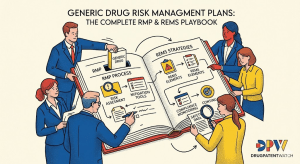
This guide is built for the people who understand that and need the technical depth to act on it. It covers both dominant global frameworks — the EMA’s Risk Management Plan and the FDA’s Risk Evaluation and Mitigation Strategy — with full specificity for the generic drug context, including the IP and anti-competitive dimensions that most regulatory guides ignore.
Key Takeaways: Section 1
The economic model of generic pharmaceuticals — high volume, compressed margins — makes efficient and proactive risk management a direct determinant of financial sustainability. The nitrosamine crisis demonstrated that RMP-adjacent gaps in CMC documentation carry costs that dwarf any savings from abbreviated regulatory submissions. Companies that treat pharmacovigilance as a compliance cost center, rather than a strategic capability, are systematically underpricing their own operational risk.
2. The IP Architecture Behind Every RMP: What Patent Claims Are Actually at Stake
Before addressing how to build a Risk Management Plan, teams need to understand the intellectual property landscape that surrounds the reference product — because that landscape directly determines what the RMP must cover, what it can streamline, and where it creates new legal exposure.
The Orange Book and the ‘505 Filing Architecture
For U.S. generics, the Orange Book (officially, the FDA’s ‘Approved Drug Products with Therapeutic Equivalence Evaluations’) is the first stop. Every patent listed in the Orange Book for the reference listed drug (RLD) must be addressed via one of four certification options in the ANDA: Paragraph I (no patent listed), Paragraph II (expired), Paragraph III (wait for expiry), or Paragraph IV (patent invalid or not infringed). A Paragraph IV filing triggers automatic 30-month stay of FDA approval if the brand holder sues within 45 days. The first ANDA filer with a Paragraph IV certification earns 180-day market exclusivity — an economic prize that can be worth hundreds of millions for a high-volume product.
What many teams miss is that the Orange Book contains only formulation, compound, and method-of-use patents — not process patents, device patents, or, critically, REMS-related patents. The last category is where brand manufacturers have created a new layer of IP protection.
REMS Patents: The Hidden IP Moat
A 2024 study published in PMC’s health policy literature documented an accelerating trend: brand manufacturers are filing patents not on the drug’s chemistry or its clinical mechanisms, but on the systems, methods, and software required to administer a REMS with ETASU. These patents can cover elements such as the prescriber certification database, the patient enrollment workflow, the pharmacist verification algorithm, and the data integration architecture of a restricted distribution system.
Consider the practical consequence. A generic manufacturer that successfully proves bioequivalence and obtains FDA approval still cannot enter the market until it either (a) joins the brand’s single shared REMS system — which the brand controls and can delay through IP licensing demands — or (b) demonstrates to FDA that a waiver of the single shared system requirement is justified. The existence of a REMS-process patent gives the brand a facially legitimate reason to refuse licensing at commercially reasonable terms, turning a regulatory mechanism into an extended exclusivity device.
This IP architecture does not appear in standard patent clearance searches that focus on the Orange Book. An ANDA litigation team that hasn’t specifically searched for REMS-related process and system patents will discover this risk after filing — at considerable cost.
Formulation Patent Thickets and the RMP Safety Specification
Beyond REMS IP, the formulation patent estate around a complex product tells a regulatory story. When an innovator has filed dozens of patents covering specific excipient ratios, particle size distributions, coating compositions, and stabilizer systems, that density signals two things simultaneously.
First, the RLD’s safety profile likely includes excipient-related risks that the innovator has spent years characterizing. A thorough RMP Safety Specification for the brand will reflect this — and a generic applicant must understand those risks fully before drafting its own safety section. Second, if the generic manufacturer has engineered around those formulation patents, its product has a different excipient composition than the brand. Different excipients means a different impurity profile, different leachables potential from the container-closure system, and potentially different rates of hypersensitivity reactions in susceptible populations. Every one of those differences is a candidate for the ‘Important Potential Risks’ section of the generic’s RMP — or at minimum, for a documented scientific justification as to why no new risk has been introduced.
IP Valuation Framework for RMP-Adjacent Assets
For portfolio managers and M&A analysts assessing a generic drug program, the IP-adjusted value of the RMP capability itself deserves a line item. A company with a documented, defensible pharmacovigilance system and a history of well-executed RMP submissions commands a premium in licensing negotiations and asset acquisitions. Conversely, a company with unresolved REMS litigation exposure, outstanding FDA questions on its Safety Specification, or a history of PSUR deficiencies carries liability that reduces ANDA asset value by a quantifiable amount.
The calculation is not complex: estimated litigation costs for REMS sample access disputes run $5M to $30M per product, based on publicly filed cases under the CREATES Act. Add a 12-to-36 month delay multiplied by the product’s projected monthly net revenue, and the REMS-related discount on an ANDA asset value becomes material.
Key Takeaways: Section 2
REMS-process patents are an undercovered risk in standard patent clearance work. A complete IP landscape assessment for any REMS product must cover the Orange Book, the comprehensive patent database, and a specific search for system and method patents covering REMS administration. The formulation patent density around a reference product is also a leading indicator of how complex the generic’s Safety Specification will be. IP counsel and regulatory teams must align on this analysis at the product selection stage, not after ANDA filing.
Investment Strategy Note
When valuing an ANDA portfolio with REMS-encumbered assets, model two scenarios: cooperative shared-system REMS (12-18 months to market from approval) and adversarial REMS (24-48 months, $10M-$30M additional legal cost). Weight by the brand company’s historical behavior in prior REMS disputes — this is discoverable through SEC filings, public litigation records, and patent assignment databases.
3. Decoding the Global Duopoly: EMA RMP vs. FDA REMS — Philosophy, Structure, and Strategic Implications
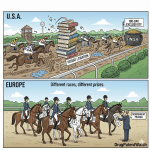
Two regulatory bodies set the global standard for pharmaceutical risk management documentation. The European Medicines Agency and the U.S. Food and Drug Administration have built frameworks that share ultimate goals but diverge significantly in philosophy, scope, and operational burden.
The EMA’s Lifecycle-Based Model
The EMA, operating under GVP Module V (Revision 2), treats risk management as a continuous obligation for every product across its entire authorized life. The RMP is mandatory for all new Marketing Authorisation Applications, including generics, generics of biologics (biosimilars), hybrid applications, and well-established-use applications. The document must be submitted at the time of initial application and updated at specific milestones throughout the product’s commercial life. The EMA’s philosophy is that no drug has a safety profile that is fully known at the point of approval. Every product, regardless of how well-characterized the reference compound is, operates in real-world populations that differ from clinical trial populations. The RMP formalizes a company’s commitment to continue learning about those differences and acting on what it finds.
This is a proactive, documentation-intensive system. It requires a company to prospectively categorize every identified and potential risk, specify what it doesn’t know about the drug’s safety in specific populations, design a pharmacovigilance program to fill those gaps, and define what interventions it will put in place to minimize harm. For a standard generic product with a well-characterized reference drug, much of this can be abbreviated. For a complex generic or one with additional risk minimization measures, the document can run several hundred pages.
The FDA’s Targeted Intervention Model
The FDA’s baseline instrument for risk management is the product label. For the vast majority of approved drugs, the agency determines that a well-written, detailed label — including the prescribing information, Medication Guide, and Instructions for Use — is sufficient to communicate known risks and enable safe prescribing. A formal REMS is required only when the agency concludes that label-based communication is insufficient to prevent a specific serious adverse outcome.
This creates a very different operating reality. Most ANDA applicants in the U.S. will never deal with a REMS. For the subset that do — approximately 50-60 REMS programs were active as of recent counts, a fraction of the thousands of approved drugs — the process is not primarily one of scientific documentation but of operational construction and, frequently, legal negotiation.
The Strategic Bifurcation
A global generic manufacturer cannot develop a single harmonized ‘global risk management package’ and submit variants of it across jurisdictions. The documents serve different purposes, follow different structures, and require different internal capabilities to produce and maintain.
The EU RMP is a scientific document. Producing it well requires pharmacovigilance expertise, clinical judgment, and a systematic approach to evidence review. The FDA REMS — specifically the ETASU-bearing REMS — is an operational and legal document. Building and operating a shared REMS system requires IT infrastructure, supply chain controls, healthcare provider communication programs, and legal agreements with the brand manufacturer who, by law, must share a single system but has no statutory obligation to cooperate quickly.
Resource allocation must reflect this distinction. A company that staffs only for EU-style scientific documentation will be unprepared for the operational demands of a REMS with ETASU. A company that focuses only on REMS negotiations without a robust EU pharmacovigilance capability will accumulate deficiencies in its periodic safety update reports that generate regulatory questions and delay renewals.
Comparison Table: EMA RMP vs. FDA REMS for Generic Applicants
Feature
EMA Risk Management Plan
FDA Risk Evaluation and Mitigation Strategy
Applicability
All new MAAs, including generics and biosimilars
Only drugs with serious safety concerns where labeling is insufficient
Core Philosophy
Proactive, lifecycle-based safety documentation
Targeted, intervention-based safety program
Mandatory Components
Safety Specification; PV Plan; Risk Minimisation Plan
Medication Guide; Communication Plan; ETASU (where required)
Generic-Specific Rule
Align with reference product’s safety concerns; justify any deviations
Must implement REMS with same goals and comparable requirements as brand; often requires single shared system
Primary Generic Challenge
Scientific alignment and justification of deviations
Sample access barriers; single shared system negotiation delays
Lifecycle Status
Living document; updated continuously at milestones
Can be modified or sunsetted if FDA assessment finds continued measures unnecessary
IP Dimension
Minimal; some aRMM designs may be proprietary
Significant; brand may patent REMS systems and processes
Key Takeaways: Section 3
The EMA and FDA frameworks are not two versions of the same thing. They require different teams, different capabilities, and different strategic planning. Companies that build their pharmacovigilance function primarily for EU compliance will be structurally underprepared for REMS-gated markets. Global portfolio planning must explicitly account for the REMS operational infrastructure cost — including potential litigation — as a separate line item from EU pharmacovigilance staffing.
4. Anatomy of an EMA Risk Management Plan for Generic Applicants
The EMA RMP follows a modular structure defined in the agency’s Integrated Format guidance, commonly called the EU-RMP template. The document is organized into five parts, though generics are frequently permitted to omit or significantly reduce several modules within Part II.
Part I: Product Overview
A brief descriptive section covering the product’s pharmacological class, approved indications, dosage forms, and strength. For generics, this section mirrors the reference product closely and rarely generates regulatory questions. Its primary function is to anchor the rest of the document.
Part II: Safety Specification
This is the analytical core of the RMP. The Safety Specification requires the MAH to systematically classify the drug’s full safety profile into three categories.
Important Identified Risks are adverse events for which there is adequate scientific evidence of a causal relationship with the drug. These are not hypothetical — they have been observed in clinical trials, post-market surveillance, or published literature at a frequency and severity that affects the product’s benefit-risk assessment. For a generic applicant, these risks must mirror those listed in the reference product’s approved RMP unless the generic’s specific formulation or manufacturing process has introduced a variant.
Important Potential Risks are occurrences for which a plausible mechanistic or epidemiological basis for an association exists, but formal confirmation is absent. A new chemical entity might carry class-effect risks based on its mechanism of action. A generic might carry risks related to a novel excipient or impurity not present in the brand. These warrant prospective monitoring but do not yet carry the evidentiary weight of identified risks.
Missing Information captures knowledge gaps about the drug’s safety in populations or contexts that were not adequately studied before approval. Standard categories include use in pregnant or lactating patients, pediatric populations, patients with severe organ impairment, and patients on complex polypharmacy regimens. For a long-marketed reference drug, many of these gaps will have been partially addressed by post-approval studies. For a generic entering in a jurisdiction where the reference product was only recently approved, the gaps may be more extensive.
Part III: Pharmacovigilance Plan
The PV Plan specifies how the MAH will monitor the safety concerns identified in Part II. For routine generics, this section describes the company’s standard pharmacovigilance activities: spontaneous adverse event collection and reporting, periodic signal detection and assessment, PSUR submission, and regulatory authority communication protocols.
Where the Safety Specification includes an Important Potential Risk that cannot be adequately monitored through spontaneous reporting, the regulator may require an Additional Pharmacovigilance Activity. The most common form is a Post-Authorisation Safety Study (PASS). A PASS can range from a simple drug utilization study — documenting which patient populations receive the drug in clinical practice and at what doses — to a full observational cohort study comparing outcomes between the generic and the reference product in a defined population. The design, endpoints, and timeline for any required PASS must be specified in the PV Plan and agreed with the relevant national competent authority or the EMA’s Pharmacovigilance Risk Assessment Committee (PRAC).
Part V: Risk Minimisation Plan
Part V describes what the company will actually do to prevent or reduce harm. Routine risk minimisation measures — the product’s SmPC, patient information leaflet, labeling, and legal status — are assumed for all products and need only be confirmed, not detailed extensively, for standard generics.
Additional Risk Minimisation Measures (aRMMs) are the more consequential category. When the reference product’s RMP includes aRMMs — an educational program for prescribers, a patient reminder card, a controlled access system, a pregnancy prevention program — the generic manufacturer must implement comparable measures. The EMA does not require identical materials, but it does require that the core safety messages are preserved, that the target audiences are the same, and that the distribution mechanisms are designed to reach those audiences effectively.
This requirement has significant operational implications. A company that has not staffed for aRMM design and distribution before its RMP submission will face a cycle of regulatory questions and delays. The cost of developing, printing, distributing, and auditing aRMM materials for a pan-EU launch — across 27 member states with different languages and healthcare communication norms — routinely runs into the hundreds of thousands of euros per product.
Key Takeaways: Section 4
The Safety Specification is the scientific foundation of the entire EU RMP. Its quality directly determines the adequacy of the PV Plan and the proportionality of the Risk Minimisation Plan. Generic applicants must treat it not as a copy-paste exercise from the reference product’s RMP but as an original scientific analysis that confirms alignment and explicitly accounts for product-specific differences. The presence of aRMMs on the reference product is the single most operationally demanding trigger in the EU generic RMP process.
5. Anatomy of an FDA REMS: From Medication Guides to ETASU
The FDA’s REMS authority derives from the Food and Drug Administration Amendments Act of 2007 (FDAAA), Section 901. The agency can require a REMS at the time of approval or post-approval if new safety information warrants it. REMS programs vary considerably in complexity, from a simple Medication Guide requirement to a fully operationalized restricted distribution system with real-time patient monitoring.
Medication Guides
A Medication Guide is a written document for patients, FDA-approved for each product, that communicates the drug’s most serious risks in plain language. It must be dispensed with every prescription fill. For generic manufacturers, Medication Guides present a specific challenge: the guide must convey the same safety information as the brand’s guide, but brand manufacturers have occasionally raised objections to exact replication, citing copyright. FDA guidance on this point is clear — the generic manufacturer’s Medication Guide must be consistent with the brand’s in substance, even if not verbatim.
Communication Plans
Where FDA determines that healthcare providers need proactive, direct communication about a specific risk — rather than passive access via labeling — it can require a Communication Plan as part of the REMS. Typical elements include ‘Dear Healthcare Provider’ letters describing the risk and the REMS requirements, educational materials distributed through professional societies, and updates to continuing medical education programs. For generics entering a market where the brand has an existing Communication Plan, the question is whether those same healthcare providers need to receive another communication specifically about the generic. FDA’s position is generally that a single, shared system is preferable to duplicative communications from multiple manufacturers.
Elements to Assure Safe Use (ETASU)
ETASU are the highest-intensity REMS components. They impose behavioral requirements on prescribers, pharmacies, healthcare settings, and in some cases patients themselves. FDA requires ETASU only when it concludes that without these specific controls, the drug’s risks would outweigh its benefits.
The most common ETASU elements are prescriber certification programs, pharmacy certification programs, and dispensing restrictions tied to laboratory results or patient enrollment status. Prescriber certification requires physicians to complete specific training and formally enroll in the REMS before they can prescribe the drug. Pharmacy certification requires dispensing facilities to verify prescriber certification, document patient enrollment or monitoring status, and in some cases conduct patient counseling at dispensing.
The most restrictive form of ETASU is a closed distribution system, in which the drug can only be dispensed through a network of certified specialty pharmacies. Drugs distributed under such a system cannot be obtained through standard retail channels. Isotretinoin (iPLEDGE REMS), clozapine (Clozapine REMS), and sodium oxybate (Xyrem/oxybate REMS) are well-documented examples. For a generic manufacturer, entering a market with a closed distribution REMS means building or joining the operational infrastructure of that distribution system — a substantially greater undertaking than filing an ANDA.
Case Profile: Olanzapine Pamoate (Zyprexa Relprevv)
Olanzapine pamoate is a long-acting injectable antipsychotic with a documented risk of post-injection delirium/sedation syndrome (PDSS), which occurs in approximately 0.07% of injections but can be severe and life-threatening. The REMS for Zyprexa Relprevv requires administration only in registered healthcare facilities equipped to monitor the patient for at least three hours post-injection and provide immediate emergency care. Patients must be enrolled in the program, and every injection must be logged. A generic equivalent of this product cannot simply demonstrate bioequivalence and submit a conventional ANDA; it must have a plan for how its product will be administered and monitored under conditions comparable to the brand’s REMS, and that plan must be operationally functional before first commercial supply.
REMS Assessment and Sunsetting
REMS programs are not permanent by design. FDA requires REMS assessments at specified intervals — typically 18 months, three years, and seven years after implementation — and can modify or sunset a REMS if the data show that the program’s continued operational requirements are no longer necessary to ensure the benefit-risk balance. From a portfolio perspective, this creates optionality: a generic manufacturer that enters a REMS-gated market early bears the highest compliance cost, but those costs may decline over time if the REMS is simplified or removed.
Key Takeaways: Section 5
ETASU represent the functional boundary between a standard generic regulatory submission and an operational buildout. Companies that have never implemented a REMS with ETASU should not underestimate the systems, staffing, and legal agreements required. Closed distribution systems in particular require dedicated logistics infrastructure that cannot be stood up on a short timeline. REMS sunsetting is real but unpredictable — it should be modeled as optionality, not assumed.
6. The Innovator’s Shadow: Alignment, Deviation, and the Science of Justification
The foundational principle of the abbreviated generic pathway — that safety and efficacy data already developed for the reference product need not be regenerated — extends fully into risk management. A generic manufacturer’s primary obligation is not to characterize the molecule from scratch. It is to demonstrate that its product’s risk profile is consistent with the reference product’s established safety record, and to identify any departures from that record that its own product might introduce.
Alignment: The Technical Standard
EMA guidance is explicit: the lists of Important Identified Risks, Important Potential Risks, and Missing Information in the generic’s RMP must be consistent with those in the reference product’s approved RMP. Consistent does not mean copied. It means scientifically equivalent — that the generic applicant has reviewed the same body of evidence and reached the same characterization.
The sources for this review include the reference product’s publicly available RMP on the EMA website, European Public Assessment Reports (EPARs), the CMDh’s published lists of safety concerns for centrally authorized active substances, and published scientific literature indexed through the date of submission. A thorough literature search — not a cursory PubMed query — is a prerequisite to a credible Safety Specification.
Generic-Specific Deviations: The Four Source Categories
When a generic product differs from the reference in ways that could affect its safety profile, those differences must be identified, assessed, and documented. Four categories are the most common sources of deviation requiring explicit treatment in the Safety Specification.
The first is excipient variation. A generic formulation will frequently use different inactive ingredients than the brand — different grades of common excipients, or entirely different substances chosen for their manufacturability or cost profile. Each excipient choice must be assessed for its known adverse event profile. An excipient known to cause hypersensitivity in certain populations, or one with physiological activity at therapeutic drug concentrations, may need to be listed as a potential risk. The generic’s RMP should document this assessment explicitly, even if the conclusion is that the excipient poses no new risk — because regulatory assessors will check.
The second is the API impurity profile. Different synthesis routes for the same active pharmaceutical ingredient produce different impurity fingerprints. Any impurity present in the generic API at levels above ICH Q3A thresholds must be characterized for genotoxic potential. The nitrosamine crisis made this standard more demanding: companies must now conduct nitrosamine risk assessments covering not just the synthesis route but the entire supply chain, including potential nitrosamine formation from starting material degradation or interaction with packaging. Where a new impurity cannot be qualified by the existing reference product data, it must be listed in the RMP as an Important Potential Risk pending further data.
The third is delivery device and packaging differences. For complex injectables, inhalers, transdermal systems, and auto-injector formats, a different device means a different error mode profile. Medication errors traceable to device design must be treated as a standalone potential risk if the generic’s device has a different interface, needle gauge, or actuation mechanism than the reference. Human factors studies and use-error analyses should inform this assessment and should be referenced in the RMP.
The fourth is indication scope. A generic may seek approval only for a subset of the reference product’s authorized indications. Where the omitted indications include populations or clinical contexts where the drug’s safety profile is different — or where the narrower labeling creates a foreseeable risk of off-label use in populations where safety is not established — the Missing Information section must address this explicitly.
Documenting Justifications
Regulatory assessors reviewing a generic RMP are trained to look for inconsistencies between the generic’s Safety Specification and the reference product’s. They will identify risks present in the reference RMP that are absent from the generic’s and ask for justification. It is significantly more efficient to include those justifications proactively in the submission than to address them in a cycle of deficiency questions. A best-practice generic RMP includes a comparative table mapping each risk in the reference product’s approved RMP to the generic’s treatment of that risk, with a brief scientific rationale for any deviation.
Key Takeaways: Section 6
Alignment with the reference product’s safety profile is an active scientific process, not a passive copying exercise. A generic manufacturer that submits a Safety Specification without conducting its own excipient, impurity, device, and indication-scope assessments is not aligned — it is uninformed, and regulators will treat those submissions accordingly. The comparative justification table is not an optional add-on; it is the single most effective tool for reducing RMP deficiency cycles.
7. The Abbreviated RMP: When You Can Use It and When You Can’t
The EMA’s risk-proportionate approach allows for a streamlined RMP submission for certain generic applications. Understanding the exact boundaries of this option — and the specific triggers that remove it — is operationally important.
The Standard Abbreviation
For a generic application under Article 10(1) of Directive 2001/83/EC, where the reference medicinal product has a well-established safety profile, a published RMP, and no additional risk minimisation measures in place, the generic applicant may omit several modules of Part II of the Safety Specification. Specifically, modules covering the innovator’s epidemiological data (SI), non-clinical safety characterization (SII), clinical trial exposure data (SIII), and populations not studied in clinical trials (SIV) can be omitted or significantly reduced because that data belongs to the reference product and has already been assessed by regulators.
What remains mandatory in abbreviated format is the Pharmacovigilance Plan (Part III), the Risk Minimisation Plan (Part V), and a declaration that the Safety Specification matches the reference product’s identified and potential risks. The total document for a well-characterized generic with no aRMMs can be quite compact — sometimes fewer than 30 pages in the core submission.
The aRMM Trigger: Full Submission Required
The abbreviated option disappears the moment the reference product has any additional risk minimisation measures. This is an absolute trigger, not a judgment call. If the brand’s current approved RMP includes an aRMM — a prescriber checklist, a patient alert card, a controlled access program, a pregnancy prevention program — the generic applicant must submit a full RMP that describes its own comparable implementation plan in detail.
This requirement catches some teams by surprise. A product that was approved without aRMMs at the time of the reference product’s initial authorization may have had aRMMs added during the lifecycle. If a generic applicant is working from an old version of the reference RMP — or has not checked for RMP updates in the 12 months before submission — it may prepare an abbreviated RMP and receive a major objection during assessment. The reference product’s current RMP must be retrieved immediately before finalizing the generic RMP structure.
Hybrid and 505(b)(2) Applications
Hybrid applications — which rely partly on the reference product data but include some new clinical data — typically require a full RMP regardless of the reference product’s aRMM status. The presence of original clinical data creates a richer Safety Specification obligation and may require a bespoke PV plan addressing newly characterized risks from the unique clinical data package.
Key Takeaways: Section 7
The abbreviated RMP is available for a narrower category of products than is commonly assumed. The aRMM trigger is categorical and non-negotiable. Regulatory teams must verify the reference product’s current RMP status within 60 days of target submission date to confirm whether the abbreviated pathway is available.
8. REMS as Para-Intellectual Property: The Anti-Competitive Playbook and How to Counter It
The REMS framework was designed to protect patients from the serious risks of specific high-risk drugs. It has been repurposed, in a documented and measurable number of cases, as a mechanism to delay generic entry by months or years beyond the statutory exclusivity period. This is not a fringe observation. It is the finding of Congressional Research Service reports, peer-reviewed health policy studies, and the legislative record supporting the CREATES Act.
The Sample Blockade Mechanism
A generic manufacturer’s path to approval requires conducting bioequivalence studies, which require a supply of the reference product for comparative testing. For most drugs, purchasing that supply through standard wholesale channels is a routine transaction. For drugs distributed under a REMS with restricted distribution ETASU, it is not.
The restricted distribution system limits who may receive the drug — typically to certified prescribers and certified pharmacies serving enrolled patients. A generic manufacturer’s analytical laboratory is none of these. Brand manufacturers have refused to sell BE study samples directly to generic applicants, citing concern that providing the drug outside the REMS’s certified distribution system would expose them to liability if an adverse event occurred during the study.
This argument has been evaluated and rejected by the FDA in guidance, which has made clear that selling samples to a generic manufacturer for the purpose of bioequivalence testing does not violate the REMS. Despite this guidance, several brand manufacturers continued to refuse, forcing generic applicants to attempt to purchase product through secondary channels — which is expensive, inconsistent, and legally uncertain. The result, in documented cases, was development delays of 18 to 36 months attributable solely to the sample access dispute.
The Single Shared System Negotiation Quagmire
Even after obtaining samples and completing bioequivalence studies, a generic manufacturer must resolve how it will operate within the REMS framework once approved. The law requires that brand and generic manufacturers operate under a single, shared REMS system for any ETASU components. The goal is to avoid burdening healthcare providers with multiple certification registries, verification portals, and reporting systems for what is functionally the same molecule.
In theory, this is sensible. In practice, it requires the brand manufacturer — whose financial interest is best served by keeping the generic off the market as long as possible — to cooperate in the construction of a technical and legal infrastructure that facilitates its own competitive displacement. The resulting negotiations have lasted years in some cases. Brand companies have raised substantive objections to shared system design, cost-sharing formulas, liability allocation, data governance, and the treatment of proprietary components of the existing REMS infrastructure.
By 2020, ETASU programs had grown from roughly 25% to over 50% of all active REMS programs, a pattern consistent with brand manufacturers increasingly viewing REMS as a lifecycle management tool alongside traditional patent strategies.
The CREATES Act: Legislative Counter
The Creating and Restoring Equal Access to Equivalent Samples Act, signed into law in December 2019, established an explicit federal cause of action for generic and biosimilar developers denied access to samples. A company that has been refused samples — or offered terms that are not commercially reasonable — can file a civil action in federal district court to compel the brand to provide samples within a defined timeline. The statute includes provisions allowing courts to award attorney’s fees in cases of bad-faith refusal.
The CREATES Act also addresses the shared REMS problem by giving FDA clearer authority to facilitate shared system development when negotiations stall, and by allowing FDA to grant a waiver of the single shared system requirement in defined circumstances.
Waiver Strategy and When to Pursue It
FDA’s guidance on REMS waivers describes the waiver as an ‘option of last resort’ — meaning the agency prefers a shared system and will require applicants to demonstrate that good-faith negotiation has failed before granting one. The circumstances under which a waiver is most defensible include a documented pattern of non-cooperation by the brand manufacturer, the presence of brand-owned patents or trade secrets on specific REMS components that cannot be licensed on reasonable terms, and a showing that operating a separate but comparable REMS imposes no incremental burden on healthcare providers.
When building a waiver petition, documentation is everything. Every communication with the brand manufacturer regarding shared system negotiations — emails, letters, meeting minutes, term sheets — should be preserved and organized chronologically from the first outreach. This record forms the factual basis for the waiver petition’s demonstration of good-faith negotiation. Companies that begin this documentation practice only after negotiations break down are working from a materially weaker position than those that maintained it throughout.
The REMS Process Patent as an Anti-Competitive Tool: IP Strategy Response
Where REMS process patents exist, generic companies have four practical responses. They can design around the patent — building a REMS infrastructure that achieves the same patient safety objectives through technically distinct means. They can challenge the patent’s validity through IPR at the Patent Trial and Appeal Board. They can seek a compulsory license under antitrust principles if the brand’s refusal to license rises to the level of exclusionary conduct under Sherman Act Section 2 analysis. They can petition FDA for a waiver, using the patent’s existence as evidence that a shared system is practically impossible.
Each path has a different cost and timeline profile. IPR is relatively fast (12-18 months to institution decision) but requires a credible invalidity case. Antitrust litigation is slow and expensive. Design-around requires technical creativity and a regulatory argument that the alternative approach satisfies the REMS’s safety goals. In practice, most companies pursue multiple paths simultaneously, using the threat of antitrust litigation to accelerate licensing negotiations while building the IPR record as insurance.
Key Takeaways: Section 8
REMS with ETASU must be assessed as a standalone risk category in any generic portfolio evaluation — separate from, and often more determinative than, the patent estate. The CREATES Act provides real legal recourse but requires extensive documentation from the start of negotiations. REMS process patents are an emerging and undercovered threat that requires explicit IP clearance work. Companies without prior REMS litigation experience should retain specialized counsel before filing an ANDA for a REMS-gated product.
Investment Strategy Note
For institutional investors evaluating generic pharma companies, the percentage of the ANDA pipeline subject to REMS with ETASU is a key risk indicator. A company with 15-20% of its pipeline blocked by REMS disputes is carrying concentrated regulatory and legal risk that may not be visible in standard pipeline analyses. Ask for the specific product names, the stage of shared system negotiations, and whether the company has commenced any CREATES Act litigation.
9. Building a Compliant Generic RMP: Phase-by-Phase Implementation Guide
A well-executed RMP is the product of a systematic, cross-functional process. This section describes that process in three phases: foundational assessment, core drafting, and lifecycle management.
Phase 1: Foundational Assessment and Intelligence Gathering
The foundation phase runs concurrently with early-stage product development, not sequentially after technical work is complete. The earlier the RMP team is engaged, the less expensive it is to address discoveries.
The first step is team assembly. An RMP cannot be written by regulatory affairs alone. The core team must include pharmacovigilance, clinical or medical affairs, chemistry/manufacturing/controls, and legal/IP. For any U.S. product with a REMS, legal representation with REMS litigation experience should be included from the outset, not called in after problems emerge.
The reference product intelligence package requires retrieving the current version of the reference product’s approved RMP, the EPAR, any PRAC assessment reports, and the current product SmPC. For U.S. products, the FDA’s drug safety communications page, the REMS program database, and the drug’s labeling history should all be reviewed. The FDA’s Adverse Event Reporting System (FAERS) is also a legitimate and valuable source: a systematic query for the reference drug’s ADR profile, filtered by seriousness and outcome, will surface any safety signals that emerged post-approval but may not yet be reflected in the current RMP.
Simultaneously, the generic product’s CMC team must conduct a structured internal risk assessment covering API synthesis impurities and their genotoxic potential, excipient selection and its safety implications, container-closure system compatibility (including potential leachables), and device design if applicable. The FMEA methodology — Failure Mode and Effects Analysis — is the most widely used tool for this assessment because its output format maps directly onto the RMP’s risk categorization scheme.
Phase 2: Drafting the Core RMP
The Safety Specification draft should begin with the reference product’s risk list as a starting point, then modify it based on the findings of the internal CMC risk assessment and the updated literature review. Every modification — every risk added, removed, or reclassified relative to the reference — must have an explicit scientific justification in the text.
The Pharmacovigilance Plan for most generic products is relatively standardized. It describes the company’s pharmacovigilance system master file (PSMF), its adverse event intake and reporting processes, its PSUR submission schedule, and its signal detection methodology. Where the CMC risk assessment or literature review identified a specific potential risk requiring active monitoring, the PV plan must include a targeted additional activity — at minimum, a specific follow-up questionnaire for relevant case types; at maximum, a formal PASS protocol with study design, endpoints, and reporting timelines specified.
The Risk Minimisation Plan must address both routine and additional measures. For a product without aRMMs on the reference, this section is concise. For a product requiring aRMMs, it must describe the materials to be developed, the target audiences (prescribers, pharmacists, patients), the distribution mechanism, the languages and markets covered, and how the company will audit whether the materials are actually reaching their intended audiences.
Phase 3: Lifecycle Management
An RMP submitted and approved is not complete. It is the beginning of an ongoing maintenance obligation. The document must be updated when a new safety signal is confirmed and requires classification as an Important Identified Risk, when a required PASS is completed and its findings need to be incorporated, when the risk minimisation plan is modified in response to regulatory feedback or new data, and when the agency specifically requests a revision.
Most companies that face compliance problems with their pharmacovigilance obligations do not fail at the submission stage. They fail at the maintenance stage — specifically, when a new safety signal is identified through signal detection and the connection between that signal, the RMP, and the PSUR update obligation is not made promptly. An internal standard operating procedure that defines exactly who is responsible for triggering an RMP update, within what timeframe after a signal is confirmed, and what the escalation path is if that deadline is at risk, is an essential compliance control.
Key Takeaways: Section 9
The RMP process has three phases, and the first phase — intelligence gathering and internal risk assessment — is the one most commonly compressed or skipped. It is also the one where the most important discoveries are made. The CMC-RMP interface, in particular, is where generic-specific risks originate. Lifecycle management is the most common source of regulatory compliance problems for established generic manufacturers and requires explicit SOP coverage, not just general pharmacovigilance guidance.
10. Nitrosamine Risk, Impurity Profiling, and the New CMC-RMP Interface
The nitrosamine contamination crisis that began with valsartan in 2018 and expanded to include ranitidine, metformin, and a widening range of products through 2020 and 2021 restructured the relationship between CMC and pharmacovigilance functions in ways that are still being operationalized across the industry.
What Nitrosamines Revealed About Risk Gaps
The regulatory framework for impurity specification under ICH Q3A had been in place for decades. Thresholds for known genotoxic impurities existed. What the nitrosamine crisis exposed was that the system assumed manufacturers knew which impurities were present — that the specification framework only controlled what the testing process could detect. Nitrosamines in the relevant concentration range were not being tested for because they had not been identified as a risk in these products.
The ICH M7 guideline on mutagenic impurities, which established the threshold of toxicological concern (TTC) framework for genotoxic impurities, was in place. But its application to N-nitroso compounds specifically — particularly those formed not in synthesis but through degradation, interaction with excipients, or contamination from shared equipment — required retrospective analysis that no manufacturer had conducted systematically.
The immediate regulatory response required manufacturers to conduct nitrosamine risk assessments for all marketed products. For generic manufacturers, this created a two-track problem: the assessment itself, which required process chemistry expertise, and the regulatory response, which required pharmacovigilance and RMP integration if the assessment identified a new potential risk.
Integrating Nitrosamine Risk into the RMP Safety Specification
Where a nitrosamine risk assessment identifies a nitrosamine impurity above the acceptable intake (AI) level established by regulatory guidance, that impurity becomes, at minimum, an Important Potential Risk in the product’s Safety Specification. Depending on the regulatory authority’s assessment of the severity and the adequacy of the control strategy, it may trigger a PASS requirement or an aRMM.
The process for integrating this finding into an existing RMP is not always straightforward. Products that have been on the market for years have approved RMPs that predate the nitrosamine regulatory framework. Updating those RMPs to add nitrosamine impurities as a potential risk, while simultaneously submitting variations to address the control strategy, creates a multi-document coordination challenge across regulatory, CMC, and pharmacovigilance functions.
Broader Implications for the CMC-RMP Interface
The nitrosamine crisis is the clearest recent example of a class of risk that originates in CMC but must be managed through the pharmacovigilance framework. It will not be the last. Elemental impurities under ICH Q3D, degradation products under ICH Q1, and leachables from container-closure systems under USP 661 and 1664 are all categories where CMC findings can generate RMP obligations.
The structural implication is that the CMC and regulatory affairs functions must maintain an active, real-time interface — not a handoff at the point of RMP submission, but a continuous relationship in which CMC changes, supplier changes, and manufacturing process deviations are evaluated for their potential to generate new RMP obligations. Companies that have restructured their post-approval change management SOPs to include an explicit RMP impact assessment step are ahead of those that still treat these as separate workflows.
Key Takeaways: Section 10
Nitrosamine risk assessment is now a standing CMC obligation with direct RMP implications. Every new synthesis route, new API supplier, or significant manufacturing change must be assessed not only for product quality impact but for potential new risks that require RMP updating. The companies most exposed to future nitrosamine-type regulatory surprises are those where CMC and pharmacovigilance operate as functionally separate silos.
11. Post-Market Pharmacovigilance: The Full Scope of Generic MAH Obligations
Once a generic drug enters the market, its manufacturer assumes the full pharmacovigilance obligations of any Marketing Authorisation Holder. The abbreviated approval pathway does not abbreviate post-market safety monitoring. This is a point that some generic manufacturers, particularly those entering EU markets for the first time, underestimate.
Individual Case Safety Reports
Every suspected adverse drug reaction reported to a generic MAH must be processed, assessed for causality and seriousness, and submitted to the relevant regulatory authority within statutory timelines. For serious, unexpected adverse drug reactions in the EU, the reporting deadline is 15 calendar days from receipt. For all other ADRs reported in the EU, the timeline is 90 days. In the U.S., serious and unexpected ADRs must be submitted within 15 days; other periodic reports follow annual or other scheduled submission timelines depending on the product’s approval stage.
Generic manufacturers frequently underinvest in ICSR processing infrastructure, particularly in the early years after launch. The volume of incoming spontaneous reports is often lower for a newly marketed generic than for the brand, which may create a false sense of security. But as generic market share grows, ADR volume scales proportionally. Companies that have not built scalable ICSR processing capacity — or contracted with a specialized PV service provider — will face backlogs and reporting timeline violations as volume increases.
Signal Detection and Misattribution
Signal detection for generic manufacturers is complicated by the misattribution problem. When multiple generic versions of the same active ingredient are on the market, healthcare providers and patients reporting adverse events may identify the drug only by its generic name, without specifying the manufacturer. National pharmacovigilance centers aggregate these reports at the INN level, which means a safety signal may be distributed across manufacturers without any single manufacturer receiving enough reports to detect it independently.
This creates an obligation to monitor public databases. EU manufacturers must monitor EudraVigilance. U.S. manufacturers must monitor FAERS. Australian manufacturers must monitor ADRS. The signal detection process must include not just the company’s own ICSR database but the public aggregate databases for the active substance, with a systematic methodology for evaluating whether signals in those databases are attributable to manufacturing-specific factors or to the shared active ingredient.
Periodic Safety Update Reports
The PSUR (or Periodic Benefit-Risk Evaluation Report, PBRER, in the more recent harmonized format) is the periodic comprehensive review of a drug’s benefit-risk profile. For EU products, the PSUR submission schedule is defined in the European Medicines Agency’s data lock point list. Generic manufacturers are frequently required to submit PSURs in a joint assessment procedure alongside the innovator and other generic MAHs, using a common submission date. This joint procedure is administratively efficient but requires coordination with multiple parties and a clear understanding of what each manufacturer’s PSUR must contain independently versus what is shared.
A PSUR that simply replicates the previous version without substantive safety signal assessment, updated benefit-risk analysis, or meaningful comment on the product’s clinical performance in the real world will generate regulatory questions. PRAC assessors are experienced at identifying formulaic PSURs, and the consequences range from procedural non-compliance findings to referral procedures that can result in label changes or market suspension.
Key Takeaways: Section 11
Generic MAHs carry the full pharmacovigilance burden from the first day of commercial launch. ICSR processing infrastructure must be in place before product enters the market, not assembled in response to the first incoming reports. Signal detection methodology must explicitly address the misattribution problem and include systematic monitoring of aggregate public databases. PSURs must reflect genuine, substantive safety surveillance, not administrative continuations.
12. Real-World Evidence as a Competitive Weapon
The standard generic value proposition is price. A generic that is bioequivalent to the reference product and priced 70-80% below it will capture formulary position in price-sensitive payer environments regardless of any other attribute. But the payer landscape has shifted, and in certain markets and therapeutic categories, price is no longer sufficient.
Where RWE Creates Differentiation
Large self-insured employers, integrated delivery networks, and payers managing specialty drug budgets have become sophisticated buyers. For high-volume chronic disease products, they want evidence that the generic they are putting on formulary performs in the real world the way its label suggests it should. For complex generics — extended-release formulations, inhalation products, transdermal systems — there is genuine clinical uncertainty about whether in vivo performance in diverse patient populations matches the bioequivalence study results in a controlled protocol.
A generic manufacturer that can provide observational data from large EHR databases showing equivalent clinical outcomes between its product and the reference, in the relevant patient population, is providing something no competitor without that data can match. This is not a theoretical differentiator. Several specialty generic manufacturers have published RWE studies comparing their products to the brand in real patient populations, and those studies have been used in formulary negotiations with large health systems.
Designing an RWE Pharmacovigilance Program
The design of a meaningful RWE program requires decisions about data source, study design, endpoint selection, and analysis methodology that must be made before data access is established. The most relevant data sources for post-market generic safety surveillance are commercial claims databases (Optum, IBM MarketScan, IQVIA), integrated EHR networks (TriNetX, PCORnet), and disease-specific registries.
A drug utilization study is the lowest-cost entry point: it documents who is actually receiving the drug, at what doses, for how long, and in what clinical contexts. This data directly addresses the ‘Missing Information’ concerns in the Safety Specification — particularly use in populations not studied before approval. An observational cohort study comparing outcomes between the generic and the reference product requires larger sample sizes, longer follow-up periods, and more sophisticated confounding adjustment, but produces evidence that is meaningfully more persuasive in both regulatory and commercial contexts.
RWE as a PASS Fulfillment Strategy
When a regulator imposes a Post-Authorisation Safety Study requirement as a condition of approval, the design of that PASS is typically agreed during the assessment process. Companies that propose well-designed RWE studies as their PASS methodology — with specific data sources, validated endpoints, and rigorous protocol documentation — often receive faster agreement than those proposing conventional pharmacoepidemiology studies. RWE studies can be initiated faster, access larger populations, and deliver results on shorter timelines than traditional prospective cohort studies, all of which are arguments for their use in PASS design.
Key Takeaways: Section 12
RWE is both a regulatory tool and a commercial differentiator. Generic manufacturers that build RWE capabilities before they need them for PASS fulfillment will be better positioned than those that develop the capability reactively. In markets where formulary placement decisions are based on outcomes evidence rather than price alone, RWE on generic product performance is a genuine competitive advantage.
Investment Strategy Note
Analysts evaluating generic pharma companies should ask whether any pipeline products carry mandatory PASS requirements, and whether the company has an established RWE methodology and data access agreements in place. Companies without RWE capabilities facing mandatory PASS requirements must build or buy that capability, which adds cost and timeline risk. Conversely, companies with established RWE partnerships (e.g., data licensing agreements with Optum or IQVIA) and prior PASS execution experience carry a material capability advantage in the current regulatory environment.
13. Patent Intelligence and Portfolio De-Risking: Integrating IP Strategy at the RMP Inception Stage
The most consequential risk management decision in the generic drug business is portfolio selection. A well-executed RMP cannot rescue a product that should never have been developed. Integrating patent and regulatory intelligence at the earliest stage of portfolio evaluation prevents the allocation of R&D resources to products whose legal and regulatory obstacles were predictable and avoidable.
The DrugPatentWatch Intelligence Framework
Platforms like DrugPatentWatch provide structured access to the patent, litigation, and regulatory history for any branded pharmaceutical product. For a portfolio manager assessing a development candidate, this data answers a set of questions that determine the product’s real cost of entry.
What patents are listed in the Orange Book, when do they expire, and what Paragraph IV litigation history exists? Has any prior ANDA filer challenged these patents, and if so, what was the outcome? Does the drug have a REMS, and if so, does it include ETASU? Has the brand manufacturer been sued under the CREATES Act for refusing to sell BE samples? Are there patents specifically covering the drug’s formulation, device, or manufacturing process that are not listed in the Orange Book but could nonetheless support litigation?
These questions have quantifiable answers, and those answers translate directly into adjusted development cost and probability-weighted launch timelines. A product with a clean Orange Book, no REMS, and no prior Paragraph IV litigation history has a materially different risk profile than a product with a complex formulation patent estate, an active REMS with ETASU, and a documented history of brand-manufacturer obstructionism.
The Patent Thicket as a Safety Signal
Dense formulation patent estates deserve a specific kind of attention in portfolio evaluation. As noted in Section 2, a thick formulation patent estate tells a story about the difficulty of replicating the product — not just legally but scientifically. When an innovator has filed 20 to 30 patents covering specific drug-polymer matrix interactions, particle morphology, solubility enhancement systems, or device actuation mechanics, that density indicates the product was technically difficult to develop. The patents exist because finding the right formulation required extensive, patentable innovation.
For a generic developer, this means the path to a bioequivalent product that does not infringe those patents is likely to be technically challenging. Development failures, BE study failures, and manufacturing scale-up problems are all more probable. These technical risks compound the legal risks and must be incorporated into the project’s economic model.
Building the Risk-Adjusted ROI Model
A fully risk-adjusted ROI model for a generic development program accounts for regulatory filing fees and timeline, development costs including BE study design and execution, patent litigation costs and probability, REMS compliance infrastructure costs and litigation costs, probability-weighted launch delay (expressed in months of foregone net revenue), and post-launch pharmacovigilance compliance costs including PASS and RMP maintenance.
When these costs are modeled explicitly rather than assumed away, they frequently shift the apparent attractiveness of REMS-gated products relative to products with cleaner regulatory and legal profiles. A product with a slightly lower peak market share but no REMS, no patent thicket, and predictable regulatory timelines may deliver a higher expected return than a high-profile REMS product with a large theoretical market but 36 months of legal friction to reach it.
Key Takeaways: Section 13
Patent intelligence platforms convert portfolio selection from a qualitative judgment into a quantitative risk assessment. REMS with ETASU, formulation patent thickets, and prior litigation history are all discoverable at portfolio selection and should be priced into the development model from day one. The regulatory and legal teams’ involvement in portfolio selection is not a governance formality — it is where the most value is created or destroyed.
14. Investment Strategy: How Analysts Should Price REMS Risk and RWE Optionality
Pharmaceutical sector analysts evaluating generic drug companies frequently treat the regulatory pipeline as a binary — approved or not approved. The actual risk distribution is more granular and can be mapped to specific, quantifiable categories of delay and cost.
Pricing REMS Risk
REMS-encumbered ANDA assets should be modeled under two scenarios. In the cooperative scenario, the brand manufacturer agrees to a shared REMS system without litigation, timelines track to FDA guidance expectations, and commercial launch occurs 12 to 24 months after ANDA approval. In the adversarial scenario, the brand refuses BE sample access (triggering potential CREATES Act litigation), negotiations over the shared REMS system extend beyond 24 months, and additional legal costs of $10 million to $30 million are incurred. The probability weight between these scenarios can be estimated from the brand manufacturer’s prior behavior in REMS disputes — a discoverable fact through litigation databases.
A company with two or more ANDA assets in active REMS disputes at any given time is carrying $20 million to $60 million in incremental legal cost exposure, plus revenue timing risk from delayed launches. This should be reflected in segment-level margin estimates and in the valuation multiple applied to those assets.
Pricing RWE Optionality
RWE capabilities are not currently priced as a discrete asset in most generic pharma valuations. They should be, particularly for companies with significant specialty generic or complex generic pipelines. A company with established data access agreements, an internal pharmacoepidemiology team, and a track record of executed PASS studies via RWE methods is better positioned to (a) satisfy post-approval regulatory conditions without delay, (b) differentiate in formulary negotiations, and (c) respond defensively to any safety signal with speed and credibility.
The incremental value of this capability is hard to isolate precisely, but a conservative proxy is the cost of building it from scratch when needed — typically $3 million to $8 million in data licensing, personnel, and study execution costs for a single RWE program. A company that has already invested in this capability and can apply it across multiple products has reduced this per-product cost to near zero while simultaneously reducing the risk of PASS-related launch conditions holding up product availability.
Regulatory Quality as a Moat
Institutional investors in generic pharma have historically focused on first-to-file status, manufacturing scale, and ANDA pipeline depth. Regulatory quality — specifically, the track record and capability of the pharmacovigilance and regulatory affairs functions — is underweighted despite being a leading predictor of cycle times, FDA action completeness letters, REMS compliance problems, and PSUR deficiency findings. Companies with a history of complete, first-cycle ANDA approvals and clean PSUR submissions command faster time-to-revenue across their pipeline. Over a 10-year horizon, this timing difference compounds into a material NPV advantage.
15. Consolidated Key Takeaways
The economics of generic pharmaceuticals reward speed, quality, and anticipation. Risk management — spanning the EU RMP, the FDA REMS, post-market pharmacovigilance, and RWE generation — is the functional domain where all three attributes are tested simultaneously.
The EU RMP is a lifecycle-long scientific commitment. Its Safety Specification must be built from an active, independent risk assessment of the generic product, not a passive transcription from the reference product’s document. The aRMM trigger demands operational readiness that many companies do not have until they encounter it for the first time.
The FDA REMS, specifically those with ETASU, has been systematically weaponized as a delay mechanism by some brand manufacturers. The CREATES Act provides genuine legal recourse, but only for companies that have documented good-faith sample access attempts from day one. REMS-process patents add a new IP layer that requires specific clearance work outside standard Orange Book review.
Post-market pharmacovigilance obligations are identical for generic and innovator manufacturers. The misattribution problem unique to multi-source drug markets requires active aggregate database surveillance beyond internal ICSR monitoring. PSUR submissions must reflect substantive safety analysis or will generate PRAC scrutiny.
RWE is the most underutilized strategic tool available to generic manufacturers. It can fulfill PASS requirements, generate commercial differentiation, and enable faster, data-supported responses to safety signals. Companies that build RWE capabilities prospectively gain this advantage across multiple products; those that build it reactively pay full cost each time.
Patent intelligence at the portfolio selection stage, including REMS-process patent clearance and formulation patent density analysis, converts portfolio risk from qualitative to quantitative. This conversion enables better capital allocation and prevents the R&D budget from being committed to products whose obstacles were predictable.
16. Frequently Asked Questions
Is an RMP always required for a generic drug seeking EU approval?
For all new marketing authorisation applications under standard generic procedures, yes. An abbreviated format is available for products where the reference drug has a well-established safety profile, a published RMP, and no additional risk minimisation measures. This abbreviated option is not available if the reference product has any aRMMs currently in place.
What is the practical difference between an Important Identified Risk and an Important Potential Risk in the generic RMP context?
An Identified Risk has been confirmed by adequate evidence — typically case reports, formal studies, or pharmacoepidemiological data establishing a causal or strongly associated relationship with the drug. A Potential Risk has biological plausibility or some epidemiological signal but lacks definitive confirmation. For a generic applicant, this distinction matters because Potential Risks often generate PASS requirements, while Identified Risks generate both monitoring requirements and risk minimisation obligations. A risk that exists in the reference product’s RMP as ‘Potential’ may be reclassified to ‘Identified’ if post-market data has confirmed it — and the generic applicant should check for this specifically.
Can a brand manufacturer patent its REMS system and use that to block a shared REMS?
Yes, and this has occurred. Method and system patents covering REMS administration infrastructure can provide a brand manufacturer with a legitimate IP basis for refusing to incorporate a generic into its existing REMS on terms the generic finds reasonable. The response options include designing a functionally equivalent but technically distinct REMS infrastructure, IPR challenge at the PTAB, antitrust/compulsory licensing arguments, or a petition to FDA for waiver of the single shared system requirement on the grounds that a shared system is not achievable without a patent license being granted on reasonable terms.
At what stage should RMP development begin in the generic drug development lifecycle?
RMP development should begin at the product selection stage. The Safety Specification’s internal risk assessment — covering API impurity profile, excipient selection, and device design — requires CMC decisions that have not yet been made at early program initiation. But the reference product intelligence gathering, the aRMM assessment, and the REMS analysis in the U.S. are all fully executable at project initiation and directly inform whether the project should proceed and what its development budget should include.
How does the pharmacovigilance misattribution problem affect individual generic MAH obligations?
Misattribution means a reported adverse event may not reach the correct manufacturer’s ICSR database. It does not reduce the manufacturer’s obligation to detect and respond to signals related to its product. The practical obligation is to monitor aggregate public databases (EudraVigilance in the EU, FAERS in the U.S.) for signals attributable to the active substance, and to assess whether those signals might be related to any manufacturing-specific characteristic of the company’s own product. Signal detection SOPs must explicitly address this monitoring requirement.
When can a REMS be sunsetted, and what does that mean for a generic manufacturer’s compliance costs?
FDA can sunset a REMS — formally removing the requirement for specific safety measures — when assessment data demonstrates the measures are no longer necessary to ensure benefits outweigh risks. This decision requires an assessment submission by the manufacturer and FDA evaluation. For a generic manufacturer, a REMS sunset reduces compliance costs prospectively but does not eliminate past investment in REMS infrastructure. REMS sunsetting should be modeled as a potential future cost reduction, not assumed as a baseline.
17. References
Association for Accessible Medicines. 2022 U.S. Generic & Biosimilar Medicines Savings Report. accessiblemeds.org.
FDA Office of Generic Drugs 2022 Annual Report. fda.gov/drugs/generic-drugs.
HHS ASPE. Drug Competition Series: Analysis of New Generic Market Entry Effects on Generic Drug Prices. aspe.hhs.gov.
EMA. Guideline on Good Pharmacovigilance Practices (GVP) Module V: Risk Management Systems, Rev 2. ema.europa.eu.
EMA. Guidance on the Format of the Risk Management Plan (RMP) in the EU: Integrated Format Rev 2.0.1. ema.europa.eu.
FDA. Risk Evaluation and Mitigation Strategies (REMS). fda.gov/drugs.
FDA. Frequently Asked Questions (FAQs) about REMS. fda.gov.
Congressional Research Service. FDA Risk Evaluation and Mitigation Strategies (REMS): Description and Effect on Generic Drug Development. R44810. congress.gov.
PMC. Patents on Risk Evaluation and Mitigation Strategies for Prescription Drugs and Generic Competition. PMC10884947. pmc.ncbi.nlm.nih.gov.
FDA. The Safety Evaluation and Surveillance of Generic Drugs. FDA Office of Generic Drugs. fda.gov/media/163517.
ICH. Guideline M7(R1): Assessment and Control of DNA Reactive (Mutagenic) Impurities in Pharmaceuticals. ich.org.
PMC. Risk Management Plans: Reassessment of Safety Concerns Based on GVP Module V Revision 2. PMC9069847. pmc.ncbi.nlm.nih.gov.
FDA. Comparative Risk Assessment of Formulation Changes in Generic Drug Products. Oxford Academic / Toxicological Sciences. academic.oup.com.
This guide is for informational and strategic planning purposes. It does not constitute legal, regulatory, or investment advice. Regulatory requirements referenced reflect guidance current as of April 2026 and are subject to agency revision. Consult qualified regulatory counsel for product-specific compliance planning.